











-
Plant viruses are non-cellular organisms composed of nucleic acids enclosed in a capsid. They depend on host plants to replicate their genomes, express viral genes, and establish infections[1]. Viruses extend their interaction with plants by ensuring the survival of the host plant. Due to their non-cellular nature, this interaction primarily relies on the host plant's internal metabolic pathways, which differs from the mechanisms of bacterial and fungal pathogens[2]. However, most viral infections cause harmful symptoms and induce various adverse physiological effects in plants, thereby reducing agricultural yields[3]. Globally, losses associated with plant diseases result in a roughly 15% reduction in overall crop yields, with viruses accounting for one-third of the total losses[4].
Allium crops belong to the Amaryllidaceae family and comprise 1,053 known species (
https://powo.science.kew.org , accessed August 2025). Main species included the shallot (Allium ascalonicum L.), the Welsh onion (Allium fistulosum L.), the onion (Allium cepa L.), the leek (Allium porrum L.), the Chinese chive (Allium tuberosum Rottler ex Spreng.), garlic (Allium sativum L.), and wild garlic (Allium macrostemon Bunge), among others. These plants were important sources of daily food and have significant application potential in pharmaceutical research and development[5,6]. Allium crops are commonly infected by viruses, especially during asexual reproduction[7]. Extensive research has been conducted worldwide on viral diseases and viruses affecting important Allium crops since the outbreak of the onion yellow dwarf virus (OYDV) in American onions (Allium cepa var. cepa) in the early 20th century[8,9]. In recent decades, scientists had identified and isolated several viruses in Allium species. These include the onion yellow dwarf virus (OYDV), leek yellow stripe virus (LYSV), shallot yellow stripe virus (SYSV), garlic latent virus (Carlavirus), garlic yellow streak virus (Potyvirus), new onion mite-borne latent virus (OMbLV), shallot mite-borne latent virus (SMbLV), and Welsh onion yellow stripe virus (WoYSV), among others[10]. These viruses could be transmitted efficiently through seeds, mites, or various aphids during their brief feeding on Allium plants, which leads to significant yield reductions[7]. These viruses and their host-specific strains were usually limited to one species of Allium[7].The bulbous parts of Allium plants were well known for their distinct aromatic characteristics, which were due to sulfur-containing compounds[11]. These compounds possess antiviral, antibacterial, and antifungal properties[12]. The antioxidant flavonoids and quercetin in Allium crops could reduce the risk of chronic diseases, including cardiovascular disease and cancer[13]. In addition to the viruses that have been identified as specific to Allium plants, various other viruses could infect Allium crops. These include the tobacco mosaic virus, the curly top virus, and the Alexandrov virus types[14]. Currently, there are limited effective chemical control measures, which pose challenges for managing viral diseases in Allium crops. In recent years, significant efforts have been made to enhance crop resistance to viral pathogens, with some progress achieved. For instance, many crops have demonstrated exceptional resistance to the cucumber mosaic virus using RNA-silencing technology, which inhibited viral replication and spread in plants[15]. By conducting single-cell RNA sequencing (scRNA-seq) on garlic and soybeans, researchers characterized the interaction between viruses and host plants at the single-cell level. This approach provided valuable insights for effectively mitigating viral diseases in crop cultivation[16].
This review summarizes the major virus types found in Allium crops, focusing on their interaction with these crops. This review combines molecular breeding, genetic editing, and molecular interactions between viruses and hosts, which might help reduce the incidence and increase resistance to viral diseases in Allium crops. Cultivating virus-resistant Allium crops reduces the need for chemical pesticides and promotes sustainable agricultural development.
-
Plant viruses are classified by genomic structure: single-stranded positive-sense RNA, single-stranded negative-sense RNA, double-stranded RNA, single-stranded DNA, and double-stranded DNA. Approximately 80% of plant viruses belong to the single-stranded positive-sense RNA type. Plant viruses cannot invade plant epidermis directly and require assistance from invertebrates (e.g., insects), fungi, or plant wounds (e.g., stomata) to enter cells. Approximately 80% of plant viruses use insects, nematodes, and other vectors for initial infection[17]. Once inside a plant, the viruses replicate within the initial infected cells, spread to neighboring cells via plasmodesmata, and move and reproduce within the plant via microtubule networks. This disrupts cellular structure, causing symptoms, and impairing normal growth and development. In asexually propagated crops, viruses accumulate over time, affecting crop yields. During evolution, plants have evolved various complex defense mechanisms to resist viral invasion. These mechanisms are categorized as follows: (1) resisting viral vectors, (2) inhibiting viral replication, (3) blocking viral movement, and (4) degrading viral genomic RNA through RNA silencing (Fig. 1).
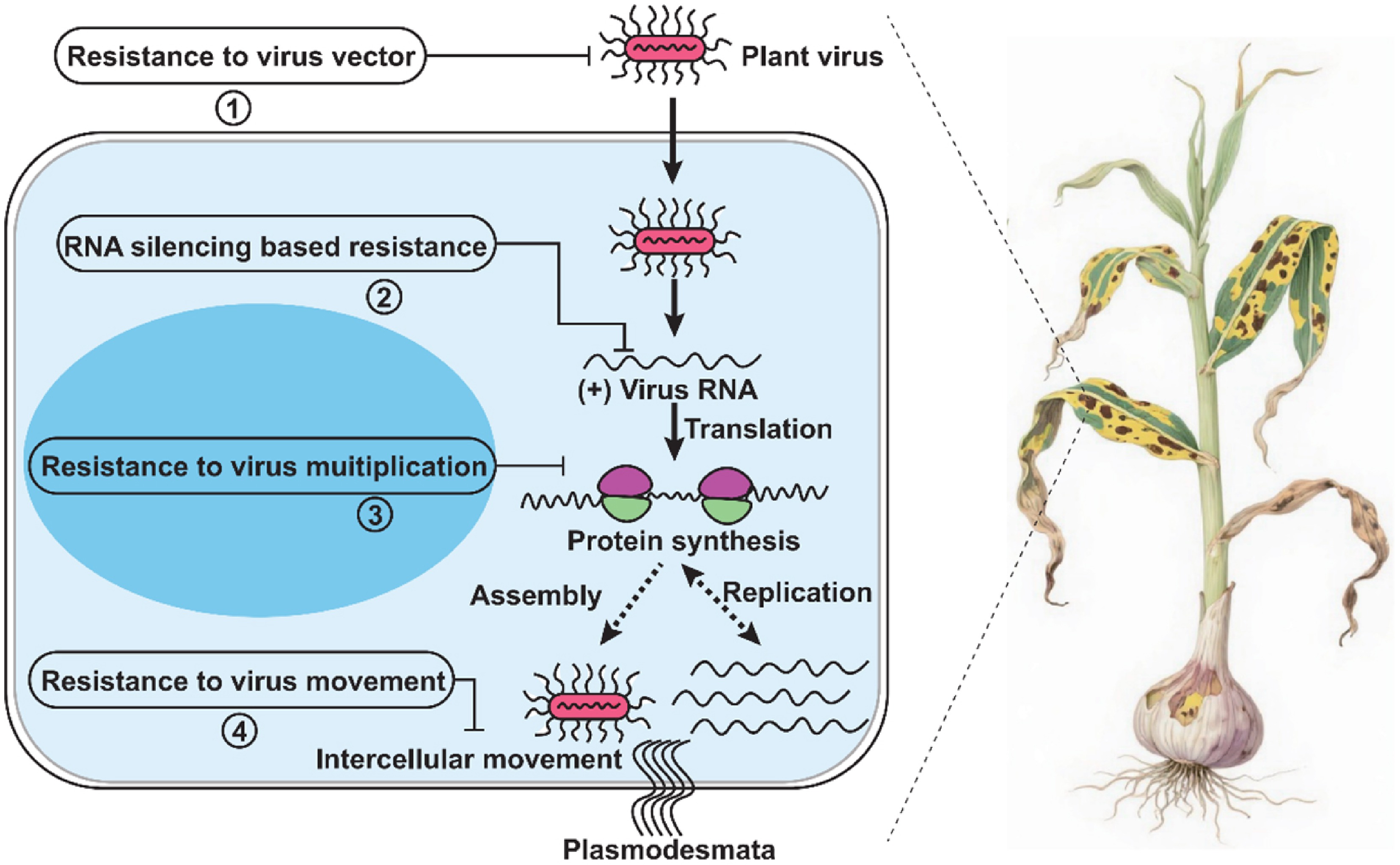
Figure 1.
Viral infection approaches and plant resistance mechanisms. Plant viruses infect Allium host cells through insect vectors or mechanical damage, undergo initial replication in the initially infected cell, and spread through plasmodesmata and systemically through vascular tissues. Allium foliage activates various antiviral defense mechanisms, such as recognition of viral particles via RLK receptors, prevention of viral replication, limitation of cell-to-cell movement, inhibition of viral movement proteins, and degradation of viral genomes and RNA silencing. These coordinated actions lead to acquired systemic resistance and limit the virus's spread in host tissues. RLK: receptor like kinases, M: movement protein.
-
In Allium plants, over 20 virus types have been detected. These include aphid-borne potyviruses (e.g., onion yellow dwarf and leek yellow stripe viruses), carlaviruses (e.g., garlic common latent virus), and mite-borne allexi viruses (e.g., garlic viruses A, B, D, E, and X) (Table 1).
Table 1. Basic information of several prevalent viruses in Allium plants.
Virus Symptoms Yield losses Major vector transmission Ref. Onion yellow dwarf virus (OYDV) The leaves are yellow and curling, interrupting the vascular system 40%−60% Aphids [18,19] Leek yellow stripe virus (LYSV) Yellow-striped patterns, leaf mosaic, and leaf deformations 25%−50% Aphids [20,21] Shallot yellow stripe virus (SYSV) Mosaic, deformation − Aphids [22,23] Iris yellow spot virus (IYSV) Straw bleaching, diamond-shaped lesions, and necrotic spots resembling eyes on lower leaves or scapes 30%−50% Thrips [25] Garlic common latent virus (GCLV) Smaller bulb, late maturity 40%−50% Aphids [26,27] Cucumber mosaic virus (CMV) Chlorosis with a mosaic pattern, stunted growth 20%−50% Aphids [28,29] Garlic virus A, B, C, D, and X Yellowing leaves, leaf stripping, stunting, lower plant vigor − Mites [30,31] Onion yellow dwarf virus (OYDV) is one of the most damaging viruses in Allium crops, and is transmitted by aphids. When onion plants are infected with the onion yellow dwarf virus, their leaves turn yellow. This happens because the virus disrupts the function of the vascular system, leading to inadequate nutrient transport and stunted growth[18]. Non-persistent method transmission enables aphids to transfer virus infections from infected plants to uninfected plants. Field operations presenting large production sizes encounter major difficulties in virus control because the virus transfers quickly[19]. Leek yellow stripe virus (LYSV) shows numerous harmful effects on Allium crops when it infects them. The virus-infected leaves show symptoms like yellow-striped patterns, leaf mosaic, and leaf deformations[20]. The virus impairs the photosynthetic capacity of plants, leading to stunted growth and smaller bulbs, which reduces the marketability of leeks and garlic. When garlic plants become infected with LYSV, the bulb yield losses reach as high as 88%. The virus infection of leeks by LYSV results in a 50% reduction of yield potential and deteriorates the crop quality through leaf yellowing and growth restriction[21].
Shallot yellow stripe virus (SYSV) is a potyvirus that infects mostly species in the Allium genus, such as shallot (Allium cepa var. aggregatum), onion (Allium cepa), garlic (Allium sativum), Welsh onion (A. fistulosum), and leek (Allium ampeloprasum), some species of wild and ornamental Allium, and it has also been mentioned in Lilium lancifolium[22]. Clonal propagation of infected bulbs is the main transmission of the virus, and SYSV is a major contributor to the prevalence of the virus in shallot crops, with an infection rate above 93% in some areas[23]. Although SYSV has global importance and was reported to influence Allium species in other world regions, nothing was reported about the occurrence of SYSV in Ukraine. It is the first verified incidence of SYSV in Ukrainian Allium crops, as evidenced by wide field surveys and laboratory tests carried out during 2022−2024. We previously tested 89 Allium plant samples taken in different parts of Ukraine on the presence of multiple viruses, such as Potyvirus, LYSV, OYDV, Carlavirus, GCLV, and SLV[24]. The main symptoms of these samples were virus-related symptoms, i.e., mosaic patterns, yellow striping, and deformed leaves, but in other instances, there were no known viruses that could explain the symptoms that were observed.
Iris yellow spot virus (IYSV) emerges as another major pathogen influencing Allium crops. While IYSV causes systemic infections in onions, in leeks the infection tends to stay localized. In onions, typical symptoms include straw bleaching, diamond-shaped lesions, and necrotic spots resembling eyes on lower leaves[25]. In shallots, stroke-shaped leaf lesions have also been observed. The United States first discovered this virus in its Allium-growing regions, leading to significant yield reductions across the entire country.
Garlic common latent virus (GCLV) is frequently transmitted by aphids, and this virus unobservedly exists in Allium crops throughout their latent stages until it triggers severe crop decline and lower yield production. GCLV infection leads to smaller bulbs and delayed maturity because it does not show symptoms, thus reducing the product attractiveness for consumers, which results in lower production[26]. GCLV creates plant vigor weaknesses that allow additional environmental stress and secondary disease, further affecting garlic health[27].
Cucumber mosaic virus (CMV) can invade Allium-family crops. The virus affects onion plant leaves by causing moderate deformations and serious defects in leaf shape and garlic plant growth, yet remains less damaging than OYDV and LYSV[28]. The transmission of CMV happens mostly through aphids, yet it can also spread mechanically because the virus has a wide range of affected plant families[29]. Even though CMV occurs less frequently in Allium crops, it still affects crop growth and quality negatively.
Garlic virus A (GarV-A), garlic virus B (GarV-B), garlic virus C (GarV-C), garlic virus D (GarV-D), and garlic virus X (GarV-X) are the prevalent viruses in Allium crops, belonging to the mite-borne virus type[30]. These viruses commonly exist with other viruses like LYSV and OYDV, causing a significant impact on the growth of Allium crops. These viruses are spread in the field through mites and infected garlic bulbs. GarV-A, GarV-C, and GarV-B can be detected in 21%−81% of garlic samples collected from the European region, including France, the Czech Republic, and Italy. Infection with these viruses shows distinct symptoms in garlic and other Allium crops, such as yellowing leaves, leaf stripping, stunting, lower plant vigor, and economic losses[31].
-
Stem cells are rarely subjected to viral attacks due to WUSCHEL-mediated antiviral immunity, implying that viruses exhibit different activities in various tissues and cells[32]. In Allium, garlic propagation through vegetative means results in significant accumulation of various viruses throughout different plant organs. As a result, viral activity in garlic is widely studied. In silico analysis of RNA-sequencing (RNA-seq) data has identified numerous microorganisms in six different tissues; of the RNA-seq reads, 41% are from 14 virus genomes, and those of garlic virus C and shallot virus X are the two most abundant viruses[33]. Organ-specific profiling of gene expression has detected the viral RNA in at least four garlic viruses, and most of them occur in the roots and cloves, whereas only 1%–4% of the reads are found in the foliage leaves[34].
Single-cell RNA sequencing (scRNA-seq) makes it possible to detect viruses at the single-cell resolution. Recent scRNA-seq of garlic bulbs under three different swelling stages (bulb-1, bulb-2, and bulb-3) identified sequencing reads from 195 known viruses, indicating an amazing accumulation of viruses in this clonally propagated species. Six viruses were known among them: garlic viruses A, B, D, E, and X, and the shallot latent virus, which was common in swollen bulbs. Though these are found in meristem cells, they become more active in mature tissues of the bulb. Interestingly, viruses displayed two different active patterns in bulb cells; that is, garlic viruses B, D, E, and the shallot latent virus showed considerable activity in cells of bulb-2 and bulb-3, whereas garlic viruses A and X became inactive and scarcely appeared in the cells of the matured bulb-3[16]. These patterns of viral activity across stages and cells indicate the importance of single-cell studies to detect virus-free tissue and provide a conceptual framework for a targeted approach to virus elimination in Allium crops.
-
Virus-host interactions are not limited to garlic; they have also been reported in other Allium crops such as onions and shallots. SYSV and OYDV are devastating viruses in onion and shallot crops; they cause retarded growth, extreme yield loss and mosaic symptoms, and also harm clonal bulb propagation[22,23]. Iris yellow spot virus (IYSV) causes necrotic and straw-bleaching symptoms on onion leaves and scapes, resulting in severe production losses[35]. Allium plants contain high levels of bioactive compounds that exhibit strong antiviral properties[36]. Allicin, typically found in Allium plants, is their key bioactive compound. Research shows that allicin can disrupt the structure of viral envelope membranes, thereby blocking viral entry into host cells and halting viral replication[37]. The immune response of plants is stimulated by allicin, which activates systemic acquired resistance mechanisms to reduce viral propagation in healthy plant tissues[1]. Metabolomic comparison between virus-free and virus-accumulating garlic bulbs reveals a change in some bioactive compounds, such as glutathione levels and its precursor, γ-glutamylcysteine. However, alliin, a precursor of allicin, shows similar level in virus-free and virus-accumulating garlic, suggesting that virus invasion has not activated the alliin biosynthesis[16]. Viruses found in Allium plants seem to have developed an unknown survival mechanism that enables them to thrive easily within the cells of Allium species. Even though viruses may potentially adapt to the cells rich in bioactive compounds in Allium species, these cells exhibit distinct responses when invaded by viruses.
Gene ontology (GO) analysis indicates a variety of genes are involved in metabolic processes, organonitrogen compound biosynthesis, and catalytic activity in Allium sativum[38]. Transcriptome analysis has identified a large number of defense genes in garlic, including those containing CC-NBS-LRR and TIR-NBS-LRR domains; upon pathogen attack, NBS-LRR proteins activate kinase-mediated defense signaling[38]. Various transcription factor families are expressed in garlic defense responses, including C2H2, WD40-like, MYB-HB-like, CCHC (Zn), BED-type (Zn), C3H, NAC, WRKY, and AUX/IAA. Among them, C2H2 proteins are widespread zinc-binding regulatory factors involved in defense and development[39,40], and NAC transcriptional factors play a crucial role in promoting stress and pathogen responses[41]. Extensive molecular resources of SSRs have been reported, 8,393 in cloves and 7,403 in leaves, along with 17,374 in snow mountain garlic[42], however SSR is limited in certain genomic regions[43]. These outcomes align with current transcriptomic data, showing that garlic develops a network of molecular defense mechanisms during a viral infection, which is associated with an excessive increase in WRKY transcription factor functioning[38], and an increase in the expression of PR proteins, peroxidases, glutathione S-transferases, and serine/threonine kinases which activate salicylic acid (SA) and jasmonic acid (JA) pathways, and ultimately systemic acquired resistance.
The scRNA-seq analysis identified 2,060 garlic genes that co-express with virus genes in bulb cells, including numerous defense-responsive genes, such as heat-stress and protein-encoding genes, and these genes are significantly enriched in function categories related to defense response[16]. Transcriptomic comparison between virus-free and virus-accumulating garlic bulbs has revealed widespread changes in genome-wide expression, including 3,308 differentially expressed genes (DEGs)[16], many of which encode disease-resistant orthologs. Signaling factors in Arabidopsis are essential for three antiviral immunity signaling responses: RPL10, MAPK, and calcium-binding proteins[1]. These pathways lead to the activation of WRKY transcription factors, which, in turn, induce rapid transcription of pathogenesis-related (PR) genes within, and around infected cells. This results in the synthesis of salicylic acid (SA), ethylene, and other antiviral substances[44]. In the virus-responsive genes, the garlic orthologous genes of RPL10, MAPK, calcium-binding protein-encoding gene, WRKY genes, PR genes, SA, and ethylene biosynthesis-related genes display differential expression in virus-accumulating garlic (Fig. 2).
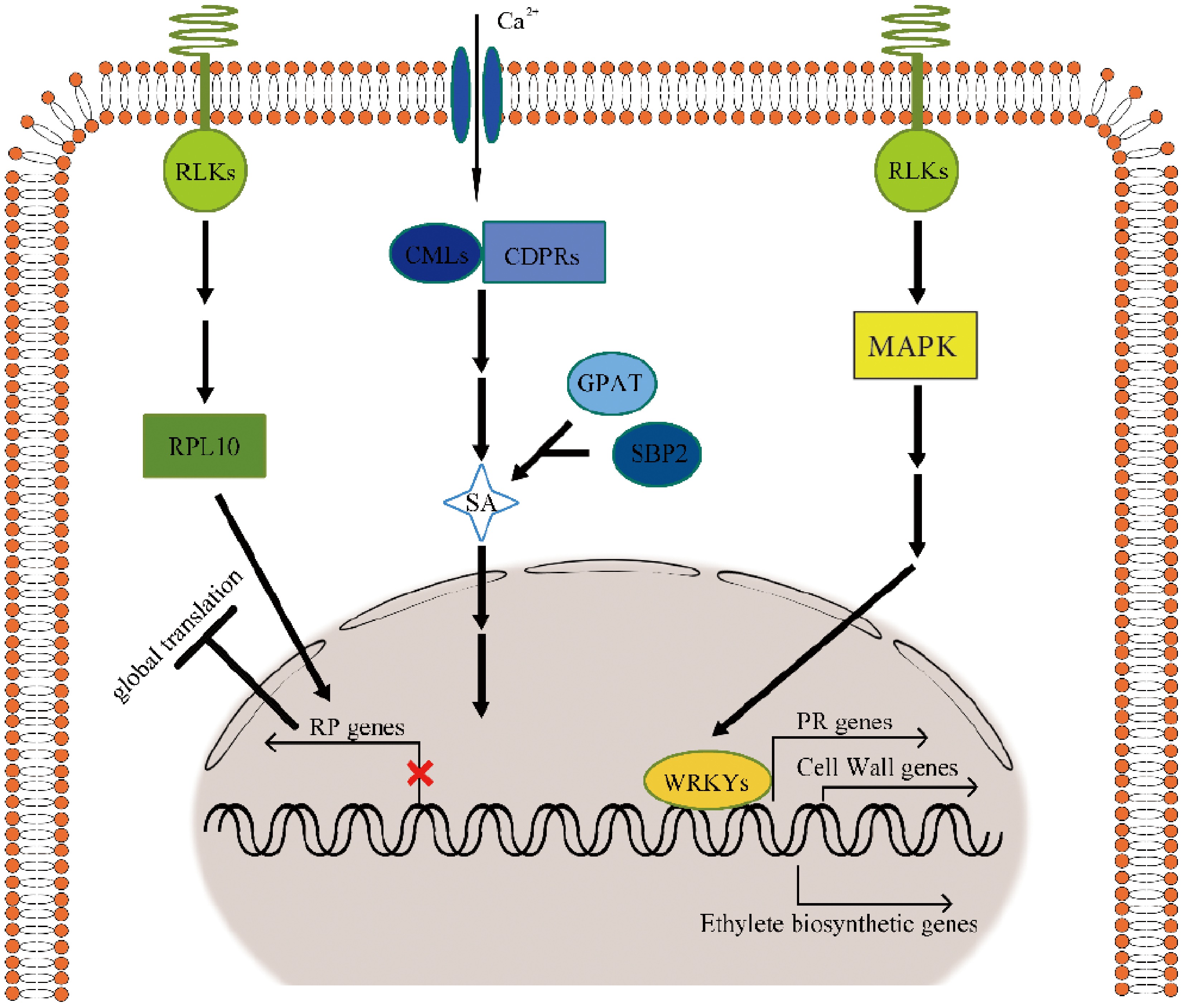
Figure 2.
Garlic genes potentially involved in antiviral immunity. Differentially expressed genes between virus-accumulating (V), and virus-free (VF) garlic, potentially involved in at least three signaling pathways of antiviral immunity to modulate the expression of downstream WRKY genes, PR genes, SA, and ethylene biosynthesis-related genes.
-
Viral diseases are a significant limitation to the production of Allium crops worldwide, resulting in stunted growth, lower yields, deterioration of bulb quality, chlorosis, distortion, and decreased leaf area. However, the diseases caused by onion yellow dwarf virus (OYDV) and leek yellow stripe virus (LYSV) have been considered particularly significant due to their consistent association with considerable yield losses. The severity of the disease is regulated by various factors such as environmental conditions, the interaction between different viruses and host plants[7,8,45]. In the case of garlic, the infection with OYDV or LYSV individually can result in considerable reduction in bulb weights, whereas the infection with a combination of the two can result in greater losses, which can be as high as 80%[46]. Iris yellow spot virus (IYSV) is transmitted through the vector Thrips tabaci, and results in straw-colored necrotic spots on the leaves of the Allium crops, thereby reducing the efficiency of photosynthesis, and resulting in considerable losses when the disease is severe[25].
Some virus control methods have been proposed by researchers, including the management of planting material, improvement of cropping techniques, use of premium cultivation methods, and adherence to appropriate field hygiene practices. Specifically, the control for transmitted insects through biological control or pesticides can greatly reduce the viral infection. Integrated pest management (IPM) employs non-chemical methods like reflective mulches, intercropping, trap cropping, and biological control. Reflective mulches deter aphids and thrips landings, lowering transmission rates[47]. Additionally, breeding of resistant cultivars is an effective strategy for managing viral spread in production. For instance, wax layers have a function to prevent the feeding of insects, and improving the thickness of wax layers reduces the infection of viruses[48]. Clonal propagation is a common practice that results in virus accumulation, and consequently, viral diseases pose a major threat to garlic production.
Five years of field observations have shown that viral accumulation markedly reduces bulb yield, and that viral damage increases significantly with the number of planting years[49]. Though traditional methods of eliminating the virus, such as shoot-tip culture are effective, they are labor-intensive and time-consuming. Recent transcriptomic studies of individual cells have shown that young cloves contain meristematic cells that are largely free of the virus, making this a better and more convenient approach to producing virus-free garlic. Such conclusions emphasize the possibility of combining modern molecular-cell-based methods with traditional methods to sustainably manage viral diseases in Allium crops.
-
Biotechnological techniques should be used wisely in the future to manage the viral diseases in Allium crops, enabling strong and broad-spectrum resistance and sustained production. We should make virus-resistant cultivars through genome engineering methods such as CRISPR Cas9, base and prime editing, targeted gene silencing, and virus-induced silencing[50]. Multi-omics analysis, such as whole genome sequencing, small RNA sequencing, proteomics, transcriptomics, and metabolomics approaches, will enhance our knowledge of host defense regulation and accelerate breeding for resistance. Notably, single-cell RNA sequencing is an attractive future direction that can reveal cell-type-specific viral activity and host defense responses that are not visible in bulk tissue analysis. These things can make a substantial contribution to the understanding of Allium-virus interaction and provide a foundation for its use in breeding programs and virus-elimination strategies.
Further studies of immune signaling (SA, JA, ethylene), epigenetic regulation, and antiviral metabolites will be helpful in establishing and prolonging defense strategies. Since vegetatively propagated Allium crops accumulate high levels of virus, future initiatives should also focus on sanitation and the propagation process, such as meristem culture, thermotherapy, cryotherapy, and other methods to eliminate the virus. Besides, it is necessary to limit virus transmission through ecologically sensitive approaches to vectors, such as a biological control of aphids and mites. In general, the combination of genome engineering, omics methods, and enhanced sanitation practices is a high-impact solution for creating a genetically engineered virus-resistant Allium genotype in the long term, despite there still being significant knowledge gaps about responses of the type of cells to antivirals, the development of genetic resistance to long-term resistance, and the complicated nature of mixed infections of the virus in Allium crops.
-
Viral diseases remain a significant limitation to the sustainable production of Allium crops worldwide, resulting in substantial yield and bulb quality losses. The most economically significant viruses of the Allium species are potyviruses, including OYDV, LYSV, and IYSV, which remain a serious challenge because they are highly transmissible and prolonged infections. Viral disease management in Allium crops depends on integrated methods, including planting virus-free material, using Integrated Pest Management (IPM) to reduce insect vector populations, and developing resistant cultivars. Moreover, natural plant defense mechanisms, such as systemic acquired resistance (SAR) also helps restrict viral dissemination in host tissues. Significantly, new biotechnological techniques, such as RNA interference (RNAi), CRISPR-Cas9 genome editing, and sophisticated multi-omics and single-cell transcriptomic analyses, have given us hope that we can better understand the interactions between viruses and their hosts and breed virus-resistant Allium varieties more quickly. In general, integrating sustainable agronomic practices with state-of-the-art molecular technologies will play a crucial role in the long-term control of viral diseases and in enhancing the productivity of Allium crops.
This work was supported by grants from the National Natural Science Foundation of China (32372689, 32502696), the Shandong Provincial Key Research and Development Program (2023CXPT045, 2024KJHZ004), the Yuelu Mountain Laboratory Seed Industry Program (YLS-2025-ZY04060), the Basic Research Program of Jiangsu (BK20250894), Jiangsu Provincial Basic Research Program of Higher Education (23KJB210017), and the Natural Science Foundation of Yangzhou (YZ2024181).
-
The authors confirm their contributions to the paper as follows: writing draft manuscript: Murtaza G, Gao S; providing suggestion for manuscript: Zhou X, Li F; manuscript revision: Wang Y, Liu T. All authors reviewed the results and approved the final version of the manuscript.
-
Data sharing is not applicable to this article as no datasets were generated or analyzed during the current study.
-
The authors declare that they have no conflict of interest.
-
# Authors contributed equally: Ghulam Murtaza, Yanzhou Wang
- Copyright: © 2026 by the author(s). Published by Maximum Academic Press, Fayetteville, GA. This article is an open access article distributed under Creative Commons Attribution License (CC BY 4.0), visit https://creativecommons.org/licenses/by/4.0/.
-
About this article
Cite this article
Murtaza G, Wang Y, Zhou X, Li F, Gao S, et al. 2026. Viruses in Allium crops and their impact on growth. Vegetable Research 6: e018 doi: 10.48130/vegres-0026-0011 

Viruses in Allium crops and their impact on growth
- Received: 17 December 2025
- Revised: 27 February 2026
- Accepted: 20 March 2026
- Published online: 15 May 2026
Abstract: The genus Allium, encompassing garlic (Allium sativum), onion (Allium cepa), Welsh onion (Allium fistulosum), Chinese chives (Allium tuberosum Rottler), and leek (Allium porrum), plays a crucial role in global agriculture and economy. Viral infections pose a significant threat to the cultivation of Allium crops, leading to substantial yield losses. This review summarizes the diverse array of viruses affecting Allium crops, detailing the symptoms manifested in infected plants. The different effects of these viruses in the various kinds of plant tissues and cell types are thoroughly studied, especially the intricate molecular, physiological, and cellular interactions that determine the dynamic relationship between the viral pathogen and its Allium hosts. Moreover, the review elucidates the detrimental effects of viral diseases on Allium crops and explores strategies for disease management and control. By shedding light on Allium crop viruses, this review aims to enhance our understanding of viral disease prevention in Allium cultivation.
-
Key words:
- Allium /
- viral diseases /
- damage /
- control measures