











-
Global agriculture is at a critical point, tackling the double challenges of feeding a constantly growing population, projected to reach 9 billion by the year 2050, and mitigating the environmental damage caused by farming practices[1]. To meet the ever-increasing food demand, global food production needs to increase by 70% by 2050[2]. The use of chemical fertilizers to boost crop yield can only work up to a certain point[3]. The consistent application of chemical fertilizers causes the soil's fertility to gradually decline and its quality to deteriorate[4]. So, chemical fertilizers alone are not the solution. The integration of chemical fertilizers with biofertilizers could offer a promising solution to these issues. To get the most out of any fertilizer and accomplish balanced nutrient management for crop growth the benefits must be combined[5]. This combination has the potential to optimize nutrient use efficiency, improve crop yields, and contribute to sustainable agricultural practices, making it a crucial area of research in the quest to ensure food security for the future.
Maize (Zea mays), a tall annual grass belonging to the family Poaceae, is cultivated primarily for its edible grain. It grows in a wide range of soil and climatic conditions. It is the third most cultivated crop after rice and wheat globally[6]. Maize is used as food, feed, and industrial raw materials and thus, contributes to food and nutritional security as well as global agri-food systems in a dynamic way[7]. In Nepal, maize is the second most important crop after rice in terms of both area and production[8]. It is cultivated on 979,776 hectares of land, yielding a total production of 2.99 million metric tons, with an average productivity of 3.06 Mt·ha−1[9]. Maize accounts for approximately 25.02% of the country's total cereal production, 6.88% of the Agriculture Gross Domestic Product (AGDP), and 3.15% of the Gross Domestic Product[10]. A large population still consumes maize as their staple food, and its demand is increasing rapidly due to the expansion of poultry and feed industries in Nepal[11].
Since 2007, Nepal has been experiencing a gradual and steady increase in the area, production, and productivity of maize, but the production remains lower compared to that of other developed nations[12]. Farm-level maize yields in Nepal average 2.45 Mt·ha−1 which is considerably lower than the attainable yield of 5.7 Mt·ha−1[13]. There remains a substantial gap between maize demand and production levels[14]. One of the major constraints for low productivity is low soil fertility. The quality and productivity of land is experiencing a noticeable decrease in terms of soil fertility[15]. The disparity in yield and potential yield is primarily due to inadequate or ineffective resource inputs with many farmers adhering to cultivation methods that differ significantly from recommended practices. There is more reliance on nitrogen-based fertilizers causing imbalance in the soil[16]. The use of advanced techniques, including proper fertilizer application remains low. The primary impediment to agricultural production in developing nations is the inaccessibility of vital plant nutrients, which arises from the inadequate application of both kind, and quantity of fertilizer[17]. Phosphorus, a critical nutrient, is often limited in supply, and in the soil as a result.
Phosphorus is considered the second most important plant nutrient after nitrogen. This essential mineral is critical for normal plant growth; its deficiency can lead to stunted shoot growth, delayed maturation, reduced disease resistance, decreased leaf area, and quantity[18]. Plants require phosphorus to grow throughout their life cycle, especially during the early stages of development. Photosynthesis relies on phosphorus, which is essential for plants to produce sugars, starches, and proteins[19]. Adequate P levels are particularly important during the early stages to enhance shoot and root growth and to increase water use efficiency and yield potential. When P levels are too low, maize cannot grow, produce, or tolerate stress.
There is excessive dependence on chemical fertilizers all over the world. While they boost crop production initially, their long-term impact is dangerous. The harmful effects of chemical fertilizers include soil acidity, soil crusting, change in soil pH, nutrient depletion, degradation of soil structure, environmental pollution, adverse impacts on soil microorganisms, etc.[20]. Chemical fertilizers also affect human health through food chains. To minimize the negative impacts of chemical fertilizers on soil organisms, it is important to use them responsibly, and in combination with other practices that promote soil health and fertility. An efficient method for maintaining long-term soil productivity and promoting a balanced nutrient supply is integrated nutrient management, or INM. INM integrates chemical fertilizers with organic inputs and biological resources.
INM is a concept of providing plants with the right amount of nutrients, creating healthy soil conditions, eliminating the negative impacts on the environment, maintaining continuous soil nutrient balance for the long term to obtain desired productivity, and finding proper ways to manage agricultural waste[21]. Biofertilizers are beneficial microorganisms used as fertilizers. A biofertilizer is a material that includes living microorganisms that, when added to soil, plant surfaces, or seeds, colonize the rhizosphere, or the interior of the plant, and increase the host plant's availability or supply of primary nutrients, thereby promoting growth through biological processes[22]. Through nitrogen fixation, phosphate and potassium solubilization or mineralization, release of chemicals that regulate plant growth, synthesis of antibiotics, and the biodegradation of organic matter in the soil, biofertilizers maintain a soil environment rich in a variety of micro and macro nutrients[23]. Phosphate solubilizing bacteria (PSB) are beneficial bacteria which solubilize insoluble inorganic phosphorus compounds.
The availability of soluble phosphorus in the soil is limited. A significant amount of phosphorus applied through fertilizers becomes fixed and gets converted to inorganic forms. In addition to making phosphorus unavailable to plants, this process causes eutrophication and soil fertility depletion in the long run[24]. The insoluble forms of phosphate remain out of reach of the plants, making the problems worse. To overcome this, phosphate solubilizing bacteria (PSB) play an important role in transforming these forms of phosphorus into soluble forms, thereby mitigating negative environmental effects. PSB are the main providers of plant nutrition in agriculture, possibly giving plants access to soluble phosphorus[25]. There are various mechanisms, such as lowering soil pH, chelation, and mineralization, through which PSB solubilizes insoluble compounds, and makes phosphorus available to the plants[26]. Therefore, phosphate solubilizing bacteria (PSB) when used as biofertilizers can increase phosphate uptake in plants, and when combined with chemical fertilizers can significantly boost nutrient use efficiency and crop yields.
This study was conducted to assess the impact and effectiveness of PSB and NPK fertilizers on maize and to address and provide the optimal combination of them for better growth and yield. Also, sufficient research has not been conducted on PSB and its interaction with chemical fertilizers in Nepal, so this study will help to fill the research gap, providing valuable data and insights for maize cultivation and future research.
-
The research was carried out in Puranchaur, located in the Pokhara Metropolitan City of Kaski district of Nepal. The place is situated in the hilly region of Gandaki province. The latitude of the site is 28.2096° N and the longitude is 83.9856° E. The region generally has cool winters with intermediate frost, and summers are mild to hot[27]. It falls under the USDA Hardiness Zone 10b.
The experiment was laid out in a randomized complete block design (RCBD). There were seven treatments, each treatment was replicated three times. Altogether there were 21 individual plots. Individual plots were 3 m in length and 2 m in breadth. Spacing was 60 × 30 cm2, and the plot consisted of four rows with nine plants each. The net experimental plot area was 6 m2, having plot-plot spacing of 50 cm. The length of the experimental field was 18 m, and the breadth was 11 m with a total area of 198 m2.
Soil samples were taken from 10 different spots of the field, mixed thoroughly, and sent for laboratory analysis. Soil characteristics of the experimental field indicated a slightly acidic soil (pH 5.8) with a sandy loam texture, containing 1.26% soil organic carbon, 0.4% total nitrogen, and low levels of phosphorus and potassium.
The treatments used for the research were Control (T1), Recommended NPK dose (T2), Recommended NPK dose + PSB (T3), Full dose N&K + 25% P + PSB (T4), Full dose N&K + 50% P + PSB (T5), Full dose N&K + 75% P + PSB (T6), and Full dose N&K + PSB (T7). The recommended NPK dose was 120:80:60 kg·ha−1 based on National Agriculture Research Centre (NARC) recommendation and field conditions.
The field was thoroughly prepared by deep ploughing using a moldboard plough, followed by thorough leveling one week prior to planting. Manual removal of weed residues was carried out to ensure optimal growing conditions. Prior to sowing, a comprehensive layout of the experimental design was established. A total of 21 plots were prepared, adhering to the experimental protocol described previously. Sowing was done on March 23, 2023. The maize variety utilized for the study was Arun-2.
The recommended application rate of NPK fertilizer (120:80:60 kg·ha−1) was applied, with a half dose of urea, the full dose of diammonium phosphate (DAP), and muriate of potash (MOP) applied as a basal dose. The other half dose of urea was split into two parts and applied as top-dressing at knee high stage at 30 DAS, and before tasseling at 45 DAS. Prior to sowing, the seeds underwent a PSB (Katyayani brand with 5 × 10⁸ CFU) treatment by soaking them in a solution for 30 min, prepared by mixing 100 mL of PSB in 1 L of water. This Katyayani brand utilizes selective strains of bacteria from Bacillus and Pseudomonas species. Weeding was carried out at 20 d after sowing (DAS), and again at 35 DAS. Given the adequate rainfall during the research period, irrigation was not necessary. Harvesting was conducted manually by hand at 95 DAS.
Data collection and observations
-
Throughout the crop growth, key measurements and observation characteristics were taken to evaluate the growth, development, and yield of the maize crop. Five plants per plot, excluding border plants, were tagged and measured at various intervals. Plant height was measured from the ground surface at 45 DAS and 65 DAS. The number of leaves per plant, excluding senescent and emerging leaves, was recorded at 45 DAS and 65 DAS. Leaf length was measured using a centimeter scale at 45 DAS and 65 DAS. The length and diameter of cobs were measured after harvest to evaluate the development and productivity of the individual cobs. The total number of kernels per cob was counted. Test weight, or the weight of 1,000 grains per plot, was also determined. Finally, yield of maize per hectare was calculated to estimate overall productivity.
Statistical analysis
-
The recorded data was systematically organized based on various parameters observed during the study. To analyze the collected data, a combination of statistical tools, such as Microsoft Excel, R-Studio (version 4.2.0), and Sigmaplot (version 14.0), was utilized. The least significant difference (LSD) test was used at a certain probability level to assess the statistical significance of differences in mean values between treatments. All results were considered statistically significant at p < 0.05 unless otherwise stated.
-
It was found that treatments had significant effects on plant height measured at 45 and 65 days after sowing (DAS) at p value < 0.05 and < 0.1 respectively (Fig. 1). Plant height was the highest in T3 which was statistically similar to five other treatments except T1. Plants with the control treatment (T1) recorded the lowest height of 64.13 and 134.60 cm at 45 and 65 DAS respectively. The average height of plants in T3, which received the recommended NPK dose combined with phosphate solubilizing bacteria (PSB), was 71.04 cm at 45 DAS, and 152.27 cm at 65 DAS.
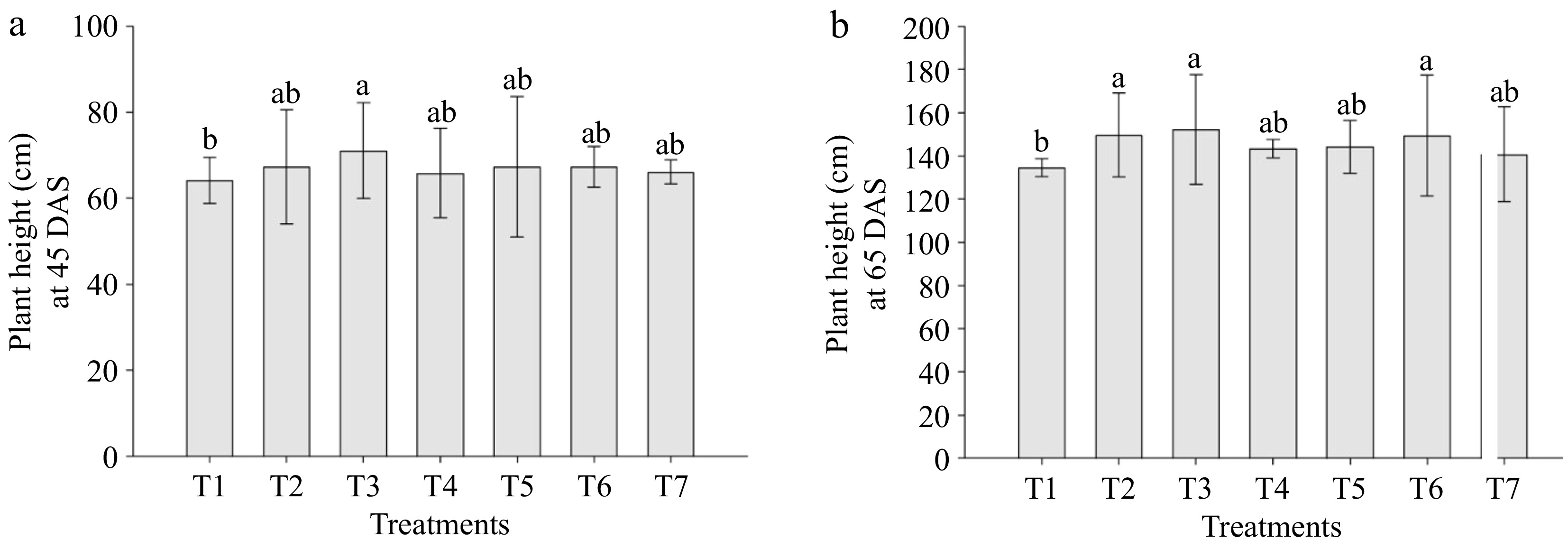
Figure 1.
Effect of combined application of PSB with NPK fertilizers on plant height of maize at (a) 45 DAS, and (b) 65 DAS. Different letters indicate significant differences in the mean value between treatments at p value < 0.05 at 45 DAS, and < 0.01 at 65 DAS.
The study underscored the significant impact of phosphate solubilizing bacteria (PSB) on phosphorus fertilizer in influencing plant height. T7, which did not get phosphorus, showed lower plant height compared to the treatments that did. Plant height increased with the increase in the amount of phosphorus. With the increase in phosphorus availability, plants had better access to nutrients which probably led to improved root development and nutrient uptake. This, in turn, led to an increased plant height. This result was in line with previous research indicating that PSB improves soil phosphorus fractions, which promotes better plant growth[28]. A notable increase in plant height was observed at 65 DAS, likely caused by the application of the second dose of nitrogen fertilizer. This finding is consistent with a previous study which reported that the application of nitrogen fertilizer resulted in an increased root biomass, height, root length, and diameter[29].
Effect on number of leaves per plant of maize
-
At both observations, there were no statistically significant differences in the number of leaves in different treatments. As shown in Fig. 2, T3 and T7 consistently produced the highest and the lowest number of leaves respectively. The average number of leaves across all treatments was 8.15 at 45 DAS, and 13.46 at 65 DAS. Phosphorus had a noticeable effect on the number of leaves. In T1 and T7, the number was below the overall average at both 45 and 65 DAS, as phosphorus was not applied in the soil through fertilizers. On the contrary, in all the treatments where phosphorus fertilizer was applied, the number was on the higher side of the average. This suggests that the presence of phosphorus might have positively influenced the number of leaves in the maize plants, emphasizing its role in enhancing leaf production. This is supported by the findings reported by Zhu et al.[30], who found that an increase in phosphorus supply resulted in a rise in leaf count.
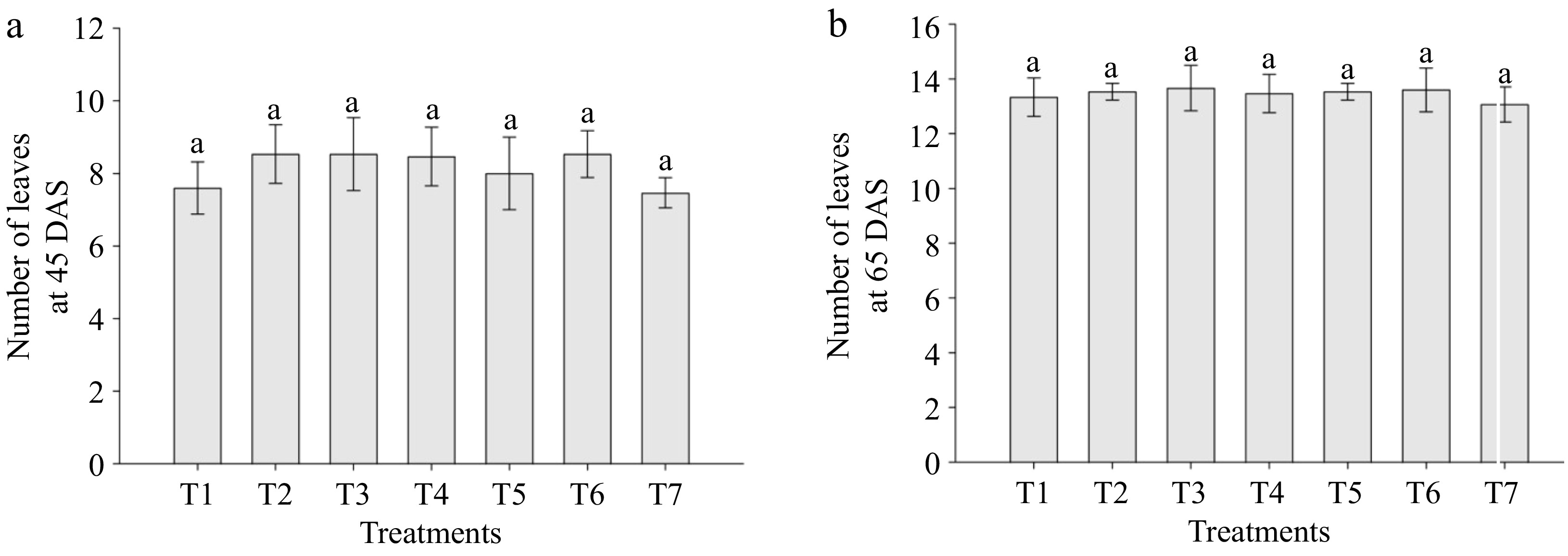
Figure 2.
Effect of combined application of PSB with NPK fertilizers on the number of leaves per plant of maize at (a) 45 DAS, and (b) 65 DAS. Different letters indicate significant differences in the mean value between treatments at p value < 0.001 at 45 DAS, and < 0.01 at 65 DAS.
However, it was unexpected that T1, which received no fertilizer input, had more leaves than T7. This unanticipated result could be attributed to various factors such as nutrient imbalance, stress, or altered hormonal regulation. T7 received nitrogen and potassium but no phosphorus, which might have caused nutrient imbalance. Sometimes fertilizers can lead to stress, resulting in inhibited growth. Fertilizers can also disrupt hormonal imbalance to produce unanticipated results. Further investigation into these surprising results could provide an understanding of the complex interactions that affect leaf development in maize plants.
Effect on leaf length per plant of maize
-
The results were statistically similar on leaf length per plant at 45 DAS across all treatments, however, significant differences were observed at 65 DAS. The average leaf length at 45 DAS was 72.32 cm, while at 65 DAS it was 87.72 cm (Fig. 3). The leaves of T3 at 65 DAS were significantly longer than those of T6 and T7. The results imply that the presence of more phosphorus might have increased the photosynthetic capacity of maize resulting in the elongation of leaves. This is backed by a previous study by Nazir et al.[31] who stated that better root development and nutrient absorption were most likely the cause of high phosphorus levels on plants, resulting in positive effects on plant height and leaf area index.
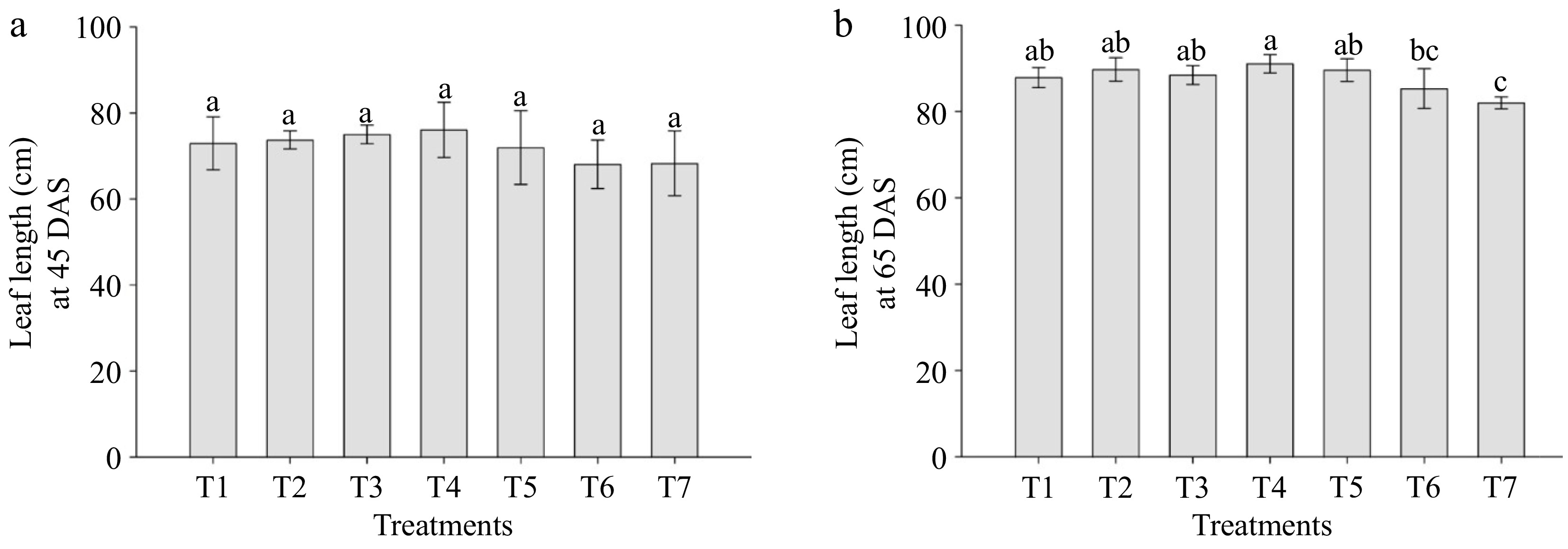
Figure 3.
Effect of combined application of PSB with NPK fertilizers on leaf length of maize at (a) 45 DAS, and (b) 65 DAS. Different letters indicate significant differences in the mean value between treatments at p value < 0.01 at 45 DAS, and < 0.05 at 65 DAS
Some results were unforeseen as the leaf length of plants in T6 and T7 were on the lower side in both observations. On the other hand, the longest leaves were found in T4 at both 45 and 65 DAS. These surprising results could be attributed to various factors such as nutrient imbalances, phosphorus antagonism, interactions of already prevalent soil microorganisms, as well as PSB, etc.[32,33]. These findings call for further exploration on these matters to better understand the complicated factors influencing leaf length, and other aspects in different fertilizer and PSB interactions. These unanticipated results highlight the complexity of plant responses to various nutrient treatments and emphasize the importance of ongoing research in agriculture.
Effect on cob length of maize
-
As illustrated in Fig. 4, the average cob length was recorded as 17.58 cm, with T2 showing the maximum length (18.44 cm), and T1 showing the minimum (15.77 cm). A significant difference in cob length was observed between T1 and T2, as well as between T1 and T3. Chemical fertilizers played a key role in determining cob length, which is in alignment with Rawal et al.[34] who stated manures and fertilizers had a major impact on cob length. T1, where no input was applied produced the shortest cobs, demonstrating the impact of the absence of fertilization. Increasing phosphorus levels resulted in a progressive increase in cob length across the treatments with PSB application, aligning with previous research by Amanullah et al.[35], where it was stated that the length of maize cobs responded well to rising P levels.
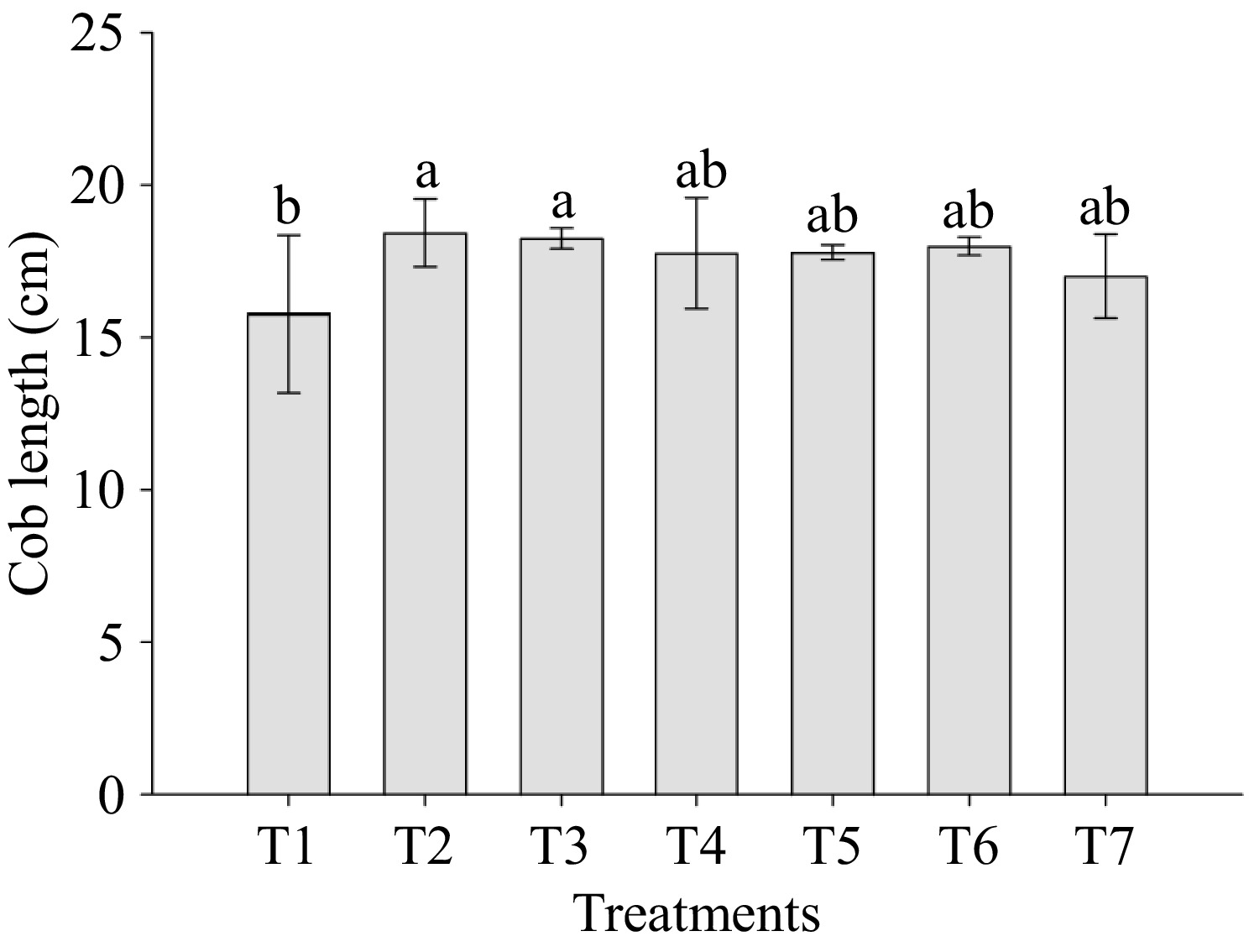
Figure 4.
Effect of combined application of PSB with NPK fertilizers on cob length of maize. Different letters indicate significant differences in the mean value between treatments at p value < 0.01
Effect on cob diameter of maize
-
It was observed that the average cob diameter was 4.74 cm, with T3 displaying the largest diameter, and T1 showing the smallest but the effects of the treatments resulted in a non-significant difference among the various treatments, as depicted in Fig. 5. Cob diameter was impacted by PSB as progressive increase in phosphorus with PSB application led to larger cob diameters in T4, T5, T6, and T3. The outcome was also influenced by the fertilizer rate, in line with the results of Tuong et al.[36], who observed an increase in cob diameter as the fertilizer rate increased.
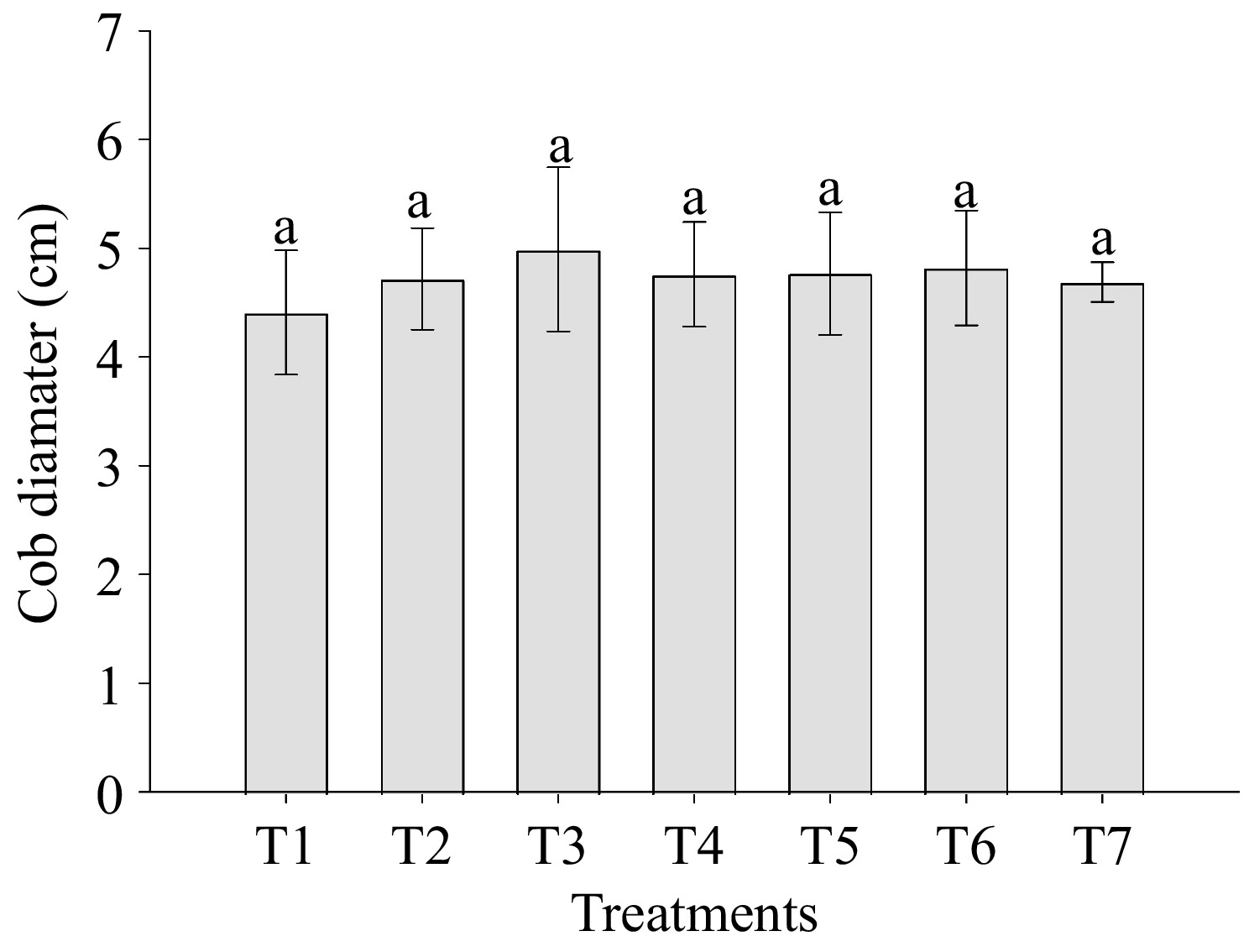
Figure 5.
Effect of combined application of PSB with NPK fertilizers on cob diameter of maize. Different letters indicate significant differences in the mean value between treatments at p value < 0.01
Effect on number of kernels per cob
-
While counting the number of kernels per cob, it was found that T6, which received the recommended full N&K, 75% of recommended P dose, combined with PSB, exhibited the highest number, and T1, the control treatment, exhibited the lowest, which can be seen in Fig. 6. The average number of kernels per cob was 494.11. A statistically significant difference in the number of kernels per cob was observed between T1 and T3, as well as between T1 and T6 at p value < 0.5. Lack of any input, specifically nitrogen, impacted the number of kernels significantly in T1 which is in line with previous research by Marahatta[37], who described nitrogen levels could significantly impact the number of kernels per cob, with higher levels generally producing more kernels. It was also observed that higher phosphorus content correlated with a greater number of kernels per cob, which is consistent with finding of Masood et al.[38] who found out that different phosphorus levels greatly impacted the number of cobs, number of grains per cob, and grain production of maize plants.
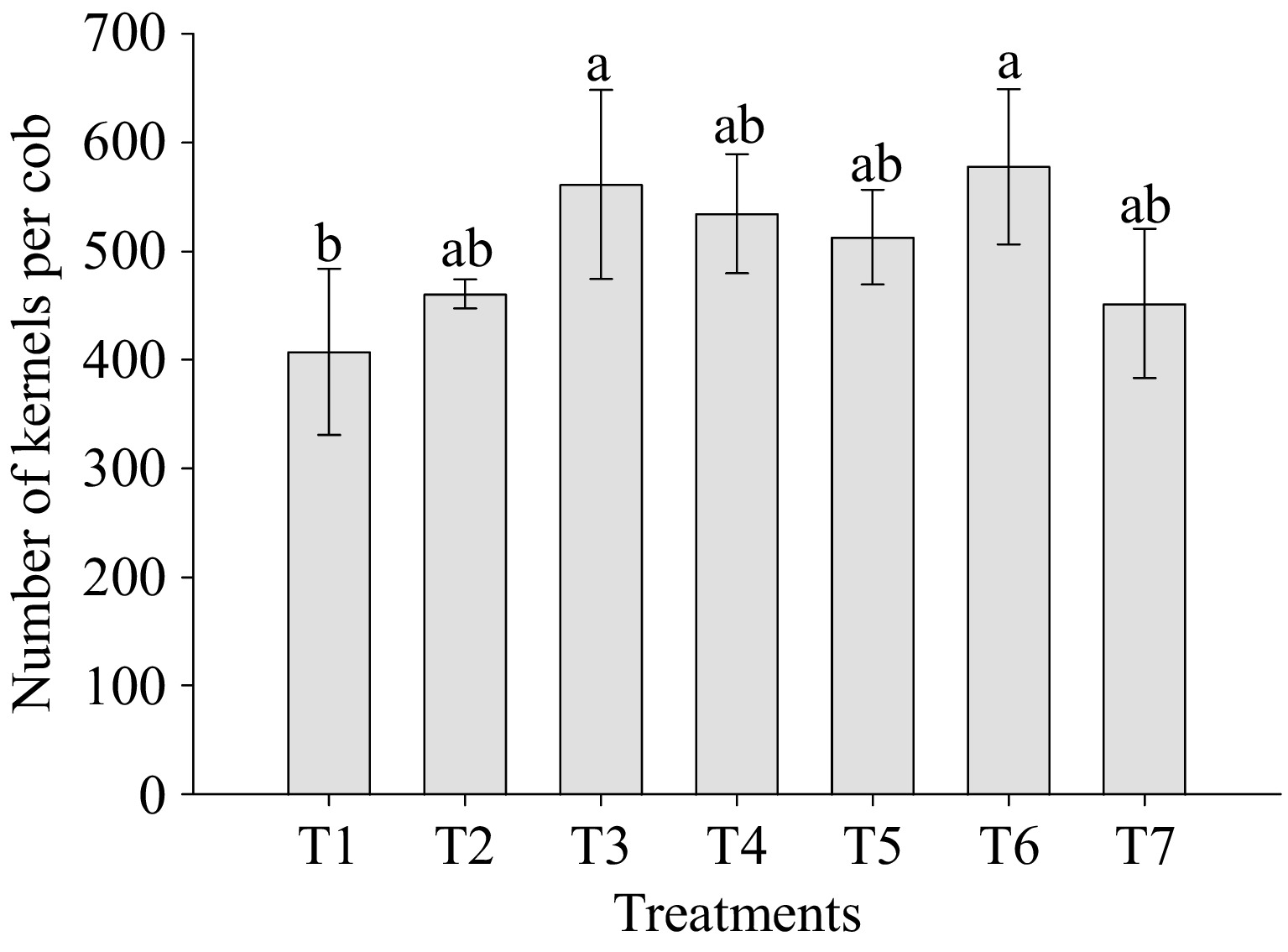
Figure 6.
Effect of combined application of PSB with NPK fertilizers on the number of kernels per cob of maize. Different letters indicate significant differences in the mean value between treatments at p value < 0.05
Effect on yield of maize
-
The average yield for maize was measured as 3.5 Mt·ha−1, with T3 yielding the highest, and T1 yielding the lowest (Fig. 7). Significant differences in yield were observed between T3 and T1. T1, which did not receive any chemical fertilizer, had the lowest yield, while T2, which received the recommended NPK dose, yielded slightly below the average. Increasing the amount of phosphorus fertilizer corresponded to a progressive increase in yield. As mentioned by Penn et al.[39], increased P uptake by maize plants increased the overall biomass and grain yield until peak production was reached.
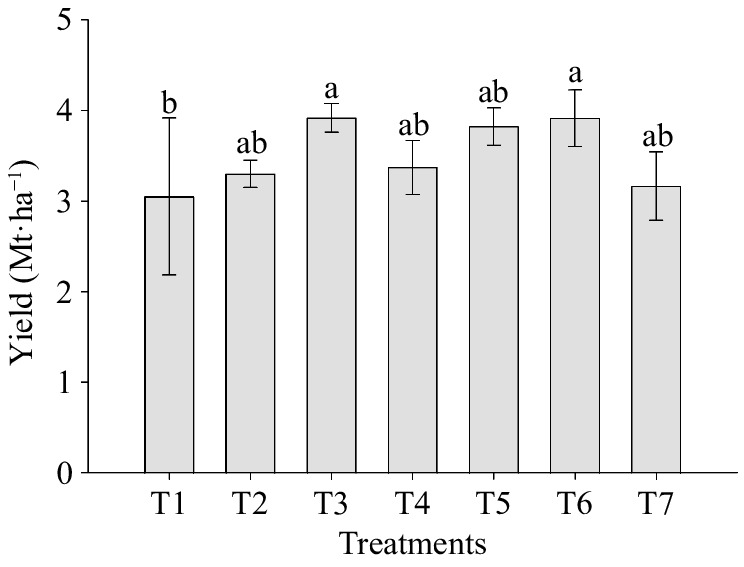
Figure 7.
Effect of combined application of PSB with NPK fertilizers on the maize yield. Different letters indicate significant differences in the mean value between treatments at p value < 0.01.
Yield was also notably affected by various yield attributes, including cob length, cob diameter, and the number of kernels per cob. T1 exhibited the smallest cob diameter, shortest cob length, and lowest number of kernels per cob, resulting in the lowest yield. These findings align with Raut et al.[40] who conducted a correlation analysis and found that yield traits such as grains per row, grain rows per cob, ear diameter, and ear length had a positive correlation with grain yield.
-
Without the application of any input, the control treatment resulted in unsatisfactory outcomes. It was evident that PSB and P fertilizer should be used in conjunction to obtain the best results. The highest achieved yield of 3.92 Mt·ha−1 in the study is 28.04% higher than the national average of 3.06 Mt·ha−1, which indicates a significant improvement in crop productivity. This approach not only maximized yield but also fostered improved crop growth, offering valuable guidance for sustainable agricultural practices. The yield increased by 0.62 Mt·ha−1 when PSB was added to the recommended dose of NPK. This rise in yield results in added profit for the farmers through sales. Therefore, when seed treatment by PSB is carried out, the investment is economically feasible and profitable for the farmers. The results of this research contribute to the existing knowledge base in agricultural science, serving as a foundation for developing sustainable and effective strategies to improve maize cultivation.
The authors express sincere appreciation to the College of Natural Resource Management, Kaski (CNRM, Kaski), affiliated under the Agriculture and Forestry University (AFU), Nepal. The authors also express sincere gratitude to all the supporting hands who were directly or indirectly involved in helping the success of the research.
-
The authors confirm contribution to the paper as follows: conducting the experiments, field layout, data collection, data analysis and interpretation, and drafting of the manuscript: Sigdel S; manuscript revision and final order of the manuscript: Bhatta S. All authors reviewed the results and approved the final version of the manuscript.
-
The datasets generated during and/or analyzed during the current study are available from the corresponding author upon reasonable request.
-
The authors declare that they have no conflict of interest.
- Copyright: © 2025 by the author(s). Published by Maximum Academic Press, Fayetteville, GA. This article is an open access article distributed under Creative Commons Attribution License (CC BY 4.0), visit https://creativecommons.org/licenses/by/4.0/.
-
About this article
Cite this article
Sigdel S, Bhatta S. 2025. Effect of combined application of PSB with NPK fertilizers on growth and yield of maize (Zea mays) at Puranchaur, Kaski, Nepal. Technology in Agronomy 5: e011 doi: 10.48130/tia-0025-0006 

Effect of combined application of PSB with NPK fertilizers on growth and yield of maize (Zea mays) at Puranchaur, Kaski, Nepal
- Received: 12 January 2025
- Revised: 10 April 2025
- Accepted: 24 April 2025
- Published online: 22 July 2025
Abstract: Global agriculture faces the pressing challenge of meeting the rising demand for food in a sustainable manner. Increasing crop production efficiency, particularly through the optimization of nutrient supply, is critical to addressing this issue. This research investigates an approach to enhance nutrient use efficiency, and boost crop yields. A study was conducted in Puranchaur, Pokhara Metropolitan City, Kaski, Nepal, from March 2023 to June 2023, to determine the appropriate application of chemical fertilizers, specifically urea, diammonium phosphate (DAP), and muriate of potash (MOP), in combination with a biofertilizer namely phosphate solubilizing bacteria (PSB), for the Arun-2 variety of maize. A randomized complete block design (RCBD) of seven treatments and three replications was employed in the experimental design. Significant differences among treatments were obtained through data analysis, with the highest yield of 3.92 Mt·ha−1 (metric ton per hectare), and the lowest yield of 3.05 Mt·ha−1 observed in the treatments recommended NPK dose (NPK at 120:80:60 kg·ha−1), + PSB (T3), and Control (T1) respectively. The recommended NPK dose + PSB also had a pronounced effect on yield attributes as well as growth parameters of plants. Combined application of chemical fertilizers at the recommended rate with phosphate solubilizing bacteria was found to be the most efficient method for maximizing maize yield.
-
Key words:
- PSB /
- Food security /
- Biofertilizers