











-
The global production of organic agro-industrial waste generated annually is substantial. The Food and Agriculture Organization of the United Nations (FAO) estimates that around 1.3 billion tons of waste from the food sector have been produced globally each year in recent decades, a significant portion of which comes from agro-industrial waste[1]. For instance, global coffee production and consumption lead to the generation of vast quantities of coffee grounds, while the poultry industry produces significant volumes of eggshell waste. Similarly, rice production results in significant amounts of rice husk, the wood and forestry industry generates a lot of sawdust, and the coconut industry generates large amounts of coconut fiber[2,3]. Proper management and use of this waste can significantly reduce environmental pollution and promote sustainable agriculture by reducing dependence on conventional substrates and chemical fertilizers.
These agricultural wastes serve as valuable resources for enhancing soil quality and fertility, with each type offering unique benefits. For example, coffee grounds enrich the soil with organic matter and essential nutrients, supporting microbial activity that is crucial for plant growth[4]. In a similar vein, eggshells, rich in calcium carbonate, not only help regulate soil pH but also enhance calcium availability, contributing to stronger plant structure and development[5]. Furthermore, rice husk biochar is highly effective in enhancing various soil properties. In soils prone to compaction or poor aeration, its high silica content improves water infiltration and reduces the risk of waterlogging[6]. On the other hand, in sandy soils, the porous nature of biochar aids in moisture retention, ensuring better water availability during dry periods. These combined effects create a more favorable environment for beneficial microorganisms, further supporting soil health and plant growth[6]. Similarly, coconut fiber, known for its excellent water retention and aeration properties, benefits root development and overall soil structure, making it an ideal component in potting mixes or soil amendments[7]. Moreover, sawdust, when properly composted, adds organic matter to the soil, improving both its fertility and structure, particularly when used in combination with biochar or mineral fertilizers[8].
Organic materials are increasingly used as alternatives to chemical fertilizers, which have raised significant environmental concerns, particularly regarding groundwater and ecosystem contamination. Unlike synthetic fertilizers that can easily dissolve in water and leach through the soil, contributing to nutrient pollution in groundwater[9], organic materials enhance the soil's cation exchange capacity, allowing it to better retain essential nutrients like potassium, calcium, and magnesium, preventing them from being washed away by irrigation or heavy rain[10,11]. This improved nutrient retention not only benefits plant growth but also supports sustainable agricultural practices[12]. Recently, agroecology has emerged as a transformative food system, driving a shift from the conventional agricultural model through integrated efforts from scientific research, practical application, and social movements, with the use of natural fertilizers at its core[13]. While traditional organic fertilizers such as manure, earthworm humus, vegetable waste, and sewage sludge are commonly used, there is a growing need to explore and adopt new alternative sources of organic fertilizers to address limitations like inconsistent nutrient content, potential contamination, and the environmental impact of large-scale production.
The use of alternative organic materials is gaining popularity among rural producers as a sustainable option to enhance farm productivity. By incorporating diverse organic inputs, farmers can improve pest management, enhance nutrient cycling, boost soil fertility, and optimize water use, all while maintaining crop yields and increasing revenue[14−16]. Additionally, these practices contribute to biodiversity conservation and food security at both local and global scales[17]. However, the successful adoption of these sustainable practices depends not only on continuous collaboration between food companies, councils, and farmers but also on the involvement of consumers and policymakers. Raising public awareness about the benefits of sustainable cultivation can influence consumer choices, fostering a more environmentally conscious market[18]. Integrating these practices into local agricultural policies will also strengthen the commitment to sustainability, driving long-term positive impacts on both the environment and agricultural productivity.
The objective of this review is to assess agro-industrial waste generation, such as coconut fiber, coffee grounds, eggshells, rice husks, and sawdust, in the most populous countries and to evaluate their potential social, environmental, and agronomic benefits. This review also examines the limitations and challenges associated with utilizing these organic residues as soil amendments, as well as the adverse environmental impacts of not incorporating them. Additionally, it provides a multivariate statistical analysis of the mineral composition of these residues to determine the feasibility of their individual or combined use. The review includes a bibliometric analysis of key scientific publications in the field and assesses the potential for promoting the adoption of organic waste as a sustainable practice in crop production.
-
The use of organic waste for sustainable plant cultivation offers significant economic and social benefits (Fig. 1). This financial relief allows farmers to invest more in their farming operations, leading to improved productivity and sustainability. Additionally, the use of organic materials can enhance crop quality, potentially fetching higher market prices, and increasing consumer demand for sustainably grown produce[19].
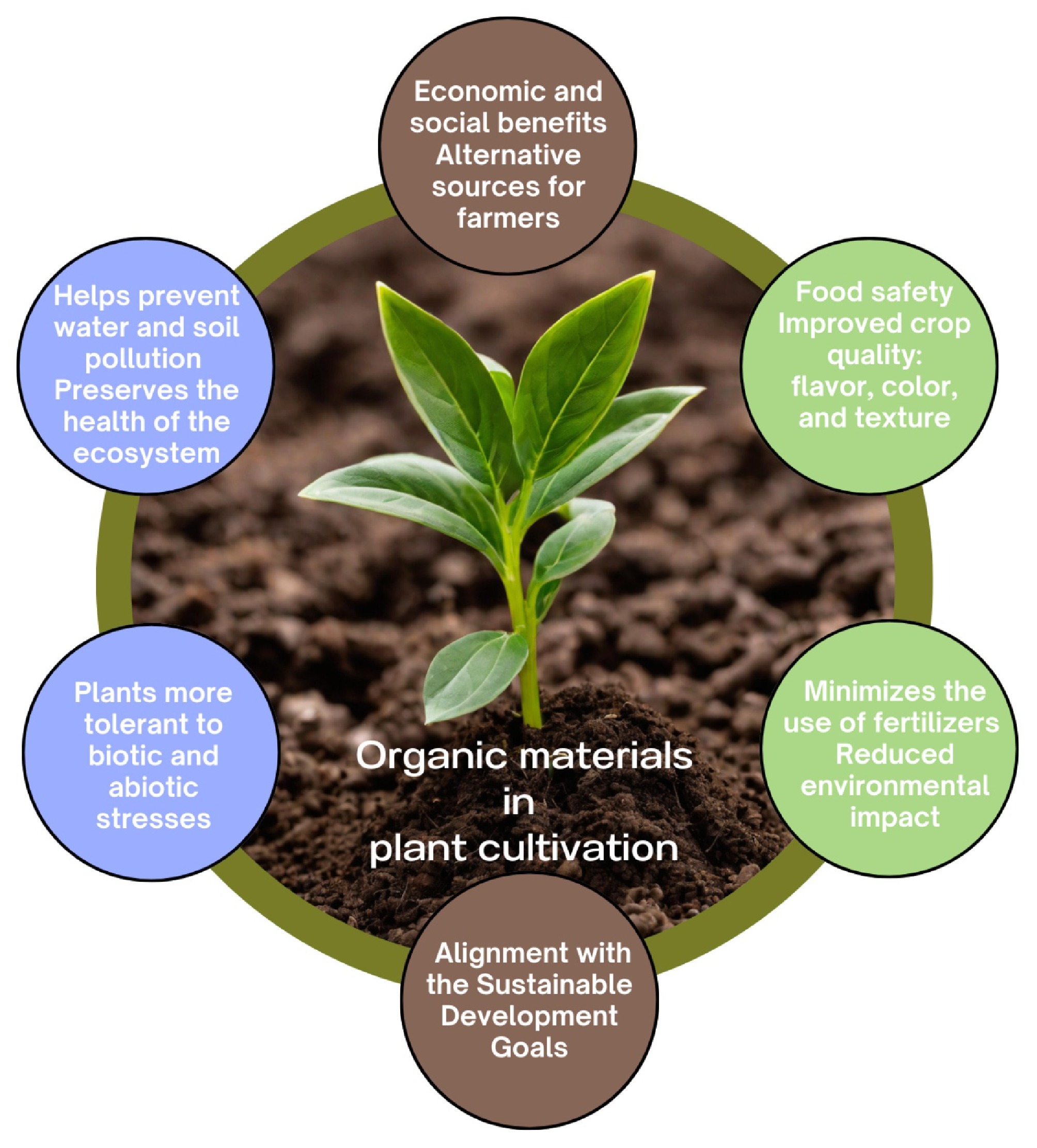
Figure 1.
The main benefits of using organic materials from agro-industrial waste with a focus on the conservation of natural resources with sustainable plant cultivation.
Socially, the adoption of organic materials strengthens community ties by encouraging collaboration and knowledge exchange among farmers. This transition often involves training programs, cooperative initiatives, and local workshops where farmers share insights, address challenges, and support one another in implementing sustainable practices. As more farmers transition to sustainable practices, they contribute to a healthier environment, reducing pollution, and enhancing soil health. This collective shift can lead to community-led initiatives and cooperatives, promoting resilience and self-sufficiency in agricultural communities. Furthermore, using organic waste as soil amendments aligns with environmental stewardship, encouraging farmers to become active participants in preserving their ecosystems. This increased sense of responsibility and community engagement not only improves farmers' quality of life but also instills pride in their sustainable practices, inspiring the next generation of farmers to continue these beneficial practices[11].
Organic certification regulatory agencies
-
Economically, the use of organic materials can lead to a higher demand for organic certification as more farmers transition to sustainable practices. This increase in certification requests can result in more revenue for regulatory agencies through certification fees and services. Additionally, the widespread use of organic materials supports the growth of the organic market, enhancing the value of certified organic products and boosting the credibility and authority of these regulatory bodies, reinforcing their role in ensuring compliance, maintaining industry standards, and promoting sustainable agriculture[20].
Socially, regulatory agencies benefit from promoting environmentally responsible farming practices. By encouraging the use of organic materials, agencies can position themselves as leaders in advocating for sustainable agriculture and environmental stewardship. This leadership role can foster trust and cooperation between farmers, consumers, and regulatory bodies, creating a collaborative network that supports and advances organic agriculture. Furthermore, the success of organic certification programs can inspire public confidence in organic products, leading to increased consumer demand and broader acceptance of sustainable agricultural practices[19]. This positive societal impact highlights the crucial role of regulatory agencies in driving the transition toward a more sustainable and environmentally friendly food system.
Amount of agro-industrial waste
-
Natural resources, including water, minerals, and biological assets, are essential for human survival and economic development. Among these natural resources, organic waste such as agricultural residues, food scraps, and other biodegradable materials presents both a challenge in terms of waste management and an opportunity for resource recovery and agricultural improvement. Quantifying organic waste is a key step in identifying waste generation patterns and hotspots, which can guide strategy development for waste reduction, sustainable disposal, and resource reuse. In this review, estimates of annual organic waste production for the world's most populous countries were calculated based on agricultural commodity data retrieved from the Food and Agriculture Organization (FAO), using specific assumptions detailed in Table 1. These estimates, along with the methodology and supporting literature, are discussed in detail in subsequent sections. This data provides a foundation for advancing circular economy practices and supports the integration of organic waste into sustainable agricultural systems through composting and soil amendment strategies[21].
Table 1. Amount (tons/annum) of organic waste produced in the world's most populous countries.
Coconut fiber1 Coffee grounds2 Eggshells3 Rice husk4 Sawdust5 China 125,026 300,000 3,862,169 42,880,774 14,500,000 India 3,995,100 76,200 790,212 39,085,000 5,300,000 United States 218,000 1,528,500 724,272 1,739,944 4,200,000 Indonesia 5,157,098 287,400 873,280 10,883,059 3,800,000 Pakistan 7,478 1,000 148,876 2,796,802 1,700,000 Nigeria 67,658 8,818 66,138 1,668,400 1,300,000 Brazil 40,000,000 1,353,600 387,831 2,332,121 2,600,000 Bangladesh 123,590 501,000 108,466 11,388,911 1,000,000 Russia 4,200 255,000 302,381 215,282 3,900,000 Mexico 335,954 179,100 387,103 51,408 2,100,000 Ref. [22] [23−26] [27] [28,29] [30,31] 1Coconut fiber: Calculated assuming that approximately 30% of the coconut fruit's weight is coir fiber. 2Coffee grounds: Estimated using average coffee consumption per capita and the approximation that roasted coffee generates approximately 65% of its weight as spent coffee grounds. 3Eggshells: The average weight of 60 g per egg was considered, with a shell weight of 10%. These data are only for eggshells generated by consumption, they do not consider the shells of eggs generated by artificial incubators, so these values may be much higher. 4Rice husk: represents 20% of the total rice grain. 5Sawdust: Calculated as a byproduct of industrial timber processing, assuming an average generation rate of 10%–20% sawdust per cubic meter of processed wood, depending on the scale and efficiency of operations. Coconut fiber
-
The production of coconut fiber presents an important opportunity to add value to coconut residue after the consumption of coconut water and/or albumen. Approximately 30% of the coconut's total weight is made up of fibers, yet this valuable byproduct is often discarded in landfills or left on roadsides in tropical countries[32,33]. According to the latest data from the Food and Agriculture Organization[22], global coconut fiber production reached approximately 1,146,403 tons in 2021, with India alone earning around USD
${\$} $ Coffee grounds
-
The global consumption of coffee, one of the most popular and widely consumed beverages in the world, results in the substantial generation of coffee grounds as waste, with an estimated 650 kg of spent coffee grounds produced for every ton of roasted coffee[34,35]. When not properly managed, coffee grounds can cause environmental pollution due to their mutagenic properties, including caffeine, tannins, and polycyclic aromatic hydrocarbons (PAHs), which can leach into water sources from landfills and pose toxicity risks to aquatic organisms. However, when composted under controlled aerobic conditions, these compounds are effectively degraded by microbial activity, significantly reducing their toxicity and making composted coffee grounds safe and beneficial for use in soil to support plant growth[36,37]. With an estimated 60 million tons of coffee grounds produced annually worldwide, there is an urgent need to recover and reuse this waste by employing effective circular economic strategies[23]. Several countries with smaller populations but high per capita coffee consumption contribute significantly to the total volume of ground coffee waste produced each year. Notable examples include Germany (870,000 tons/year), Japan (465,000 tons/year), and Italy (390,000 tons/year), and coffee is consumed in practically every country in the world. Coffee grounds hold significant potential for organic composting, and in terms of atmospheric emissions, this reuse is advantageous compared to landfill disposal, resulting in an 18% reduction in emissions through composting[35].
There is a trend towards increased waste, as the roasted coffee market in Pakistan is relatively small but growing[25]. This consumption is part of a broader trend where coffee is becoming more popular, driven by an increase in the number of coffee shops and a shift in consumer preferences towards coffee over traditional tea. In countries where coffee has not traditionally been part of the culture, e.g., Nigeria, coffee consumption has increased significantly in recent years due to increasing urbanization and the growing influence of Western lifestyles[26]. The demand for coffee is also driven by the expansion of coffee culture and the popularity of convenient instant coffee blends among the working population[38].
Eggshells
-
Bird eggshells, left over after food consumption or artificial incubation, represent a significant source of waste with potential social benefits[39]. Eggshells make up about 10% of the total weight of chicken, duck, and goose eggs, and around 9% of turkey and quail eggs[40]. With global poultry egg production exceeding 183 million tons annually, approximately 18.3 million tons of eggshell waste is generated worldwide[27]. Effective management of this waste is crucial due to its potential environmental impact, including greenhouse gas emissions, particularly methane, if not properly handled[41]. Repurposing eggshells for agricultural use can reduce waste management costs for food industries, bakeries, and households while creating economic opportunities for small businesses involved in waste collection and processing.
Rice husk biochar
-
Rice husk is a major agricultural by-product with a global annual production estimated at around 150 million tons, largely due to the large quantities of rice produced worldwide[42]. For example, in 2021, China produced approximately 214.4 million tons of rice, generating around 42.8 million tons of rice husk[28]. The husk, which makes up about 20% of the rice grain's weight, is the most abundant by-product of the rice industry[43]. Typically, some rice husks are incinerated for energy or left to decompose on farmland, which can potentially cause environmental harm, such as air pollution from harmful emissions[6]. Rice husk biochar, or carbonized rice husk, refers to rice husk subjected to the pyrolysis process, where rice husk is heated in the absence of oxygen to produce biochar, a stable carbon-rich material. After pyrolysis, about 20% of the original husk weight remains as biochar[44]. Additionally, smallholder farmers can benefit from cost-effective alternatives to synthetic soil amendments, reducing financial barriers to sustainable farming practices.
Sawdust
-
Estimating the global production of sawdust is crucial for understanding its impact on both the woodworking industry and environmental management. Numbers may vary based on the scale of activity and the availability of data from each country's forestry industries and waste management sectors. Annually, approximately 80 to 100 million tons of sawdust are generated as a by-product of lumber and woodworking operations[30,45], considering the reported generation rate of 10%–20% sawdust per cubic meter of processed wood, arising primarily from timber processing for various purposes, including construction, furniture manufacturing, and paper production[46]. The significant volume of sawdust produced highlights the necessity for efficient waste management practices and innovative utilization methods. Additionally, sawdust can support job creation and economic development in rural and forestry-dependent communities by promoting value-added industries for the horticulture sector.
-
Soils in many agricultural-producing areas worldwide, including the United States, are often affected by a deficiency in organic matter and erosion[47]. One major factor contributing to the decline in soil organic matter is the reduced amount of plant residues returned to the soil annually. In the United States, soil erosion exacerbates this issue, resulting in an estimated USD
${\$} $ 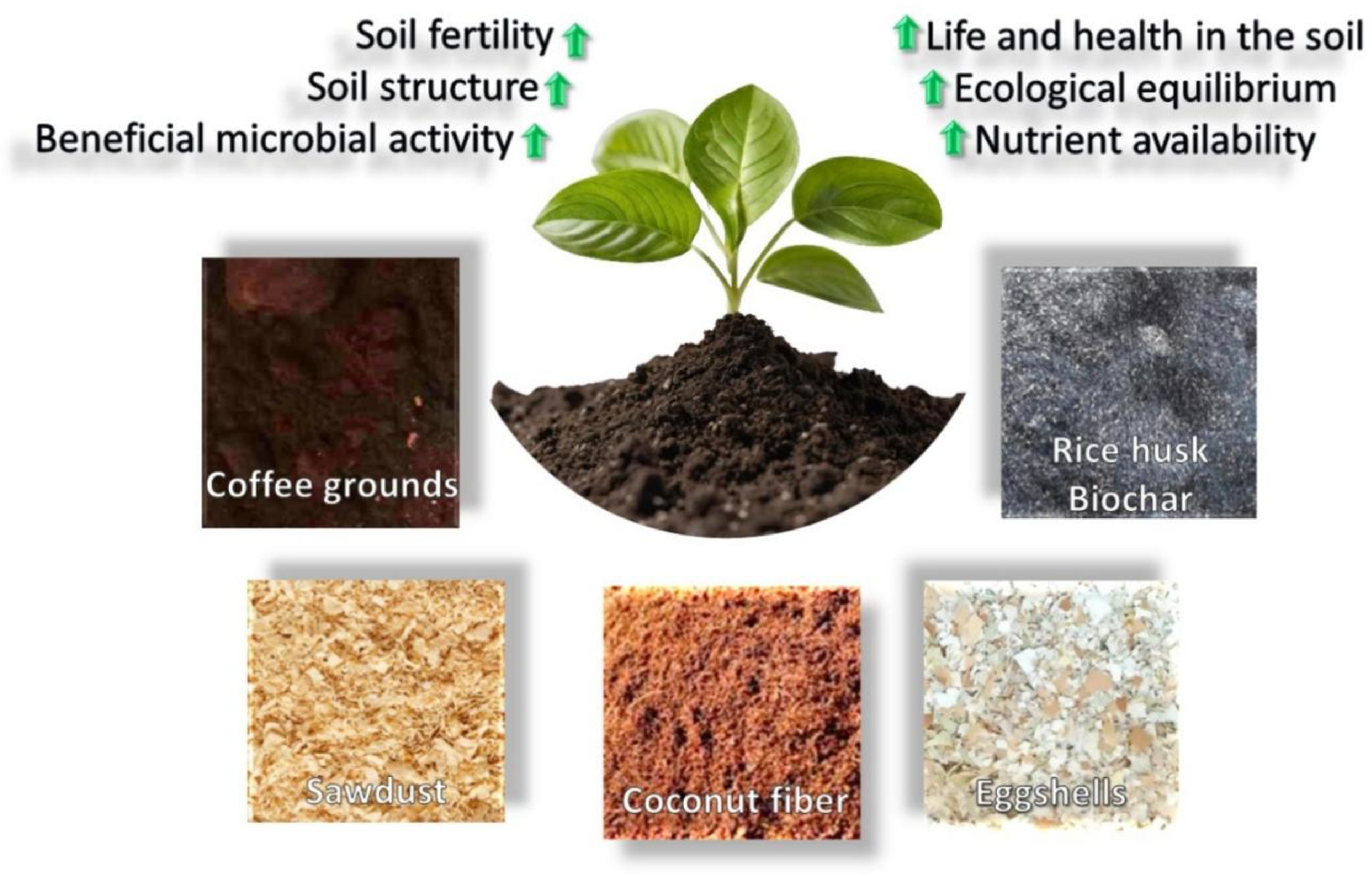
Figure 2.
Benefits of organic materials for the soil-plant system.
Soil fertility
-
Different plant species and growth stages exhibit varying ion demands, which are met through complex nutrient absorption mechanisms involving ion interactions in their roots[50,51]. Efficient monitoring of nutrient dynamics in soil becomes crucial due to these complex dynamics, aiming to minimize fertilizer wastage and safeguard the environment. Consequently, it can lead to a multitude of economic benefits[52−54]. It is extremely important to recycle organic waste that contains the macronutrients nitrogen, phosphorus, potassium, calcium, magnesium, and sulfur; the micronutrients boron, iron, manganese, copper, and zinc; and the beneficial nutrient silicon (Table 2). Therefore, it is possible to reduce or replace the use of mineral fertilizers with organic residues that provide sufficient nutrients during plant growth[55].
Table 2. Mineral composition of organic materials and other chemical properties.
Minerals
(g/kg)Coconut fiber Coffee grounds Eggshells Rice husk biochar Sawdust1 N 20.00 25.61 12.14 10.00 1.25 P2O5 11.56 1.53 125.50 40.00 0.075 K2O 20.05 5.06 6.50 50.00 0.30 CaO 12.43 1.77 224.15 15.00 1.50 Mg 16.01 1.48 36.00 3.00 0.30 S 0.50 0.87 12.50 0.60 0.075 B 0.001 0.001 0.0002 0.003 0.01 Fe 64.04 1.50 0.022 0.01 0.035 Mn 6.00 49.00 0.0009 0.53 0.02 Cu 0.01 0.034 0.0009 0.01 0.0075 Zn 1.20 0.0165 0.0009 0.06 0.0075 SiO2 123.46 1.00 4.50 250.00 0.15 Na 30.65 0.13 1.09 0.12 0.03 pH 6.90 5.10 9.24 7.63 5.00 C:N 100:1 20:1 17:1 85:1 500:1 Ref. [56−58] [4,59] [4,60,61] [43,62−66] [67,68] 1Sawdust: These values can vary depending on the type of wood and its geographical origin, and after burning the ash can contain up to around 100 times more nutrients. The use of coconut fiber in soil management practices offers significant potential to improve soil fertility in the sustainable cultivation of crops in smaller areas. However it has already been studied for large area crops, such as horticultural plants and soybeans[69]. Coir improves soil structure and aeration while slowly releasing essential nutrients, and its fibrous nature helps retain soil moisture, reducing irrigation frequency and promoting water conservation[70]. Peat extraction releases significant amounts of stored carbon, contributing to greenhouse gas emissions. Its mining also degrades peatland ecosystems, which are vital for biodiversity and water regulation. Due to these environmental concerns, many countries, such as the United Kingdom and Germany, have implemented policies to limit or phase out peat use in horticulture. As a result, the industry is increasingly exploring sustainable alternatives, such as composted organic matter and coir[71].
Using coffee grounds enhances the chemical and hydrological properties of the soil, which are crucial for the growth of herbaceous plants and woody trees in urban environments[72]. The addition of coffee grounds to agricultural soils can be considered positive from the perspective of soil quality and stimulation of biological activity, in addition to increasing the levels of organic carbon, nitrogen, phosphorus, and potassium in the soil[73,74].
After human consumption of the egg or after the birth of baby birds in the incubator, the eggshell is placed to dry for approximately 24 to 48 h and ground for use in powder form to facilitate mineralization in the soil[75]. As it is very rich in calcium, organic eggshell residue is recommended to supplement mixtures of composting residues in appropriate proportions from different organic sources, such as mixtures after substrate, such as sawdust[8,76,77]. The eggshell, in small pieces of approximately 0.5 to 1 cm2, is used as a soil cover with the function of maintaining thermal comfort for plant roots and soil microbiota, reflecting light that can favor plant photosynthesis, release calcium slowly through gradual decomposition and repels pests such as snails that feel uncomfortable moving around on pieces of eggshell.
Rice husk biochar is rich in silica and essential nutrients like potassium, phosphorus, and calcium, which improve soil fertility and crop yield[6,78]. Silicon plays a critical role in strengthening plant cell walls, enhancing resistance to pests and diseases, and improving tolerance to environmental stresses such as drought and salinity. Moreover, its application helps regulate soil pH and enhances moisture retention. By incorporating rice husk biochar into soil management practices, farmers can reduce their reliance on chemical fertilizers and minimize waste disposal problems.
Approximately 95% of sawdust is made up of carbon (C) and oxygen (O)[79,80]; therefore, after burning with the conversion of wood to vegetable ash or biochar, the concentration of mineral elements is high, becoming a rich source of nutrients and improving soil acidity due to the high power alkaline (pH 12.0). Plants grown in soil enriched with wood ash exhibit better shoot and root system development, better absorption of essential nutrients, and delayed onset of leaf transpiration under water stress conditions[81]. Furthermore, using sawdust as mulch helps suppress weeds, regulate soil temperature, and reduce water evaporation, promoting more efficient water use.
Potential associated use of waste
-
The Principal Component Analysis (PCA) depicted in Fig. 3 provides insight into the relationships between agro-industrial waste types and their mineral contents (Table 2), highlighting how individual wastes or their combinations offer complementary or balanced benefits for soil application. The total variability was explained by five principal components, however, two of them were considered the most important as they had significant eigenvalues (> 1.0) and together accounted for 65.1% of the total variation (PC1: 39.2%; PC2: 25.9%). This indicates that these two components capture most of the differences among the agro-industrial residues based on their mineral content, pH, and C:N ratios.
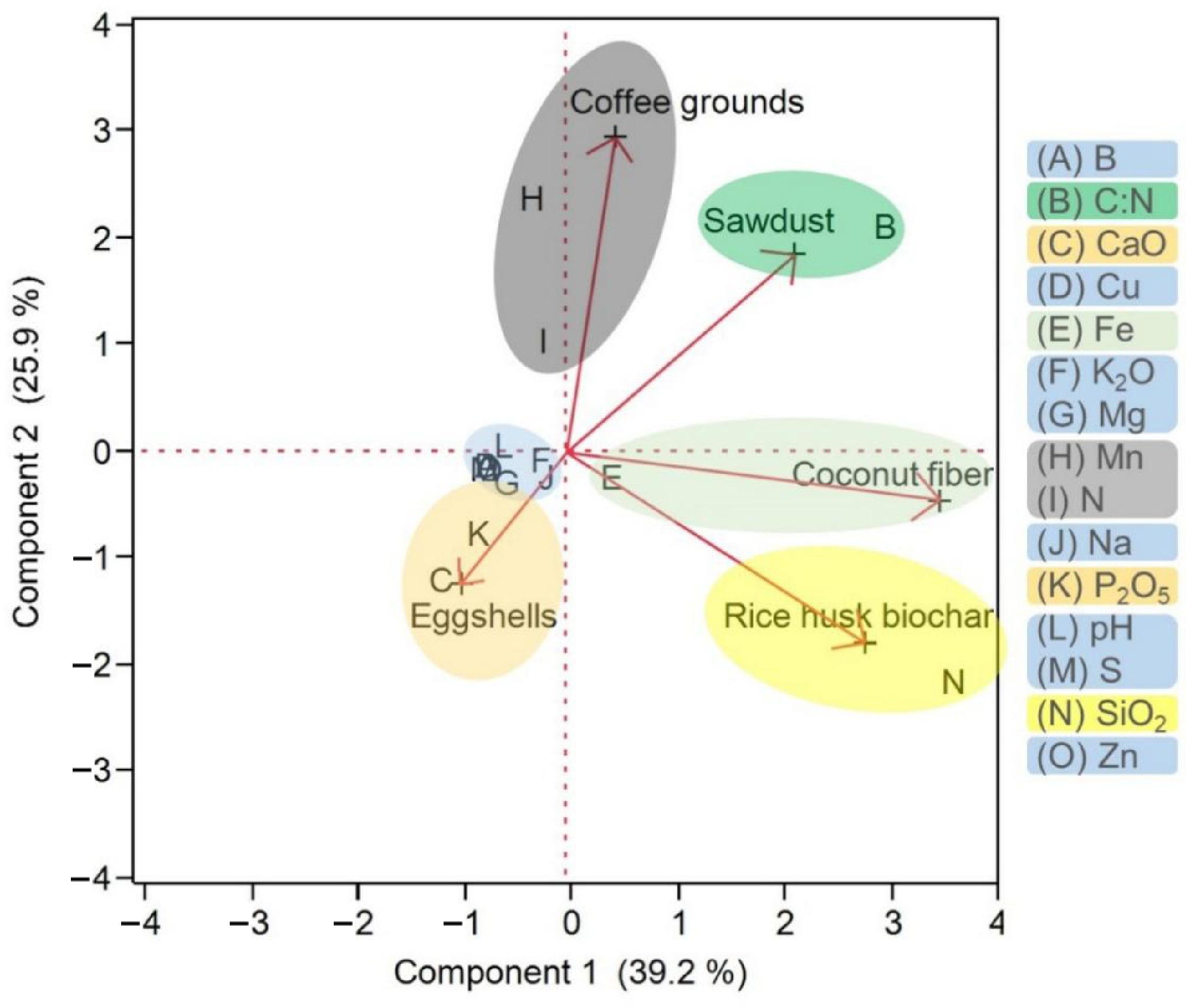
Figure 3.
Principal component analysis (PCA) biplot of agro-industrial wastes based on their mineral composition, pH, and C:N ratios as described in Table 2. Each of the five wastes is represented by a different vector, so that vectors that are close together tend to have similar mineral profiles, while those on opposite sides or directions of the graph have contrasting mineral compositions. The letters in the graph represent the 15 minerals and properties (labeled A–O) measured in the residues, so letters that are close together indicate a positive correlation between these variables, while letters located in opposite directions indicate a negative correlation. The illustrative ellipses highlight the affinity between the waste and the mineral, except for the blue ellipse that highlights the similarity only between minerals. This biplot was generated using JMP 10 statistical software (SAS Institute Inc., USA).
Organic wastes such as coconut fiber and rice husk biochar are strongly positive in PC1, indicating their distinct chemical properties compared to mainly eggshells with a negative charge and coffee grounds with a charge close to neutral. Sawdust showed an intermediate positive charge for both PC1 and PC2, indicating impartiality to the other wastes. Furthermore, in PC2, coffee grounds showed the highest positive charge, coconut fiber close to neutral, and eggshells and rice husk biochar with the strongest negative charges.
Elements such as SiO2 (N), Mn (H), and the C:N ratio (B) are pointed in different directions and are located far apart from each other, indicating low correlation or negative correlation among them. On the other hand, C:N (B), and SiO2 (N) present positive alignment in PC1, as they contain similar proportions in the residues, except for sawdust, which contains low SiO2 and high C:N. The separation of Mn (H) and nitrogen (I) from the other elements is explained by their higher concentrations in the coffee grounds, which show a strong positive contribution to PC2. Sawdust has the highest C:N ratio (B), eggshell has the highest concentrations of CaO (C) and P2O5 (K), coconut fiber has the highest iron content (E) and rice husk is the richest in silicon (N). Coffee grounds and rice rusk showed the greatest distance (dissimilarity), indicating that these residues complement each other and have a high potential for being used in association to provide a more complete supply of nutrients for the plants. According to this data, a blend of 2.4 tons of rice husk biochar and 3.0 tons of coffee grounds would provide 100, 100, and 130 kg of N, P2O5, and K2O, respectively.
The nutrients clustered near the center of the graph, K2O (F), Cu (D), Mg (G), S (M), B (A), Na (J), pH (L), and Zn (O) (indicated by the blue circle) are those that exhibit minimal variation across the analyzed residues. Their proximity to the center indicates that these elements are relatively uniform among the different residues, which may imply that the amount of these nutrients may not strongly affect the selection of specific residues for soil amendments. Although in PC2 there is a tendency for pH (L) to appear in the positive quadrant due to the lower pH of coffee grounds and sawdust, which are important to help neutralize the pH of alkaline soils, and in the negative quadrant, the tendency for Mg (G) to approach eggshells because they contain the highest magnesium content. Furthermore, among these nutrients grouped in the center, in PC1 K2O (F) is closer to the positive quadrant due to rice husks biochar and coconut fiber containing the highest potassium contents.
The carbon-to-nitrogen (C:N) ratio is essential for understanding how organic residues decompose in soil and influence microbial activity. Materials like coffee grounds and eggshells decompose quickly because they are nitrogen-rich, making them easy for soil microbes to break down and release nitrogen for plant uptake. In contrast, coconut fiber, rice husk, and especially sawdust have higher C:N ratios (B), meaning they contain more carbon relative to nitrogen and decompose more slowly. Microbes need additional nitrogen from the soil to process these carbon-heavy materials, leading to temporary nitrogen immobilization. Despite this initial nitrogen competition, high C:N ratio materials contribute to long-term soil health by adding organic matter, which improves soil structure, enhances water retention, and supports carbon sequestration. They also aid in erosion control, weed suppression, and nutrient cycling, making them beneficial for sustainable soil management and overall agricultural productivity. To balance the effects, high-carbon residues like sawdust may require supplemental nitrogen or can be used together with lower C:N materials such as coffee grounds. This approach minimizes nutrient competition between microbes and plants, helping achieve an optimal C:N ratio (around 10:1) that promotes plant growth and soil vitality.
Benefits in the secondary metabolism of plants
-
Organic fertilization of the soil modulates the production of secondary metabolites, which in turn are affected by plant intrinsic factors[82]. Incorporating organic waste, such as coconut fiber, coffee grounds, eggshells, rice husk biochar, and sawdust, into compost to improve soil parameters may have a profound effect on the secondary metabolism of plants, increasing their biotic and abiotic tolerance. For example, coffee grounds and rice husk biochar contribute essential nutrients and beneficial compounds such as phenolics and silica, respectively, which strengthen plant defenses. Similarly, coconut fiber and sawdust improve soil aeration and organic matter content, promoting the growth of beneficial microbes that can induce systemic resistance in plants. The calcium in eggshells strengthens plant cell walls and helps activate phytoalexins. Together, these changes support the plant's ability to produce secondary metabolites, such as flavonoids, alkaloids, and terpenoids, which are crucial for defense against pathogens and pests.
Soil structure
-
The enhancement of soil's physical structure through the application of organic materials is a pivotal strategy in sustainable plant cultivation[83]. Organic materials, including compost originating from coconut fiber, coffee grounds, eggshells, rice husk biochar, and sawdust, which are commonly used mainly on small farms, significantly improve soil aggregation, porosity, bulk density, and water retention[59]. These improvements are crucial for promoting healthy root growth and optimizing water and nutrient uptake by plants. The synergistic effects of organic materials on soil structure underscore their importance in sustainable agricultural practices.
Water pollution from high concentrations of chemical nutrients, caused by the excessive use of synthetic fertilizers, is a significant problem in regions such as southern Florida and Texas, which have environmental factors like high temperatures and heavy rainfall that degrade soils poor in organic matter[84,85]. In these areas, the runoff of excess fertilizers into water bodies leads to elevated levels of nitrogen and phosphorus[86,87]. This nutrient overload leads to harmful algal blooms and hypoxic zones, which severely impacts aquatic ecosystems. Incorporating organic materials into soil management practices also mitigates the environmental impacts of conventional farming methods. Unlike synthetic fertilizers, organic amendments decompose slowly, releasing nutrients over time and reducing the risk of leaching and runoff, which consequently reduces water contamination[88]. Additionally, by enhancing the soil's physical structure, organic amendments help maintain soil fertility and productivity, thereby ensuring the long-term sustainability of plant cultivation. This approach aligns with the principles of sustainable agriculture, aiming to produce high-quality plants while preserving the ecosystem's integrity.
Soil microbial activity
-
Crops require nutrients in ionic forms for optimal yields, a process significantly aided by microorganisms. These microorganisms convert nitrogen, phosphorus, and sulfur bound in organic matter into soluble ions through mineralization (NH4+, NO3−, H2PO4−, HPO42−, and SO42−), which is influenced by factors such as temperature, rainfall, soil characteristics, the chemical composition of waste, microbial communities, and the carbon-to-nitrogen ratio in the soil[55]. The application of rice husk biochar enhances the populations of the bacterial genera Massilia and Bacillus, as well as the fungal genus Trichocladium, which possesses plant growth-promoting properties[89].
Organic materials create a conducive environment for soil microbiology, enhancing nutrient cycling, and microbial activity[90]. Methods like vermicomposting and composting introduce organic matter into the soil, providing a rich substrate for microbial colonization. This stimulates microbial diversity and activity, facilitating the breakdown of complex recalcitrant compounds such as cellulose, hemicellulose, chitin, and lignin by Actinobacteria and the release of essential nutrients like nitrogen, phosphorus, and potassium[91]. For instance, a prolonged application of compost has a significant impact on reducing harmful microorganisms in the soil, such as Stachybotrys and Aspergillus. On the other hand, it can increase the population of beneficial agents, including Streptomyces, a plant growth promoter that is effective in producing antibiotics and other organic volatile compounds that are helpful in cropping systems and serve as biocontrol of soilborne fungal pathogens[92].
These organic materials also serve as energy and carbon sources for soil microorganisms, supporting their growth and metabolic functions. As a result, incorporating organic materials improves soil fertility and nutrient availability while promoting the health and resilience of soil microbial communities. This contributes to sustainable agricultural practices by enhancing the overall soil ecosystem[93].
-
A bibliometric analysis was conducted to explore the emerging trends in research on the use of organic materials in agriculture. The analysis utilized VOSviewer software (
www.vosviewer.com ) to visualize the co-occurrence of keywords in scientific publications from the Scopus database, specifically focusing on articles with the terms 'organic' and 'fertilizer' in their titles and keywords (Fig. 4). The search was limited to documents published in English from 1994 to 2024, encompassing various document types, including articles, reviews, books, notes, and short surveys. Conducted on January 20, 2025 at 12:25 pm, the search resulted in 1,716 relevant documents across the fields of Agricultural and Biological sciences, as well as Environmental science.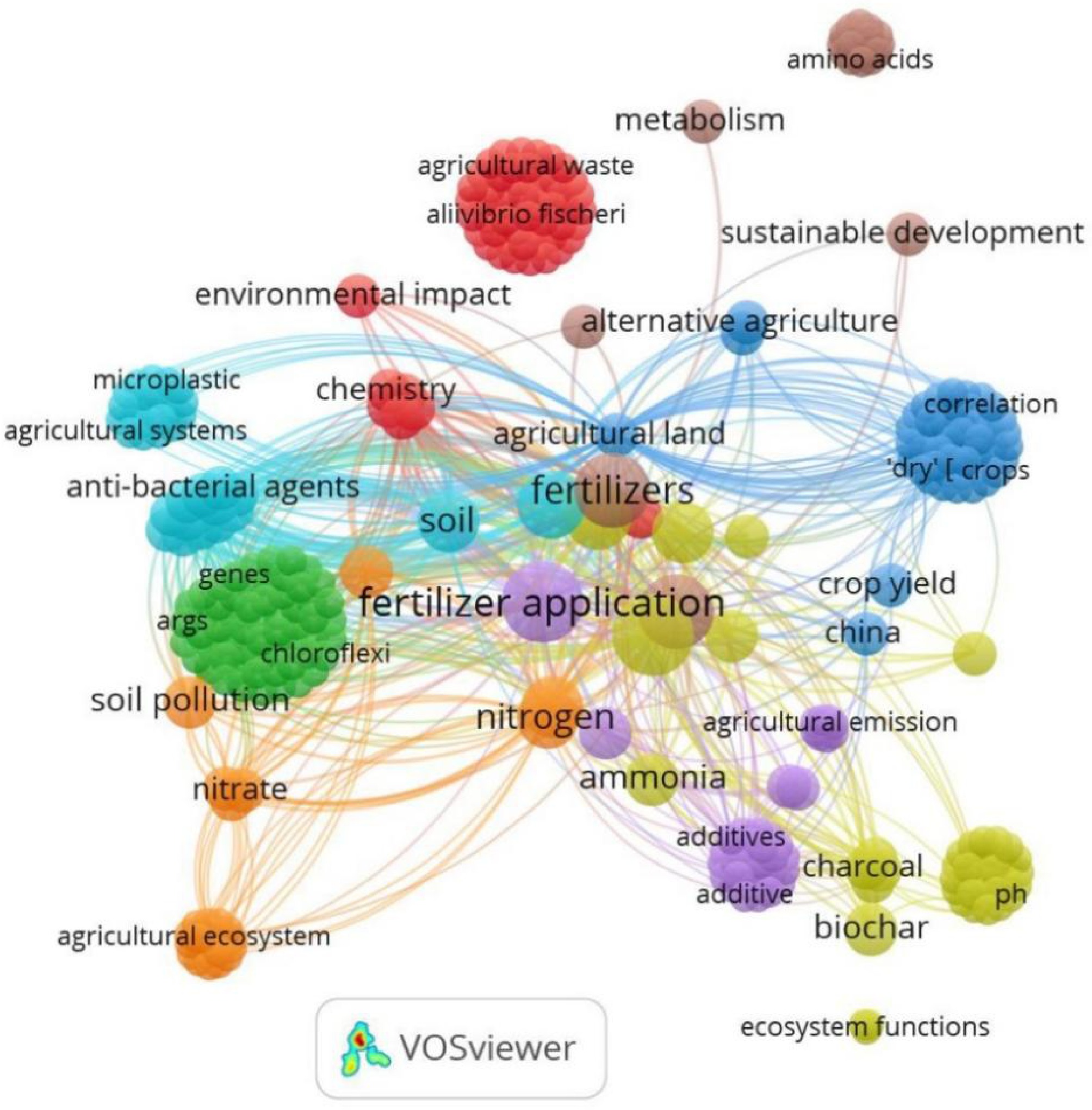
Figure 4.
Clustering of the words most used by the authors in the title and keywords. The size of the bubble shows the volume of words appearing, the thickness of the lines shows the strength of the link, and the color shows the grouping.
The VOSviewer-generated graph displayed eight distinct color-coded clusters, each representing a thematic grouping of frequently used keywords by authors. These clusters highlight the interconnectedness and focal points of research in the domain. The green cluster, which includes terms like 'fertilizer application', 'soil pollution', 'genes', and 'chloroflexi', (greens bacteria) suggests a strong research interest in the effects of fertilizer application on soil health and related genetic studies. The red cluster, featuring keywords such as 'environmental impact' and 'chemistry', highlights the chemical and environmental considerations associated with chemical fertilizer use.
Other notable clusters include the blue grouping, which focuses on 'sustainable development', 'alternative agriculture', and 'correlation', indicating a significant emphasis on sustainable agricultural practices and alternative farming methods. The purple cluster centered around 'ammonia', 'additives', and 'biochar', highlights research on the utilization of different additives and amendments in organic farming. The lines connecting various nodes within the graph illustrate the interdisciplinary approach researchers are adopting to address the complexities of sustainable farming using organic materials.
The conversion of organic waste into fertilizer is a multifaceted process involving oxidation, hydrolysis, and microbial activity. During oxidation, organic matter decomposes, releasing energy and nutrients. Hydrolysis breaks down large organic molecules into simpler compounds, making nutrients more accessible[94]. Microbial activity, primarily from bacteria and fungi, plays a crucial role in further breaking down organic matter, converting it into stable, nutrient-rich compost. This process not only recycles waste but also enhances soil fertility, promoting sustainable agricultural practices and environmental management.
-
The use of organic waste such as coconut fiber, coffee grounds, eggshells, rice husks, and sawdust in sustainable plant cultivation is a promising global method, but it also presents several challenges. One significant issue is the cost of processing and hauling these materials to composting facilities[95]. The logistics of collecting, transporting, and processing organic waste can be expensive, especially when compared to the relatively low costs associated with traditional waste disposal methods such as landfilling or waste-to-energy conversions. One of the biggest challenges is transportation; if coffee grounds need to be transported more than 500 km for composting, the environmental and economic benefits are lost[35]. This can be a significant deterrent to widespread adoption among farmers and agricultural businesses.
The processing of organic residues varies in complexity and environmental impact. For instance, coconut fiber undergoes retting, washing, drying, and sorting, processes that can consume large volumes of water and generate wastewater requiring proper treatment[96]. Similarly, rice husk may be combusted or pyrolyzed to produce ash or biochar, each with different environmental implications[66]. However, quantifying how much of each residue is currently diverted to specific uses, such as coconut fiber for horticultural substrates, coffee grounds for composting, or sawdust for particleboard, is difficult due to limited, fragmented, and often non-standardized data. This lack of transparency makes it challenging to assess the actual availability of these materials for broader agricultural applications.
Another limitation is the need for constant monitoring of the composting process. Effective composting requires meticulous control of factors such as moisture, temperature, and aeration to ensure the microbial activity essential for decomposition[97]. This level of monitoring demands time, resources, and expertise, making composting more labor-intensive and resource-demanding compared to conventional practices. Additionally, if not properly managed, the process can result in inconsistent compost quality, with variations in chemical composition[98].
Furthermore, the agricultural sector faces inertia and challenges in shifting from established practices. Farmers accustomed to using chemical fertilizers and pesticides may be hesitant to adopt compost due to its slow impact on plant growth. Unlike the immediate effects of synthetic fertilizers, the benefits of compost buildgradually over time, requiring growers to take a longer-term perspective and exercise patience[99]. Mislabeling or poor-quality compost can also undermine trust in organic amendments, impacting the industry's reputation and slowing adoption rates.
Lastly, there are regulatory and educational barriers that further complicate the transition. Obtaining permits for composting facilities can be a complex and bureaucratic process, which may discourage investment in new facilities - much like the regulatory challenges associated with managing compostable packaging waste[100]. Additionally, there is a pressing need for comprehensive dissemination of research and practical studies to educate farmers and stakeholders on the benefits and proper use of compost[12,101]. Without adequate education and support, the potential advantages of using organic waste in sustainable plant cultivation may remain underutilized, thereby limiting its positive environmental impact.
-
Individual or associated organic waste contains nutrients that increase soil fertility, improve water retention, and the physical and biological structure of the soil, making them essential for sustainable crop cultivation. By promoting healthier plant growth and reducing environmental impact, these materials align with the principles of a circular economy. With the global volume of organic waste reaching substantial levels, effectively utilizing this valuable resource is far more beneficial than allowing it to be disposed of in landfill. Agro-industrial waste, such as coconut fiber, coffee grounds, eggshells, rice husk, and sawdust, offers viable alternatives to synthetic fertilizers and pesticides, supporting an agricultural system that is both eco-friendly and resilient. Future research should prioritize the development of public policies for the efficient collection and utilization of organic waste, exploring the potential of new organic materials, and thoroughly assessing their long-term effects on soil health, microbial diversity, costs, productivity, crop quality, and nutritional value. These advancements will ensure greater adoption of this practice by farmers, transforming organic waste from an environmental burden into a valuable resource for sustainable food systems around the world.
We would like to express our sincere gratitude to the Tropical Research and Education Center and the Horticultural Sciences Department at the University of Florida for their valuable support throughout this work.
-
The authors confirm contributions to the paper as follows: study conception and design: Lacerda VR, Costa BNS, Khoddamzadeh AA; data collection: Lacerda VR, Myrtil YK; analysis and interpretation of results: Lacerda VR; draft manuscript preparation: Lacerda VR, Myrtil YK, Costa BNS, Khoddamzadeh AA, Li X. All authors reviewed the results and approved the final version of the manuscript.
-
Data sharing not applicable to this article as no datasets were generated or analyzed during the current study.
-
The authors declare that they have no conflict of interest.
- Copyright: © 2025 by the author(s). Published by Maximum Academic Press, Fayetteville, GA. This article is an open access article distributed under Creative Commons Attribution License (CC BY 4.0), visit https://creativecommons.org/licenses/by/4.0/.
-
About this article
Cite this article
Lacerda VR, Myrtil YK, Costa BNS, Khoddamzadeh AA, Li X. 2025. Soil enhancement and environmental aspects of agro-industrial waste use in agriculture and horticulture. Technology in Horticulture 5: e031 doi: 10.48130/tihort-0025-0025 

Soil enhancement and environmental aspects of agro-industrial waste use in agriculture and horticulture
- Received: 04 February 2025
- Revised: 05 May 2025
- Accepted: 30 May 2025
- Published online: 02 September 2025
Abstract: As the world's population and demand for food continue to increase, sustainable crop cultivation is essential for ensuring food security and preserving the environment. Agro-industrial waste, such as coconut fiber, coffee grounds, eggshells, rice husk, and sawdust, due to their ecological nature, plays a fundamental role in improving the fertility, physical structure, and microbiology of the soil when used as organic fertilizers. This review explores emerging trends and innovations in utilizing these organic materials in sustainable agriculture. The review also emphasizes the scale of organic waste generation in the world's most populous countries, analyzing the potential benefits and limitations of using these wastes as fertilizers and soil improvers instead of sending waste to landfills. Furthermore, it evaluates the effectiveness, challenges, and prospects of adopting the use of organic materials in agricultural systems. Continued research, innovation, and knowledge dissemination are needed to optimize the use of natural fertilizers in agriculture. Maximizing the potential of agro-industrial waste as organic fertilizers is essential for promoting sustainable agriculture, reducing environmental impact, and enhancing global food security.
-
Key words:
- Sustainability /
- Agroecology /
- Soil health /
- Green waste /
- Natural fertilizers