











-
In 2019, 13.6% (7.69 million) of all deaths globally were attributed to tobacco smoking, 86.9% of which occurred among current smokers, while only 6.18% occurred among former smokers[1]. The 2020 Report of the Surgeon General on Smoking Cessations concludes that smoking cessation is beneficial at any age[2]. Despite proven benefits, quitting can be a challenge[3]. On average, smokers typically attempt to quit six times or more prior to successful cessation[4].
The Theory of Planned Behavior (TPB) posits that intention, reflecting an individual's readiness to execute a given behavior[5], is the most immediate determinant of it[6]. In existing studies, smokers intending to quit were twice or three times more likely to make a quit attempt or achieve successful cessation[7,8]. Intention is further predicted by three factors: attitude, perceived behavioral control, and perceived norms[6]. Attitude, which consists of instrumental (i.e., harmful-beneficial) and affective components (i.e., pleasant-unpleasant)[5], has been linked to behaviors and intentions, though the relative weight of the two components varied across behaviors[9,10]. Perceived behavioral control, derived from Bandura's self-efficacy theory, measures the strength of one's belief in his/her ability to perform a given behavior[5]. A recent meta-analysis showed its mean association with various behavioral intentions was 0.31[11]. Perceived norms consist of injunctive norms (approval by important others, i.e., family, friends) and descriptive norms (perceived behavior of important others)[5]. Both norms were associated with behaviors and behavioral intentions, though their relative importance varied across behaviors[12,13]. In addition, past behavior, though not a core TPB construct, often accounts for considerable variance in behaviors and behavioral intentions[5].
Studies generally showed the TPB was adequate for explaining intention to quit smoking or cessation behaviors. Hu & Lanese found all TPB constructs salient in explaining quit intention among 799 adult male smokers in Taiwan, China, with priority of quitting and past quit attempt increasing the explained variance[14]. Tseng et al. found all TPB constructs significant for explaining quit intention in 145 smokers attending a cessation clinic in Taiwan, China, though past quit attempt was not a significant factor[15]. Rise et al. found that among 103 daily smoking Norwegian college students, past quit attempt and all TPB constructs except instrumental attitude and injunctive norm were significant in explaining quit intention[16]. Macy et al. found all three TPB constructs were positively related to quit intention in 395 adult smokers in Texas[17].
China was home to 30% (341 million) of the world's smokers in 2019[1]. However, in 2018, only 16.1% of Chinese smokers were considering quitting in the next 12 months, and just 19.8% had made a quit attempt in the past 12 months[18]. This is much lower than the median prevalence of quit attempts (42.5%) among smokers in 28 countries between 2008 and 2016[19], and lower than that in the US, where 68.0% smokers wanted to quit, and 56% made a quit attempt in 2015[2]. The Healthy China initiative (2019–2030) aims to reduce the national adult smoking prevalence to 20% by 2030[20], and helping current smokers quit is considered a key strategy[21]. So far, only two studies have explored the explanatory adequacy of the TPB in Chinese smokers. One study found that attitude, subjective norm, and perceived self-efficacy were associated with quit intention[22]. The other study found that perceived behavioral control and injunctive norm were related to quit intention; however, attitude was not included as a predictor[23].
Different behaviors and population characteristics can influence the weight of TPB constructs when predicting intentions[5]. One such characteristic is the presence of other smokers in the household. Mai et al. found that the odds of planning to quit were lower in current smokers living with other smokers in Hong Kong, China[24]. Wang et al. found that among secondary school students in Hong Kong, China, the odds of making quit attempts in smokers were significantly lower if they were exposed to second-hand smoke at home[25]. Similarly, Jeong et al. found that Korean adolescents exposed to smoking at home on a daily basis had lower odds of making quit attempts[26]. Saxby et al. found that Australian smokers who lived with other household smokers were significantly less likely to quit[27]. Cobb et al. found that the odds of quitting were lower in both US male and female smokers living with other household smokers[28]. Applying the TPB framework, Blondé et al. found that living with a smoker decreased Swiss smokers' abstinence intention through negatively influencing their subjective norm[29]. Gender could be another influencing characteristic. Several studies found gender differences in the relationships of TPB constructs with quit intention and cessation behaviors[30−32]. To date, the moderating role of gender and living with other household smokers has not been examined in the context of the TPB framework among Chinese smokers.
Therefore, the current study aimed to examine whether TPB constructs were differentially related to quit intention and past-year quit attempt in a sample of Chinese young adult smokers, and to examine whether these relationships varied by gender and the presence of other smokers in the household. Results of this study may help identify unique drivers of quit intention vs quit attempt, and contribute to tailored interventions that improve cessation outcomes for diverse subgroups of smokers.
-
The study was approved by the Ethics Committee of the School of Public Health and Nursing at Shanghai Jiao Tong University School of Medicine, Shanghai, China (SJUPN-202019). Throughout the month of June in 2021, 18–30-year-old young adults were invited to participate in an online survey (hosted on
www.wjx.cn ). The survey would automatically end for those who did not tick 'yes' to the consent-to-participate question at the beginning. A second question asked respondents to identify if they had never smoked, ever smoked but had quit, or currently smoked. The survey would automatically end for those replying that they had never smoked or ever smoked but had quit. Those currently smoking were then asked for their frequency of smoking and the average number of cigarettes they smoked per day. After completing the survey, each participant was rewarded with points credited to their individual account. Responses from 757 current smokers (mean age = 25.95, SD = 3.23) were collected. Over 80% (82.8%, n = 627) smoked at least a whole cigarette per day, and the average number of cigarettes smoked per day was 7.51 (SD = 6.43), indicating that the sample contained mostly light smokers[33]. Sample characteristics are presented in Table 1.Table 1. Sample characteristics (n = 757).
Characteristic All Age 25.95 (3.23) Gender Male 546 (72.1%) Female 211 (27.9%) Education High school or below 63 (8.3%) 3-year college 104 (13.7%) 4-year college or above 590 (77.9%) Father's education Secondary school or below 295 (39.0%) High school 224 (29.6%) 3-year college 139 (18.4%) 4-year college or above 99 (13.1%) Annual household income
(CNY)≤ 80,000 90 (11.9%) 80,000 to ≤ 150,000 257 (33.9%) 150,000 to ≤ 300,000 314 (41.5%) > 300,000 96 (12.7%) Marriage status Single/divorced/widowed 369 (48.7%) Married 388 (51.3%) Cigarettes smoked per day 7.51 (6.43) Number of household smokers 0 50 (6.6%) 1 194 (25.6%) 2 291 (38.4%) 3 134 (17.7%) 4+ 88 (11.6%) Past-year quit attempt Yes 474 (62.6%) No 283 (37.4%) Measures
Outcome variables
-
Quit intention was assessed by a single item with seven response options: (1) I do not want to quit smoking; (2) I think I should quit smoking, but I do not want to quit; (3) I think I should quit smoking, but I have not thought about when I should quit; (4) I want to quit smoking very much, but I do not know when I can quit; (5) I want to quit smoking in the near future; (6) I want to quit smoking in the next six months; (7) I want to quit smoking in the next month[34]. Higher scores indicated greater quit intention.
Past-year quit attempt, derived from the Global Youth Tobacco Survey, was assessed by asking participants if they had tried quitting for more than 24 h in the past 12 months. Response options were binary ('yes' or 'no'), those who answered 'no' were chosen as the reference group in subsequent analyses.
Theory of planned behavior (TPB) constructs
-
Attitude was measured by a 7-point bipolar adjective scale: (1) foolish – wise, (2) unpleasant – pleasant, (3) harmful – beneficial, (4) unproductive – productive, (5) bad – good, (6) dissatisfying – satisfying, and (7) unhealthy – healthy[34].
Injunctive norm (IN) assessed whether important individuals (friends, colleagues, family members, healthcare providers, and important others) approved or disapproved of quitting smoking on a 7-point scale (1 = disapprove, 7 = approve)[34].
Descriptive norm (DN) assessed whether important individuals engaged in quitting smoking: (1) 'most of my friends who are similar to me have quit smoking'; (2) 'most of my colleagues who are similar to me have quit smoking'; (3) 'most of my family members who are similar to me have quit smoking'; (4) 'most of important others who are similar to me have quit smoking'. Each item was rated on a 7-point scale (1 = definitely not, 7 = definitely yes).
Perceived behavioral control (PBC) assessed a smoker's perceived ease or difficulty of quitting smoking within the next six months: (1) 'I believe I'm capable of quitting smoking within the next six months'; (2) 'If I set my mind on quitting smoking within the next six months, I'm confident that I can achieve it'; (3) 'I believe I'm capable to exert control over personal events, achieving the goal of quitting smoking within the next six months'; (4) 'I believe I'm capable to exert control over external events, achieving the goal of quitting smoking within the next six months[35]. Each item was rated on a 7-point scale (1 = definitely not, 7 = definitely yes).
Moderating variables
-
The status of living with other household smokers was assessed by asking participants for the number of smokers living in their home, including their parents, grandparents, partners, or siblings. Response options were 0, 1, 2, 3, and 4 or more.
Gender was assessed as a binary variable: 'male' or 'female'.
Sociodemographic characteristics
-
Participants' age (18 to 30 years), their own and their father's highest level of education (secondary school or below, high school, 3-year college, 4-year college and above), annual household income (≤ 80,000 CNY, 80,000 to ≤ 150,000 CNY, 150,000 to ≤ 300,000 CNY, > 300,000 CNY), marital status (single/divorced/widowed, married), and cigarettes smoked per day (CPD) were also collected. In the current sample, due to the high correlation between father's and mother's highest level of education (rs = 0.762, p < 0.001), only father's level of education was included in the statistical analysis.
Statistical analysis
-
Statistical analyses were performed using SAS 9.4 and Mplus Version 7.4 (Muthen & Muthen). First, frequency distributions of categorical variables, means, and standard deviations of continuous variables were computed for the whole sample, by quit intention, and by past-year quit attempt. Post-hoc pairwise comparisons of column means or proportions were conducted with Bonferroni correction. Second, an exploratory factor analysis (EFA) was performed using weighted least squares mean and variance adjusted (WLSMV) estimator, and Geomin rotation to investigate the factor structure of each TPB construct. Eigenvalues greater than 1.00 were used as the criterion for factor extraction. Cronbach's alpha coefficient was computed for each TPB construct to determine scale reliability. Third, univariate and multivariate generalized linear regression analyses were performed with quit intention as the outcome variable. Parameter estimates and corresponding standard errors were derived from generalized linear regression. Simple and multivariate binary logistic regression analyses were performed with past-year quit attempt as the outcome variable. Crude and adjusted odds ratios with corresponding 95% confidence intervals were derived from binary logistic regression. Fourth, to test the moderating effects of gender and living with other household smokers, interactions terms were created as the product of the moderator and each TPB construct, and were included in multivariate analyses. If an interaction term was statistically significant in multivariate generalized linear regression, simple slope analyses were then performed to decipher the interaction. If an interaction term was statistically significant in multivariate binary logistic regression, a forest plot was created to visualize the interaction. Given that the variables used in the study were observed variables instead of latent variables, and the sample size was relatively small, multivariate regression analysis with product terms was deemed a more appropriate and parsimonious approach for examining simple moderation effects. For all analyses, a p-value < 0.05 was considered statistically significant.
-
Over 60% (64%) of smokers lived with one or two other household smokers, and nearly one in three (29.3%) smokers lived with three or more other household smokers (Table 1). Approximately three in five smokers (n = 474, 62.6%) tried to quit smoking for more than 24 h in the past year. For all variables analyzed as continuous variables, tests for univariate normality revealed that their skewness values were between −1.26 and 1.45, and kurtosis values were between −0.76 and 3.30 (Table 2), which were within the acceptable range (between −2 and 2 for skewness, and between –7 and 7 for kurtosis) for demonstrating data normality[36,37].
Table 2. Bivariate correlation (Spearman's rank correlation coefficient) between analytic variables (n = 757).
1 2 3 4 5 6 7 8 9 10 11 12 13 1. Quit intention 1.00 2. Affective attitude 0.29*** 1.00 3. Instrumental attitude 0.37*** 0.57*** 1.00 4. Injunctive norm 0.14*** 0.37*** 0.33*** 1.00 5. Descriptive norm 0.24*** 0.13** 0.39*** 0.29*** 1.00 6. Perceived behavioral control 0.32*** 0.36*** 0.55*** 0.30*** 0.50*** 1.00 7. Number of household smokers −0.12** −0.09* −0.04 −0.05 −0.08* −0.08* 1.00 8. Cigarettes smoked per day 0.02 0.04 −0.04 0.02 −0.13*** −0.16*** 0.03 1.00 9. Past-year quit attempt (yes vs no) 0.26*** 0.27*** 0.28*** 0.23*** 0.22*** 0.28*** −0.004 0.01 1.00 10. Age 0.03 −0.03 −0.04 −0.03 0.04 −0.02 −0.09* 0.07 −0.06 1.00 11. Gender 0.04 0.06 0.04 0.04 −0.11** −0.03 −0.05 0.32*** 0.06 −0.07* 1.00 12. Education −0.05 −0.05 −0.03 0.003 0.10** 0.09* −0.08* −0.17*** −0.06 0.23*** −0.15*** 1.00 13. Father's education −0.01 −0.05 0.04 0.04 0.17*** 0.10** −0.06 −0.02 0.01 0.15*** −0.10** 0.33*** 1.00 14. Household income −0.05 −0.003 −0.04 −0.004 0.05 −0.01 −0.002 −0.03 −0.03 0.28*** −0.10** 0.37*** 0.32*** Range 1−7 1.25−7.00 1.00−7.00 1.40−7.00 1.00−7.00 1.00−7.00 0−4 0−50.0 − − − − − Skewness 0.59 −1.02 −0.27 −1.26 −0.19 −0.53 0.20 1.45 − − − − − Kurtosis −0.42 0.37 −0.50 2.18 −0.76 −0.74 −0.53 3.30 − − − − − Mean 3.03 5.59 4.45 5.70 4.08 4.64 2.02 7.51 − − − − − SD 1.43 1.27 1.4 1.01 1.42 1.58 1.08 6.43 − − − − − * p < 0.05, ** p < 0.01, *** p < 0.001. Scale factor structure and reliability
-
The scale assessing injunctive norm, descriptive norm, and perceived behavioral control, respectively was found to have a single-factor structure, with Cronbach's alpha coefficient ranging from 0.76 for injunctive norm, 0.84 for descriptive norm, and to 0.91 for perceived behavioral control. EFA on the seven items measuring attitude yielded two factors with eigenvalue greater than 1.00. The first factor contained items 1, 3, 5, and 7, and was labeled instrumental attitude. The second factor contained items 2, 4, and 6, and was labeled affective attitude. For each factor, a total score was created by averaging the sum of item-level scores, with higher scores indicating a more positive attitude. Cronbach's alpha coefficient for affective attitude was 0.75, and was 0.83 for instrumental attitude.
Associations between independent and outcome variables
-
Zero-order correlation analyses revealed that, intention to quit smoking had a small-to-medium positive correlation with affective attitude (rs = 0.29, p < 0.001), descriptive norm (rs = 0.14, p < 0.001), injunctive norm (rs = 0.24, p < 0.001), and past-year quit attempt (rs = 0.26, p < 0.001), and a moderately strong correlation with instrumental attitude (rs = 0.37, p < 0.001) and perceived behavioral control (rs = 0.32, p < 0.001). Intention to quit smoking also had a small but significantly negative correlation with number of household smokers (rs = −0.12, p < 0.01).
Univariate analyses revealed that each TPB construct had an independent and positive bivariate association with quit intention and past-year quit attempt (Table 3). In multivariate analyses (Table 3), only instrumental attitude (β = 0.23, p < 0.001) and perceived behavioral control (β = 0.10, p < 0.05) remained positively associated with quit intention, while affective attitude (AOR = 1.26, 95% CI: 1.08–1.48), pro-quitting injunctive norm (AOR = 1.25, 95% CI: 1.04–1.49), and perceived behavioral control (AOR = 1.25, 95% CI: 1.10–1.42) remained positively associated with past-year quit attempt. In both univariate and multivariate analyses, smokers that made a quit attempt within the past year exhibited greater quit intention (β = 0.75, p < 0.001; β = 0.40, p < 0.001), whereas smokers living with a growing number of other household smokers exhibited decreased quit intention (β = −0.16, p < 0.001; β = −0.12, p < 0.01).
Table 3. Univariate and multivariate analyses on quit intention and past-year quit attempt (n = 757).
Characteristic Quit intention Past-year quit attempt Univariate Multivariate Univariate Multivariate β (SE) t value β (SE) t value OR (95% CI) AOR (95% CI) Affective attitude 0.33 (0.04)*** 8.55 0.09 (0.05) 1.82 1.57 (1.39, 1.78)*** 1.26 (1.08, 1.48)** Instrumental attitude 0.39 (0.03)*** 11.30 0.23 (0.05)*** 4.73 1.53 (1.37, 1.72)*** 1.09 (0.93, 1.28) Injunctive norm 0.25 (0.05)*** 4.86 −0.03 (0.05) −0.59 1.58 (1.35, 1.84)*** 1.25 (1.04, 1.49)* Descriptive norm 0.24 (0.04)*** 6.85 0.07 (0.04) 1.65 1.36 (1.22, 1.52)*** 1.15 (1.00, 1.32) Perceived behavioral control 0.29 (0.03)*** 9.33 0.10 (0.04)* 2.54 1.46 (1.33, 1.61)*** 1.25 (1.10, 1.42)*** Number of household smokers −0.16 (0.05)*** −3.34 −0.12 (0.04)** −2.77 0.99 (0.86, 1.14) 1.05 (0.90, 1.23) Cigarettes smoked per day −0.002 (0.01) −0.28 0.004 (0.01) 0.49 1.01 (0.98, 1.03) 1.02 (0.99, 1.05) Past-year quit attempt (yes vs no) 0.75 (0.10)*** 7.25 0.40 (0.10)*** 3.78 − − Age 0.02 (0.02) 1.34 0.05 (0.02)* 2.45 0.96 (0.92, 1.01) 0.97 (0.91, 1.03) Gender (male vs female) 0.10 (0.12) 0.85 0.03 (0.11) 0.24 1.32 (0.96, 1.83) 1.22 (0.84, 1.77) Education High school or below −0.01 (0.19) −0.07 0.09 (0.19) 0.45 1.28 (0.74, 2.21) 1.43 (0.74, 2.77) 3-year college 0.15 (0.15) 0.99 0.11 (0.15) 0.77 1.44 (0.92, 2.25) 1.32 (0.78, 2.21) 4-year college or above ref ref ref ref Father's education Secondary school or below −0.12 (0.19) −0.62 −0.002 (0.16) −0.01 1.02 (0.64, 1.62) 1.00 (0.58, 1.73) High school 0.02 (0.17) 0.10 −0.0004 (0.16) 0 1.22 (0.75, 1.98) 1.23 (0.71, 2.11) 3-year college −0.08 (0.17) −0.49 −0.18 (0.17) −1.08 1.12 (0.66, 1.91) 1.15 (0.64, 2.05) 4-year college or above ref ref ref ref Annual household income ≤ 80,000 CNY 0.001 (0.18) 0.00 −0.04 (0.16) −0.25 1.49 (0.89, 2.51) 1.54 (0.86, 2.77) 80,000 to ≤ 150,000 CNY ref ref ref ref 150,000 to ≤ 300,000 CNY −0.06 (0.12) −0.47 −0.04 (0.12) −0.37 0.88 (0.63, 1.24) 0.94 (0.64, 1.39) > 300,000 CNY −0.08 (0.17) −0.45 −0.03 (0.16) −0.16 1.21 (0.74, 1.99) 1.46 (0.82, 2.58) Marriage status (Single/divorced/
widowed vs married)0.03 (0.10) 0.25 0.14 (0.12) 1.21 1.17 (0.87, 1.57) 0.92 (0.61, 1.38) * p < 0.05, ** p < 0.01, *** p < 0.001. Gender and number of household smokers as moderators
-
When the outcome variable was quit intention, moderation analyses revealed that gender moderated its association with affective attitude and instrumental attitude (p < 0.01), while number of household smokers moderated its association with age (p < 0.01) (Table 4). The level of quit intention was plotted for three levels of affective and instrumental attitude (mean – SD, mean, mean + SD), and for four age groups (18, 22, 26, and 30 years). Simple slope analyses revealed that a greater affective attitude was associated with increased quit intention in male smokers (simple slope = 0.244, p = 0.026), but not in female smokers (simple slope = −0.078, p = 0.583) (Fig. 1). In contrast, a greater instrumental attitude was associated with increased quit intention in female smokers (simple slope = 0.296, p = 0.031), but not in male smokers (simple slope = −0.013, p = 0.899) (Fig. 2). Increasing age was associated with greater quit intention in smokers living with no other household smokers (simple slope = 0.122, p < 0.001) or fewer other household smokers (two household smokers, simple slope = 0.043, p = 0.035), but not in smokers living with more other household smokers (4+ household smokers, simple slope = −0.035) (Fig. 3).
Table 4. Moderation effects of gender and number of household smokers (n = 757).
Characteristic Quit intentiona Past-year quit attemptb β (SE) t value β (SE) Exp (B) Affective attitude × gender 0.32 (0.11)** 2.91 0.18 (0.10) 1.20 Instrumental attitude × gender −0.31 (0.11)** −2.79 −0.02 (0.10) 0.98 Injunctive norm × gender 0.14 (0.13) 1.08 0.12 (0.11) 1.12 Descriptive norm × gender 0.02 (0.09) 0.19 −0.08 (0.09) 0.93 Perceived behavioral control × gender 0.16 (0.09) 1.73 −0.16 (0.08)* 0.85 Number of household smokers × gender 0.01 (0.10) 0.11 0.06 (0.09) 1.06 Age × gender 0.03 (0.03) 0.89 − − Affective attitude × number of household smokers −0.04 (0.05) −0.76 0.14 (0.08) 1.16 Instrumental attitude × number of household smokers 0.08 (0.04) 1.72 −0.01 (0.08) 1.00 Injunctive norm × number of household smokers −0.03 (0.05) −0.71 −0.01 (0.08) 1.00 Descriptive norm × number of household smokers −0.02 (0.04) −0.65 −0.05 (0.07) 0.95 Perceived behavioral control × number of household smokers −0.06 (0.04) −1.63 0.06 (0.06) 1.07 Age × number of household smokers −0.04 (0.01)** −2.81 − − a multivariate linear regression analyses controlled for age, gender, education, father's education, annual household income, marriage status, cigarettes smoked per day, number of household smokers and each TPB construct. b multivariate binary logistic regression analyses controlled for age, gender, education, father's education, annual household income, marriage status, cigarettes smoked per day, number of household smokers and each TPB construct. * p < 0.05, ** p < 0.01. 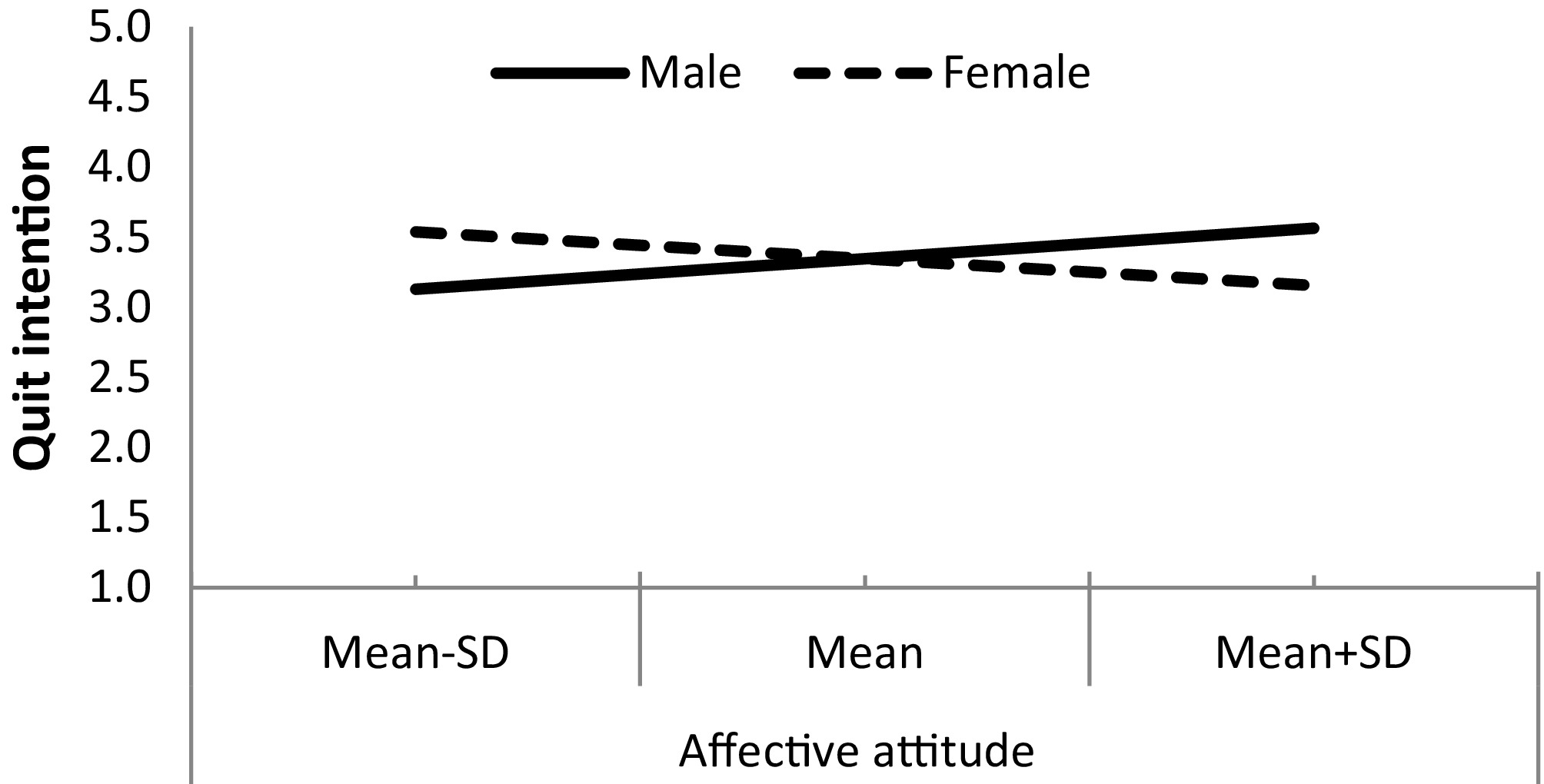
Figure 1.
Interaction between affective attitude and gender on quit intention.
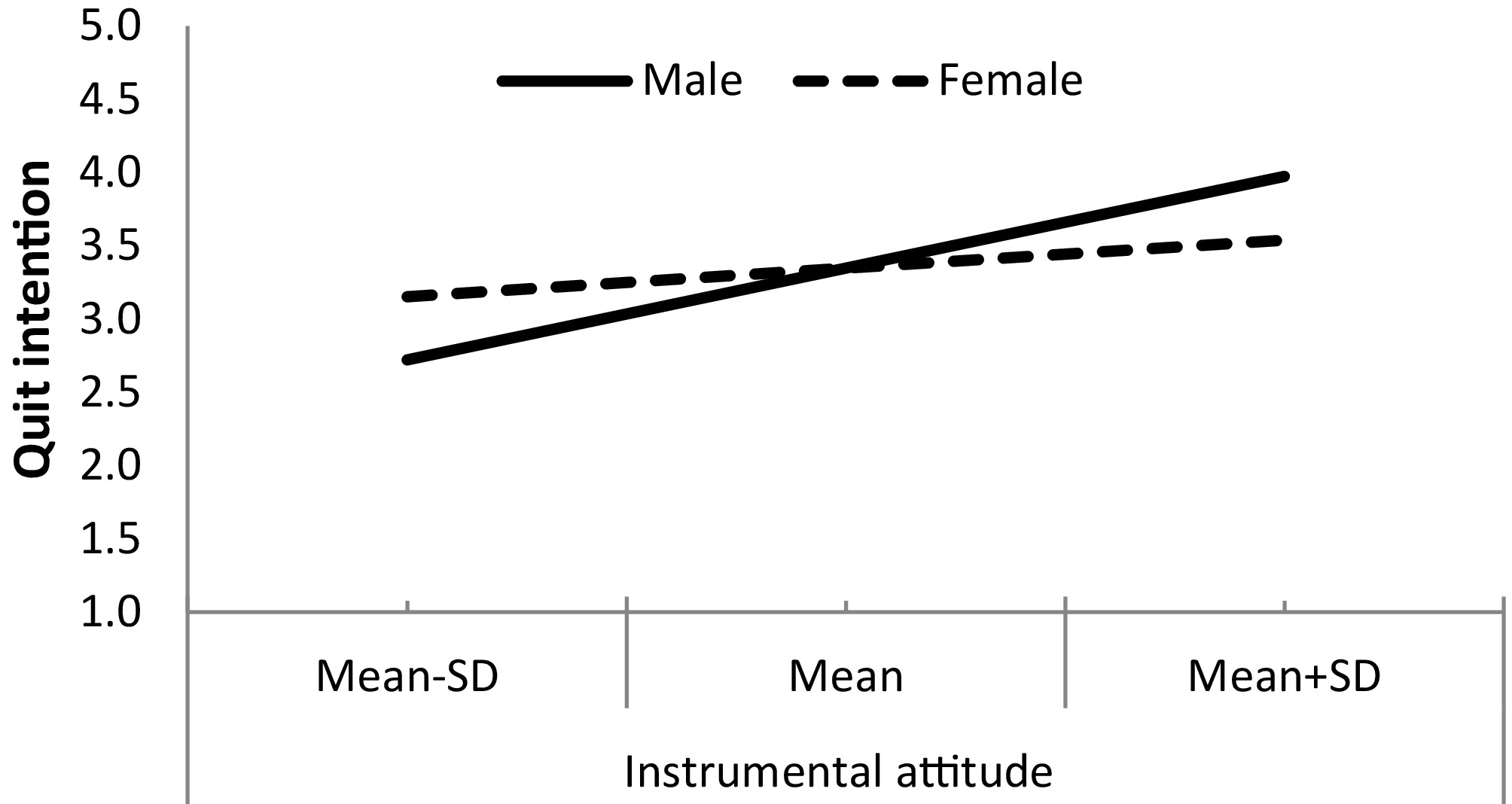
Figure 2.
Interaction between instrumental attitude and gender on quit intention.
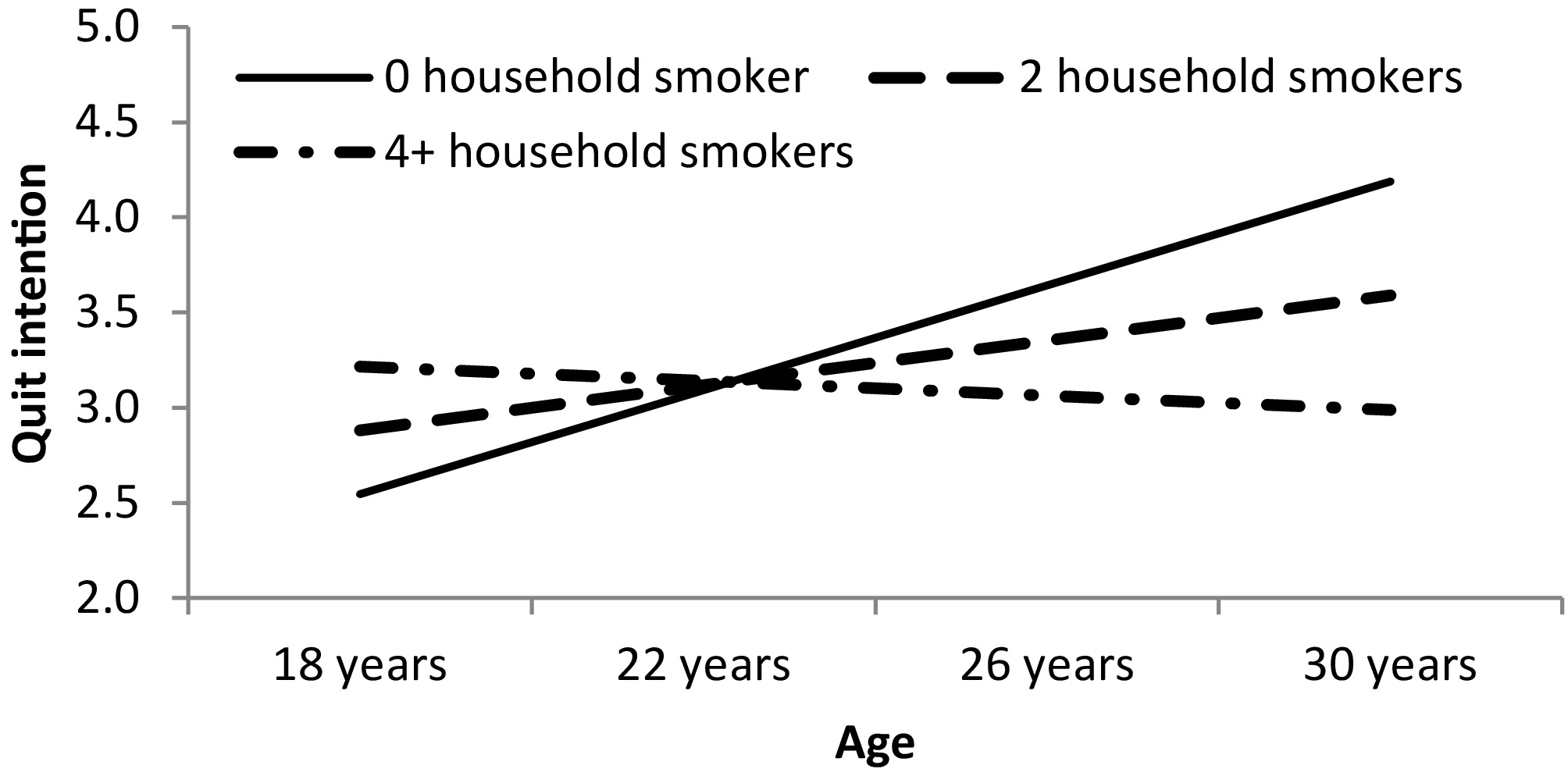
Figure 3.
Interaction between age and number of household smokers on quit intention.
When the outcome variable was past-year quit attempt, moderation analyses revealed its association with perceived behavioral control varied by gender (p < 0.05) (Fig. 4). Forest plot showed that perceived behavioral control over quitting was positively associated with past-year quit attempt in female smokers (AOR = 1.59, 95% CI: 1.21–2.10), but was only marginally associated with past-year quit attempt in male smokers (AOR = 1.16, 95% CI: 1.00–1.35).
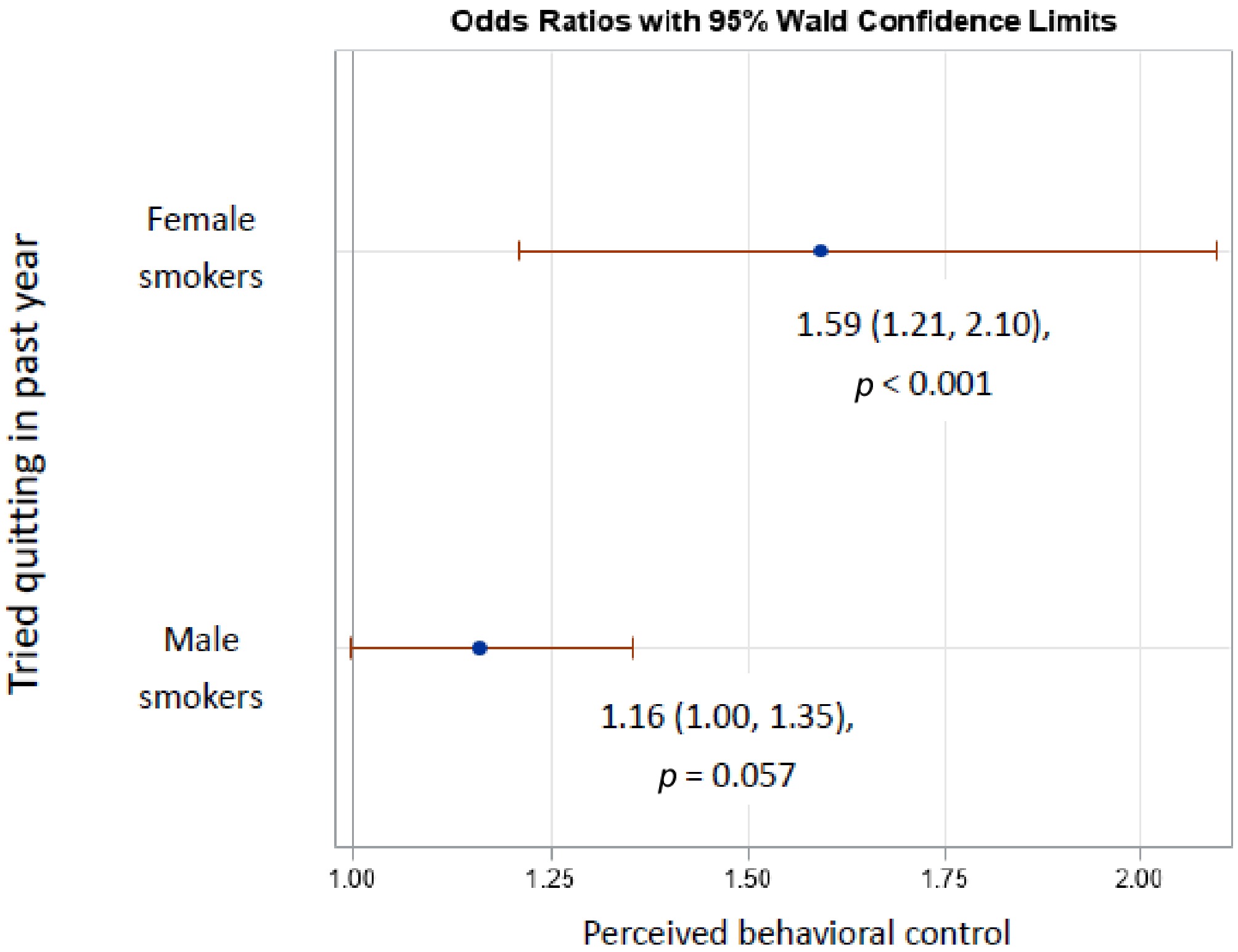
Figure 4.
Interaction between perceived behavioral control and gender on the status of past-year quit attempt.
-
Studies utilizing the TPB framework to examine smoking cessation behaviors among Chinese smokers are sparse. And the few studies that did focus on this population were hindered by small sample sizes or partial inclusion of TPB constructs[15,23]. This study is the first to examine whether TPB constructs were differentially related to quit intention and quit attempt among young adult smokers in China. Results of this study revealed that, while past-year quit attempt was strongly associated with quit intention, they were largely associated with different TPB constructs. When contemplating quitting, the functional aspects of quitting appeared to be more important for female smokers, while its affective aspects appeared to be more important for male smokers, suggesting that examining the two distinct components of attitude separately may yield more in-depth understandings. The affective aspects of quitting and injunctive norm were linked to past-year quit attempt, but not quit intention. As the number of household smokers increased, quit intention decreased, and the positive association between quit intention and age diminished. Perceived control over quitting was associated with both quit intention and past-year attempt, but for female smokers, the extent to which they believed they had control over quitting was a more powerful correlate of their quit attempt within the past year than it was for male smokers.
The utility of quitting, such as health concern, was frequently cited as a primary intrinsic motive for quitting smoking[38]. Furthermore, female smokers might process health messages more meticulously than male smokers, as they were found to be more likely to heed health warning labels on cigarette packaging and be motivated to quit smoking[39]. Thus, it is plausible that when considering quitting, female smokers were more attuned to the utility of quitting—such as whether quitting would be healthier, beneficial, or wiser than male smokers in this study. Yet, empirical support for the finding of this study that male smokers were more attentive to affective feelings about quitting than female smokers when considering quitting is scarce. Prospective studies are needed to explore this gender difference, and whether emphasizing health benefits of quitting vs affective feelings of quitting would be effective in fostering quit intention in female and male smokers, respectively. Unlike thinking about quitting, making actual quit attempts can bring about the discomfort of nicotine withdrawal can be a major barrier to smoking cessation[40]. It is plausible that when a smoker reflected on a previous quit attempt, his/her emotional stance about the discomfort endured during the attempt stood to be more salient than the utility of cessation, as was observed in the current study.
The presence of other smokers in the household constitutes a social-environmental risk factor. It may create pro-smoking contexts and increase smoking-related stimuli, thereby decreasing a smoker's quit intention or rate of success. Indeed, previous studies have found it to have a moderately negative association with cessation success[27]. Findings of this study that the number of other household smokers had a negative bivariate and multivariate association with quit intention, but not with past-year quit attempt, were surprising, since it was expected to correlate with both intention and attempt. Nonetheless, a study on 15,136 current smokers in England reported similar findings, namely, those who were regularly exposed to smokers at home, work, car, or other places exhibited low quit motivation, but their past-year quit attempt was not affected[41]. A possible explanation could be that quit intention and quit attempts, one reflecting cognitive readiness and the other reflecting behavioral execution, may be influenced by distinct determinants, especially when quit attempts spontaneously occur without prior intention. A study found that these spontaneous quit attempts were found to be triggered mainly by advice from health professionals or health concerns[42]. Echoing the finding above, this study found that injunctive norm, or whether important others approved of quitting smoking, was an independent correlate of quit attempt but not quit intention. Since past-year quit attempt was assessed as a dichotomous variable in this study, nuanced measures assessing its quantity and duration may uncover more credible insights.
Moreover, the link between quit intention and age in the current sample may depend on the number of other household smokers. The association between age and quit intention or attempt appeared to be inconsistent across studies. A systematic review found that, out of eight studies that examined the cross-sectional or longitudinal association of age with quit attempt, two studies reported a positive association, one study reported a negative association, and five studies reported a null association[43]. Two studies involving nationally representative samples of Chinese adults yielded contradictory results, one found that the likelihood of quitting smoking increased with age[44], while the other found that quit intention was not independently associated with age[45]. Perhaps their association may be contingent on other factors. A recent study on 13,245 German smokers revealed that age, in conjunction with other socio-demographic factors, could determine the strength of motivation to quit smoking or the likelihood of past-year quit attempts[46]. In this study, although quit intention and age were unrelated in bivariate analyses, their association became positive when the number of other household smokers was low (i.e., two or fewer), but diminished when the number of other household smokers increased. Nevertheless, it was rather unexpected to find that the number of household smokers only moderated the quit intention - age association but not others.
Consistent with previous studies[47], perceived behavioral control had a positive multivariate association with quit intention and past-year quit attempt in the current study. Future studies are needed to investigate if enhancing perceived behavioral control over quitting could encourage more frequent quit attempts and how that would translate into successful cessation. Additionally, the current study revealed that gender moderated the link between perceived behavioral control and past-year quit attempt, such that the link was stronger in female than in male smokers. A probable explanation could be that quitting smoking appeared to be more challenging for female smokers[39,48], potentially due to influences of negative affect, sex hormones, and weight concerns[49]. Nevertheless, the moderating role of gender in the PBC-quit attempt link requires further validation in other populations.
-
Limitations of this study should be noted. First, this study mainly employed a cross-sectional design, a longitudinal design with quit intention at a later date or actual quitting behavior as the outcome may provide greater insights into the applicability of the TPB model in predicting smoking cessation. Second, past-year quit attempt was assessed as a dichotomous variable, which may have reduced the ability to capture the complexity of the relationships under study. More nuanced measures of past-year quit attempts, incorporating their frequency and duration, may yield deeper insights. Third, since home smoking ban was associated with smoking reduction and quit attempt[50], the moderating role of the number of household smokers should be further examined in the context of home smoking restrictions.
-
The finding that quit intention and past-year quit attempt were mostly associated with different TPB constructs suggests that the two constructs may be governed by partially distinct pathways within the TPB framework. In prospective studies on cessation behaviors, incorporating both constructs to identify their unique drivers may enhance our understanding of differences between smokers who remain in the contemplation stage and those who act on their intentions despite prior failures. Contrary to expectations, the number of other household smokers did not act as a moderator for the relationships between TPB constructs and either quit intention or attempt, it exhibited a primary direct association with quit intention, suggesting that TPB constructs may operate independently of social-environmental risk factors, and that interventions to enhance smokers' quit intention might need to address both their internal attributes and external risk factors. Last but not least, rather than acting on the outcomes directly, gender shaped how some TPB constructs were related to the outcomes (quit intention/attempt), suggesting that male and female smokers may not differ significantly in their quit intention or past-year quit attempt, but may diverge in how TPB constructs drive these outcomes. Due to the higher global smoking prevalence in males, male smokers are overrepresented in existing studies; few studies have included both female and male smokers in the same context or compared their cessation behaviors. Addressing this gap is critical for designing tailored cessation strategies that account for gender-specific pathways.
The author would like to thank Shanghai Jiao Tong University School of Medicine for providing funding for this study (Grant No. 19X100040041, 2018–2021).
-
The study was conducted in accordance with the Declaration of Helsinki, and all procedures were approved by the Ethics Committee of the School of Public Health and Nursing at Shanghai Jiao Tong University School of Medicine (Approval ID: SJUPN-202019, Approval Date: 2021-03-20). Informed consent was obtained from all participants.
-
The author confirms sole responsibility for the following: study conception and design, data collection, analysis and interpretation of results, and manuscript preparation.
-
The datasets used and analyzed during the current study are available from the corresponding author on reasonable request.
-
The author declares that there is no conflict of interest. The funding body had no role in the design of the study, or the collection, analysis, and interpretation of data, or in the writing of the manuscript.
- Copyright: © 2025 by the author(s). Published by Maximum Academic Press, Fayetteville, GA. This article is an open access article distributed under Creative Commons Attribution License (CC BY 4.0), visit https://creativecommons.org/licenses/by/4.0/.
-
About this article
Cite this article
Wang Q. 2025. Using the theory of planned behavior in explaining quit intention and past-year quit attempt in Chinese young adult smokers. Journal of Smoking Cessation 20: e009 doi: 10.48130/jsc-0025-0009 

Using the theory of planned behavior in explaining quit intention and past-year quit attempt in Chinese young adult smokers
- Received: 25 January 2025
- Revised: 10 June 2025
- Accepted: 27 August 2025
- Published online: 26 September 2025
Abstract: This study examined whether the Theory of Planned Behavior (TPB) constructs were differentially related to quit intention and past-year quit attempt in Chinese young adult smokers, and whether these relationships varied by gender and number of other household smokers. Throughout June of 2021, 757 smokers (mean age = 25.95, SD = 3.23) completed an online survey. TPB constructs assessed included affective and instrumental attitude, injunctive and descriptive norms, and perceived control. Moderation effects were assessed via interaction terms. Multivariate analyses revealed that quit intention was associated with instrumental attitude and perceived control, while past-year quit attempt was associated with affective attitude, injunctive norm, and perceived control. Male smokers' quit intention was linked to affective attitude, and female smokers' quit intention was linked to instrumental attitude. Quit intention increased with age only when other household smokers were few (i.e., two or less). The association between perceived control and past-year quit-attempt was more pronounced in female than in male smokers. Quit intention and quit attempt may be governed by partially distinct TPB constructs. TPB constructs were robust to the effect of the number of other household smokers. Male and female smokers may not differ in their quit intention or past-year quit attempt, but may diverge in how TPB constructs drive these outcomes.