












-
In contemporary China, urbanization constitutes both a major phenomenon and a pervasive developmental trend. The rapid expansion of urban areas has been extensively documented, marked by a substantial increase in built-up environments, particularly within large urban agglomerations[1]. This growth frequently occurs at the expense of historically and culturally significant architecture, exacerbating the disconnect between modern urban development and local heritage[2]. Ancient structures are increasingly vulnerable to the pressures of urbanization, further intensified by climatic factors. In regions such as Hainan, hot and humid conditions are known to accelerate the deterioration of building materials[3], thereby heightening the risk to these architectural heritage sites.
Amidst these challenges, the preservation of such architectural heritage necessitates innovative strategies. Research has shown that epiphytic plant communities, thriving on these ancient structures, can play a beneficial role. These plants have the potential to regulate the micro-environment through their physiological and biochemical processes, thus mitigating material degradation induced by harsh environmental conditions[4]. Epiphytic plants, primarily vascular plants, bryophytes, and lichens, traditionally defined as organisms spending most of their life cycle attached to hosts without parasitizing them, are reconsidered in this study. A refined definition is proposed where epiphytes specifically refer to vascular plants colonizing the three-dimensional surfaces of ancient masonry.
This study further explores the dual perspectives on the factors influencing epiphytic growth: abiotic and biotic. The Schimper hypothesis posits that epiphytes flourish in moist, shady forest environments and adapt their habitats in response to light availability[5,6]. In contrast, the Tietze-Pittendrigh hypothesis argues that epiphytes are more prevalent in dry, nutrient-poor settings, which are more hospitable to these organisms[5,7]. The 'stress gradient hypothesis' (SGH) introduces a biotic perspective, suggesting that positive interactions between organisms are more likely in environments with high external stress and limited resources[8−10].
Moreover, while epiphytes can enhance urban biodiversity and contribute to the aesthetic value of urban landscapes[11], they may also pose risks to the structural integrity of heritage sites. Certain species, especially larger trees, can cause biological damage to buildings[12], with a distinct difference observed between the impacts of annuals and perennials[13]. The discourse on native vs non-native species further enriches understanding, challenging the conventional view of non-natives solely as threats[14].
In the preceding discussion, the diverse environmental and biotic factors influencing the colonization of plants on ancient masonry were examined, highlighting their dual implications for heritage conservation: certain species contribute positively by regulating microenvironments and decelerating material degradation, while others may compromise structural integrity. Nonetheless, a critical knowledge gap persists within the existing literature. Although prior research has shed light on the distribution and ecological roles of building-associated vegetation at local or individual-site scales, comprehensive insights remain scarce at broader spatial extents—such as across entire islands or urban agglomerations. Specifically, the mechanisms and principal drivers—both environmental and biotic—that shape the diversity, abundance, and spatiotemporal dynamics of these plant communities have yet to be systematically investigated. This limitation obstructs a holistic understanding of the underlying ecological processes and hinders the formulation of evidence-based strategies that reconcile ecological management with cultural heritage preservation.
To address this gap, this study poses three core research questions: (1) What is the species composition and community characteristics of epilithic plants on ancient masonry in Hainan, and what biodiversity patterns do they exhibit? (2) Which key environmental and biotic factors drive their spatial distribution and variation? (3) How can these insights inform future conservation practice and ecological management of vascular plants on heritage structures? By addressing these questions, this work aims to advance the understanding of plant-building interactions and provide a scientific foundation for biologically informed conservation strategies for architectural heritage.
-
Hainan Island, China's second-largest island, is situated at the southernmost part of the country. Its geography is distinctly shaped like an elliptical pear, aligned along a northeast-southwest axis, and spans an area of approximately 33,900 km2. Geographically, it is bounded by latitudes 18°10' N to 20°10' N and longitudes 108°37' E to 111°03' E, positioning it directly south of the Tropic of Cancer. The island's climate is predominantly tropical monsoon maritime, characterized by minimal seasonal variation, consistently high temperatures, and copious rainfall throughout the year. These climatic conditions are conducive to the proliferation of tropical vegetation and support a rich biodiversity, earning Hainan the accolades of a 'genetic resource bank' and a 'natural museum'. Such environmental richness forms an excellent basis for the study of epiphytic plant biodiversity.
Culturally, Hainan Island is a mosaic of diverse heritages, reflecting influences from the indigenous Han, Li, and Miao ethnic groups, as well as from overseas Chinese communities and Western cultures. The island's cultural landscapes exhibit a complex, altitude-relative distribution, enriching its historical and cultural depth. Noteworthy cultural and historical sites include the Dongpo Academy, the ancient city of Yazhou, and modern landmarks such as Sanya Phoenix International Airport, Yangpu Port, numerous recreational resorts, and Hainan University. This diverse array of sites provides a rich tapestry of resources for research into ancient architecture and its interplay with local flora, particularly epiphytic plants.
Data sources and basis for epiphytic plant species
-
In this study, the list of epiphytic plants on ancient architectures established by Hong et al. was adopted as an essential data source[15], which, when integrated with systematic field investigations of the selected architectural sites, enabled a quantitative assessment of the species richness and abundance of epiphytic plants colonizing ancient architectural relics on Hainan Island (Fig. 1). The specific field sampling method was as follows: in each selected study area, three 20 m × 20 m plots were established to record tree layer species composition and individual counts. To comprehensively capture the diversity of shrubs and herbs, five 5 m × 5 m subplots were placed at the four corners and the center of each main plot to survey shrub species. At the same locations, five 1 m × 1 m quadrats were also established to record herbaceous layer species and their abundance[16]. Detailed information regarding these plants, encompassing various biological and ecological traits, was meticulously gathered. These traits included life forms (herbs, shrubs, trees), life cycles (annuals, perennials), native status (native species, introduced species), cultivation methods (cultivated species, wild species), and utilitarian attributes (edible and ornamental values). This comprehensive data was primarily extracted from authoritative sources, specifically the 'Flora of China', which provides an extensive catalog of the region's botanical diversity. This methodological approach not only facilitated a thorough analysis of epiphytic species associated with historical structures but also enabled an exploration of their ecological roles and conservation importance in the context of cultural heritage sites.
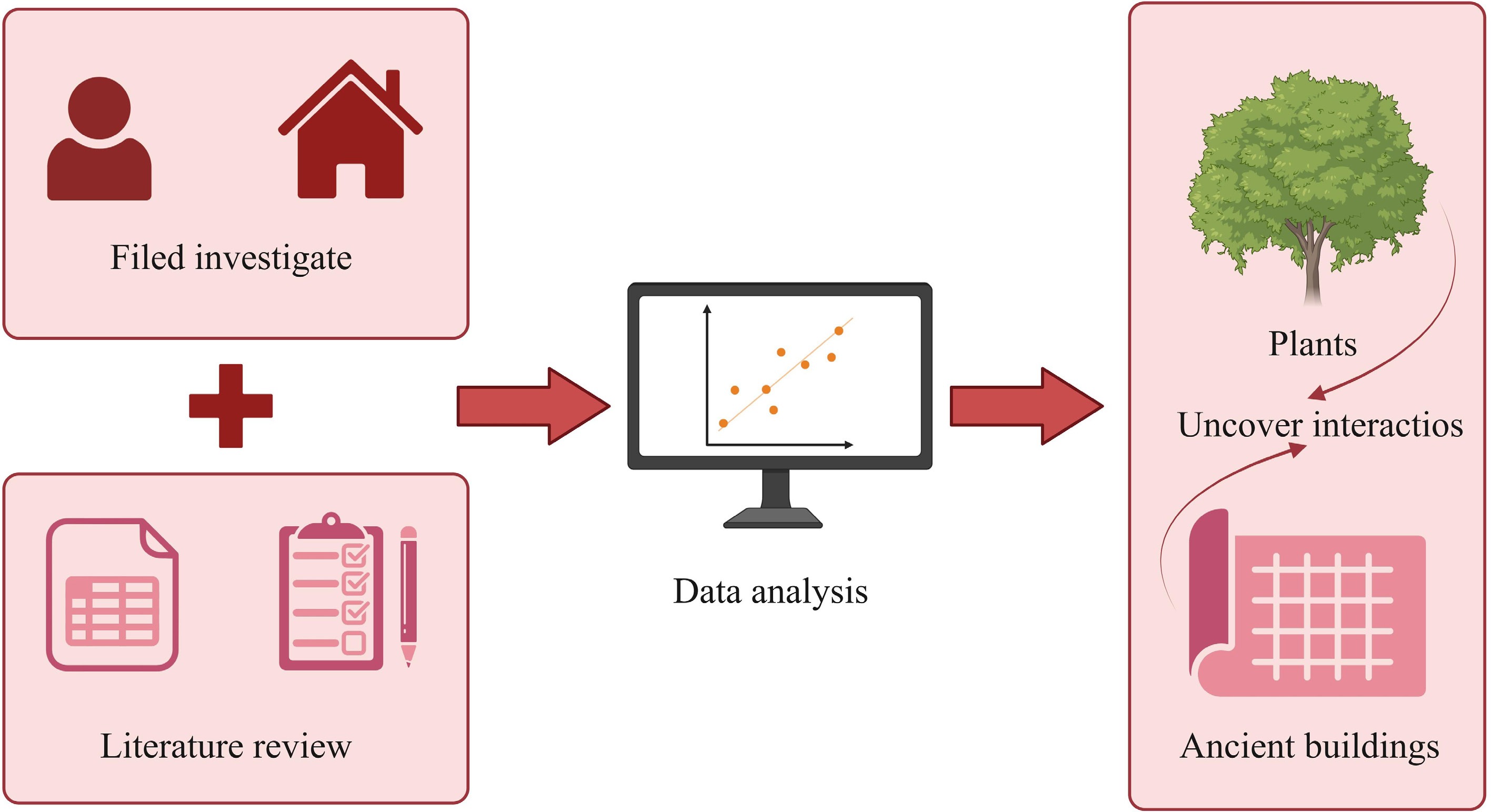
Figure 1.
Flowchart illustrating the methodological framework of this study.
Data sources and basis for ancient architecture
-
The selection of ancient architectures for this study encompassed a diverse range of sites across Hainan Island, segmented geographically into Northern, Eastern, Western, and Southern regions (Fig. 2). A total of 44 representative ancient masonry sites were surveyed, with the Northern Hainan Island region contributing the highest number of sampling points. Key parameters recorded included building area, height, construction year, geographic coordinates (longitude and latitude), annual maintenance frequency, and average daily tourist visitation. Specifically, building area, height, and construction year were obtained from historical records and related documentation of the ancient architectures; geographic coordinates were acquired using mobile positioning systems; and annual maintenance frequency, together with average daily tourist visitation, were gathered through consultations with relevant management departments and by reviewing related sources.
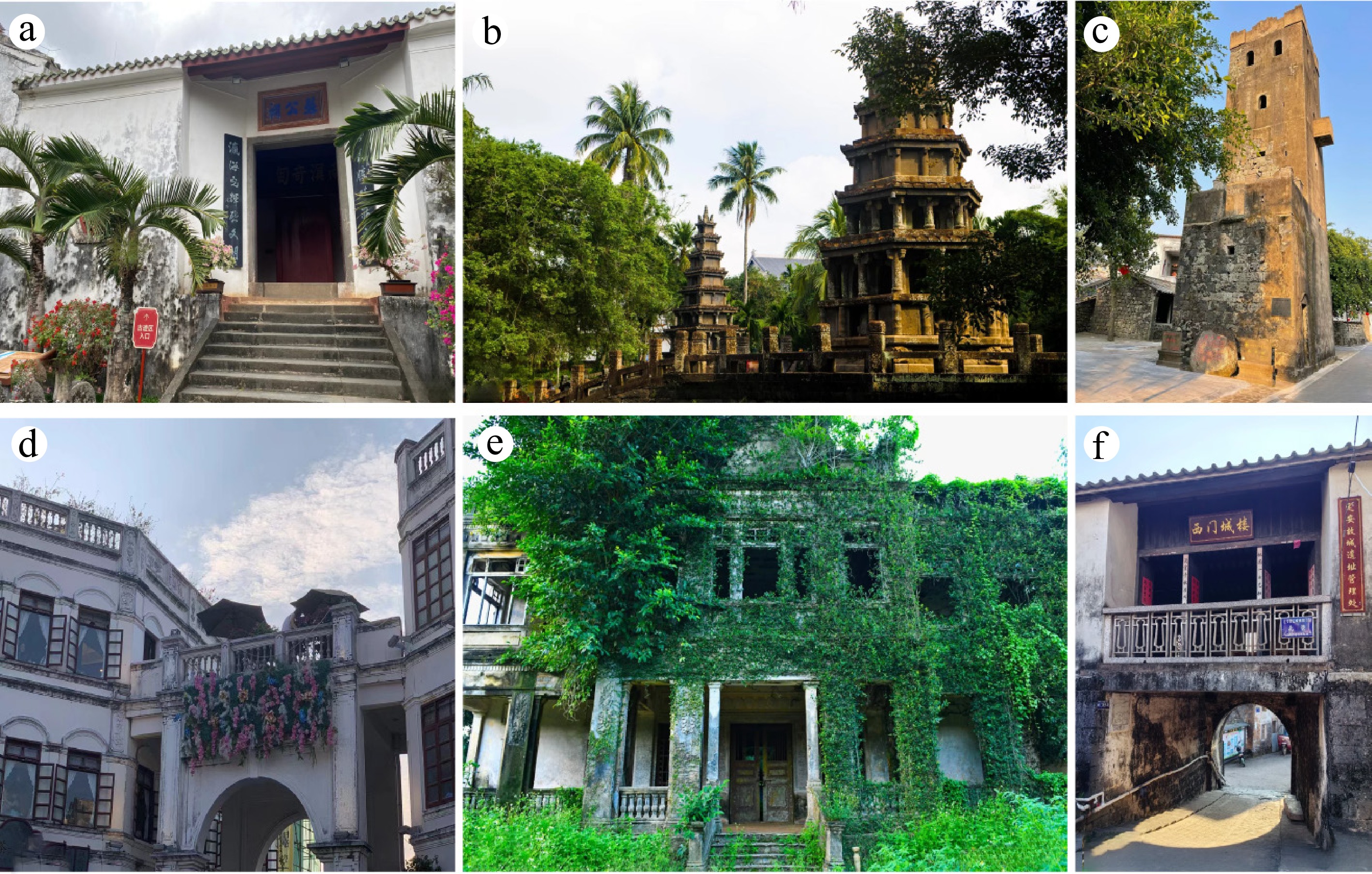
Figure 2.
Ancient masonry of different functional types in Hainan. (a) Five ancestral hall (garden building). (b) Meilang twin pagodas (religious building). (c) Fuxing building (defensive building). (d) Haikou old arcade street (house building). (e) Lin Hong Gao Wai Lou (monumental building). (f) Ding'an ancient city wall (defensive building).
Utilizing the 'National Key Cultural Relics Protection Units' list issued by the National Cultural Heritage Administration of China, the buildings were categorized based on their functional roles, including residential structures, defensive buildings, religious edifices, memorial sites, garden architectures, and other miscellaneous types. A comprehensive summary table of these historical architectures was compiled (Supplementary Table S1), revealing detailed insights into the epiphytic flora associated with these structures across the four geographic subdivisions: Qiongbai, Qiongnan, Qiongdong, and Qiongxi. The Qiongbai region, in particular, was noted for its frequent selection, exhibiting a richer diversity and a greater number of epiphytic specimens.
Driving variables
-
Based on previous research on the driving mechanisms of plants associated with ancient masonry, as well as studies on vegetation in Hainan Island[17−20], 12 potential factors influencing the growth and distribution of these plants were selected. This selection comprises seven architectural-related variables recorded during the survey: area, height, construction year (For the calculation, the data were computed as 2024 minus the year of construction), longitude, latitude, annual maintenance frequency, and daily tourist numbers. In addition to these, socio-economic variables were also considered. These include surrounding population density, growth rate of government general public budget revenue, number of commercial outlets nearby, regional passenger traffic, and extent of greening coverage, all of which were assessed at the township level. The data pertaining to these socio-economic factors were extracted from the 'General Gazetteer of the People's Republic of China, Hainan Volume'. Notably, the revenue growth rate data was sourced directly from township government websites. In addition, considering that areas with high urbanization experience severe anthropogenic disturbances, a single disturbance variable may not fully capture the influence of human activities on plants. Therefore, three variables—daily tourist numbers, surrounding population density, and regional passenger traffic—were selected and integrated through standardization to obtain a composite disturbance index (DI) to further quantify the level of anthropogenic disturbance. The calculation procedure was as follows: each of the three variables was first standardized using z-score normalization. Subsequently, the standardized values were averaged to generate the DI for each site, providing a comprehensive metric of human impact on epiphytic plant communities. This robust analytical framework integrates both architectural characteristics and socio-economic contexts, providing a holistic approach to understanding the factors that influence the distribution and diversity of epiphytic plants on ancient architectures in Hainan.
Data analysis of driving mechanisms
-
This study concentrates on the epiphytic vascular plants associated with ancient architecture, investigating the relationship between plant richness, abundance, and various spatial and socio-economic driving factors. A generalized linear model (GLM) was employed to assess the correlations between epiphytic plant species richness and abundance and the associated environmental and socio-economic variables[21,22]. Data normalization was conducted using IBM SPSS Statistics 23.1, applying z-score normalization to all response and predictor variables. Outlier values, identified as those > 3 or < −3, were excluded to ensure the integrity of linear regression model predictions.
Two linear regression models were developed, utilizing epiphytic plant species richness and abundance as predictor variables and incorporating the twelve driving factors as response variables. Model selection was guided by the Akaike information criterion (AIC), favoring models with an AIC less than zero, and the adjusted R-squared (R2) values, with a preference for models exhibiting adjusted R-squared values > 0.3[23]. Significant predictor variables were identified based on their β-coefficients and p-values, with a threshold of < 0.01 for significance. Spearman and Pearson correlation analyses were conducted between the previously calculated DI and the species richness and abundance of epiphytic plants. The results were then cross-validated with the outcomes of the linear regression models to investigate the actual impact of anthropogenic disturbance on the plants associated with ancient masonry.
Variables were further categorized into distinct groups—herbs, shrubs, trees, annuals, perennials, native species, introduced species, cultivated species, wild species, ornamental values, and edible values. Separate linear regression models were then constructed for the richness and abundance of epiphytic plant species on ancient architecture, using only predictor variables that demonstrated significant p-values > 0.01. This rigorous analytical process yielded robust results, adhering to consistent evaluative standards. All statistical analyses were conducted using R version 4.3.2 and IBM SPSS Statistics 25.0.0, ensuring comprehensive and reliable findings.
-
The sampled buildings predominantly date back to the 15th and 16th centuries, with an average footprint of 8,072 m2. The breakdown of the surveyed sites revealed 25 residential buildings, eight defensive structures, five religious sites, one commemorative edifice, and one each classified under garden architecture and other categories. This distribution reflects Hainan's historical role as a cultural crossroads, assimilating influences from mainland Chinese settlers, British and French colonials, and overseas Chinese from Southeast Asia, which is particularly evident in the predominance of residential architectures.
Moreover, an analysis of the distribution patterns of these ancient masonry indicated that a majority are located in suburban and rural areas, with only ten situated in urban settings, representing 22.72% of the total. This distribution is indicative of the broader impacts of urbanization and its influence on the preservation and utilization of historical sites. The findings from this comprehensive survey provide a foundational understanding for further exploring the ecological and cultural significance of epiphytic plants in relation to ancient architectural heritage on Hainan Island.
Spatiotemporal distribution of epiphytic flora
-
To further examine the spatial distribution of epiphytic flora associated with ancient masonry, the correlation between species richness and the locations of these structures was evaluated. The findings, as visualized in a boxplot of species richness across different regional ancient architectures (Fig. 3), indicate that the highest levels of species richness are observed in suburban regions, followed by urban and rural areas. However, the results of the ANOVA test (Table 1) indicate no statistically significant differences in species richness across these regions, with p-values exceeding 0.05. Consequently, it must be concluded that there is no significant variation in the species richness of epiphytes on ancient masonry across urban, suburban, and rural areas. This finding highlights the relative independence of ancient masonry as functional units within the context of urbanization and urban–rural gradients. Typically, urban–rural gradients are prevalent in urban landscapes and exert a marked influence on biodiversity distribution[24]. However, epiphytic flora on ancient masonry did not exhibit such a gradient pattern. This suggests that ancient masonry maintains a degree of independence from urban development processes and underscores its ecological and cultural significance as unique functional units.
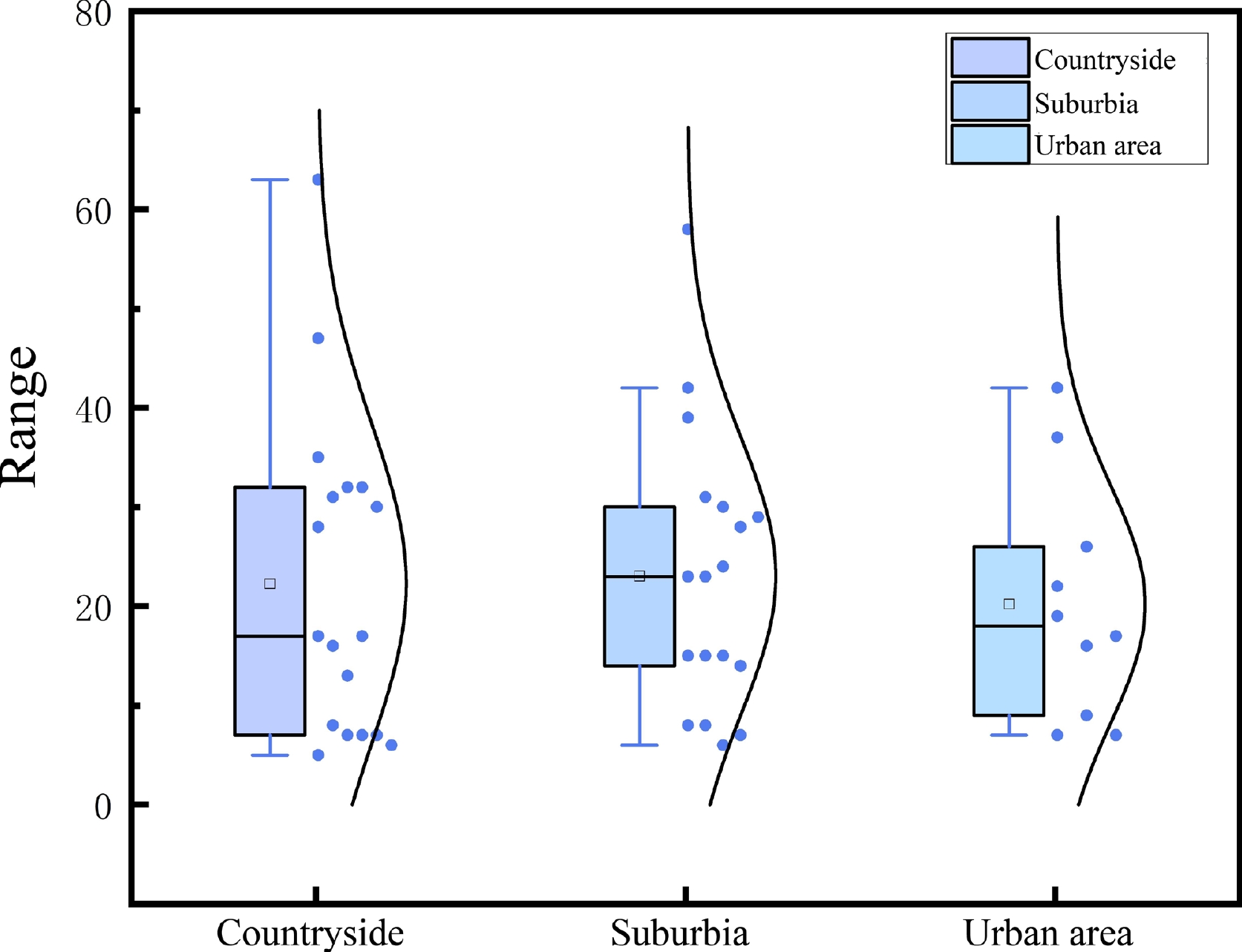
Figure 3.
Box plots of species richness of ancient masonry in different regions.
Table 1. One-way ANOVA analysis of species richness of epiphytes in different regions.
Region M SD F p-value Countryside 22.280 16.157 0.126 0.882 Suburbia 23.060 13.901 Urban area 20.200 12.007 Nevertheless, this conclusion should be interpreted with caution, as it may be influenced by the sampling design employed in this study. The possibility of sampling bias suggests that additional research, ideally involving alternative sampling approaches or larger sample sizes, is needed to more accurately determine the spatial distribution patterns of epiphytic species on ancient masonry.
In addition, species richness and abundance of epiphytic plants were compared across ancient masonry from different historical periods. Based on the characteristics of the data, the study classified these periods into four stages: the 12th century and earlier, the 13th–17th centuries, the 17th–18th centuries, and the 19th century and later. The boxplot (Fig. 4) results indicate that overall species richness and abundance remained relatively stable across these periods, with no substantial differences observed. Nevertheless, a gradual increasing trend in both species richness and abundance is evident toward more recent periods, which is consistent with the results presented in Table 2.
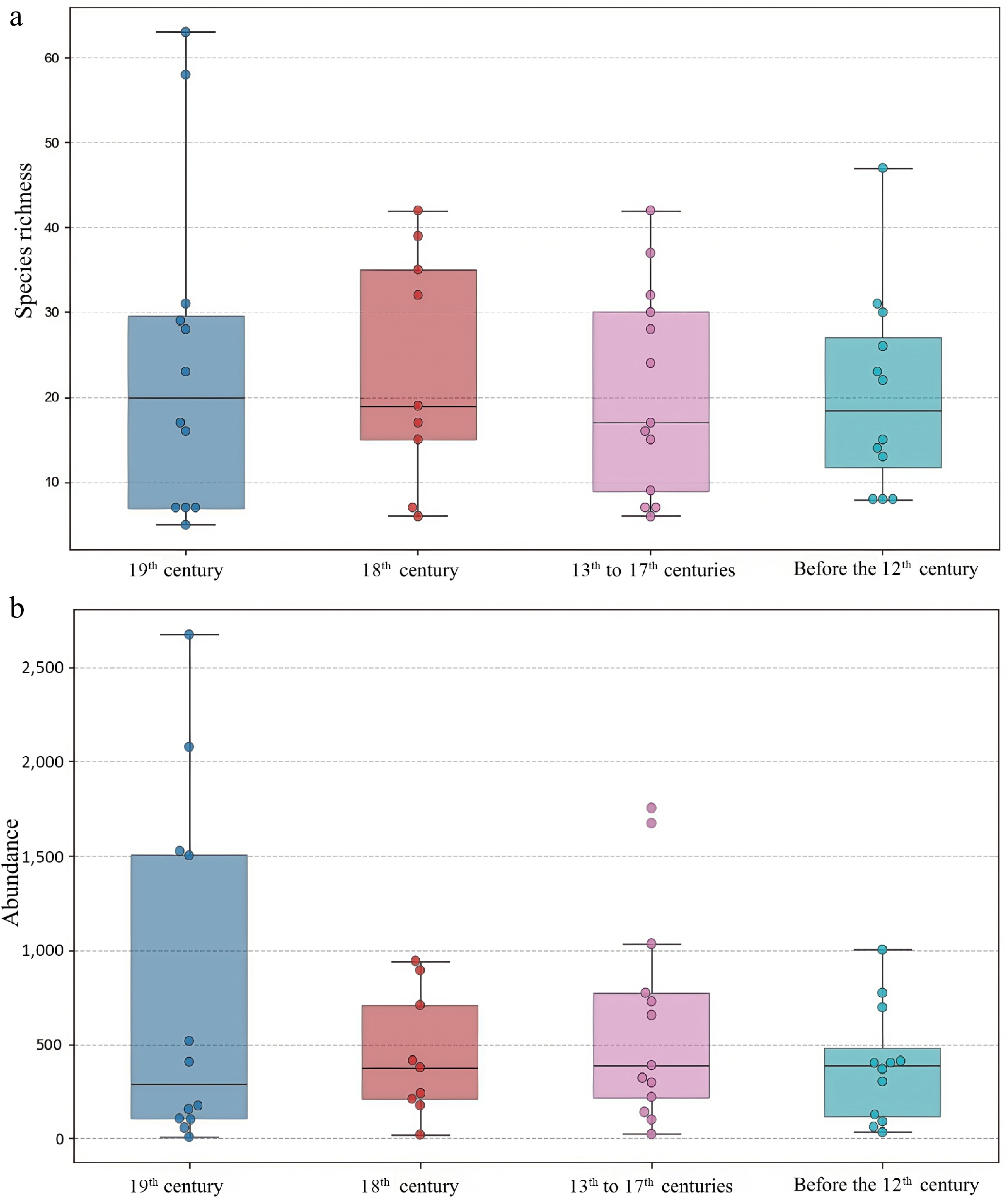
Figure 4.
Box plots of species richness of ancient masonry across different historical periods.
Table 2. Regression model results for epiphytes of ancient masonry.
Different factors Species richness Abundance Intercept Negative*** Negative*** Height of ancient building Negative** NA Longitude Positive*** Positive*** Latitude Positive*** Positive Area of ancient building Negative*** Negative*** Building age Negative*** Negative*** Surrounding population density NA Positive*** Rate of increase in the general
public revenue budget of the governmentPositive*** Positive*** Number of commercial outlets Positive*** Positive*** Number of tourists per day Positive** Negative*** Annual passenger traffic Negative*** Negative*** Number of repairs per year NA NA Green coverage of surrounding areas Positive** NA Adjusted R2 0.4429 0.5916 Akaike information criterion (AIC) −506.31 −710.11 p-value *** *** Significance codes: 0, ***; 0.001, **; 0.01, *; 0.05, .; 0.1, 1. NA represents that the variable was not added to the model. Sample size N = 44. Values are standardized coefficients (β) and their significance. Characteristics of epiphytes
-
The comprehensive survey of epiphytic plants associated with ancient architecture yielded significant findings regarding their diversity and distribution. A total of 25,614 epiphytic plants were identified, classified into 80 families, 196 genera, and 255 species. This diversity underscores the rich botanical resources present on ancient structures in Hainan Province. Detailed statistical analysis (Table 3) highlighted several dominant families, including Moraceae, Urticaceae, Polypodiaceae, Nephrolepidaceae, Adiantaceae, and Compositae, which collectively constitute the core of the epiphytic flora in the region.
Table 3. Statistics of dominant families and species of epiphyte in Hainan Province.
Family Percentage
(no. of plants)Species Percentage
(no. of plants)Moraceae 22.84% (5,849) Ficus pumila 19.05% (4,879) Urticaceae 15.44% (3,955) Pilea microphylla 14.82% (3,795) Polypodiaceae 11.21% (2,872) Phymatosorus scolopendria 8.79% (2,252) Nephrolepis 7.44% (1,905) Nephrolepis auriculata 7.44% (1,905) Adiantaceae 5.68% (1,455) Adiantum caudatum 5.68% (1,455) Compositae 5.62% (1,439) Eremochloa ciliaris 2.99% (767) Pteridaceae 4.37% (1,120) Pyrrosia adnascens 2.39% (612) Rubiaceae 3.76% (963) Paederia scandens 2.33% (597) Vitaceae 2.97% (762) Eupatorium odoratum 1.81% (463) Gramineae 2.83% (725) Ficus tinctoria 1.73% (444) Euphorbiaceae 1.74% (446) Basella alba 1.53% (393) Portulacaceae 1.63% (417) Boerhavia diffusa 1.37% (350) Basellaceae 1.53% (393) Pteris ensiformis 1.36% (348) Nyctaginaceae 1.38% (353) Digitaria ciliaris 1.13% (290) Solanaceae 1.29% (330) Bidens pilosa 1.06% (272) Crassulaceae 1.10% (281) Solanum procumbens 1.02% (262) Thelypteridaceae 0.91% (232) Phyllanthus urinaria 0.94% (242) Sinopteridaceae 0.88% (225) Cayratia japonica 0.91% (232) Cyperaceae 0.56% (144) Cyclosorus parasiticus 0.89% (228) Araceae 0.55% (140) Cissus repens 0.88% (225) Oxalidaceae 0.55% (140) Total 94.27% (24,146) 78.13% (20,011) Notably, the Moraceae family emerged as the most prevalent, with 5,849 individuals accounting for 22.84% of the entire sample. At the species level, Ficus pumila was the most abundant, with 4,879 individuals representing 19.05% of the total epiphytic population. Other significant species included Pilea microphylla (14.82%), Phymatosorus scolopendria (8.79%), Nephrolepis auriculata (7.44%), and Adiantum caudatum (5.68%). These species are predominantly native to Hainan and are primarily found in their natural habitats, exhibiting both edible and ornamental values.
The epiphytic flora on Hainan Island's ancient structures is both diverse and abundant, demonstrating a wide range of ecological adaptations. According to the analysis presented in the bar chart (Supplementary Fig. S1a), herbaceous species significantly dominate the flora, comprising 162 species or 63.53% of the total. Prominent among these are Pilea microphylla, Phymatosorus scolopendria, Nephrolepis auriculata, and Adiantum caudatum, which typically inhabit the crevices and joints of the epiphytic foliage found on these ancient masonry.
Further analysis of life cycles shows a distinct predominance of perennial over annual species. The perennial species, which include Ficus pumila, Phymatosorus scolopendria, Nephrolepis auriculata, Adiantum caudatum, Eupatorium odoratum, and Ficus hispida, account for 212 species or 83.14% of the epiphytic plants surveyed. This indicates that the majority of epiphytic species thriving on ancient architecture are perennial herbaceous varieties, adapted to the microhabitats offered by these historic structures.
The pie chart (Supplementary Fig. S1b) detailing the species richness of epiphytic plants categorizes them into cultivated and wild types, revealing that wild species dominate, constituting 80% of the total or 205 species. In contrast, cultivated species comprise 20%, totaling 50 species. Prominent wild species include Pilea microphylla, Adiantum caudatum, Eupatorium odoratum, and Ficus hispida, while cultivated species are primarily represented by Nephrolepis auriculata, Ficus pumila, Ficus concinna, and Alocasia macrorrhiza.
Further categorization by origin shows that native species account for 68% (173 species), including Nephrolepis auriculata and Adiantum caudatum, while non-native species represent 32% or 82 species, with notable examples such as Pilea microphylla and Eupatorium odoratum. This highlights a significant presence of native flora within the epiphytic community on ancient structures.
The species are also differentiated by their ornamental and edible values. Ornamental species, which include Nephrolepis auriculata, Cissus repens, and Pteris ensiformis, are more prevalent. Conversely, edible species like Cleome rutidosperma, Acalypha indica, Coccinia grandis, and Solanum photeinocarpum are less common. Some species, such as Ficus pumila and Portulaca pilosa, offer dual benefits, being both ornamental and edible (Supplementary Fig. S2) .
The heat map (Fig. 5) shows that wild species form a larger proportion of the herbs category (0.28), while native species are more prevalent among trees (0.26). Additionally, the chord diagram (Supplementary Fig. S3) reveals that the primary utility value of these species is ornamental, with respective counts of 104, 43 and 41 species making up 67.10%, 76.79% and 73.21% of each plant category. Notably, 57 species possess both ornamental and edible values, while 51 species lack both, underscoring the diverse functional roles of these epiphytes.
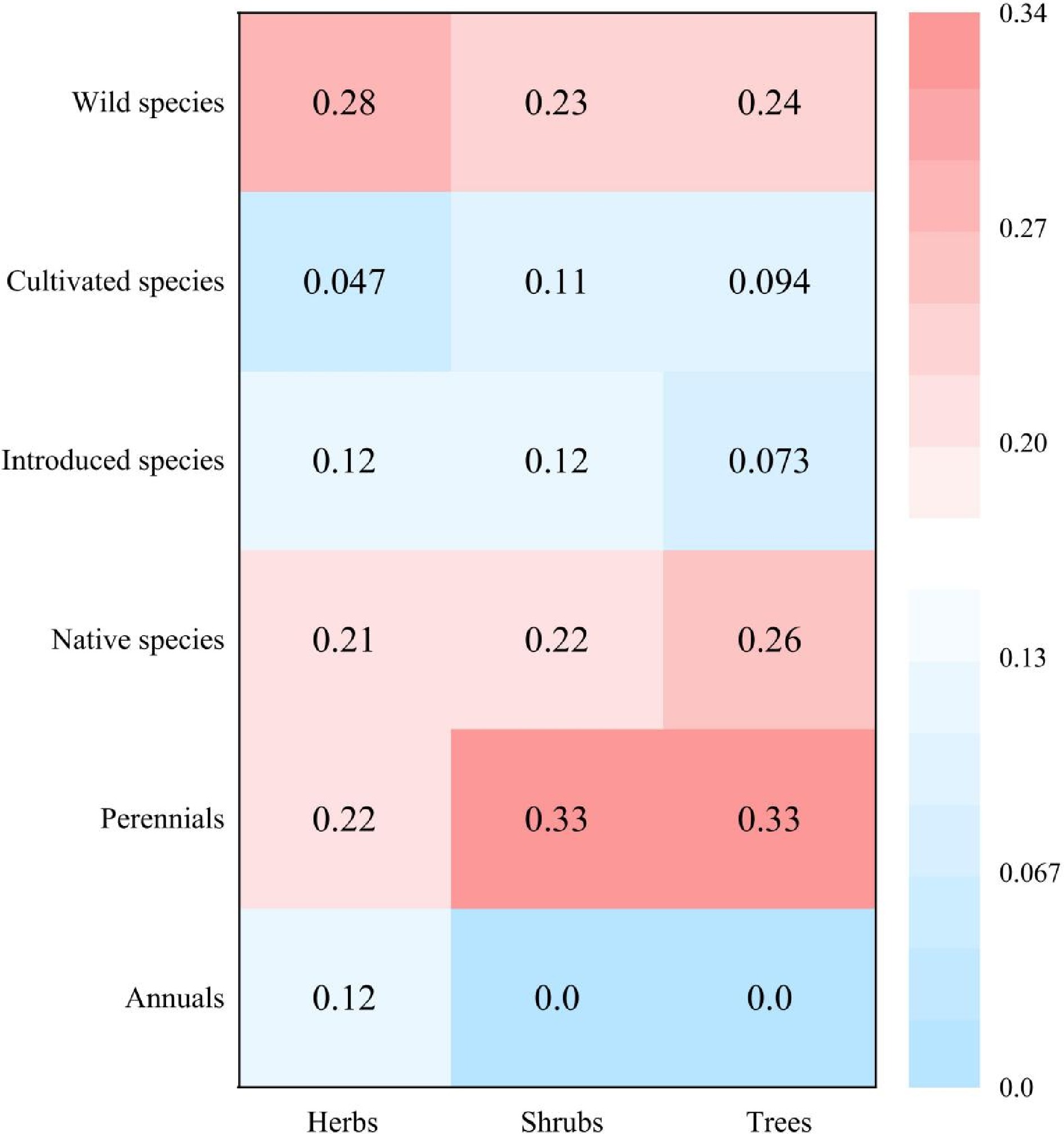
Figure 5.
Heat map of the percentage of the total species richness (considering only the mathematical totals, i.e. the sum of the species richness of each type on the y-axis) of the different species type established on the basis of herbs, shrubs, and trees.
Drivers of epiphyte species richness and abundance in ancient masonry
-
The initial linear regression model, which analyzed the species richness of epiphytic plants associated with ancient architecture (Table 2), demonstrated a strong adherence to linearity, with highly significant p-values (p < 0.001). The model exhibited robust goodness of fit, evidenced by an Akaike information criterion (AIC) of –506.31 and an adjusted R-squared (R2) of 0.44, which aligns well with the predictive requirements of this study. Among the twelve response variables analyzed, several showed highly significant correlations with species richness. Notably, the longitude and latitude of the ancient structures were strongly associated with species richness. Similarly, the land area occupied by the structure (β coefficient ***) and the building age (β coefficient ***) were significantly linked to species richness, suggesting that larger and older structures tend to support more diverse epiphytic plant communities. Economic factors also played a critical role, as indicated by the significant correlations with the growth rate of general public budget revenue (β coefficient ***) and the number of commercial outlets in proximity (β coefficient ***). The average annual passenger traffic in the area showed a strong negative correlation (β coefficient ***), suggesting that higher human traffic might negatively impact species richness.
Other architectural and environmental factors, such as the height of the ancient architecture (β coefficient **), the daily average passenger count (β coefficient **), and green coverage in the surrounding area (β coefficient **), also demonstrated significant correlations, albeit with smaller effect sizes. However, no significant correlation was observed with the surrounding population density or the frequency of annual repairs to the structure. The linear regression model that employs plant abundance as the predictor variable also exhibits a good fit and applicability, outperforming the previous model focused on species richness. This is evidenced by an Akaike information criterion (AIC) of –710.11 and an adjusted R-squared (R2) of 0.59, with highly significant p-values (p < 0.001), indicating a robust model performance. Cross-referencing with the overall driving factors of epiphytic plants as listed in Table 2, several variables show highly significant correlations with plant abundance. Specifically, the longitude of the ancient architecture demonstrates a strong negative correlation (β coefficient ***), suggesting that geographical positioning significantly influences plant abundance. Similarly, the land area (β coefficient ***) and the building age (β coefficient ***) are significantly associated with the abundance of epiphytic plants, indicating that larger and older structures tend to support a greater abundance of these plants. Socio-economic factors such as surrounding population density (β coefficient ***), growth rate of general public budget revenue (β coefficient ***), and the number of commercial outlets (β coefficient ***) also show strong correlations. These factors may reflect the impact of human activity and economic development on the ecological environment of epiphytic plants. Furthermore, the average daily passenger count (β coefficient ***) and the annual passenger traffic in the region (β coefficient ***) indicate that higher human traffic negatively affects plant abundance.
Notably, no significant correlations are observed with the height of the ancient architecture, latitude, frequency of annual repairs, or the green coverage in the vicinity. This suggests that these variables may not play a crucial role in determining the abundance of epiphytic plants on these ancient structures. The analysis of two linear regression models has elucidated the significant factors influencing both the species richness and plant abundance of epiphytic flora associated with ancient architecture. The longitude of the ancient architecture and the growth rate of the general public budget revenue are identified as the most significant positively correlated factors affecting both dependent variables. These findings suggest that geographic location and local economic conditions play crucial roles in supporting the ecological diversity and abundance of epiphytic plants. Conversely, the average annual passenger traffic in the area exhibits the most notable negative correlation with both species richness and plant abundance. This negative impact highlights the potential disturbances caused by high human traffic, which may interfere with the ecological balance necessary for the growth of epiphytic plants. In the subsequent analyses, response variables that exhibit significant influences on the predictive variables—specifically those with significant correlations (p-values < 0.01)—will be selected, while driving factors that lack sufficient associations with the predictive variables will be discarded.
Based on the results illustrated in Supplementary Fig. S4, the composite DI shows a slight positive effect on the species richness of epiphytic plants, while exhibiting a slight negative effect on plant abundance. This suggests that anthropogenic disturbance may generally promote species richness but could hinder overall plant abundance.
Analysis of species richness and plant population drivers of ancient architectural epiphytes (taxonomic)
-
The analysis of driving factors for epiphytic plant richness (Table 4) and abundance (Table 5) provides predictive models that meet the expected usage criteria (AIC < 0, Adjusted R2 > 0.3). These models can be leveraged to investigate the variations in biological richness and the mechanisms influencing plant abundance, offering broader applications. For species richness (Table 4), categorized by herbaceous plants, shrubs, and trees, the results indicate that the growth rate of public budget revenue and the number of surrounding commercial outlets exhibit a highly significant positive correlation across all plant categories. However, the annual average passenger volume in the region shows a strong positive correlation with herbaceous plants, while it is significantly negatively correlated with shrubs and trees. Notably, the area occupied by ancient masonry is positively correlated with herbaceous plants but does not significantly impact shrubs or trees. Building age shows a positive correlation with herbaceous plants and a negative correlation with trees, with no significant relationship to shrubs. When distinguishing between annual and perennial plants, the longitude of ancient masonry and the growth rate of public budget revenue are strongly positively correlated with the richness of both categories. In contrast, the annual average passenger volume is highly negatively correlated with both. The area occupied by ancient masonry is negatively correlated only with annual plants, while perennial plants remain unaffected. Additionally, the number of surrounding commercial outlets significantly correlates with perennial plants alone. For native and non-native species, the growth rate of public budget revenue maintains a strong positive correlation for both, whereas the annual average passenger volume is negatively correlated. The height, area, and construction year of ancient masonry are all negatively correlated with native species. In the case of cultivated vs wild species, the latitude of ancient masonry and the growth rate of public budget revenue exhibit highly significant positive correlations, while the annual average passenger volume shows a significant negative correlation for both categories. The area and construction year of ancient masonry are negatively correlated only with wild species. Finally, in the analysis by value classification, there are no significant overall differences between the two plant categories. Both exhibit positive correlations with the longitude of ancient masonry, the growth rate of public budget revenue, and the number of surrounding commercial outlets, while showing negative correlations with the annual average passenger volume.
Table 4. Regression model results for Epiphytes species richness of ancient masonry by category.
Different factors Herbs Shrubs Trees Annual Perennial Native species Introduced species Cultivated species Wild species ornamental value Edible value Intercept Negative*** Negative*** Negative*** Negative*** Negative*** Negative*** Negative*** Negative*** Negative*** Negative*** Negative*** Height of ancient building Negative. NA NA NA Negative** Negative*** NA NA Negative** Negative** Negative** Longitude Positive*** Positive** Positive*** Positive*** Positive*** Positive*** Positive** Positive* Positive*** Positive*** Positive*** Latitude Positive*** Positive*** Positive Positive. Positive*** Positive*** Positive*** Positive*** Positive*** Positive*** Positive. Area of ancient building Positive*** Positive. NA Negative*** Positive Negative*** NA NA Negative*** Negative* Negative** Building age Positive*** NA Negative*** Negative*** Negative** Negative*** NA NA Negative*** Negative*** Negative** Rate of increase in the general public revenue budget of the Government Positive*** Positive*** Positive*** Positive*** Positive*** Positive*** Positive*** Positive*** Positive*** Positive*** Positive*** Number of commercial outlets Positive*** Positive*** Positive*** NA Positive*** Positive*** Positive* Positive* Positive*** Positive*** Positive*** Number of tourists per day Positive** NA NA Positive* Positive* Positive** Positive* Positive Positive** Positive** Positive* Annual passenger traffic Positive*** Negative*** Negative*** Negative*** Negative*** Negative*** Negative*** Negative*** Negative*** Negative*** Negative*** Green coverage of surrounding areas Positive** NA NA Positive** Positive Positive** NA NA Positive* Positive* Positive* Adjusted R2 0.4521 0.4173 0.5355 0.4389 0.4548 0.5268 0.3436 0.3657 0.476 0.4394 0.4901 Akaike information criterion(AIC) −330.79 −71.68 −103.33 −115.8 −394.17 −433.93 −104.67 −53.67 −457.71 −331.77 −166.87 p−value *** *** *** *** *** *** *** *** *** *** *** Significance codes: 0, ***; 0.001, **; 0.01, *; 0.05, .; 0.1, 1. NA represents that the variable was not added to the model. Sample size N = 44. Values are standardized coefficients (β) and their significance. Table 5. Regression model results for Epiphytes abundance of ancient masonry by category.
ifferent factors Herbs Shrubs Trees Annual Perennial Native species Introduced species Cultivated species Wild species ornamental value Edible value Intercept Negative*** Positive Negative*** Negative*** Negative*** Negative*** Negative*** Negative*** Negative*** Negative*** Negative*** Longitude Positive*** NA Positive*** Positive*** Positive*** Positive*** Positive*** Positive*** Positive*** Positive*** Positive*** Area of ancient building Negative*** NA NA Negative*** Negative** Negative*** Negative*** Negative* Negative*** Negative** NA Building age Negative* Positive** Positive. NA Negative* Negative** Negative* Negative Negative** Negative* Negative*** Surrounding population density Positive*** Positive. Positive* Positive*** Positive*** Positive*** Positive** Positive* Positive*** Positive*** Positive*** Rate of increase in the general public revenue budget of the Government Positive*** NA Positive* Positive*** Positive*** Positive*** Positive*** Positive*** Positive*** Positive*** Positive*** Number of commercial outlets Positive*** Positive*** Positive*** Positive*** Positive*** Positive*** Positive*** Positive*** Positive*** Positive*** Positive*** Number of tourists per day Negative* NA Negative** NA Negative*** Negative** NA NA Negative*** Negative** NA Annual passenger traffic Negative*** NA Negative. Negative*** Negative*** Negative*** Negative*** Negative*** Negative*** Negative*** Negative*** Adjusted R2 0.5766 0.3467 0.6212 0.5493 0.5622 0.6392 0.4343 0.4236 0.5998 0.5660 0.6198 Akaike information criterion(AIC) −504.79 −54.15 −124.43 −177.79 −517.11 −576.16 −136.83 −59.38 −633.66 −458.5 −226.94 p−value *** *** *** *** *** *** *** *** *** *** *** Significance codes: 0, ***; 0.001, **; 0.01, *; 0.05, .; 0.1, 1. NA represents that the variable was not added to the model. Sample size N = 44. Values are standardized coefficients (β) and their significance. The analysis of epiphytic plant abundance (Table 5) reveals the following key findings: For herbaceous, shrub, and tree categories, only the number of surrounding commercial outlets shows a highly significant positive correlation with the abundance of all three plant types. The longitude of ancient masonry is positively correlated with herbaceous and tree species, while surrounding population density and the growth rate of public budget revenue exhibit highly significant positive correlations with herbaceous plants alone. Conversely, significant negative correlations are observed between herbaceous plant abundance and both the area occupied by ancient masonry and the annual average passenger volume. When considering annual and perennial plants, the longitude of ancient masonry, surrounding population density, and the growth rate of public budget revenue all show highly significant positive correlations with both categories. However, the annual average passenger volume is negatively correlated with both categories. Notably, the daily passenger quantity of ancient masonry shows a highly significant negative correlation with perennial plants but no evident correlation with annual plants.
For native and non-native species, the correlations with driving factors are consistent across both categories. Both exhibit highly significant positive correlations with the longitude of ancient masonry, the growth rate of public budget revenue, and the number of surrounding commercial outlets. Meanwhile, significant negative correlations are found with the area occupied by ancient masonry and the annual average passenger volume. In the classification of cultivated vs wild species, the longitude of ancient masonry, the growth rate of public budget revenue, and the number of surrounding commercial outlets exhibit highly significant positive correlations for both plant types. Both categories also show significant negative correlations with the annual average passenger volume. However, the area occupied by ancient masonry and the daily average passenger quantity are negatively correlated only with wild species, while the surrounding population density is positively correlated solely with wild species. For value-based classification, the longitude of ancient masonry, surrounding population density, the growth rate of public budget revenue, and the number of surrounding commercial outlets all show highly significant positive correlations. The annual average passenger volume, however, exhibits a highly significant negative correlation. Throughout all analyses, only factors with p-values < 0.001, indicating highly significant differences, were considered. Marginally significant factors were intentionally excluded to minimize errors and increase the accuracy of the findings, ensuring that the results are more representative.
-
The preservation of a diverse and abundant assemblage of epiphytic plants in ancient architecture can be attributed to several factors. First, over centuries of plant cultivation, humans have imbued various plants with cultural and spiritual significance based on their growth habits and aesthetic preferences. This historical tradition led ancient peoples to cultivate a variety of plants within residences and gardens, enhancing aesthetic appeal and contributing to the presence of epiphytic plants in ancient masonry[25].
Second, the proliferation of epiphytic plants has paralleled the development of human civilization, particularly through cultural exchanges and economic globalization. For example, the ancient Romans adopted plant cultivation techniques involving tree miniaturization, likely introduced through trade with China, which significantly contributed to the diversity of epiphytic plants[26].
Third, a significant portion of the epiphytic flora found on ancient architecture consists of naturally occurring wild species from surrounding areas. These species often possess adaptations that enable them to survive in harsh environments, such as cracks and crevices, further contributing to the richness of epiphytes in these historical structures[27].
The results of the current study reveal that the dominant epiphytic plants in ancient architecture predominantly belong to the families Polypodiaceae, Aspleniaceae, and Pteridaceae, which comprise 6,232 specimens or 24.33% of the total plant community. This finding contrasts with the epiphytic plant diversity in the tropical coniferous forests of Hainan Island, where the Orchidaceae family dominates[28]. Similarly, the epiphytic species composition in subtropical and temperate forests is dominated by ferns[29]. These disparities underscore the distinct assemblages between epiphytic species in ancient architecture and those in natural environments, which may be related to the predominance of rock-dwelling ferns in urban habitats. These ferns, better suited to the ecological niches provided by ancient architectural surfaces, align more closely with urban environments[30].
This phenomenon can be further explained by the urban cliff hypothesis[31−33], which posits that the vertical surfaces of man-made structures create new ecological niches for lithophytic ferns. These ferns, compared to other epiphytic plants, derive greater benefits from such niches, establishing them as dominant species in these environments.
A point of interest is the prevalence of Ficus pumila as the most dominant species within this epiphytic community. According to the literature, Ficus pumila is widely distributed in southeastern China, particularly in Guangdong and Hainan, thriving at elevations between 50 and 800 m. Its climbing nature allows it to spread across village structures and trees, providing extensive living space[34]. As a drought-tolerant and sun-adapted species, Ficus pumila can endure higher light levels and drier environments, giving it a competitive advantage over other climbing plants. This adaptability allows Ficus pumila to thrive on ancient architecture exposed to direct sunlight, making it a dominant species among the vascular plants in these epiphytic communities on Hainan Island.
Functional and origin-based groups of epiphytic plants on ancient masonry
-
Herbaceous and perennial species demonstrate significant advantages as plant types, while wild and native species possess notable benefits over cultivated and introduced species. This pattern is consistent with findings regarding wall plants in Chongqing[35], which may suggest a broader geographic consistency in the composition of architectural epiphytes. The dominance of native species over introduced ones within epiphytic plant communities in ancient architecture has been explored in several studies. One primary explanation is that ancient structures often integrate horticultural design, with gardens acting as important conduits for the introduction of non-native species[36]. Simultaneously, these gardens provide refuges for native and endangered species[37], thereby contributing to the conservation of native flora. This aligns with the findings in this paper, which suggest that ancient architecture plays a key role in preserving native species, thus reducing their risk of endangerment.
Further research indicates that in urban floras, the species-area relationship for introduced species is significantly higher than that for native species. This suggests that as urban areas expand, the proportion of introduced species in the flora increases[38]. The diversity of introduced species is closely tied to human activities, with species richness often increasing in correlation with human influence[39,40]. In the context of this study, the average land area of ancient structures is relatively small (8,072.14 m2), and most are located in suburban or rural areas with limited human activity. As a result, introduced species are relatively rare, allowing native species to dominate.
Regarding the distinction between cultivated and wild species, a study conducted in Zhanjiang—a tropical city with a climate similar to that of Hainan Island—revealed that both the number of cultivated species and their phylogenetic diversity are significantly correlated with urban population density[41]. Given that the population density around ancient structures is much lower compared to urban centers, the abundance and richness of cultivated species are substantially lower, allowing wild species to dominate. Additionally, wild species often exhibit greater adaptability than native species in urban floras[42,43], further reinforcing their prevalence in these settings.
Drivers of epilithic flora diversity on ancient masonry in tropical China
-
Longitude serves as a crucial indicator of climate on Hainan Island, and the analysis reveals a clear trend: as longitude increases, species richness and the abundance of epiphytic plants associated with ancient architecture also rise. This trend can be linked to the longitudinal zonality of Hainan Island, which drives variations in precipitation from east to west. Higher longitudes correlate with increased precipitation[44]. Additionally, the richness and abundance of epiphytic plants around ancient structures show a strong positive correlation with indicators of regional economic development, such as the growth rate of general public budget income and the number of surrounding commercial outlets. Thus, a clear conclusion emerges: the higher the level of economic development around ancient architecture, the greater the species richness and abundance of epiphytic plants[45].
However, it is worth noting that the findings did not distinguish the differential impacts of economic development on specific plant categories, such as herbs, arbors, and shrubs. Another noteworthy finding is the highly significant negative correlation between the annual average passenger volume in the region and both the species richness and abundance of epiphytic plants associated with ancient architecture. Upon closer examination, only the species richness of herbaceous plants showed a positive relationship with this variable, while other categories exhibited negative correlations. This finding contrasts sharply with previous research, which suggested that transportation infrastructure, such as road and rail networks, enhances species richness, particularly for non-native species in adjacent areas[46−48]. These studies support the city-to-city transfer hypothesis[49], which posits that certain species disperse through intercity transportation corridors.
This discrepancy is attributed to the fact that earlier studies primarily surveyed areas adjacent to major transportation routes, whereas ancient structures may not be located near such corridors. Instead, the overall transport connectivity in the region could contribute to habitat fragmentation, leading to reduced species richness and abundance of epiphytic plants around ancient architecture. This fragmentation may disrupt plant communities, explaining the negative correlation observed in the findings.
Additionally, a highly significant negative correlation was observed between the land area occupied by ancient masonry and the richness of epiphytic plants. This contrasts sharply with findings from urban green spaces, where increased green space area is typically associated with higher species richness[50,51]. This discrepancy is proposed to arise from the unique characteristics of ancient architecture compared to other urban green spaces like parks, cemeteries, or forests. Ancient structures are often dominated by large edifices; as the green space area increases, so does the footprint of the buildings, while the space available for epiphytic plants remains relatively limited. This dynamic likely explains the observed negative correlation.
Regarding population density, a strong positive correlation specifically with herbaceous plants, but no significant correlation with arbors and shrubs. Studies have shown that population density can directly contribute to local plant species extinction, primarily due to the degradation of community structure[52] and reduced green spaces[53]. However, ancient structures often act as 'sanctuaries', protected and maintained by relevant authorities, insulating the epiphytic plant communities from the typical impacts of urban density. This protective effect likely explains why population density does not appear to degrade the epiphytic plant communities on ancient masonry, suggesting that these structures may serve as refuges for diverse plant species.
A highly significant negative correlation was also discovered between the construction age of ancient masonry and the abundance of edible plant species, while the correlation with ornamental plants was less pronounced. This finding suggests that older structures tend to host a greater presence of edible epiphytes. It is hypothesized that this may be related to the traditional consumption of such plants by indigenous groups, like the Li ethnic group on Hainan Island[54]. Over time, as Hainan Island developed, the range of activities associated with these minority groups and, consequently, the epiphytic plants they utilized diminished. This may be one factor among many that influences this phenomenon, hinting at a complex interplay between cultural practices and plant ecology.
Importantly, the epiphytic plants on ancient architecture may serve as reflections of historical shifts, almost like living fossils of their time. This opens up an intriguing avenue for further research, exploring how these plants serve as biological markers of past eras. Ancient structures function as distinct urban green spaces, differing from other environments in terms of species composition and the factors influencing their communities. This study highlights the need for further exploration into the unique biological communities associated with ancient architecture, shedding light on their ecological and historical significance.
Suggestions for conservation of ancient masonry on Hainan Island
-
The conservation of ancient architecture is deeply intertwined with the understanding and management of epiphytic plants that grow on these structures. Species like Ficus pumila play a significant role in enhancing urban microclimates by increasing humidity, releasing oxygen[55], and adsorbing atmospheric particulates[56]. They also contribute to the aesthetic value of landscapes, greatly enhancing their visual appeal[57]. However, epiphytic plants can also have negative impacts on the materials of ancient masonry. They may cause biological degradation through physical damage from root growth or chemical damage from secreted substances[58].
This analysis suggests that while it is important to enhance the species diversity of epiphytic plants on ancient masonry, controlling their numbers is equally critical to maintaining ecological balance and ensuring the structural integrity of these buildings. Increasing greenery around ancient sites can promote the diversity of epiphytic plant communities and integrate them with surrounding biological ecosystems, such as bird populations, thereby fostering ecological stability. Regular assessments of epiphytic plant growth by relevant authorities are essential. If certain plants pose risks to the structural integrity of ancient masonry, they should be promptly removed and followed by appropriate repair to prevent further damage. Such risks primarily arise from the physical, chemical, and environmental impacts that epiphytic and associated plants may exert on heritage structures. Physically, plant roots often penetrate cracks and joints in walls, leading to loosening of materials and structural fissures as they expand; large tree species may add substantial weight and exert wind-induced stress, thereby increasing the likelihood of partial collapse. Chemically, some plants secrete organic acids and other metabolites during their growth, which can react with building materials and accelerate the weathering and deterioration of stone, bricks, and mortar. Environmentally, the cover formed by roots, stems, and leaves can prolong surface moisture retention, creating favorable conditions for fungi, mosses, and algae to flourish, which further exacerbates material decay and biological corrosion. In addition, certain invasive or fast-spreading species may obscure or even damage the historical appearance and artistic features of ancient masonry, undermining their cultural and aesthetic value. Therefore, the scientific identification and timely management of risky plant species are essential not only to prevent physical degradation but also to ensure the long-term preservation of cultural heritage (Supplementary Table S2).
Different categories of plants exhibit unique attributes. Native species, for instance, help counteract the homogenization caused by exotic cultivated species in urban landscaping, potentially reducing maintenance costs[59]. Large, historic trees often serve as living witnesses to the past, preserving the cultural heritage associated with ancient masonry. Therefore, it is recommended that for older structures, a catalog of native epiphytic plants should be created to guide conservation efforts. For newer structures, assessments should be conducted to introduce appropriate native species that align with local environmental conditions. The analysis also reveals a strong positive correlation between tree abundance near ancient structures and geographical longitude, suggesting that the growing conditions and climates suitable for trees near historic sites should be carefully studied to ensure proper preservation.
In addition, different building materials may exert differential effects on the growth and distribution of epiphytic plants. Stone surfaces are generally harder and less porous, which can limit the establishment and growth of certain epiphytes, particularly small mosses and lichens. In contrast, wooden structures often provide more microhabitats and moisture-retaining crevices, facilitating colonization by a more diverse array of epiphytic species. Factors such as water retention, surface pH, and material durability further influence growth rates and population stability. Considering these material-specific effects is essential for developing practical conservation strategies. For instance, management practices can be tailored to the building material: wooden structures may require periodic cleaning and humidity control, while stone buildings may benefit from surface stabilization treatments, thereby balancing ecological value with structural integrity.
Moreover, contemporary technologies such as big data and cloud computing can significantly contribute to the protection of ancient architecture. These tools allow for the collection of comprehensive information from a macro perspective, enabling preemptive action against potential threats and the development of targeted conservation strategies. Public awareness should also be raised through promotional campaigns to enhance tourists' commitment to the preservation of these structures. The protection of ancient architecture is a multifaceted challenge that requires the collective efforts of scientists, conservationists, and the public. By integrating ecological management with technological advancements and public engagement, these historical edifices can continue to endure. Despite the insights provided, this study has limitations that should be considered. A key limitation stems from a scale mismatch: plant diversity was recorded at the individual plant level, while driving factors were measured per building. This resolution discrepancy may introduce ecological fallacies and is an important consideration for future research to improve upon.
-
Findings indicate that the predominant families of epilithic plants colonizing ancient architectures are, in descending order of dominance: Moraceae, Urticaceae, Polypodiaceae, Dennstaedtiaceae, and Aspleniaceae. Key representative species include Ficus pumila, Pilea microphylla, Phymatosorus scolopendria, Nephrolepis auriculata, and Adiantum caudatum. The vascular flora on Hainan Island's ancient structures exhibits considerable diversity, dominated functionally by herbaceous perennials, wild populations, native species, and taxa with edible uses. Notably, edible species are widespread across multiple growth forms—herbs, shrubs, and trees. Analysis across 44 ancient structures further reveals significantly higher epilithic plant species richness in suburban and rural settings compared to urban locations. In terms of abiotic and anthropogenic drivers, both the longitude of sites and the growth rate of general government public budget revenue show significant positive correlations with species richness and plant abundance. In contrast, annual average passenger volume correlates negatively with these biodiversity metrics. Categorical analysis highlights that distinct plant functional groups respond to different suites of environmental variables, underscoring the necessity of group-specific mechanistic interpretation. This study leverages original field surveys coupled with computational statistics to systematically evaluate the composition, diversity, and distribution drivers of epilithic plant communities on heritage structures. The mechanisms shaping plant richness and abundance are elucidated from both integrated and category-specific perspectives. Based on these insights, tailored management strategies—such as strategic green space expansion and targeted maintenance interventions—are proposed to enhance functional biodiversity while preventing structural damage from overgrowth. A holistic, coordinated conservation approach is recommended to harmonize ecological integrity with the preservation of ancient architectural heritage.
This research was supported by the National Natural Science Foundation of China (Grant Nos 32560290 and 32160273).
-
The authors confirm contribution to the paper as follows: study conception and design: Wang HF; data collection: Su L, Le M, Zhu MH, Li Q, Fu G; data visualization: Su L, Wang L; draft manuscript preparation: Su L, Nizamani MM, Cubino JP; writing − review and editing: Su L, Wang HF, Cao Q, Du H. All authors reviewed the results and approved the final version of the manuscript.
-
The datasets generated during and/or analyzed during the current study are available from the corresponding author upon reasonable request.
-
The authors declare that they have no conflict of interest.
-
accompanies this paper at (https://www.maxapress.com/article/doi/10.48130/tp-0025-0033)
-
Received 1 April 2025; Accepted 13 October 2025; Published online 26 December 2025
-
Dominant epilithic plant families on Hainan’s ancient masonry include Moraceae, Urticaceae, and Polypodiaceae, with key species such as Ficus pumila and Pilea microphylla showing widespread colonization and ecological adaptability.
No significant variation in epiphytic species richness was found across urban, suburban, and rural areas, suggesting ancient masonry functions as an independent ecological unit resilient to urbanization gradients.
Longitude and regional economic indicators positively influence plant richness and abundance, while anthropogenic disturbance, especially annual passenger traffic, exhibits a significant negative correlation with biodiversity metrics.
-
# Authors contributed equally: Linke Su, Liyu Wang, Ming Le, Hao Du, Qingqing Cao
- Supplementary Table S1 Summary of information on ancient masonry.
- Supplementary Table S2 Catalogue of protective and invasive epiphytic and associated flora on ancient masonry.
- Supplementary Fig. S1 Statistical map of species richness of different categories of plants.
- Supplementary Fig. S2 Represent species of Hainan ancient epiphytes of ancient masonry.
- Supplementary Fig. S3 Model of establishment of ornamental and food values of Hainan's ancient architectural epiphytes based on herbs, shrubs and trees.
- Supplementary Fig. S4 Scatter plots and correlations of DI with species richness and abundance of epiphytic plants on ancient masonry.
- Copyright: © 2025 by the author(s). Published by Maximum Academic Press on behalf of Hainan University. This article is an open access article distributed under Creative Commons Attribution License (CC BY 4.0), visit https://creativecommons.org/licenses/by/4.0/.
-
About this article
Cite this article
Su L, Wang L, Le M, Du H, Cao Q, et al. 2025. Conserving the biotic heritage of ancient masonry: differential drivers of plant colonization on Hainan Island, China. Tropical Plants 4: e040 doi: 10.48130/tp-0025-0033 

Conserving the biotic heritage of ancient masonry: differential drivers of plant colonization on Hainan Island, China
- Received: 01 April 2025
- Revised: 28 August 2025
- Accepted: 13 October 2025
- Published online: 26 December 2025
Abstract: Hainan Island, a tropical region in southern China, hosts significant biodiversity and a rich collection of ancient architecture. These structures serve as critical habitats for epilithic plants, forming unique epilithic micro-ecosystems at the intersection of cultural and natural heritage. However, the spatial patterns and environmental drivers of epiphytic diversity on these substrates remain poorly understood. This study integrates field surveys with statistical modeling to assess the composition, richness, and distribution of epilithic plants across ancient masonry in Hainan. Twelve structural and environmental variables—including building dimensions, surface area, and indicators of anthropogenic influence—were measured to identify key factors shaping community assembly. The results show that epilithic flora is predominantly represented by families such as Moraceae, Urticaceae, Polypodiaceae, Nephrolepidaceae, and Adiantaceae, with key species including Ficus pumila, Pilea microphylla, Phymatosorus scolopendria, Nephrolepis auriculata, and Adiantum caudatum. No significant differences in plant diversity were detected among urban, suburban, and rural settings. Functional group analysis revealed a prevalence of herbaceous, perennial, wild, native, and edible species, with edible plants showing broad ecological adaptability. Longitude exhibited a significant positive correlation with both species richness and abundance, whereas annual passenger traffic—a proxy for anthropogenic disturbance—showed a significant negative correlation. These findings highlight the combined roles of biogeographic and anthropogenic factors in shaping epilithic plant communities on heritage structures. This study provides a framework for informing the ecological conservation and management of culturally significant substrates in tropical regions.
-
Key words:
- Hainan island /
- Ancient architecture /
- Epiphytes /
- Species diversity /
- Driving mechanisms