












-
The ongoing surge in global consumption has led to an unprecedented buildup of biological waste, expected to reach 3.4 billion tons by 2050[1,2]. The contribution of the agricultural, forestry, and the industrial sectors to this surge is disproportionate. Residues from animal sources alone emit large amounts of GHGs, including methane (CH4) and nitrous oxide (N2O), driven by their inherent carbon (C) and nitrogen (N) content[2−4]. The current waste management system, which mainly depends on landfill (37%), and open dumping (33%), is unsustainable. The GHGs released from these are 25 to 298 times more potent in terms of global warming potential than carbon dioxide (CO2), making them significant drivers of climate change[2]. Although alternative methods such as incineration, pyrolysis, and anaerobic digestion provide some solutions, their widespread use is limited by high energy requirements, complex operations, and persistent emissions[4,5].
Composting technology has become a crucial component of the circular bioeconomy, converting organic waste into nutrient-rich fertilizer, while reducing landfill mass[6−9]. However, uncontrolled composting processes often reduce their own benefits, releasing up to 50% of total organic carbon (TOC) and 30% of total nitrogen (TN) as CO2, CH4, N2O, ammonia (NH3), and VOCs[10−14]. These emissions not only exacerbate climate change and air pollution but also decrease the quality of the resulting fertilizer, lowering its effectiveness. The need to limit these losses has spurred innovations in optimizing composting technology, though our understanding of how these methods work remains limited.
To balance emission reduction with nutrient preservation, a range of biological, chemical, physical, and mechanical interventions has been explored: (1) biological intervention, which involves applying microbial inoculants (such as Bacillus, Aspergillus) to influence decomposition rates[15,16]; (2) chemical intervention, which includes using additives like biochar or gypsum to stabilize C and N[17−20]; (3) physical intervention through aeration, bulking agents, and thermal regulation to optimize microenvironments[21,22]; and (4) mechanical intervention by adjusting turnover frequency and employing electric fields to enhance degradation homogenization[23,24].
The current understanding of these air pollution control measures mainly comes from individual, single-factor studies[25,26]. For example, biochar is well known for its porous structure and its ability to adsorb pollutants, which can reduce NH3 and N2O emissions by 40%–50% and improve N retention in the final compost[27−29]. Likewise, forced aeration helps reduce anaerobic hotspots, thereby lowering CH4 emissions; however, excessive aeration can increase nitrogen loss through NH3 volatilization[30−32]. Microbial inoculants have shown potential in guiding microbial succession toward nitrifying bacteria, rather than denitrifying bacteria, which may decrease N2O emissions[33]. However, this body of evidence is scattered and sometimes contradictory. The effectiveness of each measure depends heavily on context, including feedstock type, C/N ratio, operation scale, and climate conditions[34−36]. Additionally, studies often focus on a single emission type (such as only one type of GHGs) or just on reducing emissions without considering the critical trade-off related to nutrient levels in the final product[35,36]. This lack of a comprehensive, systematic analysis makes it challenging to draw broad conclusions or offer strong recommendations for practitioners.
Despite extensive research, questions remain regarding synergistic and antagonistic interactions, as well as optimal combinations for minimizing nutrient retention and emissions. Previous studies have focused on isolated measures, which hinder the development of scalable, climate-smart protocols[19,37]. This reductionist approach has impeded the development of effective, scalable, climate-smart composting protocols.
The goal of this study is to bridge this knowledge gap by performing a detailed meta-analysis. The meta-analysis will quantitatively combine data from numerous studies. By aggregating and analyzing data related to composting temperatures, nutrient content (such as TN), germination index, humic acid (HA) content, C/N ratio, TOC, and emissions of various gases and VOCs, the aim is to accurately assess the overall effectiveness of control measures. This will provide valuable insights for waste management practitioners and researchers. The importance of this research lies in its ability to provide a scientific foundation for selecting the most effective control measures, optimizing current practices, and implementing successful strategies. Ultimately, this will help reduce the environmental impact of gaseous emissions from composting while increasing the production of high-quality fertilizers, thus supporting sustainable waste management and environmental protection.
-
Various scientific databases were searched for data collection, including Web of Science, ScienceDirect, China National Knowledge Infrastructure (CNKI), Springer, Google Scholar, and Wiley. Relevant peer-reviewed articles were identified using the following search terms: (1) aerobic composting process or organic waste composting; (2) greenhouse gases or 'gaseous emission' or 'odor emission' or 'methane and carbon dioxide' or 'volatile organic compounds emission', 'gases and volatile', 'ammonia', or 'nitrous oxide'); and (3) compost additives, minimizing, management measures, or 'compost treatment'. The structured keywords facilitate the identification of articles focused on organic waste treatment, composting technologies, and gaseous emission assessment related to various treatments, minimizing, or control measures.
Papers published between January 2013 and January 2025 were collected and evaluated (Supplementary Fig. S1). This period was chosen to ensure the meta-analysis reflects current composting technology and emission monitoring practices. The search and data collection were limited to English-language articles. To select valid studies, the following criteria were established: (1) composting experiments must be conducted at the field or laboratory scale and involve management measures; model simulations were excluded; (2) the experimental design must include at least one pair of treatments under identical conditions with and without the composting treatment; (3) the control should be carried out under the same environmental conditions and managed similarly but without the treatment measures; (4) articles must report at least three replicates per treatment; (5) reports should describe at least one management measure involving biological (microbial inoculants, fungal biofilters, black soldier fly larvae conversion, etc.), chemical (sodium sulfite, phosphoric acid, sulfuric acid, ferrous sulfate, magnesium chloride, potassium hydrogen phosphate, urease inhibitors, nitrification inhibitors, etc.), physical (biochar, ceramsite, zeolite, clay, medical stone, etc.), or mechanical (pressure aeration, electric fields, functional membrane covers, etc.) methods; (6) at least one greenhouse gas (GHG) such as CH4, CO2, N2O, NH3, H2S, or VOCs should be reported; (7) at least one physicochemical parameter related to composting (temperature, TOC, C/N ratio) or organic fertilizer quality (TN, GI, HA) must be included; (8) only GHG and VOC data from aerobic composting methods were considered, excluding data from other waste treatments like anaerobic digestion or lagoons; (9) studies investigating GHG emissions without any management approach to control emissions were not included; (10) the composting duration and sampling procedures must be clearly described; and (11) data missing from papers were obtained directly from the authors.
Data extraction for meta-analysis
-
The data sources were mainly collected from the methodology section, tables, figures, and supplementary files of selected articles. Engauge Digitizer software (
https://engauge-digitizer.updatestar.com/ ) was used to extract data from the graphs. A PRISMA 2020 flow diagram is provided in Supplementary Fig. S1. Additionally, the coefficient of variation (CV) of all known standard deviations (SDs) was averaged across the meta-analysis database and used to estimate missing SDs in other studies using the following Eq. (1):$ {S}{D}={S}{E}\times \sqrt{{N}} $ (1) where, SD represents the standard deviation, SE represents the standard error, and N represents the number of experimental replicates.
After applying the criteria listed above, the selected papers were narrowed down to 135 (Supplementary Fig. S2), resulting in 1,683 paired comparisons. These were then conclusively added to the database for the meta-analysis. Supplementary Table S1 lists the control measures extracted from the selected articles and examined in this meta-analysis. Supplementary Table S2 provides detailed information on composting feedstocks, bulking agents, control and management measures, application rates, and modes of composting from the studies included in the meta-analysis. Data sets of CH4, N2O, NH3, CO2, H2S, and VOC emissions numbered 172, 200, 186, 145, 43, and 22, respectively (Supplementary Table S3). Additionally, metadata related to the driving factors in each selected paper were collected and incorporated into the database as explanatory variables: (1) composting physicochemical parameters, including temperature (285 data sets), total organic carbon (TOC) (124 data sets), and C/N ratio (132 data sets); (2) organic fertilizer quality factors, including total nitrogen (TN) (139 data sets), germination index (GI) (198 data sets), and humic acid (HA) (37 data sets) (Supplementary Table S2). It is worth noting that H2S and VOC emissions were reported separately, as some of the selected articles investigated and reported their emissions independently.
Data analysis
-
The impacts of control measures on the emissions of CH4, N2O, NH3, CO2, H2S, and VOCs, as well as on composting physicochemical variables (temperature, TOC, and C/N ratio) and organic fertilizer quality indicators (TN, GI, and HA), were estimated using the natural logarithm of response ratio (ln RR). This was calculated as the effect size and determined by the following Eq. (2):
$ {\ln } \left({R}{R}\right)={\ln } \left(\dfrac{{{X}}_{{t}}}{{{X}}_{{c}}}\right) $ (2) where, Xt and Xc are the sample means of the treatment and control groups in composting.
The weight of the response ratio (W) was calculated using SD and replication as follows:
$ {W}={\left(\dfrac{{S}_{{t}}^{{2}}}{{{N}}_{{t}}{X}_{{t}}^{{2}}}+\dfrac{{S}_{{C}}^{{2}}}{{{N}}_{{C}}{X}_{{C}}^{{2}}}\right)}^{-{1}} $ (3) where, St, Nt, and Xt represent SD, replicates, and mean values in the treatment composting, respectively, while Sc, Nc, and Xc represent the corresponding values in the control composting. Effects of control measures were considered significant if the 95% confidence interval of ln RR did not include zero.
The meta-analysis used the metafor package in R software[38]. A hierarchical meta-analysis was conducted to address the interdependence among different outcomes (effect sizes) from the same study. To address this, a random effect at the publication level was introduced, serving as a nested factor to account for the dependency[39]. To facilitate a statistically robust meta-analysis, the specific materials and methods reported in the included studies were grouped into broader, functionally meaningful categories as follows:
(1) Feedstock: the main organic waste materials were categorized into the following dominant groups: animal manure (including swine, cattle, poultry, and sheep manure), sewage sludge, food waste, and green waste. This categorization covers most of the feedstocks used in large-scale composting operations, as documented in the literature.
(2) Bulking agents: materials used to add structure and porosity are classified as straw/hay (such as wheat, rice, and corn straw), woody materials (such as sawdust and wood chips), and others (a category for less common materials like shredded paper).
(3) Control measures: interventions were classified by their main mode of action into biological (e.g., microbial inoculants, biofilters), physical/chemical additives (e.g., biochar, zeolite, clay, which often operate through both physical adsorption and chemical effects), and mechanical/aeration control (e.g., turned windrow, forced aeration, membrane covering).
(4) Application rate (%), composting duration (days), and management measures (such as biochar, microbial inoculants, electric field, pressure aeration, functional membrane cover, etc.) influence emissions of CH4, N2O, NH3, CO2, H2S, and VOCs.
A complete mapping of every specific material and method to its corresponding category is provided in Supplementary Table S2. This categorization system was designed to be comprehensive for the dataset while ensuring that each group contained a sufficient number of observations for robust statistical comparison.
A meta-regression model was used to analyze the impact of different moderators, each incorporated one at a time as a fixed effect, whether categorical or continuous[40,41]. Each moderator was tested in a separate model without evaluating interactions among moderators. The heterogeneity (Qm) statistic was used to assess the significance of each moderator on the responses of CH4, N2O, NH3, CO2, H2S, and VOC emissions related to potential control measures.
Publication bias was assessed using funnel plot asymmetry (Supplementary Fig. S3). The orchard package in R software was used to generate orchard plots for categorical moderators and bubble plots for continuous moderators, facilitating a clear visualization of the model results[42].
-
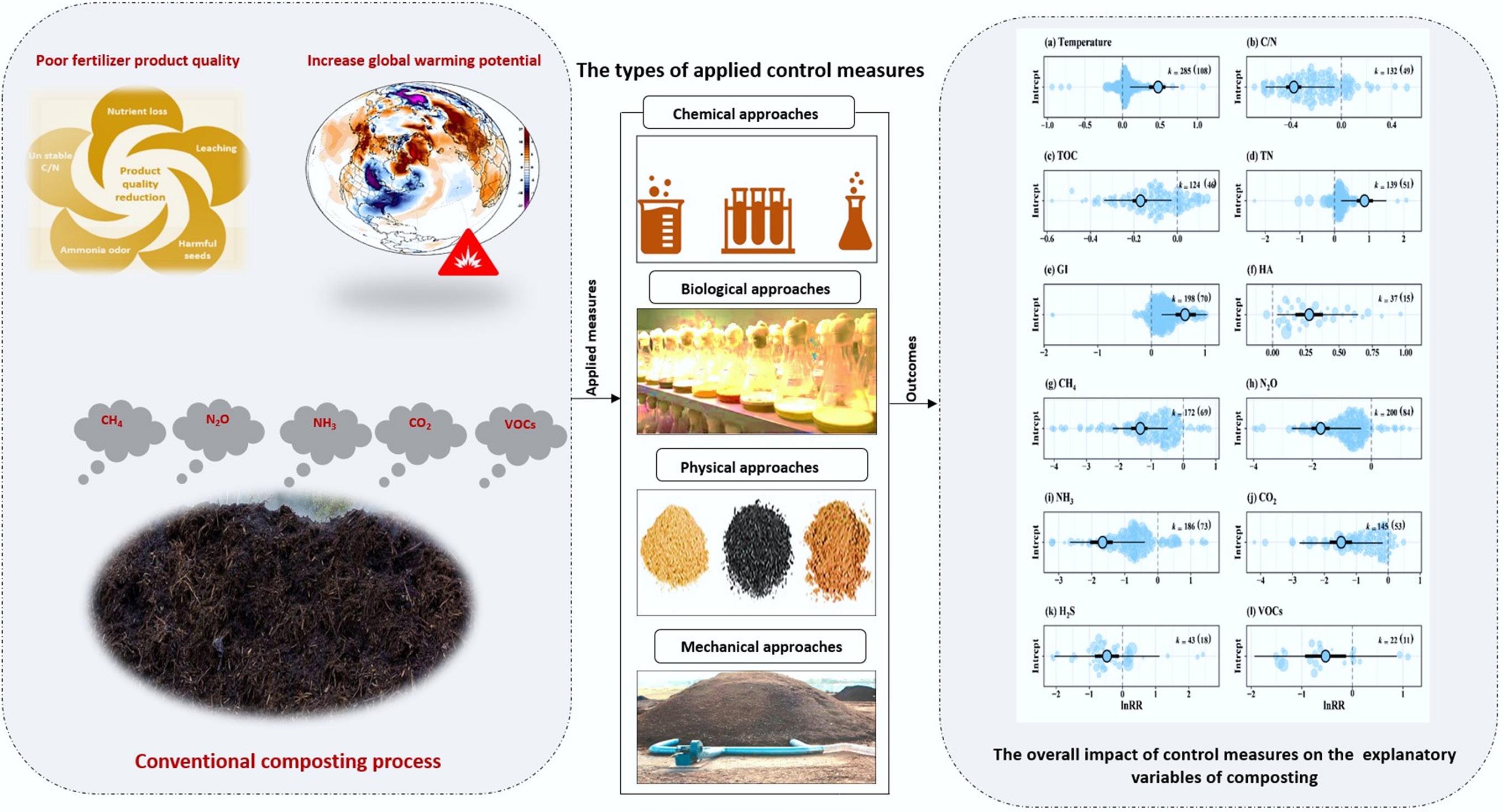
Air pollution control measures during composting significantly reduce GHGs and air pollutants, improve compost quality, and provide health and economic benefits. Figure 1 shows the overall effect of various control measures on composting-related variables such as temperature, C/N ratio, and TOC; organic fertilizer quality factors like TN, GI, and HA; and gaseous emissions. The analysis indicates that these measures notably increase temperature (RR = 0.48), suggesting they help sustain higher temperatures during the composting process. This is vital for reducing pathogens and improving composting efficiency (Fig. 1a). These results support earlier research that demonstrates the use of organic, mineral, and biological additives in composting boosts microbial activity, accelerates the thermophilic phase, and extends its duration compared to traditional methods[43−46]. Additives such as zeolite, kaolinite, chalk, ashes, sulfates, and biochar have been shown to extend the thermophilic phase by 2 to 3 weeks in various organic waste composting scenarios[20]. Increasing the temperature through these measures helps lower CH4 and NH3 emissions because higher temperatures accelerate microbial activity, leading to more thorough decomposition and stabilization of organic matter, as well as the maintenance of organic fertilizer[34]. Furthermore, this also raises HA levels[47−49].
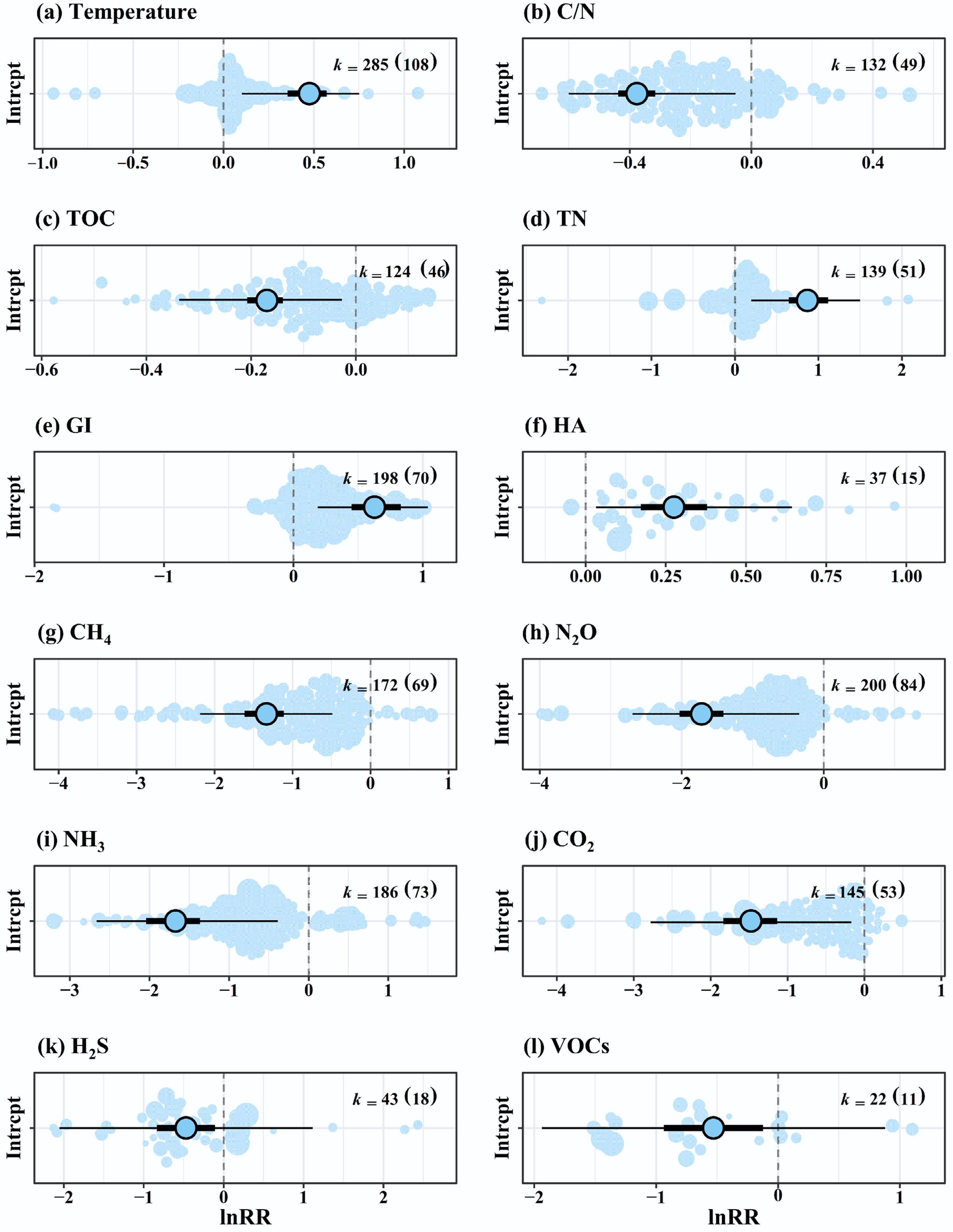
Figure 1.
Orchard plots showing the mean log response ratios (InRR), 95% prediction intervals (PIs) (fine line), 95% confidence intervals (CIs) (bold line), and individual effect sizes (black dots) for various moderator categories of physicochemical parameters (temperature, C : N ratio, and TOC), organic fertilizer quality (TN, GI, and HA), and GHGs (CH4, N2O, NH3, CO2, and H2S), and VOC emissions following different control measures. k indicates the number of effect sizes per estimate, with the number of related studies in brackets. A 95% CI that does not cross zero indicates a statistically significant difference between the treatment and control groups in composting.
Control measures significantly reduce the C/N ratio (RR = −0.38), a crucial parameter for organic fertilizer stability and maturity (Fig. 1b). The significant shift suggests that these measures may optimize the C/N ratio to some extent, thereby supporting the degradation process. The initial C/N ratio is crucial in determining GHG emissions, as lower ratios help reduce the production of CH4, CO2, and N2O[36]. Figure 1c reveals that TOC is considerably decreased under management measures application (RR = −1.60), which is expected, as microbes metabolize organic C throughout composting. It's worth noting that the lower TOC alludes to a more advanced composting process that better breaks down organic matter[49]. While the TOC breakdown primarily generates CO2, which is a biogenic gas of origin, the reduction of CH4 and N2O emissions are crucial due to their direct impact on global warming[50,51].
A notable positive impact is observed on TN content (RR = 0.89) (Fig. 1d), indicating that control measures help conserve N during composting, which benefits the creation of nutrient-rich products. TN retention is mainly affected by NH3 and N2O emissions during composting. Previous research has shown that physical, chemical, and microbial additives can decrease NH3 losses by 38.5%, 51.3%, and 33%, respectively, and N2O losses by 50.3%, 0.67%, and 21.58%, respectively[38]. Without these measures, up to 75% of TN could be lost as gaseous emissions, resulting in poor fertilizer quality and significant air pollution[1]. Therefore, these measures can prevent up to 94% of NH3 losses, leading to higher-quality and more fertile fertilizer products[8]. On the other hand, the positive impact on GI (RR = 0.73) shows improved compost quality due to the application of control measures (Fig. 1e). This improvement likely stems from the faster conversion of organic matter into stable HA fractions, which reduces phytotoxicity in the organic fertilizer[31]. A higher GI signifies less phytotoxicity and better suitability for plant growth. Additionally, the positive influence on HA content (RR = 0.29) indicates that control measures promote the humification process, producing more stable and mature organic fertilizer (Fig. 1f). These measures help convert fulvic acid precursors into stable HA, thereby enhancing organic fertilizer quality[51].
The control measures significantly reduced gaseous emissions compared to control composting (95% CI). For example, the control measures notably decreased CH4 emissions (RR = −1.14), indicating a reduction in this potent GHG during composting (Fig. 1g). This presents a significant environmental benefit. Similarly, Fig. 1h displays a decrease in N2O emissions, another potent GHG (RR = −1.76). This decline is vital for minimizing the overall GHG footprint of composting operations. As illustrated in Fig. 1i, the control measures reduced NH3 emissions (RR = −1.53), which is vital for environmental protection and reducing odour issues related to composting. Figure 1j indicates a moderate decrease in CO2 emissions (RR = −1.51). Although CO2 is less potent than CH4 or N2O, lowering its emissions still helps reduce the carbon footprint. Figure 1k shows that the control measures decrease H2S emissions (RR = −0.53), which is crucial for lowering odour problems and exposure to toxic gases during composting. Figure 1l reveals a slight reduction in VOC emissions (RR = −0.54), suggesting these measures help control the release of these compounds, which contribute to odour and air pollution. The decrease in these gases is supported by different studies, which indicated that measures such as forced aeration, membrane covers, chemical additives, biological treatments, physical additives, and the addition of bulking agents can significantly reduce their emissions[16,19,24,52]. The above findings highlight the dual benefits of applying control measures in composting. These measures enhance the quality of organic fertilizers and significantly reduce the environmental impact of composting by controlling gaseous emissions[11].
Moderator analysis
-
Gaseous emissions result from inadequate aerobic conditions during composting. The method of composting, type of feedstock, optimization of physicochemical factors, and the quantity and quality of additives or treatments all significantly influence GHG and VOC emissions during the process[53]. Therefore, this meta-analysis examined whether there are relationships between the standardized mean differences of feedstocks, types of bulking agents, treatment types, application rates, and composting durations with the reduction of GHG and VOC emissions under control measures.
CH4 and CO2 emissions
-
The impact of different moderators on CH4 and CO2 emissions during composting in response to control measures was assessed (Fig. 2). Notably, the forest plot for feedstock types reveals varying effect sizes (Fig. 2a). The average effect size for all four feedstock types on CH4 emission was significantly negative, indicating that CH4 production in control composting was higher than in treatment composting. Among them, the utilization of sewage sludge notably reduced CH4 emissions to a level of −1.32 (Fig. 2a), likely due to slow hydrolysis rates and/or low CH4 potential[47]. Different control measures limit anaerobic zones in composting, which typically emit substantial CH4 into the atmosphere, thereby reducing their contribution to global warming potential[49]. The overall Qm is significant (p = 0.038), indicating that feedstock type has a significant influence on CH4 emissions.
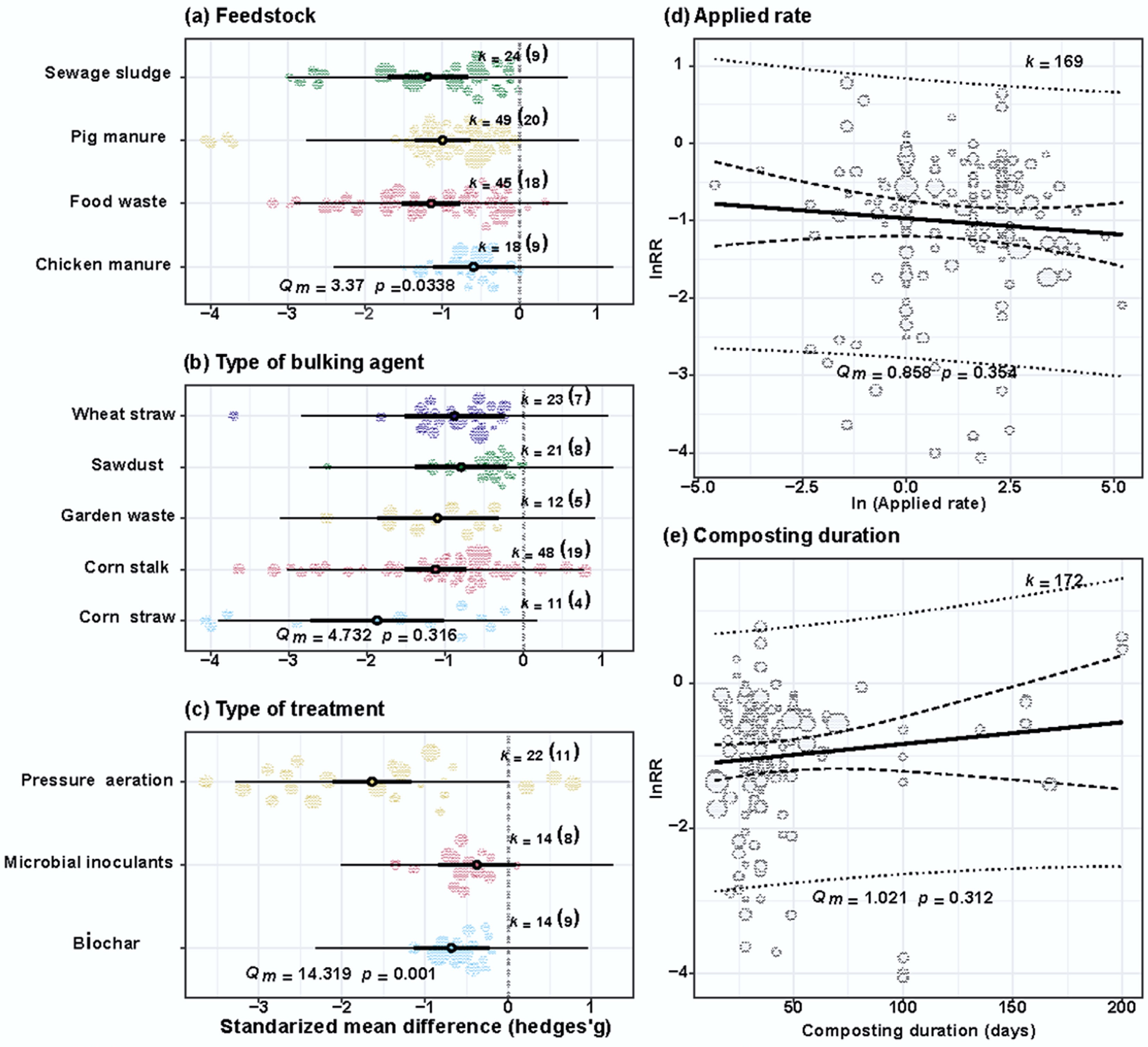
Figure 2.
Impact of moderators on CH4 emission reduction during composting, demonstrating significant mitigation effects (95% CI not overlapping with zero). This figure presents standardized mean differences (Hedges' g) across (a) composting feedstock, (b) bulking agent types, and (c) treatment types, along with the predicted response of effect size to (d) applied rate, and (e) composting duration. k: number of effect sizes; brackets: number of articles; p < 0.05 for significance.
The impact of different bulking agents on CH4 release shows similar negative trends, indicating reduced CH4 emissions. However, the Qm is not statistically significant (p = 0.316) (Fig. 2b). The average effect size for all five types of bulking agents on CH4 release was significantly negative, suggesting that CH4 production in the control composting was more prominent than in the treatment composting[54]. The most remarkable reduction in CH4 release was observed with corn straw application (−1.82) (Fig. 2b). This may be because the applied straw helps maintain porosity during composting, leading to higher O2 levels and fewer odorous emissions[14]. Additionally, Ba et al.[11] reported that using straw as a bulking agent significantly lowered CH4 emissions by 66.3%. Therefore, using corn straw as a bulking agent in composting can substantially decrease CH4 release, helping to reduce environmental pollution and mitigate climate change.
Compared to control composting, the forest plot for treatment types shows varying effect sizes (Fig. 2c). Additionally, the overall Qm is significant (p = 0.001), indicating that treatment types consistently affect CH4 emissions. Notably, the most significant reduction in CH4 emissions during composting was observed with a pressure aeration strategy (−1.72) (Fig. 2c). Properly adjusting aeration can effectively suppress anaerobic zones in composting, reduce methanogen abundance, and promote methanotrophs, thereby directly decreasing CH4 emissions[50]. It was found that maintaining a high aeration intensity throughout composting significantly decreases gaseous emissions and speeds up humus precursor production. Therefore, controlling aeration levels could lower CH4 release from composting[54,55]. Conversely, Bernal et al.[5] concluded that limiting turning and airflow in composting can decrease the loss of C and N due to GHG emissions while increasing the nutrient content of final organic fertilizer products. Moreover, as a key process parameter, a higher aeration rate can substantially decrease anaerobic zones; however, it may also lead to increased NH3 release and temperature loss[15]. Lower aeration rates can lead to anaerobic conditions, partial nitrification, and partial denitrification, resulting in CH4 emissions and unpleasant odors. Consequently, as one of the most critical factors in composting, it is essential to maintain an appropriate aeration rate and system[37].
A negative trend is observed in the relationship between the applied rate and the release of CH4; however, it is not statistically significant (p = 0.354, Qm = 0.858, Fig. 2d). The slope of the regression line suggests that higher application rates may lead to reduced CH4 emissions. Previous studies have shown that increasing the proportion of control measures has a minimal effect on lowering CH4 release or improving organic fertilizer quality[14,42]. Conversely, the duration of composting appears to have a positive impact on the emission of CH4, as indicated by the positive slope in Fig. 2e. Nonetheless, this correlation is not statistically significant (p = 0.312). The low CH4 release in the initial stages of composting can be ascribed to low temperatures and weak methanogen activity[43].
Like CH4, the effect sizes for different feedstocks on CO2 emissions vary significantly. The overall Qm (4.12) is significant (p = 0.025), indicating that feedstock type does influence CO2 release during composting (Fig. 3a). Sewage sludge, food waste, and chicken manure have shown the most negative effect sizes, meaning they reduce CO2 emissions. Among these, utilizing sewage sludge for composting revealed the highest standardized mean of −1.12 in lowering CO2 emissions, possibly due to its nutrient balance, microbial activity, and organic matter structure[5]. It was also reported that about 23.9%–45.6% of TOC is converted to CO2 during composting, and releasing large amounts of CO2 can cause glaciers to melt and severely harm biodiversity[40]. Therefore, choosing the right feedstocks can significantly reduce CO2 emissions from composting.
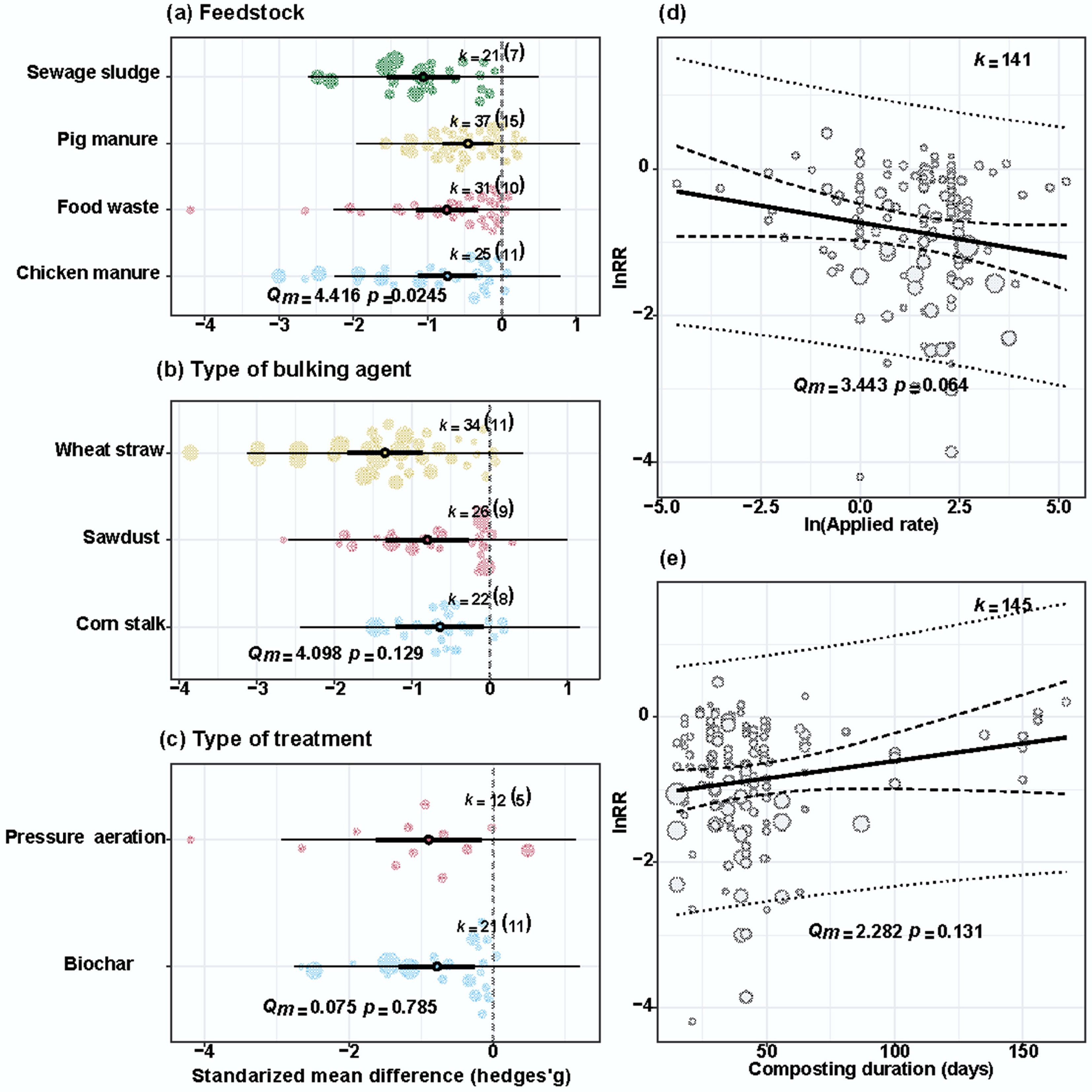
Figure 3.
Impact of moderators on CO2 emission reduction during composting, demonstrating significant mitigation effects (95% CI not overlapping with zero). This figure presents standardized mean differences (Hedges' g) across (a) composting feedstock, (b) bulking agent types, and (c) treatment types, along with the predicted response of effect size to (d) applied rate, and (e) composting duration. k: number of effect sizes; brackets: number of articles; p < 0.05 for significance.
Different bulking agents showed different negative effect sizes; however, the overall Qm (4.09) is not significant (p = 0.129) (Fig. 3b). Among them, applying wheat straw during composting resulted in the highest considerable reduction in CO2 emission (−1.12), likely because straw helps maintain porosity in the compost, which increases O2 levels and decreases CO2 emissions[14]. Meanwhile, treatment types exhibited less variability in effect sizes on CO2 emissions. Additionally, the overall Qm (0.075) among different treatment types is not significant (p = 0.785) (Fig. 3c). Using pressure aeration as a control measure in composting showed the greatest significant reduction in CO2 release (−0.48), possibly because pressure aeration stimulates aerobic microbial activity and organic matter degradation by improving permeability and O2 distribution in the organic fertilizer[4]. Conversely, the application rate has a non-significant negative correlation with CO2 emissions (p = 0.064). The slope indicates a slight decrease in CO2 emissions with increasing application rates (Fig. 3d). The subtle influence of the application rate on CO2 release may be due to enhanced airflow throughout the composting zones[29].
In contrast, compared to the control composting, a prolonged composting duration showed a negligible positive trend (p = 0.131) in CO2 release during composting (Fig. 3e). This is probably due to the extended microbial activity, which continuously breaks down organic matter and releases CO2 as a byproduct. Additionally, a previous meta-analysis reported that longer composting times increased CO2 emissions from composting[43]. Ultimately, approximately 0.1%–12.6% of TOC is converted into CH4, while a significant portion is converted into CO2 during composting[14]. However, the global warming potential of CH4 is 25 times greater than that of CO2[44]. Furthermore, earlier meta-analyses have stated that the initial TOC and TN levels in composting mixtures play a crucial role in influencing GHG emissions, where lower TOC and TN levels can simultaneously reduce GHG releases[11].
NH3 and N2O emissions
-
The effect sizes of different feedstocks on NH3 emissions vary considerably. The overall Qm (4.42) is significant (p = 0.025), indicating that feedstock type influences NH3 emissions from composting (Fig. 4a). Chicken manure applications in composting have greater potential to reduce NH3 emissions, with the highest negative effect size (−0.93), possibly due to microbial uptake of N, which limits NH3 release[16]. The type of bulking agent also affects NH3 emissions from composting. However, the overall Qm (4.09) among bulking agents is not significant (p = 0.129) (Fig. 4b). The effect size was negative for all four types of bulking agents, suggesting they help decrease NH3 release regardless of management practices. The use of sawdust in composting showed the greatest significant reduction in NH3 emissions (−1.22), likely because sawdust enhances NH4+/NH3 absorption and microbial assimilation[13]. Additionally, a previous study noted that sawdust is effective in lowering NH3 emissions compared to control composting[45].
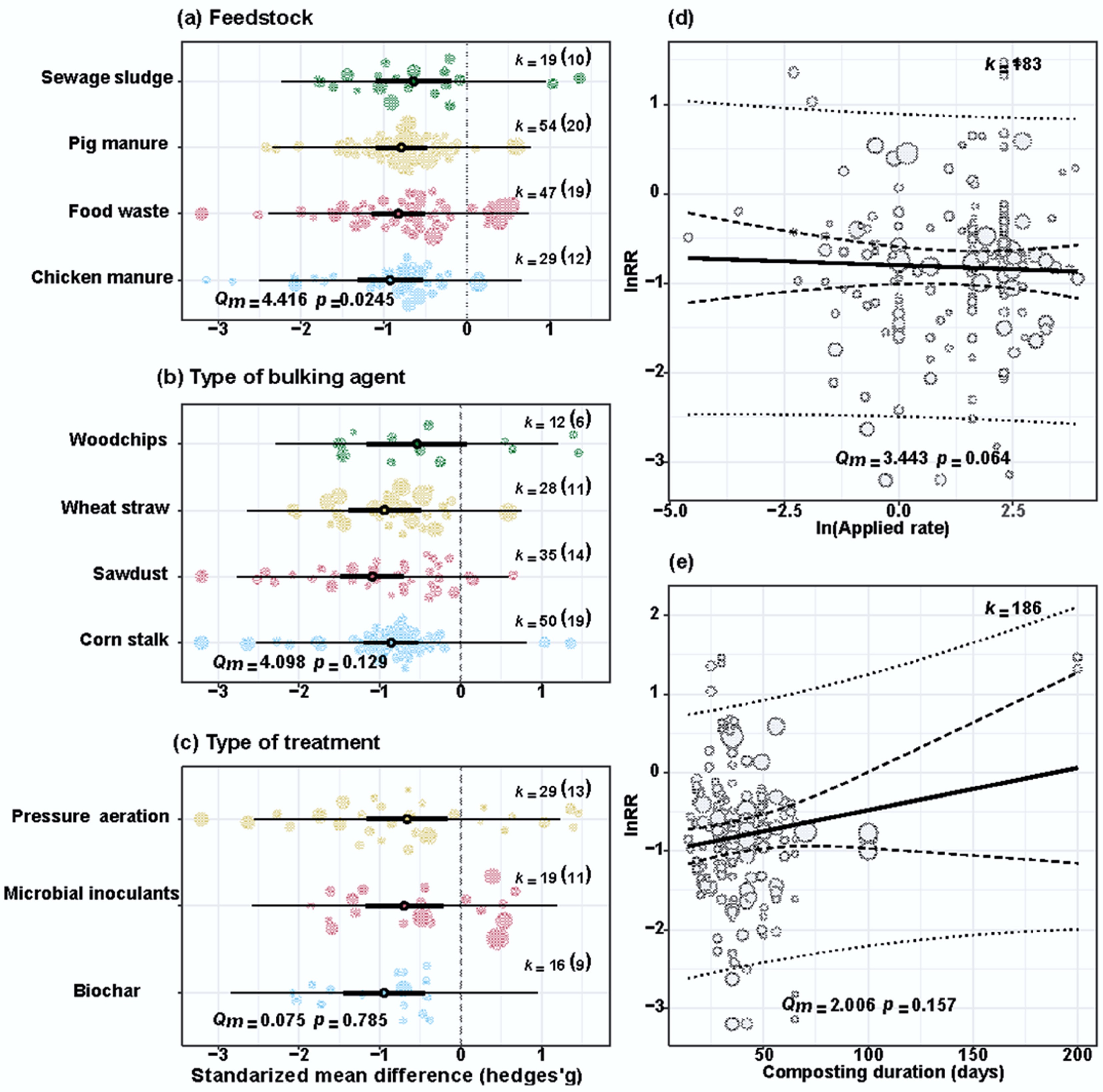
Figure 4.
Impact of moderators on NH3 emission reduction during composting, demonstrating significant mitigation effects (95% CI not overlapping with zero). This figure presents standardized mean differences (Hedges' g) across (a) composting feedstock, (b) bulking agent types, and (c) treatment types, along with the predicted response of effect size to (d) applied rate, and (e) composting duration. k: number of effect sizes; brackets: number of articles; p < 0.05 for significance.
The effect of different treatment types in composting indicated no significant overall Qm in reducing NH3 emissions (p = 0.785, Qm = 0.075, Fig. 4c), although the average effects were negative across all three types. Interestingly, the use of biochar in composting produced the greatest significant reduction in NH3 emissions (−0.96). This is because biochar's pore structure and surface acid functional groups likely trap toxic emissions, preventing volatilization and reducing pollution. Biochar's strong sorption capacity provides a mechanism for eliminating gaseous emissions during composting, supported by its large specific surface area[13]. Additionally, previous meta-analyses have also identified biochar as an effective additive for synergistically reducing NH3 emissions by 51.4% during composting[40,45].
The impact of treatment-applied rates in the composting demonstrated an insignificant overall Qm on NH3 emissions (p = 0.064, Qm = 3.44, Fig. 4d). Notably, higher application rates appear to decrease NH3 emissions slightly, probably because an added additive ratio can positively shape composting duration, gaseous emissions, and the quality of fertilizer final products[1]. On the contrary, longer composting durations may increase NH3 emissions. However, the trends are not statistically significant (p = 0.157, Qm = 2.01, Fig. 4e). Surprisingly, a former review reported that under the applied control measures, extending the composting duration increased the NH3 emission during composting, thereby increasing the cost and the level of air pollution and climate change[46].
The impact of applied feedstock types demonstrated significant overall Qm on the emission of N2O from composting (p = 0.042, Qm = 3.22, Fig. 5a). It can be noted that the effect size for all five feedstock types on N2O emission was significantly negative, implying that the release of N2O was relatively higher in control composting. Interestingly, the applied cow manure displayed a significant reduction in N2O emissions, with a maximum standardized mean of −1.31, most likely because cow manure is characterized by low levels of nutrients and organic matter. Accordingly, the level of N2O emission is less than that of other types of feedstocks[8].
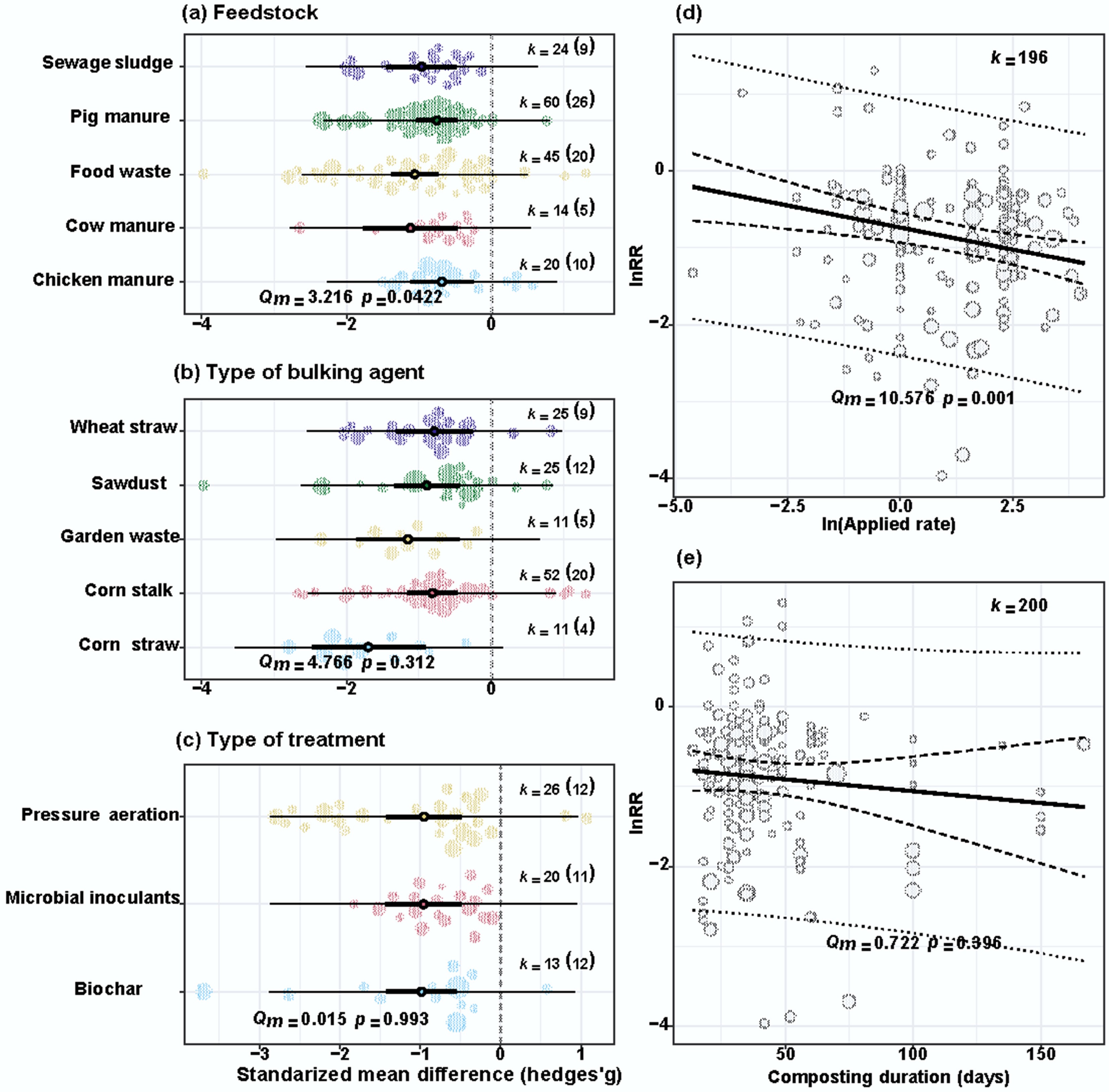
Figure 5.
Impact of moderators on N2O emission reduction during composting, demonstrating significant mitigation effects (95% CI not overlapping with zero). This figure presents standardized mean differences (Hedges' g) across (a) composting feedstock, (b) bulking agent types, and (c) treatment types, along with the predicted response of effect size to (d) applied rate, and (e) composting duration. N2O often shows the most significant mitigation effects, underscoring its importance. k: number of effect sizes; brackets: number of articles; p < 0.05 for significance.
Figure 5b illustrates that the impact of bulking agents presented insignificant overall Qm in N2O release (p = 0.312, Qm = 4.77). The mean effects for all five bulking agent types on N2O emissions were relatively adverse, indicating that the emissions in the control composting were considerably higher. Remarkably, corn straw displayed the highest significant effect on the emission of N2O (−1.82). Applying straws may neutralize alkaline composting mixtures, thereby inhibiting the shift in chemical equilibrium that leads to the generation of N2O. Therefore, applying straw has numerous advantages since it enables a practical approach to recycling residues and a notable reduction in gaseous emissions[41]. A previous meta-analysis revealed that applying straw for composting could reduce N2O emissions by 44.0%[11].
The effect of different treatment types showed no significant overall Qm on N2O emission (p = 0.993, Qm = 0.015, Fig. 5c). Meanwhile, the effect size of all three treatment types on N2O release was negative, indicating that control measures help reduce N2O emissions during composting. The application of biochar resulted in the most significant reduction in N2O emission, with an effect size of −0.99. It was noted that applying biochar can reduce N2O emissions from composting by 65%–70%[4]. This occurs because biochar promotes oxygenation of the fertilizer surface and raises temperatures, which inhibits the growth of nitrifying microbes and enzymes, thereby suppressing nitrification and N2O production and release[10].
The application rates of management measures in composting significantly impacted N2O emissions (p = 0.001, Qm = 10.58, Fig. 5d). A notable reduction in N2O emissions was observed as the application rate increased. This decline is likely due to the properties of these control measures, which include a large specific surface area, high adsorption capacity, ion exchange capacity, and strong affinity for NH3/NH4+. These features reduce the conversion of NH4+ to NH3 and boost the oxidation activity of nitrifying bacteria[38].
The duration of composting showed an insignificant decrease in N2O emissions (p = 0.322; Qm = 0.722, Fig. 5e). However, extending the composting period while implementing control measures significantly reduced N2O emissions, consistent with findings from a previous meta-analysis[40]. Yasmin et al.[4] reported that prolonged composting may result in N2O emissions in the cooling phase exceeding those during the mesophilic and thermophilic phases. NH3, produced from the breakdown of initial organic N, primarily exists as NH4+–N during composting[47]. NH4+–N is then converted to NH3 and released from the reactor, resulting in the emission of a small amount of N2O due to the high temperatures and elevated pH levels during the middle to late stages of composting[48].
Ultimately, choosing feedstock types is a key factor, showing significant potential in lowering NH3 and N2O emissions. Conversely, the effects of bulking agents, treatment methods, application rates, and composting duration are less clear and often depend on specific conditions. These insights provide valuable guidance for future research and real-world use, indicating that a customized composting approach can maximize environmental advantages.
VOC and H2S emissions
-
Supplementary Fig. S4a illuminates considerable variability in the effect of different feedstocks on VOC emission reduction during composting. Notably, applying pig manure resulted in the most significant reduction in VOC emissions throughout composting (−0.520) (Supplementary Fig. S4a). The significant Qm value (p = 0.043) suggests that feedstock type is an important moderator, indicating that selecting the right feedstock can substantially reduce VOC emissions from composting.
Different bulking agents show varying levels of impact on VOC emission reduction. However, the overall variability is not statistically significant (p = 0.347, Qm = 0.014, Supplementary Fig. S4b). This indicates that although the applied bulking agent reduced VOC emissions, the effect is inconsistent enough to be statistically inconclusive across studies. Interestingly, the use of woodchips in composting resulted in the highest reduction in VOC emissions (−1.12) (Supplementary Fig. S4b), likely due to improved porosity, increased air exchange, and a decrease in anaerobic zones during composting[9]. Additionally, applying woodchips as a bulking agent achieved VOC removal efficiencies of over 70%[21].
The impact of the treatment types applied showed minimal overall Qm in VOC emissions from composting. The moderator is close to significance (p = 0.096, Qm = 2.77), suggesting that treatment type may influence VOC emissions; however, additional data may be necessary for confirmation. Among these, the pressure aeration measure resulted in the most significant decrease in VOC emissions (−1.10) (Supplementary Fig. S4c). Jiang et al.[23] found that indirect aeration reduced GHG and VOC releases by 47.4% by the end of the composting process. Similar results indicated that adjusting the average aeration rate to 0.36 L/(kg/dm/min) for 40 min, and then stopping for 20 min, was the most effective method to reduce GHG and VOC emissions during composting[23]. The applied treatment rates within composting had little effect on VOC release (p = 0.923, Qm = 0.009) (Supplementary Fig. S4d). Increasing the rate of treatment measures in composting significantly increased VOC emissions, possibly because these control measures, especially physical additives, can enhance the O2 content in the pores of the composting mixture[22]. Conversely, while aeration might reduce the transformation of organic components into less odorous forms, VOC emissions may still increase during composting[9]. Prolonging composting duration showed an insignificant effect on VOC emissions (p ≤ 0.001, Qm = 31.8) (Supplementary Fig. S4e), likely because extended composting leads to prolonged microbial activity and ongoing organic matter breakdown, which increases VOC production and release. The choice of feedstock had a significant influence on H2S emissions (p = 0.049, Qm = 0.294). Using pig manure as feedstock resulted in the most significant reduction in H2S emissions during composting (−0.73) (Supplementary Fig. S4f), likely due to its lower sulfur content and neutral to slightly alkaline pH. Conversely, bulking agents had an insignificant effect on H2S emissions (p = 0.758, Qm = 0.095). Among them, only corn stalk significantly reduced H2S emissions during composting (−0.87) (Supplementary Fig. S4g). Corn stalks help regulate the C/N ratio and absorb excess moisture and H2S, creating optimal composting conditions. A previous review also noted that using corn stalks as a bulking agent led to a 66.8% reduction in H2S during composting[21]. Conversely, treatment types had an insignificant impact on H2S production (p = 0.556, Qm = 0.346). The most significant reduction in H2S emissions was observed with microbial inoculants (−0.53) (Supplementary Fig. S4h), likely because beneficial microbes can compete with and suppress sulfur-reducing bacteria, thereby inhibiting the transformation of sulfate to H2S. These findings align with previous research, which shows that exogenous microbial inoculants can reduce H2S release potential by up to 9.15%[36]. However, the effect of microbial inoculants on H2S emissions during composting remains a topic of debate. For example, Li et al.[15] reported that microbial inoculants significantly stimulated sulfur conversion, resulting in H2S emissions that were 1.6 to 2.8 times higher than those without inoculants.
The applied rates in the composting process had an insignificant impact on the emission of H2S (p = 0.11, Qm = 2.62), with higher applied rates associated with increased H2S emissions (Supplementary Fig. S4i). This may be because microbes, especially when microbial inoculants are applied, break down organic components into the unpleasant-smelling H2S[1]. Additionally, the control measures used during composting had a negligible effect on H2S release (p = 0.813, Qm = 0.056) (Supplementary Fig. S4j). This could be because the pores created by these measures enhance aeration, which reduces the metabolic and degradation activities of anaerobic microbes[33]. In general, this meta-analysis suggests that feedstock type is the only consistent moderator of GHG and VOC emissions during composting. This may be because the feedstock influences the process chemically (nutrient content, C:N ratio, pH), physically (moisture content, porosity, particle size), and biologically (methanogens and methanotrophs, nitrifying and denitrifying microbes). Other moderators showed different effects on GHG and VOC emissions. It is important to note that the detailed relationships between gaseous emissions and physicochemical and quality factors are discussed in Supplementary Figs S5−S9.
Hypothesized causal relationships among applied management measures, gaseous emissions, and organic fertilizer quality
-
SEM is used to analyze the relationships among control measures, gaseous emissions, and organic fertilizer quality (Fig. 6; Supplementary Tables S4 & S5). The model confirms that implemented control measures are a pivotal negative driver of GHG and VOC emissions. However, moving beyond individual pathways, the SEM reveals critical collaborative effects, trade-offs, and synergies within the composting ecosystem. The applied measures variable in the SEM represents an aggregated latent variable that captures the overall average impact of diverse mitigation strategies. The main finding is that the implemented measures are negatively linked to GHG and VOC emissions. Specifically, the path coefficient between control measures and the release of H2S and N2O is −0.559 and −0.522, respectively (p < 0.001), indicating these measures significantly reduce these GHGs. Simultaneously, the path coefficient between control measures and CO2 and CH4 emissions is −0.559 and −0.522, respectively (p < 0.05), demonstrating that adequate measures lower these GHG emissions and help mitigate global warming[53−65]. However, there was an insignificant reduction in NH3 and VOC emissions from composting, suggesting a moderate and adverse effect of the control measures. The most significant trade-off revealed by the model revolves around TN. The path coefficient between control measures and TN, HA, and GI displayed strong, significant positive relationships of 0.438 (p < 0.01), 0.437 (p < 0.01), and 0.306 (p < 0.05), respectively. This suggests that implementing control measures enhances fertilizer quality and reduces nutrient loss through gaseous emissions. Notably, GHG and VOC emissions negatively affected TN and HA levels and indirectly increased GI levels. Specifically, TN significantly decreased due to NH3 (−0.320; p < 0.01), N2O (−0.329; p < 0.05), and VOCs (−0.440; p < 0.01). This creates a competing dynamic: the very process of conserving TN in the composting pile inherently makes it a potential source for these gaseous losses. For instance, a measure that successfully lowers N2O emissions by improving aeration may inadvertently increase NH3 volatilization due to increased airflow[47]. This explains why the overall path from control measures to NH3 reduction was insignificant, as different interventions likely shift the form of TN loss rather than eliminating it. Therefore, the most effective strategies are those that manage the entire TN pathway, perhaps by combining aeration control with chemical additives that bind ammonium. In contrast to the TN trade-off, the model reveals a synergistic relationship between emission reduction and fertilizer stability for C-related metrics. Control measures significantly reduce CH4 and CO2 emissions while simultaneously increasing HA content and GI.
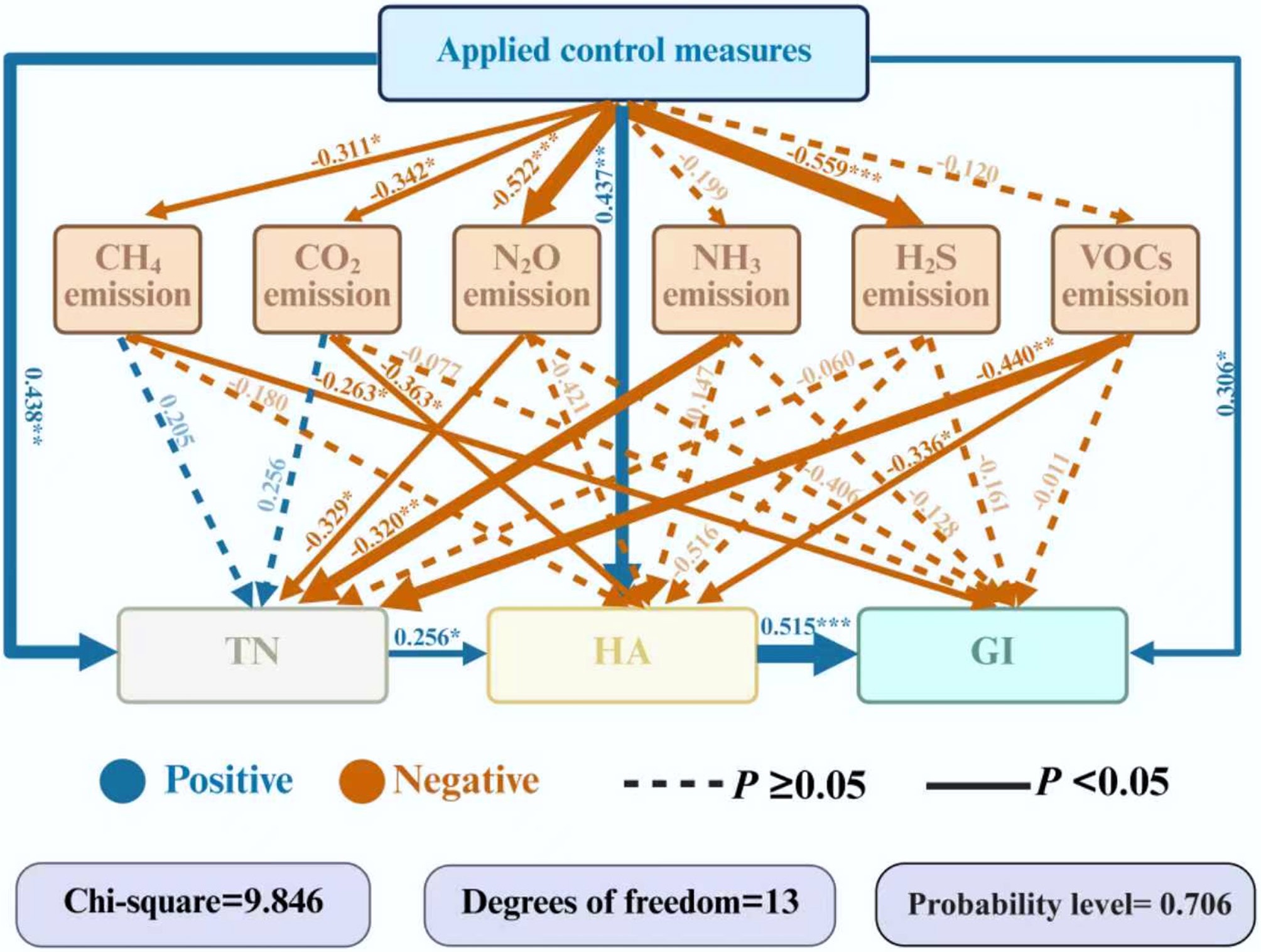
Figure 6.
Structural equation modelling (SEM) illustrates how the applied air pollution mitigation measures influence the emission of GHGs, VOCs, and organic fertilizer quality enrichment. Positive and negative associations are denoted by red and blue arrows, respectively. Solid and thick arrows indicate significant effect sizes (p < 0.05, p < 0.01, and p < 0.001). The numbers after the arrows denote standardized path coefficients (* p < 0.05, ** p < 0.01, *** p < 0.001).
Similarly, HA levels decreased significantly in response to CH4 (−0.263; p < 0.05), CO2 (−0.363; p < 0.05), and VOC emissions (−0.336; p < 0.05). This suggests that without control measures, major nutrients in organic fertilizers are lost through gas emissions, leading to poor-quality products, environmental pollution, and an increased risk of global warming[64–66].
Ultimately, the significance of control measures in reducing GHG and VOC emissions and improving organic fertilizer quality lies in their ability to boost the efficiency, environmental sustainability, and overall quality of the composting process[58]. Carefully choosing and applying suitable control measures can decrease GHG and VOC emissions, improve nutrient retention, enhance product maturity and stability, and produce higher-quality organic fertilizers while minimizing environmental impact.
These findings highlight the complexity of reducing CH4 and CO2 emissions from composting, underscoring the importance of selecting the appropriate feedstock for this process. Additionally, other factors, such as bulking agents, treatment methods, application rates, and composting time, also influence the process, although less consistently.
Eventually, the findings of the meta-analysis should be updated regularly as new studies are published. Over time, these updates may lead to changes in conclusions, as more articles are included. Therefore, future studies should aim to collect and analyze data from a broader geographic area to increase the global relevance of the findings. Additionally, it is worth noting that porosity and O2 levels have a significant impact on GHG emissions (Supplementary Fig. S10). However, the limited data in the selected articles make it difficult to quantify their effects. Therefore, comprehensive data collection on these factors is necessary to better understand their roles in GHG emissions. Furthermore, leaching from composting contributes to nutrient loss and the release of CH4 into the environment (Supplementary Fig. S10). Nonetheless, this meta-analysis does not evaluate its effects due to a lack of relevant data. Future research should focus on including the impact of leaching on nutrient dynamics and GHG emissions to provide a more complete understanding of the composting process.
-
This meta-analysis clearly ranks air pollution control measures for composting, highlighting those that reduce emissions while improving fertilizer quality. Biochar addition stands out as the most effective single measure, offering a dual benefit: it significantly lowers key emissions (NH3, N2O) and consistently boosts fertilizer quality through N conservation and humic acid formation. For operators looking for a highly impactful single intervention, biochar is the clear choice. If biochar isn't feasible, optimized aeration control is the main strategy for reducing greenhouse gases (GHGs: CH4 and N2O). Additionally, gypsum addition offers a strong alternative for reducing NH3 and retaining N. The effectiveness of these measures depends on feedstock; for example, biochar's superiority is most evident in high-N manures. Thus, for practitioners, the path is straightforward: prioritize biochar as a bulk agent. This evidence-based ranking advances the field beyond trial and error, helping stakeholders implement composting strategies that support both the circular bioeconomy and environmental protection and agricultural productivity goals.
-
It accompanies this paper at: https://doi.org/10.48130/ebp-0025-0022.
-
Not applicable.
-
The authors confirm contributions to the paper as follows: Yousif Abdelrahman Yousif Abdellah: conceptualization, writing – original draft, methodology, data curation, software, investigation, writing – review & editing; Jianou Gao: data curation, software, methodology; Zhaoji Shi: data curation, software, methodology; Xiaofei Shi: writing – review & editing; Wei Liu: writing – review & editing; Chengmo Yang: project administration; Katharina Maria Keiblinger: writing – review & editing; Xinyue Zhao: writing – review & editing; Elsiddig A. E. Elsheikh: writing – review & editing; Shahid Iqbal: writing – review & editing; Shanshan Sun: writing – review & editing; Dong Liu: project administration, funding acquisition; Fuqiang Yu: supervision, project administration, funding acquisition. All authors reviewed the results and approved the final version of the manuscript.
-
The datasets used or analysed during the current study are included in this published article and its supplementary information files.
-
All authors declare that there are no competing interests.
-
# Authors contributed equally: Yousif Abdelrahman Yousif Abdellah, Jianou Gao
Full list of author information is available at the end of the article. - The supplementary files can be downloaded from here.
- Copyright: © 2026 by the author(s). Published by Maximum Academic Press, Fayetteville, GA. This article is an open access article distributed under Creative Commons Attribution License (CC BY 4.0), visit https://creativecommons.org/licenses/by/4.0/.
-
About this article
Cite this article
Abdellah YAY, Gao J, Shi Z, Shi X, Liu W, et al. 2026. Synthesis of air pollution patterns and nutrient composition during organic fertilizer production: a meta-analytical study. Environmental and Biogeochemical Processes 2: e005 doi: 10.48130/ebp-0025-0022 

Synthesis of air pollution patterns and nutrient composition during organic fertilizer production: a meta-analytical study
- Received: 23 September 2025
- Revised: 08 December 2025
- Accepted: 26 December 2025
- Published online: 27 January 2026
Abstract: Composting is vital for managing organic waste and producing fertilizer; however, it also releases potent greenhouse gases (GHGs: CH4, CO2, and N2O), and odorous volatiles (NH3, H2S, and volatile organic compounds [VOCs]). Uncontrolled processes can also lead to significant nutrient loss. While various control measures have been implemented to mitigate these adverse effects, a comprehensive quantitative analysis of their impact on gaseous emissions and fertilizer quality has been lacking. This meta-synthesis, based on 1,683 observations from 135 studies identified through systematic database searches assessed four categories of control measures: biological (microbial inoculants), chemical (biochar, gypsum), physical (aeration, bulking agents), and mechanical (turnover frequency, electric fields). The main findings show that these measures generally improved composting outcomes. Specifically, they led to increased temperatures (average increase of ~48%), enhanced nutrient retention (e.g., average nitrogen content increased by ~89%, humic acid by ~29%), and reduced phytotoxicity (e.g., average germination index improved by ~73%). They also contributed to carbon stabilization (average C/N ratio decreased by ~38%) and significantly lowered emissions of GHGs and VOCs. For instance, average CH4, N2O, NH3, and CO2 emissions were reduced by approximately 69%, 83%, 78%, and 78%, while H2S and VOCs emissions saw reductions of around 41% and 42%, respectively. Notably, feedstock type and initial C/N ratio were identified as key factors influencing emission profiles, often exceeding the effects of control measures. This study offers evidence-based guidance for selecting tailored strategies to reduce GHG and VOC emissions from composting while improving fertilizer quality.
-
Key words:
- Composting /
- Air pollution /
- Additives /
- Nutrient retention /
- Organic fertilizer /
- Meta-analysis