













-
Whisky, one of the most popular alcoholic beverages, is produced through the distillation of fermented malted cereals with a maturation in wooden casks prior to blending[1−3]. Over the course of centuries, whisky has developed several distinct styles depending on their original regions, such as Scotland, Ireland, the United States, and Japan. As global spirits consumption becomes more diversified, China has also witnessed a significant growth in whisky production, in addition to its preeminence in baijiu. Recent research has begun to focus on the shaping of whisky styles indigenous to China to meet the growing demand[4].
The maturation process in oak barrels plays a crucial role in shaping the final flavor profile of whisky. During aging, the interaction between the whisky and the oak facilitates the release of both volatile and non-volatile compounds, resulting in a wide array of distinct whisky styles. The type of oak primarily determines the desired aroma and taste profiles in whisky[5,6]. Traditionally, oak barrels used for aging alcoholic beverages are the most commonly produced from European oak species, including European sessile oak (Q. robur), pedunculate oak (Q. petrea), as well as American white oak (Q. alba)[7]. The use of local oak resources in whisky production has been a pivotal direction in whisky development for unique flavors and regional branding. Bourbon whisky, for instance, is crafted using new white oak barrels, with its interior having undergone a prior charring process which imparts rich characteristics of caramel, vanilla, and spices[8]. Japanese whisky is renowned for its incorporation of the native Mizunara oak, a practice that imbues the spirit with distinctive sandalwood and coconut aromas[9]. Besides, Mongolian oak (Q. mongolica Fisch), native to Changbai Mountain and the Greater Khingan Mountains of Northeast China was also reported to be utilized for oak barrel production[10]. According to previous research, unlike American white oak and European oak species, Mongolian oak has a unique chemical composition, characterized by low oaklactone, but high levels of linalool, eugenol, and some small-molecule phenols (phenol, o-cresol, m-cresol, and p-cresol). These compounds may enhance the whisky's aromatic complexity, with distinct smoky and creamy characteristics, thus offering the potential to produce whisky with unique Chinese regional characteristics[11,12].
The formation of oak-derived aroma compounds is driven by the thermal degradation or transformation of lignin, hemicellulose, cellulose and lipids in oak, which differ not only in the origin of oak[13,14], but also other barrel-making processes, such as the toasting and charring conditions[15]. Toasting induces thermal degradation of oak macromolecules (cellulose, hemicellulose, lignin), generating volatile aroma compounds (furanic derivatives, phenolic aldehydes, volatile phenols) that significantly enhance whisky's aromatic complexity and structure[16]. Volatile phenols and phenolic aldehydes, such as phenol and vanillin, primarily arise from lignin pyrolysis, imparting spicy and smoky aromas, with rapid accumulation under medium to high-temperature toasting. Furfurals and derivatives, from hemicellulose degradation, contribute nutty, caramel, and roasted flavors, typical of deeply toasted or charred oak barrels. Oaklactones, responsible for coconut-like aromas, originate from oak lipids and are influenced by wood species and processing methods. Studies have shown that furanic derivatives, phenolic aldehydes, and volatile phenols initially increased with toasting intensity, but declined beyond an optimal point[17,18]. For instance, medium-toasted oak exhibited higher furfural and 5-methylfurfural levels than lightly or heavily toasted oak[19]. The relationship between oaklactones and toasting intensity was more complicated, with some researchers indicating higher lactone levels with increasing toasting level[17], whereas others found lightly toasted oak and wines aged in such barrels contain more oaklactones[20,21].
Charring is a crucial process that creates an active adsorption layer in oak wood, which helps to reduce undesirable odors. It also disrupts the oak's surface structure, facilitating the release and extraction of aromatic compounds, thereby enhancing the sensory quality of beverages[22]. It is mainly used in Scotch whisky production to regenerate and prolong barrel use, whereas in the US, regulations mandate bourbon aging exclusively in charred barrels, significantly shaping bourbon's smoothness, sweetness, and vanilla aromas. Through the process of charring, aroma-active aldehydes (e.g., vanillin, syringaldehyde, coniferaldehyde) could be elevated[23], and the sulfur-containing compounds could be removed. A recent study on the impact of charring intensity on flavor development in aged whisky demonstrated that an increase in char depth and the subsequent gradient through the char, might facilitate the formation of acetate[24]. However, the investigation of the interactive effects of charring and toasting intensities on volatile aromatic compounds and sensory characteristics is still limited.
Therefore, the application of appropriate oak barrels is important for the shaping of a whisky's style, especially for its aroma characteristics, among which, the oak origin, toasting, and charring degrees are regarded as main factors. In our previous study about the volatile composition in different oaks, the effects of origin, toasting levels, and charring intensities were systematically summarized[12]. As a continuation of the investigation of oak, whisky maturation experiments were conducted. The same batch of oak blocks were immersed in a single malt whisky for 9 months, including three origins (China, France, and America) × three toasting levels (light, medium, and high) × four charring intensities. By analyzing the volatile compounds and aroma characteristics in whisky during aging, the distinctive characteristics of Chinese oak were emphasized. Besides, the binary interaction effects between oak toasting and charring processes on whisky aroma were confirmed. The results provide theoretical basis for the use of native Mongolian oak in the production of Chinese whisky, and the selection criteria for choosing the appropriate toasting and charring processes of oak barrels based on the target style of the whisky product.
-
All experimental samples were supplied by Wolin Oak Barrel Co., Ltd. (Penglai, Shandong, China); detailed sample parameters are presented in Fig. 1. The whisky used for experimentation was a single malt whisky produced from malted barley; the physicochemical indexes meet the National Standard of the People's Republic of China (GB/T 11856), with an alcohol content of 64% (v/v). The initial volatile profile of the unaged whisky can be found in Supplementary Table S1. To simulate the oak influence on whisky during the actual barrel aging, the dosage, size, and aging time were thoroughly designed. Oak blocks used for aging measured 5 cm × 5 cm × 2.5 cm (length × width × height), and all six surfaces underwent toasting and charring treatments. The simulated aging experiments were conducted by adding five oak blocks per 5 L of whisky, and each treatment group included two independent biological replicates. Samples were collected at the initial time point (0 months), and subsequently at 3, 6, and 9 months during aging for analytical testing. Additionally, after the 9-months aging period, 750 mL samples were collected separately for sensory evaluation analysis.
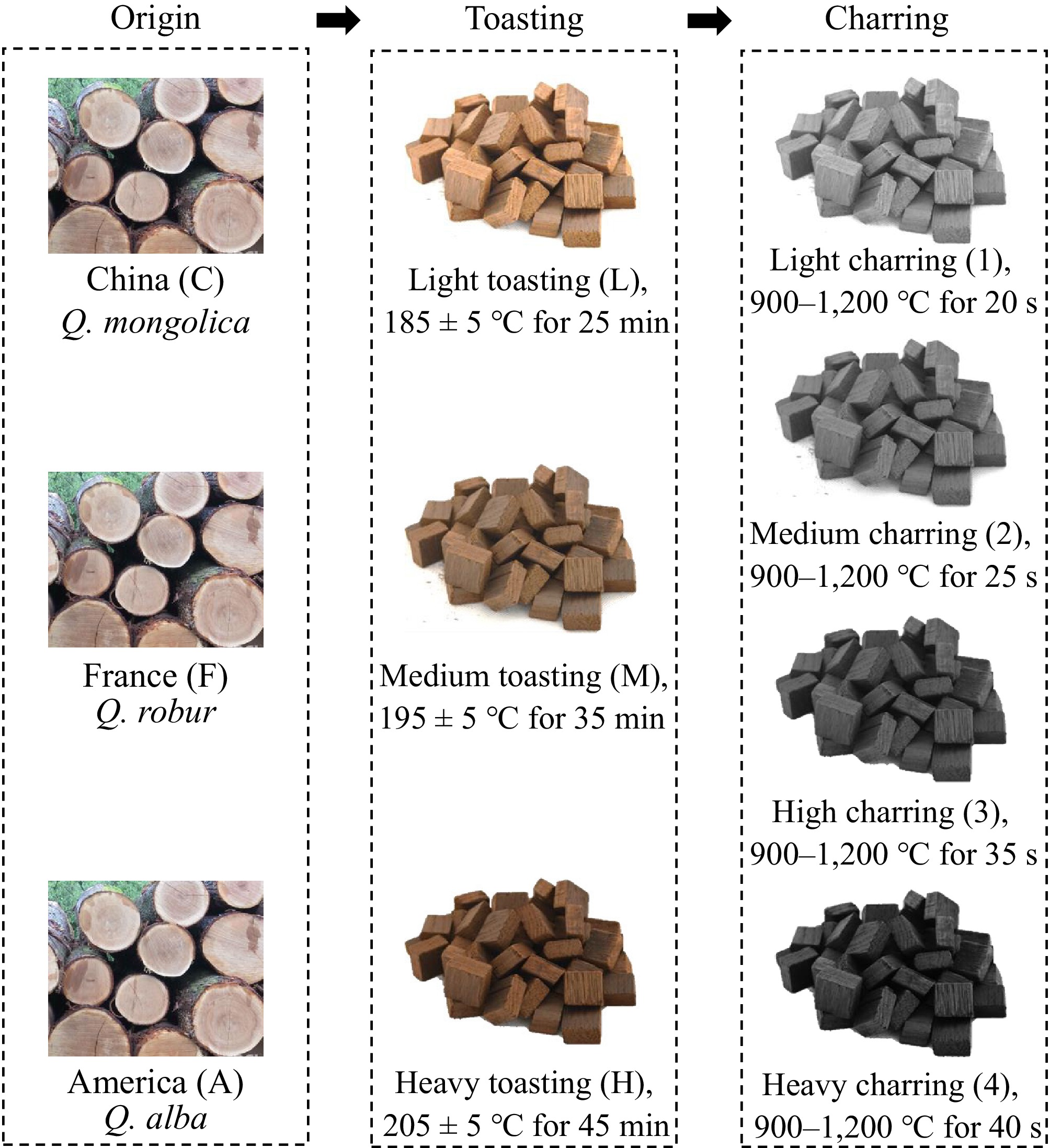
Figure 1.
Schematic diagram of the oak samples used in the experiment.
Chemicals
-
Analytical grade chemicals, including sodium chloride, ammonium sulfate, and anhydrous sodium sulfate, were purchased from Shanghai Macklin Biochemical Co., Ltd (Shanghai, China). Chromatographic grade ethanol and dichloromethane were obtained from Honeywell (Marris Township, NJ, USA). Quantitative standards for volatile aromatic compounds were acquired from Sigma-Aldrich (St. Louis, MO, USA).
Analysis of oak-derived volatile compounds
-
Oak-derived volatile aroma compounds in whisky samples, including furanic derivatives, phenolic aldehydes, volatile phenols, and oaklactones, were analyzed using liquid-liquid extraction, coupled with gas chromatography-mass spectrometry (LLE-GC-MS)[25]. Whisky samples were diluted to 10% concentration; subsequently, 20 mL of diluted whisky, 10 μL of mixed internal standard solution (4 g/L γ-hexalactone, 2 g/L 3,4-dimethylphenol, and 4 g/L o-vanillin), and 5 g ammonium sulfate were added to a 50 mL centrifuge tube. Dichloromethane (5 mL) was added, and the mixture was vigorously shaken for 5 min, then centrifuged at 8,000 r/min for 10 min at 4 °C. The lower dichloromethane phase was collected into a 20 mL glass tube. An additional 5 mL of dichloromethane was added to the original centrifuge tube, and extraction was repeated under the same conditions. Dichloromethane extracts from both extraction steps were combined, dried over 1.5 g of anhydrous sodium sulfate, transferred into a clean concentration flask, and concentrated under a nitrogen stream to 1 mL. The concentrated extract was filtered through a 0.22 μm organic microporous membrane into a 2 mL injection vial. Sample analysis was performed in triplicate.
Quantification of volatile compounds was performed using an Agilent 7890 gas chromatography equipped with an Agilent 5975 mass spectrometer (GC-MS system). A HP-INNOWAX capillary column (60 m × 0.25 mm id, 0.25 µm film thickness, J&W Scientific, Folsom, CA, USA) was used. The injector temperature was set to 260 °C, and 1 μL of the sample was injected in splitless mode. The oven temperature program was as follows: an initial temperature of 50 °C was increased at a rate of 7 °C/min to 127 °C, where it was held for 3 min; the temperature was then increased at 4 °C/min to 170 °C, followed by an increase at 2 °C/min to 200 °C; finally, the temperature was ramped at 10 °C/min to 260 °C and held for 18 min. The mass spectrometry interface temperature was set to 250 °C, with an electron impact (EI) ionization source operating at an ion source temperature of 230 °C and an ionization energy of 70 eV. The quadrupole temperature was maintained at 150 °C. Data acquisition was conducted in full scan (SCAN) mode with a mass range of 29–350 u.
Analysis of non-oak-derived volatile compounds
-
Non-oak-derived volatile aroma compounds in whisky, including esters, alcohols, fatty acids, and isoprenoid compounds, were determined via headspace solid-phase microextraction followed by gas chromatography-mass spectrometry (HS-SPME-GC-MS)[26]. Whisky samples were first diluted to 10%, and 5 mL of the diluted sample, 10 μL of an internal standard solution (4-methyl-2-pentanol, 0.9898 g/L), and 1.5 g of sodium chloride were placed into a 20 mL headspace vial. After equilibrating for 30 min at 40 °C, a 2 cm DVB/CAR/PDMS SPME fiber (Supelco, Bellefonte, PA, USA; 50/30 μm) was exposed to the headspace for 30 min to adsorb volatile compounds. Sample analysis was performed in duplicate.
The chromatographic injection port was set to 250 °C, with a 5:1 split injection mode and an 8-min thermal desorption time. The temperature program began at 50 °C (held for 1 min), followed by a heating rate of 3 °C/min to 220 °C, where it was held for 5 min. The mass spectrometry interface temperature was maintained at 250 °C, using an electron impact (EI) ion source with an ion source temperature of 230 °C and an ion energy of 70 eV. The quadrupole temperature was 150 °C, and full scan (SCAN) mode was employed with a mass scan range of 29–350 u.
The qualitative and quantitative analyses of all aroma compounds were performed using the Automated Mass Spectral Deconvolution and Identification System (AMDIS) to calculate the retention index (RI) of each volatile compound. Simultaneously, the mass spectra of sample peaks were compared with those of reference standards and with the NIST 2014 library for compound identification. The integrated peak areas were obtained using MSD ChemStation Data Analysis, and the ratio of each compound's peak area to that of the internal standard was used as the basis for quantification. Different concentration gradients of aroma standards were prepared in a simulated whisky solution, and the ratio of peak areas was plotted against concentration to generate linear calibration curves for quantification.
Sensory evaluation analysis
-
The assessors participating in the sensory experiment were selected from the Sensory Panel of the Center for Viticulture and Enology (CFVE). All panelists underwent systematic training in sensory evaluation, which included recognizing, classifying, and rating the intensity of various whisky aromas. They also gained proficiency in fundamental experimental methods for whisky sensory assessment, with a particular focus on quantitative descriptive analysis (QDA)[27]. All participants were informed that their involvement in the study was entirely voluntary and undertaken freely. Formal informed consent was obtained from each participant in full accordance with the Declaration of Helsinki (1975). The study protocol involving human subjects was approved by the Research Ethics Committee of China Agricultural University (Approval No. CAUHR-20231103; approval date November 3, 2023). Prior to each group sensory session, the collected whisky samples underwent a preliminary evaluation by an expert panel (three males and three females, 26–30 years old, Panel 1) with extensive sensory experience. This expert panel removed any problematic samples and selected representative samples for training purposes.
Then, a formal evaluation panel consisting of 15 assessors (5 males and 10 females, aged 20–29, Panel 2) was assembled. These assessors underwent training using the representative whisky samples selected by Panel 1. After completing aroma identification training and refining the set of aroma descriptors, the panelists received training in aroma intensity scaling. They were instructed to evaluate specific aroma attributes present in all whisky samples—including 'cereal', 'fruity', 'floral', 'dried fruit', 'woody', 'vanilla', 'coconut', 'toasty', and 'smoky' notes, using a 10-point scale (0 = very low intensity, 10 = very high intensity). The panelists then discussed their ratings to reach a consensus.
Prior to each formal Panel 2 experiment, two whisky samples exhibiting significant differences were selected from the trained samples as a reference for scoring and discussion, ensuring consistent evaluation standards. Assessors scored these reference samples and engaged in discussion to ensure consistency of the evaluation scale. During the formal experiment, each sample (30 mL) was poured into a transparent ISO tasting glass and presented to the assessors in random order to minimize systematic errors related to sample sequence. Sensory analysis was repeated twice for each sample. A two-way ANOVA was performed using PanelCheck v1.4.2 (
www.panelcheck.com ) to assess potential panelist effects, confirming no significant differences among assessors in each formal session (p > 0.05). Following outlier detection through boxplot analysis, the mean score for each sensory attribute was calculated for subsequent statistical analysis.Statistical analysis
-
Partial least squares discriminant analysis (PLS-DA) was conducted using XLSTAT2019 (Addinsoft, Paris, France). One-way ANOVA, and two-way ANOVA (p < 0.05, Duncan's test) were conducted using SPSS 24.0 (SPSS, Chicago, IL, USA). All figures were generated using OriginPro 2024 (OriginLab, Northampton, MA, USA), and the ChiPlot website's online graphing tool (
www.chiplot.online ). -
A total of 85 volatile compounds were quantified in whisky aged with oaks from different origins with various toasting and charring degrees. A PLS-DA model was first conducted to distinguish whisky samples aged with Chinese oak (Q. mongolica, C), French oak (Q. robur, F) and American oak (Q. alba, A) (Fig. 2). Volatile compounds with variable importance in projection (VIP) scores greater than 1.0, and odor activity values (OAV) exceeding 1.0 were identified (Supplementary Table S2).
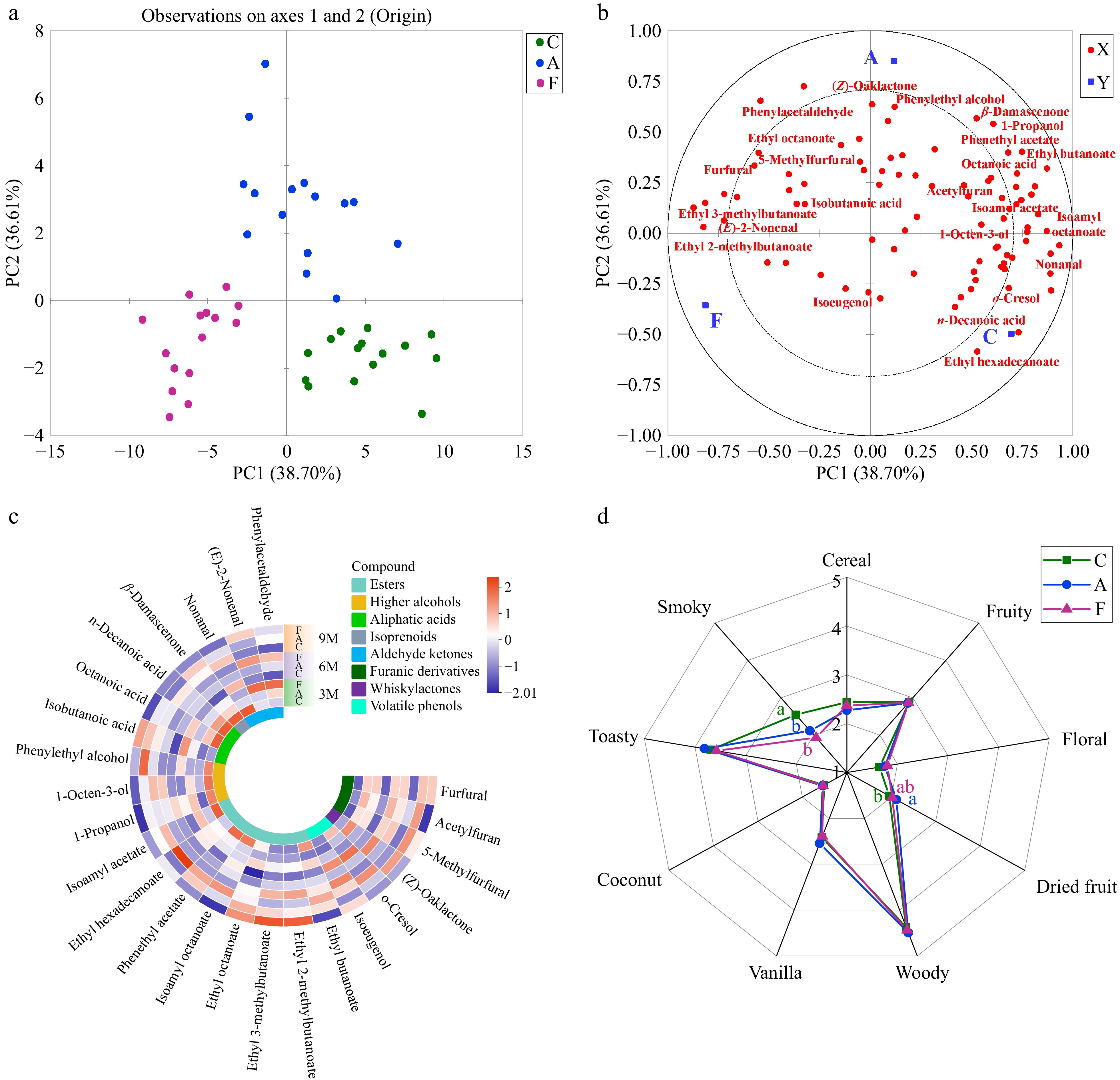
Figure 2.
Impact of oak origin on volatile concentration and aroma characteristics of aged whisky. (a) Score plot of oak-aged whisky samples (9 months) from different origins; C = Chinese oak, A = American oak, and F = French oak (Q2 = 0.79; R2 = 0.89). (b) Loading plot of oak aged whisky samples (9 months) from different origins; labeled compounds are those with VIP > 1, OAV > 1, and significant variation across origins. (c) Composition of volatile compounds in whisky aged in oak from different origins. (d) Sensory analysis of whisky aged in oak from different origins; different letters on the radar chart indicate significant differences among samples based on Duncan's multiple range test (p < 0.05).
According to Fig. 2a, the oak origin could significantly influence the volatile profile of whisky. Specifically, whisky aged with Chinese oak, which is located in the fourth quadrant, could be distinguished from the other two origins. As shown in Fig. 2b, ethyl-2-methylbutanoate, ethyl-3-methylbutanoate, isoamyl acetate, 1-octen-3-ol, and some volatile phenols (o-cresol and isoeugenol) correlated strongly with principal component 1 (PC1). Among them, volatile phenols primarily arise from the thermal degradation of lignin in oak, imparting smoky aromas[16], suggesting that Chinese and French oak may promote the accumulation of these volatile phenols. In contrast, other oak-derived volatile compounds, such as furanic derivatives and whisky lactones, were predominantly associated with the positive axis of PC2, highlighting the significant influence of American oak on these specific compound classes.
A hierarchical clustering heatmap was generated to monitor the evolution of nine classes of volatile compounds during aging (Fig. 2c). Overall, oak-derived compounds showed more pronounced temporal changes than non-oak-derived compounds. Among oak-derived compounds, the concentrations of furanic derivatives and oaklactones were notably lower in Chinese oak samples compared to those from French and American oak. Although no significant differences in furanic derivatives were observed between French and American samples during the early aging period, the levels of furanic derivatives in the American samples gradually increased as aging time progressed. The concentrations of oaklactones were highest in American oak, with similar levels found in Chinese and French oak samples. These findings were corresponding with previous studies in oak wood[12,28]. Unlike those furanic derivatives, volatile phenols represented higher concentrations in Chinese oak-aged whisky than others, especially for those with smaller molecular weight (o-cresol). The higher levels of volatile phenols in Chinese oak were also found in previous studies, such as phenol, o-cresol, m-cresol, p-cresol[12], and eugenol[11].
Among non-oak-derived compounds, some esters increased throughout aging, reaching the highest concentrations at 9 months, such as ethyl 2-methylbutanoate and ethyl 3-methylbutanoate. These two esters were the most abundant in whisky aged in French oak, followed by American and Chinese oak (Fig. 2), which might contribute to more blackberry notes[29]. The aldehyde and ketone compounds derived from oak sources in three origins were significantly influenced by aging time, exhibiting a decreasing trend as maturation progressed. Other non-oak-derived compounds, such as higher alcohols, aliphatic acids, and isoprenoids exhibited only minor fluctuations, remaining relatively stable or slightly decreasing, with minimal differences observed between the oak origins.
As for sensory evaluation (Fig. 2d), whisky aged in Chinese oak exhibited significantly higher 'smoky' note, but lower 'dried fruit' notes than whisky aged with French and American oak. Volatile phenols were identified as the key odor-active compounds responsible for smoky and spiced attributes[30,31]. According to Fig. 2c, the prominent 'smoky' note in whisky aged with Chinese oak might be due to its higher level of volatile phenols. This might be a new direction for utilizing Chinese oak to shape whisky with a unique regional style. As for other aroma characteristics, no statistically significant differences were observed. Aroma perception in alcoholic beverages is relatively complex; the differences between whisky crafted by different oak species might be masked by other factors, such as the toasting or the charring process.
Effect of the oak toasting degree on whisky aroma
-
A PLS-DA model was conducted to evaluate the differences in volatile composition among whisky aged with three oak toasting degrees (light, medium, heavy) (Fig. 3). Volatile compounds with variable importance in projection (VIP) scores greater than 1.0 and odor activity values (OAV) exceeding 1.0 were identified (Supplementary Table S3).
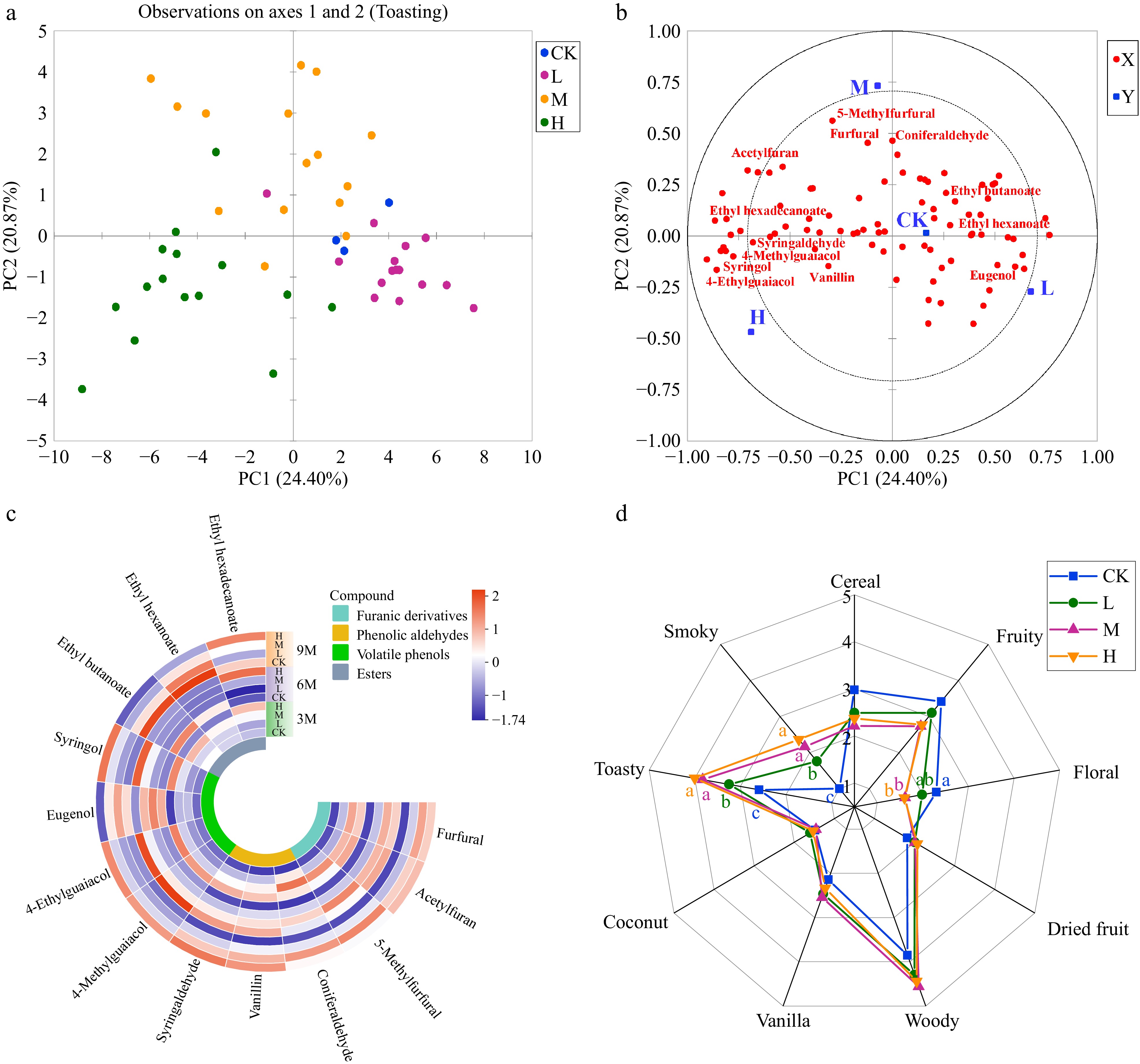
Figure 3.
Impact of oak toasting levels on volatile concentration and aroma characteristics of aged whisky. (a) Score plot of oak aged whisky samples (9 months) from different toasting levels; CK = untoasted, L = lightly toasted, M = medium toasted, and H = heavily toasted (Q2 = 0.60; R2 = 0.72). (b) Loading plot of oak aged whisky samples (9 months) from different toasting levels; labeled compounds are those with VIP > 1, OAV > 1, and significant variation across different toasting levels. (c) Composition of volatile compounds in whisky aged in oak from different toasting levels. (d) Sensory analysis of whisky aged in oak from different toasting levels; different letters on the radar chart indicate significant differences among samples based on Duncan's multiple range test (p < 0.05).
According to Fig. 3a, the lightly toasted samples could be distinguished from heavily toasted samples by PC1, whereas the medium toasted samples were separated from the rest by PC2. Untoasted and lightly toasted samples clustered on the positive side of the PC1 axis, heavily toasted samples on the negative side, and medium toasted samples on the positive PC2 axis, indicating a significant impact of oak toasting on whisky aging. Eugenol, ethyl hexanoate, and ethyl butanoate were predominantly distributed along the positive axis of PC1 and were concentrated in the high-toasting samples (Fig. 3b). Increased toasting levels either inhibited the formation or accelerated the degradation of these compounds[17]. Oak-derived aroma compounds were generally present in higher concentrations in whisky aged in medium and heavily toasted barrels, compared to those aged in untoasted or lightly toasted oak, in line with previous findings[32]. Higher levels of toasting enhanced both the diversity and concentration of aroma compounds released from oak[33], and may have improved extraction efficiency, thereby positively affecting whisky aroma quality[34].
A hierarchical clustering heatmap was used to visualize changes in the concentrations of four compound classes during aging (Fig. 3c). Among oak-derived compounds, furanic derivatives increased consistently with toasting intensity, with the lowest concentrations observed in untoasted oak, and the highest in medium-toasted oak throughout the aging period. The pronounced rise in furanic derivatives, particularly furfural, after toasting is consistent with the findings of Jordão et al.[35]; however, in another study, excessive toasting was found to reduce these compounds. Caramel and toasted aromas in whisky have been attributed to furanic derivatives[36], and these attributes were likely to be intensified at higher toasting levels. Among phenolic aldehydes, syringaldehyde, and vanillin exhibited similar accumulation patterns, increasing with both toasting intensity and aging duration. In contrast, coniferaldehyde reached maximum levels at moderate toasting, but declined under excessive toasting, likely due to thermal degradation at elevated temperatures. Regarding volatile phenols, syringol, 4-ethylguaiacol, and 4-methylguaiacol increased with toasting intensity and displayed a rise-then-decline pattern over time. The trend reflects lignin degradation under high-temperature toasting, consistent with oak wood observations[20,21].
Among non-oak-derived volatiles, ethyl butanoate and ethyl hexanoate exhibited no consistent accumulation patterns across toasting levels. In contrast, ethyl hexadecanoate progressively accumulated and was notably enriched in whisky aged in heavily toasted oak.
As for sensory evaluation (Fig. 3d), significant differences were observed in 'floral', 'toasty', and 'smoky' attributes. Untoasted or lightly toasted oak retained 'floral' notes, whereas medium and heavy toasting enhanced the 'caramel' and 'smoky' aromas, consistent with previous studies[37]. Thermal treatment significantly reduced terpene and norisoprenoid levels in wood, as toasting induced thermal degradation that diminished floral and fruity aromas[38]. The concentration of smoky-related compounds was increased by the thermal degradation of wood constituents during toasting. Whisky aged with lightly toasted staves exhibited significantly lower toasty and smoky intensities than those aged with medium and heavily toasted oak, highlighting the critical role of temperature in decomposing wood polymers and generating aroma compounds[39]. Under light toasting, lignin, and hemicellulose were gradually degraded, whereas cellulose remained unaffected. In contrast, medium and heavy toasting triggered complex physical and chemical transformations within the wood, leading to the generation of numerous volatile compounds. These compounds altered the intrinsic wood aroma, thereby influencing the sensory attributes of the matured whisky. In short, moderately increasing the toasting level of oak staves was found to elevate the concentration of oak-derived aromatic compounds, thereby intensifying oak aromas in aged whisky, while slightly diminishing non-oak-derived aromas, likely due to the masking effect of oak volatiles[39].
Effect of the oak charring intensity on whisky aroma
-
A PLS-DA model was used to differentiate whisky samples according to oak charring levels (0, 1, 2, 3, and 4, corresponding to uncharred, light, medium, high, and heavy charred) (Fig. 4). Volatile compounds with variable importance in projection (VIP) scores greater than 1.0, and odor activity values (OAV) exceeding 1.0 were identified (Supplementary Table S4).
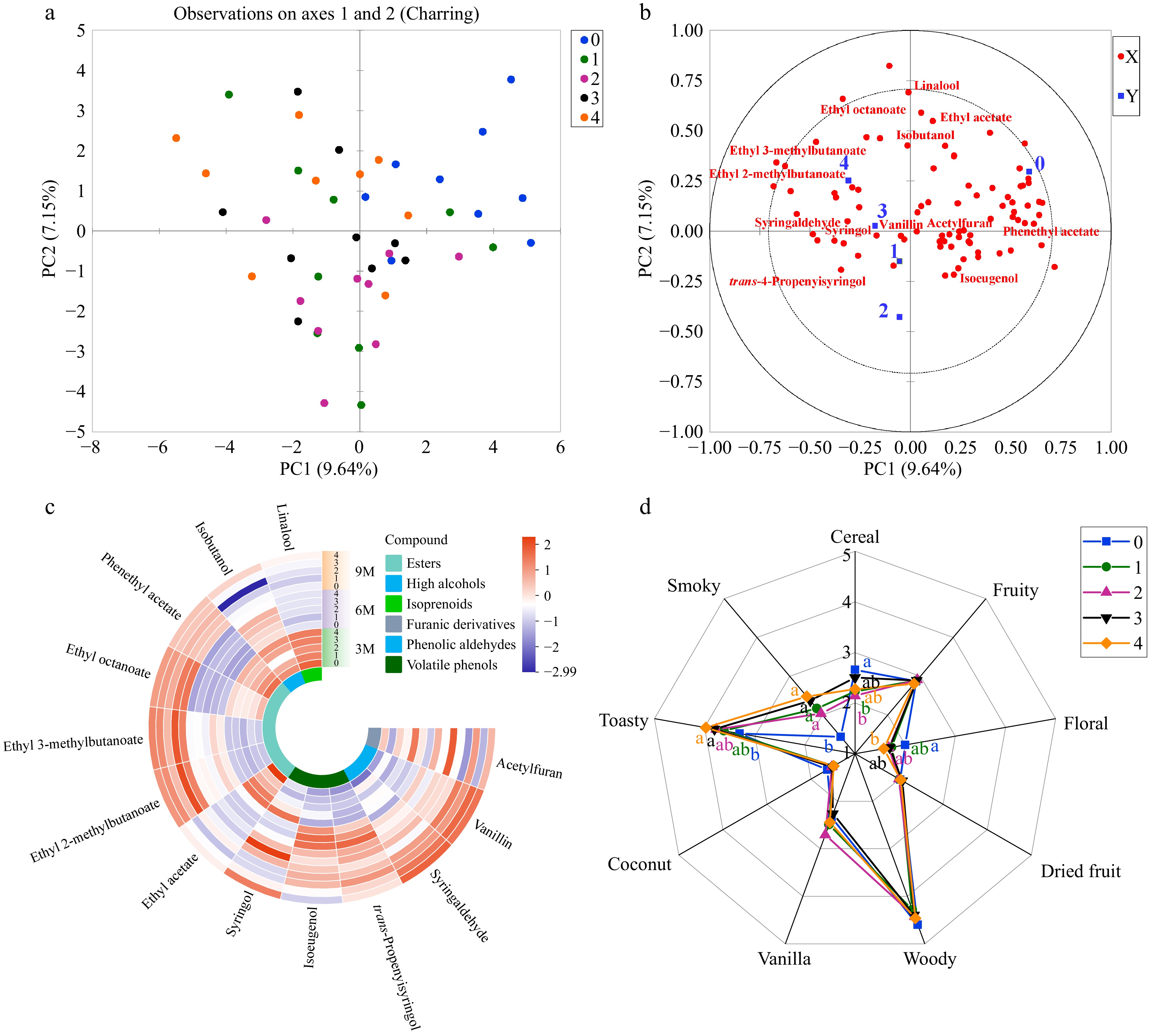
Figure 4.
Impact of oak charring intensity on volatile concentration and aroma characteristics of aged whisky. (a) Score plot of oak aged whisky samples (9 months) from different charring intensity; 0–4 indicates different levels of charring, where 0 = uncharred, 1 = light, 2 = medium, 3 = high, and 4 = heavy (Q2 = 0.23; R2 = 0.63). (b) Loading plot of oak aged whisky samples (9 months) from different charring intensities; labeled compounds are those with VIP > 1, OAV > 1, and significant variation across different charring intensity. (c) Composition of volatile compounds in whisky aged in oak from different charring intensity. (d) Sensory analysis of whisky aged in oak from different charring intensity; different letters on the radar chart indicate significant differences among samples based on Duncan's multiple range test (p < 0.05).
As shown in Fig. 4a, PC1 differentiated uncharred from medium charred samples, with the former clustered on the positive axis of PC1 and the latter on the negative axis of PC1. PC2 contributed little to separation. The distribution of aroma compounds indicated that uncharred oak-aged samples contained more non-oak-derived compounds, whereas oak-derived compounds were more abundant in charred samples (Fig. 4b). However, differences among samples with varying charring levels were not clearly distinguished.
A hierarchical clustering heatmap illustrated the temporal evolution of six representative compounds during barrel aging (Fig. 4c). Among the oak-derived compounds, vanillin and syringaldehyde increased with aging time and were positively associated with higher charring levels. Acetylfuran levels initially increased with aging and subsequently declined, reaching maximum concentrations under medium and heavy charring. Trans-4-propenylsyringol and isoeugenol also increased during early aging and decreased thereafter; their accumulation was promoted by moderate charring, but suppressed under excessive charring. Although previous studies have reported elevated levels of volatile phenols in heavily charred oak, the present study revealed a reduction, suggesting that excessive charring may hinder their release[40]. In contrast, syringol concentrations increased consistently with toasting intensity and maturation, reaching a maximum under heavy charring. These findings demonstrated that volatile phenols responded differently to oak treatment: some were enhanced by intensified thermal degradation, whereas others were suppressed under excessive charring.
Among the non-oak-derived compounds, ethyl 2-methylbutanoate and ethyl 3-methylbutanoate progressively increased with greater charring intensity and extended aging, consistent with recent findings on the impact of char level on the flavor profile of aged whisky[24].
As for sensory evaluation (Fig. 4d), whisky aged in uncharred oak exhibited pronounced 'cereal' and 'floral' notes, which declined with increasing charring. As charring deepened, a porous activated carbon layer was formed on the oak surface, which adsorbed 'fruity' and 'floral' aromas and diminished their sensory intensity. In contrast, charring significantly enhanced the perception of 'toasty' and 'smoky' notes in aged whisky compared with uncharred oak. This enhancement was primarily due to the thermal degradation of hemicellulose and lignin, producing furanic derivatives with 'toasty' and 'caramel' aromas, and volatile phenol with 'smoky' characteristics[16]. Although charring enhanced the perception of toasty and smoky notes, no significant difference was observed between charring intensity 3 and 4, suggesting that medium to high charring had already reached a saturation threshold for aroma perception. The sensory attributes of vanilla and woody notes did not differ significantly across charring levels, as excessive charring, while initially enhancing lactone release, ultimately caused their volatilization or thermal degradation.
Effect of the interaction between toasting and charring on oak-derived volatile compounds in whisky
-
To further investigate the proper parameters of the oak toasting degree and charring intensity, a two-way ANOVA was conducted on whisky aged with three different oak species after 9 months, separately (Supplementary Table S5). The results showed a significant interaction effect of toasting and charring (p < 0.001), indicating that the optimal charring intensity might be contingent on the degree of toasting, as well as the oak species. A detailed analysis of the concentration differences in the four types of oak-volatile compounds in whisky samples was performed (Fig. 5).
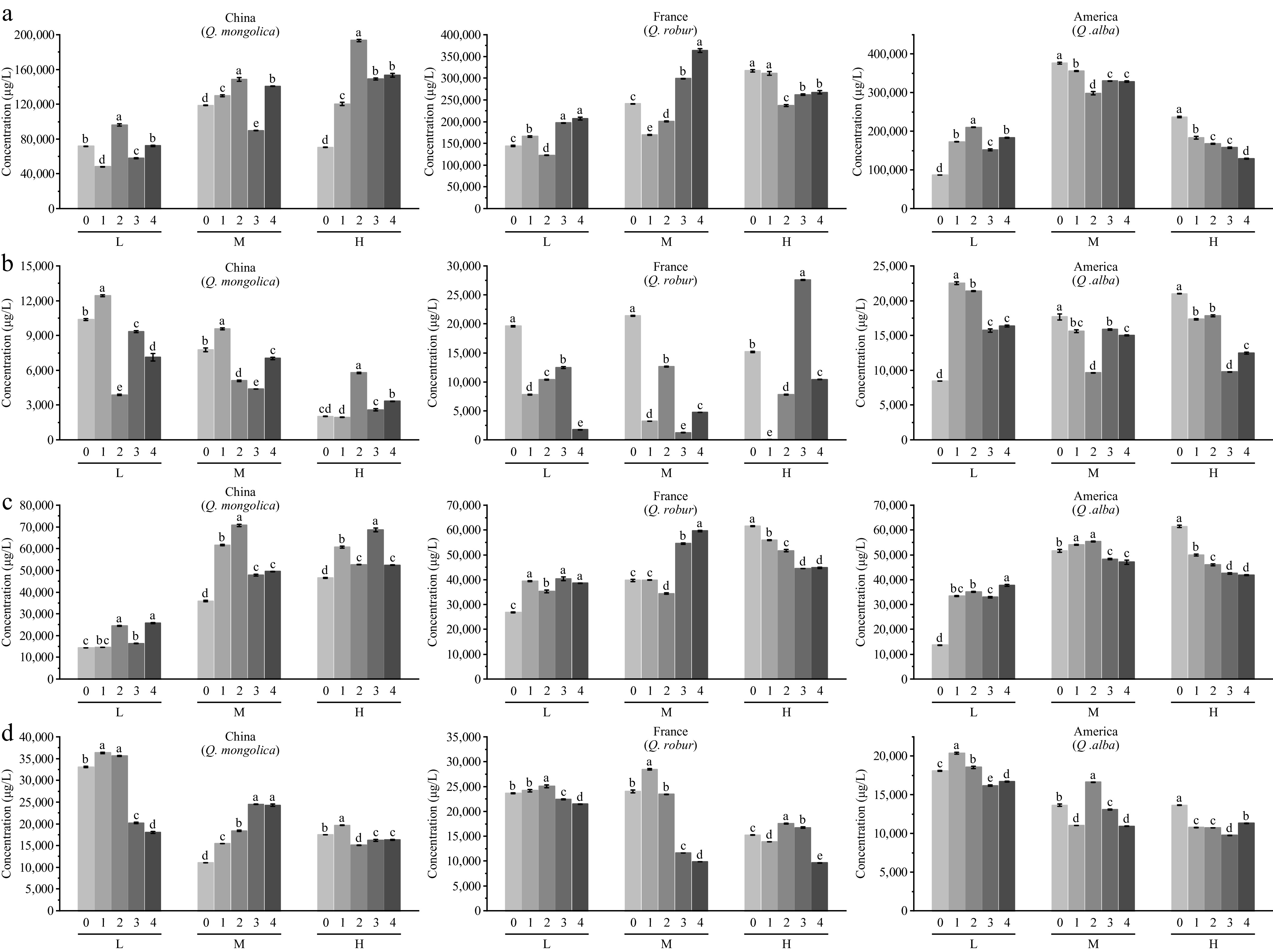
Figure 5.
Concentration of (a) furanic derivatives, (b) oaklactones, (c) phenolic aldehydes, and (d) volatile phenols in whisky aged with Chinese oak, French oak and American oak after 9 months. L = light toasted, M = medium toasted, and H = heavily toasted; 1–4 indicates different levels of charring, where 1 = light, 2 = medium, 3 = high, and 4 = heavy. Different lowercase letters on the bar chart denote significant differences according to Duncan's multiple range test (p < 0.05), with significance assessed across five charring levels within each toasting intensity.
Generally, three oak species exhibited distinct variations in the selection of proper charring intensity to achieve the highest contents of oak-derived volatile compounds. In the Chinese oak-aged whisky, furanic derivatives were found in higher concentrations when the oak was medium charred across all toasting levels, especially in the heavy toasting degree (H) (Fig. 5a). In contrast, the French oak underwent medium toasting (M) with charring intensity 4, and American oak underwent medium toasting (M) with charring intensity 1, and would leach more furanic derivatives into whisky after a 9-month aging. Combined with the analysis of the initial concentration of volatile compounds in oak wood (Supplementary Table S6), a possible illustration might be proposed. Furanic derivatives showed significant difference in those oak blocks, which were lower in Chinese oak, and higher in French oak. Different initial concentrations of furanic derivatives might be the reason why it needed various charring intensities to achieve the maximum concentration.
The distinct variation was also observed in oaklactones (Fig. 5b) which were lower in Chinese oak than the other two oak species (Supplementary Table S6). In the Chinese oak-aged whisky, oaklactones were higher in whisky aged with charring intensity 1 in low (L) and medium (M) toasted oak, while in the heavy (H) toasted oak, whisky aged in charring intensity 2 oak was observed with higher oaklactones. As for French oak-aged whisky, except for H with charring intensity 3, the charring process mainly decreased the concentration of oaklactones. In American oak-aged whisky, a similar decrease caused by the charring process was found in M and H toasted oak, while in L toasted oak with lower initial concentrations, charring intensities 1 and 2 would yield much higher oaklactones in aged whisky. In other words, if whisky producers wish to pursue a particular whisky style characterized by more 'woody' and 'coconut' notes contributed by oaklactones[41], uncharred French oak, the lower charring intensity of American oak, and Chinese oak in the L or M toasted degree, combined with charring intensity 1 might be the proper choice.
As for phenolic aldehydes, according to our previous studies in oak[12], the charring process would increase its contents when the initial concentration was relatively low in the light toasted and medium toasted oak, while in the case of highly toasted oak with higher initial concentrations, excessive charring would decrease its contents (Supplementary Table S6). During whisky aging, some disparities could be maintained that the charring process is a benefit for elevating the concentration of phenolic aldehydes in most oak-aged whisky (Fig. 5c). An exception was observed in whisky aged with heavily toasted French and American oak, where the use of uncharred oak resulted in higher concentrations of phenolic aldehydes in the whisky. The findings were consistent with previous researches showing phenolic aldehydes in aged whisky exhibited higher concentrations with increased charring levels when the oak was lightly toasted[20,21].
For volatile phenols, the influence of charring intensity on Chinese oak-aged whisky exhibited a different trend among the three toasting degrees (Fig. 5d). In the light-toasted Chinese oak, a higher charring intensity would lead to a decrease in the concentration of volatile phenols. The same phenomenon was observed in whisky aged with medium-toasted French oak. However, when using the medium-toasted Chinese oak for aging, charring intensities 3 and 4 would bring higher concentrations of volatile phenols into whisky, which was different from most findings where volatile phenols generally decreased with the increase of charring degree[6].
Overall, whisky aged in Chinese oak with a higher toasting degree and charring intensity would exhibit a higher concentration of furanic derivatives and phenolic aldehydes, while lower toasting degrees and charring intensities in oak might yield more oaklactones and volatile phenols. The distinct concentration of oak-derived volatile compounds in the uncharred oak might be the basis for determining the charring intensity. For oak wood with low aromatic potential, a more intense charring process could be more beneficial to enhance oak aroma. Conversely, when the initial contents of volatile compounds in uncharred oak were abundant, excessive charring would rather lead to a reduction in the oak aroma, possibly due to the thermal degradation caused by high temperatures. Future research could focus on the precision-controlled charring techniques, stylistic barrel customization, and efficient utilization of oak resources.
-
The species of oak, the toasting degrees, and charring intensities were all critical factors in shaping the whisky style. Whisky aged with Chinese oak exhibited lower concentrations of furanic derivatives and oaklactones, but higher concentrations of volatile phenols, contributing to a more pronounced 'smoky' note. To maximize the stylistic features in Chinese oak, a lower toasting and a lighter charring process was preferred to promote the accumulation of oaklactones and volatile phenols in aged whisky. As for the French and American oak in a light toasting degree, a relatively higher charring intensity could be more efficient to increase the content of furanic derivatives and phenolic aldehydes to bring more 'toasty' and 'vanilla' notes into the whisky. The oak species, together with its toasting degrees, would determine the initial concentration of oak-derived volatile compounds in the uncharred oak, which might be the basis for the selection of the optimal charring intensity. Therefore, customizing charring strategies according to both oak origin and toasting degree offers a practical pathway for stylistic barrel customization and efficient utilization of oak resources. Future research should focus on utilizing indigenous Chinese oak to develop whisky with distinctive regional characteristics and to establish a unique Chinese brand identity. Additionally, optimizing oak aging processes and evaluating their influence on consumer acceptance across diverse markets could be valuable for further exploration.
The authors gratefully acknowledge the financial support by the Key Project of R&D Program of Ningxia Hui Autonomous Region, China (2022BBF01003), the Major Project of Science and Technology of Shandong Province (2024CXPT013), the 2115 talent development program of China Agricultural University, and the earmarked fund for China Agriculture Research System (CARS-29).
-
The authors confirm contributions to the paper as follows: study conception and design: Cui D, Ling M; data collection: Luo M, Huang Y, Qi M, Gou J; analysis and interpretation of results: Cui D, Fang J, Gao K, Zhou P, Li J; draft manuscript preparation: Cui D, Ling M, Duan C, Lan Y. All authors reviewed the results and approved the final version of the manuscript.
-
All data generated or analyzed during this study are included in this published article and its supplementary information files. Additional data are available from the corresponding author upon reasonable request.
-
The authors declare that they have no conflict of interest.
-
accompanies this paper online at: https://doi.org/10.48130/fia-0026-0013.
- Supplementary Table S1 Volatile compounds content of whisky original wine (μg/L).
- Supplementary Table S2 Variation in the concentration of volatile compounds (VIP > 1, OAV > 1) across different origins over aging time (μg/L).
- Supplementary Table S3 Variation in the concentration of volatile compounds (VIP > 1, OAV > 1) over aging time under different toasting degree (μg/L).
- Supplementary Table S4 Variation in the concentration of volatile compounds (VIP > 1, OAV > 1) over aging time under different charring degree (μg/L)
- Supplementary Table S5 Two-way ANOVA results of toasting degree and charring intensity and their interaction (toasting x charring) effect.
- Supplementary Table S6 Aroma compound content in oak wood at different toasting intensities and charring levels (μg/g)[12].
- Copyright: © 2026 by the author(s). Published by Maximum Academic Press on behalf of China Agricultural University, Zhejiang University and Shenyang Agricultural University. This article is an open access article distributed under Creative Commons Attribution License (CC BY 4.0), visit https://creativecommons.org/licenses/by/4.0/.
-
About this article
Cite this article
Cui D, Luo M, Huang Y, Qi M, Gou J, et al. 2026. Profiling the volatile metabolomics and aroma characteristics of Chinese oak-aged whisky: insights of the toasting and charring effects on oak. Food Innovation and Advances 5(2): 175−184 doi: 10.48130/fia-0026-0013 

Profiling the volatile metabolomics and aroma characteristics of Chinese oak-aged whisky: insights of the toasting and charring effects on oak
- Received: 10 November 2025
- Revised: 31 December 2025
- Accepted: 12 March 2026
- Published online: 29 April 2026
Abstract: Oak plays a significant role in shaping the distinct whisky flavor. In this study, oak blocks from China (Q. mongolica), France (Q. robur), and America (Q. alba) with different toasting degrees and charring intensities were applied in the maturation of whisky for 9 months, respectively. Volatile compounds and aroma characteristics in aged whisky were investigated. Results showed that whisky aged with Chinese oak had higher concentrations of volatile phenols, with o-cresol being 2.97 times higher than that in American oak, and 7.47 times higher than that in French oak, contributing to a stronger perception of 'smoky' notes, but lower concentrations of furanic derivatives and oaklactones than whisky aged with French and American oak. Oak toasting degrees had a greater impact on whisky aroma than charring intensities, especially on oak-derived volatile compounds. The selection of the proper charring intensity could be determined by the initial concentration of oak-derived volatile compounds in the uncharred oak, such that for oak wood with high aromatic potential, excessive charring would rather lead to a reduction in the oak aroma. The process of light toasting combined with mild charring could promote the accumulation of volatile phenols in Chinese oak, thereby contributing to the formation of distinctive characteristics in whisky. This study offers whisky producers guidance on using Chinese oak to enhance 'smoky' flavors, and create distinct regional whisky styles.
-
Key words:
- Chinese oak /
- Whisky aging /
- Oak-derived aroma /
- Influencing factors /
- Regional whisky style