












-
Huangjiu (Chinese rice wine) is renowned as one of the three most ancient wines of the world, alongside beer and wine[1]. Huangjiu is brewed using rice, wheat Qu, and Jiumu as raw materials through a simultaneous saccharification and fermentation process[2]. Based on production technologies, Huangjiu is categorized into traditionally handcrafted Huangjiu, and mechanized Huangjiu. Traditional Huangjiu is fermented in an open environment, which fosters the growth of a diverse microbial community, resulting in its rich and full-bodied aroma[3]. During the fermentation process, a complex synergistic community involving bacteria[4] (e.g., Weissella, Lactococcus, Saccharopolyspora, Staphylococcus, and Bacillus) and fungi (e.g., Aspergillus and Rhizopus) is established[5], wherein the dominant microbiota undergoes dynamic succession throughout the fermentation stages[6]. Compared with the traditional counterpart, mechanized Huangjiu employs pure yeast starters to partially replace natural culture starters[7]. Currently, the main fermentation agents used in mechanized Huangjiu are wheat Qu and rapid-fermenting yeast[8]. Consequently, bacterial diversity is drastically reduced, with the bacterial community predominantly composed of lactic acid bacteria[6]. Meanwhile, the fungal community is overwhelmingly dominated by pure Saccharomyces cerevisiae, resulting in a stable succession process with no significant turnover of dominant species[5]. This practice effectively shortens the fermentation cycle and overcomes challenges such as batch-to-batch quality instability and seasonal limitations inherent in traditional production[8]. However, the flavor quality of mechanized Huangjiu is inferior to that of traditional Huangjiu[9], a difference likely primarily due to the higher concentrations of key esters and amino acids, as well as a more harmonious organic acid profile in traditional Huangjiu compared with its mechanized counterpart[8].
The flavor characteristics of Huangjiu are primarily shaped by various volatile flavor compounds, including alcohols, esters, acids, ketones, phenols, and others[10]. Most flavor compounds in Huangjiu are derived from the metabolic activities of microorganisms within the Huangjiu brewing system, including yeasts, bacteria, molds, and other microbial species[3]. Yeast is the key microorganism for aroma formation in Huangjiu, contributing predominantly to aroma development through its involvement in the utilization of saccharification and liquefaction products, as well as in alcohol fermentation[11]. Our previous study identified the Saccharomyces genus as a core functional yeast group, which was positively correlated with the synthesis of key aroma compounds (esters and alcohols) during traditional Huangjiu fermentation[3]. During Huangjiu brewing, the predominant functional species of the Saccharomyces genus is S. cerevisiae, which produces not only ethanol, but also various volatile flavor compounds, thereby contributing to the unique flavor profile of Huangjiu[12]. Yang et al.[13] found that the addition of S. cerevisiae increased the content of ester and alcohol compounds in Huangjiu. Futhermore, S. cerevisiae jiangnan1# has been shown to increase the content of higher alcohols and acetate esters in Huangjiu[14]. Recent advances in other fermented beverages have further demonstrated that the application of specific aroma-producing S. cerevisiae strains can significantly improve product quality. For instance, the application of S. cerevisiae JN3 in Dangshan pear wine fermentation notably enhanced the biosynthesis of key esters (e.g., isoamyl acetate and ethyl caproate) through its high esterase activity and alcohol acyl transferase capability, thereby improving the aromatic typicality[15]. Similarly, in dry-hopped cider production, the use of S. cerevisiae strains such as Lalvin 71B and SAF Cider AB1, which possess β-lyase activity (encoded by the IRC7 gene), successfully promoted the release of polyfunctional thiols, enhancing the tropical and floral aroma profiles of the final product[16]. Although the simplified microbial community structure in mechanized starters is a fundamental cause of flavor loss, the lack of phenotypic diversity in currently available S. cerevisiae strains further exacerbates the flavor homogenization, limiting the potential for flavor diversification.
This study aimed to isolate and identify S. cerevisiae strains with potent aroma-producing capabilities from the fermentation mash of traditional Huangjiu. Additionally, it investigated the effects of inoculation of these selected strains on the flavor profile of mechanized Huangjiu, including key aroma compounds, sensory attributes, and physicochemical indices. This work innovatively established a yeast screening strategy to enhance the flavor quality of mechanized Huangjiu production.
-
Fermentation mash samples of traditional Huangjiu produced around the Winter Solstice were collected from Zhejiang Pagoda Brand Huangjiu Co., Ltd. (Shaoxing City, Zhejiang Province, China). All samples were brewed using identical raw materials (glutinous rice, Jianhu water, wheat Qu, and Jiuyao) and collected on different fermentation days (0, 22, 45, 67, and 90 d, respectively). Each sample was transferred to a sterile sealed bag and refrigerated at 4 °C for no more than 12 h prior to strain screening.
Strain screening and identification
-
One gram of fermentation mash sample was suspended in 9 mL of sterile water, serially diluted, and 5 dilution levels (ranging from 10−2 to 10−6) were spread onto potato dextrose agar (PDA) plates. The plates were incubated at 30 °C for 72 h. Colonies with distinct morphological characteristics and robust growth were selected and inoculated into liquid yeast extract peptone dextrose (YPD) medium. Following incubation for 48 h, the cultures were subcultured onto fresh YPD plates and further incubated at 30 °C for 2 d. Isolated colonies were purified via repeated streak-plating, with subsequent incubation until single colonies were obtained. The purified colonies were then used as templates for PCR amplification, which was performed using the NL1/NL4 primer following the yeast-specific amplification program described in our previous study[17]. Sequencing was conducted by Shanghai Shenggong Bioengineering Co., Ltd. (Shanghai, China). The obtained 16S rDNA/ITS sequences were compared against the GenBank database of the National Center for Biotechnology Information (NCBI). Finally, the identified S. cerevisiae strains were preserved in 30% (v/v) sterilized glycerol at −80 °C.
Screening of the aroma-producing S. cerevisiae strains
-
The isolated S. cerevisiae strains were first activated in YPD medium and pre-cultured at 30 °C for 48 h with shaking at 200 r/min. The resulting culture was then inoculated at a 2% (v/v) inoculum volume ratio into 15 mL of liquid medium and incubated on a shaker at 200 r/min for 24 h. This process was repeated for three generations, and the culture from the third generation was used as the working culture. The cells were then harvested by centrifugation at 4,500 r/min for 10 min at 4 °C, washed twice with sterile physiological saline, and resuspended to form a yeast cell suspension.
Rice hydrolysate medium (RHM) was employed as the simulated Huangjiu medium. The detailed formulation and preparation protocols of RHM were adapted from the method described by Zhao et al.[12]. The S. cerevisiae cell suspension was inoculated into RHM at a 10% (v/v) inoculum volume ratio and incubated at 28 °C for 48 h. Preliminary screening of aroma-producing S. cerevisiae strains was accomplished by characterizing the diversity of aroma compounds in the simulated fermentation broths of different strains.
Assessment of biological characteristics and stress tolerance
-
The growth characteristics and environmental stress tolerance of the selected S. cerevisiae strains were evaluated using RHM as the basal simulated Huangjiu medium. The activated yeast cell suspensions were inoculated into the RHM at an inoculum size of 2% (v/v). The cultures were incubated at 28 °C with constant shaking at 200 r/min. Cell growth was monitored by measuring the optical density at 600 nm at 2 h intervals from 2 h to 32 h.
The stress tolerance of the strains was evaluated according to the method described by Huang et al.[18] with slight modifications. To assess ethanol tolerance, the strains were inoculated at 2% (v/v) into RHM adjusted to different ethanol concentrations of 8%, 10%, 12%, 14%, and 16% (v/v). To assess acid tolerance (pH), the strains were inoculated at 2% (v/v) into RHM with pH values adjusted to 2.0, 2.5, 3.0, 3.5, 4.0, and 4.5. To assess glucose tolerance, the strains were inoculated at 2% (v/v) into RHM containing varying glucose concentrations of 50, 60, 70, 80, and 90 g/L. For all stress tolerance assays, the cultures were incubated at 28 °C with shaking at 200 r/min for 24 h. All experiments were performed in triplicate, and the biomass concentration was determined by measuring the OD600.
Huangjiu fermentation trials
-
The selected aroma-producing S. cerevisiae strains were activated and then inoculated into RHM at an inoculation volume ratio of 5%, followed by incubation at 28 °C for 24 h. After incubation, for each fermentation trial, 25 mL of the inoculated RHM was mixed with 500 g of pre-steamed glutinous rice, 2.5 g of Angel distiller's yeast (a commercial distiller's yeast, Angel Yeast Co., Ltd., Yichang, China), and 625 mL of sterile water. This mixture was first subjected to primary fermentation at 30 °C for 5 d, followed by secondary fermentation at 15 °C for 15 d. For mixed-culture fermentation, the selected S. cerevisiae strains were co-fermented at a 1:1 ratio under the aforementioned conditions. The blank group was prepared using glutinous rice (500 g), Angel distiller's yeast, and water (625 mL) under the aforementioned fermentation conditions. Additionally, following the traditional Huangjiu brewing technique[19], a control group of simulated traditional Huangjiu fermentation samples was prepared with glutinous rice (500 g), wheat Qu, Jiumu (57 g, an artificial yeast culture specially used for the traditional Huangjiu production) , and water (625 mL) under the same fermentation conditions. All fermentation experiments were conducted in triplicate, and their fermentation parameters (pH, total acid, total sugars, and amino acid nitrogen) were determined using the method described by GB/T 13662-2018 (National Standard of China).
Determination of aroma compounds using gas chromatography-mass spectrometry (GC–MS)
-
Headspace solid-phase microextraction (HS–SPME) combined with GC–MS was applied to analyze the aroma compounds in Huangjiu samples, as described in our previous study[20]. Five grams of Huangjiu samples obtained from simulated fermentation and 20 μL internal standard (2-octanol, 315 μg/mL) were added to a 20 mL headspace vial. After equilibration at 50 °C for 5 min, an SPME fiber (100 μm, Supelco, Inc., Pennsylvania, USA) coated with DVB/CAR/PDMS was inserted and exposed to extraction for 50 min at a continuous stirring rotor of 250 r/min. An Agilent HP-Innowax (60 m × 0.25 mm × 0.25 μm) column was applied. The concrete working procedures of GC–MS (7890B-5977B, Agilent Technologies, Santa Clara, USA) analysis were set as follows: the initial temperature was 40 °C, then increased to 120 °C at 3 °C/min and retained for 5 min, and then raised at 3 °C/min to 200 °C. Helium (99.999%) was used as the carrier gas at a constant flow rate of 1 mL/min. The electron ionization energy, ion source temperature, and the scanning range were set to 70 eV, 250 °C, and 30−450 amu, respectively. All analyses were conducted in triplicate.
The aroma compounds were identified by comparison of their mass spectra and retention indexes (RI) with those in the NIST11 library and literature, where RIs were calculated using C5-C30 alkane standards. The external standard method was used for quantitative determination of the aroma compounds.
Gas chromatography-olfactometry (GC–O) analysis
-
The parameters and procedures for GC–O analysis were described in our previous study[1], and an Agilent 7890 GC equipped with an olfactory detection port (Gerstel ODP-2, Mulheim an der Ruhr, Germany) was used. The fused silica capillary column, carrier gas flow rate, and temperature procedures were the same as those for GC–MS. Fifteen panelists were trained to recognize each odor and judge aroma intensity using reference standards before the GC–O experiment. Each of the panelists placed their nose close to the glass sniffing port to record the aroma descriptor, aroma intensity, and retention time of the odors. The aroma intensity (AI) was evaluated according to a five-point scale from 0 to 5 (0 = no odor, 3 = a medium odor, 5 = an extremely strong odor). Each experiment was carried out in triplicate by every panelist, and the final intensity of each aroma was the average score of all the panelists.
Sensory evaluation
-
Quantitative descriptive analysis was used to evaluate various sensory attributes of the Huangjiu samples. The sensory evaluation method was performed as described in our previous research[20]. The sensory evaluation experiments were conducted in a sensory evaluation laboratory with a room temperature of 20 °C.
A total of 24 candidates with prior experience in olfactory testing participated in the preliminary training for sensory evaluation, but they were not informed of the purpose of the experiment. The candidates underwent a 1-month training (30 min per day). From the candidates, 10 panelists (five males and five females, aged 23−30 years) with higher olfactory discrimination abilities were selected to form the sensory evaluation panel.
Prior to the formal sensory experiments, panelists were required to assess six standard reference samples for each fragrance attribute repeatedly until they could consistently identify the references with 100% accuracy. Based on the method of Wang et al.[21], the following six fragrance attributes were selected as standards: sour (the odor of acetic acid compounds, with a concentration of 1 mg/L in a 14% ethanol aqueous solution), ester (ethyl acetate), sauce (4-ethylphenol), sweet (vanillin), alcoholic (phenylethanol), and fruity (isoamyl acetate).
During the sensory evaluation process, 20 mL of each Huangjiu sample was placed in a covered, odorless glass cup. The samples were randomly coded with three-digit numbers and presented to the panelists in a random order for evaluation. The intensity of the fragrance attributes was quantitatively measured on a 10-point scale, where 0 represents no odor, and 9 represents an extremely strong odor.
Statistical analysis
-
The data and statistical significance (p < 0.05; Duncan's test) were determined using SPSS Statistics 21 (SPSS Inc., Chicago, USA), heatmaps were generated using Tbtools software, and principal component analysis (PCA), bar charts, and radar charts were created using Origin 9.0 software.
-
S. cerevisiae, one of the most critical microorganisms in Huangjiu production, not only played a pivotal role in alcoholic fermentation but also enhanced the aroma of Huangjiu[14,22]. A total of 26 S. cerevisiae strains were screened from the traditional Huangjiu fermentation mash through a combined approach of morphological observation, streak plate purification, PCR amplification, and 16S rDNA/ITS gene sequencing analysis (Table 1).
Table 1. Identification list of Saccharomyces cerevisiae strains.
Number S. cerevisiae strains GenBank accession numbers 1 TC9 PX904676 2 YI19 PX904677 3 AA2 PX904678 4 YNCA9006 PX904679 5 UMCC PX904680 6 C296 PX904681 7 OS7302 PX904682 8 YLL20 PX904683 9 5 PX904684 10 ML3 PX904685 11 1 PX904686 12 1590 PX904687 13 YLL20-2 PX904688 14 q1 PX904689 15 6 PX904690 16 NP-7-5 PX904691 17 4 PX904692 18 NL9 PX904693 19 TC10 PX904694 20 422 PX904695 21 NL25 PX904696 22 2 PX904697 23 NL8 PX904698 24 YL1 PX904699 25 ZB120 PX904700 26 L1225 PX904701 The volatile compounds of these strains in the simulated fermentation broth were analyzed by GC–MS. A total of 23 aroma compounds were identified, encompassing eight esters, four alcohols, four acids, three phenols, two aldehydes, 2-octanone, and styrene. Among these, alcohols were the predominant class, accounting for 57.91%–84.34% of the total aroma compound, followed by acids (5.75%–22.90%) and esters (0.55%–15.40%) (Fig. 1). Alcohols, acids, and esters were commonly found aroma compounds in alcoholic beverages[2]. Alcohols were primarily synthesized via sugar catabolism or branched-chain amino acid degradation pathways[23]. Iso-butanol, 3-methyl-1-butanol, and phenylethanol were detected in the fermentation broths of all strains, though their concentrations varied significantly. Notably, 3-methyl-1-butanol and phenylethanol dominated the alcohol profile, comprising 96.18%–99.01% of the total alcohols identified (Supplementary Tables S1-S3), which is consistent with previous analyses of Huangjiu alcohol compositions[19]. Phenylethanol and 3-methyl-1-butanol contribute to the rich, rose-like aroma of Huangjiu[24]. As a key higher alcohol in simulated Huangjiu fermentation systems, phenylethanol content is specified in GB/T 13662–2008 as a critical physicochemical parameter for quality assessment of traditional Huangjiu. Esters were the most prevalent compounds in the simulated fermentation broth inoculated with the selected strains, which are formed via the esterification of alcohols and fatty acids[25]. The total ester content in the simulated fermentation broths of the selected strains ranged from 424.95 to 2,667.60 μg/kg, with strain OS7302 exhibiting the highest total ester concentration among the tested strains. No esters were detected in the blank group, suggesting that the eight ester compounds, such as ethyl acetate and ethyl hexanoate, were likely synthesized through the metabolic activity of the inoculated strains (Supplementary Tables S1-S3). Although ethyl hexanoate was present at relatively low concentrations among the esters, its level in the OS7302 group was 2.07-fold and 5.13-fold higher than that in strains q1 and NL9, respectively. The OAV (odor activity value) of ethyl hexanoate was 18, and it has been identified as the primary contributor to fruity aromas[26]. In addition, the concentrations of ethyl octanoate and ethyl decanoate in the OS7302 group were markedly higher than those in other strains, further enhancing fruity and grape-like aromas, respectively[27]. Organic acids are a key contributor to the characteristic sour taste in Huangjiu[28]. A total of four volatile organic acids were identified and quantified, including acetic acid, hexanoic acid, octanoic acid, and benzoic acid. Hexanoic acid was detected in only eight out of the fermentation broths inoculated with the selected strains, among which the broth inoculated with strain OS7302 exhibited the highest hexanoic acid content. Meanwhile, the other three organic acids (acetic acid, octanoic acid, and benzoic acid) were found at high concentrations in the fermentation broth of strains OS7302, q1, and NL9. It was also observed that S. cerevisiae strains q1 and NL9 showed the highest total aroma compound yields in the simulated fermentation, with values of 30,784.96 and 30,855.90 μg/kg, respectively. Based on the volatile compound profiles, the screened strains exhibited distinct metabolic characteristics. To clarify the contribution of different aroma-producing phenotypes to the quality of mechanized Huangjiu, three representative strains were selected for subsequent fermentation trials. OS7302 was chosen for its superior ester-synthesizing capacity, as esters are recognized as the major contributors to the fruity and floral aroma in Huangjiu[29]. This strain was therefore selected to specifically address the problem of insufficient ester-derived aromas in mechanized Huangjiu. NL9 and q1 were selected for their robust ability to produce higher alcohols and total volatile compounds, because moderate levels of higher alcohols not only provide alcoholic and body-like sensations, but also serve as essential precursors for ester formation[25]. Although excessive higher alcohols may result in harshness and bitterness, an appropriate balance between higher alcohols and esters is considered critical for achieving harmonious flavor and drinking comfort in Huangjiu[30]. Given that mechanized Huangjiu commonly displays weaker aroma intensity and less complexity than traditionally produced Huangjiu[9], these strains were selected to evaluate whether enhancing alcohol-derived aroma backbones and ester formation could improve the flavor intensity, complexity, and overall sensory characteristics of the wine.
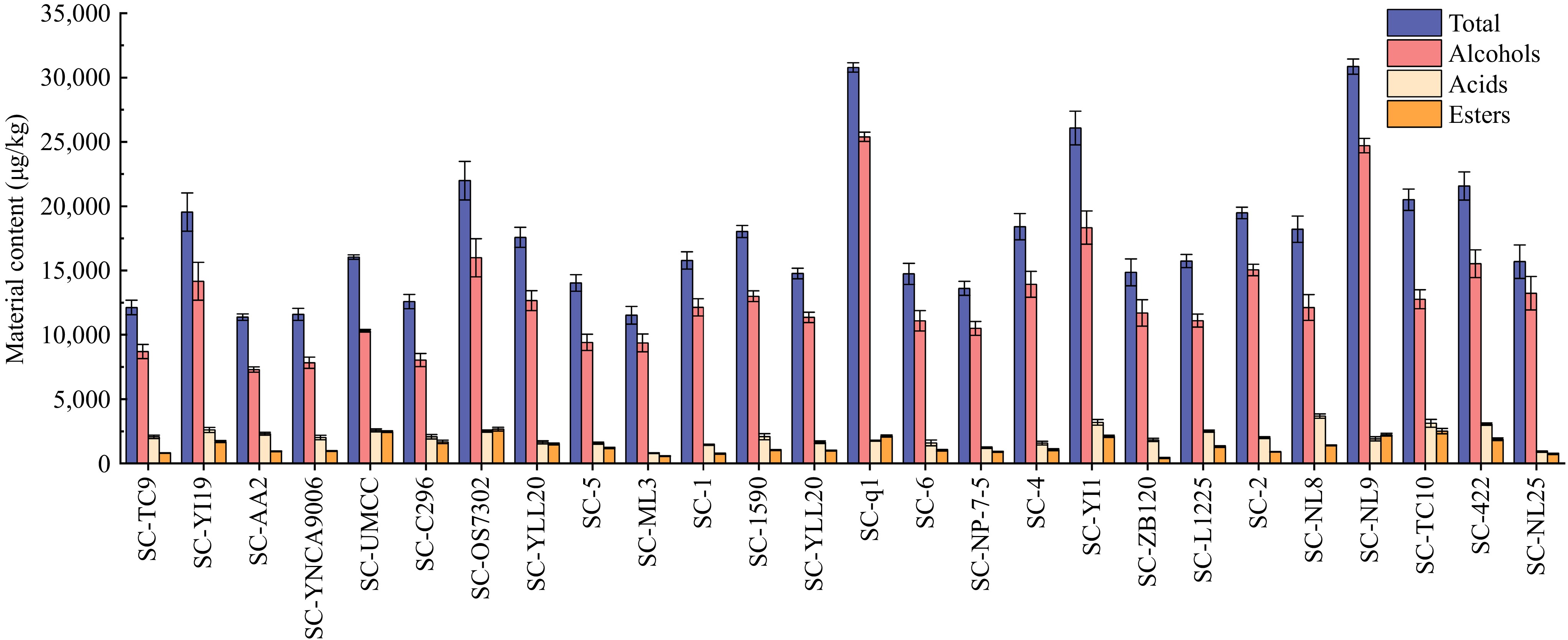
Figure 1.
Comparison of total contents of aroma components, alcohols, acids, and esters in fermentation broths of different strains.
Physicochemical property analysis of Huangjiu fermented with selected aroma-producing yeast strains
-
Samples inoculated solely with Angel Yeast (a commercial distiller's yeast, Angel Yeast Co., Ltd.) were designated as sample S1, representing mechanizedly brewed Huangjiu that is typically produced with a single commercial strain. In contrast, samples in group S6 were inoculated with a combination of wheat Qu (a traditional saccharifying-fermenting agent for Huangjiu) and Jiumu (an artificial yeast culture rich in indigenous yeast strains, specifically formulated for traditional Huangjiu production), representing traditionally brewed Huangjiu, which is characteristically produced with a mixed microbial culture. Three selected S. cerevisiae strains were individually co-inoculated with Angel Yeast for simulated Huangjiu production, yielding the following groups: group S2 (S. cerevisiae OS7302 + Angel Yeast), group S3 (S. cerevisiae q1 + Angel Yeast), group S4 (S. cerevisiae NL9 + Angel Yeast), and group S5 a 1:1:1 inoculation volume mixture of the three S. cerevisiae strains + Angel Yeast).
The key physicochemical indices of simulated fermented Huangjiu samples across different groups were compared to evaluate whether the products meet the National Standards of China for Huangjiu, and to verify their compliance (Table 2). Total acid content was commonly used as an indicator for assessing the organic acid content in Huangjiu[31]. The total acidity content in all groups ranged from 5.12 to 6.92 g/L, fully complying with the GB/T 13662-2018. Similarly, the amino acid nitrogen and total sugar contents of all groups met the specifications of GB/T 13662-2018. The total acid content in group S5 reached 6.74 g/L on average, closely approaching the 6.92 g/L observed in group S6 (the traditional fermentation control). Specifically, the amino acid nitrogen content in mixed-fermented groups was significantly higher than that in group S1, and closely approached the levels observed in group S6, while, notably, the total sugar levels in groups S2 and S4 were higher than those in group S1. These results indicated that protein hydrolysis was more intense in groups S2 to S6, and that sugar metabolism was enhanced in groups S2 and S4, compared with simulated mechanized brewed Huangjiu[32]. Furthermore, since the total sugar content of all samples was below 15 g/L, all samples were classified as dry-style Huangjiu according to GB/T 13662-2018. The average pH values across the groups ranged from 3.55 to 3.76, which also conforms to this standard.
Table 2. Differences in the physicochemical indices of fermented Huangjiu among different groups.
Group Total acidity (g/L) Amino acid
nitrogen (g/L)Total sugar (g/L) pH S1 6.29 ± 0.01c 0.31 ± 0.01d 4.40 ± 0.56bc 3.56 ± 0.03b S2 5.37 ± 0.07e 0.33 ± 0.02cd 5.40 ± 0.28b 3.58 ± 0.06b S3 5.59 ± 0.04d 0.36 ± 0.01bc 3.80 ± 0.28c 3.68 ± 0.05a S4 5.15 ± 0.04f 0.37 ± 0.010b 4.80 ± 0.57bc 3.76 ± 0.03a S5 6.74 ± 0.04b 0.39 ± 0.02b 4.00 ± 0.57c 3.55 ± 0.01b S6 6.92 ± 0.05a 0.60 ± 0.01a 11.00 ± 0.28a 3.75 ± 0.01a 1 Values with different letters (a−d) in the same column indicate significant differences (p < 0.05). Analysis of the growth curve and tolerance of Saccharomyces cerevisiae
-
The fermentation environment of Huangjiu is characterized by high osmotic pressure (high sugar), high acidity, and high ethanol concentration; therefore, it is essential to evaluate the environmental stress tolerance of S. cerevisiae. The growth kinetics of the three S. cerevisiae strains were initially characterized (Fig. 2a). All strains exhibited consistent growth patterns, entering the exponential phase after a lag period of approximately 2 h. Following 12 h of vigorous proliferation, the growth rate decelerated as the cells transitioned into the stationary phase. All strains displayed strong tolerance to high glucose concentrations (Fig. 2b). A general positive correlation was observed between glucose concentration (50–80 g/L) and biomass accumulation. However, q1 and NL9 peaked at 80 g/L and declined slightly at 90 g/L, and OS7302 exhibited a continuous increasing trend even at 90 g/L, suggesting superior osmotolerance. Ethanol tolerance assays revealed a concentration-dependent inhibitory effect on cell growth (Fig. 2c). While all strains maintained normal metabolic activity at ethanol concentrations below 12% (v/v), growth was significantly suppressed when concentrations exceeded this threshold. Notably, strain NL9 demonstrated superior robustness compared to OS7302 and q1 at 12% ethanol, indicating a potential advantage for high-alcohol fermentation. In terms of acidity, extremely low pH exerted a severe inhibitory effect (Fig. 2d). Growth was almost completely suppressed at pH 2.0. However, a rapid recovery was observed as pH increased to 2.5. All strains maintained high and stable biomass within the pH range of 3.0 to 4.0, with strain OS7302 achieving its maximum biomass at pH 3.0.
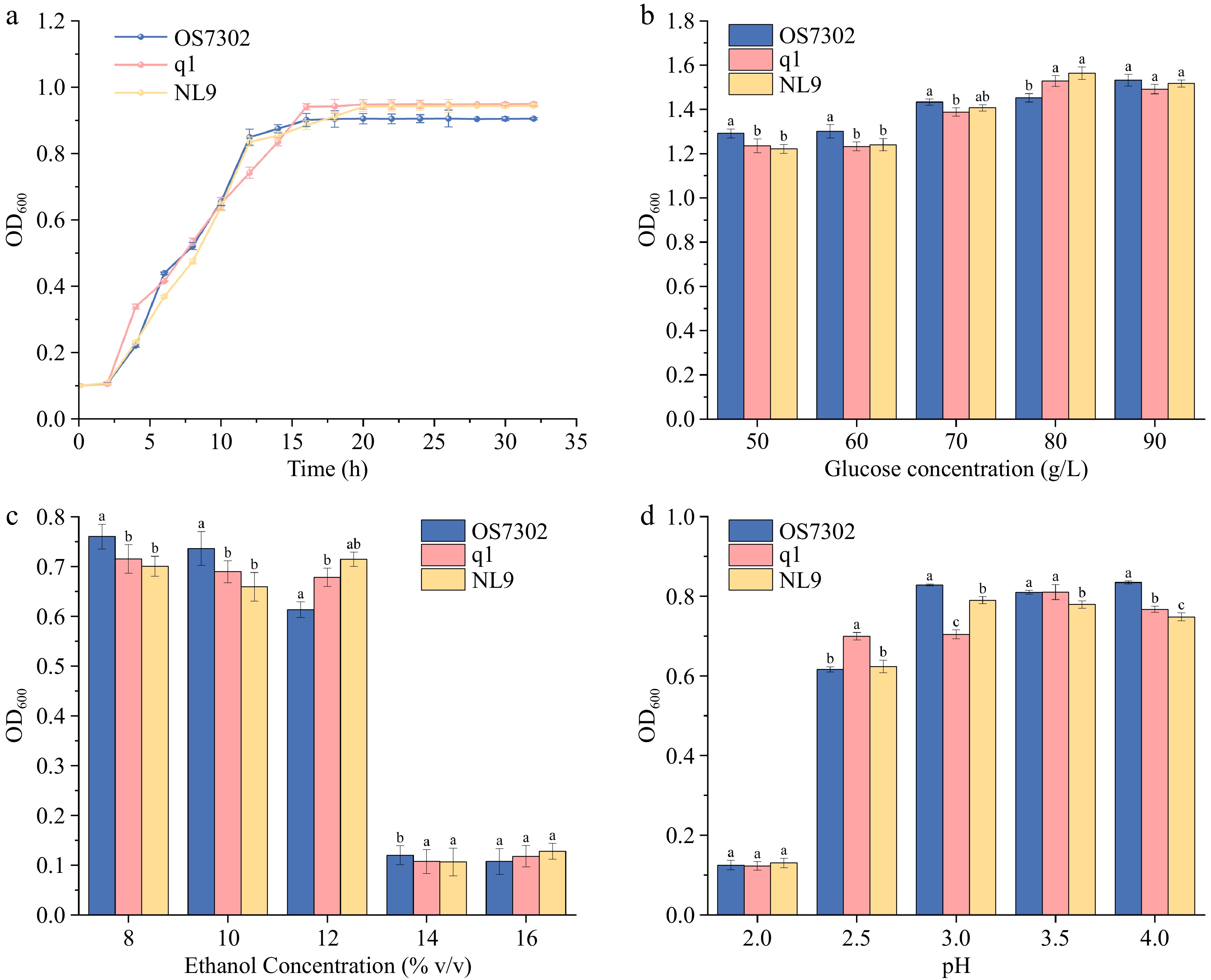
Figure 2.
Growth curves and stress tolerance analysis of S. cerevisiae strains. (a) Growth curves; (b) high-glucose tolerance; (c) ethanol tolerance; (d) pH tolerance.
Differences in aroma characteristics of Huangjiu fermented with selected aroma-producing S. cerevisiae strains
-
Volatile aroma compounds in the simulated mechanized Huangjiu (S1), simulated traditional Huangjiu (S6), and four experimental groups were characterized by SPME–GC–MS to determine their compositional profiles. A total of 36 volatile compounds were identified, comprising 15 esters, nine alcohols, three aldehydes, three phenols, three acids, and three other compounds (Fig. 3a). Compared with simulated traditional Huangjiu (S6), simulated mechanized Huangjiu (S1) showed a significant difference in the content of esters and higher alcohol compounds. The content of alcoholic volatile compounds in groups S2 to S5 was significantly higher than those in group S1. Notably, alcoholic volatile compound content in group S4 (81.07 mg/kg) was nearly identical to that in group S6 (81.60 mg/kg). Phenylethanol, iso-butanol, and 2,3-butanediol were important higher alcohol components in Huangjiu[20,33]. Phenylethanol exhibited the highest content among the alcohol compounds, followed by 3-methyl-1-butanol. The contents of isobutyl alcohol and 2,3-butanediol in groups S3 and S4 also significantly increased relative to group S1. Esters were typically the second most abundant flavor compounds in Huangjiu, after alcohols[34]. Esters were largely responsible for the fruity, candy, and perfume-like aromas in Huangjiu[29]. The concentrations of volatile ester compounds, including ethyl hexanoate, isoamyl acetate, and 4-vinyl-2-methoxyphenol in group S2 were significantly higher than those in group S1 and slightly higher than those in group S6, thereby narrowing the gap in ester-based flavor compared to traditional Huangjiu. Additionally, its higher alcohols and aldehydes contents showed a slight increase compared to group S1. The lower alcohol concentration in group S2 may be due to a more efficient ester metabolism pathway, which utilizes alcohols and acids in esterification reactions, leading to higher ester concentrations and lower alcohol levels[35]. Groups S3 and S4 showed high similarity in volatile flavor compound profiles, characterized by elevated concentrations of alcohols, acids, and other substances, including 1-nonanol, 3-methyl-1-butanol, acetic acid, 1-propanol, hexanoic acid, octanoic acid, phenylethanol, and 2,3-butanediol. In contrast, the volatile compounds in group S2 were predominantly esters, phenols, and small amounts of aldehydes, including ethyl hexanoate, isoamyl acetate, ethyl octanoate, phenylacetaldehyde, phenylethyl acetate, ethyl laurate, and γ-nonalactone. These ester, phenol, and aldehyde volatile compounds collectively contribute to the multi-layered and complex fragrance in Huangjiu[10]. Although group S5 was fermented with a mixture of three strains, its ester concentration was lower than that in group S2. Similar findings have been reported in red wine fermentation, where the presence of multiple aroma-producing microorganisms does not necessarily guarantee enhanced aroma production. This outcome is potentially attributable to the interactions among the three yeast strains[36].
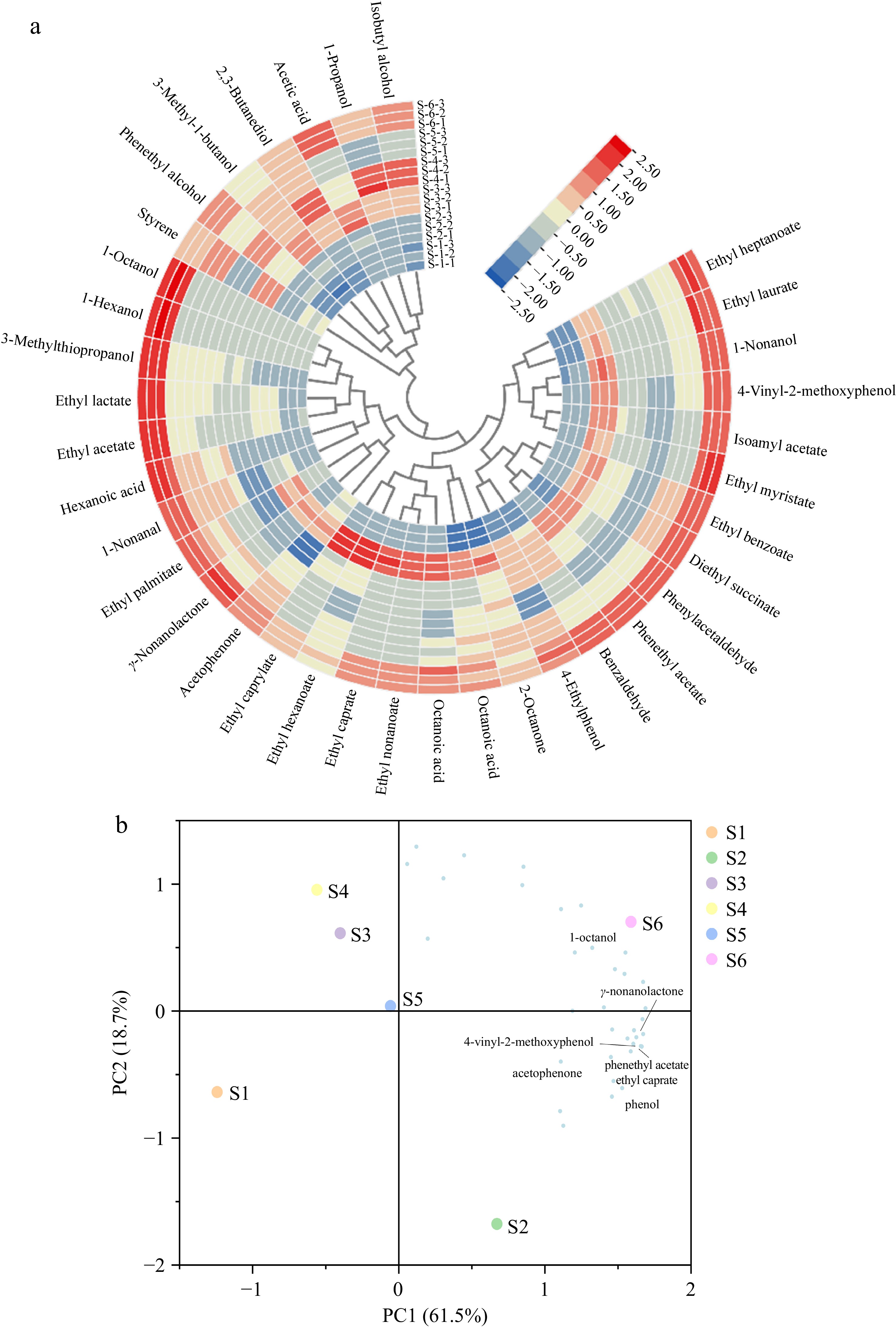
Figure 3.
The differences in volatile flavor compounds of the S1 to S6 groups. (a) Heatmap of volatile flavor compounds. (b) Principal component analysis of volatile flavor compounds and fermentation of Huangjiu with different bacterial communities.
PCA is an unsupervised method based on the principle of dimensionality reduction, which uses a small number of integrated variables (i.e., principal components) to represent the original complex multivariable and visualize the data[37]. PCA was used to analyze the correlation between the 36 volatile flavor compounds and the samples in groups S1 to S6. From the PCA results, it can be seen that the flavor profiles of groups S3, S4, and S5 were similar. The results of the PCA revealed significant differences between S1, S2, and S6. S2 was closely associated with ester-based flavor compounds, but showed no significant correlation with other substances, as the levels of non-ester flavor substances in S2 were relatively low. In contrast, S6 exhibited a strong correlation with multiple flavor compounds, likely due to the wider variety of flavor substances present at relatively high concentrations (Fig. 3b).
OAVs can provide additional information to assess the aroma contribution of each volatile compound[38]. The OAVs of the 36 aromatic compounds were calculated based on the concentration-to-threshold ratio. The results showed that only 15 compounds have OAVs ≥ 1, including nine esters, two aldehydes, phenylethyl ketone, 4-vinyl-2-methoxyphenol, 2-octanone, and phenylethanol (Fig. 4). Among them, ethyl caprylate has the highest OAV, followed by phenylacetaldehyde and 4-vinyl-2-methoxyphenol. Despite the high concentrations of alcohols, only phenylethanol has an OAV ≥ 1, as alcohols generally have higher threshold values[39]. This indicated that phenylethanol was the most critical alcohol-derived aromatic compound in the simulated fermentation broth of Huangjiu with the strains OS7302, NL9, and q1. In group S1, the key aromatic compounds were present at relatively low concentrations, with eight esters (OAV > 1) being the most important. Esters were primarily formed during fermentation through the esterification of alcohols and fatty acids by microorganisms, or synthesized via alcohol acetyltransferase[40]. Although the microbial community in S1 was relatively simple, esters were more readily produced than other flavor compounds under microbial activity. The concentration of key flavor compounds in S1 samples, fermented exclusively with Angel Yeast, was significantly lower than that in S2 samples, which was fermented with a mixture of Angel Yeast and S. cerevisiae OS7302. Furthermore, the ester concentrations in S3 and S4 samples were not as prominent as in S2 samples. This may be due to the higher activity of alcohol acetyltransferase in OS7302 compared to NL9 and q1[41]. The concentrations of the five key aromatic compounds, including ethyl laurate, isoamyl acetate, phenethyl acetate, phenylacetaldehyde, and 4-vinyl-2-methoxyphenol in group S2 were similar to those in group S6. Among them, phenethyl acetate is identified as a key aroma compound in Jiujiang Fenggang Huangjiu[26]. Moreover, the concentrations of four aromatic compounds, including ethyl nonanoate, ethyl caprate, ethyl hexanoate, and ethyl caprylate, were significantly higher in S2 samples compared to S6 samples. Ethyl hexanoate is one of the key ester compounds in Hongqu Huangjiu[11]. It suggested that the flavor profile of S2 samples closely overlapped with those of the traditionally brewed Huangjiu (S6), with a slight advantage in terms of floral and fruity aromas. However, OAVs are merely theoretical indices derived from sensory thresholds. To validate the actual olfactory contributions of these key compounds, additional validation via GC–O is required.
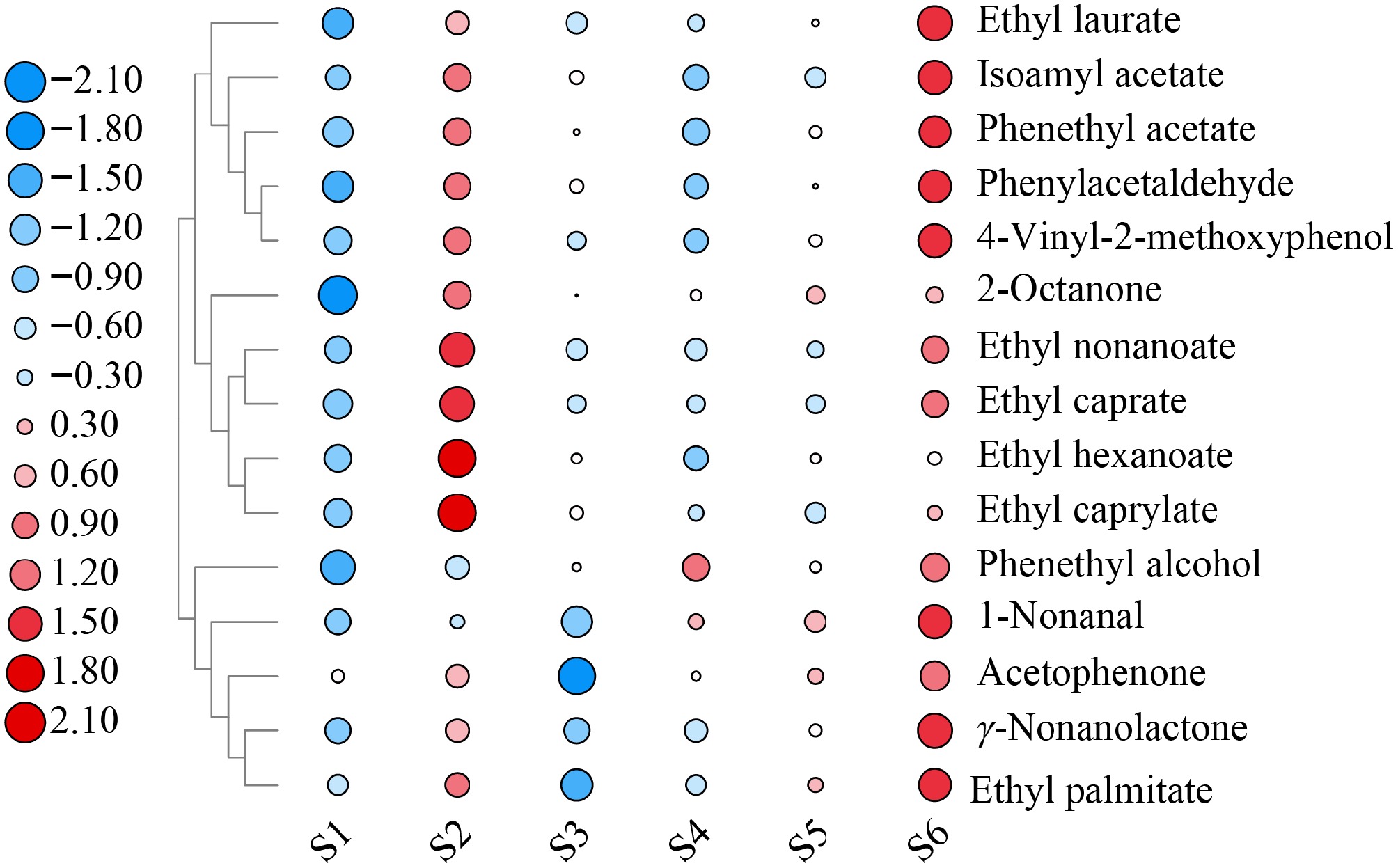
Figure 4.
Heatmap showing the concentration of compounds with OAV ≥ 1. The 15 key aroma compounds were selected from the 36 detected aroma compounds based on an OAV ≥ 1. (Compounds with an OAV ≥ 1 were considered key aroma components in the sample).
GC–O analysis among the samples analyzed by multivariate data analysis
-
Aroma intensity was an important indicator for evaluating the flavor of Huangjiu[20]. GC–O can be used to verify the accuracy of OAV measurements and determine the aroma intensity of key aroma compounds. The detectability of the 15 previously identified key aroma compounds with OAV ≥ 1 was assessed through GC–O analysis, along with the evaluation of their aroma intensity (Fig. 5). By calculating the average aroma intensity of various compounds, it was found that phenylethanol exhibited the highest aroma intensity, achieving the highest score among all volatile aroma compounds detected in groups S1 to S6. This compound imparts a floral, slightly bitter note to Huangjiu[42]. 3-methylbutanol, as the second-highest-scoring aroma compound, was derived from leucine in Huangjiu and presented a fruity aroma with slight spiciness, and a touch of burnt bitterness[43]. Ethyl laurate and ethyl caprate also achieved high aroma scores; however, their concentrations in Huangjiu were relatively low, which corresponded to their high OAV values. Strains, raw materials, ratios, and fermentation control processes all have a significant impact on the production of these aroma compounds[44,45]. S2 samples had aroma intensity scores for the 15 key aroma compounds that were closest to those of S6 samples, even surpassing S6 samples in the scores for compounds such as ethyl caprate and ethyl caprylate. Among these, γ-nonalactone provides a rich coconut fragrance to Huangjiu[10]. The overall aroma intensity score of S5 samples was slightly higher than that of S3 and S4 samples, with the intensity of 1-nonanal ranking second only to that in S6 samples. This was consistent with the previously presented OAV results.
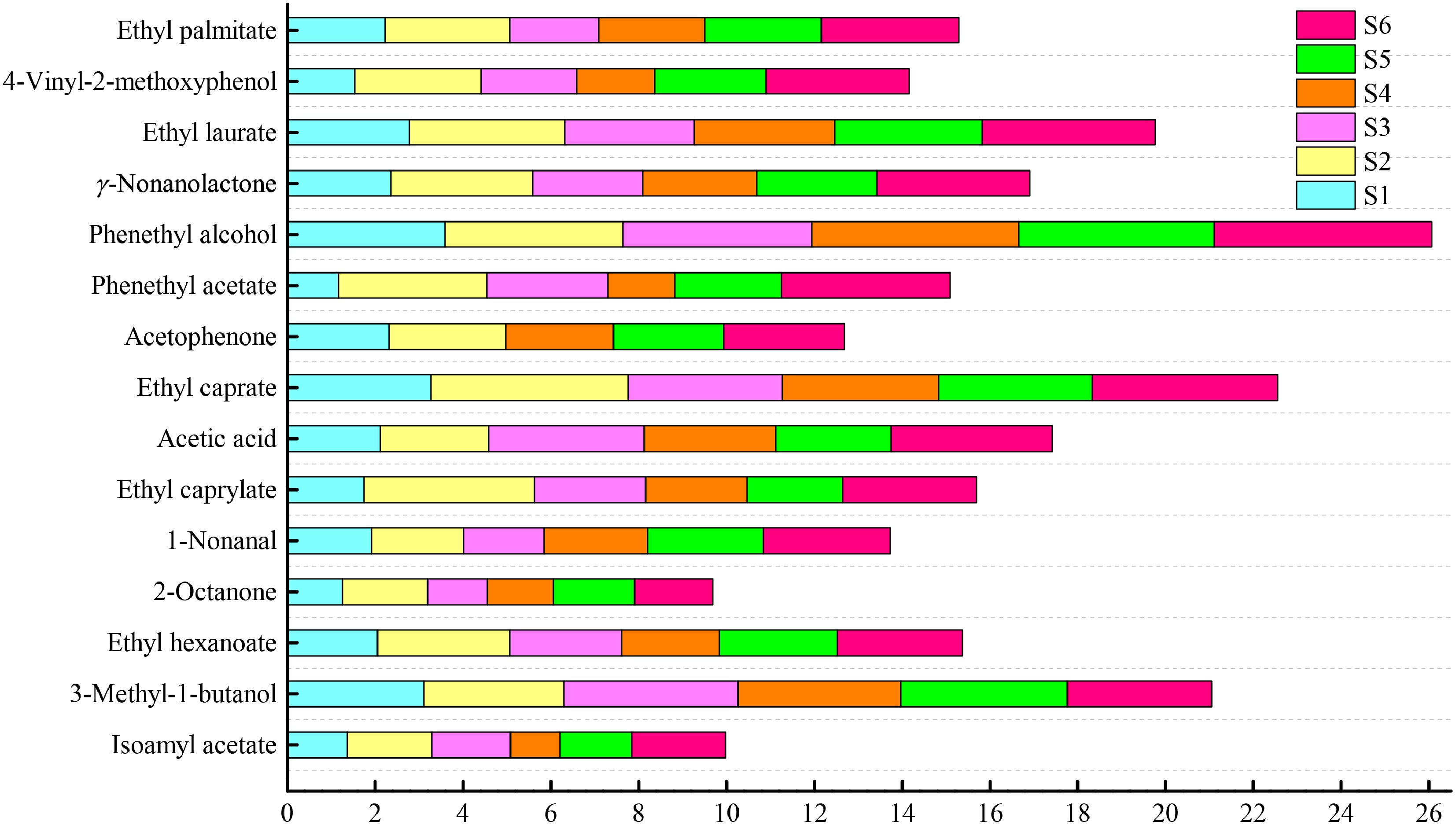
Figure 5.
GC–O aroma intensity comparison chart.
Sensory quality analysis of Huangjiu fermented with different strains
-
To better evaluate the flavor differences among various strains of fermented Huangjiu, a quantitative descriptive sensory evaluation was conducted (Fig. 6). It was evident that the overall aroma intensity of the group S6 was the highest. Significant differences were observed between group S6 and the other five groups in terms of sour, ester, and sweet aromas. This was because the S6 samples simulated the fermentation microbial community of traditional Huangjiu, which exhibited complex metabolic pathways and intense metabolic activity, thereby resulting in higher concentrations of flavor compounds. Previous studies have shown that the alcoholic and sweet aromas in traditional Huangjiu were significantly more intense than those in modern mechanized Huangjiu, resulting in superior overall aroma quality[34]. The fruit aroma and ester aroma of the S2 samples were comparable to the aroma intensity of the S6 samples, with the ester aroma of the S2 samples being even more intense than that of the S6 samples. This may result from the high concentration of ester aroma compounds[9]. Additionally, the sauce aroma score of the S2 sample was the highest, though no significant differences were found between the S2 sample and the samples of the other five groups. This finding corroborated the results obtained from the previous GC–MS analysis.
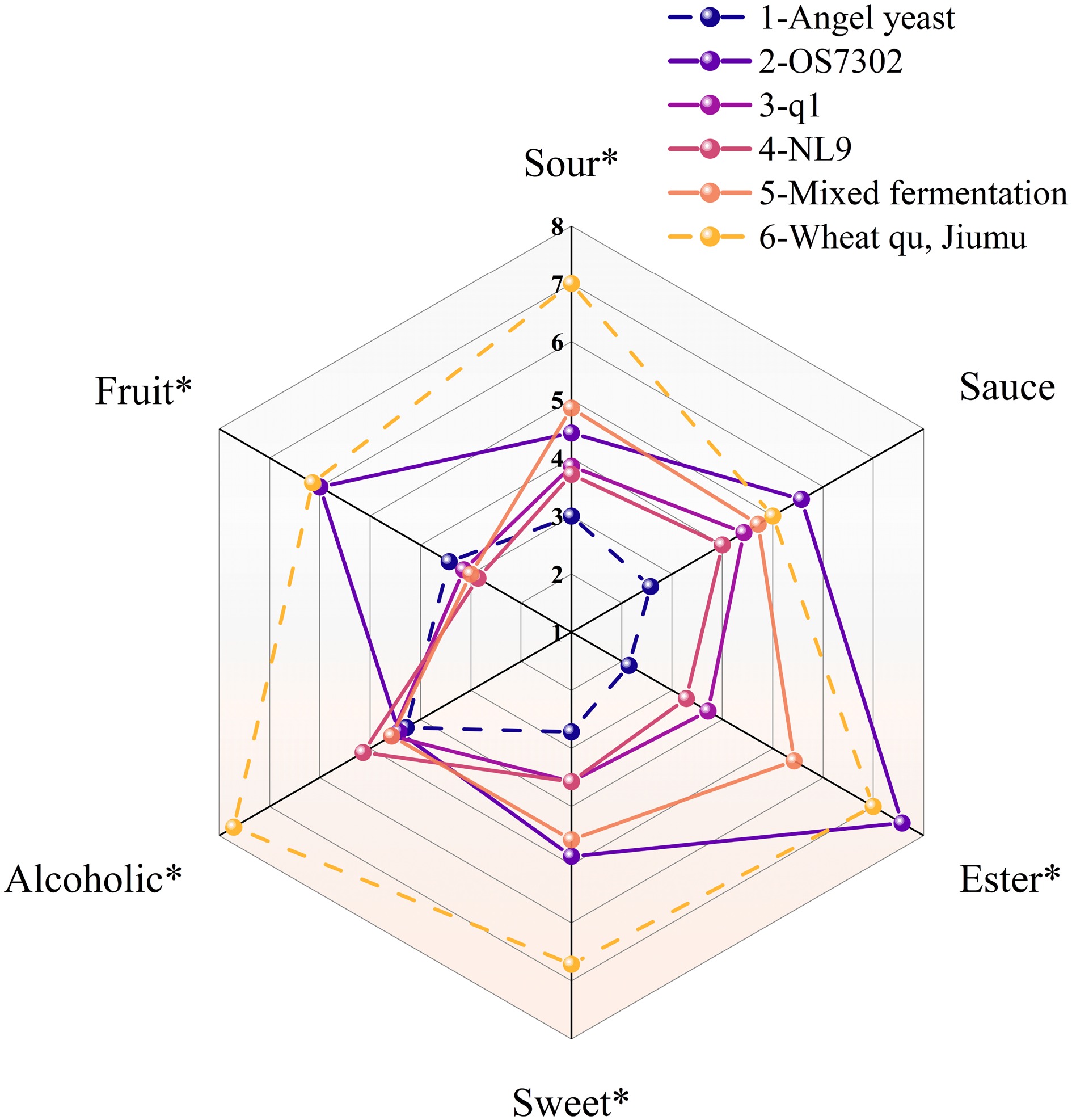
Figure 6.
Radar chart of aroma sensory evaluation of Huangjiu fermented by different strains.
-
In this work, three S. cerevisiae strains with strong aroma-producing abilities, OS7302, NL9, and q1, were isolated and selected from the fermentation mash of traditional Huangjiu. Physicochemical analysis, GC–MS, GC–O analyses, and sensory evaluation demonstrated that separate inoculation with these S. cerevisiae effectively improved the flavor profile of mechanized Huangjiu, making it more comparable to that of traditional Huangjiu. Inoculation with S. cerevisiae OS7302 can increase esters, while NL9 and q1 can enhance the content of alcohols. Sensory evaluation further confirmed the positive impact of S. cerevisiae OS7302 on the fruit and ester aroma. In summary, this study provides insights into the application of aroma-producing strains isolated from traditional Huangjiu for addressing the issue of aroma quality in mechanized Huangjiu production. Compared to the single-strain fermentation (especially OS7302), the mixed-culture fermentation resulted in lower concentrations of key esters and less prominent fruity aroma characteristics, failing to show a synergistic effect. The interaction mechanisms among these three S. cerevisiae strains remain unclear. Therefore, future research should focus on elucidating these interactions to provide theoretical guidance for developing efficient multi-strain starters for mechanized Huangjiu.
The research was supported by the National Natural Science Foundation of China (No. 32172336), and the Shanghai Engineering Technology Research Center of Shanghai Science and Technology Commission (No. 20DZ2255600).
-
This study was conducted in strict accordance with the principles of the Declaration of Helsinki and involved human subjects in its sensory evaluation phase. The experimental protocol was reviewed and approved by the Shanghai Institute of Technology University Medical Ethics Committee (No. SIT-2025-LL32). Informed consent was obtained from all participants prior to their involvement in the study. Each participant provided written consent via a signed consent form. Before consent was obtained, the investigators provided all prospective participants with a clear, thorough, and sufficient explanation of the study to ensure they were fully informed before deciding whether to participate.
-
The authors confirm their contributions to the paper as follows: conceptualization: Yu H; methodology: Yu H, Zhong Z; resources: Yu H, Chen C; formal analysis: Yu H, Zhong Z, Guo W; writing − review and editing: Yu H, Pan X, Tian H, Chen Q; investigation: Zhong Z; writing − original draft: Yu H, Zhong Z; data curation, visualization: Guo W, Li Q; supervision, project administration: Chen C; project administration: Tian H. All authors reviewed the results and approved the final version of the manuscript.
-
The datasets generated during and analyzed in the current study are available from the corresponding author on reasonable request.
-
The authors declare that they have no conflict of interest.
-
accompanies this paper online at: https://doi.org/10.48130/fia-0026-0018.
- Supplementary Tables S1 The content (μg/kg) of volatile flavor compounds in simulated fermentation broth of different Saccharomyces cerevisiae strains.
- Supplementary Tables S2 The content (μg/kg) of volatile flavor compounds in simulated fermentation broth of different Saccharomyces cerevisiae strains.
- Supplementary Tables S3 The content (μg/kg) of volatile flavor compounds in simulated fermentation broth of different Saccharomyces cerevisiae strains.
- Copyright: © 2026 by the author(s). Published by Maximum Academic Press on behalf of China Agricultural University, Zhejiang University and Shenyang Agricultural University. This article is an open access article distributed under Creative Commons Attribution License (CC BY 4.0), visit https://creativecommons.org/licenses/by/4.0/.
-
About this article
Cite this article
Yu H, Zhong Z, Guo W, Li Q, Chen C, et al. 2026. Screening of aroma-producing Saccharomyces cerevisiae strains and their effects on the flavor profiles of mechanized Huangjiu. Food Innovation and Advances 5(2): 261−270 doi: 10.48130/fia-0026-0018 

Screening of aroma-producing Saccharomyces cerevisiae strains and their effects on the flavor profiles of mechanized Huangjiu
- Received: 15 December 2025
- Revised: 17 March 2026
- Accepted: 18 March 2026
- Published online: 19 May 2026
Abstract: Mechanized Huangjiu (Chinese rice wine) is characterized by a stable flavor quality and short fermentation time, yet its flavor quality is inferior to that of traditional Huangjiu. Given the significant market demand for high-quality mechanized Huangjiu and the existing flavor quality gap, this study aimed to isolate and identify highly efficient aroma-producing yeasts from the fermentation mash of traditional Huangjiu for application in mechanized Huangjiu production. From 26 isolated strains, three Saccharomyces cerevisiae strains (OS7302, q1, and NL9) were selected based on their high aroma production capacity in simulated fermentation media. Gas chromatography-mass spectrometry (GC–MS), gas chromatography-olfactometry (GC–O), sensory evaluation, and physicochemical analysis were then combined to systematically verify their abilities to produce aroma compounds. In co-fermentation with mechanized starter cultures, S. cerevisiae OS7302 induced significant increases in the concentrations and aroma intensities of key esters, including ethyl hexanoate, ethyl caprate, and ethyl caprylate, thereby generating an ester aroma profile of mechanized Huangjiu comparable to that of traditional Huangjiu. Furthermore, Huangjiu fermented with S. cerevisiae OS7302 exhibited more intense fruit and ester aromas. In contrast, strains q1 and NL9 promoted the formation of higher alcohols. The use of aroma-producing S. cerevisiae as adjunct cultures for co-fermentation with mechanized starter cultures can improve the flavor quality of mechanized Huangjiu, alleviating the flavor gap between mechanized and traditional Huangjiu.
-
Key words:
- Mechanized Huangjiu /
- Saccharomyces cerevisiae /
- Aroma compounds /
- GC-MS