











-
Blue honeysuckle (Lonicera caerulea L.), widely recognized by the common names haskap and honeyberry, is a boreal–temperate deciduous shrub with a natural range extending across Northeastern China, Northwestern Russia, Northern Japan, and North America[1]. Its fruits are oblong or irregularly cylindrical, characterized by a distinctive sweet-sour flavor, and are rich in bioactive constituents such as polyphenols, vitamins, and minerals. In 2018, blue honeysuckle was officially included in the European Union's Novel Food Catalogue, which has further promoted its development and application in the food and nutraceutical industries[2]. Blue honeysuckle is rich in polyphenolic compounds, particularly anthocyanins and other phenolic constituents, which have been reported to exhibit a wide range of physiological activities, including antioxidant, anti-inflammatory, antimicrobial, antiglycation, and antiproliferative effects[3]. Additionally, these bioactive compounds are believed to play a potential role in preventing various chronic diseases, such as cardiovascular disease, type 2 diabetes, and obesity[4]. In particular, the antimicrobial properties of phenolic compounds have been widely documented, primarily attributed to their ability to disrupt microbial cell membranes and interfere with intracellular metabolic processes[5]. Palíková et al. reported that freeze-dried blue honeysuckle fruits and their phenolic fractions significantly reduced biofilm formation and adhesion on artificial surfaces of Candida parapsilosis, Staphylococcus epidermidis, Escherichia coli, Enterococcus faecalis, and Streptococcus mutans[6]. These findings collectively suggest that phenolic-rich matrices possess strong potential as natural antimicrobial agents. Moreover, polyphenols have been shown to inhibit key digestive enzymes, such as α-amylase and pancreatic lipase, which are critical targets for controlling postprandial hyperglycemia and lipid metabolism. Zhang et al. systematically evaluated the polyphenol content, antioxidant capacity, and α-amylase inhibitory activity of 20 blue honeysuckle cultivars[7], further supporting the functional relevance of these compounds. However, despite these advances, studies focusing on the comparative antimicrobial and enzyme inhibitory activities of blue honeysuckle juice and its processing by-products (e.g., pomace) remain limited, and their relationship with phytochemical composition is not yet fully understood.
With the rapid development of blue honeysuckle processing, the quantity of fruit pomace—a major byproduct—has increased significantly. As of 2023, the global cultivation area of blue honeysuckle exceeded 80,000 mu, and a wide variety of processed products, including juices, jams, and freeze-dried powders, have been developed[8,9]. Nonetheless, a substantial number of phenolic compounds and dietary fiber remain in the pomace after processing, and their nutritional and functional properties have not yet been fully explored. Previous studies have primarily compared the effects of different processing methods on the antioxidant capacity of blue honeysuckle pomace[9]. Xiao et al. further researched the non-extractable polyphenols in blue honeysuckle pomace[10]. However, a comprehensive comparative analysis of the active components, bioactivities, and antibacterial potential between juice and pomace remains lacking.
Therefore, this study systematically examined the bioactive properties of blue honeysuckle juice and pomace, clarifying their potential for value-added applications. Specifically, the aims of this study were to: (1) quantify the contents of total phenolics and anthocyanins in both juice and pomace extracts; (2) evaluate and compare their antioxidant capacities using DPPH, ABTS, and FRAP assays; (3) assess their inhibitory effects on pancreatic lipase and α-amylase; and (4) investigate their antibacterial and anti-biofilm activities against S. aureus and E. coli.
-
Fresh blue honeysuckle fruit was sourced from the Northeast Agricultural University and used for subsequent analyses (Fig. 1a–k). A total of 200 g of fruit from 11 different cultivars was combined with 50 mL of deionized water and processed using a pulper (Midea, MJ-WBL25B36, China) for 2 to 2.5 min. The homogenate was filtered through a 100-mesh sieve to separate the liquid fraction (juice) from the solid residue (pomace). Juice samples were stored at −20 °C, while the pomace was freeze-dried using a lyophilizer (Thermo Scientific, Heto Power Dry LL3000, USA). For extraction, 4 g of freeze-dried pomace was extracted with 30 mL of 80% methanol. The mixture was agitated on a shaker (Shumei, KQ3200DE, Kunshan, China) at 200 rpm for 2 h at 4 °C and centrifuged at 8,000 × g for 10 min (Cence, H1750R, China). The collected supernatant was evaporated under vacuum at 40 °C using a rotary evaporator (Yarong, RE-52, Shanghai, China) to obtain crude pomace extracts of blue honeysuckle for further analyses.
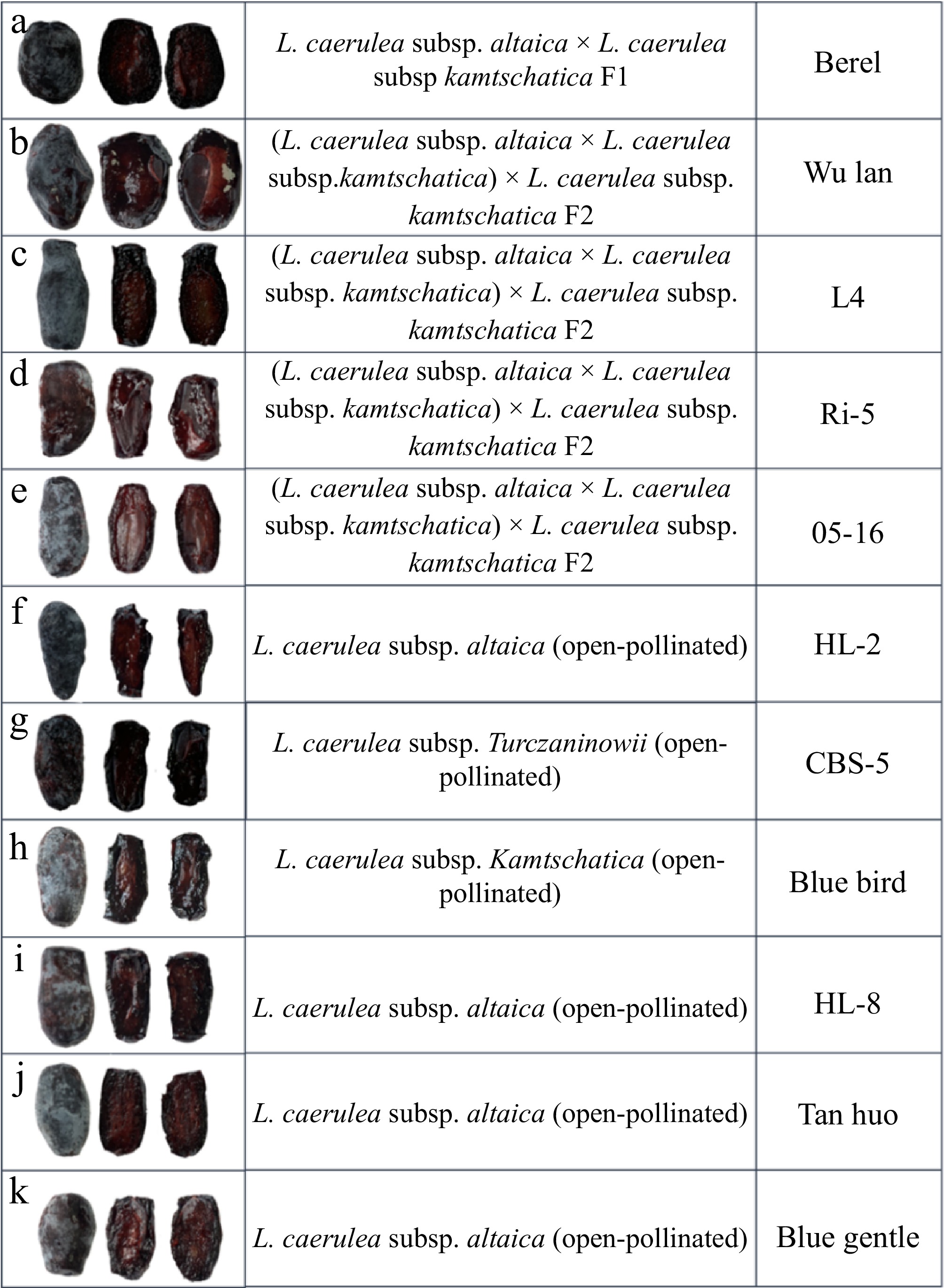
Figure 1.
Overview of blue honeysuckle cultivars and their pedigree information.
Determination of total phenolic content (TPC)
-
The TPC of blue honeysuckle was analyzed using a modified Folin–Ciocalteu colorimetric method[11]. Gallic acid served as the calibration standard, and absorbance was recorded at 765 nm using a microplate reader (Epoch2, BioTek, USA). Results were expressed as milligrams of gallic acid equivalents per gram of crude extract (mg GAE/g).
Determination of total anthocyanin content (TAC)
-
The TAC in blue honeysuckle juice and pomace was assessed using a modified pH differential spectrophotometric technique[7]. TAC was estimated based on the absorbance change at the two pH conditions and reported as cyanidin-3-glucoside equivalents. Measurements of absorbance at 510 and 700 nm were performed using a microplate reader.
Determination of antioxidant capacity
DPPH assay
-
The DPPH free radical scavenging capacity was assessed using a method by Brand-Williams et al.[12]. Results were expressed as micromoles of Trolox equivalents per gram of dry weight (μmol TE/g DW).
ABTS assay
-
The ABTS assay was performed following a published method[13], and results were expressed as micromoles of Trolox equivalents per gram of dry weight (μmol TE/g DW).
Ferric reducing antioxidant power (FRAP) assay
-
The FRAP assay was carried out with minor adjustments to the method outlined by Benzie & Strain[14]. The mixture was monitored continuously for 30 min, and results were expressed as μmol Trolox equivalents per gram of dry weight (μmol TE/g DW).
Determination of anti-α-amylase activity
-
The α-amylase inhibitory activity of blue honeysuckle fruit and pomace was measured as described[11]. A 0.1 M Na3PO4 (pH 6.9) with 40 mg/L CaCl2 solution was prepared. Starch solution (20 mg/mL) was gelatinized at 100 °C for 2.5 min. Twenty microliters of α-amylase (2 U/mL) were mixed with 20 μL of inhibitors at various concentrations and incubated at 37 °C for 15 min before the reaction. The reaction was started by adding 60 μL of the preheated starch solution, and turbidity was measured at 660 nm for 2 h.
Determination of anti-lipase activity
-
Anti-lipase activity was determined following a previously described method[15], with modifications. Briefly, 1 g of freeze-dried powder was extracted with 10 mL dichloromethane (DCM) by sonication (25 °C, 2 h), centrifuged (1,000 × g, 10 min), and filtered. A 20 μL aliquot of the extract was air-dried, reconstituted in a 150 μL reaction buffer (50 mM sodium phosphate, 5 mM sodium deoxycholate, and 10% isopropanol, pH 8.0), and pre-incubated at 37 °C for 15 min. Lipase solution (10 μL, 10 mg/mL) was then added and incubated for 10 min, and the reaction was initiated by 10 μL of pNPP (1.5 mg/mL in isopropanol). Absorbance at 410 nm was recorded every 60 s for 1 h using a microplate reader.
Evaluation of anti-bacterial activity
Determination of minimum inhibitory concentration (MIC)
-
The MIC was assessed with slight modifications based on established protocols[16]. Cultures of Staphylococcus aureus (S. aureus) and Escherichia coli (E. coli) were adjusted in PBS (pH 7.2) to a final density of 1 × 10⁶ CFU/mL according to the standard growth curve. Blue honeysuckle juice and pomace extracts, dissolved in DMSO, were added (40 μL) to wells containing 160 μL of the bacterial suspension, while wells containing only DMSO served as negative controls. Plates were incubated at 37 °C with continuous shaking at 200 rpm for 24 h. Following incubation, viable colonies were counted on NA plates.
Determination of time-kill curves
-
The time-kill kinetics of blue honeysuckle juice and pomace on S. aureus and E. coli were examined using a modified version of Klepser's method[17]. Briefly, the test sample (40 μL) was combined with bacterial suspension (160 mL) (1 × 10⁶ CFU/mL), yielding final concentrations equivalent to 1/2, 1, and 2 times the MIC. A bacterial suspension without any sample was used as the positive control. The mixtures were incubated at 37 °C for 24 h. The optical density at 600 nm was recorded every 2 h using a microplate reader to evaluate bacterial growth. Viable cell counts (log10 CFU/mL) were recorded, and time-kill curves were constructed by plotting bacterial counts vs incubation time.
Biofilm formation and viability of S. aureus and E. coli
Biofilm formation and treatment
-
Biofilm formation by S. aureus and E. coli was evaluated by a previously established method[18]. Briefly, 40 μL of the test sample was mixed with 160 μL of bacterial suspension and incubated at 37 °C for 24 h. Wells containing bacterial suspension without the test sample served as controls. The wells were washed three times with phosphate-buffered saline (PBS). After air-drying, the biofilms were treated with 200 μL of 1% (w/v) crystal violet and incubated for 30 min. The wells were then washed an additional three times with PBS. Finally, 200 μL of 95% (v/v) ethanol was added to dissolve the remaining stain, and absorbance was measured at 595 nm using a microplate reader.
MTT assay
-
Cellular metabolic activity within the biofilm was evaluated using the MTT reduction assay, following a previously established method[19]. Absorbance was measured at 570 nm using a microplate reader.
Transmission electron microscopy (TEM) observation
-
The ultrastructure was observed via TEM (Hitachi H-7650, Tokyo, Japan). Bacterial suspensions were incubated with varying concentrations of the test sample for 8 h. Cells were collected by centrifugation at 8,000 rpm for 10 min, washed three times with PBS, and fixed in 2.5% glutaraldehyde at 4 °C for 12 h. After fixation, samples were dehydrated through an ethanol gradient and then substituted with tertiary butyl alcohol. Samples were freeze-dried, coated with a conductive gold layer by sputtering, and examined under a scanning electron microscope (SEM) to evaluate surface morphology.
Statistical analysis
-
Analyses were conducted in SPSS Statistics 26.0 (IBM Corp., Armonk, NY, USA), and results are shown as mean ± SD. Data visualization and correlation analysis were performed using OriginPro 2021 and Microsoft Excel 2019. Correlation analysis between variables was conducted using Pearson's correlation coefficient.
-
The total phenolic content (TPC) of juice and pomace from 11 cultivars of blue honeysuckle are presented in Fig. 2. The TPC of pomace (55.86–76.85 mg GAE/g DW) exceeded that of juice (18.58–29.26 mg GAE/g DW) in all cultivars, with the difference being statistically significant (p < 0.05). The cultivar '05-16' exhibited the highest TPC in both juice and pomace among all tested samples, with the TPC of its pomace being 2.6 times higher than that of its juice. Based on the available literature, there are no reports comparing the TPC of blue honeysuckle juice and pomace individually. In the present study, we assessed this difference across 11 cultivars and found that, in all cases, the pomace exhibited significantly higher TPC values than the corresponding juice. This may be due to the retention of polyphenol compounds in the skins, seeds, and fibrous tissues that remain in the pomace during the juice extraction process[18]. Remarkably, TPC in blue honeysuckle pomace not only exceeded the levels found in its juice, but also was higher than that reported for pomace derived from other common berry species. For instance, grape pomace extracts from Romanian white and red grape varieties exhibited total phenolic contents of 17.161 ± 1.346 and 26.654 ± 3.356 mg GAE/g DW, respectively, which were lower than the TPC of the lowest-performing blue honeysuckle pomace cultivar (Tan Huo) in our study. This highlights the exceptionally high phenolic accumulation in blue honeysuckle fruit residues compared with other commonly studied berry and grape byproducts[20]. Raspberry, strawberry, blackcurrant, and chokeberry pomace have reported TPC values of 5.28–13.39 mg GAE/g DW, considerably lower than those observed in the majority of blue honeysuckle pomace samples examined here[21]. These results suggest that blue honeysuckle pomace—often considered a byproduct—is a rich source of polyphenols and holds potential as a raw material for functional food production or antioxidant-rich extract preparation.
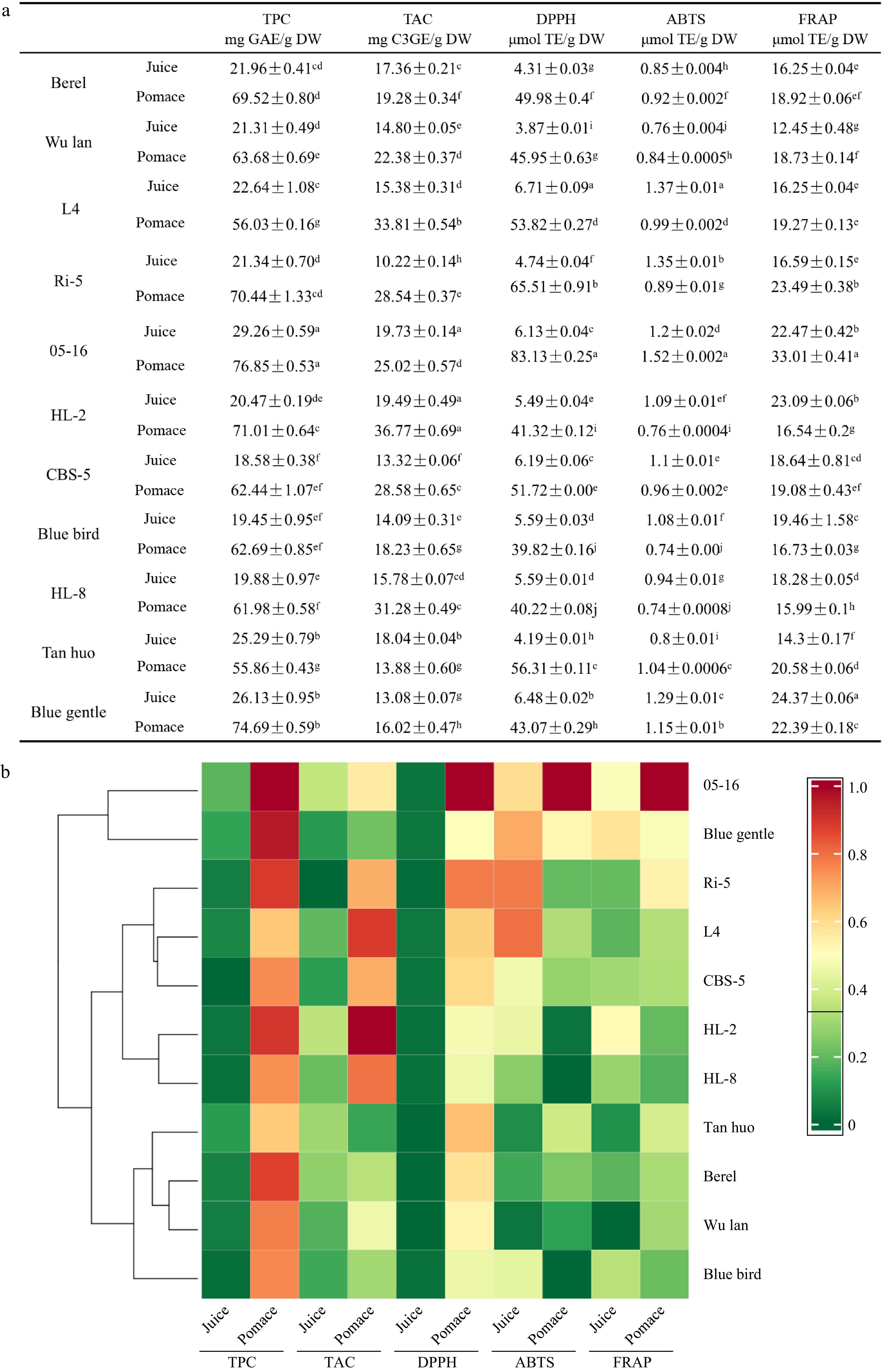
Figure 2.
(a) Values and (b) hierarchical clustering heatmap of TPC, TAC, DPPH, ABTS, and FRAP in juice and pomace of blue honeysuckle. Different lowercase letters indicate significant differences among juices and pomaces of different cultivars analyzed separately, as determined by one-way analysis of variance (ANOVA) at p < 0.05.
Blue honeysuckle pomace (13.88–36.77 mg C3GE/g DW) exhibited a significantly higher TAC level compared with the corresponding juices (10.22–19.73 mg C3GE/g DW, p < 0.05). This difference may be due to the localization of anthocyanins in the peel and cell wall-bound structures, which are largely retained in the pomace during juice extraction[22,23]. Notably, the pomace of 'Ri-5' showed a 2.8-fold higher TAC than its juice counterpart. Among all cultivars, 'HL-2' exhibited the highest TAC in both juice and pomace, indicating a consistently strong anthocyanin profile. This observation agrees with prior reports showing that berry pomace generally retains higher polyphenol and anthocyanin levels than juice, due to limited extractability during pressing[9]. Considering its high anthocyanin content and potential processing stability, 'HL-2' could be an especially valuable source for developing anthocyanin-enriched functional foods or nutraceuticals.
Antioxidant capacity in pomace and juice
-
The antioxidant capacity was assessed through DPPH, ABTS, and FRAP assays (Fig. 2a). Since no single method can comprehensively capture the overall antioxidant potential of fruit due to their complex mixture of antioxidant compounds (e.g., flavonoids, phenolic acids), a multi-assay strategy was adopted to ensure robustness and comparability[24]. Across all three assays, the antioxidant activity of the pomace consistently exceeded that measured in the corresponding juice samples. In the DPPH assay, significant differences (p < 0.05) were observed between pomace and juice among the 11 tested cultivars. Notably, the pomace of cultivar '05-16' exhibited the highest DPPH scavenging activity at 83.13 ± 0.25 μmol TE/g DW—approximately 14 times greater than its corresponding juice. All tested pomace samples demonstrated stronger DPPH activity than their juice counterparts. Comparable trends were observed in the ABTS assay. Again, '05-16' pomace showed the highest value (1.52 ± 0.002 μmol TE/g DW), followed by 'Blue gentle' and 'Tan huo'. Among the juice samples, 'L4', 'Ri-5', and 'Blue Gentle' performed best. Compared to previous reports, such as that by Belin et al., which documented an ABTS value of 0.04 to 1.06 μmol TE/g DW for the medicinal plants of Saskatchewan, the '05-16' pomace in our study exhibited over 1.43-fold higher antioxidant capacity[25]. Additionally, when compared to blackberries, with reported ABTS values of 0.024 μmol TE/g DW, blue honeysuckle demonstrated substantially superior antioxidant potential[26]. The FRAP assay further confirmed these findings, with pomace samples consistently outperforming juice samples across most cultivars. The highest FRAP value was observed in '05-16' pomace, which was approximately 3-fold higher than that of 'Wu Lan' juice. Among juices, 'Blue Gentle' also exhibited relatively strong FRAP activity. To the best of our knowledge, this is the first study to directly evaluate and compare the antioxidant capacity of blue honeysuckle juice and pomace. Bora et al. reported higher FRAP values (46.3 μmol TE/g DW) for whole blue honeysuckle berries. This discrepancy may be attributed to differences in sample composition and processing methods compared with our study[27]. In this study, juice and pomace exhibited FRAP values of 14.30–24.37 and 15.99–33.01 μmol TE/g DW, respectively. Collectively, the consistent superiority of pomace over juice across all antioxidant assays highlights its potential as a rich source of polyphenols. Particularly, the remarkable performance of the '05-16' pomace suggests it may serve as a promising candidate for functional food applications or as a source of nutraceutical and pharmaceutical ingredients.
Based on the normalized values of TPC, TAC, DPPH, ABTS, and FRAP, a hierarchical clustering heatmap (Fig. 2b) was constructed, which further revealed the distribution patterns and similarities among different cultivars and sample types. Among the 11 cultivars, '05-16' and 'Blue gentle' were clustered into the same group and exhibited the strongest antioxidant activity in both juice and pomace, with particularly high levels observed in the pomace, indicating their superior antioxidant potential.
Anti-α-amylase activity
-
α-Amylase plays a central role in starch digestion, producing oligosaccharides and disaccharides that α-glucosidase subsequently converts into glucose in the small intestine[28]. As shown in Figs 3, 4, and Table 1, juices and pomaces from 11 cultivars of blue honeysuckle exhibited dose-dependent inhibition of α-amylase activity. As the concentration increases, the enzyme inhibition rates of all samples show an upward trend. The IC50 values of each extract were determined to compare their potencies. Significant differences exist among the different cultivars at the same concentration. Among the tested samples, the pomace of 'L4' and the juice of '05-16' exhibited the strongest inhibition, with the lowest IC50 values. These results demonstrate that blue honeysuckle contains bioactive compounds with notable α-amylase inhibitory activity. Overall, pomace extracts showed significantly stronger α-amylase inhibition than juices (p < 0.05), with IC50 values ranging from 2.02 to 26.20 μg/mL compared to 39.84 to 342.25 μg/mL for juices, highlighting the potential of blue honeysuckle pomace as a natural hypoglycemic agent. Previous studies have compared α-amylase inhibitory effects among various small berries, including blue honeysuckle, blueberry, and blackcurrant[27]. Notably, blue honeysuckle exhibited the most potent α-amylase inhibition among these berries, with significantly lower IC50 values (2.36 μg/mL) than those of blueberry and blackcurrant[29,30]. This further supports the superior inhibitory potential of blue honeysuckle in modulating postprandial hyperglycemia. In addition, the IC50 values of pomace extracts reported in the present study (2.02 μg/mL for cultivar 'L4') are comparable to, or even lower than, those previously published, indicating consistency with earlier findings and reinforcing the reliability of our results. These results indicate that blue honeysuckle, especially its pomace, may serve as a valuable resource for developing functional food ingredients or nutraceuticals targeting dietary intervention in type 2 diabetes.
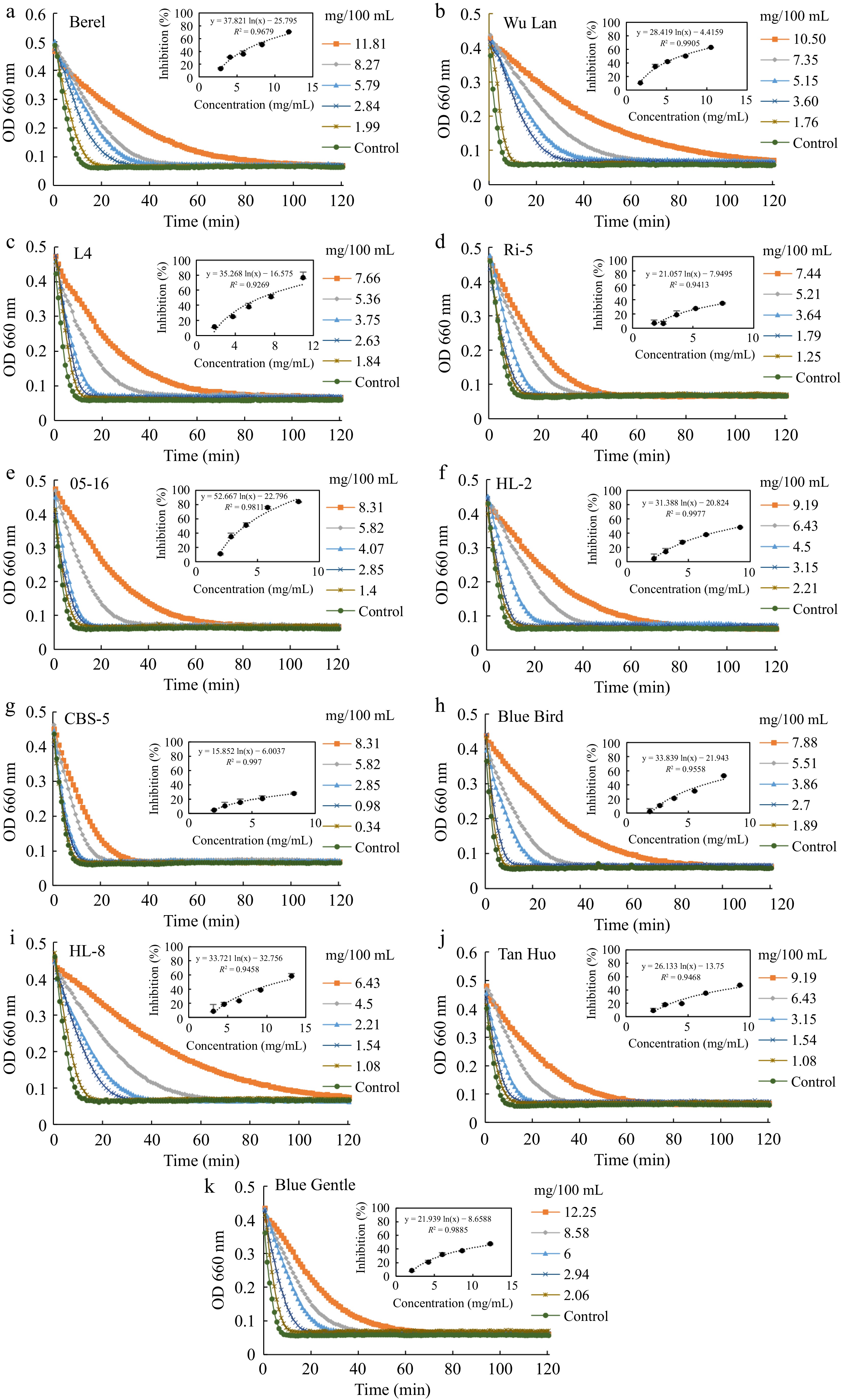
Figure 3.
Inhibitory effects of blue honeysuckle juice from different cultivars on α-amylase activity. (a)–(k) Time-dependent changes in OD660 values reflecting enzymatic activity under different extract concentrations for each cultivar, including (a) Berel, (b) Wu lan, (c) L4, (d) Ri-5, (e) 05-16, (f) HL-2, (g) CBS-5, (h) Blue bird, (i) HL-8, (j) Tan huo, and (k) Blue gentle. Different concentrations of pomace extracts (mg/100 mL) were applied to evaluate their inhibitory effects. The inset graphs show the dose–response relationships between extract concentration and inhibition rate, along with the corresponding regression equations and correlation coefficients (R2). The control represents the enzyme activity without extract addition.
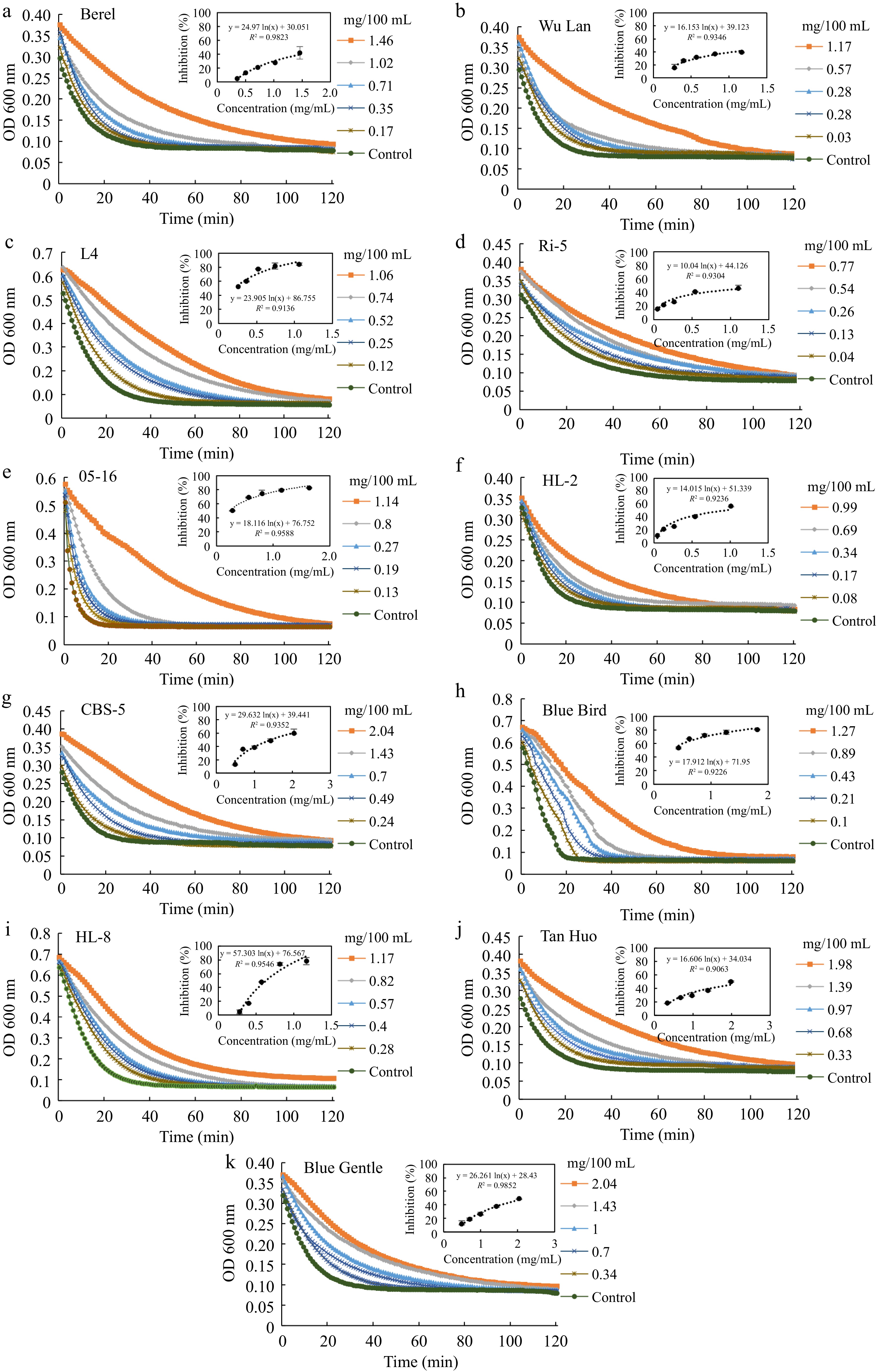
Figure 4.
Inhibitory effects of blue honeysuckle pomace from different cultivars on α-amylase activity. (a)–(k) Time-dependent changes in OD660 values reflecting enzymatic activity under different extract concentrations for each cultivar, including (a) Berel, (b) Wu lan, (c) L4, (d) Ri-5, (e) 05-16, (f) HL-2, (g) CBS-5, (h) Blue bird, (i) HL-8, (j) Tan huo, and (k) Blue gentle. Different concentrations of pomace extracts (mg/100 mL) were applied to evaluate their inhibitory effects. The inset graphs show the dose–response relationships between extract concentration and inhibition rate, along with the corresponding regression equations and correlation coefficients (R2). The control represents the enzyme activity without extract addition.
Table 1. Overview of IC50 values against α-amylase and lipase obtained from 11 varieties of blue honeysuckle juice and pomace.
Varities Anti-α-amylase activity
IC 50 (µg/mL)Anti-lipase activity
(%)Juice Pomace Juice Pomace Berel 72.91 ± 2.08h 22.23 ± 1.05c 26.38 ± 0.46i 44.23 ± 0.57h Wu lan 67.86 ± 1.70i 19.61 ± 0.10d 26.32 ± 0.77j 40.48 ± 0.54j L4 66.04 ± 9.50j 2.02 ± 0.20k 37.12 ± 0.93a 51.12 ± 0.54d Ri-5 156.70 ± 4.99b 9.18 ± 0.10f 30.21 ± 0.95e 46.25 ± 0.90f 05-16 39.84 ± 3.10k 2.15 ± 0.20j 30.90 ± 0.87d 58.74 ± 0.97a HL-2 95.49 ± 1.40f 8.27 ± 0.50g 28.28 ± 0.75f 35.10 ± 0.82k CBS-5 342.25 ± 13.25a 14.28 ± 0.30e 27.88 ± 0.47g 45.57 ± 0.79g Blue bird 144.94 ± 2.10c 2.94 ± 0.56i 16.36 ± 0.51k 54.17 ± 0.99c HL-8 116.36 ± 1.65d 6.29 ± 0.30h 31.88 ± 0.98b 41.03 ± 0.75i Tan huo 114.66 ± 10.10e 26.2 ± 0.20a 26.65 ± 0.80h 49.04 ± 0.90e Blue gentle 83.82 ± 3.40g 22.79 ± 0.40b 31.56 ± 0.52c 54.56 ± 0.61b Note: means of IC50 within columns followed by different letters are significantly different (p < 0.05). Anti-lipase activity
-
Obesity is closely associated with excessive fat intake, sedentary behavior, and unhealthy lifestyle habits, with its pathogenesis strongly linked to lipid metabolism. Approximately 90%–95% of dietary lipids are consumed in the form of triglycerides[31]. Triglycerides are primarily broken down by pancreatic lipase into monoglycerides and free fatty acids, which are absorbed by intestinal cells. Inhibiting pancreatic lipase has thus emerged as an effective strategy for reducing lipid absorption and managing obesity[32]. Lipase inhibitors function by binding to the enzyme's active site, inducing conformational changes that impair its catalytic activity. Consequently, the identification of natural lipase inhibitors, particularly from plant-based sources, has attracted growing scientific interest[32]. The lipase inhibitory activities of polyphenol-rich extracts from both juices and pomaces of 11 blue honeysuckle cultivars were evaluated in the present work (Table 1). Among the tested samples, the juice of 'L4' and the pomace of '05-16' exhibited the strongest inhibition, with inhibition rates of 37.12% and 58.74%, respectively. Overall, pomaces demonstrated significantly higher inhibitory activity than their corresponding juices across all cultivars. Polyphenol-rich berry extracts—including those from mulberry, lingonberry, arctic bramble, cloudberry, strawberry, and raspberry—have been reported to strongly inhibit lipase, largely via hydrogen bonding involving phenolic hydroxyl groups[32,33]. Notably, polyphenols from blue honeysuckle have also been reported to suppress lipid accumulation in adipocytes by inhibiting adipogenesis-related pathways, further supporting their anti-obesity potential[34]. The 'Wojtek' cultivar of whole fruit of blue honeysuckle from Poland has been reported to exhibit significant lipase inhibition in a triolein emulsion system (144.10%)[35]. Our findings provide novel evidence that polyphenol-rich byproducts of blue honeysuckle, particularly pomaces, may serve as promising natural inhibitors of pancreatic lipase. These results suggest that blue honeysuckle could serve as a source of functional food ingredients or nutraceuticals for preventing obesity.
Antibacterial activities analysis
-
The MIC of polyphenol-rich blue honeysuckle juice and pomace extracts was measured using the agar dilution technique to assess their antibacterial properties. MIC is the lowest concentration of an antimicrobial agent at which visible growth of microorganisms in nutrient broth is prevented. Both juice and pomace extracts of '05-16' exhibited notable antibacterial activity against all tested bacterial strains. The pomace extract exhibited the lowest MIC against E. coli (0.7 mg/mL), followed by S. aureus (1.09 mg/mL). This trend agrees with the observations of Imran et al., who reported stronger antibacterial activity of phenolic extracts against E. coli[36]. In contrast, juice extracts exhibited higher MIC (2.11 mg/mL for E. coli and 1.06 mg/mL for S. aureus), confirming the superior antibacterial potency of pomace. The greater susceptibility of E. coli may be due to differences in bacterial cell wall structures[37]. The antibacterial activity was positively correlated with the total polyphenol content. Time-kill kinetics (Fig. 5a–d) further confirmed the inhibitory effects. After 12 h of incubation, optical density (OD600) values of S. aureus and E. coli were significantly suppressed at MIC. In contrast, bacterial growth in the control and 1/4 MIC groups entered the logarithmic phase after a short lag. The 1/2 MIC group exhibited delayed growth with significantly lower OD values than the control. These findings align with Mazzantini et al., showing that the antibacterial efficacy of citrus polyphenols increases in a concentration-dependent manner[38]. The stronger susceptibility of E. coli (Gram-negative) compared to S. aureus (Gram-positive) may be due to the simpler peptidoglycan structure of Gram-negative cell walls, which facilitates polyphenol penetration and disrupts cell integrity[37]. This study demonstrates that blue honeysuckle juice and pomace are promising sources of natural antibacterial agents. Further research is needed to elucidate their mechanisms of action and explore their potential applications in food and pharmaceutical products.
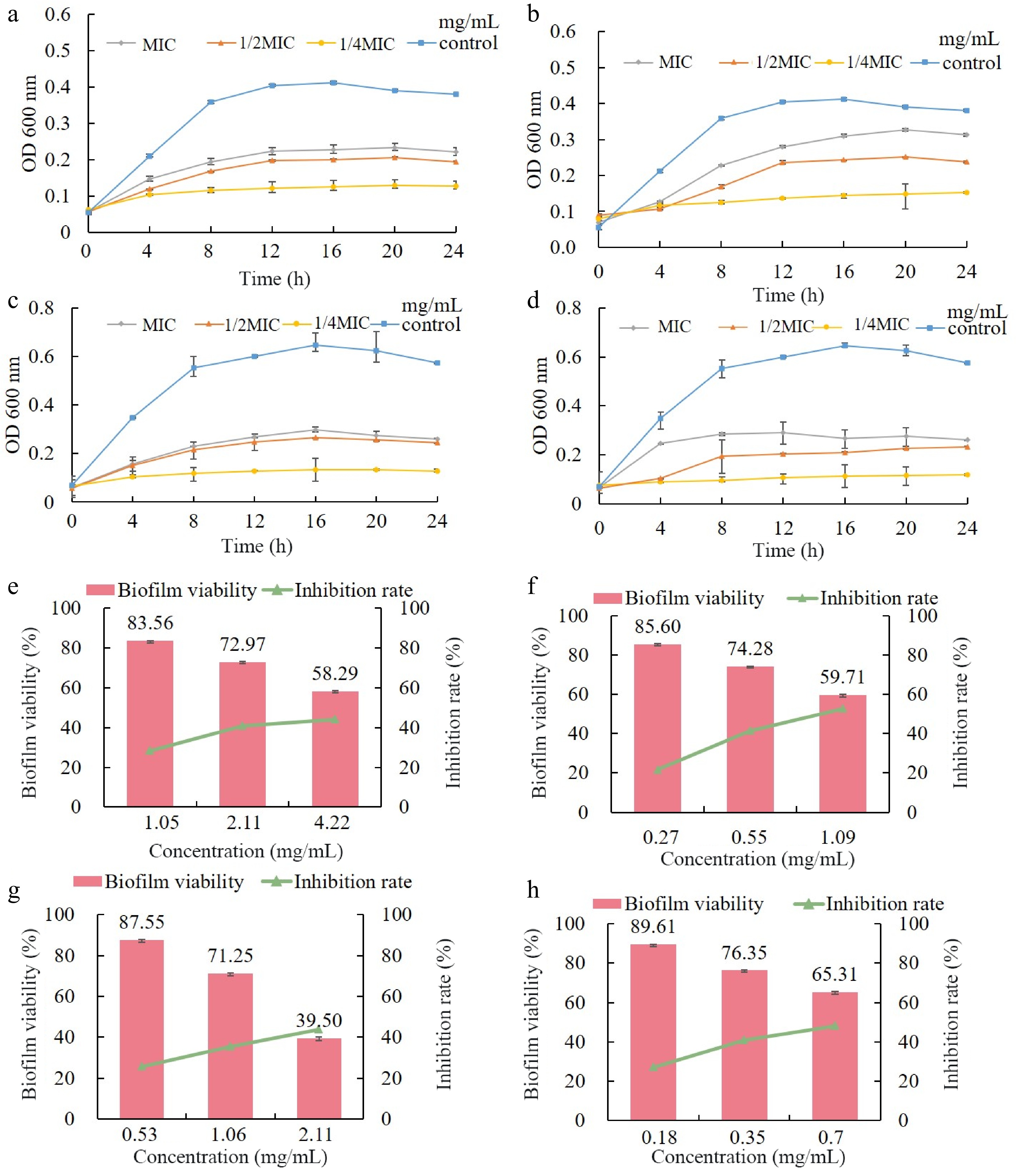
Figure 5.
Time-kill curves of (a) juice and (b) pomace against S. aureus; (c) juice, and (d) pomace against E. coli; the influence of (e) juice, and (f) pomace against S. aureus biofilm; (g) juice, and (h) pomace against E. coli biofilm.
Bacterial biofilms are structured microbial communities embedded within a self-produced extracellular polymeric substance (EPS) matrix, which underpins their resilience against environmental stressors and antimicrobial agents by physically protecting cells and limiting antimicrobial penetration[5]. As shown in Fig. 5e–h, the metabolic activity within biofilms of both Staphylococcus aureus and Escherichia coli was significantly reduced following treatment with blue honeysuckle juice and pomace, as assessed by the MTT reduction assay. At concentrations of 4.22 and 1.09 mg/mL in juice and pomace, the inhibition rates of S. aureus biofilm formation were 58.29% and 59.71%, respectively. Similarly, at lower concentrations—2.11 mg/mL (juice) and 0.70 mg/mL (pomace)—the inhibition rates for E. coli biofilms reached 39.50% and 65.31%, respectively. Notably, despite the lower concentration, stronger inhibition of E. coli biofilms was observed, suggesting species-specific susceptibility. These differences may be related to the higher membrane permeability or structural vulnerability of E. coli in response to exposure to phenolic compounds[37]. Across all tested concentrations, pomace showed a significantly stronger antibiofilm effect than juice (p < 0.05). These results suggest that blue honeysuckle juice and pomace interfere with biofilm development, likely by enhancing bacterial cell membrane permeability and facilitating antibacterial action. Previous studies have also shown that freeze-dried blue honeysuckle fractions reduce biofilm formation by E. coli, E. faecalis, and S. mutans[6]. These effects are likely associated with phenolic constituents such as flavonols and anthocyanins, especially cyanidin-3-O-glucoside and cyanidin-3-O-galactoside, which possess established antimicrobial properties. In future studies, further elucidation of the molecular mechanisms—such as membrane integrity assays or transcriptomic analysis—would enhance our understanding of the observed effects. In conclusion, blue honeysuckle juice and pomace demonstrate strong antibiofilm activity against S. aureus and E. coli, highlighting their potential as natural agents for preventing biofilm-related foodborne infections. Their efficacy also supports the value-added utilization of processing by-products in functional food and antimicrobial applications.
Destruction effect on S. aureus and E. coli by TEM
-
Ultrastructural alterations in S. aureus and E. coli following exposure to '05-16' juice and pomace were examined by TEM. In the untreated controls, cells of both species displayed intact and uniform morphology, characterized by smooth surfaces and the absence of detectable structural damage (Fig. 6a, d). In contrast, cells treated with juice or pomace exhibited varying degrees of morphological disruption, including surface roughness, membrane rupture, and cytoplasmic leakage (Fig. 6b, c, e, and f). Treatment with blue honeysuckle juice and pomace induced irreversible damage to the bacterial cell wall and plasma membrane, leading to impaired growth and function. The greater susceptibility of E. coli compared to S. aureus can be attributed to differences in cell wall structure: E. coli, a Gram-negative bacterium, possesses a thin peptidoglycan layer surrounded by an outer membrane containing lipopolysaccharides, whereas S. aureus, a Gram-positive bacterium, has a thicker peptidoglycan layer reinforced with teichoic acids, which provides enhanced resistance to external stressors[39]. This result is consistent with our findings of MIC, which also demonstrated greater antibacterial efficacy against E. coli compared to S. aureus.
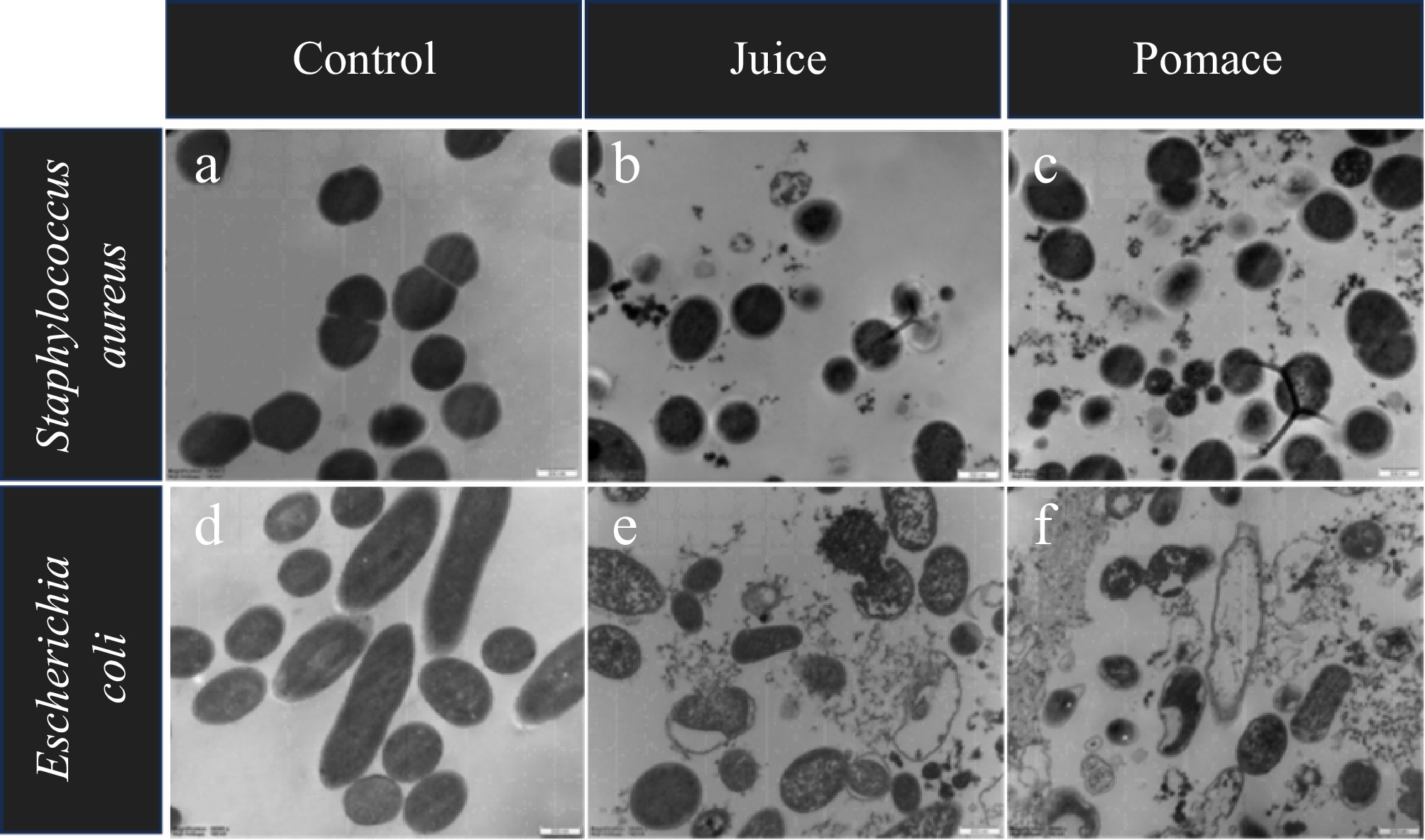
Figure 6.
TEM images of S. aureus (a) untreated, (b) juice-treated, (c) pomace-treated; and E. coli. (d) untreated, (e) juice-treated, (f) pomace-treated. (30,000 ×).
Correlation analysis
-
According to Fig. 7, there were strong positive correlations among TPC, TAC, DPPH, ABTS, and FRAP in both juice and pomace, with the strongest correlations between DPPH and ABTS, as well as DPPH and FRAP, indicating good consistency among these assays in assessing antioxidant capacity. In juice, TAC was significantly negatively correlated with anti-α-amylase activity (r = –0.65), suggesting that anthocyanins likely contribute substantially to α-amylase inhibition. In contrast, anti-lipase activity showed moderate positive correlations with DPPH, ABTS, and FRAP, indicating that antioxidant capacity may contribute to lipase inhibition. In pomace, TPC exhibited a strong negative correlation with the IC50 value of α-amylase (r = –0.58), while DPPH, ABTS, and FRAP were moderately correlated with lipase inhibitory activity. These results suggest that phenolic compounds and overall antioxidant capacity in pomace may significantly influence the activities of both enzymes. This finding is supported by previous studies showing that polyphenolic compounds, particularly anthocyanins, exhibit inhibitory effects against digestive enzymes. For instance, black chokeberry extract, known for its high anthocyanin content, has been reported to exhibit potent inhibitory effects on both pancreatic α-amylase and lipase[40].
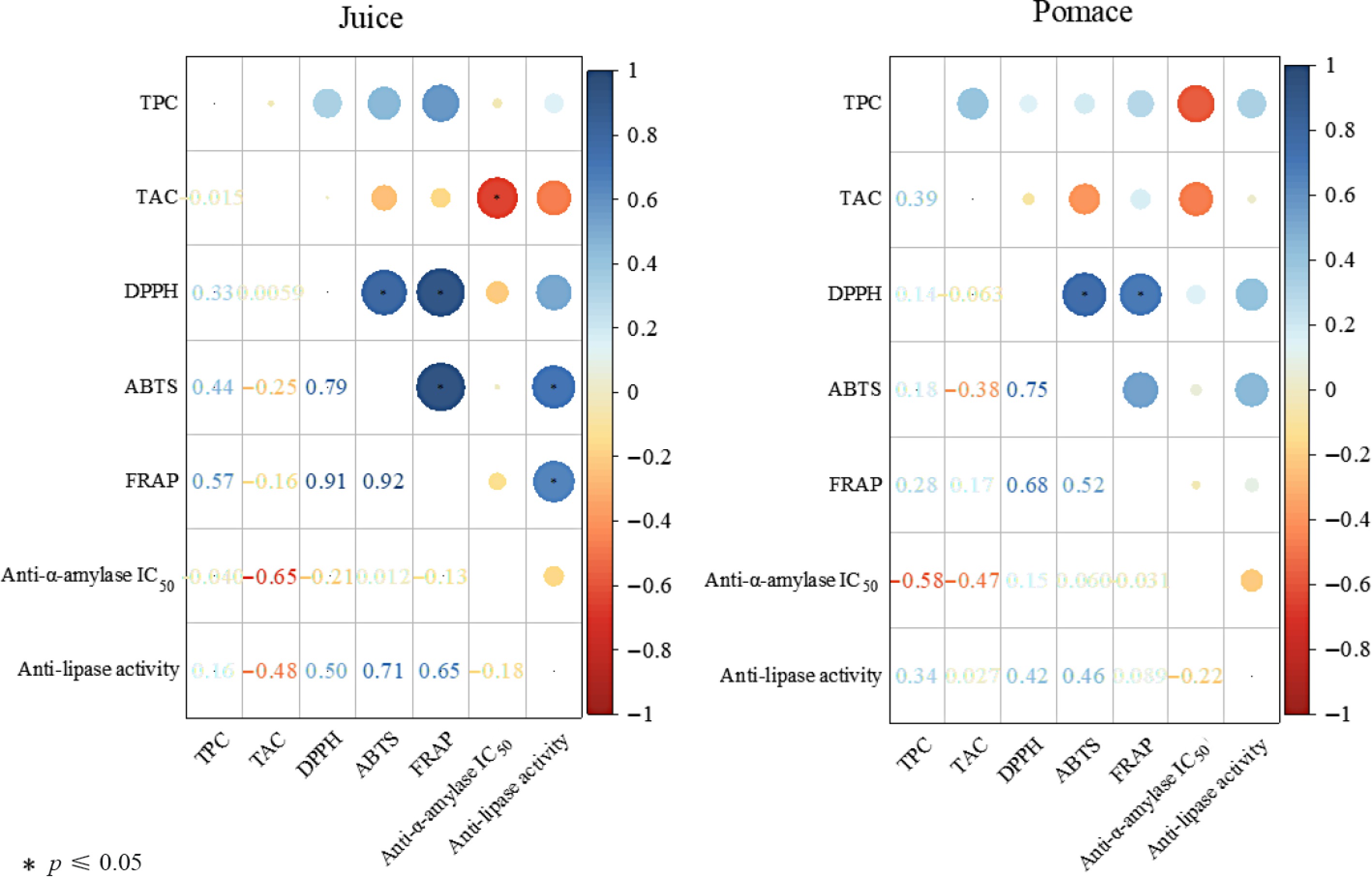
Figure 7.
Correlation analysis among total phenolic content (TPC), total anthocyanin content (TAC), antioxidant activities (DPPH, ABTS, and FRAP), anti-α-amylase IC50, and anti-lipase activity in the juice and pomace of 11 blue honeysuckle cultivars.
-
In this study, juice and pomace derived from 11 blue honeysuckle cultivars were comprehensively evaluated for their functional ingredient content and biofunctional activities. Pomace samples consistently exhibited higher TPC and TAC, which corresponded with their superior antioxidant capacities as demonstrated by DPPH, ABTS, and FRAP assays. In addition to their antioxidant potential, pomaces also showed notable α-amylase inhibitory activity and pancreatic lipase inhibitory effects. Furthermore, both juice and pomace extracts exhibited significant antibiofilm activities against S. aureus and E. coli, highlighting their potential in antimicrobial applications. The strong antioxidant performance of the pomace is likely attributed to its enriched polyphenolic and anthocyanin composition. Collectively, these findings identify blue honeysuckle pomace as a promising and underutilized byproduct with high potential for application as a rich reservoir of natural antioxidants and bioactive compounds in the development of functional food ingredients and nutraceutical formulations.
-
The authors confirm their contributions to the paper as follows: methodology, writing − original draft: Qiao J, Zhu G, Zhang M; formal analysis: Sun Z, Zhang W, Lv Y; resources: Huo J; conceptualization, supervision, writing − review and editing: Zhang Y. All authors reviewed the results and approved the final version of the manuscript.
-
The datasets generated during and/or analyzed during the current study are available from the corresponding author upon reasonable request.
-
We gratefully acknowledge the financial support received from the Distinguished Young Scientists Fund of Natural Science Foundation of Heilongjiang Province (JQ2024C005).
-
The authors declare that they have no conflict of interest.
- Copyright: © 2026 by the author(s). Published by Maximum Academic Press on behalf of China Agricultural University, Zhejiang University and Shenyang Agricultural University. This article is an open access article distributed under Creative Commons Attribution License (CC BY 4.0), visit https://creativecommons.org/licenses/by/4.0/.
-
About this article
Cite this article
Qiao J, Zhu G, Zhang M, Zhang W, Lyu Y, et al. 2026. Antioxidant, antibacterial, and enzyme inhibitory activities of blue honeysuckle juices and pomaces in relation to polyphenol composition. Food Innovation and Advances 5(3): 351−361 doi: 10.48130/fia-0026-0029 

Antioxidant, antibacterial, and enzyme inhibitory activities of blue honeysuckle juices and pomaces in relation to polyphenol composition
- Received: 18 December 2025
- Revised: 03 April 2026
- Accepted: 13 May 2026
- Published online: 28 July 2026
Abstract: Blue honeysuckle (Lonicera caerulea L.) is a valuable source of phenolic compounds with notable health-promoting potential. This study evaluated the antioxidant capacities (DPPH, ABTS, FRAP), α-amylase inhibition, lipase inhibition, and antibiofilm activities of juices and pomaces from 11 cultivars. Total phenolic content (TPC) and total anthocyanin content (TAC) were quantified to assess their relationships with bioactivity. Overall, pomaces exhibited stronger antioxidant and α-amylase inhibitory activities than juices, with significant positive correlations between antioxidant capacity and both TPC and TAC. Pomaces also showed higher lipase inhibition. Both juices and pomaces displayed antibacterial activity against S. aureus and E. coli. Notably, the pomace of cultivar '05-16' contained the highest TPC (76.85 ± 0.53 mg GAE/g DW) and demonstrated superior antioxidant and α-amylase inhibitory activities. These findings highlight blue honeysuckle pomace, often treated as an industrial byproduct, as a promising source of natural antioxidants and antimicrobial agents. The results support its potential applications in functional foods and nutraceuticals, while promoting the sustainable utilization of processing residues.
-
Key words:
- Blue honeysuckle berry /
- Haskap /
- Anti-α-amylase /
- Antioxidants /
- Anti-bacterial