












-
Mango (Mangifera indica L.) fruit is of great economic value and nutritional importance. The appearance of mango with red skin color is an important characteristic that significantly influences consumer purchasing behavior[1]. Color pigments, like anthocyanins, play a crucial role in human health, offering antioxidant benefits and aiding in disease prevention[2]. Additionally, anthocyanins contribute to enhancing plant stress tolerance, such as resistance to pathogens and cold tolerance[3].
The biosynthesis pathway of anthocyanins in plants has been elucidated, and the genes encoding the enzymes in anthocyanin biosynthesis and the transcription-regulating factors have been identified[4]. Several transcription factors have been reported to positively or negatively regulate anthocyanin biosynthesis in horticultural crops. For example, NAC transcription factors were associated with enhanced anthocyanin accumulation in red-fleshed apples[5], whereas MYB-related repressors inhibited anthocyanin biosynthesis during flower or fruit development in chrysanthemum[6] and strawberry[7].
In addition to transcriptional regulation, anthocyanin biosynthesis is also affected by environmental and developmental factors, among which plant hormones play important regulatory roles. Ethylene (ETH) is a crucial hormone in climacteric fruit ripening and has been extensively studied for its role in inducing anthocyanin accumulation in fruit. The accumulation of anthocyanins often coincides with ethylene production during the fruit ripening process[8]. In several postharvest fruits, including mangosteen and blood orange, ethylene or ethephon treatment promoted anthocyanin accumulation and improved peel coloration under storage conditions[9,10].
However, recent studies have highlighted the negative effects of ethylene on anthocyanin formation in postharvest fruit. In strawberry, ethephon treatment applied at the immature developmental stage suppressed anthocyanin biosynthesis and reduced the expression of anthocyanin biosynthesis-related genes during ripening[11]. In addition, reduced anthocyanin and cyanidin-3-glucoside accumulation accompanied by inhibited peel reddening under ethylene treatment has also been observed in postharvest peach fruit, whereas 1-MCP treatment showed the opposite effect[12]. These findings suggested that the regulatory mechanisms of exogenous ethylene on peel color transformation in fruit are complex and need further investigation.
Gibberellic acid (GA3) is another hormone involved in regulating anthocyanin accumulation in fruit peel. Previous research has shown that GA3 can have dual effects on fruit coloration, capable of either promoting or inhibiting anthocyanin accumulation[13]. Increased anthocyanin accumulation following GA3 treatment has been reported in 'Skeena' cherry fruit[14]. However, inhibitory effects of GA3 on anthocyanin accumulation have been observed in sweet cherry cultivars[15]. In addition, exogenous GA3 treatment at 1,000 mg·L−1 was reported to induce seedlessness and alter endogenous hormone levels, including brassinosteroids, cytokinins, zeatin, and ethylene, in Southern Highbush blueberry fruit[16]. This suggests that the effect of GA3 on fruit color development is closely related to the timing, concentration, and interaction with other hormones.
Mango trees are widely cultivated in tropical regions around the world, and the application of exogenous ethylene and GA3, either pre- or postharvest, is a common agricultural practice in mango production[17]. In recent years, however, postharvest applications of exogenous ethylene have often failed to improve coloration in 'Guifei' mango, leading to reduced commodity value and significant economic losses[18]. Therefore, understanding the underlying mechanisms to counteract the negative effects of ethylene is crucial for the mango industry.
This study aimed to investigate the effects of ethephon treatment on hormone concentrations (ethylene and GA3) and coloring properties (including pigment content and enzyme activities related to anthocyanin synthesis) in mature 'Guifei' mangoes harvested from two growing regions. Additionally, the expression patterns of key genes associated with anthocyanin synthesis and ERF transcription factors in high-GA3 mangoes were evaluated through transcriptome and qRT-PCR analyses. We also examined the binding of MiERF105 to the promoters of MiPAL2 and MiANS3 using yeast one-hybrid (Y1H) and dual-luciferase reporter (DLR) assays and investigated the function of MiERF105 by transiently overexpressing this gene during mango storage. This research would provide new insights into the relationships among ethylene, GA3, and anthocyanin biosynthesis, offering practical guidance for the rational application of ethylene and GA3 to enhance fruit quality in mango production.
-
Mango fruit (Mangifera indica L. cv. 'Guifei') were harvested from two producing areas in China: Yingzhou City, Hainan Province (HN) (108°37'–111°03' E, 18°10'–20°10' N) and Baise City, Guangxi Province (GX) (104°28'–107°54' E, 22°51'–25°07' N). The fruit was harvested at 70%–80% maturity (per weight approximately 210 ± 10 g and seed hardening occurred), about 110 d after full bloom for HN fruit and 130 d after full bloom for GX fruit. To prevent mechanical injury, the harvested mangoes were individually packed in plastic crates with a soft fabric layer. The fruit was transported to the Postharvest Science Laboratory of Hainan University within 4 h (HN) or 24 h (GX). Fruit with similar maturity, size, and peel color were selected for the experiments. Prior to treatment, the fruit was surface-sterilized using 0.1% sodium hypochlorite solution for 10 min and subsequently air-dried at 25 °C.
Postharvest treatment
-
HN and GX mangoes were divided into control and ethephon-treated groups (200 fruit per treatment). Control fruit were immersed in distilled water, whereas treated fruit were dipped in 900 mg·L−1 ethephon solution for 5 min and designated as ETH-HN and ETH-GX, respectively. After treatment, fruit were packed in unsealed polyethylene bags (15 fruit per bag) and stored at 25 °C with 90% relative humidity for 18 d (HN) or 24 d (GX). Due to differences in postharvest ripening and senescence rates between GX and HN fruit, storage durations were adjusted to cover the complete physiological progression of each fruit group. Samples were collected every 3 d, with five fruit used for each biological replicate. Fresh fruit were used for peel color and ethylene measurements, while peel and flesh tissues were frozen in liquid nitrogen and stored at −80 °C for subsequent analysis.
Determination of endogenous ethylene and gibberellin contents
Gibberellin (GA3) content
-
GA3 content was determined by HPLC according to a previously reported method with slight modifications[18]. Briefly, mango peel tissue (1 g) was extracted with 1% (v/v) acetonitrile solution under chilled conditions, followed by ultrasonication and centrifugation. The supernatant was purified by sequential extraction with petroleum ether and ethyl acetate, concentrated under reduced pressure, and re-dissolved in chromatographic-grade methanol. After purification using a C18 solid-phase extraction column, the solution was filtered through a 0.22 μm membrane before analysis.
GA3 quantification was carried out using a Thermo Fisher U3000 HPLC system fitted with an Agilent Polaris 5 C18-A column and UV detector. Chromatographic separation was achieved using acetonitrile and 0.1% acetic acid solution (2.5:97.5, v/v) as the mobile phase at a flow rate of 1.0 mL·min−1. The analysis was performed at 30 °C and monitored at 254 nm with a 20 μL injection volume. GA3 concentration was calculated using a standard calibration curve and expressed as μg·g−1 fresh weight.
Production of endogenous ethylene
-
Ethylene release from mango fruit was determined by gas chromatography following a modified method described previously[19]. Three fruit were incubated in a sealed 10 L container at 25 °C for 2 h, and headspace gas was subsequently analyzed using an Agilent 5181–1267 gas chromatography system equipped with a TG-5MS column and flame ionization detector (FID). Ethylene concentration was calculated using a standard ethylene sample and expressed as μL·kg−1·h−1. Each treatment included three biological replicates.
Determination of color-related parameters in mango fruit
Peel color
-
Peel color was evaluated using a chromameter (CM-700d, Konica Minolta, Japan) at four equatorial positions on each fruit. The a* parameter was used to represent peel redness and greenness.
Contents of chlorophyll, carotenoid, and anthocyanin in fruit peel
-
Chlorophyll and carotenoid contents were analyzed according to a modified method reported previously[20]. Mango peel samples were extracted with 80% acetone, and pigment levels were determined spectrophotometrically at 470, 645, and 663 nm.
Anthocyanin content was measured following a previously described procedure[21]. Peel tissue was extracted with a precooled hydrochloric acid-methanol solution under dark conditions, and absorbance values were recorded at 530 and 600 nm.
Activities of PAL, CHI, DFR, and UFGT in fruit peel
-
Activities of PAL, CHI, DFR, and UFGT were analyzed using a previously reported method with minor modifications[12]. Mango peel extracts were prepared in phosphate or Tris-HCl buffer systems containing appropriate protective reagents, followed by low-temperature centrifugation. The resulting enzyme solution was concentrated with ammonium sulfate before enzyme activity analysis.
Analysis of differentially expressed genes (DEGs)
-
Transcriptome sequencing was commercially performed by Gene Denovo Biotechnology Co. (Guangzhou, China) using the Illumina HiSeq2500 platform. Transcript abundance was quantified as FPKM values using StringTie software (v2020). Differentially expressed genes (DEGs) among HN mango samples collected at 0, 15, and 25 d were screened using a false discovery rate (FDR) < 0.05 and an absolute fold change ≥ 2. Functional annotation of DEGs was conducted using BlastX and the NCBI Conserved Domain Database (CDD).
RNA extraction, cDNA synthesis, and real-time quantitative PCR (qRT-PCR)
Total RNA extraction and cDNA synthesis
-
Total RNA was extracted from mango peel using a modified CTAB method described previously[22]. RNA quality was assessed by spectrophotometry and agarose gel electrophoresis. First-strand cDNA was synthesized using a PrimeScript™ RT reagent kit with gDNA Eraser (HiScript®, Nanjing, China).
Expression analysis by real-time quantitative (qRT-PCR)
-
Gene expression levels were determined by qRT-PCR using SYBR Premix Ex Taq and a qTOWER3 G Real-Time PCR System (Wacker Biotech GmbH, Germany). Primer sequences are provided in Supplementary Table S1. Relative expression levels of anthocyanin biosynthesis- and ERF-related genes were calculated using the 2−ΔΔCᴛ method with Actin as the reference gene[23].
Yeast One-Hybrid (Y1H) assay
-
Promoter regions of MiPAL2 and MiANS3 were inserted into the pHis2-Leu-GW vector, while the coding sequence of MiERF105 was introduced into the pGADT7 vector for yeast one-hybrid analysis. Primer sequences are listed in Supplementary Table S2. Recombinant plasmids were transformed into Y187 yeast cells, and transformants were screened on selective SD media containing 3-AT. The empty pHis2 vector served as the negative control.
Subcellular localization of the MiERF105 protein in tobacco
-
The full-length coding sequence of MiERF105 without the stop codon was inserted into the pCAMBIA1302-GFP vector for subcellular localization analysis. Primer information is provided in Supplementary Table S3. The recombinant construct and GFP control vector were transiently expressed in tobacco leaves, and GFP fluorescence signals were observed using fluorescence microscopy.
Dual-Luciferase Reporter (DLR) assay
-
The full-length coding sequence of MiERF105 was cloned into the pGreen II-62sk vector to generate the effector construct (35S-MiERF105). Promoter fragments of MiPAL2 and MiANS3 were inserted into the pGreen II-0800 vector as reporter constructs. Primer sequences used for vector construction are listed in Supplementary Table S4. Effector and reporter plasmids were co-transformed into tobacco leaves, while the empty pGreen II-62sk vector was used as the negative control. Firefly and Renilla luciferase activities were subsequently determined using a dual-luciferase reporter assay system (Promega, Madison, WI, USA).
Transient overexpression of the MiERF105 gene in mango fruit
-
The coding sequence of MiERF105 was inserted into the pGreen II-62sk vector for transient overexpression analysis. Primer sequences are provided in Supplementary Table S5. Recombinant plasmids were introduced into Agrobacterium tumefaciens GV3101 and subsequently infiltrated into mango peel tissue. Mango slices used for transient overexpression assays were prepared from fruit with uniform maturity and appearance and were randomly assigned to different treatments. Treated samples were incubated under dark conditions at 28 °C and collected after 3 and 6 d. Anthocyanin content, PAL activity, and expression levels of MiPAL2, MiANS3, and MiERF105 were subsequently determined.
Statistical analysis
-
Experimental results are presented as mean ± standard error (SE). Statistical comparisons among treatments were performed using SPSS Statistics 20.0 (IBM Corp., USA), and significance was determined by Duncan's multiple range test at p < 0.05.
-
No obvious differences in morphology or peel color were observed between fresh-harvested GX and HN mangoes (Fig. 1a). However, the levels of gibberellin (GA3) in HN mangoes were significantly higher than those in GX mangoes, with GA3 levels in HN mangoes about 10 times higher than in GX mangoes (Fig. 1b). There was no significant difference in ethylene production between the fresh GX and HN mangoes (Fig. 1c).
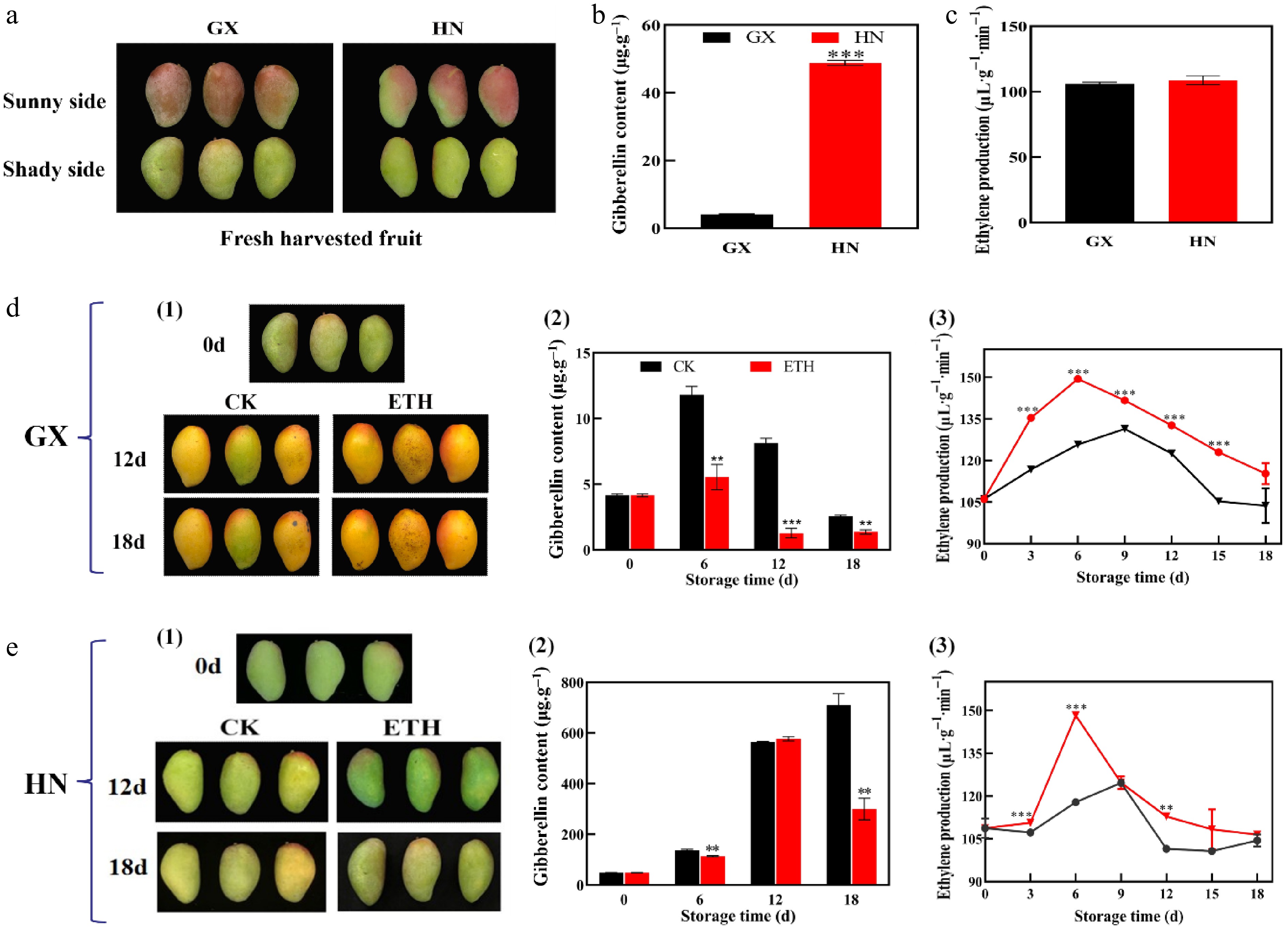
Figure 1.
The initial contents of GA3, ethylene, and their changes during storage of HN and GX mangoes. (a) Appearance and morphology of fresh harvested 'Guifei' mangoes. (b) GA3 content of fresh harvested fruit. (c) Ethylene production of fresh harvested fruit. (d1) Fruit appearance at 0, 12, and 18 d postharvest, (d2) GA3 content, and (d3) ethylene production of GX, and (e) HN mangoes during the storage. The bars represent the standard error in the mean of triplicates. Asterisks over bars indicate differences between treatments with statistical significance set at ** p < 0.01, *** p < 0.001.
During the storage of GX mangoes, peel color varied in both the control and the ETH-treated groups, with ETH treatment notably accelerating the color change (Fig. 1d1). In contrast, HN mangoes showed no significant change in color even after 18 d of storage (Fig. 1e1). GA3 levels in both GX and HN fruit increased initially and then decreased during storage, with ETH-treated fruit showing lower GA3 levels compared to control fruit (Fig. 1d2 and 1e2). Notably, GA3 contents in HN mangoes remained significantly higher than in GX mangoes, with a peak at 700 μg·g−1, which was 50 times higher than that in GX mangoes. Ethylene production showed no significant difference between HN and GX mangoes during storage; however, exogenous ethylene significantly accelerated ethylene production when compared to control fruit for both GX and HN mangoes (Fig. 1d3 and 1e3).
Changes in peel color and pigment contents
-
ETH treatment significantly increased the a* value in GX mangoes compared to the control (Fig. 2a1), correlating with decreased chlorophyll content and increased anthocyanin content (Fig. 2a2–a4). In HN mangoes, no significant difference in chlorophyll or carotenoid contents was found between ETH-treated and control fruit (Fig. 2b2, b4), and ETH treatment did not accelerate anthocyanin accumulation. In fact, anthocyanin content was lower in ETH-treated fruit than in control fruit (Fig. 2b3).
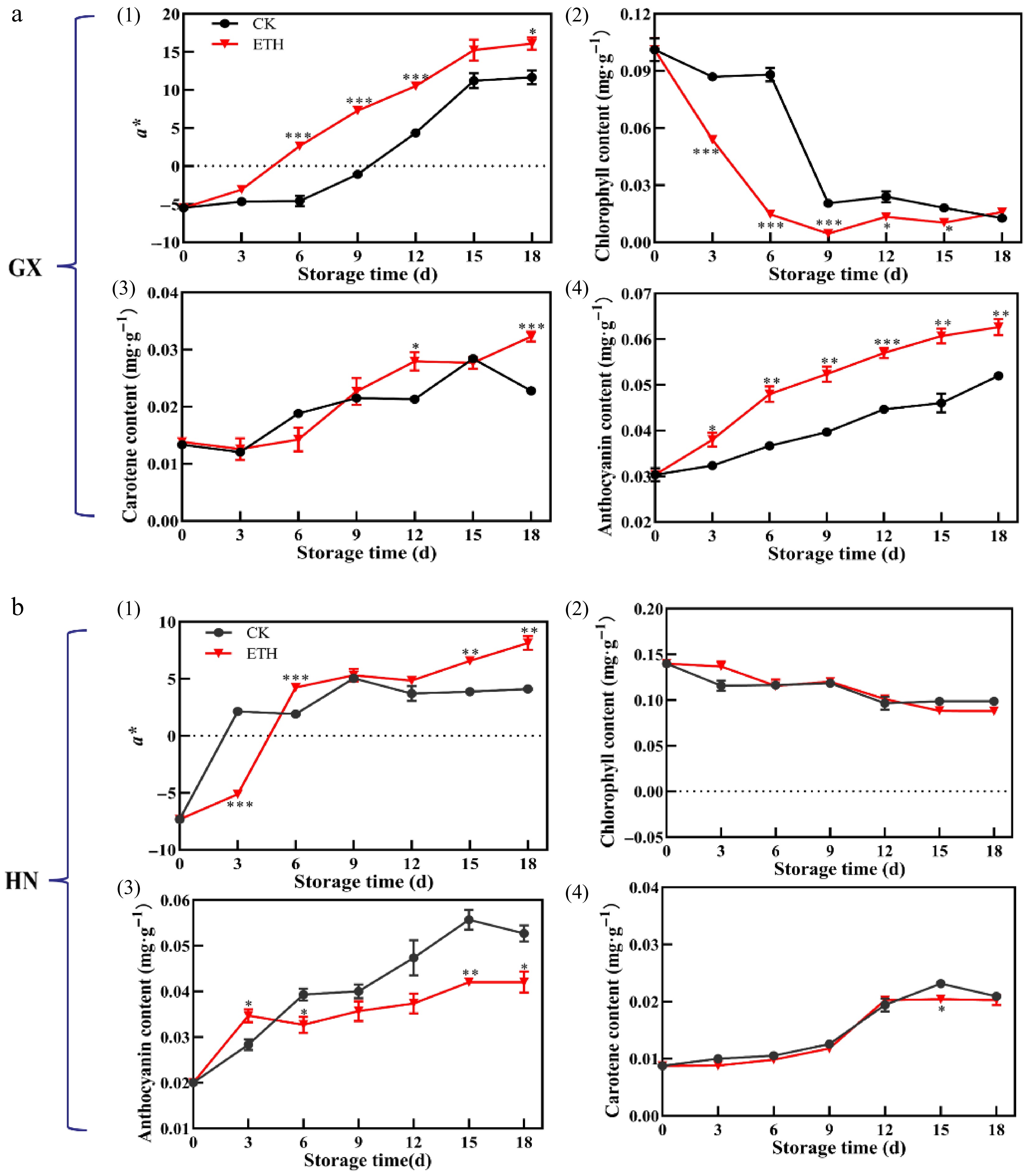
Figure 2.
Changes in peel color and pigment contents during storage of (a) GX and (b) HN mangoes. (1) a* value, (2) chlorophyll content, (3) anthocyanin content, and (4) carotenoid content. The bars represent the standard error in the mean of triplicates. Asterisks over bars indicate differences between treatments with statistical significance set at ** p < 0.01, *** p < 0.001.
Changes in enzyme activity related to anthocyanin synthesis
-
Activities of PAL, CHI, DFR, and ANS during mango storage are shown in Fig. 3. ETH treatment markedly enhanced the activities of these enzymes in GX mangoes compared with the control group (Fig. 3a). In contrast, CHI and ANS activities in HN mangoes showed no obvious differences between ETH-treated and control fruit, whereas PAL and DFR activities were still promoted by ETH treatment (Fig. 3b). Notably, PAL activity in GX mangoes was substantially higher than that in HN mangoes, while ANS activity exhibited the opposite trend. These results suggest that PAL- and ANS-related pathways are closely associated with anthocyanin biosynthesis during postharvest mango storage.
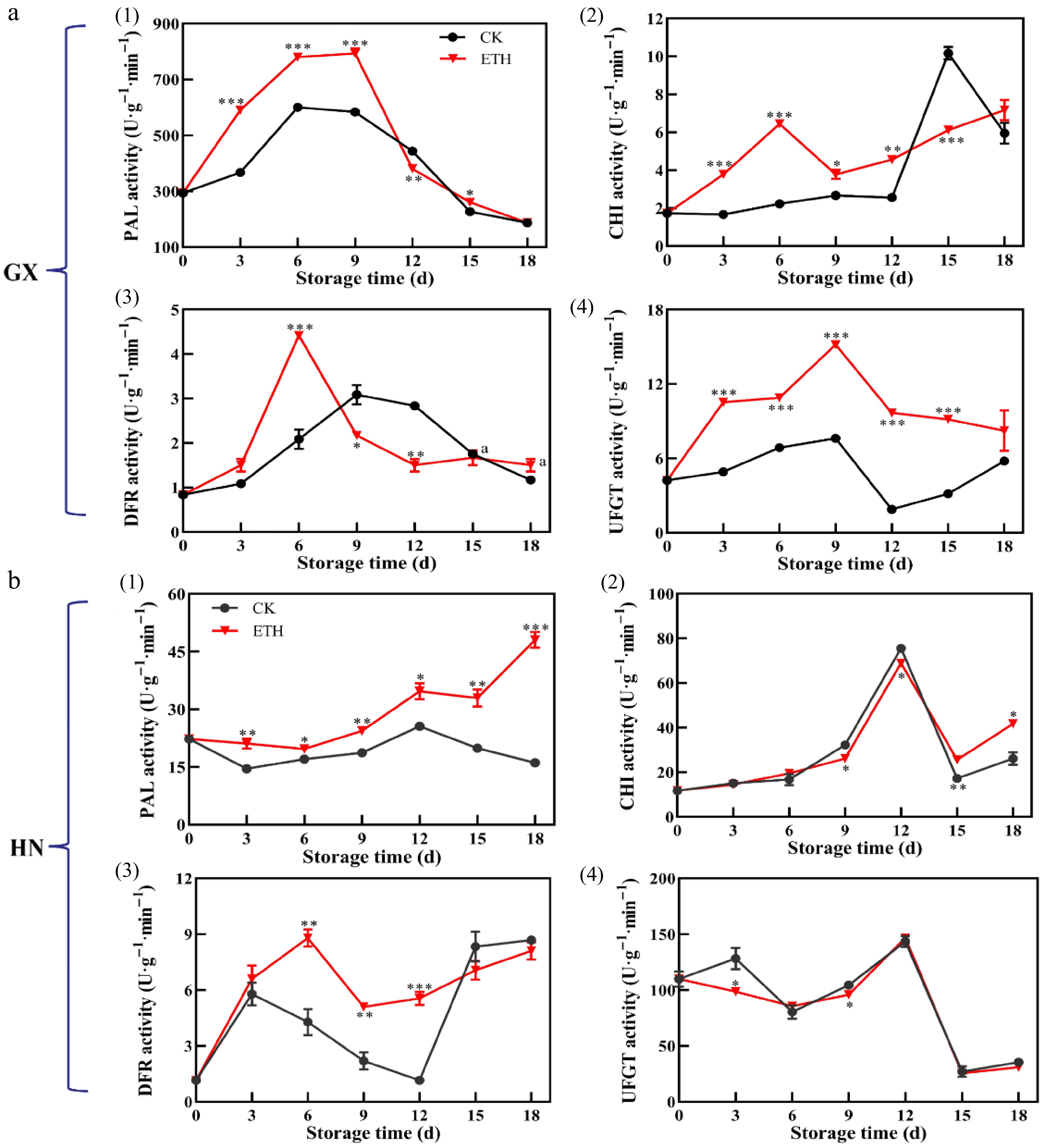
Figure 3.
Changes in enzyme activities related to anthocyanin biosynthesis in (a) GX and (b) HN mangoes during storage. (1) PAL activity, (2) CHI activity, (3) DFR activity, and (4) UFGT activity. The bars represent the standard error in the mean of triplicates. Asterisks over bars indicate differences between treatments with statistical significance set at ** p < 0.01, *** p < 0.001.
Changes in expression levels of genes related to anthocyanin synthesis
-
Transcriptome data revealed differential expression of several genes involved in anthocyanin synthesis in HN mangoes during storage (Fig. 4a). The genes MiPAL2 and MiANS3 were downregulated at 12 and 24 d, respectively. qRT-PCR analysis indicated that MiANS2 and MiUFGT2 were significantly upregulated by ETH on days 6, 12, and 18, while MiPAL1, MiCHI2, MiDFR, and MiANS1 were upregulated on day 12. Conversely, MiPAL2 and MiANS3 were downregulated by ETH on days 18 and 24 (Fig. 4b), which corresponded with the changes in peel color.
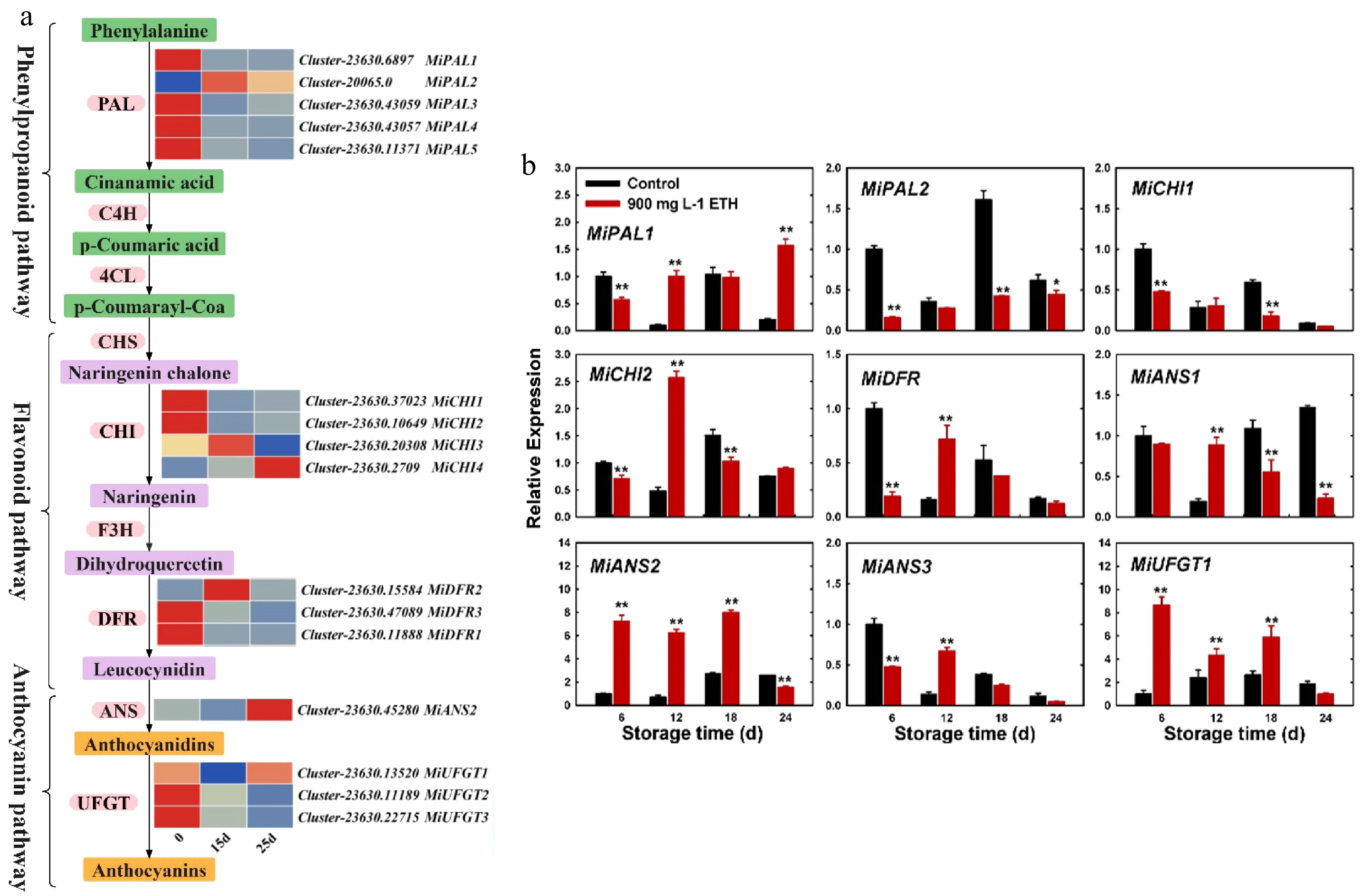
Figure 4.
Expression patterns of genes involved in anthocyanin biosynthesis of control- and ETH-treated HN mangoes during storage. Anthocyanin synthesis pathway and heatmap of differentially expressed genes according to (a) FPKM, and (b) expression levels by qRT-PCR. The bars represent the standard error in the mean of triplicates. Asterisks over bars indicate differences between treatments with statistical significance set at ** p < 0.05.
Expression patterns of MiERF genes
-
Based on FPKM values from transcriptome analysis, the expression of MiERF061, MiERF105, MiERF003, and MiRAP2-11 varied during mango storage (Fig. 5a). ETH treatment increased the expression of MiERF061, MiRAP2-11, and MiERF003, while MiERF105 was downregulated at 18 and 24 d, consistent with the reduced coloration of mango fruit (Fig. 5b).
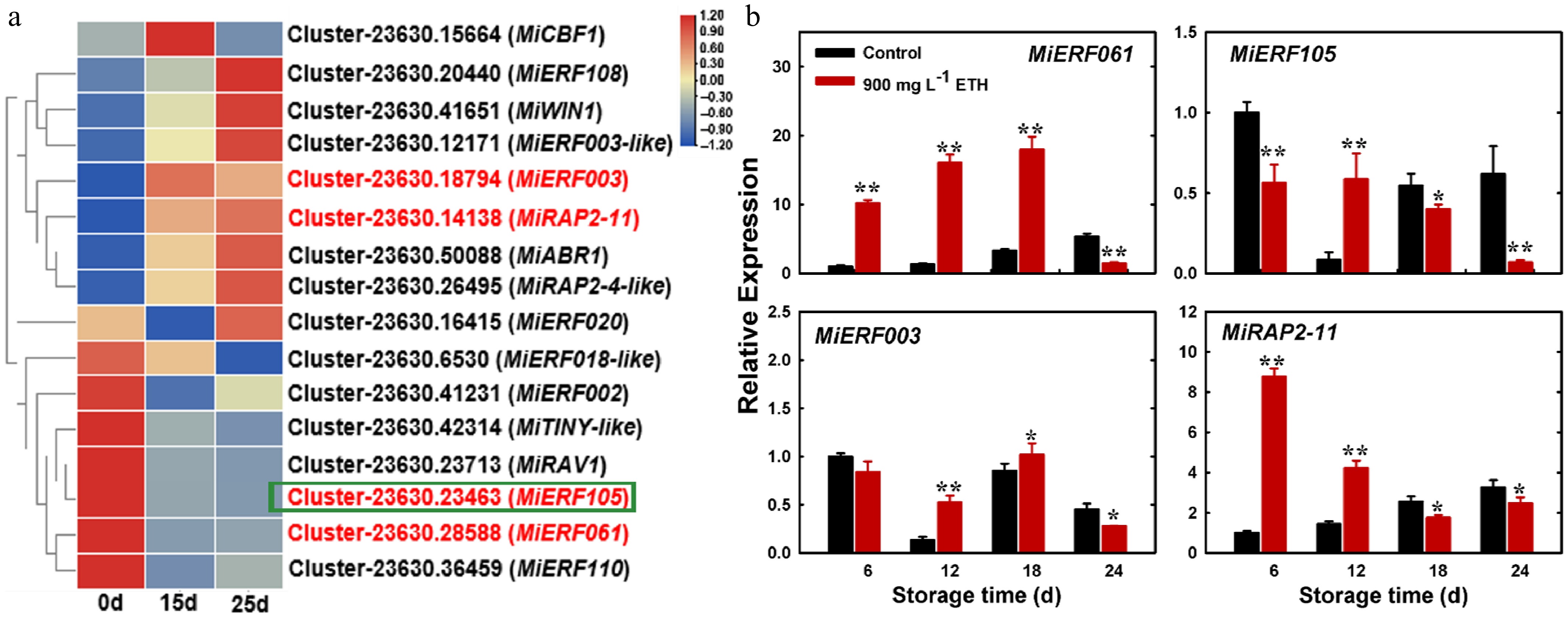
Figure 5.
Effects of ETH treatment on the expression of transcription factor ERF in Hainan mangoes during storage. Heatmap of differentially expressed genes according to (a) FPKM, and (b) relative expression levels by qRT-PCR. Asterisks over bars indicate differences between treatments with statistical significance set at * p < 0.05, ** p < 0.01.
Validation of MiERF105 binding to the promoters of MiPAL2 and MiANS3
-
The yeast one-hybrid assay confirmed that the MiERF105 protein binds to the promoters of MiPAL2 and MiANS3 (Fig. 6a). Subcellular localization further revealed that MiERF105 was predominantly distributed in the nucleus, supporting its function as a transcription factor (Fig. 6b). In addition, dual-luciferase assays indicated that MiERF105 positively regulated the promoter activities of MiPAL2 and MiANS3 (Fig. 6c). These findings suggest that MiERF105 participates in the transcriptional regulation of anthocyanin biosynthesis-related genes in mango fruit.
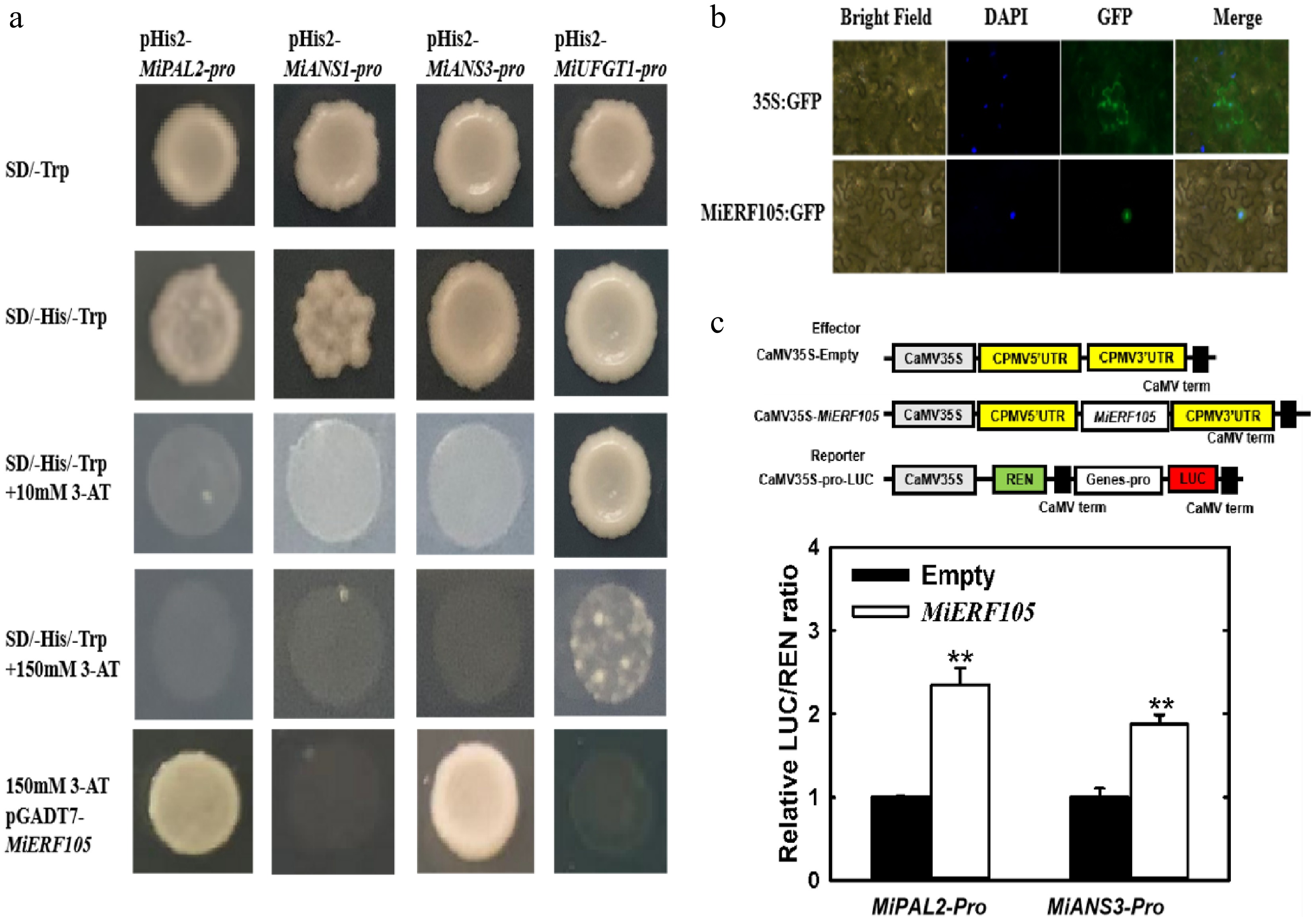
Figure 6.
MiERF105 directly binds to the promoters of MiPAL2 and MiANS3 to induce their expression. (a) MiERF105 activates the MiPAL2 and MiANS3 promoter fragments in yeast. (b) Subcellular localization of MiERF105 in tobacco. (c) MiERF105 binds to MiPAL2-pro and MiANS3-pro to activate their expression, shown by a dual-luciferase assay. The bars represent the standard error in the mean of triplicates. Asterisks over bars indicate differences between treatments with statistical significance set at p < 0.05.
Overexpression of the MiERF105 gene in mango fruit peel
-
Overexpression of MiERF105 in mango slices accelerated coloration (Fig. 7a) and significantly enhanced the expression of MiPAL1 and MiANS3 on day 3 (Fig. 7b2, b3), consistent with increased PAL and ANS activities (Fig. 7b4, b5) and higher anthocyanin accumulation on day 6 (Fig. 7b6). This indicated that MiERF105 acts as a key activator in anthocyanin biosynthesis during mango fruit ripening.
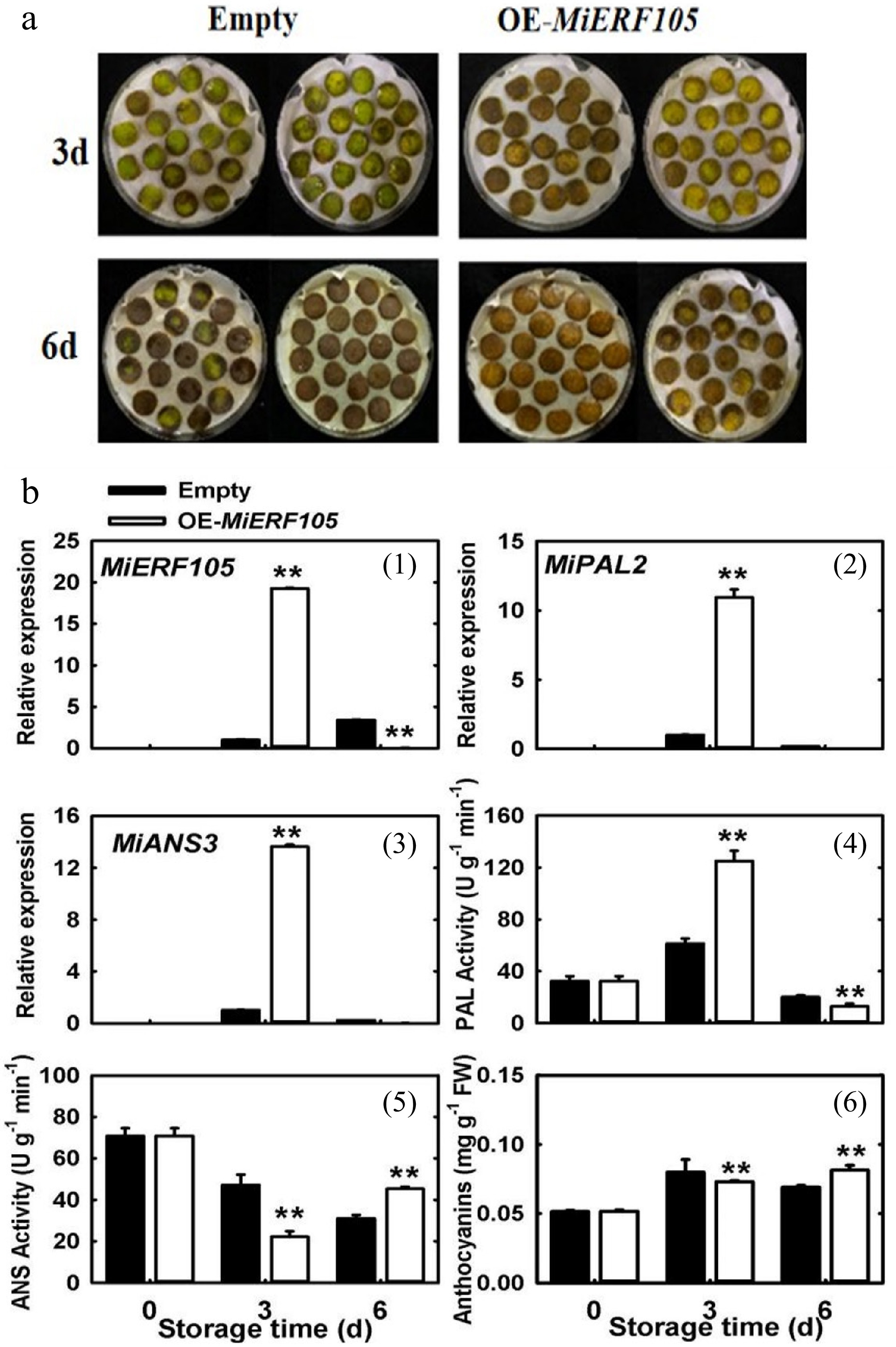
Figure 7.
Transient overexpression of MiERF105 in mango peel. (a) Phenotypic photograph of mango slices after MiERF105 infection, and the effects of MiERF105 overexpression on color-related parameters. (b) Expression levels of (1) MiERF105, (2) MiPAL2 gene, and (3) MiANS3 gene, (4) PAL activity, (5) ANS activity, and (6) anthocyanin content. The bars represent the standard error in the mean of triplicates. Asterisks over bars indicate differences between treatments with statistical significance set at ** p < 0.05.
-
The brightness and color of mango fruit significantly influence its market value. Ethephon (ETH) is widely used in mango production to achieve desirable flavor and uniform peel color. For the first time, we explored the physiological and molecular mechanisms underlying the color development of 'Guifei' mangoes with varying endogenous gibberellin (GA3) levels under exogenous ethylene treatment (900 mg·L−1). Our findings suggest that peel coloration in 'Guifei' mangoes mediated by exogenous ethylene may be influenced by endogenous GA3 levels, and that suppression of MiERF105 expression might be a key factor in inhibiting color transformation.
Ethylene positively regulates anthocyanin biosynthesis in most fruit species. In this study, although there were no significant differences in fruit morphology, peel color, or endogenous ethylene content between fresh GX and HN 'Guifei' mangoes (Fig. 1a3), interestingly, there was a highly significant difference in endogenous GA3 content between them (Fig. 1b). This difference could be due to distinct cultivation practices in the two regions, with more exogenous GA3 likely used in Hainan for early harvesting and marketing[24].
In addition, it was noted that the application of ETH led to different coloring outcomes between GX and HN mangoes. ETH significantly promoted both color transformation and ethylene production in GX mangoes during storage (Fig. 1c). Similar findings have been reported in other fruit such as mulberries[25] and apples[26]. However, ETH treatment did not significantly enhance color change in HN mangoes, even though GA3 levels remained high throughout storage (Fig. 1d2) and ethylene production increased (Fig. 1d1, d3). Numerous studies have indicated that pre- or post-harvest GA application could either promote or suppress color change in fruit[27]. In the present study, we observed that ETH treatment did not obviously promote color change in HN mangoes during storage, and GA3 levels remained very high throughout the storage (Fig. 1d2), although ethylene production was accelerated by ETH treatment (Fig. 1d1, d3). Comparable outcomes, where GA3 inhibited anthocyanin content, have been previously reported in Valencia oranges[28] and sugar snap peas[29]. Regarding the relationship between GA3 concentration and ethylene response in fruit, Kaźmierczak & Kaźmierczak[30] reviewed that gibberellins (GAs) are associated with the response to exogenous ethylene in fruit, and that higher GA levels could reduce the sensitivity to ethylene in fruit. Recently, Zhou et al.[31] explored the mechanisms of postharvest uneven degreening of green lemon; their results revealed that uneven degreening is associated with uneven distribution of hormones, with the degreened part showing decreases in chlorophyll and gibberellin (GA3) content. This suggests that color transformation may not be directly linked to ethylene production, and that higher GA3 levels may be associated with reduced responsiveness to exogenous ethylene and consequently lower anthocyanin accumulation in mango fruit.
Enzymes in the flavonoid biosynthetic pathway play a critical role in anthocyanin production, affecting coloration and stability. In this study, ETH increased the activities of enzymes such as PAL, CHI, DFR, and ANS, leading to anthocyanin accumulation and visible red color in GX mangoes (Figs 2, 3). Similar effects of ETH on anthocyanin accumulation have been reported in 'Guifei' mango fruit[32]. These results are consistent with our findings in Guangxi mangoes, confirming the inducing effect of ethylene on anthocyanin accumulation in fruit. In contrast, anthocyanin levels remained low in ETH-treated HN mangoes despite increased PAL and DFR activities (Figs 2b, 3b). Previous studies suggested that the activities of individual anthocyanin biosynthesis enzymes are not always directly correlated with anthocyanin accumulation[33]. Therefore, the limited coloration observed in HN mangoes may be associated with the inhibitory effects of elevated GA3 levels on anthocyanin biosynthesis rather than enzyme activity alone.
Anthocyanin biosynthesis is also extensively regulated at the transcriptional level through structural genes and transcription factors[34]. Transcriptome and qRT-PCR analyses in the present study showed that PAL2 and ANS3, which are involved in early and late anthocyanin biosynthesis, were significantly downregulated in ETH-treated HN mangoes during late storage (Figs 4, 5). Similar suppression of anthocyanin biosynthesis-related genes accompanied by reduced coloration has been reported in ethylene-treated orchid flowers[35]. These findings suggest that transcriptional repression of anthocyanin biosynthesis genes may contribute substantially to the reduced anthocyanin accumulation observed in HN mangoes. Besides structural genes, transcription factors such as MYBs, MBW complexes, bHLHs, and WRKYs are crucial for activating anthocyanin structural genes. For instance, Zhang et al.[36] identified 30 structural genes, 11 MYBs, and four bHLHs among the differentially expressed genes (DEGs) involved in anthocyanin biosynthesis in ripening fruit of pink and blue blueberry cultivars. In addition, Bai et al.[37] revealed that MiMYB33 could promote accumulation of anthocyanins in the fruit skin of different mango varieties, indicating that multiple TFs and their interactions are essential for regulating anthocyanin biosynthesis in plants.
Ethylene response factors (ERFs), as important downstream regulators in ethylene signaling pathways, are widely involved in climacteric fruit ripening and anthocyanin biosynthesis[38]. Previous studies in litchi fruit demonstrated that several ERF family members responded strongly to ethephon treatment and participated in the transcriptional regulation of anthocyanin biosynthesis-related genes[39]. Our study found that MiERF105 was significantly downregulated in HN mangoes during storage (Fig. 4), and MiERF105 was shown to bind directly to the promoters of MiPAL2 and MiANS3, regulating their activities. Overexpression of MiERF105 in mango slices significantly increased MiPAL2 and MiANS3 expression and enhanced anthocyanin content (Figs 5, 6).
Although significant differences in endogenous GA3 levels were observed between GX and HN mangoes, the present study establishes an association rather than a direct causal relationship. Further experiments involving exogenous GA3 application or inhibition of gibberellin biosynthesis are required to verify the specific role of GA3 in regulating ethylene-induced coloration. These findings suggest that suppression of MiERF105 expression may contribute to reduced anthocyanin accumulation in HN mangoes under ETH treatment. Anthocyanin synthesis in plants is regulated by hormone homeostasis and crosstalk[1,40]. GA3 may synergistically regulate anthocyanin synthesis alongside other hormones[41]. Further research may be needed to identify transcription regulators upstream of MiERF105 and elucidate the regulatory networks of gibberellin and ethylene signaling pathways in mango fruit.
-
This study indicates that differences in endogenous GA3 levels are associated with distinct coloration responses to exogenous ethylene in 'Guifei' mangoes. Figure 8 illustrates the potential relationships among ethylene release, endogenous gibberellin content, and the physiological and transcriptional regulation of anthocyanin biosynthesis in postharvest mango fruit. In GX mangoes with low GA3 levels, increased ethylene production and enhanced enzyme activities associated with anthocyanin synthesis would contribute to effective color transformation. In contrast, in HN mangoes, elevated GA3 levels appear to suppress the expression of MiERF105, leading to reduced anthocyanin accumulation and subsequent inhibition of color change.
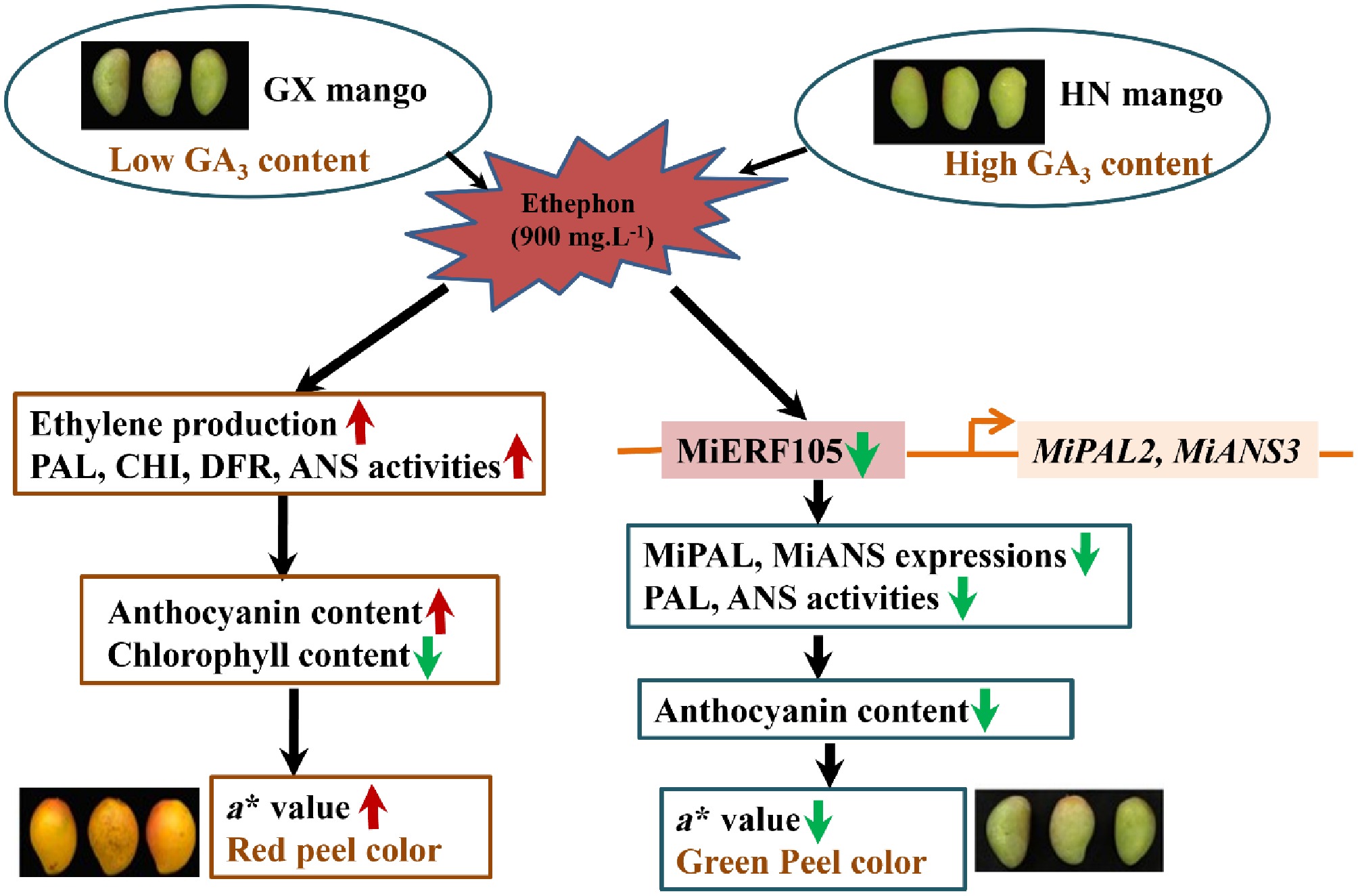
Figure 8.
Working model showing the relationship between ethylene production and GA3 concentration and the inhibition of ERF105 on the coloration of 'Guifei' mango fruit. Upward arrows in red represent an increase compared to the control group, and downward arrows in green represent a decrease compared to the control group.
-
The authors confirm contributions to the paper as follows: study conception and design: Shao Y, Li W; data collection: Chen M, Wang X, Wang Y; analysis and interpretation of results: Chen M, Zou S, Wang Y, Shao Y; methodology: Wang X, Zou S; draft manuscript preparation: Chen M; manuscript review and editing: Zou S, Yang J, Li W; supervision: Shao Y, Li W; funding acquisition: Li W. All authors reviewed the results and approved the final version of the manuscript.
-
All data generated or analyzed during this study are included in this published article and its supplementary information files.
-
This work was supported by the Hainan Provincial Academician Innovation Platform Research Special Project (YSPTZX202516), the National Natural Science Foundation of China (32360778), and the National Key Research and Development Program of China (2023YFD2300803-7). The authors thank Dr. Emma Shipman (University of California, Davis, USA) for her critical reading of the manuscript.
-
The authors declare that they have no known competing financial interests or personal relationships that could have appeared to influence the work reported in this paper.
-
accompanies this paper online at: https://doi.org/10.48130/ph-0026-0017.
-
# Authors contributed equally: Mingmin Chen, Xin Wang, Shicheng Zou
- Supplementary Table S1 Primers for qRT-PCR.
- Supplementary Table S2 Primers used for yeast one-hybrid.
- Supplementary Table S3 Primers used for subcellular localization.
- Supplementary Table S4 Primers used for transient dual-luciferase reporter.
- Supplementary Table S5 Primers used for transient overexpression.
- Copyright: © 2026 by the author(s). Published by Maximum Academic Press on behalf of Chongqing University. This article is an open access article distributed under Creative Commons Attribution License (CC BY 4.0), visit https://creativecommons.org/licenses/by/4.0/.
-
About this article
Cite this article
Chen M, Wang X, Zou S, Wang Y, Yang J, et al. 2026. Association of endogenous gibberellin level with the inhibitory effect of exogenous ethylene on coloration of postharvest 'Guifei' mango. Plant Hormones 2: e019 doi: 10.48130/ph-0026-0017 

Association of endogenous gibberellin level with the inhibitory effect of exogenous ethylene on coloration of postharvest 'Guifei' mango
- Received: 07 May 2026
- Revised: 19 June 2026
- Accepted: 24 June 2026
- Published online: 29 July 2026
Abstract: Ethylene and gibberellin play crucial roles in regulating anthocyanin synthesis. However, the internal connection between ethylene and GA3 in regulating anthocyanin accumulation in mango fruit remains poorly understood. This study explored the effect of ethephon treatment (ETH, 900 mg·L−1) on the color development of 'Guifei' mangoes at varying GA3 levels and investigated the underlying molecular mechanisms. Results demonstrated that ETH treatment significantly enhanced the coloration of Guangxi (GX) mangoes and resulted in a lower GA3 level. This effect was associated with higher ethylene production, increased anthocyanin content, and induced anthocyanin synthesis activities. In contrast, mango fruit from Hainan (HN), which had higher GA3 concentrations, showed no significant color change in response to ETH treatment. Furthermore, RNA-seq and qRT-PCR analyses revealed that the expression of MiERF105 was significantly downregulated in HN mangoes during storage. Yeast one-hybrid, dual-luciferase reporter, and transient overexpression assays of MiERF105 demonstrated that MiERF105 could bind to MiPAL2 and MiANS3 promoters, thereby regulating PAL and ANS activities and anthocyanin accumulation in mango fruit. This study suggested that elevated GA3 levels were associated with reduced coloration responses to exogenous ethylene and were accompanied by the downregulation of MiERF105.