












-
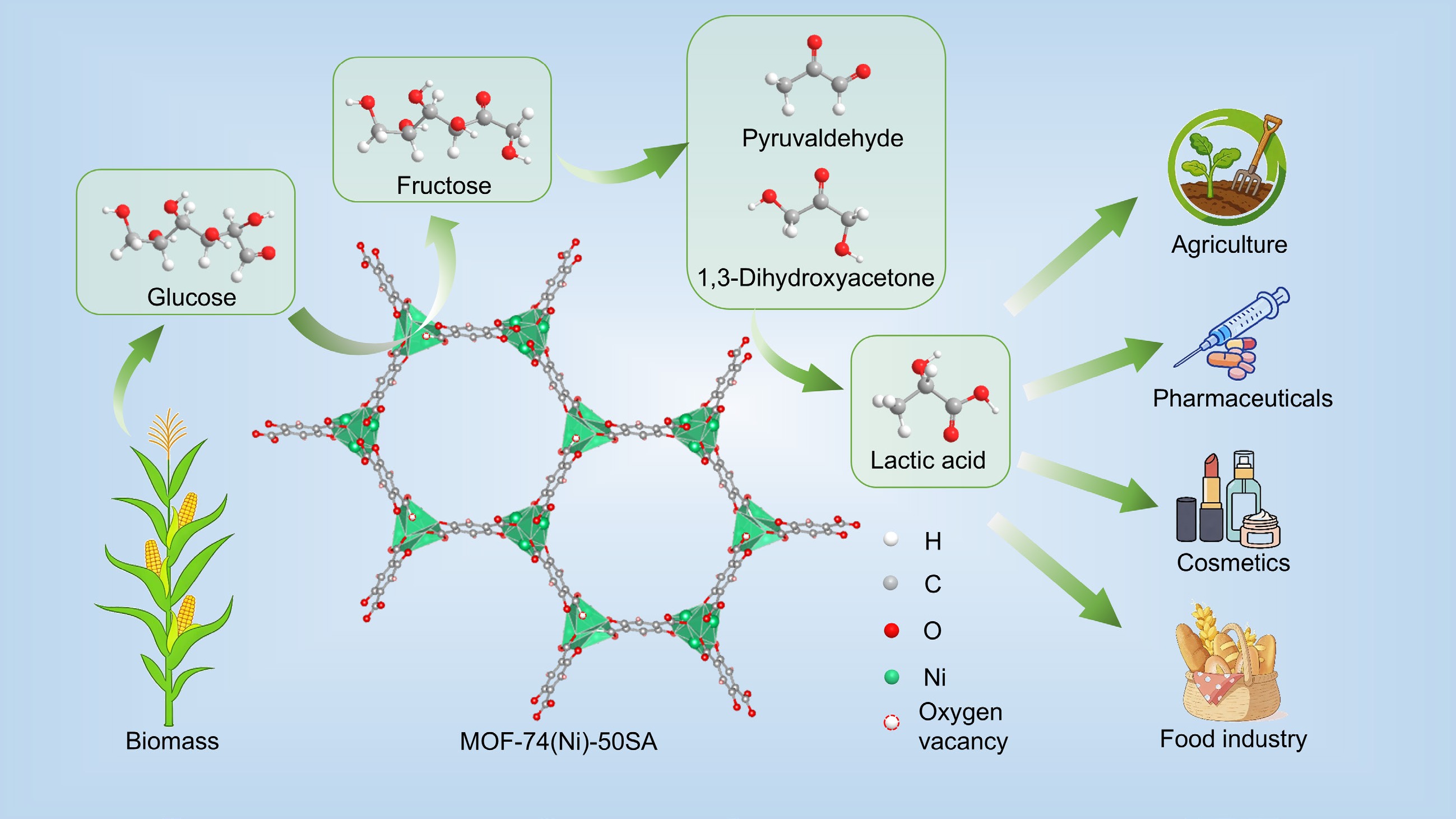
With the rapid development of the global economy, plastic products have become an indispensable part of our daily lives[1−4]. However, their poor degradability and low recycling rate have caused serious environmental pollution[5−8]. Statistics show that global plastic production increased by more than 20-fold between 1964 and 2015 and is projected to quadruple by 2050[9]. To address this challenge, international organizations such as the United Nations Environment Programme have actively advocated restrictions on nonbiodegradable plastics[10]. China has also implemented policies including the 'Plastic Restriction Order' and 'Plastic Ban Order'[11]. In this context, the biodegradable material polylactic acid (PLA) is regarded as the most promising alternative because its final degradation products are simply CO2 and H2O, leaving no persistent environmental residues[12]. As the direct precursor for PLA production, lactic acid (LaA), also known as 2-hydroxypropionic acid, serves not only as an important biomass-derived organic acid but also as a key intermediate for manufacturing various chemicals, finding wide applications in food, pharmaceuticals, consumer goods, and biodegradable materials[13,14]. The global LaA market is estimated at USD 3,682.4 million in 2025, and is projected to grow to USD 6,653.7 million by 2033, with a compound annual growth rate (CAGR) of 7.7% during 2026–2033, according to the report Lactic Acid Market (2026–2033) by Grand View Research. Currently, industrial methods for producing LaA fall into two main categories: microbial fermentation and chemical synthesis, with microbial fermentation primarily utilizing various strains of LaA bacteria (LAB). However, in industrial fermentation processes, the required LAB have long fermentation times and demand stringent growth conditions; furthermore, the culture medium must be sterilized prior to fermentation[15]. Additionally, the industrial chemical route to LaA is heavily dependent on depletable fossil resources. Therefore, developing efficient and environmentally friendly catalytic systems for converting renewable biomass and its derivatives to LaA is of great significance.
Metal–organic frameworks (MOFs) are widely used in many fields of scientific research by virtue of their large specific surface area, high porosity, structural diversity, tunable properties, and abundant metal sites[16−21]. Up to now, tens of thousands of MOFs have been synthesized and reported, such as ZIF-8, UiO-66, HKUST-1, MIL-53, and MOF-74[22−26], which can be used as potential catalysts in biomass valorization. Guo et al.[27] coupled Cr to MIL-101-GLY and concluded that the open sites on the surface of the MOF brought Lewis acidity to the system and contributed to the proton transfer step in the glucose isomerization reaction. The active site was located on the surface, and a higher surface/volume ratio increased the catalytic activity for fructose production but just with trace amounts of LaA. Lu et al.[28] demonstrated that Mg-MOF-74 exhibited the highest catalytic activity for the conversion of sugar to methyl lactate. Under the optimal reaction conditions, glucose was completely converted. The yield of the final product, methyl lactate, reached 35%. Zn-ZIF-8 produced more methyl lactate with smaller crystals, reaching a maximum methyl lactate yield of 42% from sucrose after 24 h at 160 °C[29]. Liu et al.[30] explored the catalytic conversion of glucose to LaA by MIL-101(Fe) for the first time. In the aqueous phase, the yield of LaA from glucose catalyzed by MIL-101(Fe) reached up to 25.4%. In summary, MOF catalysts have already exhibited their potential to be used in the production of LaA from biomass sugars; however, these catalytic systems suffer from low yields of LaA. Although some other reaction systems (e.g., Mg-MOF-74[28], Zn-ZIF-8[29]) report a higher yield of esters (e.g., LaA methyl ester) with the use of organic solvents (e.g., methanol), further treatments are still required to obtain the final LaA. Therefore, efficient aqueous production of LaA from glucose or raw biomass using MOF-based catalysts is still a challenge.
In our previous work, the catalytic performance of MOF catalysts could be enhanced via tuning the content or type of organic linkers in the MOF framework to create open unsaturated metal sites[31−33]. Building upon this concept, we have developed a defect-engineered MOF-74(Ni) catalyst via partial ligand substitution with salicylic acid (SA). The optimized catalyst demonstrated outstanding performance in the aqueous-phase transformation of glucose into LaA. Comprehensive characterization and catalytic evaluations indicated that the introduced structural defects generated oxygen vacancies, thereby creating coordinatively unsaturated sites that substantially enhanced catalytic activity. The catalyst's excellent recyclability and broad substrate compatibility were also confirmed by systematic studies.
-
MOF-74(Ni) was synthesized via a solvothermal method. Briefly, nickel nitrate hexahydrate (0.273 g) and 2,5-dihydroxyterephthalic acid (DHTA, 0.104 g) were placed in a 40-mL glass vial. Then 1 mL of deionized water and 20 mL of N,N-dimethylformamide (DMF) were added, and the mixture was completely dissolved using ultrasonication. The solution was transferred to an autoclave reactor equipped with a polytetrafluoroethylene liner and heated at 100 °C for 24 h. The resulting product was washed sequentially with DMF and methanol (two or three times) via centrifugation. Finally, the solid was dried overnight in a vacuum oven at 80 °C to obtain the MOF-74(Ni) sample.
Synthesis of MOF-74(Ni)-xSA
-
MOF-74(Ni)-xSA was synthesized using a similar procedure to that used for MOF-74(Ni) but with partial ligand substitution where a portion of DHTA was replaced with SA. MOF-74(Ni)-25SA and MOF-74(Ni)-50SA were prepared by adding 26 mg and 52 mg of SA, respectively; the corresponding mass of DHTA was also altered to maintain the total organic linker mass at 0.104 g. The resultant sample was designated as MOF-74(Ni)-xSA, where x represents the mass percentage of SA relative to the total mass of organic linkers.
Catalytic testing
-
For typical catalytic testing, the conversion of glucose to LaA was performed in a magnetically stirred mini-autoclave reactor. Specifically, 50 mg of the catalyst and 100 mg of glucose were added into 10 mL of deionized water within a polytetrafluoroethylene liner. The reactor was assembled, purged with 0.4 MPa of nitrogen to establish an inert atmosphere, and magnetically stirred at 170 °C for 4 h. After completion of the reaction, the autoclave was cooled to room temperature using an ice-water bath. The reaction mixture was then sampled with a 2-mL syringe and filtered through a 0.22-μm aqueous-phase membrane filter. The filtrate was analyzed by high-performance liquid chromatography (HPLC), with substrate conversion and product yield calculated using the following equations: Conversion (%) = 100% × (Mole of converted substrate)/(Mole of initial substrate); yield (%) = 100% × (Mole of generated product)/(Mole of initial substrate). Some byproducts, including fructose, levulinic acid, formic acid, and furfural, were not individually quantified because of their negligible yields. The carbon balance was around 65%. Other unknown products with higher molecular weights (such as humins, sugar oligomers, glycosides, and furan-based polymers) were not easily detected by HPLC and were therefore not further quantified.
-
MOF-74(Ni)-xSA catalysts with varying SA incorporation ratios were synthesized following the procedure illustrated in Fig. 1a. The transmission electron microscopy (TEM) image in Supplementary Fig. S1a showed that pristine MOF-74(Ni) without SA modification exhibited relatively smooth surfaces. Upon incorporation of 25% SA, the catalyst's surfaces developed dandelion-like morphological features (Supplementary Fig. S1b). Further increasing the SA content to 50% resulted in the formation of needle-like surface protrusions accompanied by a secondary effect of particle size reduction[34] (Supplementary Fig. S1c). Corresponding energy-dispersive X-ray spectroscopy (EDS)-based elemental mappings demonstrated the homogeneous distribution of Ni species with no detectable aggregation of nickel oxide nanoparticles, indicating that the incorporation of SA did not affect the structure of MOF-74(Ni).
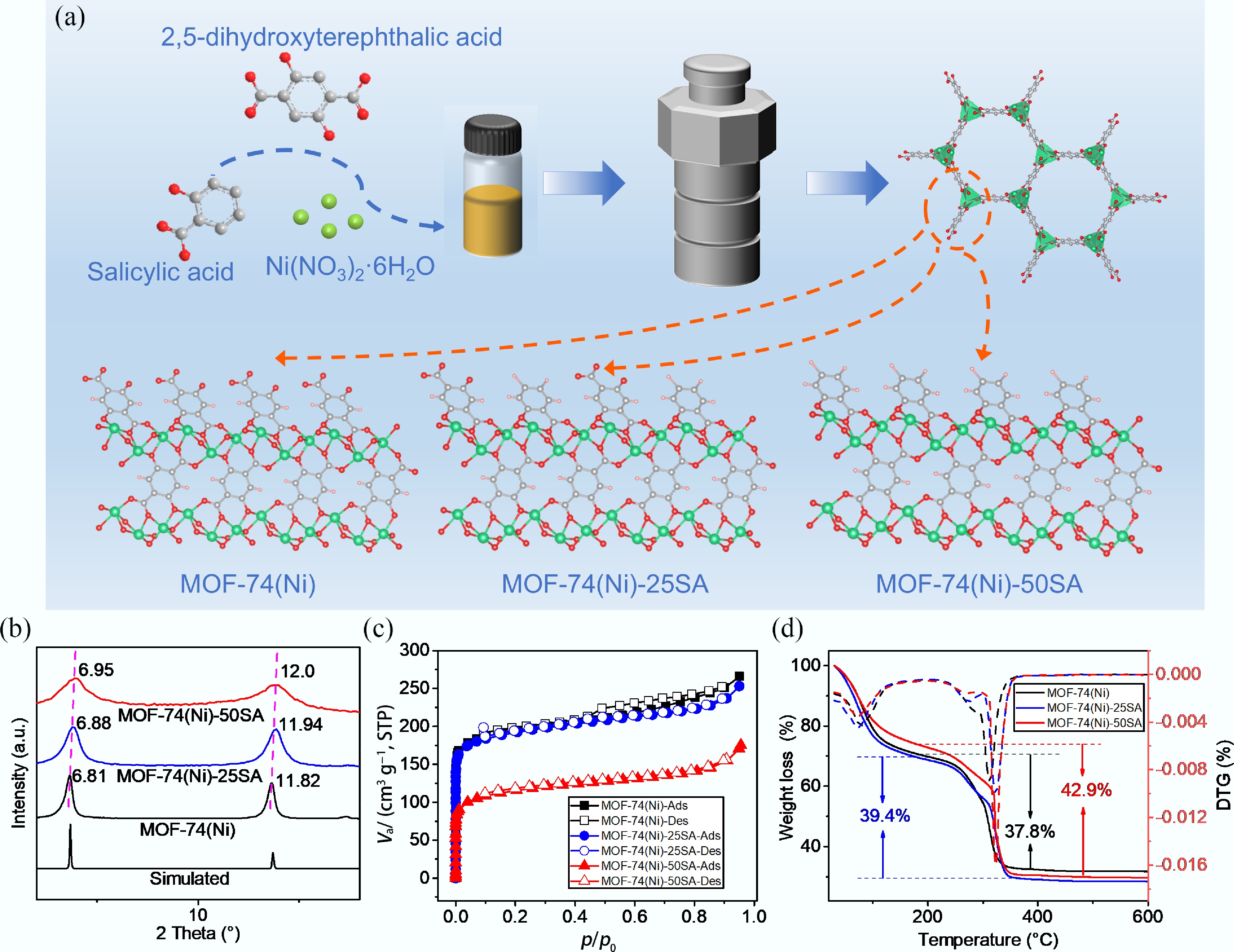
Figure 1.
(a) Schematic illustration of the solvothermal synthesis of MOF-74(Ni)-xSA. (b) XRD patterns of MOF-74(Ni)-xSA and simulated MOF-74(Ni). (c) N2 adsorption–desorption isotherms and (d) TG-DTG curves of MOF-74(Ni)-xSA samples.
The X-ray diffraction (XRD) patterns presented in Supplementary Fig. S2 indicated that SA modification did not significantly alter the characteristic crystalline structure of MOF-74(Ni), as shown by the good agreement with the simulated XRD pattern. Notably, increasing SA content induced peak broadening and reduced crystallinity, which might be caused by the formation of structural defects[34]. Concurrently observed peak shifts toward higher angles (Fig. 1b) revealed lattice contraction, which may be the reason why the particle size of the resultant MOF-74(Ni)-25SA and MOF-74(Ni)-50SA decreased compared with pristine MOF-74(Ni). Further introduction of a larger amount of SA resulted in the collapse of the crystalline MOF-74(Ni) structure. These results indicated the successful synthesis of defect-engineered MOF-74(Ni)-xSA catalysts while preserving the parent MOF frameworks. The N2 adsorption–desorption isotherms in Fig. 1c showed that the microporous nature of MOF-74(Ni)-xSA was maintained compared with pristine MOF-74(Ni), and the average pore size of these three samples was around 0.9 nm (Supplementary Fig. S3). It should be noted that the introduction of SA reduced the specific surface area as well as the pore volume (Supplementary Table S1), which might be caused by the formation of structural defects. The thermogravimetry-derivative thermogravimetry (TG-DTG) analysis in Fig. 1d revealed that the thermal stability did not greatly change with the incorporation of SA, exhibiting decomposition temperatures of around 320 °C. The weight loss for these three samples followed the order MOF-74(Ni)-50SA > MOF-74(Ni)-25SA > MOF-74(Ni) and was consistent with the content of SA in these samples, thereby confirming the successful incorporation of SA into the structure of MOF-74(Ni) and the existence of structural defects within the as-synthesized samples.
The Fourier transform infrared (FTIR) spectra of these three catalysts (Supplementary Fig. S4) exhibited the characteristic vibrational bands of MOF-74(Ni)'s structural features. The broad absorption band at 3,386 cm−1 was attributed to O-H stretching vibrations from water molecules adsorbed within the porous framework[35]. Distinct peaks corresponding to the DHTA linker were observed at 1,564 cm−1 (C=O stretching), 1,411 cm−1 (aromatic C=C stretching), 1,365 cm−1 (aromatic ring backbone vibration), and 1,201 cm−1 (aromatic C-H stretching)[35−37]. Additionally, benzene ring bending vibrations occurred at 891 cm−1 (outside the benzene ring face) and 821 cm−1 (benzene ring), while the characteristic peak at 497 cm−1 was assigned to Ni-O stretching vibrations, confirming the successful formation of the MOF-74(Ni) framework[38]. The ultraviolet (UV)–visible diffuse reflectance (DR) spectra (Supplementary Fig. S5) revealed that all these three samples exhibited wide absorption bands in the region of 380–450 nm[37], showing that the aggregation of metallic Ni did not occur with the incorporation of SA. The contents of Ni measured by inductively coupled plasma–optical emission spectroscopy (ICP-OES) in MOF-74(Ni)-50SA, MOF-74(Ni)-25SA, and MOF-74(Ni) were 26.9 wt%, 25.7 wt%, and 25.7 wt% (Supplementary Table S1), respectively.
To further investigate the electronic structure and chemical states of MOF-74(Ni)-xSA catalysts, X-ray photoelectron spectroscopy (XPS) analysis was conducted. The Ni 2p XPS spectra of these three samples in Fig. 2a exhibited two characteristic Ni2+ peaks at 855.0 eV (Ni 2p3/2) and 872.5 eV (Ni 2p1/2), along with their corresponding satellite peaks at 860.0 and 878.4 eV[37,39]. Although no obvious shift in Ni 2p binding energies was observed after SA incorporation, the generated unsaturated Ni sites might be occupied by labile ligands (e.g., H2O or OH–), which modifies the coordination number and steric accessibility without significantly altering the electron density or chemical state of Ni2+. The O 1s XPS spectra in Fig. 2b can be deconvoluted into three peaks: lattice oxygen (OL) at 529.8 eV, oxygen vacancy (OV) at 530.6 eV, and surface-adsorbed oxygen (OS) at 532.0 eV[34,40]. The oxygen species distribution in these three samples was semi-quantified on the basis of the corresponding peak areas. As shown in Supplementary Table S2, the concentration of OV species followed the order MOF-74(Ni)-50SA > MOF-74(Ni)-25SA > MOF-74(Ni), consistent with the content of introduced SA. The result revealed that the formation of structural defects was caused by the generation of OV species, which inevitably decreased the coordination number of Ni nodes and simultaneously induced the formation of unsaturated Ni sites.
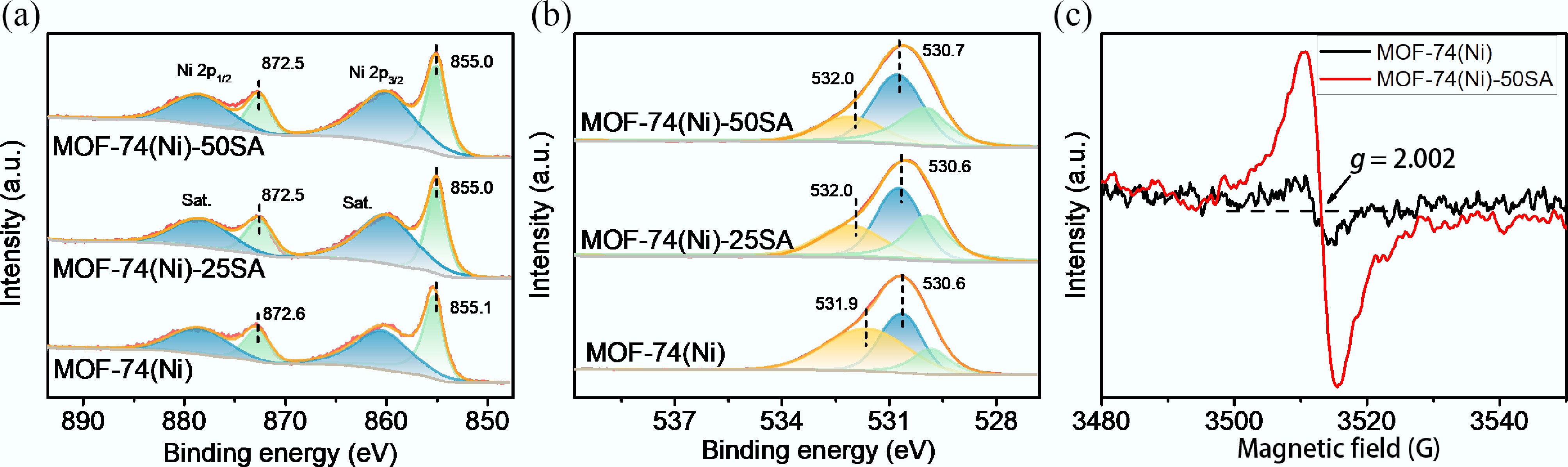
Figure 2.
(a) Ni 2p and (b) O 1s XPS spectra of MOF-74(Ni), MOF-74(Ni)-25SA, and MOF-74(Ni)-50SA. (c) Electron paramagnetic resonance of MOF-74(Ni) and MOF-74(Ni)-50SA.
To further confirm the existence of oxygen vacancies in MOF-74(Ni)-50SA, electron paramagnetic resonance (EPR) was performed. As shown in Fig. 2c, the MOF-74(Ni)-50SA sample exhibited characteristic signals at g = 2.002, confirming the presence of oxygen defects. In contrast, pristine MOF-74(Ni) only showed weak signals in this region. These EPR results demonstrated that SA incorporation indeed induced the formation of structural defects by varying the degree of organic linker deficiency[34], which was also consistent with the results of XPS analysis.
Catalytic performance of MOF-74(Ni)-xSA catalysts
-
The catalytic performance of MOF-74(Ni)-xSA for converting glucose to LaA was systematically evaluated. Figure 3 shows the temperature-dependent reaction profiles of MOF-74(Ni), MOF-74(Ni)-25SA, and MOF-74(Ni)-50SA at 130 °C, 150 °C, and 170 °C. As shown in Fig. 3a, MOF-74(Ni) exhibited limited activity at 130 °C with glucose conversion below 40% and negligible LaA production. At 150 °C, the glucose conversion reached 82.9% after 8 h, but the LaA yield remained low at 14.8%. When the temperature was increased to 170 °C, although the glucose conversion improved, the LaA yield only reached 36.3% after 8 h, with a 15.8% yield of 5-hydroxymethylfurfural (HMF) as the major byproduct. When MOF-74(Ni)-25SA was used as the catalyst, glucose conversion and LaA production were enhanced. For example, the glucose conversion and LaA yield were up to 88.9% and 22.8% at 150 °C after 8 h of reaction (Fig. 3b). When the temperature was further increased to 170 °C, the glucose conversion and LaA yield improved to 99.8% and 35.2% compared with 99.1% and 31.7% in pristine MOF-74(Ni) after 4 h, demonstrating that SA incorporation enhanced both glucose conversion and LaA production. Surprisingly, glucose conversion and LaA yield could be further enhanced using MOF-74(Ni)-50SA as the catalyst even under mild reaction conditions. Glucose conversion reached up to 66.3% at 130 °C after 8 h (Fig. 3c), and the corresponding LaA yield was up to 15.2%. When the reaction temperature was increased to 150 °C, glucose conversion and LaA yield were up to 94.4% and 39.6% after 8 h of reaction. When the reaction temperature was increased to 170 °C, 99.5% glucose conversion and a 51.7% yield of LaA were achieved after 4 h of reaction, surpassing most of the recent reported works (Supplementary Fig. S6 and Supplementary Table S3). These results conclusively demonstrate that strategic SA modification of MOF-74(Ni) effectively promotes the conversion of glucose to LaA. At the same time, it was also noted that incorporating a larger amount of SA into the structure of MOF-74(Ni) suppressed the formation of HMF byproducts, thereby promoting the production of LaA.
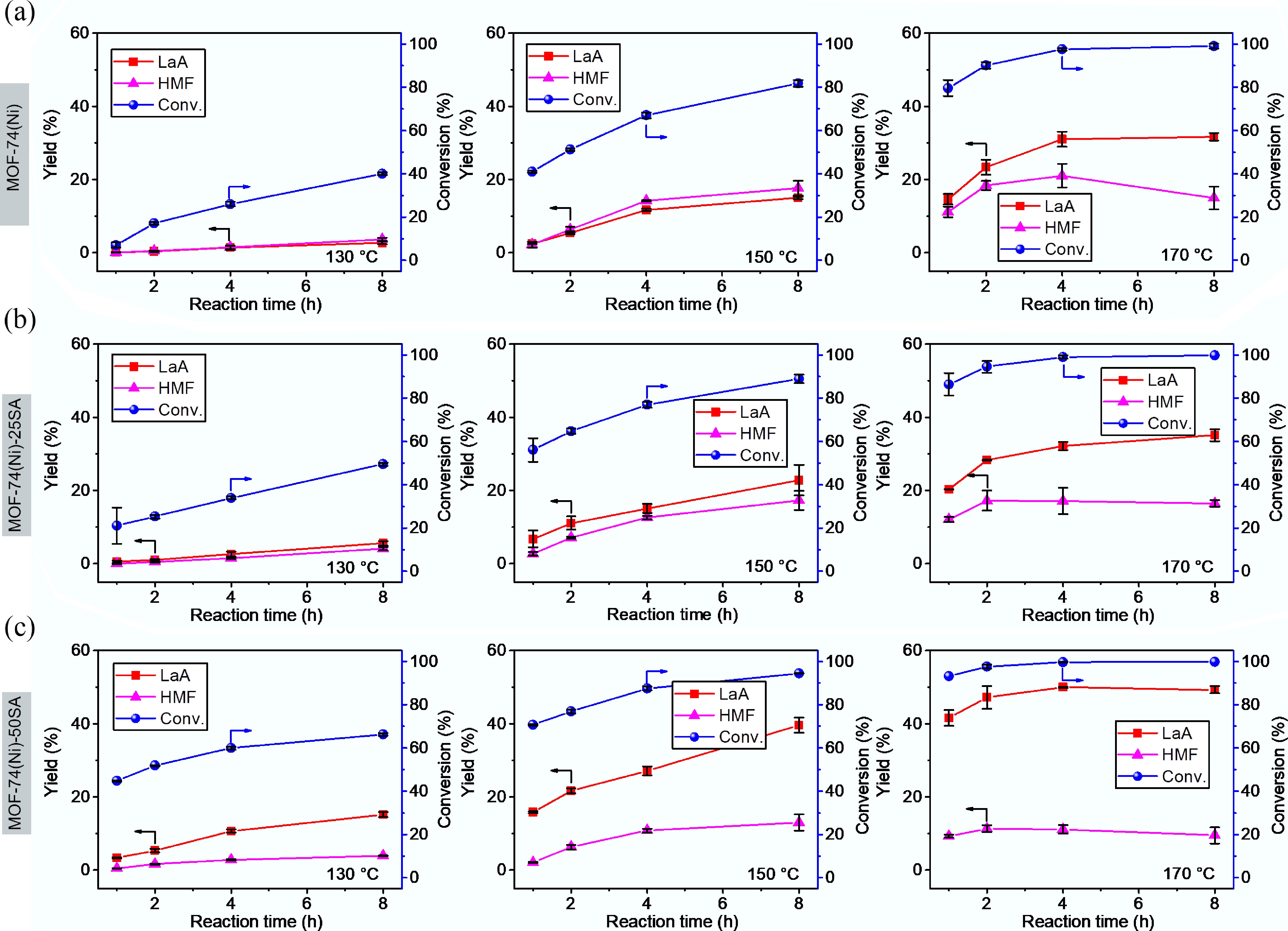
Figure 3.
Reaction profiles for the conversion of glucose with (a) MOF-74(Ni), (b) MOF-74(Ni)-25SA and (c) MOF-74(Ni)-50SA at 130 °C, 150 °C, and 170 °C. Reaction conditions: 100 mg of glucose, 0.4 MPa of N2, and 10 mL of water.
The effects of catalyst loading and the concentration of the glucose substrate on the reaction performance with MOF-74(Ni)-50SA were systematically investigated. As shown in Supplementary Fig. S7, the yield of LaA was highly dependent on the concentration of glucose, although MOF-74(Ni)-50SA was active enough to fully convert the substrate at different concentrations. The LaA yield reached up to 68.7% using 50 mg of glucose as the substrate (5 g L−1) compared with 43.8% at 200 mg of glucose (20 g L−1), indicating that a higher concentration of glucose was favorable for the formation of other byproducts except for HMF. The LaA yield of up to 36.0%, along with 99.5% glucose conversion, could still be obtained even using a half dose of the catalyst (25 mg), demonstrating the excellent performance of MOF-74(Ni)-50SA in the selective conversion of glucose to LaA. Increasing the catalyst dosage to 100 mg did not further enhance LaA yield (Supplementary Fig. S8). These experimental results indicate that defective MOF-74(Ni)-50SA exhibited excellent activity for the conversion of glucose to LaA, and a maximum yield of up to 68.7% could be achieved.
Reaction pathway of LaA production from glucose with MOF-74(Ni)-50SA catalysts
-
To reveal the role of MOF-74(Ni)-xSA during glucose conversion to LaA, some other catalysts were also tested. As shown in Fig. 4, the glucose conversion in the blank experiment was 30.7%, and HMF was detected as the main byproduct with only a 0.3% yield of LaA, indicating that the conversion of glucose to LaA without a catalyst barely occurred. To study the effect of the organic ligands, we replaced the catalyst with only DHTA or SA. The molar amount of each ligand matched that in MOF-74(Ni). The glucose conversion did not change significantly compared with the blank test. The LaA yields were only 1.5% and 1.7%, respectively. This demonstrated that neither DHTA nor SA could promote the conversion of glucose to LaA. Next, we examined the role of nickel. We used nickel oxide (NiO) and nickel nitrate hexahydrate as catalysts. The molar amount of Ni was kept the same as that in MOF-74(Ni). With NiO, the glucose conversion increased to 47.7%, but the LaA yield remained as low as 0.7%. This indicated that NiO could only improve glucose conversion but was insufficient to afford the selective production of LaA. In contrast, using nickel nitrate hexahydrate as the catalyst resulted in a LaA yield of 13.8% and 92.4% glucose conversion. This result confirmed that coordinatively unsaturated Ni species exhibited a significant catalytic promoting effect on the conversion of glucose to LaA. In summary, the catalytic performance comparison of these catalysts showed that coordinatively unsaturated Ni species rather than pure DHTA or SA ligands facilitated the efficient conversion of glucose to LaA. Moreover, the presence of both coordinatively unsaturated Ni species and oxygen vacancies in the structure of the MOF-74(Ni)-50SA catalyst boosted the formation of LaA from glucose under mild reaction conditions.
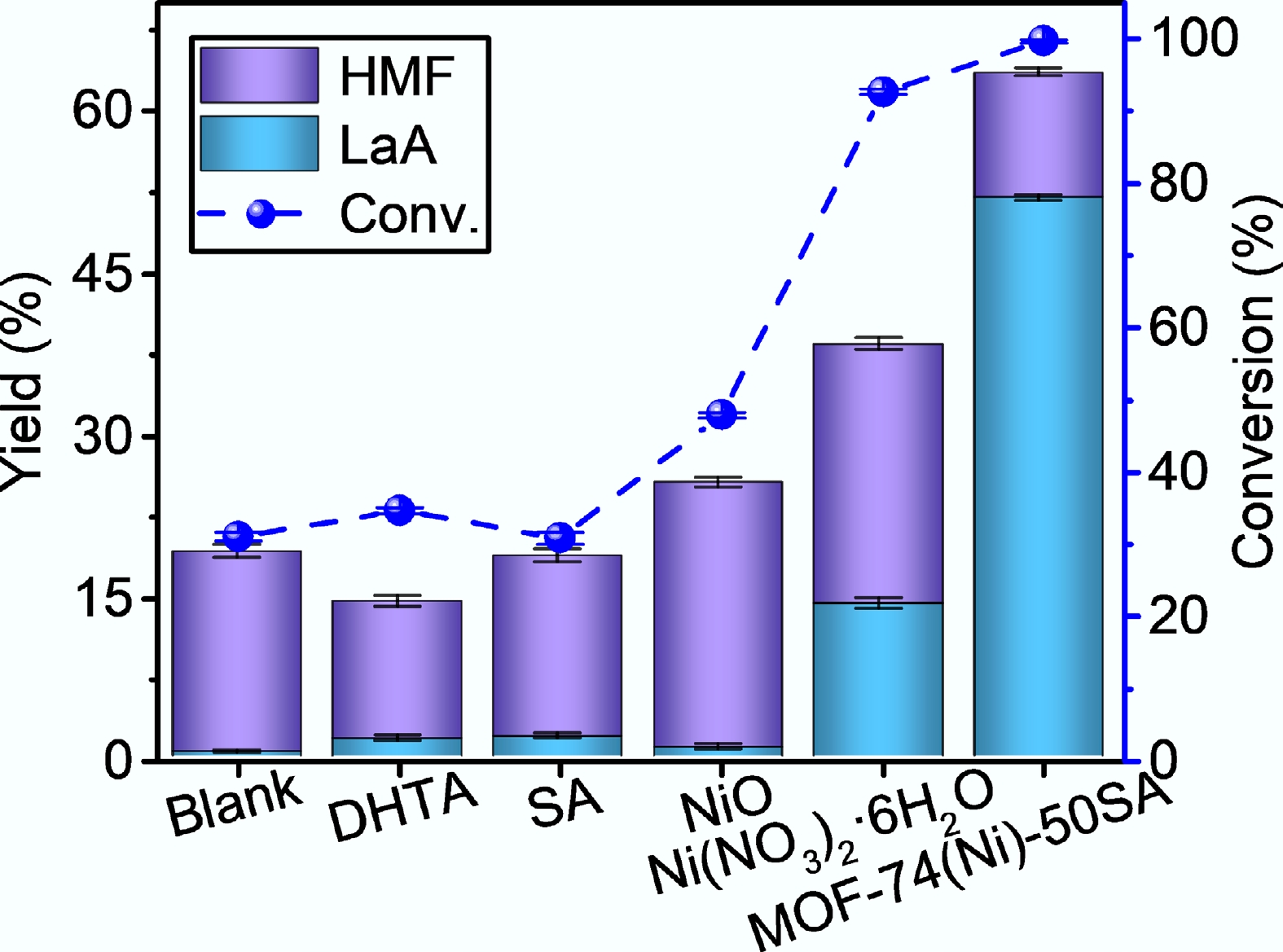
Figure 4.
Catalytic conversion of glucose to LaA with other catalysts. Reaction conditions: 100 mg of the substrate, 10 mL of water, 170 °C, 4 h, and 0.4 MPa of N2.
To elucidate the enhanced catalytic performance of MOF-74(Ni)-xSA in the conversion of glucose to LaA, detailed kinetic studies were conducted. As shown in Fig. 5a–c, the reaction profiles of glucose conversion (X) were analyzed by plotting –ln(1 – X) versus reaction time[41]. The linear relationships confirmed first-order reaction kinetics for glucose conversion with these three catalysts. Calculated via the Arrhenius equation[42], the apparent activation energies (Ea) of MOF-74(Ni), MOF-74(Ni)-25SA and MOF-74(Ni)-50SA were determined to be 79.3, 74.9 and 69.6 kJ mol−1 (Fig. 5d), respectively. These results clearly demonstrated that defective MOF-74(Ni)-50SA and MOF-74(Ni)-25SA catalysts lowered the energy barrier for glucose conversion, thereby promoting the formation of active intermediates.
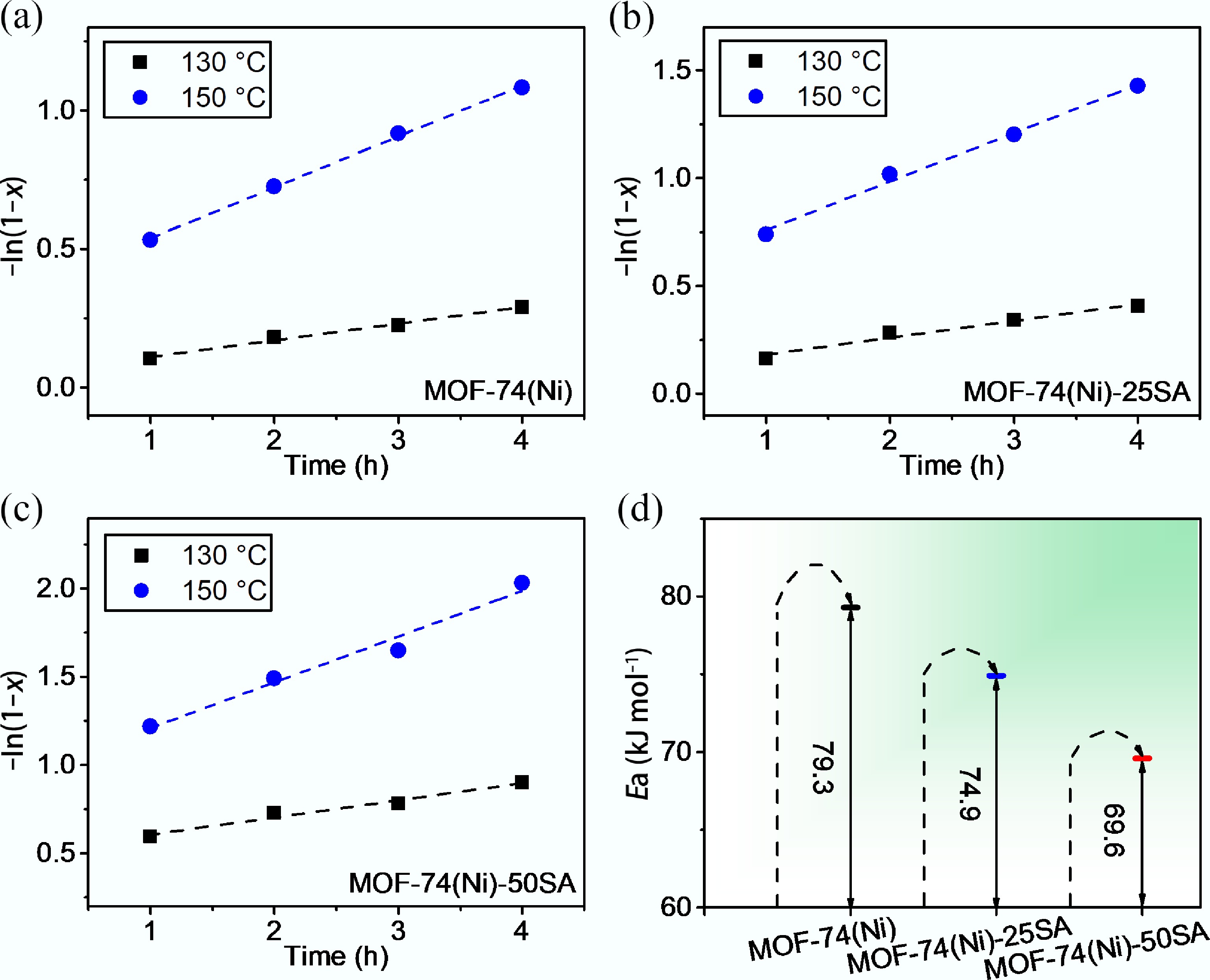
Figure 5.
Kinetics analysis of (a) MOF-74(Ni), (b) MOF-74(Ni)-25SA, and (c) MOF-74(Ni)-50SA during the conversion of glucose at 130 °C and 150 °C. (d) Ea of these three catalysts.
To evaluate whether these three catalysts facilitated the conversion of reaction intermediates to LaA, dihydroxyacetone (DHA) and pyruvaldehyde (PAL), generally considered as two active intermediates, were directly used as substrates. As shown in Supplementary Figs. S9a and S9b, both DHA and PAL were nearly completely converted with these three catalysts at 130 °C and 170 °C, showing that these catalysts were active enough for the conversion of DHA and PAL. However, it should be noted that the yield of LaA was below 40% even when using MOF-74(Ni)-50SA after reaction at 170 °C for 4 h. Considering the possibility of the rapid formation of byproducts at the higher reaction temperature of 170 °C, the reactions for DHA or PAL conversion were performed at 130 °C; however, the LaA yield was not above 30% after 4 h of reaction. These results indicated that the defective MOF-74(Ni)-50SA prepared by SA incorporation primarily promoted the conversion of glucose into reactive intermediates (e.g., fructose, DHA, PAL) rather than facilitating the subsequent transformation of these intermediates into LaA.
In light of the analysis described above, the reaction pathway for the conversion of glucose to LaA was proposed. As illustrated in Supplementary Fig. S10, first, glucose was isomerized to fructose in the aqueous phase over defective MOF-74(Ni)-50SA. Subsequently, fructose underwent retro-aldol condensation to generate DHA and glyceraldehyde[43,44]. Owing to the poor stability of the formed glyceraldehyde, it readily isomerized to DHA. DHA was further dehydrated to PAL, which was then converted to the final product LaA via the Cannizzaro reaction[44−47]. Overall, the creation of structural defects in MOF-74(Ni)-50SA led to the formation of oxygen vacancies and unsaturated Ni sites[48−50], thereby enhancing the production of LaA by facilitating the efficient conversion of glucose to reactive intermediates.
Stability and versatility of the MOF-74(Ni)-50SA catalyst
-
To evaluate the stability of MOF-74(Ni)-50SA, five consecutive recycling tests were conducted. As shown in Fig. 6a, the catalyst maintained excellent glucose conversion of above 97% throughout all cycles, and the yield of LaA was above 40%, showing the good stability of the MOF-74(Ni)-50SA catalyst. The XRD pattern of the recycled catalyst (Fig. 6b) confirmed the preservation of the original crystalline structure after five reaction cycles without obvious aggregation of Ni species. As shown in Fig. 6c, d, the TEM image and elemental mappings of the recycled catalyst further confirmed that the catalyst's morphology remained largely unchanged, and Ni species were still uniformly dispersed within the catalyst's structure.
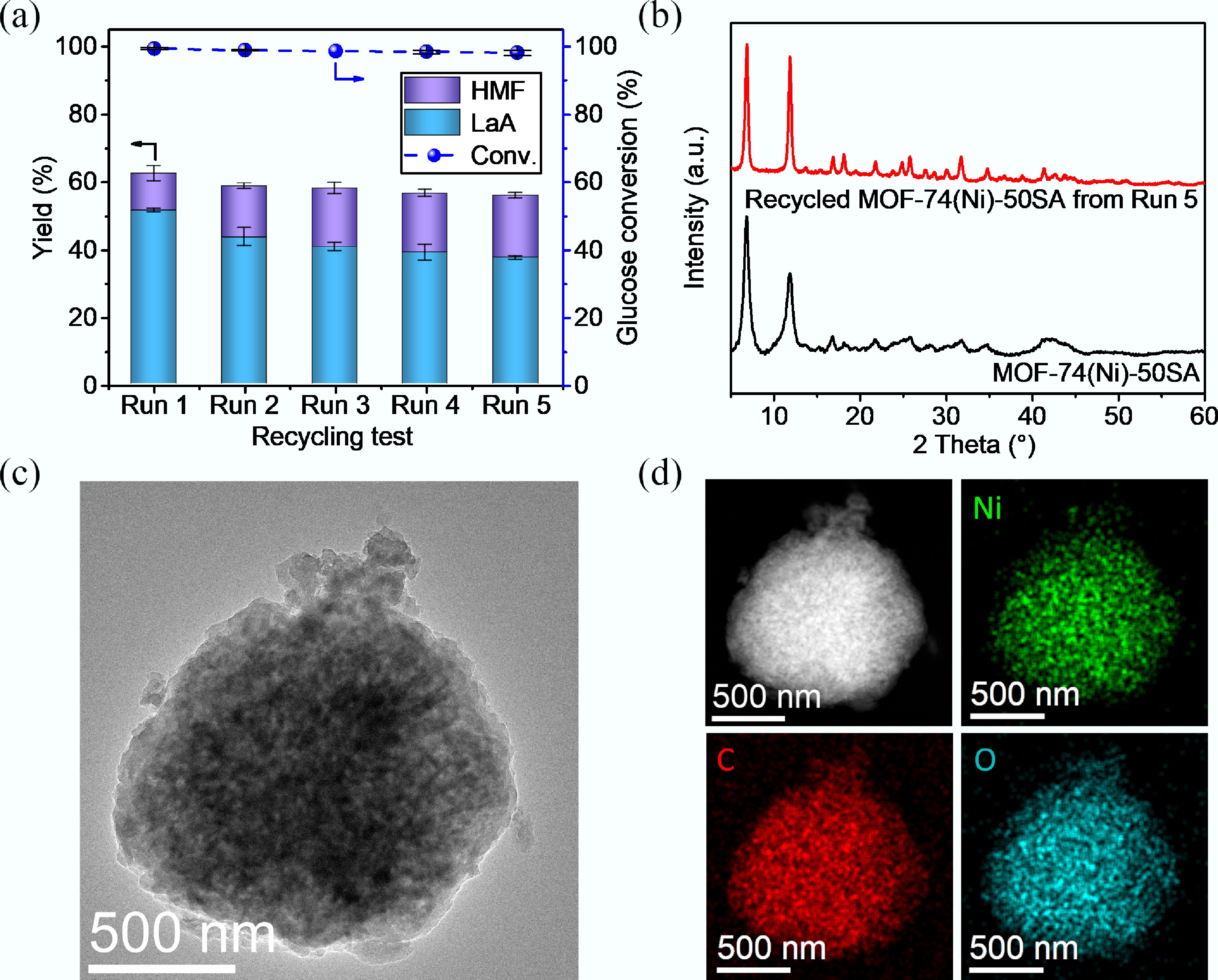
Figure 6.
(a) Reusability test of MOF-74(Ni)-50SA. (b) XRD patterns of fresh and recycled MOF-74(Ni)-50SA. (c) TEM image and (d) corresponding EDS elemental mappings of recycled MOF-74(Ni)-50SA.
Considering that about 10% of the LaA yield decreased in the fifth cycle compared with the first one, XPS analysis of the recycled catalyst was carried out, since its morphology as well as structure remained as described above. In the Ni 2p XPS spectrum in Supplementary Fig. S11a, the characteristic peaks of Ni2+ and its satellite peaks were still present; however, a slight shift toward higher binding energies was observed compared with fresh MOF-74(Ni)-50SA. This indicated that the chemical valence of Ni species in the recycled catalyst slightly increased. The O 1s XPS spectrum in Supplementary Fig. S11b showed that the percentage of the characteristic peak corresponding to oxygen vacancies at 530.7 eV in the recycled MOF-74(Ni)-50SA catalyst was significantly reduced (Supplementary Table S2), consistent with the increase in the chemical valence of Ni species. Therefore, the slight loss of catalyst activity might be caused by the decrease in oxygen vacancies, which would also reduce the amounts of unsaturated Ni species.
Substrate versatility is a crucial indicator for evaluating the potential of industrial applicability of catalysts. Therefore, the performance of MOF-74(Ni)-50SA during the conversion of various biomass substrates was also investigated. As presented in Supplementary Fig. S12, the reaction substrates were replaced with various raw biomass substrates including corn cobs and pine needles. After reaction at 170 °C for 4 h, corn cobs, which could be easily decomposed to carbohydrate monomers because of their loose texture, could be efficiently converted to LaA, with corresponding LaA yields of 62.8%. However, because pine needles had a dense structure and were difficult to decompose into carbohydrate monomers, only 5.6% LaA yield was obtained under the same reaction conditions. To further improve the LaA yield from pine needles, the reaction conditions were optimized: The reaction temperature was increased to 190 °C, and the reaction time was extended to 8 h. The results indicated that the LaA yield from pine needles could be enhanced to 22.4%, confirming the broad potential of the MOF-74(Ni)-50SA catalyst for converting raw biomass feedstocks into valuable LaA.
-
In summary, a series of MOF-74(Ni)-xSA catalysts were successfully synthesized via organic linker engineering using SA. Comprehensive characterization (XRD, TEM, and FTIR) confirmed their structural integrity. The optimized catalyst, MOF-74(Ni)-50SA, exhibited outstanding performance in the aqueous-phase conversion of glucose to LaA, achieving 99.5% glucose conversion and a LaA yield of 51.7% at 170 °C within 4 h. When a dilute glucose solution is used as the substrate, LaA yield can be enhanced up to 68.7%. Kinetic studies demonstrated that MOF-74(Ni)-50SA significantly lowered the activation energy of the formation of active intermediates from glucose conversion. Combined XPS and EPR analyses provided insight into the critical role of structural defects in enhancing the formation of oxygen vacancies and coordinatively unsaturated metallic sites, thereby promoting efficient catalytic activity. Moreover, the catalyst displayed excellent stability, retaining its activity over five consecutive catalytic cycles, as well as remarkable substrate versatility, demonstrating promising performance in the conversion of various biomass-derived feedstocks into LaA.
This research used resources of Analytical and Testing Center of Chongqing University, and many thanks for the kind help from Xiangnan Gong and Chuanyao Yang.
-
It accompanies this paper at: https://doi.org/10.48130/scm-0026-0027.
-
Not applicable.
-
The authors confirm their contributions to the paper as follows: Yueyue Tang: methodology, writing – original draft preparation; Yueyue Tang, Heng Huang, Jiayi Peng, Haijie Yu: data curation; Heng Huang: visualization; Yujie Wang: investigation; Jianjian Wang: supervision, conceptualization, writing – reviewing and editing. All authors reviewed the results and approved the final version of the manuscript.
-
The datasets generated or analyzed during the current study are available from the corresponding author on reasonable requests.
-
The authors declare that they have no known competing financial interests or personal relationships that could have appeared to influence the work reported in this paper.
-
Full list of author information is available at the end of the article.
- The supplementary files can be downloaded from here.
- Copyright: © 2026 by the author(s). Published by Maximum Academic Press, Fayetteville, GA. This article is an open access article distributed under Creative Commons Attribution License (CC BY 4.0), visit https://creativecommons.org/licenses/by/4.0/.
-
About this article
Cite this article
Tang Y, Huang H, Peng J, Yu H, Wang Y, et al. 2026. Tuning the formation of structural defects in metal–organic framework catalysts via linker engineering to boost the production of biomass-derived lactic acid. Sustainable Carbon Materials 2: e031 doi: 10.48130/scm-0026-0027 

Tuning the formation of structural defects in metal–organic framework catalysts via linker engineering to boost the production of biomass-derived lactic acid
- Received: 12 May 2026
- Revised: 22 June 2026
- Accepted: 09 July 2026
- Published online: 14 September 2026
Abstract: Efficient production of lactic acid (LaA), a key monomer for biodegradable polymers, from renewable biomass resources has garnered considerable attention in recent years. However, such a process often suffers from a low LaA yield when the glucose derived from biomass or raw biomass itself is used as the substrate. This study designed a novel nickel-based metal–organic framework [MOF-74(Ni)] catalyst by engineering the organic linkers with commercial salicylic acid (SA) in the MOF structure, enabling efficient aqueous phase conversion of glucose or even raw biomass to LaA. Experimental results demonstrated that the as-synthesized MOF-74(Ni)-50SA catalyst afforded a glucose conversion of 99.5% and a LaA yield of 51.7% at 170 °C for 4 h. Furthermore, the LaA yield can be enhanced up to 68.7% by using the dilute glucose solution as the substrate. Comprehensive characterization analyses confirmed that SA modification induced the formation of structural defects, generating oxygen vacancies and coordinatively unsaturated metal sites. This local structural alteration significantly enhanced the catalytic performance via decreasing the reaction barrier of glucose conversion. Moreover, the catalyst exhibited excellent recyclability and a broad substrate scope, indicating its potential for practical applications.
-
Key words:
- Biomass /
- Lactic acid /
- Metal–organic framework /
- Heterogeneous catalysis