













-
Bread wheat (Triticum aestivum L.) is one of the primary staple food crops widely cultivated and consumed worldwide. With the improvement of living standards, there is an increasing demand for a wider variety and higher quality of wheat-based products. In the market, the number of various types of wheat flour-based foods is growing rapidly. The processing quality of wheat flour for end-use is mainly determined by the properties of seed storage proteins (SSPs), especially gluten proteins, which produce the unique viscoelastic properties of wheat dough[1,2]. For example, high-gluten flour is mainly used for making bread, medium-gluten flour for steamed buns and dumplings, and low-gluten flour for biscuits and cakes.
High-molecular-weight glutenin subunits (HMW-GSs) are key components of glutenin in wheat grains. HMW-GSs comprise only about 10% of glutenin, but explain up to 70% of the genetic variation in dough processing quality[2,3]. HMW-GSs are encoded by Glu-1A, -1B, and -1D located on the long arms of Group 1 homoeologous chromosomes. Each locus contains two tightly linked genes encoding X- and Y-type subunits, i.e. Glu-1Ax, Glu-1Ay, Glu-1Bx, Glu-1By, Glu-1Dx, and Glu-1Dy[4]. HMW-GS genes are highly polymorphic and are not always all expressed[5]. These genes are specifically expressed in the endosperm, with similar expression patterns[6].
The synthesis of HMW-GSs is subject to complex regulation at the transcriptional level. This regulatory network is associated with various cis-acting elements in the promoters of HMW-GS genes, including binding motifs for DNA-binding with one zinc finger (DOF)[7], basic leucine zipper (bZIP)[8,9], R2R3-MYB[10,11], and NAM (no apical meristem)–ATAF (Arabidopsis transcription activation factor)–CUC (cup-shaped cotyledon) (NAC)[12,13], and so on. These cis-elements are critically important. For example, the 1Bx7OE promoter contains a 43-bp insertion that enhances gene expression; conversely, a 54-bp deletion in the 1Bx13 promoter reduces its expression in endosperm tissues, and a 185-bp inverted repeat transposon insertion in the promoter region of the 1Bx14 gene leads to upregulated expression[14].
To date, a variety of transcription factors (TFs) regulating glutenin genes' expression have been characterized. Positive regulators such as Wheat Prolamin Box Binding Factor (WPBF)[7], TaSPA[8], TaFUSCA3[15], TaGAMyb[10], and TaNAC019[12] have been reported, alongside the more recent identification of four repressors, TaSHP[9], TaNAC100[13], TaODORANT[11], and TaSPR[16]. Elucidating and cloning novel regulators of novel HMW-GS regulators not only enrich the genetic resources for breeding based on gene pyramiding but also offer a promising new approach for enhancing wheat's processing quality.
Previous research has indicated that TFs preferentially expressed in the developing endosperm are more likely to be involved in the regulation of reserve material synthesis[17]. In this study, we identified three endosperm-specific MYB TFs by analyzing the transcriptome data of the 'Chinese Spring' wheat cultivar published by Ramírez-González et al.[18]. TraesCS4A02G006100, TraesCS4B02G299000, and TraesCS4D02G297900 are homologous genes of a TaMYB TF located on wheat chromosomes 4A, 4B, and 4D, respectively. They are hereafter referred to as TaMYB44-A, TaMYB44-B, and TaMYB44-D. Recently, TaMYB44 was reported to negatively regulate starch biosynthesis[19,20]. Liu et al.[20] reported that TaMYB44 curbs grain size by repressing the genes involved in starch synthesis and fine-tuning secondary metabolism. In addition, Li et al.[19] demonstrated that the TaMYB44-4D isoform directly binds the TaWx-7A promoter and attenuates its transcription, thereby constraining starch production. In our study, we present new evidence that TaMYB44 regulates the accumulation of SSPs in wheat grains. Furthermore, we explored the molecular mechanism underlying TaMYB44-mediated transcriptional regulation and demonstrated that TaMYB44 directly suppresses the expression of TaGlu-1 by binding to specific motifs in its promoter.
-
The wheat cultivar 'Fielder' was used for gene sequence amplification, analysis of gene expression patterns, and as a transgenic recipient. All transgenic wheat plants were cultivated either in the experimental field of Yangzhou University (32°25′22″ N, 119°31′31″ E) or in a greenhouse under controlled conditions of 60% relative humidity and day/night temperatures of 25 °C/18 °C, with a light intensity of 3,000 lux. For gene expression analysis, root, leaf, and stem tissues were collected from plants grown at room temperature 10 days after seed germination. In addition, young spikes (2 cm in length), embryos at 15 days after pollination (DAP), whole seeds at the watery ripe stage (4 and 8 DAP), and endosperm from 10 to 35 DAP were harvested from field-grown plants. Endosperm and embryos were manually isolated by dissecting the grains. All samples were immediately frozen in liquid nitrogen and stored at −80 °C.
Phylogenetic analysis
-
We obtained MYB TFs containing the Myb-like DNA-binding domain (Pfam PF00249) from Arabidopsis thaliana, wheat, rice (Oryza sativa), maize (Zea mays), and barley (Hordeum vulgare) using the BioMart tool within Phytozome (Ensembl Plants). The Myb-like DNA-binding domains and their positions, as recorded in the Pfam database, were identified in all candidate genes using InterProScan version 5.45-80.0 with the parameter "-appl Pfam". According to the domain positions, all protein domains with Pfam ID = PF00249 were subsequently extracted. We selected MYB TFs containing at least two MYB-like DNA-binding domains and extracted their full-length sequences for phylogenetic analysis (Supplementary File 1). The amino acid sequences of the candidate proteins were aligned using ClustalW, and a phylogenetic tree was constructed using the neighbor-joining method in MEGA 7 software with the default parameters[21]. Evolutionary distances were calculated using the Poisson model. Phylogenetic confidence was assessed using the bootstrap method with 1,000 replications (Supplementary File 2).
Construction of TaMYB44 transgenic plants
-
TaMYB44 knockout lines were generated using clustered regularly interspaced short palindromic repeats (CRISPR)/CRISPR-associated protein 9 (Cas9). Two guide RNAs (sgRNAs) were designed to target the first exon within conserved regions of the homeologous genes of TaMYB44. The MT1T2 vector was amplified using two pairs of primers containing the sgRNAs and then cloned into the CRISPR-Cas9 vector pBUE414. To generate transgenic plants overexpressing TaMYB44, the full-length coding sequence (CDS) of TaMYB44-B driven by the Ubi promoter was cloned into the plant binary vector pWMB110. All constructed vectors were separately transformed into the bread wheat cultivar 'Fielder' using an Agrobacterium-mediated gene transformation method[22]. The primer sequences used for vector construction are listed in Supplementary Table S1.
Total RNA extraction and real-time quantitative polymerase chain reaction (RT-qPCR)
-
Total RNA was extracted from wheat grains using the TransGen Biotech Polysaccharide-Polyphenol Plant RNA Extraction Kit (ET121-02). First-strand cDNA synthesis was performed using the TransScript® Uni All-in-One First-Strand cDNA Synthesis SuperMix (R223-01). For RT-qPCR analysis, the Vazyme AceQ Universal SYBR qPCR Master Mix was used in a reaction system containing 5 μL of SYBR Green Mix, 1 μL of cDNA template, and 0.2 μM each of the forward and reverse gene-specific primers, in a final volume of 10 μL. All reactions were conducted on a Bioer LineGene 9600 Plus Real-Time PCR System (Hangzhou Bioer Technology Co., Ltd.), with three technical replicates per sample. Differences in relative transcript levels were calculated using the 2−ΔΔCᴛ method[23]. Expression levels were normalized to the TaActin reference gene. The primers used for RT-qPCR are listed in Supplementary Table S1.
Phenotypic analysis
-
Phenotypes were evaluated in the experimental field and greenhouse of Yangzhou University. Plant height, spike length, and kernel number per spike were manually measured and counted, with three individual plants measured per line. Grain traits, including 1,000-grain weight, grain length, and grain width, were analyzed using a camera-assisted phenotyping system (Shangsheng Seed Testing Instrument S500A3B), with 9 (for TaMYB44 overexpression lines and the wild type [WT]) or 10 replicates (for TaMYB44 knockout lines and WT) measured per line. The total protein content was determined using the FOSS Infratec™ NOVA Grain Quality Analyzer (FOSS) based on near-infrared spectroscopy technology, with 12 individual plants measured per line. All statistical analyses were performed using Student's t-test.
HMW-GS extraction followed a previously described procedure. Flour samples (0.05 g) were homogenized with 800 μL of Buffer A (7.5% isopropanol, 0.3 M NaI), incubated at 65 °C for 1 h, and centrifuged at 10,000 × g for 3 min. The supernatant was discarded, and the extraction was repeated twice with fresh Buffer A to remove gliadins. The pellet was reduced in 200 μL of Buffer B (25% isopropanol, 40 mM Tris-HCl at pH 8.0, 10% sodium dodecyl sulfate [SDS], 2% 1,4-Dithiothreitol [DTT]) at 65 °C for 1 h, followed by alkylation with 200 μL of Buffer C (25% isopropanol, 40 mM Tris-HCl at pH 8.0, 10% SDS, 1.4% vinylpyridine) at 65 °C for 30 min. After centrifugation (10,000 × g, 10 min), the supernatant was mixed with 400 μL of Buffer D (0.625 M Tris-HCl at pH 6.8, 5% β-mercaptoethanol, 20% glycerol, 2% SDS, 0.2% bromophenol blue), equilibrated for 30 min at room temperature, boiled for 5 min, and chilled on ice. Samples were then resolved by discontinuous SDS-polyacrylamide gel electrophoresis (PAGE).
Dual-luciferase transcriptional activity assay
-
The CDS of TaMYB44 was cloned into the pHB vector as an effector plasmid. Fragments corresponding to 2,000 bp upstream of the transcription start site (TSS) of TaGlu-1Bx, TaGlu-1By, TaGlu-1Dx, and TaGlu-1Dy were PCR-amplified from genomic DNA of the cultivar 'Chinese Spring' and cloned into the pGreenII 0800-LUC vector as reporter plasmids[24]. Effector and reporter constructs were transiently co-infiltrated into leaves of 4-week-old Nicotiana benthamiana plants. Luciferase activity derived from the TaGlu-1Bx (TaGlu-1Bxpro::LUC), TaGlu-1By (TaGlu-1Bypro::LUC), TaGlu-1Dx (TaGlu-1Dxpro::LUC) and TaGlu-1Dy (TaGlu-1Dypro::LUC) promoters, as well as Renilla luciferase activity under the control of the 35S promoter (35Spro::REN), were quantified using a dual-luciferase reporter assay system (Cat. No. E1910, Promega Corporation) with a multi-detection microplate reader (Tecan Spark).
Electrophoretic mobility shift assay
-
The coding sequence of TaMYB44-B was amplified and cloned into the EcoRI/SalI sites of the pGEX6P-1 vector. The recombinant plasmid was transformed into E. coli BL21 (DE3) for production of the TaMYB44-GST fusion protein. Protein expression was induced with 0.1 mM isopropyl β-D-1-thiogalactopyranoside (IPTG) at 16 °C for 16 hours, followed by affinity purification using glutathione sepharose resin (YESEN, 20507ES50).
Using the predicted cis-acting elements in the promoter region of the HMW-GS gene, biotin-labeled probes and unlabeled competitive probes were designed (P1-L: 5'-TATAAAACATTCCGGCAACAACTTGTGGCGTACATCTA-3', P1-R: 5'-TAGATGTACGCCACAAGTTGTTGCCGGAATGTTTTATA-3'). Double-stranded biotinylated probes were assembled through thermal annealing of complementary oligonucleotides by gradual cooling from 100 °C to ambient temperature in an annealing buffer. DNA–protein binding reactions were performed using an electrophoretic mobility shift assay (EMSA) using the Gel-Shift Kit (Beyotime, GS002) under optimized binding conditions (20% binding buffer, 2.5% glycerol). After equilibration for 20 minutes at ambient temperature, the reaction complexes were resolved electrophoretically on 6% nondenaturing polyacrylamide gels and subsequently transferred to nylon membranes by electrophoresis. Biotin-labeled DNA–protein complexes were visualized using the LightShift Chemiluminescent EMSA Kit (Beyotime, GS009) according to the manufacturer's specifications.
-
TaMYB44-A, TaMYB44-B, and TaMYB44-D encode R2R3-MYB transcription factors that contain two MYB-like DNA-binding domains (Pfam PF00249) (Fig. 1a). On the basis of the whole-genome information, 171, 83, 119, 111, and 159 MYB TF family members containing at least two MYB-like DNA-binding domains were identified in T. aestivum, O. sativa, A. thaliana, H. vulgare, and Z. mays, respectively. Phylogenetic analysis indicated that TaMYB44-A, TaMYB44-B, and TaMYB44-D are grouped within the same phylogenetic cluster and are orthologs of HORVU.MOREX.r3.4HG0405580 in barley (Supplementary Fig. S1). The microcollinearity of TaMYB44-B as determined via the website
https://wheat.cau.edu.cn/TGT/m2/?navbar=MicroCollinearity showed that TaMYB44 genes are orthologs of the same gene in barley (Supplementary Fig. S2).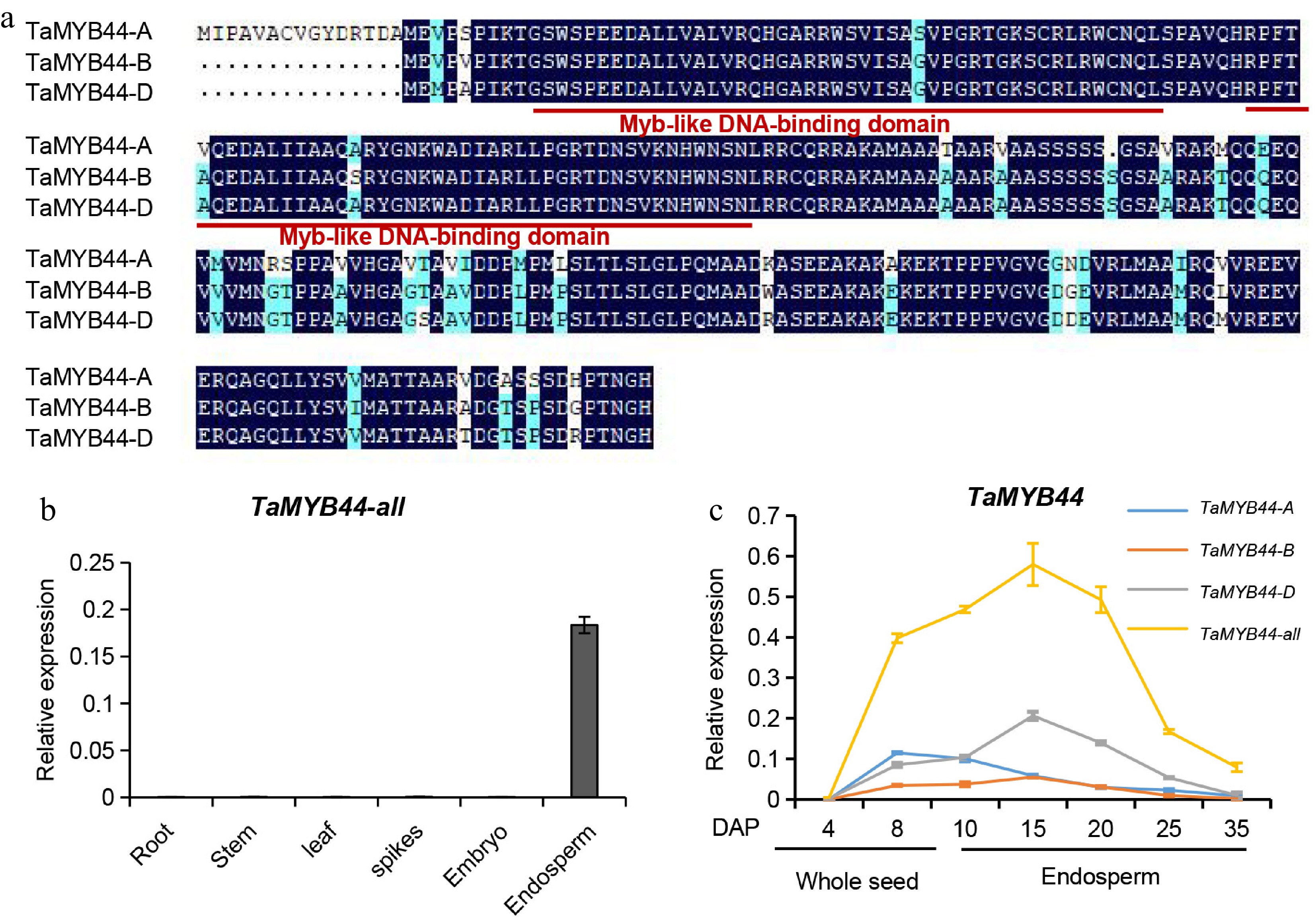
Figure 1.
Identification of endosperm-specific TF TaMYB44 (a) Amino acids of three TaMYB44 homeologs. Red solid lines represent Myb-like DNA-binding domain. (b) Relative transcript levels of TaMYB44-all in the indicated tissues, as determined by RT-qPCR. Data were normalized to wheat TaACTIN, shown as mean ± SD (n = 3). All TaMYB44 transcript levels were measured using a primer combination allowing mRNA amplification of three TaMYB44 homologs. (c) Relative transcript levels of three TaMYB44 homologs and all TaMYB44 genes, estimated using total RNA extracted from whole seeds from 4 and 8 DAP and endosperm (from 10 to 35 DAP).
RT-qPCR analysis was used to detect the expression levels of TaMYB44 in various tissues, including roots, stems, leaves, young spikes (2 cm in length), embryos at 15 DAP, and endosperm at 15 DAP in the wheat variety 'Fielder'. The results showed that TaMYB44 was highly expressed in the developing endosperm, whereas its expression in other tissues was extremely low, indicating that TaMYB44 is an endosperm-specific expressed gene (Fig. 1b). Specific primers for TaMYB44-A, -B, and -D were designed to detect the expression levels of TaMYB44 in the endosperm at 10, 15, 20, 25, and 35 DAP. During grain development, TaMYB44 transcripts were detectable at 4–8 DAP and then gradually increased until peaking at 10–15 DAP (Fig. 1c).
Knockout of TaMYB44 in wheat increases grain glutenin content
-
To investigate the function of TaMYB44 in grain development, TaMYB44 knockout lines were generated using the CRISPR/Cas9 gene editing method. Two guide RNAs (sgRNAs) were designed to target two conserved regions within the first exon of all three TaMYB44 homeologs (Fig. 2a). Sequencing of the editing target sites led to the identification of two knockout lines (KO-2 and KO-9), both carrying frameshift mutations that resulted in premature termination codons in all three homeologs (Fig. 2b, c).
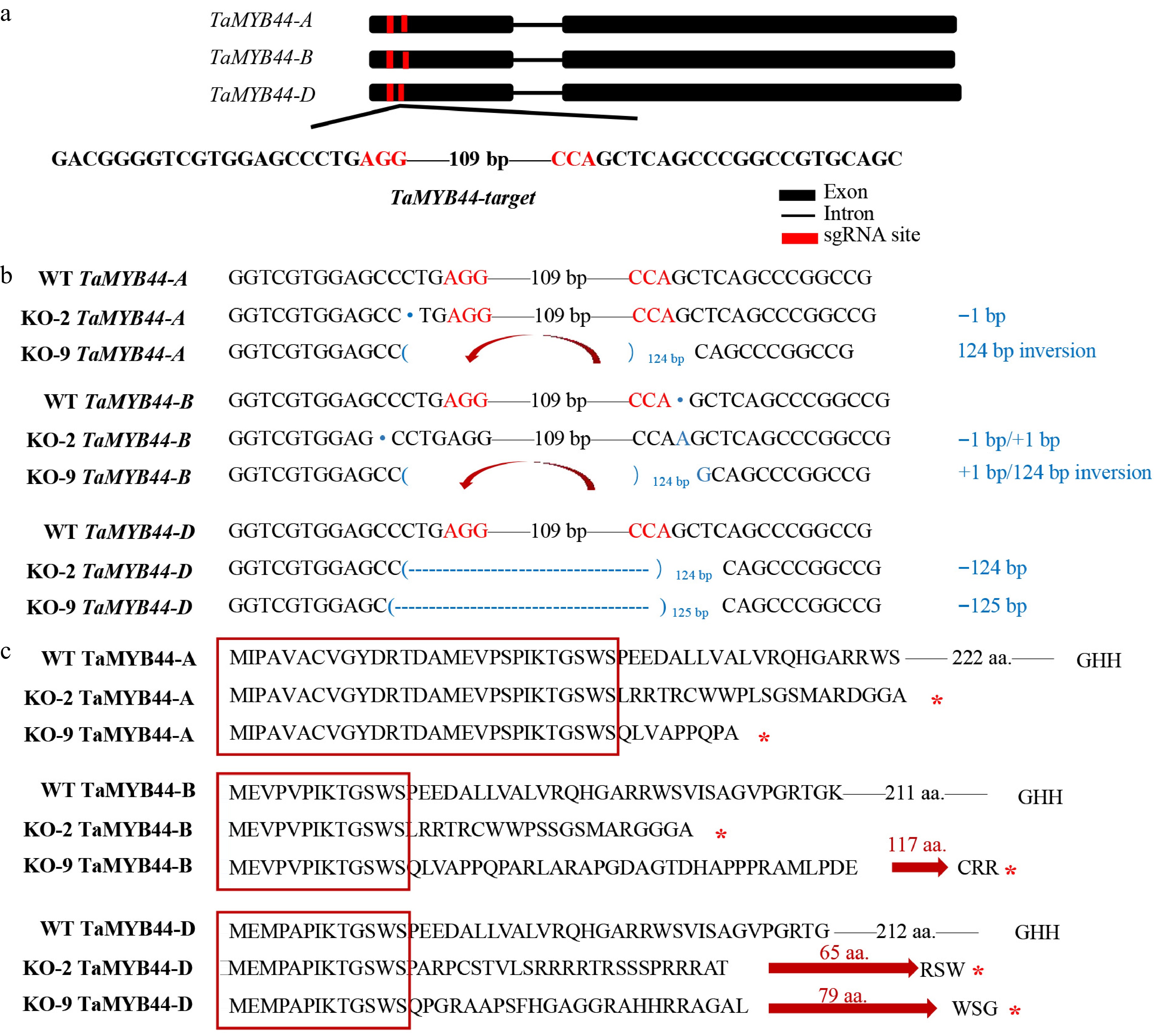
Figure 2.
TaMYB44 nucleotide and amino acid sequences mutation of TaMYB44 knockout lines. (a) Strategy used to produce the TaMYB44 knockout lines. Sequences of two sgRNAs used to target the region in the first exon that is conserved among the three TaMYB44 homeologs (upper panel). The protospacer-adjacent motif (PAM) sequences are highlighted in red. (b) Nucleotide sequences of WT and TaMYB44 mutants at the three TaMYB44 homeologs. PAM sequences are highlighted in red. The nucleotide mutation is highlighted in blue. "+" and "−" indicate the insertion or deletion caused by the CRISPR/Cas9-induced mutations, respectively. Numbers indicate the length of the insertion or deletion. The red curved arrow indicates the inversion of the nucleotide fragment. (c) Amino acid sequences of WT and TaMYB44 mutants at the three TaMYB44 homologs. The amino acids enclosed by the red box represent the nonmutated amino acid region. The red straight arrow indicates a frameshift mutation. The red asterisk means the translation is terminated.
Phenotypic analysis showed no significant differences in plant height, spike length, kernel number per spike, grain size, or 1,000-grain weight between the knockout lines and the WT (Fig. 3a–f, Supplementary Fig. S3a). However, near-infrared reflectance spectroscopy revealed that the total protein content of the TaMYB44 knockout lines significantly increased by 5%–10% compared with that of the WT (Fig. 3g). Further fractionation of storage proteins using the biuret method demonstrated that although gliadin content remained unchanged, glutenin content was significantly elevated by 26%–33% in the knockout lines (Fig. 3h, i). This increase in glutenin accumulation was confirmed by SDS-PAGE analysis (Fig. 3j). Collectively, these results indicate that knockout of TaMYB44 in wheat specifically increases grain HMW-GS content, suggesting that TaMYB44 functions as a negative regulator of glutenin accumulation.
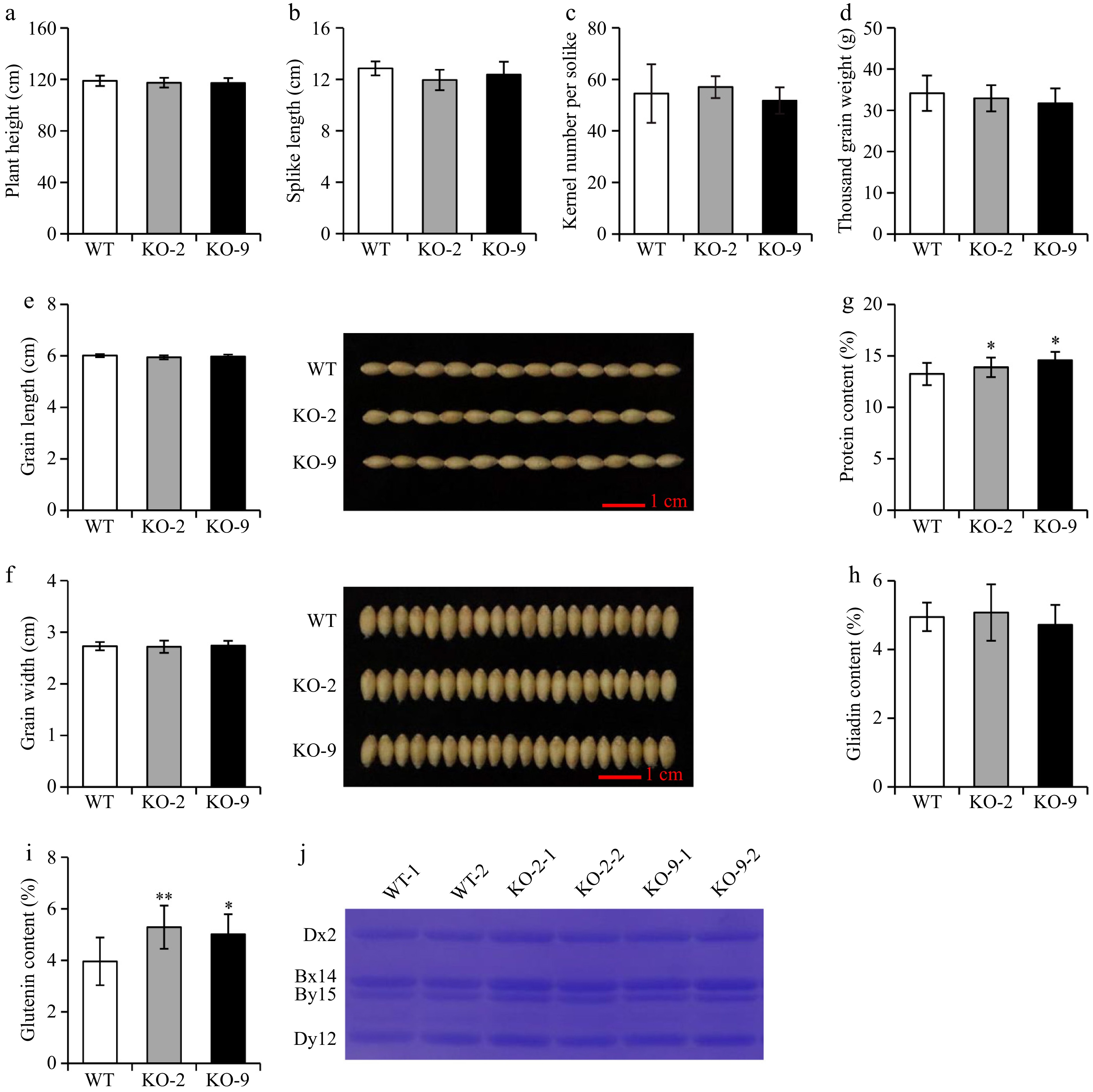
Figure 3.
Phenotypes of TaMYB44 knockout lines. (a) Plant height, (b) spike length, (c) kernel number per spike of WT and TaMYB44 knockout lines. Three repeats were carried out for each line to measure these phenotypes. (d) 1,000-grain weight, (e) grain length, (f) and grain width. Ten repeats were carried out for each line to measure these phenotypes. (g) Protein content analysis using near-infrared spectrometry. Twelve repeats were carried out for each line to measure these phenotypes. (h, i) Gliadins and gluten content analysis using the biuret method. Three repeats were carried out for each line to measure these phenotypes. (j) HMW-GS from KO-2, KO-9, and WT determined by Coomassie brilliant blue protein gel staining. The single and double asterisks represent significant differences compared with the WT as determined by Student's t-test at p < 0.05 and p < 0.01, respectively.
TaMYB44 overexpression lines reduced HMW-GS content in grains
-
Liu et al.[20] reported that knockout of TaMYB44-B alone did not affect grain size, whereas knockout of TaMYB44-D significantly altered it, suggesting functional differentiation between TaMYB44-B and TaMYB44-D. Liu et al.[20] and Li et al.[19] overexpressed TaMYB44-D in the wheat variety 'Fielder' to investigate the function of TaMYB44. Therefore, we constructed an overexpression vector of TaMYB44-B driven by the Ubi promoter (Ubi::TaMYB44-B) and transformed it into the same wheat variety (Fielder) to determine whether TaMYB44-B and TaMYB44-D differ in their effects on grain size regulation. The expression levels of TaMYB44 were significantly increased in the overexpression lines OE-3 and OE-8, and these two lines were selected for phenotypic analysis (Fig. 4a). No significant differences in agronomic traits or grain traits were observed between the TaMYB44 overexpression lines and the WT (Fig. 4b–h, Supplementary Fig. S3b). Glutenin was extracted from the grains of OE-3, OE-8, and the WT, and then isolated and identified by SDS-PAGE. The results showed that the content of HMW-GS in the grains of the overexpression transgenic lines OE-3 and OE-8 was significantly decreased compared with that of the WT (Fig. 4i). Quantification of individual HMW-GS bands was performed using Image J software, showing that total HMW-GSs content decreased by 30%–41% in the seeds of the overexpression lines compared with the WT (Fig. 4j).
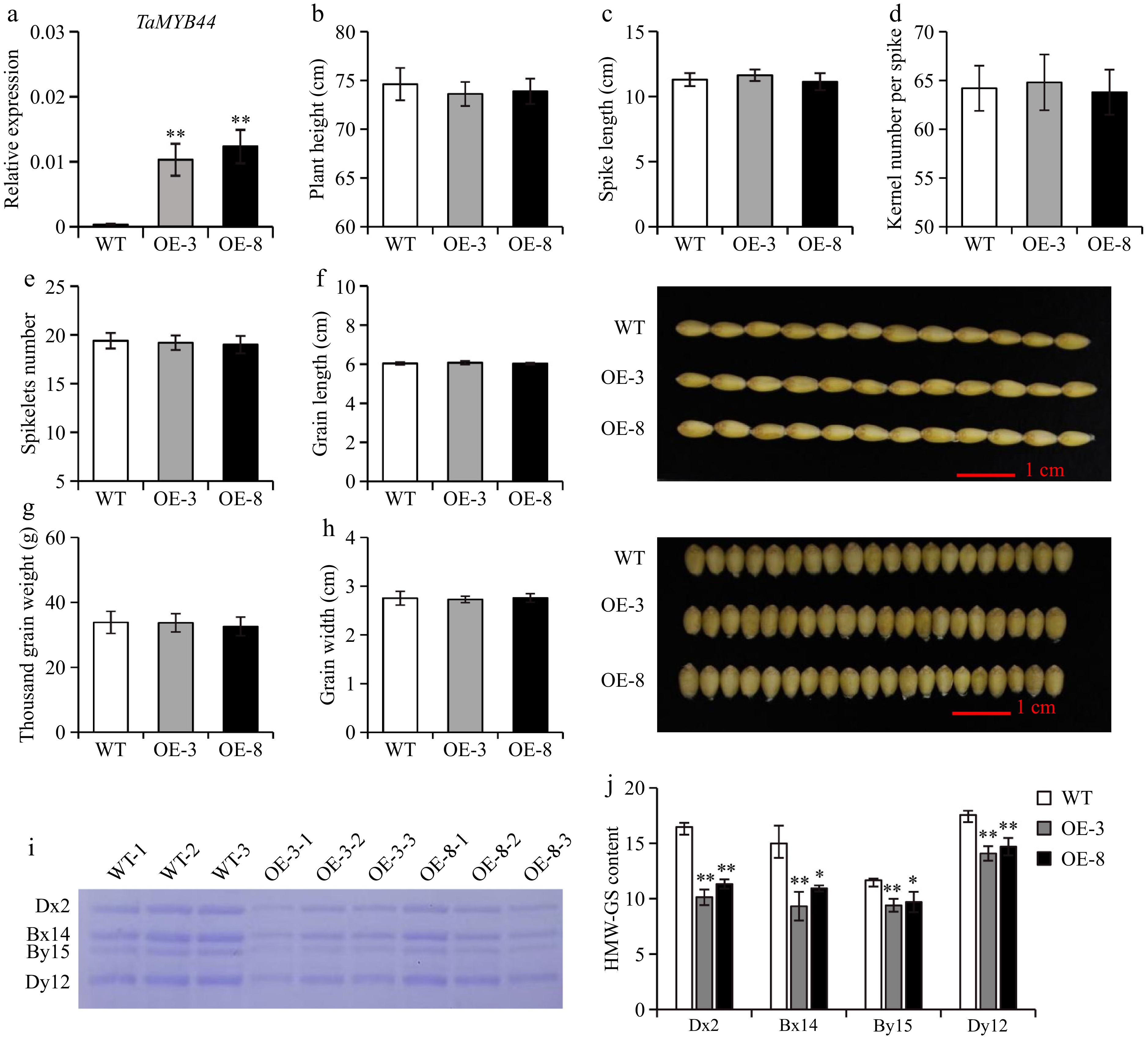
Figure 4.
Phenotypes of TaMYB44 overexpression lines. (a) Relative transcript levels of TaMYB44 in WT and TaMYB44 overexpression lines (OE-3 and OE-8), as determined by RT-qPCR. Data were normalized to wheat TaACTIN, shown as the mean ± standard deviation (SD) (n = 3). (b) Plant height, (c) spike length, (d) kernel number per spike, and (e) spikelets number of WT and TaMYB44 overexpression lines. Three repeats were carried out for each line to measure these phenotypes. (f) Grain length, (g) 1,000-grain weight, and (h) and grain width of WT and TaMYB44 overexpression lines are measured. Nine repeats were carried out for each line to measure these phenotypes. (i) HMW-GS from OE-3, OE-8, and WT revealed by Coomassie brilliant blue-stained SDS-PAGE gel. (j) Quantification of individual HMW-GS bands was performed using Image J software. Three repeats were carried out for each sample to measure the phenotype. The single and double asterisks represent significant differences compared with the WT and determined by Student's t-test at p < 0.05 and p < 0.01, respectively.
HMW-GS gene expression is upregulated in the TaMYB44 knockout line
-
Given that the HMW-GS content was significantly increased in the grains of TaMYB44 knockout lines, we analyzed the expression changes of HMW-GS genes during seed development in both the mutant and WT. RT-qPCR analysis was performed to examine the expression levels of the HMW-GS genes TaGlu-1Bx, TaGlu-1By, TaGlu-1Dx, and TaGlu-1Dy in the endosperm of the TaMYB44 knockout lines KO-2 and KO-9 and the WT at different DAP. The results showed that the expression of HMW-GS genes was upregulated in KO-2 compared with the WT (Fig. 5a–h).
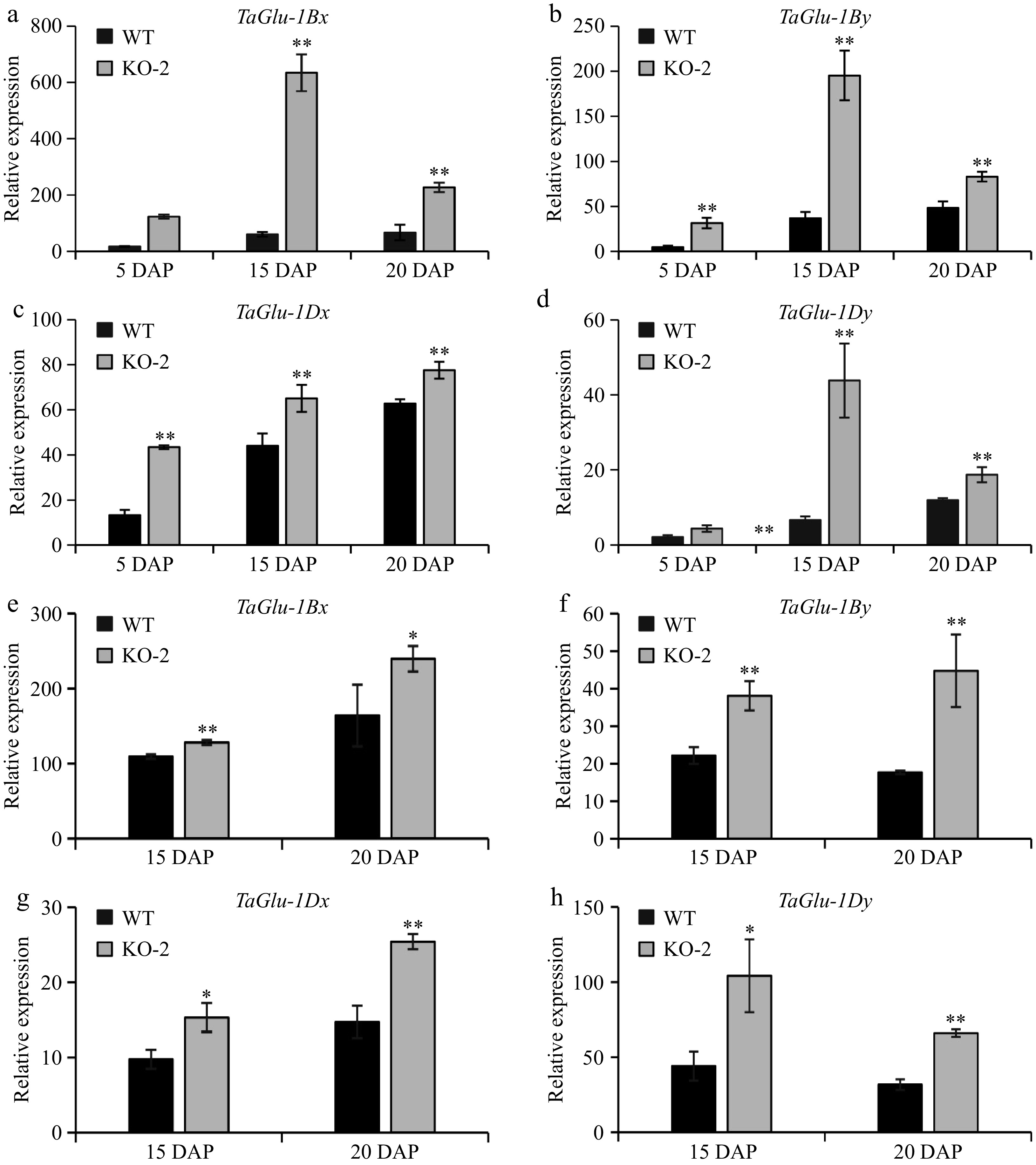
Figure 5.
HMW-GS genes expression regulated by TaMYB44. (a–d) RT-qPCR analysis of the HMW-GS genes (TaGlu-1Bx, TaGlu-1By, TaGlu-1Dx, and TaGlu-1Dy) expressed in WT and KO-2 seeds at 5, 15, and 20 DAP. Data were normalized to wheat TaACTIN and are shown as mean ± SD (n = 3). The single and double asterisks represent significant differences compared with WT and determined by Student's t-test at p < 0.05 and p < 0.01, respectively. (e, f) RT-qPCR analysis of the HMW-GS genes (TaGlu-1Bx, TaGlu-1By, TaGlu-1Dx, and TaGlu-1Dy) expressed in WT and KO-9 seeds at 15 and 20 DAP. Data were normalized to wheat TaACTIN, shown as the mean ± SD (n = 3). The single and double asterisks represent significant differences compared with WT and determined by Student's t-test at p < 0.05 and p < 0.01, respectively.
TaMYB44 directly binds to the promoters of HMW-GS genes and represses their expression
-
To further verify the regulatory relationship between TaMYB44 and HMW-GS genes, we constructed an effector vector carrying the TaMYB44 gene driven by the 35S promoter (35S::TaMYB44). Reporter constructs were generated by fusing the promoters of the wheat HMW-GS genes (TaGlu-1Bx, TaGlu-1By, TaGlu-1Dx, and TaGlu-1Dy) to the LUC reporter gene (TaGlu-1Bxpro::LUC, TaGlu-1Bypro::LUC, TaGlu-1Dxpro::LUC and TaGlu-1Dypro::LUC) (Fig. 6a). These constructs were co-transformed into N. benthamiana leaves for dual-luciferase reporter assays. When 35S::TaMYB44 was co-expressed with TaGlu-1Bxpro::LUC, luciferase activity was significantly reduced compared with the control group (Fig. 6b). A similar result was observed when TaGlu-1Bypro::LUC, TaGlu-1Dxpro::LUC, and TaGlu-1Dypro::LUC were used as the reporter constructs (Fig. 6c–e). These results indicate that TaMYB44 significantly represses the expression of HMW-GS genes.
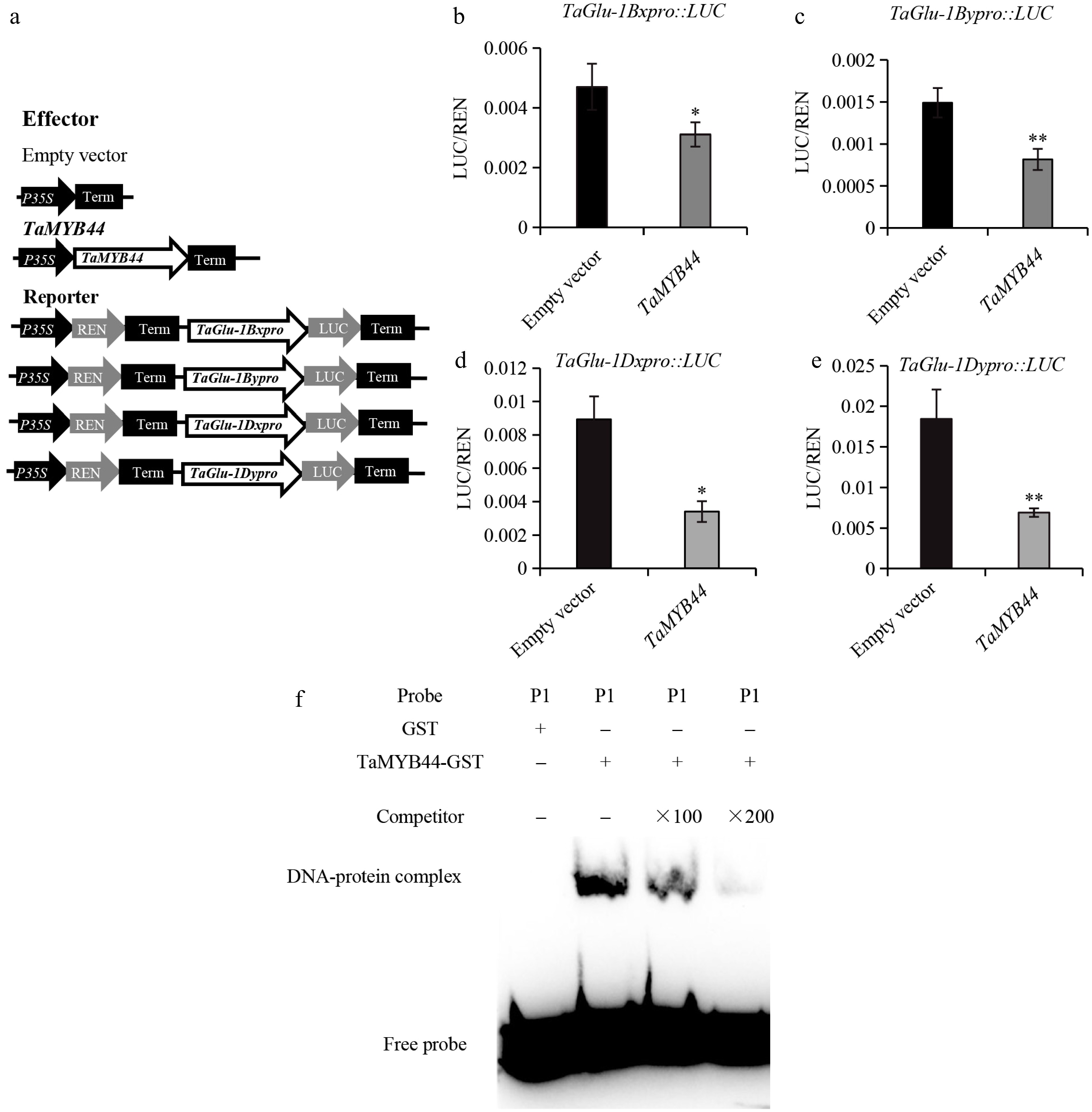
Figure 6.
TaMYB44 binds to TaGlu promoters to repress the expression of TaGlu. (a) Schematic diagrams of the effector and reporter plasmids. (b–e) Dual luciferase transcriptional activity assay to assess the ability of TaMYB44 to repress the expressions of target genes (TaGlu-1Bx, TaGlu-1By, TaGlu-1Dx, and TaGlu-1Dy). On the y-axis, LUC/REN indicates the ratio of the signal detected for firefly luciferase (LUC) and Renilla reniformis luciferase (REN) activity. Error bars represent the SD for three replicates. The single and double asterisks represent significant differences determined by Student's t-test at p < 0.05 and p < 0.01, respectively. (f) A P1 probe which contained the binding site of MYB TFs was used in EMSAs with TaMYB44-B-GST recombinant protein. "+" and "–" indicate the presence and absence of protein, respectively.
To explore whether TaMYB44 can directly regulate TaGlu-1, we analyzed the presence of MYB binding motifs ([C/T]AAN[G/A][C/A/T][T/C/A]) in the promoter regions of TaGlu-1 genes. In total, 41, 37, 33, and 37 MYB-binding elements were identified within approximately 2 kbp upstream of the TSS of TaGlu-1Bx, TaGlu-1By, TaGlu-1Dx, and TaGlu-1Dy, respectively. We then performed EMSAs using purified GST-TaMYB44 recombinant protein with a synthesized biotin-labeled probe (P1) and an unlabeled competitor probe derived from the TaGlu-1Dx promoter. GST-TaMYB44 recombinant protein formed clear protein–DNA complex bands with P1, and this binding was gradually abolished by the addition of excess unlabeled competitor probes (Fig. 6f). These results demonstrate that TaMYB44 can directly bind to the promoter of TaGlu-1Dx and suppress its expression.
-
Plant MYB proteins constitute a large class of TFs that play crucial roles in various physiological and biochemical processes. In this study, we identified TaMYB44, an R2R3-MYB TF characterized by the presence of two highly conserved MYB DNA-binding domains (Pfam: PF00249) at its N-terminus. Functional analyses using genetic transformation showed that HMW-GS content was significantly increased in TaMYB44 knockout mutants, whereas it was decreased in TaMYB44 overexpression lines. Dual-luciferase reporter assays and EMSAs further demonstrated that TaMYB44 directly binds to the promoters of HMW-GS genes and represses their transcription. Collectively, our findings establish TaMYB44 as an endosperm-specific transcriptional repressor that negatively regulates glutenin accumulation in wheat grains.
Although several studies have reported on MYB44 genes in wheat, most of these references correspond to distinct genetic loci. For example, TaMYB44-5A, which is located on chromosome 5A, negatively regulates drought tolerance by repressing abscisic acid (ABA) signaling under drought stress[25]. Similarly, Zhang et al.[26] reported that a different TaMYB44, also situated on chromosome 5, plays a negative role in the adaptive response to low nitrogen stress by modulating glutamine synthetase activity, nitrogen uptake capacity, and root morphology. Notably, sequence analyses have revealed that the TaMYB44 characterized in Zhang et al.'s study is distinct from TaMYB44-5A, despite both residing on chromosome 5. Other studies identified a different TaMYB44 that negatively regulates starch synthesis and consequently affects grain size[19,20]. Importantly, this TaMYB44 corresponds to the same gene characterized in our study and is located on chromosome 4. Therefore, the naming of TaMYB44 needs to be further differentiated.
Previous studies have demonstrated that the TaMYB44 identified in our study regulates starch synthesis and influences grain size[19,20]. Specifically, Liu et al.[19,20] showed that overexpression of TaMYB44-D reduced starch content, decreased grain width, increased grain length, and lowered 1,000-grain weight[19,20]. Li et al.[19] showed that overexpression of TaMYB44-D reduced starch content, decreased grain width and grain length, and lowered 1,000-grain weight. However, in our study, overexpression of TaMYB44-B did not significantly alter grain size, suggesting functional divergence among TaMYB44 homologs. Consistent with this hypothesis, Liu et al.[20] reported that knockout of TaMYB44-B alone did not affect grain size but altered 1,000-grain weight, whereas knockout of TaMYB44-D significantly changed grain size, further supporting functional differentiation between TaMYB44-B and TaMYB44-D.
Notably, discrepancies exist regarding the phenotypic effects of TaMYB44 knockout. Li et al.[19] observed changes in grain width without affecting grain length, whereas Liu et al.[20] reported significant alterations in both dimensions. These inconsistencies are likely attributable to differences in the target editing sites or to the generation of distinct truncated proteins following CRISPR/Cas9-mediated mutagenesis. In our study, the absence of changes in grain size in TaMYB44 knockout lines may be explained by the production of a truncated protein different from those described previously. Liu et al.[20] found that TaMYB44-D overexpression decreased grain width but increased grain length in some lines, whereas Li et al.[19] reported reductions in both grain length and width. This clearly indicates that changes in the TaMYB44-D sequence or its expression level can result in differential phenotypic outcomes in wheat, sometimes even yielding opposing effects. Consistent with the importance of TaMYB44-D in regulating grain size, we further characterized the mutation types of TaMYB44-D in TaMYB44 knockout lines. Our analysis revealed that in Li et al.[19], the TaMYB44 knockout caused a drastic alteration in TaMYB44-D, with translation terminating prematurely after retaining only the first 13 amino acids, thereby producing a severe phenotype. In contrast, in both Liu et al.[20] and our study, frameshift mutations in TaMYB44-D did not lead to immediate termination; instead, translation continued to generate extended polypeptides. Consequently, the resulting grain size phenotypes were milder than those observed by Li et al.[19]. Moreover, the distinct novel proteins produced in our study versus that of Liu et al.[20] may further account for the phenotypic variation among these studies.
HMW-GSs are essential components of wheat storage proteins and function as a "skeleton" within the gluten matrix. Their composition and content significantly influence wheat's processing quality. In this study, we identified TaMYB44 as a repressor of HMW-GS genes' expression. The TaMYB44 knockout lines increased HMW-GS content without compromising other agronomic traits. This finding provides a novel genetic resource and candidate gene for wheat quality breeding, offering a strategy to improve dough elasticity and bread-making quality by specifically elevating the accumulation of HMW-GS.
-
Wheat HMW-GSs play a decisive role in determining flour's processing quality. In this study, via transcriptome analysis, we identified an endosperm-specific TF, TaMYB44. TaMYB44 is specifically expressed in the wheat endosperm. TaMYB44 transcripts were detectable at 4 DAP, peaked at approximately 15 DAP, and gradually declined during the late stages of grain development. TaMYB44 directly binds to the promoters of HMW-GS genes and suppresses their expression. In TaMYB44 knockout lines, the expression levels of HMW-GS genes were elevated, accompanied by a significant increase in HMW-GS content. Conversely, TaMYB44 overexpression lines exhibited a marked reduction in glutenin content. These results demonstrate that TaMYB44 functions as a repressor of HMW-GS accumulation. This work provides a promising candidate gene for wheat quality breeding.
-
The authors confirm their contributions to this study as follows: conceived the experiments: Ma H; performed major experiments: Gao Y, Xia W; supplemented experiments: Jiang L, Tan X; wrote the manuscript: Gao Y, Ma H; modified the manuscript: Dai Y, Wang Y, Ma H. All authors reviewed the results and approved the final version of the manuscript.
-
The datasets generated during and analyzed in the current study are available from the corresponding author upon reasonable request.
-
The authors declare that they have no conflict of interest.
-
This accompanies this paper online at https://doi.org/10.48130/seedbio-0026-0021.
-
# Authors contributed equally: Yujiao Gao, Weiyi Xia
- Supplementary Table S1 Primers list.
- Supplementary Fig. S1 Phylogenetic analysis of Arapidopsis, wheat, maize, rice, and barley MYBs.
- Supplementary Fig. S2 MicroCollinearity of TaMYB44-B.
- Supplementary Fig. S3 Plant phenotypes of WT, TaMYB44 knockout lines and TaMYB44 overexpression lines.
- Supplementary File 1 Protein sequcences of Arapidopsis, wheat, maize, rice, and barley MYBs using for phylogenetic analysis.
- Supplementary File 2 Newick format of the phylogenetic tree of Supplemental Figure 1.
- Copyright: © 2026 by the author(s). Published by Maximum Academic Press on behalf of Hainan Yazhou Bay Seed Laboratory. This article is an open access article distributed under Creative Commons Attribution License (CC BY 4.0), visit https://creativecommons.org/licenses/by/4.0/.
-
About this article
Cite this article
Gao Y, Xia W, Jiang L, Tan X, Dai Y, et al. 2026. TaMYB44 represses grain protein content by directly binding to the promoters of HMW-GS genes in wheat. Seed Biology 5: e024 doi: 10.48130/seedbio-0026-0021 

TaMYB44 represses grain protein content by directly binding to the promoters of HMW-GS genes in wheat
- Received: 09 June 2026
- Revised: 16 July 2026
- Accepted: 29 July 2026
- Published online: 23 September 2026
Abstract: Genetic improvement of grain quality remains a perpetual breeding objective in wheat. The end-use processing quality of wheat flour is largely determined by the properties of seed storage proteins (SSPs), particularly the content and composition of high-molecular-weight glutenin subunits (HMW-GSs). Plants' MYB transcription factors are known to play pivotal regulatory roles in diverse biological processes. In this study, we identified TaMYB44, an R2R3-MYB transcription factor encoded by three homoeologous copies (TaMYB44-A, -B, and -D), which exhibits specific and high expression in the developing endosperm but showing negligible transcript abundance in other tissues. Clustered regularly interspaced short palindromic repeats (CRISPR)/CRISPR-associated protein 9 (Cas9)-mediated knockout of TaMYB44 led to no significant alterations in agronomic traits, grain size, or 1,000-grain weight but resulted in a marked increase in overall grain protein content, specifically glutenin. Conversely, TaMYB44 overexpression lines displayed significantly reduced HMW-GS content. Consistently, the expression levels of HMW-GS-encoding genes (e.g., TaGlu-1Bx, -1By, -1Dx, and -1Dy) were upregulated in the knockout line. Dual-luciferase reporter assays and electrophoretic mobility shift assays (EMSAs) further demonstrated that TaMYB44 directly binds to the promoters of HMW-GS genes and represses their transcription. Collectively, our findings establish TaMYB44 as an endosperm-specific transcriptional repressor that negatively regulates HMW-GS accumulation in wheat grains. This work expands the functional repertoire of wheat MYB transcription factors and provides a promising candidate gene for quality breeding in wheat.
-
Key words:
- TaMYB44 /
- HMW-GS /
- Wheat /
- Processing quality