











-
The genus Begonia L. (Begoniaceae, Cucurbitales) is one of the most species-rich and horticulturally versatile lineages of flowering plants, comprising more than 2,200 accepted species distributed mainly across tropical and subtropical regions of Asia, the Americas, and Africa[1]. The genus encompasses miniature epiphytes, creeping rhizomatous herbs, fibrous-rooted bedding types, shrubby terrestrial species, tuberous taxa, and climbing or scandent forms[2,3]. This diversity in growth habit is complemented by extensive variation in asymmetric foliage, leaf texture and coloration, flowering behavior, fruit morphology, and adaptation to specialized habitats such as shaded forest understories, humid cliffs, limestone karsts, and rock faces[4].
Taxonomically, Begonia has traditionally been divided into sections based on morphology and growth form. However, convergent evolution has produced similar characters in unrelated lineages, making some morphology-based groupings polyphyletic[5,6]. Molecular phylogenetic and phylogenomic studies have substantially improved our understanding of relationships within Begonia and supported a more natural sectional classification[6,7]. At the same time, horticultural classifications based on growth habit, propagation methods, foliage type, flowering behavior, and market use remain essential for growers, breeders, collectors, and consumers[4,8]. Thus, Begonia exemplifies a genus in which evolutionary relationships and horticultural groupings must be considered together to support effective ornamental improvement.
Begonias are among the most important ornamental plants worldwide because of their diverse foliage and flowers, compact growth, shade tolerance, and adaptability to multiple production and landscape uses[9,10]. Major cultivated groups include wax, tuberous, Elatior, Lorraine, Rex Cultorum, rhizomatous, cane-like, shrub-like, trailing, and modern interspecific landscape begonias[4,9,11]. These groups are the products of more than two centuries of domestication of wild germplasm, interspecific hybridization, recurrent phenotypic selection, and clonal propagation for ornamental use.
Despite the genus's extraordinary diversity, modern begonia cultivars trace much of their ancestry to a relatively small subset of founder species. These species contributed traits such as compact growth, continuous or seasonal flowering, large and showy flowers, novel pigmentation, ornamental foliage, photoperiodic flowering response, and environmental adaptability[4,9,11]. Consequently, much of the genetic diversity present in wild Begonia remains underutilized. This broader germplasm pool could provide alleles for heat and drought tolerance, disease resistance, low-light adaptation, unusual leaf morphology, novel pigmentation, improved plant architecture, and enhanced post-production performance.
Access to this broader genetic diversity is increasingly threatened by habitat loss, land-use change, limestone quarrying, unsustainable collection, and climate change[10,12−14]. Many species are narrow endemics restricted to single mountain ranges, islands, caves, forest fragments, or karst outcrops. Conservation of wild germplasm is therefore important not only for biodiversity protection but also for maintaining genetic resources for future cultivar development and adaptation to changing production environments and consumer demands[15,16].
Recent advances in cytogenetics, reproductive biology, tissue culture, mutation breeding, molecular markers, genetic transformation, transcriptomics, and chromosome-scale genomics have created new opportunities for Begonia improvement. Nevertheless, important barriers remain, including genotype-dependent regeneration, limited availability of breeder-ready molecular markers and mapping populations, insufficient functional validation of candidate genes, and the absence of stable gene-edited Begonia lines. Overcoming these constraints will require coordinated integration of conventional breeding, conserved wild germplasm, cytogenetic analysis, tissue-culture and regeneration systems, genomic resources, and emerging biotechnological approaches.
Previous treatments of Begonia have provided valuable information on taxonomy, cultivation, natural history, and individual breeding groups. However, an integrated review that connects botanical diversity, horticultural classification, germplasm resources, cytogenetics, conventional breeding, tissue culture, transformation, genomics, and genome editing within a unified framework for ornamental improvement remains lacking. This review synthesizes current knowledge of Begonia biology and breeding with particular emphasis on its development as a globally important ornamental crop. We first summarize botanical and horticultural classification, centers of diversity, and germplasm resources. We then examine cytogenetic variation, polyploidy, domestication, breeding history, and molecular-marker development. Finally, we discuss tissue culture, mutation breeding, transformation, genomic resources, genome editing, and future prospects for Begonia improvement.
-
Begoniaceae belongs to the order Cucurbitales and contains the species-rich genus Begonia and the monotypic genus Hillebrandia Oliv., represented by H. sandwicensis Oliv., which is endemic to the Hawaiian Islands[1,7,11]. Hillebrandia shares vegetative similarities with Begonia but differs in important floral characters, including a semi-inferior ovary, and represents an early-diverging lineage within the family[7].
Begonia is characterized by obliquely asymmetric leaves, unisexual flowers, a perianth of two to eight tepals, and an inferior ovary that is often three-winged[5,11]. Male flowers usually bear numerous stamens with short filaments and free or laterally appressed anthers, whereas female flowers possess two to four styles that are often bifid. Fruits are commonly dry, dehiscent capsules with winged morphology that facilitate wind dispersal of dust-like seeds, although fleshy berry-like fruits have evolved independently in some lineages (Fig. 1)[5,11].
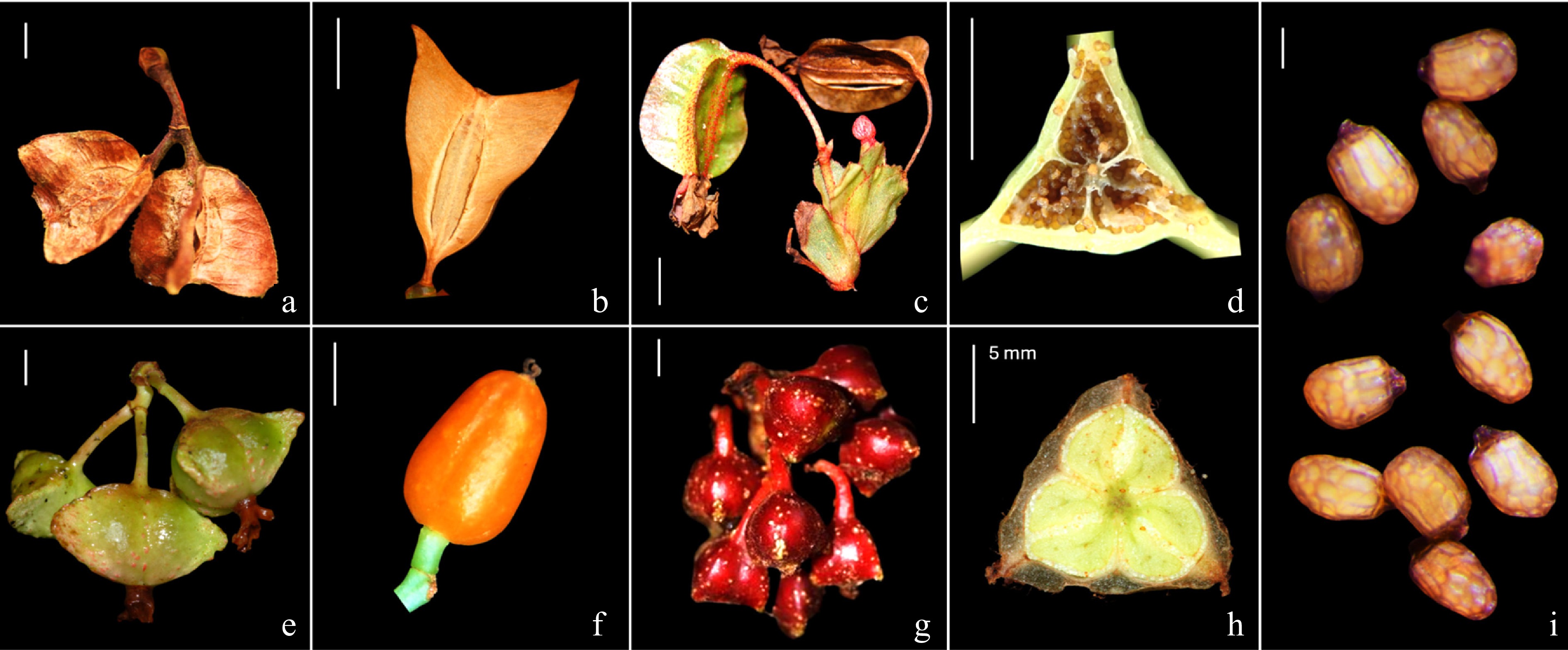
Figure 1.
Representative Begonia fruit diversity. Fruits range from (a)–(d) obliquely three-winged, dry dehiscent capsules adapted for wind dispersal of dust-like seeds to (e)–(h) fleshy, berry-like fruits. (a) B. gambutensis Ardi & D.C. Thomas. (b) B. ozotothrix D.C. Thomas. (c) B. resecta Miq. (d) Cross-section of B. ozotothrix ovary. (e) B. multangula Blume (f) B. salaziensis (Gaudich.) Warb. (g) B. pseudoscottii Girm. (h) Cross-section of B. multangula fruit. (i) Begonia seeds. Scale bars (a)–(h): 5 mm; (i): 0.1 mm. (Photo credit: Wisnu Ardi).
Begonia has long been organized into sections defined primarily by combinations of morphological characters. The current sectional framework recognizes approximately 70 sections, with their circumscription increasingly refined by molecular phylogenetic and phylogenomic evidence[6,7]. Section size and circumscription vary widely from large groups such as sects. Petermannia, Gireoudia, and Diploclinium to narrowly circumscribed or monotypic sections such as Haagea, which includes B. dipetala Graham[6]. Continued species discovery, particularly in tropical Asia, underscores the dynamic state of Begonia taxonomy[2,13]. For breeding, accurate sectional placement provides a useful framework for assessing evolutionary relationships among potential parents and, together with cytogenetic and reproductive information, may help anticipate crossing barriers and identify opportunities for bridge crosses or ploidy manipulation.
Botanical and horticultural classifications, therefore, serve complementary purposes. Botanical classification reflects evolutionary relationships, whereas horticultural classification organizes plants according to market class, propagation method, growth habit, and display traits. Effective breeding requires both perspectives: phylogenetic information informs parent choice and introgression strategies, while horticultural categories define target ideotypes and production systems.
Horticultural classification
-
In cultivation, Begonia species and cultivars are grouped chiefly by growth habit, morphology, flowering behavior, and propagation method rather than by strict phylogenetic relationship. The American Begonia Society framework, widely used by collectors, breeders, and growers, recognizes major horticultural groups based on practical cultivation and display traits[4,8]. These groups are not necessarily monophyletic; a horticultural class may include species or hybrids from several botanical sections if they share similar growth forms, environmental requirements, or market uses[4,17]. Figure 2 shows representative phenotypes, and Table 1 summarizes representative taxa, ornamental traits, and breeding targets.
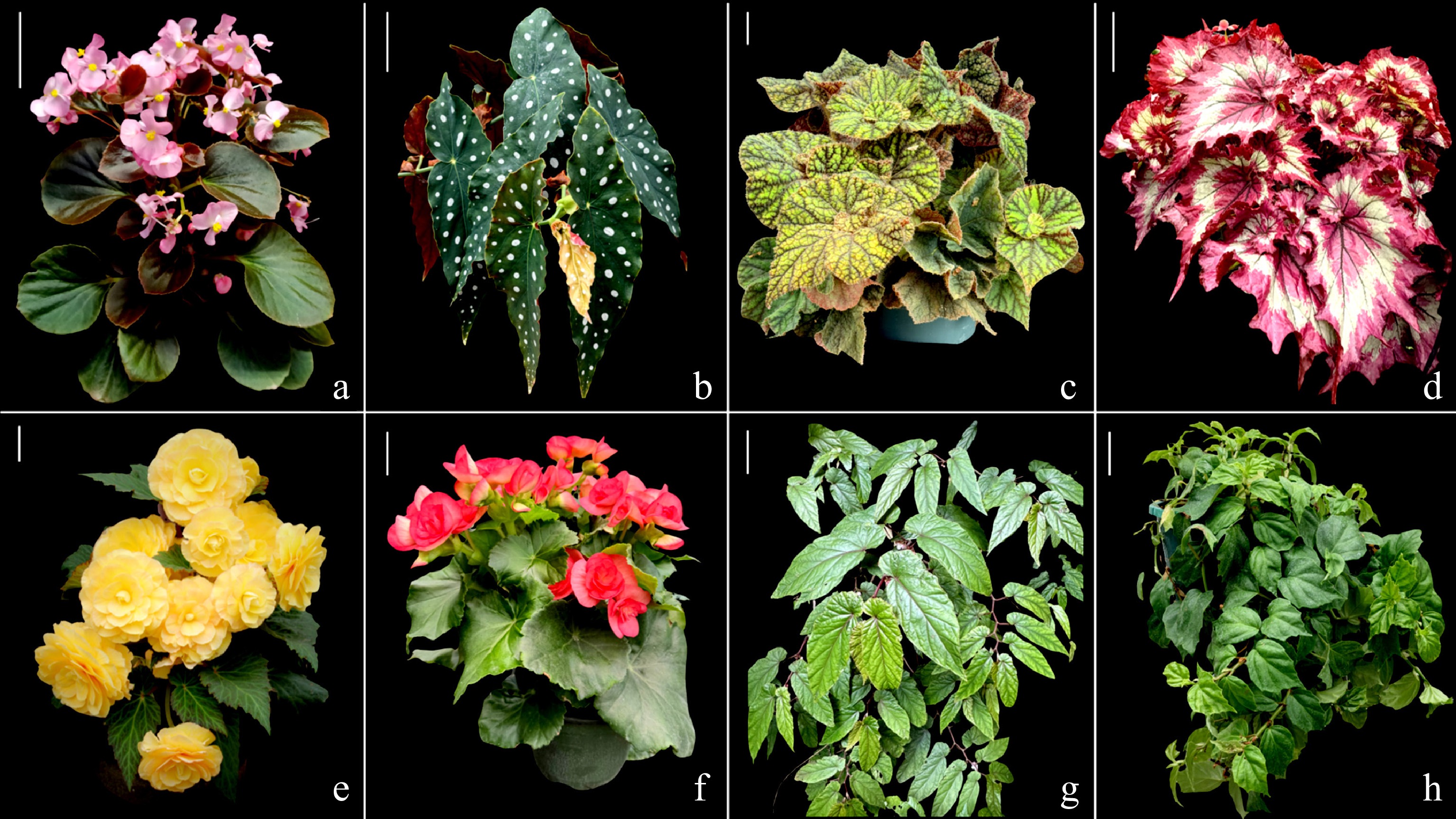
Figure 2.
Major horticultural groups of Begonia, illustrating diversity in growth habit, foliage, and flowering type: (a) semperflorens begonia, represented by Begonia × semperflorens-cultorum 'Cocktail Gin', (b) cane-like begonia, B. maculata Raddi var. wightii hort. ex Fotsch, (c) rhizomatous begonia, represented by Begonia 'Cowardly Lion', (d) Rex Cultorum begonia, (e) tuberous begonia, B. × tuberhybrida, (f) Rieger begonia, B. × hiemalis, represented by B. 'Berseba Pink', (g) shrub-like begonia, B. longifolia Blume, and (h) trailing or scandent begonia, B. glabra Aubl. Scale bars (a)–(h) represent 5 cm. Photo credit: (a)–(d), (h): Wisnu Ardi; (e): Gary Hunt; (f): Lovita Siregar; (g): D. Hämmerli.
Table 1. Major horticultural groups of Begonia in cultivation, with representative taxa, growth habit, key ornamental traits, and primary breeding objectives.
Group Representative species/hybrids Growth habit Key ornamental traits Breeding focus Semperflorens B. × semperflorens-cultorum Compact with fibrous roots Continuous flowering, bedding-plant uniformity Compact form, color range, climatic adaptability Cane-like B. maculata Bamboo-like, segmented stems Patterned/spotted leaves, pendant flowers Variegation, compact habit, branching Rhizomatous Begonia 'Cowardly Lion' Rhizomes, foliage primary Textured, spiraled, metallic-variegated leaves Foliage diversity for indoor culture Rex Cultorum B. rex Putzeys derivatives Rhizomatous Vivid leaf colors and patterns Leaf color, pattern, and humidity tolerance Tuberous B. × tuberhybrida Underground tubers Large showy single/double/frilled flowers Flower size, form, and color spectrum Rieger/Elatior B. × hiemalis (B. socotrana Hook. f. Parent) Variable, often tuberous Profuse winter flowering (short-day) Photoperiod response, double flowers Shrub-like B. longifolia Persistent woody/semi-woody stems Year-round flowering in warm climates Compact growth, floriferousness Trailing/scandent B. convolvulacea (Klotzsch) A.DC. Pendant or climbing Continuous lateral flowers, cascading display Flower size, branching, light tolerance Grouping and trait descriptions are summarized primarily from Tebbitt[4], Ginori et al.[8], Hvoslef-Eide & Münster[9], Thompson & Thompson[11], and Haegeman[17]. Semperflorens begonias
-
Semperflorens begonias, represented by Begonia × semperflorens-cultorum, are compact, fibrous-rooted plants valued for continuous flowering, uniform growth, ease of seed propagation, and adaptability to bedding or container crops. Modern cultivars include green-, bronze-, and variegated-leaf forms with white, pink, red, or bicolored flowers. Their rapid production cycle and reliable mass flowering make them widely used in public landscapes, mixed containers, and seasonal color displays (Fig. 2a)[4,8,9].
Cane-like begonias
-
Cane-like begonias have upright or arching bamboo-like stems with conspicuous nodes, often combined with spotted or patterned leaves and pendulous inflorescences. Species such as B. maculata exemplify the strong combined ornamental appeal of foliage and flower traits in this group. Breeding has emphasized compact growth, increased branching, stable leaf spotting and variegation, and improved performance as indoor or shaded landscape plants (Fig. 2b)[4,8,11].
Rhizomatous begonias
-
Rhizomatous begonias spread by thickened rhizomes and are grown primarily for their ornamental foliage. Leaves may be spiraled, bullate, metallic, variegated, or strongly textured, providing extensive diversity for indoor and conservatory display. Their shade tolerance and suitability for container culture make them valuable both as commercial foliage plants and as sources of novel leaf traits for breeding (Fig. 2c)[4,8,11].
Rex Cultorum group
-
The Rex Cultorum group was derived principally from B. rex, a species native to Assam that was introduced into European cultivation in 1858, and subsequently hybridized with other rhizomatous species[4,11]. Rex Cultorum begonias are among the most distinctive foliage ornamentals, with leaves displaying a combination of silver, green, purple, pink, and red, often accompanied by dark venation and spiral or irregular patterns. Major breeding objectives include developing novel leaf colors and patterns, enhancing pattern stability, promoting compact growth, and improving adaptation to indoor humidity and light conditions (Fig. 2d)[4,8].
Tuberous begonias
-
Tuberous begonias, represented by the B. × tuberhybrida complex, grow from underground tubers and are cultivated for their large, showy flowers, which may be single, double, frilled, picotee, or pendulous. Flower colors include white, yellow, orange, pink, red, and bicolored combinations, although true blue remains absent. Breeding has produced upright pot and bedding types as well as trailing forms for hanging baskets. Their seasonal dormancy and tuber storage requirements distinguish them from continuously flowering bedding begonias (Fig. 2e)[4,9,17].
Rieger begonias
-
Rieger begonias (B. × hiemalis), also called Elatior or Hiemalis begonias, are traditionally winter-flowering hybrids derived from crosses between B. socotrana and tuberous begonias. They are valued in commercial pot-plant production for their compact growth, glossy foliage, profuse flowering, abundant single or double flowers, and extended post-production quality (Fig. 2f)[4,9,17].
Shrub-like begonias
-
Shrub-like begonias possess persistent woody or semi-woody stems and a bushy, well-branching growth habit. Many species and hybrids combine attractive foliage with extended flowering, and some perform well year-round in warm climates or protected interior environments. Breeding priorities include compact plant architecture, improved branching, foliage novelty, increased floriferousness, and adaptation to low-light or humid interior conditions (Fig. 2g)[4,8,11].
Trailing or scandent begonias
-
Trailing or scandent begonias produce pendulous, creeping or climbing stems that may be trained on support or allowed to cascade from hanging baskets. Flowers are often borne along elongated stems, creating an extended ornamental display. Although this group has been less intensively improved than Semperflorens, tuberous, and Rex Cultorum begonias, it offers considerable opportunities for hanging-basket, vertical-garden, and interiorscape markets (Fig. 2h)[4,8,11].
Modern breeding programs generally operate within these horticultural categories to preserve defining traits such as plant form, flowering season, propagation method, and environmental adaptation, while introducing novel flower colors, foliar variegation patterns, compact growth, and enhanced stress tolerance. Because horticultural classes do not necessarily reflect evolutionary relationships, integrating horticultural classification with sectional, phylogenetic, and genomic information can provide a more strategic basis for parent selection, interspecific hybridization, and trait introgression[4,8,11].
-
Begonia has a pantropical distribution. Its natural diversity is concentrated in Asia and the Pacific Islands (approximately 1,300 species), the Americas (approximately 720 species), and Africa (approximately 180 species), according to data compiled by the Begonia Resource Centre of the Royal Botanic Garden Edinburgh[1]. These regions collectively represent the primary reservoirs of wild germplasm for ornamental breeding, including ancestors of modern cultivar groups and underutilized taxa with novel foliage, floral, architectural, and stress-adaptive traits.
Tropical Asia contains the greatest species richness, supported by lowland rainforests, montane cloud forests, islands, and limestone karsts[1,2,16,18,19]. The Sino-Vietnamese limestone karst region is especially important for species discovery, and many taxa from this region, particularly in sect. Coelocentrum and related groups show unusual leaf shapes, variegation, and microhabitat specialization[10]. New Guinea contains the largest section, Petermannia, with roughly 500 endemic species, and new taxa continue to be described[2]. Several Asian species have contributed valuable traits to cultivated begonias, especially for foliage color, patterning, and compact growth[4,11].
In the Neotropics, the Andean region and adjacent lowlands provide foundational germplasm for tuberous and flowering begonias[20]. Species from the region contributed important traits such as pendulous habits, large flower size and number, and yellow-to-orange pigmentation to modern tuberous cultivars[4,21]. The Atlantic Forest of Brazil is another major Neotropical center, particularly for shrub-like species in sections such as Pritzelia and Trachelocarpus that remain underused in commercial breeding but may offer useful traits for warm, humid environments.
African Begonia diversity is concentrated in the humid forests of West and Central Africa, with additional centers in southern Africa and Madagascar. Several African taxa are valuable for drought tolerance, tuber formation, and interspecific hybridization, while Socotra is especially important because B. socotrana contributed the strong short-day flowering response that underpins the Lorraine and Elatior groups[4,22]. Together, these centers of diversity highlight the broad breeding potential of wild Begonia germplasm and the need to integrate conservation with pre-breeding and trait evaluation.
-
Begonia exhibits exceptional karyotypic diversity among ornamental angiosperms. Foundational cytological work by Legro & Doorenbos[23] in 100 species identified 18 distinct somatic chromosome numbers ranging from 2n = 22 to 2n = 156, with 2n = 22, 28, and 56 occurring most frequently. Subsequent surveys substantially expanded this cytological baseline. Campos-Domínguez et al.[24] compiled data for more than 400 species and documented at least 35 distinct chromosome numbers across the genus. Reported records span n = 8 to n = 52, with n = 14, 28, 11, and 19 among the most common counts. Even within the Asian sect. Platycentrum, chromosome numbers vary widely, indicating that individual sections contain cytogenetic complexity comparable to that of entire ornamental genera[25,26].
Polyploidy is widespread and structurally diverse in Begonia. Phylogenetic inference across 257 species suggested that approximately 40% are of polyploid origin[24]. Recent karyotype analyses have confirmed tetraploid and hexaploid lineages with x = 11, and B. formosana (Hayata) Masam. (2n = 60) has been hypothesized to be an amphidiploid derived from hybridization between the diploid and tetraploid lineages[26]. These patterns indicate that genome duplication has occurred repeatedly and independently, contributing to diversification, reproductive isolation, and variation in horticultural traits.
A mechanism of particular importance to breeders is the formation of unreduced (2n) gametes. Crosses between tetraploids and diploids, or the reciprocal combinations, have produced triploid Semperflorens and Rex Cultorum begonias[27]. Dewitte et al.[28] showed that five of seven cultivated Begonia genotypes produced 2n pollen exclusively through first-division restitution (FDR), which was associated with irregular chromosome pairing, sticky chromosomes, or persistent chromosome bridges. Flow cytometry provides an efficient method for detecting unreduced pollen in living material based on DNA-content profiles[29]. Because FDR-derived 2n gametes retain a high proportion of parental heterozygosity, they are particularly valuable for generating vigorous polyploid hybrids while preserving elite ornamental phenotypes.
Genome-level studies now provide a complementary view of cytogenetic evolution. Genome size varies severalfold across Begoniaceae and does not correlate simply with chromosome number, indicating that repetitive DNA dynamics, dysploidy, and genome restructuring have accompanied whole-genome duplication[24]. Chromosome-scale assemblies for B. loranthoides Hook.f., B. masoniana Irmsch., B. darthvaderiana C.W. Lin & C. I. Peng and B. peltatifolia H.L.Li have further revealed a lineage-specific whole-genome duplication predating diversification of the genus. These assembled genomes range from approximately 332 to 800 Mb and contain more than 22,000 predicted genes[30].
These cytogenetic features have direct consequences for breeding. Extensive variation in chromosome number and repeated polyploidization help explain the difficulty of intersectional hybridization and the frequent need for embryo rescue, bridge crosses, or ploidy manipulation in wax, tuberous, and Elatior breeding complexes[31−33]. Integrating chromosome counts, flow-cytometric genome-size estimates, pollen-ploidy screening, and genomic data should facilitate more informed parental selection and reduce inefficiencies in wide-cross breeding.
-
The ornamental domestication of Begonia began in the late 18th century, when fibrous-rooted species from tropical America were introduced into European botanical collections and glasshouses (Table 2). One of the earliest documented introductions was B. minor, sent to England in 1777 by Dr. William Brown and cultivated as an exotic greenhouse plant[4,11]. Another important introduction was B. cucullata Willd., introduced to the Berlin Botanic Garden from Brazil and Argentina in 1821, probably inadvertently among shipments of other plant materials. Its compact growth habit, prolific flowering, and broad environmental adaptability made it an important progenitor of modern wax begonias[4,34]. Additional species, including B. schmidtiana Regel, B. bracteosa A.DC., B. foliosa Kunth, and B. gracilis Kunth, further broadened the genetic base of Begonia × semperflorens-cultorum during the 19th century[4,9,35].
Table 2. Major Begonia horticultural complexes, approximate dates of their first commercial releases, principal parental species, key breeding-relevant traits, and supporting references.
Complex First commercial release Parental species Key contributed traits Ref. B. × semperflorens-cultorum (wax begonias) 1879 (Germany) B. cucullata, B. schmidtiana, B. bracteosa, B. foliosa, B. gracilis Compact form, continuous flowering, and climatic adaptability [4,9] B. × tuberhybrida (tuberous begonias) 1870s (Veitch & Sons) B. boliviensis, B. pearcei, B. veitchii, and ≥ 4 other Andean species Large flowers, broad color range, yellow pigmentation [4,11,17,21] Lorraine group 1891 B. socotrana × B. × tuberhybrida Winter flowering (short-day response) [4] Elatior (B. × hiemalis) Mid-1900s (Denmark) B. socotrana × tuberhybrid complex Continuous controlled-environment flowering, expanded color range [9,17,25] Dragon Wings Late 1990s (Ball FloraPlant) Proprietary interspecific F1 hybrid background Sterility, heat tolerance, arching habit, continuous bloom [37,38] BIG (B. × benariensis) 2010s (Benary) B. × benariensis and related interspecific lineages Large flowers, full sun/heat performance, weather resilience [39,40] The introduction of tuberous Andean species from Bolivia and Peru between the 1850s and 1870s transformed Begonia breeding. B. boliviensis A.DC., introduced in 1864, contributed a pendulous growth habit and narrow, scarlet tepals; B. pearcei Hook. f. contributed bright-yellow pigmentation; and B. veitchii Hook. f. contributed to large orange flowers and adaptation to cool, high-elevation environments[4,11,21]. Commercial nurseries, particularly Veitch & Sons, used these species and other Andean species to develop the earliest B. × tuberhybrida cultivars during the 1870s[4,11,17,21]. Subsequent recurrent interspecific hybridization and selection produced the large flowers, floral doubleness, extensive color range, distinct dormancy behavior, and upright or pendulous growth habits that characterize modern tuberous begonias.
The introduction of B. socotrana from Socotra in 1880 provided several valuable ornamental traits, including a compact growth habit, winter flowering, and a pronounced short-day response[4,34,36]. Hybridization between B. socotrana and tuberous begonias led to the development of the Lorraine group, which was commercialized in 1891. This group represents an early example of breeding ornamental plants for controlled-season flowering[4]. During the 20th century, Danish breeding programs crossed B. socotrana with complex tuberous hybrids to develop Elatior or B. × hiemalis begonias. These cultivars became important greenhouse pot crops because of their compact growth architecture, abundant and reliable flowering, and improved branching under controlled environments[9,17,36].
Foliage begonias became increasingly important during the 20th century, especially those belonging to the Rex and rhizomatous groups. Hybrids involving B. rex and related Asian species produced vivid leaf coloration, metallic sheen, variegation, and diverse leaf morphologies[4,9]. Breeding objectives in these groups shifted toward novel color patterns, spiral leaf forms, distinct texture, compact growth, and adaptation to indoor environments. Their growing popularity paralleled the expansion of indoor plant markets and rising demand for ornamental plants that can tolerate relatively lower irradiance and fluctuating humidity.
During the late 20th and early 21st centuries, vigorous interspecific bedding begonias expanded the genus from shade-associated ornamentals into sun- and heat-tolerant landscape crops. Dragon Wing begonias, introduced commercially in the late 1990s and early 2000s, combined glossy foliage, arching growth, continuous flowering, sterility, and strong tolerance to heat and high humidity[37,38]. More recent B. × benariensis and BIG-type cultivars have further increased plant size, flower display, and resilience under full-sun or high-temperature conditions[39,40]. These developments broadened breeding priorities beyond compactness and uniformity in bedding plants to include landscape durability, tolerance to abiotic stresses, and reliable season-long performance.
Two centuries of breeding reveal a clear pattern: most major commercial Begonia groups originated through interspecific or intersectional hybridization followed by recurrent phenotypic selection[4,9,11], rather than selection within a single species. Breeding has focused on flower size, form, color, and doubleness; foliage pigmentation and texture; branching and compactness; propagation efficiency; disease resistance; shipping tolerance; and post-production longevity. The resulting cultivars show remarkable diversity in flowers, foliage, plant architecture, growth habit, and environmental adaptation. Nevertheless, most commercial groups originated from a relatively small number of founder species. These include B. cucullata, B. schmidtiana, B. bracteosa, B. boliviensis, B. pearcei, B. veitchii, B. rex, B. annulata, B. hatacoa, and B. socotrana. (Fig. 3) Collectively, these species contributed continuous flowering, large and showy flowers, novel pigmentation, ornamental foliage, compact growth, and photoperiodic flowering responses.
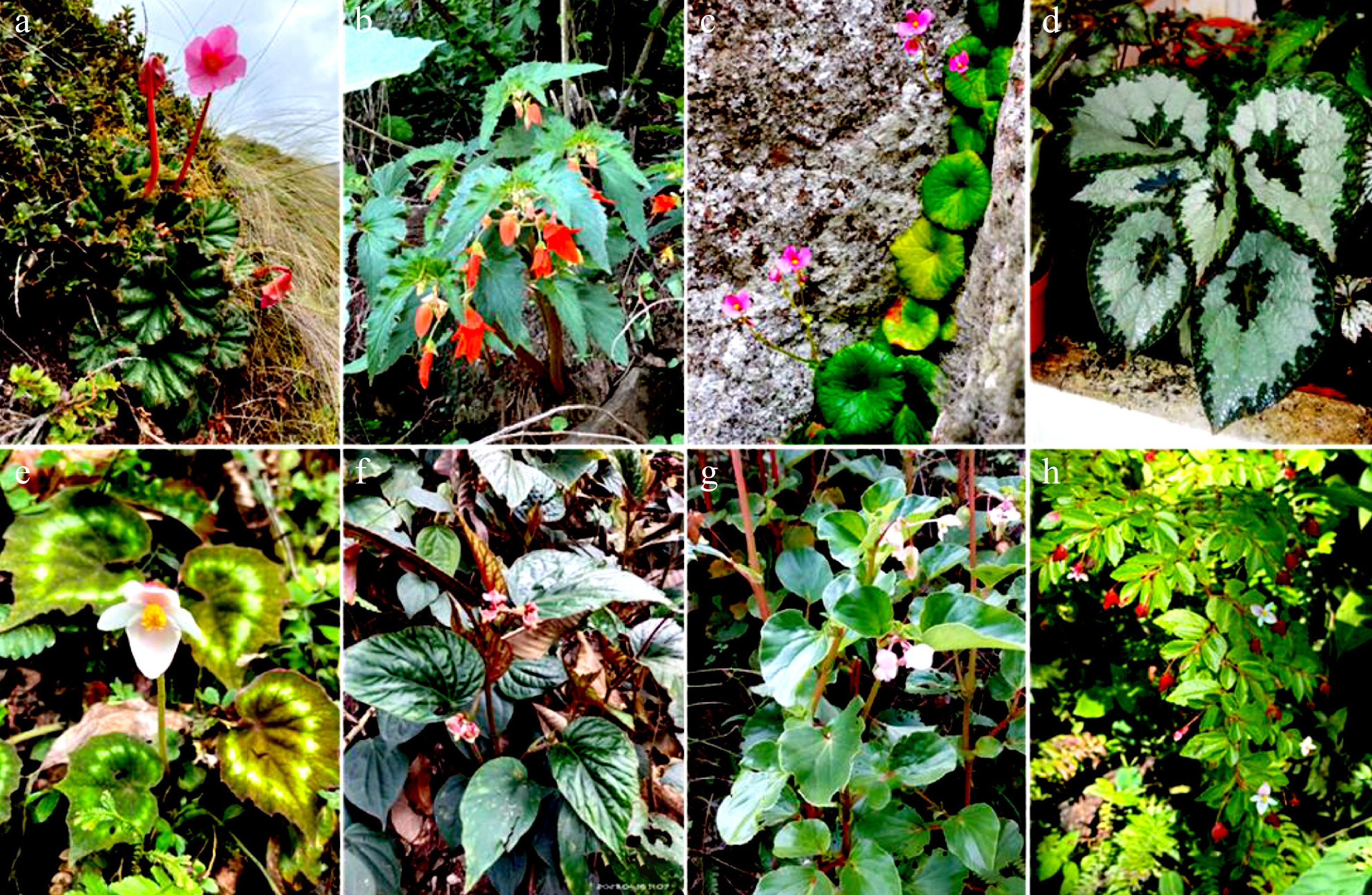
Figure 3.
Representative wild Begonia species used as parents or as valuable resources for improving ornamental traits. (a) B. veitchii. (b) B. boliviensis. (c) B. socotrana. (d) B. rex. (e) B. annulata K.Koch. (f) B. hatacoa Buch.-Ham. ex D. Don. (g) B. pearcei. (h) B. foliosa. Photo credit: (a) Challen Willemsen; (b) Rosario Douglas; (c) Nick Helme; (d) Wisnu Ardi; (e) Craig Robinson; (f) Rinzin Dorji; (g) Fabio Carvalho; and (h) Michael G.
The limited founder base of many commercial groups indicates that much of the natural diversity within Begonia remains underutilized. Wild species may possess valuable traits such as extreme foliage variegation, unusual floral morphology, heat or drought tolerance, resistance to pests and pathogens, and adaptation to limestone or epiphytic habitats. Some species may also tolerate low-light or fluctuating environmental conditions. However, many remain outside mainstream breeding programs because of limited availability, taxonomic uncertainty, cultivation difficulties, reproductive barriers, or insufficient knowledge of cross-compatibility.
Pre-breeding programs should therefore integrate germplasm conservation with systematic characterization. Chromosome counts, flow-cytometric ploidy estimates, and genome-size data can guide parental selection and help predict fertility barriers. Embryo rescue, ovule culture, and other tissue culture techniques can help recover hybrids from wild crosses. Chromosome doubling and mutation breeding can provide additional sources of variation. Molecular marker development, genomic sequencing, transcriptomics, and metabolomics could further accelerate the discovery and introgression of ornamental and stress-adaptive traits from wild germplasm into elite breeding backgrounds.
-
Molecular markers have been used extensively in Begonia systematics, population genetics, and conservation, but their direct deployment in ornamental breeding remains limited. Most marker development has focused on simple sequence repeat (SSR) loci for individual species or sections, including B. socotrana[41,42], B. fenicis Merr.[43], B. × tuberhybrida[44], B. luzhaiensis T.C.Ku[45], sect. Gireoudia species[46], B. maxwelliana King[47], and B. fimbristipula Hance[48]. These markers are useful for assessing population structure, genetic diversity, and germplasm identity. However, their limited cross-amplification among sections restricts their application in wide-cross breeding.
Plastome sequencing and phylogenomic datasets have provided additional markers for species identification, sectional placement, and evolutionary inference[7,49]. However, marker-assisted selection for commercial traits remains largely undeveloped. The only published QTL analysis in Begonia mapped loci for inflorescence architecture, sex ratio, stamen number, and pollen sterility using B. plebeja Liebm. × B. conchifolia A.Dietr.[50]. Translating such resources into breeding tools will require structured population mapping, standardized phenotyping of ornamental traits, genome-wide markers anchored to reference genomes, and validation across elite germplasm. Priority traits include flower color and longevity, compact growth habit, branching, heat tolerance, disease resistance, and post-production performance.
-
Biotechnology provides valuable tools for accelerating Begonia improvement beyond the limits of conventional breeding. Tissue culture, mutation induction, genetic transformation, genomics, and gene editing can facilitate rapid propagation, broaden genetic variation, identify desirable traits, and support the development of improved cultivars.
In vitro culture and micropropagation
-
Tissue culture is among the most useful biotechnological tools for Begonia improvement. It enables rapid clonal propagation, maintenance of elite genotypes, conservation of rare germplasm, production of pathogen-tested stock, multiplication of sterile hybrids, and generation of explants for mutation breeding, transformation, and gene editing. It also plays a fundamental role in mutation breeding, genetic transformation, and genome editing. The apical meristem and node are pre-existing explants for shoot culture, and the leaf and petiole are common explants for regeneration through different pathways.
In B. × hiemalis, Murashige and Skoog (MS) medium supplemented with 1.0 mg/L 6-benzylaminopurine (BA) and 1.0 mg/L α-naphthaleneacetic acid (NAA) induced shoot organogenesis from leaf and petiole explants, while rooting was promoted by 0.5–1.0 mg/L NAA[51,52]. Somatic embryogenesis was also reported in B. × hiemalis under dark incubation with specific regulators, including NAA, 2,4-dichlorophenoxyacetic acid (2,4-D), gibberellic acid (GA3), and activated charcoal[51,52]. The culture environment affected regeneration in B. × erythrophylla; red light stimulated callus proliferation, whereas blue and white light enhanced shoot initiation[53]. These findings demonstrate that Begonia morphogenesis is influenced by both genotype and culture conditions[53].
Regeneration systems have been optimized for several additional species. In B. rex, direct organogenesis from leaf explants was greatest on MS medium with 1.0 mg/L NAA and 1.0 mg/L BA, with shoots forming within six to eight weeks and rooting on growth-regulator-free MS medium[54]. In B. coptidifolia H.G.Ye, F.G.Wang, Y.S. Ye & C.I. Peng, leaf explants cultured on MS medium with 0.5 mg/L BA and 0.1 mg/L NAA produced direct organogenesis with high survival rates after acclimatization[55]. B. homonyma Steud. responded best to 0.5 mg/L BA and 0.1 mg/L NAA, whereas higher cytokinin concentrations reduced shoot quality[56]. B. fimbristipula has been regenerated through callus differentiation, direct organogenesis from growth centers, and shoot formation from root-derived callus[57].
Despite these successes, no universal regeneration system is available for Begonia. Responses are highly genotype-dependent, and protocols for many wild species or elite hybrids require optimization. Critical factors include explant source, growth-regulator type and concentration, light quality, culture duration, and acclimatization conditions. This genotype dependence remains a major obstacle to applying tissue culture across diverse germplasm. It also limits the development of transformation and genome-editing pipelines, both of which depend on efficient plant regeneration[58−60].
Mutation breeding
-
Mutation breeding generates heritable variation through physical means or chemical mutagens. It is particularly valuable in ornamental crops in which sterility, cross-incompatibility, vegetative propagation, or narrow genetic bases restrict variation generated through conventional recombination[61,62]. Among plant materials to be mutagenized, in vitro mutation systems offer additional advantages because large populations of explants or regenerants can be rapidly treated and screened under controlled conditions, desirable variants can be clonally propagated, and the occurrence of chimeras can be reduced through repeated regeneration.
Colchicine-induced chromosome changes have been applied in B. × hiemalis and B. × benariensis, resulting in polyploid plants with larger flowers, thicker leaves, and improved stress tolerance[63]. However, induced autopolyploid plants may exhibit slower growth, reduced fertility, genomic instability, or the exposure of deleterious recessive alleles. This limitation highlights the potential value of FDR-derived 2n gametes, which can generate polyploid formation while retaining a greater proportion of parental heterozygosity. Beyond chromosome doubling, ethyl methanesulfonate (EMS) mutagenesis in B. × rieger and B. × hiemalis has generated variants with compact growth habits, novel flower colors, and increased resistance to Botrytis cinerea and Xanthomonas spp.[62,64]. Gamma irradiation and related physical mutagenesis approaches have also been used in tuberous begonias to develop compact, floriferous potted plants with improved ornamental characteristics[61].
Genetic transformation
-
Genetic transformation enables the introduction of exogenous genes or the modification of endogenous gene expressions to improve target traits. In Begonia, transformation can circumvent barriers associated with sexual incompatibility and provide a platform for evaluating candidate genes involved in pigmentation, stress tolerance, plant architecture, or reproductive traits (Tables 3 and 4). It therefore serves as both a breeding approach and a tool for functional-genomic analysis.
Table 3. Reported genetic transformation studies and gene-editing attempts in Begonia.
Species/ cultivars Explants Transformation methods Ref. B. rex and Saintpaulia spp. Leaf discs,
(pre-cultured 15–21 d on NAA + BAP)Agrobacterium tumefaciens (binary vector pIG121HM) [65] B. × hiemalis Fotsch (Elatior begonia) Leaves A. tumefaciens strains AGL0 and LBA4404 (binary vector pIG121Hm) [58] B. × tuberhybrida cv. Perfecta Leaf and petiole disks A. tumefaciens LBA4404 (binary vector pBI121E15) [59] B. × tuberhybrida Leaves A. tumefaciens EHA105 (binary vector pCAMBIA13011-OsmiR393a) [66] B. maculata Leaves A. tumefaciens GV3101 (binary vector pPCV702) [67] B. × semperflorens-cultorum Leaves A. tumefaciens strain EHA101 binary vector pIG121-Hm [68] B. wallichiana Leaf discs A. tumefaciens strain EHA101 harboring the binary vector pIG121-Hm [69] B. × semperflorens Leaves A. tumefaciens strain GV3101, binary vector PCanG-EGFP [70] B. × semperflorens Leaves A. tumefaciens EHA105 carrying pIG-BvDODA1-BvCYP76AD1 [71] B. × tuberhybrida 'Urban Bicolor Pink' Leaves CRISPR/Cas9 + A. tumefaciens [60] Table 4. Functions and phenotypic effects of transgenes and gene-editing targets reported in Begonia.
Species/cultivars Transgene Promoter Transformation results Ref. B. rex and Saintpaulia
spp.gusA (intron-containing GUS reporter); hpt (selection) CaMV 35S (gusA); 35S (hpt) Preliminary report; optimum hygromycin B =
20 µg·mL−1 (Begonia) and 30 µg·mL−1 (Saintpaulia)[65] B. × hiemalis Fotsch (Elatior begonia) gusA (intron-containing GUS); nptII + hpt (selection) CaMV 35S (gusA, hpt); NOS (nptII) Stable transformants obtained; foundational protocol for Elatior transformation [58] B. × tuberhybrida cv. Perfecta rolA, rolB, rolC (4.3 kb fragment from agropine-type Ri plasmid pRiA4b); nptII; gusA CaMV 35S (gusA); NOS (nptII); native rol promoters Ri-type phenotype: dwarfism, delayed flowering, wrinkled leaves & petals [59] B. × tuberhybrida OsmiR393a (rice microRNA), nptII; hpt CaMV35S (OsmiR393a); pnos (nptII); 35S (hpt) Improved drought tolerance; increased flower longevity + 8 d; reduced transpiration; increased proline and chlorophyll [66] B. maculata PttKN1 (class I KNOX gene from hybrid aspen Populus tremula × P. tremuloides); nptII CaMV35S Altered plant architecture [67] B. × semperflorens-cultorum nptII, gusA CaMV35S Regeneration and transformation pipeline established [68] B. wallichiana S eGFP (reporter); hpt (selection) selection/reporter markers CaMV35S Optimized protocol; rapid PCR-based screening [69] B. × semperflorens TaCBF2 (wheat transcription factor) CaMV35S Enhanced cold tolerance at 4 °C; up-regulation of downstream BsCOR cold-responsive genes [70] B. × semperflorens RUBY (BvDODA1 + BvCYP76AD1) CaMV35S (DODA1- CYP76AD1), NOS (nptII) CaMV35S (hpt) Increased betalain biosynthesis; induced pale-pink petals and brownish-olive leaves; validated RUBY as a non-destructive reporter [71] B. × tuberhybrida
'Urban Bicolor Pink'F3'H gRNA + Cas9 CaMV35S (Cas9), U6 (gRNA) Construct verified in Arabidopsis; no edited B. × tuberhybrida plants regenerated [60] Transformation systems for Begonia were first developed in the 1990s for hybrids such as B. rex and B. × hiemalis. These studies determined critical factors, including explant type, pre-culture and co-cultivation conditions, selectable marker genes such as nptII or hpt, and reporter genes such as gusA[58,65]. Subsequent protocols were developed for B. × tuberhybrida, B. × semperflorens, B. wallichiana Lehm., B. maculata, and B. parvula H.Lév. & Vaniot using leaf discs, petioles, nodal segments, or in vitro shoots as explants[59,66−69].
Trait-directed transformation has targeted several breeding objectives. In B. × semperflorens, expression of the wheat TaCBF2 transcription factor improved cold tolerance at 4 °C. Transgenic plants exhibited increased survival, a lower semi-lethal temperature, enhanced antioxidant and osmo-protective responses, reduced accumulation of reactive oxygen species, and increased expression of cold-responsive genes such as BsCOR27, BsCOR413, BsKIN, BsLTI, and BsRD[70]. In the same species group, expression of the RUBY cassette (BvDODA1 + BvCYP76AD1) induced betalain accumulation, producing pale-pink petals and brownish-olive leaves and demonstrating the utility of RUBY as a nondestructive visual reporter[71].
In B. × tuberhybrida, overexpression of rice OsmiR393a improved drought tolerance without altering floral morphology. Transgenic lines exhibit reduced transpiration, increased proline and chlorophyll accumulation, and an 8-d extension of flower longevity under water stress[66]. Plant architecture has also been modified through Agrobacterium rhizogenes rol genes, which produced compact plants with enhanced rooting and altered shoot morphology[59].
Although stable transformation has been achieved in several Begonia taxa, most published studies remain focused on proof-of-concept experiments or protocol optimization. Few transgenic lines have been evaluated under commercial greenhouse or landscape conditions, and no transgenic Begonia cultivars have been commercialized thus far. Major biological constraints include genotype-dependent regeneration, somaclonal variation, and polygenic control of many ornamental traits. Non-biological constraints include regulatory requirements, intellectual-property considerations, and uncertain consumer acceptance. Collectively, these limitations increase interest in transgene-free genome editing, although its application will depend on establishing efficient and reproducible regeneration, gene delivery, and editing systems.
Genomic resources and genome editing
-
Genomic and gene-editing technologies offer opportunities to identify, validate, and modify trait-associated loci more precisely than conventional introgression alone. Their effective use in Begonia will require three interconnected advances: the availability of high-quality reference genomes, the integration of genomic, transcriptomic, and metabolomic datasets, and the development of efficient regeneration and transformation systems compatible with genome editing. Although progress has accelerated in recent years, routine functional validation and gene editing in Begonia remain less developed than in more intensively studied ornamental crops.
Chromosome-scale genome assemblies have only recently become available (Table 5). Assemblies for B. loranthoides, B. masoniana, B. darthvaderiana and B. peltatifolia ranged from approximately 332 to 800 Mb and provided evidence of a lineage-specific whole-genome duplication that preceded diversification within the genus[30]. A subsequent assembly of the medicinal species B. fimbristipula produced a 462 Mb genome anchored to 11 pseudochromosomes and containing 25,563 predicted protein-coding genes[72]. A draft genome of the cultivated species B. manicata Brongn. ex Cels was later used to identify anthocyanin-biosynthesis genes associated with red pigmentation in leaves and stems[73]. Together with genus-wide genome-size datasets[24], these resources establish a foundation for comparative genomics, candidate-gene discovery, and genetic dissection of ornamentally important traits.
Table 5. Genomic and transcriptomic resources available for Begonia, including resource type, target species or taxonomic scope, key features, and corresponding references.
Resource type Species/scope Key features Genome size Accession Ref. Chromosome-scale genome B. loranthoides First Begonia chromosome-scale series 716.44 Mb (assembly);
~724 Mb (k-mer estimate)CNA0013974 (CNGB); PRJNA791490 (NCBI); CNP0001056 (CNSA) [29] Chromosome-scale genome B. masoniana ~800 Mb (largest in initial series) 799.40 Mb (assembly);
~806 Mb (k-mer estimate)CNA0013975 (CNGB); PRJNA791490 (NCBI); CNP0001056 (CNSA) [29] Chromosome-scale genome B. darthvaderiana Phylogenomically diagnostic taxon 771.67 Mb (assembly);
~797 Mb (k-mer estimate)CNA0013973 (CNGB); PRJNA791490 (NCBI); CNP0001056 (CNSA) [30] Chromosome-scale genome B. peltatifolia ~332 Mb (smallest in initial series) 334.09 Mb (assembly);
~349 Mb (k-mer estimate)CNA0013976 (CNGB); PRJNA791490 (NCBI); CNP0001056 (CNSA) [30] Chromosome-scale genome B. fimbristipula ONT + Illumina + Hi-C assembly, 11 pseudochromosomes, 25,563 genes 462.11 Mb (assembly); ~439.94 Mb
(k-mer estimate)CRA019543/PRJCA031018 (NGDC/CNCB); JBIQHB000000000/PRJNA1173897 (NCBI) [72] Draft genome B. manicata Anthocyanin-pathway gene identification 602 Mb (assembly) PRJEB86434 (ENA) [73] Genus-wide genome-size dataset 400 species C-value variation across the genus C-values from 245 Mb
(B. ulmifolia) to 2,497 Mb
(B. formosana)Ph.D. thesis dataset (University of Edinburgh/RBG Edinburgh, Kew) [24] Transcriptome (highlight) B. semperflorens Anthocyanin metabolism under high light Not available SRS1429521 (NCBI SRA) [75] Transcriptome (low-T/high-light) B. semperflorens Anthocyanin biosynthesis: structural and regulatory genes Not available SRP126322 & SRP130727 (NCBI SRA); GSE107805 (NCBI GEO) [74] Multi-tissue RNA-seq B. conchifolia,
B. plebejaChalcone synthase gene-family expansion Not available PRJEB26711 (ENA) [76] Comparative transcriptome B. conchifolia,
B. plebejaLight-regulated, ethylene, jasmonate pathway divergence Not available PRJEB26711 (ENA; re-analysis of Emelianova et al.) [77] Metabolomics + transcriptome B. × hybrida
'Dragon Wing'Cyanidin as the principal pigment for leaf-color divergence Not available figshare, DOI: 10.6084/m9.figshare.31321228 (processed data); raw RNA-seq from the authors' previously published dataset[78] Functional-genomic analysis B. semperflorens 'Super Olympia' PEBP gene family (Ten BsPEBP genes; flowering control) Not available Data within manuscript & supplementary materials (additional data on request) [81] Transcriptomic resources have expanded in parallel. RNA-seq studies in B. × semperflorens identified structural genes and regulatory transcription factors associated with anthocyanin biosynthesis under high-light and low-temperature conditions[74,75]. Multi-tissue transcriptome comparisons between B. conchifolia and B. plebeja revealed expansion and divergent expression of the chalcone synthase gene family, suggesting that gene duplication contributed to the evolution of pigment biosynthesis[76]. Comparative transcriptomics also identified divergence in light-regulated, ethylene signaling, and jasmonate-signaling pathways consistent with differences in shade responses and development[77]. Integrated metabolomic and transcriptomic profiling of contrasting accessions identified cyanidin as a principal pigment associated with red leaf coloration in B. × hybrida 'Dragon Wing' compared with a green-leaved accession[78].
Functional genomic studies of specific ornamental traits are emerging[79,80]. Genome-wide characterization of phosphatidylethanolamine-binding protein (PEBP) genes in B. semperflorens 'Super Olympia' identified ten BsPEBP genes belonging to FT-like, TFL1-like, PEBP-like, and MFT-like subfamilies[81]. Contrasting tissue-specific expression patterns of FT-like and TFL1-like genes are consistent with potential roles in promoting or repressing flowering. These genes therefore represent promising candidate targets for investigating and manipulating the continuous-flowering habit of wax begonias.
Genome editing in Begonia remains in an early stage, largely because successfully edited cells must be regenerated into whole plants. The first published CRISPR/Cas9 study targeted flavonoid 3'-hydroxylase (F3'H) in B. × tuberhybrida 'Urban Bicolor Pink' to redirect pigment flux toward delphinidin biosynthesis, with the long-term objective of producing blue flower coloration[60]. Although the construct was validated in Arabidopsis controls, researchers did not regenerate edited B. × tuberhybrida plants, underscoring regeneration as the principal technical bottleneck. To date, no stable, peer-reviewed gene-edited Begonia lines have been reported. Genome editing therefore remains a promising but prospective breeding technology whose advancement will require reproducible plant regeneration, efficient introduction of genome-editing components into regenerable cells, reliable recovery of nonchimeric plants, and rigorous molecular validation of edited alleles.
-
Begonia occupies a distinctive position among ornamental angiosperms because it combines exceptional species richness, striking morphological diversity, and substantial commercial importance as a source of bedding, foliage, flowering, potted, collector, and landscape crops. The ornamental diversity of modern begonias has been shaped largely by interspecific and intersectional hybridization, recurrent phenotypic selection, and clonal propagation. These achievements have been facilitated by a better understanding of biological characteristics, including extensive variation in chromosome numbers, repeated polyploidization, 2n gamete formation through FDR, monoecy, mixed mating systems, and a strong capacity for natural or artificial hybridization.
Recent advances in ornamental plant biotechnology have created new opportunities to improve Begonia[82]. Tissue culture, in vitro mutagenesis, chromosome doubling, and Agrobacterium-mediated transformation have been established in selected species and hybrids, while expanding genomic resources now support candidate-gene discovery for pigmentation, flowering, plant architecture, and stress-related traits. However, a substantial gap remains between proof-of-concept biotechnology and its routine application in breeding. Genotype-dependent regeneration, limited mapping populations, a shortage of breeder-ready molecular markers, insufficient standardized phenotyping, and the lack of stable gene-edited lines continue to constrain the translation of research advances into cultivar development.
Future progress will depend on integrating genetic resources, conventional breeding, cytogenetics, molecular tools, and biotechnology into practical pre-breeding and selection pipelines. As summarized in Fig. 4, wild species, heritage cultivars, elite commercial parents, mutant lines, polyploids, and ex situ collections should be linked to target traits via a decision framework that integrates phenotypic evaluation, cytogenetic data, genome size estimates, molecular markers, genomic information, and propagation performance. Such integration could improve parent selection, help predict cross compatibility, prioritize breeding objectives, and accelerate selection cycles for cultivar development.
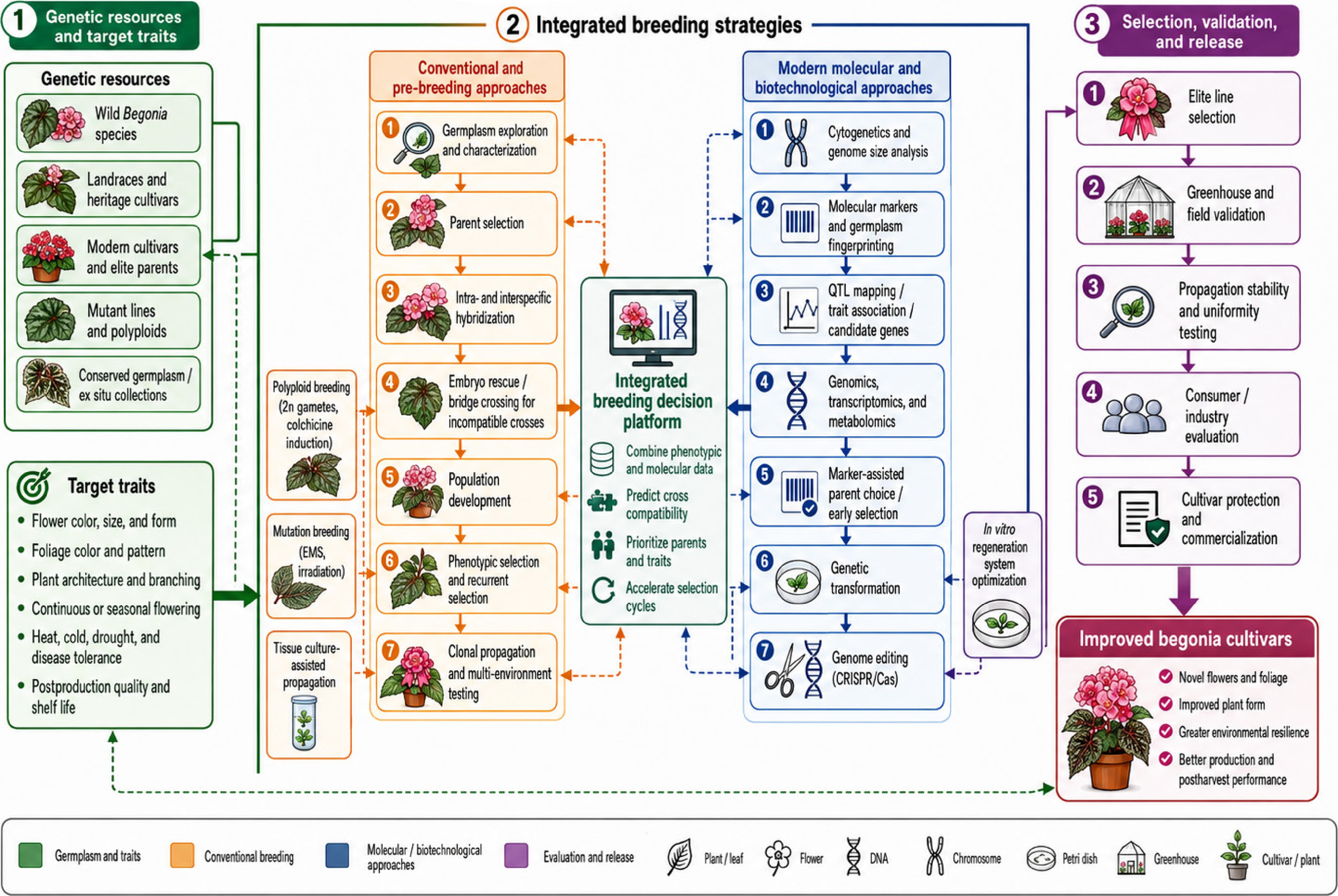
Figure 4.
Integrated breeding framework for Begonia improvement. The framework comprises three interconnected modules, each with defined activities and outputs. Module 1 assembles genetic resources, including wild Begonia species, landraces and heritage cultivars, modern cultivars and elite parents, mutant lines and polyploids, and germplasm maintained in ex situ collections, and evaluates them for priority breeding traits. Target traits include floral and foliar characteristics, plant architecture and branching, flowering habits, tolerance or resistance to biotic and abiotic stresses, and production and post-production performance. The principal outputs of this module are a characterized germplasm pool and a prioritized set of breeding objectives. Module 2 integrates conventional and pre-breeding approaches, including germplasm characterization, parental selection, intra- and interspecific hybridization, embryo rescue or bridge crossing, population development, phenotypic and recurrent selection, and clonal propagation and testing, with modern molecular and biotechnological tools. These tools include cytogenetic and genome-size analyses, molecular markers and germplasm fingerprinting, QTL mapping and association analysis, genomics and other omics approaches, marker-assisted selection, genetic transformation, and genome editing. Polyploid and mutation breeding provide additional sources of variation, whereas tissue culture propagation and optimization of in vitro regeneration facilitate the recovery and multiplication of selected genotypes. A central decision platform integrates phenotypic, cytogenetic, molecular, and propagation data to predict cross-compatibility, prioritize parents and target traits, and accelerate selection cycles. Module 2 outputs genetically improved candidate lines and prioritized elite parents. Module 3 advances candidate lines through elite-line selection, greenhouse and field validation, testing for propagation stability and uniformity, consumer and industry evaluation, and cultivar protection and commercialization. Feedback among the three modules allows validation results to inform subsequent germplasm evaluation, parental selection, and breeding decisions. The ultimate output is improved Begonia cultivars combining novel floral and foliar characteristics with desirable plant form, greater environmental resilience, and enhanced production and post-production performance.
Several priorities should guide future Begonia improvements. In the short term, wild germplasm, especially narrow endemics and underutilized regional lineages, should be conserved, documented, and characterized before habitat loss eliminates unique diversity. Cytogenetic analysis should become a routine component of pre-breeding to determine chromosome number, ploidy levels, genome size, and pollen ploidy before attempting broad crosses. Regeneration systems should be optimized across representative commercial and wild genotypes, thereby enabling transformation and genome editing to extend beyond the small number of currently responsive genetic backgrounds.
In the medium term, chromosome-scale genome assemblies should be integrated with standardized phenotyping, well-designed mapping populations, and multi-omics datasets to develop markers associated with flowering, foliage characteristics, plant architecture, stress tolerance, production efficiency, and post-production performance. These resources should also support functional validation of candidate genes and the development of marker-assisted and genomic selection strategies.
In the long term, once molecular and regeneration platforms mature, cultivars and advanced breeding lines developed through marker-assisted selection, genetic transformation, or genome editing should undergo rigorous evaluation under realistic production and market conditions. Such assessments should extend beyond laboratory and controlled-environment experiments to include commercial greenhouse production, propagation efficiency, shipping durability, retail performance, landscape establishment, and long-term performance under consumer-use conditions. Evaluations should also consider trait stability across environments and propagation cycles, potential trade-offs between ornamental quality and stress tolerance, production costs, regulatory requirements, and consumer acceptance. These steps will be essential for translating genomic discoveries and biotechnological advances into commercially viable cultivars.
Through the coordinated use of wild diversity, conventional breeding, cytogenetics, tissue culture, molecular markers, and genomics, Begonia has considerable potential for continued cultivar innovation. Future cultivars are likely to combine novel floral and foliar characteristics with improved plant architecture, environmental resilience, propagation and production efficiency, disease resistance, and post-production quality. Integrating these approaches could also broaden the genetic base of commercial germplasm, enable the use of previously inaccessible wild traits, shorten the time required to develop cultivars for emerging production systems, and meet changing market preferences. The genus therefore represents not only an outstanding ornamental crop but also a valuable model for integrating biodiversity conservation, classical breeding, and modern biotechnology to improve specialty ornamental plants.
The authors thank the botanical gardens, breeders, growers, and Begonia researchers whose germplasm collections, cultivar development, and publications contributed to the synthesis presented in this review.
-
During manuscript preparation, the authors used ChatGPT to improve grammar, clarity, and language presentation. The authors reviewed and edited the AI-assisted text and took full responsibility for the content of the submitted manuscript.
-
The authors confirm contribution to the paper as follows: study conception and design: Ardi WH, Chen J, Huo H; literature collection and interpretation: Ardi WH, Chen J, Huo H; draft manuscript preparation: Ardi WH, Chen J, Huo H; manuscript revision: Ardi WH, Chen J, Huo H. All authors reviewed the results and approved the final version of the manuscript.
-
No new datasets were generated or analyzed in this review. All information discussed is available from the cited literature.
-
The authors declare that they have no conflict of interest.
- Copyright: © 2026 by the author(s). Published by Maximum Academic Press, Fayetteville, GA. This article is an open access article distributed under Creative Commons Attribution License (CC BY 4.0), visit https://creativecommons.org/licenses/by/4.0/.
-
About this article
Cite this article
Ardi WH, Chen J, Huo H. 2026. Begonia: a versatile ornamental genus—diversity, breeding advances, and future prospects. Ornamental Plant Research 6: e033 doi: 10.48130/opr-0026-0024 

Begonia: a versatile ornamental genus—diversity, breeding advances, and future prospects
- Received: 27 May 2026
- Revised: 28 July 2026
- Accepted: 12 August 2026
- Published online: 28 September 2026
Abstract: Begonia L. is one of the largest and most horticulturally diverse genera of flowering plants, with more than 2,200 accepted species and exceptional variation in growth habits, foliage morphology, flower forms, ecological specializations, and reproductive biology. This review synthesizes current knowledge of Begonia taxonomy, biogeography, germplasm resources, cytogenetics, domestication, breeding history, molecular markers, and biotechnology, emphasizing their relevance to ornamental improvement. Major commercial groups, including wax, cane-like, rhizomatous, Rex Cultorum, tuberous, Lorraine, Elatior, and modern interspecific bedding begonias, were developed largely through interspecific or intersectional hybridization followed by recurrent phenotypic selection. Although these groups exhibit substantial ornamental diversity, they were derived from a relatively small number of founder species, leaving much of the wild germplasm underutilized. Cytogenetic studies reveal extensive variation in chromosome numbers, repeated polyploidization, and the formation of 2n gametes through first division restitution, all of which have direct implications for wide hybridization and polyploid breeding. Tissue culture, mutation breeding, chromosome doubling, and Agrobacterium-mediated transformation have been established in selected species and hybrids, while chromosome-scale genome assemblies, transcriptome analyses, and metabolomic datasets are beginning to support candidate-gene discovery. However, practical application remains constrained by genotype-dependent regeneration, a lack of breeder-ready markers, few mapping populations, and the absence of stable gene-edited Begonia lines. Future progress will depend on integrated breeding platforms that combine conserved wild germplasm, cytogenetic screening, genomic resources, genome-editing tools, tissue-culture systems, and multi-environment evaluation to broaden the genetic base and accelerate cultivar development.
-
Key words:
- Begonia /
- Biotechnology /
- Cytogenetics /
- Germplasm conservation /
- Molecular breeding /
- Ornamental crops /
- Tissue culture