











-
The global epidemiological transition has altered the primary disease burden in many low- and middle-income nations from communicable diseases to noncommunicable diseases. Currently, the majority of premature deaths are caused by type 2 diabetes, cardiovascular disease, cancer, and chronic respiratory conditions[1,2]. The most conspicuous factors that lead to this alteration are the consumption of energy-dense ultra-processed foods and the subsequent decline of culturally rooted, plant-derived food systems[3]. Due to escalating health concerns and noncommunicable diseases, plant-based foods, which are rich in nutrients and health-promoting natural compounds, are being considered a crucial approach to preventing disease and managing health. Approximately 80% of people are dependent on traditional, predominantly herbal therapies for their basic health care requirements[4].
In this context, increasing researcher attention has been focused on underutilized nutrient-dense and environmentally friendly crops[5]. Among these, garden cress seeds have emerged as a promising yet underexploited functional food ingredient. These seeds are rich in protein, fat, and other essential macronutrients, while containing significant levels of essential minerals such as iron, calcium, potassium, and phosphorus. The seeds are rich in α-linolenic acid, an essential fatty acid that is absent in contemporary diets[2,6]. Traditionally, garden cress seeds have been used in Ayurvedic, Unani, and Ethiopian systems of medicine for the management of various health conditions[7].
Despite their nutritional profile and traditional use, garden cress seeds remain underutilized in food systems and have received comparatively limited attention in functional food development and clinical research. Existing studies have primarily focused on their nutritional composition and selected biological activities, while a comprehensive evaluation of their therapeutic potential remains lacking[8]. Several characteristics of garden cress seeds, from nutritional and pharmacological to commercial perspectives, have attracted the attention of various stakeholders. First, they possess significant nutrient density, with macronutrient levels comparable to those of linseed and mineral concentrations exceeding those of many commonly consumed cereal grains, particularly for iron, calcium, potassium, and phosphorus[6,8]. Second, the seeds are a rich source of diverse phytochemicals, including glucosinolates, flavonoids, phenolic compounds, and imidazole alkaloids, some of which appear to be characteristic of the genus[4,7]. Third, garden cress seeds have long been used in traditional medicine to manage respiratory disorders, such as bronchial asthma, enhance bone-fracture healing, and promote lactation in nursing mothers[2]. Experimental studies and preliminary clinical investigations have provided supportive evidence for several of these traditional applications. However, well-designed, cohort-controlled randomized controlled trials are still required to establish their clinical efficacy, safety, and mechanisms of action[6].
Therefore, this review aims to comprehensively synthesize current knowledge regarding the nutritional composition, phytochemical profile, and therapeutic potential of garden cress seeds. It also identifies key research gaps and future directions for clinical and translational investigations, particularly in areas relevant to chronic disease prevention, rehabilitation, and functional food development.
-
Garden cress (Lepidium sativum L.) is an annual herb belonging to the Brassicaceae (Cruciferae) family. The plant height ranges from 15 to 50 cm and is characterized by attached sessile leaves, small white flowers, and obovate pods. The seeds are oval in shape, measuring 2–4 mm in length and 1–1.5 mm in width[9]. They possess a smooth surface, a triangular apex, and exhibit pale brown to reddish-black colour. There are three different varieties of garden cress, including red, yellow, and black. Among these, black and reddish brown are prevalent in Ethiopia. The seed structure is composed of a small embryo (2%–3%), a thin seed coat (12%–17%), and an endosperm of polygonal, thick-walled cells (80%–85%)[10]. Upon hydration, the seed coat releases a mucilaginous polysaccharide, enabling it to expand quickly to cover the seed with a transparent gel. This mucilage has potential applications in the food and pharmaceutical industries[11].
The geographical origin of L. sativum remains a subject of debate. Many studies suggest that Ethiopia is the primary centre of origin due to the long history of cultivation and the presence of considerable genetic diversity in Ethiopia. However, other studies suggest that it may have originated in Western Asia or Egypt and gradually spread across the Mediterranean region and into the Indian subcontinent. At present, the seeds are cultivated in many parts of the world, including India, Pakistan, Saudi Arabia, Sudan, Egypt, Ethiopia, several European countries, and parts of the United States[2,7]. Garden cress is well adapted to a broad range of agroecological conditions and can be cultivated across diverse temperature and altitude ranges. Harvesting of this plant usually occurs 70–90 d after sowing, with average yields of 800–1,000 kg/ha[12].
Garden cress seeds are known by several names, such as peppercress, peppergrass, and pepperwort in English; halim or chandrasur in India; rashad or hurf in Arabic-speaking regions; feto in Ethiopia; and lepidio in Spanish-speaking countries. Different parts of plants have traditionally been used for culinary and medicinal purposes[2]. The young leaves are commonly consumed fresh in salads, whereas dried leaves have been used in traditional medicine to manage inflammatory conditions, rheumatism, and bronchitis. The roots are used as a condiment in food preparation[2,13,14].
Nutritional composition
Proximate composition
-
The proximate values for garden cress seeds include 21%–25% crude protein, 23%–28% crude fat, 30%–34% carbohydrate, 7%–11.9% crude fibre, 4%–7% ash, and 3%–4% moisture[6,14]. It is a nutritionally adequate alternative to traditional staple crops, as presented in Table 1. Studies have shown that the nutritional composition of cress seeds can vary, possibly due to differences among cultivars and analytical methods. However, this variation is common in a seed propagated across a wide range of agro-climates.
Table 1. Proximate and mineral composition of garden cress seeds compared with major cereal staples (per 100 g).
Nutrient (per 100 g) Garden cress Wheat Maize Sorghum Tef (white) Crude protein (g) 21.0–25.0 11.7 8.0–11.0 8.3 11.0 Crude fat (g) 23.0–28.0 1.9 4.0–4.6 3.0 2.4 Carbohydrate (g) 30.0–34.0 73.0 73.0 75.0 73.0 Crude fibre (g) 7.0–11.9 1.6 2.7 6.5 3.0 Iron (mg) 8.3–100.0 3.7 3.6–4.8 3.5–4.1 9.5–37.7 Calcium (mg) 266.4–377.0 15.2–39.5 16.0 5.0–5.8 17.0–124.0 Potassium (mg) 1,236.5 117.3 54.8 — 128.9 Phosphorus (mg) 608.6–723.0 233.0 15.8 — 99.2 Magnesium (mg) 339.2–430.0 78.7 36.1 — 54.3 Zinc (mg) 7.0 1.7 2.6–4.6 1.4–1.7 2.4–6.8 Note: ranges integrate values reported by refs [2,6,14−16]. Mineral and vitamin profile
-
One of the most promising nutritional characteristics of garden cress seeds is their high mineral content. The reported potassium content (1,236 mg/100 g) exceeds that of recognized dietary potassium sources such as banana, dates, white beans, spinach, and avocado on a per-100-g basis, although total intake from cress will be limited by the typical serving size. A high concentration of calcium (266–377 mg/100 g), phosphorus (609–723 mg/100 g), magnesium (339–430 mg/100 g), and iron (8.3–100 mg/100 g) has highlighted the potential of garden cress as an adjunctive therapy for iron-deficiency anaemia[2,6]. The seeds also provide thiamine (0.59 mg), riboflavin (0.61 mg), and niacin (14.3 mg). The co-occurrence of vitamin C with non-haem iron enhances absorption by reducing ferric iron to ferrous iron in acidic gastric conditions[6]. However, the bioavailability of non-heme iron is influenced by phytates and oxalates. Therefore, research that explains only total iron content may overemphasize the amount of iron that is physiologically available.
Lipid profile and fatty acids
-
The oil extracted from the garden cress is yellowish and has a fatty-acid composition with α-Linolenic acid (C18:3 ω-3) being the dominant component (26%–34%), followed by oleic (30%), linoleic (7%–12%), arachidic (2%–3.5%), and minor amounts of palmitic and stearic acids[6,17]. The unsaponifiable fraction comprises β-sitosterol and a considerable amount of tocopherol (γ-tocopherol: 1,422 mg/kg). The cultivar differences are significant; for example, Khider, Haraz, and Rajab cultivars of Egypt exhibited significant differences in their arachidonic acid, linoleic acid, and behenic acid contents[2].
The high α-linolenic acid content is clinically relevant. The western diet is characterized by a ratio of ω-6:ω-3 > 15:1, which is far from the 4:1 ratio that is desirable for cardiovascular and inflammatory health. Blending garden cress oil with sunflower, rice bran, or sesame oil has been found to reduce the ω-6:ω-3 ratio to approximately 4:1[18]. The oil from cress seeds is oxidatively unstable, so protective measures, such as microencapsulation, refrigeration, or co-formulation with antioxidants, are required for commercial use.
Protein and amino acid profile
-
The crude protein content of cress seeds ranges from 22% to 25%, which is comparable to that of flaxseed (28%–30%) and substantially higher than that of wheat (11.7%), maize (8%–11%), sorghum (8.3%), and tef (11%)[2]. Methionine is the primary limiting amino acid, and the levels of cysteine and tryptophan are very low. The household processing methods, such as soaking, can enhance the nutritional quality of garden cress seeds. Studies have shown slight increases in the bioavailability of ash and protein from soaking, while important nutrients such as amino acids and fatty acids are largely retained. These findings suggest that nutritional benefits can be improved through inexpensive and accessible processing at the household level, without the need for industrial processing technologies[6].
Phytochemical profile and bioactive compounds
-
Polyterpenes, flavonoids, saponins, sterols, tannins, alkaloids, and phenolic acids have been found in considerable amounts in methanol-based extracts of cress seeds. On the other hand, alkaloids and saponins are mainly reported in ethyl acetate fractions[2]. During germination, the total phenolic concentration and flavonoid content increase significantly. This may lead to an improvement in antioxidant capacity[6]. Gallic acid (3,002 µg/100 g), ellagic acid (1,461 µg/100 g), and protocatechuic acid (582 µg/100 g) are the major phenolic acid fractions, with slight quantities of sinapic acid, sinapin, coumaric acid, and caffeic acid[19]. Garden cress seeds contain a wide range of flavonoids, including hesperidin, quercetin, rosmarinic acid, naringin, kaempferol aglycones, and 7-hydroxyflavone. In addition, recent studies reported the presence of acylated derivatives of kaempferol and quercetin glycosides, reflecting the diverse phytochemical composition of garden cress seeds. Table 2 presents the major bioactive compound classes in garden cress seeds and their health benefits.
Table 2. Major bioactive compound classes in garden cress seeds and their health benefits.
Compound class Representative compounds Documented bioactivities Phenolic acids Gallic acid; protocatechuic acid; ellagic acid; sinapic acid; sinapin; caffeic acid; coumaric acid Free-radical scavenging, anti-inflammatory, antihypertensive, hypolipidaemic, and antimicrobial activity Flavonoids Kaempferol and its glycosides; quercetin; quercitrin; naringin; hesperidin; rosmarinic acid Antioxidant, anticancer (apoptosis induction), hepatoprotective, antidiabetic, and anti-inflammatory effects Imidazole alkaloids Lepidine B-F; semilepidinosides A and B Hypoglycaemic activity in alloxan-induced diabetic rats; modulation of antioxidant enzymes Glucosinolates/isothiocyanates Glucotropaeolin (benzyl glucosinolate); benzyl isothiocyanate; 2-phenylethyl glucosinolate Chemopreventive, cytotoxic against breast cancer cells, and insecticidal against Bemisia tabaci Tocopherols and phytosterols γ-Tocopherol; δ-tocopherol; β-sitosterol; α-tocopherol Antioxidant, anti-inflammatory, cardioprotective, antiatherogenic activity Other constituents Tannins, saponins, anthraquinones, anthocyanidins, xanthones, coumarins, triterpenes, polyterpenes Astringent, antimicrobial, antiulcer, and broad antioxidant effects Note: Compiled from refs [2,6]. The imidazole alkaloids of garden cress seeds, such as lepidine B, C, D, E, dimeric F, and semi-lepidinosides A and B, are correlated with the hypoglycaemic activity in alloxan-induced diabetic rats[20]. Glucotropaeolin (benzyl glucosinolate) is the principal glucosinolate found in garden cress seeds, and its breakdown product (benzyl isothiocyanate) has attracted attention for its chemopreventive effects against breast cancer cells in in vitro studies[21].
Antinutritional factors
-
Garden cress seeds have an antinutritional compound, similar to the majority of Brassicaceae seeds. It contains a considerable amount of phytin phosphorus (447 mg/100 g) and oxalates (134 mg/100 g). Tannins, saponins, protease inhibitors, amylase inhibitors, lectins, and goitrogens are also present at lower levels[2]. The phytate content of garden cress seeds is almost similar to that of unprocessed cereals (29.5–1,310 mg/100 g) and may reduce the bioavailability of minerals such as iron and calcium. This composition brings attention to two factors. First, at normal dietary intake levels, the goitrogenic compounds associated with the glucosinolate fraction are considered pharmacologically inactive. However, their significance may increase when these seeds are consumed in excessive or pharmacological quantities, especially among individuals with subclinical hypothyroidism. Second, traditional processing methods, such as soaking, roasting, fermentation, and germination, can improve the nutritional quality of garden cress seeds by reducing antinutritional compounds such as phytates and tannins. Therefore, the absorption of essential minerals, including iron, zinc, and calcium, may be enhanced. These low-cost practices are integrated to enhance the nutritional value of garden cress-based foods[6].
-
A significant body of literature has explored the therapeutic applications of garden cress; however, the strength and quality of the evidence remain inconsistent across studies. Most studies are limited to animal models or small open-label clinical reports, and only a few clinical studies use a robust methodology. Table 3 provides a systematic comparison of the underlying study designs, doses, and limitations. The potential health benefits of garden cress are illustrated in Fig. 1.
Table 3. Pharmacological studies on Lepidium sativum (garden cress) seeds.
Study design Extraction method Dose and duration Model/subjects Key findings Proposed mechanism Ref. In vivo, experimental
(Animal study;
two groups, n = 6/group)Ethanolic extract
(Soxhlet; ethyl alcohol solvent); dried in a rotary evaporator under reduced pressure; soxhlet of trampled seeds400 mg/kg p.o. (1/5th NOAEL; OECD-420 acute toxicity: no mortality at 2,000 mg/kg) Duration: 8 wk Adult male Wistar rats (150–200 g); right femoral osteotomy + K-wire intramedullary fixation;
Groups: Control (saline) vs. Test (extract)Week 4: Test group showed significantly larger callus formation and greater osseous material deposition vs. control (CM: p < 0.001; LL and LM: NS).
Week 8: Complete bone union in all test group animals; incomplete healing in control (LM: p < 0.045; CM: p < 0.005; LL: NS throughout).
Phytochemical screening (ethanolic extract): Cardiac glycosides (+), anthraquinone glycosides (+), flavonoids (+), alkaloids (+ve by Dragendraff, Wagner, Hager, Mayer tests), tannins/phenolics (+), amino acids glycine (+), cysteine (+), glutamine (+), steroids (+), reducing glycosides (+). Coumarin glycoside (–), saponins (–), tyrosine (–), and tryptophan (–).Anti-inflammatory activity reduces periosteal response; glycine, cysteine, and glutamine residues promote collagen I synthesis via Gly-X-Y triple-helix structure; osteoblast →
Osteocyte differentiation facilitated by
collagen matrix[22] In vivo, experimental
(animal study;
six groups, n = 6/group) +
GC–MS phytochemical
analysis (FAME)Ethanolic extract
(Soxhlet; 60 g
seeds + 600 mL
ethanol, 6–8 h);
rotary evaporation
(Buchi; 60 °C,
175 mbar);
semi-solid mass;
stored at 4 °CLSS:
100 mg/kg p.o.
200 mg/kg p.o.
400 mg/kg p.o.
Silymarin:
100 mg/kg p.o.
(reference)
All once daily
× 7 d pre
treatment; sacrifice
24 h post-CCl4Male Wistar rats
(190–200 g);
CCl4-induced acute
hepato-toxicity
(1 mL/kg, 50%
in olive oil, i.p.)
six groups:
control (olive
oil); toxic (CCl4);
low, medium,
high-dose LSS
+ CCl4;
Silymarin + CCl4Liver enzymes (ALT, AST, ALP, and bilirubin): significantly elevated by CCl4 vs. control (p ≤ 0.05); significantly reduced by all three LSS doses and silymarin vs. toxic group (p ≤ 0.05) in a dose-dependent manner.
MPO: significantly decreased in all LSS-pretreated groups vs. the CCl4-only group (p ≤ 0.05).
SOD: significantly maintained in LSS + silymarin-treated groups (p ≤ 0.05).
Histopathology: 100 mg/kg LSS less nuclear degeneration, focal necrosis, lymphocyte infiltration vs. toxic; 200 mg/kg moderate nuclear degeneration, mild leucocyte infiltration; 400 mg/kg minimum fatty changes, mild nuclear degeneration, slight necrosis; general hepatocyte architecture retained. Silymarin group: normal cellular architecture preserved.
GC-MS (12 fatty acids identified):
• Alpha-linolenic acid (C18:3): 55.47%—major constituent
• Cis-13-eicosenoic/Paullinic acid (C20:1): 14.21%
• Palmitic acid (C16:0): 8.54%
• Erucic acid (C22:1): 5.65%
• Stearic acid (C18:0): 3.29%; others: myristic, palmitoleic, behenic, nervonic, lignoceric acidsAntioxidant activity mediated by phenolic compounds in extract; alpha-
linolenic acid downregulates proinflammatory cytokines IL-6, IL-1β, and TNF-α; prevents CCl4-induced free-
radical (CCl3) formation which disrupts Ca2+ homeostasis and causes necrotic cell death[23] In vivo, experimental
(animal study;
comparative design:
LS vs. Irbesartan);
three groups per
cohort, n = 5/groupAqueous extract
(decoction: 1 g
dried powdered seeds + 100 mL distilled water, boiled 10 min, infused 15 min; cooled and filtered); filtrate lyophilized; reconstituted in 10 mL/kg H2O just before useLS: 20 mg/kg
p.o. once daily
× 3 wk
(traditional
Moroccan dose)
Irbesartan:
20 mg/kg p.o.
(AT-II antagonist;
reference drug)
Measurements:
D0, D7, D14, and D21Male WKY
(normotensive)
and SHR (sponta-
neously hyper-
tensive) rats
(210–260 g);
housed in metabolic
cages; three groups:
Control (H2O),
LS, Irbesartan;
Coll. from retro-
orbital sinus
under ether
anaesthesiaSHR-blood pressure: significant reduction in SBP from Day 7 (p < 0.05) through Day 14 and Day 21 (p < 0.01); effect comparable in magnitude to Irbesartan (p < 0.01 at Day 21).
WKY-blood pressure: no significant SBP change with LS throughout treatment (Irbesartan caused reversible SBP reduction: p < 0.05).
Heart rate: no significant change in WKY or SHR after LS treatment (data not shown).
WKY-diuresis: significant increase in urine output from Day 7 (p < 0.05), more potent from Day 14 onward (p < 0.001). Increased urinary Na+ (p < 0.05), K+ (p < 0.01), and Cl– (p < 0.01) after 3 wk. GFR significantly increased (p < 0.001).
SHR diuresis/electrolytes: no significant change in urine volume despite SBP reduction. Significant increases in urinary Na+ (p < 0.01, weeks 2–3), K+ (p < 0.05 at Day 14; p < 0.001 at Day 21), Cl– (p < 0.001).
Plasma electrolytes: no significant change in plasma Na+ or Cl–; plasma K+ significantly decreased in all SHR groups. WKY plasma values unchanged.
Conclusion: LS selectively lowers blood pressure in hypertensive rats only; antihypertensive activity appears independent of diuretic mechanism in SHR.Antihypertensive in SHR appears independent of diuretic/natriuretic activity; possible direct vasodilatory or ATII receptor-like antagonism
similar to Irbesartan; In WKY: GFR
increase suggests afferent renal arteriole dilation → increased filtered Na+ load → natriuresis and diuresis; tubular reabsorption reduction via reduced anion cotransport; active constituent(s) and precise mechanism remain to be determined[24] In vivo, experimental
(animal study;
acute single-dose
+ chronic 15-d
design);
comparative:
LS vs. sodium-
vanadate;
four groups per
cohort, n =
5/groupAqueous extract (traditional Moroccan decoction: 1 g
powdered seeds +
100 mL H2O;
boiled 10 min,
cooled 15 min); Millipore-filtered
(0.2 mm); filtrate
freeze-dried; reconstituted
daily in 1.5 mL H2O
just before administrationLS: 20 mg/kg p.o.
(traditional
phytotherapy dose;
prescribed in
Tafilalet region,
Morocco)
Sodium-vanadate:
0.8 mg/kg p.o.
(insulin-mimetic
reference drug)
Acute: single
dose; measured
at 1, 2, 4, 6 h
Chronic: daily
× 15 d;
measured at
2, 4, 7, 15 dAdult male Wistar
rats (200–250 g);
Normal rats and
STZ-induced
diabetic rats:
STZ 65 mg/kg i.v.
(tail vein; dissolved
in 0.1 M sodium
citrate buffer
pH 4.5);
Diabetic criterion:
fasting blood
glucose > 16.5
mmol/L after 18 h;
All experiments
in overnight-
fasted ratsACUTE (Single dose, LS 20 mg/kg):
Normal rats: Significant blood glucose reduction from 1 h (p < 0.05); more pronounced reduction at 6 h (p < 0.01).
STZ diabetic rats: Significant reduction from 2 h post-administration (p < 0.05); maintained at 4 h and 6 h (p < 0.001).
CHRONIC (15 d daily, LS 20 mg/kg):
Normal rats: Significant reduction after 4 d (p < 0.05), 7 d (p < 0.01), 15 d (p < 0.001); progressive cumulative effect noted.
STZ diabetic rats: Significant blood glucose reduction from Day 2 (p < 0.01); marked normalization of glycaemia achieved at 2 wk (p < 0.001), sustained to Day 15.
Plasma Insulin: No significant change in LS-treated groups in either normal or STZ diabetic rats on Day 0 vs. Day 15, confirming insulin-independent mechanism.
Body weight: significant reduction in LS-treated normal rats (p < 0.05) and STZ rats (p < 0.01) after 15 d; attributed to reduction in food intake. Vanadate-treated groups also showed marked body weight reduction (p < 0.001).
Vanadate reference: Significant blood glucose reduction from Day 2 in STZ rats (p < 0.001), maintained to Day 15; similar trend in normal rats at higher time-points.Extra-pancreatic (insulin-independent) mechanism confirmed by unchanged
plasma insulin; Possible sites:
(1) Liver—inhibition of endogenous glucose production
(2) Kidney—inhibition of renal glucose reabsorption via altered SGLT1 expression
(3) Muscle/adipose enhanced glucose
uptake and intracellular metabolism
(4) Intestine—inhibition of glucose absorption; Imidazole alkaloids (lepidine, semilepidine) likely active constituents; precise mechanism and active constituent(s) still to be confirmed[25] In vivo, experimental
(animal study;
six groups, n = 6/group);
LD50 determination
in female albino
mice (OECD No.
420 and 425)Lepidium sativum:
Total Alkaloid (LSTA): seeds (1.5 kg) defatted with n-hexane (Soxhlet, 16 h); re-extracted with MeOH (8 h); evaporated; resus-pended in H2O; acidified with conc. HCl; extracted 3 × with ethyl acetate; aqueous layer basified with conc. NH3; re-extracted 3 × ethyl acetate; combined EtOAc layers concentrated and dried; Yield: 0.29% w/w; Dragendorff test +ve; Major components: lepidine and semilepidine (imidazole alkaloids)LSTA:
50 mg/kg i.p.
150 mg/kg i.p.
250 mg/kg i.p.
Metformin:
20 mg/kg p.o.
(reference)
All × 21 d
continuous
LD50+ (i.p.) =
2,204.95 mg/kg
(GHS Class 4:
300 < LD50+ < 2,000 mg/kg)
Dose range
selected based
on LD50+ resultFemale albino mice
(20–25 g) for
acute toxicity;
Wistar albino rats
(120–150 g) either
sex for antidiabetic;
Alloxan mono-
hydrate 150 mg/kg
i.p. in normal saline;
Diabetic criterion:
fasting BG >150
mg/dL confirmed
after 72 h;
IAEC approval:
IAEC/RCP/2008/05
six groups (n = 6):
Vehicle control;
Diabetic control;
Metformin 20;
LSTA 50, 150,
250 mg/kgAcute toxicity: LD50 = 2,204.95 mg/kg i.p. (GHS Class 4; relatively low toxicity). Alkaloid yield: 0.29% w/w from seeds.
Body weight: LSTA 250 mg/kg showed +1.94% gain on Day 21 vs. +6.14% (vehicle control) and –8.94% (diabetic control); metformin +(−2.41%).
Blood glucose (mg/dL): LSTA 150 mg/kg: Day 7: 205.37 ± 12.33 (p < 0.01), Day 14: 175.76 ± 16.37 (p < 0.001), Day 21: 126.46 ± 11.42 (p < 0.001). LSTA 250 mg/kg: Day 7: 196.30 ± 13.42 (p < 0.01), Day 14: 142.22 ± 14.68 (p < 0.001), Day 21: 124.40 ± 12.23 (p < 0.001). Diabetic control: 277–284 mg/dL throughout. LSTA 50 mg/kg showed a nonsignificant reduction.
Lipid profile: LSTA 150 and 250 mg/kg significantly reduced TC, TG, and LDL (p < 0.001) in diabetic rats; all three doses of LSTA prominently increased HDL (p < 0.001). No significant change in creatinine across all doses.
Organ weights: All LSTA doses significantly (p < 0.001) reduced elevated liver weight in diabetic animals. LSTA 50 and 150 mg/kg significantly suppressed elevated pancreas weight (p < 0.001). Kidney weight highest in vehicle control, lowest in diabetic control; LSTA 250 mg/kg restored kidney weight (0.759 ± 0.028 g/100g vs. metformin 0.768 ± 0.042).Reducing oxidative damage via modulation of antioxidant enzymes (SOD, glutathione); protection of β-pancreatic cells from alloxan-generated free radicals; potentiation of pancreatic insulin secretion from remaining islet β-cells; restoration of delayed insulin response and slow carbohydrate absorption; Possible AMPK-dependent pathway → GLUT4 upregulation → insulin-independent glucose transport; Increased glycogenesis; inhibition of gluconeogenesis; inhibition of intestinal glucose absorption; exact mechanism and active constituent(s) to be elucidated [20] In vivo, experimental
(animal study;
three-group design:
control, low dose,
high dose);
two independent
inflammation modelsCrude seed powder (Chandrashura) suspended in distilled water (sufficient quantity to dissolve the required dose); no solvent extraction performed; crude suspension used as test drug; administered via oral route with gastric catheter Low dose A: 500 mg/kg p.o.
(therapeutic dose) High dose B: 1,100 mg/kg p.o. (2 × therapeutic dose)
Control: distilled water (same volume) All administered 1 h before edema induction; IAEC approval: IAEC 04-05/01/ PhD.03Charles Foster
albino rats
(150–240 g)
of either sex;
three groups;
Model 1:
Carrageenan-
induced paw
edema:
0.1 mL 1%
carrageenan i.pl.
sub-plantar
aponeurosis
(left hind limb)
Model 2:
Formaldehyde-
induced paw
edema: 0.05 mL
formalin s.c.
left hind pawCarrageenan model (acute inflammatory phase):
Low dose (500 mg/kg): 15.04% reduction at 1 h; 28.50% at 2 h; 4.60% at 3 h vs. control; statistically nonsignificant (NS) throughout.
High dose (1,100 mg/kg): 13.65% reduction at 1 h; 34.50% at 2 h; 31.40% at 3 h vs. control; NS throughout.
Control group showed high variability (40.41% ± 13.03% at 1 h; 75.03% ± 28.75% at 2 h); the effect was not dose-dependent.
ANOVA: F = 2.79, p < 0.10 (df 2,15); no statistically significant activity reached.
Formaldehyde model (chronic proliferative phase):
Low dose (500 mg/kg): 34.29% reduction at 24 h (significant by ANOVA, p < 0.05); 29.37% at 48 h.
High dose (1,100 mg/kg): 51.60% reduction at 24 h (p < 0.05); 48.56% at 48 h.
Overall conclusion: Moderate anti-inflammatory activity in carrageenan (acute) model (NS due to control variability); moderate to significant suppression in formaldehyde (chronic) model. Drug effective in both acute and chronic inflammatory models at lower dose level.Carrageenan model represents phase 1 (acute exudative) inflammation; Mediated by histamine, serotonin, bradykinin, prostaglandins; possible inhibition of these phlogistic mediators or modulation of their receptors; dose-independent response suggests multicomponent nature: higher doses may contain opposing active principles; formaldehyde model represents phase 3 (chronic proliferative) inflammation via fibroblast proliferation; test drug shows strong inhibitory effect on fibroblast proliferation and connective tissue modulation; specific active constituent(s) responsible for anti-inflammatory effect remain to be identified [26] Open-label,
noncomparative
clinical study
(single-arm,
before-after design)Finely powdered
dried seeds
(commercial
supplier;
authenticated by
Dr. Daniel, Dept.
of Botany,
M.S. University,
Vadodara, Gujarat;
voucher deposited
in 'BARO' herbarium,
MS University;
no solvent
extraction;
crude seed
powder administered
orally with water)1 g t.i.d.
(3 g/d) orally
with water
× 4 wk
Weekly medication
supply; patients
reviewed weekly;
no concurrent
asthma medication
allowed;
baseline PFTs
and symptom
scores recorded
before treatmentn = 30 patients
(enrolled 34;
four discontinued;
30 completed);
Either sex;
Age: 15–80 y
(mean 50.83 ± 3.32);
Male: Female = 17:13;
Weight: 48.26 ± 1.63 kg;
Disease duration:
3.82 ± 0.91 y; Mild to moderate bronchial asthma (25 intrinsic, five extrinsic); Outpatient Dept., Govt. Ayurvedic Hospital, Vadodara; Exclusions: Cardiovascular disease; severe asthma (PEFR < 20%, FEV1 < 20% predicted); age < 15 y; pregnancy; TBPulmonary function tests (spirometry):
FVC: highly significant increase p < 0.001; 1.60 → 1.98 L; mean% increase 32.92% ± 10.07%.
FEV1: Significant p < 0.01; 1.28 → 1.68 L; mean% increase 35.81% ± 8.32%.
FEV1/FVC%: NS (81.76% → 85.50%); both volumes increased proportionally.
PEFR: p < 0.01; 2.58 → 3.31 L/s; mean% increase 43.58% ± 13.56%.
FEF25−75%: p < 0.05; mean% increase 42.00% ± 13.48%.
FEF25%: p < 0.01; mean% increase 43.87% ± 13.37%.
FEF50+%: p < 0.05; mean% increase 43.21% ± 13.28%.
FEF75%: NS; mean% increase 38.49% ± 14.80%.
MVV: p < 0.01; 50.29 → 57.02 L/min; mean% increase 18.23% ± 6.59%.
Clinical symptoms: significant reduction in symptom scores for dyspnoea, wheezing, cough, and chest tightness (all p < 0.05 Student's paired t test).
Haematological: ESR significantly reduced 26.74 → 17.04 mm/h (p < 0.05); eosinophil count trend towards reduction (NS overall; normalization observed in patients with elevated baseline counts); Hb, TC, differential count, BP, heart rate, respiratory rate: all NS.
Safety: No adverse effects observed in any of the 30 patients throughout the 4-wk treatment period.Not fully elucidated; Probable action through adrenergic mechanisms; seeds contain cardioactive substance with Adreno mimetic properties); anti-inflammatory effect evidenced by reduction in ESR; possible inhibition of airway inflammatory mediators (histamine, bradykinin, prostaglandins); flavonoids and phenolics in seeds may modulate bronchial smooth muscle tone; Detailed mechanistic studies and RCTs required to confirm efficacy and elucidate precise pathways [27] Abbreviations: ALT, alanine transaminase; AST, aspartate transaminase; ALP, alkaline phosphatase; BIL, bilirubin; CCl4, carbon tetrachloride; CM, circumferential callus; d, days; FAME, fatty acid methyl ester; FEV1, forced expiratory volume in 1 s; FVC, forced vital capacity; GFR, glomerular filtration rate; GC–MS, gas chromatography–mass spectrometry; GSH, reduced glutathione; H2O, water; Hb, haemoglobin; HDL, high-density lipoprotein; i.p., intraperitoneal; i.v., intravenous; IL, interleukin; LDL, low-density lipoprotein; LL, longitudinal lateral callus; LM, longitudinal medial callus; LSS, Lepidium sativum seed(s); MDA, malondialdehyde; MPO, myeloperoxidase; NIST, National Institute of Standards and Technology; NOAEL, no-observed-adverse-effect level; NS, not significant; OECD, Organisation for Economic Co-operation and Development; PEFR, peak expiratory flow rate; p.o., per os (oral); PGE2, prostaglandin E2; RIA, radioimmunoassay; SBP, systolic blood pressure; SHR, spontaneously hypertensive rats; SGLT1, sodium-glucose cotransporter 1; SOD, superoxide dismutase; STZ, streptozotocin; t.i.d., three times daily; TC, total cholesterol; TG, triglycerides; TNF-α, tumour necrosis factor alpha; WKY, Wistar-Kyoto (normotensive) rats; wk, weeks; °C, degrees Celsius; AMPK, AMP-activated protein kinase; AOAC, Association of Official Analytical Chemists; AAS, Atomic Absorption Spectrophotometer; DBP, diastolic blood pressure; Eos, eosinophils; ESR, erythrocyte sedimentation rate; FEF, forced expiratory flow; GHS, Globally Harmonized System; GLUT4, glucose transporter type 4; Hb, haemoglobin; HPLC, high-performance liquid chromatography; LSTA, L. sativum total alkaloid; MDL, method detection limit; MVV, maximum voluntary ventilation; NIST, National Institute of Standards and Technology; PE, petroleum ether; PEFR, peak expiratory flow rate; ROS, reactive oxygen species; SEM, standard error of mean; s.c., subcutaneous; CPCSEA, Committee for the Purpose of Control and Supervision of Experiments on Animals; IAEC, Institutional Animal Ethics Committee. 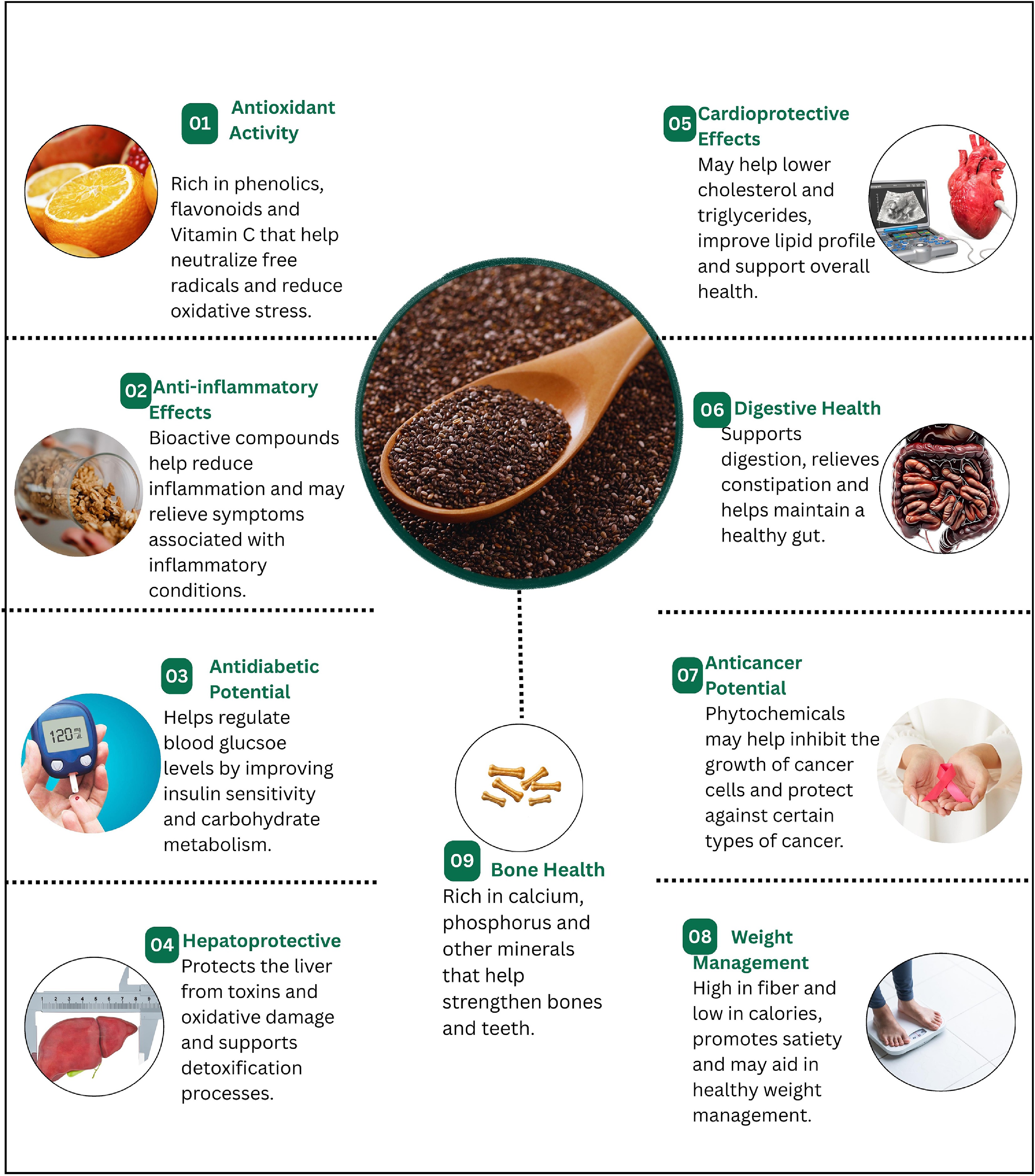
Figure 1.
Overview of the major health-promoting properties of garden cress (Image is prepared through Canva:
https://canva.link/ser2zdsr0bno2vy ).Anti-inflammatory and analgesic effects
-
In the rat carrageenan-induced paw oedema and formaldehyde-induced oedema models, an aqueous suspension of the seed powder at 550 mg/kg produced a moderate suppression of oedema. This effect is attributed to the inhibition of prostaglandin and kinin formation, the modulation of receptor-mediated mediator release, and the inhibition of fibroblast proliferation[26]. The calcium content of seeds is hypothesized to provide symptomatic relief in osteoarthritis, although this mechanism remains largely inferential. From a physiotherapy and rehabilitation perspective, these data position the seed as a candidate adjunctive intervention for inflammatory musculoskeletal conditions. However, well-structured clinical studies are needed to supports its use as an adjunct therapy.
Hepatoprotective effects
-
In CCl4-induced hepatotoxicity in rats, ethanolic seed extract was administered at 100, 200, and 400 mg/kg for 7 d. The results showed dose-dependent reductions in serum alanine transaminase (ALT), aspartate transaminase (AST), alkaline phosphatase, and bilirubin, in conjunction with attenuation of hepatocellular necrosis on histology[23]. This may be due to the antioxidant phenolic and tocopherol content of the seeds, which may lead to anti-inflammatory properties.
Bone-fracture healing and osteoarthritis
-
Two preclinical studies and one small clinical trial have addressed musculoskeletal indications of particular relevance to physiotherapy. In a femoral osteotomy model in rats, ethanolic seed extract at 400 mg/kg accelerated radiographic callus formation at the second, fourth, and eighth weeks compared with controls[22]. In a parallel experiment in New Zealand white rabbits, dietary supplementation with 6 g of seeds daily for 12 weeks following an induced femoral fracture similarly improved healing, with statistically superior callus formation in the test group[28]. The proposed mechanism centres on enhanced collagen deposition at the fracture site, supported by the seed's content of glycosides, alkaloids, tannins, flavonoids, and structural amino acids such as glycine, cysteine, and glutamine[29].
In a controlled clinical study, 6 g of seed powder twice daily for 30 days resulted in symptomatic improvement in about 75% of patients with knee OA, with 30% achieving complete remission, 37.5% showing good improvement, and 25.5% showing moderate improvement[30]. This effect is due to analgesic, anti-inflammatory, and calcium-mediated effects. However, the study has a few limitations, such as a small sample size, unstandardized symptom assessment, and a lack of validated instruments (e.g., WOMAC or VAS scores). The seed is promising in preclinical fracture-healing results; however, clinical studies using more modern outcome measures with blinded and adequately powered designs are still required.
Antihypertensive, diuretic, and nephroprotective effects
-
Oral administration of the aqueous seed extract (20 mg/kg/d for 3 weeks) resulted in a sustained reduction in systolic blood pressure beginning on day 7 in rats with spontaneous hypertension, whereas normotensive controls showed no difference[24]. Similar findings were reported in rats, in which aqueous and methanolic seed extracts produced diuretic responses comparable to those of hydrochlorothiazide, a commonly used diuretic drug[31]. Halaby et al. (2015) further showed that dietary inclusion of seed powder at 5% and 10% protected against cisplatin-induced nephrotoxicity, reducing serum urea, creatinine, and uric acid, alongside improvements in glutathione status and lipid peroxidation[19]. These data are mechanistically attributed to antioxidant and electrolyte effects.
Anticancer activity
-
Aqueous extract of garden cress seeds, particularly the benzyl isothiocyanate fraction released from glucotropaeolin, has been shown to suppress proliferation of MCF-7 human breast cancer cells in vitro, with apoptosis induced at 25%–50% v/v concentrations and frank necrosis at 75%[21]. Phytosterols and flavonoids in the seed are associated with the inhibition of cancer-related signalling pathways. However, the relevant in vitro concentrations are above plasma exposure through dietary intake, and there are currently no in vivo tumour-bearing studies. The interpretation is consistent with chemopreventive potential; however, long-term cohort studies are needed.
Hypocholesterolaemic and cardioprotective activity
-
In hypercholesterolaemic rats, dietary inclusion of 5% and 10% seed powder or extract reduced serum triglycerides, total cholesterol, low-density lipoprotein cholesterol (LDL-C), and very-low-density lipoprotein cholesterol (VLDL-C), accompanied by mild increases in HDL-C and improvements in liver and kidney function indices. The mechanisms may involve the suppression of hepatic cholesterol biosynthesis via the inhibition of HMG-CoA reductase[32] and the enhanced faecal excretion of bile acids and cholesterol via intestinal binding[33]. The blends of cress oil with conventional vegetable oils improved the ω-6:ω-3 ratio and modulated lipid metabolism in rats[34].
Antidiabetic activity
-
The diet of rats with streptozotocin-induced diabetes was supplemented with 20 mg/kg of an aqueous seed extract, which showed reduced fasting blood glucose without changes in basal plasma insulin. This implies an extra-pancreatic mechanism that delays renal glucose reabsorption and allows more glucose to be excreted in urine[35,25]. The alkaloid fraction (lepidine and semilepidine) at 250 mg/kg over 21 days showed significantly greater hypoglycaemic activity than lower doses in alloxan-induced diabetic rats, with concurrent modulation of antioxidant enzyme activity[20]. In a human study, garden cress seeds reduced postprandial starch hydrolysis by approximately 41% and attenuated the postmeal glucose excursion in both healthy and type 2 diabetic participants[29]. The convergence of mechanistic studies (renal sodium-glucose cotransporter (SGLT)-related, antioxidant) with the postprandial human data is encouraging, but a well-structured randomized trial in patients with prediabetes or early type 2 diabetes is limited.
Galactagogue, emmenagogue, and reproductive effects
-
Garden cress seeds have a long ethnomedicinal use as galactagogues. In 30 lactating rats, supplementation with a 20% seed-powder mixed diet for 7 d produced enhanced mammary gland development, alveolar proliferation, and increased secretory accumulation compared with controls[36]. Mild oestrogenic and emmenagogic activity has also been reported, and the seeds have been investigated as a regulator of menstrual flow. The reproductive evidence is mixed and includes both profertility findings (improved milk yield in rabbits, modulation of LH, prolactin, and progesterone in ovariectomised rats) and antifertility findings (abortifacient activity at high doses). The implication is that the seed is contraindicated in pregnancy[6,15].
Bronchodilatory effects in asthma
-
In an open-label clinical study, 30 patients aged 15–80 y with mild to moderate bronchial asthma received 1 g of seed powder orally three times daily for 4 wk; spirometric indices and clinical symptom severity improved without reported adverse effects[27]. The proposed mechanism combines anticholinergic, calcium-channel-blocking, and phosphodiesterase-inhibitory activity[37]. The absence of a placebo arm and of blinding is a significant limitation, and the small sample limits external validity. However, the consistency of the findings with traditional Ayurvedic use justifies further controlled investigation.
Antianaemic potential
-
As a non-haem iron source, garden cress seeds have been incorporated into food to address iron-deficiency anaemia. Thirty adolescent girls supplemented with 25 g of cress laddu (with coconut and jaggery) for 7 d showed significantly improved haemoglobin compared with controls, with a longer-term study reporting a rise from 10.63 to 11.06 g/dL in school children consuming biscuits with roasted seeds[36]. In pregnancy, coadministration of seeds with iron-folic acid produced an additional gain of 1.32 g/dL in haemoglobin[38]. However, the sample sizes are small, and interactions with intrinsic phytate and oxalate have not always been quantified.
Antidiarrhoeal and antispasmodic activity
-
In castor oil and prostaglandin E2 enteropooling models in mice, methanolic seed extract at 50, 100, and 200 mg/kg produced dose-dependent reductions in faecal mass and intestinal secretion, alongside decreased intestinal motility in the charcoal meal test[39]. The proposed mechanism combines inhibition of prostaglandin biosynthesis with simultaneous blockade of calcium channels and muscarinic receptors[37]. These effects are consistent with the seed's traditional use in dysentery and diarrhoea.
-
Beyond direct therapeutic use, garden cress seeds have been used as a fortifying ingredient across a wide range of foods (as shown in Fig. 2). Roasted and ground seeds incorporated into little millet flakes increased iron, protein, and fat content by 4.41 mg/100 g, 13.15%, and 114.28%, respectively[40]. A maize-based extruded snack with 20% moth bean and 2.5%–7.5% cress flour improved protein content from 9.1 to 16.9 g/100 g and had acceptable iron and calcium concentrations, with improved in vitro starch and protein digestibility[41]. Traditional Indian preparations, such as pinni, panjiri, chikki, ladoo, and namakpara, have been reformulated to include 5%–15% of roasted cress seeds. The products are rich in iron, calcium, and protein content and have acceptable sensory profiles[42,43].
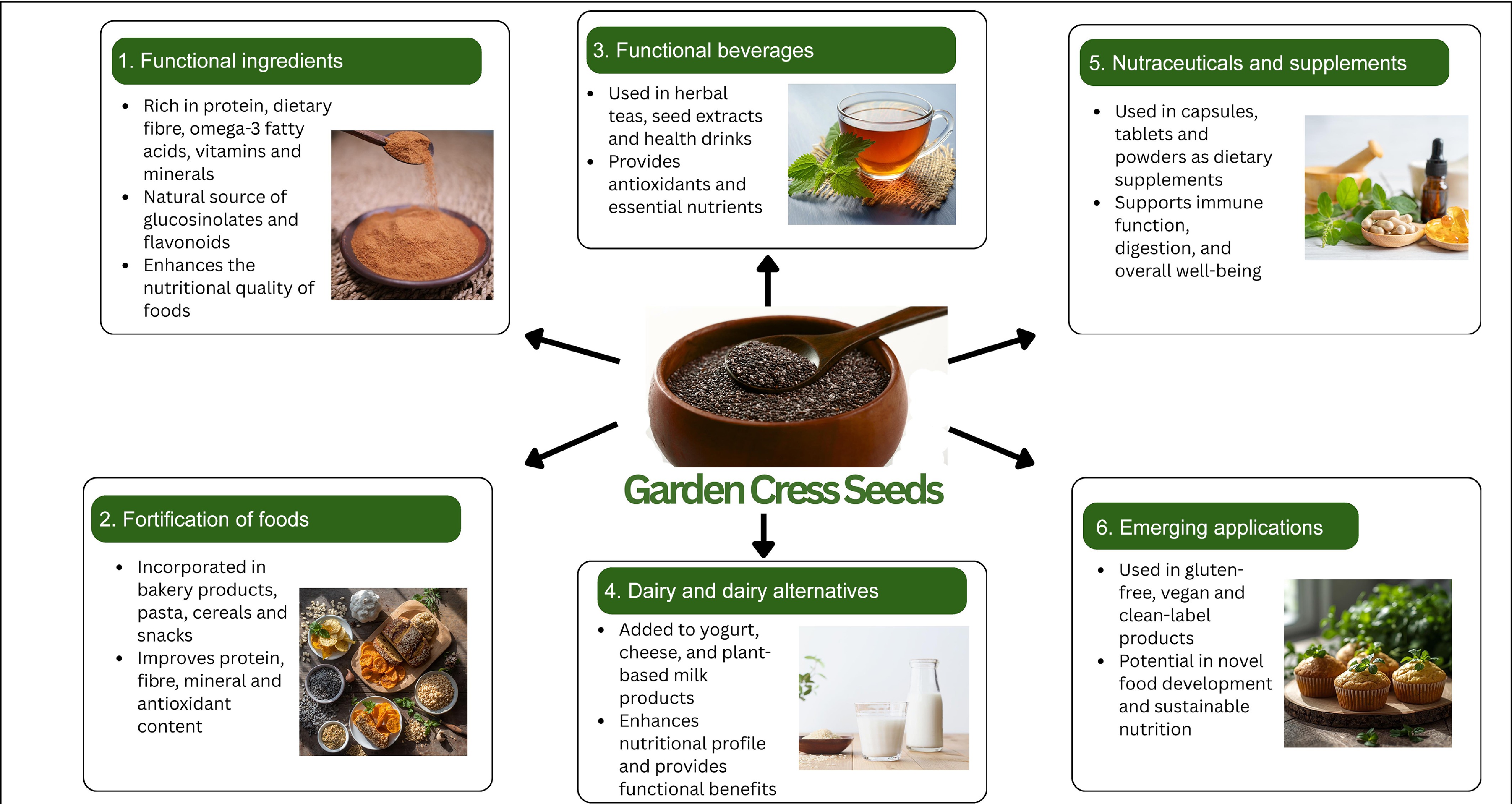
Figure 2.
Functional food applications of garden cress seeds (Lepidium sativum L.) (Image is prepared through Canva:
https://canva.link/cjtavquooie6ke7 ).Bakery applications are particularly well documented. Cookies prepared with 2.5%–10.5% roasted seeds demonstrated increases in iron (from 2.93 to 13.89 mg/100 g) and calcium (from 34 to 75 mg/100 g) at the highest inclusion level, along with increases in total phenolics and flavonoids[44]. Biscuits fortified with 2.5%–10% seed powder showed nearly five-fold higher potassium, eight-fold higher calcium, and approximately 30-fold higher antioxidant capacity than unfortified controls[45]. Muffins fortified with 5%–20% cress seed showed an increase in protein, fibre, ash, and α-linolenic acid[46]. Cakes incorporating an ethanolic extract of water-soluble seed polysaccharide retained 70.26%–77.07% DPPH-radical scavenging activity over a 15-day storage trial, demonstrating preservation of antioxidant function during shelf life[47].
Formulations for dairy and beverages include milk-based drinks made with 5% sugar, 1% skimmed milk, and 1%–5% boiled garden cress seed powder that provide about 540 mg/100 g of phosphorus and 524 kcal/100 g. Such drinks are appropriate for malnourished children, the elderly, people recovering from medical conditions, and athletic populations[48]. In an animal model, processed cheese spread formulated with 3.5% garden cress seeds achieved significant emulsification and enhanced glucose-lowering efficacy[49]. The edible mucilage-based coatings on fresh-cut potato strips decreased the absorption of oil during frying, postponed enzymatic browning, and increased shelf life[50]. Microencapsulation is highly encouraged for lowering the oxidative loss of α-linolenic acid, and garden cress oil, combined at 40%–50% with sunflower, rice bran, or sesame oil, produced ω-6:ω-3 ratios of 2.3–2.6:1[51]. Traditionally, garden cress seeds are consumed annually on the Ethiopian New Year in the belief that this prevents misfortune[52]. The seeds are mixed with lemon to treat toothaches and abdominal pain, and with garlic to alleviate abdominal pain and disinfect wounds[53].
-
Acute toxicity testing in rats reported no mortality at oral doses up to 1 g/kg, and 90-d subchronic feeding at 1%–10% dietary inclusion produced no adverse effects on weight gain, food intake, haematological parameters, or histopathology[54]. However, at 15% inclusion, plasma creatinine, total protein, albumin, and globulin considerably decreased over time, whereas 50% inclusion has been reported to be fatal[55]. Compared to early acute investigations, this would lead to a nonlinear dose-response. These findings highlight the need for clinical investigation. The seed contains goitrogenic glucosinolates that can interfere with iodine uptake and may aggravate hypothyroidism if consumed in pharmacological quantities. The seed has documented abortifacient activity and the capacity to mimic uterine contractions. Therefore, it is not recommended in pregnancy, particularly in the second and third trimesters[17].
Strengths, limitations, and research gaps
-
The majority of pharmacological studies are conducted in rodents or in vitro. The few human studies that exist—primarily in bronchial asthma, osteoarthritis, and iron-deficiency anaemia—are typically small, open-label, and use nonstandardized outcome measures. Cultivar, agronomic conditions, time of harvest, storage, and processing all influence both nutritional and phytochemical composition. Most clinical studies do not report cultivar, geographical origin, or analytical certificate of the material used, which makes comparison and replication difficult. In certain circumstances, the mechanism may be indirect from the class of essential phytochemicals. Future syntheses might benefit from a more distinct division between observable effects, potential mechanisms, and tested mechanisms. The cardiometabolic paradigm (antihypertensive, hypocholesterolaemic, antidiabetic, and ω-3 enrichment) is mechanistically rational and correlates with the recognized biology of related Brassicaceae seeds and their phytochemical classes. Even though it is early, the musculoskeletal effects (fracture healing, anti-inflammatory impact, and calcium-mediated osteoarthritis relief) suggest a potential benefit. The galactagogue and antianaemic effects are biologically plausible and align with both ethnobotanical practice and the seed's nutrient density.
There is a need for robust randomized, placebo-controlled trials where outcomes can be measured rigorously: knee osteoarthritis (using validated WOMAC and VAS scores), iron-deficiency anaemia in adolescent girls and pregnant women (using haemoglobin, serum ferritin, and soluble transferrin receptor), and mild persistent bronchial asthma (using FEV1, ACT scores, and rescue-inhaler use). The standardized raw material should be the basis for clinical work, with cultivar, geographical origin, and key phytochemical markers (kaempferol, gallic acid, lepidine alkaloids, and α-linolenic acid) reported. The microencapsulation, nano-formulation and functional food should be evaluated not only for shelf-life and sensory acceptability but also for the pharmacokinetics of the bioactive constituents.
From a physiotherapy and rehabilitation perspective, opportunities are particularly attractive. The integration of cress-based dietary interventions into the management of knee osteoarthritis may serve as an adjunct therapy. The use of the seed in the nutritional support of postfracture recovery, where the convergent evidence on collagen-supportive amino acids, calcium provision, and accelerated callus formation in animal models is suggestive enough to merit a controlled human trial, perhaps in the context of an existing rehabilitation pathway.
-
Garden cress (Lepidium sativum L.) represents a promising yet underutilized crop that occupies a unique position at the interface of nutrition, functional foods, and traditional medicine. The seeds possess exceptional nutritional value, characterized by high-quality protein, essential fatty acids, and abundant minerals, as well as a diverse array of bioactive phytochemicals, including phenolic compounds, flavonoids, glucosinolates, tocopherols, and imidazole alkaloids. These attributes, together with their long history of ethnomedicinal use across multiple cultural traditions, have stimulated growing scientific interest in their potential health benefits. This review has synthesized current evidence regarding the nutritional composition, phytochemical profile, therapeutic properties, functional food applications, pharmaceutical potential, and safety of garden cress seeds. Available experimental and clinical studies suggest potential roles in the management of iron-deficiency anaemia, enhancement of lactation, improvement of cardiometabolic health, support of musculoskeletal recovery, and mitigation of inflammatory disorders. Furthermore, the seeds and their mucilage have demonstrated considerable utility in the development of bakery products, beverages, dairy formulations, nutraceuticals, and pharmaceutical delivery systems. At commonly consumed dietary levels, garden cress seeds appear to exhibit a favourable safety profile, although caution may be warranted in specific populations, including pregnant women and individuals with certain endocrine disorders.
Despite these encouraging findings, the current evidence base remains constrained by limited clinical data, small sample sizes, methodological heterogeneity, and insufficient standardization of plant materials and interventions. Consequently, the translation of preclinical observations into evidence-based clinical recommendations remains incomplete. Future research should prioritize well-designed randomized controlled trials, standardized characterization of cultivars and phytochemical constituents, pharmacokinetic and bioavailability investigations, and mechanistic studies that link biological activity to clinically relevant outcomes. In conclusion, garden cress seeds possess considerable potential as a nutrient-dense functional food and source of bioactive compounds. However, their integration into evidence-based nutritional and therapeutic practice will depend on the generation of robust clinical evidence capable of substantiating their efficacy, safety, and mechanisms of action. Continued interdisciplinary research may help unlock the full nutritional, medicinal, and commercial value of this underexploited crop.
Figures were designed by the authors using Canva (Canva Pty Ltd., Sydney, Australia) with copyright-free graphical elements in accordance with Canva's Content License Agreement.
-
The authors confirm their contributions to this study as follows: conceptualization, writing – review and editing: Godara P, Kumar A, and Kumar S; writing – original draft preparation: Arora R, Bajwa P, Kumar A, and Beniwal T; supervision: Godara P and Kumar A. All authors reviewed the results and approved the final version of the manuscript.
-
Data sharing is not applicable to this article as no datasets were generated or analysed during the current study.
-
The authors declare that they have no conflict of interest.
- Copyright: © 2026 by the author(s). Published by Maximum Academic Press on behalf of Nanjing Agricultural University. This article is an open access article distributed under Creative Commons Attribution License (CC BY 4.0), visit https://creativecommons.org/licenses/by/4.0/.
-
About this article
Cite this article
Arora R, Bajwa P, Kumar A, Beniwal T, Godara P, et al. 2026. Garden cress seeds (Lepidium sativum L.): a critical review of nutritional composition, therapeutic potential, and functional food applications. Food Materials Research 6: e019 doi: 10.48130/fmr-0026-0019 

Garden cress seeds (Lepidium sativum L.): a critical review of nutritional composition, therapeutic potential, and functional food applications
- Received: 10 June 2026
- Revised: 18 July 2026
- Accepted: 22 July 2026
- Published online: 08 October 2026
Abstract: Garden cress (Lepidium sativum L.; Brassicaceae) is an underutilized crop with considerable nutritional and therapeutic potential. These seeds are rich in protein (21%–25%), lipids (23%–28%), essential minerals, and diverse bioactive compounds, including phenolic acids, flavonoids, glucosinolates, tocopherols, and imidazole alkaloids. This review critically examines the current evidence regarding the nutritional composition, phytochemical profile, therapeutic applications, pharmaceutical potential, and safety of garden cress seeds. Recent studies have highlighted garden cress seeds as a nutrient-dense functional food with a unique phytochemical composition. Preclinical investigations have demonstrated antihypertensive, antidiabetic, anti-inflammatory, hepatoprotective, hypocholesterolaemic, fracture-healing, anticancer, galactagogue, and bronchodilatory activities. Emerging clinical evidence suggests potential benefits in various diseases such as bronchial asthma, iron-deficiency anaemia, and knee osteoarthritis. However, the available human studies are limited by small sample sizes, methodological heterogeneity, inadequate randomization, and variations in seed source, processing, and extraction methods. These limitations restrict the reproducibility and generalizability of current findings. Garden cress seeds are a promising source of nutrients and bioactive compounds with potential applications in functional foods, nutraceuticals, and disease management. Although preclinical evidence strongly supports several biological activities, clinical validation remains insufficient. Future research should focus on standardization of plant materials and extracts, elucidation of mechanisms of action, dose optimization, and adequately powered randomized controlled trials to establish efficacy and safety.