












-
Lignocellulosic biomass provides a renewable carbon source for sustainable biomanufacturing[1−4]. Hemicellulose contributes a major fraction of lignocellulosic biomass, which contains substantial amounts of pentose sugars such as xylose[5]. However, many industrial microorganisms lack functional xylose-assimilating pathways, which results in incomplete utilization of lignocellulosic hydrolysates containing mixed sugars[6,7]. Since xylose represents a substantial carbon fraction in biomass-derived feedstocks, improving xylose conversion efficiency is critical for maximizing carbon utilization in biorefinery processes[7,8].
Various microorganisms have been engineered to improve their xylose assimilation capability[7]. In prokaryotic hosts, Pseudomonas putida represents one of the most studied models for xylose assimilation. For instance, Ling et al. achieved the co-utilization of glucose and xylose in P. putida by introducing the xylose isomerization pathway[9]. Tiwari et al. achieved the efficient utilization of xylose in P. putida by introducing the Weimberg pathway and adaptive evolution[10]. These studies demonstrate the feasibility of expanding microbial carbon utilization capacity through pathway reconstruction. However, developing additional chassis with distinct physiological advantages remains valuable for broadening the application landscape of biomass-derived carbon conversion.
Acinetobacter baylyi is a highly advantageous model organism because of its compact genome and broad substrate scope[11−13]. This strain supports efficient natural transformation[14,15] for rapid metabolic engineering that supports systematic design–build–test cycles[11,14]. Moreover, like P. putida, A. baylyi possesses the β-ketoadipate pathway for degrading lignin-derived aromatic compounds, which confers higher robustness against the inhibitory compounds present in raw lignocellulosic hydrolysates[12,16]. These characteristics make A. baylyi a highly practical chassis strain, especially in research into the metabolism of carbon sources derived from biomass[15,16]. Despite these favorable characteristics, wild-type A. baylyi naturally lacks the ability to utilize xylose[17,18], which prevents it from utilizing the hemicellulose-derived fraction of lignocellulosic biomass.
In this study, we engineered A. baylyi ADP1 into a xylose-utilizing chassis through modular metabolic reconstruction. The heterologous xylose uptake and isomerization module (xylABE) from Escherichia coli was introduced into the A. baylyi chromosome via transposon integration. The resulting strain ADXY was capable of robust growth with D-xylose as the sole carbon source, yet it accumulated D-xylonate through the endogenous oxidative branch mediated by the promiscuous activity of Gcd (glucose dehydrogenase). We further integrated genes encoding phosphoketolase from Leuconostoc mesenteroides (LmXPK) and phosphotransacetylase from Clostridium kluyveri (CkPTA) at the gcd locus to simultaneously eliminate the accumulation of D-xylonate byproducts and improve the acetyl-Coenzyme A (CoA) node for single-cell oil production. We managed to achieve 0.34 g/L from 10 g/L of xylose in shake flasks under the optimal carbon-to-nitrogen (C/N) ratio of 50. Together, this work establishes a modular strategy combining xylose assimilation, elimination of competing pathways, and carbon flux optimization to expand the biomass carbon utilization capability of A. baylyi, providing a foundation for developing xylose-based production platforms that rely on acetyl-CoA-derived biosynthetic pathways.
-
E. coli DH5α λpir was used for the construction of all plasmids. A. baylyi ADP1 was used as the base strain for the experiments. During the cloning and genetic manipulation processes, Luria–Bertani (LB) medium (containing 10 g/L tryptone, 5 g/L yeast extract, and 10 g/L NaCl) was used to cultivate E. coli and A. baylyi. The concentrations of antibiotics were used as follows: Chloramphenicol, 50 μg/mL; streptomycin, 50 μg/mL. The restriction endonucleases, T4 ligase, and high-fidelity Phusion polymerase were all purchased from New England Biolabs (Ipswich, USA). The oligonucleotides as listed in Supplementary Table S1 were synthesized by Sangon (Shanghai, China). Authentic chemical standards such as D-xylose was purchased from Aladdin (Shanghai, China).
Plasmids and strains
-
The xylose uptake and assimilation module consisted of xylA (NP_418022.1), xylB (NP_418021.1), and xylE (NP_418455.1) derived from E. coli MG1655. The xylABE operon was cloned into the previously marker-free transposon plasmid pRL27*[19] through homologous recombination. The gcd gene of A. baylyi ADP1, encoding glucose dehydrogenase, was targeted for deletion via ACIAD2983/NCBI GeneID 2878488. The acr1 gene (NCBI GeneID 45235577/ACIAD_RS15310) of A. baylyi ADP1, encoding fatty acyl-CoA reductase, was targeted for deletion as the final engineering step to reduce fatty acyl-CoA's diversion toward wax ester biosynthesis. The heterologous phosphoketolase branch was constructed using the synthesized phosphoketolase gene from L. mesenteroides (LmXPK) and the phosphotransacetylase gene from C. kluyveri (CkPTA) as shown in Supplementary Table S2[20,21]. The homologous arms upstream and downstream of the gcd gene, ~1,000 bp in length, from the genomic DNA of A. baylyi ADP1 were amplified by polymerase chain reaction (PCR) to form a complete fragment. This fragment was then digested using the restriction endonucleases BglII and SalI. Subsequently, this assembled fragment was cloned into the multiple cloning sites of the pETDuet-1 plasmid at the BamHI and XhoI sites to yield pETDuet-gcd. The pETDuet-gcd plasmid digested by Bam HI and Xho I was then ligated with the streptomycin resistance (SmR) gene or the LmXPK-CkPTA-SmR cassette through homologous recombination. All plasmids used in this study are listed in Supplementary Table S3.
Genetic manipulation of A. baylyi strains
-
The xylABE module was first introduced into A. baylyi ADP1 by transposon-mediated chromosomal integration. The upstream and downstream flanking regions of the acr1 and gcd genes were used for homologous recombination with the resistance genes. Recombination cassettes were transformed into recipient cells by natural transformation. Deletion of the acr1 locus was screened by chloramphenicol resistance and verified by diagnostic PCR. Correct gcd knockout mutants were identified by streptomycin resistance screening and PCR verification. All the engineered strains were constructed through the natural transformation method. The relevant strains used in this study are listed in Supplementary Table S4.
Cultivation for D-xylose utilization
-
M9 minimal medium was used for xylose utilization and lipid accumulation assays. Cultures were all incubated at 30 °C with shaking at 250 rpm. The standard M9 medium contained 12.8 g/L Na2HPO4·7H2O, 3.0 g/L KH2PO4, 0.5 g/L NaCl, 1.0 g/L NH4Cl, 2 mM MgSO4, and 0.1 mM CaCl2. D-xylose was used as the sole carbon source at the indicated concentrations. The M9 salt solution was sterilized by autoclaving, whereas MgSO4, CaCl2, and D-xylose were sterilized separately by filtration and added aseptically after cooling. For screening xylose-utilizing transformants, M9 medium supplemented with 2 g/L D-xylose was used. For the xylose tolerance assays, D-xylose was supplied at 1–20 g/L. For growth curve and high-performance liquid chromatography (HPLC) analyses, strains were cultivated in M9 medium containing 5 g/L D-xylose. These experiments all involved adding 2 mL of the culture medium to 12-mL test tubes to cultivate the strains. For lipid accumulation assays, nitrogen-limited M9 medium was prepared with 10 g/L D-xylose as the sole carbon source. Different carbon-to-nitrogen ratios were generated by adjusting the NH4Cl concentration while keeping the remaining M9 components unchanged. The tested C/N ratios were 10, 20, 50, 80, and 100. During this experiment, the strain was placed in a 250-mL conical flask with a partition, and 50 mL of the culture medium was added for cultivation. When comparing the amount of lipid accumulation in the ADXY-∆gcd ∆acr1 and ADXY-∆gcd::LmXPK-CkPTA ∆acr1 strains, the cultivation was conducted for 72 h. When determining the different C/N ratios, the cultivation period was 96 h.
Analysis of xylose consumption and D-xylonate formation
-
Culture samples were collected at the indicated time points and centrifuged at 15,000 × g for 7 min to remove cells. The supernatants were filtered through 0.22-μm filters before HPLC analysis. D-xylose and D-xylonate were quantified using HPLC apparatus (Shimadzu Prominence LC-20AD, Japan) equipped with an Aminex HPX-87H column (300 × 7.8 mm) (Bio-Rad, USA). The mobile phase was 5 mM H2SO4 at a flow rate of 0.5 mL/min, and the column temperature was maintained at 55 °C. Authentic D-xylose and D-xylonate standards were used for peak identification and quantification. The xylose consumption rate was calculated as follows: Xylose consumption rate = Consumed xylose concentration / Cultivation time.
Lipid content quantitation
-
Cell growth was represented by the optical density at 600 nm (OD600), and lipid accumulation was quantified using the sulfo-phospho-vanillin assay as previously described[22,23]. For preparation of the lipid standard curve, wild-type A. baylyi ADP1 was cultivated in LB medium for 96 h. Cells were harvested, disrupted, and subjected to total lipid extraction[24]. The extracted lipid fraction was dried, weighed, and resuspended in chloroform to generate oil standards ranging from 0.1 to 5 g/L. For colorimetric detection, oil standards or extracted lipid samples were treated with concentrated sulfuric acid and heated to generate oil-derived reactive intermediates. After cooling, phospho-vanillin reagent was added, and the reaction mixture was incubated to develop the color. Absorbance was measured at 530 nm and a linear regression model was used to fit the data. When we determined the lipid accumulation ability of the strain, the engineered strain was cultivated in a nitrogen-limited xylose M9 medium for 72 or 96 h, and then the cells were collected and the lipids were extracted. Total lipid concentrations were calculated on the basis of the standard curve.
Statistical analysis
-
Data were analyzed using GraphPad Prism version 8. Statistical significance was determined using one-way analysis of variance (ANOVA) followed by Tukey's test in GraphPad Prism.
-
A. baylyi ADP1 is a genetically tractable microorganism with potential for biomass-derived carbon utilization; however, it naturally lacks the ability to assimilate xylose, a major pentose component of lignocellulosic biomass[15,17,18]. To expand the carbon utilization spectrum of A. baylyi ADP1, we introduced a heterologous xylose assimilation pathway from E. coli. The xylose isomerization pathway is a widely conserved route for microbial D-xylose assimilation[25]. It relies on xylose isomerase and xylulokinase to convert D-xylose into D-xylulose-5-phosphate (Fig. 1a), which then delivers carbon to the central metabolic system to meet the growth and metabolic requirements of microorganisms[25,26]. Compared with the oxidoreductive xylose reductase–xylose dehydrogenase (XR–XDH) route, the xylose isomerase route is redox-neutral and converts D-xylose to D-xylulose in one direct step. This circumvents carbon loss originating from xylitol formation and supports higher theoretical yields for xylose bioconversion[27,28].
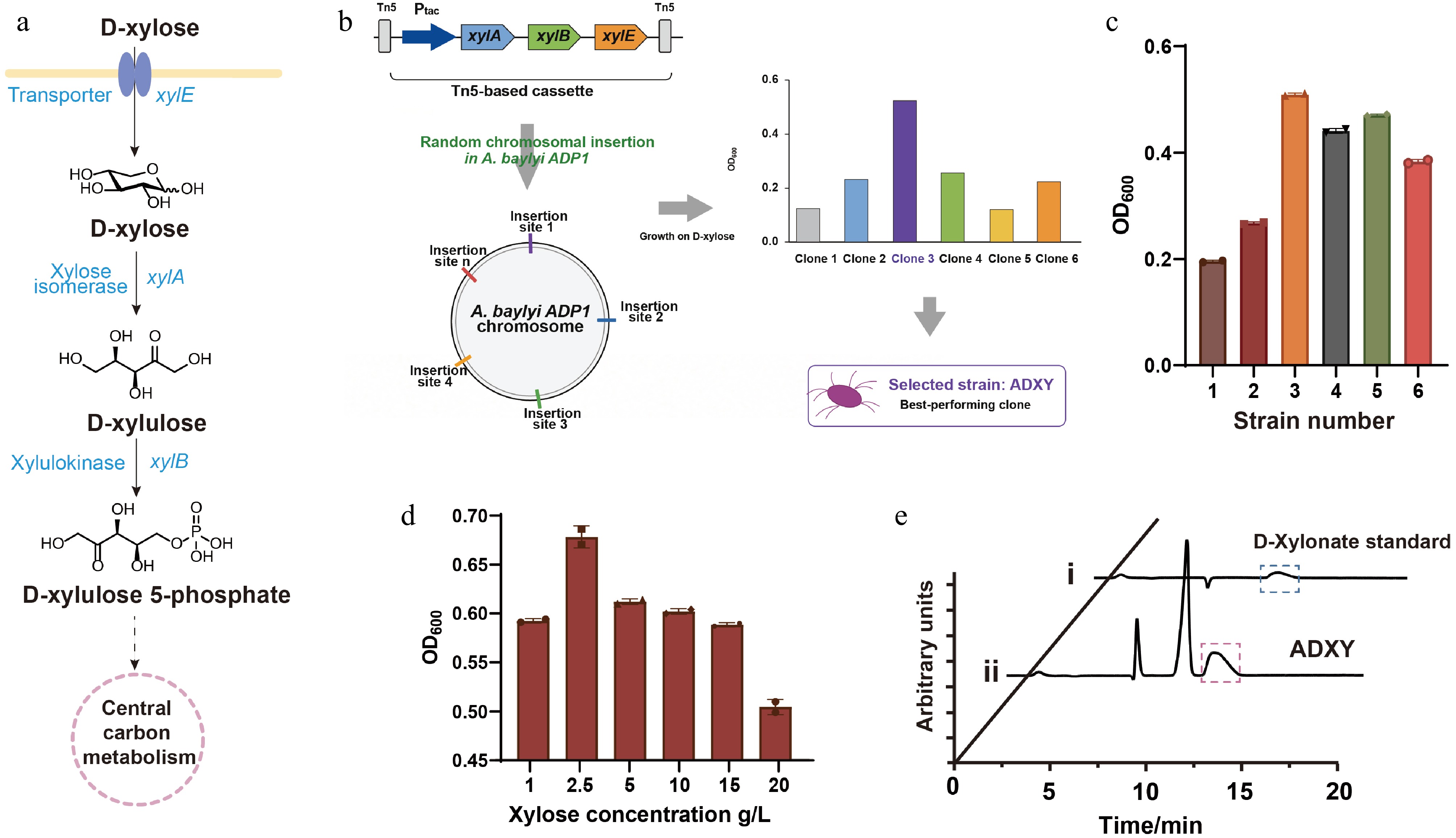
Figure 1.
Establishment of a xylose-assimilating A. baylyi strain. (a) Schematic representation of the xylose isomerization pathway. (b) Scheme of random insertion of xylABE through transposon-mediated method. (c) Screening of transposon-engineered A. baylyi ADP1 mutant strains in M9 medium containing 2 g/L D-xylose after 24 h of cultivation. (d) Growth performance of the selected strain ADXY in M9 medium supplemented with 1−20 g/L D-xylose after 24 h of cultivation. (e) HPLC profiles showing D-xylose consumption and the emergence of a peak consistent with D-xylonate accumulation. i, authentic D-xylonate standard; ii, sample from the fermentation broth. HPLC chromatograms were baseline-corrected and independently normalized to their respective maximum detector responses. The normalized profiles are shown for a comparison of the retention times and peak identities rather than a quantitative comparison of peak intensities. Experiments were carried out in triplicate, and data are presented as mean values with standard deviations.
Next, we chose the well-studied xylose isomerase pathway from E. coli that contains the genes xylA, xylB, and xylE, which encode xylose isomerase, xylulokinase, and the xylose transporter, respectively. The xylABE gene cluster was assembled via a previously constructed marker-free transposon integration strategy[29]. Following genomic integration, transformants were screened according to their ability to grow on D-xylose as the sole carbon source (Fig. 1b). Because of the random integration feature of the transposon system[20,30,31], we screened a number of transformants to isolate better mutant strains that grew well on D-xylose as the sole carbon source. Diagnostic PCR using gene-specific primers confirmed the integration of xylABE into the A. baylyi genome. Among six representative transformants, Strain No. 3, which had better growth in the xylose-containing liquid medium, was designated as ADXY and used for the subsequent research (Fig. 1c). The growth capability of ADXY was further evaluated in M9 medium containing different concentrations of xylose. ADXY exhibited robust growth across the tested xylose concentration range from 1 to 20 g/L, demonstrating successful establishment of xylose assimilation in A. baylyi (Fig. 1d).
However, HPLC analysis revealed the substantial accumulation of D-xylonate during xylose cultivation (Fig. 1e). This observation indicates that although the heterologous xylABE pathway enabled xylose assimilation, the endogenous oxidative metabolism of A. baylyi diverted part of the xylose flux into an undesirable byproduct pathway. Therefore, establishing efficient xylose utilization required further understanding and elimination of host-derived metabolic constraints.
Resolving native metabolic interference during D-xylose assimilation
-
In A. baylyi, glucose oxidation is initiated in the periplasm by the membrane-bound quinoprotein glucose dehydrogenase encoded by gcd, which represents an important entry point for sugar oxidation in Acinetobacter's central metabolism[11,32]. Owing to its broad substrate specificity, Gcd can oxidize D-xylose to D-xylonate in the periplasmic space, which diverts the xylose flux to a dead-end byproduct (Fig. 2a)[17,33]. Previous biochemical studies of Acinetobacter have shown that membrane-bound quinoprotein glucose dehydrogenase can transfer electrons to the respiratory chain through ubiquinone, linking periplasmic sugar oxidation to respiratory energy transduction[12,33,34]. In the present xylose assimilation system, however, Gcd-mediated oxidation also diverts D-xylose toward D-xylonate, resulting in carbon loss from the engineered isomerization pathway.
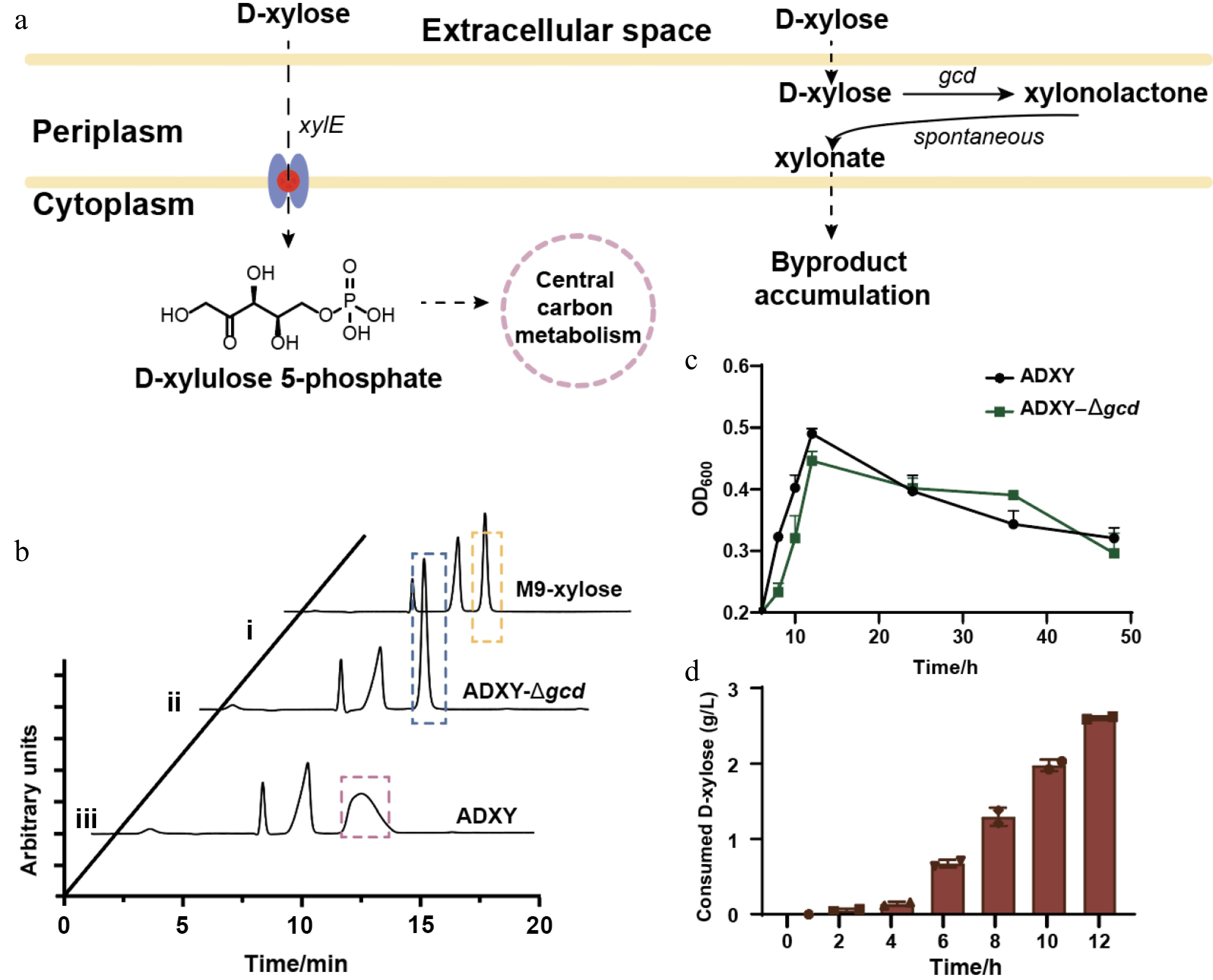
Figure 2.
Effects of deleting gcd on D-xylonate accumulation and growth on D-xylose. (a) Scheme of periplasmic oxidation branch converting D-xylose to D-xylonate. (b) HPLC profiles of (i) the fresh medium, (ii) ADXY-∆gcd, (iii) and ADXY. Experiments were carried out in triplicate and representative HPLC chromatograms are presented. Samples were obtained after 12 h cultivation. HPLC chromatograms were baseline-corrected and independently normalized to their respective maximum detector responses. The normalized profiles are shown for a comparison of the retention times and peak identities rather than a quantitative comparison of the peak intensities. (c) Growth curves of strain ADXY and ADXY-∆gcd in M9 medium supplemented with 5 g/L xylose. (d) Cumulative xylose consumption of strain ADXY-∆gcd over 12 h in M9 medium supplemented with 5 g/L xylose. Experiments were carried out in triplicate, and data are presented as mean values with standard deviations.
To eliminate this competing pathway, gcd was deleted from the ADXY genome through homologous recombination, generating the ADXY-∆gcd strain. After cultivation in a medium containing 5 g/L D-xylose, the D-xylonate-associated peak observed in ADXY was completely abolished in ADXY-∆gcd (Fig. 2b), confirming that Gcd was primarily responsible for forming D-xylonate during xylose utilization. Surprisingly, deletion of gcd altered the growth profile of ADXY during cultivation on D-xylose. Compared with the parental ADXY strain, ADXY-∆gcd exhibited slower growth during the early phase and reached a lower maximum OD600 (p = 0.012) (Fig. 2c), suggesting that Gcd-mediated oxidation also contributed to cellular growth performance. Despite this growth perturbation with the ∆gcd alteration, ADXY-∆gcd consumed D-xylose during the first 12 h, corresponding to an average volumetric consumption rate of 0.217 g/(L·h) (Fig. 2d), indicating that its intracellular assimilation capacity was preserved.
Rewiring xylose-derived carbon flux through acetyl-CoA strengthening
-
Following removal of Gcd-mediated carbon loss, improving the efficiency of xylose-derived carbon utilization became necessary. We next sought to connect D-xylose metabolism more directly with the downstream acetyl-CoA-associated pathway for lipid production. In xylose-assimilating cells, D-xylulose-5-phosphate enters the pentose phosphate pathway and is subsequently redistributed through the host's central metabolism before yielding acetyl-CoA (Fig. 3a)[35,36]. However, this native route is subject to extensive metabolic regulation and carbon redistribution, which can limit the fraction of xylose-derived carbon available for lipid biosynthesis (Fig. 3b).
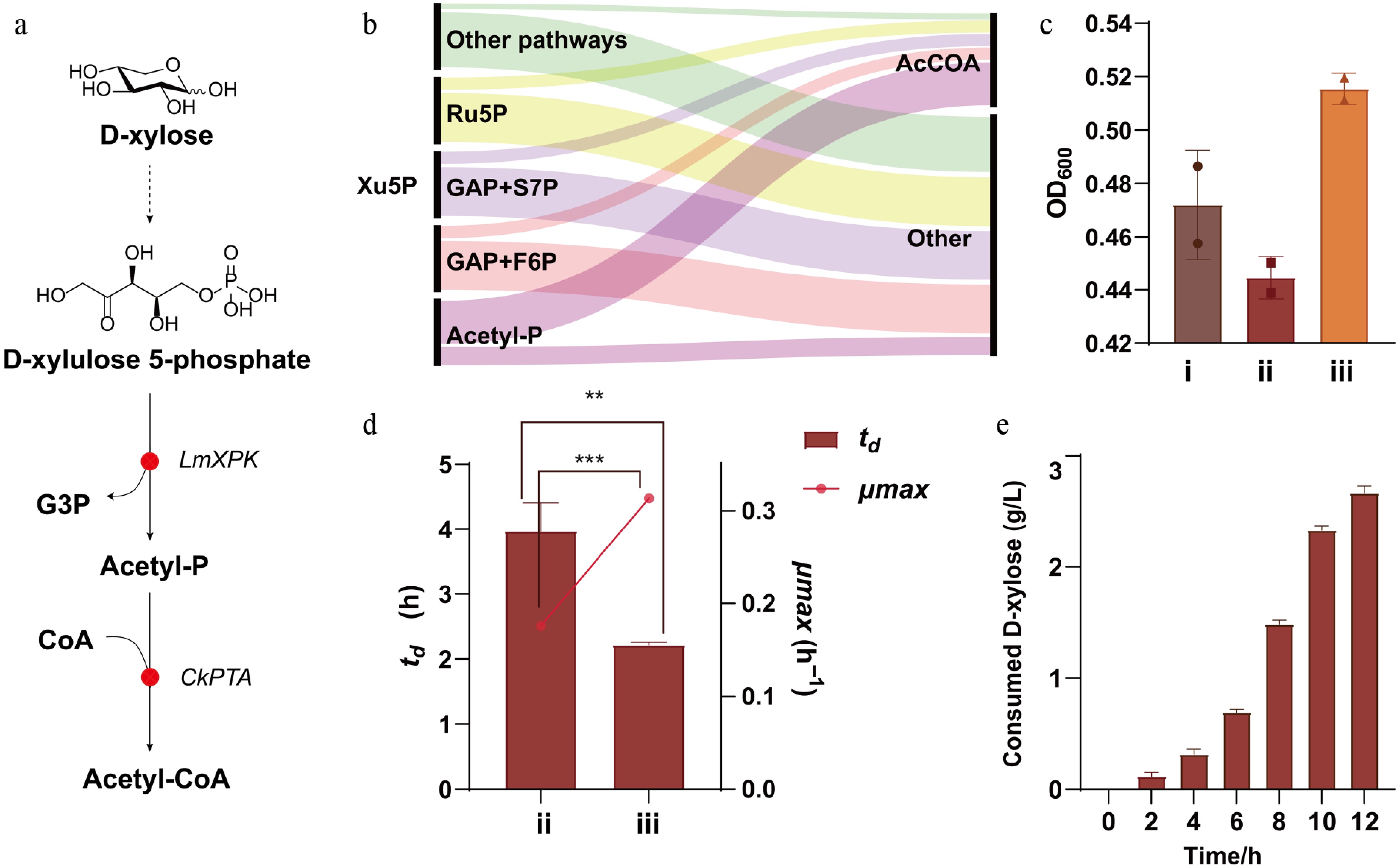
Figure 3.
Introduction of an acetyl-CoA shortcut to improve the growth of ADXY-∆gcd strain. (a) The metabolic pathway of the engineered strain from D-xylose to lipids. (b) Schematic representation of potential carbon-routing pathways downstream of D-xylulose 5-phosphate. Line widths are schematic and do not represent experimentally quantified metabolic fluxes. Acetyl-P, acetyl-phosphate; F6P, fructose-6-phosphate; GAP, glyceraldehyde-3-phosphate; Ru5P, ribulose-5-phosphate; S7P, sedoheptulose-7-phosphate; Xu5P, xylulose-5-phosphate. (c) Growth of (i) ADXY, (ii) ADXY-∆gcd, and (iii) ADXY-∆gcd::LmXPK-CkPTA in M9 medium containing 5 g/L D-xylose after 24 h. (d) The maximum specific growth rate (μmax) and doubling time of Strain ADXY-∆gcd::LmXPK-CkPTA (marked as iii) and Strain ADXY-∆gcd (marked as ii) (*** p < 0.001; ** p < 0.01). (e) The cumulative xylose consumption of ADXY-∆gcd::LmXPK-CkPTA at 12 h. Experiments were carried out in triplicate, and data are presented as mean values with standard deviations.
Recently, a phosphoketolase–phosphotransacetylase shortcut has been established as a carbon-conserving strategy to increase the acetyl-CoA pool[20,37−40]. In this pathway, phosphoketolase cleaves D-xylulose-5-phosphate to acetyl-phosphate and glyceraldehyde-3-phosphate, and phosphotransacetylase further converts acetyl-phosphate to acetyl-CoA. Compared with pathways involving carbon loss through decarboxylation reactions, this shortcut provides a more carbon-efficient connection between pentose metabolism and acetyl-CoA generation[37,38]. We hypothesized that this additional metabolic connection could support cellular growth by improving the utilization of xylose-derived carbon.
In this study, the phosphoketolase LmXPK from L. mesenteroides and the phosphotransacetylase CkPTA from C. kluyveri were selected, and these two genes were assembled into a single operon and integrated into the gcd locus to yield the strain ADXY-∆gcd::LmXPK-CkPTA. Compared with ADXY-∆gcd, the engineered strain had improved growth performance (Fig. 3c). Further physiological characterization revealed that ADXY-∆gcd::LmXPK-CkPTA displayed a significantly increased maximum specific growth rate (*** p < 0.001) and reduced doubling time compared with ADXY-∆gcd (Fig. 3d). These results indicate that strengthening the acetyl-CoA node alleviated the metabolic burden caused by deleting gcd while maintaining xylose assimilation capability (Fig. 3e). Thus, the LmXPK-CkPTA module provided an additional metabolic connection between D-xylose assimilation and downstream central metabolism and was associated with improved growth of the ADXY-∆gcd::LmXPK-CkPTA strain.
Microbial conversion of D-xylose into storage lipids
-
After establishing and optimizing xylose assimilation in A. baylyi ADP1, we next evaluated whether the engineered chassis could channel xylose-derived carbon into value-added storage compounds. Acetyl-CoA serves as a central precursor for fatty acid biosynthesis and provides the carbon building blocks required for microbial lipid accumulation[35,36].
Because A. baylyi possesses endogenous lipid storage capability, further metabolic engineering was applied to enhance allocation of carbon toward triacylglycerol accumulation. Acr1 encodes a fatty acyl-CoA reductase involved in wax ester biosynthesis, and previous studies demonstrated that deleting acr1 redirects fatty acyl-CoA precursors toward triacylglycerol accumulation in A. baylyi[41,42]. Accordingly, acr1 was deleted from ADXY-∆gcd and ADXY-∆gcd::LmXPK-CkPTA as the final engineering step, which were subsequently used for evaluating the potential conversion of xylose-derived carbon into storage lipids.
Nitrogen-limiting conditions are widely applied to trigger the buildup of microbial storage lipids, which is generally achieved by increasing the initial C/N ratio of culture media[18,43−45]. We conducted a one-stage nitrogen-limiting cultivation (C/N ratio of 50) to assess the lipid accumulation of the strains. ADXY-∆gcd::LmXPK-CkPTA ∆acr1 exhibited enhanced lipid accumulation compared with ADXY-∆gcd ∆acr1. This engineered strain showed both increased biomass formation and higher lipid production, resulting in a 23.41% increase in the lipid titer compared with the control (Fig. 4a, b). These findings are consistent with the interpretation that LmXPK-CkPTA improves the acetyl-CoA node, enabling the engineered strain to have an increased acetyl-CoA pool for lipid production.
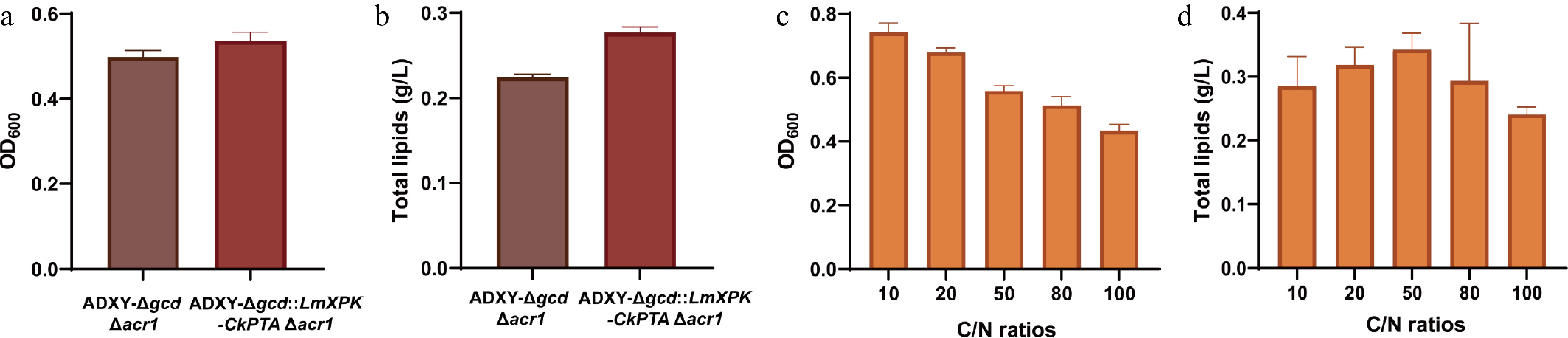
Figure 4.
Nitrogen-limited lipid accumulation and strain comparison. (a) Biomass (OD600) of ADXY-∆gcd::LmXPK-CkPTA ∆acr1 and ADXY-∆gcd ∆acr1 after 72 h of cultivation at a C/N ratio of 50. (b) The amount of lipid accumulated by the engineered strains ADXY-∆gcd ∆acr1 and ADXY-∆gcd::LmXPK-CkPTA ∆acr1 after being cultivated for 72 h at a C/N ratio of 50. (c) Biomass (OD600) of ADXY-∆gcd::LmXPK-CkPTA ∆acr1 after 96 h across carbon-to-nitrogen ratios. (d) The accumulation amount of lipid in ADXY-∆gcd::LmXPK-CkPTA ∆acr1 under different C/N ratios. Experiments were carried out in triplicate, and data are presented as mean values with standard deviations.
Because nitrogen availability strongly affects the balance between biomass formation and accumulation of storage compounds, lipid production was further evaluated under different C/N ratios (Fig. 4c). Increasing the C/N ratio progressively reduced biomass formation, whereas total lipid production showed a nonmonotonic response. Lipid titers increased from 0.285 g/L at C/N = 10 to 0.315 g/L at C/N = 20 and reached a maximum of 0.342 g/L at C/N = 50 but subsequently decreased to 0.295 and 0.240 g/L at C/N ratios of 80 and 100, respectively. These results indicate that moderate nitrogen limitation favored lipid accumulation, whereas more severe nitrogen limitation reduced volumetric lipid production. The decline at C/N ratios of 80–100 likely reflects the substantial reduction in biomass formation and overall carbon assimilation capacity under severe nitrogen deprivation, which outweighed any further stimulation of storage lipid accumulation. Thus, a C/N ratio of 50 provided the optimal balance between biomass formation and lipid accumulation under the tested conditions. Under this condition, the engineered strain produced 0.34 g/L total lipids after 96 h (Fig. 4d). These results demonstrate that the reconstructed xylose-utilizing A. baylyi chassis can convert D-xylose into acetyl-CoA-derived storage lipids, highlighting its potential as a platform for valorization of lignocellulosic carbon sources.
-
Efficient valorization of lignocellulosic carbon requires microbial chassis capable of utilizing diverse biomass-derived sugars. Previous efforts have demonstrated the potential of engineering xylose utilization in A. baylyi. Luo et al. integrated the xylose catabolic gene cluster of the Weimberg pathway into the genome of A. baylyi[46], enabling the strain to effectively utilize D-xylose as the sole carbon source. Nevertheless, studies focusing on the systematic reconstruction and optimization of xylose assimilation in A. baylyi have remained limited. Considering the intrinsic capability of A. baylyi for biomass-derived carbon utilization, establishing an efficient xylose assimilation platform would expand its carbon utilization spectrum and enhance its potential for converting pentose-rich biomass resources into value-added products[17,47].
In this study, we expanded the carbon utilization capability of A. baylyi by establishing a xylose assimilation platform and subsequently rewiring the host metabolism to improve xylose-derived carbon utilization. Through introduction of the xylABE module, removal of the Gcd-mediated competing oxidation pathway, and installation of an LmXPK-CkPTA carbon-conserving module, we converted A. baylyi from a xylose-inaccessible chassis into a strain capable of assimilating xylose and redistributing pentose-derived carbon through central metabolism, including acetyl-CoA-associated pathways that support cellular growth and biosynthesis. Storage lipid production was further used as a representative application to demonstrate the potential of this engineered platform.
The initial introduction of the xylABE module enabled D-xylose assimilation through a redox-neutral xylose isomerization pathway. Compared with XR-XDH-based xylose metabolism, the xylose isomerase route is more attractive for lipid production because it avoids the redox imbalance that often causes xylitol accumulation and carbon loss in engineered xylose-utilizing systems[27,28]. However, introduction of xylABE alone was insufficient to achieve efficient xylose utilization in A. baylyi, as the engineered ADXY strain accumulated D-xylonate through the host-native Gcd oxidation branch. Previous studies have demonstrated that Gcd exhibits broad substrate specificity and contributes to the oxidation of several sugars, including xylose and arabinose, in A. baylyi[17]. In this study, we identified Gcd as a previously underappreciated metabolic bottleneck during heterologous xylose catabolism, as it shunts xylose-derived carbon into a nonproductive oxidative byproduct pathway. Deletion of gcd successfully eliminated the formation of D-xylonate and improved carbon retention. These results highlight the importance of balancing carbon conservation with metabolic support when redesigning native sugar utilization pathways.
Phosphoketolase-based carbon-conserving strategies have been widely explored to improve carbon efficiency by directly connecting pentose phosphate intermediates with acetyl-CoA generation[37,38]. We hypothesized that the conversion of D-xylulose-5-phosphate to acetyl-CoA could support cellular growth by improving the utilization of D-xylose. According to this principle, we introduced the phosphoketolase–phosphotransacetylase module LmXPK-CkPTA into the ∆gcd strain to enhance the redistribution of xylose-derived carbon through central metabolism and alleviate the growth limitation caused by removal of the Gcd-mediated oxidative pathway. In our system, LmXPK-CkPTA restored the growth of the ∆gcd strain, reduced the doubling time, and maintained xylose consumption. These results suggest that LmXPK-CkPTA alleviates the metabolic burden caused by competing pathway removal by improving xylose-derived carbon utilization through central metabolism, thereby supporting cellular growth. After restoration of growth through LmXPK-CkPTA-mediated rewiring, acr1 deletion was introduced as the final engineering step specifically for lipid production. Unlike the preceding modifications, which addressed substrate assimilation, competing oxidation, and growth-associated carbon metabolism, acr1 deletion targeted downstream fatty acyl-CoA partitioning by reducing the flux toward wax ester biosynthesis. This sequential design therefore separated the optimization of xylose utilization from the subsequent optimization of lipid storage.
Acetyl-CoA represents a central metabolic precursor for diverse biotechnological products, including fatty acids, terpenoids, polyketides, and other value-added chemicals[48−52]. Previous engineering efforts in A. baylyi have mainly focused on enhancing intrinsic storage metabolism, such as the accumulation of triacylglycerol and wax esters through modification of lipid-associated pathways[45]. Here, we expanded the carbon utilization spectrum of A. baylyi by enabling xylose assimilation and connecting this pentose substrate with acetyl-CoA-associated metabolism for lipid biosynthesis. However, the lipid titer shown by the current experimental results is still lower than the values reported for well-engineered oleaginous microorganisms such as Yarrowia lipolytica[53,54]. The relatively low lipid titer observed in our study likely reflects the current limitations of the engineered xylose-to-lipid conversion process, in terms of biomass formation, xylose uptake, and assimilation. Therefore, further optimization of xylose transport, pathway regulation, and carbon flux distribution will be required to improve the xylose metabolism toward acetyl-CoA-derived lipid biosynthesis. In the future, the combination of native lignocellulose-associated metabolic capabilities, efficient genetic accessibility, lignin-derived aromatic compound utilization through the β-ketoadipate pathway, and newly established xylose assimilation would expand the potential application range of A. baylyi toward complex lignocellulosic feedstocks.
Not available.
-
This study did not involve human participants, human-derived materials, or animal experiments. Therefore, ethical approval was not required.
-
The authors confirm their contributions to the paper as follows: Yuan J: conceived the project and designed the experiments; Chen Z, Chen H: constructed all the strains and collected the data; Li Q, Gao X, Xie Y: assisted in collection and interpretation of the data; Chen Z, Chen H, Zhang Y, Yuan J: interpreted the data and wrote the manuscript. All authors reviewed the results and approved the final version of the manuscript.
-
The datasets generated and/or analyzed during the current study are available from the corresponding author upon reasonable request.
-
The authors declare that they have no conflict of interest.
-
accompanies this paper online at: https://doi.org/10.48130/els-0026-0015.
-
# Authors contributed equally: Zhengxin Chen, Haofeng Chen
- Supplementary Table S1 List of oligonucleotides used in this study.
- Supplementary Table S2 Source information and codon-optimized nucleotide sequences of the heterologous genes used in this study.
- Supplementary Table S3 List of plasmids used in this study.
- Supplementary Table S4 List of strains used in this study.
-
Copyright © 2026 by the author(s).
Engineering in Life Sciences published by Maximum Academic Press on behalf of John Wiley & Sons Ltd. This is an open access article under the terms of the Creative Commons Attribution License, which permits use, distribution and reproduction in any medium, provided the original work is properly cited. -
About this article
Cite this article
Chen Z, Chen H, Li Q, Gao X, Xie Y, et al. 2026. Engineering Acinetobacter baylyi towards D-xylose utilization and lipid production. Engineering in Life Sciences 26: e016 doi: 10.48130/els-0026-0015 

Engineering Acinetobacter baylyi towards D-xylose utilization and lipid production
- Received: 27 August 2026
- Revised: 20 September 2026
- Accepted: 29 September 2026
- Published online: 27 October 2026
Abstract: Efficient utilization of xylose remains a major bottleneck for lignocellulose-based biomanufacturing, particularly for microbial chassis that naturally lack pentose assimilation pathways. Here, we engineered Acinetobacter baylyi ADP1 as a xylose-utilizing chassis for lipid production. A heterologous xylose uptake and isomerization module, consisting of xylA, xylB, and xylE from Escherichia coli, was introduced into the A. baylyi genome via transposon integration to establish D-xylose assimilation. Metabolic profiling revealed that endogenous Gcd-mediated oxidation caused D-xylonate accumulation, limiting xylose conversion. Removal of gcd eliminated this competing pathway, whereas the introduction of a phosphoketolase–phosphotransacetylase module (LmXPK–CkPTA) further enhanced xylose-derived carbon utilization and restored growth performance. These improvements rerouted carbon flux originating from xylose toward downstream biosynthesis. As the final engineering step, acr1 was deleted to reduce fatty acyl-Coenzyme A diversion toward wax ester biosynthesis. Under a carbon-to-nitrogen ratio of 50, the final engineered strain produced 0.34 g/L of total lipids from 10 g/L of D-xylose after 96 h of cultivation. Together, this work establishes a xylose-utilizing A. baylyi platform through pathway reconstruction and metabolic rewiring, providing a feasible strategy for valorizing pentose-rich lignocellulosic biomass.
