









-
Salicylic acid (SA) signaling is known to play an essential role in systemic acquired resistance (SAR) and induced systemic resistance (ISR), which can trigger a broad-spectrum and persistent immune response against pathogens and adverse environmental conditions[1,2]. As SA receptors, the NPR (nonexpressor of pathogenesis-related gene) family plays a master regulatory role in SA signaling pathways and is involved in both biotic and abiotic stress resistance in plants[3−5].
NPR genes encode proteins possessing two conserved functional domains: The ankyrin repeat domain (ANK, PF00023) and the BTB/POZ domain (broad complex, tramtrack, and bric-a-brac/pox virus and zinc finger, PF00651)[6,7]. Between these two domains, the BTB/POZ domain serves as the core functional element, being involved in facilitating NPR1 dimerization and interacting with the TGA domain of transcription factors to regulate downstream gene expression[8,9]. To date, the NPR gene family has been identified and characterized in diverse plant species, including Arabidopsis thaliana (6), Chinese pear (Pyrus pyrifolia) (9), Camellia sinensis (4), chili pepper (Capsicum annuum) (5), and wheat (Triticum aestivum) (17)[6,10−13]. Research on the functions of NPR family genes has primarily focused on their responses to biotic and abiotic stresses. In A. thaliana, AtNPR1 and AtNPR2 act as key positive regulators of the SA signaling pathway, participating in immune responses, whereas AtNPR3 and AtNPR4 exert opposing functions[5,14]. In rice (Oryza sativa), overexpression of OsNPR1 effectively promotes resistance to rice blast[15]. In wheat, overexpression of ScNPR1 improves resistance to red mold, whereas in cotton (Gossypium hirsutum), overexpression of AtNPR1 enhances resistance to black root rot[16,17]. In apple (Malus domestica), overexpression of MhNPR1 induces SAR and confers extended resistance to fungal diseases[18]. Knockdown of SlNPR1 in tomato (Solanum lycopersicum) results in reduced drought tolerance[19]. The increase in the expression of SiNPR1 enhances the resistance of sesame bacterial wilt in Sesamum indicum[20]. GmERF1 positively regulates GmNPR1 expression, thereby improving resistance to Phytophthora root rot in soybean (Glycine max)[21]. By contrast, knockdown of TcNPR3 confers resistance against Phytophthora tropicalis in Theobroma cacao[22,23]. In conclusion, the NPR genes are crucial for plants' resistance to biotic and abiotic stress.
Sweet potato (Ipomoea batatas (L.) Lam., 2n = B1B1B2B2B2B2 = 6x = 90) is a vital root and tuber crop for maintaining food security in China and is widely applied as food, industrial materials, and bioenergy resources[24,25]. In recent years, because of global climate change and increasing international exchanges, sweet potatoes have been increasingly challenged by biotic stresses (e.g., chlorotic stunt virus, feathery mottle virus, and Fusarium oxysporum) as well as abiotic stresses (heat, drought, and salt)[26]. Therefore, it is considered highly important to explore candidate genes that enhance stress resistance in sweet potato. The SA signaling pathway plays a crucial role in plants' immunity, providing resistance against pathogens and adverse environments for sweet potatoes. Moreover, as SA receptors, NPRs are involved in establishing resistance to both biotic and abiotic stresses in plants[1,4]. Consequently, the identification and analysis of the NPR gene family is essential for selecting stress-tolerant sweet potato varieties.
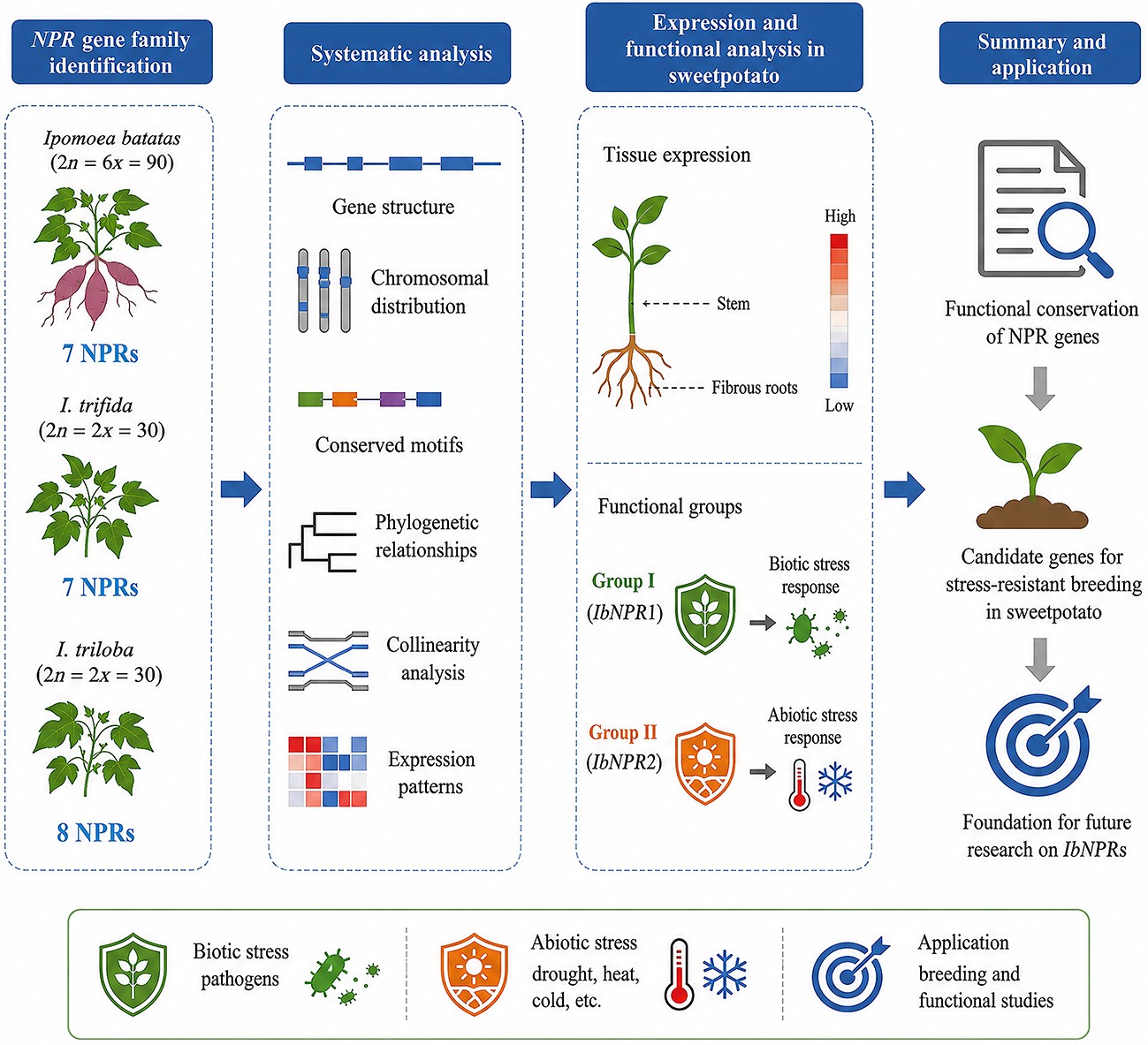
In this study, seven NPR genes were identified from the genome of I. batatas. For these putative genes, we assessed their gene structures and chromosomal distributions, examined their conserved motifs, and performed phylogenetic and collinearity analyses. In addition, their tissue-specific expression patterns and responses to biotic (virus and Fusarium oxysporum) and abiotic (heat, drought, and salt) stresses were characterized using quantitative real-time polymerase chain reaction (qRT-PCR) or RNA sequencing (RNA-seq). This research provides an invaluable clue for exploration of the function of IbNPR genes in improving sweet potato's stress tolerance and for accelerating the breeding of stress-resistant sweet potato varieties.
-
Protein sequences of Ipomoea trifida and Ipomoea triloba were retrieved from the Ipomoea Genome Hub (
https://sweetpotato.uga.edu , accessed on 18 December 2025), and protein sequences of I. batatas (cv. Taizhong6) were downloaded from the Sweet Potato Genomics Resource (https://sweetpotato.com/download_genome.html , accessed on 18 December 2025). Hidden Markov model (HMM) profiles of the ankyrin repeat domain (PF00023) and the BTB/POZ domain (PF00651) were obtained from the Pfam database (www.ebi.ac.uk/interpro , accessed on 18 December 2025) to screen for candidate NPR proteins in the three Ipomoea species. All putative NPR sequences were validated using NCBI Batch CD-Search programs (Conserved Domain Database [CDD], E value < 1e−2,www.ncbi.nlm.nih.gov/Structure/cdd/wrpsb.cgi , accessed on 18 December 2025) and SMART (http://smart.embl-heidelberg.de , accessed on 18 December 2025).Chromosomal localization and property prediction of NPRs
-
The chromosomal positions of IbNPRs, ItfNPRs, and ItbNPRs were determined on the basis of annotated GFF3 files downloaded from the Ipomoea Genome Hub (
www.ncbi.nlm.nih.gov/datasets/genome/GCA_002525835.2 , accessed on 18 December 2025) and the Sweet Potato Genomics Resource (http://sweetpotato.plantbiology.msu.edu , accessed on 18 December 2025). Visualization was performed using TBtools v2.333 (South China Agricultural University, Guangzhou, China). Collinearity information among IbNPRs, ItfNPRs, and ItbNPRs was obtained using the 'One Step MCScanX Super Fast' module of TBtools[27].The ExPASy tool (
www.expasy.org , accessed on 18 December 2025) was used to compute molecular weight (MW), theoretical isoelectric point (pI), instability index, and grand average of hydropathicity (GRAVY) for NPR proteins. Subcellular localizations were predicted using WoLF PSORT (https://wolfpsort.hgc.jp/aboutWoLF_PSORT.html.en , accessed on 18 December 2025).Phylogenetic analysis of NPRs
-
Protein sequences from A. thaliana, I. batatas, I. triloba, I. trifida, and O. sativa were aligned, and a phylogenetic tree was constructed using the neighbor-joining method with 1,000 bootstrap replicates[28]. The phylogenetic tree was visualized with iTOL (
http://itol.embl.de , accessed on 19 December 2025).Gene structures and conserved motifs analysis of NPRs
-
The conserved domain compositions of NPRs were identified using NCBI-CDD (
www.ncbi.nlm.nih.gov/Structure/cdd/wrpsb.cgi , accessed on 19 December 2025). Conserved motifs were analyzed with MEME Suite (https://meme-suite.org/meme , accessed on 19 December 2025), with the maximum number of motifs set to 10[29]. TBtools software (v2.333) was used to visualize the conserved domain structures and exon–intron structures of NPRs (South China Agricultural University, Guangzhou, China).Analysis of cis-acting elements in promoter regions of IbNPRs
-
Promoter regions approximately 2,000-bp upstream of IbNPRs were submitted to PlantCARE (
http://bioinformatics.psb.ugent.be/webtools/plantcare/html , accessed on 20 December 2025) for predicting cis-elements[30]. TBtools software was used for visualization.Expression patterns of IbNPRs
-
Transcriptome data of samples with different degrees of virus infection from 'Jishu 25' and 'Jishu 26' storage roots (BioProject number: PRJNA1381310)[31] and inoculation with Fusarium oxysporum in the disease-resistant variety 'Jishu 26' and the disease-susceptible variety 'Jishu 35' (unpublished data obtained at our laboratory) were used to calculate the expression patterns of IbNPRs. Additionally, transcriptome data of salt-tolerant ('Jishu 26') and salt-sensitive ('NL54') varieties under salt stress, as well as heat-treated 'Xuzishu 8', were obtained from previous studies[32,33]. Heatmaps were generated with TBtools software v2.333 (South China Agricultural University, Guangzhou, China).
The sweet potato variety 'Jishu 25' from the Crop Research Institute, Shandong Academy of Agricultural Sciences, China, was planted and collected for an analysis of tissue-specific expression and drought treatment expression. The primers used in this study are shown in Supplementary Table S1. The methods used for plant treatment and quantitative real-time polymerase chain reaction (qRT-PCR) were those described by Jiang et al.[34].
Statistical analysis
-
All data were analyzed with a two-tailed Student's t-test using SPSS 26.0 (
www.ibm.com/support/pages/downloading-ibm-spss-statistics-26 ). Data are shown as the means ± standard deviation (SD). Transcriptomic data were normalized between 0 and 1 using min–max normalization[35] in heatmaps, which involves subtracting the minimum value of the dataset, dividing the result by the max–min difference, and scaling the data proportionally for better presentation. Heatmaps were generated using TBtools software v2.333[27]. -
Three complementary strategies (BLASTp search, HMMER search, and CD-search) were used to comprehensively identify NPRs in cultivated sweet potato and its two wild diploid relatives (I. trifida and I. triloba). We identified seven, seven, and eight NPRs in I. batatas, I. trifida, and I. triloba, respectively, designated as IbNPR, ItfNPR, and ItbNPR. Collinearity analysis revealed that all ItfNPRs and ItbNPRs had orthologous pairs in I. batatas (Fig. 1a). Notably, ItbNPR5 and ItbNPR6 on Chr 01 shared the same orthologous counterparts in both I. batatas and I. trifida, suggesting gene loss during evolution. These findings indicate that NPR genes are evolutionarily conserved from diploid to hexaploid status and that I. batatas exhibits a closer orthologous relationship with I. trifida than with I. triloba.
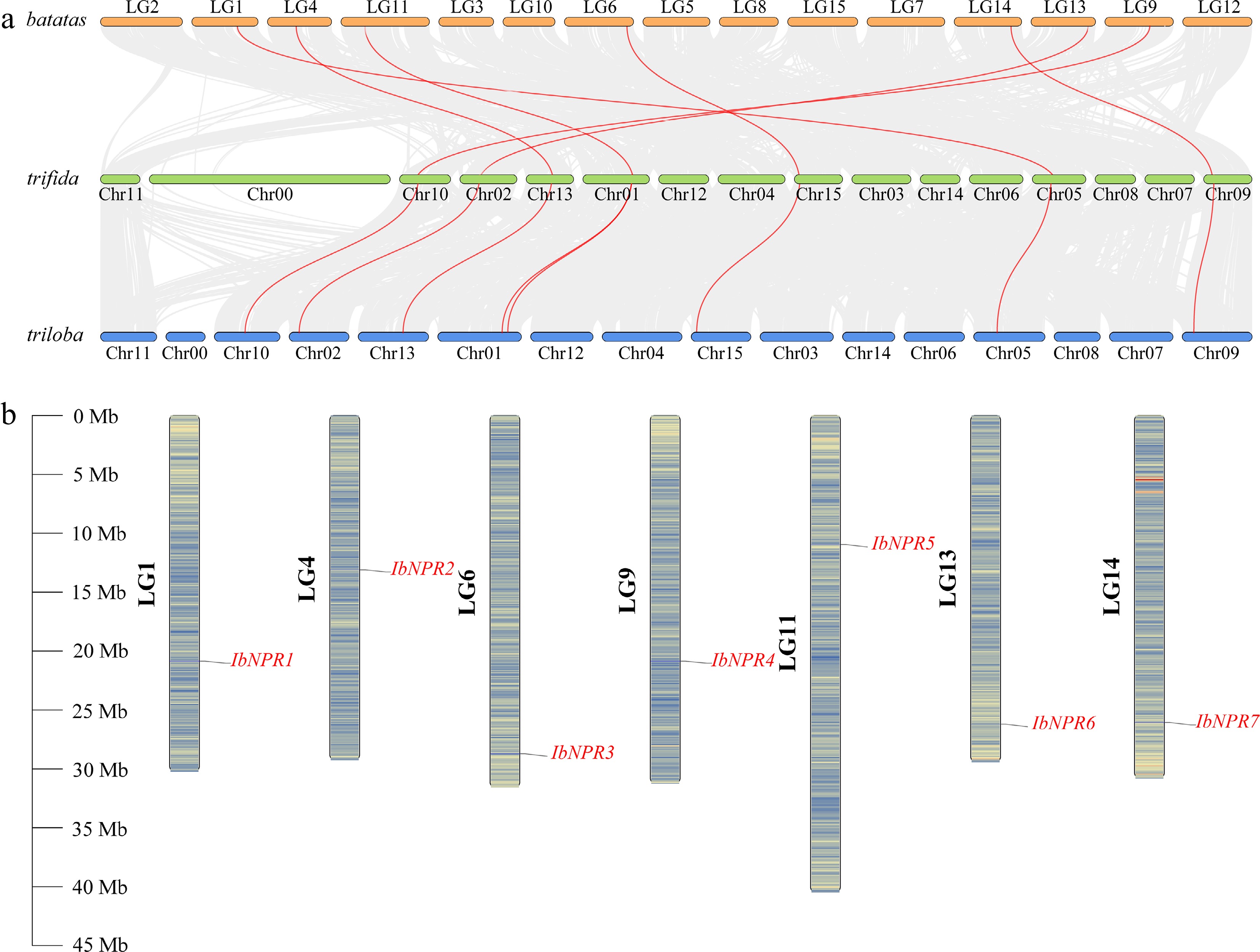
Figure 1.
Chromosomal localization and syntenic relationships of NPRs. (a) Syntenic analysis of NPRs in I. batatas, I. trifida, and I. triloba. Chromosomes of I. batatas, I. trifida, and I. triloba are shown in different colors. Red curves denote the syntenic relationships among I. batatas, I. trifida, and I. triloba NPRs. (b) Chromosomal localization and distribution of NPRs in I. batatas. The chromosome numbers are displayed on the left side, and the gene names are displayed on the right side. The relative chromosomal localization of each NPR gene is marked on the black line of the right side and indicated in units of Mbp. The stripes on chromosomes represent the density of chromosomes.
The basic characteristics of IbNPRs are summarized in Table 1. In I. batatas, the coding sequence (CDS) lengths of IbNPRs ranged from 1,353 to 1,887 bp, and the genomic lengths varied from 2,318 to 6,926 bp. The deduced proteins contained 450–628 amino acids, with molecular weights of 48.39–62.29 kDa and theoretical pI values of 5.58–6.53. Most IbNPRs were unstable (instability index > 40), except IbNPR2 and IbNPR4. GRAVY values ranged from –0.117 to –0.199, indicating hydrophilic character. Subcellular localization predictions showed that IbNPR2, IbNPR4, IbNPR5, and IbNPR7 were present in both nucleus and cytoplasm, whereas IbNPR1, IbNPR3, and IbNPR6 were exclusively cytoplasmic (Table 1). Chromosomal localization revealed that IbNPRs were distributed on LG1, LG4, LG6, LG9, LG11, LG13, and LG14, with one gene per chromosome; no NPRs were detected on LG2, LG3, LG5, LG7, LG8, LG10, LG12, or LG15 (Fig. 1b).
Table 1. Characteristics of NPRs in I. batatas.
Gene ID Gene name Genomic length (bp) CDS (bp) Protein size (aa) MW (kDa) pI Instability GRAVY Subcellular location g2961.t1 IbNPR1 4,577 1,602 533 59.1 6.03 49.12 −0.134 Cytoplasm (10) g14548.t1 IbNPR2 4,136 1,887 628 69.29 6.53 36.88 −0.18 Nucleus (6) and cytoplasm (5) g24785.t1 IbNPR3 3,040 1,353 450 48.39 6.5 48.71 −0.169 Cytoplasm (9) g36877.t1 IbNPR4 5,567 1,614 537 60.21 6.22 35.45 −0.177 Nucleus (5) and cytoplasm (5) g42979.t1 IbNPR5 4,735 1,467 488 52.97 6.22 46.48 −0.117 Nucleus (5) and the cytoplasm (6) g54830.t1 IbNPR6 2,318 1,701 566 62.86 5.69 45.31 −0.178 Cytoplasm (9) g59006.t1 IbNPR7 6,926 1,623 540 60.33 5.58 45.85 −0.199 Nucleus (5.5) and the cytoplasm (6.5) CDS, coding sequence; MW, molecular weight; pI, isoelectric point; GRAVY, grand average of hydropathicity. The numbers between brackets represent the reliability thresholds of the prediction software. Phylogenetic relationship analysis of NPRs in sweet potato and its two diploid wild relatives
-
A phylogenetic tree included 33 NPRs of five species (i.e., 7 in I. batatas, 7 in I. trifida, 8 in I. triloba, 6 in A. thaliana, and 5 in O. sativa) was constructed to explore the phylogeny of the NPRs. According to the neighbor-joining method with 1,000 bootstrap replicates, three relatively independent branches existed in the phylogenetic tree. Each branch was determined as one group and all the NPRs were divided into three groups. The specific distributions of NPRs were as follows (presented as total: I. batatas, I. trifida, I. triloba, A.thaliana, and O. sativa): Group I (6:1, 1, 1, 2, 1), Group II (16:4, 4, 4, 2, 2), and Group III (11:2, 2, 3, 2, 2) (Fig. 2). On the basis of the functions of AtNPRs, we named Group I, Group II, and Group III the AtNPR1/2 group, AtNPR3/4 group, and AtNPR5/6 group, respectively (Fig. 2). Previous studies have reported that AtNPR1 and AtNPR2 are the positive regulators of SAR, and IbNPR1 belongs to the AtNPR1/2 group. On the contrary, AtNPR3 and AtNPR4 act as negative regulators of SAR, and IbNPR2, IbNPR4, IbNPR6, and IbNPR7 are contained in the AtNPR3/4 group[5,14]. In addition, AtNPR5 and AtNPR6 participate in plant development, and IbNPR3 and IbNPR5 are part of AtNPR5/6 group[36]. These results indicated the functional diversification of NPRs and provided preliminary function annotation for these genes.
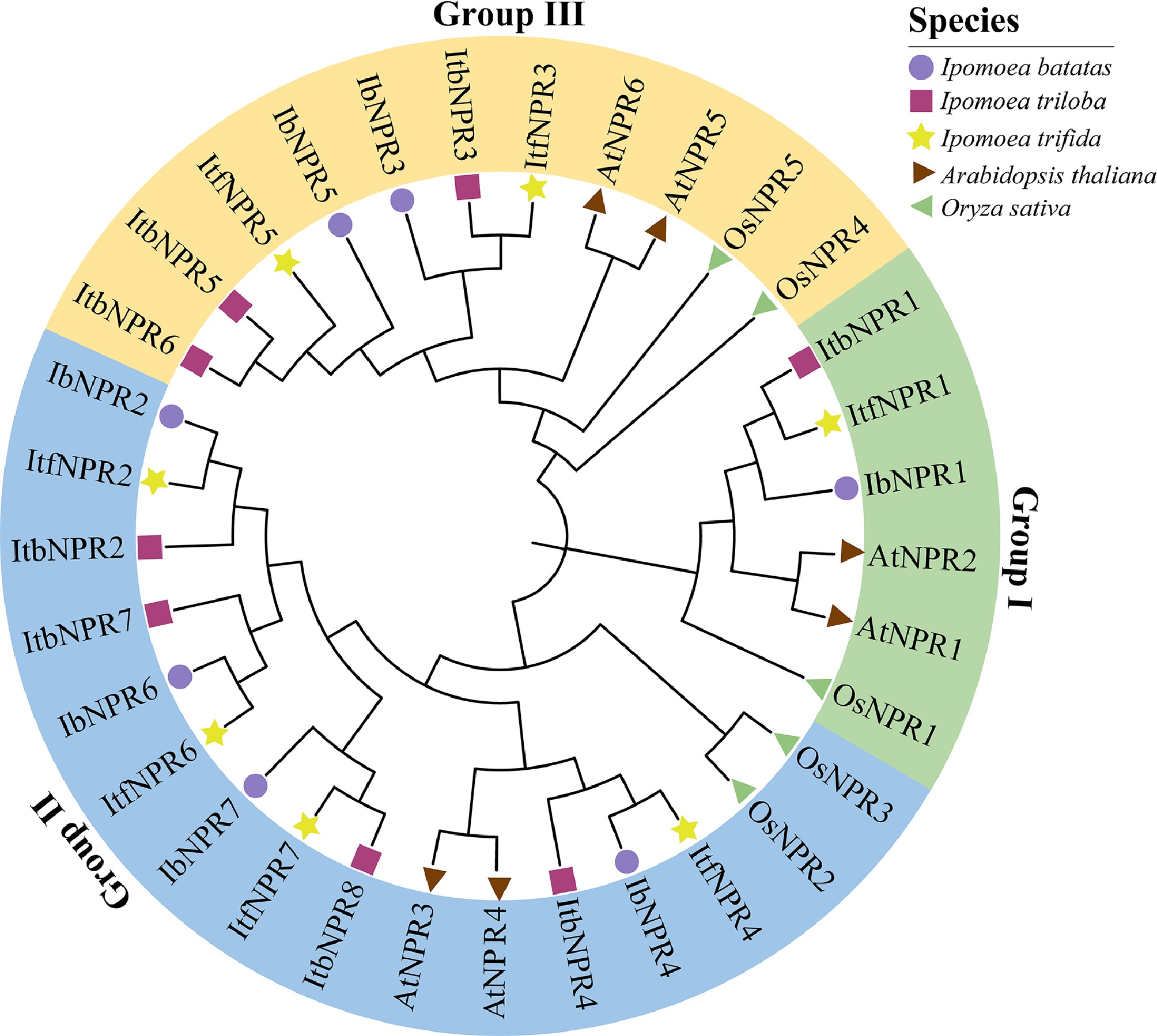
Figure 2.
Phylogenetic analysis of NPRs. Phylogenetic analysis of NPRs in I. batatas, I. triloba, I. trifida, A. thaliana, and O. sativa. According to the neighbor-joining method with 1,000 bootstrap replicates and the function of AtNPRs, the total of 33 NPRs were divided into three groups (Groups I, II, and III, filled with green, blue and yellow, respectively). The purple circles represent seven IbNPRs in I. batatas. The claret squares represent seven ItfNPRs in I. trifida. The yellow stars represent eight ItbNPRs in I. triloba. The brown triangles represent six AtNPRs in A. thaliana. The green triangles represent five OsNPRs in O. sativa.
Conserved motif and exon–intron structure analysis of NPRs
-
We also examined the conserved domains and motifs to infer the potential functions of NPRs in the three Ipomoea species. All NPR proteins contain an N-terminal BTB/POZ domain and a central ankyrin repeat domain. Additionally, a PR1-like C-terminal region was present only in Group I and Group II proteins (Fig. 3a). Using MEME, we identified 10 conserved motifs in IbNPRs, ItfNPRs, and ItbNPRs (Fig. 3b, Supplementary Fig. S1). All NPRs contained these 10 motifs, but Group I and Group II proteins possessed additional motifs (especially Motifs 7, 8, and 9) compared with Group III.
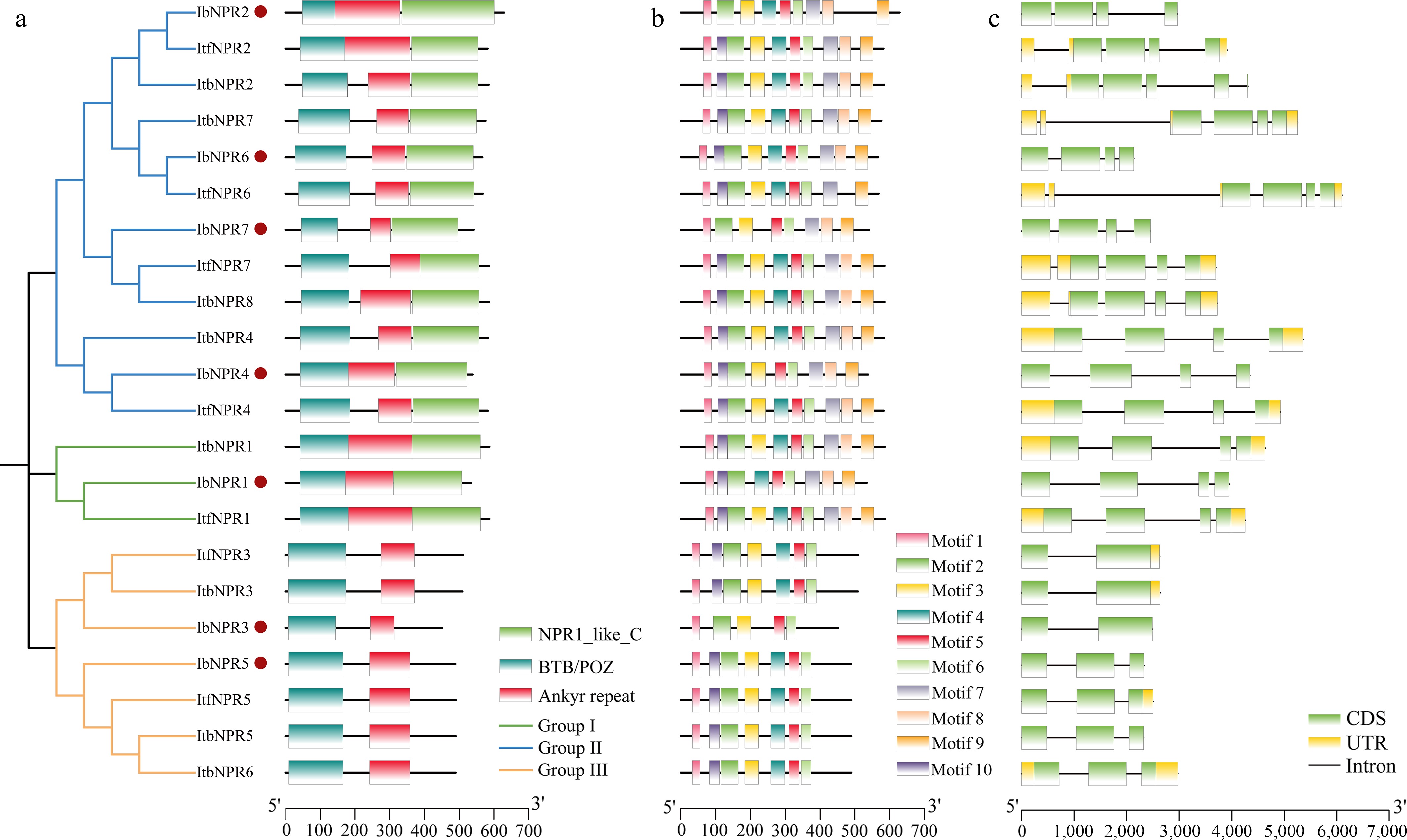
Figure 3.
Conserved motifs and exon–intron structure analysis of NPRs in I. batatas, I. trifida, and I. triloba. (a) The phylogenetic tree shows that NPRs are divided into three subgroups, and the three conserved structural domains are shown in different colors. The red circles represent IbNPRs. (b) Ten conserved motifs, shown in different colors. (c) Exon–intron structures of NPRs. The green boxes, yellow boxes, and black lines represent untranscribed regions (UTRs), exons and introns, respectively.
Exon–intron distribution analysis (Fig. 3b) showed limited variation among NPRs. All Group I and Group II NPR genes contained four exons, whereas Group III genes had three exons. Importantly, homologous NPRs across the three species shared identical exon numbers (Fig. 3c), indicating strong conservation during sweet potato's evolution and suggesting that the NPR1-like C-terminal region may play a critical role in stress resistance regulation.
Cis-element analysis in the promoters of NPRs in sweet potato
-
Promoter cis-elements are closely linked to gene function. We extracted the 2,000-bp upstream regions of IbNPRs and classified the predicted cis-elements into five categories: Core/binding, development, light, hormone, and abiotic/biotic elements (Fig. 4). First, core/binding elements (TATA-box, CAAT-box) were abundant in all IbNPR promoters. The promoters of IbNPR3, IbNPR4, IbNPR5, and IbNPR7 also contained numerous AT-TATA-boxes. Light-responsive elements (AE-box, Box 4, GATA-motif, G-box, TCT-motif) were present in most IbNPR promoters. Development-related elements were scarce, suggesting limited roles in growth regulation. Hormone-responsive elements were abundant in IbNPR promoters, including abscisic acid (ABA)-responsive (ABRE, ABRE3a, ABRE4), gibberellin (GA)-responsive (P-box, TATC-box), jasmonic acid (JA)-responsive (CGTCA-motif, TGACG-motif), and SA-responsive (TCA-element) motifs (Fig. 4). Most IbNPR promoters also harbored abiotic/biotic stress-related elements, such as drought-responsive (MYB, MYC), antioxidant-responsive (ARE, STRE), low-temperature-responsive (ERE, WRE3), and biotic stress-responsive (as-1) elements. Collectively, these findings indicate that IbNPRs are primarily involved in regulating hormone crosstalk and abiotic/biotic stress defense in sweet potato.
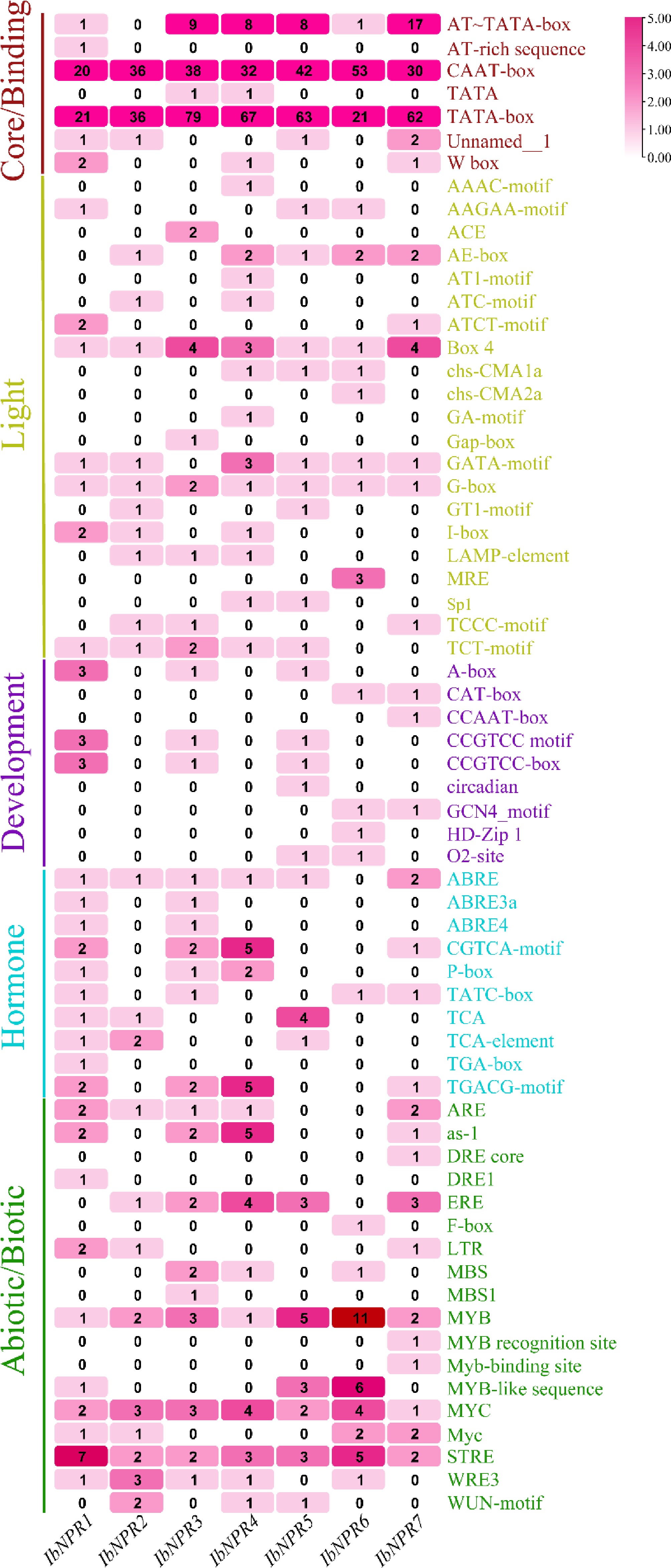
Figure 4.
Cis-element analysis in the promoters of NPRs from I. batatas. The cis-elements were divided into five broad categories. The degree of red colors represents the number of cis-elements in the promoters of NPRs.
Expression analysis in various tissues in sweet potato
-
In order to obtain insights about the functions of IbNPRs in different tissues, qRT-PCR was carried out to calculate the expression patterns of leaves, shoot apices, stems, fibrous roots, and storage roots of sweet potato. The results showed that all IbNPRs had highest expression levels in the stems (IbNPR1, IbNPR3 and IbNPR6) or fibrous roots (IbNPR2, IbNPR4, IbNPR5, and IbNPR7). In addition, IbNPR2, IbNPR6, and IbNPR7 also showed strong expression values in shoot apices, and both IbNPR1 and IbNPR2 were expressed highly in storage roots (Fig. 5).
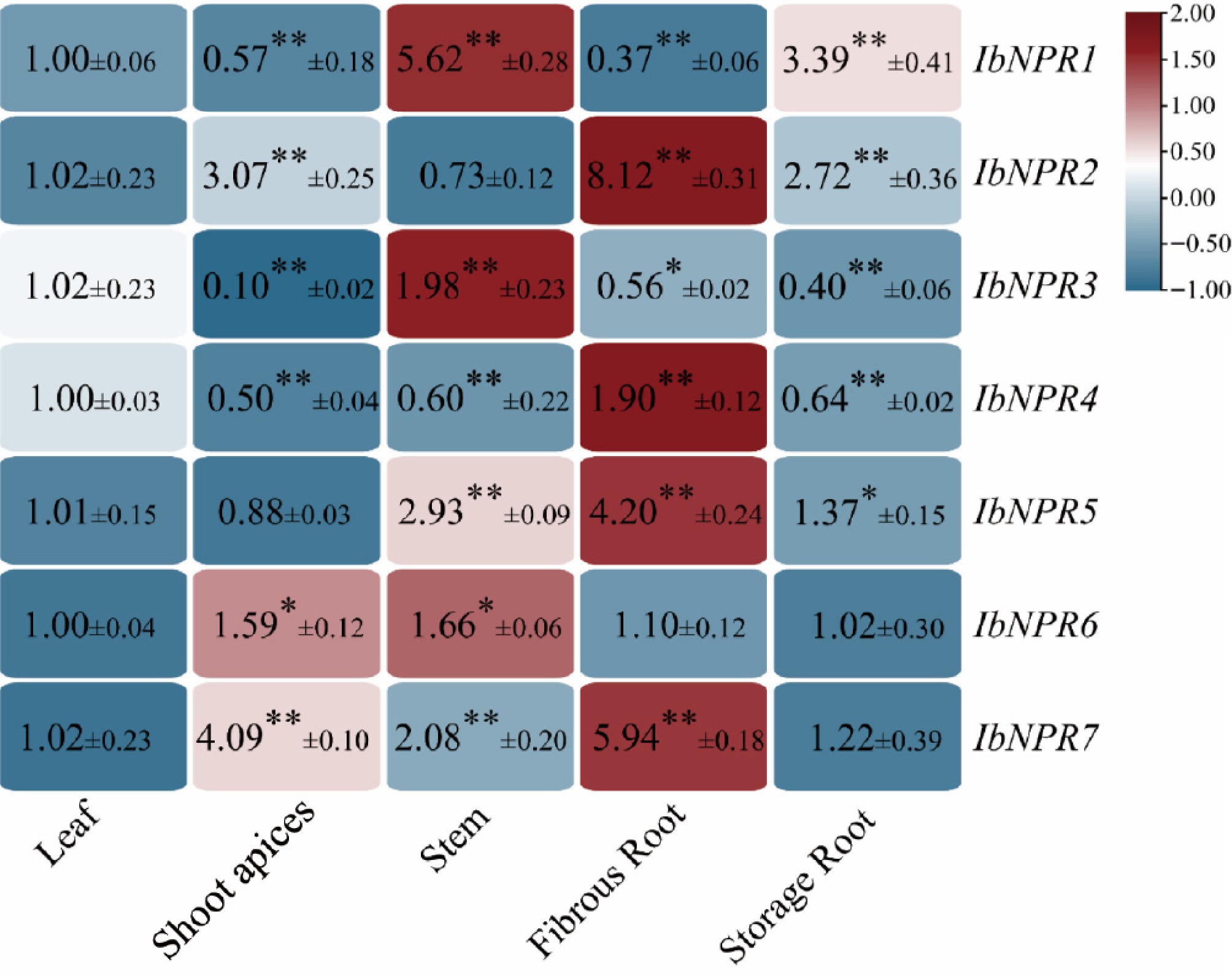
Figure 5.
Expression analysis of NPRs in different tissues of I. batatas. Expression analysis of IbNPRs in the leaves, shoot apices, stems, fibrous roots, and storage roots of I. batatas. The values were determined by qRT-PCR from three biological replicates consisting of pools of three plants, and the results were analyzed using the comparative CT method. The expression level of leaves is set as '1'. Fold change ± SD is shown in the boxes. Asterisks (**) and (*) indicate significant differences at p < 0.01 and p < 0.05, respectively, based on Student's t-test compared with leaves.
Expression analysis of IbNPRs in response to biotic stress
-
To determine the potential effects of IbNPRs in response to biotic stress, the RNA-seq data with different degrees of virus infection in 'Jishu 25' and 'Jishu 26' storage roots (BioProject number: PRJNA1381310)[31] and inoculation with F. oxysporum in the disease-resistant variety 'Jishu 26' and the disease-susceptible variety 'Jishu 35' (unpublished data obtained at our laboratory) were analyzed. In the transcriptomes with different virus content, IbNPR1, IbNPR2, IbNPR3, and IbNPR5 were highly expressed in 'Jishu 25' and 'Jishu 26' storage roots with a low degree of viral infection. IbNPR4, IbNPR6, and IbNPR7 showed higher expression levels in 'Jishu 25' and 'Jishu 26' storage roots with a high degree of viral infection (Fig. 6a). In the transcriptome after inoculation with F. oxysporum, all IbNPRs were upregulated in the disease-resistant variety 'Jishu 26'. IbNPR1 and IbNPR4 exhibited significantly higher expression levels in 'Jishu 26' and 'Jishu 35' compared with the control. IbNPR2, IbNPR3, and IbNPR6 were only highly expressed in the disease-resistant line 'Jishu 26' compared with the control. IbNPR5 and IbNPR7 showed lower expression levels or had no obvious trend in expression in 'Jishu 26' and 'Jishu 35' compared with the control (Fig. 6b). The results suggest that IbNPRs partake in resistance to viruses and F. oxysporum.
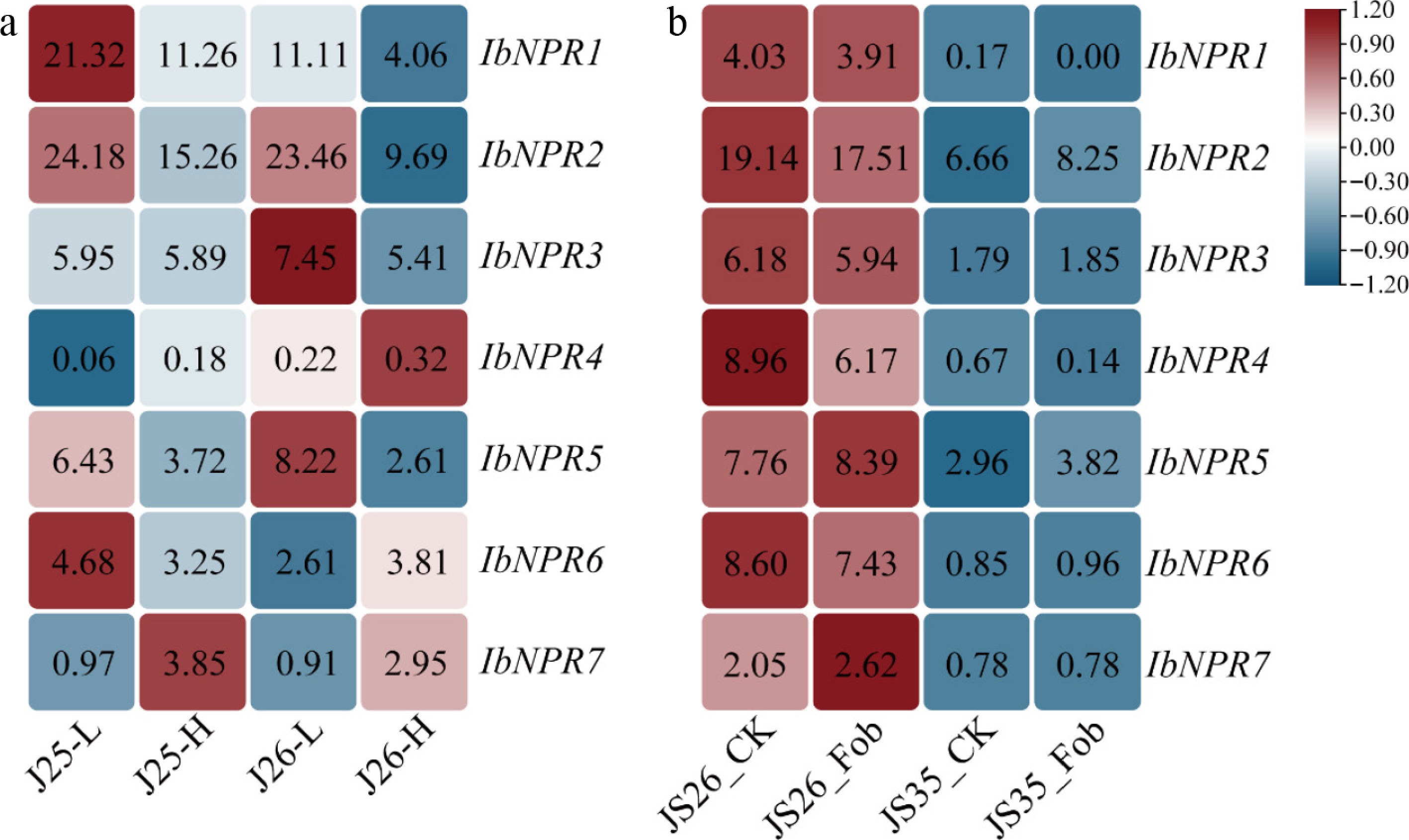
Figure 6.
Expression analysis of IbNPRs under biotic stresses. (a) Expression analysis of IbNPRs at different degrees of viral infection in 'Jishu 25' (J25) and 'Jishu 26' (J26) storage roots (L, low degrees of virus infection; H, high degrees of virus infection). The fragments per kilobase per million mapped reads (FPKM) values are shown in the boxes. (b) Expression analysis of IbNPRs with inoculation with Fob (F. oxysporum) in the disease-resistant variety 'Jishu 26' (JS26) and the disease-susceptible variety 'Jishu 35' (JS35). The FPKM values are shown in the boxes.
Expression analysis of IbNPRs under drought, salt, and heat stresses
-
To investigate the potential roles of IbNPRs in the response to drought, salt, and heat stress, the expression patterns of IbNPRs were analyzed using qRT-PCR in 'Jishu 25' under polyethylene glycol (PEG) 6000 stress at 0, 3, 6, 12, 24, and 48 h after drought treatment. The RNA-seq data of the salt-sensitive variety 'NL54' and the salt-tolerant line 'Jishu 26' under NaCl stress at 0, 0.5, 6, and 12 h after salt treatment, and of 'Xuzishu 8' after heat stress treatment were used to calculate the expression of IbNPRs[32,33]. Under PEG6000 stress, IbNPR1, IbNPR2, IbNPR5, IbNPR6, and IbNPR7 were upregulated and IbNPR3 and IbNPR4 were downregulated in 'Jishu 25' (Fig. 7a). Under NaCl stress, IbNPR6 was upregulated in both 'Jishu 26' and 'NL54', IbNPR4 and IbNPR5 were upregulated only in 'Jishu 26', IbNPR1 and IbNPR7 were downregulated in both 'Jishu 26' and 'NL54' and others showed no significant trend (Fig. 7b). Under heat stress, IbNPR1, IbNPR2, IbNPR3, and IbNPR7 were upregulated compared with the control, and others showed a downregulated trend compared with the control (Fig. 7c). The results implied that IbNPRs take a more important part in the response to drought and heat stresses than in that to salt stress.
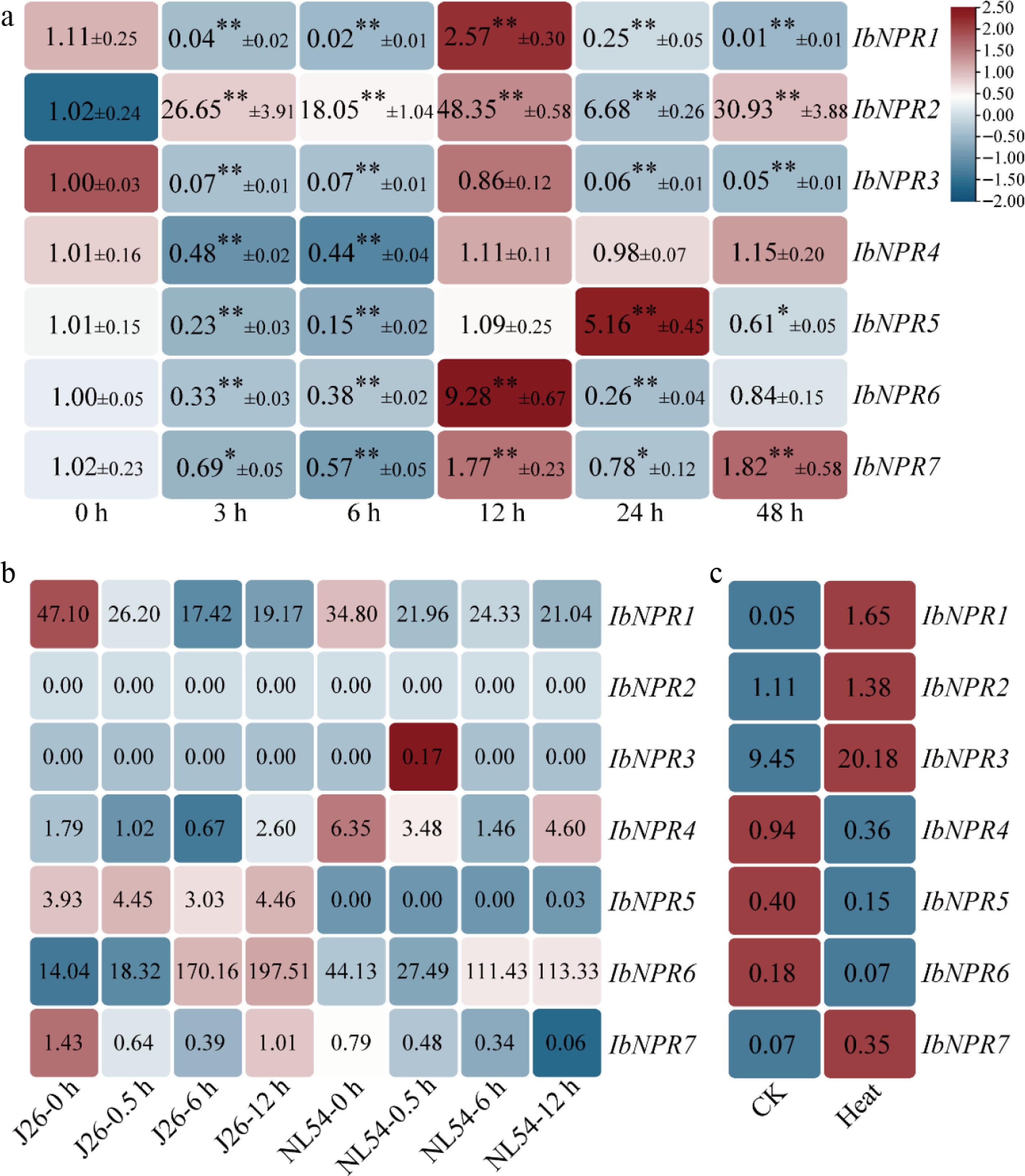
Figure 7.
Expression analysis of IbNPRs under drought, salt, and heat stresses. (a) Expression analysis of IbNPRs in 'Jishu 25' under PEG6000 stress. The values were determined by qRT-PCR from three biological replicates consisting of pools of three plants, and the results were analyzed using the comparative CT method. The expression level of 0 h is set as '1'. Fold change ± SD is shown in the boxes. Asterisks (**) and (*) indicate significant differences at p < 0.01 and p < 0.05, respectively, based on Student's t-test compared with 0 h. (b) Expression analysis of IbNPRs in the salt-sensitive variety 'NL54' and the salt-tolerant line 'Jishu 26' (J26) under NaCl stress. (c) Expression analysis of IbNPRs in 'Xuzishu 8' under heat stress. The FPKM values are shown in boxes.
-
With the recent advances in genomics, identification and characterization of the NPR gene family have been performed in various plants; for example, 6 in A. thaliana, nine in Chinese pear, 4 in Camellia sinensis, 5 in chili pepper, and 17 in wheat[6,10−13]. In this research, we identified seven, seven and eight NPRs in I. batatas, I. trifida, and I. triloba, respectively. There was one more ItbNPRs than IbNPRs and ItfNPRs. Collinearity analysis found that gene loss occurred during the process of evolution, and I. batatas has a closer evolutionary relationship with I. trifida (Fig. 1a). Further chromosomal localization and the phylogenetic tree of NPRs revealed that all IbNPRs had pairs of orthologs in I. trifida and I. triloba, and the homologs among I. batatas, I. trifida, and I. triloba were located on similar sites (Figs. 1b and 2). Gene structures are typically conserved among homologous genes of a gene family[37]. Furthermore, the conserved structural domains, motifs, and exon–intron distributions indicated that all homologous NPRs had the similar distributions of conserved domains, motifs and exons–introns in I. batatas, I. trifida, and I. triloba (Fig. 3). These results suggested that sweet potato has conserved phylogenetic relationships with its diploid ancestors.
NPR family genes have been thoroughly studied in A. thaliana, with six members identified. Among them, AtNPR1 and AtNPR2 are key positive regulators in the SA signaling pathway, involved in immune responses in A. thaliana. In contrast, AtNPR3 and AtNPR4 play opposing roles[5,14]. AtNPR5 and AtNPR6 are involved in regulating the growth of lateral branches and floral organs in A. thaliana[36]. According to the functions of the AtNPRs, IbNPRs, ItfNPRs, and ItbNPRs were divided into three groups (Group I: AtNPR1/2 group; Group II: AtNPR3/4 group; Group III: AtNPR5/6 group), and Group III lacked the NPR1-like C-terminal region with less conserved motifs and exons (Figs. 2 and 3). These results proved that NPRs have functional diversity, and NPR1-like C-terminal region may play a crucial role in the regulation of stress resistance.
NPRs regulate the response to biotic and abiotic stresses in sweet potato
-
SA is a phenolic plant hormone that is widely present in plants and significantly regulates plants' stress defenses[38,39]. The genes of the NPR family act as genuine transcriptional co-factors in the SA signal transduction pathway to affect resistance against biotic and abiotic stresses[5].
In A. thaliana, overexpressing AtNPR1 could enhance resistance against bacterial pathogens and oomycete pathogens such as Pseudomonas syringae and Phytophthora infestans (causing late blight). In crops, fungal diseases can seriously affect yield and even lead to crop failure, but NPR genes could enhance plants' immune response and resistance to diseases, thereby ensuring yield. In rice, overexpression of OsNPR1 effectively promotes plants' resistance to rice blast[15]. Overexpressed ScNPR1 in wheat could improve the resistance to red mold. In cotton, overexpression of AtNPR1 enhanced the resistance to cotton black root rot[16,17]. In apple, overexpression of the MhNPR1 gene induced SAR and exhibited extended resistance to fungal diseases[18]. Silencing SlNPR1 in tomato led to a decrease in drought tolerance[19].
Viral diseases are significant pathogens affecting the yield and quality of sweet potatoes[40,41]. The accumulation of viruses leads to severe declines in both the yield and quality of seed roots and impair their sprouting capability[42]. F. oxysporum is a major pathogenic fungus that causes some diseases in sweet potato, which decrease the yield and quality of sweet potato[26]. In this research, IbNPR1, IbNPR2, IbNPR3, and IbNPR5 were highly expressed in 'Jishu 25' and 'Jishu 26' storage roots with a low degree of virus infection (Fig. 6a). All IbNPRs showed higher expression in the disease-resistant variety 'Jishu 26' than in the disease-susceptible variety 'Jishu 35'. IbNPR1, IbNPR2, IbNPR3, IbNPR4, and IbNPR6 were expressed highly in the disease-resistant line 'Jishu 26' compared with the control (Fig. 6b). Therefore, IbNPR1, IbNPR2, and IbNPR3 play an important part in the response to biotic stress and provide the candidate genes for breeding disease-resistant sweet potato.
In recent years, sweet potato cultivation has shifted towards marginal lands and low-quality soils, making them more susceptible to abiotic stresses such as drought and salt[43]. Under PEG6000 stress, IbNPR1, IbNPR2, IbNPR5, IbNPR6, and IbNPR7 were upregulated in 'Jishu 25' (Fig. 7a). Under NaCl stress, only IbNPR6 was upregulated in both 'Jishu 26' and 'NL54' (Fig. 7b). Under heat stress, IbNPR1, IbNPR2, IbNPR3, and IbNPR7 were upregulated compared with the control (Fig. 7c). These results indicated that IbNPRs, especially IbNPR1, IbNPR2, and IbNPR7, have a significant influence on the response to drought and heat stress, and IbNPR6 was effective in responding to drought and salt stress.
In summary, IbNPR1, which is in Group I (AtNPR1/2 group), plays an important role in positively regulating the response to biotic and abiotic stress in sweet potato, which was consistent with the positive regulation of plants' immune response by AtNPR1 and AtNPR2 in A. thaliana. It is an important candidate gene for breeding for resistance in sweet potato. Interestingly, although we grouped IbNPRs according to the functions of AtNPRs in the phylogenetic tree, the RNA-seq data and qRT-PCR analysis revealed that many IbNPRs belonging to Group II (AtNPR3/4 group) and Group III (AtNPR5/6 group) also enhanced sweet potato's resistance to biotic and abiotic stress, such as IbNPR2 in Group II. This may be related to the changes in the promoter structure of IbNPRs during the evolutionary process. In our study, all promoters of IbNPRs contained abundant hormone-responsive elements and abiotic/biotic stress-responsive elements, which allowed IbNPRs to play a more active role in responding to biotic and abiotic stress. This research provides a foundation for future research and crop improvement strategies for sweet potatoes.
-
In this study, seven, seven and eight NPRs were identified in the cultivated sweet potato and its two diploid wild relatives I. trifida and I. triloba, respectively. A systematic analysis was performed on IbNPRs' gene structures and distributions, the proteins' physicochemical properties and conserved motifs, and the expression patterns, along with phylogenetic and collinearity analyses. All homologs of IbNPRs, ItfNPRs, and ItbNPRs showed the similar conserved domains and motifs in the proteins, and the same exon structures, which suggested functional conservation among the NPRs. The IbNPRs were upregulated in stems and fibrous roots. IbNPR1, IbNPR2, and IbNPR3 played a crucial part in resistance to biotic stress, and IbNPR1, IbNPR2, and IbNPR7 had a significant influence on the response to drought and heat stress. However, IbNPRs were not effective in salt stress resistance. In conclusion, IbNPR1 in Group I and IbNPR2 in Group II could be used as candidate genes to improve the resistance to biotic and abiotic stresses in sweet potato.
-
The authors confirm their contributions to the paper as follows: study conception and design: Jiang Z; data collection: Jiang Z, Du T; analysis and interpretation of the results: Jiang Z, Zhou Y; draft manuscript preparation: Jiang Z, Qin Z, Li A, Wang Q, Hou F; funding acquisition: Jiang Z, Hou F. All authors reviewed the results and approved the final version of the manuscript.
-
The authors declare that the data supporting the findings of this study are available within the paper and the Supplementary Material. The RNA-seq data are available in the National Center for Biotechnology Information (NCBI). The RNA-seq data of inoculation with F. oxysporum in the disease-resistant variety 'Jishu 26' and the disease- susceptible variety 'Jishu 35', and the datasets generated during and/or analyzed during the current study are available from the corresponding author on reasonable request.
-
The authors declare that they have no conflict of interest.
-
accompanies this paper online at: https://doi.org/10.48130/tp-0026-0039.
-
Received 16 March 2026; Accepted 9 July 2026; Published online 9 November 2026
- Supplementary Table S1 Primers used in this study.
- Supplementary Fig. S1 Sequence logos of the 10 conserved motifs.
- Copyright: © 2026 by the author(s). Published by Maximum Academic Press on behalf of Hainan University. This article is an open access article distributed under Creative Commons Attribution License (CC BY 4.0), visit https://creativecommons.org/licenses/by/4.0/.
-
About this article
Cite this article
Jiang Z, Du T, Zhou Y, Qin Z, Li A, et al. 2026. Genome-wide identification and expression analysis of the Nonexpressor of pathogenesis-related gene family in sweet potato. Tropical Plants 5: e040 doi: 10.48130/tp-0026-0039 

Genome-wide identification and expression analysis of the Nonexpressor of pathogenesis-related gene family in sweet potato
- Received: 16 March 2026
- Revised: 16 May 2026
- Accepted: 09 July 2026
- Published online: 09 November 2026
Abstract: The salicylic acid (SA) signaling pathway is a crucial biological process to regulate plants' immune response to pathogens and adverse environments, and the SA receptor nonexpressor of pathogenesis-related (NPR) gene family participates in biotic stress and abiotic stress resistance in plants. Although the NPRs have been identified in several plant species, their presence and functional roles in sweet potato (Ipomoea batatas) remain unexplored. In this research, seven, seven, and eight NPRs were identified in I. batatas (2n = 6x = 90), Ipomoea trifida (2n = 2x = 30), and Ipomoea triloba (2n = 2x = 30), respectively. A systematic analysis was performed, including assessments of gene structures, chromosomal distributions, protein physicochemical properties, conserved motifs, phylogenetic relationships, collinearity, and expression patterns. Conserved gene and protein structures suggested a high degree of functional conservation among NPR genes. The IbNPR genes were highly expressed in stems and fibrous roots. The IbNPR genes, especially IbNPR1 in Group I and IbNPR2 in Group II, play a vital role in regulating the response to biotic and abiotic stresses in sweet potato. In summary, this research provided a foundation for future research into IbNPRs and identified candidate genes for breeding for stress resistance in sweet potato.