












-
With the overuse of antibiotics in medical and agricultural settings[1], the resulting issue of antibiotic resistance has escalated into a global public health crisis[2]. Recent data indicate that in 2019, antibiotic-resistant bacterial (ARB) infections caused 4.95 million deaths worldwide, with approximately 25% of these fatalities directly attributable to resistant infections[3]. Particularly alarming is the role of aquatic environments as a key vector for the dissemination of antibiotic resistance genes (ARGs) and ARB[4]. ARGs can enter water bodies through pathways such as medical wastewater and livestock manure, and spread across diverse ecosystems because of their environmental persistence and horizontal gene transfer (HGT) characteristics[5].
Multiple high-risk ARGs and pathogenic bacteria have been detected in drinking water systems[1,6−8]. Studies have revealed the widespread presence of ARGs within drinking water systems. Testing of Canadian drinking water samples indicated that 10.5% of Escherichia coli isolates exhibited antibiotic resistance[9]. Klebsiella pneumoniae, along with tetA and sul1, was detected in the source water of a rural community water treatment plant in the United States[10]. In the Dongjiang drinking water source of China's Pearl River Delta, the total concentration of 21 target ARGs reached 3.51 × 10⁹ ± 5.27 × 10⁸ copies/L[11]. In addition, 255 ARGs were detected across 53 drinking water sources in China using HT-qPCR[12]. In one East China water source, the total antibiotic concentrations reached 497.00 ng/L, with 18 detected ARG subtypes covering six antibiotic resistance classes and the integrase gene intI1[13]. The average absolute abundance of ARGs in Asian reservoirs exceeded that in Europe by an order of magnitude, with a range of 1.93 × 10³–1.56 × 10⁷ copies/mL[14], further substantiating the potential risk of ARG transmission via drinking water systems. However, existing drinking water treatment systems generally lack measures to remove antibiotics and ARGs, with conventional treatment processes demonstrating limited removal capacity. For instance, research indicated that a typical water treatment plant process achieved a total removal rate of 57.3% ± 20.7% for antibiotics[15], while multiple ARGs remain detectable in the finished water[11,16,17]. This demonstrated that current drinking water treatment processes failed to effectively block exposure pathways for such contaminants, posing a persistent potential risk to human health. These findings reveal the pervasiveness of antimicrobial resistance pollution in aquatic environments and highlight the complex mechanisms of its transregional transmission. Combined with the persistent survival and HGT characteristics of ARGs within environmental media, the cumulative effects of multiple pollution sources, including medical wastewater and agricultural discharges, constitute significant challenges for current antimicrobial resistance governance in aquatic ecosystems, especially in drinking water sources. A critical yet often overlooked factor is the type of water source. Rivers and reservoirs differ fundamentally in terms of hydrological conditions, exposure to pollution, and self-purification capacity. These factors may directly determine the risk of the emergence, persistence, and transmission of antibiotics and ARGs. Treating all water sources as equally risky obscures high-risk hotspots and leads to the misallocation of monitoring resources. Therefore, water source type should not be viewed merely as a sampling label, but rather as a comprehensive driver that shapes antimicrobial resistance risk throughout the entire process from source to tap.
Poyang Lake is the largest freshwater lake in China and a vital hub for regulating water resources in the middle and lower reaches of the Yangtze River. Poyang Lake receives inflows from five major rivers: the Gan, Fu, Xin, Rao, and Xiu rivers, providing drinking water sources for approximately 45 million people in the basin. Although previous studies examined the detection of antibiotics and ARGs in the Poyang Lake basin, such as investigations into the seasonal occurrence and distribution patterns of 18 target antibiotics in the lake's surface waters[18], and research revealing spatial and seasonal variations in antibiotics and ARGs within the water body[19], these surveys remain significantly limited. Specifically, previous studies lacked systematic, comprehensive investigations of drinking water sources within the entire Poyang Lake basin. Most research focused on surface waters in the lake area, failing to conduct systematic surveys of key drinking water sources within the basin. Furthermore, these studies did not elucidate the coexistence characteristics and interactions between antibiotics, ARGs, and antibiotic-resistant bacteria (ARBs) in these core water sources. Consequently, the current distribution status and potential health risk levels of antibiotics and ARGs within drinking water sources in the Poyang Lake basin remain unclear. Therefore, this study further assessed their potential environmental and human health risks, thereby providing scientific support for safeguarding drinking water safety throughout the basin. The primary objectives of this study were as follows: (1) to analyze the spatiotemporal distribution characteristics, sources, and ecological risks of antibiotics in drinking water sources within the Poyang Lake basin; (2) to investigate the spatiotemporal distribution patterns, influencing factors, and health risks of target ARGs in drinking water sources within the basin; (3) to establish a partial least squares structural equation model (PLS-PM) to elucidate the driving factors on ARGs dissemination by systematically analyzing the integrated effects of seasonal variations, water source types, water quality parameters, antibiotic residues, and mobile genetic elements (MGEs); and (4) to determine the antimicrobial resistance phenotypes of isolated bacterial strains and assess the bacterial resistance risks to obtain comprehensive evaluation in drinking water sources within the Poyang Lake basin.
-
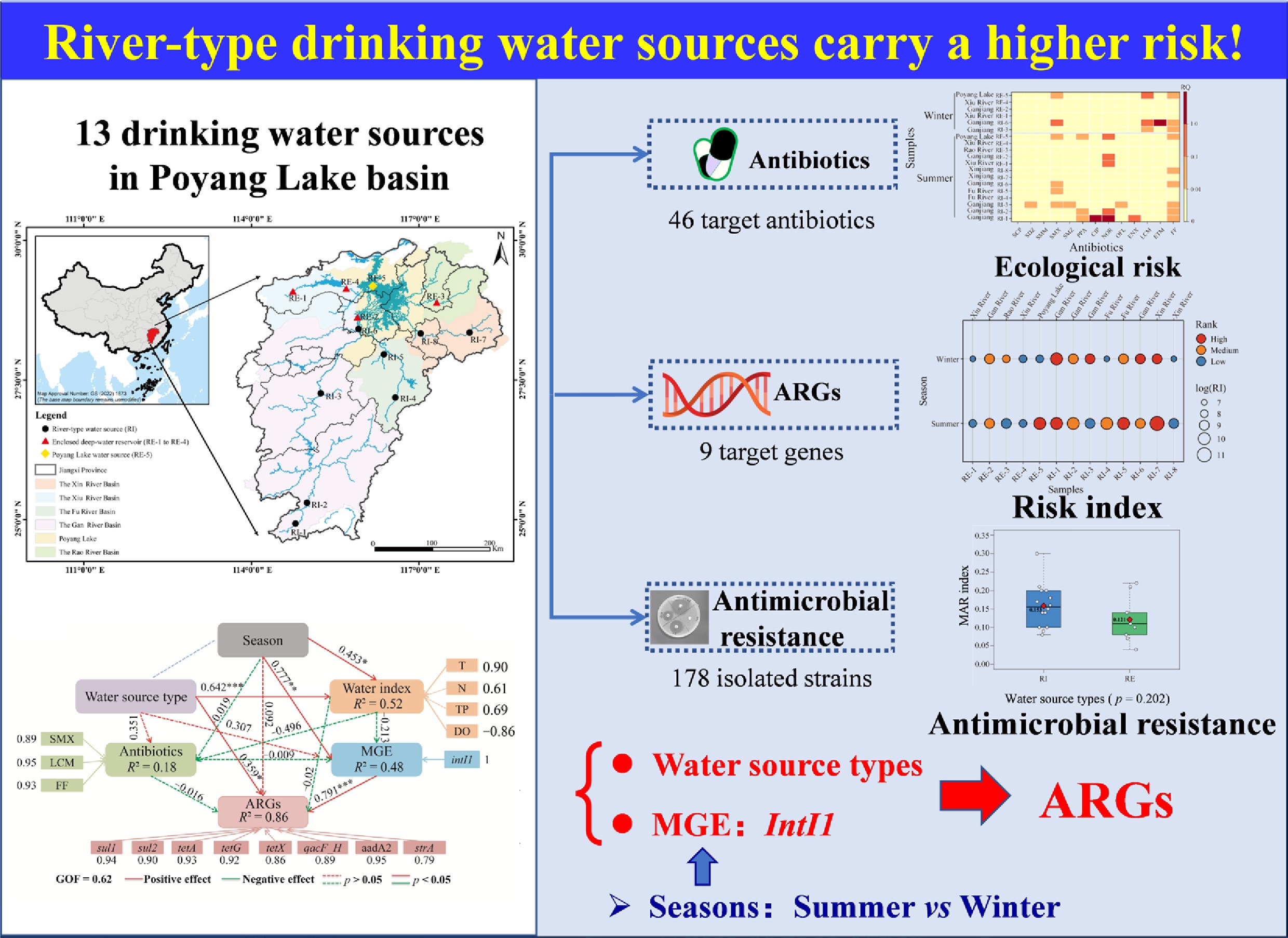
This study selected 13 representative water sources comprising eight river-type water sources (RIs) and five reservoir-type water sources (REs) within the Poyang Lake basin. Among the reservoir-type sources, RE-5 was the water source located in the Poyang Lake body itself—a large shallow lake characterized by rapid water exchange and multiple pollution inputs, distinguishing it from the other four reservoir-type sources (RE-1 to RE-4), which were enclosed deep-water reservoirs with longer hydraulic retention times. These drinking water sources encompassed the five major rivers flowing into Poyang Lake: the Gan, Fu, Xin, Rao, and Xiu rivers, and Poyang Lake itself (specific sampling point details were presented in Fig. 1 and Supplementary Table S1). Sampling was conducted in December 2024 (winter, low-flow period) and June 2025 (summer, high-flow period) under varying hydrological conditions (high-flow and low-flow periods). In brief, 10 L of water was collected from each sampling site, with 2 L allocated for antibiotic determination and 8 L for water quality indicator determination and microbial DNA extraction. Following collection, the water samples were immediately placed in a 4 °C environment and transported to the laboratory for subsequent analysis as expeditiously as possible.
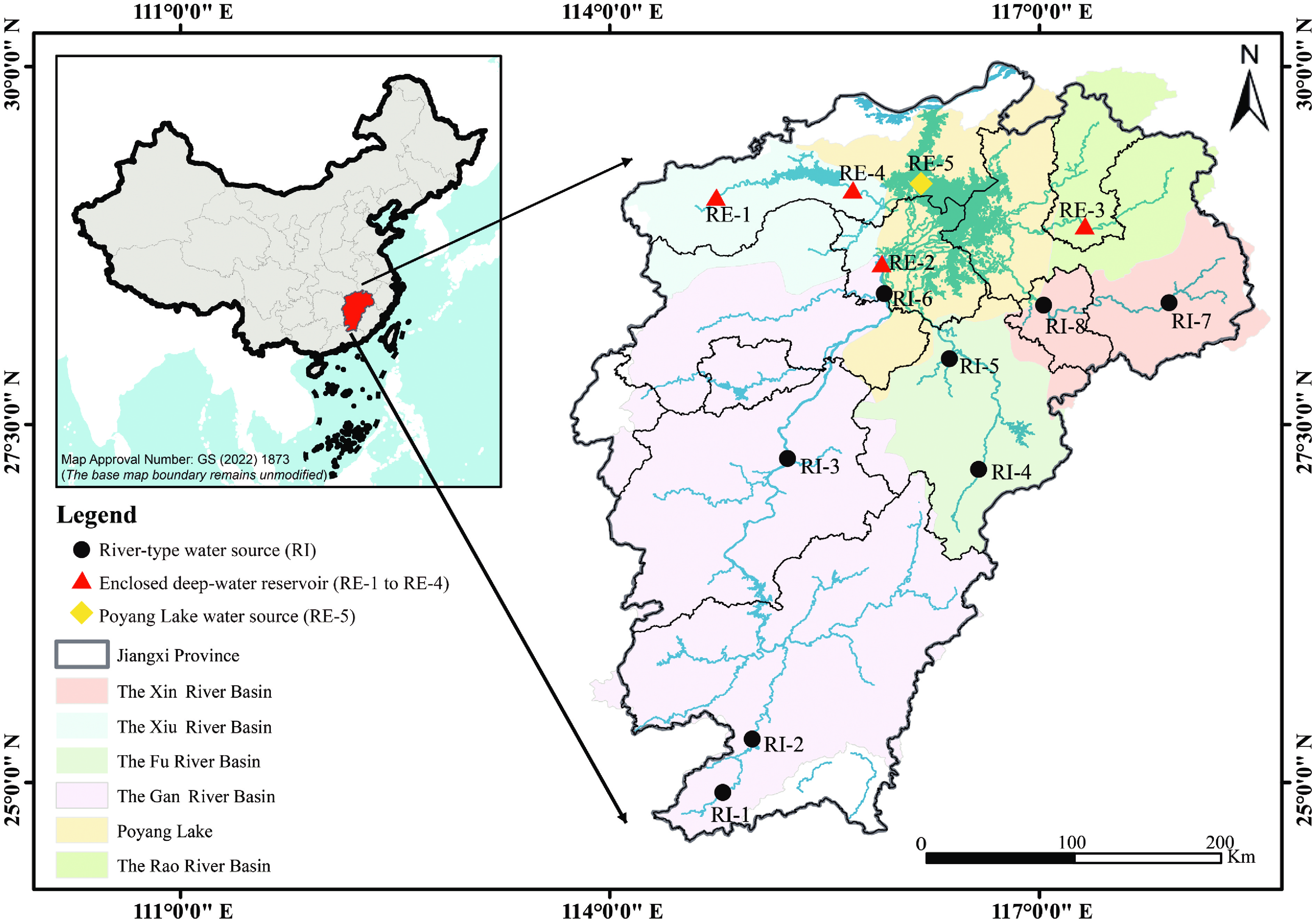
Figure 1.
Sampling sites for drinking water sources in the Poyang Lake and its five river basins. The colored areas represent the watershed boundaries delineated by hydrological criteria, which do not fully coincide with the administrative boundary of Jiangxi Province. RE-5 represents the Poyang Lake open-lake water source, which is hydrologically different from the enclosed deep-water reservoirs RE-1 to RE-4.
DNA extraction
-
Microorganisms were enriched by filtration using 0.22 μm sterile membranes (Sartorius, Germany). The procedure was terminated when the membrane flow rate significantly decreased. Each sample was replicated three times to concentrate the microbial load. The filtered membranes were stored at −80 °C for subsequent DNA extraction using the MolPure Bacterial DNA Kit (YEASEN, China), with cell lysis, washing, and elution steps strictly adhering to the manufacturer's instructions. Gel electrophoresis and a NanoDrop ND-1000 (Thermo Fisher Scientific, USA) were used to assess the quality and concentration of the extracted DNA. All extracted DNA samples were stored at −80 °C to ensure stability.
Antibiotic detection and ecological risk assessment
-
This study employed bulk direct injection coupled with ultra-performance liquid chromatography-tandem mass spectrometry (UPLC–MS/MS) to quantitatively analyze 46 target antibiotics across six classes (Supplementary Table S2) in water bodies of the Poyang Lake basin. These 46 antibiotics were selected because they cover virtually all types of antibiotics and are widely used in human medicine, veterinary medicine, and aquaculture in the region, making them closely associated with the spread of antimicrobial resistance. The specific methodology was as follows: Ten millilitres of the water sample was measured, filtered through a 0.22 μm aqueous membrane filter, then 1 mL of Na2EDTA solution was added before adjusting the pH to 6–8. A 1.0 mL aliquot of the adjusted sample was taken, 10 μL of internal standard solution was added, and the mixture was thoroughly blended prior to injection. Mass spectrometry conditions during injection employed MRM technology in positive ion mode, which was chosen because it offers high sensitivity and stability for all target compounds, thereby meeting the requirements for large-scale watershed monitoring. The desiccant temperature was set at 550 °C and the flow rate at 1,000 L/h. Liquid chromatography conditions comprised column temperature at 40 °C, a CORTECS C18 column, injection volume of 100 μL, and a flow rate of 0.4 mL/min. Mobile phase A: 0.1% formic acid in 2 mmol ammonium acetate aqueous solution; Mobile phase B: methanol/acetonitrile (1:1). The Method Detection Limit (MDL) was established by analyzing program blanks and spiked samples, with laboratory-grade ultrapure water serving as the blank matrix. When target compounds were detected in the blank, n (n ≥ 7) replicate blank tests were performed. The detection limit was calculated using the following formula, with the lower limit of quantification set at four times the detection limit. Seven parallel determinations were conducted on spiked surface water samples (spiked concentrations: 20 and 50 ng/L) using laboratory ultrapure water (blank matrix). The recovery rates, relative standard deviations, and method detection limits for each target antibiotic at different spiked concentrations are presented in Supplementary Table S2:
$ {\mathrm{MDL}}= t_{ (n-1,0.99)} \times S \mathrm{} $ where, t is the t-distribution value at the 99% confidence level, and S is the standard deviation of n parallel determinations.
Following the risk assessment methodology outlined in EU technical guidance documents, this study employed the risk quotient (RQ) approach to evaluate the potential ecological risk of antibiotics in drinking water sources within the Poyang Lake basin. The calculation formula is:
$ \mathrm{RQs=MEC/PNEC} $ where, MEC denotes the measured environmental concentration (actual test concentration); and PNEC denotes the predicted no-effect concentration. The specific derivation method for PNEC of antibiotics in aquatic media is described by Li et al.[20]. Toxicity data were obtained through a literature review, with the minimum PNEC value selected as the reference. The AF value was determined based on the biological toxicity data in the EU technical guidance document: AF was set to 1,000 for acute toxicity data; AF values for chronic toxicity data were set at 100. Ecological risk levels were assessed using the RQs classification method: RQs < 0.01 indicates no risk; 0.01 ≤ RQs < 0.1 denotes low risk; 0.1 ≤ RQs < 1 signifies moderate risk; and RQs ≥ 1 indicates high risk.
Detection and health risk assessment of ARGs
-
This study investigated 9 resistance-related target genes (eight ARG subtypes and one integrase gene intI1). The 16S rRNA gene was amplified as the reference gene for normalizing gene absolute abundances. Primer details were provided in Supplementary Table S3. The initial target genes in the samples were quantified via q-PCR, with three replicates per sample. Standard curve R2 values ranged from 0.98 to 0.999, amplification efficiency from 90% to 110%, and detection limit at Ct = 34. The SYBR green fluorescent dye method and the 2 × TB Green Premix ExTaq II kit (Takara Bio, China) were employed. The final reaction volume was 20 μL, comprising 10 μL of 2 × TB Green Premix ExTaq II, 0.8 μL each of forward and reverse primers, 1.0 μL of DNA template, and ddH2O to a total volume of 7.4 μL. Each reaction was performed in triplicate, with a negative control included in every run to ensure experimental accuracy and reliability. The reaction program was as follows: 95 °C for 30 s, followed by 40 cycles of (95 °C for 5 s and 58 °C for 30 s). A multidimensional framework was employed to comprehensively evaluate the potential risks of ARGs to human health[21]. Detailed methodology is provided in Supplementary Text S1.
Antibiotic susceptibility testing and phenotypic risk assessment of bacterial resistance
-
Each source water sample was serially diluted in sterile water, followed by the inoculation of 0.1 mL of the dilution onto LB nutrient agar (Hopebio, China). LB nutrient agar plates were employed for the cultivation of heterotrophic bacteria. For the evaluation of cultivable heterotrophic bacterial communities and their antimicrobial resistance profiles in source waters from different subbasins, eight strains were randomly selected from each sample plate and further purified using the streak plate method. Fresh isolates were subjected to Gram staining to determine whether they were Gram-negative or Gram-positive bacteria.
For the antibiotic resistance profiling of the purified isolates, antibiotic susceptibility testing was conducted using the disc diffusion method, outlined in the Clinical and Laboratory Standards Institute (CLSI) guidelines (2024). Details were provided in Supplementary Text S2. All experiments were performed at least twice. The frequency of antibiotic resistance was calculated as:
$ {\mathrm{Frequency}}\;\mathrm{of}\;\mathrm{antibiotic}\;\text{resistance}\;({\text{%}} )=(A/B)\times 100{\text{%}} $ where, A is the number of isolates resistant to the antibiotic, and B is the total number of isolates in the sample.
The multiple antibiotic resistance (MAR) index was used to evaluate potential multidrug resistance in bacteria, aiding in the assessment of antibiotic misuse risks or contamination sources. The calculation formula is[22]:
$\mathrm{MAR}\;\mathrm{index}=a/(b\times c) $ where, a is the total number of resistant events across all tested antibiotics for all strains in the sample, b is the number of antibiotics tested, and c is the number of isolates in the sample[22]. An MAR index ≤ 0.2 indicated a low potential risk of antibiotic contamination in the tested environment. When the MAR index ranged from 0.2 to 0.5, the tested site was considered a potential medium-risk source of antibiotic exposure. When the MAR index was > 0.5, the tested site was deemed a potential high-risk source of antibiotic exposure.
Statistical analysis
-
Data were collated using Microsoft Excel, with statistical analysis and visualization conducted via IBM SPSS Statistics 17.0, Origin 2023, and RStudio. Sampling point distribution maps were generated using ArcGIS 10.8. Independent samples t-tests or Mann–Whitney U tests were performed in SPSS to compare differences in log concentrations (log10) of ARGs across seasons and water source types, with box plots generated in Origin 2023. Principal Component Analysis was employed to analyze pollutant sources, visualized through RStudio. PLS-PM was developed to disentangle causal relationships among six latent variables, which were defined as follows: (1) season (summer and winter); (2) water source type (river and reservoir); (3) water index included T, N, TP, and DO; (4) antibiotics including those with high path coefficients (e.g., SMX, LCM, and FF); (5) MGE (intI1); (6) ARGs, comprising eight target genes: sul1, sul2, tetA, tetG, tetX, qacF_H, aadA2, and strA. Model construction and simulation were conducted using the plspm R package (v0.5.1). Here, p < 0.05 indicates significance at the 5% level, denoted by *; p < 0.01 indicates significance at the 1% level, denoted by **; and p < 0.001 signifies significance at the 0.1% level, denoted by ***.
-
Sampling was conducted among 13 drinking water sources in the Poyang Lake basin in December 2024 and June 2025, respectively, representing the dry season in winter and the wet season in summer of the basin. Thirteen antibiotics across four categories were detected among 46 target antibiotics across six categories (accounting for 28.3%). Detailed detection results are presented in Supplementary Table S4. Florfenicol (FF) was the most noteworthy antibiotic detected in this study, exhibiting the highest detection rate (58.33%) and concentration range (ND to 72.85 ng/L). As a carbaryl alcohol (CA) antibiotic, FF is primarily employed in livestock and poultry farming and aquaculture industries[23]. Thus, the use of FF in livestock and aquaculture in the Poyang Lake basin deserves attention as its impact on drinking water sources cannot be ignored. Additionally, among sulfonamide antibiotics (SAs), sulfamethoxazole (SMX) exhibited a relatively high detection frequency (31.58%), with concentrations ranging from ND to 30.51 ng/L, exceeding reported levels in some drinking water sources in the lower Yangtze River (N.D to 13.45 ng/L)[24,25], in Nanjing's primary water supply (ND to 3.83 ng/L), and was close to concentrations detected in two representative urban drinking water sources (2.6–40.3 and ND to 35.5 ng/L)[15]. Notably, while antibiotics with high usage rates such as quinolones (QNs) were generally detected at low concentrations in this study, β-lactams and tetracyclines were not detected; this may be attributed to their environmental instability or regulatory restrictions[26]. Overall, FF deserves particular attention in drinking water sources within the Poyang Lake basin among 46 target antibiotics. Its widespread presence may facilitate the dissemination of resistance genes, posing a potential threat to ecosystem health.
Figure 2 and Supplementary Fig. S1 illustrate the spatiotemporal distribution characteristics of antibiotics detected in 13 drinking water sources within the Poyang Lake basin. Temporally, antibiotics detected in the 13 drinking water sources during summer predominantly comprised QNs, SAs, and CAs, whereas SAs, MLs, and CAs dominated in winter. Both SAs and CAs were detected in winter and summer, showing their persistence in the drinking water sources. In certain sampling sites such as RI-3 in the Ji'an region, RE-1 in the Jiujiang region, and RE-2 in the Nanchang region, antibiotic concentrations were detected at higher levels in summer than in winter. For example, at site RI-3, both the types and concentrations of antibiotics were greater in summer, with SAs (63.5 ng/L), ofloxacin (OFL, 15.96 ng/L), and FF (39.3 ng/L) detected, whereas only lincomycin (LCM, 5.49 ng/L) and FF (30.21 ng/L) were found in winter. Moreover, antibiotic detection at sampling points RE-1 and RE-2 occurred exclusively during summer (norfloxacin, NOR), with concentrations of 16.1 and 12.26 ng/L, respectively. This may be attributed to interactions between seasonal agricultural emissions and complex hydrological conditions in summer. However, no seasonal differences were observed in antibiotic concentrations overall. These findings indicate that antibiotic pollution in the region is influenced by more than simple seasonal trends.
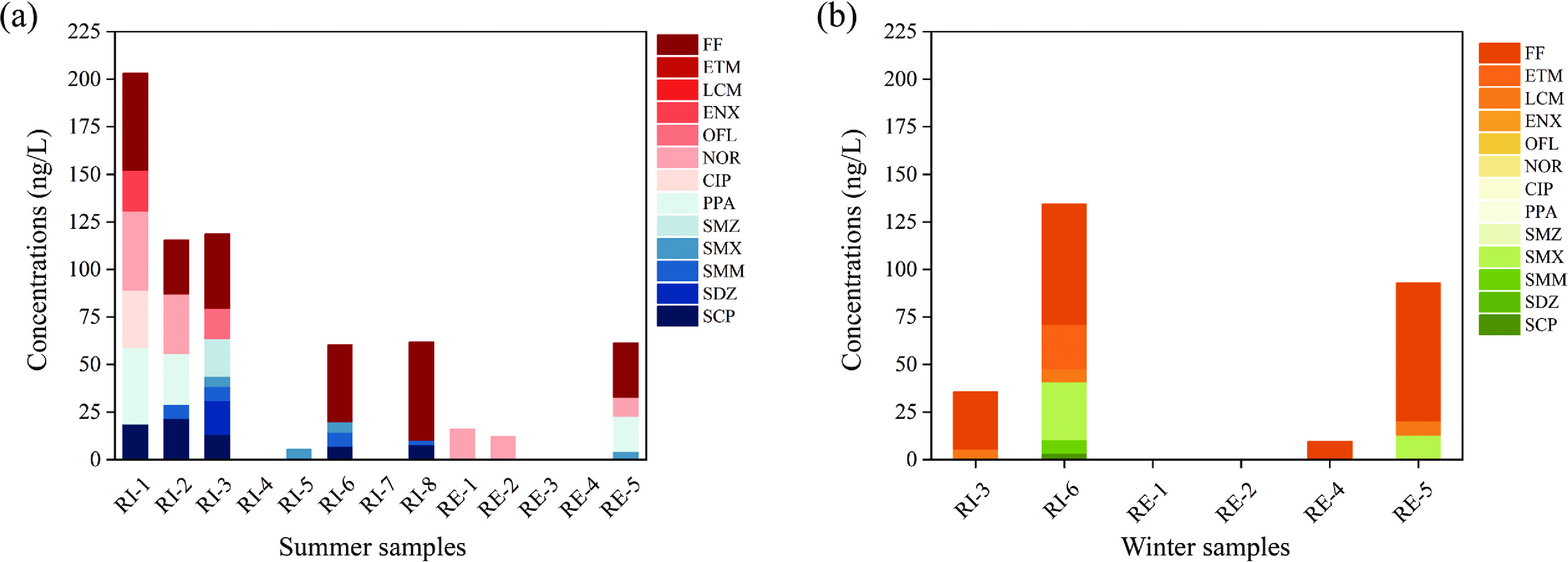
Figure 2.
Characteristics of antibiotic detection in drinking water sources in the Poyang Lake basin across different seasons. RI denotes river-type drinking water sources; RE represents reservoir-type drinking water sources.
Spatially, among the five sub-basins in the Poyang Lake basin, the drinking water source of the Gan River sub-basin (RI-1, RI-2, RI-3, RI-6, and RE-2) exhibited the most severe antibiotic contamination, with sulfachloropyridazine (SCP), pipemidic acid (PPA), and FF as the primary detected antibiotics (Fig. 2). Concentrations decreased progressively from upstream to downstream (RI-1 > RI-2 > RI-3 > RI-6), indicating that agricultural activities in upstream areas and inflows from tributaries such as the Tao River are the primary sources of pollution. The antibiotics detected in the Xin River basin were primarily SCP, sulfamonomethoxine (SMM), and FF. Notably high antibiotic concentrations were also detected in Poyang Lake as a drinking water source (RE-5), primarily comprising sulfamethoxazole (SMX), PPA, ciprofloxacin (CIP), and FF. The detection of these compounds in water samples from Poyang Lake warrants vigilance, as Poyang Lake is one of the lakes in China with excellent water quality. By comparison, the overall pollution levels in the Fu River and Rao River basins were relatively low.
The characteristics of antibiotic detection in drinking water sources are also related to water source types (Fig. 2). Antibiotic concentrations detected in river-type water sources were generally higher than those in reservoir-type water sources in this study, except RE-5. This is mainly due to the excellent environmental protection measures in reservoir-type water sources, as well as the fact that they serve as catchment areas for rivers, where reservoirs generally have larger water volumes and stronger dilution effects.
Notably, as a reservoir-type water source, RE-5 from Poyang Lake exhibited significantly higher FF concentrations than the other reservoir-type sources and some river-type water sources. On the one hand, this correlates closely with the hydrological characteristics of Poyang Lake as a seasonal lake, unlike other reservoirs: Poyang Lake exhibits substantial interannual water level fluctuations. During the dry season in winter, the lake surface shrinks, and water flows slowly, facilitating pollutant accumulation such as FF, which can explain the relatively higher detection of antibiotics in Poyang Lake during winter[27]. On the other hand, in addition to the input water from the five river basins, Poyang Lake also receives a large amount of agricultural non-point source pollution from the surrounding areas, including pollution from frequent aquaculture activities[28]. These factors overall contributed to the elevated antibiotic concentrations detected in Poyang Lake at the RE-5 drinking water source.
Antibiotic source analysis in drinking water sources
-
Principal component analysis (PCA) was employed to analyze the sources of antibiotic contamination in drinking water sources in the Poyang Lake basin during summer. Analysis was conducted on antibiotics with higher detection rates (SCP, SMM, SMX, PPA, NOR, and FF) across 13 water sources (Fig. 3a, b; Supplementary Figs S2, S3; Supplementary Tables S5–S7). The results showed that the source of antibiotic pollution exhibited spatial variability and was closely associated with water source types and river locations.
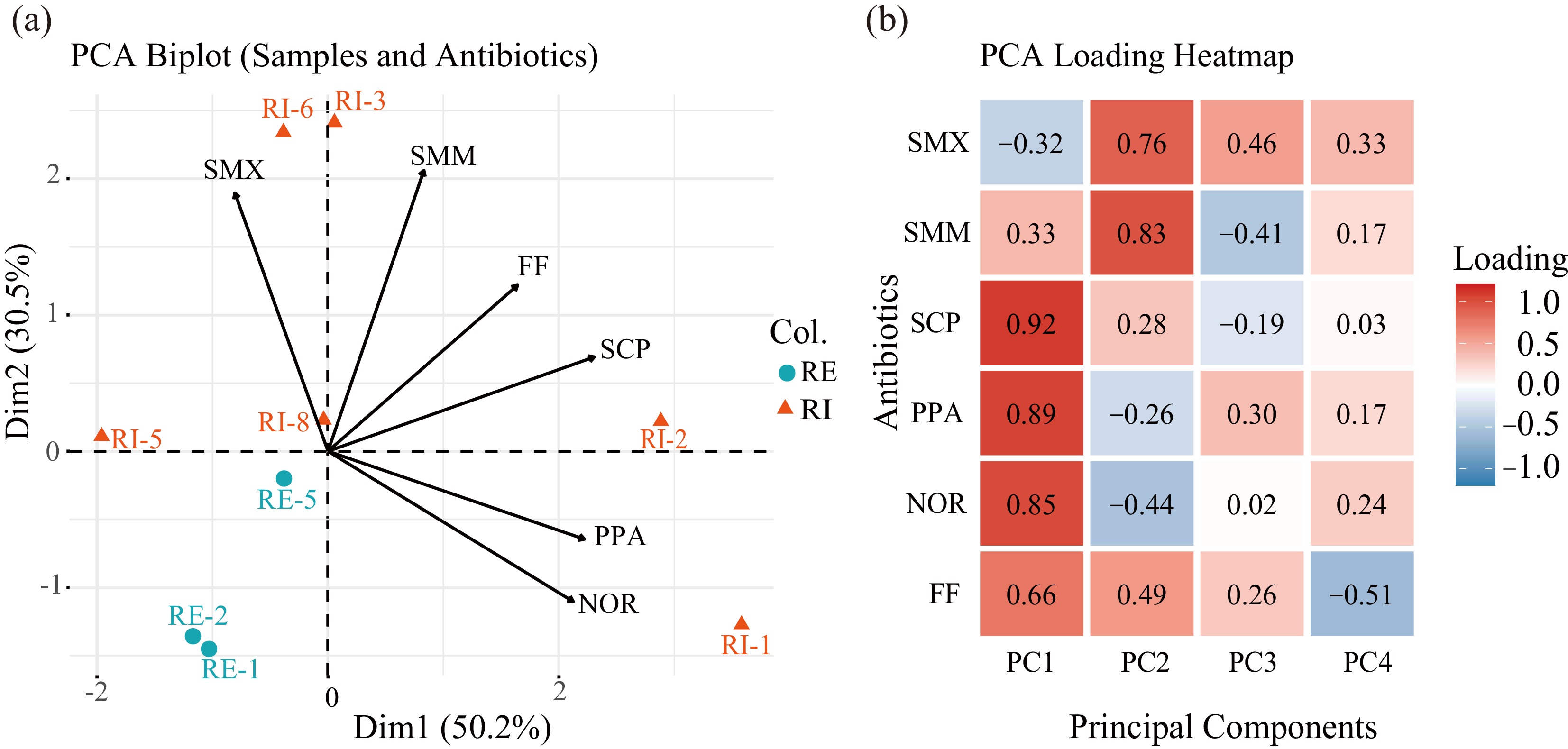
Figure 3.
Principal component analysis (PCA) of typical detected antibiotics in the Poyang Lake basin: (a) biplot; (b) loading heatmap. RI denotes river-type drinking water sources; RE represents reservoir-type drinking water sources.
Antibiotic detection in the Gan River sub-basin exhibited spatial distribution characteristics across its upper, middle, and lower reaches. Detection in the upper Gan River region (RI-1 and RI-2) was primarily governed by PC1, with characteristic pollutants SCP (0.92), NOR (0.85), PPA (0.89), and FF (0.66) exhibiting significant positive loadings. Notably, SCP served as a characteristic marker of livestock farming activities[29], while NOR was a signature pollutant of urban sewage[30]. PPA represented an antibiotic of human origin. PPA, SCP, and NOR all exhibited high positive loads on PC1, indicating that upstream pollution primarily originated from livestock emissions and domestic sewage inputs. The middle and lower reaches of the Gan River (RI-3 and RI-6) were predominantly governed by PC2. The characteristic pollutants SMM (0.83) and SMX (0.76) associated with this principal component exhibited typical aquaculture pollution signatures[31,32]. This indicated that pollution in this region primarily originated from local aquaculture operations. It was noteworthy that FF exhibited positive loadings on both PC1 and PC2 (0.66 and 0.49, respectively), indicating that livestock farming impacts were pervasive throughout the entire watershed, albeit with spatial variations: upstream, FF constituted a significant component of the dominant pollution source (PC1); whereas in the middle and lower reaches, its contribution to the predominant pollution pattern (PC2) was comparatively weaker, indicating a diminishing intensity of its impact along the course. These findings indicated that, across the five major river basins, antibiotic pollution in the Gan River basin of Poyang Lake exhibited spatial gradient characteristics: upstream areas were primarily affected by livestock farming activities and domestic sewage inputs, whereas mid-to-downstream regions were dominated by local aquaculture pollution. However, direct site-specific evidence is lacking, and these interpretations remain to be confirmed by targeted field investigations. Future work should incorporate spatially explicit data on livestock and aquaculture facility locations, along with field sampling at finer spatial scales, to more conclusively validate the inferred spatial gradient.
The sources of antibiotics also varied across water source types. The above analysis indicated that pollution sources in river-type water sources exhibited a gradient variation along the course. However, the reservoir-type water sources were less affected by pollution. For instance, RE-1 in the Xiu River basin and RE-2 in the Gan River sub-basin were distant from primary pollution source vectors, indicating that they were less affected by the two major anthropogenic sources identified in this study (livestock-domestic sources and aquaculture sources). Still, RE-5 from Poyang Lake was located near the origin of the PCA space, suggesting RE-5 was subjected to combined influences from multiple sources.
In summary, antibiotics in drinking water sources within the Poyang Lake basin primarily originated from livestock farming, domestic sewage, and aquaculture, with contributions exhibiting spatial heterogeneity. For river-type water sources, pollution transitioned from upstream livestock-domestic composite contamination to downstream aquaculture-dominated pollution. In contrast, reservoir-type water sources were more prone to becoming convergence zones for multiple pollution sources, such as RE-5 in Poyang Lake. It should be noted that the antibiotic contamination levels of most reservoir-type water sources were relatively low. Therefore, it is necessary to formulate targeted control strategies based on the different sources of antibiotic pollution within the river basin. Furthermore, the antibiotic pollution of river-type water sources as well as the Poyang Lake water source deserves greater attention. A limitation of this analysis is that the source apportionment is based on a subset of detected antibiotics. Undetected or low-concentration antibiotics may also contribute to resistance risks and warrant further investigation.
Ecological risk assessment of antibiotics in drinking water sources
-
The risk quotients (RQs) method was used to assess the ecological risks of 13 antibiotics detected in 13 drinking water sources within the Poyang Lake basin. The RQs for each detected antibiotic were calculated based on their concentrations at the water sources (Supplementary Table S8) and relevant toxicity data (Supplementary Table S9). Results indicated that certain antibiotics, including QNs such as CIP, NOR, and ENX, macrolide antibiotics like erythromycin (ETM), and LCM, exhibited medium-to-high risk levels at some sampling sites (Fig. 4; Supplementary Table S10). CIP, NOR, and ETM showed the highest RQ values. CIP and NOR were both widely used broad-spectrum antimicrobial agents with extensive applications in healthcare, livestock farming, and aquaculture. Their high risk profile indicates potential acute toxicity to aquatic organisms, particularly algae and microorganisms, and significantly heightens the threat of ARGs spreading within the environment. ETM is primarily employed as a human prescription drug and as a growth promoter in livestock and poultry. Its elevated ecological risk indicates that it may exert persistent disruptive effects on aquatic microbial communities.
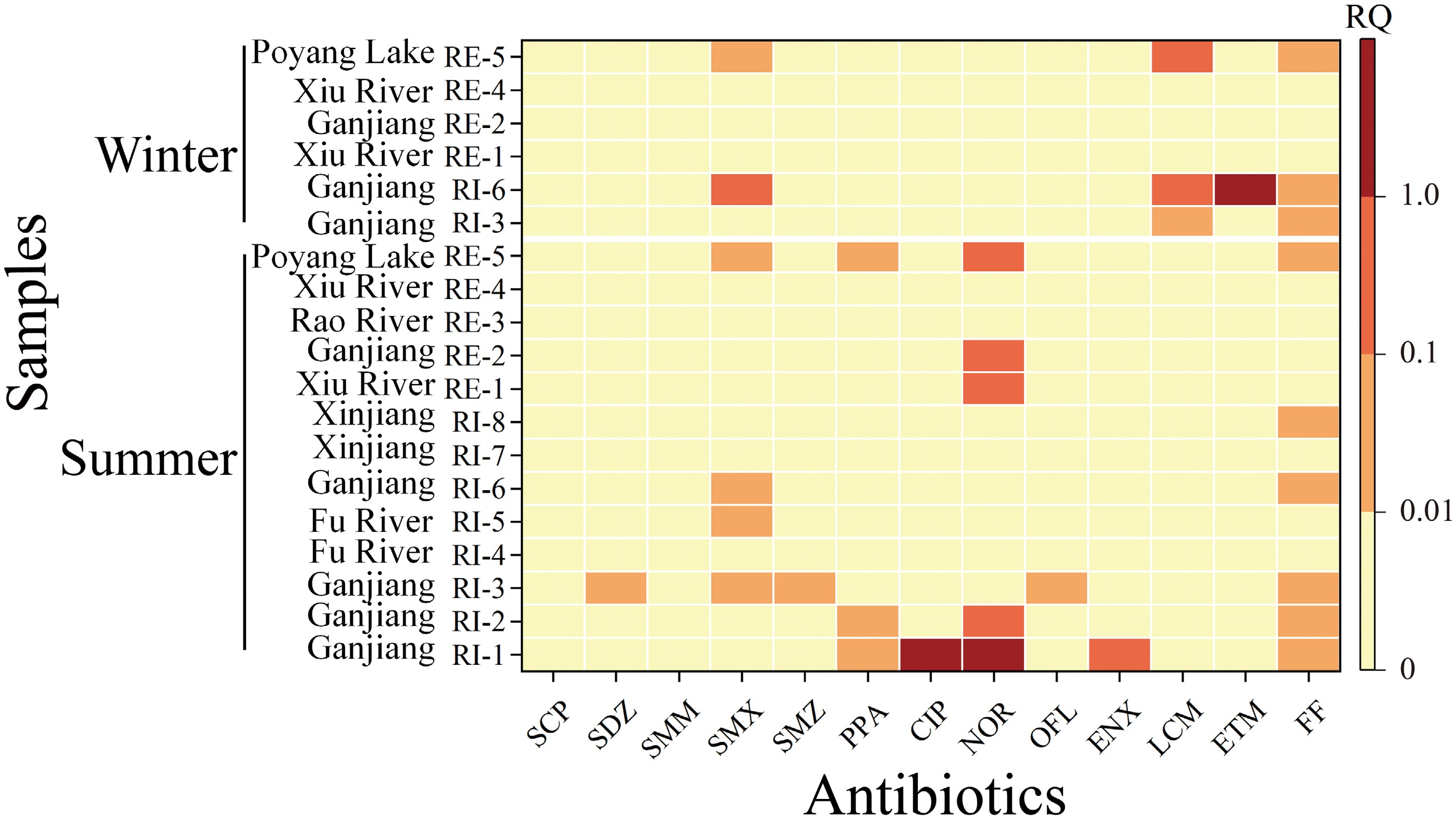
Figure 4.
Ecological risk quotients (RQs) of antibiotics in source water of the Poyang Lake basin. RI denotes river-type drinking water sources; RE represents reservoir-type drinking water sources.
Spatially, high-risk antibiotics were primarily concentrated in drinking water sources within the Gan River sub-basin. For instance, RI-1 in the upstream of the Gan River simultaneously contained two high-risk quinolone antibiotics: CIP (RQ = 1.79) and NOR (RQ = 1.31) in summer, while RI-6 in the downstream of the Gan River site exhibited a high-risk contaminant, ETM (RQ = 1.17) in winter. River-type water sources, characterized by rapid water renewal and short pollutant residence times, were more prone to transient high-concentration exposures of high-risk antibiotics. Conversely, reservoir-type water sources (such as RE-2), with their extended hydraulic retention times and slow water exchange, exhibited diluting and degrading effects on antibiotics, resulting in lower overall risk levels. The exception still came from the water source of RE-5 in Poyang Lake. RE-5 showed medium-risk LCM and low-risk SMZ and FF, which was consistent with the detection results of antibiotics. Other sub-river basins of the Poyang Lake basin, including the Fu, Xin, Rao, and Xiu Rivers, exhibited low-risk or no-risk levels in drinking water sources.
Although antibiotics pose medium-to-low risks and present limited short-term ecological hazards, prolonged exposure may induce chronic toxic effects in aquatic organisms (such as reproductive and developmental disruption) and foster microbial resistance development. Notably, antibiotics like FF, despite their lower risk levels, exhibit slow environmental degradation rates and persistent residual effects and may potentially sustain the dissemination of ARGs[33].
Therefore, it is recommended to strengthen pollution control measures at high-risk sites (e.g., RI-1 and RI-6), with particular emphasis on stringent regulation of QNs and MLs to mitigate their potential hazards to aquatic ecosystems. FF, being the most frequently detected antibiotic with the widest concentration range within the basin, warrants inclusion in priority monitoring due to its environmental persistence and potential risk of spreading resistance genes. A tiered management strategy should be implemented for different drinking water sources: river-type sources generally exhibited higher antibiotic concentrations and ecological risk levels than reservoir-type sources, necessitating increased monitoring frequency and enhanced remediation efforts. The Gan River sub-basin, exhibiting the highest ecological antibiotic risk among the five sub-basins, required targeted remediation plans addressing pollution characteristics from upstream livestock farming and domestic sewage, alongside downstream aquaculture activities. Furthermore, the Poyang Lake reservoir-type source area RE-5, exhibiting elevated antibiotic concentrations and complex impacts from multiple pollution sources, requires specialized monitoring and refined management measures. It should be designated as a core priority area for environmental oversight within the basin. A limitation of this risk assessment was that it was based on a selective set of eight ARGs and 46 target antibiotics. Undetected or low-concentration antibiotics and resistance genes may still contribute to selective pressure and risk, and thus the current evaluation may not be fully comprehensive.
Spatiotemporal distribution, health risks, and driving force of ARGs in 13 drinking water sources
Spatiotemporal distribution characteristics of ARGs in 13 drinking water sources
-
Nine target genes (including sul1 and sul2 belonging to sulfonamide ARGs; tetA, tetG, and tetX belonging to tetracycline ARGs; aadA2 and strA belonging to aminoglycoside ARGs; qacF_H belonging to quaternary ammonium compounds resistance gene; and one integron–integrase gene intI1) in water samples collected from 13 drinking water sources in the the Poyang Lake basin during winter and summer seasons were detected, and the results are presented in Supplementary Table S11 and Fig. 5. During summer, all target genes exhibited a 100% detection rates across all 13 drinking water sources. The absolute abundance (copies/L) and relative abundance (copies/16S rRNA genes) of these genes were higher in summer than in winter. Among these, sulfonamide resistance genes (suls, 6.3 × 10³–1.6 × 10⁷ copies/L) predominated, with a total relative abundance as high as 0.27 copies/16S rRNA genes. This result was comparable with results from major domestic water bodies[34−37]. Contrary to most studies reporting sul1 dominance[35], this study revealed that the absolute abundance of sul2 slightly exceeded that of sul1. This distribution pattern aligns with prior research on Poyang Lake, where the relative percentage of absolute concentration of sul2 is relatively higher than that of sul1[19]. Furthermore, the aminoglycoside resistance genes (aadA2/strA, 1.7 × 10²–1.2 × 10⁶ copies/L) and the disinfectant resistance gene (qacF_H, 2.5 × 10²–3.6 × 10⁵ copies/L) were widely detected. Notably, aadA2 was classified as a high-risk gene in drinking water systems[7], indicating high-risk resistance genes had been detected in the drinking water sources across the Poyang Lake basin. The integron gene intI1 achieved a 100% detection rate during summer, indicating substantial potential for HGT within the watershed, particularly during warmer seasons. However, the relative abundance of tetracycline resistance genes (tets) was relatively low in this study[38,39]. Nevertheless, tetracycline efflux pump genes (tetA/tetG) exhibited significant seasonal fluctuations, with markedly elevated abundances in summer, suggesting temperature-driven transmission patterns of tetA/tetG.
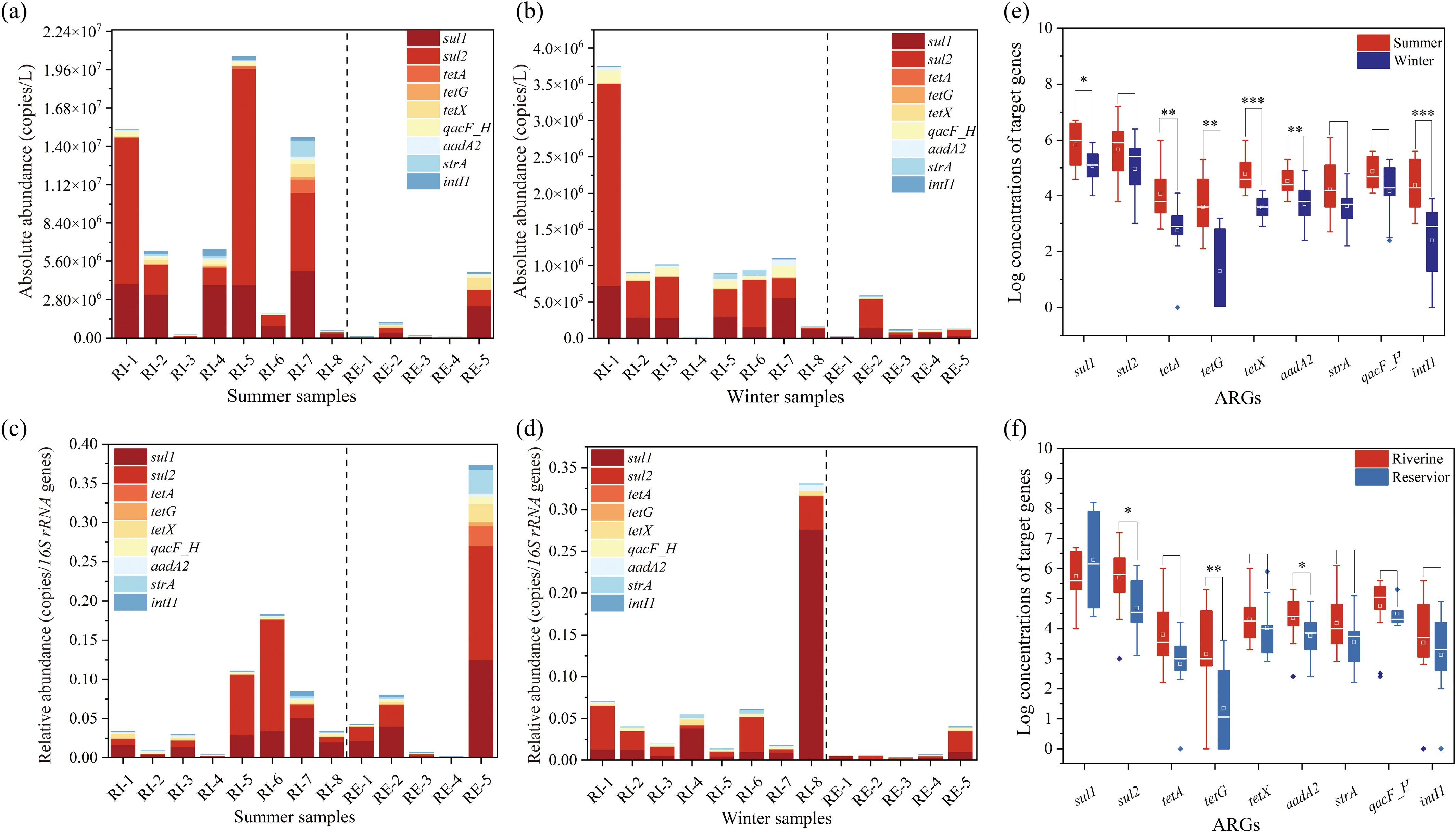
Figure 5.
Distribution of ARGs in drinking water sources of the Poyang Lake basin: (a), (b) absolute abundance of ARGs in summer and winter samples; (c), (d) relative abundance of ARGs in summer and winter samples; (e), (f) seasonal and water source type box plots for ARGs. RI denotes river-type water sources, and RE denotes reservoir-type water sources.
Further analysis of the distribution characteristics of target ARGs revealed marked seasonal and water source type variations in the abundance of certain ARGs (Fig. 5e, f). Scheffé's multiple comparison test revealed that the absolute abundance of resistance genes was significantly higher in summer than in winter (Supplementary Fig. S4, p = 0.00104), consistent with previous studies[40,41]. Specifically, tetX (p < 0.001), intI1 (p < 0.001), tetA (p < 0.01), tetG (p < 0.01), aadA2 (p < 0.01), and sul1 (p < 0.05) exhibited significantly higher abundance in summer than in winter (Fig. 5e). Regarding water source types, river-type water sources (RIs) exhibited significantly higher abundances of sul2, aadA2, and tetG genes compared to reservoir-type water sources (REs) (Fig. 5f), which was consistent with antibiotic detection results. This disparity between two different water source types stemmed from the former's stronger hydrodynamics and direct exposure to land-based inputs[42]. Conversely, reservoir waters, characterized by prolonged hydraulic residence times and robust self-purification processes, demonstrated lower overall resistance gene loads[43].
In terms of spatial distribution, the Gan River sub-basin (RI-1, RI-2, RI-6) exhibited the highest absolute abundance of ARGs during both winter and summer, representing the most severely polluted sub-basin (Fig. 5a, b). Besides, two sampling sites exhibited exceptionally high total relative abundance of ARGs: RE-5 in Poyang Lake, which showed the highest relative abundance among all samples during summer (0.373 copies/16S rRNA genes), and RI-8 in the downstream Xin River, which displayed the highest relative abundance during winter (0.33 copies/16S rRNA genes). The exceptionally high ARG abundance at RE-5 may be related to the heightened microbial activity under summer heat conditions, water stratification, and endogenous pollutant release. The winter increase in ARG abundance at RI-8, a river-type water source, was hypothesized to be closely linked to migratory birds in this region. RI-8, situated in the Yingtan region of the lower Xin River and in proximity to the Longhushan County-Level Nature Reserve for the Chinese Merganser, has consistently recorded the presence and activity of multiple rare migratory bird species in recent years, including the Chinese Merganser, a nationally protected species of the highest category. This species annually migrates to the region from October to April for wintering, indicating the habitat's sustained attractiveness to overwintering waterbirds. Research has demonstrated that migratory birds play a pivotal role in the transregional dissemination of ARGs[44,45], with their southward winter migration potentially serving as a key driver of ARG enrichment. This hypothesis offers new insights into the diffusion mechanisms of ARGs in the environment and suggests that nonpoint source pollution pathways, such as biological migration, must be fully considered when assessing ARG contamination in water bodies.
Health risk assessment for detected ARGs
-
This study employed a health risk assessment framework (Risk Index, RI-x) for ARGs developed by Zhang et al.[21], evaluating eight target ARGs in drinking water sources within the Poyang Lake basin across four dimensions: HA (human accessibility), MO (mobility), HP (human pathogenicity), and CA (clinical availability). Among the eight detected ARGs, seven were included in the risk assessment, while strA was excluded due to insufficient database information (Supplementary Table S12).
The results indicated that the overall ARG risk of 13 drinking water sources was higher in summer than in winter (Fig. 6), primarily because of the generally higher absolute abundances of ARGs during summer. Concurrently, river-type water sources exhibited higher ARG risk levels than reservoir-type water sources, with high-risk indices predominantly concentrated in the river samples. Among the reservoir-type samples, only RE-5 exhibited a high risk during summer. RE-5, as a sampling site from Poyang Lake, faced ecological risks stemming from the combined effects of multiple factors, as mentioned before.
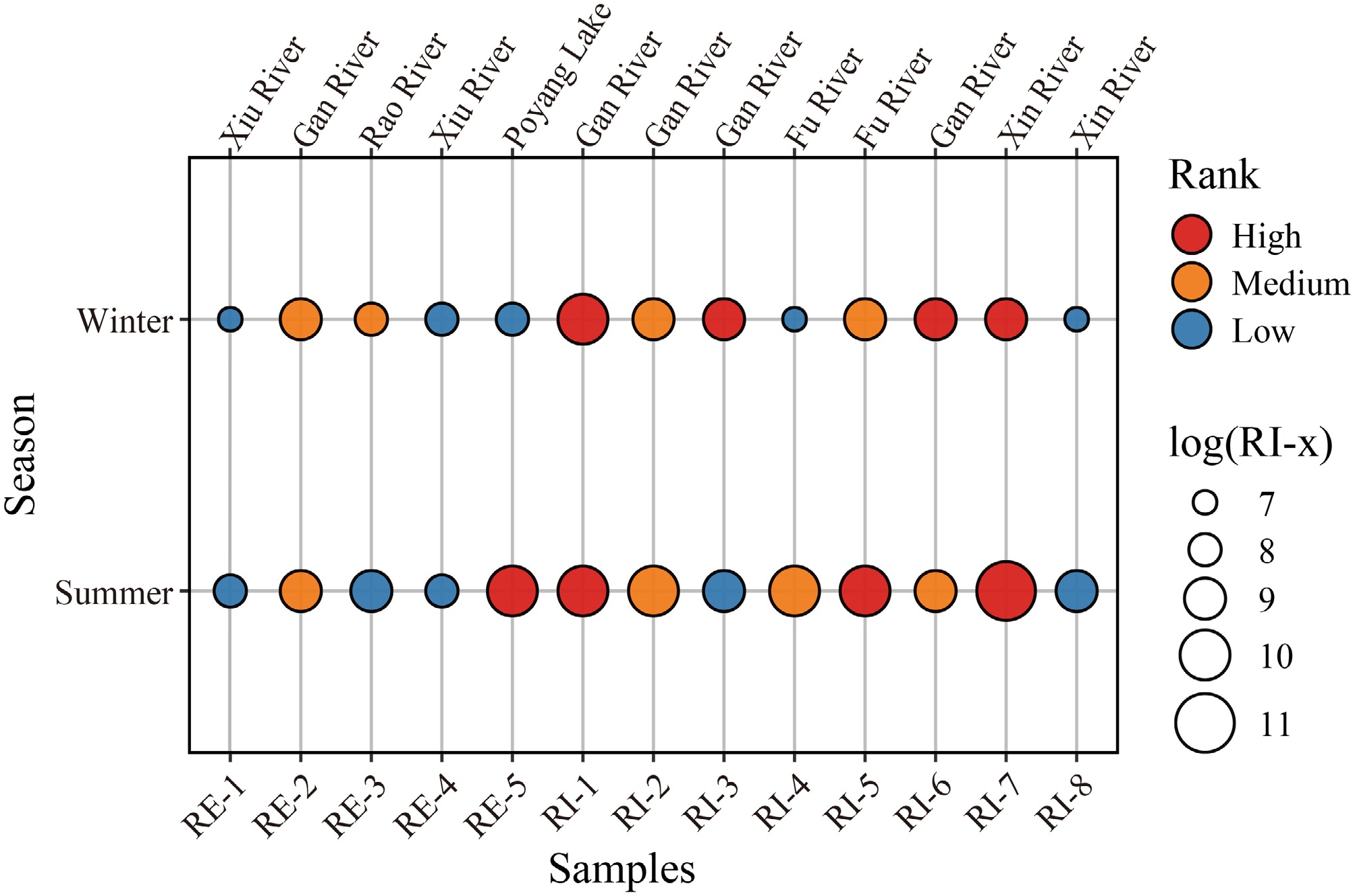
Figure 6.
Risk Index (RI-x) values and risk levels for drinking water sources in the Poyang Lake basin. RI-x denotes river-type water sources, while RE-x denotes reservoir-type water sources.
Among the 'Five Rivers and One Lake', the Gan River sub-basin presented the most pronounced health risks, with its sampling sites repeatedly indicating high-risk status throughout the annual assessment. This phenomenon may stem from the basin's comparatively higher socio-economic activity intensity within the Poyang Lake region: dense populations coupled with concentrated agriculture and aquaculture result in significant antibiotic load from domestic sewage, livestock, and aquaculture discharges. Regarding drinking water sources, river-type sources exhibited higher overall health risks than reservoir-type sources. Based on these findings, it was recommended that the Gan River sub-basin and river-type water sources be incorporated into the year-round priority monitoring system. Additionally, enhanced seasonal monitoring should be implemented at reservoir sites exhibiting abnormal risks (such as RE-5) to systematically understand the spatiotemporal dynamics and evolving trends of ARGs within the basin. It should be acknowledged that the risk assessment is based on a targeted set of eight ARGs; other untargeted ARGs that may pose higher risks were not evaluated. Future studies employing metagenomic approaches would enable a more comprehensive assessment of the entire resistome.
Factors influencing the distribution of ARGs in drinking water sources
-
PLS-PM analysis quantified multidimensional interactions governing the abundance of target ARGs among season, water source type, water index, antibiotics, and MGE (intI1) (Fig. 7a, b), with only the paths exhibiting high correlation coefficients visualized to highlight the dominant relationships. MGE(intI1) exhibited the highest total standardized effects on ARGs (total effects = direct effects = 0.791, p < 0.001), confirming its role as the core direct driver of ARG abundance (Fig. 7b). Season exerted a total effect of 0.6260 on ARGs, which was mainly indirect (indirect effect = 0.5344), reflected in the significant positive influence of seasonal variation on MGE enrichment (direct effects = 0.777, p < 0.01), thereby shaping ARG distribution. Water source type had a total effect of 0.4801 on ARGs, largely attributable to its direct effect (direct effect = 0.359, p < 0.05). In contrast, the direct impacts of antibiotics and water index on ARGs were not pronounced. Potential interactions among different ARG subtypes were also examined, with detailed results provided in Supplementary Text S3.
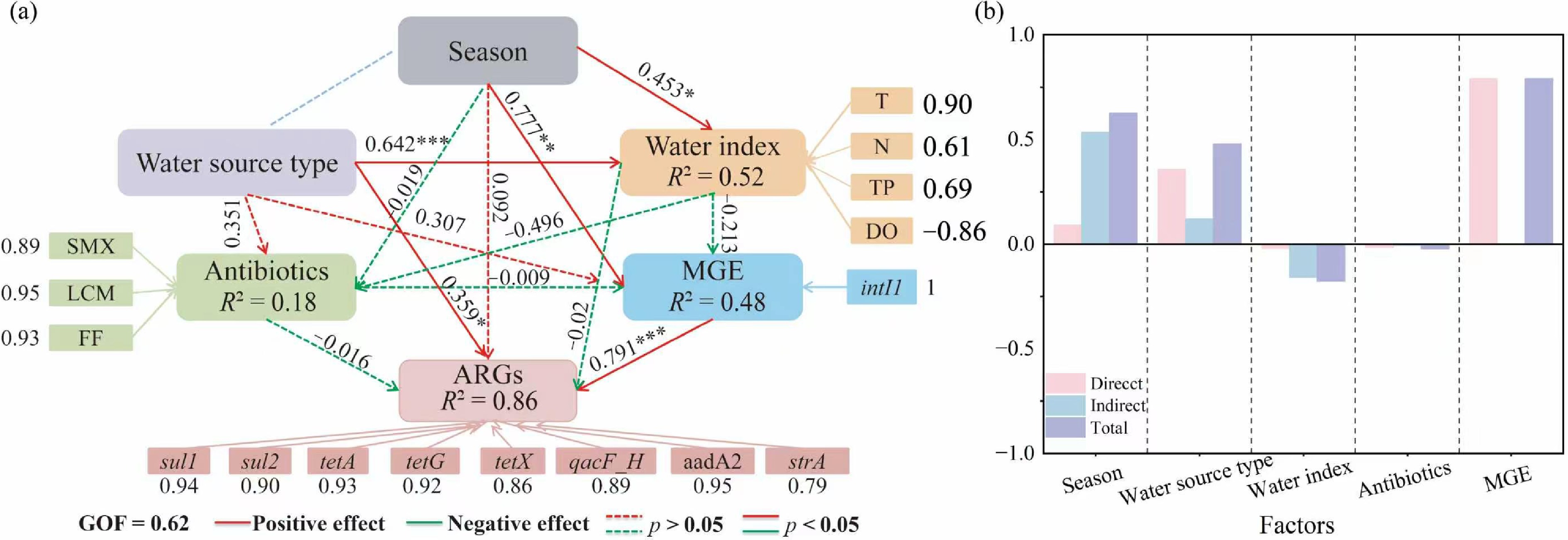
Figure 7.
The partial least squares path model (PLS-PM) based on ARGs: (a) PLS-PM describing the relationship between season, location, water index, antibiotics, MGE, and ARGs. Red and green arrows represent positive and negative effects, respectively. Solid and dashed arrows indicate statistical significance and non-significance, respectively. Statistical significance is indicated by * p < 0.05, ** p < 0.01, and *** p < 0.001. The numbers on each narrow indicate the correlation coefficient values. R2 values show the proportion of variance explained for each factor. (b) Standardized effects of each factor on the ARG abundance.
PLS-PM model results indicated that ARG transmission is primarily regulated by two interdependent pathways. First, seasonal variation indirectly drives ARG proliferation by influencing the abundance of MGEs. Specifically, seasonal fluctuations significantly elevated MGE levels (path coefficient = 0.777), thereby strongly promoting ARG transmission (path coefficient = 0.791). This phenomenon aligns with existing literature[46], which suggests that seasonal variations can influence bacterial community structure and function through environmental factors such as temperature, thereby enhancing the transferability of MGEs, ultimately facilitating the HGT of ARGs. Second, water source type directly influenced ARG abundance (direct effect = 0.359), indicating that distinct aquatic environments themselves constitute key habitat factors determining ARG colonization and dispersion. Therefore, the occurrence characteristics of ARGs in the drinking water sources of the Poyang Lake basin were dually regulated by biological vectors (MGE) and water source type. Seasonal change further promoted ARG dissemination risks by enhancing MGE-mediated HGT. Nevertheless, given that only eight ARG subtypes and a single MGE (intI1) were examined in this study, future work should incorporate a broader range of ARGs and MGEs (e.g., tnpA, IS26) using high-throughput approaches to provide a more comprehensive assessment.
Antibiotic resistance phenotype of isolated strains and risk assessment
-
Using the paper disc diffusion method, the frequency of antibiotic resistance in isolated strains, the proportion of resistant samples, and the resistance risk index were analyzed. Among the 178 strains isolated from 26 water samples collected during winter and summer at 13 water sources, LCM and penicillin (PG) exhibited the highest resistance rates at 75.84% and 53.95%, respectively, followed by roxithromycin (ROX), ampicillin (AMP), and rifampin (RFP) at 32.44%, 24.18%, and 13.82% respectively (Fig. 8a). This resistance pattern closely aligns with the usage patterns of these antibiotics in China. LCM ranks among the top five most used antibiotics nationwide and was primarily employed in swine farming. PG was one of the most used basic antibiotics in human clinical practice and the most frequently utilized active ingredient in veterinary pharmaceutical preparations. ROX per capita usage reached a high level of 135 mg/person/year as early as 2013[23], and RFP was primarily used in clinical medicine[47]. The antimicrobial resistance profiles of samples collected both in winter and summer primarily manifested as resistance to β-lactams (e.g., PG and AMP) and macrolide-lincosamide-streptogramin B (e.g., ROX, LCM). There was no significant difference in the overall frequency of antibiotic resistance between bacteria isolated in winter and summer, indicating relatively stable bacterial resistance phenotypes in drinking water sources of the Poyang Lake basin. However, isolates from RIs exhibited significantly higher resistance rates to PG and LCM antibiotics compared with those from REs regarding water source types (Fig. 8c). This finding was possibly correlated with direct exposure to agricultural and urban wastewater discharges. However, fluoroquinolone antibiotics such as CIP, enrofloxacin (EN), and NOR exhibited an opposite trend (reservoir-type resistance rate > river-type resistance rate). This phenomenon may stem from the prolonged hydraulic residence time in reservoir environments, which facilitated the accumulation of such persistent antibiotics (high Koc values of fluoroquinolone antibiotics) that readily adsorbed to sediments[48], exerting selective pressure on microorganisms.
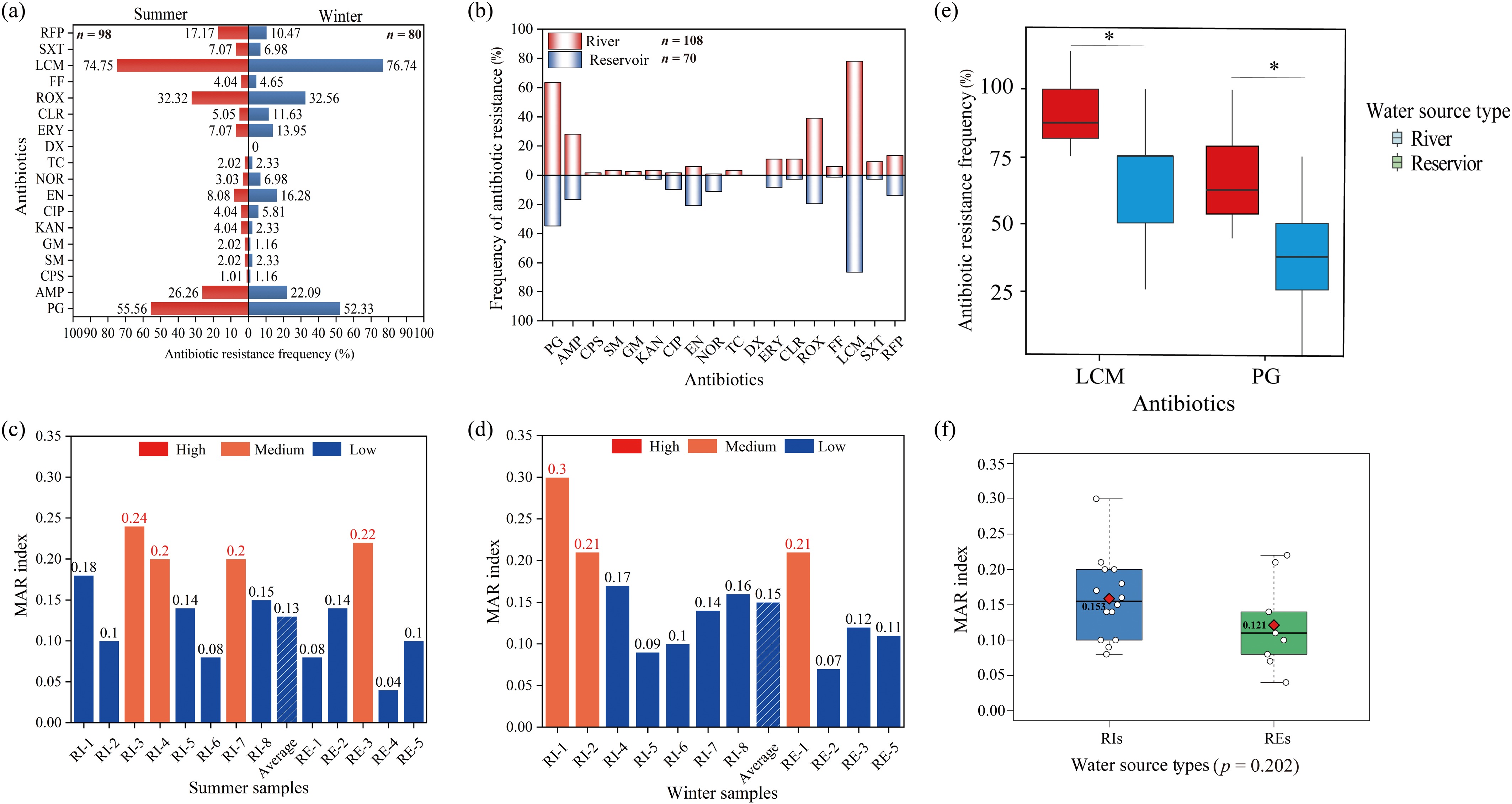
Figure 8.
Antimicrobial resistance characteristics of bacterial strains isolated from drinking water sources in the Poyang Lake basin: (a) resistance frequencies to different antibiotics among strains isolated during summer and winter; (b) antibiotic resistance frequencies among isolates from river-type and reservoir-type samples; (c) differential analysis of antibiotic resistance frequency in river-type and reservoir-type water sources (significant antibiotic screening); (d), (e) MAR index for all bacteria across sample types; (f) comparison of MAR Indexes for river-type and reservoir-type water sources. The points in the figure represent the observed values at each sampling point, with the red diamond symbols denoting the group means. RI denotes river-type water sources; RE denotes reservoir-type water sources.
A systematic assessment of bacterial resistance risks in drinking water sources within the Poyang Lake basin was conducted using the MAR index. The results indicated that all 13 drinking water sources within the basin exhibited moderate to low MAR levels (MAR index < 0.5). Seasonal variations showed that the average MAR index in summer (0.13) was slightly lower than in winter (0.15), with both seasonal averages below 0.2, suggesting an overall low-risk antibiotic resistance level (Fig. 8d, e). Analysis by water source type revealed that although the independent samples t-test indicated no statistically significant difference in MAR index between river-type and reservoir-type (Fig. 8f; p = 0.202), the mean MAR index for river-type sources (0.153) remained higher than that for reservoir-type sources (0.121). Combined with the overall higher trend observed in this study for river-type sources in terms of antibiotic detection rates and health risks associated with ARGs, this result further suggests that river-type sources may face stronger antibiotic selection pressures and risk accumulation. Therefore, in antibiotic resistance monitoring and management at the watershed scale, attention to river-type sources should be continuously strengthened, and they should be prioritized as key targets for monitoring and prevention.
Association between antimicrobial resistance phenotypes and genotypes in pathogenic bacteria
-
This study conducted an association analysis of seven ARGs and 18 antibiotic resistance phenotypes in selected pathogenic strains (encompassing 17 species) (Fig. 9). Antibiotics for which no resistance phenotypes were observed (e.g., SM, GM, KAN, TC, DX) are not depicted in Fig. 9. Results indicated a pronounced genotypic-phenotypic dissociation in the vast majority of cases: despite harboring tetracycline resistance genes (tetG, tetA, tetX), certain strains exhibited no resistance to tetracycline antibiotics such as TC or DX. Similarly, despite the detection of aminoglycoside resistance genes aadA2 and strA in some strains, no resistance phenotypes to aminoglycosides such as SM or GM were observed. This phenomenon aligns with reports of genotypic-phenotypic dissociation[49,50], suggesting that resistance phenotypes may result from the combined effects of multiple environmental factors. Notably, the sul1 gene was detected in one isolate that displayed an SXT-resistant phenotype. Collectively, these findings highlighted that genotype and phenotype were frequently discordant, underscoring the complexity of environmental antimicrobial resistance beyond mere ARG detection. However, several limitations should be acknowledged, including the limited number of isolates tested, the lack of sequencing validation for PCR-positive strains, and the absence of gene expression analysis. Therefore, these results are preliminary and should be interpreted with caution.
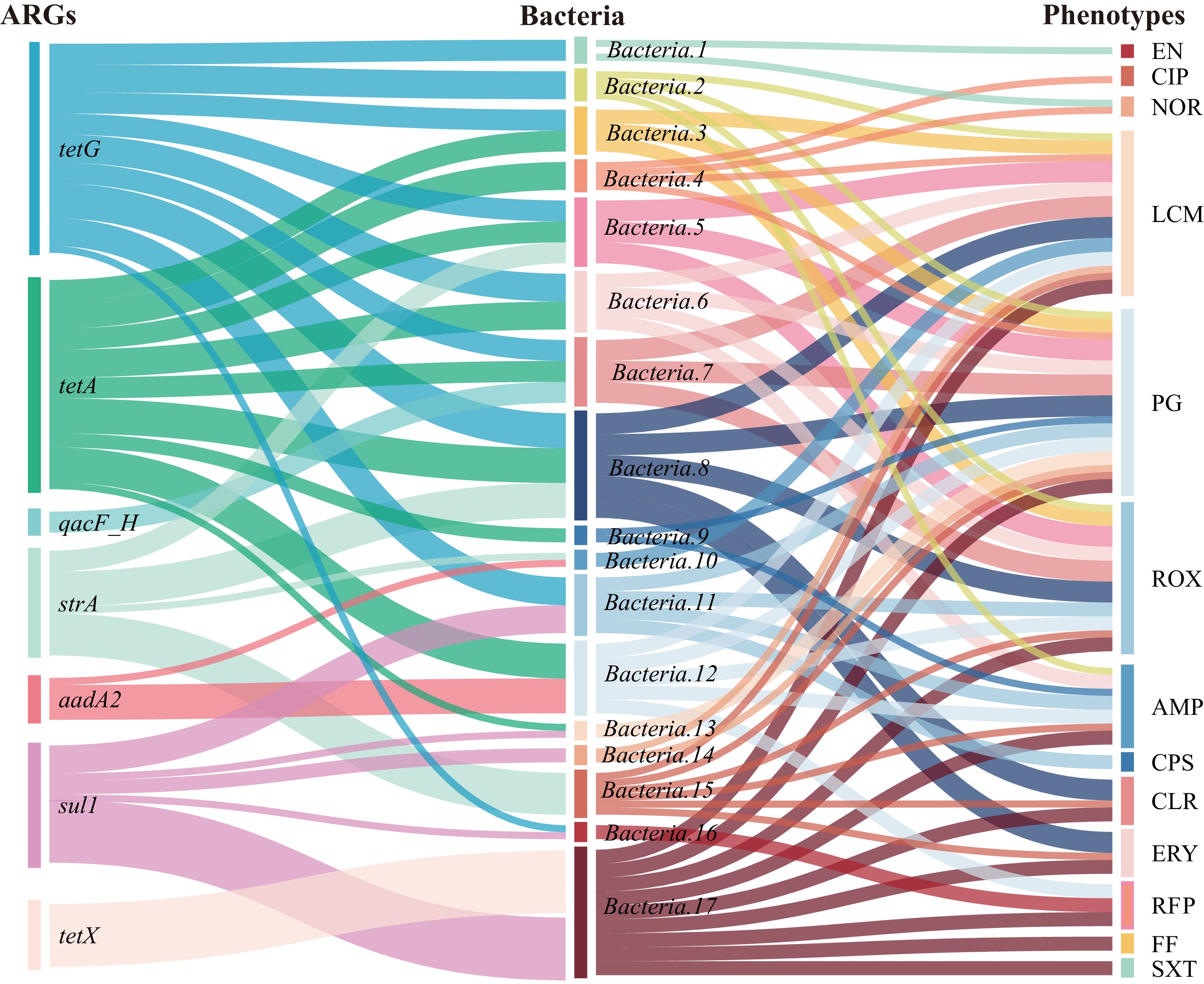
Figure 9.
Sankey diagram illustrating the association between ARGs and resistance phenotypes in typical pathogenic bacteria from drinking water sources in the Poyang Lake basin.
-
This study demonstrated widespread detection of antibiotics, ARGs, and resistant strains in drinking water sources across the Poyang Lake basin. Thirteen antibiotics were detected, with FF and SMX emerging as the primary antibiotics, which were predominantly driven by human activities including livestock farming, domestic sewage, and aquaculture. The detection concentrations of antibiotics in river-type water sources were higher and posed a greater risk compared with those in reservoir-type water sources. ARG abundance and associated health risks are markedly higher during summer and in river-type water sources. ARGs in the drinking water sources of the Poyang Lake basin were dually regulated by biological vectors (MGEs) and water source types. Seasonal change promotes ARG dissemination risk by enhancing MGE-mediated HGT. Bacteria isolated from river-type water sources exhibited higher resistance rates to most of the antibiotics compared with those from reservoir-type sources. In summary, drinking water safety in the basin faces multiple pressures from antibiotics, ARGs, and resistant bacteria with spatial and temporal distribution dynamics subject to complex regulation by water source types, hydrology, seasonality, and human activities. River-type water sources pose significant risks in terms of antibiotics, ARGs, and antibiotic-resistant bacteria, and therefore deserve particular attention. Importantly, not all reservoir-type water sources are inherently safe. RE-5, a reservoir-type water source located in the Poyang Lake water body, a large shallow lake subject to multiple pollution inputs and rapid water exchange, exhibited risk levels comparable to river-type sources and therefore merits priority attention alongside them.
-
Future research should expand the spatial coverage to include more sampling sites within the watershed, thereby enhancing the representativeness and statistical power of risk assessments. At the same time, metagenomic sequencing or high-throughput qPCR methods should be employed to enable a comprehensive analysis of a broader range of ARG subtypes, including low-abundance or emerging risk genes. Furthermore, more extensive phenotypic resistance testing should be conducted on water samples, covering a wider range of antibiotics and bacterial isolates, to provide a more comprehensive characterization of resistance profiles. Based on such enriched datasets, an integrated assessment framework incorporating antibiotic residues, antibiotic resistance genes, and phenotypic endpoints can be developed and validated, ultimately enabling more precise risk stratification and differentiated management strategies tailored to specific water source types.
No acknowledgments are applicable for this work.
-
It accompanies this paper at: https://doi.org/10.48130/biocontam-0026-0010.
-
Not applicable.
-
The authors confirm their contributions to the paper as follows: Meiyan Zhang, Ru Zhang: methodology; Meiyan Zhang: writing − original draft; Meiyan Zhang, Xianchuan Xie: formal analysis; Meiyan Zhang, Gaoping Xu, Li Xu, Duwang Li, Liang Li: investigation; Xianchuan Xie: data curation; Gaoping Xu, Hongwei Yang: resources; Jianfeng Yu, Wenguang Zhou, Huijun Ding: writing − review & editing; Sunlin Chi: validation; Huijun Ding: supervision, funding acquisition. All authors reviewed the results and approved the final version of the manuscript.
-
The data that support the findings of this study are available within the article and its supplementary information files. Additional raw data and processed data are available from the corresponding author upon reasonable request.
-
The authors declare that they have no known competing financial interests or personal relationships that could have appeared to influence the work reported in this paper.
-
Full list of author information is available at the end of the article.
- The supplementary files can be downloaded from here.
- Copyright: © 2026 by the author(s). Published by Maximum Academic Press, Fayetteville, GA. This article is an open access article distributed under Creative Commons Attribution License (CC BY 4.0), visit https://creativecommons.org/licenses/by/4.0/.
-
About this article
Cite this article
Zhang M, Xie X, Xu G, Yu J, Zhou W, et al. 2026. Key role of water source type in the risk of antibiotics, resistance genes, and resistance phenotypes in drinking water source at the basin scale. Biocontaminant 2: e013 doi: 10.48130/biocontam-0026-0010 

Key role of water source type in the risk of antibiotics, resistance genes, and resistance phenotypes in drinking water source at the basin scale
- Received: 27 February 2026
- Revised: 06 June 2026
- Accepted: 13 July 2026
- Published online: 28 August 2026
Abstract: The risk of antibiotics, antibiotic resistance genes (ARGs), and antimicrobial resistance in drinking water sources has a significant impact on human health. This study systematically investigated the distribution, sources, risks, and drivers across 13 drinking water sources in the Poyang Lake basin. The predominant detected antibiotics were florfenicol (up to 72.85 ng/L) and sulfamethoxazole (up to 30.51 ng/L), primarily originating from livestock farming, domestic sewage, and aquaculture with spatial heterogeneity. Ecological risk assessment identified moderate to high risks for ciprofloxacin, norfloxacin, and erythromycin at certain sampling sites within the Gan River sub-basin. ARGs (with a 100% detection rate in summer) were dominated by sulfonamide resistance genes (suls, 6.3 × 10³–1.6 × 10⁷ copies/L). Partial least squares path model analysis indicated that ARG abundance in the drinking water source was directly driven by mobile genetic elements (direct effects = 0.791, p < 0.001) and water source types (direct effect = 0.359, p < 0.05), with seasonal variation exerting indirect influence through facilitating horizontal gene transfer. Isolated strains showed the highest resistance to lincomycin (75.84%) and penicillin (53.95%). Notably, river-type water sources consistently exhibited higher risks for antibiotics, ARGs, and resistant bacteria than reservoir-type sources, while RE-5 (Poyang Lake), a large lake with rapid water exchange and multiple pollution inputs, showed comparably high risks. Thus, river-type sources and Poyang Lake merit priority attention in basin-scale resistance monitoring.