












-
Mint is an aromatic herb of the Lamiaceae family, known and used in culinary applications and as medicine by many cultures worldwide. More than 25 species of mint have been found throughout Europe, Africa, Asia, Australia, and North America, among which spearmint (Mentha spicata) is commonly used as an ingredient in modern food and refreshment, that is, salad and cocktails. The leaves and stem of spearmint contain essential oils responsible for the unique refreshing and aromatic flavour. The major chemicals belong to the monoterpene and sesquiterpene groups, such as carvone, limonene, and β-myrcene[1,2]. Mint oil also exhibits antimicrobial and antioxidant activities as well as medicinal properties[3,4]. Additionally, mint leaves are a rich source of phytochemicals, such as polyphenols, vitamins, and carotenoids[5]. Demand for fresh culinary herbs and salad greens has been increasing in the past few decades due to the increasing interest in more diversified ethnic food[6]. This presents a challenge for the fresh-cut industry to serve fresh produce of high quality to meet this demand.
Postharvest disorders of fresh spearmint include wilting, leaf surface browning, yellowing, epinasty (downward curling of leaves), and abscission, with ethylene playing a significant role in the latter three defects[6−8]. These symptoms collectively limit the marketability of this fresh-cut herb. To facilitate handling throughout the distribution chain, fresh-cut produce is commonly packaged in bags or trays with varying permeabilities to carbon dioxide (CO2), oxygen (O2), and water vapour. When combined with low-temperature storage, atmosphere modification serves as an effective tool for extending the shelf-life of leafy vegetables, including culinary herbs. This system minimises O2 levels and/or elevates CO2 concentrations within the package[9−11], thereby delaying senescence through reductions in respiration rate, chlorophyll loss, oxidase activity, and ethylene biosynthesis[12,13]. When optimised, the modified package atmosphere further reduces moisture loss, prevents spoilage, and prolongs shelf-life[7,9,14−16]. Additionally, reduced O2 availability may limit the generation of toxic reactive oxygen species (ROS), which are typically produced under various environmental stresses. However, these conditions carry a notable accumulation of fermentative metabolites, which can contribute to off-flavours and off-odours in fresh produce[17,18].
The postharvest performance of cut mint varies by species. Spearmint (M. spicata) was more sensitive to browning during cold storage (0 °C) than peppermint (Mentha × piperita)[7]. In order to maintain good quality, cut spearmint could be packed in polystyrene tray covered with self-adhering polyvinyl chloride (PVC) film and stored at a low temperature (0 °C) for up to 21 days without marked changes in the appearance, level of bioactive compounds (phenolics, flavonoids, and antioxidant potentials), and aroma characteristics[7]. Cantwell and Reid[6] reported that the optimal temperature during transport, storage, and retail display for cut mint was below the refrigerated points. However, there is little work done on elucidating the effect of gas composition in controlled atmosphere (CA) on postharvest behaviours of cut spearmint during cold storage. The objective of this study, therefore, is to identify the underlying quality attributes, aromatic profile, and bioactive ingredients of spearmint subjected to reduced O2 in CA under refrigerated (5 °C) temperature storage. The outcome of this study would be beneficial for fresh-cut industry toward the development of modified-atmosphere packaging (MAP) and marketing of cut culinary herbs.
-
Cut stems of spearmint were purchased from Ortoflora Azienda Agricola, a grower located in Puglia, Italy. Stems at a commercial harvesting stage, 10–15 cm long bearing 6–10 pairs of fully opened leaves, were used in this experiment. Approximately 50 g of stems were packaged in transparent polystyrene macro-perforated trays (179 mm × 119 mm × 60 mm, 0.2 mm thickness), and a total of 36 trays were prepared. The trays were randomly placed in a 10 L plastic container and ventilated with humidified air (CTRL, free of ethylene) or with mixtures of nitrogen and 1%, 5%, and 10% O2, at a concentration of 10 mL min−1. The containers were kept in the dark at 5 °C for 14 days. There were three containers per treatment with three replicate samples (trays). The samples were withdrawn for quality assessments on the initial day and at 6 (D6), 9 (D9), and 14 (D14) days of storage.
Physical attributes
Texture
-
The texture of the samples was calculated as the force (N) required to cut through a layer of 30 leaves (~50 g) in a Kramer cell using an Instron Universal Testing Machine (model 3343, Canton, MA, USA) at a speed of 50 mm·min−1[19].
CIE colour space and browning index
-
L*, a*, and b* colour space as defined by the International Commission on Illumination (CIE) values of the leaf surface from 10 individual leaves were obtained with a spectral scanner (DV SRL, Italia), equipped with a Spectral Imaging Spectrometer V10 type (400–1,000 nm, 25 µm slit, resolution 5 nm), where L* denotes lightness (0 < L* < 100), a* denotes red (+) to green (-) and b* denotes yellow (+) to blue (-)[20]. The hue angle, h0, calculated as arctan(b*/a*), explains how the colour is perceived. In the colour wheel, the angle 0° represents complete red colour, 90° represents complete yellow, 180° denotes complete green, and 270° indicates complete blue[21]. The difference in infusion colour ΔE was calculated according to the following formula:
$ {∆E=}\sqrt{({ΔL}^*)^2+({Δa}^*)^2+({Δb}^*)^2} $ (1) A value of 0 < ΔE < 1 indicates no noticeable difference between the two colours, whereas a value > 3.5 indicates that a clear difference is observed[22].
Chemical attributes
Volatile profile
-
Five grams of mint (leaves and stems) was put in a glass jar (150 mL) and equilibrated for 20 min in a water bath at 40 °C. Thereafter, the volatiles were collected using the headspace solid-phase microextraction (HS-SPME) with 50/30 µm divinylbenzene/carboxen/polydimethylsiloxane (DVB/CAR/PDMS) fibre by exposing the glass jar headspace at 40 °C for a further 30 min[16]. The fibre was immediately introduced into the gas chromatograph (GC) injector port for desorption at 200 °C for 4 min in the split injection mode (1:20). An Agilent 6890 N gas chromatograph coupled to an Agilent 5975 C network mass selective detector (Agilent Technologies, Palo Alto, CA, USA) was used to analyse the samples. The volatile components were separated on an HP-INNOWax capillary column (60 m × 250 µm × 0.25 µm; Santa Clara, CA, USA). The running condition was set at 50 °C for 1 min; temperature was raised from 50 to 100 °C at a rate of 3 °C min−1 and held for 2 min, from 100 to 140 °C at 1.5 °C min−1 and held for 10 min, and finally from 140 to 180 °C at 6 °C min−1. The transfer line temperature was 280 °C. Mass detector conditions were as follows: electronic impact mode at 70 eV, source temperature at 230 °C, quadrupole temperature at 150 °C, scanning rate of 3.9 scan s−1, and mass scanning range of m/z 35–400. Helium was used as the carrier gas at a constant flow of 1.0 mL min−1. The compounds were identified by the comparison of the mass spectrometry (MS) fragmentation pattern from a 5975C mass spectrometer (Agilent Technologies, Santa Clara, CA, USA) with mass spectrum database using the data system library (NIST 11). Three replicates were considered for the analysis on each sampling day.
Vitamin C
-
Ascorbic acid (AA) and dehydroascorbic acid (DHAA) contents were determined on the high-performance liquid chromatography (HPLC) system according to the adapted method of Cefola et al.[23]. The sample (2.0 g) was homogenised with 10 mL of methanol/water (5:95) mixture with citric acid (21 g·L−1) and Ethylenediaminetetraacetic acid (EDTA) (0.5 g·L−1). The homogenate was filtered through cheesecloth and then through a C18 Bakerbond SPE column (Waters, Milford, MA, USA), prior to HPLC injection. The HPLC system (Agilent 1200) consists of a G1312A binary pump, a G1329A autosampler, and a G1315B photodiode array detector from Agilent Technologies (Waldbronn, Germany). Separation was achieved on a Zorba Eclipse XDB-C18 column (150 mm, ø 4.6 mm, 5 μm particle size; Agilent Technologies, Santa Clara, CA, USA). The mobile phase was methanol/water (5:95 v/v) containing 5 mmol·L−1 cetrimide and 50 mmol·L−1 potassium dihydrogen phosphate (pH 4.5) with a flow rate of 1 mL·min−1. AA and DHAA contents were expressed as mg of AA or DHAA per 100 g fresh weight (FW). Total vitamin C was the sum of ascorbic and dehydroascorbic contents.
Antioxidant potential and total phenolic content
-
Cut spearmint (1.0 g) was homogenised with 10 mL of ice-cold methanol at a high speed for 1 min using a homogeniser (IKA, T18 Basic; Wilmington, NC, USA). The homogenate was then centrifuged at 10,000 rpm for 10 min, and the supernatant (methanol extract) was separated. Total phenols were determined using the Folin–Ciocalteu reagent and an absorbance reading at 725 nm according to the method described in Ricci et al.[24]. The content of total phenols was calculated on the basis of the calibration curve of gallic acid and was expressed as milligrams of gallic acid equivalent (GE) per 100 g FW. The antioxidant activity against diphenylpicrylhydrazyl (DPPH) radical was performed according to Miliauskas et al.[25]. The same methanol extract (0 μL) was incubated with 950 μL of 0.12 mmol·L−1 DPPH solution for 24 h. The absorbance at 515 nm was read thereafter. Trolox (6-hydroxy-2,5,7,8-tetramethylchromane-2-carboxylic acid) was used as standard, and the antioxidant activity was expressed as mg Trolox equivalent (TE) per 100 g FW.
Off-flavour attributes
Ethanol, acetaldehyde, and ammonia content
-
Five grams of leaves was homogenised and stored in a −20 °C freezer. After 1 h of incubation at 65 °C, headspace gas samples (0.5 mL) were injected into an Agilent 7890 A Series gas chromatograph coupled with an Agilent 5975 C network mass selective detector (Agilent Technologies, Palo Alto, CA, USA). An HP-INNOWax capillary column (60 m × 250 µm × 0.25 µm; Agilent) was used, and GC was operated with the following method: 40 °C for 4 min, then increased from 40 to 60 °C at 3 °C min−1, and from 60 to 140 °C at 20 °C min−1. Helium carrier gas was used at a constant flow of 1.0 mL·min−1. Compounds were identified by a comparison of ethanol and acetaldehyde standards and expressed as µmol·g−1. Ammonia content was measured with phenol/hypochlorite, as described by Weatherburn[26,27] and Cantwell et al.[28]. The sample (5 g) was homogenised with 20 mL of chilled deionised H2O and centrifuged for 1 min, and a 0.5 mL aliquot was added to a solution of phenol nitroprusside and alkaline hypochlorite for the reaction. After 15 min of incubation at 37 °C, the ammonia content was measured using a UV-1700 Shimadzu spectrophotometer and reading samples at 635 nm and expressed as µg ammonia g−1 sample.
Statistical analyses
-
All data represent the mean of three replicates per treatment and storage day. The effects of storage time and O2 concentration on quality attributes were evaluated using two-way analysis of variance (ANOVA) in IBM SPSS. Pearson's correlation coefficients were calculated to assess the linear relationships among all quality parameters at a 5% significance level. Multivariate analysis was also conducted using principal component analysis (PCA) and cluster analysis[29]. All analyses were performed using Jamovi software (version 2.7.12).
-
The effects of low O2 treatments, time of storage, and their interactions with fresh-cut spearmint quality parameters are reported in Table 1. In addition, Fig. 1 shows the changes in overall appearance throughout the 14-day storage period. All quality attributes showed no significant differences among treatments except for the a* value, acetaldehyde, and total AA content. Storage time was statistically significant for all parameters, which indicates a strong effect of postharvest conditions on mint leaves. For most of the attributes, the interaction between treatment and time of storage is also found to be nonsignificant except for the a* value, vitamin C, ammonia, and acetaldehyde contents.
Table 1. Effects of main factors (low O2 treatments, time of storage and their interaction) on quality attributes of cut spearmint stored at 5 °C for 14 days.
Quality attributes Factor effects Treatment Storage time Treatment storage time Physiological attribute O2 availability *** * NS Weight loss (%) *** ** NS Texture (N) NS *** NS Colour Lightness * NS NS a* *** * * b* * NS NS Hue angle NS * * ΔE *** NS NS Phytochemical attributes Total phenolic content (mg gallic acid equivalent per 100 g FW) NS * NS Antioxidant capacity (DPPH) (mg Trolox equivalent per 100 g FW) NS * NS Total ascorbic acid (mg·100 g−1 FW) NS ** ** Off-flavour attributes Ammonia content (µg·g−1) NS *** * Ethanol (µmol·g−1) NS * NS Acetaldehyde (µmol·g−1) ** *** *** The effect of each main factor and of their interaction is significantly different for p ≤ 0.05 (*); p ≤ 0.01 (**); p ≤ 0.001(***); or not significant (NS). 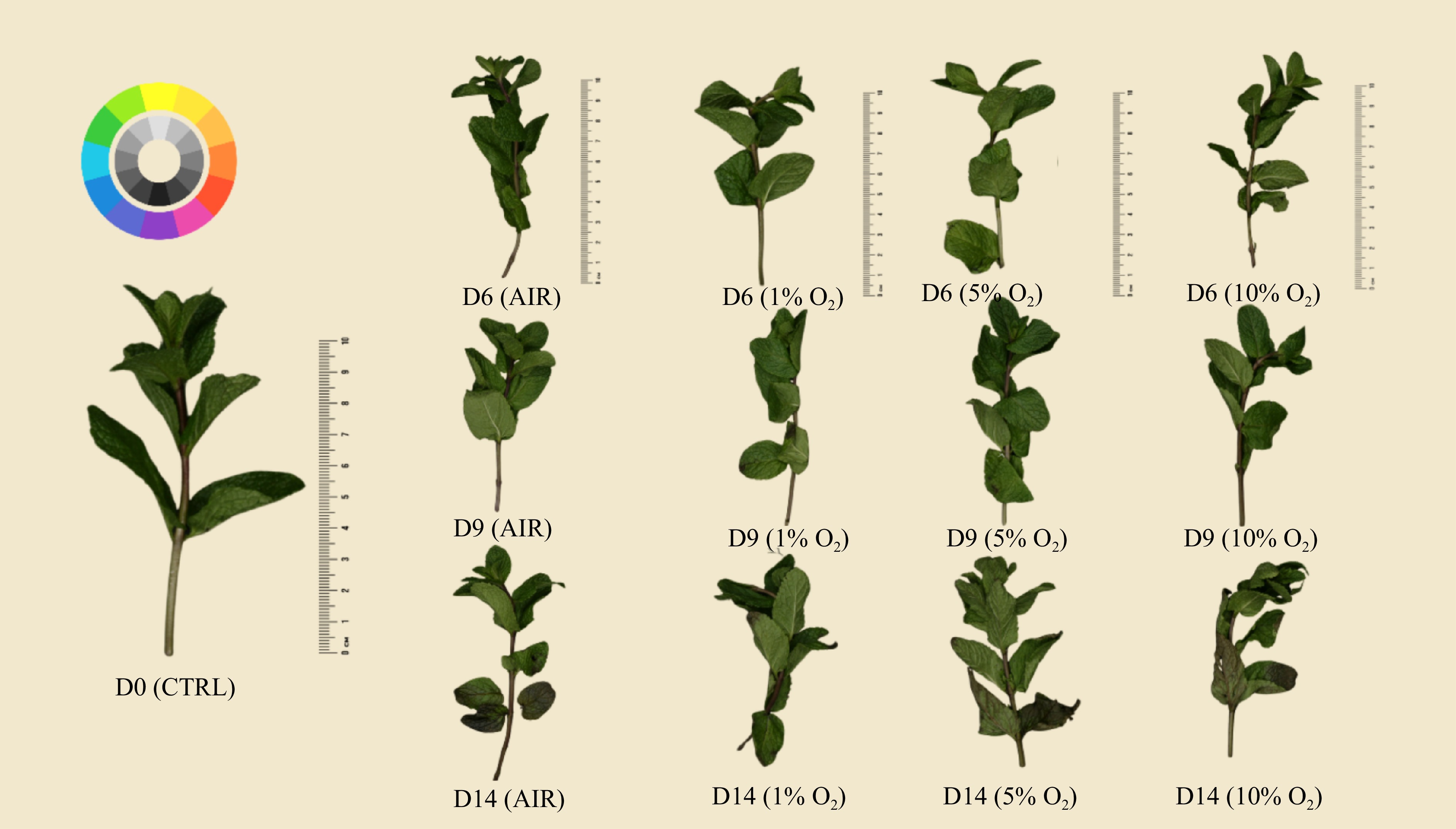
Figure 1.
Evolution of the overall appearance of fresh-cut spearmint subjected to various low O2 treatments over a 14-day storage period.
Figure 1 illustrates the key physiological changes. Low-temperature storage with limited O2 in CA did not maintain the colour; in fact, at 1% O2, leaves yellowed more rapidly than in the other treatments. Browning became apparent by Day 14, with no significant differences observed among treatments. Leaf tissue browning and yellowing disorders are common in fresh-cut mint kept at low temperatures[7,30]. The latter is stimulated in the presence of ethylene and maturity of the mint plants[30]. The firmness of the mint leaves increased rapidly from ~250 to ~350 N over 14 days of storage. The loss of water and senescence likely caused an increase in fibrosity, resulting in a greater required cutting force[31], although ANOVA did not show a significant effect of O2 treatment or the interaction between treatment and storage time (Fig. 2a). Colour change limits the shelf life of fresh culinary herb and is caused mainly by the degradation of pigments and some contribution from enzymatic browning[6]. The L* value of spear mint leaves was between 40 and 45, which significantly decreased with time for all treatments (Fig. 2b). Low O2 treatment, time of storage, and their interaction had significant effects on the a* value, Hue angle, and ΔE, and the obvious changes of these values were between D9 and D15. A significant decrease in the b* value for all treatments was also observed over time (Fig. 2d). It could be interpreted from these trends that the greenness of cut mint decreased with time of storage (from the significantly lower L* value, higher a* value, and lower Hue value). A similar finding on spearmint leaf kept at 3 °C was reported by Santos et al.[20].
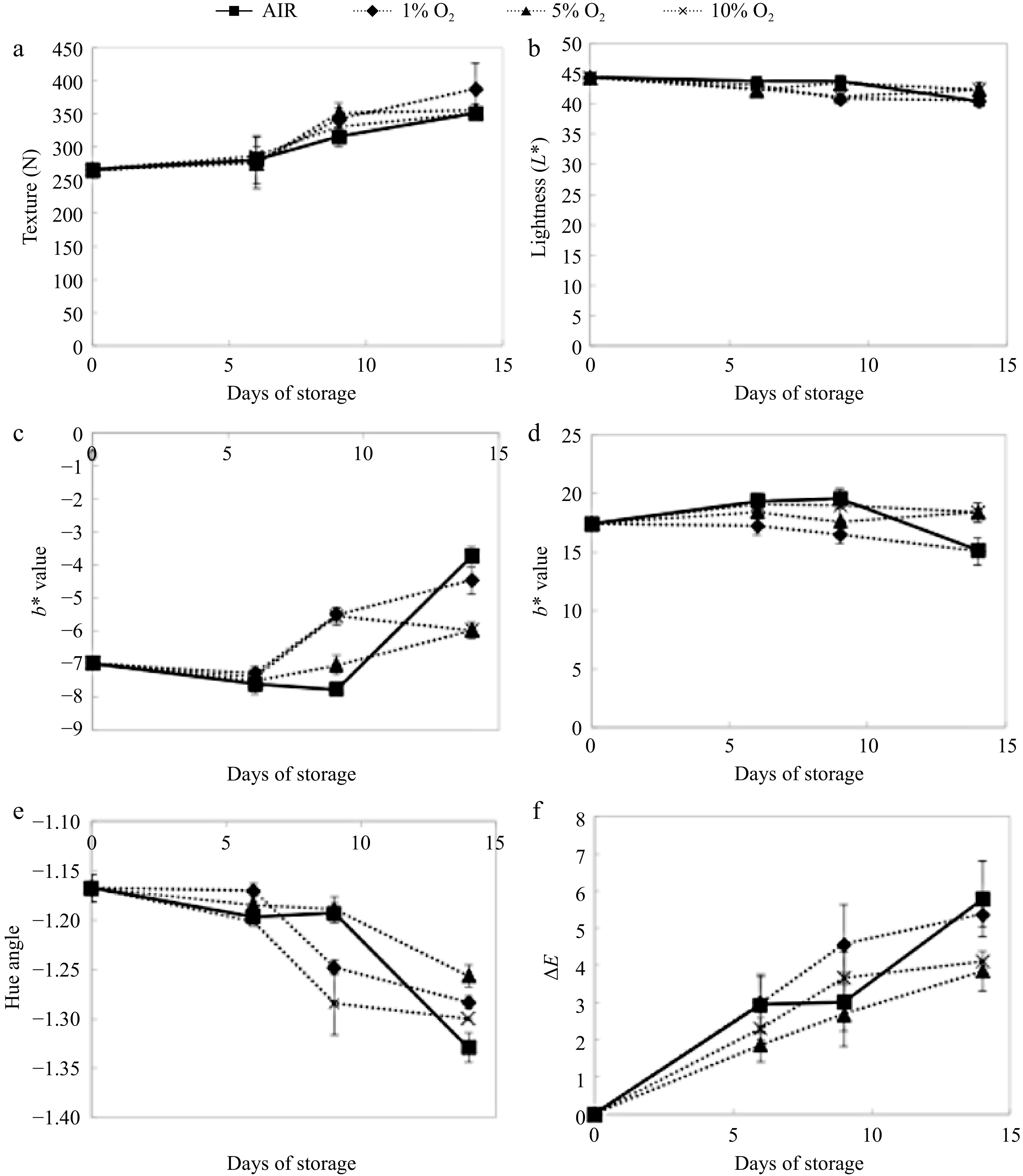
Figure 2.
Physiological attribute alterations of cut spearmint during low-temperature storage (5 °C) in modified-atmosphere packaging with suppressed O2 concentrations. Firmness, N (a); lightness (b); a* value (c); b* value (d); Hue angle (e); and ΔE (f) of CIE colour space. Values are of 3 replicates and error bars represent standard errors.
PCA was performed to determine the interactions between storage time, O2 treatments, and colour parameters, with the first two components explaining a cumulative 78.6% of the total variance (Fig. 3). The component loading plot in Fig. 3a shows the distribution of physical parameters within the unit circle (radius = 1). Component 1 (PC1) (56.8%) explains the majority of variance, defined by vectors for the a* value, ΔE, and Hue angle, indicating a high positive correlation between these parameters. The covariance biplot in Fig. 3b shows the 2D projection of scores and variable loadings (arrows). PC1 primarily represented the progression of storage time, as evidenced by the clear horizontal migration of samples from D0 (left) to D14 (right). This indicates that as storage time progressed, there is an overall increase in ΔE and a loss of lightness (L value) and hue angle. Component 2 (PC2) explained 21.8% of the variance, capturing the divergence of specific O2 treatments, particularly the 10% O2 (O10) samples, which developed distinct physiological profiles from the air control and lower O2 treatments by the end of the shelf life. The data suggests the effects of a distinct physiological shift characterized by higher redness (a* value) and yellowness (b* value) compared to other atmospheres. These results demonstrate that while storage duration is the dominant driver of physiological change in spearmint, the O2 concentration in the packaging significantly dictates the specific quality trajectory and final physical state of the product.
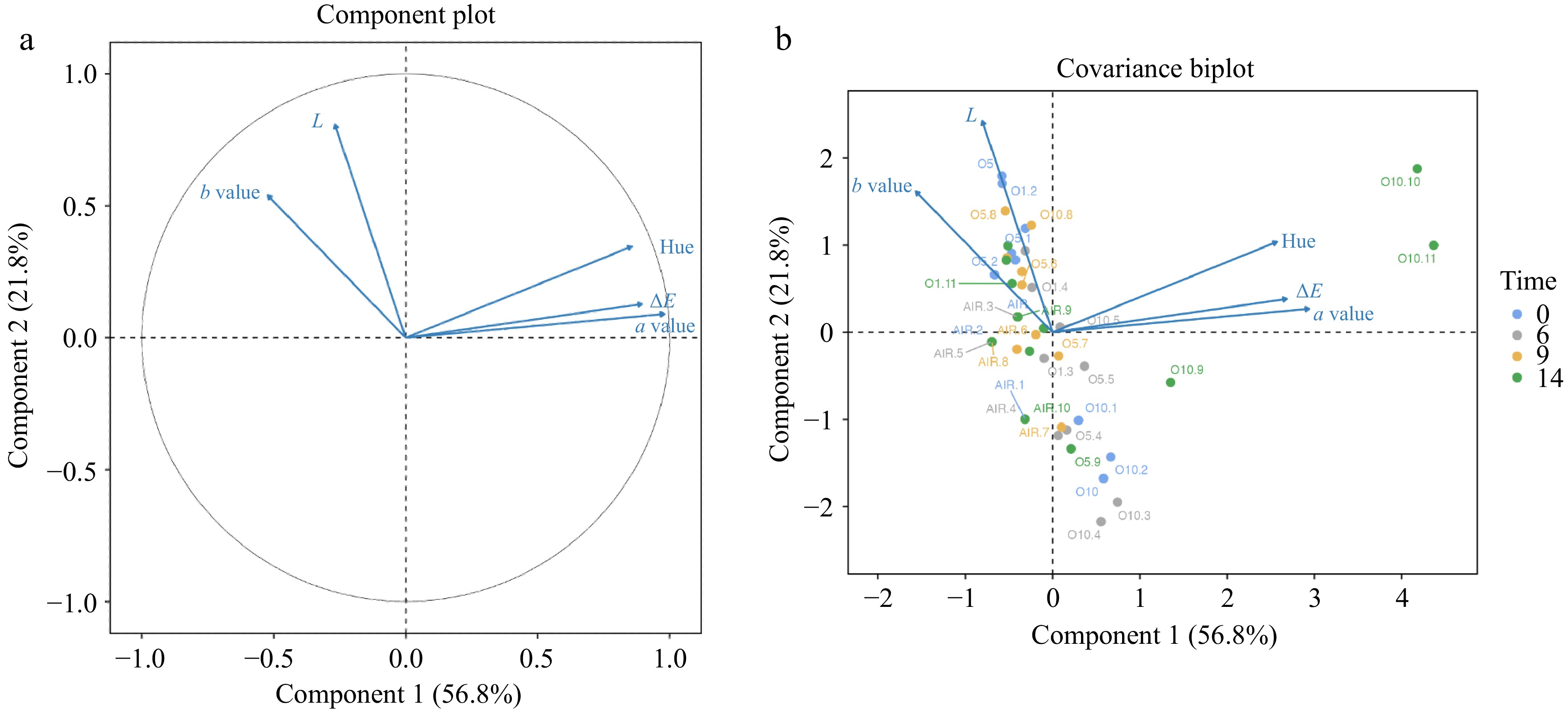
Figure 3.
Principal component analysis (PCA). (a) Component loading plot and (b) covariance biplot of cut spearmint colour parameters during storage.
Effect of low O2 in CA on phytochemical attributes
-
Low-O2 treatments had no significant effect on total phenolic content, antioxidant activity, and AA (Table 1). The total phenolic content significantly decreased over time until D9 (from ~600 to ~400 mg GAE per 100 g FW), but that in the 5% and 1% treatments increased to ~600 mg GAE per 100 g FW after 10 days of storage (Fig. 4a). Similarly, the DPPH radical scavenging activity decreased from ~1,400 to ~1,000 mg TE per 100 g FW from D0 to D9, but the 5% and 1% treatments increased thereafter (Fig. 4b). The total vitamin C content of the low-O2 treatments of 5% and 1% followed the same trend, showing a slight increase from ~55 to ~60 mg per 100 g FW (Fig. 4c) from D6 to D14. There was also a significant effect of low-O2 treatment and time on AA content. Santos et al.[20] examined the phytochemical profiles of spearmint during low-temperature storage and found a 25% increase in the phenolic content and a 14% reduction in antioxidant (DPPH) after low-temperature storage (3 °C) for 10 days. Similarly, storing rocket leaves for 10 days at 10 °C caused 28%, 20%, and 23% reduction in phenolic, antioxidant, and ascorbic contents, respectively[32]. Our results align with the hypoxia-induced metabolic pathways often triggered at low O2 concentrations. As cellular O2 becomes limited, Ethylene Response Factor-VII (ERF-VII) proteins (e.g., RAP2.12) stabilise to act as transcriptional transducers, inducing genes for glycolysis and fermentation[33]. This activation of the Pasteur effect enhances pyruvate production and adenosine triphosphate (ATP) synthesis through substrate-level phosphorylation, which appears to upregulate secondary metabolic pathways[34]. This mechanism explains the increase in the phytochemical metabolites observed in CA between D6 and D14. Mechanistically, the Pasteur effect shifts pyruvate away from the tricarboxylic acid (TCA) cycle toward ethanol synthesis. This shift, mediated by stabilised RAP2.12, results in the accumulation of ethanol and acetaldehyde and a depletion of starch stores, consistent with the decrease in respiration rates recorded during the storage period[33].
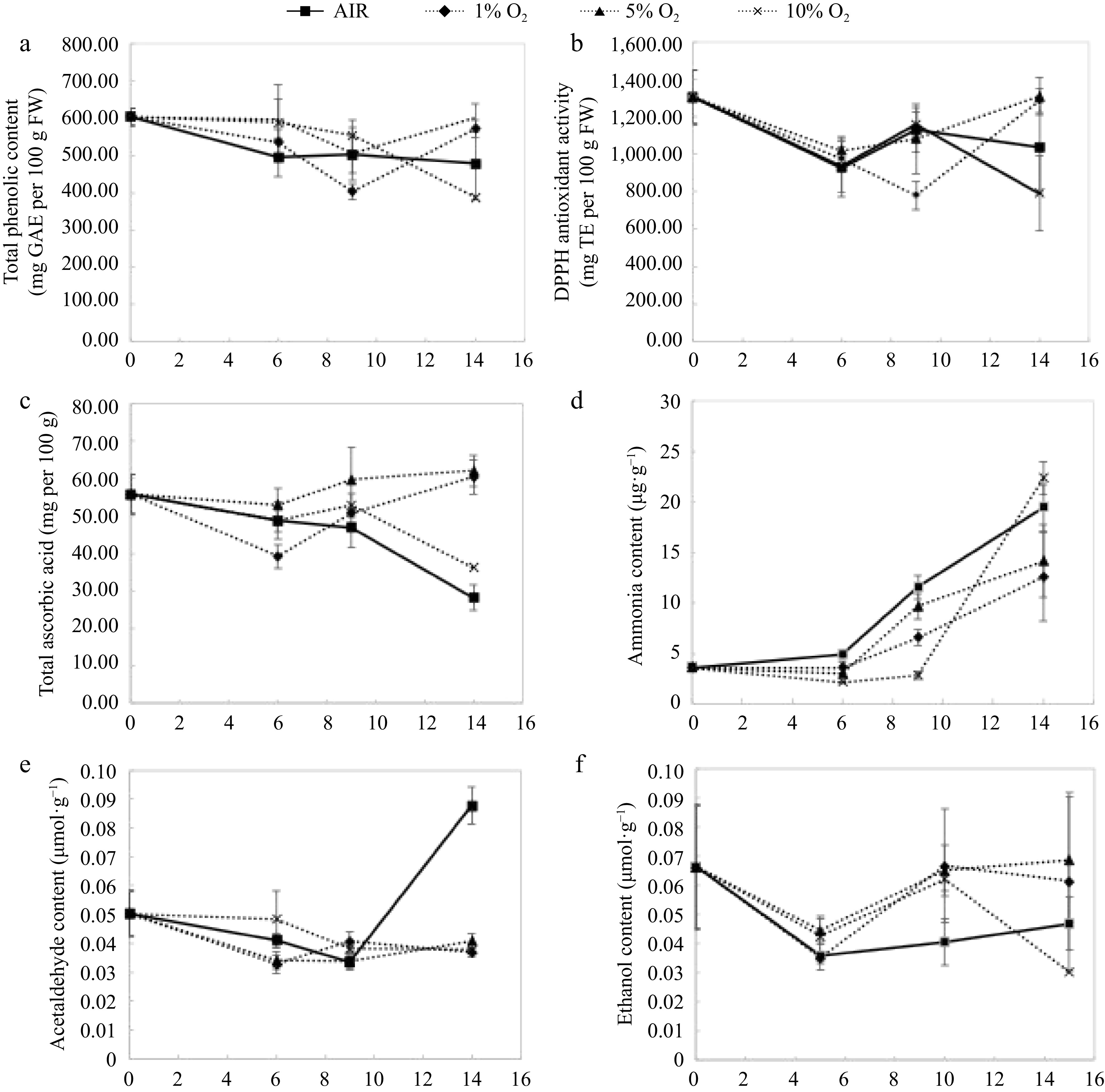
Figure 4.
Total phenolic content, mg gallic acid equivalent per 100 g FW (a), antioxidant activity (DPPH), mg Trolox equivalent per 100 g FW (b), total ascorbic acid, mg·100 g−1 FW (c), ammonia content, µg·g−1 (d), acetaldehyde, µmol·g−1 (e), and ethanol, µmol·g−1 (f) of cut spearmint during low-temperature storage (5 °C) in modified-atmosphere packaging with suppressed O2 concentrations. Values are of 3 replicates, and error bars represent standard errors.
Effect of low O2 in CA on off-flavour attributes
-
As shown in Fig. 4d, ammonia content, a primary indicator of protein degradation and leaf senescence, was negligible (< 5 µg·g−1) during the first 6 days of storage. However, a significant spike occurred thereafter, with levels reaching up to 25 µg·g−1 by D14 across all treatments. Fermentation byproducts also showed distinct temporal responses; while ethanol levels generally stabilised or decreased slightly after an initial drop, the acetaldehyde content in control samples increased dramatically by D14, reaching nearly 0.09 µmoL·g−1. This accumulation suggests a transition toward anaerobic stress or metabolic exhaustion in the late stages of storage. Figure 5a illustrates the distribution of biochemical variables within the unit circle. PC1 (46.7%) is primarily defined by the positive loadings of total phenolic content (TPC), DPPH, and ascorbic acid content (ASC) and the negative loading of ammonium. PC2 (26.8%) further differentiates the metabolic profile, with ethanol and ASC showing high negative loadings. The close proximity of TPC and DPPH vectors highlights their strong positive correlation. The biplot in Fig. 5b illustrates a clear temporal trajectory, where samples migrate from the left toward the right along PC1 as they age, with D14 samples (green) aligning with ethanol, acetaldehyde, and ammonia contents, representing the accumulation of specific secondary metabolites or degradation products over time. Conversely, DPPH and TPC characterise the chemical profile of fresh or early-storage samples clustered on the left. The vertical separation along PC2 highlights the impact of the atmosphere, as the 10% O2 treatment on D14 exhibits the most significant deviation from the air controls, shifting toward the lower-right quadrant and indicating a distinct chemical evolution driven by higher O2 concentrations.
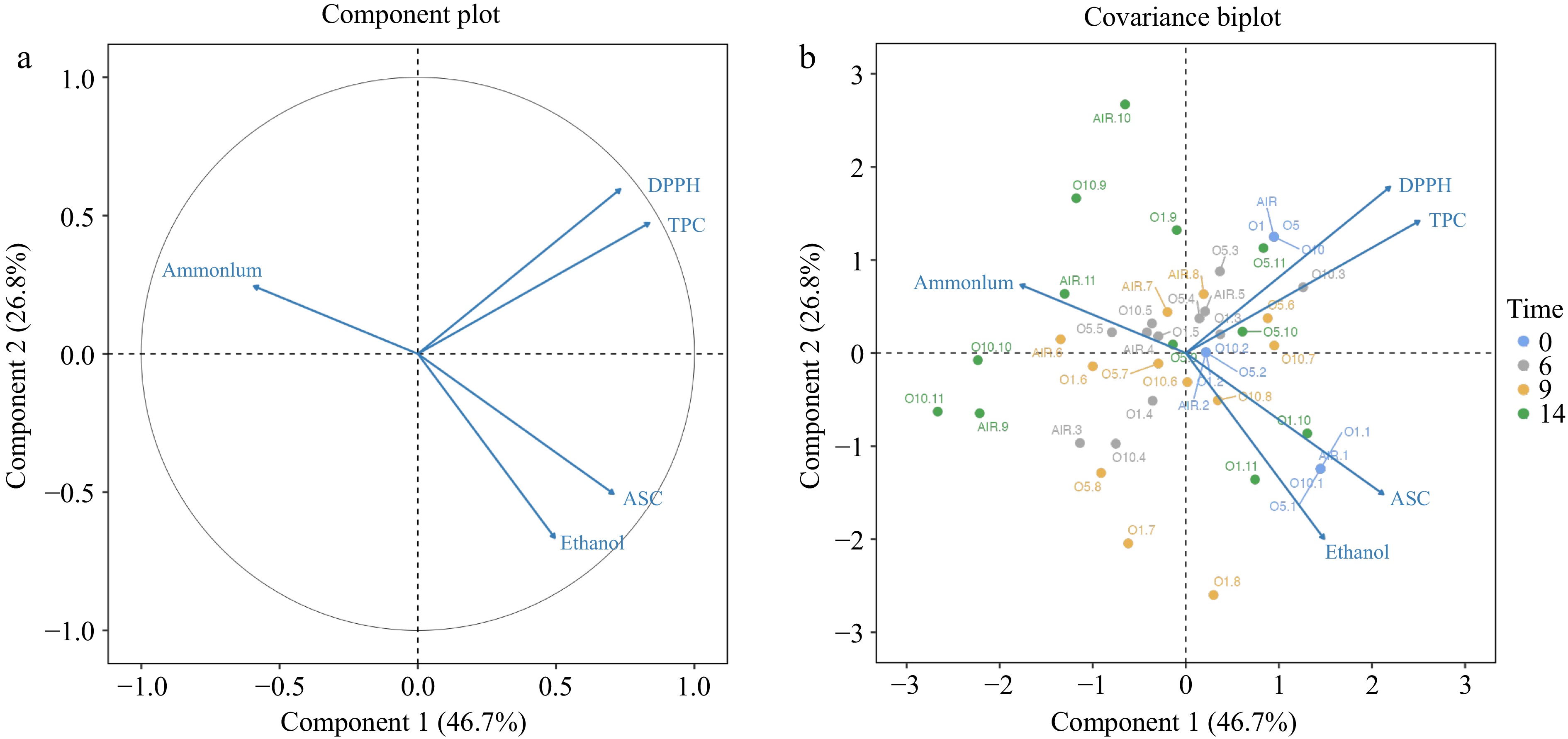
Figure 5.
Principal component analysis (PCA). (a) Component loading plot and (b) covariance biplot of cut spearmint off-flavour parameters during storage.
In line with the above mechanism, fresh produce under low O2 and elevated CO2 concentrations in CA generally experiences a reduction in the TCA cycle and activation of the fermentative pathway via two subsequent reactions catalysed by PDC and alcohol dehydrogenase (ADH), which are associated with the biosynthesis of ethanol and acetaldehyde. The responses are dependent on stress intensity and durations[35,36]. The result of this study showed that low O2 treatments did not significantly affect the ethanol and ammonia content but did have a significant impact on the level of acetaldehyde (Table 1). The interaction between treatment and time of storage, nonetheless, exhibits significant effects on ammonia content and acetaldehyde, but not on the content of ethanol. Ammonia content increased from 5 to ~20 µg·g−1 during 14 days of storage, and the maximum content was observed for air and 10% O2 treatments; lower O2 concentrations (5% and 1%) yielded the lowest content (~15 µg·g−1). The extreme shift was from D6 to D14. A slight decrease in acetaldehyde content was observed for all treatments (~0.3 to ~0.5 µmol·g−1), but a sharp increase occurred between D9 and D14 for the air treatment. Higher ethanol production in fresh-cut vegetables stored under CA with extremely low O2 conditions has been previously reported[37]. Our results also align with this; at D14, ethanol content was lower in the air (CTRL) and 10% treatment but higher in lower O2 concentrations.
Ammonia is a by-product of protein catabolism in cells in the early stage of senescence for leafy and floral vegetables. It can be toxic to plant cells and is a useful indicator of stress in modified-atmosphere storage of fresh produce[28,38,39]. Plants synthesise glutamine from ammonia by the combined activities of glutamine synthetase and glutamate synthase[40]. There was evidence that these enzymes were upregulated under oxidative stress (high O2 availability) and during postharvest senescence (time of storage), thus allowing the decomposition of ammonia in plant tissue[41]. As also mentioned above, under limited O2 availability, plants accelerate glycolysis by exhibiting a Pasteur effect that increases the level of pyruvate, followed by decarboxylation of pyruvate, which is catalysed by pyruvate decarboxylase (PDC), producing acetaldehyde, a precursor of ethanol[42].
ADH and lactase dehydrogenase (LDH) also involve in anaerobic fermentation, and their activities increased upon anoxia stress[37]. Limited O2 availability could also change pH regulation in the tissue, possibly due to the stimulation of LDH, diverting carbon to lactate. The formation of lactate causes a decrease in the pH, favouring the activity of PDC and the ethanolic fermentation pathway[43,44]. In principle, ethanol and acetaldehyde are the principal two-step products of fermentative pyruvate metabolism and are among the most abundant volatile metabolites produced by yeast[45]. Both compounds have strong, characteristic sensory effects. Acetaldehyde contributes green or overripe or oxidised apple notes and can modulate many other sensory descriptors, while ethanol is the dominant fermentation volatile and alters the overall aroma matrix and perception[46]. Their concentrations and interactions strongly shape aroma and off-flavour perception, especially in the minimal process produce[45]. Because ethanol is abundant and acetaldehyde is a reactive, odour-potent intermediate, measuring both provides an efficient sensory proxy for fermentation status, quality control, and early detection of off-flavours[47,48]. The mechanistic relationship between increased levels of ethanol and ammonia is not fully understood, besides Kennedy et al.[42] suggested that the dissociation of polyribosomes under anoxia alters polypeptide profiles.
Relationships among quality parameters were assessed using Pearson's correlation coefficients (Supplementary Table S1). Colorimetric parameters showed the strongest interdependencies; the a* value (redness), Hue angle, and ΔE were very strongly intercorrelated, indicating that these metrics largely capture the same dimension of colour change. A strong positive correlation was also observed between weight loss and ΔE (r = 0.628), suggesting that moisture loss and visual colour degradation progress in tandem, as the product desiccates, its appearance deteriorates accordingly. There is insufficient evidence for the association specifically between a*, Hue angle, and ΔE in fresh-cut produce; however, multiple studies report coordinated shifts in colour coordinates with biochemical and moisture changes[49−51]. Among the antioxidant parameters, TPC and DPPH were strongly correlated (r = 0.835), confirming that phenolic compounds are the principal contributors to antioxidant capacity in this sample. A decline in one of them reliably predicts a corresponding decline in the other. Similarly, kinetic and storage studies in fresh-cut fruits report that antioxidant activity (DPPH) declines along with total phenols and AA[52,53].
A notable positive correlation was observed between ammonium content and tissue firmness. Elevated ammonium typically signals physiological stress or protein catabolism; this association implies that the metabolic conditions driving ammonium accumulation occur while the tissue retains structural integrity, possibly reflecting an early or intermediate stage of senescence rather than advanced deterioration. Respiratory activity showed a significant positive correlation with acetaldehyde production (r = 0.359), linking higher O2 consumption to the generation of volatile fermentation-related compounds. Finally, ethanol and AA were moderately but meaningfully correlated (r = 0.545), suggesting that fermentative metabolism and vitamin C degradation may be coupled processes occurring under the same physiological conditions. In one study, treatment with 1-MCP combined with a low-O2/high-CO2 CA has been found to prevent increase in ethanol and acetaldehyde while maintaining AA and total phenolics in mangoes[50].
Effect of low O2 in CA on volatile aroma
-
The volatile compounds responsible for the aroma of mint are listed in Supplementary Table S2. The exposure of the fiber inside the glass containers allowed for the detection of 34 volatile organic compounds, including monoterpenes (44.0%), sesquiterpenes (16%), some limonene-derived compounds (40.0%), alcohols (0.1%), as well as an aldehyde and a ketone [(E)-2-hexenal; 3-octanone] and dimethyl sulfide. The major volatile components of cut spearmint, as determined by SPME coupled with GC-MS, were D-carvone, D-limonene, β-myrcene, β-bourbonene, caryophyllene, and 1,8-cineole. This proportion is comparable to the data from another work, which identified carvone, limonene, and myrcene in spearmint oil[7]. Chauhan et al.[54] also identified the essential oil profile of this plant during flowering in the north-western region of India and found carvone, limonene, and 1,8-cineole as major components. These variations could be attributed to factors related to ecotype, phenophases, and the environment, including temperature, relative humidity, irradiance, and photoperiod[7,54].
Hierarchical cluster analysis (HCA) dendrogram and cluster scattering plot demonstrate a cohesive statistical grouping of spearmint samples into three distinct clusters based on their volatile and physiological profiles (Fig. 6a, b). Cluster 1, consisting of AIR D10 and AIR D15 samples, represents the most divergent quality profile, branching off early in the dendrogram and occupying a unique position in the lower-left quadrant of the scatter plot. This separation indicates that ambient air storage for 10 to 15 days results in a physiological state significantly different from fresh or treated samples, likely driven by advanced senescence. Cluster 2 serves as an intermediate group, capturing the transition from fresh characteristics toward degradation seen in mid-term storage (D5) and some early D10 treatments. Finally, Cluster 3 groups all Day 0 (D0) samples alongside the majority of the 1%, 5%, and 10% O2 treatments. The tight distribution of these low-O2 samples near the initial fresh state on the right side of the plot confirms the effectiveness of MAP in preserving the chemical and physical integrity of spearmint throughout the 15-day storage period.
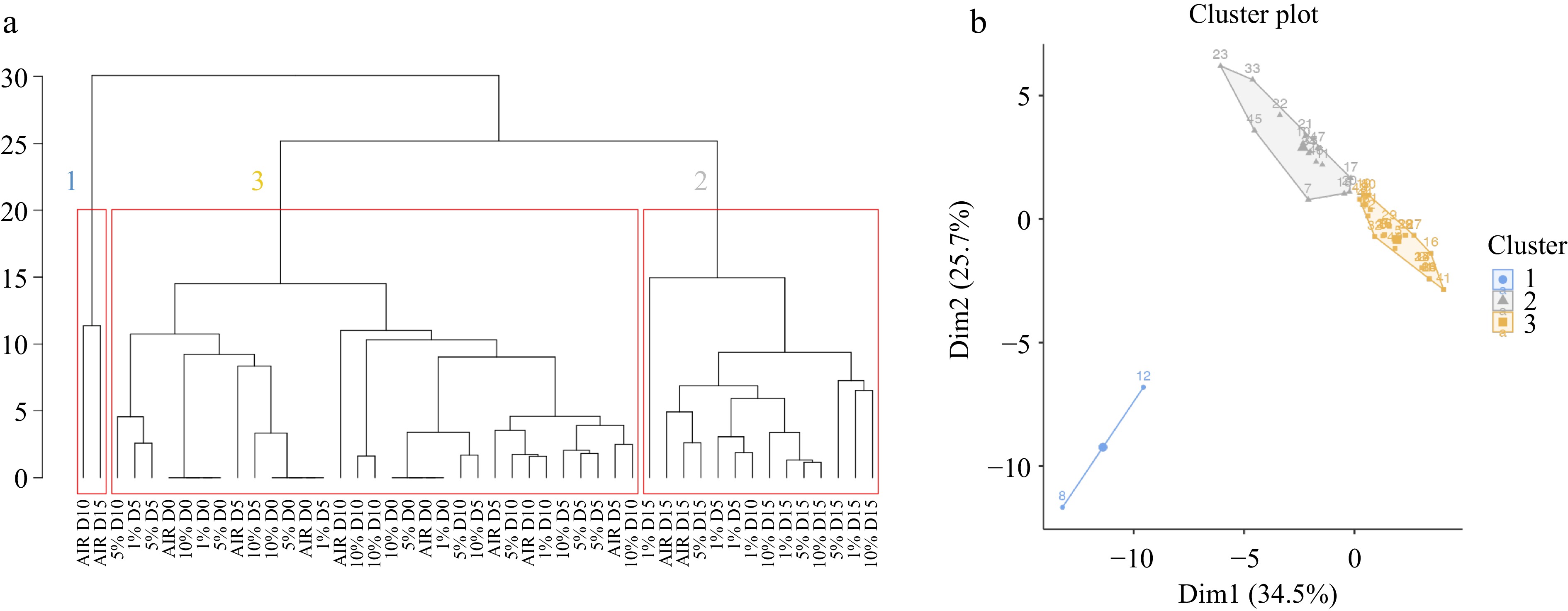
Figure 6.
Multivariate analysis of spearmint quality during storage. (a) Hierarchical cluster analysis (HCA) dendrogram based on Euclidean distance and (b) cluster scatter plot providing a spatial visualisation of sample distribution along Dim1 (34.5%) and Dim2 (25.7%).
The integration of the PCA variable plot and the clustered heatmap (Fig. 7a, b) illustrates the metabolic shift in spearmint aromatic profiles driven by storage duration and atmospheric conditions. The PCA identifies Cluster 3 (orange vectors) as being characterised by high concentrations of "fresh" terpene hydrocarbons, specifically β-pinene, limonene, and sabinene, which define the baseline quality of Day 0 and effectively preserved MAP samples. Conversely, as samples undergo senescence, most notably in the AIR D10 and AIR D15 treatments, there is a distinct transition toward the production of (E)-2-hexenal, 1-octen-3-ol, and D-carvone, with the latter acting as a primary marker for advanced degradation. The heatmap validates these findings at a granular level, showing that while low-O2 MAP (1% and 5% O2) successfully maintains the intensity of fresh monoterpenes like 1,8-cineole and β-myrcene, the ambient air and 10% O2 treatments experience a significant loss of these compounds and a concomitant spike in oxygenated monoterpenes and fermentation markers. Ultimately, both visualisations confirm that the primary axis of variance (Dim1: 34.5%) tracks the conversion of hydrocarbon terpenes into degradation products, highlighting the efficacy of specific MAP conditions in arresting this physiological decline.
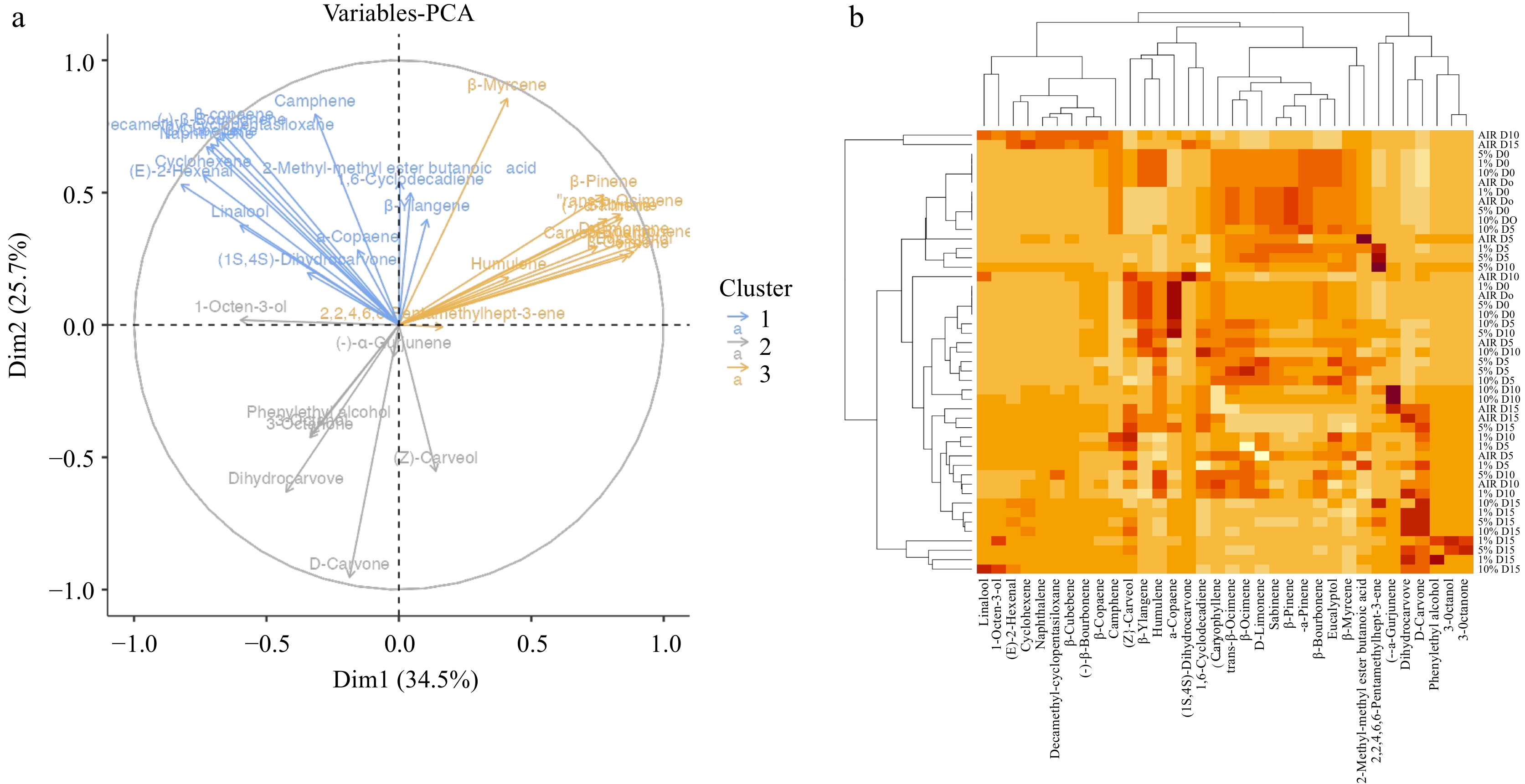
Figure 7.
Comprehensive volatile and metabolic profiling of spearmint during storage. (a) PCA variable biplot illustrating the correlation between specific volatile organic compounds (VOCs) and sample clusters. (b) Clustered heatmap providing a high-resolution visualization of chemical intensity across all treatment replicates.
D-carvone and limonene are the two chemical components responsible for the flavour and aroma of spearmint[3,55], while dimethyl sulfide has been reported to be responsible for off-odour and off-flavour, for example, in leafy vegetables such as packed rocket leaves[56−58] and in minimally processed baby spinach stored under CA of low O2 and high CO2[59]. In spearmint, D-carvone and trans-dihydrocarvone are the primary oxidation products of limonene. Spearmint oil glands oxygenate (−)-limonene at the C6 position to produce (−)-trans-carveol, which is subsequently oxidised to (−)-carvone; this carvone pathway yields carvone as the dominant monoterpene in spearmint oil[60,61]. In addition, alcohols and C6-aldhehydes are usually considered lipid derivatives and are produced by enzymatic reactions, which involved membranes, lipids, and unsaturated fatty acids such as linoleic and linolenic acids through the lipoxygenase (LOX) pathway[62−64]. In this study, acetaldehyde, in particular, spiked significantly in the AIR control by Day 14. The other off-odours detected were (E)-2-hexenal, which can impart a harsh, grassy, or pungent off-flavor as cell membranes break down. 1-Octen-3-ol is known for its "mushroom" or "musty" odour, and this alcohol showed an upward trend in stored samples. It is a common indicator of fungal activity or lipid oxidation in produce.
-
This study describes postharvest quality changes during low O2 in CA in combination with low-temperature storage of cut spearmint. The results show the benefit of low O2, i.e., a possibly reduced amount of O2 availability triggers oxidative reactions. As a result, spearmint under low-O2 treatments maintained bioactive components, while volatile aroma was preserved until the 9th day of storage. The treatments, however, did not improve physical properties (weight loss, firmness and colour). Overall, the application of MAP with low O2 could maintain the chemical quality of this cut culinary herb; however, optimisation study with CO2 is required as to improve the visual appearance.
-
The authors confirm their contributions to the paper as follows: study conception and design: Sommano SR, Colelli G; data collection: Sommano SR, Amodio ML, Fatchurrahman D; analysis and interpretation of results: Sommano SR, Amodio ML; draft manuscript preparation: Sommano SR; writing – review and editing: Sommano SR, Amodio ML, Colelli G. All authors reviewed the results and approved the final version of the manuscript.
-
The data that support the findings of this study are available upon request from the corresponding author (Sommano SR).
-
The authors declare that they have no conflict of interest.
-
accompanies this paper online at: https://doi.org/10.48130/fia-0026-0038.
- Supplementary Table S1 Pearson correlation coefficients of quality parameters for cut spearmint stored under low O2 conditions.
- Supplementary Table S2 Relative composition of volatile compounds (% of total peak area) of cut spearmint stored under low O2 conditions.
- Copyright: © 2026 by the author(s). Published by Maximum Academic Press on behalf of China Agricultural University, Zhejiang University and Shenyang Agricultural University. This article is an open access article distributed under Creative Commons Attribution License (CC BY 4.0), visit https://creativecommons.org/licenses/by/4.0/.
-
About this article
Cite this article
Sommano SR, Amodio ML, Fatchurrahman D, Colelli G. 2026. Effect of low-oxygen controlled atmospheres on the postharvest quality of cut spearmint. Food Innovation and Advances 5(3): 457−467 doi: 10.48130/fia-0026-0038 

Effect of low-oxygen controlled atmospheres on the postharvest quality of cut spearmint
- Received: 05 March 2026
- Revised: 31 March 2026
- Accepted: 15 June 2026
- Published online: 02 September 2026
Abstract: In this study, we evaluate the effects of low O2 concentrations on quality changes of spearmint (Mentha spicata) during storage at 5 °C. Cut stems of spearmint were continuously exposed to controlled atmosphere (CAs) of 1%, 5%, and 10% oxygen and air (CTRL) in 10 L containers at a concentration of 10 mL min−1 and stored at a low temperature for 14 days. Samples were withdrawn after 0, 6, 9, and 14 days of storage and examined for their physical properties (weight loss, firmness, and leaf surface colour), phytochemical properties (total phenolic content, diphenylpicrylhydrazyl [DPPH] antioxidant activity, and vitamin C content), off-flavour metabolites (acetaldehyde, ethanol, and ammonia contents), and volatile compositions. Low O2 treatments significantly increased weight loss and loss of green colour (a* values). CA treatments (1% and 5% O2) were beneficial in controlling the loss of bioactive ingredients. Ethanol content was higher at lower O2 concentrations, while acetaldehyde and ammonia contents did not change. The aroma profile of mint was maintained in all CA treatments until day 9 of storage. Low O2 treatments were beneficial in maintaining the aromatic quality of cut spearmint but ineffective in retarding the degradation of external quality attributes.
-
Key words:
- Aromatic herb /
- Low-temperature storage /
- Shelf-life /
- Atmosphere modification