













-
Soybean (Glycine max (L.) Merr.) is a globally important oilseed and grain crop, as well as a source of high-quality feed protein[1]. Plant height is a key agronomic trait affecting fodder soybean yield and is significantly positively correlated with biomass accumulation. As a typical short-day plant, soybean exhibits early flowering and reduced plant height when introduced from high to low latitudes because of short-day induction[2]. This is particularly important for fodder soybean, because it needs to reach sufficient height during the vegetative growth stage to form a vine-like plant architecture, thereby maximizing biomass. Latitudinal changes are accompanied not only by alterations in photoperiod but also by significant differences in light quality[3,4]. However, the respective contributions of photoperiod and light quality to determinging fodder soybean's height, as well as the underlying regulatory mechanisms, remain unclear.
Photoperiod and light quality regulate soybean's growth via distinct pathways. Under long days, the central photoperiod regulator E1 suppresses the expression of florigen-promoting factors Flowering Locus T 2a/Flowering Locus T 5a (FT2a/FT5a) to delay flowering[5,6]. Under short days, E1 is inhibited by Tof16 (Time of Flowering 16) and J (Long Juvenile) proteins, promoting flowering while indirectly reducing stem elongation and causing dwarfing[2]. Conversely, the short-day-induced co-regulator GmGBP1 interacts with the transcription factor GmGAMYB to promote flowering by regulating expression of the Flowering Locus T (FT) gene and to enhance plant height by increasing gibberellin (GA) signaling[7]. Thus, the effect of short days on height remains inconclusive and likely depends on developmental stage and environment. Unlike photoperiod, light quality directly participates in regulating stem elongation during the seedling stage by acting on distinct photoreceptors[8]. Phytochrome B (phyB) senses low red–far-red (R:FR) ratios to induce shade avoidance and stem elongation[9]. This process involves the intricate regulation of phytohormone biosynthesis and signal transduction, including GA, auxin and ethylene. Cryptochromes (CRYs) activated by blue light upregulate the expression of GA2 oxidase, thereby reducing GA levels and suppressing soybean height[10]. Reduced blue light intensity is a major factor driving stem elongation under shade, and seedling height declines with an increase in the blue–red (B:R) ratio[10,11]. Both B:R and R:FR are influenced by the solar elevation angle and water vapor, which vary with latitude[3]. However, it remains unclear whether or not photoperiodic changes induced by latitudinal variation, beyond regulating the duration of the vegetative growth period, can regulate internode elongation during the seedling stage as light quality changes.
Through domestication, the photoperiod sensitivity of cultivated soybean has been significantly reduced, enabling erect growth and wide cultivation[1,12]. However, introducing high-latitude cultivars to low latitudes still causes early flowering and yield loss[2]. Wild soybean (Glycine soja) exhibits a typical vining growth habit and high photoperiod sensitivity, with an exceptionally wide latitudinal distribution and abundant allelic variation for environmental adaptation[13,14]. Black soybean represents a critical domestication intermediate between wild and cultivated soybeans, exhibiting intermediate growth habits and genetic characteristics[15]. They are widely cultivated for food, feed, and medicinal purposes because of their high content of bioactive substances such as protein, isoflavones, and anthocyanins[16]. Among them, the forage types also exhibit characteristics such as vine-like growth, high stem and leaf yield, and strong regrowth ability. However, to date, studies on the regulatory mechanisms of photoperiod and light quality on plant height in soybean have mainly focused on cultivated soybean, with relatively few in wild soybean, and even fewer reports in fodder soybean. Therefore, exploring the underlying mechanisms of the differences in plant height responses among different soybean germplasms under varying light environments holds significant theoretical and practical importance for expanding the suitable planting range of fodder soybean.
The fodder soybean 'Mudanjiang' (MDJ) displays a vining growth habit in Northeast China but an erect architecture in lower-latitude Shaanxi, limiting its cultivation scope. To reveal the light-related mechanism of this latitude-dependent morphological variation, we examined plant height responses to light regimes in the model cultivar 'Williams 82' (W82), MDJ, and three wild soybean accessions. A reduced red light ratio inhibited plant height in most accessions at the seedling stage, whereas short-day conditions promoted plant height instead of suppressing it. Light responses differed among germplasms. Integrated genome resequencing and shoot apex transcriptome profiling suggested that phytohormone biosynthesis/signaling and nitrogen metabolism pathways may contribute to the conserved and specific light responses. Exogenous hormone application confirmed phytohormone-associated regulation of seedling height and its correlation with nitrogen. This study elucidates the potential mechanisms of light-mediated regulation of soybean height and supports the genetic improvement of fodder soybeans for wide-latitude planting.
-
The experimental materials included the cultivated soybean model cultivar W82, the fodder soybean MDJ from Mudanjiang City, Heilongjiang Province (43°24′–45°59′ N), the wild soybean GS-1 from Dongying City, Shandong Province (36°55′–39°10′ N), the wild soybean GS-2 from Shuyang County, Jiangsu Province (33°53′–34°25′ N), and the wild soybean GS-13 from Jixi City, Heilongjiang Province (44°51′–46°36′ N). All seeds were surface-sterilized with 75% ethanol and then placed in moist vermiculite for germination at 25 °C. Uniformly grown seedlings were selected and transplanted into vermiculite containing half-strength Hoagland's nutrient solution and cultured in an artificial climate chamber at 25 °C with 60% relative humidity. Alternatively, seedlings were transplanted into pots filled with well-mixed farmland soil and grown under outdoor natural conditions in Yangling, Shaanxi, China (34°12′–34°20′ N, 108°–108°07′ E). This area has a continental monsoon semi-humid climate, with an annual average temperature of 12.9 °C, annual precipitation ranging from 635 to 835 mm, and a day length of 10 to 14.5 h.
Light sensitivity analysis
-
For the light sensitivity analysis in climate chambers, three light treatments were established: (1) Long-day red-supplemented light treatment (LR): white–red = 6:1, 16 h light/8 h dark; (2) long-day white light treatment (LW): 100% white light, 16 h light/8 h dark; and (3) short-day white light treatment (SW): 100% white light, 12 h light/12 h dark. The supplemented red light had a wavelength of 660 nm, and the white light used had a color temperature of 6,500 K. The photosynthetic photon flux density was 240 µmol·m−2·s−1 for all treatments. In the germination experiment, seeds were germinated and subsequently grown under different light conditions. In the transplanting experiment, uniformly grown seedlings of W82 and MDJ germinated for 2–3 d under the LW condition, as well as wild soybean seedlings with consistent growth after 5 d of germination, were selected for transplanting and then cultured under different light conditions for subsequent growth. After 2–4 weeks of treatment, height was measured for each plant.
Genome resequencing and transcriptome analysis
-
Genomic DNA from young leaves of each accession was used to construct 350-bp insertion fragment libraries for paired-end 150-bp sequencing on the DNBSEQ-T7 platform, and reads were sequenced to a depth of 30× coverage. After quality control with Trimmomatic v0.39, raw data were aligned to the soybean reference genome for W82 (Wm82.gnm6.S97D) via BWA-MEM[17]. Single nucleotide polymorphisms (SNPs) and insertions and deletions (indels) were detected by GATK4, copy number variants (CNVs) by CNVnator, and structural variations deletions (DEL), duplications (DUP), inversions (INV), chromosomal translocation (CTX), insertions (INS)) by Manta[18]. All variants were integrated, and population-specific variants were retained for subsequent analysis.
Shoot apical tissues (~100 mg) were collected after 3 weeks of the LR, LW, and SW treatments and frozen in liquid nitrogen. Total RNA was extracted by the TRIzol method. After DNase I treatment and an assessment of RNA integrity (RIN > 8) with Agilent 2100 Bioanalyzer, strand-specific RNA sequencing (RNA-seq) libraries were constructed for paired-end 150-bp sequencing on the DNBSEQ-T7 platform (≥ 6 Gb pf clean data per sample). Raw data were quality-controlled with Trimmomatic v0.39, aligned to W82 genome using HISAT2 v2.2.1, and fragments per kilobase of transcript per million mapped reads (FPKM) values were calculated by StringTie v2.1.4[19]. Differentially expressed genes (DEGs) were identified by DESeq2 (|log2 fold change [FC]| ≥ 1, false discovery rate [FDR] < 0.05). Kyoto Encyclopedia of Genes and Genomes (KEGG) enrichment analysis of DEGs, as well as CNV/SV-covered genes, was performed using the clusterProfiler R package (FDR-corrected p < 0.05)[20].
Quantitative real-time polymerase chain reaction
-
Total RNA from plantlets was extracted using the Eastep® Super Total RNA Extraction Kit (Promega LS1040; Promega Corporation, Madison, WI). First-strand cDNA was synthesized with HiScript III RT SuperMix for qPCR (+gDNA wiper) (Vazyme, R323; Vazyme Biotech Co., Ltd., Nanjing, China), according to the manufacturer's instructions. Quantitative real-time polymerase chain reaction (RT-qPCR) amplifications and measurements were performed using ChamQ Universal SYBR qPCR Master Mix (Vazyme, Q711) on a LightCycler 480II (Roche, Basel, Switzerland). GmACTIN (Glyma.18G290800) was used as the internal control. The primers used for RT-qPCR are listed in Supplementary Table S1.
Exogenous hormone treatments and phenotyping analysis
-
On the basis of the transcriptome and genome enrichment analysis results, seven candidate hormones were selected for exogenous treatment experiments to verify their effects on shoot apical elongation in MDJ. The tested hormones included brassinosteroids (BRs, 24-epibrassinolide, 1 μM), zeatin (1 μM), auxin (indole-3-acetic acid [IAA], 10 μM), the GA biosynthesis inhibitor paclobutrazol (PBZ, 50 μM), methyl jasmonate (MeJA, 5 μM), the jasmonate biosynthesis inhibitor diethyldithiocarbamate (DIECA, 5 mM), abscisic acid (ABA, 5 μM), and salicylic acid (SA, 0.1 μM)[21−28]. All hormones were purchased from Sigma-Aldrich.
MDJ seedlings with a consistent hypocotyl length at 2 d after germination were transplanted into vermiculite supplemented with half-strength Hoagland nutrient solution and cultivated under standard LW and SW conditions. A low-nitrogen treatment was applied with a nitrate concentration of 5 μM. From the unfolding of the first true leaf (approximately 7 d after sowing), hormone solutions were applied by dripping the solutions onto sponges placed in the shoot apical meristem region. Each treatment comprised four biological replicates. Plant height was measured after the treatment was complete.
Determination of nitrate concentration
-
The nitrate content in shoot apical tissues was determined by the SA–sulfuric acid colorimetric method[29]. Fresh shoot apical tissues (~200 mg) were collected after 3 weeks of the LR, LW, and SW treatments, frozen in liquid nitrogen, and ground into powder. Five milliliters of double-distilled water was added for extraction in a boiling water bath for 30 min; after cooling, the extract was centrifuged at 12,000 rpm for 10 min, and the supernatant was collected. A 0.1-mL aliquot of the supernatant was mixed with 0.4 mL of a 5% (w/v) SA–sulfuric acid solution (incubated at room temperature for 20 min), followed by adding 9.5 mL of an 8% (w/v) NaOH solution and cooling to room temperature. Using double-distilled water as the blank control, optical density at 410 nm (OD410) was measured with a microplate reader (SpectraMax i3x, Molecular Devices). Nitrate content was calculated from a KNO3 standard curve (0−50 μg/mL) and is expressed as mg/g fresh weight (FW), with four biological replicates per treatment.
Statistical analysis
-
All the data were statistically analyzed with SPSS 19.0 statistical software (IBM, Inc., Armonk, NY, USA) using Duncan's multiple range test at P < 0.05 and independent samples t-tests (* p < 0.05; ** p < 0.01; *** p < 0.001). Graphs were generated using GraphPad Prism v9.0 (GraphPad Software, San Diego, CA, USA).
-
To investigate whether fodder soybean MDJ, widely cultivated in Northeast China, is suitable for cultivation in Shaanxi Province at lower latitudes, we grew MDJ in the field and found that it exhibited a phenotype similar to cultivated soybean at the pod-filling stage, with extreme dwarfing and no vine-like growth observed (Fig. 1a). When MDJ and W82 were grown under the same natural environmental conditions, no significant difference in seedling height was detected between the two during the seedling stage (Fig. 1b, c). In contrast, the wild soybean accession GS-1, originating from Dongying, Shandong Province, at a higher latitude, maintained vine-like growth habits at the pod-filling stage after introduction to Yangling, Shaanxi Province at a lower latitude, indicating that different soybean germplasms exhibit differential responses to latitudinal variation (Fig. 1d).
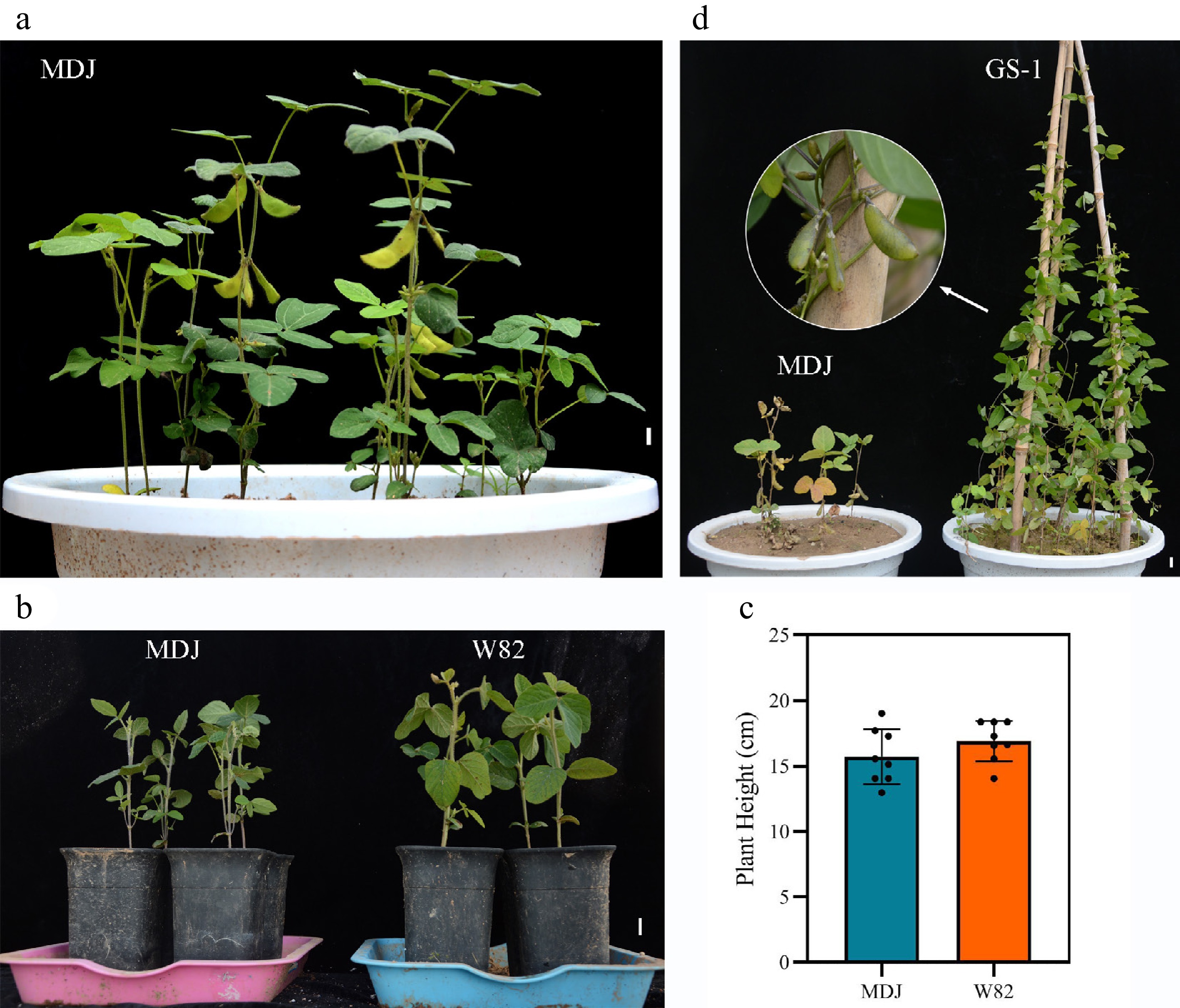
Figure 1.
Fodder soybean MDJ exhibits dwarfing like cultivated soybean when grown at lower latitudes, but wild soybean does not. (a) Growth phenotypes of MDJ at the pod-filling stage. (b) Phenotypes and (c) plant height of MDJ and W82 at the seedling stage. (d) Growth phenotypes of the fodder soybean MDJ and the wild soybean GS-1 at the pod-filling stage. All plants were grown under natural conditions. Scale bar = 2 cm. Data are presented as the mean ± standard deviation (SD). n = 8.
The minimal height difference between MDJ and cultivated soybean during the seedling stage suggests that plant height may be associated not only with photoperiod-regulated flowering time but also with the effects of light quality on the vegetative growth period. To explore whether different germplasms respond differentially to various light conditions, we designed three phytotron treatments: LR, LW, and SW. All materials were germinated synchronously under these three conditions. The results showed that during the seedling morphogenesis period (7 d after sowing), both MDJ and W82 exhibited significantly reduced height under LW compared with LR conditions, whereas height was significantly increased under SW compared with LW conditions (Supplementary Fig. S1a, S1b). Moreover, true leaf emergence and expansion corresponded to height changes (Supplementary Fig. S1a). Thus, decreased proportion of red light inhibited seedling growth during the seedling morphogenesis period, whereas short days had the opposite effect. At 17 d after sowing, the trend of the effects of light on height remained unchanged, but the difference between the LW and SW treatments decreased markedly, particularly in MDJ (Supplementary Fig. S1a, S1c). However, regardless of the seedling morphogenesis period or the seedling growth period, MDJ's height was significantly greater than that of W82 (Supplementary Fig. S1b, S1c). During the seedling morphogenesis period, MDJ's height under LR, LW, and SW conditions was approximately 1.81-, 2.11-, and 1.68-fold that of W82, respectively (Supplementary Fig. S1b). During the seedling growth period (17 d after germination), MDJ's height under LR, LW, and SW conditions was approximately 1.77-, 1.67-, and 1.46-fold that of W82, respectively (Supplementary Fig. S1c). Therefore, the height difference between MDJ and W82 was influenced by light conditions.
To exclude interference from heterogeneity in germination and emergence, we selected seedlings with a uniform initial height after germination for a standardized control experiment and observed their phenotypes at 4 weeks of age. The results showed that under LR and LW conditions, MDJ exhibited significantly greater height than W82 (Fig. 2a, b). However, this difference diminished under SW conditions. Although MDJ remained significantly taller than W82 during the seedling stage under SW conditions, its earlier transition to the reproductive phase led to no significant difference in final mature height compared with W82 (Supplementary Fig. S2). Consistent with the results from the treatments initiated at germination, both MDJ and W82 showed significantly reduced height under LW compared with LR conditions (Fig. 2c−f). However, compared with LW conditions, SW conditions caused a recovery in W82's height but had minimal effect on MDJ. Because MDJ entered the reproductive growth phase later under LW than under SW conditions, its height at approximately 7 weeks of age was significantly greater under LW than under SW conditions (Supplementary Fig. S3a, S3b). Nevertheless, height of MDJ under LW conditions remained limited. When MDJ exhibited vine-like traits under LR conditions, MDJ under LW conditions maintained an erect, dwarf architecture (Supplementary Fig. S3c, S3d). Thus, in addition to photoperiod, changes in light quality play a crucial role in determining MDJ's height and vine-like trait formation. During the seedling stage, LW conditions inhibit soybean height, whereas SW conditions promote it. However, SW conditions accelerate entry into the reproductive growth phase, thereby prematurely terminating stem elongation.
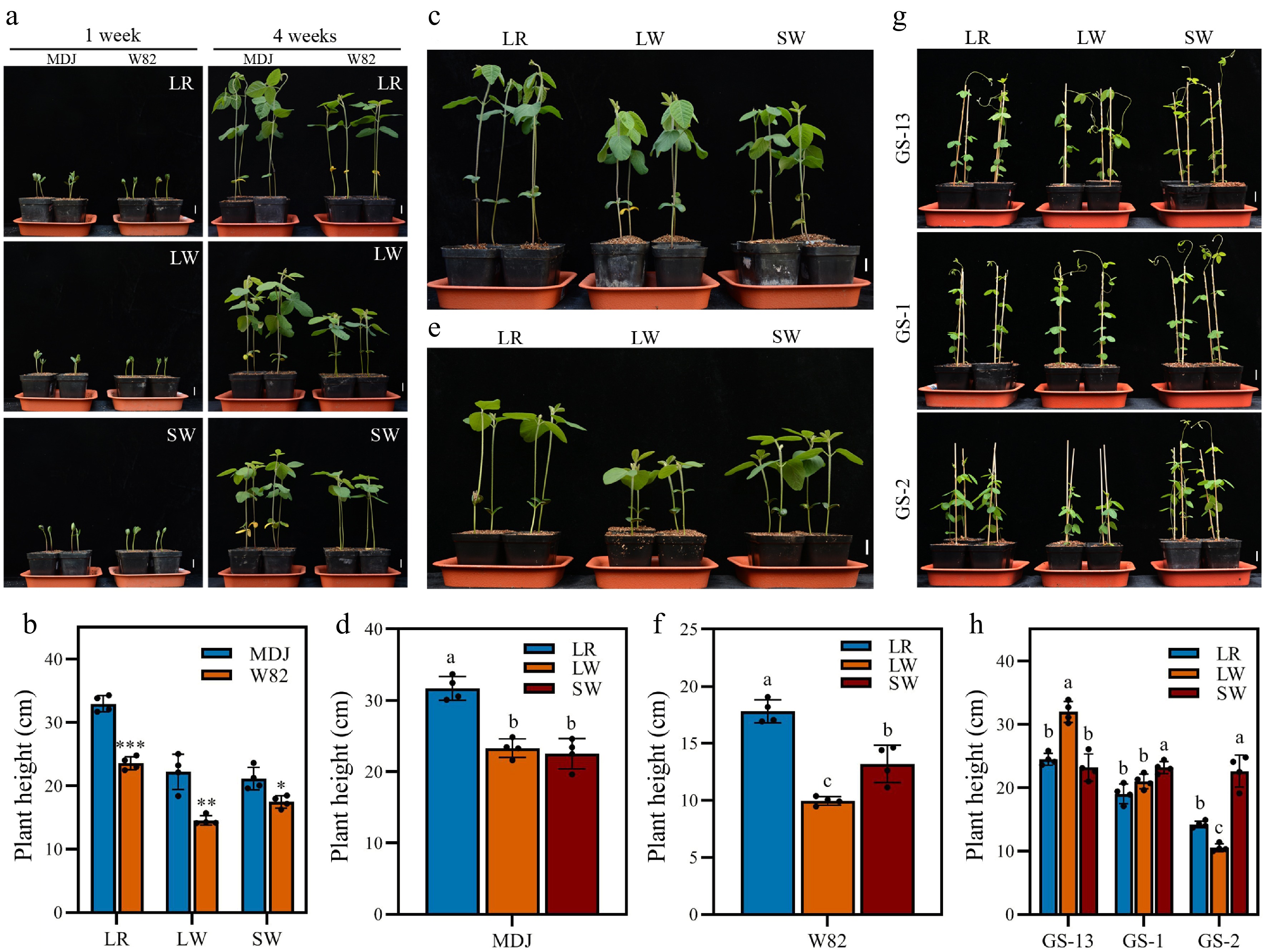
Figure 2.
Effects of light quality and photoperiod during growth on plant height of different soybean accessions at the seedling stage. (a) Phenotypes and (b) plant height of the fodder soybean MDJ and the cultivated soybean W82 under different light conditions. Seedlings of MDJ and W82 with uniform growth phenotypes at 2–3 d after germination were selected and further cultured under long-day white–red = 6:1 (LR), long-day white (LW), and short-day white (SW) for 1 week or 4 weeks, then photographs were taken and plant height was measured. (c) Growth phenotypes and (d) plant height of MDJ under LR, LW, and SW. (e) Growth phenotypes and (f) plant height of W82 under LR, LW, and SW. The culture conditions for (c) and (f) were the same as for (a) and (b), with photographs taken and height measured after 2 weeks of continued culture. (g) Growth phenotypes and (h) plant height of three different wild soybean accessions under LR, LW, and SW. Seedlings with uniform growth phenotypes at 5 d after germination were selected and further cultured under LR, LW, or SW for 2 weeks, when photographs were taken and plant height was measured. Scale bar = 2 cm. Data are expressed as the mean ± SD. n = 4. Different letters above the bars represent significant differences at p < 0.05 (Duncan's test). Asterisks denote statistically different values according to independent sample t-tests (* p < 0.05, ** p < 0.01, *** p < 0.001).
Wild soybean harbors distinct plant height-related photosensitivity variants from cultivated soybean
-
During the seedling growth period, unlike MDJ, GS-13 from Heilongjiang Province, China showed significantly increased height under LW conditions and reduced height under SW conditions (Fig. 2g, h). Furthermore, GS-1's height was largely unaffected by LW conditions but significantly increased under SW conditions. GS-2, from low-latitude regions, exhibited a phenotype similar to W82, with significantly suppressed height under LW conditions and recovery or even maximal height under SW conditions. After extended growth, both GS-1 and GS-2 flowered precociously under SW conditions (Supplementary Fig. S4). However, unlike MDJ, the height at the pod-filling stage of GS-1 and GS-2 remained greater under SW than under LW conditions (Supplementary Figs S3, S4). Thus, wild soybean exhibits extensive variation in light environment sensitivity, potentially harboring genetic resources that could be applied for the genetic improvement of fodder soybean.
To further investigate the genetic mechanisms underlying these differences among soybean materials, we performed genome resequencing on these accessions. Comparative analysis against the W82 reference genome revealed extensive variations in MDJ and wild soybeans (Fig. 3a). Different types of variations primarily followed the pattern GS-13 > GS-1 > GS-2 > MDJ (Fig. 3b–e). However, notably, GS-13 showed significantly fewer deletion-type CNVs than MDJ, GS-2, and GS-1 (Fig. 3d). KEGG analysis of the CNVs indicated that, unlike other materials, GS-13 was significantly enriched in the plant hormone signal transduction and phenylalanine, tyrosine and tryptophan biosynthesis pathways related to IAA and SA (Supplementary Fig. S5). CTX, DEL, and ITX variants in SVs in GS-1 were higher than or similar to those in GS-13 but significantly higher than those in MDJ and GS-2 (Fig. 3e). KEGG analysis of SVs showed that, unlike other materials, GS-1 was enriched in the plant hormone signal transduction and phenylalanine, tyrosine and tryptophan biosynthesis pathways, as well as phenylalanine metabolism related to SA biosynthesis (Fig. 4). Unlike MDJ and GS-2, zeatin biosynthesis was significantly enriched in both GS-1 and GS-13. Additionally, BR biosynthesis was significantly enriched in MDJ and GS-2 but absent in GS-1 and GS-13. Therefore, plant hormone biosynthesis and signal transduction may play important roles in determining differences among these plant materials.
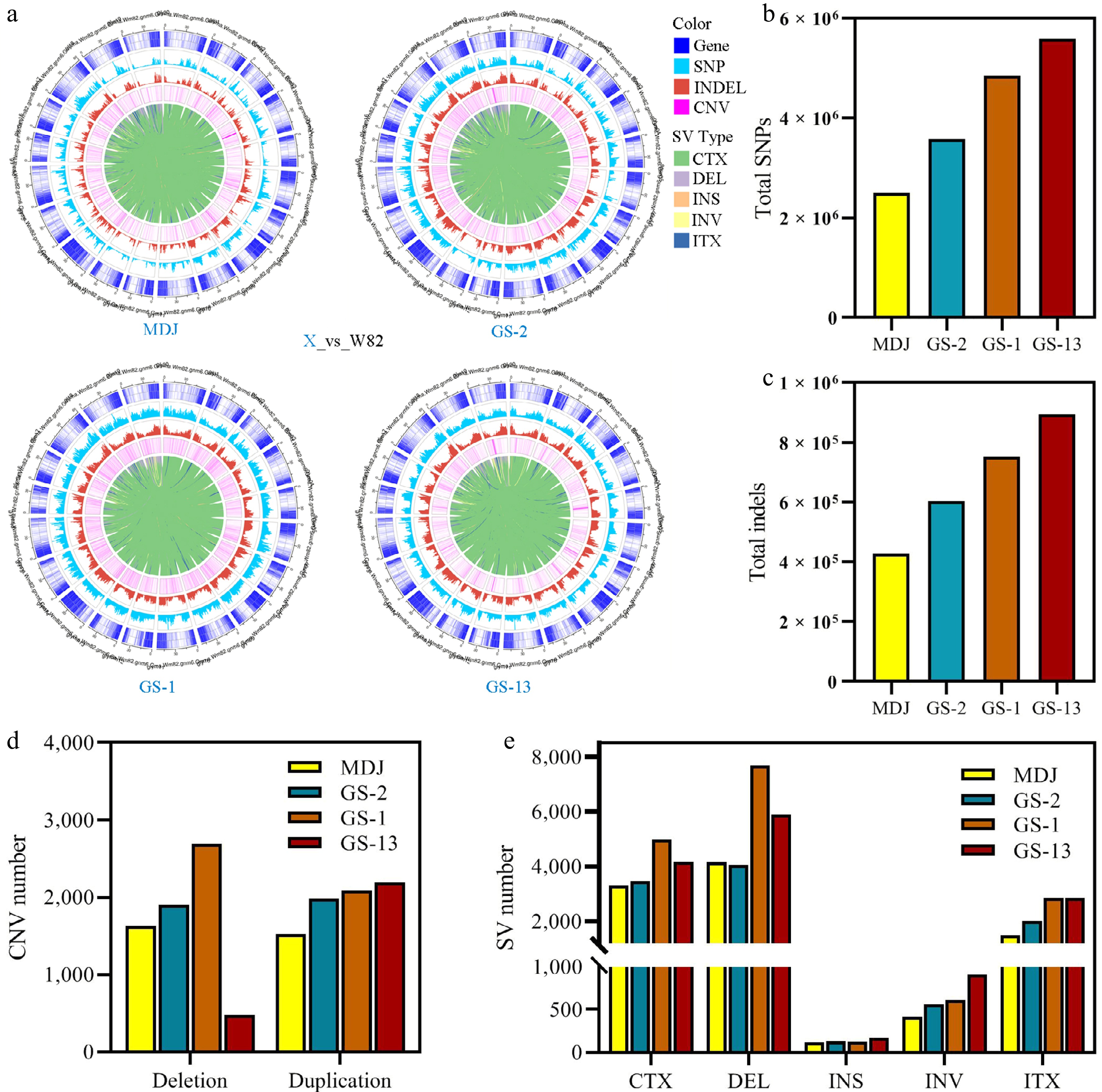
Figure 3.
Genome resequencing analysis of different soybean accessions using W82 as the reference genome. (a) Circular map of genomic variations; (b) single-nucleotide polymorphisms (SNPs); (c) insertions and deletions (indels); (d) copy number variations (CNVs); (e) structural variations (SVs). Data were obtained from genome resequencing. The color coding indicates different variant types.
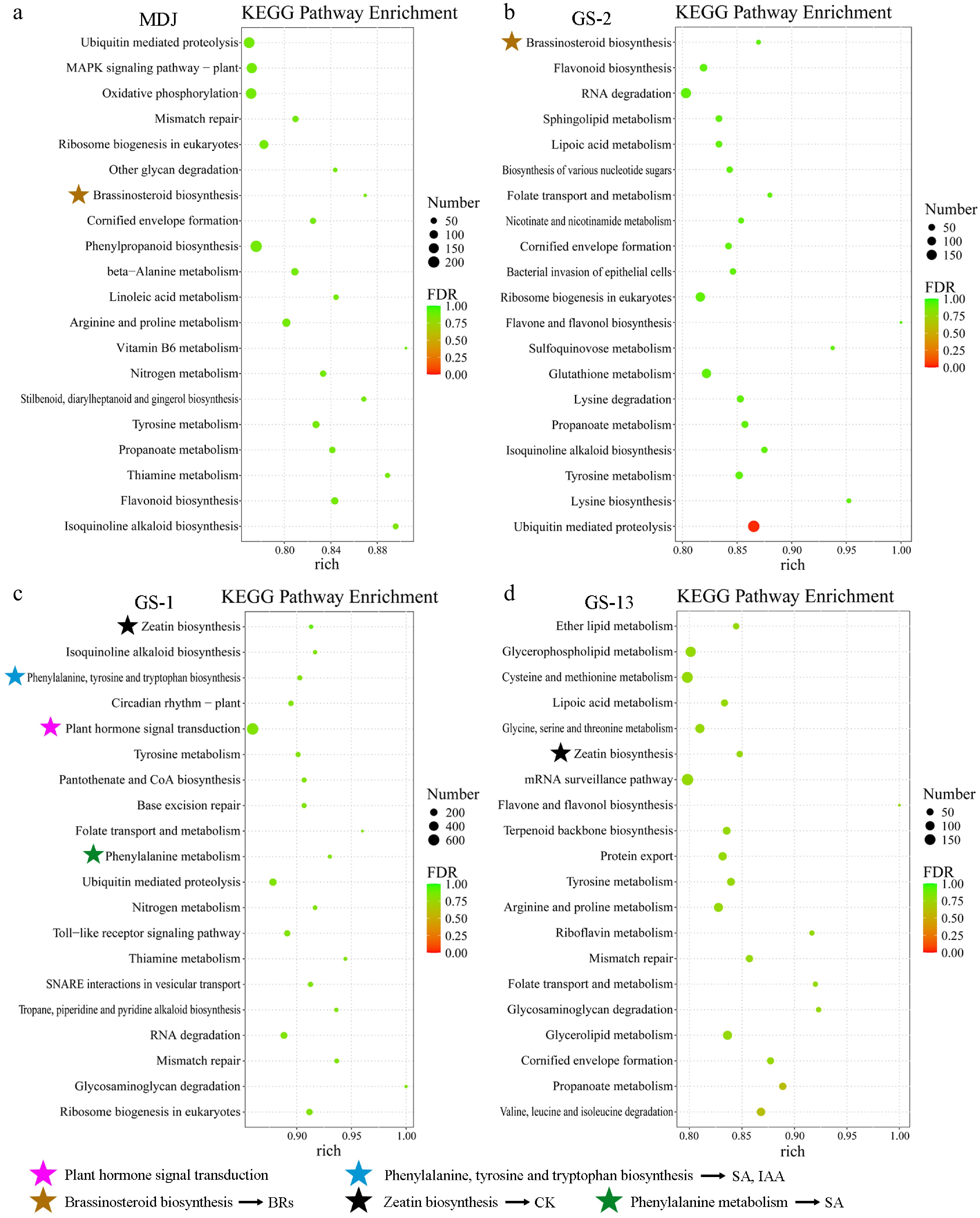
Figure 4.
KEGG pathway enrichment analysis of genes covered by structural variations (SVs) in soybean accessions (a) MDJ, (b) GS-2, (c) GS-1, and (d) GS-13. Stars mark phytohormone-related pathways: Yellow stars for BR biosynthesis, black stars for zeatin biosynthesis (CK), purple stars for plant hormone signal transduction, blue star for phenylalanine, tyrosine/tryptophan biosynthesis (SA, IAA), and green stars for phenylalanine metabolism (SA).
Common and specific enrichment of hormone pathways and nitrogen metabolism in soybean shoot apices under different light conditions
-
Furthermore, we performed KEGG analysis of DEGs in the shoot apical transcriptomes of these soybean germplasms under different light conditions. The results showed that, compared with W82, the plant hormone signal transduction pathway was extensively enriched in the abovementioned soybean germplasms (Supplementary Fig. S6). However, unlike the results from the KEGG enrichment analysis of genomic variations, this pathway was not significantly enriched in GS-1 and GS-13 under LW conditions (Fig. 4, Supplementary Figs S5, S6). Moreover, compared with W82, zeatin biosynthesis was significantly enriched in MDJ and GS-2 under LW conditions, whereas its enrichment was relatively weaker in GS-1 and GS-13 (Supplementary Fig. S6). In comparisons across different light conditions, the plant hormone signal transduction pathway was significantly enriched in all soybean germplasms (Supplementary Figs S7, S8). Compared with LR conditions, gene expression in this pathway showed an overall downward trend under LW conditions (Fig. 5a). Conversely, compared with LW conditions, expression mainly showed an upward trend under SW conditions (Fig. 5b). Notably, in the LW vs LR comparison, genes in the IAA signaling pathway in GS-13 did not exhibit general downregulation, whereas PR-1 in the SA signaling pathway was upregulated (Fig. 5a). Unlike other signaling pathways, genes in the GA signaling pathway were mainly upregulated in the LW vs LR comparison, with the upregulation of GID2 found exclusively in GS-13. In the SW vs LW comparison, aspartic acid–glutamic acid–leucine–leucine–alanine (DELLA) protein genes in the GA signaling pathway were significantly upregulated only in MDJ, differing from the mixed up- and downregulation observed in other soybeans (Fig. 5b). Gene expression changes in IAA signal transduction were highly similar between GS-1 and GS-13. However, TIR1/AFB genes in IAA signal transduction were significantly downregulated in GS-13 but showed no significant changes in GS-1. Corresponding to hormone signal transduction, numerous plant hormone biosynthesis-related pathways were also significantly enriched in the KEGG analysis (Supplementary Figs S7, S8). Among these, the significance of zeatin biosynthesis enrichment was higher in W82 and MDJ than in the wild soybean germplasms. In the LW vs LR comparison, many genes in the zeatin biosynthesis pathway showed downregulated expression (Fig. 6a). However, cytokinin dehydrogenase (1.5.99.12) in GS-2 and cis-zeatin O-glucosyltransferase (cisZOG) in MDJ showed upregulated expression. In the SW vs LW comparison, many genes in the zeatin biosynthesis pathway showed upregulated expression (Fig. 6b). However, CYP735A in W82 and MDJ showed downregulated expression. Although the BR biosynthesis pathway was significantly enriched in the KEGG analysis of genomic variation, this enrichment was not observed in the transcriptome (Fig. 4, Supplementary Figs S7, S8). Nevertheless, genes in the BR biosynthesis pathway still exhibited extensive responses to light conditions, with response patterns similar to those in the zeatin biosynthesis pathway (Fig. 7). However, in the LW vs LR comparison, no genes showed significant changes in MDJ, whereas CYP734A1 was upregulated in GS-2 (Fig. 7a). In the SW vs LW comparison, upregulation of DET2 and CYP92A6 was found exclusively in GS-2 and W82, respectively (Fig. 7b). Tryptophan metabolism, related to IAA biosynthesis, was significantly enriched only in GS-13 in the LW vs LR comparison (Supplementary Fig. S7e). However, SA biosynthesis-related pathways were not significantly enriched in any of the comparisons (Supplementary Figs S7, S8).
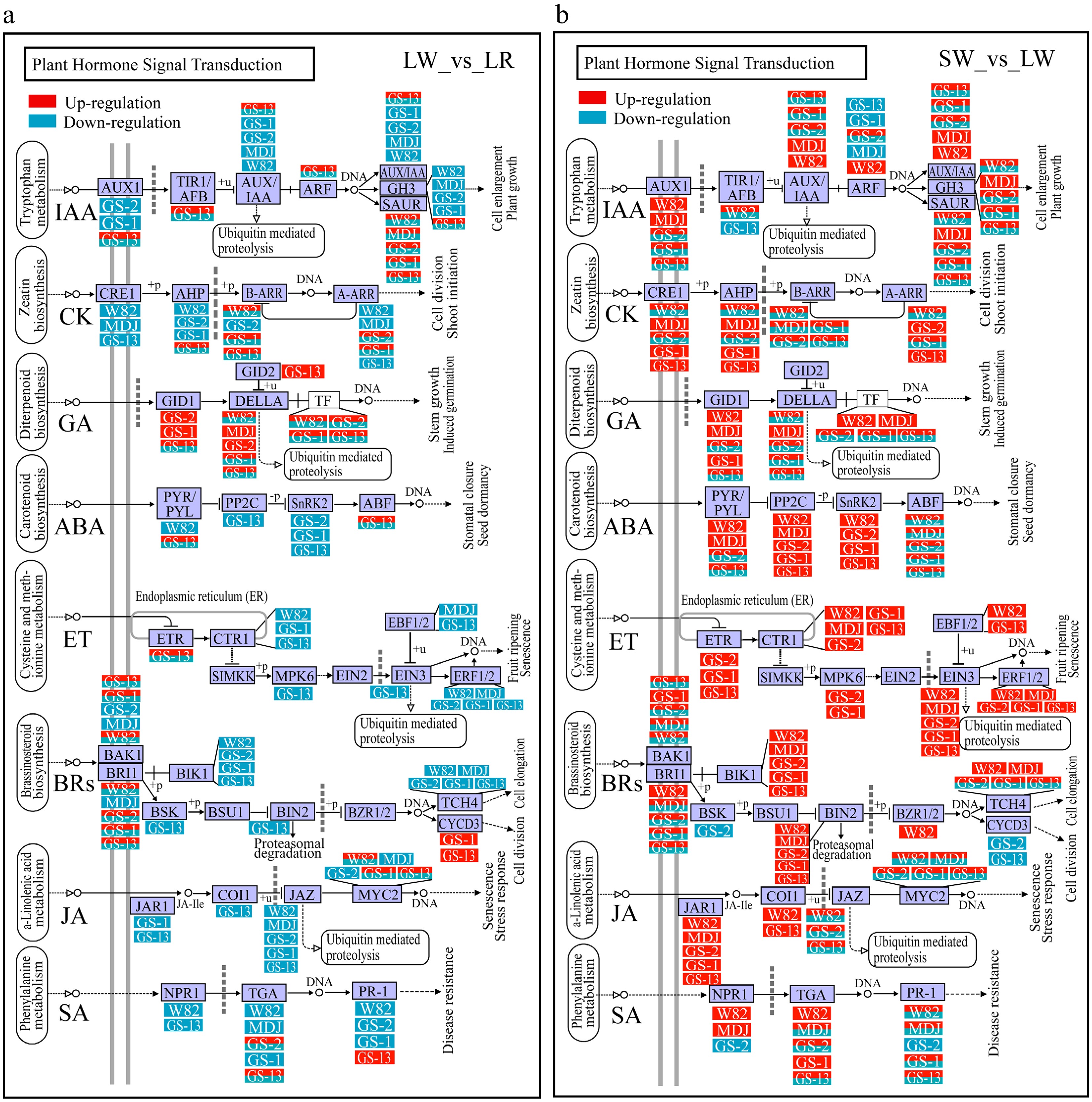
Figure 5.
Gene expression responses in the KEGG pathways for plant hormone signal transduction under different light conditions. (a) Gene expression changes in the LW vs LR comparison. (b) Gene expression changes in the SW vs LW comparison. LR, LW, and SW represent long-day white–red = 6:1 light, long-day white light, and short-day white light conditions, respectively. Red boxes indicate upregulated genes. Blue boxes indicate downregulated genes. Red–blue boxes indicate that different members of a gene family show both up- and downregulation. Gene names and their corresponding accessions (GS-13, GS-1, GS-2, W82, and MDJ) are labeled within boxes. The pathway framework was based on the KEGG database (© Kanehisa Laboratories). Hormone abbreviations: Auxin, IAA; cytokinin, CK; gibberellin, GA; abscisic acid, ABA; ethylene, ET; brassinosteroids, BRs; jasmonic acid, JA; salicylic acid, SA.
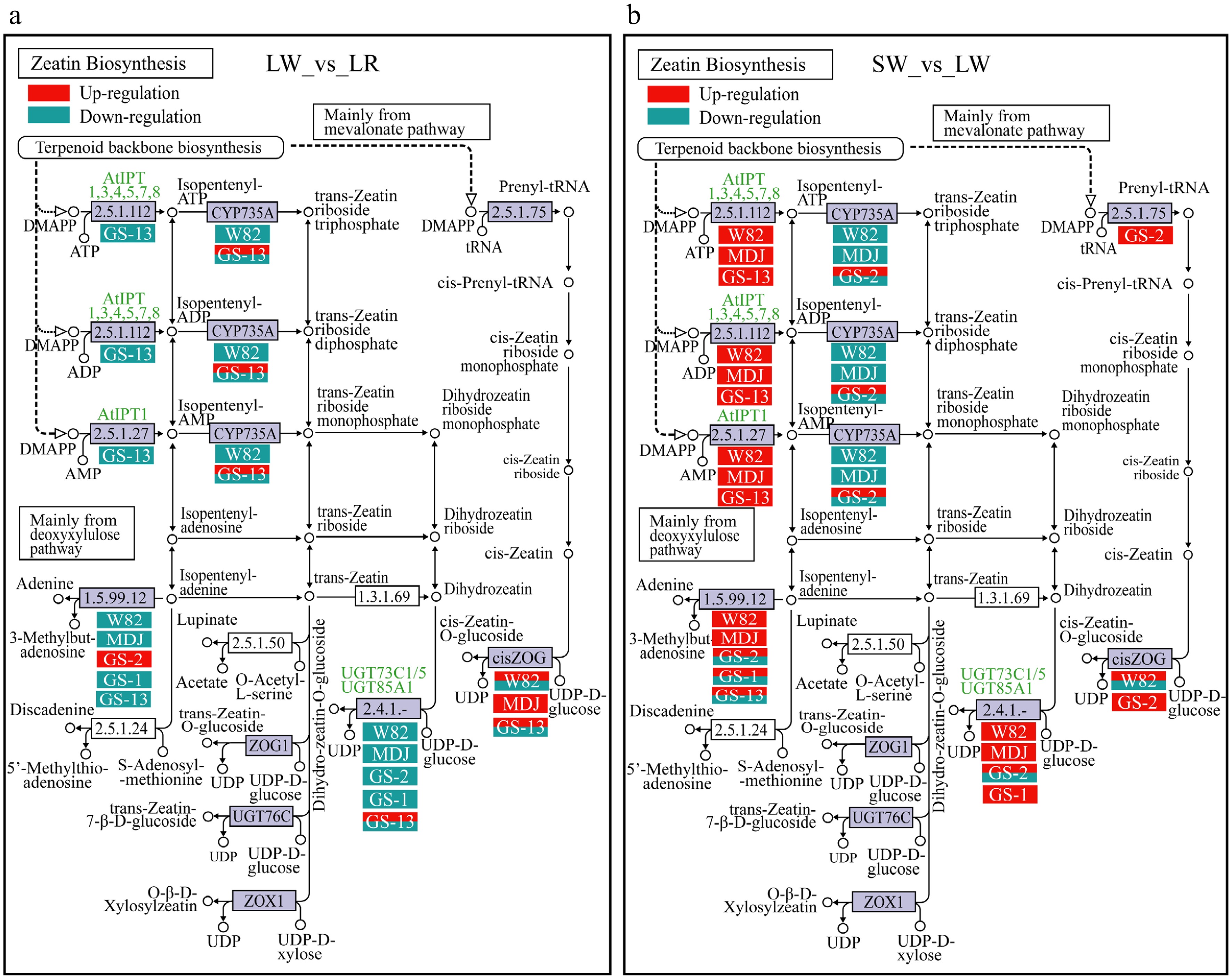
Figure 6.
Gene expression responses in the KEGG pathway of zeatin biosynthesis under different light conditions. (a) Gene expression changes in the LW vs LR comparison. (b) Gene expression changes in the SW vs LW comparison. LR, LW, and SW represent long-day white:red = 6:1 light, long-day white light, short-day white light conditions, respectively. Blue boxes indicate downregulated genes. Red–blue boxes indicate that different members of a gene family show both up- and downregulation. Gene names and their corresponding accessions (GS-13, GS-1, GS-2, W82, MDJ) are labeled within boxes. The pathway framework was based on the KEGG database (© Kanehisa Laboratories).
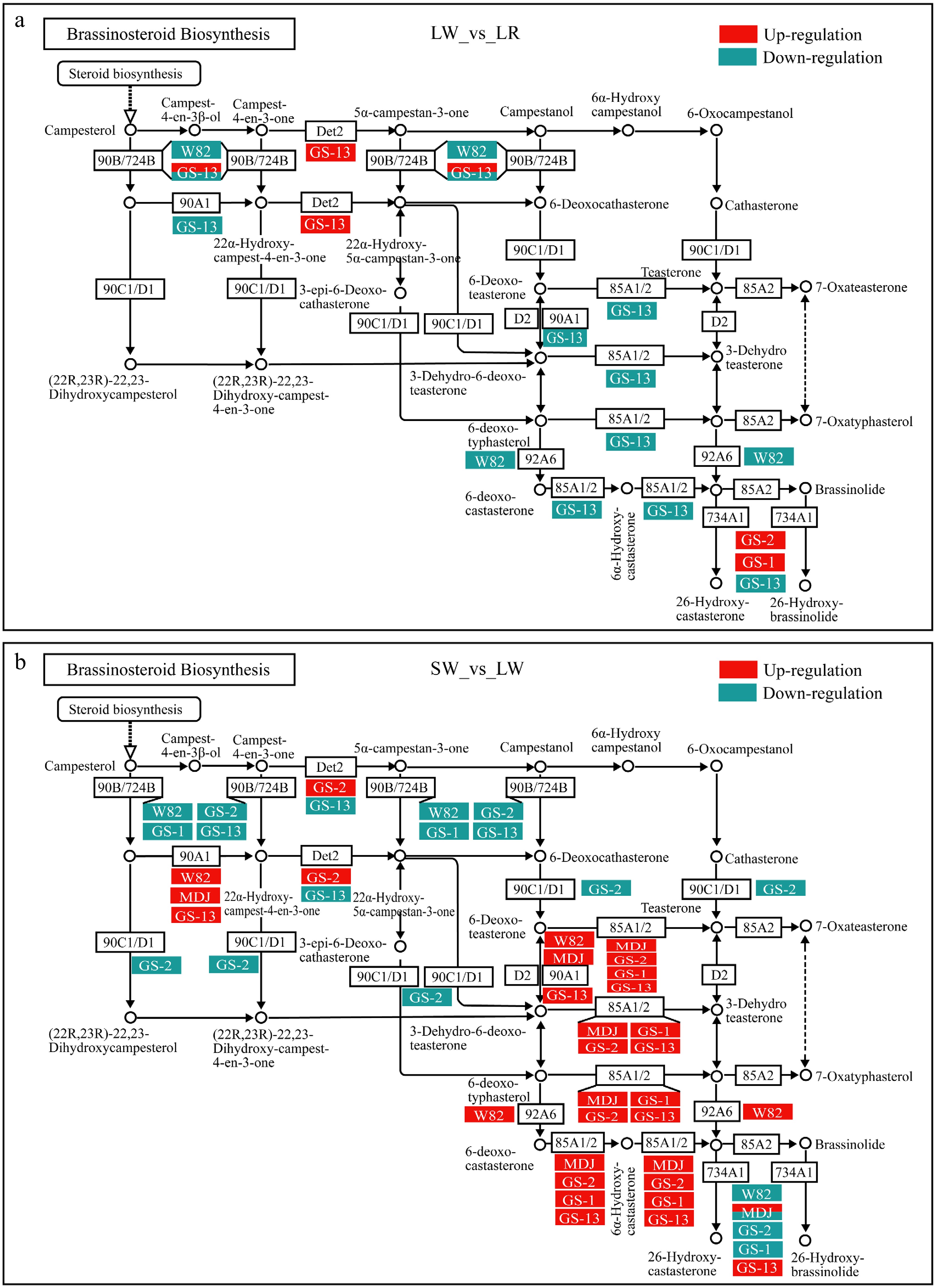
Figure 7.
Gene expression responses in the KEGG pathway of BR biosynthesis under different light conditions. (a) Gene expression changes in the LW vs LR comparison. (b) Gene expression changes in the SW vs LW comparison. LR, LW, and SW represent long-day white:red = 6:1 light, long-day white light, short-day white light conditions, respectively. Red boxes indicate upregulated genes. Blue boxes indicate downregulated genes. Red–blue boxes indicate that different members of a gene family show both up- and downregulation. Gene names and their corresponding accessions (GS-13, GS-1, GS-2, W82, MDJ) are labeled within boxes. The pathway framework was based on the KEGG database (© Kanehisa Laboratories).
Although GA, ABA, and JA biosynthesis-related pathways were not significantly enriched in the KEGG analysis of genomic variations, they were significantly enriched in the KEGG analysis of the shoot apical transcriptome (Supplementary Figs S7, S8). Diterpenoid biosynthesis is related to GA biosynthesis[30]. In the LW vs LR comparison, this pathway was significantly enriched in W82, GS-1, and GS-13 (Supplementary Fig. S7). Notably, its significance was highest in W82. In the SW vs LW comparison, this pathway was significantly enriched in all soybean germplasms (Supplementary Fig. S8). Interestingly, its significance was lowest in W82. Carotenoid biosynthesis is related to ABA biosynthesis[31]. In the LW vs LR comparison, this pathway was significantly enriched in all germplasms except GS-13 (Supplementary Fig. S7). In the SW vs LW comparison, this pathway was significantly enriched only in GS-2 (Supplementary Fig. S8). Alpha-linolenic acid metabolism is related to JA biosynthesis[32]. In the LW vs LR comparison, this pathway was significantly enriched in all germplasms except W82 (Supplementary Fig. S7). However, in the SW vs LW comparison, this pathway was significantly enriched only in W82 (Supplementary Fig. S8). Finally, we validated the expression of key genes involved in the biosynthesis and signal transduction of the aforementioned phytohormones using RT-qPCR (Supplementary Fig. S9). The results were largely consistent with the transcriptome data. In addition to hormone signal transduction and biosynthesis, nitrogen metabolism was also extensively and significantly enriched (Supplementary Figs. S6–S8). Compared with W82, wild soybeans were significantly enriched under all light conditions, whereas MDJ was not (Supplementary Fig. S6). In the LW vs LR comparison, nitrogen metabolism showed significant enrichment in GS-1 and GS-13 (Supplementary Fig. S7d, S7e). In the SW vs LW comparison, nitrogen metabolism showed significant enrichment in GS-1 and GS-2 (Supplementary Fig. S8c, S8d). RT-qPCR results showed that the expression of nitrogen metabolism-related genes, including NRT2.5 (Nitrate Transporter 2.5), NR (Nitrate Reductase), and NirA (Nitrite Reductase), was mainly inhibited in the LW vs LR comparison but increased somewhat in the SW vs LW comparison (Supplementary Fig. S10). However, there were some exceptions in wild soybean and MDJ, especially for GS-2. Therefore, hormone biosynthesis and signal transduction, as well as nitrogen metabolism, exhibit many common and specific responses in soybean germplasms under different light conditions. These may be related to the common and specific responses of plant height to light conditions in different soybean germplasms during the seedling stage.
Differential effects of shoot apical hormonal modulations on plant height and their negative correlation with nitrate levels
-
To clarify the regulatory effects of different phytohormones and nitrogen on plant height in soybean seedlings, we applied low-nitrogen and exogenous hormone treatments to the shoot apexes of MDJ. The results showed that under both LW and SW conditions, the low-nitrogen treatment inhibited plant height (Fig. 8a, Supplementary Fig. S11a). However, the degree of inhibition was significantly greater under SW conditions than under LW conditions (Fig. 8b). Under LW conditions, treatment with 10 μM IAA or 1 μM BR significantly promoted plant height, but this effect significantly decreased under SW conditions (Fig. 8a, b, Supplementary Fig. S11a). Prolonged BR treatment resulted in a vine-like phenotype in MDJ under LW conditions (Fig. 8e). Treatment with a high concentration (10 μM) of zeatin or a high concentration (50 μM) of methyl jasmonate (MeJA) significantly inhibited plant height in MDJ, with a more pronounced effect under SW conditions than under LW conditions (Fig. 8a, b, Supplementary Fig. S11a). However, this does not exclude the influence of shoot apexes necrosis on the results (Fig. 8a). Treatment with a low concentration (2 μM) of zeatin or 5 μM MeJA prevented the occurrence of shoot apex necrosis. The results showed that zeatin significantly inhibited plant height under both LW and SW conditions, with a more pronounced effect under SW conditions (Fig. 8b, Supplementary Fig. S11b). However, MeJA significantly inhibited plant height under SW conditions only (Fig. 8b, Supplementary Fig. S11c). Nevertheless, treatment with 5 mM DIECA, a jasmonic acid biosynthesis inhibitor, also significantly reduced plant height, especially under LW conditions (Fig. 8a, b, Supplementary Fig. S11a). In addition, treatment with 50 μM paclobutrazol (PBZ, a GA biosynthesis inhibitor), 50 μM ABA, or 500 μM SA significantly reduced plant height under both LW and SW conditions (Fig. 8a, b, Supplementary Fig. S11a, S11b). Notably, the inhibitory effects of ABA and SA were more pronounced under SW conditions than under LW conditions (Fig. 8b).
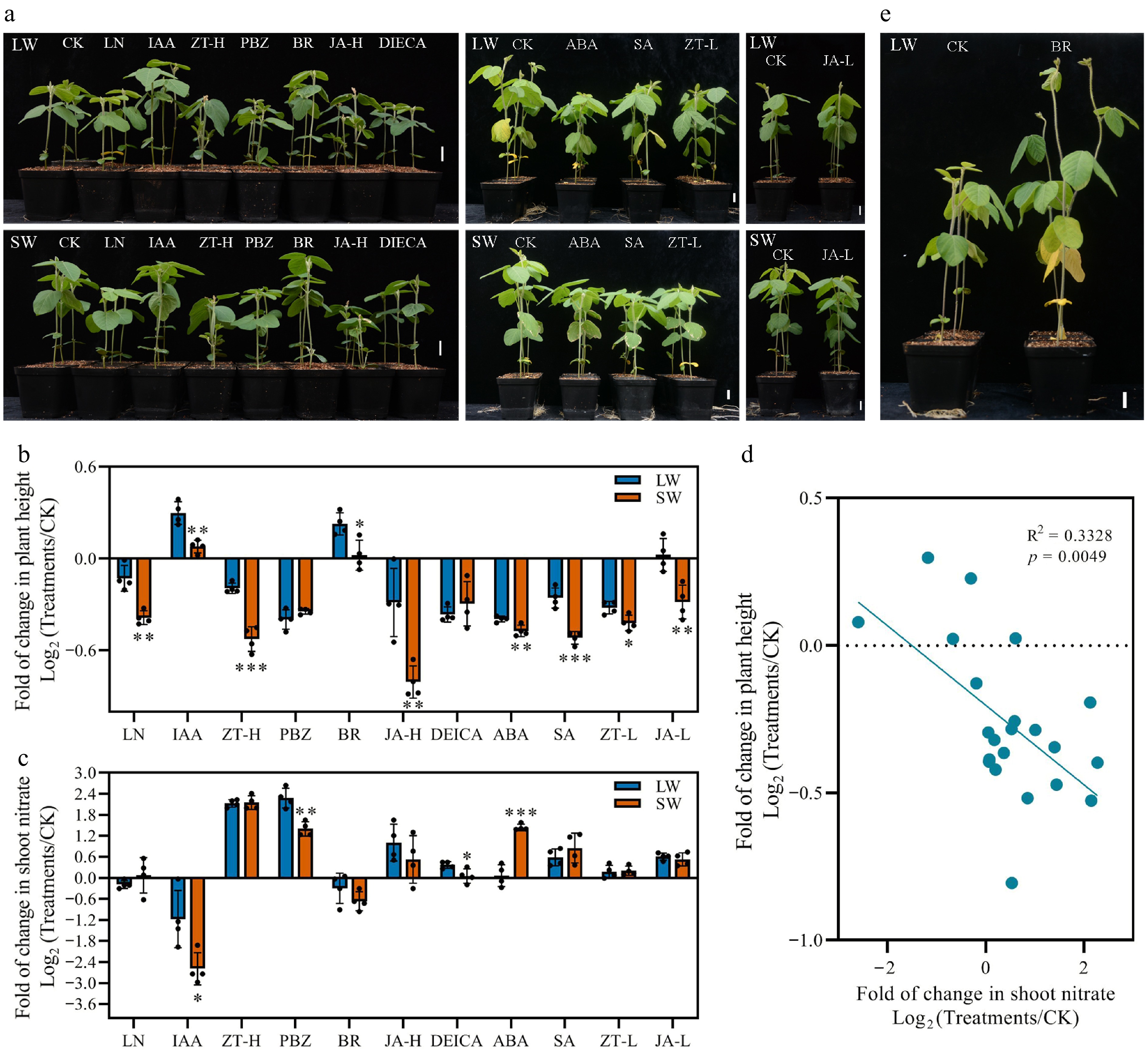
Figure 8.
Shoot apex hormone treatments regulate height in the fodder soybean MDJ in a light-dependent manner, where changes in height are negatively correlated with nitrate levels. (a) Growth phenotypes of MDJ under different light conditions with various hormone treatments. Three-week-old MDJ seedlings were treated with various hormones for 1 week under long-day white (LW) and short-day white (SW) conditions. Batch 1 (left to right): Control, CK; low nitrogen, LN; auxin, IAA; high-concentration zeatin, ZT-H; paclobutrazol, PBZ; brassinosteroid, BR; high-concentration jasmonic acid, JA-H; jasmonic acid inhibitor, DIECA. Batch 2: Control, CK; abscisic acid, ABA; salicylic acid, SA; low-concentration zeatin, ZT-L. Batch 3: Control, CK; low-concentration jasmonic acid, JA-L. Scale bar = 2 cm. Fold of changes in (b) plant height and (c) shoot nitrate concentration. Fold changes in (b) plant height and (c) shoot nitrate concentration in response to the different hormone treatments shown in (a). The log2-transformed values in (b) were derived from the data in Supplementary Fig. S11, and those in (c) were derived from the data in Supplementary Fig. S12. (d) Correlation between height and nitrate changes. (e) Growth phenotype of the fodder soybean MDJ after prolonged BR treatment under LW conditions. Data are expressed as the mean ± SD. n = 4. Asterisks denote statistically different values according to independent sample t-tests (* p < 0.05, ** p < 0.01, *** p < 0.001).
Furthermore, to determine whether the effects of phytohormones on plant height were related to nitrogen, we measured nitrate concentrations in the aboveground parts of the plants. The results showed that many hormone treatments caused significant changes in nitrate concentrations (Fig. 8c, Supplementary Fig. S12). However, the effects of IAA, PBZ, DIECA, and ABA were significantly influenced by the light conditions (Fig. 8c). Correlation analysis revealed that the effects of phytohormones on plant height were significantly negatively correlated with changes in nitrate content (Fig. 8d).
-
Unlike cultivated soybean, fodder soybean is bred with stem and leaf growth as the breeding objective. Stem and leaf growth is primarily determined by plant height. However, soybean is sensitive to the light environment; when cultivated at lower latitudes than its original high-latitude region, its height generally decreases, thereby affecting yield[2,5]. Latitudinal variation involves not only changes in photoperiod but also alterations in light quality[3,4]. Here, we found that the effects of photoperiod and light quality on soybean height at the seedling stage differ somewhat from previous understandings at other developmental stages. Moreover, the responses of plant height to the light environment varied extensively among different soybean germplasms. We explored the underlying mechanisms through comparative genomics, shoot apical transcriptomics, and shoot apical hormone treatments.
MDJ, a fodder soybean widely grown in Northeast China (41°–53° N), typically reaches ~2 m in height. Surprisingly, when planted at a lower latitude (Yangling, ~34° N), it became severely dwarfed and erect, resembling the cultivated soybean W82 (Fig. 1). Low-latitude regions generally have higher solar elevation angles and higher air humidity than high-latitude regions. Studies have shown that the higher the solar elevation angle, the lower the B:R ratio; however, when α > 10°, the R:FR ratio remains generally stable[4]. The higher the water vapor content, the higher the B:R and R:FR ratios[3]. Therefore, low-latitude regions generally have a higher R:FR ratio, but the B:R ratio is less predictable. A higher R:FR ratio inhibits internode elongation in soybean[33]. Of course, the contribution of an increased B:R ratio during rainy seasons in low-latitude regions to the dwarfing of MDJ cannot be ruled out. In fact, an increased B:R ratio inhibits internode elongation in soybean[11,34]. Under reduced red light (LW) in growth chambers, height was suppressed in MDJ, W82, and GS-2, indicating that increased B:R inhibition outweighs any promotion from decreased R:FR (Fig. 2). Possibly because of their own genetic control, MDJ and W82 already differ in height during the seedling morphogenesis stage, but they respond similarly to light conditions: LW suppresses plant height, whereas SW accelerates growth (Supplementary Fig. S1). However, SW induces earlier flowering in MDJ than in W82, ultimately reducing the height difference between the two (Fig. 2, Supplementary Figs S1, S2). Under LW, vegetative growth of MDJ was prolonged, yet plants remained dwarfed and erect at podding, whereas under LR, they showed vine-like traits (Supplementary Fig. S3). Thus, the severe dwarfing of MDJ at low latitudes is likely caused more by changes in light quality than to a shortened photoperiod. Unlike MDJ and W82, the wild accessions GS-1 and GS-13 were not inhibited by LW, although GS-2 resembled W82. Compared with the W82 reference genome, the MDJ genome contains extensive variations, but wild soybean exhibits even greater genetic variation (Fig. 3). This is consistent with black soybean as a transitional domestication intermediate[15]. MDJ's seedling height response pattern aligns with that of W82 and GS-2 but differs from GS-1/GS-13, which echoes their levels of genomic variation (Figs 2, 3, and Supplementary Fig. S1).
KEGG analyses of genomic SVs and CNVs and the shoot apical transcriptomes consistently implicated plant hormone biosynthesis and signal transduction in the divergent light-induced height responses among soybean germplasms (Fig. 4, Supplementary Figs S5–S8). Application of 10 μM IAA to the shoot apex significantly increased the plant height of MDJ seedlings under LW conditions (Fig. 8a, b, Supplementary Fig. S11a). CNV analysis in GS-13 revealed enrichment in the phenylalanine, tyrosine, and tryptophan biosynthesis pathway (Supplementary Fig. S5), which supplies precursors for IAA and SA synthesis[35,36]. This pathway and phenylalanine metabolism were also enriched in the SV analysis of GS-1 (Fig. 4c). KEGG analysis of DEGs in the LW vs LR comparison showed an overall downregulation of IAA signaling (Fig. 5a). However, GS-13 was an exception, and its tryptophan metabolism was uniquely enriched, likely underlying its distinctive increase in height under LW (Figs 2, 5a, and Supplementary Fig. S7). In the SW vs LW comparison, IAA signaling responses were similar between GS-1 and GS-13, but TIR1/AFB genes were significantly downregulated in GS-13 only, consistent with its reduced height under short days (Figs 2g, h and 5b). Deletion or impairment of TIR1/AFB genes will lead to dwarfing[36]. Exogenous SA application inhibited seedling height, yet SA biosynthesis-related pathways were not transcriptionally enriched (Fig. 8a, b, Supplementary Figs S6–S8 and S11). However, SA signaling was broadly modulated by light (Fig. 5). The PR-1 gene is an important molecular marker for SA signal transduction[37]. PR-1 was upregulated in GS-13 under LW despite increased height, but downregulated in GS-2 under SW, coincident with enhanced growth (Fig. 5). Thus, SA is unlikely to be the primary driver of the height difference between GS-13 and other germplasms, but may contribute to height regulation in GS-2 under short-day conditions.
KEGG analysis of genomic SVs showed that zeatin biosynthesis was significantly enriched in GS-1 and GS-13, but not in MDJ and GS-2 (Fig. 4). KEGG analysis of DEGs in the shoot apex showed that LW conditions caused significant differences in zeatin biosynthesis in MDJ and GS-2 compared with W82, whereas this difference was relatively minor in GS-1 and GS-13 (Supplementary Fig. S6). Therefore, SVs in the zeatin biosynthesis pathway may have weakened the transcriptional response of GS-1 and GS-13 to LW. Moreover, light conditions strongly affected zeatin biosynthesis in W82 and MDJ, but had a milder effect in wild soybeans (Supplementary Figs S7, S8). Cytokinins mainly include isopentenyladenosine (iP), trans-zeatin (tZ), and cis-zeatin (cZ), all of which are synthesized through the zeatin biosynthesis pathway. Among these, iP-type cytokinins may promote stem growth[38]. In GS-2 under LW, upregulation of cytokinin dehydrogenase (1.5.99.12) may accelerate the degradation of iP, thus inhibiting shoot apical growth and causing dwarfing (Fig. 6a). However, studies in rice (Oryza sativa) indicate that iP is not the sole determinant of plant height, as tZ and cZ may exert distinct regulatory functions[39]. Exogenous zeatin application to the shoot apex significantly inhibited MDJ plants' height (Fig. 8, Supplementary Fig. S11). Studies have shown that elevated tZ promotes early vegetative-to-adult phase transition[40]. In Medicago truncatula, HDT1 (homologous to Arabidopsis thaliana CYP735A1/A2) converts iP to tZ and represses plant height[38]. Compared with LW conditions, downregulation of CYP735A in W82 and MDJ under SW conditions may contribute to their greater height during the seedling stage (Fig. 6b). In the LW vs LR comparison, cis-zeatin O-glucosyltransferase (cisZOG) was upregulated in MDJ (Fig. 6a). Cis-zeatin O-glucosyltransferase catalyzes the conversion of active cZ to its inactive O-glucoside form. Overexpression of cis-zeatin O-glucosyltransferase CsUGT71A60 in tea (Camellia sinensis) plants leads to dwarfing[41]. Therefore, unlike tZ, cZ may promote plant height. Upregulation of cisZOG in MDJ under LW conditions may thus contribute to its dwarfing.
BR promotes stem growth by enhancing internode cell division. Application of BR to the MDJ shoot apex significantly increased seedling plants' height under LW conditions,and prolonged treatment resulted in a vine-like phenotype (Fig. 8a, b, Supplementary Fig. S11a). KEGG analysis of genomic SVs revealed significant enrichment of BR biosynthesis in MDJ and GS-2, but not in GS-1 and GS-13 (Fig. 4). In the LW vs LR comparison, many genes in the shoot apical BR biosynthesis pathway were downregulated, concomitant with reduced plant height in most soybean germplasms (Figs 2, 7a). Interestingly, no genes in the BR biosynthesis pathway showed significant changes in MDJ (Fig. 7a). Therefore, the dwarfing of MDJ under LW conditions is unrelated to BR biosynthesis. In the BR biosynthesis pathway of GS-2, only CYP734A1 (encoding cytochrome P450, also known as BAS1) was significantly upregulated (Fig. 7a). CYP734A1 is a key enzyme in BR catabolism. In A. thaliana, the bas1-D gain-of-function mutant exhibits severe dwarfing, with significantly reduced endogenous BR levels[42]. Therefore, upregulation of CYP734A1 in GS-2 may accelerate BR catabolism, thereby reducing endogenous active BR levels, inhibiting cell elongation, and ultimately reducing plant height. In contrast to CYP734A1, DET2 was specifically upregulated in GS-13 (Fig. 7a). DET2 is a key rate-limiting enzyme in the early steps of BR biosynthesis. The det2 mutant exhibits severe dwarfing caused by blocked BR synthesis[43]. Therefore, upregulation of DET2 in GS-13 may enhance BR biosynthesis, thereby increasing plant height. In the SW vs LW comparison, many BR biosynthesis genes were upregulated, with DET2 and CYP92A6 specifically upregulated in GS-2 and W82, respectively (Fig. 7b). CYP92A6 (also known as DDWF1) encodes a BR C-2 hydroxylase; its overexpression promotes hypocotyl elongation in darkness, mimicking BR's effects[44]. Upregulation of DET2 and CYP92A6 may contribute to the increased plant height of GS-2 and W82 under SW conditions.
Although the GA, ABA, and JA biosynthesis pathways were not significantly enriched in the genomic variation-based KEGG analyses, they were strongly enriched in the shoot apical transcriptome comparisons (Supplementary Figs S6−S8). Application of the GA biosynthesis inhibitor PBZ significantly inhibited stem elongation in MDJ, confirming that endogenous GA is essential for increased height (Fig. 8a, b, Supplementary Fig. S11a). DELLA proteins are well-known negative regulators of the GA signaling pathway. The soybean blue light receptor GmCRY1b can interact with DELLA proteins to affect their stability, thereby regulating plant height[45]. Unlike other soybean germplasms, DELLA genes in MDJ were only significantly upregulated in the SW vs LW comparison, which is unfavorable for increasing height (Fig. 5b). GID2, an F-box subunit of the SCF E3 complex, plays a key role in promoting DELLA protein degradation[46]. In the LW vs LR comparison, GID2 was uniquely upregulated in GS-13, consistent with its taller phenotype under LW (Figs 2g, h and 5a). Previous studies have shown that overexpression of the ABA biosynthesis key gene IbNCED1 in sweet potato (Ipomoea batatas) causes dwarfing[47]. We found that application of ABA to the shoot apex of MDJ significantly reduced plant height (Fig. 8a, b, Supplementary Fig. S11b). ABA signaling was generally downregulated under LW vs LR, except in MDJ, which may reduce its light adaptability and cause dwarfing (Fig. 5a). Under SW vs LW, ABA signaling was generally upregulated despite increased height, implying an antagonistic role in light-mediated height regulation (Fig. 5b). Previous studies reported that overexpressing the JA biosynthesis genes GmAOC3/4 or the transcription factor gene GmST2 enhances JA accumulation and increases soybean height[48]. However, our results showed that shoot apical JA treatment significantly inhibited MDJ's height under SW conditions, with a weaker inhibitory effect under LW (Fig. 8a, b, Supplementary Fig. S11a, S11c). Unexpectedly, the JA biosynthesis inhibitor DIECA also reduced MDJ's height, especially under LW. These findings indicate that the role of JA in regulating plant height is complex, making it difficult to determine its relationship with the changes in plant height among various soybean germplasms induced by the light environment.
Regulation of height by plant hormones is often linked to nitrogen metabolism. Abnormal nitrogen metabolism often severely inhibits plant growth[49]. In rice, enhanced auxin via OsSIZ1 or SOD5 knockout activates nitrogen metabolism and increases height[50,51]. In soybean, loss of the auxin efflux transporter PIN3 promotes nitrogen uptake and utilization, thereby increasing plant height and seed oil content[52]. Accumulation of the DELLA proteins, which are negative regulators of GA signaling, inhibits GRF4-mediated activation of nitrogen uptake genes while causing dwarfing[53]. BR signaling interacts with GA in regulating plant height and is considered to be a key driver of the next green revolution after GA[54]. Numerous studies show that BR positively regulates nitrogen uptake and assimilation, but BEH4 (a BES1/BZR1 homolog) enhances nitrogen efficiency while suppressing height in tomato (Solanum lycopersicum)[54,55]. Thus, nitrogen metabolism and plant height are usually synergistically regulated by plant hormones, and enhanced nitrogen metabolism is a necessary but not sufficient condition for increased plant height. In addition, although numerous studies have shown that ABA, JA, zeatin, and SA also play important roles in regulating nitrate uptake and assimilation, their relationship with plant height is unclear[27,56−58]. In our results, in addition to plant hormone synthesis and signal transduction pathways, nitrogen metabolism was also extensively and significantly enriched (Supplementary Figs S6−S8). In the LW vs LR and SW vs LW comparisons, nitrogen metabolism-related genes were mainly downregulated and upregulated, respectively, consistent with the plant height response of soybean to light conditions (Fig. 2, Supplementary Fig. S10). In wild soybean and MDJ, however, some of these genes were induced by LW and inhibited by SW, with the most prominent response in GS-2, followed by MDJ, then GS-1 and GS-13 (Supplementary Fig. S10). This indicates that wild soybean and its relatives may modulate nitrogen metabolism to adapt to light-induced changes in plant height, with stronger inhibition of plant height corresponding to the higher expression of nitrogen metabolism-related genes. Low-nitrogen environments significantly inhibited MDJ's height, especially under SW (Fig. 8a, b, Supplementary Fig. S11a). Shoot apex treatments with zeatin, JA, ABA, and SA suppressed MDJ's height more strongly under SW, whereas IAA and BR promoted height under LW but less so under SW (Fig. 8a, b, Supplementary Fig. S11a). Thus, similar to low nitrogen, SW conditions generally make hormone treatments less favorable for increased height, amplifying the inhibitory effects and weakening the promotive effects. Notably, hormone-induced changes in height in MDJ showed a significant negative correlation with shoot nitrate concentration (Fig. 8d). This suggests that under promoting treatments, nitrogen assimilation is more active, leading to lower nitrate levels; under inhibiting treatments, limited assimilation results in nitrate accumulation. Therefore, nitrogen metabolism and plant hormones may coordinately regulate light-induced variations in plant height in soybean, and plant hormones may modulate nitrogen metabolism to coordinate with height regulation.
-
In summary, the dwarfing of the fodder soybean MDJ when introduced from high to low latitudes likely results from both light quality and photoperiod, with their effects on seedling height being opposite. Notably, altered light quality alone can severely dwarf MDJ even under long days. Soybean germplasms vary widely in their light sensitivity, and wild soybean harbors valuable genetic resources for maintaining height. Phytohormone biosynthesis and signaling may play key roles in mediating light sensitivity and regulating germplasms' differences in height, closely associated with nitrogen metabolism. The dwarfing of MDJ under LW is mainly associated with inactivation of cis-zeatin by upregulating cisZOG and a lack of nitrogen metabolism enrichment. Its limited height recovery under SW is attributable to upregulation of DELLA and early flowering, shortening vegetative growth. In contrast, GS-13's maintenance of height under LW involves coordinated IAA, BR, and GA signaling and significant nitrogen metabolism enrichment. BR has the potential to promote vine-like traits in MDJ under LW. Key genes in these phytohormone-related pathways can serve as important targets for breeding photoinsensitive, wide-latitude fodder soybean.
-
The authors confirm their contributions to the paper as follows: study design: Liu J; experiment implementation: Gao K, Zhu R, Long Y, Gao H, Li H, Guo P, Yuan L, Mao J, Liu J; data analysis: Gao K, Liu J; manuscript drafting: Gao K, Liu J, Liu H. All authors reviewed the results and approved the final version of the manuscript.
-
The datasets generated and/or analyzed during the current study are available from the corresponding author on reasonable request.
-
The authors thank Dr. Pan Zhang and Dr. Guowen Cui of the College of Animal Science and Technology, Northeast Agricultural University, for providing the fodder soybean 'MDJ' seeds. This work was supported by the National Natural Science Foundation of China (32573581, 32071871), the Key Research and Development Projects in Shaanxi Province of China (2024NC-YBXM-005), the College Students' Innovation and Entrepreneurship Training Program (202510712218), the Interdisciplinary Frontier Innovation Team Program of Northwest A&F University (A1080524001), the National Key R&D Program of China (2025YFE0200400), and the Biological Breeding – National Science and Technology Major Project (No. 2024ZD04079).
-
The authors declare that they have no conflict of interest.
-
accompanies this paper online at: https://doi.org/10.48130/grares-0026-0016.
- Supplementary Fig. S1 Effects of different light conditions on plant height and morphogenesis of soybean cultivars at seedling stage.
- Supplementary Fig. S2 Phenotype and plant height of fodder soybean MDJ and cultivated soybean W82.
- Supplementary Fig. S3 Effects of light conditions on fodder soybean MDJ plant height at flowering, and podding stages.
- Supplementary Fig. S4 Effects of different light conditions on plant height of wild soybean GS-1 and GS-2.
- Supplementary Fig. S5 KEGG pathway enrichment analysis of genes covered by copy number variations (CNVs) in soybean accessions MDJ (a), GS-2 (b), GS-1 (c), and GS-13 (d).
- Supplementary Fig. S6 KEGG pathway enrichment analysis of differentially expressed genes in shoot apex under different light conditions using W82 as the reference genome.
- Supplementary Fig. S7 KEGG pathway enrichment analysis of differentially expressed genes in five soybean accessions under long-day white light (LW) versus long-day white:red = 6:1 (LR) comparison.
- Supplementary Fig. S8 KEGG pathway enrichment analysis of differentially expressed genes in five soybean accessions under short day white (SW) versus long-day white light (LW) comparison.
- Supplementary Fig. S9 Relative expression analysis of phytohormone-related genes in different soybean varieties.
- Supplementary Fig. S10 Relative expression analysis of key nitrogen metabolism genes in different soybean varieties.
- Supplementary Fig. S11 Shoot apex hormone treatments regulate fodder soybean MDJ height in a light-dependent manner.
- Supplementary Fig. S12 Effects of different phytohormone treatments on shoot nitrate concentration of MDJ.
- Supplementary Table S1 List of primers for RT-qPCR.
- Copyright: © 2026 by the author(s). Published by Maximum Academic Press, Fayetteville, GA. This article is an open access article distributed under Creative Commons Attribution License (CC BY 4.0), visit https://creativecommons.org/licenses/by/4.0/.
-
About this article
Cite this article
Gao K, Zhu R, Liu H, Long Y, Gao H, et al. 2026. Phytohormones are key to overcoming latitudinal limitations on stem growth in fodder soybean. Grass Research 6: e021 doi: 10.48130/grares-0026-0016 

Phytohormones are key to overcoming latitudinal limitations on stem growth in fodder soybean
- Received: 08 April 2026
- Revised: 16 May 2026
- Accepted: 29 May 2026
- Published online: 31 July 2026
Abstract: Unlike cultivated soybean (Glycine max), fodder soybean takes improving stem and leaf growth as its breeding goal. However, the regulatory mechanism underlying soybean's stem elongation remains largely unclear. The fodder variety 'Mudanjiang' (MDJ) shows a vining growth habit in Northeast China, which is beneficial for forage yield. However, in this study, MDJ exhibited a dwarf, erect phenotype at lower latitudes, similar to the model cultivar 'Williams 82' (W82), which might be attributed to changes in the photoperiod and light quality. Under long-day white–red (6:1) light (LR), MDJ seedlings were markedly taller than W82. Under full-white long days (LW), both shortened, yet MDJ remained taller. Under full-white short days (SW), their height difference declined. SW promoted W82's elongation while prematurely terminating the vegetative growth of MDJ, yet SW enhanced early stem growth in MDJ. Wild soybean (Glycine soja) GS-2 responded like W82, whereas GS-1 and GS-13 were not inhibited by LW. Genome resequencing and shoot apical transcriptome analysis indicated phytohormones and nitrogen metabolism as key pathways underlying these light responses. Shoot-tip hormone treatments showed that indole-3-acetic acid (IAA) and brassinosteroids (BR) promoted MDJ's stem growth, whereas zeatin and gibberellin (GA) inhibitors suppressed it, with height changes negatively correlated with shoot nitrate. The dwarfing of MDJ under LW and the weak rebound under SW might involve cis-zeatin inactivation and aspartic acid–glutamic acid–leucine–leucine–alanine (DELLA) accumulation, whereas GS-13's height increase under LW might rely on coordinated IAA, BR, and GA pathways along with nitrogen metabolism. BR application enabled severely dwarfed MDJ under LW to make it regain vining-like traits. Thus, these phytohormone-related pathways can serve as important targets for breeding photoinsensitive and widely adaptable fodder soybean.
-
Key words:
- Plant height /
- Photoperiod /
- Light quality /
- Genome resequencing /
- Transcriptome /
- Phytohormone