










-
Wild edible mushrooms are fleshy fungi that grow naturally in the wild. Most mushrooms belong to Basidiomycetes, and some are Ascomycetes. Bracket fungi, gilled mushrooms, jelly mushrooms, puffballs, truffles, coral mushrooms, stink mushrooms, and bird's nest are a few examples. These fruiting structures are visible to the naked eye, as they have conspicuous sporocarps[1,2]. Mushrooms are important to the ecosystem because they are involved in biodegradation and decomposition processes. Wild mushrooms are a valuable nontimber forest product that play an important role in the livelihoods of rural communities worldwide, providing a regular source of income and thereby helping to reduce poverty[3,4].
Mushrooms are an excellent source of protein, fiber, minerals, and trace elements, while being low in fat, calories, and cholesterol. Further, wild edible mushrooms are rich in bioactive compounds such as peptides, sterols, polysaccharides, proteins, and phenols, which enhance their nutritional value[5−7]. Mushrooms offer a wide array of health benefits resulting from their bioactive properties. They are known to strengthen the immune system and function as immunostimulants, antioxidants, and anticancer agents. Additionally, wild edible mushrooms exhibit antiallergic, antiviral, antibacterial, and antifungal properties. They also play a role in managing diabetes, reducing tumors, and providing anticoagulant, anti-inflammatory, hypolipidemic, and hepatoprotective effects, making them a valuable addition to functional and medicinal foods[8−11].
Ethnomycology is the study of the knowledge, use and practices related to fungi, particularly mushrooms, within different cultures, often emerging from long-term interactions with the environment. This knowledge is often passed down through oral traditions, preserving valuable insights into the use of mushrooms and their cultural significance. Ethnomycological traditions related to mushrooms continue to evolve, adapting to the changing environments and cultures of the communities that maintain them[3,12]. Traditional knowledge held by rural and indigenous communities is a crucial source of information on the edibility of wild mushrooms. Ethnomycological studies worldwide continue to document these insights, identifying mushroom species considered safe for consumption and distinguishing them from those considered toxic[13].
Sri Lanka, a developing South Asian nation, has a long history of utilizing wild edible mushrooms as a food source. Most of these species are primarily seasonal and can only be found during the rainy seasons[14]. However, relatively few studies have been conducted on Sri Lankan Basidiomycota[11,15−17], as most published studies have focused on Ascomycota[15,18−23], and the available information is scattered and inconsistent. Accurate estimates of mushroom diversity in Sri Lanka are further hampered by inconsistent synonymy and duplicate entries across studies. Significant gaps remain in our understanding of the ecological roles of fungi in Sri Lanka, particularly their mycorrhizal associations, functions, and ethnomycological importance. The biochemical potential of Sri Lankan mushrooms for pharmaceutical applications and sustainable cultivation techniques also remains underexplored. Despite this potential, the mushroom industry is still emerging, with a limited variety of domesticated species, restricting market diversity and consumer choice. Additionally, socioeconomic research on mushroom farming, including profitability and rural livelihoods, is less common than in studies on conventional crops, highlighting the need for more focused investigations to support this emerging sector[24,25].
Chinese traditional medicine has a long history of utilizing mushrooms for their therapeutic properties[26,27]. In Sri Lanka, however, little is known for their medicinal value. This knowledge gap restricts the application of mushrooms in healthcare and hinders the development of a medicinal mushroom industry, which has the potential to aid public health and boost economic growth. Increased awareness and understanding of mushrooms would enable Sri Lanka to better integrate into the global marketplace and improve the health and wellbeing of its people.
Although wild mushrooms are integral to the ecology and culture of Sri Lanka, ethnomycological knowledge and consumer preferences regarding wild and commercially cultivated mushrooms remain insufficiently documented in many regions, including the Kandy District. This study investigates the ethnomycology and consumption patterns of mushrooms among residents of the Kandy District. The objectives are as follows: (1) To document the number of locally recognized edible wild mushrooms and their vernacular names; (2) to examine consumer preferences for wild and commercially available mushrooms; (3) to assess the influence of demographic and socioeconomic factors, such as age and residential setting, on ethnomycological knowledge; and (4) to document local perceptions regarding the identification, edibility, and usage of mushrooms. By integrating demographic characteristics with ethnomycological data, this research offers new insights into the distribution of ethnomycological knowledge in the region and enhances our understanding of the cultural and socioeconomic factors influencing mushroom utilization in Sri Lanka.
-
The Kandy District (6.93° to 7.50° N, 80.43° to 81.04° E), located in the central highlands of Sri Lanka, spans 1,940 km2 and is home to a population of about 1.38 million. It encompasses a diverse range of natural environments geographically bound by its neighboring regions, creating a unique ecological and cultural landscape (Fig. 1). To the north, it is bordered by the Matale District. The eastern boundary includes Mahiyangana City and Nuwara Eliya District. To the west, it shares borders with Kegalle and Kurunegala districts. The elevation in the Kandy District ranges from 100 to 1,600 m above sea level, offering a varied topography. The Mahaweli River marks its eastern boundary, a significant geographical feature of the country. The district receives an annual average rainfall of 1,840 mm, supporting its lush vegetation and diverse ecosystems. The Kandy District is distinguished by its unique climatic characteristics, with abundant rainfall and moderate temperatures, shaped by its elevated altitude, which fosters lush landscapes of plateaus, valleys, and dense forests, creating a captivating geological environment[28−30].
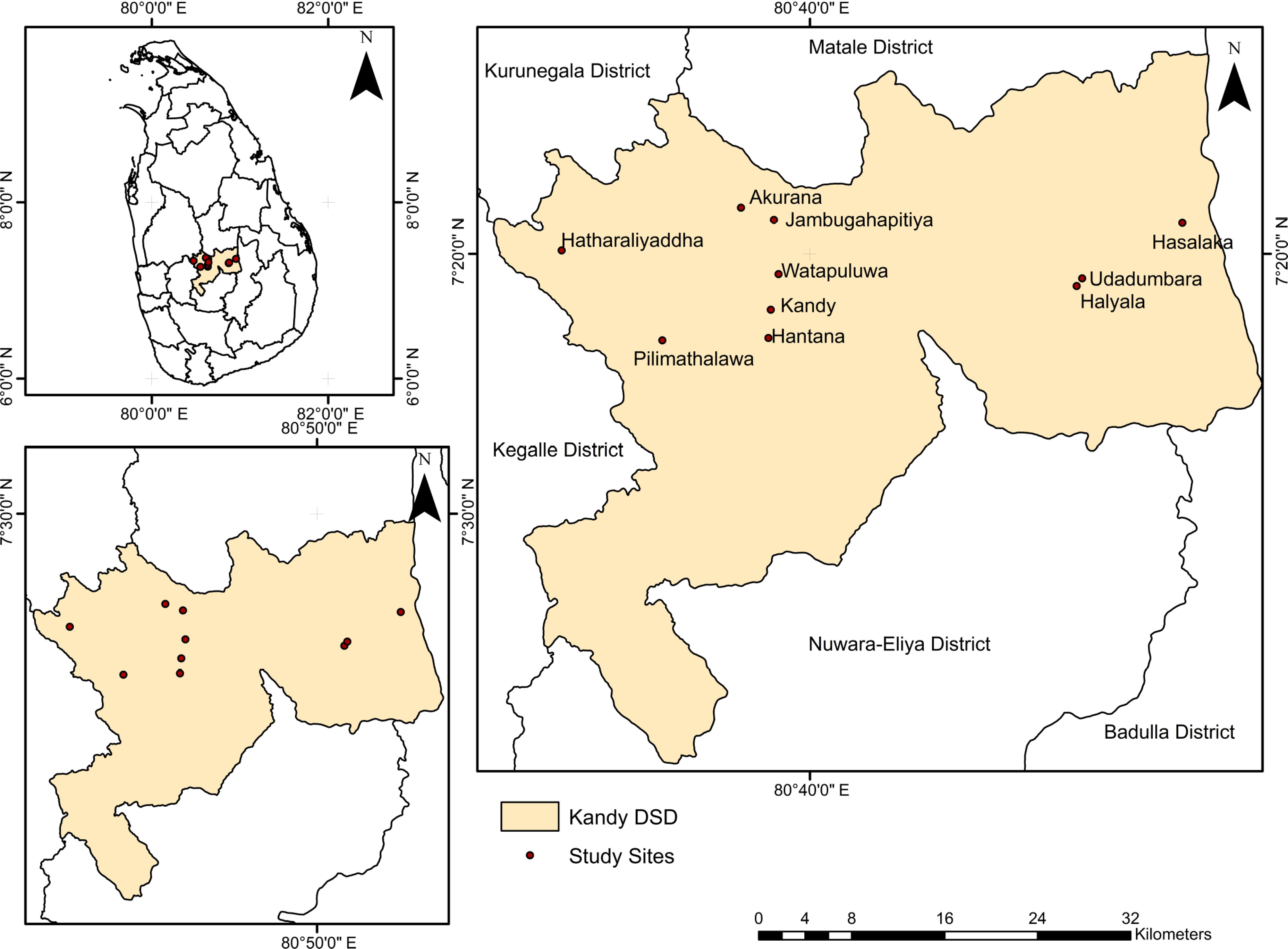
Figure 1.
Ten selected villages in which the present survey was conducted in the Kandy District, Sri Lanka. Source: Prepared by Uthpala Premarathna in 2025 using ArcGIS.
Survey questionnaire
-
A questionnaire was designed to collect information aligned with the objectives of the study and was pretested on 10 randomly selected individuals before being administered to the test population. The survey collected information on the demographic characteristics of the respondents, their knowledge of wild edible mushroom species, methods of consumption, and the marketability of wild mushrooms (Appendices 1 and 2). Interviews were conducted in Sinhala to facilitate clear communication with the participants. Before data collection, the interviewer was trained in the questionnaire structure and interview procedures to ensure consistency. Following the pretest, the questionnaire was revised to improve clarity and effectiveness. Ten randomly selected individuals participated in the pretest, and their feedback informed minor adjustments to the questionnaire's clarity and structure. Additional closed-ended (yes/no) questions were included to simplify the responses and enhance the data's reliability. All procedures adhered to the guidelines of the Committee for Ethical Clearance (CEC) of the Postgraduate Institute of Science (Certificate ID: CEC_PGIS_2025_17, approval date: 2026.01.21, with effect from 2025.10.21).
Data collection
-
Interviews were conducted in 10 villages, representing both rural and urban settings: Akurana, Halyala, Hantana, Hasalaka, Hatharaliyadda, Jambugahapitiya, Kandy, Pilimathalawa, Udadumbara, and Watapuluwa (Fig. 1). The study sites were chosen for their accessibility and to ensure the representation of rural, suburban, and urban residential environments. In each village, respondents were approached at both household and public locations. Participants were recruited through convenience sampling, according to their availability and willingness to participate. Data collection involved semistructured interviews, with the study's purpose and context explained to the respondents at the outset of each interview. In total, 115 respondents were interviewed, comprising 56 men and 59 women. Informants were selected to ensure diverse perspectives and knowledge, including informants from various age groups. Furthermore, informal discussions with the respondents were conducted to explore the potential use of mushrooms in traditional medicine.
Data analysis
-
The respondents' sociodemographic characteristics were summarized and are presented in charts to establish a foundational context. The total number of mushroom species identified through survey questionnaires was recorded. Analyses were conducted using the informants' responses. A comprehensive list of wild mushroom species reported by the respondents was generated from the questionnaire data. Fungal taxa were identified to the genus and species levels, when possible, using morphological characteristics, standard taxonomic keys, and previous publications in Sri Lanka[31−34]. Chi-square tests assessed statistical differences among groups. Quantitative data were obtained from utilization values, which were analyzed using the relative frequency of citation (RFC) botanical index.
$ {x}^{2}=\sum\dfrac{{\left(\mathrm{O}-\mathrm{E}\right)}^{2}}{E} $ where, x2 is the chi-square test statistic, O is the observed frequency of rural respondents consuming mushrooms, and E is the expected frequency of rural respondents consuming mushrooms.
$ RFC=\dfrac{FC}{N} $ where, FC is the number of respondents who mentioned a particular species of macrofungi, and N is the total number of respondents interviewed.
-
The study surveyed 115 respondents with a nearly balanced gender distribution: 51.30% female and 48.70% male. Most respondents were aged 46–60 years (30.43%), followed by those aged 60+ (26.96%) (Fig. 2). Most participants were from rural areas (50.43%), followed by suburban (39.14%) and urban regions (10.43%). In terms of education, 38 had completed advanced level education, 35 had completed ordinary level education, and 32 held degrees (Fig. 3). Regarding their occupation, 28.69% were government officers, 19.13% were housewives, and 12.17% were retired individuals, with smaller groups including students, farmers, entrepreneurs, and private sector employees (Fig. 4). The majority of respondents (80.87%) were in the middle-income category, and 19.13% reported low incomes. These demographics provide a comprehensive overview of the socioeconomic and educational background of the test population.
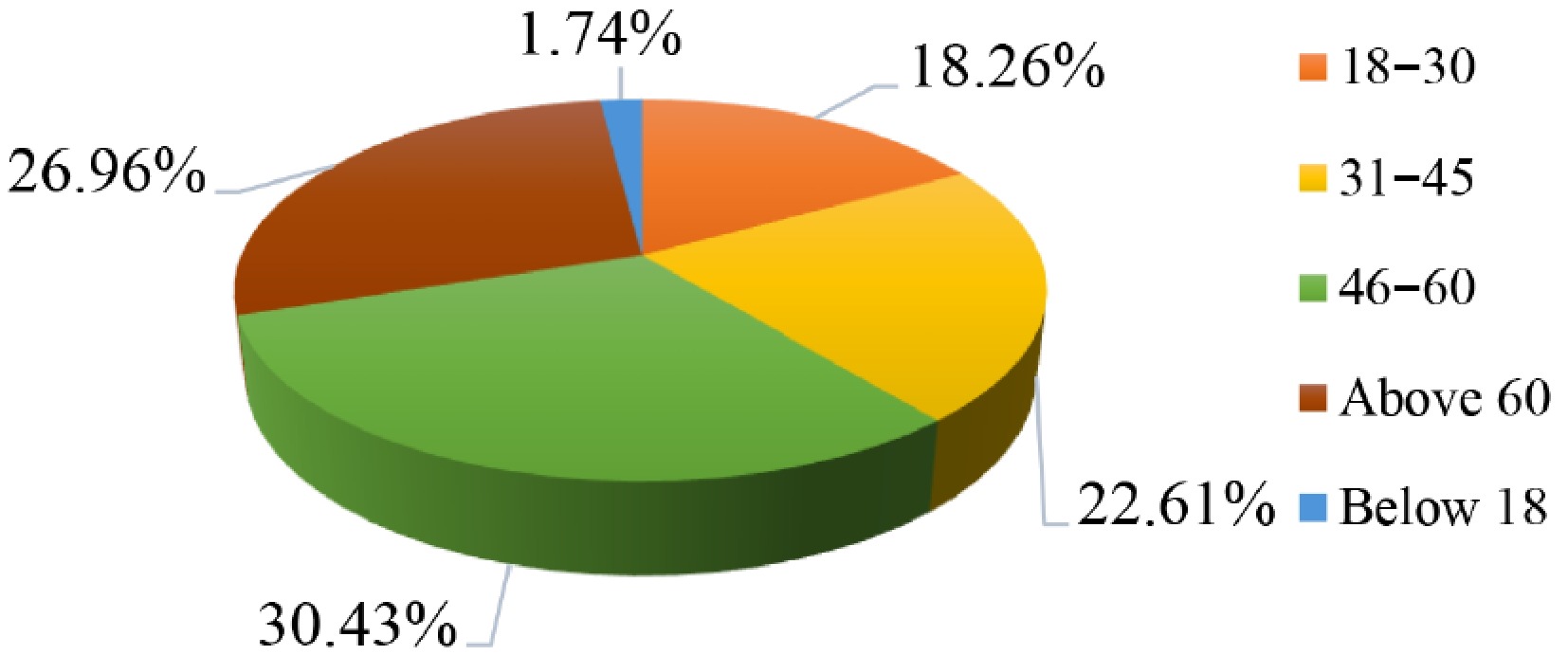
Figure 2.
Respondents as a percentage of the total test population, grouped by age.
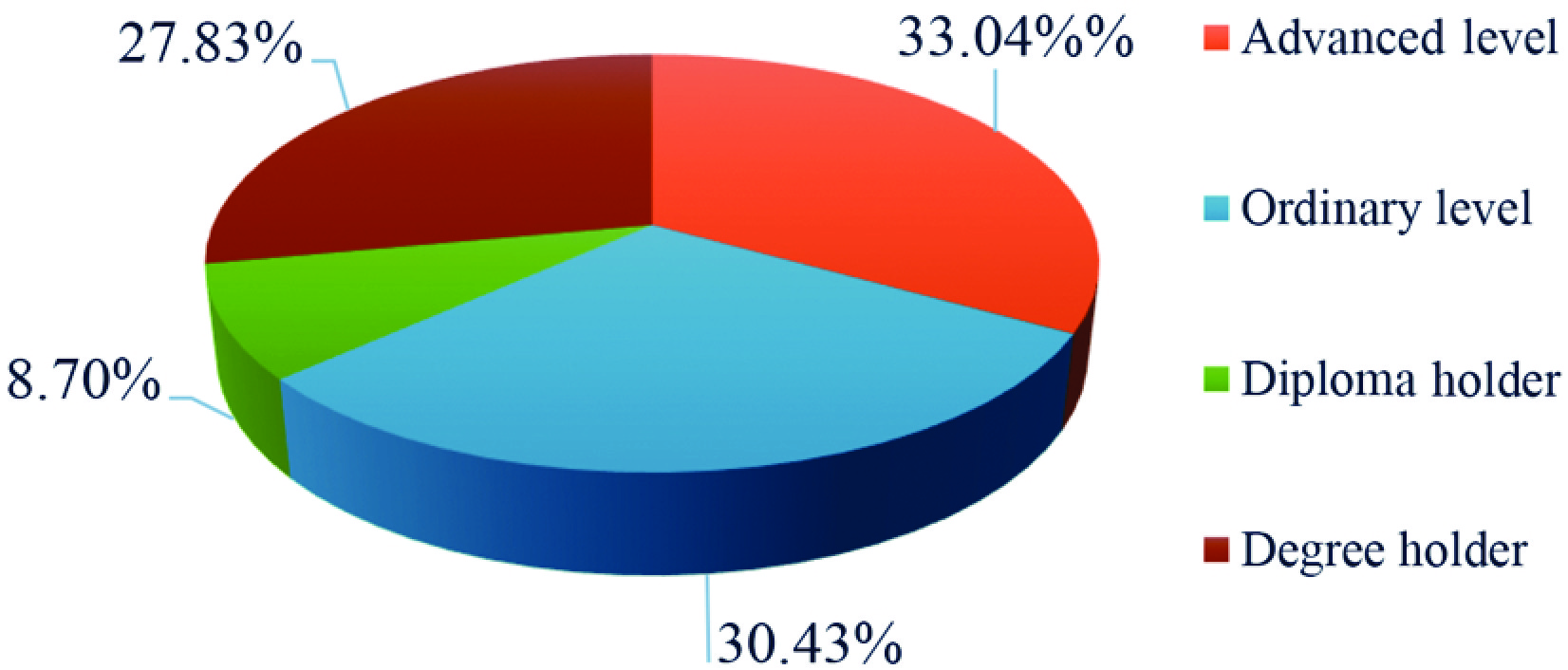
Figure 3.
Respondents as a percentage of the total population, grouped by their education level.
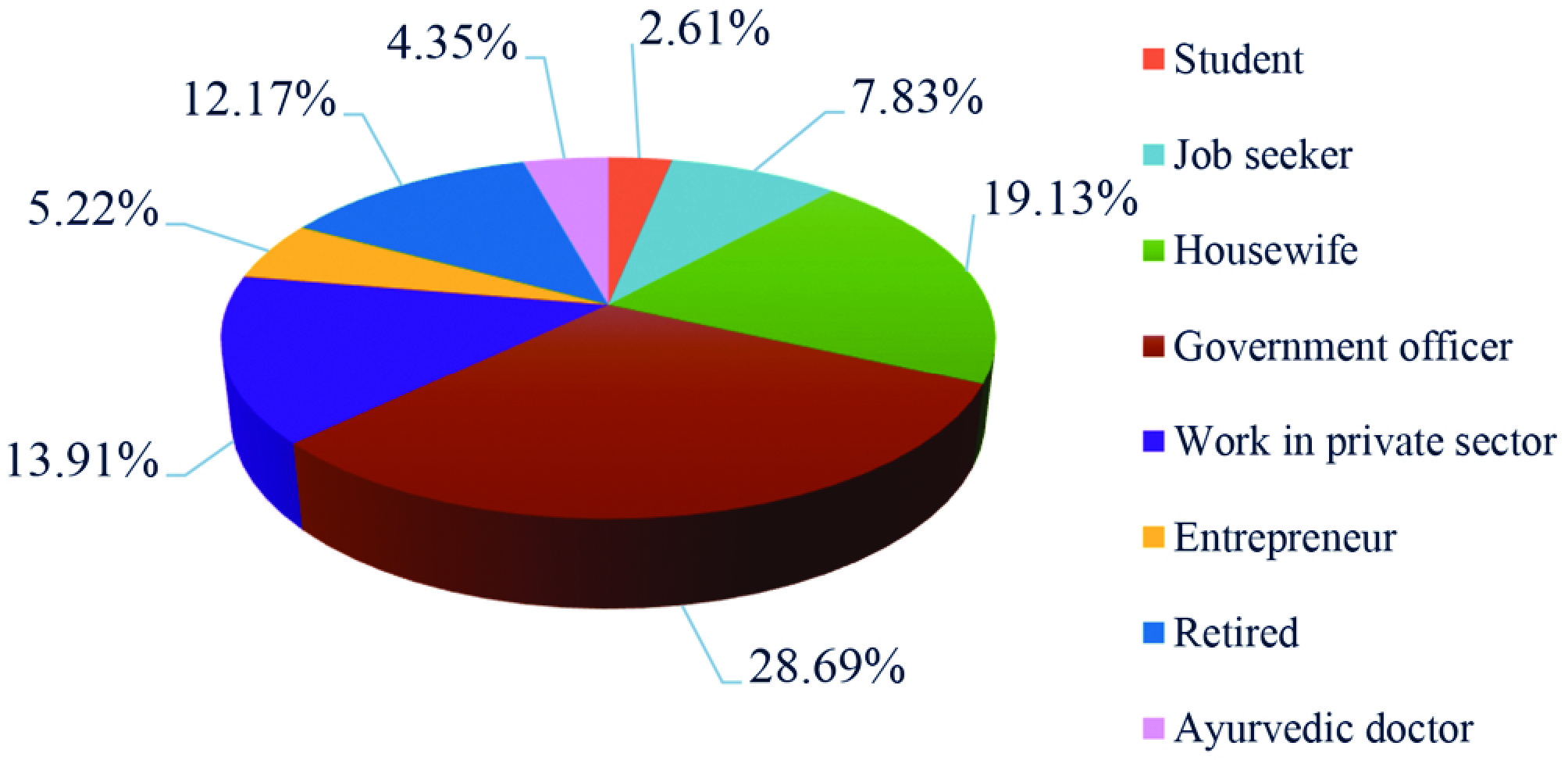
Figure 4.
Respondents as a percentage of the total population, grouped by their occupation.
Indigenous knowledge on mushrooms and their utilization
-
In this study, all respondents (100%) reported consuming mushrooms at least once in their lifetime, either as commercially available or wild mushrooms. Approximately 58% of respondents demonstrated the ability to distinguish edible from poisonous mushrooms. According to them, edible species were identified on the basis of various characteristics, including shape, color (commonly white, grayish, or brownish), the size of the sporocarp, mildness, brittleness of the sporocarp, smell (pleasant or lacking a strong odor), and habitat (often near termite mounds or in paddy fields). Other distinguishing features included the absence of a ring on the stem, rapid decomposition within 2 to 3 days, and a tendency to grow in clumps, particularly on full moon days. Additionally, the community believed that if animals such as worms, flies, or snails are attracted to mushrooms, they are most likely safe for human consumption. This traditional knowledge seems to be often passed down from generation to generation. According to the results, 41 (35.65%) female and 40 (34.79%) male respondents reported consuming wild mushrooms, indicating similar engagement across genders. In contrast, 18 female and 16 male respondents reported that they do not consume wild mushrooms, mainly because of a lack of knowledge for identifying edible species and concerns about safe consumption (Table 1).
Table 1. Percentage of respondents engaged in wild mushroom consumption according to sociodemographic factors.
Parameters Informant groups Engagement in wild mushroom
consumption as a foodYes No Gender Female 41 (35.65%) 18 (15.65%) Male 40 (34.79%) 16 (13.91%) Age Below 18 − 2 (1.74%) 18−30 7 (6.08%) 14 (12.17%) 31−45 18 (15.65%) 8 (6.95%) 46−60 29 (25.21%) 6 (5.21%) Above 60 28 (24.34%) 3 (2.60%) Education level Ordinary level 26 (22.60%) 9 (7.82%) Advanced level 26 (22.60%) 12 (10.43%) Diplomatist 8 (6.95%) 2 (1.72%) Degree holder 22 (19.13%) 10 (8.69%) Residential type Rural 43 (37.39%) 15 (13.04%) Suburban 32 (27.82%) 13 (11.30%) Urban 9 (7.82%) 3 (2.60%) Family income Low income 18 (15.65%) 4 (3.5%) Middle income 64 (55.65%) 29 (25.21%) High income − − A limited number of respondents demonstrated awareness of the medicinal properties of mushrooms. Specifically, 11 respondents (9.56%) indicated that mushrooms are beneficial for managing conditions such as high cholesterol, diabetes, hypertension, and gastrointestinal disorders, as well as for supporting immune function. Additionally, one Ayurvedic practitioner identified a broader range of perceived benefits, including immune-boosting, anticancer (particularly for breast cancer), antioxidant, digestive, and cholesterol-related properties. However, none of the respondents could specify the mushroom species associated with these medicinal effects.
Statistically significant associations were observed between wild mushroom consumption and knowledgeability in the five age groups (Table 2; χ2 = 27.59, df = 4, p < 0.05), whereas no significant association was observed between gender and either engagement in wild mushroom consumption or knowledgeability (Table 3; χ2 = 0.051, df = 1, p > 0.05).
Table 2. Chi-square test data for engagement in wild mushroom consumption and knowledgeability in different age groups.
Age group Observed frequency (O) Row total Expected frequency (E) Yes No Yes No Below 18 − 2 2 1.43 0.57 18−30 7 14 21 14.97 6.03 31−45 18 8 26 18.54 7.46 46−60 29 6 35 24.96 10.04 Above 60 28 3 31 22.10 8.89 Column total 82 33 115 Table 3. Chi-square test data for engagement in wild mushroom consumption and knowledgeability by gender.
Gender Observed frequency (O) Row total Expected frequency (E) Yes No Yes No Female 41 18 59 41.55 17.44 Male 40 16 56 39.44 16.55 Column total 81 34 115 List of mushrooms utilized by the respondents
-
The respondents stated that most mushrooms are seasonal, and thus they harvest wild mushrooms more often during the rainy season (Fig. 5). They also mentioned that some of these mushrooms often grow in the same location repeatedly. As the respondents mentioned, "humbas bimmal" (Termitomyces heimii Natarajan) was the most frequently reported wild edible species, consumed by 40% of respondents, followed by "veli hathu" (Termitomyces spp.) (39%) and "piduru bimmal/piduru hathu" (Volvariella volvacea [Bull.] Singer) (31%) (Tables 4 and 5). Mushrooms were identified to the genus level using morphological characteristics and comparisons with available taxonomic literature, and the identifications were verified by a mycological expert. The respondents indicated various techniques of mushroom preservation, with drying being the most frequently cited method. This method had variations, such as sun drying, air drying, dehydration, and cutting mushrooms into smaller pieces to improve efficiency. Refrigeration was often mentioned as a preservation technique. Furthermore, a few participants referred to preservation through cooking techniques such as frying and deep frying, along with the use of salt. The results indicate that the community primarily uses conventional, basic preservation methods, particularly drying and refrigeration, to prolong mushrooms' shelf life.
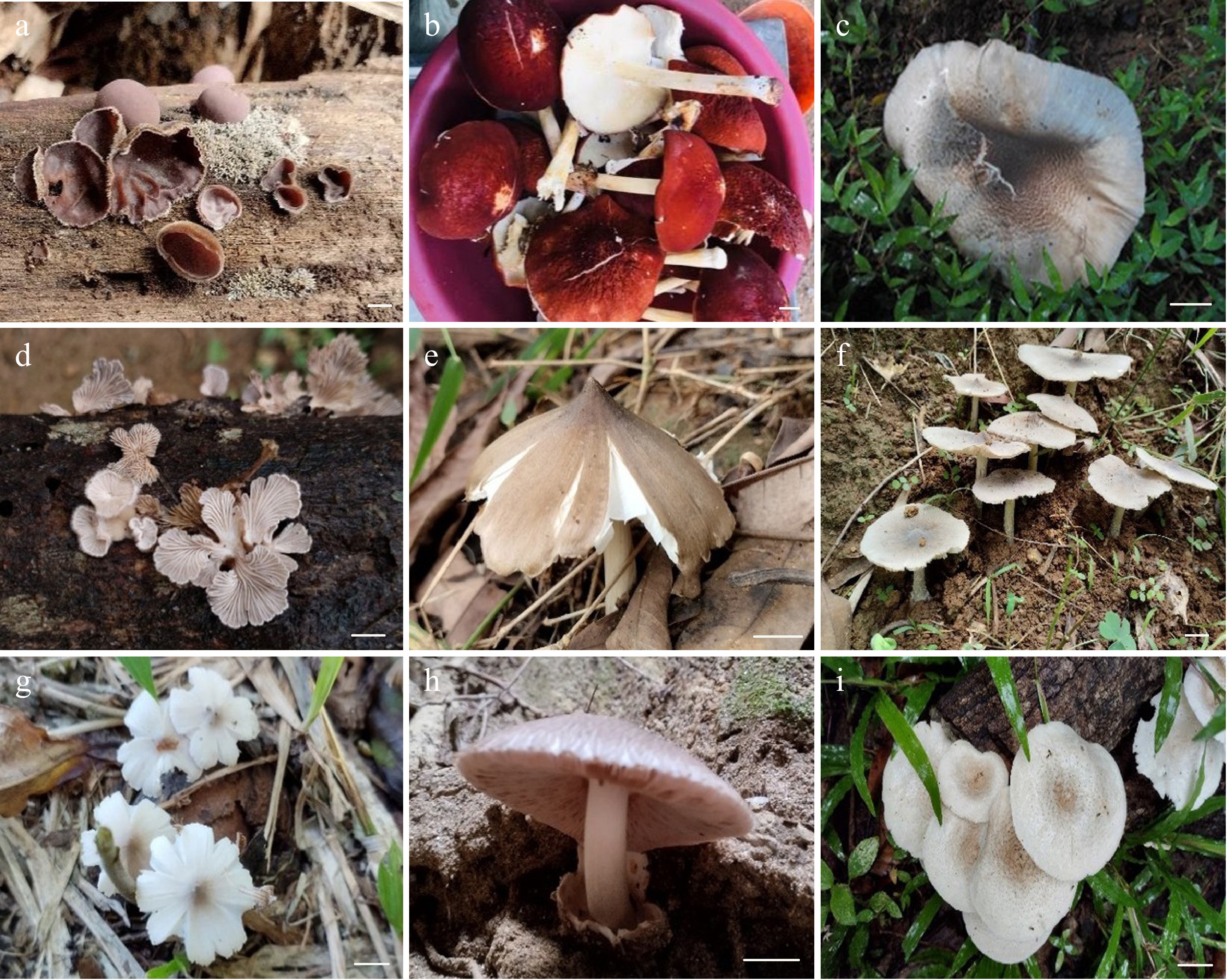
Figure 5.
Sri Lankan wild edible mushrooms in their natural habitats. (a) Auricularia sp. ("kankotiya hathu"), (b) Flammulaster fulvoalbus ("athuru hathu") (Photo credit: Amila Perera), (c) Pleurotus giganteus (Photo credit: Thiloshi Agalawela), (d) Schizophyllum commune ("lena hathu"), (e) Termitomyces eurrhizus ("indalolu"), (f) Termitomyces heimii ("humbas bimmal"), (g) Termitomyces microcarpus ("heenveli hathu"), (h) Volvariella volvacea ("piduru bimmal/piduru hathu"), and (i) Lentinus squarrosulus ("kotan bimmal"). Scale bar = 1 cm.
Table 4. Taxonomic details of the wild edible mushroom species reported by the respondents during the survey.
Phylum Order Family Species (Scientific name) Respondent-reported vernacular names Basidiomycota Agaricales Tubariaceae Flammulaster fulvoalbus (Berk. & Broome) Pegler Athuru hathu, mukalan hathu, kevum hathu Pleurotaceae Pleurotus giganteus (Berk.) Karun. & K.D. Hyde Uru paha Schizophyllaceae Schizophyllum commune Fr. Lena hathu, lena pahuru, lena pala Lyophyllaceae Termitomyces eurrhizus (Berk.) R. Heim Indalolu Termitomyces heimii Natarajan Humbas bimmal Termitomyces microcarpus (Berk. & Broome) R. Heim Heenveli hathu, heenveliya, iha bimmal Termitomyces sp. Veli hathu Pluteaceae Volvariella volvacea (Bull.) Singer Piduru bimmal, piduru hathu Auriculariales Auriculariaceae Auricularia sp. Kannoriya, kankotiya hathu, korikan Polyporales Polyporaceae Lentinus squarrosulus Mont. Kotan bimmal, kandha mal Table 5. Frequency of wild edible mushroom species identified by respondents in rural, suburban, and urban residential areas.
Varnacular names Residential type Total RFC Rural Suburban Urban Kotan bimmal, kandha mal 15 8 − 23 0.20 Humbas bimmal 23 14 3 40 0.35 Veli hathu 23 14 2 39 0.34 Heenveli hathu, heenveliya, iha bimmal 12 11 2 25 0.22 Piduru bimmal, piduru hathu 16 13 2 31 0.27 Lena hathu, lena pahuru, lena pala 9 8 − 17 0.15 Indalolu 1 2 1 4 0.03 Athuru hathu, mukalan hathu, kevum hathu 1 1 2 4 0.03 Uru paha 3 − 1 4 0.03 Kannoriya, kankotiya, korikan 3 − − 3 0.02 Total 106 71 13 Factors affecting wild mushrooms' growth
-
According to the study, none of the respondents were involved in cultivating wild mushroom species. Instead, all harvested mushrooms were used exclusively for household consumption. Respondents identified several key factors contributing to the decline in wild mushrooms' growth, including free grazing, agricultural expansion, habitat degradation, climate change, and a lack of knowledge and expertise in identifying wild mushrooms suitable for consumption. Furthermore, heavy agricultural machinery such as harvesters, tractors, and motorized tillers was directly identified by the respondents as playing a massive role in wild mushrooms' decline, as these practices may compact the soil, disturb the natural forest floor or paddy bund ground where mushrooms naturally break through, and destroy the delicate fungal mycelium networks in the soil. Similarly, respondents suggested that frequent land leveling and plowing may disturb the microhabitats required for mushroom fruiting, potentially reducing seasonal emergence.
Mushroom poisoning: symptoms and traditional remedies
-
The interviewees shared insights into the symptoms of mushroom poisoning and highlighted several traditional remedies when someone accidentally ingests a poisonous mushroom. According to them, common symptoms of mushroom poisoning include vomiting, diarrhea, abdominal pain, allergies, and dermatological issues. Some respondents also reported that, in severe cases, mushroom poisoning can lead to unusual behavior resulting from psychological disturbances or imbalances. These symptoms are often viewed as signs of severe poisoning, prompting the use of various traditional remedies to alleviate symptoms. The most well-known recommendation was to drink coconut milk to induce vomiting and detoxify. Other methods included consuming ginger puree or nutmeg; preparing a broth with ingredients such as pepper, salt, turmeric, garlic, ginger, fennel, and coriander; and administering peeled moringa bark (Moringa oleifera Lam.) or thora leaves (Senna tora [L.] Roxb.). Additionally, it was suggested that drinking lemon juice could be an effective remedy for mushroom poisoning. These responses reflect the community's reliance on traditional knowledge and the need for increased awareness and education on identifying poisonous mushrooms and managing mushroom poisoning effectively.
Consumption preferences for wild and commercial mushrooms
-
Wild mushrooms are known for their nutritional benefits, as they are rich in protein, low in fat, and free from chemical fertilizers and pesticides. Indeed, 65% of the respondents preferred wild mushrooms to commercially available products, primarily because of their superior taste. Furthermore, 47% of respondents mentioned mushrooms as a good source of protein, essential vitamins, and minerals, and acknowledged their low-fat content, making them a healthy dietary choice. They also reported that mushrooms are used as a meat alternative because of their rich, meaty flavor and texture. This observation likely stems from their personal experiences or traditional culinary practices, in which mushrooms are valued for their ability to mimic the taste and texture of meat in various dishes. Additionally, they noted that wild mushrooms are free of the harmful preservatives commonly used in some commercial products, making them a healthier choice. Another significant advantage is their availability in natural environments at no cost, making them accessible to even the most economically vulnerable populations. These factors enhance their nutritional and economic value and underscore their importance in promoting sustainable, affordable food sources.
On the other hand, 35% of the respondents preferred commercially available mushrooms for several reasons. Their preference is mostly driven by the ready availability of these mushrooms in the market and their limited knowledge of identifying wild mushrooms. These respondents also consider commercially available mushrooms to be cleaner, more nutritious, and more flavorful than wild edible mushrooms. The convenience of purchasing prepackaged, ready-to-cook mushrooms from supermarkets or local markets also played a significant role in their preference. Some respondents noted that commercially available mushrooms are more visually appealing and uniform in size, making them more desirable for culinary purposes. However, respondents reported concerns regarding the expiry date and the quality of mushroom fruiting bodies when purchasing them from supermarkets and vegetable markets.
Awareness and utilization of commercially available mushroom species
-
In this study, respondents were also questioned about their knowledge of commercially available mushrooms. The species identified were American oyster (Pleurotus ostreatus [Jacq.] P. Kumm.), Bhutan oyster (Pleurotus eous [Berk.] Sacc.), abalone (Pleurotus cystidiosus O.K. Mill.), button mushroom (Agaricus bisporus [J.E. Lange] Imbach), Makandura white (Calocybe sp.), pink oyster (Pleurotus djamor [Rumph. ex Fr.] Boedijn), and milky mushroom (Calocybe indica Purkay. & A. Chandra). According to the majority of respondents (89%), the sale price for 250 g of commercially available mushrooms ranged from Rs. 150–250 (US
${\$} $ ${\$} $ The observations in this study suggest that despite being aware that certain wild mushroom species are edible, many people are hesitant to consume them because of various concerns. These include fear of misidentification leading to poisoning, a lack of confidence in distinguishing edible varieties from toxic ones, limited knowledge about preparation methods, and cultural beliefs or misconceptions regarding wild mushrooms. These findings highlight the need for educational interventions that promote accurate identification and safe preparation practices, thus facilitating the safe consumption of edible mushroom species within local communities.
Cultural perceptions, myths, and beliefs about wild mushrooms
-
Sri Lanka, despite its rich biodiversity, has relatively few species of mushrooms traditionally recognized as edible by the local community. According to the study's results, respondents identified Phallus sp., locally referred to as "nai bimmal" or "nai hathu," as a poisonous mushroom. This is well entrenched in folklore and traditional cultural beliefs. In contrast, Phallus sp. is valued for culinary and medicinal purposes in China and Japan, where ethnomycological knowledge and practice differ significantly. This divergence highlights the role of cultural context in the classification and utilization of wild fungi. Traditional knowledge plays a major role in prompting community perceptions about mushroom toxicity in Sri Lanka. During the study, several respondents mentioned a range of folklore-based indicators used to determine which mushrooms are harmful. These included bright or abnormal coloration, a rotten or pungent odor, secretions from the sporocarp, a solid or leathery texture, and resistance to natural decomposition. Mushrooms that grew on substrates such as cow dung were particularly viewed with suspicion. Other morphological features, such as the formation of an annulus on the stipe, the yellowing of the lamellae, and the tendency of these mushrooms to attract small insects, were also widely cited as signs of risk. Further, the observation that certain mushrooms were avoided by animals was widely interpreted as a natural warning sign of toxicity. These traditional beliefs and fears have led to widespread caution among the local population. As a result, even potentially edible or medicinal species are frequently discarded or avoided.
-
The distribution of knowledge and use of wild edible mushrooms varied across the three residential areas. Rural respondents reported the highest number of identifications (106), followed by suburban respondents (71), whereas urban respondents recorded the lowest number (13). These findings indicate that individuals residing in rural areas possess greater knowledge of wild edible mushrooms, likely because of their more frequent interaction with natural ecosystems such as forests, agricultural lands, and home gardens where mushrooms are commonly found. In contrast, urban respondents identified fewer mushroom species, which may be attributed to their limited exposure to natural habitats and reduced reliance on wild food resources. Suburban communities exhibited an intermediate level of knowledge, reflecting their partial interaction with both the natural and urban environments.
Previous ethnomycological studies have reported varying relationships between gender and knowledge of wild edible mushrooms. Several studies from Jammu and Kashmir, India, and other parts of the world have shown that female informants possess greater knowledge of wild edible mushrooms than males, likely because of their prominent roles in the collection and preparation of mushrooms, and household food management[33−39]. In contrast, studies conducted in Poland and China have reported that men are more knowledgeable regarding wild edible mushrooms, often attributed to their greater mobility and ability to travel deeper into forested areas[40−42]. However, some studies have found no significant gender-based differences in mushroom knowledge[43,44]. Consistent with these latter findings, the present study revealed no significant association between gender and either engagement in wild mushroom consumption or knowledgeability regarding wild mushrooms. This suggests that in the present study area, ethnomycological knowledge and mushroom utilization are shared equally among males and females, potentially reflecting balanced participation in mushroom-related activities and household-level knowledge transmission.
Documenting indigenous knowledge of the use of diverse edible and inedible mushrooms for medicinal and nutritional purposes is a crucial aspect of ethnomycology. Mushrooms have served as a vital component in traditional Chinese medicine for centuries, and the dried extracts derived from mushroom fruiting bodies currently occupy a significant and profitable position in the herbal medicine markets of numerous Western nations[26,45]. Ullah et al. documented 26 mushroom species from the Western Himalayas in Kashmir that were considered to be medicinally important and were traditionally used to treat common ailments[46]. Despite the limited awareness of medicinal mushrooms in Sri Lanka, several studies have identified the medicinal potential of specific species. For instance, Pleurotus giganteus and Ganoderma lucidum have been recognized for their therapeutic properties[47]. However, the present study indicated that none could identify specific mushroom species associated with particular medicinal applications. Similar observations have been reported in previous Sri Lankan studies, in which it was noted that although mushrooms with medicinal potential may be present in forest ecosystems, local communities often struggle to identify such species because limited knowledge has been passed down through generations[48]. This lack of knowledge not only limits the incorporation of mushrooms into healthcare but also hinders the development of a medicinal mushroom industry that could yield significant benefits for public health and the economy[11,49]. Research conducted in Kudawa found that villagers use a single mushroom species, referred to as "behet hatu," for medicinal purposes, including treating injuries such as broken arms, legs, and bones. This traditional knowledge has been transmitted across generations[48].
The respondents reported several traditional indicators used to distinguish edible from poisonous mushrooms. For example, mushrooms that attract animals such as worms, flies, or snails are often considered to be safe for human consumption. However, this assumption is unreliable, because many poisonous mushroom species can also host insect communities. For instance, species within the genus Amanita contain toxic compounds that are harmful to humans, yet certain frugivorous insects have adapted to exploit these mushrooms. This suggests that the presence of animals does not necessarily indicate edibility[50,51]. However, similar traditional criteria have been documented in studies in South Asian countries, where local communities identified edible mushrooms on the basis of characteristics such as a pleasant taste, fleshy soft texture, a white pileus, and the attraction of flies, worms and snails, whereas poisonous mushrooms were associated with bright cap coloration, an unpleasant odor, a bitter taste, milky exudates, and the absence of insect, worms and rodents' activity[5,6]. Misidentification of wild mushrooms can result in serious health risks, including poisoning. Therefore, these observations should be regarded as local perceptions rather than validated identification methods. In cases of suspected mushroom poisoning, immediate medical attention should be sought, and reliance on traditional remedies alone is not recommended.
According to the respondents in this study, underutilization and inconsistent use of mushrooms are caused by anthropogenic activities, climate change, a lack of knowledge about the diversity of wild edible mushrooms in the area, challenges in identifying species, and insufficient documentation of edible and medicinal mushrooms. Similar findings have been reported in earlier research, which showed that declines in macrofungal diversity and utilization were significantly influenced by anthropogenic disturbances, climate change, decreased forest cover, and growing urbanization[1,52−54]. These findings indicate that local patterns of mushroom availability and use may be significantly influenced by both environmental changes and knowledge-related constraints.
The findings of this study also highlight several insightful suggestions to enhance the understanding, cultivation, and utilization of mushrooms. Respondents emphasized the importance of identifying environmental factors in areas rich in edible mushrooms and using this knowledge to improve cultivation techniques. Respondents expressed interest in increasing education on mushroom identification, nutritional value, and safe consumption practices. Suggestions included introducing new mushroom species, implementing programs on advanced cultivation methods, and encouraging mushroom picking and cultivation as sustainable practices. Respondents emphasized the need to raise awareness about the medicinal properties of wild mushrooms and other fungi, while also teaching people how to identify, prepare, and consume them safely. Initiatives to educate both small- and large-scale mushroom growers on the significance of wild mushroom cultivation, as well as projects to distribute wild mushroom spawn through the Department of Agriculture, were recommended[55]. Additionally, the respondents proposed introducing simple cultivation media, promoting indoor cultivation techniques for seasonal varieties, and conducting school programs to spark interest in mushroom exploration. Suggestions also included studying the potential impact of mushrooms on cancer cells and other biological processes for drug development. Finally, the respondents recommended hosting workshops and other community engagement activities to promote mushroom cultivation and utilization while sharing knowledge and expertise.
Traditional knowledge of wild mushrooms is likely concentrated in rural communities, where individuals engage more directly with forest ecosystems and depend on wild culinary resources. The present study included 10 villages selected to represent diverse rural, suburban, and urban settings, facilitating the examination of sociodemographic influences on mushroom consumption and awareness. Despite the limited sample size, these findings provide a foundation for understanding ethnomycological practices in the district and may help identify patterns to inform future research.
-
This study is the first to document traditional knowledge of wild edible mushrooms in Kandy District. Ten wild edible mushroom species, representing seven families and seven genera, were reported by 115 informants. Among these species, Termitomyces heimii, Termitomyces microcarpus, Termitomyces sp., and Volvariella volvacea exhibited the highest RFC values, whereas Auricularia sp. had the lowest RFC of 0.02. The findings indicate that ethnomycological knowledge of wild edible mushrooms is primarily retained among older generations; respondents aged above 45 accounted for 49.55% of the recorded knowledge, whereas those aged below 45 contributed only 21.73%. This suggests a decline in knowledge retention among younger age groups. Widespread uncertainty about mushroom consumption persists, primarily because of concerns about misidentification and the risk of poisoning. Although the nutritional value of mushrooms is recognized, their medicinal properties remain largely underappreciated within these communities. These results highlight the importance of ethnomycological research in integrating cultural knowledge with scientific inquiry, promoting biodiversity conservation, and fostering sustainable socioeconomic development.
Bhagya M. Premarathne acknowledges the Tropical Microbiology Research Foundation for funding this research. The researchers also extend their gratitude to Y. Premarathne and R. B. Hapukotuwa for their support during the survey. Uthpala Premarathna is thanked for preparing the location map. Samantha C. Karunarathna thanks the National Natural Science Foundation of China (Number 32260004), the High-Level Talent Recruitment Plan of Yunnan Province (High-End Foreign Experts program), and the Key Laboratory of Yunnan Provincial Department of Education of the Deep-Time Evolution on Biodiversity from the Origin of the Pearl River for their support.
-
The authors confirm their contributions to the paper as follows: conceptualization: Karunarathna SC; data collection, analysis, interpretation of results, and writing – original draft: Premarathne BM; writing − review and editing: Karunarathna SC, Madawala S, Wijesundara DSA, Wijayawardene NN, Ediriweera A. All authors reviewed the results and approved the final version of the manuscript.
-
All the data generated and analyzed during this study are available in the article.
-
The authors declare that they have no conflict of interest.
- Copyright: © 2026 by the author(s). Published by Maximum Academic Press, Fayetteville, GA. This article is an open access article distributed under Creative Commons Attribution License (CC BY 4.0), visit https://creativecommons.org/licenses/by/4.0/.
-
About this article
Cite this article
Premarathne BM, Karunarathna SC, Madawala S, Wijesundara DSA, Wijayawardene NN, et al. 2026. Ethnomycological study of edible and medicinal mushrooms in the Kandy District of Sri Lanka. Studies in Fungi 11: e016 doi: 10.48130/sif-0026-0018 

Ethnomycological study of edible and medicinal mushrooms in the Kandy District of Sri Lanka
- Received: 23 January 2026
- Revised: 13 April 2026
- Accepted: 17 April 2026
- Published online: 25 May 2026
Abstract: Mushrooms are a crucial component of forest ecosystems and play a significant role in human diets, traditions, and livelihoods, although their use and perceptions differ among communities. This study explores the ethnomycological knowledge, consumption patterns, and perceptions of wild and commercially available mushrooms within the Kandy District of Sri Lanka. Data were collected through structured interviews and questionnaires with 115 respondents from 10 randomly selected localities, representing diverse demographic and socioeconomic backgrounds. In total, 56 males and 59 females were surveyed as informants in the study. The findings revealed that 65% of respondents prefer wild edible mushrooms for their superior taste, nutritional value, and perceived absence of chemical additives, whereas 35% prefer commercially available mushrooms, possibly because of ease of access. Commonly consumed wild species include Termitomyces sp. (veli hathu), Volvariella volvacea (piduru bimmal/piduru hathu), and Schizophyllum commune (lena hathu), whereas the commercial market is dominated by species such as Pleurotus cystidiosus (abalone mushroom) and Agaricus bisporus (button mushroom), according to the respondents. The results show that older respondents have greater awareness of wild mushrooms than younger respondents. Interviewees highlighted the need for programs to raise awareness of mushrooms, including training in accurate identification, cultivation, and preservation techniques. Moreover, the findings indicate that mushrooms currently play an insignificant role in local medicine, as most informants demonstrated limited awareness of the medicinal properties of mushrooms. The results further highlight the significance of combining indigenous knowledge with modern approaches to domesticate mushrooms for economic and nutritional benefits, emphasizing the importance of traditional knowledge and practices, while addressing knowledge gaps and enhancing public awareness.
-
Key words:
- Ethnomycology /
- Indigenous knowledge /
- Mushroom cultivation /
- Rural communities /
- Socioeconomic factors