












-
The global freshwater system is under mounting strain as climate change intensifies hydrological extremes, reduces precipitation in already arid regions, and accelerates evapotranspiration (ET) rates[1−3]. The Middle East and North Africa (MENA), identified as one of the world's principal climate change hotspots, faces particularly severe consequences, with projected temperature increases and declining rainfall threatening already fragile water budgets[4,5]. These climatic shifts compound an already acute global water crisis in which an estimated four billion people currently experience severe water scarcity conditions for at least one month per year[6]. Simultaneously, the world must substantially increase food production to meet the needs of a rapidly growing global population, which is projected to reach nearly 10 billion by 2050. Achieving this goal will require agricultural output to increase by at least 60% to 70% compared with 2005−2007 baseline levels[7,8]. The major issue is that agriculture already accounts for approximately 70% of all freshwater withdrawals[6,9]. While irrigated agriculture covers only around 20% of global cultivated land, it contributes roughly 40% of the world's total food supply, making it considerably more productive per unit area than rainfed systems[9,10]. Accordingly, expanding irrigated areas over rainfed croplands has been widely identified as one of the most viable pathways for closing the widening gap between food supply and demand[7,9]. Jordan exemplifies these converging pressures in a particularly acute form. It is one of the most water-scarce countries in the world, with renewable freshwater availability of only about 78 m3 per person per year. This is far below the internationally recognized water-scarcity threshold of 1,000 m3 per capita per year. Jordan's agricultural sector faces a precarious future under intensifying climate stress[3,11]. Jordan's climate follows that of the eastern Mediterranean region, but seasonal rainfall is below 100 mm in over 70% of the country's land area, and so irrigation is essential. Agriculture in Jordan consumes almost half of the country's total freshwater resources, while the sector must concurrently contribute to national food security objectives that necessitate the expansion and modernization of irrigated farming[11]. Over 20 million USD in international grants and funded projects have been directed towards the agricultural water sector in Jordan over the past 10 years in Jordan. With upcoming projects with even higher budgets, such as ARDI (Arabic for 'My Land') with a budget of 120 million USD[12], the need to examine the lessons learned from previous efforts is critical. One of the common themes of funded projects in Jordan is the integration of water-efficient systems and practices across Jordanian farmlands. This included smart irrigation systems, hydroponics, capacity-building initiatives, and supporting rehabilitation of deteriorating water systems. These initiatives promoted the adoption of hydroponic systems, which became popular amongst many farmers with documented positive socioeconomic impacts[13]. Smart irrigation technologies, including sensor-based monitoring and data-driven decision support systems, have been highlighted as a very promising technology option for minimizing non-productive water consumption[14,15]. However, the adoption of such technologies in Jordan remains limited and reportedly restricted by factors such as lack of post-installation support and guidance[16]. There have been documented results on the contribution of alternative water conservation strategies and technologies in Jordan, such as hydroponic systems[13]. However, there is no clear documentation on the added value of smart irrigation technologies, their adoption restrictions, or integration gaps. Previous investigations in Jordan link the term 'Smart Irrigation' with the presence of sensors, automation, or connectivity (e.g., internet of things [IoT]), but do not specify what constitutes meaningful integration[17,18]. In the context of this work, the assessment examined how 'Smart' irrigation is based on the presence of foundational elements that can support sound irrigation decisions. This article presents findings from exploratory field visits aiming to identify integration gaps of different technologies in smart irrigation in Jordan and possible opportunities for improvement. The findings could support decision-makers and agronomists in other arid and water-scarce regions. In such settings, where irrigation modernization is often pursued through donor-funded programs, the findings could help strengthen how smart irrigation technologies are funded, implemented, and applied in irrigation decisions.
-
This work describes the findings of an exploratory assessment conducted across 45 farmlands in Jordan. The assessment was carried out through a series of site visits that covered farm sites from the following governorates: Mafraq, Azraq, Irbid, Amman, Jerash, Madaba, and Maan. These governorates are located across the northern, middle, and southern regions of Jordan, where temperature and rainfall patterns follow the eastern Mediterranean climate. Site visits and interviews were conducted at different times between May 2023 and December 2025.
The assessment was limited to farms where techniques and technologies used for improving irrigation decision support had been reported, specifically, techniques that account for crop water demand in irrigation scheduling. Farms where no management decision related to irrigation was made were excluded. For example, rainfed farms and farms that simply applied irrigation manually on a random or purely time-scheduled basis were not considered. Farms operating Deep Water Culture (DWC) or Nutrient Film Technique (NFT) systems were also not within scope, as water application in these systems does not vary based on decision but rather depends on hydraulic components (e.g., pump flow rate) and production capacity (e.g., number of plants). All other growing systems, including greenhouses, traditional open fields, and other hydroponic configurations, were eligible for inclusion. Reports from farms that contained conflicting statements or implausible responses were excluded from the analysis. It should be noted that the results obtained are not considered representative of irrigation management practices across Jordanian farmers broadly, or of any specific group of local farmers. Rather, they are intended to provide insights into the prospects and challenges of adopting dynamic or feedback-based irrigation management. At the time of writing, uniform fixed irrigation through pre-established schedules based on farmer experience remains the most common approach across Jordanian farmlands.
Assessment framework and data collection
-
Each field visit followed a structured protocol built around a fixed questionnaire covering the same items at every site: the technology or technique in use, the growth system, investment source, farm scale, the intended purpose of the technology, and how the technology output was used in irrigation scheduling. Visits combined direct observation of the installed system with interviews. The assessment focused on the following technical aspects of irrigation management at each site:
The technology or technique adopted to provide feedback for irrigation management.
The soundness of the technology integration into irrigation management based on well-established irrigation principles.
The specific approach for integrating technology output into irrigation scheduling and decision-making.
In addition to the technical component, the following contextual information was collected: growth system type; investment source; farm size/scale; and purpose of the technology in the context of agricultural water management. Questions regarding interest in technology were directed to the owner or general manager, while questions concerning technical details of the system and its integration into irrigation decision-making were directed to workers, operators, and contractors. Where possible, previous technology adoption efforts and experiences were also documented through open-ended questions. Some follow-up questions were also directed to local resellers and service providers in relation to farmers' responses regarding challenges and restrictions. Questions were generally focused and direct, requiring short answers or multiple-choice (e.g., growth system, funding sources, etc.), but included several open-ended questions (experiences with technology in the past and funding sources). The discussion with farmers and contractors was also recorded and summarized into key points (The interview form is available in Supplementary Material S1). Farmers' locations, funding organizations, contractors' identities, and any identifying information were not disclosed. This was necessary given the sensitive nature of some of the findings, which could otherwise create conflict between farmers and the funding entities involved.
Soundness of mechanisms
Basis of assessment
-
One of the focal points of this work was identifying gaps and improvement opportunities in the technical feedback mechanisms of the existing technologies to support irrigation decisions. Accordingly, the soundness of each reported irrigation technique or technology was evaluated against the fundamental principles of irrigation science and crop water management. The assessment considered techniques used to provide feedback to the farmer on when and how much irrigation to apply or indicate that a certain period possibly needed a higher or lower amount of water. This included sensors, gauges, and special techniques such as monitoring for wilting marks or any other type of indication. A major aspect of interest was how well the technique could reasonably account for the dynamic nature of crop water demand. That is, whether the feedback signal generated was physically or physiologically meaningful in the context of how crops consume water and how that demand varies over time, across growth stages, and in response to environmental conditions. The operational state of the system in terms of control loop configuration was not considered in this assessment. Whether a system operated as an open loop, providing a signal or recommendation to the farmer for manual action, or as a closed loop communicating directly with a pump, valve, or fertigation system, was considered immaterial. The provision of an agronomically justified signal, regardless of the degree of automation through which it was acted upon, was deemed sufficient. Conversely, technologies whose measured variable has no established relationship with crop water demand were not considered sound, regardless of the sophistication of the data processing applied. A recurring example involved sensors such as pH meters or generic environmental loggers reported as providing irrigation feedback through 'artificial intelligence' or data analysis; the absence of a physically grounded link between the measured signal and crop water demand disqualified such systems under the criteria of this assessment.
Agrometeorological parameters considered
-
Three categories of agronomic parameters were used as the reference framework for evaluating feedback soundness. The first relates to soil water status, where feedback was considered sound when interpreted relative to field capacity (FC) and permanent wilting point (PWP), the upper and lower bounds of plant-available water, or to site-specific thresholds derived from these values. The second relates to atmospheric evaporative demand, where techniques incorporate reference ET (ETo) and crop ET (ETc), derived through the application of validated crop coefficients (Kc) to meteorological data. These were considered sound provided appropriate Kc values were available and correctly applied. The third category encompasses plant physiological indicators, including canopy temperature, sap flow, and cell turgor-related measurements, which reflect the plant's direct response to water status. Technologies employing such indicators were considered sound where the measurement principle was clearly linked to recognized plant water relations theory and the derived signal was used to meaningfully inform irrigation decisions.
-
Profile information of different producers based on data collected during the field visits included the production system used, farm size, and investment source. Other relevant information, such as seasonal water consumption, was only shared by a few farmers and so was not included in any analysis. This was mainly due to the legal implications of this information in Jordan, where water monitoring and conservation policies are very strict. Most farmers had conventional open fields (60.6%); these refer to farming plots that used soil-based agriculture without greenhouses or hydroponic systems. The second most common choice was greenhouses (35.2%), and few farmers (4.2%) reported using hydroponics (Fig. 1).
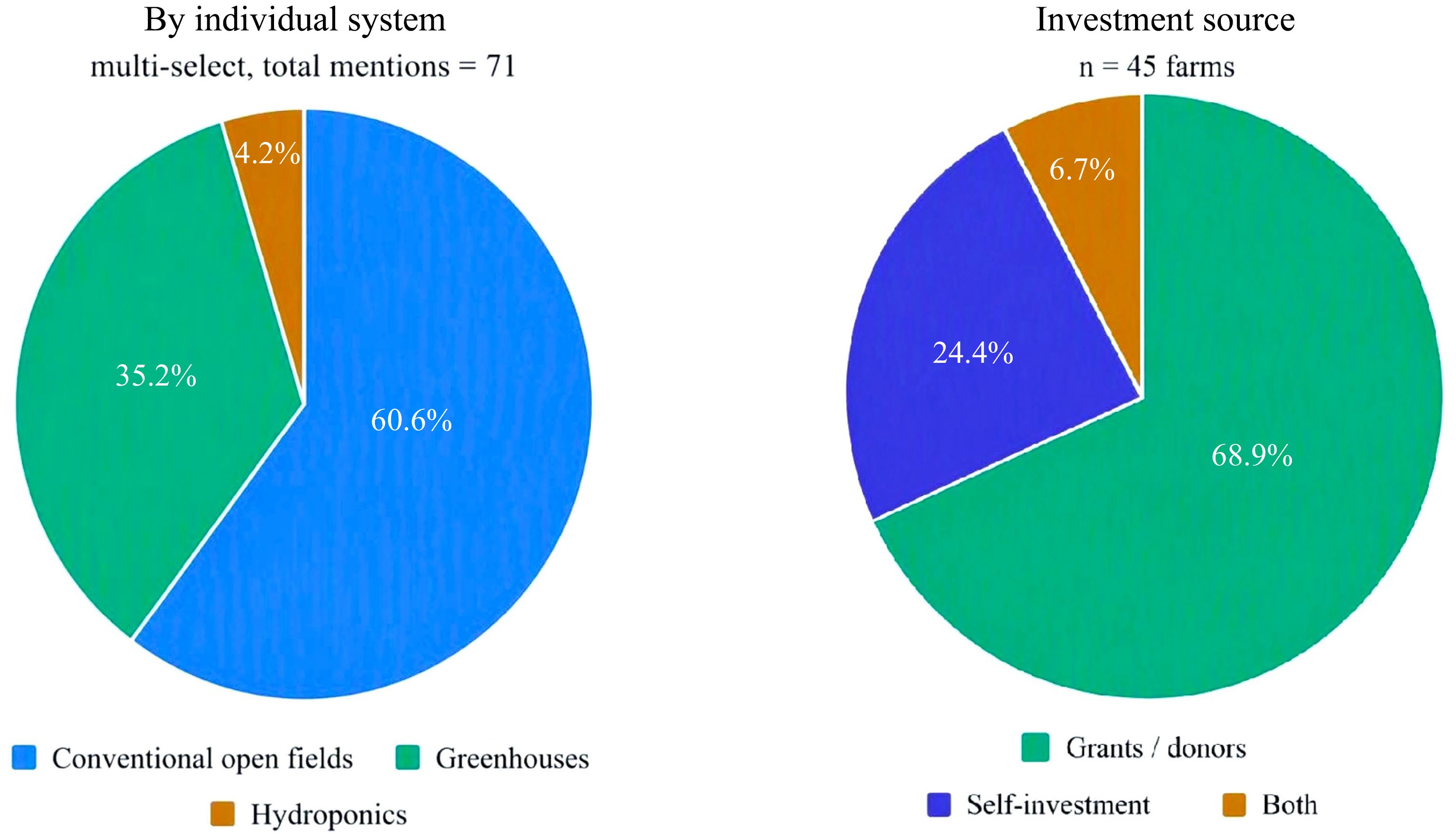
Figure 1.
Profile of farmers selected for the field visits who reported using non-conventional irrigation scheduling techniques.
The percentages show that more open-field farms were selected for the visits, having reported some form of non-conventional irrigation scheduling, than other systems. This may be because open fields use much larger volumes of irrigation water than greenhouses in Jordan[19], and hence the need to pursue water conservation strategies. The results also showed that most farmers (69%) who employed non-conventional techniques or technologies for irrigation scheduling had done so through obtained grants or external funding. This was exclusively through grants from international organizations (data not shown), which covered the expenses directly or indirectly (subgrants or subcontracts by local institutions); none of the farmers reported receiving any funding from national institutions. Project budgets that were disclosed varied greatly, ranging between 2,000–30,000 USD, with irrigation control systems being the costliest. Some projects had higher ranges (> 50,000 USD), but the costs were not related directly or indirectly to the feedback mechanism (e.g., greenhouse structures). All farmers who received funding reported cost-sharing (between 10% and 25%), which was an obligation by funding agents. These shared costs were not considered as self-investments in this study because they were mandatory and were, in many cases, in-kind contributions (e.g., provision of land, irrigation lines, etc.). And so, these were not categorized as self-investments to accurately identify farmers who were willing to self-invest in such technologies without funding. The results also showed that many farmers were still willing to invest in such technologies even without funding from grants from local or international organizations. Few farmers (6.7%) had received funding and also invested in irrigation scheduling technologies (not as cost-sharing) or had previously invested in such technologies and then later received funding. Funding sources were cross-examined against growth systems (Fig. 2). The results show that farmers who had both open fields and greenhouses within their farms had the highest percentage of funding grants. Also, more than half of farmers with only open fields had grant funding. There was no record of producers who only had greenhouses among the interviewed farmers.
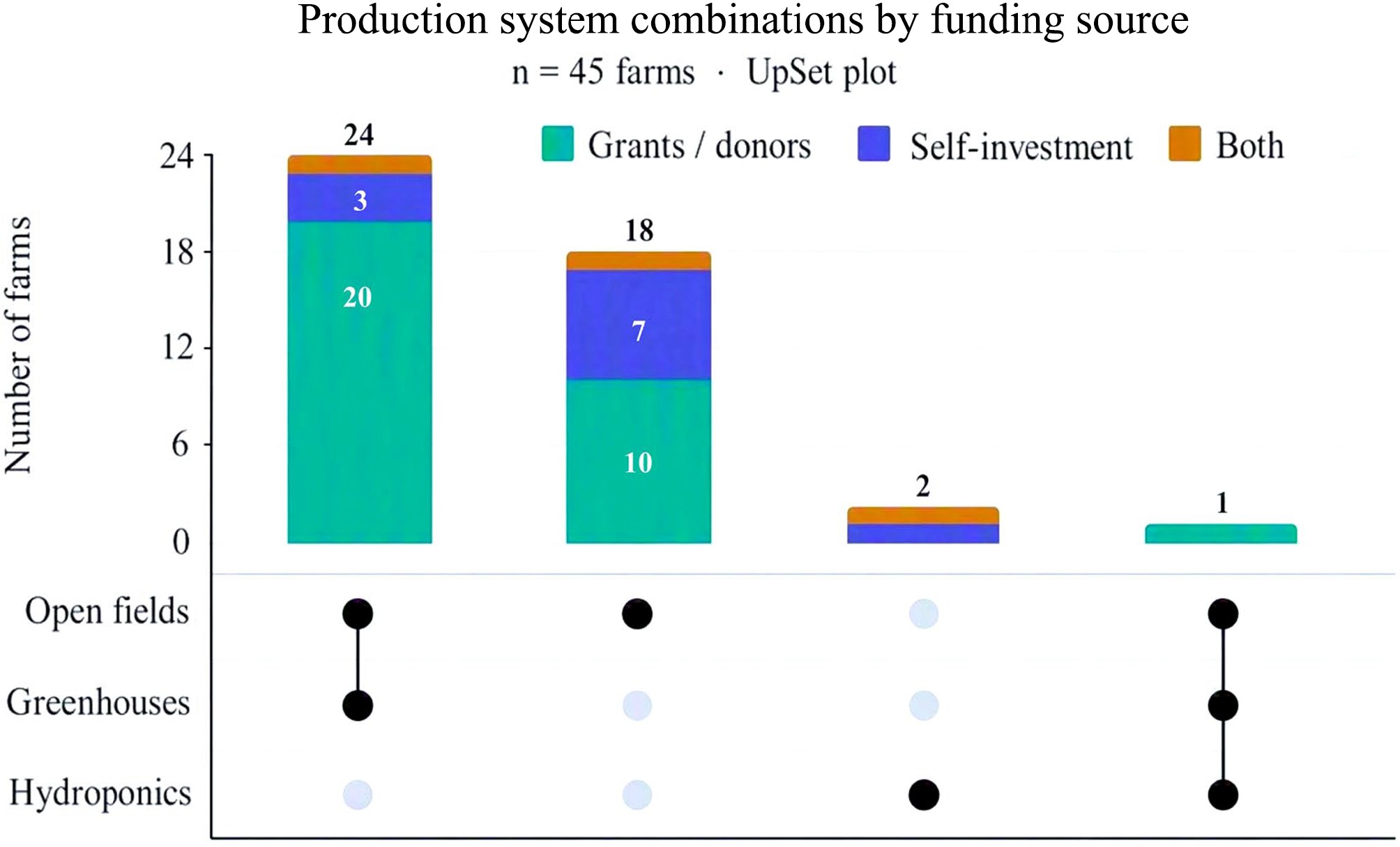
Figure 2.
Investment sources for farmers using different farming systems. (Unlabeled column blocks have a count of one).
Cross-checking the investment source against farm size revealed a more prevalent trend (Fig. 3); medium-sized farms had the largest proportion of grants obtained. However, this could relate to the sample size of the group; medium-sized farms comprise most sites eligible for field visits. It is possible that large-scale farms would have fewer grants as they are in less need of financial support, while small farms would not always have the time, connections, or resources to connect with funding agents, arrange visits, and have a technical person filling in the forms needed for grant acquisition. A more detailed exploratory study with a much larger sample size, possibly from a multi-country survey, would be needed to confirm these theories.
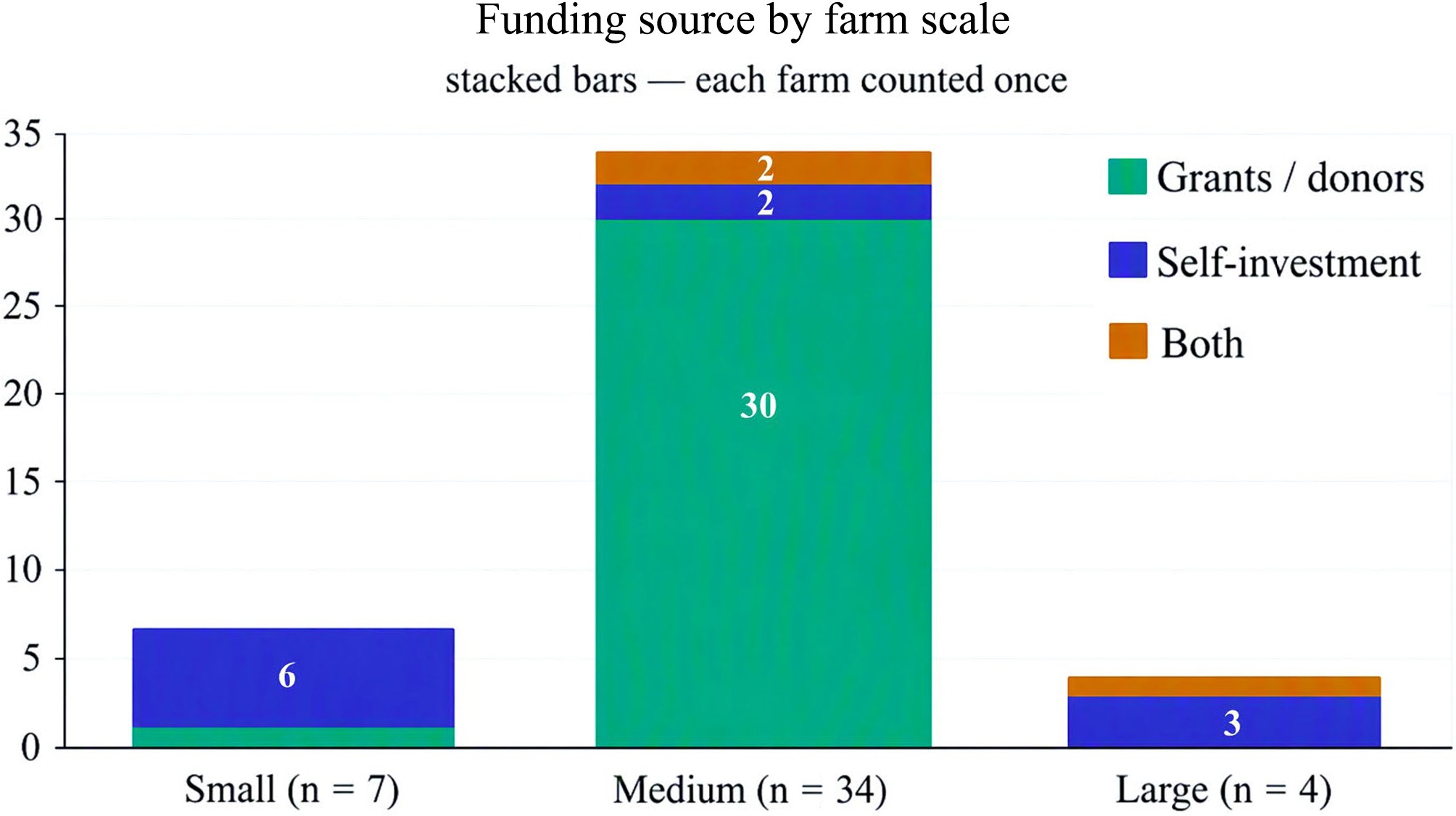
Figure 3.
Investment sources for farmers with different farm sizes/scales (Unlabeled column blocks have a count of one). Small: < 30 du, Medium: 30−100 du, Large: > 100 du (1 Dunnum 'du' = 0.1 ha).
Technologies available
-
The most common technology choice farmers attempted to adopt was meteorological stations, followed by irrigation system control, flow meters, and soil water content (SWC) sensors (Fig. 4). Few farmers reported other techniques; these included water quality, leaf temperature, and water level sensors. Most technologies reported have well-known contributions to irrigation scheduling and management (Table 1), except for water quality sensors. While water quality is not a sound approach to scheduling irrigation, the setting of its use was found to be possibly reasonable. The farmer reporting this approach used trenches of cocopeat connected to a fertigation system with an outlet at the end of each row to sample the water in the trenches. When water salinity reached a certain level (threshold not reported), the farmer activated the water and nutrient injection to replace the existing solution in the trenches. The farmer kept detailed logs of previous experiments, so the approach was not excluded.
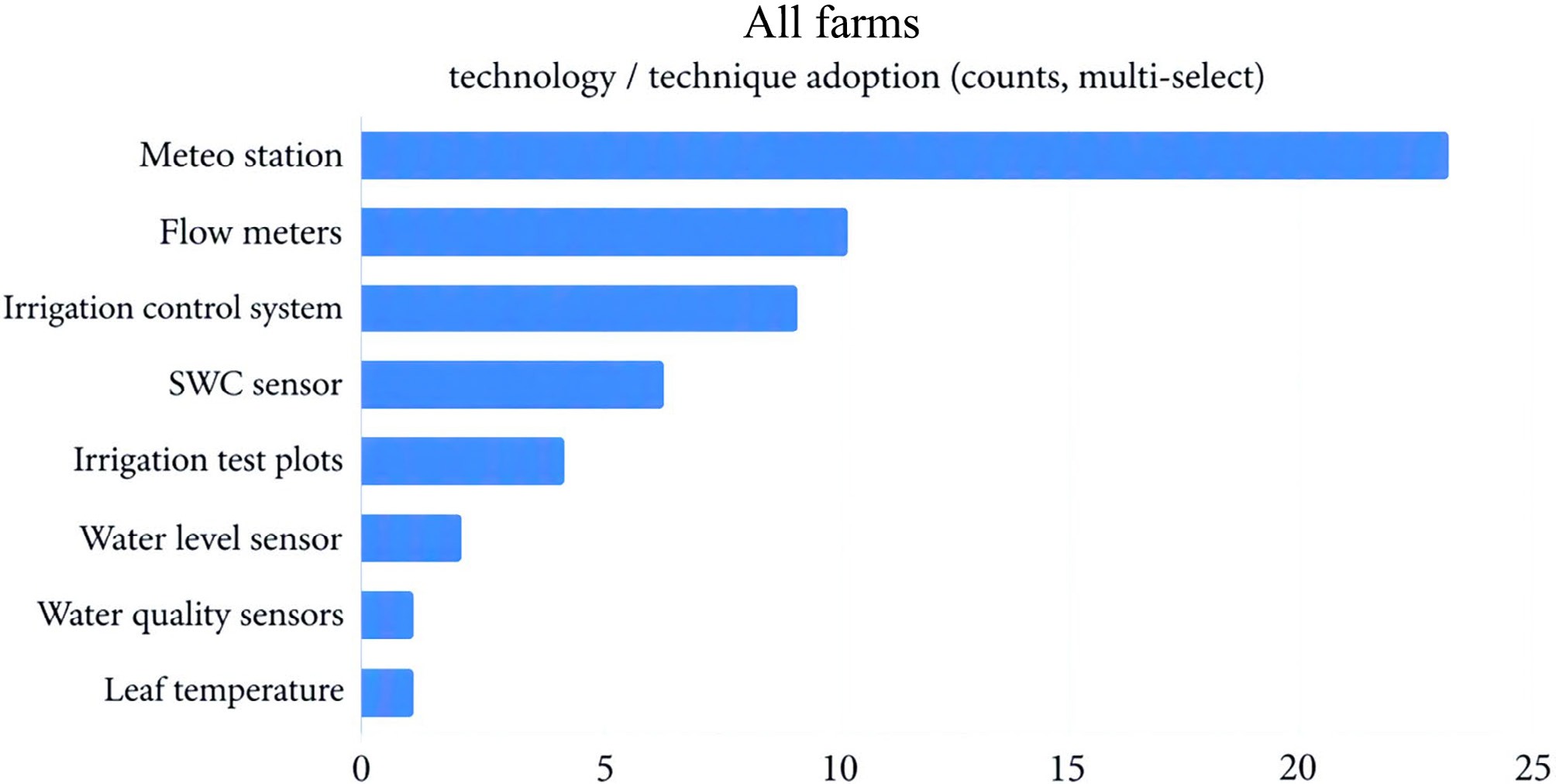
Figure 4.
Technology choices amongst surveyed farmers. SWC: soil water content.
Table 1. Contribution of different technologies and techniques to irrigation scheduling for water conservation.
Technology Contribution to irrigation scheduling Meteorological station Provides weather data (ETo, rainfall, temperature) to calculate crop water demand and adjust schedules, thus minimizing non-beneficial water Flow meters Monitors water volume applied for each plot, enabling comparison against target doses and detecting over/under-irrigation Irrigation control system Automates irrigation triggering and scheduling based on pre-set rules or sensor inputs and helps avoid human error SWC sensor Measures soil water content to trigger irrigation when thresholds are crossed and confirm adequate refill without exceeding the soil's capacity to retain water, thus minimizing loss of water to gravity Irrigation test plots Calibrates scheduling parameters by comparing irrigation treatments under field conditions Water level sensor Monitors water reservoir levels to inform available supply and volume of water supplied per irrigation event; can also help prevent pump failure Leaf temperature Indicates crop water stress in real time, enabling demand-based irrigation triggering and minimizing water consumption SWC: Soil water content. With regard to meteorological stations, these were all stations elevated around 1.5–2 m above ground with data loggers; in all cases, they recorded a wide range of meteorological variables, including wind speed, relative humidity, and air temperature, and had an attached rainfall gauge (tipping bucket). Irrigation control systems were generally control systems with a user interface connected to the water pump and seemed to allow some form of input (e.g., SWC sensors) and allowed other settings such as time-based scheduling, duration control, and remote activation. Irrigation control systems were always used with a feedback mechanism (meteorological station or SWC sensor), except in one case where the farmer simply wanted automation to avoid human error. Some farmers reported that their interest in irrigation control systems started after the curfews and quarantines following the COVID-19 pandemic, as some farmers lost their entire yield and livestock. This was particularly the case when the farm had no local housing for the workers, which was substantially more expensive than irrigation control systems to automate irrigation in cases of emergencies. This suggests that irrigation was a major bottleneck for farms surviving through the pandemic.
Some farms used flow meters to identify the amount of water being applied to each plot. This was mainly due to receiving irrigation suggestions from some consultants, which took the form of volumes of water needed per plot, and the lack of any system to gauge the amount of water applied to each plot. SWC sensors used on farms varied by type: three farmers had Frequency Domain Reflectometry (FDR) type sensors, two farmers had Time-Domain Reflectometry (TDR) type sensors, and one farmer had a Time Domain Transmission (TDT) type sensor. Farmers who used TDR and TDT type sensors had imported them from Germany and Canada, as these types are not readily available in the local market. Locally available sensor types include FDR, capacitance, and conductivity-based sensors. This indicates that the capacitance and conductivity models available in the market were not highly desirable to contractors or farmers. There was no evidence to suggest that funding entities had any interference in the specific model types selected. Sensor selection could be explained by the fact that the capacitance and conductivity type sensor models available locally were very cheap types (T-Higrow: 25 USD and TZT: 5 USD). Irrigation test plots were small areas of land where the farmer tested different irrigation schedules and expanded the results across the farms. These tests were done on a seasonal or monthly basis to determine the minimal amount of water added that did not result in wilting appearing on the crops. The amount found to be ideal at the experimental plot was increased slightly (10%−25%) and adopted across the cultivation sites on the farm. These plots ranged between 100 and 500 m2, and the amount of water applied across the farm would be proportionally increased based on the ratio between the test area and the commercial production area. This technique was occasionally used with flowmeters to identify the volume of water applied per plot or hydro-zone and determine the amount needed for a plot of a different size. The irrigation tests did not follow any scientific experimental design, so minimal insights could be revealed by the existing approach. The approach was generally crop-specific, i.e., the test plot was farmed with the same crop type grown in the fields where its results would be applied. Water level sensors were generally ultrasonic sensors installed at the top surface of the irrigation water tank; these were also used to identify the amount of water applied. In some cases, flow meters were suggested by researchers aiming to extend 'successful' irrigation schedules from one site to the other. Technology integration in extension services has been more widely recommended and practiced globally for providing irrigation decision support to farmers[20]. Leaf temperature was used by only one farmer; it was used in a deficit irrigation approach (waiting until stress was indicated). The farmer reported waiting for the leaf temperature to be close to ambient temperature to trigger irrigation; monitoring was done manually every few hours by the farmer and his daughters. This farmer was a Syrian refugee and reported having difficulty in adapting to Jordan's arid climate and heavy restrictions on water usage and monthly quotas. The same farmer also employed experimental irrigation plots and experimented with different crops to examine which one had a lower water requirement. No specific sensor or tool model was reported by the farmer, and no calibration or parametrization was reported.
Factors affecting technology choices
-
Along with the feedback from open-ended questions discussed in the previous section, multiple-choice questions were also administered to explore the need behind technology selection more systematically (Fig. 5).
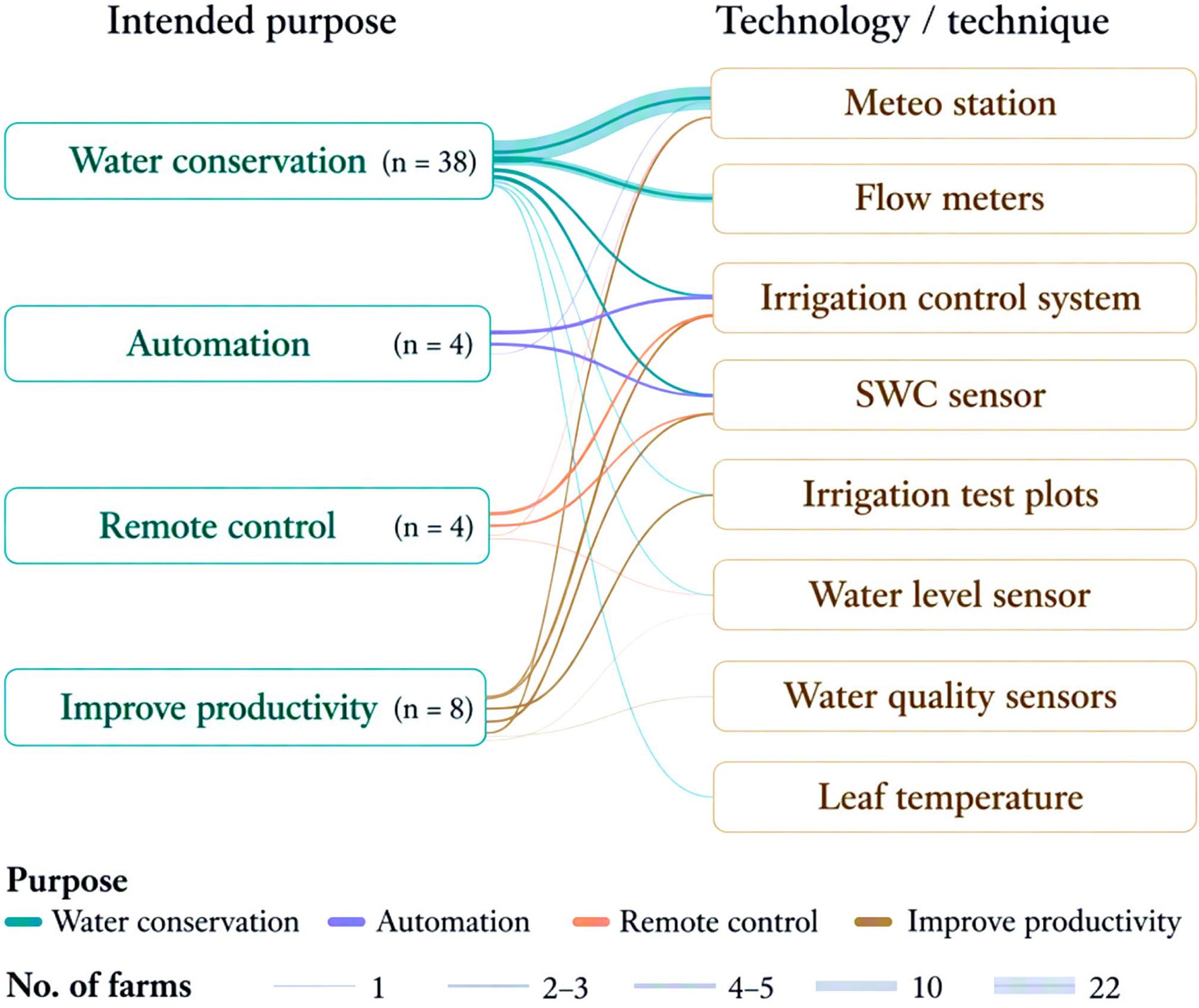
Figure 5.
Intended purpose and technology choices amongst surveyed farmers. SWC: soil water content.
The most reported purpose behind technology selection was water conservation, comprising about 84% of responses. This was followed by improved productivity at around 18%, i.e., increasing the amount of yield relative to water consumed. These cases are more likely when the farmer has a specific volume of water available per month or season, which is most common in the Jordan Valley region. The allowed water quota can only contribute to higher financial returns if the water productivity (biomass per water volume) increases, for which smart irrigation is often proposed as a solution[21]. The alternative option, adopting crops with higher water productivity, would create too many complexities: recreating the supply chain, market relations, union memberships, workers' experiences, amongst other complications. Automation and remote control were only cited four times, indicating they are not a primary priority for farmers. While some farmers would have been interested in that direction 6 years ago (around the time of the COVID-19 pandemic), this does not seem to remain a primary driver of technology acquisition. Farmers reporting interest in water conservation largely used meteorological stations but also used almost all other technologies to some degree. Farmers who reported interest in automation and remote control mainly used irrigation control systems and SWC sensors. Farmers reporting improved productivity as an interest notably used a wide range of techniques. The reported intended purposes of technology may not be reliable and conclusively related to the technology type without examining other factors. It was important to also consider the variations in technology choices between farmers who received funding grants and those who self-invested (Fig. 6).
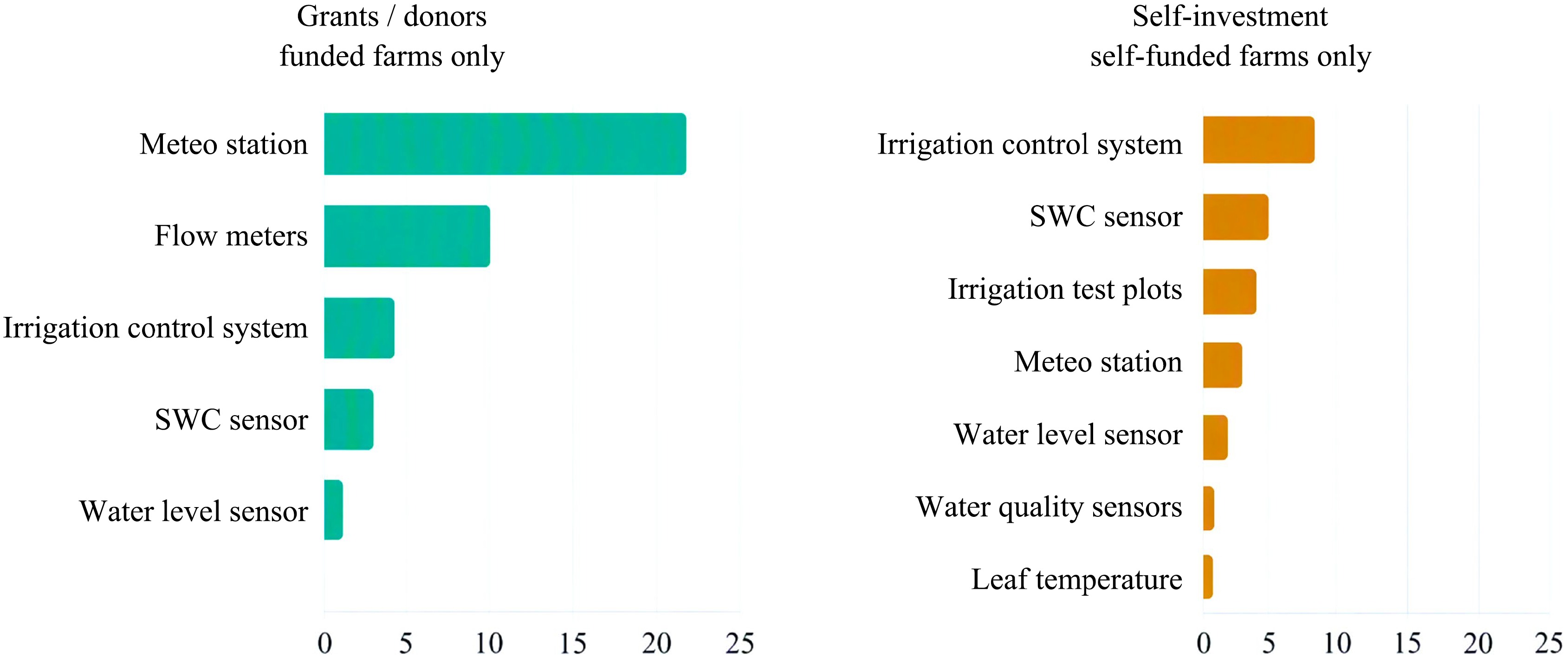
Figure 6.
Technology choices between farmers who received funding grants and those who self-invested. SWC: soil water content.
The results show a dissociation between technology choices by farmers who are self-invested and those who receive funding. Farmers who personally invested in irrigation technology favored irrigation control systems, SWC sensors, and irrigation test plots. Grant-funded farms primarily had meteorological stations and flow meters, followed by irrigation control systems and SWC sensors to a lesser degree. Some farmers reported that contractors communicated with farmers with a pre-decided technology choice (e.g., meteorological stations). This can be the result of funding requirements, where the budgets need to be decided at the proposal submission stage, which can severely restrict accommodating farmers' choices. However, this was not reported by all farmers, and so it is not possible to confirm the extent of involvement of the funding agents in technology selection. Additionally, farmers contributed to the cost of the installation (in-kind or financial) in all cases and have continued to use the installed system beyond the first year of installation. This strongly suggests their approval of the system selected by the contractors, possibly due to a good user interface or contractors accommodating specific farmers' needs.
The potential role of contractors was also examined; each implementer who has been reported to install or supervise a technology system was categorized as a contractor or as a freelancer. A contractor was any entity (e.g., company, NGO, grassroots, etc.) working in an institutional capacity, while a single person identifying as a freelancer was assigned as such. Teams working under an institution without the institution's full involvement in the project were also considered contractors. Each contractor was assigned a two-letter symbol, and a breakdown of their contribution was mapped (Fig. 7).
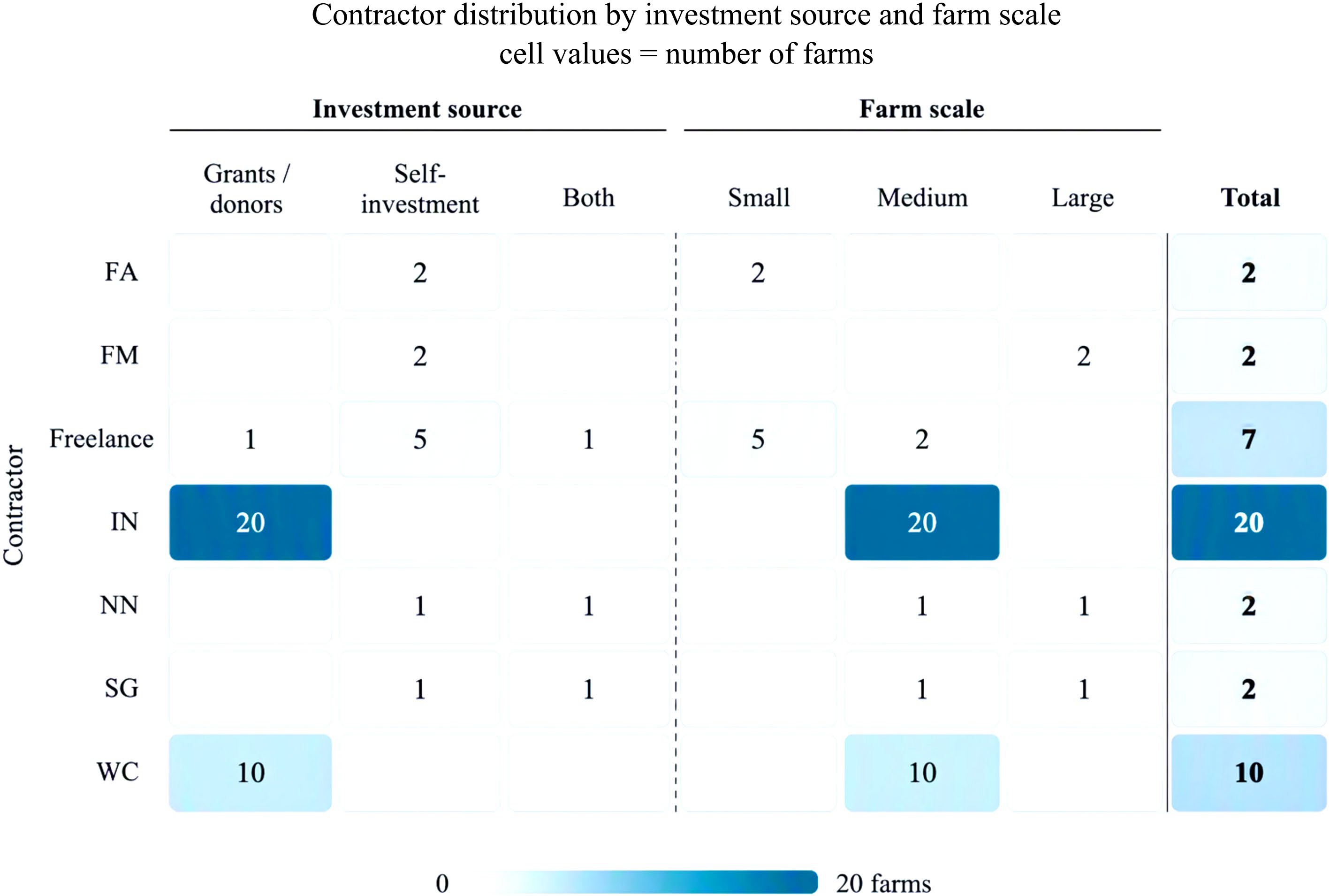
Figure 7.
Distribution of contractors across grant-funded and self-invested farms and farm size.
The results show a clear disparity, where one contractor accounted for 44% of projects implemented, and two contractors accounted for 67% of the total projects. The same two contractors accounted for almost all the projects implemented through funded grants, while five contractors and freelancers shared the few self-invested projects. Freelancers were the most common choice for self-investment projects and small-scale farmers. Two contractors (IN and WC), who had the lion's share of grant-funded projects, also appeared as the most common technology implementers in medium-sized farms, a reflection of how medium-sized farms were the largest recipients of funded projects.
Technical soundness and integration
-
The most essential component of the assessment was the soundness of the irrigation scheduling systems and the potential improvement opportunities; i.e., the possibility of improving how the feedback was interpreted into irrigation decisions. The primary component of this assessment was identifying the presence of decision parameters related to the technology of choice at the farm; parameters considered as 'sound integration' for the corresponding technologies are presented in Table 2. The assessment considered that farmers may devise their own thresholds with non-technical terms; for example, farmers could relate that ET values correspond to how much water is needed by plants without specifically referring to it as Kc.
Table 2. Feedback parameters considered as 'sound integration' for different technology options in this study.
Technology Feedback parameter Meteorological stations Kc or any coefficient that relates ET or temperature to crop water needs, irrigation amount, time needed, etc SWC sensors FC (in any unit), or any reference value related to soil or irrigation thresholds as trigger or stopping points or indications of too high moisture content Leaf temperature A threshold canopy or leaf temperature value (absolute or relative to air temperature) used to detect crop heat/water stress and trigger irrigation, such as a stress index or a temperature difference (Tc – Ta) Water level/
flow meterA minimum or maximum water level threshold in a reservoir or canal, or a target flow rate/cumulative volume used to trigger, stop, or ration irrigation events Water quality sensor (in hydroponic systems) Target ranges for EC (electrical conductivity), pH, or nutrient concentration that trigger adjustments to irrigation frequency, solution dilution, or system flushing to maintain optimal root-zone conditions SWC: Soil water content; ET: Evapotranspiration; FC: Field capacity. Out of all farm sites, only two sites had proper parameters (Fig. 8); one site was from the self-investment category, and the other had both self-investment and grant funding. One site scheduled irrigation based on SWC sensors after identifying soil type, FC, the sensors' calibration functions, and having experimented with sensor placement, all done through a contractor and an agronomy expert consultant. The other site used only an irrigation control system and relied on meteorological data from a nearby weather station. The parameter at the second site was not reported as Kc but closely resembled it.
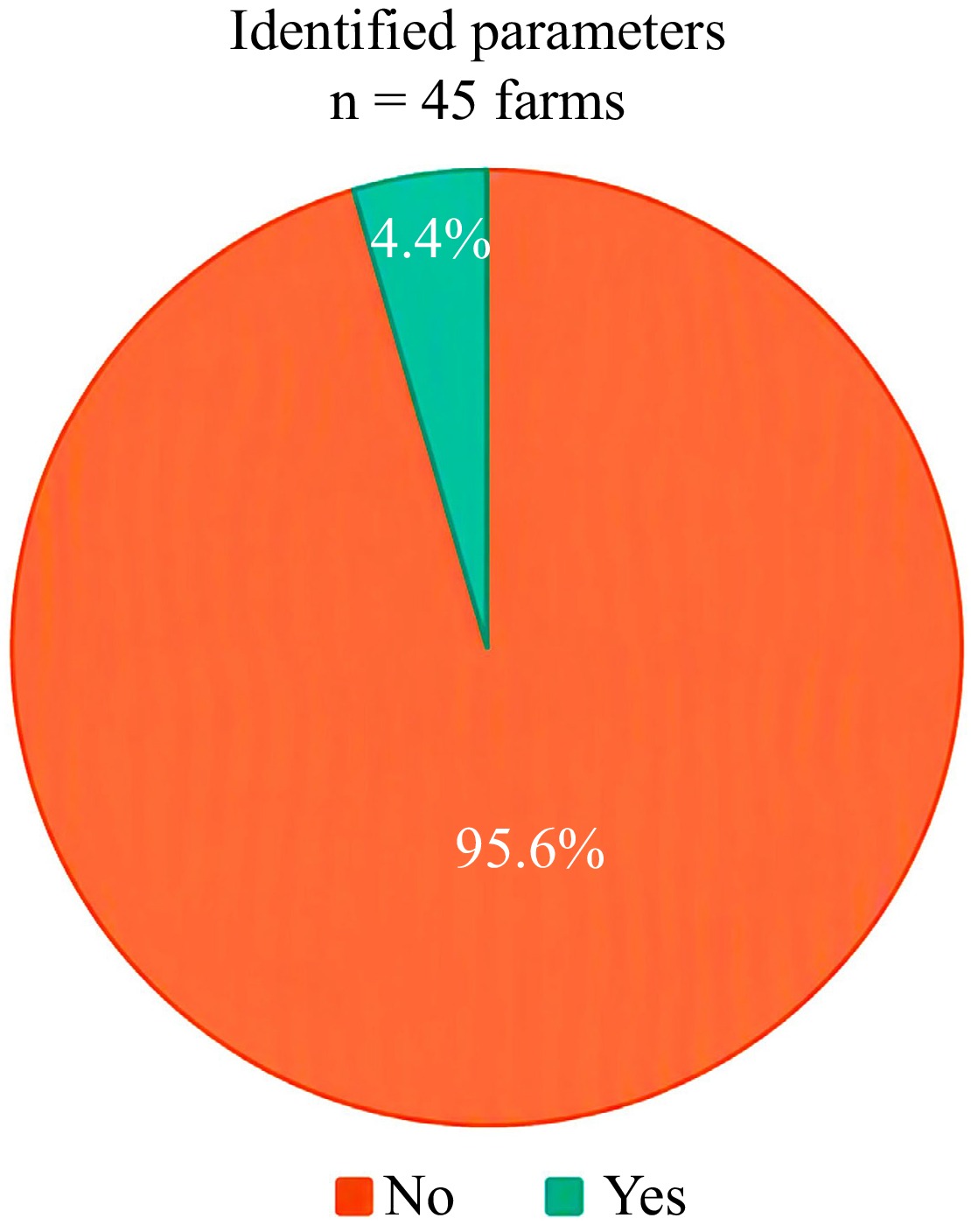
Figure 8.
The number of farm sites where proper parameters for applying feedback mechanisms in irrigation scheduling were observed.
The irrigation scheduling and decisions had been the result of a long record of monitoring weather conditions, applied water, and crop health for different crop types in different seasons. The record was compiled by an expert consultant who had worked extensively in the area. Along with the two mentioned sites, two other farms were in the process of attempting to develop such parameters; they had begun to record some relevant information on water use, crop growth conditions and cycles, and sensor readings.
With regard to other farm sites, the irrigation decisions were only loosely based on feedback from the technology/technique used. There was a normal range for the irrigation amount applied; this was slightly reduced or increased based on sensor feedback. This was a very cautious and slow optimization effort, relying on trial and error and self-learning. In some cases, irrigation duration was increased by only a few minutes when temperature was above normal ranges and decreased by a few minutes when temperature was below normal ranges. Farmers and irrigators were learning as they went, trying to identify an ideal response to certain feedback, such as temperature and soil moisture ranges. The most common irrigation scheduling was applying irrigation for 30−60 min on a daily or bidaily basis. This increased during July and substantially decreased between October and January. Farmers reported that a conventional greenhouse (9 × 5 m2) received 4−7 m3 per week, while an equivalent area of an open field received double the amount. All farmers reported that irrigation events during peak demand (Jul–Aug) were generally double the amount for other non-rainy seasons. A summary of the irrigation scheduling techniques observed during the farm visits is available in the electronic Supplementary Fig. S1. While these efforts can eventually lead to excellent learning experiences and useful utilization of the available technologies, they are missing simple steps that can support the effective integration of these technologies in irrigation water conservation on their farms. Also, this learning experience could be costly for the farmers without identifying the proper parameters. For example, the farmer relying on leaf temperature didn't use any specific index or calibration for temperature. They simply monitored whether leaf temperature became too close to ambient air temperature as an indicator that plants are approaching wilting. This is based on a sound scientific principle, as leaf temperature increases to ambient air temperature when ET is restricted, which would result from very low soil moisture levels. However, without a properly calibrated index, this would not be reliable and could result in stress taking place prior to irrigation application. Manual uncalibrated monitoring of leaf temperature would also result in potentially missing the occurrence of wilting and not responding to it by applying irrigation, which would be needed urgently when stress symptoms manifest. These learning experiences may also be based on a faulty setup and would not result in accumulating useful information. For example, some farmers who used SWC sensors had less than one sensor per 10 du (1 ha), which is not remotely representative. They also had no justification for the sensor placement (installed randomly or nearest to the energy source). Only one farm site had a relatively reasonable number of sensors (one per greenhouse) and had implemented some baseline assessments, mainly by identifying a representative drainage point (i.e., where soil drainage was representative of the surrounding area). Only a few sites indicated performing some technical assessments, such as ensuring high irrigation uniformity prior to installation.
Integration challenges and narratives
-
Possible issues attributed to not identifying proper parameters and the gaps in technology integration included the lack of relevant services by national soil and extension services, budget restrictions, limited information provided by sellers, and uninformed project planning. Some contractors reported that farmers did not request 'services' such as soil analysis or calibration, and so it was not included in the implementation. Some contractors reported that 'they didn't wish to restrict the farmer's decision' and allow them to 'identify whatever thresholds the farmer wanted'. One contractor reported that they had used 'artificial Intelligence' to substitute for the lack of proper parameters, but this was not possible to verify. These statements reflect a poor understanding of agronomy and principles of irrigation amongst the implementing contractors. Many contractors and freelancers were noted to be civil engineers; some were electrical and computer engineers, and very few were agronomists. Only two people were noted to be agronomists from the various teams who worked on these projects, and only three working teams seemed to have multidisciplinary expertise working on these projects. Several contractors were interviewed on whether the funding organizations had requirements for the expertise of implementing partners. Reportedly, funding organizations did have restrictions on the profiles of the teams involved in the implementation and, in some cases, mandated multidisciplinary team members. However, they regarded civil and environmental engineering disciplines as appropriate proxies to agronomy, soil, and irrigation sciences. They also mainly focused on the gender balance of the implementing teams. All contractors had demonstrated and well-established experience in traditional irrigation projects and farming contracts; this included general pipeline work, pump installation, and irrigation network design.
Despite these reports, contractors were not the primary limitation to proper technology integration. A bigger issue was revealed when contacting three of the most notable national services responsible for aspects such as providing soil analysis and irrigation scheduling feedback in Jordan. These included independent research centers, national soil labs, and university research centers and stations. They did confirm that they did not provide necessary services, such as identifying relevant soil physical properties like FC, provision of Kc values for different crops, or providing feedback on how these values can be experimentally determined. They reported that the tools and capacities were available, and they did occasionally provide such services; however, it was on a personal level to support research projects they were affiliated with. Official requests to obtain such services by the public were not integrated within department structures and service provision protocols. The few sites where these parameters were reported were done by a consultant or a resident agronomist at the site, who was also the person to suggest measuring these soil properties. Local sellers were also approached, and they indeed reported that they did not have any knowledge of how to specifically integrate different sensors into the irrigation scheduling process, other than hardware and circuitry aspects.
There were also limitations at the farmers' level; farmers had limited knowledge of the ideal approach for utilizing different techniques and technologies for irrigation scheduling and decision-making. In at least three sites, the research team visiting the farms observed that farmers applied irrigation during the midday hours, when temperatures were highest. This practice is a major management error, resulting in increased water losses through evaporation and a higher risk of soil salinization. Some farmers did have some experience and experimented with different techniques. One farmer reported having previously experimented with a tensiometer but abandoned it as it was reportedly 'not useful'; the farmer had no expert consultation at that time. Three farmers reported testing capacitance sensors previously through the contracting consultant, but found it to cause very large errors, opting later for the FDR type based on the contractor's suggestion. Farmers who tested SWC sensors resorted to national services or an expert consultant to perform the assessment, and in all cases the assessment was suggested by the expert consultant or the contractor. However, in only one of those cases the consultant or contractor commissioned an analysis of necessary soil parameters such as FC to support irrigation scheduling. Sensor types found in the local market included FDR, capacitance, and conductivity sensors. Only four suppliers were generally reported to provide these products and had a similar inventory. TDT and TDR sensors were not available from local suppliers and were imported by contractors. Contractors who performed elaborate tests to identify suitable technologies, and the farmers and workers at those sites, had detailed accounts of issues with sensors, stations, and control systems, summarized as follows:
- Dielectric sensors
• Erratic sensor readings: (a few days each season); large variations in readings with no clear justification.
• Non-stable readings: when someone walks by the sensor installation site, all measurements shifted; same case if the sensor cord moves.
- Tensiometers
• Custom calibration curves were sometimes not stable or reliable and had to be recreated.
• Lag in measurements: reading doesn't directly change in response to irrigation applied.
• Lacking know-how on maintaining the sensors and interpreting the gauge readings.
- Irrigation control systems
• Irrigation control systems sometimes cause flooding on some plots during the early stages of adoption.
• System parts and components were not always readily available locally and required shipping and halting production.
• Closed-loop systems occasionally had system failures leading to crop stress, and in one case, complete crop failure.
- Meteorological stations
• Difficulty in identifying the most suitable and representative site for installing meteorological stations.
• Difficulty in relating the station's readings to the amount of water needed for crops; repeated experiments were needed to relate the readings to irrigation management to some degree.
-
The results of this study demonstrate that there is strong potential for technology adoption in Jordan. However, significant opportunities remain to convert existing installations into effective decision-making tools. Only two out of 45 farms had identified the parameters necessary to apply their feedback mechanisms to irrigation decisions. The remaining farms tried to optimize their irrigation management through stations and sensor readings by experience and trial and error, which restricts their ability to benefit from their available technology to its full potential. This outcome is consistent with previous findings, where site-specific calibration and agronomic support needed for translating sensor data into actionable irrigation scheduling was often inaccessible in smallholder contexts[22,23]. These results also align with findings by Toscano et al.[24], who identified limited awareness and inadequate training as key barriers among 238 farmers across five Mediterranean countries. The absence of decision parameters at most farms in this study also reflects the ranking by Jabbari et al.[25], who found technical expertise to be the highest-priority challenge for IoT-based smart irrigation adoption in Saudi Arabia. Limited accessibility to soil information needed for water management is not unique to Jordan but has been reported as a prevalent issue across the Mediterranean region[26]. Mitigating this issue has been approached through several international initiatives to build up repositories[26,27].
The willingness to invest in irrigation technologies was evident amongst farmers, with a notable share having done so without any external funding. However, funded grants remained the most reported option, accounting for 69% of farms, all funded through international organizations with no reported national institutional contribution. The willingness to invest observed among self-funding farmers in Jordan is consistent with Jaafar & Kharroubi[28], who reported that about 90% of surveyed Lebanese farmers were willing to use smart irrigation applications. However, the willingness to invest in Lebanon was slightly higher (57%), especially amongst younger farmers. This can be attributed to smart irrigation applications being significantly cheaper than the installation of control systems and hardware. Water conservation was the most reported purpose of adoption, consistent with Suh et al.[29], who reported that awareness of water restrictions and conservation efforts increased the likelihood of purchasing smart irrigation controllers. The technology choices associated with grant-funded projects differed from those of self-investing farmers. Self-investing farmers favored irrigation control systems and soil water content sensors, while grant-funded farmers mainly received weather stations. Similar preferences were reported by Khachatryan et al.[30] for sensor-based controllers with on-site weather stations, remote operation, and failure notification over conventional automated systems. The variations in technology choices in this work are not necessarily the result of a top-down approach, as consultation sessions early in the project planning may have provided farmers with a wider perspective. This aligns with the broader adoption literature, which emphasizes that adoption outcomes are shaped by financial support mechanisms and by the mediating role of knowledge and advisory systems, rather than by technology provision alone[31,32]. Large-scale farms accounted for most self-investment cases, in line with Zhang & Xiong[33], who found that large-scale operation significantly promoted smart irrigation adoption among maize farmers in Inner Mongolia. Farm size was also reported to positively influence irrigation technology adoption in other arid regions[34].
A common issue noted amongst farmers and contractors was the foundational knowledge of irrigation scheduling principles. Many farmers were not fully aware of how the installed technologies could ideally inform irrigation decisions. This was also the case for contractors, most of whom were civil, electrical, or computer engineers. Across all implementing teams, two agronomists were identified, and three teams had a multidisciplinary composition. Most contractors came from civil, electrical, or computer engineering backgrounds and secured contracts with international funding organizations. Funders had regarded civil and environmental engineering as adequate proxies for agronomy and irrigation science. This suggests a need to broaden how technical competence is defined within grant agreements. Qualification criteria for implementing partners should more fully reflect the agronomic dimensions of irrigation technology integration. Limited understanding among farmers of how installed systems can inform irrigation decisions is consistent with previous works. Zhang & Khachatryan[35] found that knowledge and perceptions of smart irrigation controllers were significantly correlated with preferences for water efficiency features. Furthermore, farmers who abandoned previously tested devices reported concerns similar to those documented by previous works. Kgopa AT & Monchusi[36] identified technological awareness and maintenance as barriers among South African small-scale farmers despite recognized benefits.
The gaps and improvement opportunities identified in this study are not confined to any single level of the system. At the national services level, soil analysis institutions confirmed that parameters such as field capacity and permanent wilting point are not offered as standard public services. Extension services also did not provide crop coefficient guidance or irrigation scheduling support. At the market level, only four local suppliers were identified for SWC sensors, all offering largely identical low-cost inventories with no calibration specifications or integration guidance. Higher-quality sensor types such as TDR and TDT were unavailable locally and had to be imported. These are major issues since previous literature unanimously agrees that SWC sensors require proper calibration for use in smart irrigation[37−39].
At the farm level, sensor placement was sometimes arbitrary, and sensor densities were far below what would be considered representative. These issues at the grant, contractor, national service, and market levels collectively limit the beneficial utilization of any individual technology deployed by farmers. This indicates that hardware-focused adoption programs are unlikely to achieve water conservation outcomes under current conditions. The gaps identified in this work across different factors like grant design and national services correspond to the determinant categories reviewed over a decade ago by Mwangi & Kariuki[40]. Their work grouped adoption factors into technological, economic, institutional, and human-specific dimensions. Additionally, the absence of soil analysis and crop coefficient guidance from national services in this work is consistent with gaps identified in other regions. Serote et al.[34] reported an adoption rate of 46% in arid South Africa and identified improved extension services and training as urgent requirements. Addressing these issues requires minimal procedural revisions but can result in substantial environmental outcomes, as effective water conservation not only reduces water usage but also reduces the carbon footprint associated with production[19].
While Jordanian researchers are making tangible progress in smart irrigation technology development[41], extending this technology to farmers is a different story. Jordan still lacks the foundations needed to effectively use conventional technologies such as SWC sensors and weather stations. As a result, adopting more advanced technologies like drones, artificial intelligence, and IoT platforms may be premature. These technologies carry substantially greater requirements for technical capacity, data infrastructure, and ongoing maintenance support[42]. Meanwhile in Jordan, basic agronomic parameters are rarely identified, national soil services do not offer routine analysis, and local markets cannot support standard sensor maintenance. Introducing more advanced technologies in the current settings would likely replicate and amplify the integration issues documented in this study. This position is supported by Ali et al.[43], who concluded that AI-powered irrigation decision-making depends on prior progress in training, data management, and infrastructure development. A more productive near-term focus would be on strengthening agronomic advisory services, establishing national databases of crop coefficients and soil physical properties. Some of the issues and opportunities noted in this work could be overlooked in other local projects not covered in this work and across other regions. Additional surveys of similar scopes are strongly suggested. Future research with a larger sample, and potentially across multiple countries in the region, would help determine if the issues observed here reflect a broader regional pattern. An ideal scope to consider for future assessments is to look past the presence of hardware, with specific criteria for the 'smart' element in smart irrigation. A proposed definition is 'the integration of data-generating or feedback-based technology into irrigation management in a way that produces a measurable improvement in water use efficiency, productivity, or resource sustainability at the farm level'. Developing and applying such assessment criteria would also support progress toward SDG 6 (Clean Water and Sanitation) through improved water-use efficiency[44,45]. It is also related to SDG 2 (Zero Hunger) through strengthening the productivity and sustainability of agricultural systems[46,47].
-
This study explored modern techniques and technologies farmers used in Jordan for optimizing irrigation scheduling, and possible integration gaps and improvement opportunities for irrigation decisions. What distinguishes this study from much of the existing adoption literature is its focus on integration gaps and improvement opportunities rather than adoption rates. A wide range of technologies and techniques were found to be used by farmers in Jordan, including SWC sensors, meteorological stations, experimental irrigation plots, leaf temperature, water level sensors, and flow meters. Most farmers obtained technologies through international grants but also provided in-kind contributions to support the installation costs; these farmers mostly obtained meteorological stations. Self-funded farmers opted for irrigation control systems and SWC sensors and were more likely to work with freelancers and different contractors. Grant-funded installations, on the other hand, were dominated by only two contractors. Only two out of 45 farms with non-conventional irrigation technologies had identified the necessary decision parameters to utilize their technologies in an ideal approach. The remaining farmers depended on trial-and-error practices, incrementally and cautiously modifying irrigation schedules in response to sensor readings. These efforts to pursue improved irrigation management were mainly driven by water conservation needs. This persistence by the farmers, willingness to contribute through in-kind funding or self-investment, and availability of funding grants suggest a strong potential for widespread effective utilization of smart irrigation technology for water conservation. The current challenges observed in this work can be summarized as follows:
• Variations in farmers' knowledge: some already experiment with different sensors, and others still make elementary mistakes like midday irrigation.
• Grant agreements did not mandate the involvement of direct agronomic expertise, relying instead on hardware and engineering expertise.
• National services did not offer the technical support or soil analysis needed to parameterize sensors or weather-based irrigation scheduling.
• Local providers did not stock or support higher-quality sensor types, and implementation teams were rarely composed of people with disciplinary backgrounds to identify these gaps.
Addressing any one of these conditions in isolation is unlikely to produce meaningful change; the deficiencies are mutually reinforcing. The following recommendations are proposed for funders, policymakers, and implementing organizations. Grant programs should require agronomic expertise and farmer consultation sessions before technology packages are finalized. Contractor qualification criteria should include demonstrated agronomic competence alongside engineering credentials. Contractors and extension services should have more elaborate documentation of farmer preferences to share with funding agents and local suppliers. National soil analysis and extension services should institutionalize the provision of key irrigation parameters, including soil physical properties, field capacity (FC), and crop coefficients (Kc), as standard public services. This can be either through advisory support or fee-based implementation. Monitoring frameworks for adoption programs should assess functional integration, not hardware installation. These improvements address almost all gaps noted in technology integration, but do not require substantial infrastructure or national investments, but rather minor framework revisions and capacity building. Finally, the promotion of advanced technologies such as AI, IoT platforms, and drone-based systems is not yet suggested as a priority investment target in Jordan at the current time. At least not until the institutional and agronomic foundations required for conventional sensor-based management are reliably in place. Jordan's acute water scarcity makes the effective use of irrigation technology a matter of considerable national importance. The findings of this study indicate that the current investment in smart irrigation may not yet be translating into the water savings it has the potential to deliver. Closing that gap requires a shift in how adoption programs are designed, how contractor expertise is evaluated, and how national services are structured, rather than simply scaling up the deployment of hardware.
The authors are grateful to the editors and the anonymous reviewers for their valuable comments and suggestions, which significantly improved the quality of this manuscript. This work did not receive any financial support.
-
This study was conducted in accordance with the Declaration of Helsinki. Institutional review board approval was waived by the Ethics Committee of Irbid National University because the research involved only non-sensitive, professional interviews with experts. Verbal informed consent was obtained from all participants prior to the interviews. Verbal consent was used instead of written consent because the study focused solely on irrigation practices, involved no risks or invasive procedures, and collected no sensitive personal or health-related data. All data were anonymized to ensure participant confidentiality.
-
The authors confirm their contributions to this study as follows: writing of the original draft, writing − review and editing: Al-Kilani MR, Egbebiyi TS; conceptualization, investigation, and data collection: Al-Kilani MR, Abdelal Q, Al-Bakri J; visualization and data analysis: Mohammad S, Okour MA. All authors have reviewed and approved the manuscript for publication.
-
The datasets generated and/or analyzed in the current study are available from the corresponding author upon reasonable request.
-
Author Mohammad A. Okour is affiliated with Oula for Seeds Production. The company provided facilities for writing and data analysis. All authors declare that the research was conducted in the absence of any commercial or financial relationships that could be construed as a potential conflict of interest.
-
accompanies this paper online at: https://doi.org/10.48130/tia-0026-0009.
- Supplementary Fig. S1 Irrigation scheduling techniques adopted across the farm sites in Jordan classified by extent of dynamic nature (response to changes) and uncertainty (risk of water stress or crop failure).
- Supplementary Material S1 Survey template used in this study.
- Copyright: © 2026 by the author(s). Published by Maximum Academic Press, Fayetteville, GA. This article is an open access article distributed under Creative Commons Attribution License (CC BY 4.0), visit https://creativecommons.org/licenses/by/4.0/.
-
About this article
Cite this article
Al-Kilani MR, Abdelal Q, Al-Bakri JT, Okour MA, Mohammad S, et al. 2026. Exploring technology adoption and integration into irrigation decisions amongst farmers in an arid Mediterranean region. Technology in Agronomy 6: e013 doi: 10.48130/tia-0026-0009 

Exploring technology adoption and integration into irrigation decisions amongst farmers in an arid Mediterranean region
- Received: 01 June 2026
- Revised: 10 September 2026
- Accepted: 11 September 2026
- Published online: 10 October 2026
Abstract: Smart irrigation is increasingly promoted for water conservation in agriculture, the largest consumer of freshwater resources. Yet, documentation of how farmers utilize technology for decision support remains limited. This study explored this aspect across 45 farms in different arid regions within Jordan through field visits and interviews. Results showed that technology was mostly obtained through grant funding (69%). Farmers' interest began for various reasons, including COVID-19 curfews and refugee farmers' challenges adapting to the local climate and water scarcity, but water conservation was the primary adoption driver. Different techniques were observed, including soil sensors, meteorological stations, flow meters, water level sensors, and leaf temperature. Meteorological stations were the most common technology (51%), predominantly among grant-funded farms. Self-investing farmers favored irrigation control systems and soil moisture sensors. Only 4.4% of farms had identified decision parameters needed for scientifically informed irrigation scheduling, such as field capacity (FC) and crop coefficients (Kc). The remaining farmers relied on their own heuristic approach and trial and error, slightly increasing or decreasing irrigation based on variables like temperature ranges. Lack of sufficient agronomic knowledge across different stakeholders limited technology utilization to its full potential. National soil and agricultural services did not provide technical support to identify relevant parameters such as FC and Kc. These issues highlight a problematic perception of 'smart irrigation' focused mainly on hardware acquisition. Farmers' persistence in solving technology issues and the availability of funding are significant positive factors. These can be complemented by minor framework revisions in funding, implementation, and extension service structures.
-
Key words:
- Smart irrigation /
- Soil sensors /
- Water conservation /
- Meteorological station /
- Agricultural funding