











-
Camellia Linnaeus[1] is the most species-rich genus in the Theaceae family and holds significant economic value among its 12 genera[2]. The genus is predominantly found in the tropical and subtropical regions of East Asia, with over 80% of its species located in China[2,3]. Within this genus, certain species possess high seed oil content and are collectively referred to as Oil-camellia, primarily including those from sect. Paracamellia, which Ming redefined by merging it with sect. Oleifera to create a new classification under the same name[4]. Among them, C. oleifera Abel[5], the most widely cultivated, is recognized as one of the world's four major woody oil-seed crops[6]. It holds tremendous potential for development and utilization, making it the main species for woody edible oils[6,7].
Hainan has a long history of Oil-camellia cultivation, with records dating back 500 years to the Ming Dynasty in the 'Zheng De Qiong Tai Zhi', where it is referred to as 'Shan You'[8]. Despite the economic significance of Oil-camellia, the classification research on these species in Hainan has encountered challenges. Due to the limitations of traditional classification methods, there are challenges in achieving clear identification and accurate distribution data. Some studies have classified the local Oil-camellia in Hainan as C. drupifera Loureiro[9], C. oleifera, or as geographical substitutes[4,10,11]. However, significant morphological, ecological, and economic differences raise questions about the accuracy of these classifications[10].
Recent studies have clarified the germplasm resources of Oil-camellia in Hainan. Xu et al. identified a new species, C. hainanica YL Zhao et ZG Xu, sp. nov.[12]. This discovery adds clarity to the taxonomy of Oil-camellia in the region. Furthermore, chromosomal ploidy plays a significant role in species differentiation within this genus. For instance, C. fluviatilis Handel-Mazzetti[13] and C. crapnelliana Tutcher[14] is diploid (2n = 2x = 30), while both C. oleifera and C. osmantha Ma et al.[15] are primarily hexaploid (2n = 6x = 90)[16]. The widely distributed C. drupifera in South China is octoploid (2n = 8x = 120), whereas the native C. hainanica found in Hainan is primarily decaploid (2n = 10x = 150)[17]. Ye et al. conducted a study examining a range of samples from Hainan, revealing that all 60 specimens assessed were either octoploid or decaploid, with decaploids accounting for 83.3% of the samples[18]. This suggests that decaploid C. hainanica is the dominant form among the large, ancient Oil-camellia trees in Hainan. Additionally, Zhang et al.[17] performed ploidy identification across 23 Oil-camellia populations in 16 cities and counties throughout Hainan, identifying 16 decaploid samples and seven octoploid samples. Notably, ancient Oil-camellia trees over 100 years old and wild populations in tropical rainforests were all categorized as decaploid.
In our further analysis of native Oil-camellia populations, we observed significant morphological differences between the wild decaploid population in Wuzhishan and C. hainanica. Characteristic features of this population indicate it belongs to C. sect. Paracamellia. Given that this population does not match any previously recorded species, we describe it here as a new species (Fig. 1). To evaluate its phylogenetic position, we conducted analyses based on chloroplast genomes. Additionally, we carefully compared the capsules of the two native decaploid Oil-camellia species from Hainan.
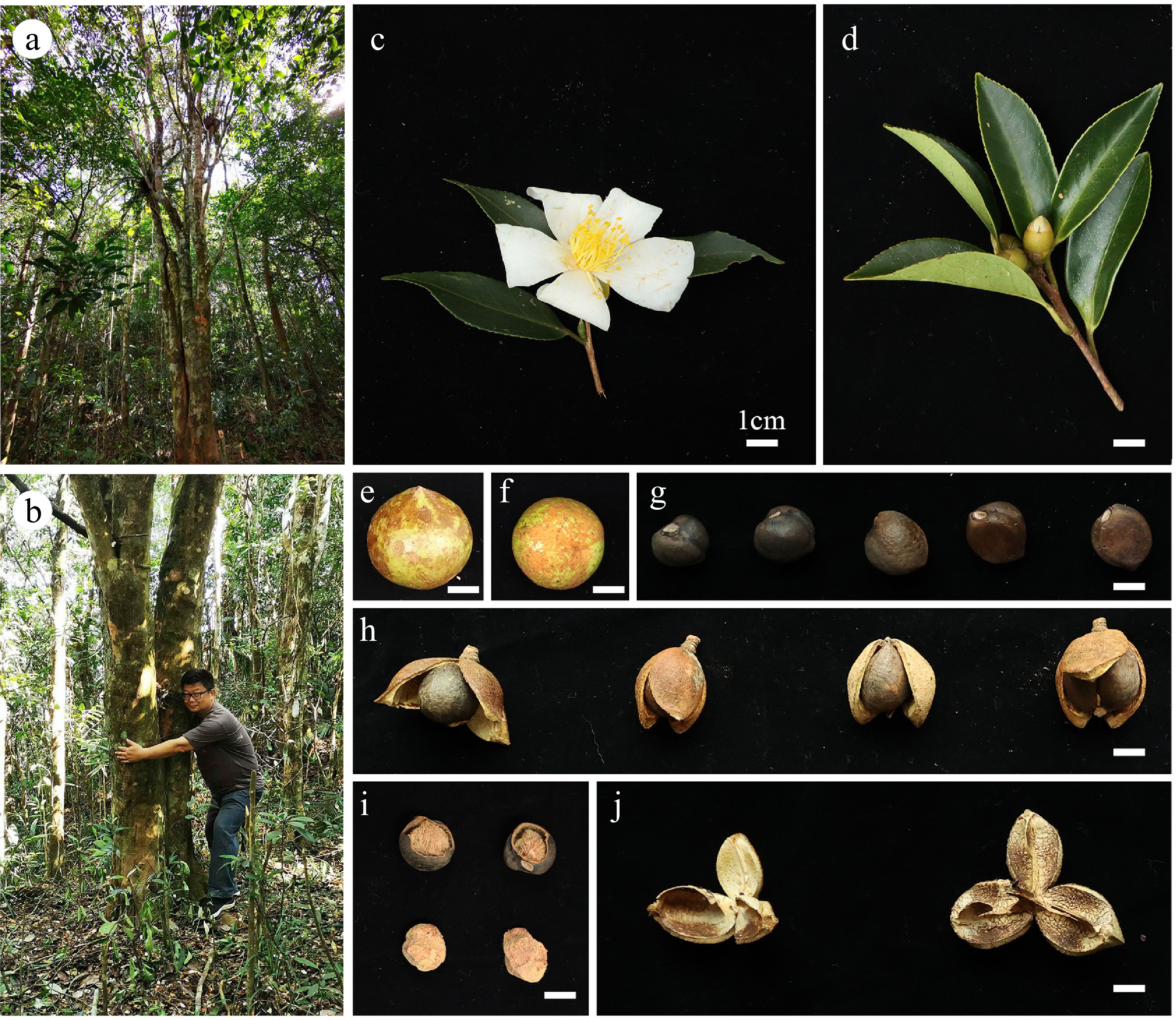
Figure 1.
Camellia wuzhishanensis. (a), (b) Habitat. (c) Flowering branch. (d) Terminal buds. (e) Side view of the capsule. (f) Front view of the capsule. (g) Seeds. (h) Dry capsules. (i) Interior of dry seeds. (j) Loculicidal pericarps.
-
The seeds of the newly discovered species, C. wuzhishanensis, were collected from the primary tropical rainforest in Wuzhishan, Hainan Province, China.
Next-generation sequencing technology (high-throughput sequencing) was employed to extract the total genomic DNA from the plant materials, and the chloroplast genome was assembled using the GetOrganelle software[19]. Additionally, we utilized the online annotation tool CpGAVAS (
http://47.96.249.172:16019/analyzer/annotate ) to annotate genes within the chloroplast genome (Fig. 2)[20].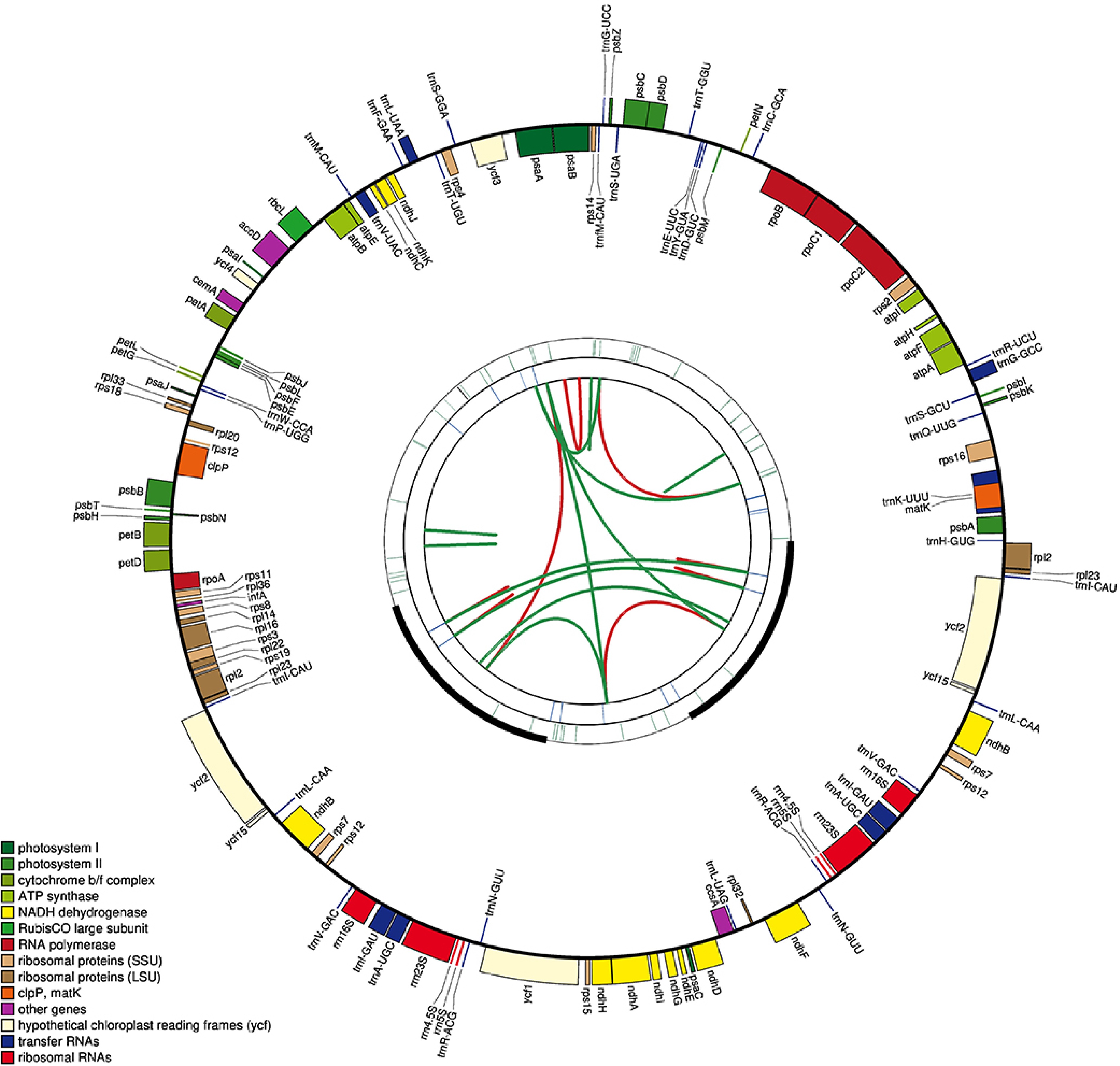
Figure 2.
Chloroplast genome of Camellia wuzhishanensis.
Phylogenetic analysis
-
To determine the phylogenetic position of the new species within the genus Camellia, we reconstructed a phylogenetic tree using maximum likelihood (ML) analysis based on the chloroplast genome. Apart from the new species, all other chloroplast genomes were downloaded from the NCBI database. In the phylogenetic tree, Apterosperma oblata, Gordonia fruticosa, and five closely related Polyspora species from the Theaceae family were used as outgroups[12]. Sequence alignment was performed using MAFFT version 7 with default settings (
https://mafft.cbrc.jp/alignment/server/ ). The phylogenetic tree was constructed using MEGA11 software with the maximum likelihood method, selecting the best-fit model TVM + F + I + R5, and performing 1,000 bootstrap replicates[21]. The tree files were then visualized and annotated using iTOL (https://itol.embl.de/ )[22]. Accession numbers for the sequences are provided in Fig. 3.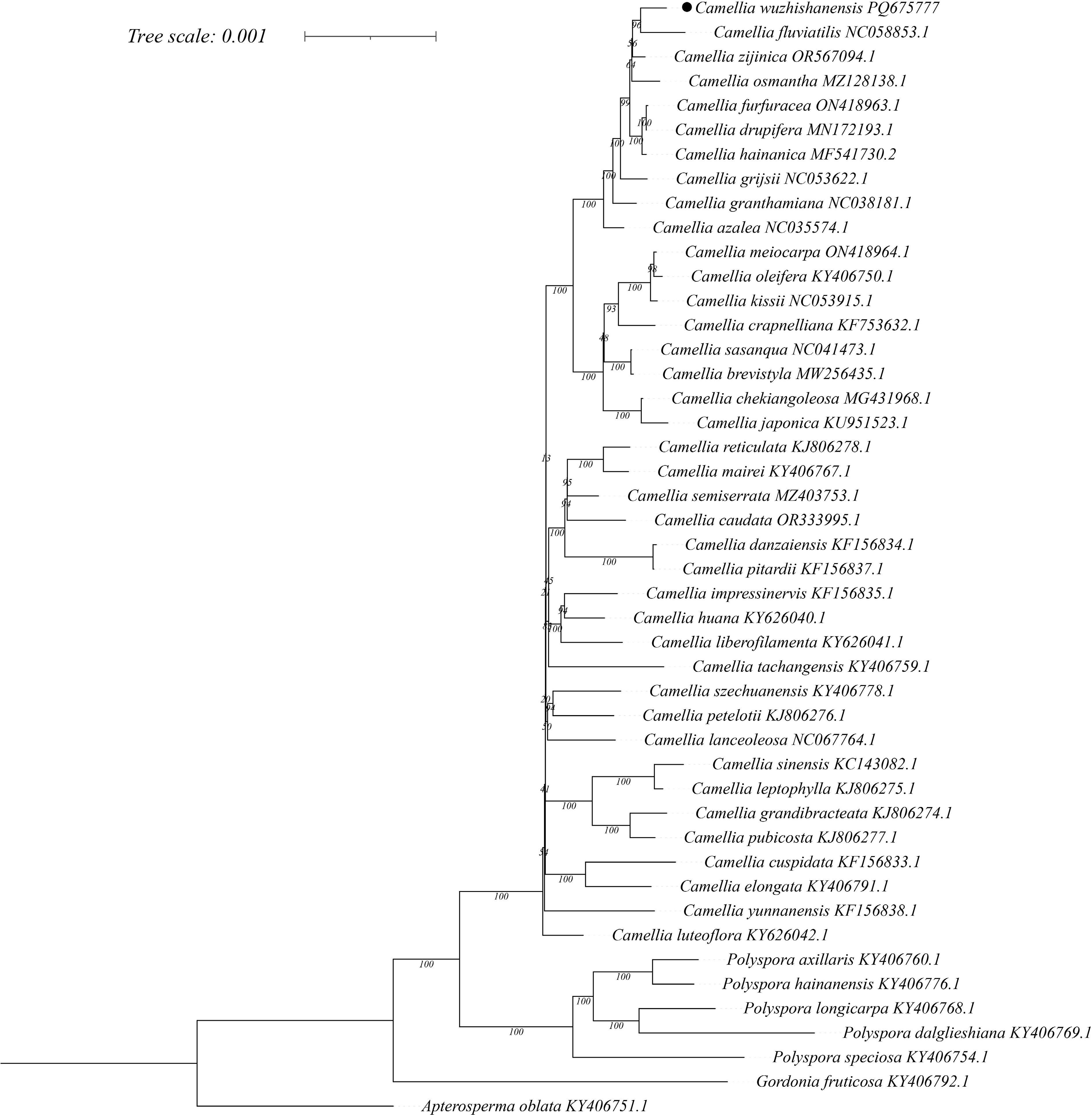
Figure 3.
Phylogenetic relationships of Camellia wuzhishanensis and related species inferred from maximum likelihood analysis based on complete chloroplast genome sequences.
Morphological description
-
Morphological observations of the new species were based on live plants and dried specimens, all of which are designated as type specimens deposited at Shanghai Chenshan Herbarium (CSH). The length and width of all structures were measured with a caliper. Additionally, we compared the capsules and seeds of two native decaploid Oil-camellia species from Hainan: the new species and C. hainanica. High-resolution photographs of the live plants were provided by Hang-Gui Lai, Hai-Yan Hu, and Cheng-Zhi Xie. Conservation assessment was conducted following IUCN guidelines[23].
-
The chloroplast genome of C. wuzhishanensis has a total length of 156,906 bp with a GC content of approximately 37.29%. The genome contains 87 protein-coding genes, 37 tRNA genes, and eight rRNA genes (Fig. 2).
Phylogenetic analysis
-
The maximum likelihood (ML) phylogenetic tree based on chloroplast genome sequences indicates that the new species C. wuzhishanensis belongs to the genus Camellia. It is closely related to showing close genetic relationships with C. fluviatilis, C. zijinica, C. osmantha, C. furfuracea, C. drupifera, and C. hainanica. However, it can be clearly distinguished from C. hainanica, which is widely distributed on Hainan Island (Fig. 3).
Taxonomy
-
Camellia wuzhishanensis H.G.Lai, H.Y.Hu & C.Z.Xie, sp. nov. (Figs 1 & 4).
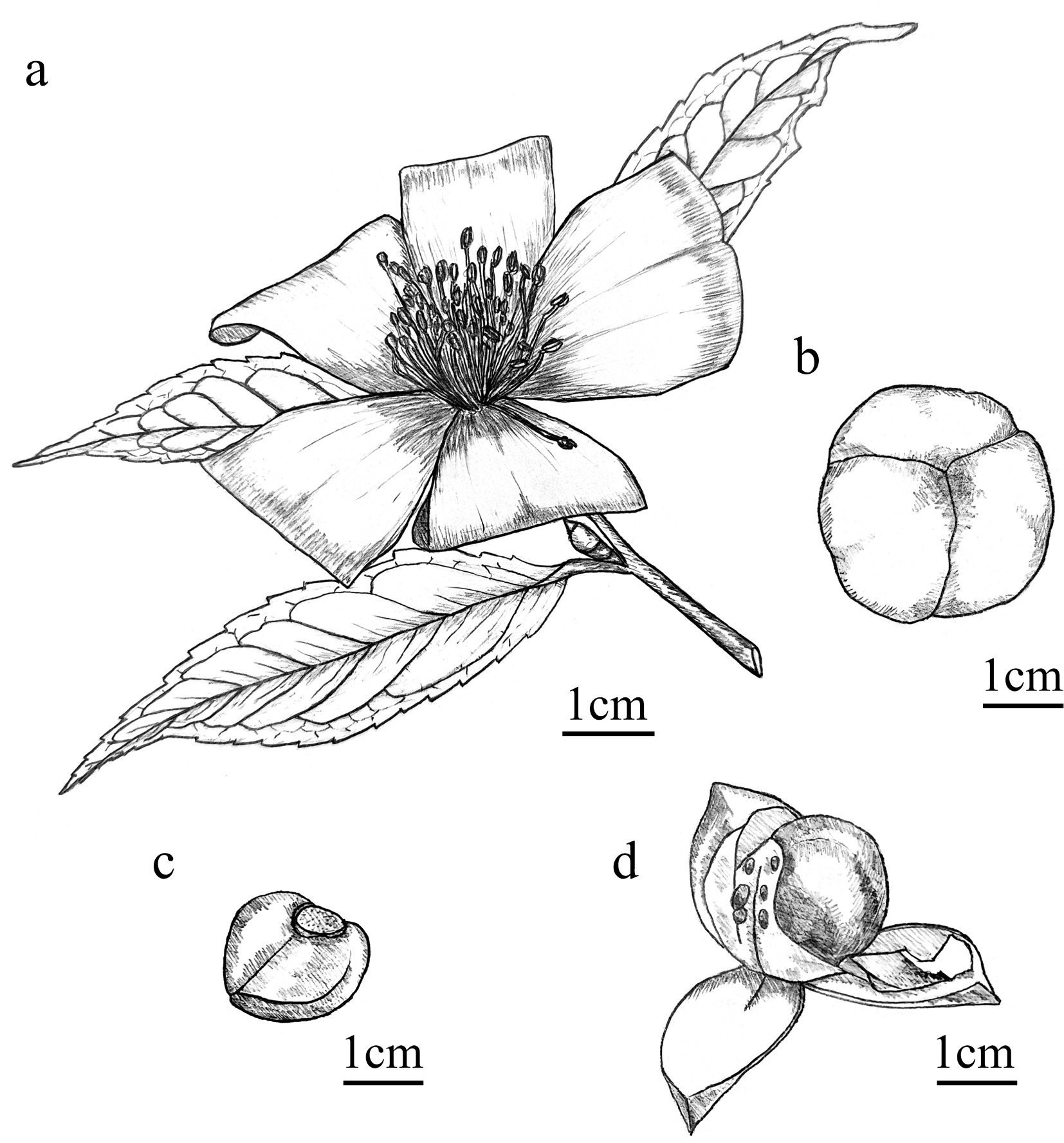
Figure 4.
Camellia wuzhishanensis. (a) Flowering branch. (b) Front view of the capsule. (c) Seed. (d) Loculicidal capsule. Illustration by Cheng-Zhi Xie.
Type: CHINA. Hainan Province: Wuzhishan, Hainan Tropical Rainforest National Park, Mao Rui Division, Core Area, in the tropical rainforest, elev. ca. 718 m, 20 October 2024, CSH0217777 (holotype CSH!).
Diagnosis: Being close to C. osmantha in having similar shape and color of corollas and capsules. However, it mainly differs in the higher life form (tree, 12−18 m tall vs shrub, 3−4.5 m tall), different distributions within China (Hainan, Wuzhishan vs Guangxi), and higher ploidy level (10 vs 6) (Table 1).
Table 1. A comparison among C. wuzhishanensis and similar species.
Characteristics C. wuzhishanensis C. hainanica C. drupifera C. osmantha C. fluviatilis Ploidy 10 10 8 6 2 Life form Tree, 12–18 m tall Shrub or small tree,
3–5 m tallShrub or small tree,
2–8 m tallShrub, 3–4.5 m tall Shrub, 1.5–3.5 m tall Branchlets Reddish brown, young pubescent, old glabrous Reddish brown, pubescent Grayish brown, young pubescent, old glabrous Grayish brown, young pubescent, old glabrous Reddish brown, pubescent Leaf shape Obovate or obovati-elliptic Elliptic or oblong-elliptic Elliptic or oblong-elliptic Obovate, obovati-elliptic or oblong Lanceolate to narrowly lanceolate Leaf size 3.5–5.5 × 1.5–2.5 cm 5–8 × 2–3 cm 5–10 × 2–5 cm 3.5–6 × 1.8–3.5 cm 5–8.5 × 1–2.2 cm Flower size 3.5–4.5 cm in diam. 6–9.3 cm in diam. 6–10 cm in diam 2.5–3 cm in diam. 1.5–6 cm in diam. Bracteoles
and sepals8–9 10–12 or more 9 10–12 or more 8–9 Petals 5–6, 1.5–2.5 × 0.9–2.2 cm 5–7, 3–4.5 × 1.5–3 cm 9, 4.5–6 × 3–4.5 cm 6–8, 1.2–2.2 × 0.9–1.5 cm 5–6, 0.8–3 × 0.4–2 cm Stamens 0.8–1.4 cm, glabrous;
outer filament whorl
basally connate1.2–1.5 cm, glabrous;
outer filament whorl basally connate1.2–1.7 cm, glabrous,
outer filament whorl basally connate0.5–1.1 cm, glabrous;
outer filament whorl basally connate0.5–0.7 cm, glabrous;
outer filament whorl basally connateOvary Tomentose, 3-loculed Tomentose, 3-4-loculed Tomentose, 3-5-locular Tomentose, 3-loculed Tomentose, 3-loculed Styles Apically 3-lobed to 3-parted, base tomentose 3-4, apically 3-4-parted or distinct nearly to base glabrous or base tomentose Apically 3-lobed to 3-parted, glabrous or base tomentose Apically 3-lobed to 3-parted, base tomentose 3, glabrous, distinct
nearly to baseCapsules 1.8–4 cm in diam., pericarp brown, glossy 3–6 cm in diam., pericarp brown, rough 4–6 cm in diam., pericarp green, surface rough and brownish furfuraceous 1.8–2.3 cm in diam., pericarp brown, glossy 1.5–1.7 cm in diam., pericarp brown, glossy Distribution within China Hainan, Wuzhishan Hainan Guangxi, Guangdong, and Hainan Guangxi Guangdong, Guangxi, and Hainan Description: Trees 12−18 m tall, 58 cm dbh. Young branches reddish brown; current year branchlets puberulent, soon glabrescent. Petiole puberulent; leaf blade obovate or obovati-elliptic, 3.5−5.5 × 1.5−2.5 cm, leathery, abaxially pale green, adaxially dark green and shiny, both surfaces glabrous, midvein raised on both surfaces, secondary veins 6 or 7 on each side of midvein, secondary and reticulate veins abaxially obscure, base cuneate, margin serrulate, apex acute to acuminate and with an obtuse tip. Flowers axillary or subterminal, solitary, 3.5−4.5 cm in diam., subsessile. Bracteoles and sepals 8 or 9, caducous; outer 3 or 4 bracteoles and sepals semiorbicular; inner bracteoles and sepals ovate, outside apically pubescent, inside glabrous, margin ciliolate. Petals 5 or 6, white, almost distinct, obovate, or oblong-obovate, 1.5−2.5 × 0.9−2.2 cm, apex emarginate or 2-lobed. Stamens 0.8−1.4 cm, glabrous; outer filament whorl basally connate. Ovary globose, tomentose, 3-loculed; styles apically 3-lobed to 3-parted, base tomentose. Capsule globose to ovoid, 1.8−4 cm, 1- or 2-loculed with 1 seed per locule; pericarp splitting into three valves. Seeds brown, globose, ca. 1.8 cm in diam. 2n = 150.
Phenology: Flowering from October to December, fruiting from October to the following October.
Etymology: The specific epithet 'wuzhishanensis' means the species is collected from Wuzhishan of Hainan Island, China.
Vernacular name: '五指山油茶' (Chinese pinyin: wu zhi shan you cha).
Distribution, habitat, and conservation status: Only one population of C. wuzhishanensis has been found in its type locality with a distribution of about 2 km2 and less than 100 individuals, at an elevation of ca. 718 m in the tropical rainforest. Therefore, this species is assessed to be Critically Endangered [CR, B2a, b(v)] according to the IUCN Standards and Petitions Committee (2022). Further field investigation is needed to confirm this assessment.
Additional specimens examined (paratype): CHINA. Hainan Province: Wuzhishan, Hainan Tropical Rainforest National Park, Mao Rui Division, Core Area, in the tropical rainforest, elev. ca. 718 m, 20 October 2024, CSH0217778 (CSH!).
-
The biodiversity of Camellia in tropical Hainan reflects complex evolutionary adaptations. According to the Flora of China, Hainan hosts 12 native species spanning four sections: Thea (e.g., C. sinensis varieties), Corallinae (e.g., C. amplexifolia, C. parviflora), Eriandria (e.g., C. caudata var. gracilis), and Paracamellia (e.g., C. drupifera, C. oleifera, C. kissii). Nearly half of the species occur below 1,000 m, with only C. caudata var. gracilis, C. furfuracea, C. kissii and C. sinensis varieties overlapping the elevational range of C. wuzhishanensis. Historically, Hainan's Oil-camellias were broadly categorized as C. drupifera or C. oleifera[4,10,11], but recent studies have unveiled finer distinctions, including the recognition of C. hainanica and the novel species described here.
Previous literature recorded another variety of C. caudata distributed in Wuzhishan. We conducted comparative studies between these two sympatric Camellia species. Our integrated evidence—phylogenetic and morphological—definitively places C. wuzhishanensis within sect. Paracamellia. Chloroplast genome analysis clusters it with C. fluviatilis, C. hainanica, and allied species, while revealing substantial divergence from C. caudata (sect. Eriandria) (Fig. 3). Morphologically, C. wuzhishanensis is distinguished by its arborescent habit (12–18 m tall), subsessile emarginate-petaled flowers, glabrous filaments, and 3-loculed globose-ovoid capsules—a suite of traits incongruent with any known variety of C. caudata or other Hainan Camellia. Its decaploid genome further corroborates its status as an independent evolutionary lineage endemic to Wuzhishan's montane rainforests.
Ecologically, C. wuzhishanensis and C. hainanica exemplify adaptive radiation within Hainan's Oil-camellias. Both decaploid species share a recent common ancestor yet occupy divergent niches: C. wuzhishanensis thrives > 780 m with smaller organs, suggesting specialization to stable high-elevation climates, whereas C. hainanica dominates lower elevations with larger capsules and higher seed yield (Fig. 5, Table 2). Economically, this divergence leads to complementary applications: the height and single-trunk growth of C. wuzhishanensis make it suitable for reforestation and urban landscaping, while its robust root system enables its use as an ideal rootstock for grafting other Camellia species introduced to the mountainous areas of Hainan. In contrast, C. hainanica remains crucial for traditional oil production. Future research should investigate the genomic basis of their polyploidy-mediated adaptation and resilience under climate change scenarios.
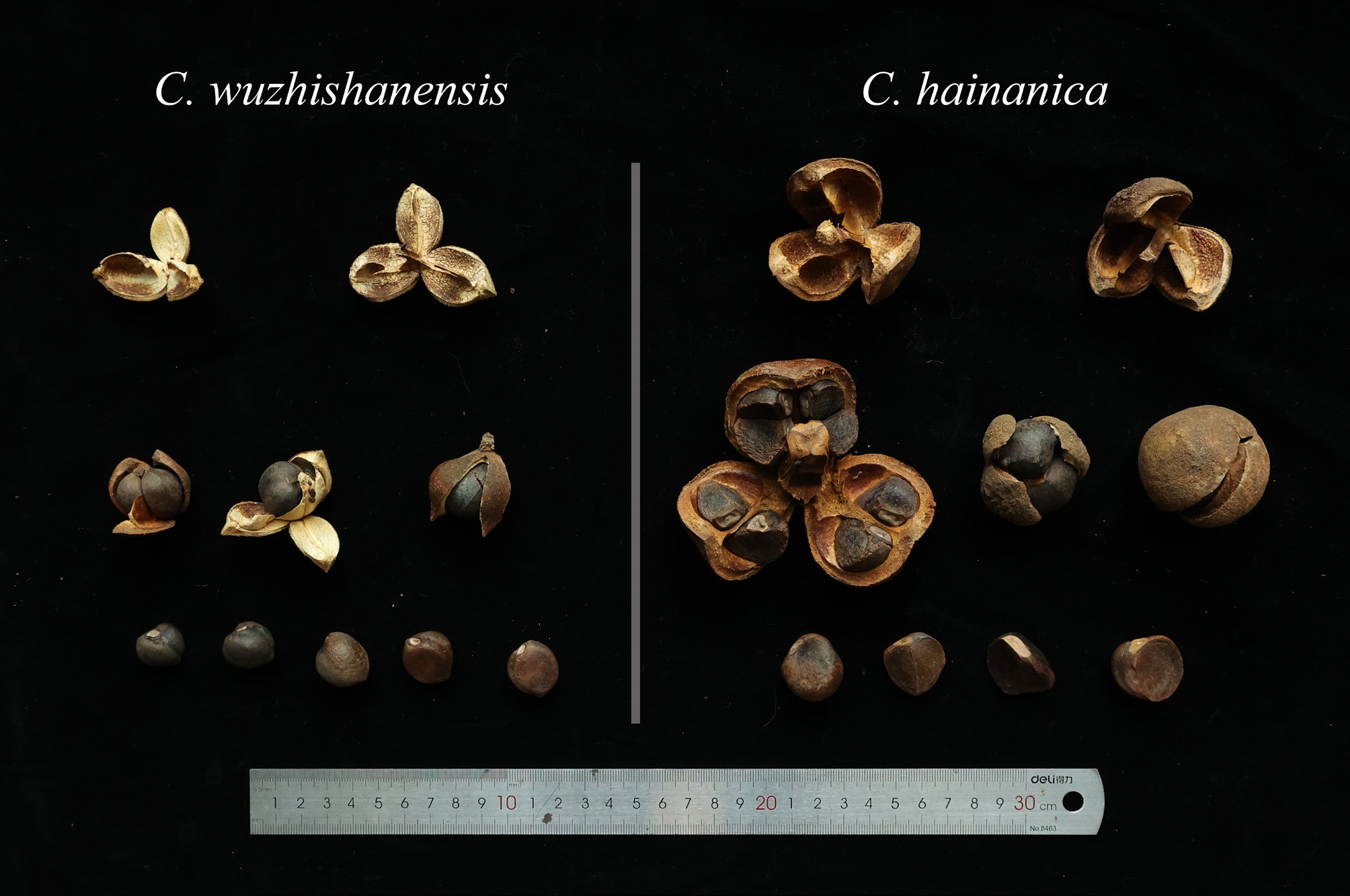
Figure 5.
Comparison of loculicidal pericarps, loculicidal capsules, and seeds between C. wuzhishanensis and C. hainanica.
Table 2. Comparison of capsules, seeds, pericarps, and pollens between C. wuzhishanensis and C. hainanica.
Parameter C. wuzhishanensis C. hainanica Mean fresh capsules weight (g) 10.5 46.7 Fresh capsules weight range (g) 3.8–32.3 17.6–107.1 Mean fresh capsules diameter (cm) 2.6 4.4 Fresh capsules diameter range (cm) 1.8–4.0 3.3–5.9 Fresh pericarps thickness range (mm) 1.5–3.0 3.0–7.0 Mean dry capsules weight (g) 5.1 27.1 Dry capsules weight range (g) 2.5–14.8 11.9–66.5 Mean number of seeds per capsule 1.4 5.3 Number of seeds per capsule range 1–6 1–12 Mean dry pericarps weight (g) 2.6 13.2 Dry pericarps weight range (g) 1.0–6.9 5.4–37.9 Mean total seed weight per dry capsules (g) 2.5 13.9 Total seed weight per dry capsules range (g) 1.0–9.5 4.8–28.7 Mean individual dry seeds weight (g) 1.9 2.9 Individual dry seeds weight range (g) 0.8–3.3 1.2–6.3 Mean seed proportion of total dry capsules weight (%) 49.5 51.7 Seed proportion of total dry capsules weight range (%) 26.4–67.0 26.5–77.3 Mean pollen length (μm) 51.9 57.2 pollen length range (μm) 41.9–57.8 48.5–64.2 In conclusion, our study advances the taxonomic understanding of Hainan's Camellia diversity by integrating phylogenetic, morphological, and ecological evidence. While previous research has clarified the taxonomic status of C. hainanica within Hainan's Oil-camellias, our work further identifies C. wuzhishanensis as a distinct new species with unique evolutionary and ecological characteristics. The niche partitioning between C. wuzhishanensis and C. hainanica underscores their complementary economic potential—ranging from ecological restoration to high-value oil production. These findings not only expand the known diversity of Hainan's endemic Camellia but also provide a foundation for their conservation and sustainable use in both natural and cultivated landscapes.
This work was funded by Hainan Province Science and Technology Special Fund (ZDYF2023XDNY055), and the National Key R&D Program of China (Grant No. 2023YFD2200700).
-
The authors confirm their contributions to the paper as follows: study conception and design, project supervision: Hu H, Lai H, Chen Y; draft manuscript preparation: Xie C, Hu H; genome analysis and annotation: Xie C; sample collection and experiments: Zhang S, Wu Q, Zhang M, Luo S, Gao J, Chen F, Ding Y, Liu J, Huang D, Wang W; data analysis: Xie C; manuscript revision: Xie C, Hu H. All authors reviewed the results and approved the final version of the manuscript.
-
The chloroplast genome sequences of Camellia wuzhishanensis are deposited in GenBank of the National Center for Biotechnology Information (NCBI) repository, accession number PQ675777.
-
The authors declare that they have no conflict of interest.
-
Received 25 February 2025; Accepted 19 June 2025; Published online 28 September 2025
-
Discovery of Camellia wuzhishanensis: a critically endangered decaploid (2n = 10x = 150) species endemic to Hainan's tropical rainforests, distinguished by its exceptional height (12−18 m) and unique morphological traits.
Molecular phylogenetic evidence: chloroplast genome analysis resolves its close relationship with C. hainanica and other sect. Paracamellia species, yet confirms genetic distinctiveness.
Ecological adaptation: first report of a decaploid Oil-camellia thriving in high-elevation tropical rainforests, suggesting specialized survival strategies.
Conservation urgency: classified as Critically Endangered (IUCN CR B2a,b(v)) with < 100 individuals in a 2 km2 range, demanding immediate protective measures.
-
# Authors contributed equally: Chengzhi Xie, Shihui Zhang
- Copyright: © 2025 by the author(s). Published by Maximum Academic Press on behalf of Hainan University. This article is an open access article distributed under Creative Commons Attribution License (CC BY 4.0), visit https://creativecommons.org/licenses/by/4.0/.
-
About this article
Cite this article
Xie C, Zhang S, Wu Q, Zhang M, Luo S, et al. 2025. Camellia wuzhishanensis (Theaceae), a new decaploid species discovered in the tropical rainforest of Wuzhishan, Hainan, China. Tropical Plants 4: e033 doi: 10.48130/tp-0025-0024 

Camellia wuzhishanensis (Theaceae), a new decaploid species discovered in the tropical rainforest of Wuzhishan, Hainan, China
- Received: 25 February 2025
- Revised: 16 June 2025
- Accepted: 19 June 2025
- Published online: 28 September 2025
Abstract: Camellia wuzhishanensis has been identified as a newly discovered decaploid species within the family Theaceae, endemic to the pristine tropical rainforests of Wuzhishan, Hainan, China. Detailed morphological examination reveals that C. wuzhishanensis is distinguished by its greater height, reaching up to 12–18 m, and shares a decaploid ploidy level with C. hainanica, another species native to Hainan Island. Unique traits such as branchlets, leaf size, flower size, stamens, and capsules further distinguish it from related species. Through phylogenetic analysis of complete chloroplast genome sequences, the study positions C. wuzhishanensis within the Camellia genus, showing close genetic relationships with C. fluviatilis, C. zijinica, C. osmantha, C. furfuracea, C. drupifera, and C. hainanica, while being more distantly related to C. oleifera. Integrating morphological and molecular evidence supports its classification as a new species within sect. Paracamellia. Given its limited range and potential threats, C. wuzhishanensis is classified as Critically Endangered (CR) according to IUCN Red List criteria, underscoring the need for conservation efforts.
-
Key words:
- Hainan tropical rainforest national park /
- Taxonomy /
- Sect. Paracamellia /
- New species