












-
Sturgeon, a prized species in freshwater aquaculture, has seen significant expansion in China, with its production volume rising to 149 kilotons in 2023, reflecting a 14.07% growth compared to the previous year[1]. Globally, the sturgeon farming industry is expanding rapidly, with over 38 countries cultivating 22 economically significant species[2]. While sturgeon meat remains a significant by-product, accounting for approximately 40% of the fish's total weight[3], its potential remains largely untapped. The high demand for caviar has led to sturgeon meat being primarily utilized in lower-value applications, including salted fish[4]. Nonetheless, sturgeon presents unique benefits beyond its roe, especially as a potential raw material for surimi production—a market largely dominated by silver carp in China. Unlike silver carp, sturgeon lacks intramuscular spines, simplifying surimi production by eliminating the need for fine filtration[5]. Additionally, as a cold-water species, sturgeon contains longer myogenic fibers, which contribute to superior gel strength in surimi products[6].
Beyond these processing advantages, sturgeon also boasts a rich and complex flavor profile, distinct from the neutral taste of silver carp. This flavor complexity is largely attributed to the sturgeon's higher content of polyunsaturated fatty acids, which contribute to a more robust, savory flavor. As a result, sturgeon is highly valued in premium culinary applications, such as sushi and caviar, where its unique flavor is highly prized[7]. In contrast, silver carp tends to have a milder and less desirable flavor, limiting its appeal in high-end food products[8]. With a growing consumer focus on both nutritional content and sensory appeal, sturgeon is gaining prominence in aquaculture and the food sector, valued for its health advantages and its exceptional and unique flavor profile.
Flavor is a critical quality characteristic influencing consumer acceptance and the success of food products. While silver carp continues to be the primary raw material for surimi production in China, the conventional processing method—involving multiple washing steps—strips away the majority of lipids and flavor compounds, resulting in a notable reduction in flavor in the end product[9]. Furthermore, silver carp surimi often retains an unpleasant fishy odor, which is common to freshwater fish, potentially limiting its application in value-added processing[5]. For instance, volatile compounds (VCs) like hexanal, octanal, geosmin, and 1-penten-3-ol in silver carp surimi are associated with grassy, fishy, earthy, and mushroom-like odors[10]. In contrast, Li et al.[11] found that metallic and musty odors were not detected in the sensory evaluation of steamed sturgeon meat, which also exhibited a broader range of odor attributes compared to silver carp. The absence of these off-flavors suggests that sturgeon surimi may offer a potential flavor advantage. Lipid oxidation is widely regarded as the key process driving the formation of VCs in surimi products[12]. The decrease in crude fat content during the rinsing process is a result of the lower density of lipids relative to water, leading lipids to be removed from the upper layers during washing[13]. Xiao et al.[5] demonstrated that the number of VCs in grass carp surimi decreased from 56 to 24 after four times rinsing, as identified by gas chromatography-mass spectrometry (GC-MS). Our previous study demonstrated that sturgeon contains 32.3% lipid-rich yellow meat, with unsaturated fatty acids comprising 48.87% of the total fat, which is approximately four times higher than that of silver carp[14]. Notably, these lipids are not fully removed even after repeated rinsing. Unsaturated fatty acids, including oleic and linoleic acids, are highly susceptible to oxidation, a process that drives the generation of VCs essential for flavor enhancement[15].
In an attempt to alleviate the flavor decline in rinsed silver carp surimi, exogenous lipids have been introduced. This addition aims to promote lipid oxidation, thereby boosting the generation of VCs. For instance, Shen et al.[15] improved the flavor of silver carp surimi by incorporating virgin coconut oil or fish oil, reducing undesirable fishy odors while promoting the formation of more favorable flavors. Similarly, Sun et al.[9] enhanced the flavor profile of silver carp surimi by adding a high internal phase emulsion of Litsea cubeba oil. While these methods can improve flavor, they increase both cost and processing time, making them less feasible for large-scale production. In contrast, sturgeon, with its high lipid content, represents a potentially more cost-effective and efficient alternative for surimi production. Nonetheless, the precise effect that sturgeon's lipid-abundant yellow meat has on the flavor of surimi gels remains inadequately explored.
This study aims to investigate the influence of lipid-rich yellow meat from sturgeon on the flavor profile of surimi gels. It also seeks to enhance the appeal of sturgeon surimi, unlocking its full potential as a high-quality, flavorful alternative in the surimi market.
-
Eight sturgeons (Acipenser baerii Brandt × Acipenser schrenckii Brandt), each having an average weight 1.5 ± 0.2 kg, were sourced from the Jianxiangqiao Farmers Market (Beijing, China). The sturgeons were first stunned using percussive methods, and then the viscera, head, bones, and skin were removed. n-Ketones C4−C9 were purchased from Sinopharm Chemical Reagent Beijing Co., Ltd. (Beijing, China).
Surimi gel preparation
-
Surimi was prepared following a modified version of our previously established method[14]. The upper muscle of the sturgeon, which has lipids distributed within it, was referred to as yellow meat[14]. The sturgeon muscle was then categorized into two types: yellow meat and white meat. Meanwhile, the original, unseparated muscle was named whole flesh, as can be seen in Supplementary Fig. S1. First, each portion of fish mince was washed twice with cold distilled water in a ratio of 1:2 (W/V). After that, it underwent an extra wash using a 0.3% NaCl solution. Next, 1.5% of edible salt and 5% of deionized water were incorporated into the surimi and thoroughly mixed for 8 min. Subsequently, the surimi was subjected to heating: first at 40 °C for 30 min, then at 90 °C for another 30 min, and finally, it was quickly cooled in an ice - water bath. The surimi gels made from white meat, whole flesh, and yellow meat were respectively named WS, SS, and YS, as illustrated in Supplementary Fig. S2.
Electronic nose (E-nose) measurement
-
The VCs of sturgeon surimi were assessed utilizing an E-nose (PEN 3; Win Muster Air-sense Analytics Inc., Schwerin, Germany), following the method outlined by Shen et al.[16] with certain adaptations. This apparatus was equipped with 10 sensors for detecting various VCs (Supplementary Table S1). A 2 g sample was put into a 20 mL airtight glass vial and then incubated at 60 °C for 20 min. The following settings were applied to the relevant parameters: the flush time was set to 60 s, the measurement time was 180 s, the chamber flow rate was 400 μL, and the initial injection flow was 150 μL.
Gas chromatography–ion mobility spectrometry (GC-IMS) measurement
-
To analyze the VCs in surimi gels, we utilized an Agilent 490 gas chromatograph (Agilent Technologies, Palo Alto, CA, USA) coupled with an IMS instrument (FlavourSpec®, Gesellschaft für Analytische Sensorsysteme mbH, Dortmund, Germany). The method was adapted from Xu et al.[3] with modifications. A 2 g sample was placed within a 20 mL headspace vial. It was then incubated at 60 °C for 20 min while oscillating at a frequency of 13 g. Afterward, 500 μL of the sample was injected into the headspace of a heated syringe (maintained at 85 °C and operating in non-cracking mode) of the GC-IMS instrument. This instrument was fitted with a FS-SE-54-CB column (15 m × 0.53 mm × 0.50 μm). For each volatile compound, the retention index (RI) was computed using n-Ketones C4−C9.
Discriminative sensory test
-
The discriminative sensory test followed the triangle test described in ISO 4120-2021. Participants (n = 30, 13 males and 17 females) were recruited from the College of Food Science and Nutritional Engineering of China Agricultural University, all of whom were non-smokers, without sinus issues or allergies. All participants possessed at least one year of experience in surimi sensory evaluation. Each sample was mashed and transferred to opaque PET food-grade vials. To ensure that samples had sufficient VCs, they were preheated at 60 °C for 30 min. Each participant was then tasked with identifying the sample with a distinct odor among the three samples (Supplementary Table S2).
Establishment of sensory panel and flavor descriptors
-
Flavor descriptors were determined with reference to the method of Lazo et al.[17], with some modifications. The sensory panel was initially recruited from the discriminating test, and assessors who responded accurately were chosen. The method of Li et al.[11] was then employed to train the panelists, resulting in the selection of 13 assessors (including five males and eight females). To exclude appearance effects, samples were post-crushed and placed in PET food-grade vials, incubated at 60 °C for 30 min. Flavor descriptors were established using the free choice profiling (FCP) method, wherein panelists freely generated descriptors to evaluate sample odor. The check-all-that-apply (CATA) method was used to further identify flavor descriptors. A list of collected flavor words was compiled, and assessors marked perceptible odor descriptors. According to ISO 13299-2016, data were statistically analyzed using a binary approach (0 for unperceived, 1 for perceivable), with flavor descriptors cited over 15% considered valid.
Flavor profile of surimi gels
-
Following the approach adopted by Murray et al.[18], the flavor profile experiments were carried out. These experiments made use of the flavor descriptors derived in section "Establishment of sensory panel and flavor descriptors". A 2 g portion of each sample was mashed and then deposited into PET food-grade vials. Subsequently, the vials were incubated at 60 °C for 30 min. Sensory assessors were tasked with evaluating odor intensity on a scale of 0−5 points, where 0 denoted imperceptible and 5 denoted extremely strong (Supplementary Table S3). Heptanal (oily/fatty), 2,3-diethyl-5-methylpyrazine (earthy), 2-hexenal (grassy), fish viscera (unpleasant fishy), 2-methyl-3-furanethiol (meaty), 1-penten-3-ol (sweet), n-hexanedioic acid (cheesy), and 2-methylpropanal (fresh), trimethylamine (ammonia) were selected as the references for the odor attributes.
Statistical analysis
-
Principal component analysis (PCA) was carried out using Origin 2022 (OriginLab, Northampton, MA, USA). Statistical analysis was conducted through one-way ANOVA using SPSS 23 (IBM, Armonk, NY, USA), with significance set at p < 0.05. Partial least squares discriminant analysis (PLS-DA) and volcano plot analysis were executed using the online platform MetaboAnalyst (
www.metaboanalyst.ca ). Partial least squares regression (PLSR) was conducted using Unscrambler version X10.4 (CAMO ASA, Oslo, Norway). -
As depicted in Fig. 1a, the response values of W5S (nitrogen oxide compounds) and W1W (sulfide) from YS were higher than SS and WS, with most response values in YS exceeding those in the other samples. These findings suggested that YS contributes predominantly flavor substances to sturgeon surimi gels, and its nitrogen oxides and sulfide contents differ significantly from those of SS and WS. The PCA effectively reduces the dimensionality of the response values in e-nose, visualizing differences and similarities between samples[5]. As illustrated in Fig. 1b, PC1 (92.7%) and PC2 (7.2%) together accounted for 99.9% of the variance, indicating that these two principal components captured the overall VCs present in the surimi gels. The confidence ellipse for SS intersected with both WS and YS, while WS's ellipse was distinct and did not overlap with YS's, suggesting more pronounced flavor differences between WS and YS. According to loading values, W1W (sulfide) exhibited the most significant response differences among the three samples, followed by W5S (nitrogen oxide compounds) and W1S (methane). These results implied that SS shares more similar VCs with WS, while WS and YS exhibited more distinct flavor profiles. Notably, nitrogen oxides and sulfide are the primary contributors to flavor distinctions among these samples.
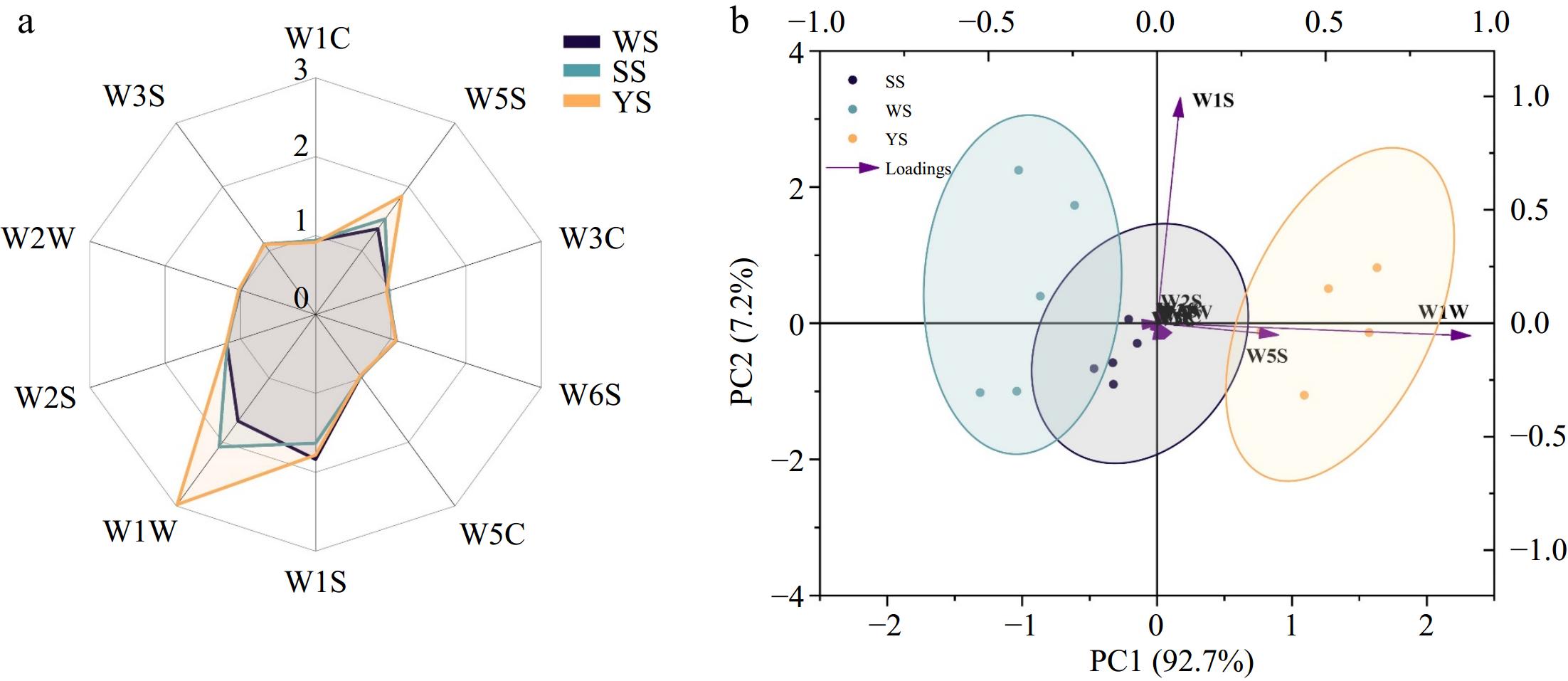
Figure 1.
(a) E-nose sensor response value, (b) PCA score plots of sturgeon surimi gels. Note: E-nose means electronic nose. PCA means Principal component analysis. WS: surimi gel made from sturgeon's white meat. SS: surimi gel made from sturgeon whole flesh. YS: surimi gel made from sturgeon's yellow meat.
In our previous research[14], it was shown that yellow meat mince exhibited significantly (p < 0.05) greater lipid content compared to white meat and whole sturgeon flesh, with unsaturated fatty acids accounting for 52.16% of the total free fatty acids in yellow meat mince. The lipid type and content are the primary factors influencing the VCs in surimi gels[19]. The elevated lipid content in yellow meat directly correlated with the enriched VCs observed in YS compared to WS and SS. As suggested by Xue et al.[20], surimi protein interacted with VCs through various binding sites, including amino acid side chains, and hydrophobic groups, affecting their release and retention. However, many VCs are lipophilic and require lipid carriers for solubilization and delivery[21]. Phospholipids, abundant in unsaturated fatty acids, enhance the solubility of hydrophobic VCs and their release into the surrounding environment[22]. This is particularly relevant in yellow meat mince, where high unsaturated fatty acid levels contribute to the generation of VCs. During heating, these unsaturated fatty acids underwent oxidative degradation, generating VCs such as aldehydes and ketones, which significantly contribute to the flavor profile. This phenomenon is particularly pronounced in yellow meat mince, where the elevated levels of unsaturated fatty acids promote the release of VCs into the surrounding environment[22]. Furthermore, lipids not only act as a carrier but also influence the stability and volatility of VCs[23]. You et al.[24] found that phospholipids (74.8%) in abalone, rich in unsaturated fatty acids, exhibited low oxidative stability, facilitating the release of VCs that have a reduced tendency to bind with proteins. This interaction between lipids and VCs is crucial for flavor development, as oxidative degradation of fatty acids during processing releases VCs that shape the final flavor profile. Sturgeon's yellow minced meat contains a high level of unsaturated fatty acids. When heated, these fatty acids can facilitate the generation of aldehydes and ketones, which in turn play a role in the development of flavor. Similar phenomena have been witnessed in studies of chicken fat, where the unsaturated fatty acid fraction produced higher levels of aldehydes, alcohols, ketones, and lactones during heating[25]. The elevated levels of unsaturated fatty acids in sturgeon surimi likely increase the volatility, and release of VCs, highlighting the importance of lipid composition in shaping the flavor profile of surimi products. Yellow meat, with its higher lipid content and a greater proportion of unsaturated fatty acids, offers a distinct advantage in flavor development. Therefore, the abundant VCs in YS result not only from the high unsaturated fatty acid content but also from the oxidation of these fatty acids, which facilitates the release of VCs and ultimately enriches the overall flavor profile.
GC-IMS analysis
-
Figure 2a illustrates the VCs in sturgeon surimi gels, with each column representing the intensity of signal peaks corresponding to characteristic compounds across different samples. Brighter colors indicate higher concentrations of the respective compounds[16]. Thirty VCs were identified, including three alcohols, nine aldehydes, six ketones, seven esters, two heterocycles, and three other compounds. As depicted in Fig. 2b and c, only the levels of propanal, ethyl acetate, and heptanal in YS were significantly lower compared to WS, while all other VCs in YS showed either increased levels or no significant change. This confirmed the conclusion from Fig. 1 that yellow meat contributed a more complex and pronounced flavor profile than white meat. Aldehydes are mainly produced via the oxidation of unsaturated fatty acids and the Strecker degradation of amino acids[26]. Given their low odor thresholds, aldehydes hold a vital position in flavor, which implies that even at low concentrations, they can exert a substantial influence on the overall sensory experience[26]. For example, the thermal decomposition of linoleic acid and α-linolenic acid produces pentanal, hexanal, and octanal, which contribute fatty and grassy flavors and are recognized as key contributors to undesirable fishy odors[11]. The elevated levels of these aldehydes in YS are likely attributed to the high linoleic acid content (59.98%) in yellow meat surimi[14]. Specifically, hexanal and octanal are known to contribute to off flavors in fish, and their low odor thresholds make them particularly perceptible[3]. Consistently, Xu et al.[3] demonstrated that hexanal, heptanal, nonanal, and octanal contributed to the main odor of unrinsed sturgeon surimi gels following heat treatment. Ketones typically exhibit 'buttery', 'sweet', or 'fruity' aromas, formed from the oxidation of polyunsaturated fatty acids or amino acids[16]. For instance, YS exhibited notably high levels of 2-butanone (intense buttery aroma) and 4-methyl-2-pentanone (cheese aroma). While ketones have higher odor thresholds than aldehydes, their distinctive aromas enhance the richness and complexity of surimi[27]. 2-ethylfuran was prevalent across all samples, imparting a 'sweet' and 'nutty' aroma through oxidation of linoleic acid or other n-6 fatty acids[28]. Esters were predominantly found in YS, typically contributing a 'fruity' or 'fatty' taste[8]. Liu et al.[29] highlighted the importance of 2-ethylfuran and ethyl acetate in the pleasant flavor profiles of sturgeon products, which contribute to the overall taste perception. Interestingly, VCs associated with a 'nutty' flavor, such as 3-methylbutanall, were most abundant in WS. 3-methylbutanal has a notably low odor threshold and is known for its nutty and milky flavor profile, playing a key role in the sensory characteristics of various hard and semi-hard cheeses[26]. 3-Methylbutanal is believed to originate from leucine and isoleucine during high-temperature heating, suggesting that its production might be associated with the degradation of free amino acids during the heat treatment of surimi[30]. Its prominence in WS suggested that this sample contributes more 'milky' and 'cheesy' flavors, which were observed in the sensory evaluation detailed in Fig. 3. In contrast, yellow meat, with its higher lipid content, contributed a broader spectrum of VCs, resulting in a more complex flavor profile with notes ranging from 'fatty' and 'nutty' to 'grassy' and 'unpleasant fishy'. Furthermore, 1-Octen-3-ol, known for its mushroom-like and metallic flavors, was identified as a common off-flavor compound in silver carp and grass carp surimi gels[5,8], but it was absent in sturgeon surimi gels. This indicated that sturgeon surimi lacks unpleasant odors such as the metallic taste typically found in traditional surimi products, further highlighting the superior flavor quality of sturgeon surimi. The differences in the presence of specific VCs across the different samples underscore the role of lipid composition in flavor development. VCs are often lipophilic, and their solubility and volatility can be influenced by the lipid matrix in which they are contained[31]. Against this backdrop, it's probable that the relatively high lipid content and the larger proportion of unsaturated fatty acids in yellow meat led to an increased release of VCs and a heightened perception of these odors.
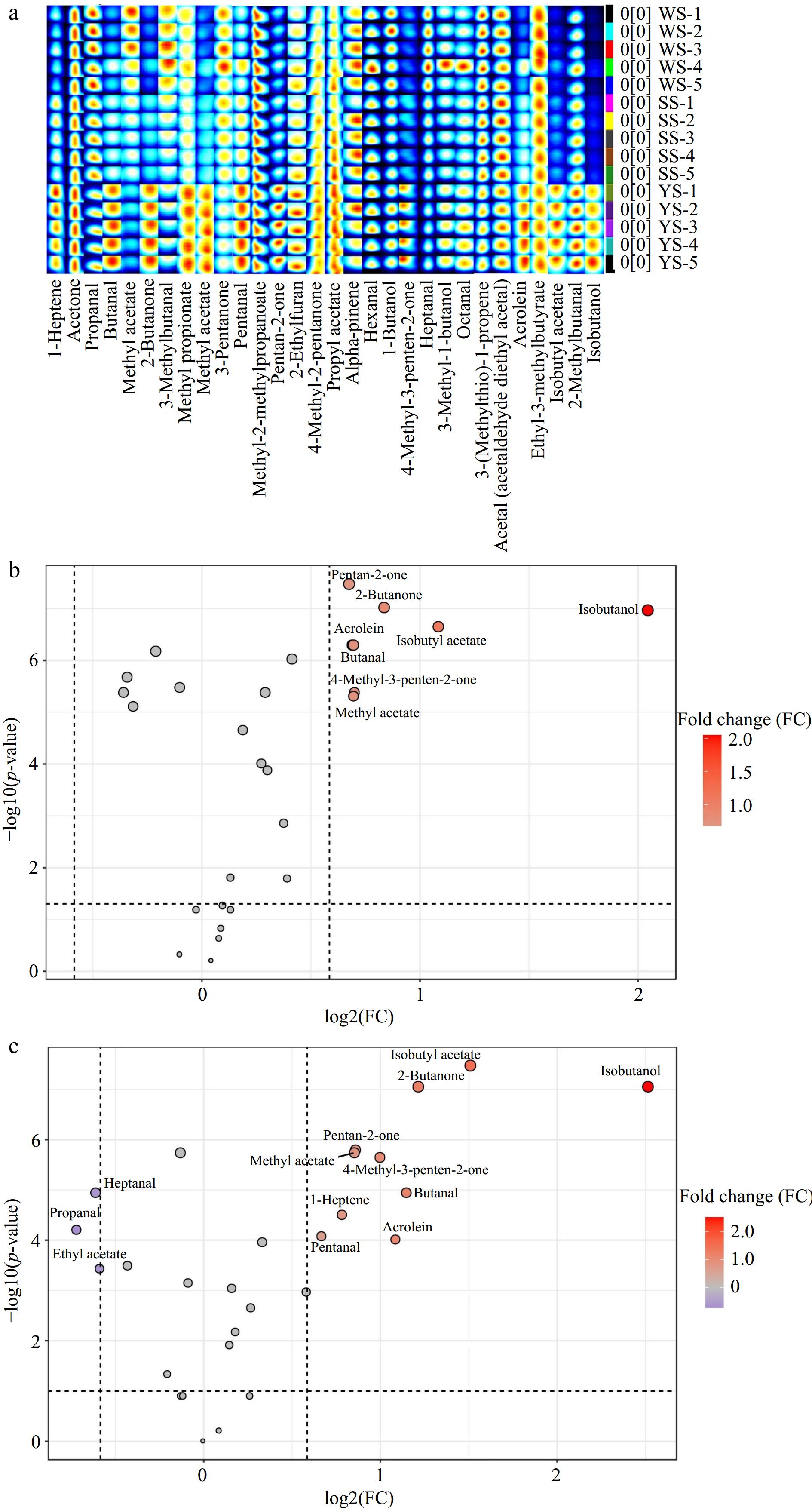
Figure 2.
(a) Gallery plot of sturgeon surimi gels' volatile compounds (VCs) detected by GC-IMS. (b) Volcano plot of VCs comparing YS and SS. (c) Volcano plot of VCs comparing YS and WS. Note: GC-IMS means gas chromatography–ion mobility spectrometry. The intensity information of GC-IMS signal was displayed via the color (white to red: low to high concentrations). The condition of volcano plot was set as Fold change (FC) > 1.5, p < 0.05, and FDR correction was used. WS: surimi gel made from sturgeon's white meat. SS: surimi gel made from sturgeon whole flesh. YS: surimi gel made from sturgeon's yellow meat.
Discriminative sensory of sturgeon surimi gels
-
The discriminative sensory analysis of the 30 participants revealed that 20 participants (9 males and 11 females) could distinguish between WS and SS, 24 participants (11 males and 13 females) between SS and YS, and 25 participants (10 males and 15 females) between YS and WS. However, only 17 participants (7 males and 10 females) correctly discriminated all three samples. According to ISO 4120:2021, a minimum of 17 correct responses from 30 participants was required to achieve a significance level of α = 0.01, confirming a significant difference among the samples. More participants distinguished between YS-SS and YS-WS than WS-SS, suggesting that YS had a more distinct odor profile compared to WS and SS, which were more similar. This finding aligned with the results presented in Fig. 1 and 2, which showed higher concentrations of VCs in YS, particularly aldehydes and ketones. The elevated lipid content and higher proportion of unsaturated fatty acids in yellow meat likely facilitated the release of these VCs during heating, contributing to the more complex flavor of YS. In contrast, WS and SS, with lower lipid levels, exhibited fewer VCs and less distinct sensory characteristics.
Flavor descriptors of sturgeon surimi gels
-
Figure 3a illustrates the cluster analysis of the 10 flavor descriptors identified through the FCP method, categorizing them into two primary groups: (1) undesirable flavors (ammonia, oily/fatty, unpleasant fishy, earthy, and grassy) and (2) pleasant flavors (fresh, sweet, milky, cheesy, and meaty). Among the undesirable flavors, ammonia, oily/fatty, unpleasant fishy, and earthy flavors were most prevalent in YS, while the grassy flavor was more commonly associated with WS. In contrast, sweet and milky flavors dominated in WS, while cheesy and meaty flavors appeared in both WS and YS. Sensory evaluation corroborated these findings, revealing that undesirable flavors were more strongly linked to YS, whereas pleasant flavors were more characteristic of WS and SS. The unpleasant fishy flavor in YS was primarily attributed to aldehydes, which are known for their low odor thresholds and significant impact on sensory perception[30]. Aldehydes like pentanal, butanal, hexanal, and octanal, which were abundant in YS, contribute to the prevalence of unpleasant fishy and oily/fatty odors. Li et al.[11] further observed that aldehydes at low concentrations are responsible for 'fresh', plant-like, or fruit odors, whereas, at higher concentrations, they tend to produce more aggressive, unpleasant odors, such as fatty or grassy smells. This aligned with Fig. 2, where aldehyde levels were significantly higher in YS, correlating with its more undesirable flavor profile compared to WS. These findings underscored the role of lipid oxidation in aldehyde formation, with the higher unsaturated fatty acid content in yellow meat facilitating this process. Additionally, Mahmoud & Buettner[32] noted that the skin of German rainbow trout was described using earthy, fatty, and unpleasant fishy descriptors, while the flesh exhibited more fruity and grassy odors. Consistent with this observation, YS, which is derived from the upper yellow meat of the sturgeon, located near the skin, exhibited sensory characteristics associated with earthy, fatty, and unpleasant fishy flavors. Furthermore, the similar distribution of sweetness and freshness indicates a tendency among sensory evaluators to correlate pleasant flavors with freshness. Sweet flavors are frequently encountered in fish products. For instance, some studies are showing relevant results. Li et al.[33] detected caramel-like sweetness in sliver carp surimi gels, and Mahmoud & Buettner[32] also reported sweetness in steamed cod fillets and German rainbow trout. The cheese flavor, characterized by milky, nutty, brothy, and fruity notes, was primarily attributed to branched-chain aldehydes, such as 3-methylbutanal, which has the lowest odor threshold among them, making it a significant contributor to cheese-like flavors[26]. In this study, WS exhibited higher levels of 3-methylbutanal, explaining the observed prominence of cheesy and meaty flavors in WS. YS, in contrast, displayed lower levels of 3-methylbutanal, which contributed to a more subtle but still pronounced cheese-like flavor. These findings help explain the similar distribution of cheesy and meaty descriptors in both WS and YS, suggesting that both samples share some common flavor characteristics despite the overall differences in their flavor profiles.
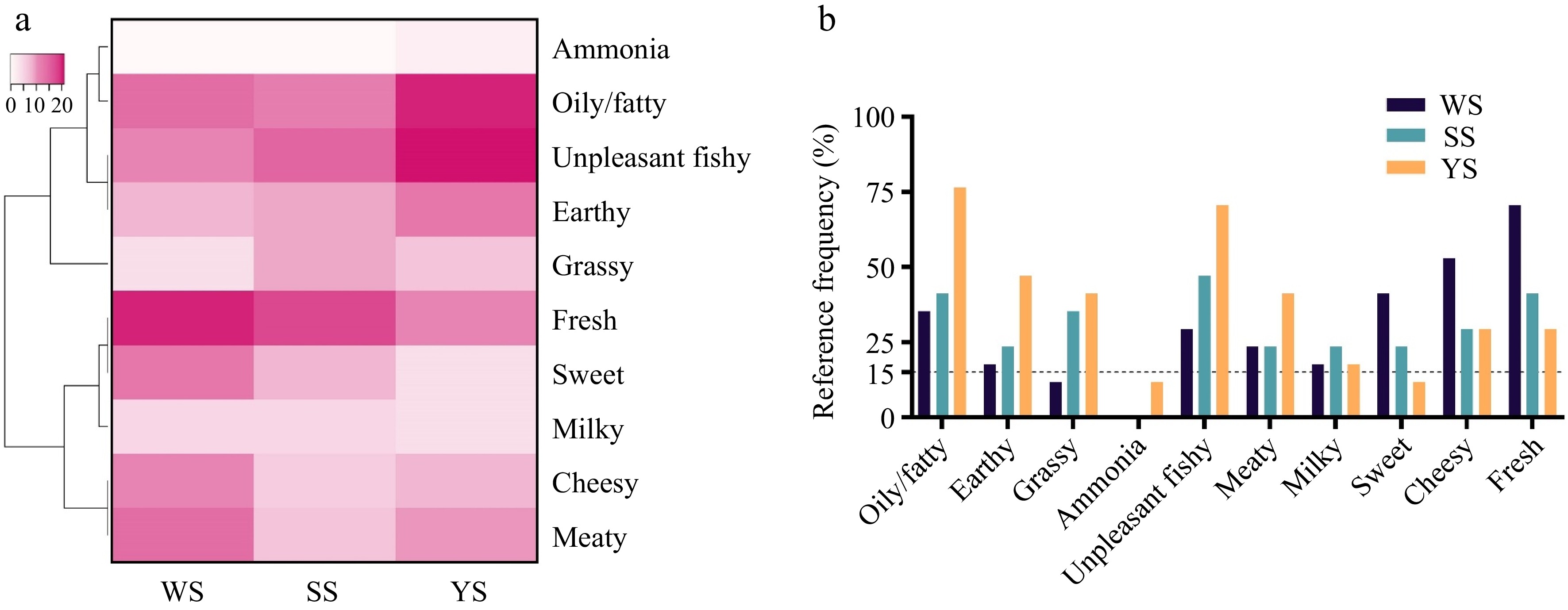
Figure 3.
(a) Clustering heatmap of the cited descriptors by FCP method. (b) Descriptors (quoting frequency > 15%) of sturgeon surimi gels by the CATA method. Note: FCP means Free Choice Profiling. CATA means Check-All-That-Apply. Cluster analysis using Pearman correlation coefficient. WS: surimi gel made from sturgeon's white meat. SS: surimi gel made from sturgeon whole flesh. YS: surimi gel made from sturgeon's yellow meat.
Figure 3b illustrates the citation frequencies from the CATA analysis based on the flavor descriptors generated using the FCP method. Descriptors with citation frequencies above 15% were considered valid, as per ISO 13299-2016. Ammonia was excluded from the list of key descriptors, as its citation frequency fell below 15% in all samples. While the citation frequency of sweetness in YS also fell below 15%, it was retained as a descriptor due to its significance in WS and SS, where it exceeded the 15% threshold. After the experiment was completed, the final flavor descriptors were deliberated with sensory panelists, revealing close associations between their descriptions of 'milky' and 'cheesy', prompting the amalgamation of milky and cheesy flavors in subsequent experiments. Ultimately, the final set of flavor descriptors identified for sturgeon surimi gels included oily/fatty, earthy, grassy, unpleasant fishy, meaty, cheesy/milky, sweet, and fresh, which were corroborated by sensory panelists during the final evaluation. These cluster analyses and sensory evaluations underscore the role of lipid composition and VCs in shaping flavor perception. As discussed earlier, the higher lipid content and unsaturated fatty acid profile in yellow meat contributed to the generation of aldehydes and ketones, influencing the overall flavor experience. The presence of undesirable flavors in YS, such as unpleasant fishy and oily/fatty notes, reflects the oxidation of these unsaturated lipids, while the relatively higher levels of pleasant flavors like sweet, milky, and cheesy in WS can be attributed to its more balanced and lower-fat profile.
Flavor profile of surimi gels
-
As shown in Fig. 4a, the sensory evaluation revealed that WS exhibited higher scores for fresh, cheesy/milky, and sweet, while YS showed an opposite trend, with oily/fatty and unpleasant fishy flavors being most prominent, followed by earthy, grassy, and meaty notes. SS displayed a more balanced flavor profile, with 'meaty' being the most noticeable, and YS was notably lower in overall scores compared to both WS and SS (Fig. 4b). These findings indicated that dominant oily/fatty and unpleasant fishy flavors in YS contributed to its significantly reduced scores compared to WS and SS. Similarly, research observed that undesirable flavors such as unpleasant fishy and oily/fatty notes adversely impact overall product ratings in silver carp fish noodles[8]. In the PCA model (Fig. 4c), confidence ellipses for WS and YS were distinctly separate, with SS overlapping more significantly with WS than YS. This suggested substantial flavor differences between WS and YS, while SS aligned more closely with WS, corroborating e-nose results from Fig. 1b. Loading value analysis revealed WS to be characterized by dominant fresh, cheesy/milky, and sweet flavors, whereas YS exhibited predominant unpleasant fishy, oily/fatty, earthy, and grassy notes. Figure 4d shows the fitting indices for the PLS-DA model, with R2X (independent variable fitting index) = 0.746, R2Y (dependent variable fitting index) = 0.981, and Q2 (model prediction index) = 0.965, confirming a well-fitting model. The R2 and Q2 values above 0.5 indicates that the model is robust and reliable for distinguishing flavor differences between the samples[34]. No overfitting was observed after 200 replacement tests, validating the PLS-DA results. The PLS-DA plots (Fig. 4e) and PCA plots (Fig. 4c) showed similar distributions for each sample. Figure 4f presents the variable importance in projection (VIP) scores for flavor attributes. The VIP values for unpleasant fishy and oily/fatty flavors were greater than 1, while the VIP values for grassy, meaty, sweet, cheesy/milky, fresh, and earthy flavors increased in that order. Flavor attributes with VIP scores greater than 1 can be identified as potential character markers for the samples, with higher VIP scores indicating greater discriminatory power[8]. This suggests that, from a sensory perspective, unpleasant fishy and oily/fatty flavors are significant differentiators between WS and YS, whereas perceptions of other odor attributes vary among individuals. This finding is consistent with the results in Fig. 2, where both unpleasant fishy and oily/fatty flavors were associated with elevated aldehyde levels in YS.
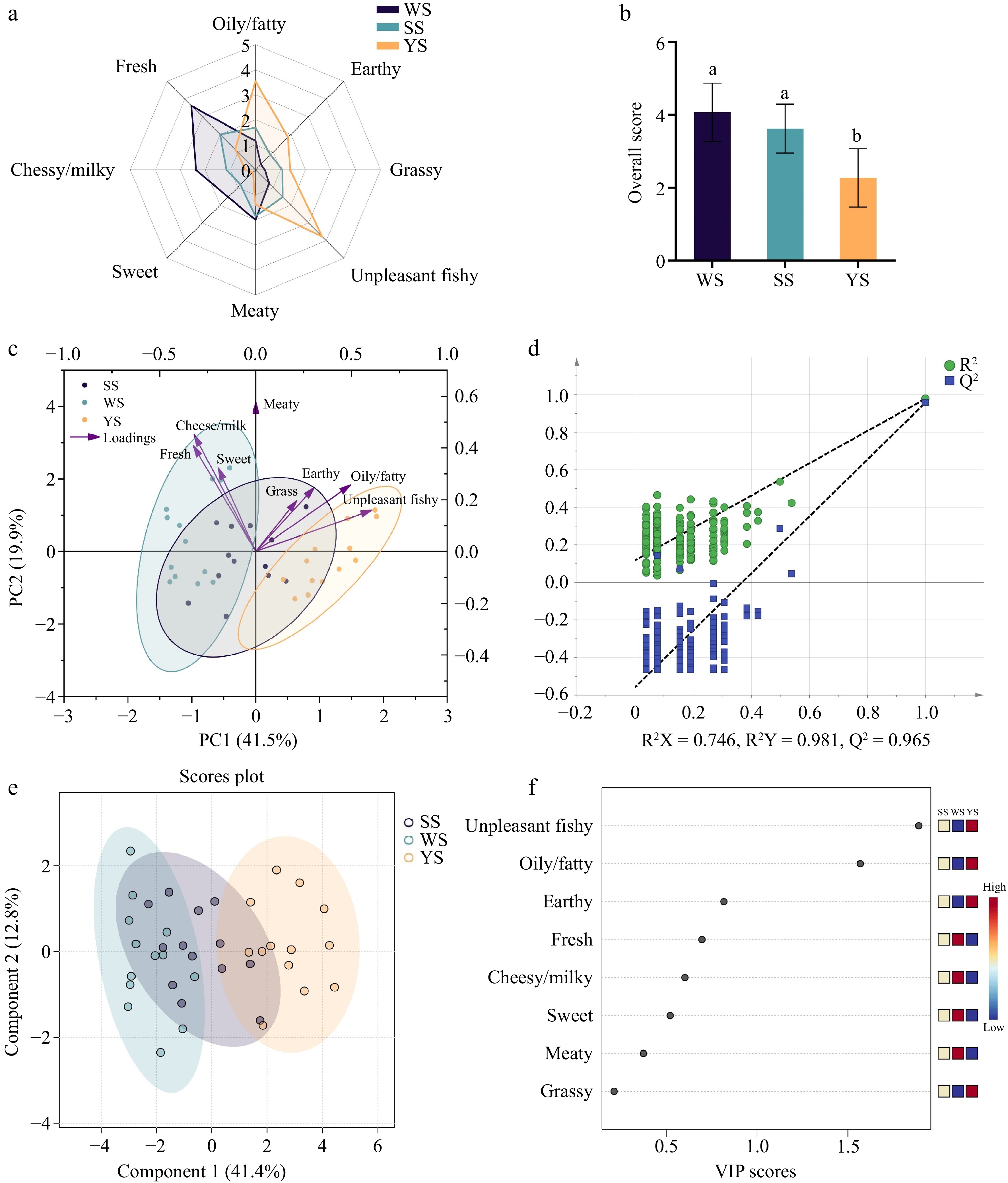
Figure 4.
(a) Flavor profile of sturgeon surimi gels. (b) Overall scores of sturgeon surimi gels. (c) PCA score plots of sturgeon surimi gels' flavor. (d) Permutation test of PLS-DA model. (e) PLS-DA score plots of sturgeon surimi gels' flavor. (f) VIP scores of sturgeon surimi gels' flavor in PLS-DA model. Note: PCA means Principal component analysis. PLS-DA means partial least squares discriminant analysis. VIP means variable importance in projection. WS: surimi gel made from sturgeon's white meat. SS: surimi gel made from sturgeon whole flesh. YS: surimi gel made from sturgeon's yellow meat.
When compared with silver carp surimi, sturgeon surimi's distinct sensory advantages are underscored. Silver carp surimi is often characterized by undesirable grassy, earthy, and metallic off-flavors attributed to aldehydes and VCs such as hexanal, (E, Z)-2,6-nonadienal, and 1-octen-3-ol, which contribute to grassy, fishy, and mushroom-like notes[35,36]. In contrast, sturgeon surimi lacks these strong off-flavors, likely due to its lipid composition, which contains more stable monounsaturated fatty acids and fewer polyunsaturated fatty acids, reducing oxidation and aldehyde formation[37]. Additionally, sturgeon surimi exhibited no detectable levels of 1-octen-3-ol, which is a key contributor to metallic and mushroom-like odors in silver carp surimi. The unique flavor attributes of sturgeon surimi include fresh, sweet, and cheesy notes, alongside milder earthy, and grassy notes. These qualities are linked to its distinct lipid profile and lower susceptibility to oxidation. The elevated 'cheesy/milky' and 'meaty' notes in sturgeon surimi further distinguish it, as WS exhibited higher levels of 3-methylbutanal, a compound with a strong cheese-like aroma, while YS displayed higher levels of 2-methylbutanal, which contributes to a milder cheese-like flavor. These findings confirmed that unpleasant fishy and oily/fatty notes are the primary differentiators between WS and YS, while fresher, sweeter, and cheesier flavors characterize WS and SS. This flavor profile positions sturgeon surimi as a promising alternative to traditional freshwater surimi products like silver carp, offering superior sensory appeal with fewer off-flavors.
PLSR analysis
-
Figure 5 illustrates the correlation between VCs and flavor attributes, with principal components PC1 and PC2 explaining 79% of the total variance. Data points mainly cluster within ellipses. These ellipses represent R2 values between 0.5 and 1.0, indicating that the model effectively describes the relationship between VCs and flavor attributes[8]. Unpleasant fishy, oily/fatty, and earthy flavors were concentrated in quadrant 4, close to VCs such as 4-methyl-2-pentanone, pentanal, pentan-2-one, and 2-butanone. In contrast, cheesy/milky, sweet, and fresh flavors were grouped in quadrant 1, with adjacent VCs like 3-methylbutanal, heptanal, and 3-pentanone. The dispersion of unpleasant fishy, oily/fatty and earthy flavors in comparison to the cheesy/milky, sweet, and fresh points highlights a significant distinction between these two flavor categories, consistent with findings in Fig. 3. Figure 4 further identified unpleasant fishy and oily/fatty flavors as significant characteristics of the samples. The VCs associated with unpleasant fishy, oily/fatty, and earthy flavors, such as pentanal, pentan-2-one, and 2-butanone, are generated through lipid oxidation, a process that was more pronounced in YS due to its higher unsaturated fat content. These findings align with the results presented in Fig. 2, where YS demonstrated elevated aldehyde levels, further explaining its unfavorable sensory properties. Similarly, nonanal, heptanal, and octanal were identified as primary contributors to fishy odors in unrinsed sturgeon surimi gels[3]. Additionally, data from the KEGG platform suggested that 4-methyl-2-pentanone and pentan-2-one are byproducts of fatty acid β-oxidation. Xiao et al.[38] revealed a synergistic interaction between ketones and aldehydes possessing comparable carbon chain lengths. Since 4-methyl-2-pentanone, pentan-2-one, and pentanal share the same carbon chain length, a synergistic effect may enhance the perception of oily/fatty flavor. The study by Li et al.[11] similarly highlighted that most ketones are derived from the thermo-oxidative degradation of unsaturated fatty acids and exert a cumulative effect on the fishy flavor of aquatic products. Conversely, the VCs associated with cheesy/milky and sweet flavors, such as 3-methylbutanal and 3-pentanone, are linked to the more favorable flavor profiles of WS and SS. 3-methylbutanal, a key flavor compound in cheeses, contributes to the creamy and milky notes in WS, while 3-pentanone and methyl 2-methylpropanoate enhance the sweet, fruity notes, which were more prominent in WS and SS according to the sensory evaluation.
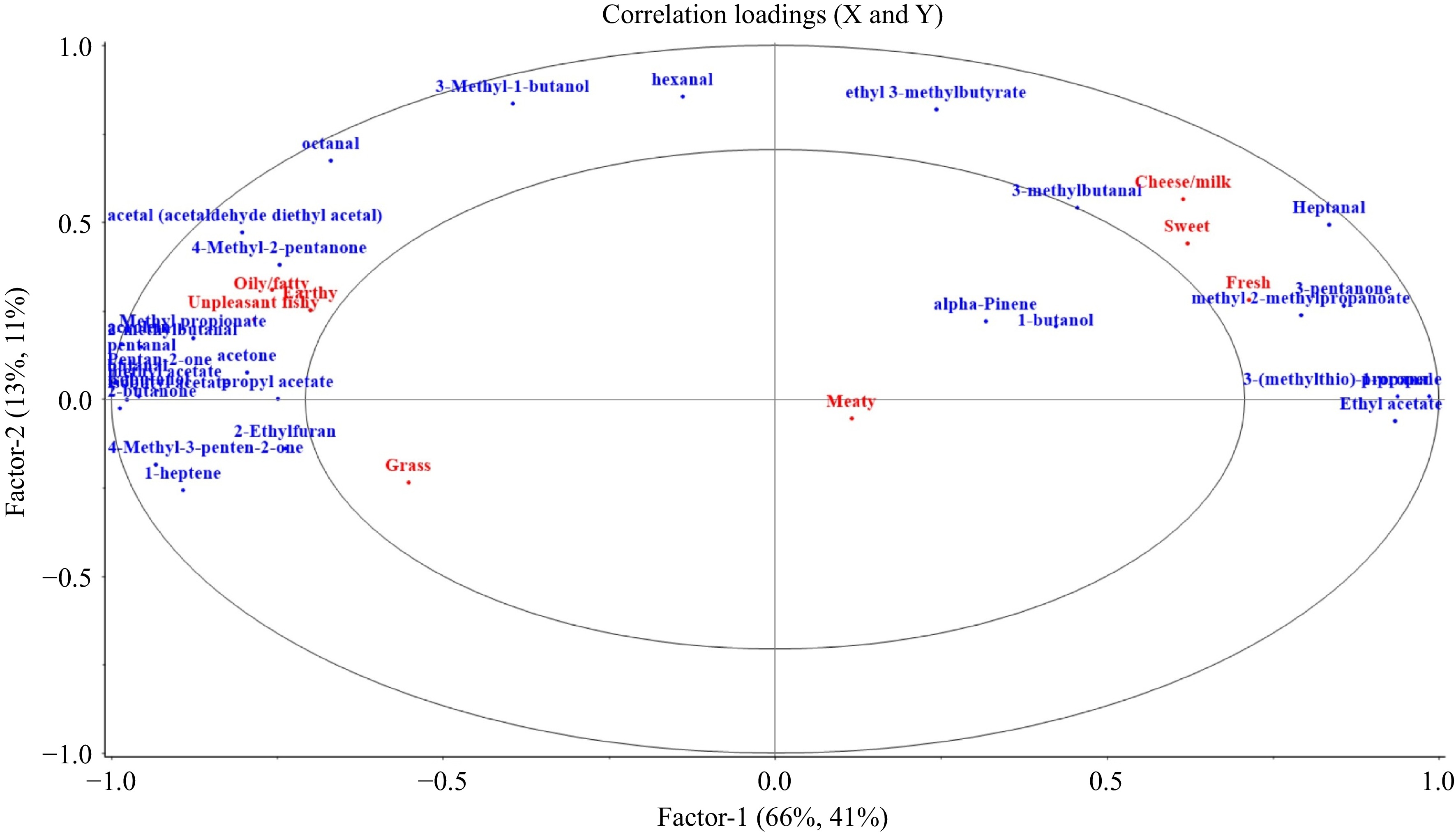
Figure 5.
Correlation loading plot from PLSR. Note: PLSR means Partial least squares regression. The ellipses represent R2 values of 0.5 and 1.0, with each ellipse corresponding to a specific R2 value. The X matrix is the signal intensity projection of volatile compounds identified by GC-IMS, and the Y matrix is the scores of flavor attributes. The principal components accounted for 79% of the total variance, with most points clustering within ellipses representing R2 values between 0.5 and 1.0, indicating a well-fitted model.
-
This study revealed that sturgeon surimi, particularly from yellow meat, exhibited a distinct flavor profile compared to silver carp surimi. 3-methylbutanal and 3-pentanone imparted a distinctive cheesy/milky flavor and sweetness to sturgeon surimi, the intensity of which was notably diminished in silver carp surimi. In contrast, silver carp surimi was primarily marked by grassy and mushroom-like off-flavors, which were less evident in sturgeon surimi. Notably, sturgeon surimi was free from metallic off-flavors, which is a common issue with traditional freshwater surimi products, such as silver carp and grass carp. Sensory evaluation and GC-IMS fingerprinting identified eight key flavor attributes in sturgeon surimi: oily/fatty, earthy, grassy, unpleasant fishy, meaty, cheesy/milky, sweet, and fresh. Among these, the oily/fatty and unpleasant fishy flavors were found to be key differentiators between YS and WS. The high lipid content in YS resulted in a greater variety of VCs, but the pronounced undesirable oily/fatty and unpleasant fishy flavors masked other flavor perceptions. Additionally, the yellow meat of sturgeon was found to have higher levels of unsaturated fatty acids, which contribute to these distinctive flavors, while WS exhibited milder and more balanced flavor characteristics. These findings highlight the potential of sturgeon surimi as a high-quality alternative in the surimi market, offering a flavor profile that stands out from other freshwater surimi products.
-
This research was conducted in accordance with the Declaration of Helsinki as part of it involved conducting sensory evaluation with human subjects. The protocol was approved by the China Agricultural University Laboratory Animal Welfare and Animal Experimental Ethical Committee (AW03504202-4-3). Informed consent was provided either orally (for those who could not write) or by signing a consent form before conducting the interview. The study investigators made sure that individuals who were invited to participate in the research study were given an adequate description of the study that was clear and complete enough for the individual to judge whether they wanted to participate.
This work was supported by the Beijing Innovation Consortium of Agriculture Research System (No. BAIC07-2024-13), and Beijing Natural Science Foundation (No. 6222027).
-
The authors confirm contribution to the paper as follows: conceptualization: Tong L, Tan Y; visualization: Tong L, Zhou Y; formal analysis, investigation: Zhou Y; writing-original draft: Tong L; writing-review and editing: Dou P, Zheng Y, Zhang Y, Hong H, Luo Y; Tan Y; funding acquisition: Luo Y, Tan Y. All authors reviewed the results and approved the final version of the manuscript.
-
The datasets generated during and/or analyzed during the current study are available from the corresponding author on reasonable request.
-
The authors declare that they have no conflict of interest.
- Supplementary Table S1 E-nose sensors and its corresponding representative sensitive compounds.
- Supplementary Table S2 Question and answer list of discriminative sensory test.
- Supplementary Table S3 Sensory Evaluation Questionnaire: Odor Intensity Assessment.
- Supplementary Fig. S1 Sturgeon back muscles.
- Supplementary Fig. S2 Appearance of sturgeon surimi gels.
- Copyright: © 2025 by the author(s). Published by Maximum Academic Press on behalf of China Agricultural University, Zhejiang University and Shenyang Agricultural University. This article is an open access article distributed under Creative Commons Attribution License (CC BY 4.0), visit https://creativecommons.org/licenses/by/4.0/.
-
About this article
Cite this article
Tong L, Zhou Y, Dou P, Zheng Y, Zhang Y, et al. 2025. Unlocking the unique impact of yellow meat lipids on the flavor profile of sturgeon surimi gel. Food Innovation and Advances 4(2): 149−158 doi: 10.48130/fia-0025-0016 

Unlocking the unique impact of yellow meat lipids on the flavor profile of sturgeon surimi gel
- Received: 19 December 2024
- Revised: 11 February 2025
- Accepted: 26 February 2025
- Published online: 25 April 2025
Abstract: Lipids play a crucial role in both the creation and transport of volatile compounds (VCs) in surimi products. This study explored how the unique lipid of sturgeon yellow meat influences the flavor profile of sturgeon surimi gels, distinguishing them from traditional freshwater surimi, such as silver carp. The electronic nose revealed significant differences between the VCs of yellow meat surimi gel (YS) and white meat surimi gel (WS). Gas chromatography–ion mobility spectrometry analysis detected 30 VCs, with 10 significantly up-regulated and three down-regulated in YS compared to WS. Sensory evaluation identified eight flavor descriptors: oily/fatty, earthy, grassy, unpleasant fishy, meaty, cheesy/milky, sweet, and fresh. YS was found to contribute primarily to undesirable oily/fatty, unpleasant fishy, and earthy notes, while simultaneously enhancing the more desirable cheesy/milky and sweet flavors. Unlike silver carp surimi, which is often characterized by pronounced earthy, grassy, and metallic flavors, sturgeon surimi gels were free from metallic flavors. Partial least squares regression analysis revealed that specific compounds such as 4-methyl-2-pentanone and 3-methylbutanal were strongly associated with key flavor attributes like oily/fatty and cheesy/milky, further distinguishing sturgeon surimi from traditional surimi products. This study highlights the distinctive flavor potential of sturgeon surimi, offering new opportunities for surimi product innovation.
-
Key words:
- Sturgeon surimi /
- Volatile compounds /
- Flavor attributes /
- Endogenous lipids