











-
Carotenoids represent a rich source of provitamin A that can be found in dark green leafy vegetables, carrots, mangoes, and sweet potatoes, collectively known as dietary carotenoids[1]. In US diets, these plant sources supply only a maximum of 30% of the provitamin A carotenoid intake, with the rest (preformed Vitamin A) obtained from animal sources, such as dairy products, egg yolk, and liver[2,3]. However, in developing countries, plant sources may be a greater, or preferred source (~80%) of dietary carotenoids, which have resulted in biofortified crops like maize, tomato, mustard, and Golden Rice[3,4]. These dietary carotenoids need to be released from the food matrix, and it is generally known that dietary carotenoids have low bioaccessibility values, e.g., 3.8% from raw carrot puree[1], which is still higher than that from spinach[4]. Nevertheless, the carotene content from plant sources (fruits, grains, and oils) appears to be more effective as sources of vitamin A than dark green leafy vegetables[5]. Thereafter, dietary carotenoids require conversion in the intestinal cells before absorption[2].
Among different carotenoids, β-carotene has the highest vitamin A activity[2] and is the subject of many investigations. This carotenoid is regarded as a class A nutrition pigment, capable of cytoprotective activity against certain types of cancer (lung, stomach, skin), angiocardiopathy, and cataracts[6,7]. β-carotene (CAS Reg. No. 7235-40-7) is a strongly colored red-orange pigment that results from the combination of eight, five-carbon monomers (isoprene) joined in a head-to-tail pattern, which results in the molecular formula of C40H56[8]. Structurally, it is a long hydrophobic molecule with a high melting point, low water solubility, and limited oil solubility at room temperature[9]. It is naturally occurring in many fruits and vegetables but can also be synthesized by the saponification of vitamin A acetate. The resulting retinol can be further reacted to form vitamin A Wittig reagent or vitamin A aldehyde, which are subsequently combined to form β-carotene[10]. There are cis- and trans-isomers of β-carotene, which differ in solubility. The cis-isomer has greater solubility in water and is used in water-dispersible preparations[11], whereas the more popular trans-isomer has minimal aqueous solubility, is generally found in most chemical formulations, and is found in circulating blood. Further, a study involving children exposed to Chernobyl radiation showed that the trans-, not the cis-isomer, was found in blood serum[12].
Besides the synthetic form, β-carotene is naturally produced by the microalga Dunaliella salina, fungi Blakeslea trispora and Phaffia rhodozyma, and bacterium Flavobacterium multivorum[7,13,14]. The common yeast Saccharomyces cerevisiae was also genetically modified in one patent application to express genes from Blakeslea trispora[15]. All forms of β-carotene that are approved Generally Regarded as Safe (GRAS) status can be used in food with limitations based on Good Manufacturing Practices (GMP). Carotene can potentially replace synthetic colorants like tartrazine, Sunset yellow (for coloring food), erythrosine, and Allura Red with antioxidant activity comparable to synthetic antioxidants butylated hydroxytoluene (BHT), and butylated hydroxytoluene (BHA)[16]. The maximum usage limits of β-carotene as a colorant can be found on the Global Standards for Food Additives website (
www.fao.org/gsfaonline/additives/index.html ). There are ~80 food groups with varying usage levels of β-carotene from botanical origins. -
Owing to the conjugated double bond structure, free β-carotene is a poor candidate for mandatory fortification. It is generally applied as an oil solution[6], or increasingly, as microencapsulated preparations in patented applications (Table 1). Despite the highest usage levels seen in processed nuts and bakery decorations, many published patents for encapsulated β-carotene are intended for emulsion-based preparations that contain significant moisture. It can also be seen that spray drying remains the traditional technology for microencapsulation of β-carotene.
Since 1990, there have been reports about encapsulation strategies to stabilize this carotenoid. A literature review (Fig. 1) involving query for the expression 'beta-carotene' AND (encapsulation OR encapsulated) shows that the earliest report indexed in Web of Science appeared in 1990, whereas there were 17 reports indexed for the first time in ScienceDirect® in 1999. Since then, the number of articles has increased, totaling 6,057 and 1,273 reports indexed in ScienceDirect® and Web of Science, respectively. These data show a significant interest in the microencapsulation of β-carotene. With the advent of 3D printing, microencapsulated β-carotene with multiple wall materials can be rapidly added to ready-to-eat and shelf-stable food products[17,18]. Vitamin A and carotenoid compounds are lipophilic molecules like oil-based vitamins (D, E, and K); thus, food fortification techniques for carotenoids can benefit from recent reexaminations regarding a rational approach for microencapsulation design and more efficient delivery[4,19]. This paper aims to compare the traditional and emerging techniques in microencapsulation of β-carotene and discuss new material trends and food fortification options. It is hoped that this paper can contribute to a sustained interest in the utilization of β-carotene both as a colorant and a fortificant.
Table 1. Selected patents regarding β-carotene and its microencapsulation.
Country Patent No. Title Remarks Microencapsulation method Australia EP 0643692B1[11] High cis-β-carotene composition Carotenoid composition from a naturally occurring source with high cis β-carotene content USA US 6007856[20] Oil-in-water dispersions of β-carotene and other carotenoids stable against oxidation prepared from water-dispersible beadlets having high concentrations of carotenoid Target application is dilute juice beverage; selected prooxidant is polyphosphate used as acid regulator; water-dispersible beadlet contains gelatin Precipitation of gelatin containing extracted β-carotene and dehydration Australia AU 200071172B2[21] Stable carotene-xanthophyll beadlet compositions and methods of use Identified solidifying agents in beadlets: sucrose, glucose, fructose, starches, polyethylene glycol, gellan, carrageenan, pectin, proteins. Discussed role of phenolic coencapsulants: quercetin, rutin Identified forms of microencapsulation (powders, 2-piece hard shell capsules, gel capsules, tablets, etc.) Low-temperature, low-oxygen bead formation China CN100423652C[6] Natural β-carotene microcapsule and method of making same Used a β-carotene oil solution, hydroxypropyl starch, β-cyclodextrin, maltodextrin, two types of emulsifiers, dispersant, preservative, and antioxidant Spray drying USA US 6890961B2[22] Clear, micellized formulations of β-carotene and method of treating leukoplakia Micelle contains glycerol, unsaturated fatty acid esters, and surfactant Micelle formation USA US 7056525B2[23] Carotenoid formulations, comprising a mixture of β-carotene, lycopene, and lutein Prepared a mixture of carotenoids with vitamin E, oil, gelatin, and sucrose Spray drying China CN 101292965B[24] β-carotene capsule and preparing method thereof Prepared a carotenoid emulsion with cryptoxanthin, monoglyceride, gelatin, and phospholipid emulsifier Spray drying USA US 2007/0082044A1[25] Synergistic effect of compositions comprising carotenoids selected from lutein, β-carotene, and lycopene Mixture was applied to human lymphocytes USA US 7375133B2[26] Pharmaceutical compositions including carotenoid ether analogs or derivatives for inhibition and amelioration of diseases Includes β-carotene, lutein, zeaxanthin, canthaxanthin, astaxanthin China CN 101816330B[27] β-carotene-containing infant milk powder and preparation method thereof Mixture contains docosahexaenoic acid, arachidonic acid, gum acacia, and corn syrup Spray drying Spain ES 2621184T3[28] Stable, ready-to-use suspension of partially amorphous β-carotene particles Preparation contains β-carotene, oil, octenyl succinate starch, polyalcohol, and water. Target applications: variety of beverages (sports drinks, milk drinks, vitamin drinks with fruit juice), alcopops, salad dressings, pudding, ice cream Thin-film evaporation China CN 105925653B[13] Microcapsules and fatty powder containing β-carotene β-carotene extracted from mutant strain of Blakeslea trispora and mixed with starch, maltodextrin, ascorbyl palmitate, and vitamin E Spray drying China CN 103976353B[29] A kind of production method of β-carotene microcapsules Wall material is gum acacia with added sucrose, maltose, or glucose; added oil-phase and O/W phase antioxidants Spray drying China CN 104719894B[30] A kind of preparation technology of β-carotene microcapsules Wall material contains hydroxypropyl etherified starch octenyl succinate; dispersant is trehalose; antioxidants are tea polyphenols, sodium ascorbate, sodium EDTA Microemulsion, followed by spray drying China CN 105087408B[15] A kind of yeast strain producing β-carotene and its application Used genetically modified Saccharomyces cerevisiae CEN.PK2-1C with genes from Blakeslea trispora China CN 105747216B[31] A kind of microcapsules β-carotene powder and preparation method thereof Wall material contains starch sodium octenyl succinate, gum acacia, porous starch; dispersant is maltodextrin Spray drying China CN 107048367A[32] A kind of natural β-carotene microcapsule powder and preparation thereof Wall material contains starch sodium octenyl succinate, gum acacia, porous starch; dispersant is maltodextrin, sucrose, starch syrup; used two types of antioxidant with differing solubilities; added emulsifier, thickener, and acidity regulator Spray drying China CN 112890192A[33] Process for microencapsulation of beta-carotene Beta-carotene was prepared as emulsion with vitamin E and antioxidants with the addition of ethanol and shearing to form a microemulsion Spray drying 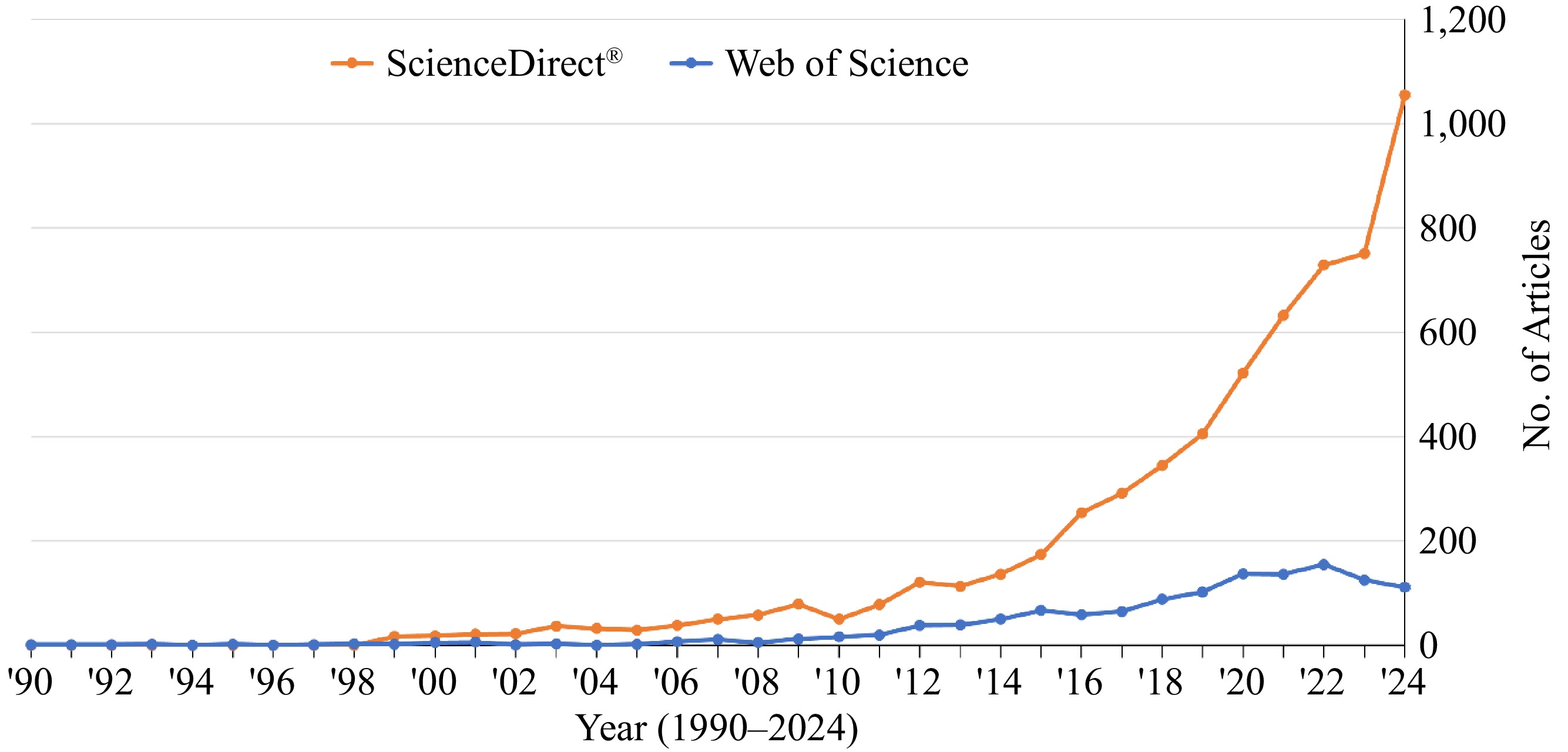
Figure 1.
Number of articles published on microencapsulation of β-carotene in two major research databases.
-
Spray drying is one of the most common ways of microencapsulation, resulting in about 90% of formed encapsulates[34]. In one of the earliest reports on microencapsulation of trans-β-carotene, spray drying, drum drying, and freeze drying were compared[35]. Maltodextrin (400 g) with a dextrose equivalent (DE) of 25 was used as wall material and added to 0.5 g carotene, resulting in a wall material-to-carotene ratio of 800:1. Because the carotenoid tends to cream in an oil in water (O/W) emulsion, the mixture was homogenized three times at 252.5 MPa before stabilization. A drying temperature of 170 ± 5 °C was used. Compared to particles drum-dried at 140 °C, the spray-dried particles were much smaller (30 vs 105 μm) but had a shorter shelf-life (27 vs 98 weeks) despite having comparable surface carotene content. This was likely due to the higher surface area that results from smaller particles, which allows for more contact with oxygen. In a later study, 24 DE maltodextrin was also mixed with trans-β-carotene (580:1), homogenized, and spray-dried at the same temperature, but with native or acid-modified tapioca starch as wall material[36]. Results showed that the majority of maltodextrin encapsulates have a particle size between 106-150 μm, like acid-modified tapioca starch but slightly smaller than native tapioca starch. The particle size distribution of acid-modified tapioca starch skews towards the smaller size fractions, unlike maltodextrin or native starch. The particulates prepared with acid-modified starch had realistic encapsulation efficiency (~76%), unlike the other two preparations, which possess more surface, than total, carotenes.
In one study by our group, 24 g of 15 DE maltodextrin were mixed with 30 mg of β-carotene (800:1), homogenized, and kept agitated before spray drying at the same temperature (170 °C). The resulting particles were 10.5 μm in diameter and had an encapsulation efficiency of 38%[37]. To address the instability of O/W emulsions with β-carotene, rice bran protein was added as a wall material with maltodextrin in a 1:1 mass ratio (maltodextrin: rice bran protein isolate), and four different wall material:carotene ratios were used: 514:1, 1,029:1, 1,543:1, and 2,057:1[38]. The mixture was spray-dried at a relatively lower temperature (140 °C). In one of our studies, we wanted to determine the relative retention between the two wall materials with different solubilities in water[38]. Results showed that despite equivalent wall material compositions, the resulting powders contained five times maltodextrin than rice bran protein. Increasing the proportion of wall materials than core resulted in higher encapsulation efficiencies (85%−98%), confirming our earlier assumption about the impact of the wall material to core ratio[37].
The four reports show a progressive trend in spray drying of β-carotene. Initially, researchers focused on the physical, sorption properties, and shelf-life of the particles[35]. Next, there were efforts to increase the depth of information to include particle size distribution (rather than average size), light and surface morphology, and data regarding total and surface carotenes[36]. Next, explicit encapsulation efficiencies were reported for the spray-dried powder and water-dispersible beads as well as in vitro release data that simulate the bioaccessibility of β-carotene in micelles[37]. Two representative food matrices were used in this report, namely, pudding (starch-based) and yogurt (protein-based). In these three reports, it was assumed that spray drying did encapsulate β-carotene. A more definite measure of encapsulation was forwarded by Magnaye et al.[38] by evaluating the vibrational spectra of the wall materials, β-carotene, and resulting microcapsules through Fourier Transform Infrared (FTIR) spectrophotometry. Cooked rice was used as a food matrix, to highlight a possible food fortification scheme.
Emulsification
-
Naturally occurring β-carotene can be found in a protein complex[39], implying that the carotene can be prepared as a dispersion. The distribution coefficients of β-carotene vary with the polarity of the solvents, so another strategy for encapsulation is through the formation of O/W emulsions. These structures give rise to solid-lipid nanoparticles, nanolipid capsules, liposomes, microemulsions, and micelles[19]. In this case, the carotene is mixed with the oil phase and homogenized into a homogeneous emulsion[40]. The aqueous phase can serve as a vehicle for water-dispersible carotenes. Further, food emulsions may be the ideal delivery system for emulsified carotenes themselves[39].
Besides structure (Fig. 2), emulsification processes can be classified according to the intensity of energy needed for the process. Nominally, homogenization is required to create smaller droplets. Low-energy emulsification processes include spontaneous emulsification (or dropwise emulsification) and phase transition[41]. The latter depends on a critical temperature, known as the phase inversion temperature[19,34], where the hydrophilicity or hydrophobicity of the surfactant changes, essentially changing its function from a W/O to O/W stabilizer. This phenomenon can be utilized to form solid-lipid nanoparticles.
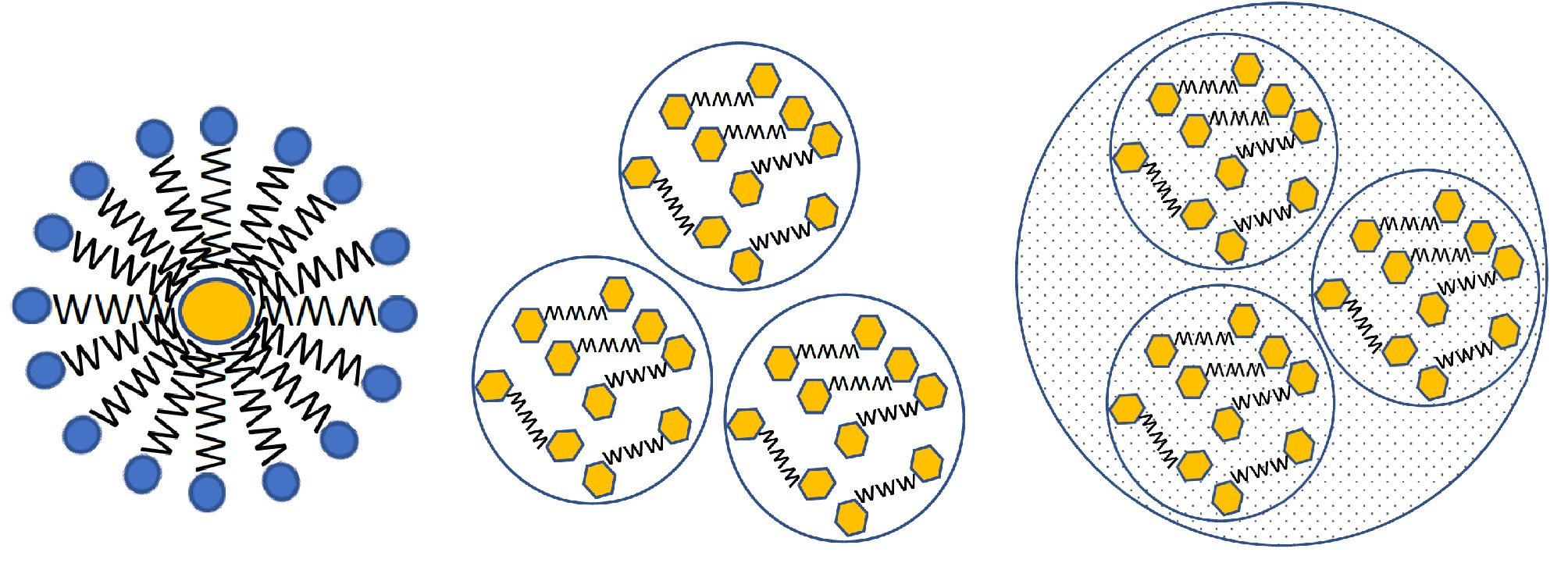
Figure 2.
Schematic diagrams showing some examples of emulsion preparations showing left-micelle, center-emulsion, and right-emulsion gel.
After homogenization, emulsions are still thermodynamically unstable, especially with smaller particle sizes, thus modifications are necessary to improve stability[39]. Some modifications of emulsification include membrane emulsification, nanoemulsion, emulsion gels, multiple emulsions, Pickering emulsions, microemulsions, solid-lipid nanoparticles, and multilayered emulsions[39]. Membrane emulsification is also a common encapsulation technique because it is simple, has low energy requirements, needs less surfactant, and results in narrow droplet size distribution[40].
Nanoemulsions are colloidal systems that also have a narrow size distribution (~200 nm), which imparts kinetic and thermodynamic stability against flocculation, creaming, and Ostwald ripening[42]. These emulsions are prepared by multistage homogenization processes, often at high pressures. Structurally, micelles and nanomicelles resemble a core-shell type encapsulation process, complete with a hydrophobic core (such as carotene) and a hydrophilic shell[9,43]. The shell can be made from modified starch, commonly by the addition of hydrophobic octenyl succinate anhydride (OSA). The modified starch can assemble as a shell that protects the core material and facilitates release at physiological conditions of 35 °C and pH of 7.5[44]. In another study, OSA-modified starch was used as an adjunct in the emulsification of β-carotene before spray drying. When reconstituted, the powders dispersed well in water and retained the size distribution (~100 to 160 nm) of the original emulsion[42]. Results support the notion that wall materials that have emulsifying properties lead to a dispersion that can be spray dried. One emulsifier can be ionic (e.g., lecithin, proteins), and the other one a surface-active or non-surface-active biopolymer (chitosan, pectin, proteins, polysaccharides); or a combination of oil-soluble and water-soluble emulsifiers[29,39]. In one study, whey protein isolate and trehalose were used to prepare a single-layer emulsion, and gum acacia was added to the two to prepare a layer-by-layer assembly; later, both emulsions were spray-dried[45]. After reconstitution, the single-layer spray-dried emulsion had comparatively smaller sizes than the spray-dried layer-by-layer emulsion across all temperatures. However, the layer-by-layer assembly retained more β-carotene after 78 d of storage at 65 °C. Two polysaccharides and a vegetable oil can be used in preparing the emulsion before spray drying, like gum acacia and maltodextrin[14], but a higher loading rate may be necessary for in vitro tests. Further studies can be conducted so that the emulsions in the gastric region can be stabilized and later, in the presence of bile and intestinal enzymes, undergo destabilization to form chylomicrons before absorption[46].
Inclusion complexation
-
Inclusion complexation refers to a molecular encapsulation process that involves a molecule that serves as a 'host' to a 'guest' molecule[47]. Native and modified cyclodextrins serve as host molecules to an array of guest molecules with different polarities. The cavity of the cyclodextrin contains water, which can be dislodged by the addition of the guest molecule[47,48]. Ideally, the host molecule wholly or partially encapsulates the guest molecule, and a long or branched guest molecule may interact with two host molecules[48]. Even if the guest molecule is protruding outside the host, the resulting complex is still regarded as physical and functional microcapsules because of the ability or tendency to aggregate[49]. There are three native cyclodextrins (α, β, γ) that differ in the number of glucose molecules (6, 7, and 8, respectively) and susceptibility to enzymatic digestion. Except for a report involving γ-cyclodextrin[50], β-cyclodextrin is the native state employed in more inclusion complexation research because it is GRAS and has higher inclusion efficiencies[51,52].
One of the earliest reports on the formation of β-carotene-β-cyclodextrin complexes was aimed at cellular delivery to stimulate the production of progesterone in the presence (or absence) of luteinizing hormone receptor and cyclic adenosine monophosphate[53]. A dimethyl-substituted β-cyclodextrin was employed to increase solubility in water and 1 μmol/L of the inclusion complex stimulated progesterone production of the cells within 7 d of incubation but exhibited inhibitory effects at longer incubation times. On the other hand, 0.1 μmol/L was more effective in stimulating progesterone production at 7 d of incubation and longer. Later a molecular model of β-carotene and β-cyclodextrin[54] was proposed showing one of the β-ionone rings inside the torus and a more extended conformation of the carotenoid.
Despite partial encapsulation, the host molecule can still protect the guest from oxidation such that the resulting complex can still exert modest free radical scavenging and electron transfer measures of antioxidant activity[51,55,56]. Further, β-cyclodextrin can be partially degraded by amyloglucosidase (~10%) and by intestinal digestion (~30%) to release the guest molecule thereafter[48,57].
Our group investigated the possible applications of inclusion complexation as a fortification option[51,58]. In the first paper, we wanted to comparatively evaluate the physicochemical properties of the complexes prepared using three methods: physical blending, kneading, and co-precipitation. FTIR spectra showed changes in the wavenumber position and intensity of the carotene and cyclodextrin, thus confirming successful encapsulation. Morphologically, the inclusion complexes showed that physically blended complexes were heterogeneous and distinct, unlike the more homogeneous kneaded and co-precipitated particles that showed particle aggregation agreeing with other researchers[49]. Chemical analysis revealed that despite the high yield, physically blended complexes were not very efficient in encapsulating the carotenoid. Between kneading and co-precipitation, the former was less efficient in encapsulating the guest molecule but was equally effective in scavenging free radicals. Co-precipitation is the most effective method of preparing complexes with both free radical and electron scavenging activities. Future activities may focus on improving the yield for this method.
Our second paper[58] aimed to answer the question, 'How can the polarity of the extraction solvent and two different dispersibilities of β-carotene affect inclusion complex formation and the resulting properties?' Carotenoids are generally extracted in a single-stage operation using one solvent or a mixture[59]. Two of the most used solvents are hexane and absolute ethanol, with polarities of 0 and 5.2, respectively, and a 50% v/v mixture of hexane and absolute ethanol has a polarity of 3.624[60,61]. Co-precipitation is generally performed using 30% ethanol, which exerts greater dissolution of β-cyclodextrin than pure water or a 50% v/v aqueous ethanol mixture[62]. Thus, this concentration was used to prepare two inclusion complexes from each of the water-dispersible and hexane-soluble carotene samples. The resulting complexes were lyophilized and subjected to physicochemical and in vitro release tests. In the spectrophotometric analysis of β-carotene, absolute ethanol or 4:3 (v/v) ethanol:hexane was used (based on two reports) correspondingly with the water-dispersible or hexane-soluble inclusion complexes[63,64].
Morphologically, the hexane-soluble inclusion complexes prepared via co-precipitation looked slightly different from a similar process employed in our previous paper, which employed 25% v/v ethanol and oven drying at 40 °C[51]. Results suggest that bigger chunks can form by lyophilization. The water-dispersible complex appeared like fine powder with evidence of agglomeration. Differences in thermal and FTIR data, besides the fact that both products resembled neither raw material, can be taken as evidence of inclusion complexation[65]. The encapsulation yields for the products were 89% (water-dispersible) and 44% (hexane-soluble), 237% higher than our previous data. Interestingly, the encapsulation efficiency of both complexes in water was practically the same, ~7%, showing that despite different dispersibilities of the original carotenoid, the resulting complexes now have similar aqueous properties.
Complex coacervation
-
Complex coacervation is a technique that involves spontaneous phase separation and precipitation of oppositely charged polymers under carefully controlled conditions (usually by pH), with the polymer-rich phase (coacervate) as the desired product[66]. At a specific pH value, many polysaccharides function as polyanions while proteins can act as polycations or zwitterions, with the core material ideally entrapped between the two[67]. The resulting coacervates are then harvested and dried before use. For instance, in one study β-carotene is then added to oil to form an emulsion with the whey protein isolate stock solution; later the gum acacia solution is slowly added, and the pH is lowered to promote coacervation[66]. Cross-linkers like glutaraldehyde may also be added and the coacervates were freeze-dried. Results show that a mass ratio of 2:1 protein:polysaccharide and a carotene loading rate of 0.83% gave the highest yield (80%) and 77% encapsulation efficiency[66]. FTIR spectra confirmed successful encapsulation, with a maximum of 60% cumulative release in vitro, and gradual loss was observed during storage.
Glutaraldehyde is a toxic chemical and the resulting coacervate is not suitable for food or pharmaceutical applications. Suitable alternatives for glutaraldehyde include tea polyphenols, transglutaminase, and genipin[68,69]. Whey protein coacervates containing sea buckthorn carotenoids were crosslinked with transglutaminase before freeze drying, which increased the encapsulation efficiency by 28%[70]. A systematic approach was taken to ascertain the ideal total polymer concentration (0.25%, 0.375%, and 0.5%) as well as the carotenoid loading rate (0.5% and 2.75% v/v). Casein and gum tragacanth were used following a 2:1 protein:polysaccharide ratio[68]. With this schema, at a biopolymer concentration of 0.5% and loading rate of 1.5%, yield, encapsulation efficiency, and cumulative in vitro release increased to 82.5%, 79.4%, and 80%, respectively. An increase in the carotenoid loading rate from 1.5% to 2% did not affect encapsulation efficiency, but beyond 2%, entrapment efficiency decreased. In both studies, the coacervates were lyophilized and in vitro release was evaluated using dilute hydrochloric acid.
Chitosan is a positively charged polysaccharide capable of interacting with negatively charged hydrocolloids like gum acacia or an inorganic polyanion like sodium tripolyphosphate[71]. β-carotene was encapsulated using this method employing 100 ml of 2% chitosan in 2% v/v acetic acid, 100 ml of 8% gum acacia (pH = 4.5−5), 100 ml of 2% sodium tripolyphosphate, and 50 mg β-carotene in 2 ml absolute ethanol[72]. The following wall materials and crosslinker combinations were prepared: CG — chitosan-gum acacia, CGN — chitosan-gum acacia-sodium tripolyphosphate, and CN — chitosan-sodium tripolyphosphate. The coacervates were formed at a pH of 3.6 (Fig. 3) and were lyophilized prior to analysis. The microencapsulation efficiency was greatest in the order CGN (93%) > CN (69%) > CG (52%).
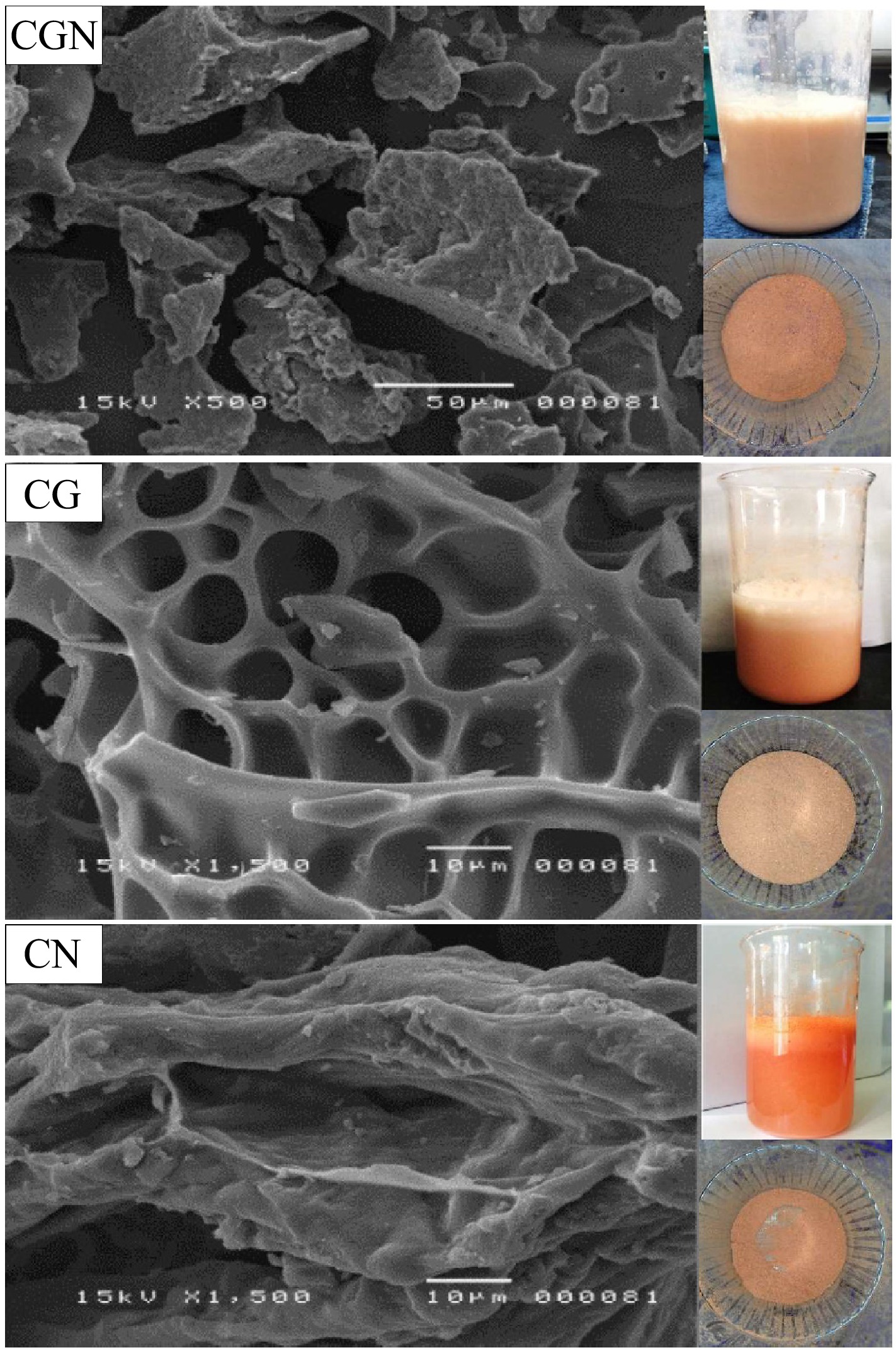
Figure 3.
Scanning electron micrographs and visual appearance of coacervate mixture and powders prepared with chitosan (C), gum acacia (G), sodium tripolyphosphate (N), and β-carotene[71].
Among the four major techniques, spray drying is still the most widely used method for encapsulation of β-carotene because of the ease of production scale-up, possibly followed by emulsion preparations. This is evidenced by the predominance of spray-dried formulations in existing patents (Table 1).
-
A variety of wall materials from natural and synthetic materials can be used to encapsulate β-carotene (Table 2). Carbohydrates are the most common biomaterial used in microencapsulation because they can be applied as a major component or an adjunct in all encapsulation techniques. Chitosan can be used in three microencapsulation techniques: ionotropic gelation[37,73], complex coacervation[72,74], and in 3D printing inclusion complex[17]. Native starch, including partially hydrolyzed maltodextrins, is used for spray drying, 3D printing[18], and the formation of amylose inclusion complexes. Native/modified cyclodextrins and trehalose are exclusively employed in inclusion complexes and spray drying, respectively. Like native starch, octenyl succinated starch and pullulan can be used for spray drying, but also possess functionality in the production of micelles and emulsions. Gum acacia is applicable in spray-dried formulation, complex coacervation, and emulsions. Gum tragacanth is not as well-studied as gum acacia for producing complex coacervates. Alginate can be used in making ionotropic gels[37,73], emulsions[75], and recently, thermally induced emulsion gels[76].
Like carbohydrates, proteins also offer a variety of functionality in microencapsulation, but they are not commonly used singly. Oat proteins and casein can be used to form complex coacervates with gums and even novel glucans[77]. Hypoallergenic rice bran protein isolate can be used as an adjunct in spray drying[38]. Whey can be used in making stand-alone emulsions or those that can be spray-dried later. Lipids are exclusively used for making emulsions, hydrogels, liposomes, and nanostructured lipids.
Comparison of Tables 1 and 2 shows that traditional wall materials and conventional techniques are still used in microencapsulating β-carotene. Spray drying is the prevalent method to produce microencapsulates, which will still rely on carbohydrate-based wall materials like gum acacia, maltodextrins, and modified starches. Emerging wall materials in this category include trehalose, octenyl succinated starch, hydroxypropyl starch, and cyclodextrins. These materials are used singly in many research papers but appear to be more useful as multicomponent encapsulant matrices. Native and modified cyclodextrins are very useful on their own as inclusion complexes or as part of spray drying feed. However, the cost of the cyclodextrins and the limited solubility of the native cyclodextrins tend to limit their use to high-value compounds or controlled-release applications. Therefore, they may be used to encapsulate compounds besides carotenoids from expensive plant sources like saffron. Alternatively, β-cyclodextrin can be modified by the addition of octenyl succinic anhydride, which increases the hydrophilic and hydrophobic regions[78].
Table 2. Materials used for the microencapsulation of β-carotene.
Animal Plant Marine Others Carbohydrates Chitosan[17,37,72−74] Starch[18,36,43]; Amylose[80]; Cyclodextrin[17,50,51,53−55,57,58,81−88]; Maltodextrins[14,36−38]; Gum acacia[14,35,45,66,72,89];
Gum tragacanth[68]; Trehalose[45,89]Alginate[37,73,75,76] Modified: Octenyl succinate starch[42,44,90];
Fungal: Pleurotus ostreatus glucan[77];
Microbial: Pullulan[91]Proteins Casein[68]; Whey[40,45,60,66,70,75,89,91] Rice[38]; Zein[60]; Oat[77] Lipid Phospholipids from egg yolk[76,83,92] Fat/oil[14,40−43,60,75,77,90,93]; Phospholipids[9] Notably, whereas carbohydrates are utilized as stabilizers in emulsions, proteins are associated with emulsifying ability but appear to be less employed in microencapsulation. This is surprising, given that many, if not most, microencapsulation reports about β-carotene used the oil-soluble raw material. Seemingly, dispersions with the carotenoid are better added with non-protein emulsifiers. There is one patent where gelatin was used in spray drying application[23], so it will be interesting to examine if new gelatin sources, such as fish gelatin, are suitable for manufacturing halal-type encapsulates.
Based on our published work, it is predicted that gum acacia and maltodextrin will still be the major carbohydrate-based wall material because the materials themselves are found in many food applications. Regarding postprandial glucose control, gum acacia is superior to maltodextrin because the structure is made up of β-glycosidic bonds, unlike maltodextrin, making it a suitable source of soluble dietary fiber[79]. Among protein sources, whey protein is the most popular encapsulate because of its emulsifying ability, high water solubility, and desirable amino acid profile. Emerging plant sources of protein, like soy, rice, pea, and hemp are expected to be used in more applications owing to a shift in consumer preference. However, allergenicity concerns should be addressed first. Rice bran protein is a desirable, hypoallergenic protein source, but greater utilization as an encapsulant is hindered by its limited solubility in water at neutral pH. Lastly, egg yolk emulsions may find greater potential as encapsulants given that poultry diets can be supplemented with carotenoids.
-
The natural metabolic processes leading to absorption in the gastrointestinal tract provide a key model for conducting bioaccessibility and bioavailability tests using microencapsulated forms of the carotene. Generally, in vivo studies provide more reliable data with respect to the conversion of β-carotene to vitamin A, as well as the relative bioaccessibility between dietary vs preformed carotenoid[5,94−96]. A dynamic digestion model was found to reflect results obtained from in vivo studies for both sources of carotenoids, thus imparting the usefulness of in vitro studies[97].
Oral and gastric processing leads to the release of the carotenoid from plant sources, and gastric enzymes are expected to inactivate or denature proteins present with the carotene[39]. During treatment with simulated intestinal juices, pancreatin, which possesses amylase, protease, and lipase, should be able to free the carotene, at which point the bile salts will be able to incorporate the carotenoids into micelles, which serve as the major transport form of both fatty acids and carotenoids[37]. In vitro release studies of microencapsulated carotene results in information about the relative amounts released from the microcapsules and more importantly, the amounts obtained from micelles formed following intestinal digestion. The micelles are generally isolated by extraction of the digesta with a non-polar solvent. Simulated digestion tests can be conducted in the absence or presence of gastric and pancreatic enzymes and with or without a food matrix. Absent digestive enzymes, the solutions that simulate gastric and intestinal digestion are prepared using inorganic acids and bases, as reported by several authors[44,66,72]. Else, gastric pepsin, and pancreatin are added to the inorganic solutions[14,37,38,41,51,58,76].
Surprisingly, there are two studies on food fortification with encapsulated β-carotene that did not include simulated digestion tests. Chitosan coacervates were added to hamburger patties and morphological, lipid oxidation, and microbiological data showed the encapsulates possess bacteriostatic and antioxidant activity[74]. In another study, ice cream was fortified with sea buckthorn extract[70]. Sensorially, an ideal inclusion rate was proposed, and ice cream possessed antifungal and antioxidant capacity.
In vitro studies are carried out to address an increasing level of complexity of research questions involving microencapsulated carotenoids (Table 3). For instance, Szabo et al.[14] investigated the release profile of carotenoids from spray-dried tomato processing waste and found that initial β-carotene levels may be inadequate for profiling release. Two oil-based food matrices were used and three forms of encapsulates were employed to compare the release of enriched vs capsule-fortified forms and the effect of peristaltic churning[41,73]. Data from our research resulted in the selection of a carbohydrate-rich matrix as a vehicle for fortification. Along the way, questions as to the appropriate complexation method[51], dispersibility of carotene[58], and time of fortification[38] were investigated. Results support the 'polar paradox' wherein the antioxidant activity of the encapsulated bioactive compound (such as carotenes) is enhanced when placed in a food matrix with opposite polarity[98]. This could lay the basis for investigating more lipid-based and starch-based matrices as possible vehicles for food fortification, including ice cream[99].
Table 3. Food matrices used in simulated digestion studies with enzymes.
Matrix Encapsulate form Digestion protocol Results Almond butter[73] (1) Calcium alginate gel; and (2) Whey protein emulsion-alginate gel (a) Static digestion protocol (4 h) involving simulated saliva (0.5 min), gastric (2 h), and intestinal (2 h) juices; (b) Human gastric simulator model for peristaltic effect on bioaccessibility For (a) and (b), no significant release of carotene until the last hour of simulated intestinal digestion, with little incorporation of the carotene in the micelles Yoghurt and pudding; soybean oil added to provide oil phase for emulsification[37] (1) Calcium alginate gel with chitosan coating; and (2) spray dried powder with maltodextrin Static digestion protocol (4 h) involving simulated saliva (5 min), gastric (2 h), and duodenal + intestinal (2 h) juices Greater release in absence of food matrices; yoghurt was more effective vehicle than pudding for spray-dried encapsulates; chitosan-alginate beads less effective than spray-dried powder Murumuru butter[41] Nanostructured lipid carrier with and without α-tocopherol Dynamic digestion (5 h) protocol involving simulated gastric (2 h), duodenal, jejunal, and ileal juices (3 h) Increase in particle size from 41 to 473 nm after digestion; no change in zeta potential; max. carotene bioaccessibility ~16% with ~30% non-absorbed; need to address cytotoxic effect Cooked rice[51] Inclusion complexes using physical blending (PB), kneading (K), and co-precipitation (CP) Static digestion protocol (4 h) involving simulated saliva (5 min), gastric (2 h), and duodenal + intestinal (2 h) juices ~40% release for PB samples; high radical scavenging activity for PB, K; high reducing activity for CP; variable effect of rice on release and antioxidant activity at each phase Cooked rice[58] Inclusion complexes using co-precipitation (β-cyclodextrin) Static digestion protocol (4 h) involving simulated saliva (5 min), gastric (2 h), and duodenal+intestinal (2 h) juices Decreasing release trend for water-dispersible complex and no effect of food matrix; greater intestinal release for hexane-soluble complex with food matrix Uncooked and cooked rice [38] Spray-dried powder with maltodextrin and rice bran protein concentrate Static digestion protocol (4 h) involving simulated saliva (5 min), gastric (2 h), and duodenal + intestinal (2 h) juices Less release when encapsulates were boiled with rice than when added to cooked rice; decreasing trend over gastric to intestinal digestion Food safety considerations have not yet been extensively studied since the animal study model reported by Arikan & Rodway[53] using cyclodextrin inclusion complexes. Likely, a large cohort study like the Alpha-Tocopherol, Beta-Carotene (ATBC) Cancer Prevention trial is necessary to understand the specific gastrointestinal impacts, such as biotransformation by Phase 2 enzymes, the difference between microencapsulated and dietary carotenoid absorption, and transport[12,100].
-
Given the physiologic importance of β-carotene, more in vivo studies should be conducted to determine the impact of diet supplementation and food fortification with carotenoids. The test animals should encompass an increasing order of similarity with the cellular and gastrointestinal systems of humans. This is important because the cytochrome P450 enzyme system of animals is located in a different part of the cell compared to humans; thus, antioxidant activity measured using animal models may be under- or over-predicted than that obtained from human studies[26]. Between the cis- and trans-isomer of β-carotene, the former is considered physiologically active in the tissues, whereas trans-β-carotene is commonly isolated from the blood[11]. Therefore, future preparations should identify which isomer is microencapsulated and in vitro assays can then be selected and compared with histological or serum-based in vivo antioxidant capacity assays.
Traditional techniques in microencapsulation such as inclusion complexes, coacervates, and hydrogels will still require a dehydration step, such as spray or freeze drying before they are added to food products. However, 3D printing of the microencapsulated preparation is an innovative technique that will find many applications because the microcapsules can be added to the liquid food-grade ink, and both are dried simultaneously during the printing process of the ready-to-eat food. One pioneering study focused on guar gum, chitosan, xanthan gum, carrageenan, and gum acacia as adjuncts in microencapsulating β-carotene within a yam starch matrix for 3D printing[18]. Guar gum and chitosan were found to be suitable for fabricating food samples. Another 3D printout with a possible application as food decoration was prepared from an inclusion complex[17]. Both applications contain chitosan, which can also be used in ionotropic gels[37]. Chitosan can serve as a second shell calcium alginate or an enhancer in a β-cyclodextrin inclusion complex via hydrogen bonding of the amine groups of chitosan with the hydroxy groups of cyclodextrin[17]. Future work can focus on incorporating single- or multi-wall, as well as nanoscale and microscale preparations to be added to a 3D printer for instant food fortification. Both traditional and emerging wall materials can be used in additive manufacturing.
Kinetic models of the release profiles have already been developed for static digestion studies; future work can focus on the increasing use of dynamic digestion models and the incorporation of fasted- and fed-states for better simulation of the human gastrointestinal system. Data will need to be analyzed regarding the viscosity, storage, and loss moduli of the food sample before digestion and the resulting digesta per collection time. Understandably, pieces of equipment with greater sophistication are needed, such as a dynamic intestinal model and oscillatory rheometer. Release data can be modeled using equations discussed in one of our review papers[101].
Finally, the novel 'food fortification by design' approach[19] can be increasingly applied for both spray drying (the predominant microencapsulation technique) and emerging encapsulation techniques. Here, the appropriate form, food matrix, delivery system, production method, testing procedures, and optimization are holistically investigated. This approach will relate the conceptual aspects of microencapsulation design with the health and industrial aspects of food fortification such as antioxidant activity, cytotoxic effects, changes in sensory attributes, and shelf-life of the fortified food with added encapsulates[70].
The author wishes to thank the University of the Philippines Los Baños for the Centennial Professorial Chair grant.
-
The author confirms sole responsibility for all aspects of this study: conceptualization, data curation, writing, editing, and visualization, and approved the final version of the manuscript.
-
The datasets generated during and/or analyzed during the current study are available from the corresponding author on reasonable request.
-
The author declares that there is no conflict of interest.
- Copyright: © 2025 by the author(s). Published by Maximum Academic Press on behalf of Nanjing Agricultural University. This article is an open access article distributed under Creative Commons Attribution License (CC BY 4.0), visit https://creativecommons.org/licenses/by/4.0/.
-
About this article
Cite this article
Flores FP. 2025. Advances in microencapsulation of β-carotene: innovating traditional and emerging materials and techniques for enhanced functional properties. Food Materials Research 5: e005 doi: 10.48130/fmr-0025-0005 

Advances in microencapsulation of β-carotene: innovating traditional and emerging materials and techniques for enhanced functional properties
- Received: 17 December 2024
- Revised: 25 February 2025
- Accepted: 09 April 2025
- Published online: 21 May 2025
Abstract: Encapsulation of beta-carotene, a widely recognized antioxidant, and provitamin A compound, has garnered significant interest due to its susceptibility to degradation in various food matrices and during processing. This review comprehensively assesses four major encapsulation techniques employed for beta-carotene protection: spray drying, emulsification, inclusion complexation, and complex coacervation. Each technique is discussed for its encapsulation efficiency, stability, and applicability in food fortification. The potential of each encapsulation technique for food fortification is evaluated in terms of stability during processing, bioavailability, sensory attributes, and regulatory considerations. While significant progress has been made in utilizing encapsulated beta-carotene for fortification purposes, challenges such as cost-effectiveness, scalability, and maintaining sensory attributes in fortified foods remain to be addressed. Emerging encapsulation techniques such as electrospinning, inclusion complexation, and nanogels hold promise for enhancing beta-carotene stability and bioavailability. However, further research is warranted to explore the feasibility, scalability, and safety of these emerging techniques for food applications. Moreover, investigating novel encapsulants derived from natural sources could offer sustainable and biocompatible alternatives for beta-carotene encapsulation. Overall, this review provides insights into the current landscape of beta-carotene encapsulation, its potential for food fortification, and outlines future directions for research to address existing challenges and leverage emerging techniques and encapsulants.
-
Key words:
- β-carotene /
- Microencapsulation /
- Wall materials /
- Fortification /
- Digestion