











-
Anthropogenic activities, such as agricultural fertilization, fossil fuel combustion, and the cultivation of nitrogen (N)-fixing crops, have substantially increased reactive N inputs to terrestrial ecosystems, reaching an estimated 210 Tg·yr−1 over the past century[1]. Each year, more than 65 Tg of this reactive N eventually enters global freshwater systems[2]. The resulting N surplus in aquatic environments has disturbed the natural N cycling, leading to a range of environmental and ecological issues, such as eutrophication, hypoxia, algal blooms, and loss of aquatic biodiversity[3,4].
Approximately 53% of N inputs to freshwater systems are retained or removed annually at the global scale[2]. Denitrification, a microbial process that reduces nitrate (NO3−) to nitrite (NO2−), then to nitrous oxide (N2O), and ultimately to dinitrogen gas (N2) as the terminal product, has long been recognized as the primary mechanism for permanent N removal in aquatic ecosystems[5]. Anaerobic ammonium oxidation (anammox), a microbially mediated process in which ammonium (NH4+) is converted to N2 under anoxic conditions using NO2− as the electron acceptor, was first identified in a wastewater treatment facility in the 1990s[6,7]. Today, anammox is recognized as a widespread process across diverse aquatic ecosystems and is considered one of the main pathways for permanent N removal[8,9].
Denitrification and anammox are both microbially driven processes influenced by a number of abiotic and biotic factors, including plant communities[10−12]. The rhizosphere, a narrow zone surrounding plant roots, is often regarded as a hotspot for biogeochemical cycling[13]. While numerous studies have examined rhizosphere effects on N removal processes in constructed wetlands, relatively few have focused on natural freshwater ecosystems[14,15]. For example, research has shown that root exudates and rhizosphere microorganisms in constructed wetlands can significantly enhance N removal from wastewater[16]. Since rhizosphere soils are directly influenced by fine roots and root exudates, which account for 20%–40% of plant photosynthetic carbon production, they typically contain higher nutrient concentrations and microbial biomass than bulk soils[17]. As a result, denitrification and anammox rates in rhizosphere soils may differ significantly from those in bulk soils. However, this hypothesis remains largely untested in natural freshwater ecosystems[18−20].
Rivers act as essential links between terrestrial and oceanic N cycles, transporting substantial amounts of N from land to marine environments[21]. In the lateral dimension of river systems, both river channels and riparian zones are important N sinks, as their wet and anoxic conditions enhance denitrification and anammox processes to remove N[22,23]. In the vertical dimension of rivers, surface soils are recognized as hotspots for N removal due to their higher concentrations of N and organic matter compared to subsurface and deeper soil layers[24]. Although rivers exhibit high spatial heterogeneity in their N removal capacity[25], the multi-dimensional spatial patterns of denitrification and anammox, particularly along latitudinal gradients, remain poorly understood.
In this study, channel sediments (0–20 cm), riparian rhizosphere soils (0–20 cm), and riparian bulk soils at three depth intervals (0–20, 60–80, and 160–180 cm) were sampled from 30 river sites along a 3,500 km latitudinal transect in China. The rates of denitrification and anammox were determined, as well as the abundances of their functional genes. It was hypothesized that, due to environmental heterogeneity and rhizosphere effects, denitrification and anammox rates would differ significantly among channel sediments, riparian rhizosphere soils, and riparian bulk soils along the latitudinal gradient. The purposes of this study were: (1) to examine the lateral and vertical patterns of denitrification and anammox in river ecosystems; (2) to quantify the relative contribution of these two processes to microbial N removal; and (3) to explore the critical factors regulating denitrification and anammox in rivers along the latitudinal gradient.
-
Thirty higher-order rivers along a north–south transect in eastern China were selected using a non-random sampling strategy (Fig. 1a). This transect spans a broad climatic gradient, covering both temperate and subtropical monsoon climate zones. The selected rivers include some of China's largest and most well-known rivers, such as the Yangtze and Yellow Rivers (Supplementary Table S1). For each river, a representative sampling site in the middle to lower reaches was established, because riparian wetlands in these areas are typically flat and wide (> 10 m). Site accessibility was also an important consideration in the selection process. Detailed sampling information is provided in Supplementary Table S1.
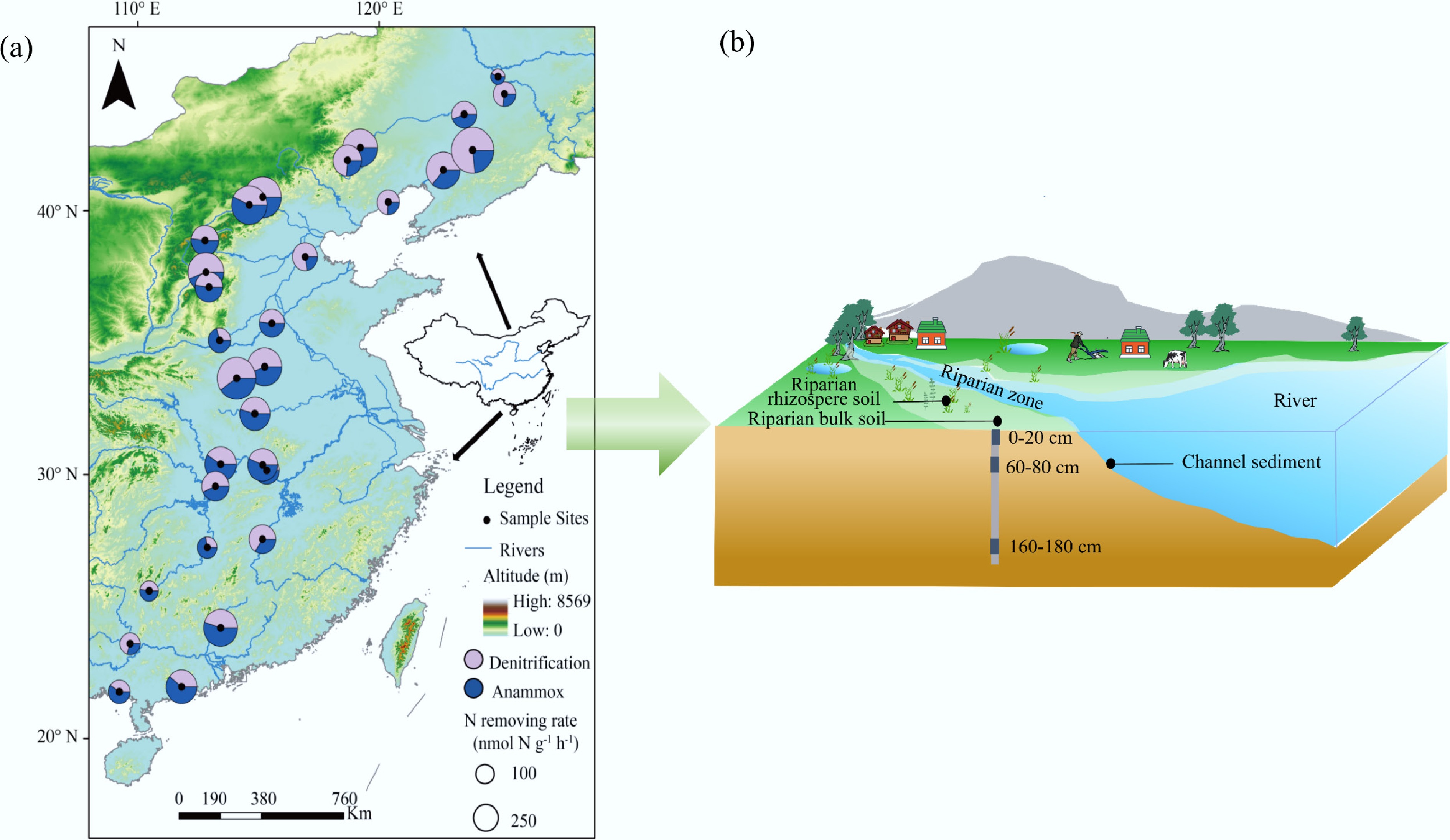
Figure 1.
(a) Biogeographical distribution of denitrification (purple), and anammox (blue) rates across 30 sampling sites, and (b) the schematic diagram of the sampling strategy. Each black circle represents a sampling site, with circle size proportional to the N removal rates at that location. N removal rates are calculated as the sum of values from channel sediments, riparian rhizosphere soils, and riparian bulk soils at three depth intervals (0–20, 60–80, and 160–180 cm).
At each sampling site, channel sediments, riparian rhizosphere soils, and riparian bulk soils were collected in September 2018 (Fig. 1b). Composite surface sediments (0–20 cm) weighing approximately 200 g were obtained from three randomly selected locations within the channel, each about 5 m from the shoreline, using a custom-made grab sampler. For riparian rhizosphere and bulk soils, sampling areas were located approximately 1 m above the river level and 5–10 m away from the water edge. Riparian rhizosphere soils were collected by first establishing a 1 m × 1 m plot within representative plant communities at each site. Dominant plant species within the plot were excavated to a depth of approximately 20 cm, and rhizosphere soils were carefully brushed off the roots with a sterilized soft brush after gently shaking off loosely attached soil[4]. For riparian bulk soils, three soil cores (3.2 cm diameter, 200 cm in depth) were randomly collected from vegetation-free areas. Each core was sectioned at 20 cm vertical intervals, and soils from the same depth were homogenized to form composite samples. All samples were divided into two subsamples: one was stored at 5 °C during field transport for subsequent measurement of denitrification and anammox rates and physicochemical properties, while the other was flash-frozen in liquid N for microbial analysis.
Measurement of denitrification and anammox rates and functional gene abundance
-
Denitrification and anammox rates in channel sediments, riparian rhizosphere soils, and depth-specific riparian bulk soils (0–20, 60–80, and 160–180 cm) were quantified using the 15N isotope pairing method[26,27]. Detailed procedures are provided in the Supplementary File 1 and have also been described extensively in previous studies[28−30].
DNA was extracted from replicate soil and sediment samples using the PowerSoil DNA Isolation Kit (MoBio Laboratories Inc., CA, USA), and DNA concentrations were measured with a NanoDrop 2000 spectrophotometer (Thermo Fisher Scientific, MA, USA). The extraction and quantification procedures followed previously established protocols[31,32] and are detailed in the Supplementary File 1. The primer sets nirSCd3aF/nirSR3cdR, nirKF1aCu/nirKR3Cu, and hzsB396F/hzsB742R were used to quantify the nirS, nirK, and hzsB genes, respectively (Supplementary Table S2).
Determination of environmental variables and vegetation characteristics
-
Geographic coordinates (latitude, longitude, and altitude) were recorded using a global positioning system (GPS) at each sampling site. Mean annual temperature (MAT) and mean annual precipitation (MAP) were obtained from the China Meteorological Data Sharing Service System (
http://data.cma.cn ). In this study, geographic coordinates and climatic variables (MAT and MAP) were treated as key regional-scale factors (Supplementary Table S1).Soil and sediment physicochemical properties, including moisture, pH, total N (STN), NH4+-N, NO3–-N, total carbon (STC), organic carbon (SOC), ferrous iron (Fe2+), available iron (AFe), and texture (i.e., the percentage of clay, silt, and sand), were analyzed following protocols described in previous studies[33,34]. Concentrations of water TN, NH4+-N, NO3–-N, TC, and TOC were also measured in the laboratory, as previously described[35,36]. Detailed analytical procedures are provided in the Supplementary File 1.
In each 1 m × 1 m plot within the riparian zones, plant cover was visually estimated in the field using a sampling frame subdivided into 10 cm × 10 cm grid squares[37]. Plant species richness was defined as the number of vascular plant species recorded per plot[29]. Plant roots and shoots within each plot were harvested, and fresh biomass was determined by weighing immediately after collection.
Statistical analyses
-
Prior to analysis, the Shapiro–Wilk test was used to evaluate data normality, and variables were transformed using natural logarithmic or square root transformations when necessary. One-way analysis of variance (ANOVA) with the LSD post-hoc test was used to assess the difference in N loss rates (denitrification and anammox), microbial abundance, and environmental parameters among channel sediments, riparian rhizosphere soils, and riparian bulk soils. Pearson correlation analyses were performed to examine relationships between N loss rates and abiotic as well as biological variables. Regression analyses were used to examine the associations between N loss rates and geographic coordinates. Random forest analyses further identified key variables influencing N loss rates across all soil types. Structural equation modeling (SEM) was applied to elucidate the direct and indirect effects of selected important variables on N loss rates. Model fit was evaluated using p-values (p > 0.05), comparative fit index (CFI > 0.9), and root mean square error of approximation (RMSEA < 0.008). The above statistical analyses were conducted using R software (version 3.3.1).
-
The TN concentration in river water varied from 1.4 to 10.6 mg·L−1, while the mean contents of NH4+-N and NO3–-N were 0.4 and 2.0 mg·L−1, respectively (Supplementary Table S3). TC and TOC concentrations ranged from 11.2 to 62.1 mg·L−1 and 8.5 to 59.4 mg·L−1, with mean values of 31.2 and 26.8 mg·L−1, respectively (Supplementary Table S3). For soil and sediment physicochemical properties, the highest NH4+-N and NO3–-N levels were detected in channel sediments and riparian rhizosphere soils, respectively, but no significant differences were found among soil types (Supplementary Table S4). In contrast, TN contents in channel sediments, riparian rhizosphere soils, and surface riparian bulk soils were significantly greater than those in subsurface (60–80 cm), and deep (160–180 cm) riparian bulk soils (Supplementary Table S4). Additionally, the mean contents of Fe2+ and AFe ranged from 79.7 to 158.0 mg·kg−1 and 13.1 to 19.7 mg·kg−1, respectively, with the highest levels found in channel sediments (Supplementary Table S4). Soil TC and SOC contents in channel sediments and riparian rhizosphere soils were significantly greater than those in riparian bulk soils (Supplementary Table S4).
DNA extraction from most deep (160–180 cm) riparian bulk soils was unsuccessful. Therefore, these soil samples were excluded from the microbial analysis. The mean abundance of denitrifying bacteria was more than two orders of magnitude greater than that of anammox bacteria (Fig. 2). In the lateral dimension, nirS gene abundance was relatively higher in channel sediments compared to riparian soils (Fig. 2a), while nirK gene abundance was considerably greater in riparian rhizosphere soils than in channel sediments and riparian bulk soils (Fig. 2b). The hzsB gene showed the highest abundance in channel sediments (Fig. 2c). In the vertical dimension, riparian topsoils typically exhibited a higher abundance of denitrifying and anammox microorganisms than subsoils (Fig. 2). With respect to riparian vegetation, plant species richness ranged from 1 to 14 per plot, and plant cover varied from 32.0% to 99.0% (Supplementary Table S5). Fresh plant biomass exhibited substantial variation, ranging from 98.7 to 1363.7 g·m−2, with a mean value of 309.1 g·m−2 (Supplementary Table S5).
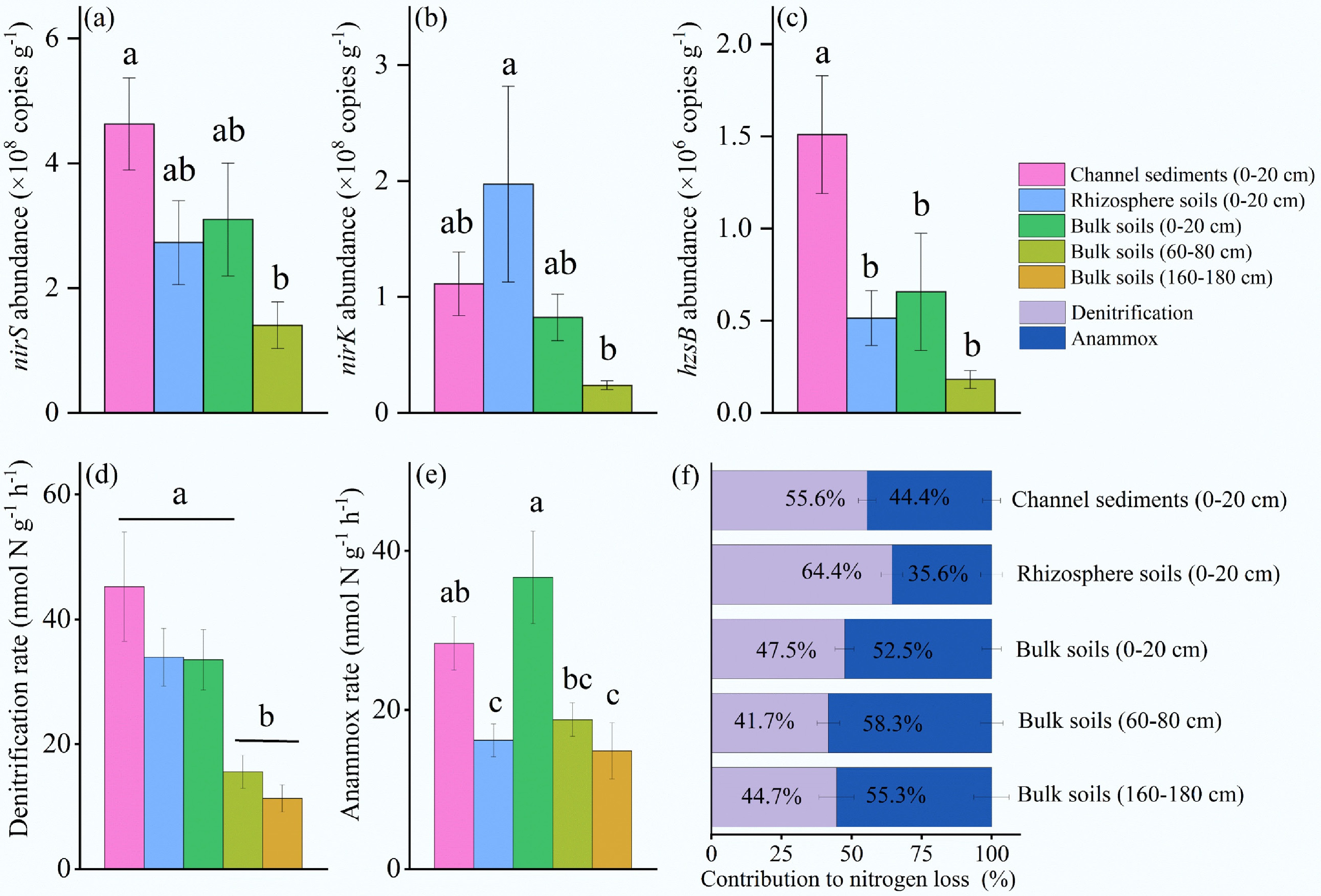
Figure 2.
(a)−(f) Abundances of nirS, nirK, and hzsB genes, denitrification and anammox rates, and their relative contributions to N removal (mean ± SE) in channel sediments, riparian rhizosphere soils, and riparian bulk soils. Different lowercase letters above the bars indicate significant differences (p < 0.05) among soil types.
Spatial patterns of nitrogen removal potential
-
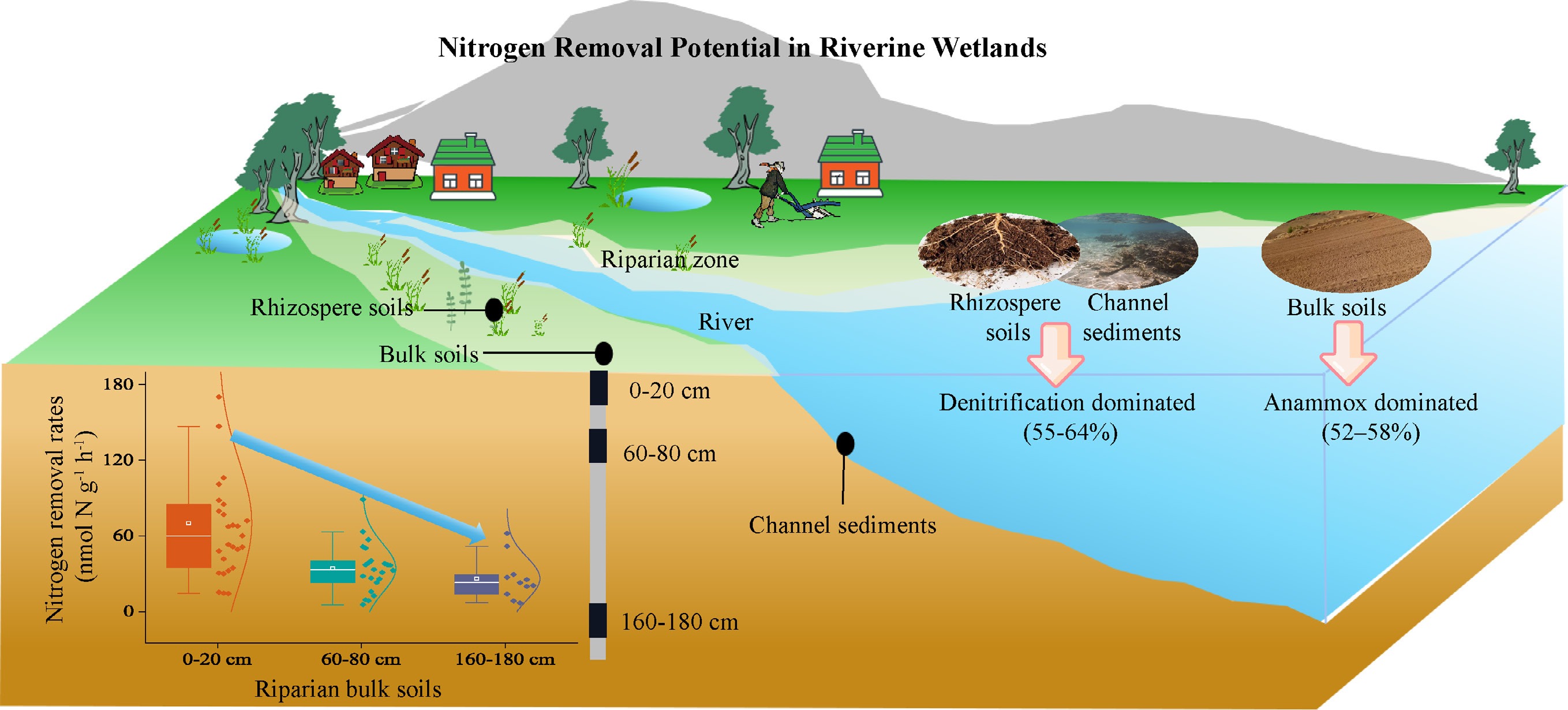
Soil and sediment denitrification rates exhibited substantial variability, ranging from 0.4 to 195.5 nmol N g−1·h−1. In the lateral dimension, no significant differences in denitrification rates were observed among channel sediments, riparian rhizosphere soils, and surface riparian bulk soils (Fig. 2d). However, anammox rates in riparian rhizosphere soils were significantly lower (p < 0.05) than those in channel sediments and surface riparian bulk soils (Fig. 2e). Within riparian areas, both denitrification and anammox rates were the greatest in surface soils and decreased significantly with soil depth (Fig. 2d and e). Denitrification rates exceeded anammox rates in channel sediments (45.3 ± 8.8 vs 28.4 ± 3.4 nmol N g−1·h−1) and riparian rhizosphere soils (33.9 ± 4.6 vs 16.2 ± 2.1 nmol N g−1·h−1), indicating denitrification as the dominant microbial N loss pathway in these environments (Fig. 2f). In contrast, anammox was the primary contributor to microbial N loss in riparian bulk soils, accounting for 52.5%–58.3% of N2 production (Fig. 2f).
Relationships among environmental factors, biological communities, and nitrogen removal potential
-
Among regional-scale factors, latitude and longitude were significantly positively related to denitrification rates (Fig. 3 and Supplementary Fig. S1). In contrast, anammox rates showed no significant relationship with either latitude or longitude (Fig. 3 and Supplementary Fig. S1). In addition, altitude, MAT, and MAP had no significant relationship with denitrification and anammox rates (Figs 3 and 4). For local-scale factors, numerous soil and water physicochemical properties were significantly related to denitrification rates (Fig. 4). For example, soil TN, SOC, AFe, and water TC were positively associated with denitrification rates, while the percentage of sand was negatively related to denitrification rates (Fig. 4). Moreover, the abundance of nirS genes was significantly and positively related to denitrification rates (Fig. 4).
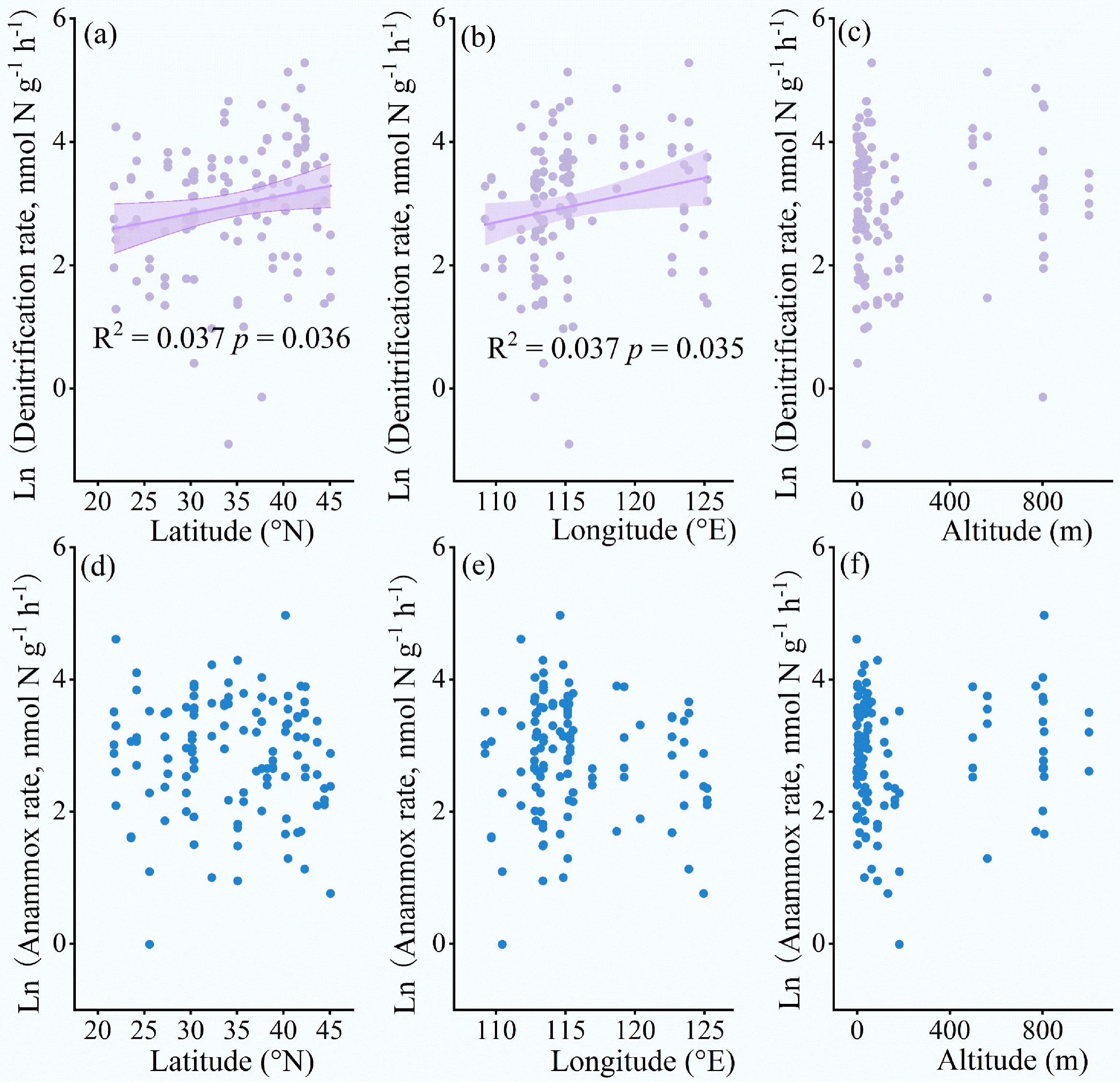
Figure 3.
(a)−(f) Relationships between denitrification and anammox rates and geographic variables (latitude, longitude, and altitude). The purple lines are the slopes from the linear regression models, while the purple shadings are the 95% confidence intervals.
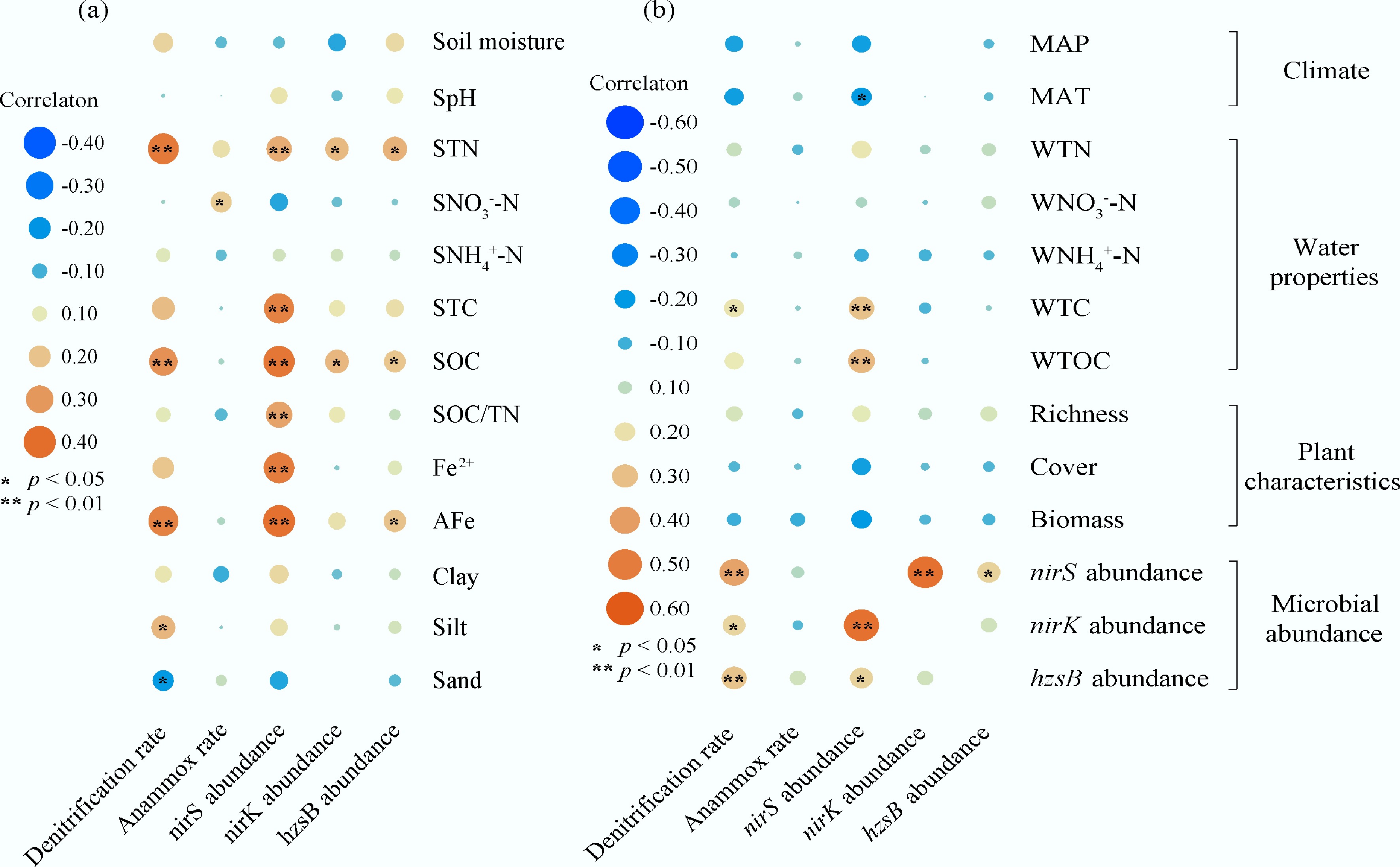
Figure 4.
Pearson correlation coefficients between denitrification rates, anammox rates, and the abundances of nirS, nirK, and hzsB genes with abiotic and biological variables across all soil types. (a) Soil physicochemical properties. (b) Climate variables, water properties, plant characteristics, and microbial abundance.
Random forest analysis revealed that SOC, AFe, and nirS gene abundance were the critical variables regulating denitrification rates (Fig. 5a). Soil NO3−-N explained the largest proportion (5.4%) of the variance in anammox rates (Fig. 5b). Regarding nirS gene abundance, SOC was the key factor, followed by AFe and water TOC, collectively explaining 25.6% of its variance (Fig. 5c). The abundance of nirK and hzsB genes was most strongly impacted by plant biomass and soil TN, respectively (Fig. 5d and e).
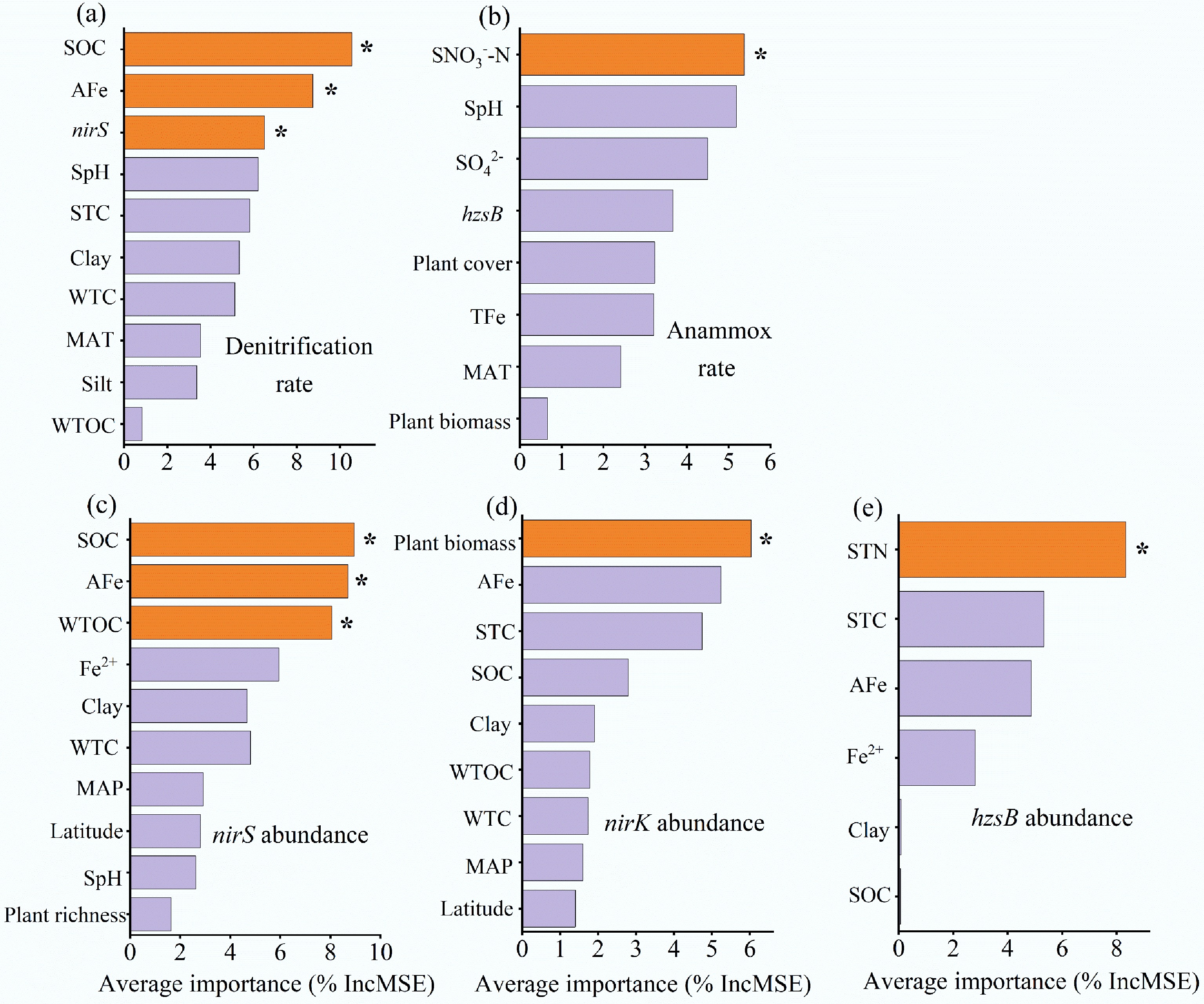
Figure 5.
(a)−(e) Relative importance of the main predictive factors in explaining denitrification rates, anammox rates, and the abundances of nirS, nirK, and hzsB genes. * Indicate variables with significant importance (p < 0.05).
Direct and indirect influences of critical factors on nitrogen removal potential
-
For the denitrification rate model (p = 0.322, CFI = 0.996, and RMSEA = 0.040), the selected variables collectively explained 26.4% of the variance in denitrification rates (Fig. 6a). Denitrifier abundance was identified as the most influential factor affecting denitrification rates (Fig. 6c). Soil moisture, SOC, and AFe appeared to affect denitrification rates both directly and indirectly by modulating denitrifier abundance (Fig. 6a). In the anammox rate model (p = 0.826, CFI = 0.999, and RMSEA = 0.001), only soil NO3− had a direct and significant effect on anammox rates (Fig. 6b). The final model, which incorporated direct and indirect effects of soil moisture, SOC, NO3−, AFe, and hzsB gene abundance, explained just 7.0% of the variation in anammox rates (Fig. 6b).
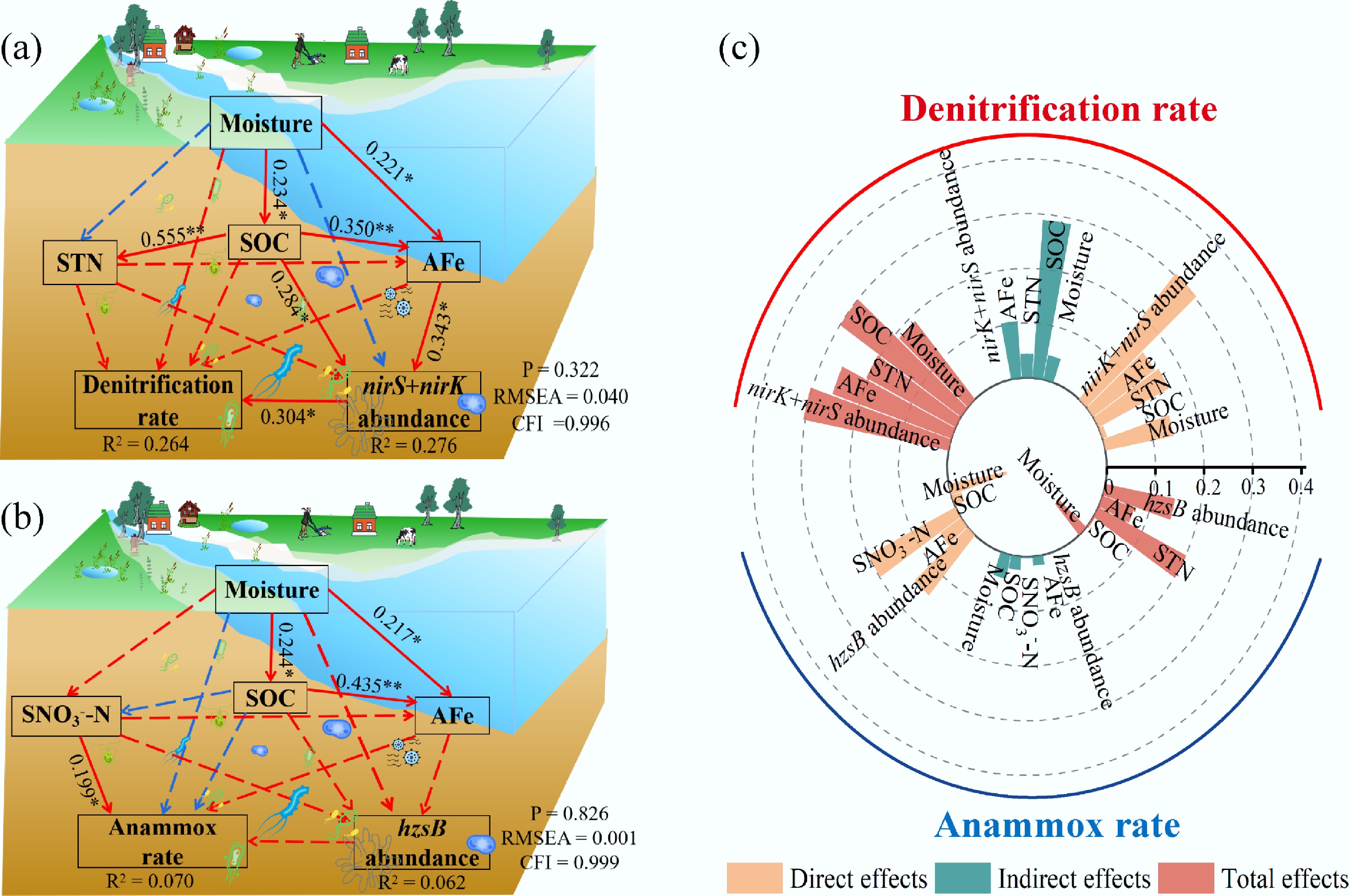
Figure 6.
Structural equation models illustrating the direct and indirect effects of selected variables on (a) denitrification rates, and (b) anammox rates. (c) Shows the direct, indirect, and total effects of these variables on denitrification and anammox rates, respectively. Red and blue arrows indicate positive and negative effects, respectively. Solid and dashed lines represent significant and nonsignificant paths, respectively. Numbers next to the arrows are standardized path coefficients (* p < 0.05, and ** p < 0.01).
-
In the lateral dimension, river ecosystems are composed of channels and flooded riparian areas[38]. In this study, denitrification rates did not differ significantly among channel sediments, riparian rhizosphere soils, and surface riparian bulk soils (Fig. 2d). This result was similar to the findings of Rich & Myrold, who reported that denitrification rates were similar between creek sediments and riparian soils[39]. However, some studies showed that stream sediments exhibited significantly lower denitrification rates compared with riparian soils[22,40,41]. In addition, this study revealed that anammox rates in channel sediments were significantly greater than those in riparian rhizosphere soils but were comparable to those in surface riparian bulk soils (Fig. 2e). In contrast, Kim et al. demonstrated that stream sediments had significantly lower activities of anammox than riparian soils of the Santa Fe River of northern Florida, USA[22]. Moreover, Wang et al. indicated that anammox rates in open-water sediments were significantly lower than those in riparian soils[42]. The relatively lower anammox rates observed in riparian rhizosphere soils in the present study may be attributed to root-mediated oxygen release, which creates a more oxygenated environment that is unfavorable for the metabolism and growth of anammox bacteria[29,43]. In addition, root exudates can significantly increase carbon availability in the rhizosphere, thereby stimulating overall microbial activity. However, anammox is driven by obligate anaerobic chemolithoautotrophic bacteria that do not utilize organic carbon, and elevated concentrations of carbon substrates may even inhibit the anammox process[44].
In the vertical dimension, the rates of denitrification and anammox were the greatest in the surface soil and declined significantly with increasing depth (Fig. 2e−f). These results are consistent with some recent studies showing that N removal processes mainly occurred in shallow wetland soils[45,46]. However, some studies have reported inconsistent results[47−49]. For example, Wang et al. reported that denitrification rates exhibited a decreasing trend from topsoils to subsoils in the littoral zones of Lake Baiyangdian, whereas anammox activities were generally the lowest in the 40–50 cm soil layer[24]. In the present study, the highest N removal rates detected in surface soils (0–20 cm) were mainly attributed to the higher availability of nutrients and carbon sources (Supplementary Table S4). It is well established that N and organic C are key substrates for denitrifying and anammox bacteria, and the main factors influencing denitrification and anammox rates, especially in riparian areas where soils generally contain low levels of C and N[23,29,50,51].
The relative contribution of denitrification and anammox to nitrogen removal potential in rivers
-
The relative importance of denitrification and anammox in permanent N removal varied considerably in previous reports[24,52]. Here, the contributions of anammox to N removal in 30 rivers across China were compared with those in other aquatic (marine and freshwater) habitats determined by the same 15N isotope pairing technique (Supplementary Table S6). These studies revealed that anammox contributed 0.5%–88.8% of total N2 production and dominated over denitrification in some marine and estuarine sediments (Supplementary Table S6). For example, Thamdrup & Dalsgaard reported that anammox accounted for nearly 67.0% of the total N2 production at the deepest location (695 m), but only 2.0% at the shallowest site (16 m)[26]. Globally, anammox is estimated to contribute 30.0%–50.0% of the N2 production in the ocean[53].
In this study, anammox in 30 rivers across China contributed 47.7% of the total N2 production, ranging from 35.6% to 58.3%. This average value was considerably higher than the values observed in previous studies, including less than 1.0% in the Lower Great Miami River, USA, and 7.2% in two rivers in the Taihu Lake watershed, China[54,55]. However, the present results are similar to those reported in recent studies[29]. Li et al. found that the contribution of anammox to N2 production in eutrophic riverine sediments varied from 14.0% to 75.0%, with a mean value of 44.0%[56]. In our study, the substantial contribution of the anammox pathway to N removal was likely due to the fact that the sampled soils and sediments were dominated by sand with high porosity and low organic matter content. Chen et al. found that anammox contributed 41.6% to N2 emissions in sandy sediments and 8.3% in muddy sediments within riparian zones[57]. In addition, Lansdown et al. reported that anammox contributed less than 7.0% of N2 production in clay sediments but up to 58.0% in sandy sediments[58]. Therefore, we emphasized that anammox can play a significant role in N removal in river ecosystems, especially those with coarse substrates, and should be integrated into global biogeochemical models to improve predictions of N dynamics.
The roles of environmental conditions and biological communities in determining nitrogen removal potential
-
Among the measured regional-scale factors (geographic location and climate), denitrification exhibited a clear latitudinal pattern, increasing significantly from low to high latitudes, consistent with previous studies[59,60]. However, this trend contrasts with the results reported by Li et al., who observed that sediment denitrification rates followed the pattern: middle temperate zones < north subtropical zones < middle subtropical zones < south subtropical, and tropical zones[61]. In the present study, the effect of latitude on soil denitrification rates is likely mediated through its influence on local environmental factors, microbial communities, and plant traits. Temperature and rainfall are two key local factors that regulate microbially driven N cycling in soils and sediments[62]. In high-latitude regions, the decomposition of soil organic matter is generally slow due to low temperatures, leading to the accumulation of organic substrates that can enhance N removal processes such as denitrification[63]. However, we acknowledge that the latitudinal pattern of denitrification rates may vary significantly across seasons due to substantial changes in climate, local environmental conditions, and biomes.
Among local environmental factors, soil physicochemical properties (e.g., SOC, STN, and available Fe) were found to be positively and significantly correlated with denitrification rates (Fig. 6). Previous studies have indicated that soil C/N was the major predictor of relative abundance and composition of gene functions[61]. Moreover, organic C and NO3− serve as the primary electron donor and acceptor for denitrifying microorganisms, respectively[4]. Hence, our results may suggest that the denitrification process in rivers across China is both C- and N-limited. The positive relationships between denitrification rates and available Fe observed in this study were expected, as previous research has shown that both organic matter and inorganic substrates (e.g., ferrous iron) can serve as electron donors in denitrification process in soils and sediments[64,65]. Wang et al. found that electrons donated by ferrous iron could explain approximately 33% of the total denitrification in paddy soil[66]. In this study, it was found that only soil NO3− was significantly related to anammox rates (Fig. 6). Anammox rates responded most strongly to soil NO3−-N in river, lake, and marsh ecosystems[67]. This is likely because anammox bacteria favor environments with high concentrations of NO3−-N, and they can be activated in sediments and soils rich in nitrogen compounds[68].
For biotic factors, we found a positive correlation between nirS gene abundance and denitrification rates in soils and sediments (Fig. 4). In this study, the mean abundance of nirS gene (29.9 × 10⁷ copies g−1 soil) was approximately three times greater than that of nirK gene (11.4 × 10⁷ copies g−1 soil). This result suggests that nirS-type denitrifiers dominate the denitrifying populations and are responsible for the majority of denitrification in channel sediments and riparian soils. A pronounced dominance of nirS-type over nirK-type denitrifiers has been detected in various wetland ecosystems[69]. However, some studies have found no significant relationship between denitrifier abundance and denitrification rate in riparian zones[70]. Denitrification rates do not necessarily covary with denitrifier abundances, because the rate reflects readily activated enzymes in soils or sediments while the denitrifying genes contribute only partially to enzyme activities at a given time point[71]. With regard to anammox bacteria, a series of studies have examined the relationships between anammox activities and bacteria communities, but their findings have been somewhat inconsistent[72]. Bai et al. reported that anammox rates were significantly related to the abundance of anammox hzsB gene in paddy soil[73]. However, no significant relationship between the anammox rates and hzsB gene abundance was observed in riparian zones, estuarine sediments, and paddy soils[74,75]. In this study, it was found that anammox rates were significantly correlated with the hzsB gene abundance in channel sediments, but not in riparian soils (Supplementary Fig. S1). This phenomenon may be due to the relatively higher SNO3−-N content in channel sediments than in riparian soils (Supplementary Table S4). There are several possible reasons for the non-significant correlation between anammox activities and anammox bacteria. First, a single marker gene in a metabolic pathway may not accurately represent the relevant biochemical pathway because there are many regulatory or auxiliary genes that may be required for the expression[76]. Second, this deviation might be attributed to the diverse physiological features of anammox bacteria. For example, certain bacteria (e.g., Kuenenia stuttgartiensis) can disguise as denitrifiers and convert NO3−-N via NO2−-N to NH4+-N, leading to anammox rates being reduced to 10% of the normal rate[77]. In addition, the lack of correlation between anammox rates and hzsB gene abundance might also be attributed to the fact that transcriptome analysis was not conducted in this study. Hence, the anammox community structure and transcriptome should be further analyzed to better understand the relationship between anammox rates and microbial abundances.
-
To our knowledge, this is the first study investigating the lateral and vertical patterns of denitrification and anammox in river ecosystems along a latitudinal gradient. Denitrification exhibited significant variations along the latitudinal gradient, with a notable increase from low to high latitudes. Anammox rates in riparian rhizosphere soils were significantly lower than those in channel sediments and surface riparian bulk soils. Both denitrification and anammox rates peaked in the surface soil and decreased significantly with depth. Denitrification played a more dominant role in removing N than anammox in riparian rhizosphere soils and channel sediments, while anammox was the primary pathway for N removal in riparian bulk soils. Denitrification rates in river ecosystems were jointly regulated by soil physicochemical properties (e.g., available C and N) and functional microorganisms, while anammox rates were only significantly affected by soil NO3−-N. In summary, these findings highlight the importance of the anammox process in supporting the N-removal function of rivers, especially in bare riparian areas. Therefore, future research is called for to include the anammox pathway into the global model of riverine biogeochemical cycling.
-
It accompanies this paper at: https://doi.org/10.48130/nc-0025-0004.
-
Not applicable.
-
The authors confirm their contributions to the paper as follows: study design: Deng D, Liu W; data collection and analysis: Deng D, Xu D, He G, Ding B; writing − draft manuscript preparation: Deng D; writing − manuscript revision: Deng D, Xu D, He G, Ding B, Liu W. All authors reviewed the results and approved the final version of the manuscript.
-
The datasets generated during this study are available from Figshare at https://doi.org/10.6084/m9.figshare.23614113.v1
-
This work was supported by the National Natural Science Foundation of China (U24A20641, 32301369, and 32401364), the China Postdoctoral Science Foundation (2024M751752), and the Hubei Province Postdoctoral Science Foundation (2024HBBHCXB052).
-
The authors declare that they have no known competing financial interests or personal relationships that could have appeared to influence the work reported in this paper.
-
Full list of author information is available at the end of the article.
- Supplementary File 1 Detailed procedures.
- Supplementary Table S1 Geographic location and climatic features of the 30 sampling sites along a latitudinal gradient across eastern China.
- Supplementary Table S2 Primers and PCR conditions of target genes for qPCR.
- Supplementary Table S3 Water quality characteristics of 30 sampling sites.
- Supplementary Table S4 The physicochemical properties of channel sediments, rhizosphere soils, and bulk soils (mean ± SE). Means ± SE followed by different lowercase letters indicate a significant difference (p < 0.05) among soil types.
- Supplementary Table S5 Riparian vegetation characteristics of 30 sampling sites.
- Supplementary Table S6 Previous reported anammox rates and corresponding contributions to the total nitrogen removal (ra% = anammox/(denitrification + anammox)) in various biological environments.
- Supplementary Fig. S1 The relationship of denitrification and anammox rates with latitude and longitude in the lateral (a, b) or vertical (c, d) dimension. The purple lines are the slopes from the linear models, and the purple shadings are the 95% confidence intervals.
- Copyright: © 2025 by the author(s). Published by Maximum Academic Press, Fayetteville, GA. This article is an open access article distributed under Creative Commons Attribution License (CC BY 4.0), visit https://creativecommons.org/licenses/by/4.0/.
-
About this article
Cite this article
Deng D, Xu D, He G, Ding B, Liu W. 2025. Relative contributions of denitrification and anammox to nitrogen removal in riverine wetlands across China. Nitrogen Cycling 1: e003 doi: 10.48130/nc-0025-0004 

Relative contributions of denitrification and anammox to nitrogen removal in riverine wetlands across China
- Received: 04 June 2025
- Revised: 01 August 2025
- Accepted: 14 August 2025
- Published online: 17 September 2025
Abstract: Denitrification and anaerobic ammonium oxidation (anammox) are two pivotal microbial processes governing nitrogen (N) removal in ecosystems. However, the multi-dimensional spatial patterns of these processes in riverine wetlands remain unclear. Here, the 15N isotope pairing technique and quantitative polymerase chain reaction (qPCR) were used to determine the rates and functional gene abundance of denitrification and anammox in channel sediments, riparian rhizosphere soils, and riparian bulk soils (0–20, 60–80, and 160–180 cm) across 30 riverine wetlands along a 3,500 km latitudinal transect in China. Results showed that denitrification rates varied substantially along the latitudinal gradient, increasing from low to high latitudes. In the lateral dimension, denitrification rates did not differ significantly among channel sediments and surface riparian soils, whereas anammox rates were greater in channel sediments and surface riparian bulk soils. In the vertical dimension, both rates peaked at the surface layer and declined with increasing depth in riparian bulk soils. Notably, denitrification dominated N removal in channel sediments and riparian rhizosphere soils (55.6%–64.4%), while anammox contributed more substantially in riparian bulk soils (52.5%–58.3%). Denitrification rates were strongly influenced by soil physicochemical properties and functional gene abundances, whereas anammox rates were primarily regulated by soil nitrate content. Overall, these findings provide important insights into the spatial patterns and regulatory mechanisms of N removal in riverine wetlands across latitudinal gradients, with important implications for improving global N cycling models in river ecosystems.
-
Key words:
- Anammox /
- Denitrification /
- Nitrogen removal /
- Rhizosphere /
- Wetlands