












-
More frequent and intense heatwaves under climate change are causing uneven soil surface heating, raising concerns about trace metal(loid) uptake in staple crops and associated risks to human health[1−3]. In flooded paddy systems, warming is often linked to the enhanced mobilization of toxic elements, such as arsenic (As) and cadmium (Cd), thereby sparking concern over rising food contamination[1−5]. However, such projections often rest on a less tested assumption: warming increases soil metal(loid) mobility[4,6,7], which in turn increases plant uptake[2,7].
This assumption overlooks two critical complexities. First, plant uptake is governed not only by soil availability but also by transport specificity, root detoxification, and internal sequestration mechanisms that may buffer or decouple accumulation from geochemical mobilization[8−10]. Second, most experimental evidence fails to disentangle the effects of soil warming from those of air or canopy warming, which commonly co-occur but may trigger different physiological and geochemical responses[2,3,7]. In particular, during extreme heat events such as heatwaves, solar radiation can cause pronounced asymmetry between soil and canopy temperatures, with soil warming disproportionately more intense and persistent[11,12]. The optimal growth temperature for rice is generally below 33 °C[13], and high air temperatures can directly impair plant performance. In contrast, the optimal temperature for soil arsenate reduction is around 25 °C[14]. However, previous studies either lacked proper controls or set soil temperatures approximately 5 °C lower than the surrounding air[1]. This raises an underexplored question: does soil warming alone, independent of air temperature, necessarily increase the mobilization and grain accumulation of toxic trace elements in rice, with implications for food safety? It is further hypothesized that high soil temperatures may initially suppress microbially mediated Fe–As reduction and As release, but prolonged warming could enhance As mobilization over time, potentially leading to differential As accumulation in main- vs. ratoon-crop rice.
To address this, a mesocosm system consisting of four large, flooded glass tanks placed above ground under natural sunlight were established. The sun- and shade-facing sides created dynamic soil temperature gradients averaging over 5 °C between south- and north-facing plots throughout the 143-d rice-ratooning season, without affecting canopy or air temperatures. Importantly, the unprecedented heatwaves in 2022 provided a natural testbed to examine these soil temperature effects under extreme climatic conditions[15]. This setup allowed the isolation of soil warming effects and examination of their impact on the uptake of a wide range of elements in rice, including both potentially toxic trace elements such as As, Cd, cobalt (Co), chromium (Cr), molybdenum (Mo), nickel (Ni), lead (Pb), antimony (Sb), selenium (Se), thallium (Tl), and vanadium (V), and essential nutrients such as copper (Cu), iron (Fe), magnesium (Mg), manganese (Mn), and zinc (Zn). It was hypothesized that warmer soil would increase porewater mobilization of redox-sensitive elements (e.g., As) and the subsequent grain accumulation in rice. By measuring metal and metalloid concentrations in porewaters from sun- and shade-facing plots, root-zone, and bulk soils, and different portions of rice plants (i.e., node, leaf, husk, and grain) in both main crop and ratoon crop rice, the aim was to elucidate how soil warming—without altering air temperature dynamics—influences the mobilization and translocation of these elements within the soil–plant system.
-
The study was conducted using a semi-natural mesocosm system (Fig. 1) in Suzhou, China (31°16'14.7" N, 120°44'07.9" E). The system consisted of four large circular resin tanks (1 m diameter, 1.3 m height), each filled with paddy soil collected from an uncontaminated rice field nearby. The soil was classified as a silty clay loam (pH 6.1, organic matter 18.6 g kg−1, total As 8.5 mg kg−1, and total Cd 0.07 mg kg−1).
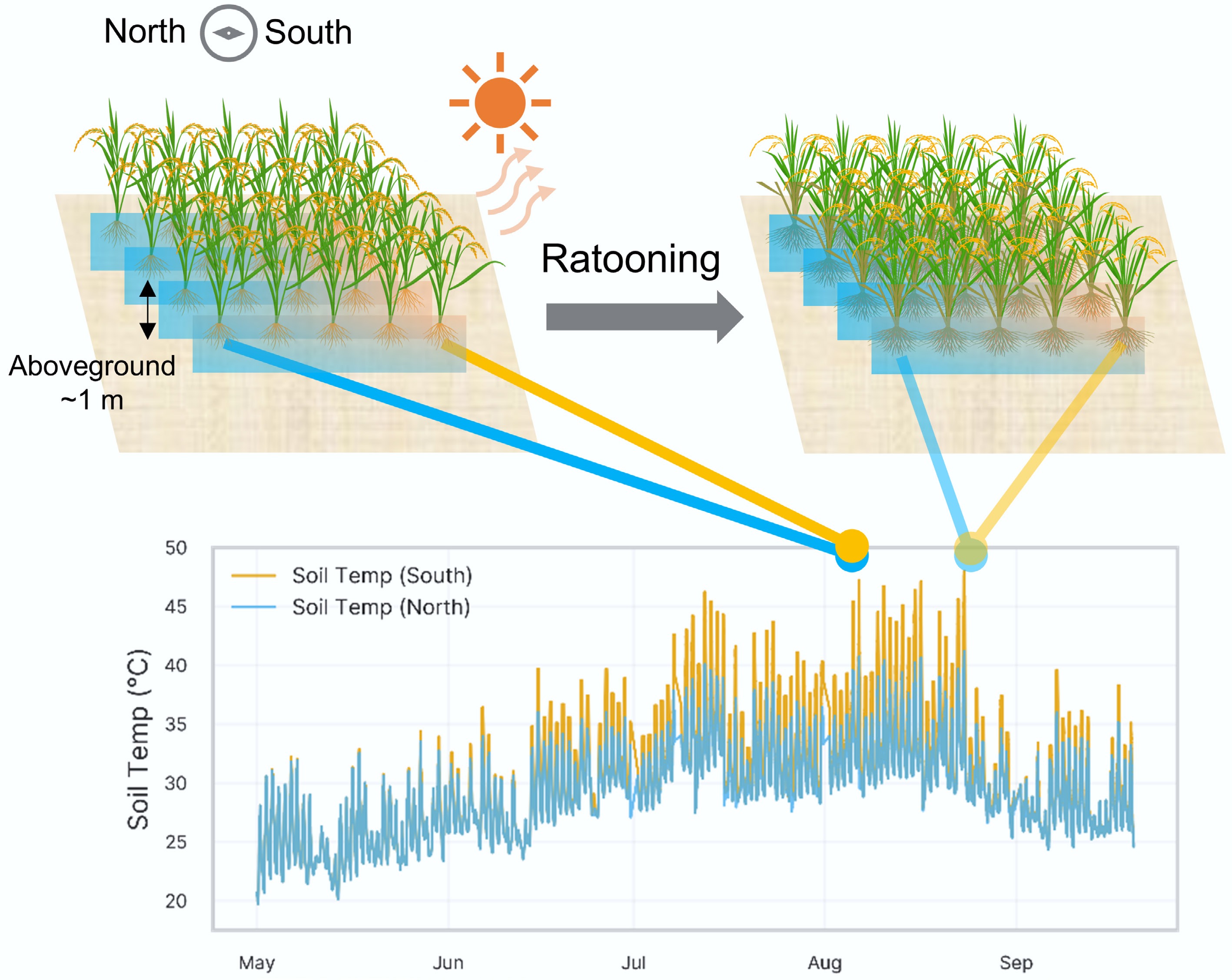
Figure 1.
Experimental design of soil warming gradient.
Rice was cultivated for two harvests (i.e., main crop and ratoon crop) in aboveground glass tanks (~1 m height, n = 4). The south-facing (sun-exposed) wall received direct solar radiation, inducing soil warming, while the north-facing side (i.e., the control) remained unheated by direct solar radiation. Soil temperature at 5–10 cm depth was continuously monitored at 30-min intervals throughout the growing season.
Each tank (1 m diameter × 1.5 m height, four replicates) was flooded with natural rainwater to maintain a standing water depth of 0–10 cm and planted with locally cultivated rice seedlings (Oryza sativa L., cv. Black rice) at a density of 20 hills per tank (five rows × four hills). Urea fertilizers at a rate of 90 kg ha−1 were applied only before soil flooding. The tanks were exposed to ambient light and temperature conditions throughout the 2022 rice season, with transplanting on May 1 and ratoon grain harvest occurring around September 10.
To simulate natural soil warming under heatwave conditions, the tanks were positioned such that their sun-facing (south) sidewalls received direct solar radiation, while the shade-facing (north) sidewalls remained unexposed to direct sunlight. Thermocouples were installed at a soil depth of 5–10 cm on both the warmed and control plots of each tank. Temperature was recorded at 30-min intervals using a remote temperature monitoring data logger (Xiandun CIMC Inc., China). Continuous logging was conducted in one representative tank (Fig. 1). To ensure that the observed gradient was representative, spot measurements of midday soil temperature were also conducted at equivalent positions in the other replicate tanks. These checks showed no significant differences among tanks, confirming the consistency of the warming pattern across the mesocosm system. Additionally, spot measurements of air temperature above the canopy were conducted at multiple positions and times (daytime, nighttime, and different growth stages), revealing no detectable differences or variations smaller than the system's measurement uncertainty between the warmed and control plots.
Heatwave identification and rice phenology
-
Based on historical meteorological records from local weather stations, a heatwave event was defined as ≥ 3 consecutive days with daily maximum air temperatures > 36 °C (i.e., ≥ 5 °C above the 1961–1990 regional baseline)[16]. This criterion was used to identify three distinct heatwave events during the 2022 growing season. Rice development was monitored throughout the season. After the main crop experienced spikelet sterility due to prolonged high temperatures during flowering, ratoon rice tillers regenerated from the basal nodes of the stubble. Both the main and ratoon crops reached maturity and were harvested separately.
Porewater sampling and analysis
-
Soil porewater was collected at grain filling stages using Rhizon samplers (Rhizosphere Research Products, Netherlands), inserted at 1–10 cm depth in both rhizosphere (root zone) and bulk soil (pre-inserted 50 mL syringe tube before transplanting, 15–20 cm away from rice plants). Samples were filtered through 0.22 μm filter membranes and acidified with trace-metal grade HNO3 (pH < 2) for elemental analysis by inductively coupled plasma mass spectrometry (ICP-MS, NexION 350D, PerkinElmer).
Rice tissue sampling and elemental analysis
-
At full maturity, rice plants were separated into grain, husk, leaf, and node tissues. Samples were washed with Milli-Q water, oven-dried at 60 °C for 72 h, and ground into fine powder using a ceramic mortar. Subsamples (0.2 g) were digested in 7 mL of HNO3–H2O2 (5:2, v/v) using a microwave digestion system (Mars 9, CEM Corp., USA)[17]. The digested solutions were filtered, diluted, and analyzed for trace and major elements using ICP-MS. Analytical mean recoveries (%, based on certified reference materials GSB-1 rice, n = 3) were as follows: Tl, 151.9; Co, 121.3; Pb, 116.6; Se, 114.5; Mn, 113.2; Sb, 105.8; Cd, 104.8; As, 103.0; Mg, 100.9; Mo, 100.4; Cr, 100.0; Cu, 99.5; Fe, 97.3; Zn, 93.2; V, 87.0; and Ni, 74.5 (Supplementary Fig. S1).
Statistical analysis and data visualization
-
Elemental concentrations were analyzed using two approaches. First, differences between warmed and control plots were tested with the two-sided Mann–Whitney U test, with p < 0.05 considered statistically significant. Second, two-way ANOVA was applied to evaluate the main effects of warming (+5.65 °C vs. control), plant (rhizosphere vs. bulk), and their interaction on elemental concentrations in porewaters. All analyses were performed in Python (v3.9) using the scipy, pandas, statsmodels, and seaborn packages. Hierarchical clustering of tissue elemental profiles was based on z-score standardized data and conducted with Ward's linkage, visualized using scipy.cluster.hierarchy.
-
During the 143-d 2022 growing season, three heatwave events were identified (daily maximum ≥ 36 °C for ≥ 3 consecutive days) (Fig. 1). Seventy heatwave days were recorded during the crop season, and 27 extreme days with daily maximum air temperature exceeding 40.0 °C were observed in 2022. Soil at 5–10 cm depth also experienced extreme warmings, with temperatures showing a difference of 5.65 ± 4.84 °C between warmed and control plots (Fig. 2). Both the main and ratoon crops underwent grain filling during heatwaves (Fig. 1). Spikelet sterility occurred in the main crop, whereas new tillers regenerated from basal nodes, enabling ratoon cropping for a second harvest.
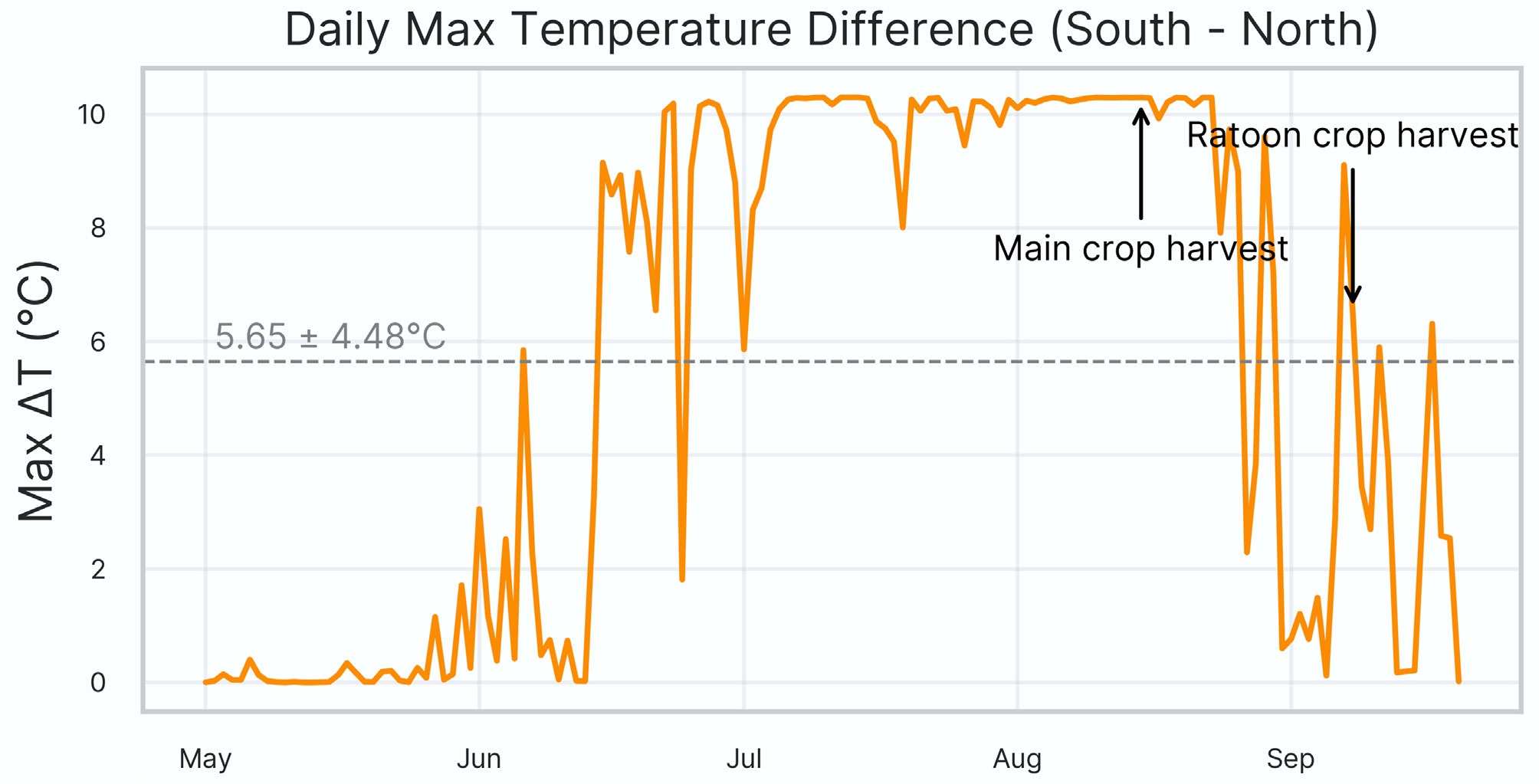
Figure 2.
Daily maximum temperature difference (ΔT) between the south- and north-facing sides of tanks throughout the experimental period.
Porewater elemental responses
-
In the main crop, porewater concentrations of redox-sensitive elements (As, Fe, Mn, Cd, and Co) were slightly higher in the +5.65 °C plots than in the controls, but the differences were not significant (p > 0.05; Supplementary Table S1). However, in the ratoon crop, significant differences in Cr, Cu, Se, and Mg concentrations, but not in others, were observed between warmed and control porewaters (rhizosphere and bulk combined). Theoretically, higher temperatures are expected to stimulate microbial activity, leading to the reduction of metal (i.e., Fe) oxides and a shift toward more anoxic conditions for releasing As into porewaters[1,6,18,19]. However, porewater As levels remained relatively low (e.g., ~6.68 vs. 5.3 μg L−1 in +5.65 °C vs. control plots) (Fig. 3). This was surprising since the soil had been flooded for months in this study, whereas sufficient reductive release of Fe and As only takes days to weeks[1,4,20]. Notably, porewater As and Fe concentrations from both rhizosphere and bulk soil exhibited strong linear relationships during both the main and ratooning stages (R2 > 0.65; Fig. 3c), with particularly sharp increases during the ratooning stage (As > 450 μg L−1). This suggests that prolonged flooding and cumulative heat exposure, rather than transient heat, may control mobilization dynamics. The mechanisms behind the delay of coupled Fe-As reduction are likely attributed to complex microbial responses (inhibition first) and adaptations (e.g., stimulation later) under extreme high temperatures[1,21,22].
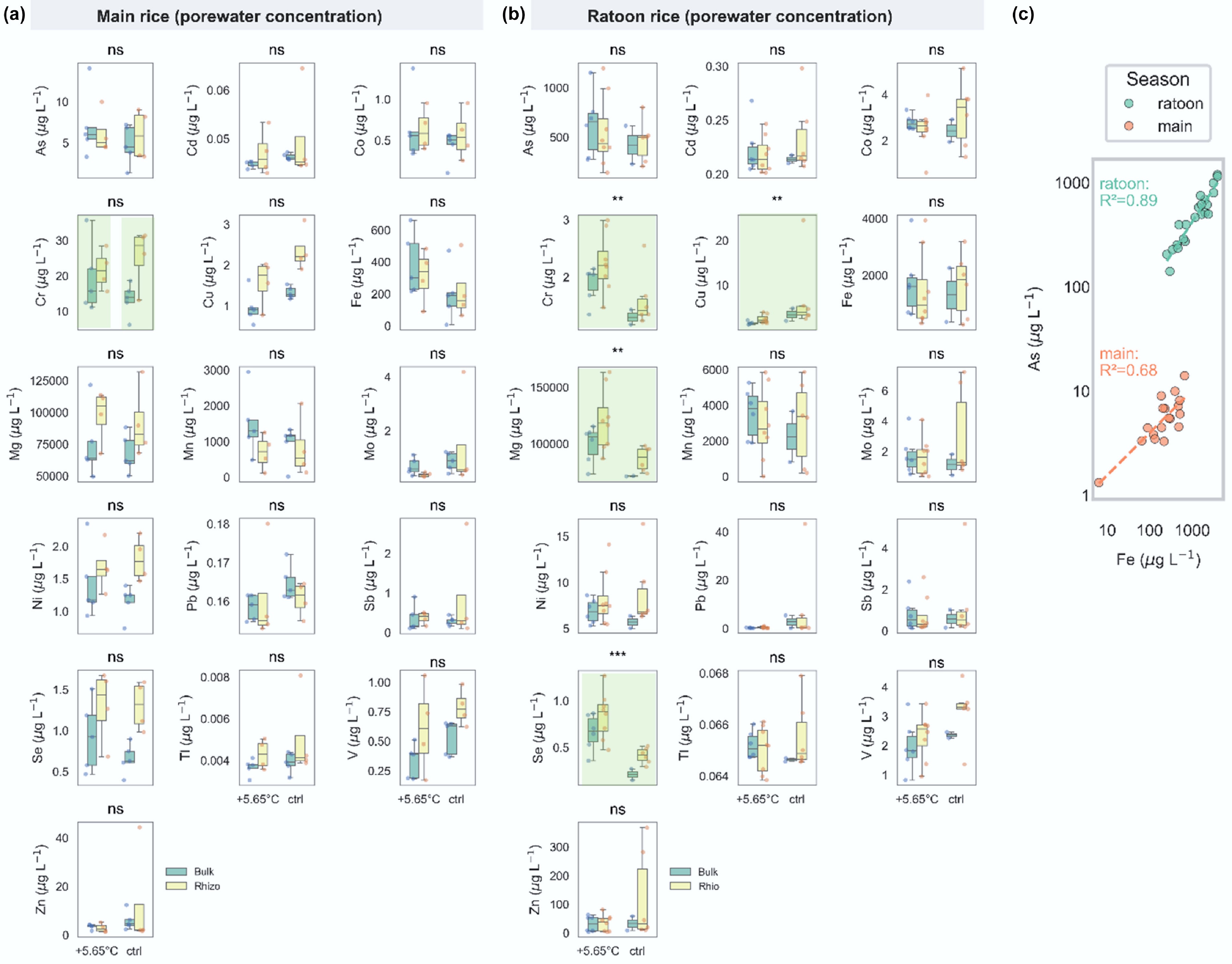
Figure 3.
Porewater elemental concentrations in root- and bulk-zones across main-ratoon cropping season. (a), (b) Boxplots compare porewater concentrations (μg L−1) of trace elements in root zone and bulk soil compartments between warmed (+5.65 °C on seasonal average), and control plots during (a) the main crop stage, and (b) the ratoon crop stage. Each point represents an individual sample; boxes indicate the median and interquartile range, with whiskers extending to 1.5× the IQR. Asterisks and 'ns' indicate not significant between control and +5.65 °C treatments by two-sided Mann–Whitney U test at p = 0.05 level.
In both main and ratoon seasons, rhizosphere porewater generally contained higher concentrations of Cd, Co, Cr, Cu, Mg (p < 0.05), Ni, Se (p < 0.05), Tl, and V than bulk soil (Fig. 3), though not all differences were significant, and no uniform trend was observed (two-way ANOVA, Supplementary Table S1). These enrichments suggest additional element mobilization by plant activity, contrary to the usual rhizosphere depletion during uptake[19]. During the main crop season, rhizosphere effects exceeded warming effects, as reflected by lower p values (i.e., the strength of evidence discussed by Muff et al.[23]) for rhizosphere–bulk comparisons (0.0009–0.76) than for warming (+5.65 °C vs. control, 0.2–0.99) (Supplementary Table S1). In contrast, during the ratoon season, warming effects outweighed rhizosphere influences (Supplementary Table S1). However, no significant interaction between warming and rhizosphere effects was detected (p > 0.5, Supplementary Table S1).
Grain elemental accumulation
-
Grain concentrations of most elements were unaffected by soil warming in either the main or ratoon crop (p > 0.5), except for Mg in the main crop, and Mn, Pb, Sb, and V in the ratoon crop (Fig. 4a, b), despite transient increases in porewater concentrations (Fig. 3). This pattern aligns with the findings of Neumann et al.[6], who reported that rice plants grown for approximately 4.5 months under comparable atmospheric conditions (~30.5 °C day/~23.5 °C night) but exposed to different soil temperatures (daily maxima of 25.4, 26.1, 30.5, and 31.4 °C) showed only minor changes in porewater As (from ~50 to ~100 μg L−1) and no detectable effect on grain As concentrations (~200 μg kg−1). However, the crop season effect was significant (Fig. 4c). For instance, in the main crop, As averaged 86.1 μg kg−1 in +5.65 °C plots, and 99.9 μg kg−1 in control plots. In the ratoon crop, these values increased to 131.0 and 115.5 μg kg−1, respectively. The increase was explained by higher porewater As levels during the ratoon season (linear R2 = 0.55, p < 0.001, Fig. 4d). This contrasts with previous reports of lower As in ratoon rice[24−26], which were attributed to seasonal cooling that suppressed As dissolution[27], and to alternate wetting–drying that limited soil anoxia[28].
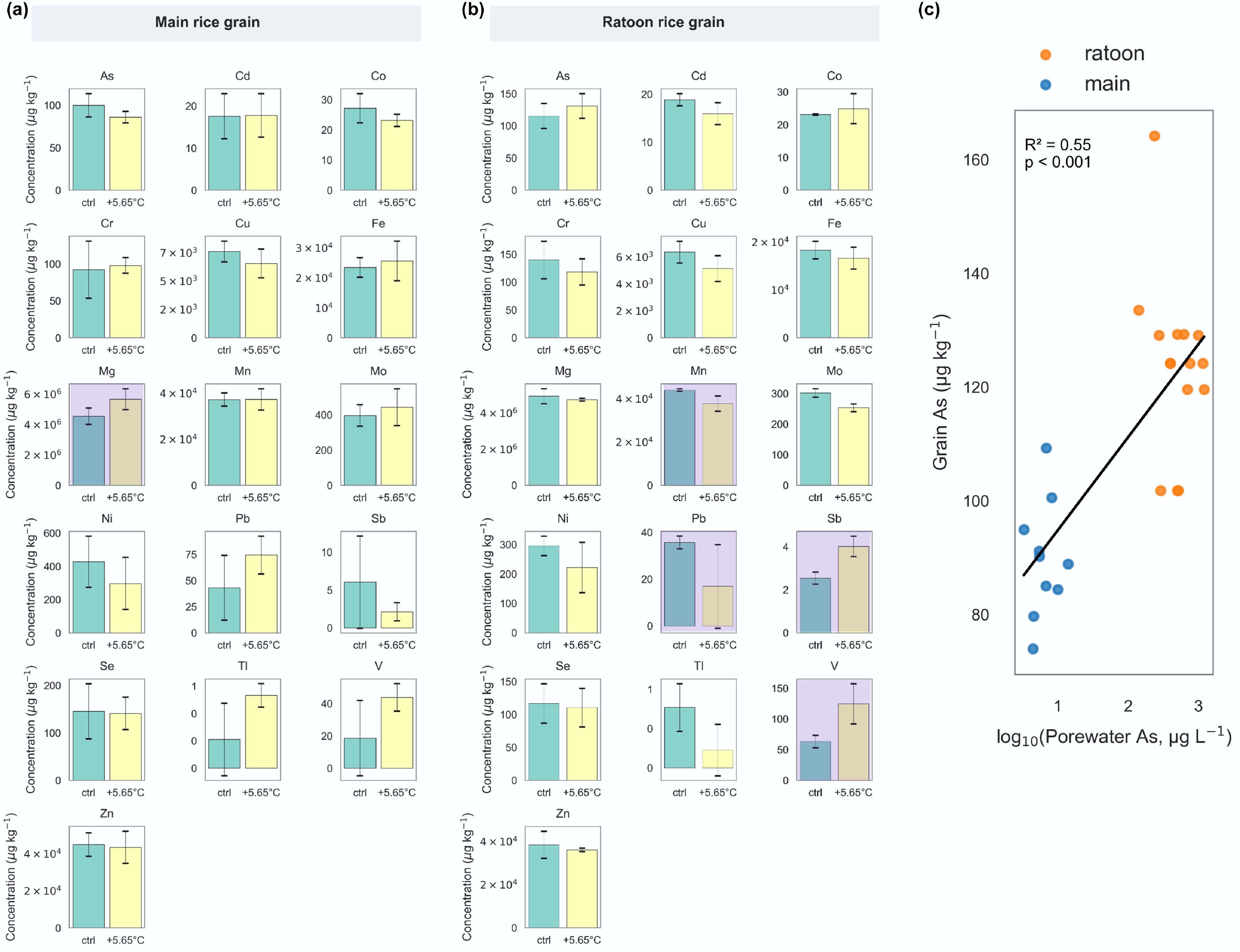
Figure 4.
Elemental concentrations in rice grains grown under contrasting soil temperature regimes. (a), (b) Bar charts show the mean concentrations (μg kg−1 or mg kg−1) of individual elements in rice grains collected from the control and +5.65 °C plots during the main and ratoon crop stages. Error bars represent standard deviations across biological replicates (n = 3–4). Filled subplot charts indicate significant differences at p < 0.05. (c) Linear regression between porewater and rice grain As concentrations across both main and ratoon crop seasons.
Grain Cd concentrations remained stable across treatments, ranging from 17.6 to 17.8 μg kg−1 between control and +5.65 °C treatments and from 16.0 to 18.9 μg kg−1 between main and ratoon crops (Fig. 4a, b). This contrasts with previous studies reporting higher Cd in ratoon rice[25,29]. The discrepancy is likely attributed to drainage water management during mid-season and prior to the harvest of the main rice crop, which increased Cd availability[28]. In contrast submerged soil environment (no drainage throughout the experiment) in our experiments limited Cd mobility likely through general mechanisms such as cadmium sulfide precipitation, producing trends opposite to those of As mobility[30−32].
Several beneficial elements showed lower concentrations in ratoon grains. For example, Se declined from 143 μg kg−1 in the main crop to 114 μg kg−1 in ratoon rice (p < 0.01), consistent with lower porewater Se during the ratoon period. Similarly, Zn decreased from 44.3 to 37.3 mg kg−1 (p < 0.05), which contrasts with previous findings[33]. The present porewater data did not indicate reduced Zn availability, suggesting that limited node-to-grain translocation in ratoon rice may have restricted Zn accumulation (Supplementary Figs S2, S3 & Supplementary Table S1). For other elements measured (e.g., Cd, Mn, Fe, Co, and Mg), no significant differences in grain concentrations were observed between warmer and control plots across both seasons (p > 0.05), indicating that soil warming-induced mobilization does not necessarily translate into elevated grain accumulation.
Evidence of plant regulation
-
Elemental concentrations in nodes, leaves, and husks were analyzed to estimate node-to-grain translocation rates (Supplementary Figs S2, S3 & Supplementary Table S2). In rice, nodes, particularly internode I below the panicle, are central redistribution hubs where vascular bundles from roots, leaves, and panicles converge. Hierarchical clustering showed that grains had the most distinct elemental profile, reflecting strong physiological control, whereas leaves and husks clustered with nodes (Supplementary Fig. S4), consistent with their interrelated roles in detoxification and transport[34].
Translocation patterns differed markedly between the main and ratoon crops, with node-to-grain transfer of several elements (e.g., As, Cd, Co, Mn, Mg, V, and Zn) being significantly higher in ratoon rice under one or both treatments. For instance, As translocation reached 21.9% (in warmed plots) and 10.6% (in control plots) in ratoon grains, compared with only 7.2% and 6.8% in the main crop (Supplementary Table S1), explaining the elevated As accumulation in ratoon grains. In contrast, Fe, Se, and Sb showed stable translocation rates (~8%), despite abundant Fe availability in flooded soils. Elements such as Cr, Mo, Ni, Pb, and Tl exhibited reduced translocation in ratoon rice, consistent with their non-essential or toxic status and preferential sequestration in vegetative tissues[19].
These differences can be attributed to the altered physiological state of ratoon rice. Plants regrow from existing stubble with reduced new root biomass and modified vascular connections, which promotes the remobilization of certain elements stored in vegetative tissues to grains during rapid filling. The observed translocation patterns of As, Mg, and Mn differed from those of Cr and Ni (Supplementary Table S2). These differences may be associated with general physiological regulation or element partitioning processes, as suggested in previous studies[35,36]. Direct measurements of transpiration, phloem loading, or transporter activity were not conducted in this study; furthermore, no consistent evidence, such as OsABCC1 (related to As translocation in rice) expression patterns in response to warming, were observed[7]. Further research is needed to clarify the underlying mechanisms.
Synthesized comparison
-
Most warming experiments investigating rice arsenic dynamics have been conducted in pot systems, while field-based evidence remains scarce (Table 1). The present mesocosm design bridges the gap between these two scales by providing greater environmental realism than pots while enabling controlled soil-temperature manipulation that is difficult to achieve in the field. Notably, most previous studies manipulated only air temperature, and such experiments consistently reported increases in grain As. In contrast, the only long-term field warming study conducted to date, covering 28 cultivars across 10 seasons, found only a modest increase in grain As under +2 °C warming[37]. The present findings are also consistent with the sole study that isolated soil-only warming[6], which likewise observed no substantial change in grain As despite elevated soil temperatures. Together, this evidence suggests that soil warming alone may have a more limited impact on grain As accumulation than inferred from air-warming studies, underscoring the relevance of our mesocosm results to real-world agroecosystems.
Table 1. Summary of key studies evaluating rice grain arsenic responses to soil or air warming
Study Soil source Experimental
scenarioSoil warming Air warming Number of
varietiesSoil As
(mg kg−1)Key finding Muehe et al., 2019 [1] Paddy field, California, USA Pot study; fixed-temperature incubation +5 °C 33/27 °C vs.
38/33 °C (day/night)1 7.3/24.5 Elevated soil temperature increased porewater As (low As: 170→210 μg L−1; high As: 520→950 μg L−1) and increased grain
As (low As: 393→504 μg kg−1; high As: 821→1,039 μg kg−1). Microbial abundance declined at higher temperature.Yuan et al., 2021[2] Paddy soil, Liuyang, China Pot study; fixed-temperature Air T
dependentFixed 28/33 °C 1 50.8 Grain As increased by 18% (28°C: 2250 μg kg−1; 33°C: 2655 μg kg−1). Neumann et al., 2017[6] Paddy field, California, USA Pot study; fixed-temperature Gradient of
+6 °C (25.4, 26.1, 30.5, 31.4 °C)Fixed
~30.5/23.5 °C1 34 Only minor increases in porewater As (~50 → 100 μg L−1) and no detectable effect on grain As (~200 μg kg−1). Farhat et al., 2021[7] Paddy field, California, USA Pot study; fixed-temperature Air T
dependentFour treatments: 25.4/22.6 °C; 27.9/25.8 °C; 30.5/28.9 °C; 32.9/31°C (day/night) 1 7.7 Grain As (50–200 μg kg−1) increased linearly with increasing temperature. Wang et al., 2025[37] Paddy field, Nanjing, China Field experiment Air T
dependentAmbient vs. +2 °C 28 10 Across 10 seasons, grain As
(~240 μg kg−1) increased by
56 μg kg−1 under +2 °C warming.Arao et al., 2017[3] Paddy field, Ibaraki, Japan Field experiment Ambient Ambient (22→29 °C
seasonal shift)1 1.9 Elevated temperature increased grain As (100–240 μg kg−1). This study Paddy soil, Suzhou, China Controlled mesocosm 0–10 °C
(north-to-south gradient)Ambient
(Tmax > 40 °C)1 8.5 Soil As was the dominant factor determining grain As. In the main crop, grain As averaged 86.1 μg kg−1 (+5.65 °C) vs. 99.9 μg kg−1 (control). In the ratoon crop, grain As increased to 131.0 μg kg−1 (+5.65 °C) and 115.5 μg kg−1 (control). Potential limitations and perspective
-
While the present aboveground mesocosm design enabled the isolation of soil warming effects from canopy and air temperature, several constraints should be noted. First, the north-facing side of each tank served as a cooler reference, but was not a fully independent control, and lateral or reflected heat may have influenced the results. However, soil redox heterogeneity typically develops at the millimeter scale, making cross-interference beyond the centimeter scale unlikely[19]; in the present experiments, rice plants at the control and +5.65 °C positions were spaced > 0.5 m apart. Second, aboveground tanks may alter microclimate, root development, and water–soil interactions compared to field conditions. Third, discrete porewater sampling at a single depth may not capture short-term or vertical fluctuations in element mobilization during heatwaves. Finally, the submerged water management likely buffered extreme soil temperature effects, potentially underestimating responses relative to field conditions with dynamic water levels. Moreover, the findings are based on a single soil type, rice cultivar, and continuous flooding regime. Therefore, the conclusions should be interpreted within this specific context rather than generalized across diverse soil and cropping systems. These factors should be considered when interpreting the findings and generalizing them to larger-scale agroecosystems.
We acknowledge that detailed microbial investigations, such as monitoring the dynamics of As- and Fe-reducing microorganisms, could substantially improve the mechanistic explanation for the observed temporal changes in dissolved As and Fe. Mechanistic indicators commonly suggested in previous studies, such as soil redox potential (Eh) or the abundances of functional genes including arrA (for As reduction) and geoA (for Fe reduction), provide only qualitative information and cannot quantitatively resolve the extent of Fe–As reduction. Consequently, some mechanistic uncertainties remain. We cannot fully explain why continuous warming during the main crop season did not trigger substantial As release. This may require detailed assessment of microbial and viral activity and limiting factors to better capture the diversity of soil pollution responses to warming[38,39]. However, such an investigation is beyond the scope of this study. Notably, we also demonstrate that ratoon rice, matured at relatively lower temperatures, does not necessarily accumulate lower As, as both node-to-grain translocation rates and porewater As concentrations were higher than those in the main crop rice, which is in contrast to previously reported patterns that elevated temperature can increase the translocation rate of As[7,40]. The combined porewater and plant data provide a plausible explanation for this discrepancy, highlighting that soil As mobility remains the key determinant of food safety, but does not always respond positively to warming. These insights may be critical for developing adaptive measures to secure rice safety under a warming climate. Note that these observations are specific to the present mesocosm conditions and should not be generalized as a universal response.
Uneven soil warming is an emerging topic that has received limited attention in studies on warming-related effects[41]. Many aspects of how extreme temperatures affect soil responses remain unexplored. Notably, soil warming with maximum temperatures up to 40 °C often exceeds those applied in typical warming experiments and even surpasses the optimal growth temperatures of many soil microorganisms. Elevated temperatures can accelerate chemical reactions, such as microbially mediated As release, while also promoting its sequestration. Different microbial groups may respond to temperature in contrasting ways, leading to dynamic patterns in soil As–Fe coupling, as observed in this study (Fig. 3c). These shifts can cascade through soil–plant systems and across trophic levels, ultimately affecting the biogeochemical cycling and ecological functions of the soil[42,43].
A comparison with previous studies highlights the context-dependency of the present findings. Table 1 summarizes key warming experiments on rice or paddy soils, specifying experimental scenarios (field vs. mesocosm), warming approaches (soil-only vs. air-soil combined), and key element accumulation outcomes. This comparison clarifies that the present observations, namely that soil warming under mesocosm conditions does not necessarily increase As and metal(loid) accumulation, are consistent under similar controlled settings and field conditions. Such a synthesis emphasizes the boundaries of applicability for the conclusions and avoids overgeneralization.
-
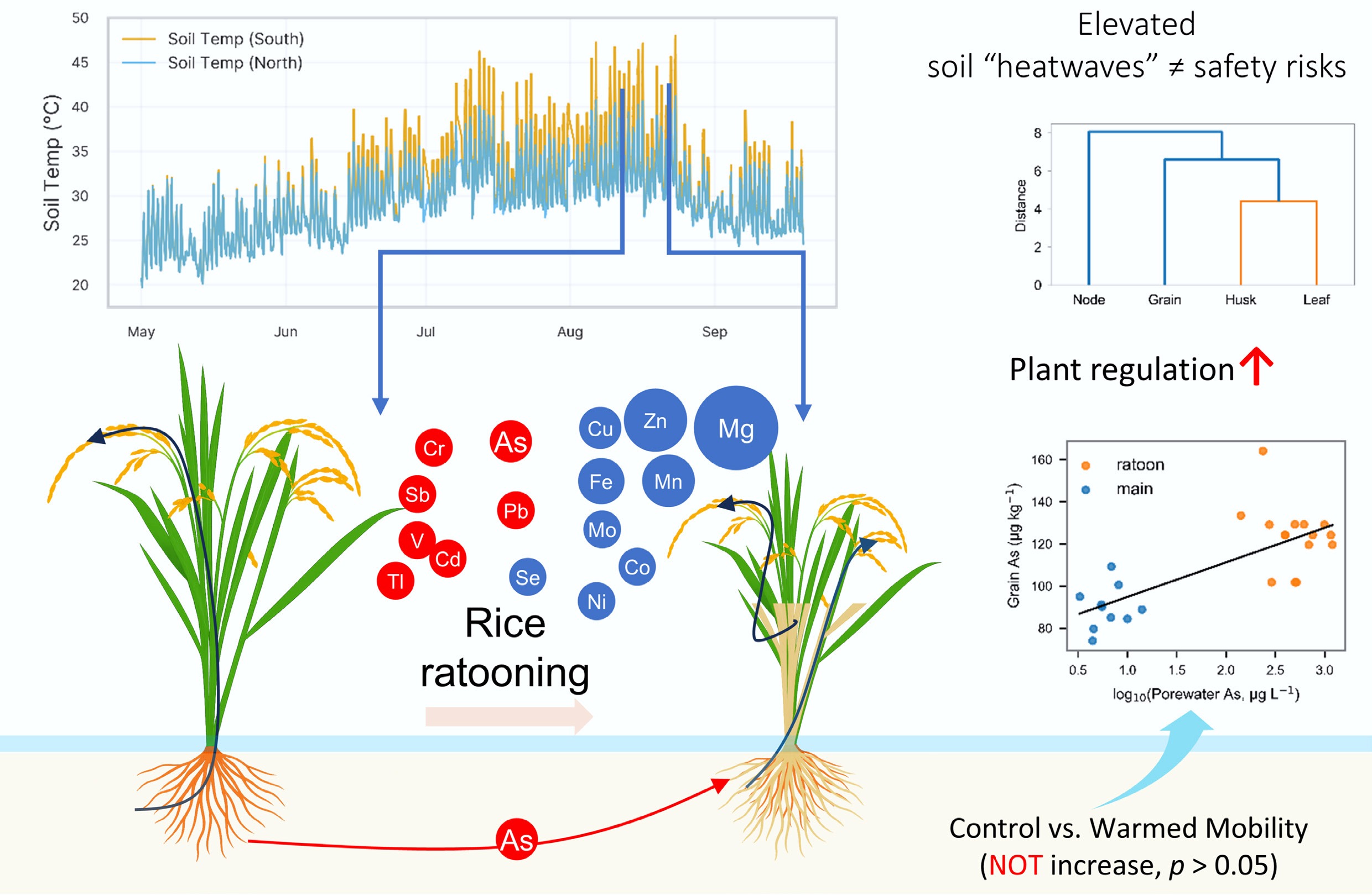
Evidence is provided that natural soil warming during heatwaves does not necessarily increase grain accumulation of metals and metalloids in ratoon rice under the current experimental scenario, in contrast to widely held assumptions based on air warming studies. The delayed responses of As and Mg highlight that both plant phenology and element mobility mediate warming effects, and that flooded soil conditions may buffer short-term heatwave impacts. Although based on a single growing season and opportunistic exposure to natural heatwaves, the results demonstrate the need to distinguish between soil and air temperature pathways when evaluating climate-driven food safety risks. These findings provide a foundation for future multi-year and multi-site experiments designed to quantify soil warming effects under realistic agricultural management.
-
It accompanies this paper at: https://doi.org/10.48130/ebp-0025-0017.
-
Not applicable.
-
The authors confirm their contributions to the paper as follows: Qianrui Huangfu: investigation, data curation, visualization, writing−original draft, writing−review and editing. Sha Zhang: project administration, conceptualization, methodology, investigation, formal analysis, visualization, writing−original draft, writing−review and editing. Yuang Guo: writing−review and editing. Lu Wang: funding acquisition, methodology, validation, writing−review and editing. Zheng Chen: conceptualization, funding acquisition, writing−review and editing. Shuai Du: funding acquisition, writing−review and editing. All authors reviewed the results and approved the final version of the manuscript.
-
The data that supports the findings of this study are available from the corresponding author upon reasonable request.
-
The authors declare that they have no conflict of interest.
-
Full list of author information is available at the end of the article.
- The supplementary files can be downloaded from here.
- Copyright: © 2025 by the author(s). Published by Maximum Academic Press, Fayetteville, GA. This article is an open access article distributed under Creative Commons Attribution License (CC BY 4.0), visit https://creativecommons.org/licenses/by/4.0/.
-
About this article
Cite this article
Huangfu Q, Zhang S, Guo Y, Wang L, Chen Z, et al. 2025. Elevated soil temperatures during a heatwave year do not necessarily increase metal(loid) mobilization or accumulation across two harvests of semi-perennial rice: evidence from mesocosm experiments. Environmental and Biogeochemical Processes 1: e017 doi: 10.48130/ebp-0025-0017 

Elevated soil temperatures during a heatwave year do not necessarily increase metal(loid) mobilization or accumulation across two harvests of semi-perennial rice: evidence from mesocosm experiments
- Received: 24 September 2025
- Revised: 20 November 2025
- Accepted: 09 December 2025
- Published online: 30 December 2025
Abstract: Soil surface overheating from solar radiation has become increasingly frequent under climate change, yet its direct impact on pollutant dynamics and food safety in rice paddies remains unclear. A prevailing hypothesis suggests that soil warming enhances the solubility and accumulation of toxic elements such as arsenic (As), but soil effects are often confounded with air temperature. Here, a semi-natural, solar-driven soil warming system during the heatwave year of 2022 was employed to cultivate semi-perennial rice (one sowing, two harvests, i.e., ratoon rice) and the effects of dynamic soil warming (+5.65 °C on average) on the bioaccumulation of elements were isolated. It was found that despite sustained surface warming, porewater As concentrations showed no statistically significant differences (p > 0.05) between warmed and control plots in either crop season. Although As levels in porewater increased by approximately one order of magnitude from the main crop to the ratoon crop (mean: 6.9 vs. 576.6 μg L−1), this seasonal escalation did not proportionally increase grain As (mean: 89.8 vs. 123.7 μg kg−1). Although As translocation from node to grain was higher in the ratoon crop than in the main crop, the lower-than-expected increases in grain As suggested that warming-induced changes in As availability were not effectively translated into grain accumulation, possibly due to constraints at earlier root uptake stages. Overall, the present findings demonstrate that under submerged mesocosm conditions, soil warming does not inevitably intensify metal(loid) accumulation in rice grains. This study provides new insights for assessing food safety risks under future climate extremes.
-
Key words:
- Soil warming /
- Heatwave /
- Arsenic /
- Antimony (Sb) /
- Selenium (Se) /
- Magnesium (Mg) /
- Thallium (Tl) /
- Ratoon rice