












-
Paeonia lactiflora Pall., commonly known as the herbaceous peony, holds deep cultural significance in China, where it has long been revered as the 'prime minister of flowers' for its elegant form and diverse coloration. In recent decades, this species has gained increasing prominence in the global cut flower market owing to its high ornamental value and strong consumer demand[1−4]. Worldwide trade in cut peonies has expanded rapidly, with export volumes from Europe increasing more than 50-fold over the past 30 years[5], and over 25 countries now cultivating peonies commercially for markets in Europe, Asia, and North America[5]. In China, large-scale commercial production has also accelerated. In Heze, one of the major production centers, annual output increased from 65 million stems in 2022 to 100 million in 2024, with total sales reaching CNY 350 million[6,7]. Despite this rapid growth, the commercial peony industry continues to face a key challenge: existing cut flower cultivars remain inadequate to meet the expanding and increasingly diverse market demand.
The identification and selection of elite cultivars are fundamental to advancing the herbaceous peony cut flower industry. Early efforts (2008–2014) identified core cultivars—such as 'Zhong Sheng Fen', 'Da Fu Gui', and 'Fen Yu Nu'—based on floral traits, leaf characteristics, and overall plant vigor[8−11]. Subsequent evaluations conducted between 2017 and 2025 highlighted new elite cultivars—including 'Fuji', 'Yang Fei Chu Yu', and 'Lao Zhong Cheng'—which exhibited notable improvements in vase life and stem strength[12−18]. However, most previous studies have focused on a limited range of traits, primarily flower color, form, and stem length, while neglecting other commercially important attributes such as harvesting time, yield, and ease of cultivation. Moreover, many evaluations have relied on subjective or overly simplistic assessment methods and have lacked systematic integration of consumer perspectives. This disconnect between research approaches and market needs constrains the efficiency and practical relevance of cultivar selection.
To overcome the limitations of previous evaluation approaches, this study established a comprehensive and market-oriented cultivar evaluation system for herbaceous peony cut flowers. Building upon traits emphasized in earlier research, additional practical attributes—such as flowering period, flower yield, pest and disease resistance, and flower opening rate during vase life—were incorporated. Consumer preferences for flower color and shape were analyzed using K-means clustering to identify aesthetic patterns, while the Analytic Hierarchy Process (AHP) was applied to assign relative weights to each evaluation trait. Based on AHP-derived weights and standardized scores, all 78 cultivars were clustered into three performance levels using K-means. Level I consisted of 25 high-performing cultivars, including 'Light Touch Elegance', 'Fen Ling Hong Hua', and 'Angel Cheeks', representing the best overall performance among all accessions. These results demonstrate that the integrated evaluation framework effectively distinguishes superior cultivars with both ornamental and commercial advantages, providing a practical reference for future breeding and industrial application of herbaceous peonies.
-
This study investigated 78 peony cultivars grown at three production sites: the Heze Huitiancheng Agricultural Technology Co., Ltd., and the Junyue Cooperative in Heze, Shandong Province (35.23° N, 115.47° E), and the Wuyue Fanghua Horticultural Base in Zhumadian, Henan Province (33°00′ N, 114°01′ E). The cultivars represented three major groups—Chinese peony, hybrid peony, and Itoh hybrid—encompassing nine commercial color categories and seven floral types (Fig. 1). Field surveys were conducted during two natural flowering seasons (April–June 2024 and 2025).
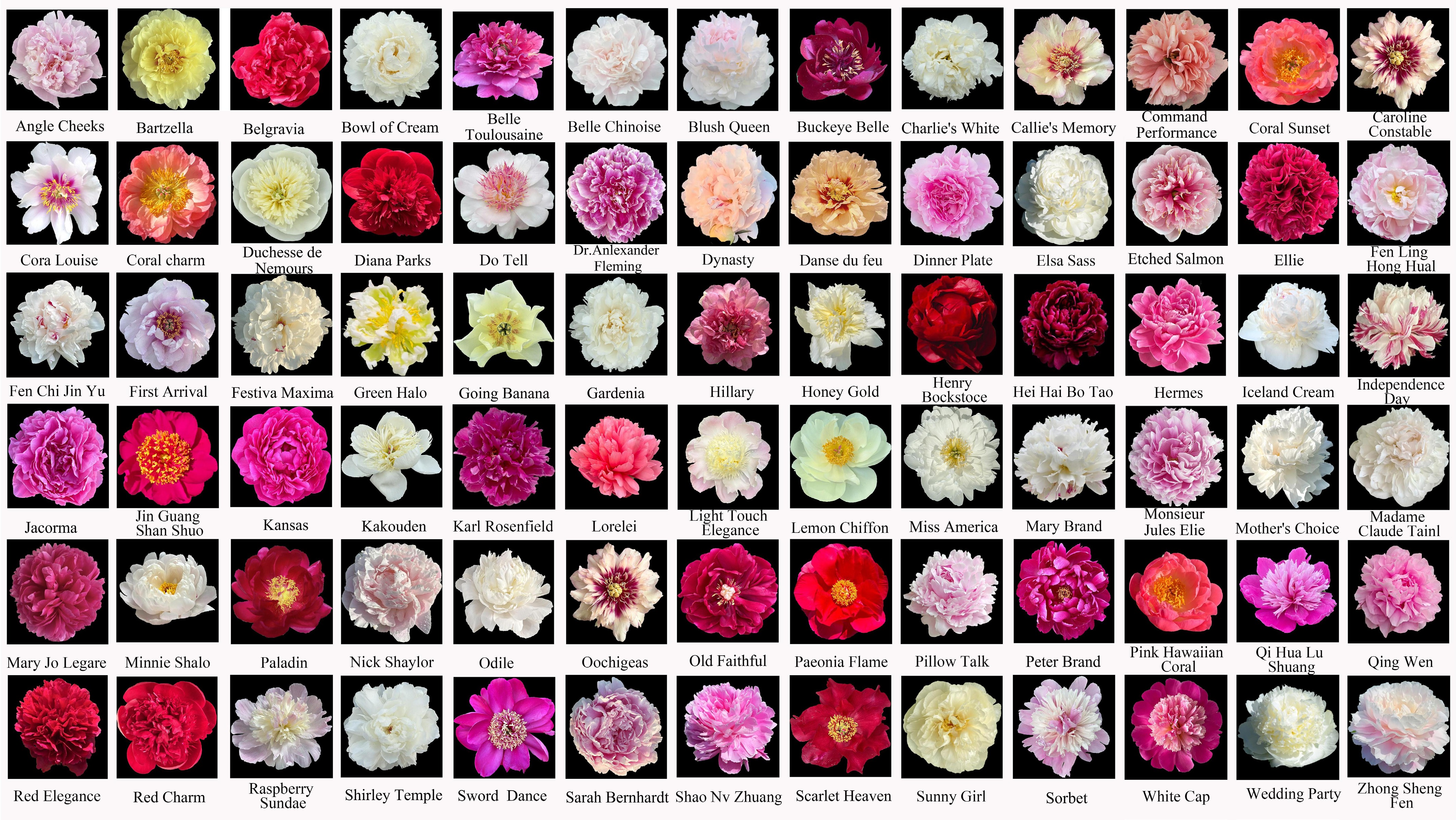
Figure 1.
Floral diversity among the 78 herbaceous peony cultivars evaluated. Images show representative flowers at full bloom, with cultivar names labeled.
Trait selection and measurement
-
Fifteen traits were selected for comprehensive evaluation based on the Forestry Industry Standard of the People's Republic of China (LY/T 1733–2008)[19], Quality Grade for Fresh Cut Peony Flowers, combined with production considerations, and ornamental performance. These included stem length, stem diameter, stem erectness, lateral bud count, flower diameter, flower posture, flower color, flower type, harvesting time, primary branch count, yield per plant, disease resistance, pest resistance, vase life, and vase opening rate (Supplementary Table S1).
As shown in Supplementary Table S1, continuous traits (e.g., stem length and flower diameter) were measured using calipers and rulers. Visual traits (e.g., flower color) were evaluated by three trained assessors, and consensus-based assessments showed high inter-rater consistency (Kendall's W = 0.88, ICC > 0.85, p < 0.01). Vase life and flower opening rate were assessed under controlled indoor conditions. For each cultivar, five stems at a uniform developmental stage, free of pests or mechanical damage, were placed in glass vases containing clean water (25 ± 1 °C) and maintained under indoor ambient daylight conditions without supplemental lighting. Vase life was defined as the number of days until the loss of ornamental value[20,21] (e.g., petal wilting or abscission), and the vase opening rate was calculated as the percentage of stems reaching full bloom. Disease and pest resistance were evaluated under field conditions during the 2024–2025 survey. For each cultivar, three randomly selected plots (8–10 plants per plot) were assessed. Pathogens (e.g., Botrytis cinerea, powdery mildew, leaf spot) and pests (e.g., aphids, scale insects) were identified based on visible symptoms. Three trained evaluators scored the severity of symptoms using standard criteria[22,23], and the results were cross-validated through expert consultation.
Consumer preference survey
-
A structured questionnaire was used to evaluate consumer preferences for flower color and type. Thirteen color categories were defined based on field and market observations, including red, white, pink, purple-pink, purplish-red, purple, yellow, orange, green, pinkish white, dark red, salmon, and bicolor (Supplementary Fig. S1). Seven floral types were classified according to Chinese horticultural standards: single, semi-double, double, bomb, golden circle, rose, and hydrangea (Supplementary Fig. S2). For each flower color and type, preference frequency was calculated and subsequently subjected to K-means clustering (K = 3) to group flower colors and types into high-, medium-, and low-preference categories. The resulting clusters were then used to assign preference scores (3, 2, or 1) for subsequent trait evaluation[13,18].
Trait scoring and data standardization
-
As shown in Table 1, all 15 traits were scored on a 3-point scale: 3 = high (excellent), 2 = medium, and 1 = low[15,16,18]. Quantitative traits with clear thresholds—such as stem length, flower diameter, and stem thickness—were scored based on cut flower industry standards (LY/T 1733–2008)[19]. Vase life, vase opening rate, flower color, and flower type—were classified using K-means clustering (K = 3) based on either experimental measurements or survey-derived preference frequencies. Categorical traits such as harvesting time, flower posture, and resistance levels were scored according to horticultural standards or expert consensus. Lateral bud count was treated as a reverse indicator, with higher bud numbers assigned lower scores due to their negative impact on cut flower quality.
Table 1. Indexes and evaluation criteria for herbaceous peony cut flower varieties.
Indicator Score and corresponding evaluation criteria 3 points (excellent) 2 points (medium) 1 point (low) Primary branch count ≥ 10 8 ≤ branch count < 10 < 8 Stem diameter (cm) ≥ 0.8 0.6 ≤ stem diameter < 0.8 < 0.6 Stem length (cm) ≥ 50 40 ≤ stem length < 50 < 40 Stem erectness < 30° 30° ≤ stem erectness ≤ 45° > 45° Lateral bud count 4 < 4 ≤ lateral bud count < 8 ≥ 8 Flower type Classified based on K-means analysis of consumer preference Flower diameter (cm) ≥ 13 10 ≤ diameter < 13 < 10 Harvesting time early-middle period Middle period Late period Flower color Classified based on K-means analysis of consumer preference Yield per plant ≥ 8 4 ≤ yield < 8 < 4 Flower posture flower upright Flower lateral pendulous Flower pendulous Pest resistance 20% ≤ 20% < damage rate ≤ 40% > 40% Disease resistance 20% ≤ 20% < infection rate ≤ 40% > 40% Vase life Classified based on K-means analysis of experimental vase performance Vase opening rate Classified based on K-means analysis of experimental vase performance AHP model construction and weight determination
-
To determine the relative importance of evaluation traits, a three-level AHP model was developed following Saaty's method[24−27], consisting of a goal layer (elite cultivar selection), a criteria layer (ornamental quality, stem marketability, yield, vase performance, and management ease), and an indicator layer of 15 traits (Table 2). Ten experts (researchers and technical managers) finalized the hierarchy with strong agreement (Cohen's Kappa = 0.89, p < 0.01), validating the model structure, and conducted pairwise comparisons using the Saaty 1–9 scale. Individual judgments were combined via geometric means to generate consensus judgment matrices. Each matrix passed the consistency check (CR < 0.1). Final weights were calculated from normalized principal eigenvectors and used in the scoring model.
Table 2. Evaluation index system for screening and evaluating superior varieties of herbaceous peony cut flowers.
Target layer
(A)Constraint
layer (B)Indicator layer
(C)Bottom layer
(D)Screening and evaluation of peony cut flower varieties (A) Ornamental quality (B1) Flower type (C1) Peony cut flower varieties to
be evaluated (D1−D78)Flower color (C2) Flower posture (C3) Flower diameter (C4) Stem commercial traits (B2) Stem length (C5) Stem diameter (C6) Stem erectness (C7) Yield potential (B3) Primary branch count (C8) Yield per plant (C9) Vase Life Performance (B4) Vase life (C10) Vase opening rate (C11) Management Ease (B5) Pest resistance (C12) Disease resistance (C13) Lateral bud count (C14) Harvesting time (C15) Comprehensive scoring and cluster analysis
-
Final cultivar performance was evaluated using a linear weighted scoring model:
$ S=\sum \limits_{i=1}^{n}Wi\cdot Xi $ where, S is the composite score, Wi is the AHP-derived weight of the i-th trait, and Xi is its assigned score (ranging from 1 to 3). Cultivars were classified using K-means clustering, with the optimal number determined via silhouette coefficient analysis, measuring clustering quality by the balance between intra-cluster cohesion and inter-cluster separation, where higher scores indicate better-defined clusters. All trait values were standardized to eliminate dimensional effects.
-
The 78 herbaceous peony cultivars evaluated in this study exhibited considerable variation in both ornamental and agronomic traits (Fig. 1). These included flower color, flower type, stem length, flower diameter, harvesting time, yield per plant, vase life, and pest and disease resistance. Such diversity forms the basis for comprehensive assessment and selection for cut flower purposes. Flower color ranged from pure white and pale pink to deep red, purple, and multicolored types, reflecting broad aesthetic appeal. Flower types also exhibited considerable variation and were classified into seven categories based on petal structure and arrangement (Fig. 1).
Detailed trait differences among cultivars are illustrated in Fig. 1 and Supplementary Table S2. Yield per plant showed substantial variation among cultivars. 'Duchesse de Nemours', 'Coral Sunset', and 'Karl Rosenfield' exhibited the highest productivity, with average yields exceeding 20 flowers per plant. In contrast, cultivars such as 'Jin Guang Shan Shuo', 'Red Elegance', and 'First Arrival' showed significantly lower productivity, with fewer than eight flowers per plant. 'Cora Louise' and 'Karl Rosenfield' exhibited the longest stems (≥ 55 cm), whereas 'Pink Hawaiian Coral' remained below 40 cm. Stem curvature ranged from upright (< 30°, e.g., 'Old Faithful') to strongly bent (> 45°, e.g., 'Sword Dance'). Stem diameter varied from < 0.6 cm ('Oochigeas') to > 0.8 cm ('Independence Day'). Branch number and lateral bud count also differed markedly; cultivars such as 'Going Bananas' produced more than 10 branches, while 'Kakouden' had fewer than eight. Flower diameter ranged from 8.4 to 16.7 cm, with 'Command Performance' and 'Etched Salmon' among the largest. Most cultivars bloomed in the early to mid-season, although 'Qing Wen' and 'First Arrival' were late-flowering.
Consumer preference and trait clustering
-
A total of 263 valid responses were collected. Among the 13 flower color categories, pink-white was the most preferred (48.7%), followed by pink (37.3%). Dark red received the lowest preference (8%), while the remaining colors ranged from 14% to 27%. A chi-square goodness-of-fit test indicated significant differences among color preferences (χ2 = 167.6, df = 12, p < 0.001; Cramér's V = 0.25), with non-overlapping 95% confidence intervals further supporting this result (Supplementary Table S3). K-means clustering (K = 3) classified flower colors into three preference groups: High (≥ 30%, score = 3)—pink-white and pink; Medium (15%–30%, score = 2)—red, white, orange, yellow, salmon, and bicolor; Low (< 15%, score = 1)—purple-pink, green, purplish-red, purple, and dark red (Fig. 2a).
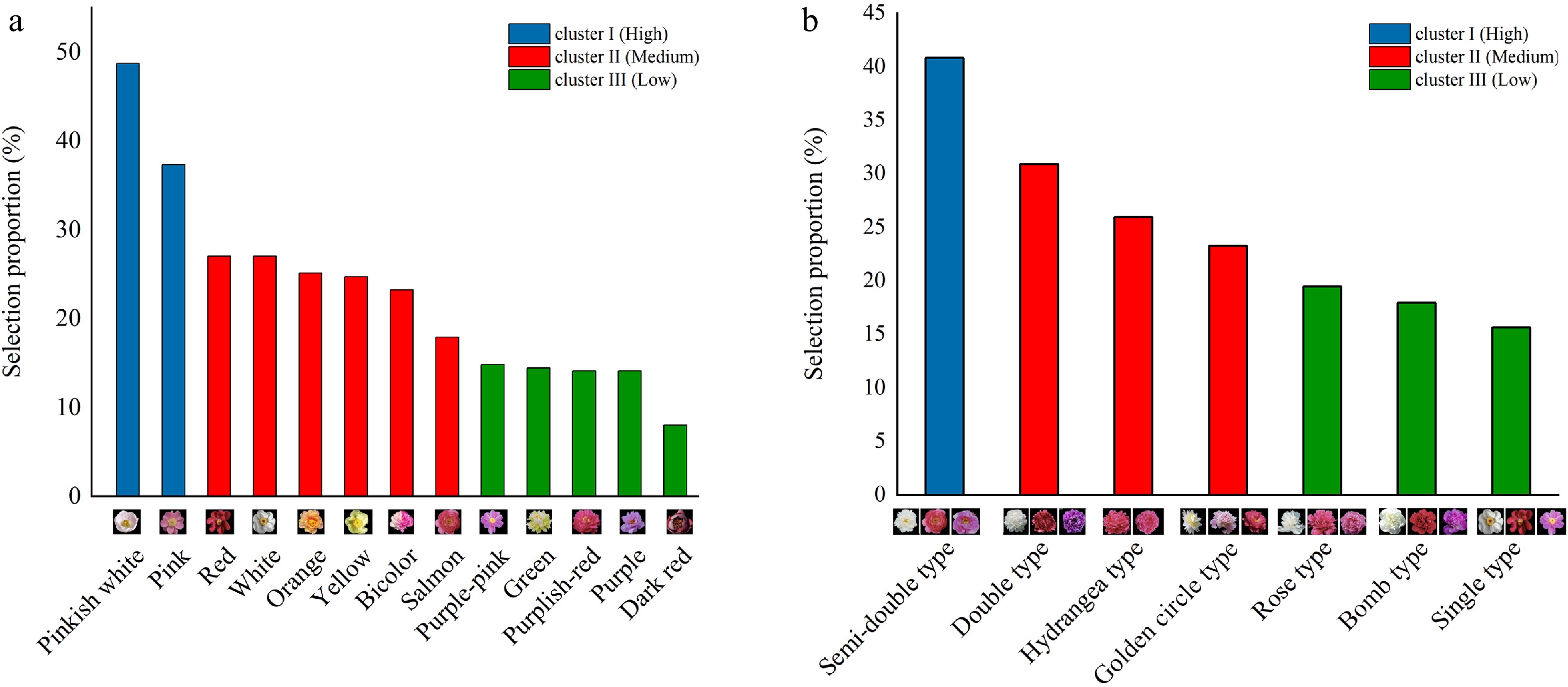
Figure 2.
Consumer preference survey results and K-means clustering analysis of (a) flower color, and (b) type. Bar chart showing the selection proportions (%) of 13 peony flower colors. Bars in different colors represent three preference levels identified by K-means clustering: blue (cluster I, high preference), red (cluster II, medium preference), and green (cluster III, low preference).
For flower type, semi-double was the most preferred (40.84%), followed by the double (30.92%), whereas the single type received the lowest preference (15.65%). Statistical testing revealed significant differences among floral types (χ2 = 61.72, df = 6, p < 0.001; Cramér's V = 0.25), with non-overlapping 95% confidence intervals supporting these results (Supplementary Table S4). Based on K-means clustering, flower types were grouped into three preference categories: High (≥ 30%, score = 3)—semi-double; Medium (20%–30%, score = 2)—double, bomb, and hydrangea; Low (< 20%, score = 1)—single, rose, and anemone (Fig. 2b). These clustered scores were subsequently incorporated into the comprehensive evaluation system.
Vase life and opening performance
-
Vase performance varied significantly among the 78 peony cultivars. Vase life ranged from six to 13.6 d, with 'Independence Day' exhibiting the longest duration, whereas cultivars such as 'Pink Hawaiian Coral', 'Oochigeas', 'Cora Louise', and 'First Arrival' had the shortest (6 d). Based on K-means clustering (K = 3), cultivars were classified into three vase life categories: long (≥ 10.2 d, score = 3), medium (7.8–10.2 d, score = 2), and short (< 7.8 d, score = 1) (Fig. 3). Vase opening rate also varied considerably among cultivars: 'Moonstone', 'Paula Fay', and 'Lorelei' achieved the highest rates (> 90%), whereas 'Roselette' and 'First Arrival' exhibited poor opening performance. K-means clustering similarly divided cultivars into three opening rate categories: high (≥ 90%, score = 3), medium (70%–90%, score = 2), and low (< 70%, score = 1). These derived scores were integrated into the multi-trait evaluation model.
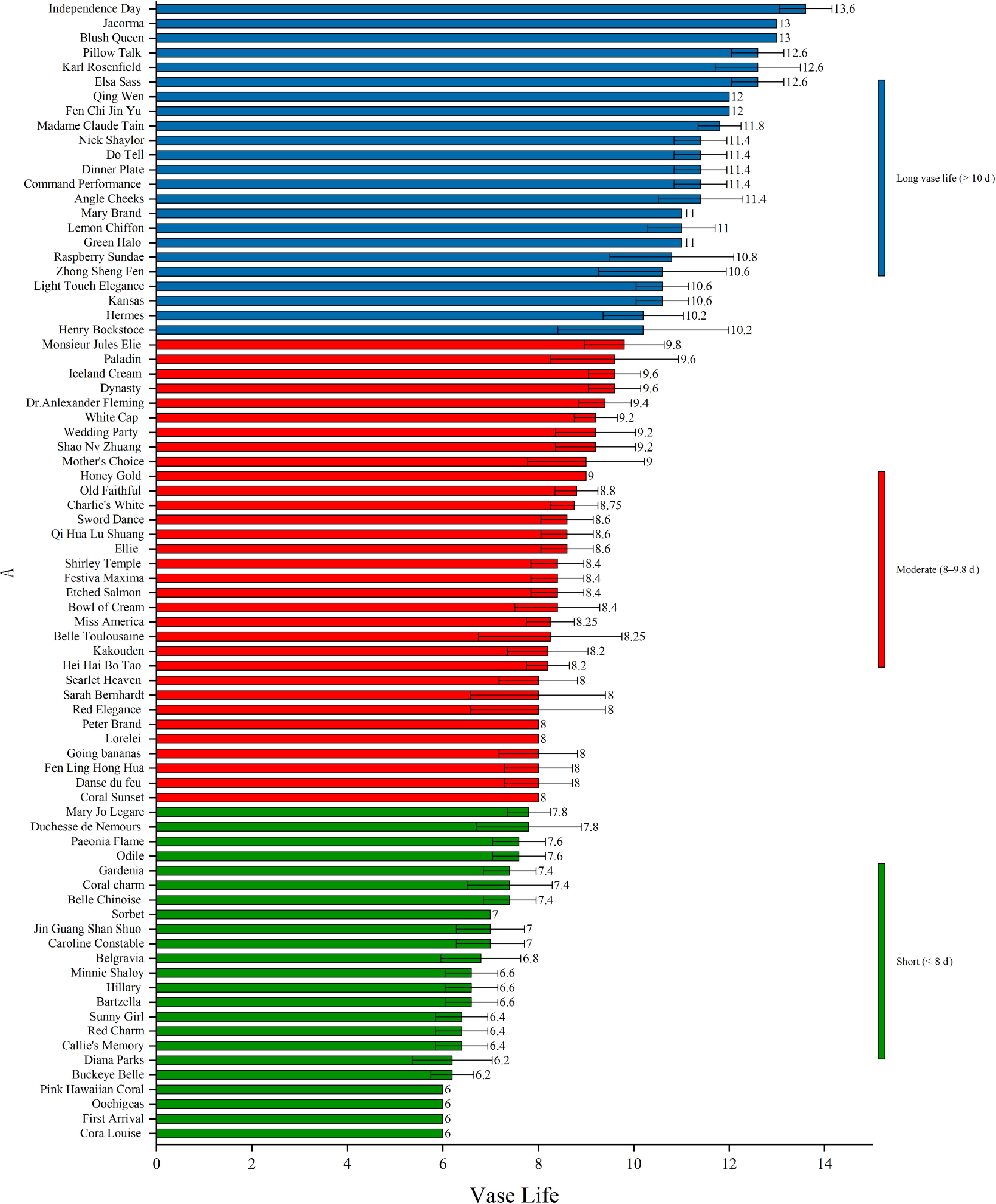
Figure 3.
Vase life performance of 78 herbaceous peony cultivars. The average vase life ranged from 6 to 13.6 d. K-means clustering (K = 3) divided the cultivars into three groups: long (≥ 10.2 d, blue), moderate (7.8–10.2 d, red), and short (< 7.8 d, green). Bars indicate individual cultivar means.
Weight distribution of evaluation criteria
-
Based on the AHP framework, the 15 evaluation traits were organized into five major categories (constraint layers) representing key dimensions of cut flower performance: ornamental quality (B1); stem commercial traits (B2); yield potential (B3); vase life performance (B4); and management ease (B5). Each category was assigned a weight according to expert consensus and industry relevance. As shown in Table 3, ornamental quality received the highest weight (31.90%), followed by stem commercial traits (25.95%), and vase life performance (18.31%).
Table 3. Comprehensive weights of evaluation indicators for herbaceous peony cut flower selection based on the AHP model.
Target layer (A) Constraint layer (B) Constraint weight Indicator Indicator weight Comprehensive weight A B1 31.90% C1 21.96% 7.38% C2 42.38% 14.24% C3 9.35% 3.14% C4 26.31% 8.84% B2 25.95% C5 20.00% 5.19% C6 40.00% 10.38% C7 40.00% 10.38% B3 9.87% C8 75.00% 7.40% C9 25.00% 2.47% B4 18.31% C10 66.67% 12.21% C11 33.33% 6.10% B5 13.97% C12 36.1% 5.04% C13 38.37% 5.36% C14 8.95% 1.25% C15 16.58% 2.32% A refers to the overall target layer (screening and evaluation of herbaceous peony cut flower varieties); B1–B5 represent five constraint categories: ornamental quality (B1), stem commercial traits (B2), yield potential (B3), vase life performance (B4), and management ease (B5). C1–C15 are indicator traits under each category: flower type (C1), flower color (C2), flower posture (C3), flower diameter (C4), stem length (C5), stem diameter (C6), stem erectness (C7), primary branch count (C8), yield per plant (C9), vase life (C10), vase opening rate (C11), pest resistance (C12), disease resistance (C13), lateral bud count (C14), and harvesting time (C15). At the indicator level, flower type (C2, 14.24%) and vase life (C10, 12.21%) were identified as the most influential traits, underscoring their critical importance in commercial cultivar selection. In contrast, lateral bud count (C14, 1.25%) and harvesting time (C15, 2.32%) received relatively low weights, indicating secondary importance in the overall evaluation. These weight assignments reflect both expert judgment and practical production priorities, ensuring that the final scoring model aligns with market standards. Comprehensive scores were calculated by integrating standardized trait values with their respective weights, providing a quantitative basis for cultivar ranking and selection.
Comprehensive scoring and elite cultivar selection
-
Based on AHP-derived weights and standardized trait scores, all 78 cultivars were clustered using the K-means algorithm (K = 3) to classify their overall performance (Fig. 4). Level I included 25 top-performing cultivars, such as 'Light Touch Elegance' (highest score: 2.7447), 'Fen Ling Hong Hua', and 'Angel Cheeks'. These cultivars were characterized by large double-type flowers (average diameter: 15.06 cm), upright stems, long stem length (average: 51.53 cm), and extended vase life (up to 10 d). Level II comprised 38 cultivars, including 'Oochigeas' and 'Bartzella', which exhibited good overall traits but slightly lower performance (average flower diameter: 14.06 cm; stem length: 46.87 cm; vase life: 8.35 d). Level III consisted of 15 cultivars, such as 'Buckeye Belle' and 'Sword Dance', which performed poorly overall (scores < 2.0), with short vase life (average: 7.57 d), weak stem erectness, and limited ornamental or production value.
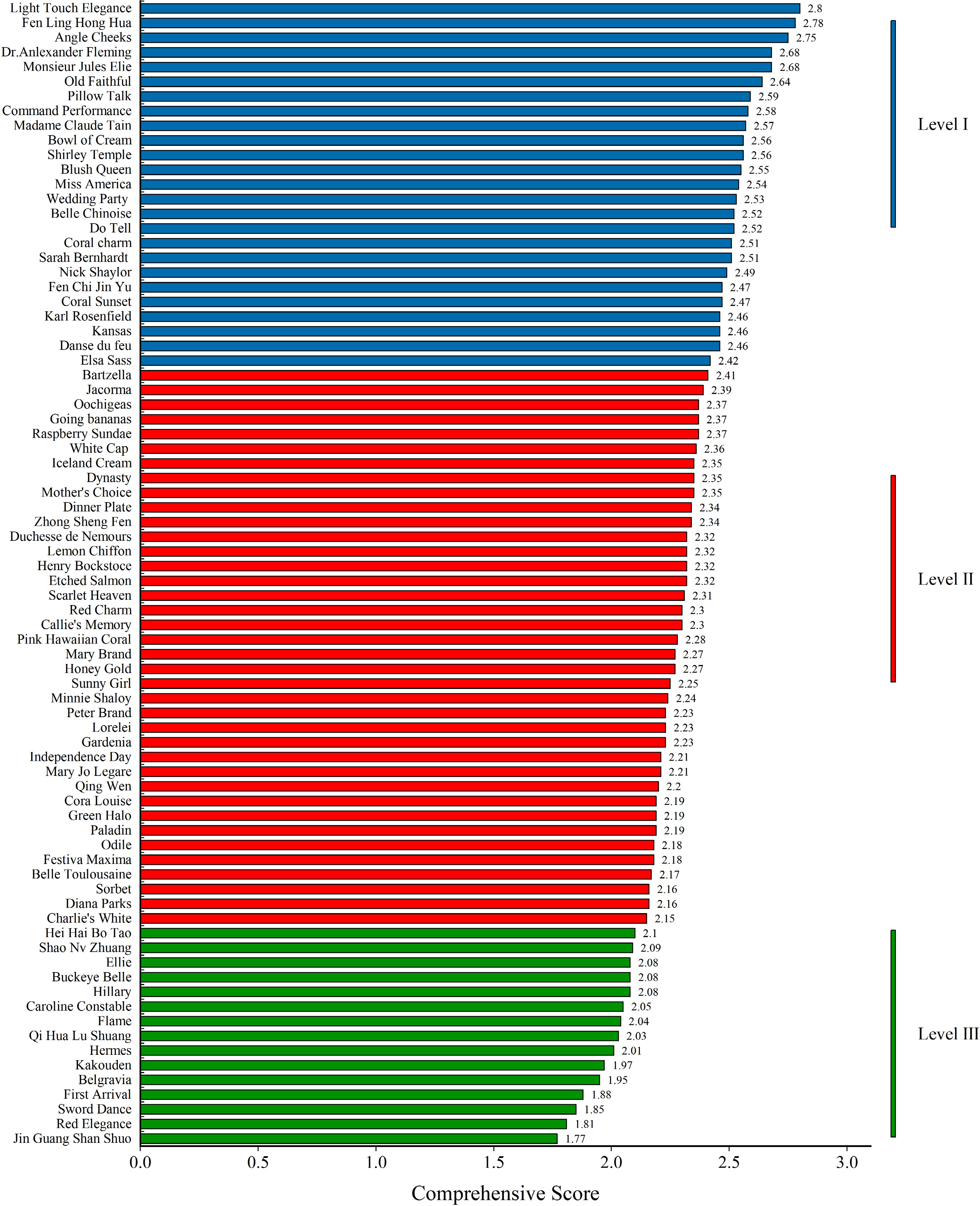
Figure 4.
Comprehensive performance classification of 78 herbaceous peony cut flower cultivars based on AHP-weighted scores and K-means clustering (K = 3). Cultivars were divided into three performance levels: Level I (blue, high-performing), Level II (red, moderate-performing), and Level III (green, low-performing).
-
Based on 78 peony cultivars, this study developed an integrated evaluation framework with 15 indicators under five categories, combining AHP weighting and K-means clustering to identify 25 elite cut flower varieties. The findings offer practical insights for accelerating the industrialization of cut peony production.
Optimizing selection criteria for cut peony varieties
-
Establishing appropriate evaluation criteria is fundamental for selecting superior ornamental plant varieties[28−31]. In the peony cut flower industry, early research primarily focused on traits such as flower shape, color, and stem length[8−11]. However, as the industry expanded, practical attributes—including yield, vase life, and resistance—became increasingly important[12−18]. Building upon earlier studies, the present research developed a more comprehensive evaluation system that integrates ornamental quality, yield potential, vase performance, and management ease, thereby broadening the criteria for assessing high-quality cut peony cultivars. Traits often overlooked in previous work—such as flowering period, flower yield, pest and disease resistance, vase life, and opening rate—were emphasized here for their practical significance. Flowering period directly affects supply timing and market price[32]; in the preliminary investigation, it found that earlier flowering varieties tend to fetch higher market prices for cut peonies[33]; Resistance influences product quality during cultivation and transport[34−36], while lateral bud count affects both flower quality and pruning costs—fewer buds promote larger main flowers, and facilitate standardized production[18]. Accordingly, the lateral bud count was treated as a reverse indicator in this study. For vase-related traits, the evaluation emphasized both vase life and opening rate. Previous studies often considered vase life in isolation[37−39]; however, in commercial settings, poor opening performance can substantially reduce market value, even among visually attractive cultivars.
Consumer preferences in flower color and shape
-
While color and shape are key factors in purchasing decisions[40], targeted research on specific preferences remains limited. Traditional cut peony evaluation systems typically grade flower color and shape based on morphological ideals—such as color purity, absence of edge burn, and petal integrity[9,13,18]. In this study, a structured consumer survey was conducted and K-means clustering applied to quantify preferences for flower color and form. The results revealed clear variation: pink-white and soft pink cultivars were the most preferred, whereas dark red and purplish-red received lower acceptance. Regarding flower form, semi-double types were the most popular. These findings contrast with earlier reports suggesting that darker colors and fully double flowers are more marketable[41], yet align with recent trends favoring softer, muted tones. Although rare colors (e.g., deep purple, green, orange) possess valuable breeding potential, their low consumer acceptance presents a commercial risk if positioned as primary varieties. Breeding programs should therefore balance genetic innovation with prevailing market preferences. The consumer preference survey in this study provides an effective bridge between breeding objectives and real-world demand, facilitating the selection of peony cultivars that better match market expectations.
Improving the vase performance evaluation with combined metrics
-
In previous studies, vase performance was primarily evaluated by vase life, with limited attention given to the flower opening rate[17,18]. However, in commercial production, a low opening rate can substantially reduce a variety's market potential. For instance, in this study, 'Roselette' and 'First Arrival' exhibited relatively low opening rates, preventing their ornamental value from being fully expressed during distribution. This study emphasizes the combined significance of vase life and opening rate, incorporating both into the overall evaluation framework. Moreover, traditional grading standards for vase life (≥ 6, 4–6, and < 4 d)[13,18] are no longer suitable for distinguishing cultivar performance, as all tested cultivars in this study had vase lives exceeding six days. Here, vase life was reclassified using K-means clustering based on actual measurements, enabling a more precise differentiation among performance levels. This data-driven classification approach enhances the accuracy of evaluation and facilitates the identification of strong-performing cultivars for commercial application.
Limitations and future improvements
-
This study has some limitations. First, variety evaluation was limited to two sites with similar climates, which may affect the generalizability of the results. Broader geographic coverage is needed to test the system's wider applicability. Resistance was assessed visually and given low weight in scoring, possibly underestimating its role in sustainable production. Future work should use molecular tools and multi-site data to improve accuracy. Second, the consumer preference survey covered multiple flower types but had a small sample size. Expanding it to more markets would improve representativeness. Lastly, economic traits like production cost and market price were not included. Adding these factors could make the selection process more practical and relevant.
-
This study developed and validated a market-oriented evaluation framework for screening elite cut peony cultivars, integrating 15 traits across five dimensions: ornamental quality, stem commercial traits, yield potential, vase performance, and management ease. AHP analysis showed that ornamental quality (31.90%), stem commercial traits (25.95%), and vase life performance (18.31%) were the most influential criteria. Consumer preference analysis using K-means clustering identified pink-white/pink colors and semi-double flower types as the most favored, and these preferences were incorporated into trait scoring. Traditional vase-life grading (≥ 6/4–6/< 4 d) proved ineffective since all 78 cultivars exceeded six days. Reclassification via K-means and inclusion of the vase opening rate improved differentiation of market suitability. K-means clustering of AHP-weighted comprehensive scores classified cultivars into three performance levels: 25 elite (Level I), 38 intermediate (Level II), and 15 low-performing (Level III) cultivars, with top varieties characterized by large double or semi-double flowers, upright, long stems, and extended vase life. This integrated, preference-based framework effectively distinguishes commercial potential, underscores the need to assess vase life alongside opening rate, and provides a practical tool for peony cultivar evaluation and breeding, adaptable to wider environments and additional economic traits.
We sincerely thank the 263 respondents who participated in the preference survey, as well as Heze Huitiancheng Agricultural Technology Co., Ltd., the Junyue Cooperative, and the Wuyue Fanghua Horticultural Base for their field support. We also appreciate the experts who completed the AHP questionnaire and provided valuable suggestions for the development of the evaluation system.
-
The authors confirm their contributions to the paper as follows: study conception and design: Guo L, Zhang R; data collection: Liu Y, Chen F, Zhao F, Wang B, Han R; analysis and interpretation of results: Guo L, Liu Y; manuscript drafting and revision: Guo L, Liu Y. All authors reviewed the results and approved the final version of the manuscript.
-
All data generated or analyzed during this study are included in this published article and its supplementary information files.
-
The authors declare that they have no conflict of interest.
-
# Authors contributed equally: Yanmin Liu, Liping Guo
- Supplementary Table S1 Indicators and evaluation standards for peony ornamental traits.
- Supplementary Table S2 Characteristic statistics score sheet.
- Supplementary Table S3 Selection proportions and 95% confidence intervals (χ² test) of consumer preferences for thirteen commercial peony flower colors.
- Supplementary Table S4 Selection proportions and 95% confidence intervals (χ² test) of consumer preferences for thirteen commercial peony flower types.
- Supplementary Fig. S1 Representative color categories of peony flowers used in the color preference survey. Each panel shows examples of different flower color types, including red, purplish-red, orange, white, purple, green, pink, yellow, bicolor, pinkish white, dark red, purple-pink, and salmon.
- Supplementary Fig. S2 Representative flower shape categories of peony (Paeonia) used in the flower form preference survey. Seven typical flower types are shown: sinple type, golden circle type, semi-double type, double type, Bomb type, rose type, and hydrangea type.
- Supplementary Fig. S3 Bar Chart of Yield per plant for 78 Paeonia Cultivars, with the yield range of each cultivar falling between 4.3 and 23 , sorted in descending order.
- Copyright: © 2026 by the author(s). Published by Maximum Academic Press, Fayetteville, GA. This article is an open access article distributed under Creative Commons Attribution License (CC BY 4.0), visit https://creativecommons.org/licenses/by/4.0/.
-
About this article
Cite this article
Liu Y, Guo L, Chen F, Zhao F, Wang B, et al. 2026. Market-oriented screening and evaluation of cut peony (Paeonia lactiflora) cultivars using AHP and K-means clustering. Ornamental Plant Research 6: e009 doi: 10.48130/opr-0025-0053 

Market-oriented screening and evaluation of cut peony (Paeonia lactiflora) cultivars using AHP and K-means clustering
- Received: 17 October 2025
- Revised: 07 December 2025
- Accepted: 17 December 2025
- Published online: 02 March 2026
Abstract: This study established a market-oriented evaluation framework for selecting elite cut peony (Paeonia lactiflora) cultivars by integrating 15 key traits across five dimensions: ornamental quality, stem commercial traits, yield potential, vase performance, and management ease. Using the Analytic Hierarchy Process (AHP), the most influential criteria were identified as ornamental quality (31.90%), stem commercial traits (25.95%), and vase performance (18.31%). Consumer preference analysis, based on K-means clustering, revealed that pink-white and soft pink colors, as well as semi-double flower types, were the most favored by consumers. Traditional grading standards for vase life failed to distinguish between cultivars; therefore vase life was reclassified using K-means clustering, and the opening rate was incorporated to enhance accuracy. The integrated AHP–K-means approach classified 78 cultivars into three performance levels, and identified 25 elite varieties with superior floral traits, upright stems, and extended vase life. This framework effectively links consumer preference with quantitative trait evaluation, and provides a practical tool for breeding and selecting high-quality cut peony cultivars.
-
Key words:
- Paeonia lactiflora /
- Cut flower /
- Cultivar evaluation /
- AHP /
- K-means /
- Consumer preference /
- Vase life /
- Opening rate