












-
The environment wherein humans reside is an important factor influencing their survival. Advances in productivity, industrialization, and artificial intelligence have led to a reduction in the number of workers required for industrial production[1]. Individuals increasingly allocate more time to leisure activities and develop a comprehensive understanding of their surrounding settlement environments. Forests, particularly those located near human settlement areas (referred to as human settlement forests) (Fig. 1), represent an important component of human communities owing to their various ecological, social, and cultural benefits and are frequently selected for recreation[2]. Historically, favorable human settlement environments have supported the sustainable development of society[3].
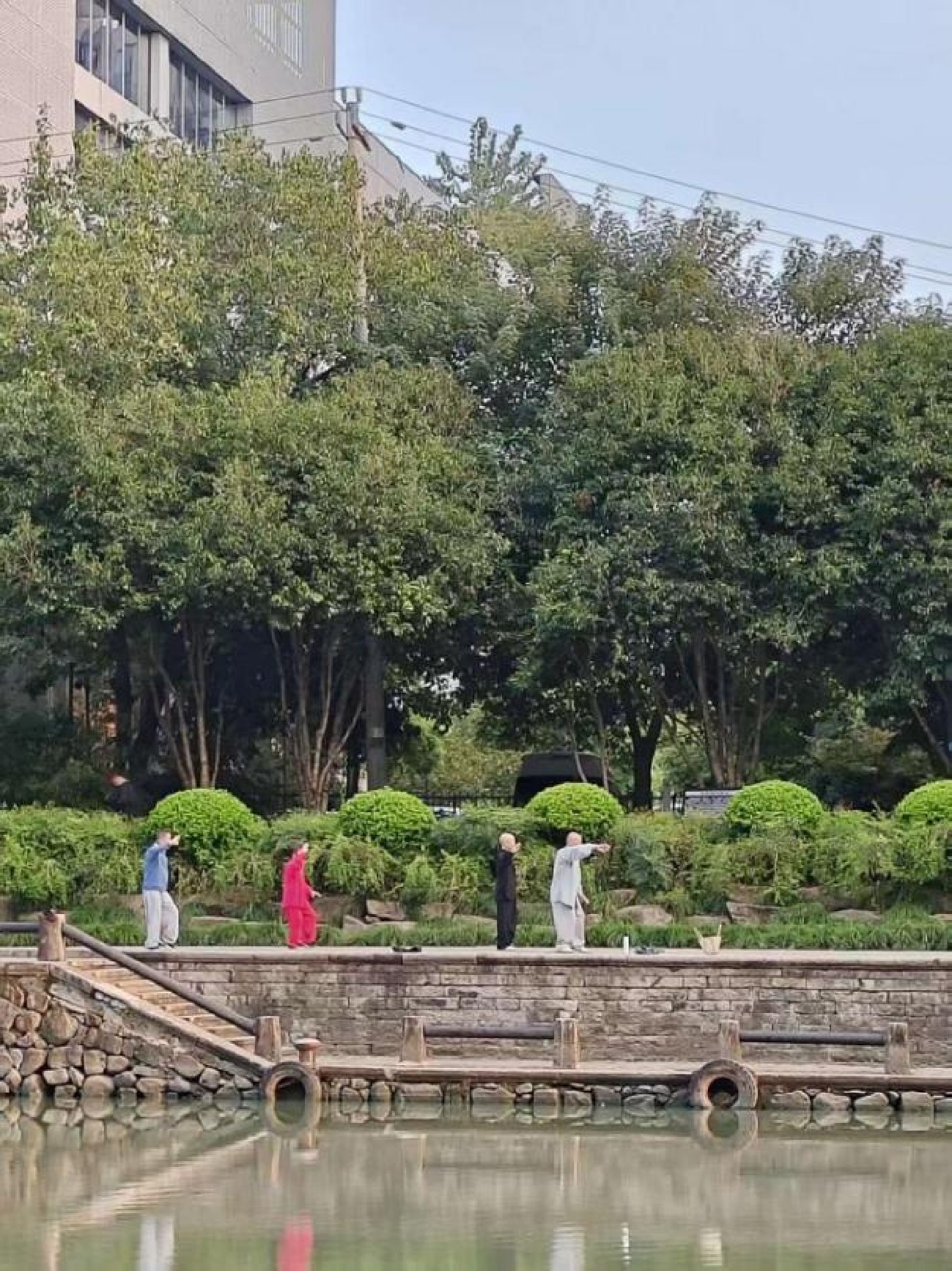
Figure 1.
Residents and human settlement forests, which is a booming style of living (photographed by Jianfeng Zhang).
Despite ongoing rapid urbanization, 3.45 billion people worldwide continue to reside in rural areas (
https://data.worldbank.org.cn/indicator/SP.RUR.TOTL ). Rural human settlements typically comprise a combination of physical and non-physical environments influenced by rural residents during activities related to agricultural production and daily activities. This includes the material aspects, including rural housing conditions and public infrastructure, as well as features such as rural cultural services, education, and health care[4]. However, in most rural areas, particularly those in developing countries, limitations imposed by natural conditions and levels of development hinder sustainable development. Environmental issues, such as environmental pollution and loss of biodiversity[5], threaten the health and safety of rural residents[6]. These environmental problems restrict the further development of rural areas[7]. The global economic loss resulting from pesticide use exceeds 6.4 billion US dollars[8]. Accordingly, rural human settlements are important in safeguarding sustainable socioeconomic development.China is the largest developing country worldwide, with a rural population of approximately 477 million[9]. Since China's reform and opening-up in the 1980s, the country's socioeconomic development has reached notable levels. However, owing to various regional differences, substantial environmental problems remain in certain areas that seriously affect the quality of rural life[10]. Rural human settlements are important indicators of rural living quality. Therefore, improving rural human settlements constitutes a comprehensive social initiative whose long-term implications directly and positively affect the vital interests of farmers. To improve rural human settlements, forests are valuable because they enhance air quality and microclimates[11] and provide valuable landscape aesthetics[12]. Therefore, they are a key aspect of the development of rural human settlements. However, studies on human settlement forests (plant communities that are planted around/in human communities and are dominated by trees) have primarily focused on their morphological structure and social functions[13], with limited studies concentrating on their construction methods and ecological functions[14]. Practical knowledge relating to planting methods, such as the configuration of tree species, stock spacing, site preparation, and seedling treatment in situ, remains lacking, which is important for the development of rural human settlement forests.
SWOT (strengths, weaknesses, opportunities, and threats) analysis originated in the 1950s within the Corporate Development Planning Department of Lockheed, used to analyze the factors influencing the development of enterprises and their prospects[15]. Then, as the research was improved, it was gradually applied to different industries such as agriculture and forestry, analyzing the strengths and weaknesses of these industries, and thereby promoting industrial development[16]. Kazemi et al.[17] utilized SWOT analysis to explore the forest allocation strategies in the urban landscape of the Mashhad region in Iran. As an important component of rural communities, developing the strengths of rural human settlement forests and avoiding their weaknesses is a significant measure to enhance the well-being of rural residents. SWOT analysis is undoubtedly the best way to explore the strengths and weaknesses of human settlement forests.
Thus, based on a literature review and field survey data, the SWOT analysis method was used to investigate the challenges related to rural human settlements, as well as the functions, benefits, and types of residential forests. Additionally, we introduced models for forest stands, tree species selection, and tree planting methods. This study is expected to provide a scientific basis and practical guidance for the development of rural residential forests and the improvement of human settlement environments.
-
To systematically obtain relevant research on human settlement forests and the rural areas, as well as human settlement forests and environment, this study conducted literature searches in two major databases (Web of Science database, and the China National Knowledge Infrastructure [CNKI] database). The search time range covered from January 1, 2000, to December 31, 2024. The specific retrieval strategy is as follows:
In the Web of Science and the CNKI databases, searches were conducted with the keywords 'human settlement forests' and 'rural'. 203 relevant English literatures and 36 relevant Chinese literatures were obtained, respectively. A total of 239 references related to human settlement forests and rural areas were obtained after the manual removal of duplicate files. In the Web of Science database, a search was conducted using the keywords 'human settlement forests' and 'environment', and 503 relevant English studies were initially obtained. In the CNKI database, three related Chinese studies were initially obtained. A total of 506 references related to human settlement forests and environment were obtained after manual removal of duplicate files.
Field investigation methods
-
To better understand the relationship between rural residents and human settlement forests, we chose Xiaoluxia Village in Zhejiang Province, China, as the investigation area. Through in-site investigations and questionnaire surveys, the aim was to understand local residents' perception of human settlement forests. The sample size consisted of 50 households.
Xiaoluxia Village has a total area of 2.56 km2 and a total population of approximately 4,000. It is located in a coastal alluvial plain, and the soil type is saline-alkali soil. Due to historical, geographical, and economic reasons, in the 1980s, the village environment was still relatively poor. The tree species in the village were single and scarce, with only some willow trees present (such as Salicaceae Mirb.). Since greening work began to be emphasized in the 1990s, the number of human settlement forests has increased year by year, and the village environment has been improved. At present, the green coverage rate of the village exceeds 40%, and the per capita green space occupied was nearly 50 m2. Thus, choosing this area to investigate the relationship between rural residents and human settlement forests is representative and typical to a certain extent.
The average annual temperature in this area is 16.2 °C, with 2,061 h of sunshine, a frost-free period of 228 d, and an average precipitation of 1,361 mm.
-
Owing to the large rural population in China, certain living facilities are underdeveloped. In certain areas, inadequate garbage treatment facilities and the improper disposal of garbage lead to a decline in surface water and groundwater quality[18,19]. Tian et al.[20] reported that China's rural household waste (garbage) emissions were 1.42 × 10⁸ tons/year in 2000, 2.3 × 10⁸ tons/year in 2006, and 2.47 × 10⁸ tons/year in 2010. The considerable amount of garbage discarded has resulted in the degradation of rural human settlements and, ultimately, severe water pollution (Fig. 2).
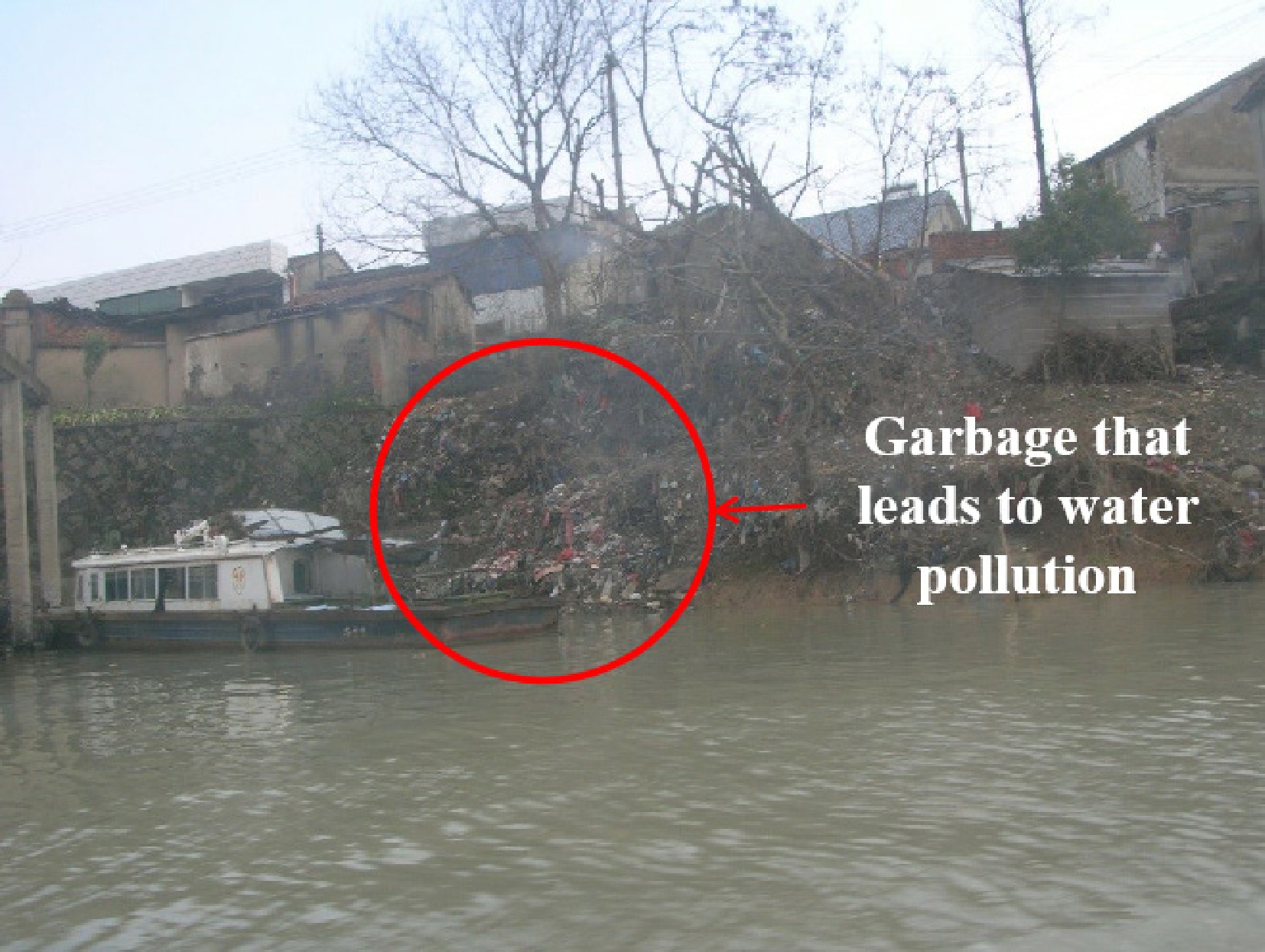
Figure 2.
Random disposal of garbage can result in the decline of surface water and groundwater quality in some rural areas (photographed by Jianfeng Zhang). This situation is relatively common and requires management[21].
Owing to suboptimal rural living facilities, non-point source pollution can be caused by domestic activities[22]. In the Zongjiaqiao River catchment, Yan et al.[23] showed that rural living was the largest source of total phosphorus (TP), accounting for 58% of the total TP. Most of the TP originated from toilet- and laundry-related waste. In addition to rural living, agricultural production activities such as livestock breeding and the use of chemical fertilizers can also lead to non-point source pollution and deterioration in water quality[24]. Wang et al.[25] also indicated that agricultural production activities, such as fertilization, can promote the occurrence of non-point source pollution.
Currently, rural living and agricultural production activities, such as livestock breeding and arable farming, can result in non-point source pollution, which subsequently presents a potential risk to drinking water in certain regions.
Air and noise pollution in rural areas
-
With societal development, certain rural areas are undergoing modernization. The number of rural factories and automobiles in some areas is gradually increasing, which inevitably affects the environment, particulary air, and noise pollution. Air pollution in China is three times the world average[26]. In certain rural areas, residents cut down trees to burn firewood used in cooking and heating, further exacerbating air pollution[27].
Ao et al.[28] conducted a study in rural Sichuan, China, and indicated that with the development of rural industries, car ownership among farmers has increased considerably. Almeida et al.[11] revealed that the concentrations of PM10 and NO2 were higher near roads and avenues with frequent vehicle traffic, indicating that excessive traffic can result in air pollution. Concurrently, many rural areas have developed factories to promote economic development. However, during the production process, substantial quantities of wastewater and waste gas are inevitably discharged, and machinery generates considerable levels of noise. In addition, factory products rely on truck transportation, which cause air and noise pollution[29,30].
Furthermore, air pollution also poses a threat to the physical health of the surrounding residents. Mao et al.[31] and Tu et al.[32] indicated that exposure to long-term air pollution in rural areas of Henan Province, China, increased the risk of dyslipidemia and cardiovascular diseases in adults. Li et al.[33] conducted a study in rural areas of Anhui Province, China, and further indicated that air pollution can increase the risk of hypertension.
Consequently, rural modernization, with the associated increase in the number of factories, cars, and levels of transportation, may lead to environmental problems, such as air and noise pollution, and subsequently pose a threat to the health of the surrounding residents.
Biodiversity decline
-
The disturbance of biological habitats caused by human activities and the hunting of animals and plants can affect the survival of organisms, resulting in biodiversity decline[34]. In rural areas, human activity notably affects biodiversity. In certain rural areas with decreasing populations, plant diversity increased by an average of 3.75%. Moreover, plant diversity in areas with a decreasing rural population was 1.76 times that in areas with an increasing population[35].
In addition to rural populations, agricultural production is also an important factor contributing to the decline in biodiversity[36]. A study of 28 European countries over a period of more than 37 years showed that intensive agricultural management, particularly the use of pesticides, contributed to the decline in bird populations[37]. Farming practices and farmland heterogeneity are important factors that affect biodiversity[38].
The decline in biodiversity in rural areas is particularly severe. In certain regions, the reduction in rural biodiversity is more serious than that in urban areas[39].
Rural areas encounter environmental challenges such as non-point source pollution, air pollution, noise pollution, and biodiversity decline (Fig. 3).
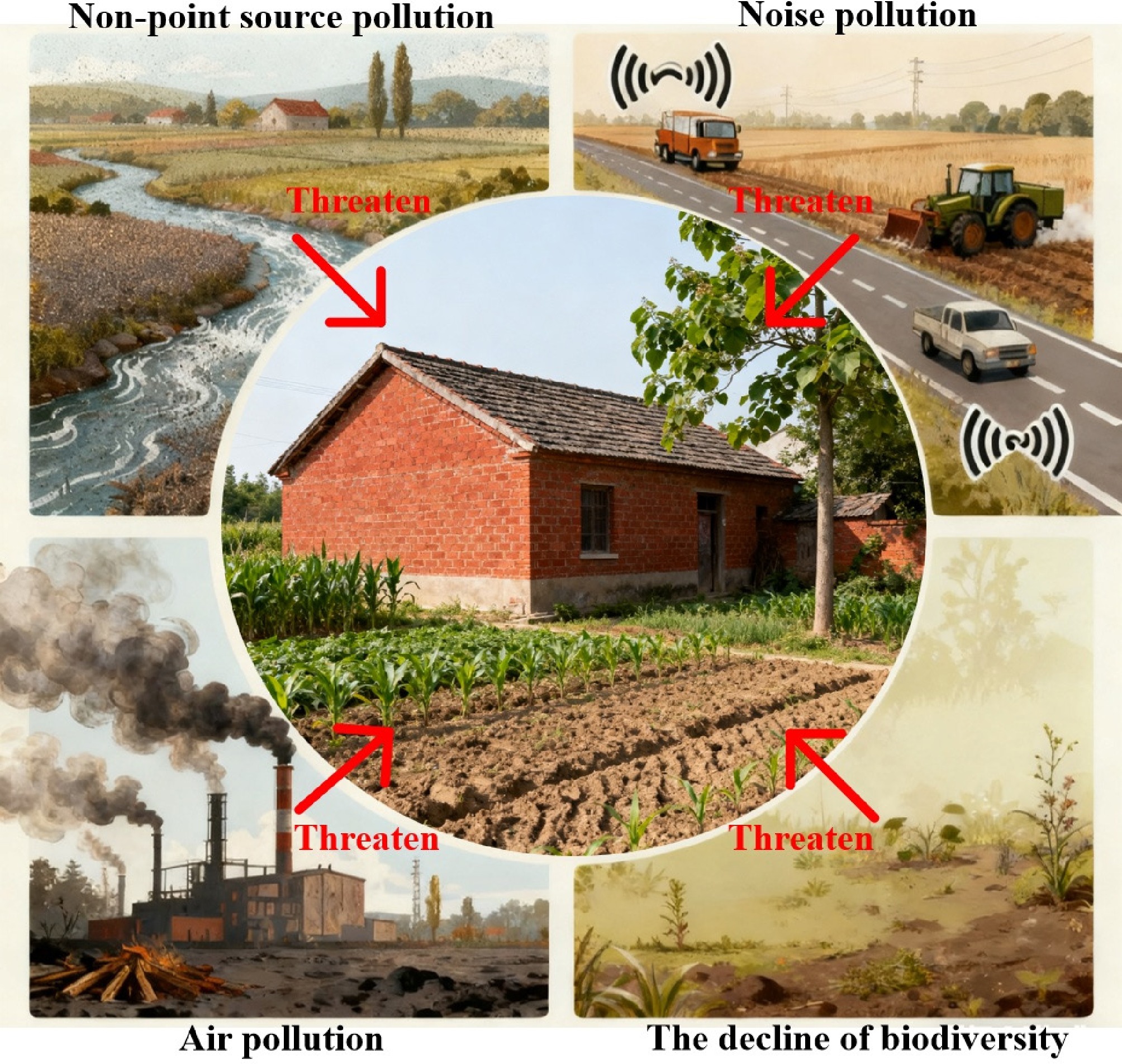
Figure 3.
Current rural environmental problems (created by Rongjia Wang using AI and PPT. Some of the materials are sourced from the Internet and are only used for illustration and not for commercial profit).
-
Forests play a crucial role in controlling non-point source pollution (water, air, and noise pollution), as well as protecting the health of residents. Therefore, establishing human settlement forests is an important strategy for improving the quality of rural settlements and alleviating their environmental impact (Fig. 4).
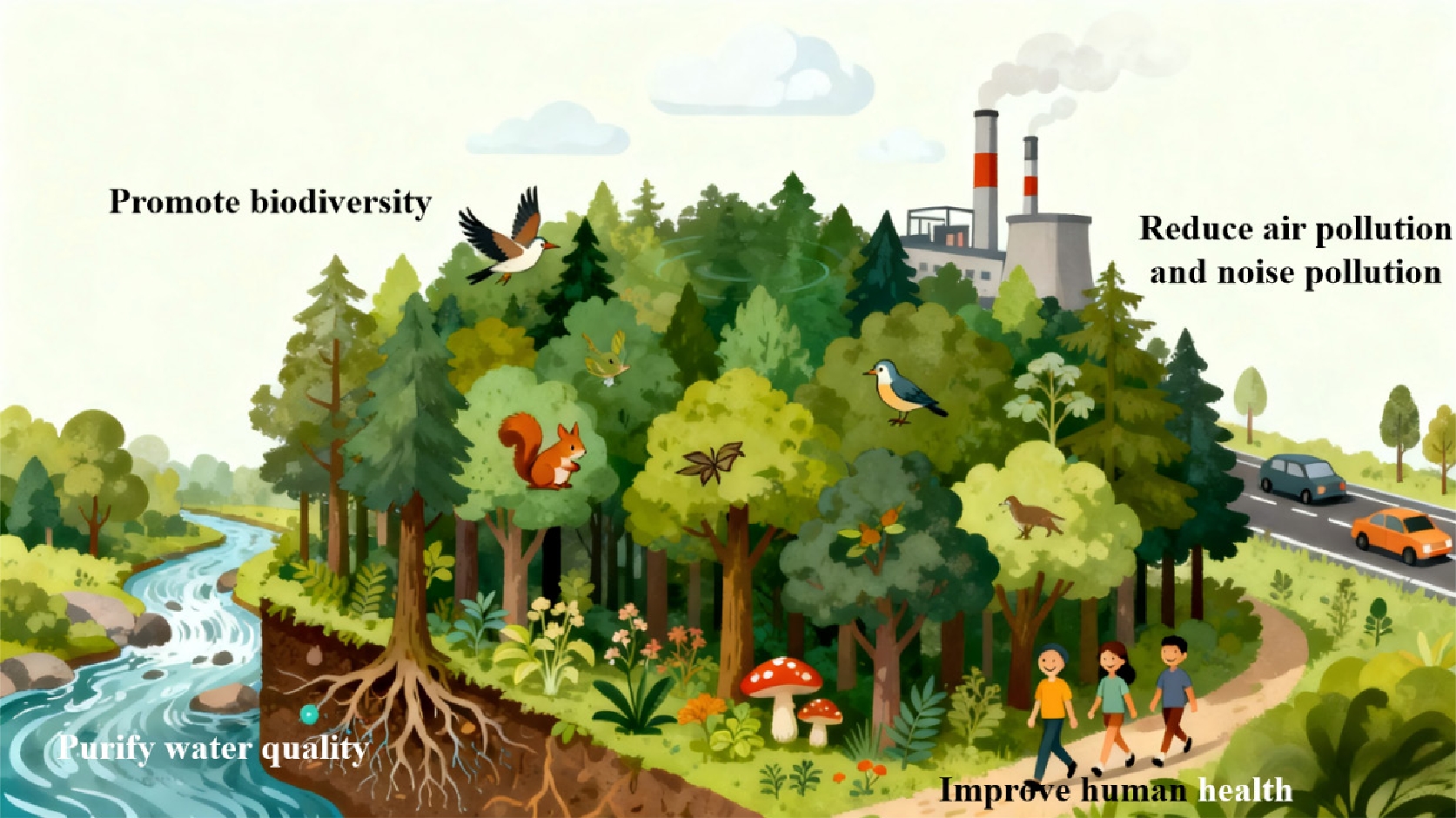
Figure 4.
Ecological functions of human settlement forests (created by Rongjia Wang using AI and PPT. Some of the materials are sourced from the Internet and are only used for illustration and not for commercial profit).
Reducing non-point source pollution
-
Water source areas are primarily located on hilly or mountainous land where runoff pollution frequently occurs with soil erosion. Forests can intercept nutrients such as nitrogen and phosphorus from entering a water body, thereby reducing non-point source pollution and protecting the aquatic environment[40−42].
Wang et al.[43] observed that under the same rainfall intensity, the losses of TN and TP in Quercus acutissima and Robinia pseudoacacia stands were lower than those in the control plot (wasteland). The TN (TP) losses in Q. acutissima and R. pseudoacacia were 62.84% (44.84%) and 57.76% (34.86%) in the control (wasteland), respectively. In addition, de Oliveira et al.[44] and Zhang et al.[45] identified farmland as a source of non-point source pollution, while forests alleviated non-point source pollution. These studies indicate that forests can reduce runoff pollution, thereby improving water quality.
In addition, we investigated the characteristics of nitrogen and phosphorus loss under different land use types in different regions and found that the loss of nitrogen and phosphorus in forested land was the lowest among the various land use types (Table 1). This further indicates that human settlement forests have a robust control effect over non-point source pollution.
Table 1. Characteristics of nitrogen and phosphorus loss in different areas and the interception effects of forested lands on nitrogen and phosphorus pollutants.
Ref. Region Nitrogen and phosphorus loss Removal efficiency of forested lands Wang et al.[43] Tai'an, China Quercus acutissima Carr. (TN: 12.54 mg/L, TP: 0.41 mg/L), Robinia pseudoacacia L. (TN: 11.59 mg/L, TP: 0.32 mg/L); Wasteland (TN: 16.92 mg/L, TP: 0.78 mg/L) Zak et al.[94] Fillerup, Denmark 37% ± 17% NO3−-N, 38% ± 16% TN,
52% ± 12% TPHuang et al.[95] Sanjiang plain, China Upland (TP: 3.28 kg/ha), paddy (TP: 3.04 kg/ha), forest (TP: 1.43 kg/ha), wetland (TP: 1.04 kg/ha) Aguiar et al.[96] Cará-Cará River, Brazil 99% TN, 99% TP Hu et al.[97] Wujiang River Karst Basin, China Cultivated land (TP: 2.89−3.22 kg/ha, TN: 6.71−
8.33 kg/ha), forestland (TP: 1.48−1.80 kg/ha)Salceda-Gonzalez et al.[98] Missouri-Columbia, Knox County, Missouri, USA Agroforestry buffer watershed (64% TN, 17% TP), grass buffer watershed (−30% TN, 8% TP) Song et al.[99] Jiangsu, China 45.38% TN, 36.81% TP Fang[100] Shixia catchment, China Bare plots (TN: 313.4 t/km2, TP: 22.4 t/km2), cultivated plots (TN: 240.5 t/km2, TP: 4.5 t/km2), shrub plots (TN: 90.1 t/km2, TP: 5.4 t/km2), grass plots (TN: 70.1 t/km2), orchard plots (TN: 33.5 t/km2) Prevention of air pollution
-
Forest growth can facilitate the adsorption of air particles in the soil and atmosphere through bioaccumulation and other methods, reducing air pollution.
Nowak et al.[46] showed that trees and forests in the United States eliminated 17.4 million tons of air pollutants in 2010 (range: 9.0–23.2 million tons) based on local environmental data and computer simulations. In addition, Almeida et al.[11] also reported that forests can improve air quality. These studies also indicate that forests can reduce air pollutants through bioaccumulation and other methods.
Controlling noise pollution
-
Forests are effective sound barriers that alleviate the impact of noise to residents.
Nasiri et al.[47] investigated the effect of broadleaf and coniferous forests on noise reduction. They revealed that the sound levels decreased by 10.6, 14.5, and 19.4 dB at distances of 20, 100, and 300 m from broadleaf forests, and for coniferous forests, the reductions were 10.4, 14.3, and 16.8 dB, respectively. This indicates that the effect of a broadleaf forest on noise reduction is slightly better than that of a coniferous forest. Margaritis et al.[48] showed that areas with increased proportions of green space typically exhibited relatively little noise pollution. These studies demonstrated that forests can reduce noise pollution. Therefore, the effect of noise on residents could be controlled by constructing human settlement forests.
Forests promote biodiversity
-
Forests serve as habitats for animals and plants, improve the ecological environment, and enhance biodiversity[49].
Knuff et al.[50] found that multi-layered forest plantations in the Black Forest region of Germany facilitated increased insect abundance, and larger tree diameters elevated the abundances of the predominantly herbivorous taxa Heteroptera. Law et al.[51] showed that forests enhance biodiversity and mitigate climate change. Leidinger et al.[52] further revealed that the tree species composition of forests is an important factor in promoting biodiversity.
Improvements in the health of residents
-
Recent studies increasingly demonstrate that forests can improve mental and physical health, and reduce the risk of illness[53]. This may be attributed to forests alleviating stress, improving emotional state, and reducing the impact of negative emotions on the human body[54]. In contrast, forests can influence the human endocrine system, enhance the immune system, and improve the body's resistance to diseases[55].
Wen et al.[56] showed that forests notably improve cardiovascular function and hemodynamic, neuroendocrine, and metabolic indicators and reduce anxiety and depression. A study involving 11,486 Chinese adults over the age of 50 showed that increasing green spaces in residential areas, such as the establishment of human settlement forests, can effectively reduce the incidence of hypertension among middle-aged and older adults in rural areas. However, this effect is not evident in urban areas[57]. Therefore, forests can improve both mental and physical health and have a positive effect on maintaining overall health.
Notably, all the studies outlined in the above sections indicate that forests have a positive effect with respect to the environmental pollution (non-point source, air, and noise pollution) in rural areas, as well as being beneficial to local residents. Therefore, constructing rural human settlement forests can improve the environment as well as benefit the health of local residents. This is an important method to enhance the quality and success of rural human settlements.
-
To better promote the development of human settlements forests, based on literature reviews and field investigations, we conducted a SWOT analysis of rural human settlements forests.
Strengths of human settlement forests
-
(1) The geographical location and natural resources are superior. The majority of the rural population in China is located in the eastern regions, such as the middle and lower reaches of the Yangtze River Plain, the Yangtze River Delta, and the North China Plain[58]. These areas have a dense rural population, with some regions exceeding 200 people/km2[58]. Meanwhile, the eastern regions of China have abundant rainfall, which is conducive to the growth of human settlement forests. Therefore, the development of human settlement forests in the eastern region not only enjoys favorable geographical and natural resources, but also contributes to the enhancement of human well-being through human settlement forests.
(2) The livelihoods of farmers have changed. Through field investigations and literature review, the authors found that in the past, most farmers mainly grew traditional food crops. To achieve higher yields, farmers often cleared forests for farming, resulting in the destruction of human settlement forests[59]. Nowadays, with the development of the economy, farmers no longer consider growing food crops as their sole source of income. Some farmers have begun to grow cash crops such as fruit trees[60], which helps to promote the recovery of human settlements. Some farmers have gone out to work, reducing the local demand for food crops and thus minimizing deforestation for farming. There are also changes in planting patterns[61], which has reduced deforestation for farming.
Weaknesses of human settlement forests
-
(1) The stands of human settlement forest are relatively single and have low ecological benefits. In many areas, the species of human settlement forests are single; their ecological benefits are poor, and the forest stand structure needs to be improved[62].
(2) Lack of awareness of human settlement forest protection. In the field investigations, the authors found that although many villagers realized the importance of human settlement forests, there were still a considerable number of villagers with insufficient awareness of human settlement forest protection.
(3) Lack of professionals. As there are more job opportunities and higher incomes in urban areas, many young people in rural areas with high degrees choose to go out to work. The elderly who stay in the villages, due to their limited knowledge, find it difficult to carry out professional maintenance of the human settlement forests, which affect their growth.
Opportunities for human settlement forests
-
(1) Support from national policies. China is currently adopting a dual-carbon strategy to reduce carbon emissions and control the greenhouse effect[63]. As an important carbon pool, forests are undoubtedly a crucial measure for implementing the dual-carbon strategy and can receive policy support from relevant national policies[64]. As forests around communities, human settlement forests will also receive support from relevant policies. For instance, in 2022, Zhejiang Province issued the local standard 'Technical regulations for rural human settlements forest construction (DB33/T 2535-2022)' to promote the development of human settlement forests.
(2) Reduce the occurrence of disasters in the face of extreme precipitation. Some studies have pointed out that the eastern region of China, which has a large population, is currently facing an increased probability of extreme precipitation, which in turn leads to a higher probability of natural disasters such as floods[65]. Forests (including human settlement forests) have well-developed root systems, which can promote the infiltration of surface runoff, conserve water sources, purify water quality, and thereby reduce the probability of flood disasters[66].
Threats to human settlement forests
-
The requirements for human settlement forests have increased, and it is necessary to establish different types of human settlement forests to meet various demands. In the past, due to the limited variety of human settlement forests and the relatively low income of local villagers, there was not much attention paid to human settlement forests. With economic development, villagers' income has increased, and different villagers have different requirements for human settlement forests. Some villagers hope that the human settlement forests can better play their ecological role, and improve the environment. Some villagers hope that the human settlement forests can be fruit trees. Some villagers hope that the human settlement forests can enhance the aesthetic value and offer people a sense of beauty.
In response to the diverse needs of villagers, different types of human settlement forests should be developed. The different types of human settlement forests will be introduced in the next section.
-
The previous discussion suggests that human settlement forests can effectively improve rural residential environments. Therefore, understanding and optimizing the establishment of these forests, including their type, configuration, tree species selection, and afforestation technology, based on relevant research[21] and technical specifications, is necessary.
Types of rural human settlement forest
-
A rural human settlement forest is a diverse vegetation system primarily composed of forests and incorporating various tree species, shrubs, and herbs designed to create rural green communities, enhance living conditions, enrich cultural connotations, and develop rural economies. Based on their location and function, these forests can be divided into five categories: (i) rural courtyard forests; (ii) rural road forests; (iii) rural waterside forests; (iv) rural surrounding village forests; and (v) rural recreational forests.
(i) Rural courtyard forests (Fig. 5). These are private or semi-open human settlement forests planted inside and outside rural houses and courtyards with the primary aim of improving the living environment. The selection of tree species according to courtyard space should consider dust retention, noise reduction, and other functions, which can enhance environmental quality and provide certain economic benefits. The tree species should be non-toxic, non-thorny, free from airborne floccules, and have relatively few pests and diseases (see Table 2 for specific tree species selection).
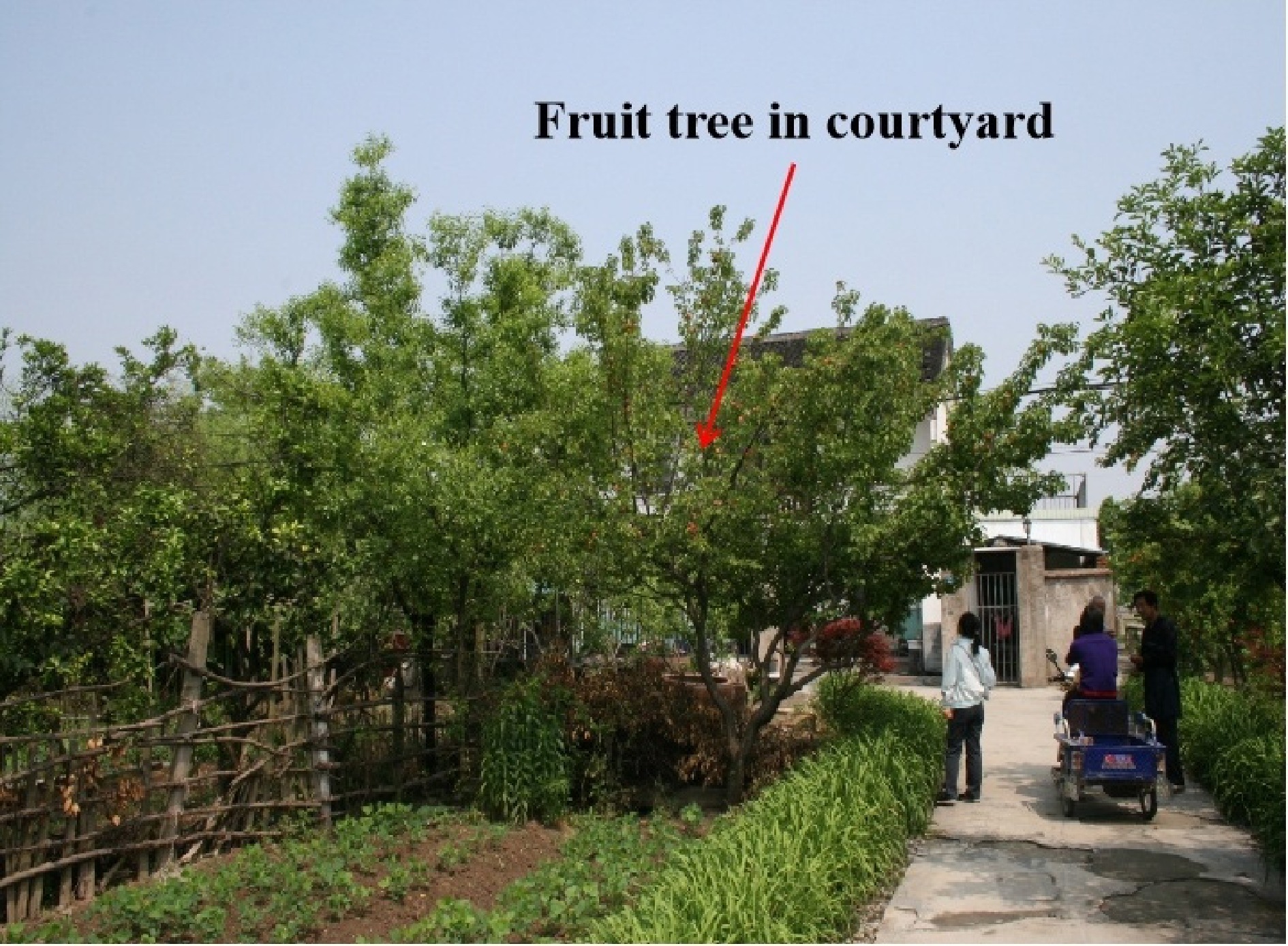
Figure 5.
Rural courtyard forests (planted in the courtyard to produce fruit and provide shelter, photographed by Jianfeng Zhang) have a long tradition and are preferred and promoted in the country[21].
Table 2. Selection of human settlement forest tree species and their ecological habits.
Type Available tree species Rural courtyard forest Cedrus deodara (strong cold tolerance, light loving), Ginkgo biloba (light loving, waterlogging intolerance, saline-alkali intolerance), Magnolia denudate (light loving), Malus domestica (slightly cold tolerance), Amygdalus persica (light loving, cold tolerance,drought tolerance, waterlogging intolerance), Ligustrum compactum (light loving), Diospyros kaki (slightly cold tolerance, poor soil tolerance, strong drought tolerance), Prunus Cerasifera (strong cold tolerance, light loving), Cerasus sp. (prefers fertile, loose, well-drained slightly acidic soil, suitable for moist marine climate), Lonicera maackii (cold tolerance, light loving), Cerasus pseudocerasus (strong cold tolerance), Hibiscus syriacus (cold tolerance, drought-tolerance), Lagerstroemia indica (drought tolerant, cold tolerance, light loving), Cercis chinensis (cold tolerance, light loving), Amygdalus triloba (cold tolerance), Pyracantha fortuneana (drought tolerant, cold tolerance, light loving), Vitis vinifera (light loving, slightly cold tolerance), Punica granatum (drought-tolerant, cold tolerance, light loving), Ziziphus jujube (light loving), Euonymus japonicus (strong cold tolerance, drought tolerance stress tolerance), Forsythia suspensa (strong cold tolerance, drought tolerance, moisture intolerance), Jasminum nudiflorum (slightly shade tolerant, slightly cold tolerance, moisture tinolerance), Common Camellia (light loving), Phyllostachys glauca (light loving), Campsis grandiflora (slightly moisture tolerance, salt-alkali tolerance, cold intolerance, drought tolerant), Paeonia suffruticosa (light loving, cold tolerance, drought tolerance, slightly alkali tolerance), Chimonanthus praecox (slightly shade tolerant, cold tolerance), Cinnamomum camphora (slightly moisture tolerance), Pittosporum tobira (light loving), Liquidambar formosana (light loving, drought tolerant, moisture intolerant), Albizia julibrissin (light loving, strong stress tolerance, extremely strong drought tolerance) Rural road forest C. deodara, G. biloba, M. denudate, L. compactum, P. Cerasifera, Cerasus sp., L. maackii, H. syriacus, L. indica, C. chinensis, A. triloba, P. fortuneana, E. japonicus, Sabina chinensis (drought tolerance, cold tolerance), Salix matsudana (cold tolerance, light loving), S. babylonica (slightly cold tolerance, light loving), Metasequoia glyptostroboides (drought intolerance), Fraxinus velutina (cold-tolerance, moisture tolerant, drought tolerant), Pterocarya stenoptera (light loving, waterlogging tolerant, cold tolerant, drought tolerant) Rural waterside forest L. formosana, S. babylonica, Robinia pseudoacacia (drought tolerant), M. glyptostroboides, E. maackii, Xanthoceras sorbifolium (drought tolerance and salt-alkali tolerance), Swida alba (drought tolerant, cold tolerance, waterlogging tolerance), Cornus officinalis (strong cold tolerance), Dendrobenthamia angustata (strong cold tolerance), F. velutina, Rural surrounding village forest D. kaki, Cerasus sp., H. syriacus, L. indica, A. julibrissin, S. chinensis, Pinus thunbergii (cold tolerance, heat tolerance, drought tolerance, poor soil tolerant), Platycladus orientalis (light loving, drought tolerance, poor soil tolerant), Populus spp. (fast growth), S. matsudana, S. babylonica, Morus alba(cold tolerance, drought tolerance, waterlogging intolerance), Quercus acutissima (cold tolerance, drought tolerance, poor soil tolerant, waterlogging intolerance, saline-alkali intolerance), R. pseudoacacia, Ailanthus altissima (drought tolerance, poor soil tolerant, waterlogging intolerance), Cotinus coggygria (cold tolerance, drought tolerance, poor soil tolerant, waterlogging tolerance, saline-alkali intolerance), Amorpha fruticose (cold tolerance, drought tolerance, saline-alkali tolerance), Z. jujube, Castanea mollissima (cold tolerance, drought tolerance), Zanthoxylum bungeanum (light loving, drought tolerance), Juglans regia (cold tolerance, drought tolerance, waterlogging intolerance, saline-alkali intolerance) Rural recreational forest C. deodara, G. biloba, M. denudate, M. domestica, A. persica, L. compactum, P. Cerasifera, Cerasus sp., C. pseudocerasus, L. indica, C. chinensis, A. triloba, P. fortuneana, V. vinifera, E. japonicus, S. chinensis, S. matsudana, Metasequoia glyptostroboides, Fraxinus velutina, Broussonetia papyrifera (cold tolerance, drought tolerance, slightly waterlogging tolerance) (ii) Rural road forests (Fig. 6). These forests are planted on roadsides outside villages, on both sides of the road between villages, and can alleviate heat radiation, traffic exhaust, and noise, and improve traffic efficiency. The selection of tree species should consider fast-growing species with straight trunks, aesthetically pleasing crowns, low levels of flying floccules, and relatively few pests and diseases (Table 2).
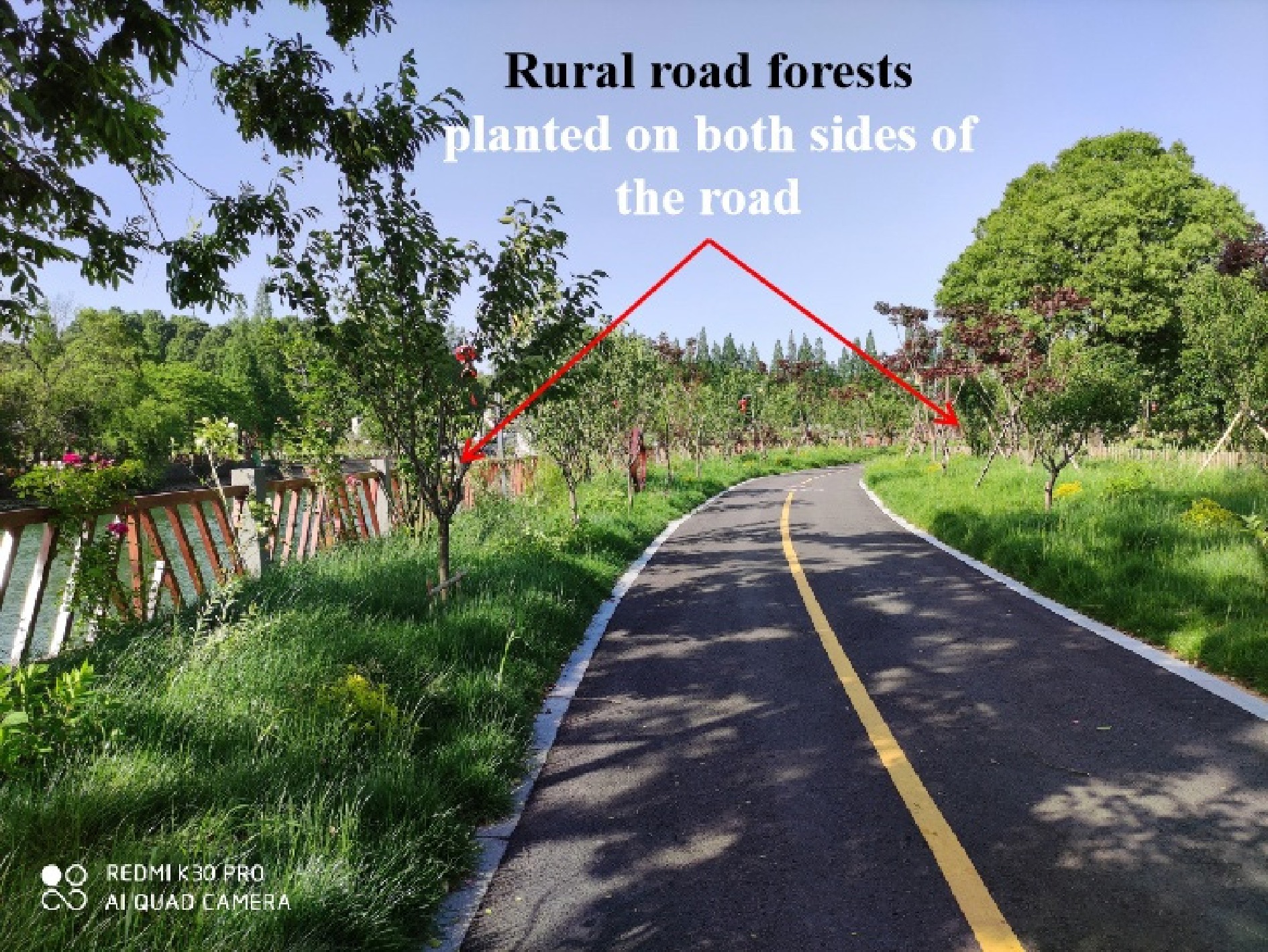
Figure 6.
Rural road forests (to purify air and provide shade, shelter, and moderate temperature, photographed by Jianfeng Zhang) have numerous roles, and are typically listed in local regional development plans.
(iii) Rural waterside forests (Fig. 7). These are planted beside rivers, ponds, dams, and other waterside areas around villages. These forests can protect soil, solidify embankments, prevent surface runoff, purify water quality, improve the environment, and regulate the microclimate. The trees are fully formed and resistant to moisture. Shrubs have well-developed root systems and strong germination abilities. Aquatic plants also have landscape value (see Table 2 for specific tree species selection).
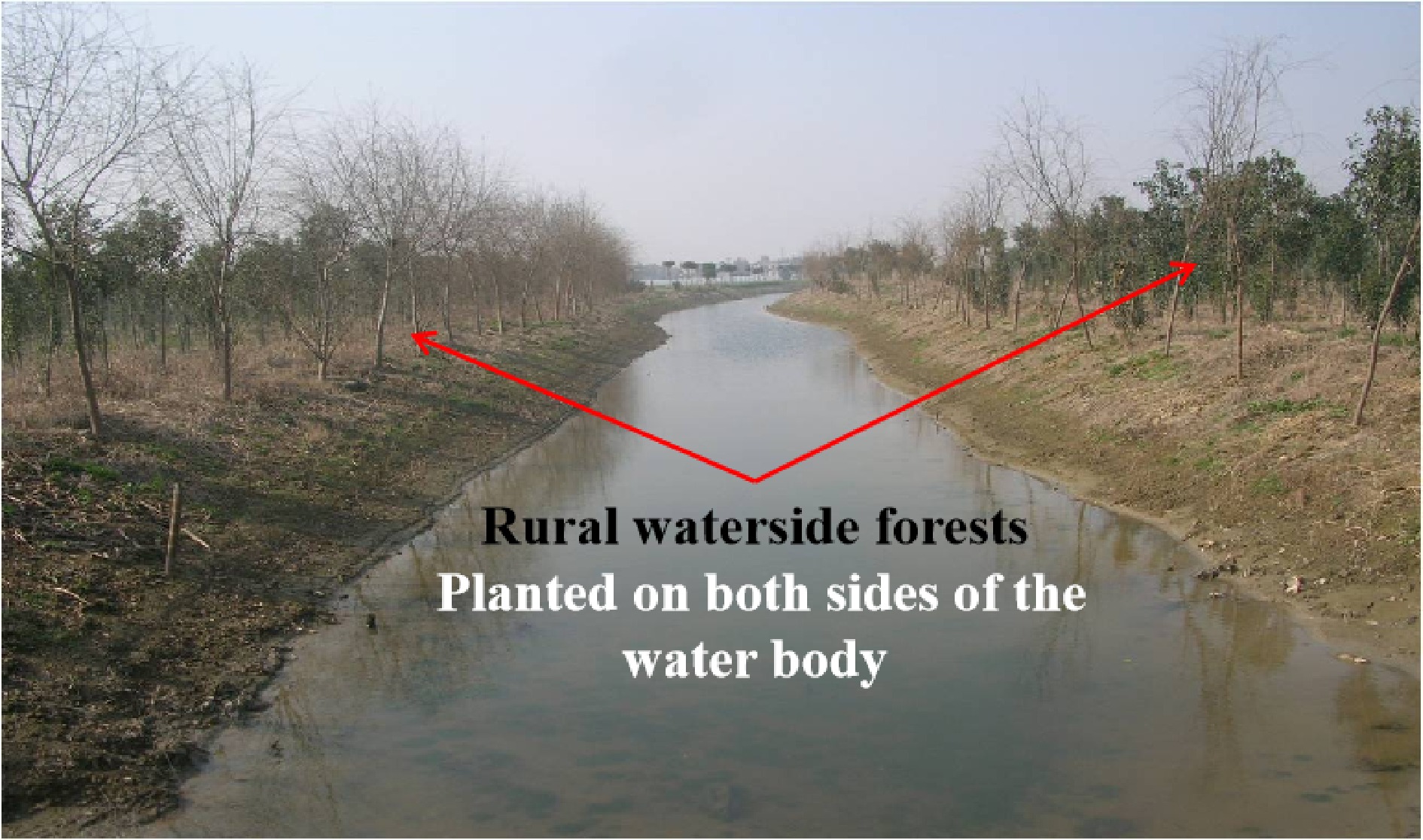
Figure 7.
Rural waterside forest (to protect riparian zones and intercept pollutants, photographed by Jianfeng Zhang) is an important type of water conservation and residential forest.
(iv) Rural surrounding village forests (Fig. 8). These forests are established in plain areas, utilizing unused land adjacent to villages for tree planting. They protect the wind and stabilize sand, provide recreation places for residents, and produce forests that have ecological, economic, and social functions. Deep-rooted species with strong germination ability and lodging resistance should be selected, as well as fast-growing, native, and economically valuable species. In hilly areas, this type refers to forests planted near villages to protect slopes and prevent soil erosion. Tree species that are tolerant of barren conditions, are drought-resistant and have deep and large roots are the most suitable (Table 2).
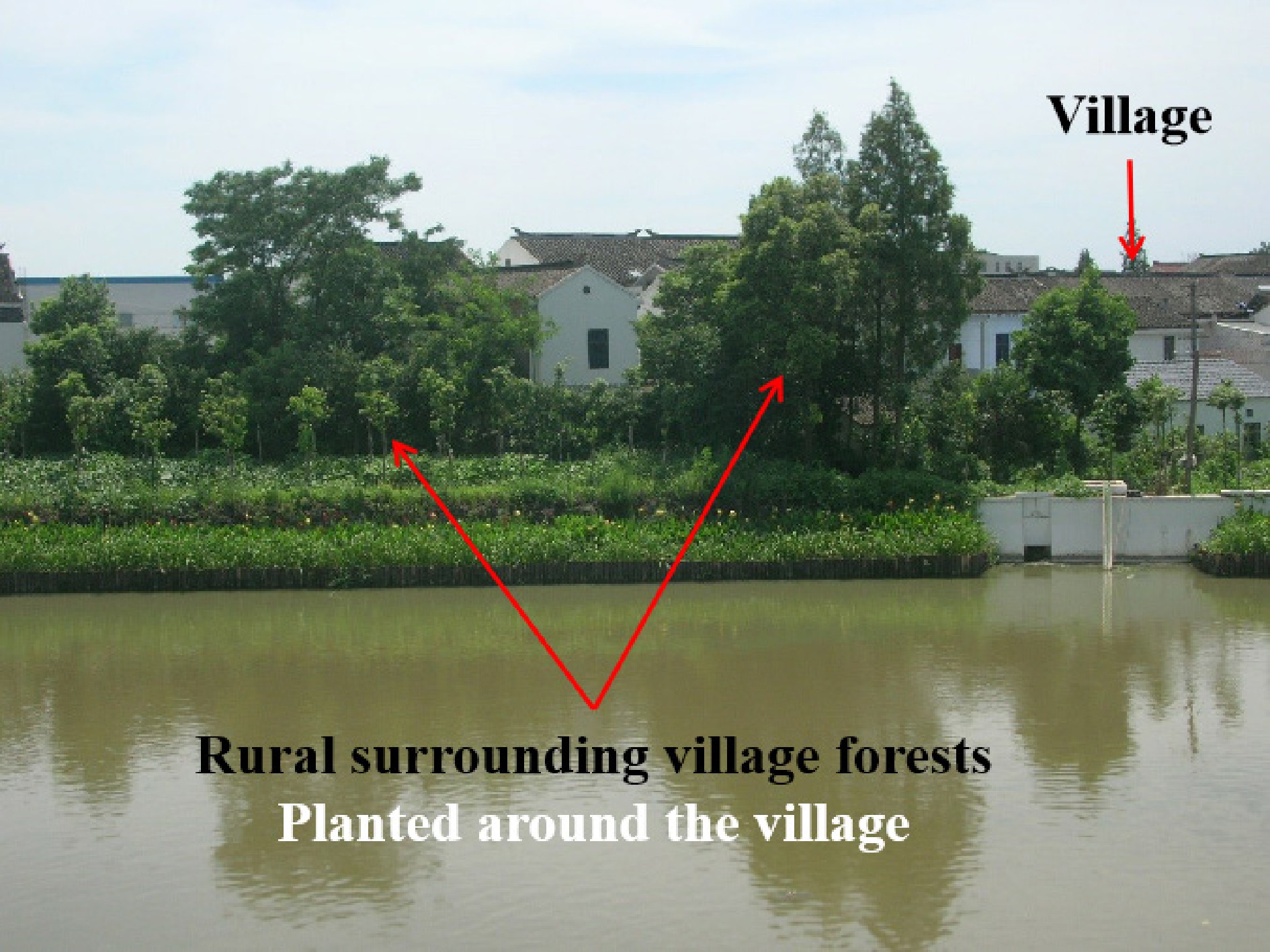
Figure 8.
Rural surrounding village forests (for shelter and aesthetics, photographed by Jianfeng Zhang) are the traditional human settlement forest type[21].
(v) Rural recreational forests (Fig. 9). This type refers to human settlement forests planted in or near villages that are mainly used to improve the environment or to provide forest products, such as fruit. It is recommended to select tree species that can provide forest products, such as wood or fruit, as well as those with landscape aesthetic value (see Table 2 for specific tree species selection).
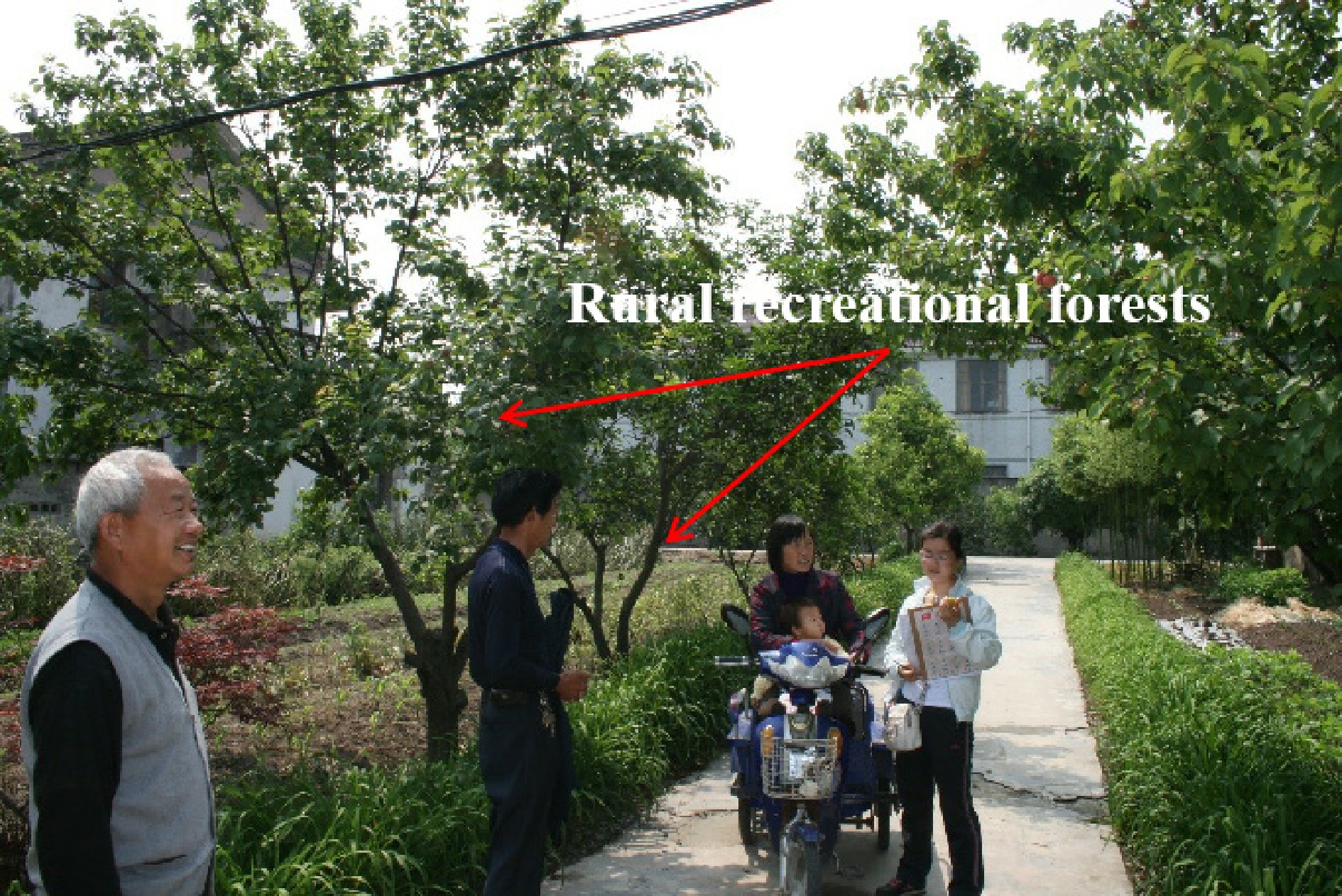
Figure 9.
Rural recreational forest (for landscape and recreation, photographed by Jianfeng Zhang) is a new and thriving type of residential forest associated with rural development[21].
Configuration of tree species
-
The configuration of tree species in rural human settlement forests is based on the principles of ecological adaptation, functional optimization, biodiversity, and landscape richness. Specifically, the different configuration options can be categorized as follows:
(1) Mainly tall arbors combined with shrubs. This configuration optimizes rural space, increases the proportion of green space, and enhances the ecological function of rural human settlement forests.
(2) Mostly local species, with exotic species. Local tree species exhibit strong ecological adaptability, and advanced techniques are usually available for their establishment. They require minimal management and protection costs, and typically result in high levels of stability and forest quality. The selective introduction of exotic tree species is primarily undertaken to address the diverse requirements of rural human settlement forest establishment in different locations and site conditions.
(3) Species with certain key functions combined with multiple roles. Rural human settlement forests have different functions in various areas and sections. To achieve specific results, specific functional tree species, such as those with unique functions in pollution prevention and human health protection, should be considered when selecting and configuring tree species. However, the optimal configuration of multiple functions should also be considered to maximize the numerous benefits of rural human settlements.
(4) Combining multiple tree species traits strengthens landscape diversity and maintains biodiversity. Integrating long-lived and fast-growing tree species enables the rapid but continuous functionality of rural human settlement forests over time, while simultaneously laying the foundation for longer-term forest development. A combination of evergreen and deciduous tree species enriches the rural human settlement forest landscape and its dynamic changes. Deciduous tree species play a vital ecological role, including soil and water conservation and soil quality improvement. This approach provides seasonal variations in light and temperature as well as beneficial ecological and landscape effects.
Planting methods for human settlement forests
-
Afforestation methods for human settlement forests mainly include the following aspects:
(1) Site preparation. Generally, site preparation is the most basic task of afforestation. Site preparation quality is directly related to the effectiveness of afforestation and project investment. Typically, trenches are aligned, and the soil is loosened and leveled before planting trees.
(2) Digging tree pits. The principles of deep digging and shallow planting means that the planting holes in the riverbank highlands should not be ˂ 80 cm3, whereas those in other areas should not be ˂ 70 cm3. Additionally, all holes must be bored to align with a straight barrel bottom.
(3) Afforestation density. The row distance between trees, rivers, and trees on both sides of a road is generally 2 m × 2 m, whereas in other areas, it is typically 3 m × 3 m, with mixed blocks. The number of rows for each species in the river and road protection forests on one side is limited to three rows. The selection of an afforestation tree species should generally be ˃ 10, forming a banded mixed partition every 200 m in the longitudinal direction to form a multispecies banded and mixed forest.
(4) Afforestation season. In temperate zones, a deciduous tree species should be planted before the end of March, and evergreen tree species should be planted before the end of April. Afforestation should typically be supplemented when the soil penetrates well after rain in the spring (February–June) and autumn (September–October).
(5) Tree planting. Afforestation should be conducted during the optimal period, ensuring that the interval between seedling and planting does not exceed 24 h. Immediately following planting, the rooting soil should be drenched, ensuring the plants are straightened, aligned, and firmly pressed into place, and then covered with a 1.5 m2 agricultural film (thickness: 0.01 mm). The agricultural film should be covered with 5 cm of soil.
(6) Evaluating seedlings for vacancy replacement. Within three months of planting, seedlings that have died or are missing should be recorded and replanted over time.
(7) Stand tending and management. During the growing season, it is necessary to implement robust strategies for the prevention and control of diseases and insects; mitigate fires, floods, and storms; and discontinue any artificial breeding activities to protect forests.
-
Referring to the study by Wang et al.[14] in Niulanshan-Mapo Town, the ecological benefits of human settlement forests are illustrated.
Study area
-
Niulanshan-Mapo Town is located in Beijing, China. This area has a warm temperate semi-humid continental monsoon climate. The average annual temperature is 11.5 °C, the lowest temperature is −19.1 °C, and the highest air temperature is 40.5 °C. The annual sunshine duration is 2,750 h, and the frost-free period is about 195 d. The average annual relative humidity is 50%, and the average annual precipitation is approximately 625 mm. Seventy-five percent of the annual precipitation is concentrated in summer.
The main tree species composition of human settlement forests
-
From April to May 2016, a total of 3,264 trees and 271 shrubs were investigated in the study area, and the cumulative number of individuals of the top ten tree species in terms of quantity amounts to 61.82%. The main human settlement forest species in Niulanshan-Mapo Town was Sophora japonica, accounting for 10.41% (Table 3). In addition, there were more than 300 Robinia pseudoacacia and Toona sinensis.
Table 3. Top 10 species in Niulanshan-Mapo Town.
Dominant species Numbers Proportion (%) Sophora japonica 371 10.41 Robinia pseudoacacia 352 9.89 Toona sinensis 319 8.96 Buxus megistophylla 216 6.06 Malus × Malusmicro 204 5.71 Broussonetia papyrifera 152 4.26 Ginkgo biloba 146 4.09 Populus × canadensis 143 4.01 Sophora japonica var. japonica f. pendula 143 4.01 Populus tomentosa 122 3.41 The effect of human settlement forests in the study area on the removal of air pollutants and other ecological benefits
-
According to the research of Wang et al.[14], human settlement forests have a good removal effect on air pollutants. Specifically, the human settlement forests in this area can remove 7.83 t of NO2, 31.98 t of O3, 5.66 t of SO2, 3.50 t of PM10 (particulate matter 10 micrometers or less in diameter) and 1.29 t of PM2.5 (particulate matter 2.5 micrometers or less in diameter) every year, effectively improving the local atmospheric environment. Besides, human settlement forests in this area can reduce 121,401.56 m3 of runoff, and release 3,418.07 t of oxygen annually. Human settlement forests have excellent ecological benefits.
-
Compared with other forests, human settlement forests are planted around communities, and their ecological significance places more emphasis on being beneficial to human well-being. Generally, the main function of commercial forests lies in the production of forest products, such as wood or fruit, with more emphasis on their economic benefits[67]. For shelter forests, the most important ecological significance is to improve ecosystem stability[68]. The largest shelter forest project in China is the Three Northern Protected Forest Program, and the most significant ecological benefit of this project is the reduction in wind and sand hazards in northern China, minimizing soil erosion. In addition, it has enhanced forest carbon sinks, ensuring the stability of the ecosystem[69]. The coastal shelter forest is mainly used to protect against coastal disasters such as typhoons or waves[70]. However, studies have pointed out that the coastal shelter forest reduces human well-being[71]. These studies indicate that, in general, forests mainly focus on economic benefits or ecological benefits for ecosystems.
As for human settlement forests, more emphasis is placed on enhancing the well-being of people living in the communities. For example, road forests, which are planted on both sides of the roads between villages, reduce the impact of road vehicle noise and pollutants on the surrounding residents[72]. As for rural courtyard forests, one of their main ecological functions is shading, providing residents with a comfortable experience[73]. It is evident that for human settlement forests, more emphasis is placed on modifying and enhancing the living environment, and safeguarding the health of local residents.
The difference between the construction of human settlement forests, and general forests
-
For general forests, especially large-scale forest construction, one of the most important principles is 'right tree, right place'[74]. This is because when large-scale forest construction is carried out, tree species must adapt to the local environment to survive and increase the survival rate of afforestation[75]. Meanwhile, many afforestated areas are located in mountainous regions or far from human settlements[76]. Apart from natural precipitation, it is difficult to obtain other water sources or nutrients. However, unlike ordinary artificial forests, human settlement forests are located around human communities and are highly susceptible to nutrient and water replenishment. Therefore, in the construction of human settlement forests, more emphasis is placed on the ecological value to people. For example, Michelia figo is native to tropical and subtropical regions[77], and it can be used in rural surrounding village forests because of its high landscape value. In colder regions such as in the temperate zone, it could possibly be grown through employing some protective measures[78].
Implementation barriers and countermeasures
-
Through the above approach, we found that human settlement forests are an effective measure to reduce rural pollution and can provide multiple ecological benefits. To better promote the development of human settlement forests, we further discussed the possible implementation barriers that might be encountered during the development process of human settlement forests, and proposed corresponding solutions.
Land tenure and land management are important factors influencing the development of human settlements and forests. In Zambia, insecure land tenure was an important factor affecting the development of forestry by local residents[79]. A study from Indonesia also showed that unstable land management has affected the expected outcomes of forestry development, and reduced the local willingness to develop forestry[80]. In China, land tenure belongs to farmers' collectives, while land management rights belong to individual farmers[81]. This difference may lead to some contradictions in the development of human settlement forests. For instance, from the collective perspective, it is better to bring out the ecological benefits of human settlement forests, while from the individual perspective, it is better for human settlements to generate certain economic benefits.
Forest fires not only affect the growth of human settlement forests, but also cause environmental problems such as air pollution[82,83], which is another issue worthy of attention in the development of human settlement forests. Compared with the beginning of this century, the forest area has halved, and the main factor leading to forest degradation is fire. In Alberta, Canada, forest fires were the significant factor affecting air quality and restricting the development of local forestry[84]. Human settlement forests are planted around communities. Once the fire breaks out, they pose a great threat to residents' lives and property. To reduce the risk of fire, on the one hand, monitoring should be strengthened and early warning improved[85]; on the other hand, the fire prevention awareness of the surrounding residents should be enhanced to reduce the possibility of fire occurrence.
In addition to the above factors, the natural geographical environment of different regions is also an important factor influencing human settlement forests. Through SWOT analysis, it was found that in the eastern region of China, the geographical location was superior and conducive to the development of human settlement forests. However, in some special areas, such as alpine areas, the natural conditions restrict the development of human settlement forests to a certain extent. Thus, it is necessary to develop human settlement forests in accordance with local conditions. In some high-altitude mountainous areas, such as the Alps, temperature and precipitation are important factors affecting the growth of forests in this region[86]. Thus, when developing human settlement forests in this area, coniferous forests or deciduous broad-leaved forests are generally taken into account. The study by Sonnenwyl et al.[87] in the Swiss Alps region indicated that coniferous forests, such as Pinus cembra, were the main afforestation tree species there. In coastal or river-adjacent wetland areas, due to the high soil moisture content, moisture-loving and moisture-tolerant woody and perennial plants are the main choices for local afforestation and human settlement forests[88]. For instance, in many coastal wetlands, mangroves were the main afforestation tree species in the local area, and they also help enhance biodiversity and maintain the stability of the ecosystem[89]. However, it is worth noting that since forests can increase evaporation, afforestation in some inland wetlands may instead lead to a reduction in wetland area[90]. This also indicates that not all regions were suitable for developing human settlement forests.
The cultural inheritance of human settlement forests
-
In addition to their ecological functions, human settlement forests have also been investigated for their social functions. For example, Xu[91] examined a unique type of human settlement forest, the Fengshui Forest in Fujian, China, which has a structure that is linked to Fengshui, a traditional Chinese culture. The distribution pattern of rural Fengshui forests has an important relationship with Fujian's regional culture. Within this pattern, the ecological culture of wetlands is mainly situated in eastern Fujian, while that of Mazu in Fujian and Taiwan is propagated in southern Fujian, which is the typical Hakka culture in western Fujian, and the ecological culture of the source of the Minjiang River in northern Fujian. Different cultures were oriented and formed different layouts of Fengshui forest structures. For example, the Mazu culture is dominated mainly by temples; therefore, its forest structure is characterized by numerous single Fengshui trees, whereas the Minjiang source and wetland cultures are primarily dominated by forests with multiple tree species. Notably, the variety in regional cultures determines the differences in the distributional structure and layout of Fengshui forests in rural areas of Fujian, indicating that developing residential forests should consider traditional culture.
Additionally, as outlined in some Chinese rural literature, trees at the entrance of a village typically symbolize the hometown. Thus, human settlement forests play the role of cultural symbols with a social function (cultural communication function).
In addition to improving the environment, human settlement forests also facilitate cultural transmission. Therefore, ecological and social functions can be exerted through the establishment of human settlement forests. Notably, the social functions are crucial in protecting the value of rural culture and maintaining the sustainable development of the countryside in the context of industrialization and urbanization.
Limitations and prospects
-
Based on SWOT analysis, this study explored the development prospects of human settlement forests, analyzed the comprehensive value of human settlement forests from multiple dimensions of 'ecology - health - culture', and clarified the application value of human settlement forests in the regulation and control of rural environmental pollution. However, this study still has certain deficiencies and needs to be further improved. The field investigation area of this study was located in the eastern coastal region of China, and the proposed afforestation method for human settlement forests was also targeted at areas with abundant rainfall. As mentioned earlier, forests may lead to an increase in evaporation[92]. Afforestation in some arid and semi-arid areas may lead to a reduction in local underground water resources and threaten the stability of the ecosystem[93]. Thus, whether arid and semi-arid regions are suitable for the development of human settlement forests and how to develop human settlement forests in these regions remains to be further explored. In addition, with the rapid development of AI at present, smart forestry has become a hot issue in current development. How to enhance the intelligent development of human settlement forests is undoubtedly a problem that needs further exploration.
-
Rural human settlements are an important component of human habitations, and their development is integral to the advancement of society. However, with the development of rural modernization and irrational activities associated with rural lifestyles and agricultural production, rural human settlements experience various types of environmental pollution. Thus, improving the quality of rural settlements is imperative. Human settlement forests are an important component of rural communities and have multiple ecological benefits. Thus, this study explored the ecological benefits of human settlement forests based on SWOT analysis and further analyzed the application value of human settlement forests. The results showed that human settlement forests have multi-dimensional comprehensive values of 'ecology - health - culture', and can effectively alleviate rural pollution problems.
Globally, rural revitalization is a long-term undertaking. To address environmental challenges and improve human settlements, establishing residential forests is necessary and crucial. This study provides a reference for promoting forest development and enhancing human habitats.
-
During the preparation of this work, the author(s) used [Doubao AI] (https://www.doubao.com/chat/) for figure creation and enhancement. The author(s) reviewed and edited all content produced with the assistance of this tool, verified its accuracy, and take full responsibility for the integrity and originality of the final manuscript. This work represents the author(s)' own intellectual contribution, and no AI tool is credited as an author.
-
The authors confirm contribution to the paper as follows: study conception and design: Wang R, Zhang K, Guo Z, Zhang J; data collection: Li G, Zhang D, Wang Q; analysis and interpretation of results: Sun S, Cai C, Li X; draft manuscript preparation: Wang R, Zhang J. All authors reviewed the results and approved the final version of the manuscript.
-
The data that support the findings of this study are available on request from the corresponding author.
-
This paper is supported by the National Natural Science Foundation of China (32330065; 32401664; 32571841), as well as by people from local villages. We appreciate all their help.
-
The authors declare that they have no conflict of interest.
-
#Authors contributed equally: Rongjia Wang, Chunju Cai
- Copyright: © 2026 by the author(s). Published by Maximum Academic Press, Fayetteville, GA. This article is an open access article distributed under Creative Commons Attribution License (CC BY 4.0), visit https://creativecommons.org/licenses/by/4.0/.
-
About this article
Cite this article
Wang R, Zhang K, Li G, Zhang J, Guo Z, et al. 2026. Human settlement forests: important measures to cope with rural environmental problems. Forestry Research Advances 1: e006 doi: 10.48130/fra-0026-0002 

Human settlement forests: important measures to cope with rural environmental problems
- Received: 02 December 2025
- Revised: 23 January 2026
- Accepted: 26 January 2026
- Published online: 06 May 2026
Abstract: Currently, approximately 3.45 billion people reside in rural areas worldwide. Owing to the limited development, these regions encounter numerous environmental challenges that can negatively affect the quality of rural life. Because of their natural characteristics and unique ecological functions, establishing rural human settlement forests is a fundamental ecological strategy and an important component of economic revitalization. However, most studies have focused on the morphological structure and social functions of human settlement forests, while limited research exists on the construction methods and ecological roles of these forests. Using the strengths, weaknesses, opportunities, and threats (SWOT) approach and considering the current challenges related to rural human settlements, this paper employs in situ investigations, a literature review, and an analysis of the functions of human settlement forests. Human settlement forests in Niulanshan-Mapo Town, can remove 7.83 t of NO2, 31.98 t of O3, and 5.66 t of SO2. The results showed that human settlement forests have multi-dimensional comprehensive values of 'ecology - health - culture', and can effectively alleviate rural pollution problems. Besides, this study systematically discusses planting methods, including the selection of tree species, configuration, site preparation, planting season, and stand care and maintenance. Thus, this paper is expected to provide a reference and technical guidance for the development of human settlement forests, supporting the advancement of rural human settlements.