












-
As one of the six main types of tea in China, white tea is popular among consumers due to its rich floral fragrance, refreshing taste, and health benefits[1,2]. The basic processes involved in making white tea include withering and drying, with a notably prolonged withering period compared to other tea types[3]. Withering is the foundation for aroma formation in white, black, and oolong tea[4−6]. The main production areas of Hunan white tea are in Sangzhi county in Zhangjiajie, with small yields also found in Rucheng county of Chenzhou, Baohe in the Xiangxi autonomous prefecture, and Qiyang county in Yongzhou. Among which, Sangzhi white tea (SWT) is one of the five major regional public brands in Hunan, processed from the buds and leaves of major tea cultivars grown in Sangzhi county, including 'Zhuyeqi', 'Bixiangzao', and 'Huangjincha' through the procedures of withering, shaking, and drying[7]. At present, SWT has basically formed a one park, one belt, one plot layout, centered on the Badagong Mountain Bulk Tea Industrial Park, the Renchaoxi Famous & High-quality Tea Industrial Belt, and the Hongjiaguan Leisure Tea Garden Area[7]. However, SWT still faces practical challenges: its aroma is not intense enough, and product quality varies inconsistently. These issues are largely due to the difficulty in precisely controlling light and temperature conditions during the withering process.
The traditional process uses sunlight drying, which remains a crucial technical approach in modern tea production. However, this method is still largely constrained by weather conditions, resulting in variations in sunlight wavelength and illuminance, which affect the controllability of solar withering, which in turn leads to difficulties in controlling the tea-making process, and therefore the instability of tea quality. Utilizing LED light sources as an alternative to sunlight has emerged as a crucial approach for precisely regulating the tea withering process. Light quality, temperature, time, and wind speed are the four most critical parameters. Regarding light quality, different light qualities affect the quality of fermented tea[2]. Specifically, the overall quality of black tea could be improved by withering with monochromatic yellow, orange, and red light[8]. During the withering process of white tea, the effects of different light qualities on the content of polyphenols and amino acids in tea leaves exhibit significant variations. The optimal withering quality for white tea is achieved under red light treatment (620–625 nm)[9]. Research on the withering process of 'Fuding Dabai' tea has identified 5,000 lx yellow light as the optimal condition for quality improvement, based on comprehensive studies of light quality and intensity effects on tea quality formation[2]. Compared with natural light withering, after the LED red-light treatment of Wuyuan white tea, the phenol-ammonia ratio of the tea decreased, and free amino acids, caffeine, aroma, and taste increased significantly. The content of flavonoids, xanthine alkaloids, and several amino acids in oolong tea leaves dried under sunlight was significantly lower than in fresh leaves, which helped reduce the bitterness or astringency of wilted leaves[10]. Linalool and geraniol showed stronger floral and fruity aromas when dark tea was dried in sunlight[11]. UV-B radiation can affect the concentration of amino acids in berries after harvest, leading to the development of aroma compounds during alcoholic fermentation[12]. Geraniol, as a key compound contributing to the floral and fruity aromas in tea leaves, plays a crucial role in responding to biotic and abiotic stresses. However, numerous unknowns regarding the biosynthesis and regulatory mechanisms of geraniol remain to be further explored. The candidate gene CsNudix26, involved in geraniol biosynthesis in tea plants (Camellia sinensis), together with its upstream transcription factor CsbHLH133, can bind to the promoter of CsNudix26 and activate its expression, thereby promoting geraniol synthesis. Furthermore, the spliced transcript of CsbHLH133, namely CsbHLH133-AS, is the major transcript in tea plants responding to various environmental stresses. These stresses primarily regulate the synthesis and release of geraniol in tea plants by altering the expression patterns of the two transcripts of CsbHLH133[13].
Although current research shows that light quality regulation plays a critical role in the biosynthesis of tea aroma compounds, the mechanism by which the floral aroma components of SWT, as a specific geographical indication product, are regulated by light environments remains unclear. Based on this, this study proposes the hypothesis that drawing on the light regulation theories of other tea categories, the synergistic effect of different light qualities and withering processes may promote the accumulation and optimization of floral aroma components in SWT by influencing the transformation of volatile substance precursors. This study aims to explore the following scientific question: What are the dynamic regulatory patterns of the light-quality withering coupling process on the content of floral aroma substances in SWT?
-
This study uses light-emitting diode LED lighting (dimensions: 1.2 × 0.5 m) (Shenzhen Fulevo Photoelectric Technology Co., Ltd, China). The photon spectral distribution and light intensity were measured at a distance of 15 ± 1 cm from the blade surface using the SPIC-200A (Hangzhou, EVERFINE) spectral color illuminometer (Fig. 1).
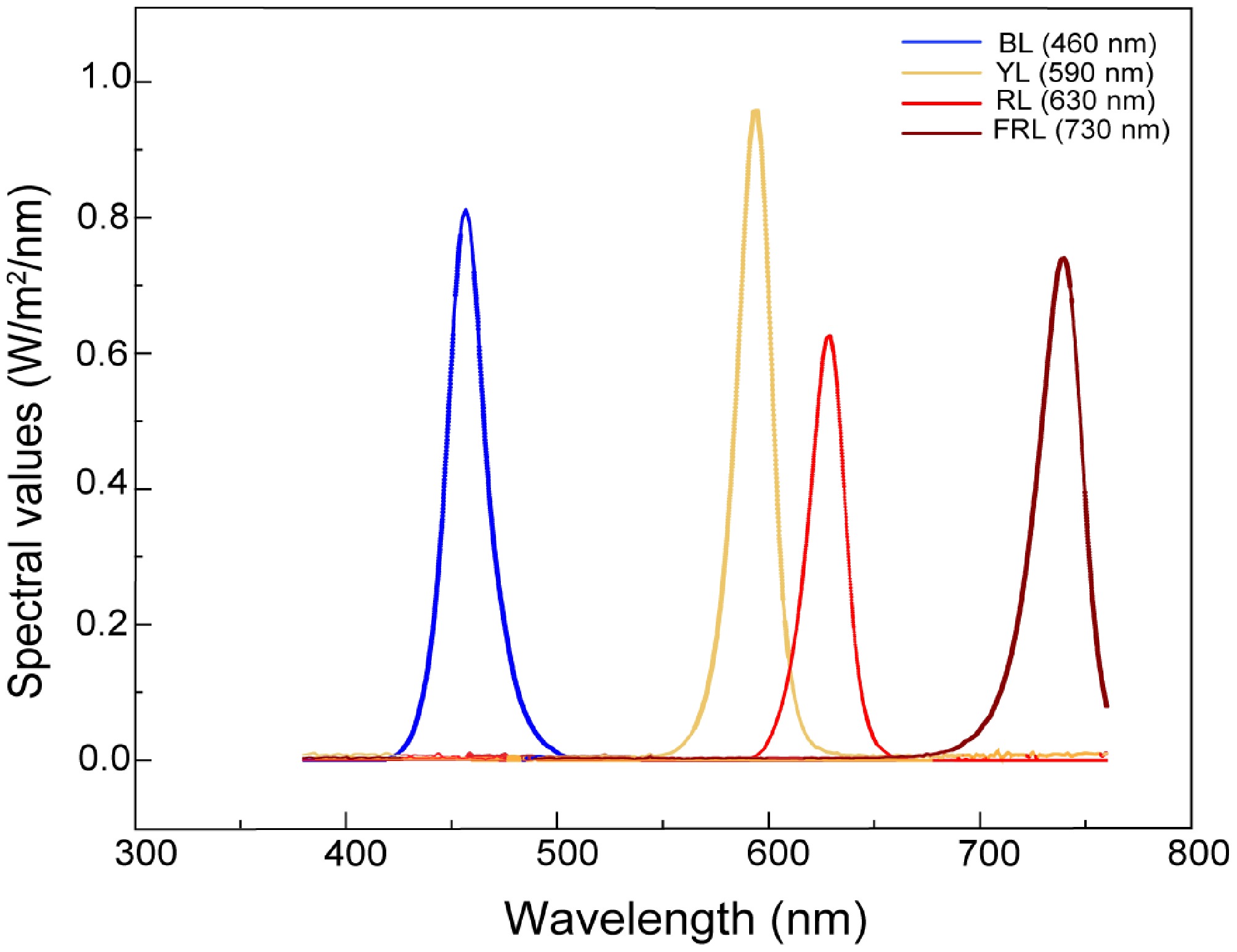
Figure 1.
Spectral photon distribution (SPD) of LED. The SPD was calculated from the spectral energy distribution of the light source, which was measured with a spectroradiometer (UPR-tek PG-200 N, Shanghai, China).
Experimental treatment and tea sample collection
-
In April 2024, fresh tea leaves (FTLs) of C. sinensis cv. 'Bixiangzao' were plucked at the one-bud-three-leaf standard in Changsha County, Hunan Province. The FTLs were subjected to five light quality treatments (DARK, 460, 590, 630, and 730 nm) (Fig. 1) for 36 h of withering in a withering chamber with a light intensity of 75 μmol/m2/s, until the moisture content reached approximately 20%. The environmental temperature was 18 °C, and the relative humidity was 50%. Subsequently, the withered leaves under different treatments were dried in a hot-air drying oven at 70 °C until the moisture content decreased to below 7.0%. The actual withering process is shown in Supplementary Fig. S1.
Sensory evaluation
-
White tea samples were prepared by spreading the tea leaves under the five postharvest treatments (DARK, BL, YL, RL, and FRL). The sensory evaluation was carried out by three professional tea evaluators according to the Chinese Standard Method for Tea Evaluation (GB/T 23776-2018)[14]. Sensory evaluation of the SWT samples was conducted by a team of three assessors, including one male and two females aged between 25 and 45 years old. All assessors held advanced certificates in tea quality evaluation, and had no smoking habits. The team members conducted a quantitative descriptive analysis (QDA) on five aroma sub-attributes: fresh aroma, downy aroma, minty aroma, floral aroma, and sweet aroma after discussion. A 0–5 numerical scale was used to evaluate the intensity of characteristic aromas, where 0 indicates non-existence, 1 indicates detectable, 2 weak, 3 moderate, 4 strong, and 5 very strong. The mean values of the data were presented in a radar chart.
Sampling method and physical and chemical composition detection
-
Samples were collected in different light qualities (Dark, 460, 590, 630, and 730 nm), dried at 70 °C for 2 h, and stored in a deodorizer. The changes in important quality components (tea polyphenols, flavonoid glycosides, soluble sugars, theanine, and free amino acids) were evaluated.
The moisture content was determined according to the standard method GB 5009.3-2016 of the China Institute of Standardization. Folin-Ciocalteu reagent was used to determine the content of tea polyphenols at 765 nm according to CNIS GB/T 8313-2018. According to CNIS GB/T 8314-2013, the free amino acid content was determined using the ninhydrin method at 570 nm. After 20 min of extraction with 80% (v/v) ethanol solution at 50 °C, the total soluble sugar content was determined by UV-VIS spectrophotometry at 620 nm using Enthrone reagent[15]. The flavonoid content was determined at 420 nm using an enzymolometer. Theanine content was determined according to the standard method GB/T 23193-2017 of the China Institute of Standardization.
GC–MS/MS detection
-
The headspace solid-phase microextraction (HS-SPME) was used for VMs (volatile metabolites) and for GC-MS analysis, according to previously described methods[16,17]. Briefly, about 2.0 g of fresh, withered, or dried leaves were placed into a 20 mL sealed glass vial, and 10 μL ethyl decanoate (30 ppm) was added as an internal standard. Afterwards, 5 mL of boiling deionized water was added, and the vial was immediately put into a thermostatic oscillator and incubated at 60 °C. After 5 min of stabilization, the volatiles were adsorbed for 50 min by using a carboxen/polydimethylsiloxane/divinylbenzene (CAR/PDMS/DVB) coating fiber (Supelco, Inc., Bellefonte, PA, USA). An Agilent 7890B gas chromatograph (GC) equipped with a 7000B mass spectrometer was employed for tea aroma analysis. The GC conditions were set as follows: the volatile compounds were separated on a DB-5MS capillary column (60 m × 0.25 mm i.d., 0.25 µm film thickness). An injection of 1.0 µL of the sample was used for sample and standard volatile analysis. The sample injection temperature was set at 250 °C, and helium (99.999%) was used as the carrier gas with a constant flow of 0.8 mL/min. The splitless injection mode was used. The temperature program was increased from 50 °C (hold 5 min) to 250 °C at 5 °C/min. The mass selective detector was operated in positive electron-ionisation mode with a mass scan range from m/z 30 to 500 at 70 eV. The ion source temperature was set at 230 °C, and the transfer line temperature was at 280 °C. All compounds were first identified by the National Institute of Standards and Technology (NIST 20) mass spectra library. The minimum value of the matching factor was set to 80. Then, each compound was further confirmed by retention index (RI). The RI was calculated using the n-alkane series (C6–C40). The comparison of the calculated RI values with the reported RI values from the NIST Chemistry WebBook (
https://webbook.nist.gov/chemistry ) database was performed for the identification of volatile compounds. Based on the total ion current chromatograms, the relative content of each compound in a sample was calculated using the peak area normalization method[18].ROAV analysis
-
The relative odor activity value (ROAV) is used to evaluate the contribution of a certain compound to the aroma of white tea[19]. Generally, it is believed that compounds with ROAV > 1 make a relatively large contribution to the aroma. The formula is as follows[20]:
$ ROAV=Ci/Ti $ In the formula, Ci (μg/g) represents the relative content of the aroma component, and Ti (μg/g) represents the threshold of the aroma component.
Statistical analysis
-
All experiments were conducted at three different times independently. Each analysis was repeated at least three times, and the results were expressed as mean ± standard deviation (SD). Radar charts were generated using Origin 2024. IBM SPSS Statistics 27 was used to calculate the statistical significance of differences and perform analysis of variance (ANOVA), with a p-value < 0.05 considered statistically significant. Box plots were plotted using GraphPad Prism 10.5.0. Orthogonal partial least squares-discriminant analysis (OPLS-DA) and partial least squares (PLS) were conducted with SIMCA 14.1, while TBtools (
https://github.com/CJ-Chen/TBtools ) was used to create heatmaps and Venn diagrams. -
SWT samples prepared under different lighting conditions were rigorously evaluated and described through sensory evaluation. Since the tea leaves were not rolled and shaped in this study, the appearance rating of all samples was uniformly preset to 95.00 points, as shown in Supplementary Table S1.
Previous studies have shown that Jinggu white tea exhibits obvious fruity and sweet aromas, and linalool and benzaldehyde are the main contributors to its aroma[21]. In addition, by studying Yunnan white tea produced from different cultivars of C. sinensis var. assamica, researchers found that linalool and veratrone in Yunnan white tea contribute to its basic aroma characteristics of floral and sweet notes[22]. Based on establishing the key sensory descriptors of white tea, we employed sensory evaluation techniques to analyze the aroma profiles of white tea following withering under varying light conditions[3]. Five representative aroma attributes were recorded, including fresh, pekoe, sweet, floral, and fruity, and the results were plotted in Fig. 2. The results showed that there were differences in the aroma intensity types of SWT samples withered under five light qualities. Notably, FRL exhibited strong fruity and sweet aromas, but a weak downy aroma, while BL had the highest intensity of pekoe aroma. In comparison, BL had relatively high intensities of fresh and pekoe aromas. Additionally, YL exhibited notable fresh and floral aromas, but the fruity aromas were lower than those in FRL. The results indicated that the white tea prepared with FRL exhibited more pronounced fruity and sweet aromas.
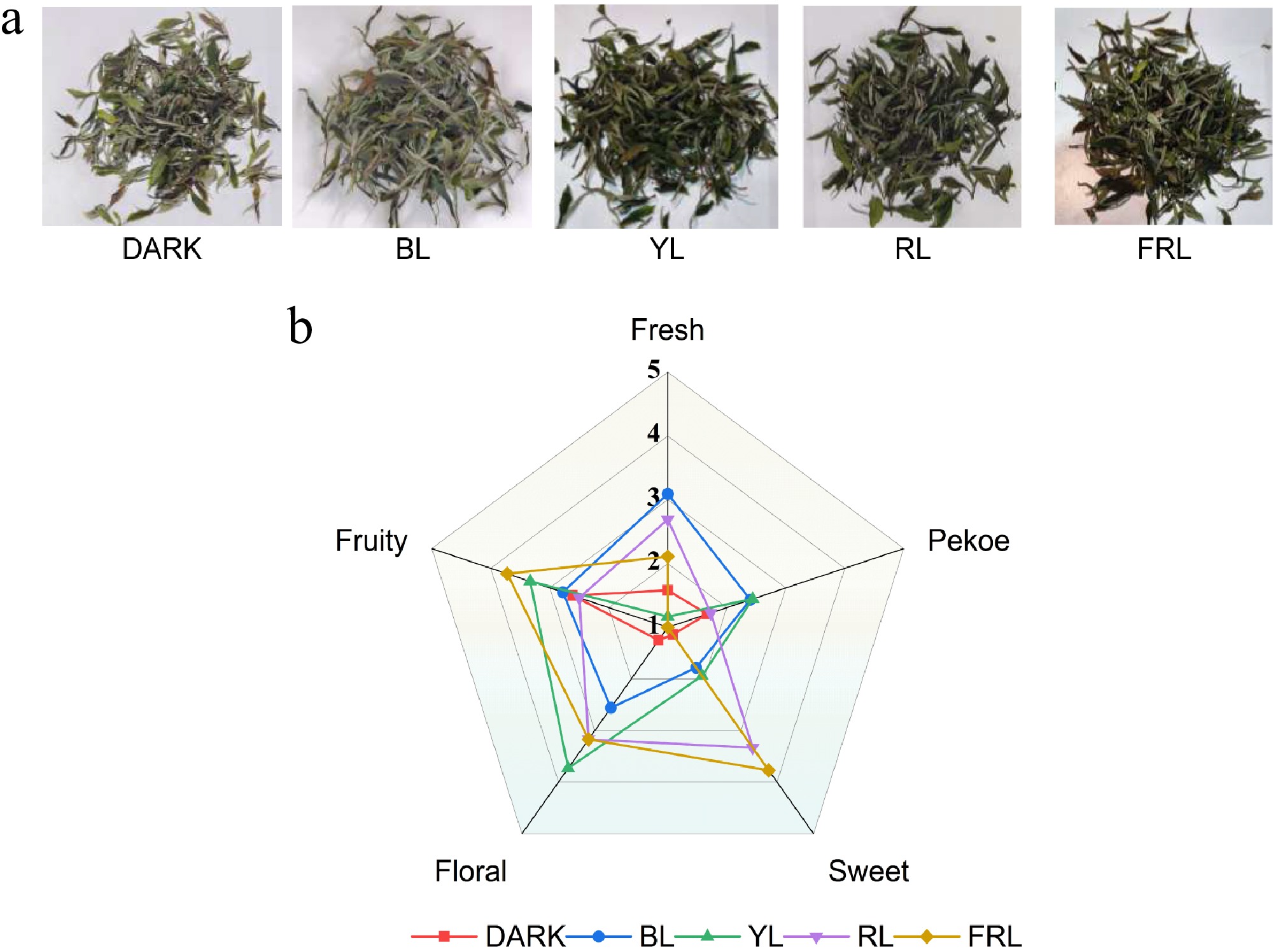
Figure 2.
Sensory evaluation results. (a) Appearance of SWT (Sangzhi white tea). (b) Radar chart of sensory evaluation of SWT under five light treatments. Data were from three independent experiments (n = 3) and are expressed as means ± SD. DARK (dark treatment); BL (460 nm treatment); YL (590 nm treatment); RL (630 nm treatment); FRL (730 nm treatment).
Analysis of the main biochemical components of SWT
-
In the aspect of light quality, diverse spectra exert varying influences on the quality of fermented tea[3]. The contents of biochemical components in SWT subjected to five distinct light quality treatments are illustrated in Fig. 3. There was no significant difference in the contents of tea polyphenols under light quality treatment. In comparison to the DARK treatment, withering processes under diverse light qualities all enhance the free amino acid content in SWT while diminishing the polyphenol-to-amino acid (P/A) ratio—an outcome closely linked to tea taste quality, as a lower P/A ratio typically mitigates bitter and astringent notes by balancing the sensory contributions of polyphenols and amino acids[23]. Under BL and FRL treatments, the ratio of tea polyphenols to amino acids in sun-dried raw tea was the lowest. The contents of free amino acids were 24.6 and 24.4 mg/g, respectively. Under the YL treatment regime, the content of flavone glycosides was observed to reach a minimum value of 6.7 mg/g, whereas the content of soluble sugars attained a maximum level of 16%. Under RL treatment, theanine content peaked at 10.4 mg/g. The soluble sugar content was 15.6%, second only to that of the YL treatment (16%). Notably, both differed significantly from other light treatments. Under the FRL treatment regime, the content of flavone glycosides peaked at 7.8 mg/g. In contrast, the contents of theanine and soluble sugar have decreased, being 5.3 mg/g and 13.0%, respectively..
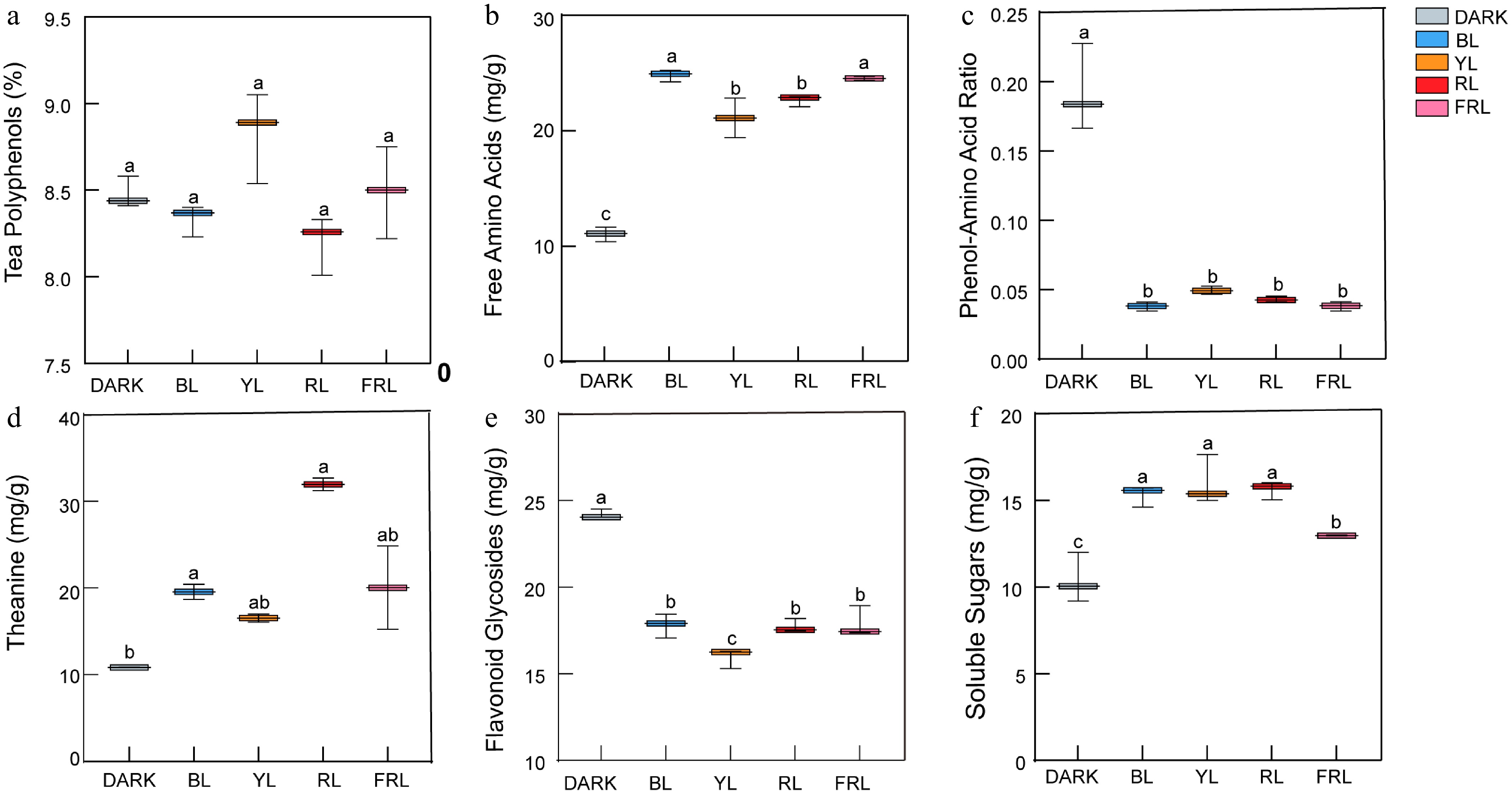
Figure 3.
Nonvolatile content in SWT under different light quality treatments. (a) Polyphenol, (b) free amino acid content, (c) phenol-ammonia ratio, (d) theanine content, (e) content of flavonoid glycosides, and (f) soluble sugar content. Data were from three independent experiments (n = 3) and are expressed as means ± SD. All data were subjected to analysis of variance (ANOVA), and different lowercase letters (a, b, c) indicate significant differences at the p < 0.05 level.
Prior research indicated that, under light conditions of 630–640 nm in wavelength and 725–1,015 lx in intensity during black tea withering, amino acid content was markedly altered. Mainly, upregulated gene expression for amino acid synthesis and enhanced peptidase activity were responsible[24].
Analysis of aroma constituents in SWT under varying light-withering conditions
-
Using the HS-SPME-GC-MS coupled technique, the volatile components of SWT after withering under five light qualities were analyzed. Altogether, 49 volatile constituents were identified (Supplementary Table S2). Based on the characteristics of their functional groups, the volatile compounds were classified into seven categories: hydrocarbons, alcohols, ketones, aldehydes, esters, acids, and heteroxides. Among these volatile constituents, alcohols and aldehydes were dominant, accounting for 77% of the overall volatile content (Fig. 4a). In the current study, the preponderant majority of the volatile compounds that have been identified are ostensibly the resultant metabolites of fatty acids and amino acid catabolism, in addition to terpene biosynthesis and carotenoid degradation pathways[25]. Analysis of Variance (ANOVA) was employed to identify significant differences in volatile compounds among different treatment groups, with a further focus on investigating the effects of various light quality treatments on their relative abundances (Fig. 4). In horticultural studies of SWTs under five light quality treatments, alcohols and aldehydes were found to be the volatile compounds with higher concentrations. The content of alcohols was 568.2 μg/g, and that of aldehydes was 511.6 μg/g. These compounds are crucial for tea quality because they confer appealing floral and fruity aromas that are vital[26,27]. Overall, the SWT that withered under yellow light exhibited the most outstanding performance in terms of aroma richness among the effects of different light quality treatments on the withering process. This finding is consistent with previous research, indicating that exposure to yellow light during the withering process contributes to the enhancement and diversification of its aromatic characteristics[28]. These results demonstrate that applying different light qualities during the withering process significantly alters the aroma profile of white tea products, thereby facilitating the development of a more complex and nuanced aromatic character.
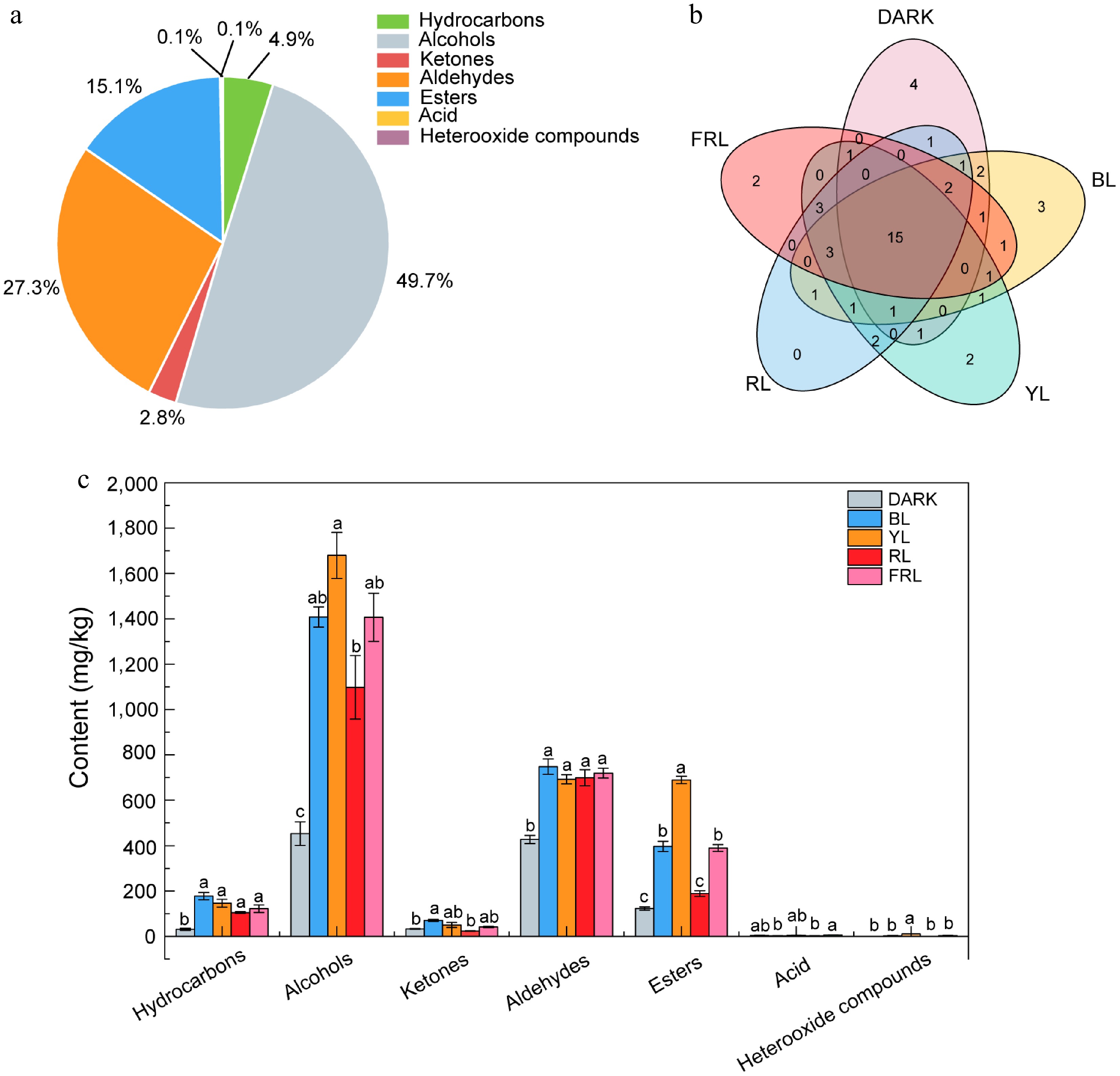
Figure 4.
Variation trend of aroma compounds. (a) The proportion of various volatile compounds in SWT. (b) Venn diagram different aroma compounds. (c) The contents of aroma compounds in SWT spread under different light conditions. Data were from three independent experiments (n = 3), and are expressed as means ± SD. All data were subjected to analysis of variance (ANOVA), and different lowercase letters (a, b, c) indicate significant differences at the p < 0.05 level.
To elucidate the logical interrelationships among the different treatment groups, the analysis of five pivotal aroma compounds within DARK, BL, YL, RL, and FRL was conducted through the utilization of Venn diagrams across various light treatments (Fig. 4b). A total of 15 common aromatic compounds were identified as being distributed across all five treatment groups. Incorporating butanal, 2-methyl-, hexanal, hexanoic acid, methyl ester, benzaldehyde, benzeneacetaldehyde, nonanal, benzenemethanol, α-methyl-, octanoic acid, methyl ester, (3R,6S)-2,2,6-trimethyl-6-vinyltetrahydro-2H-pyran-3-ol, methyl salicylate, 1-cyclohexene-1-carboxaldehyde, 2,6,6-trimethyl-, geraniol, citral, hexanoic acid, hexyl ester, and trans-β-ionone. Distinct aroma compounds were discerned within DARK, BL, YL, RL, and FRL. In summary, the Venn diagram shows major differences in the composition of key aroma compounds in SWT that was exposed to five distinct light treatments.
Research on the influence of different light qualities on the main volatile components of SWT during withering
Analysis of key volatile compounds in SWT
-
To investigate the differences in the formation of key aromas of SWT under different light quality treatments, an OPLS-DA model was established based on aromatic substances with ROAV > 1. The OPLS-DA model can reflect the similarity between samples through distance: samples with higher similarity are closer to each other, while those with lower similarity are farther apart[29].
To compare SWT samples under different light quality treatments, an OPLS-DA model was employed (R2X[1] = 0.4, R2X[2] = 0.1) shown in Fig. 5a. A cross-validation model with 200 permutation tests was used to verify the robustness of the established model shown in Fig. 5b. The intersection points of the Q2 regression lines with the vertical axis were all less than zero (R2 = 0.524, Q2 = −0.617), thereby confirming the reliability of the OPLS-DA model. Furthermore, the VIP (Variable Importance in Projection) values shown in Fig. 5c were utilized, and with VIP > 1 as the criterion, an in-depth exploration was carried out on the volatiles of key aroma compounds in SWT samples withered under different light qualities. Generally, the larger the VIP value, the greater the contribution of the corresponding key aroma compound to the differentiation of SWT samples. Across all light treatments, a total of 14 volatile compounds had VIP scores greater than 1, indicating their overall importance in discriminating between the treatments, namely: (E)-3-hexen-1-ol (VIP = 2.81), benzeneacetaldehyde (VIP = 2.21), methyl hexanoate (VIP = 2.21), benzenemethanol, α-methyl (VIP =2.09), cyclohexanol (VIP = 1.77), methyl decanoate (VIP = 1.48), undecane (VIP = 1.40), (3R,6S)-2,2,6-trimethyl-6-vinyltetrahydro-2H-pyran-3-ol (VIP = 1.27), benzyl alcohol (VIP = 1.19), methyl salicylate (VIP = 1.18), benzaldehyde (VIP = 1.16), hexyl 2-methylbutanoate (VIP = 1.06), methyl 2-methylbutanoate (VIP = 1.05). The differences in the types and contents of these compounds provide potential bases for the identification of the quality of SWT, which helps to evaluate and distinguish the quality of SWT more accurately. To delve deeply into elucidating the impact of diverse light-quality conditions on volatile metabolites during the withering process, this study utilized cluster-analysis techniques to explore the differential manifestations under various light quality conditions (Supplementary Fig. S2). A heat map was generated for compounds with VIP > 1. A heatmap (Fig. 5d) was constructed based on the relative expression changes (Z-score) of volatile components in SWT after normalization. The dendrogram on the left shows that the aromatic components are clustered based on their content variation patterns, reflecting the response similarity of different substances under light quality treatments. Substances such as terpenols and esters cluster together due to their similar content variation patterns. Hexanoic acid, methyl ester, and butanoic acid, 2-methyl-, and hexyl ester show a significant increase in content under the YL treatment. Substances like (E)-3-hexen-1-ol and benzyl alcohol exhibit low contents in the DARK treatment, whereas they accumulate to varying degrees under light qualities such as BL and RL. Compounds including butanoic acid, 2-methyl-, methyl ester, benzeneacetaldehyde, geraniol, (3R,6S)-2,6-trimethyl-6-vinyltetrahydro-2H-pyran-3-ol, and methyl salicylate exhibit high contents in the FRL treatment; these components contribute to ester aroma, aldehyde aroma, terpenol-derived sweet aroma, and fruity aroma, respectively. The esters produced in this study exhibited distinct fruity aromas, primarily characterized by apple-like and strawberry-like notes, with subtle green undertones, consistent with prior reports on ester volatility in similar systems[30].
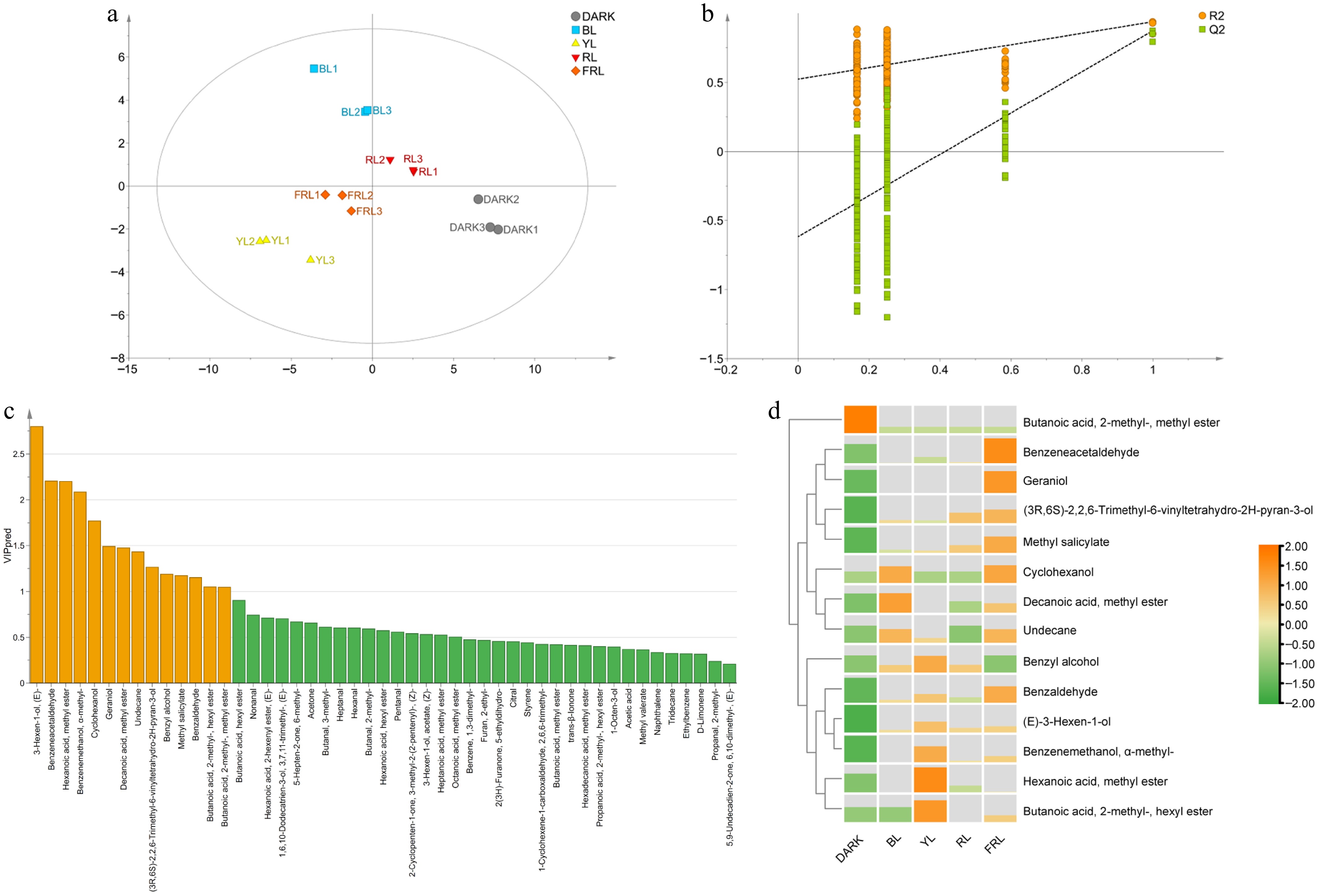
Figure 5.
Comparative analysis of differences in aroma quality of SWT under different light quality withering treatments. (a) OPLS-DA analysis of volatile components. (b) Cross-validation of the OPLS-DA model for volatile components. (c) VIP prediction (VIP pred) of volatile components. (d) Heatmap analysis of key aroma compounds with VIP >1. Data were from three independent experiments (n = 3), and are expressed as means ± SD.
Key aroma compounds identified by ROAVs
-
In tea, the content of volatile compounds is extremely low, accounting for less than 0.1% of the total dry mass. At present, in the field of food, the number of identified volatile compounds is as many as tens of thousands. However, only a very small number of them can play a significant role in the formation of tea aromas. This part of the compounds are defined as the 'key aroma compounds'[31]. Researchers in the field of olfaction point out that when the ROAV value of an odor compound is greater than 1, it is generally believed that the compound plays a certain role in the overall aroma composition of the analyzed sample. Moreover, if the ROAV value exceeds 100, such odor compounds are regarded as making a significant contribution to the formation of the overall aroma of the sample[32].
The aroma of tea is not determined solely by the content, but jointly by the odor threshold and concentration. Combining the relative contents of aroma components in SWT withered under different light qualities, and referring to the threshold values in relevant literature[11,19], the ROAV values were calculated based on the screened key aroma components (VIP > 1). Among them, there are a total of 46 key aroma components with ROAV > 1 (Supplementary Table S3). The results clearly indicate that under the FRL treatment conditions, the contents of compounds such as benzeneacetaldehyde, geraniol, and trans-β-ionone, which bring a pleasant olfactory experience, are significantly higher than those in other treatment groups. In sharp contrast, the contents of aroma components like Heptanal, naphthalene, and (E)-1,6,10-dodecatrien-3-ol, 3,7,11-trimethyl-, which present an unpleasant odor, in the white tea treated with FRL are significantly lower than those in the white tea of other treatment groups. Under the YL treatment, the contents of aromatic substances that give a pleasant olfactory perception, such as benzenemethanol, α-methyl- and methyl salicylate, are second only to those under the FRL treatment, showing relatively prominent aromatic characteristics. In contrast to the DARK treatment, the ROAV values for compounds such as pentanal, butanoic acid, 2-methyl-, methyl ester, methyl valerate, 5,9-undecadien-2-one, 6,10-dimethyl-, (E)-exhibited declines under differing light treatments. The application of diverse light quality wilting techniques was observed to enhance the ROAV values of compounds including butanal, 2-methyl-, hexanal, 3-hexen-1-ol, (E)-, hexanoic acid, methyl ester, benzaldehyde, heptanoic acid, methyl ester, benzeneacetaldehyde, nonanal, benzenemethanol, α-methyl-, geraniol, citral, octanoic acid, methyl ester, (3R,6S)-2,2,6-trimethyl-6-vinyltetrahydro-2H-pyran-3-ol, trans-β-ionone, methyl salicylate, 1-cyclohexene-1-carboxaldehyde, 2,6,6-trimethyl-, hexanoic acid, hexyl ester. Notably, compared with the DARK group, the relative odor activity values of naphthalene and ethylbenzene increased significantly under BL treatment. Naphthalene and ethylbenzene serve as pivotal characteristic compounds in the fragrance profile of green tea[30], meriting further in-depth investigation in forthcoming studies. The administration of YL treatment exhibited a substantial augmentation, by 60.83%, in the relative odor activity value (ROAV) of the volatile compound 1-octen-3-ol. This compound is characterized by a fresh, green aromatic profile[33].
Relationship between potential key aroma compounds and sensory attributes of SWT
-
To elucidate the relationships among sensory attributes, potential key aroma compounds, and samples with distinct characteristics, a partial least squares-discriminant analysis (PLS-DA) correlation loading plot was generated (Fig. 6). As shown, samples were distinctly clustered into groups: the DARK group (DARK1, DARK2, DARK3) was separated on the right side, while groups including YL, FRL, RL, and BL were distributed to the left and central regions. This clustering pattern suggested remarkable differences in volatile profiles among sample groups, which could be driven by processing modalities variations.
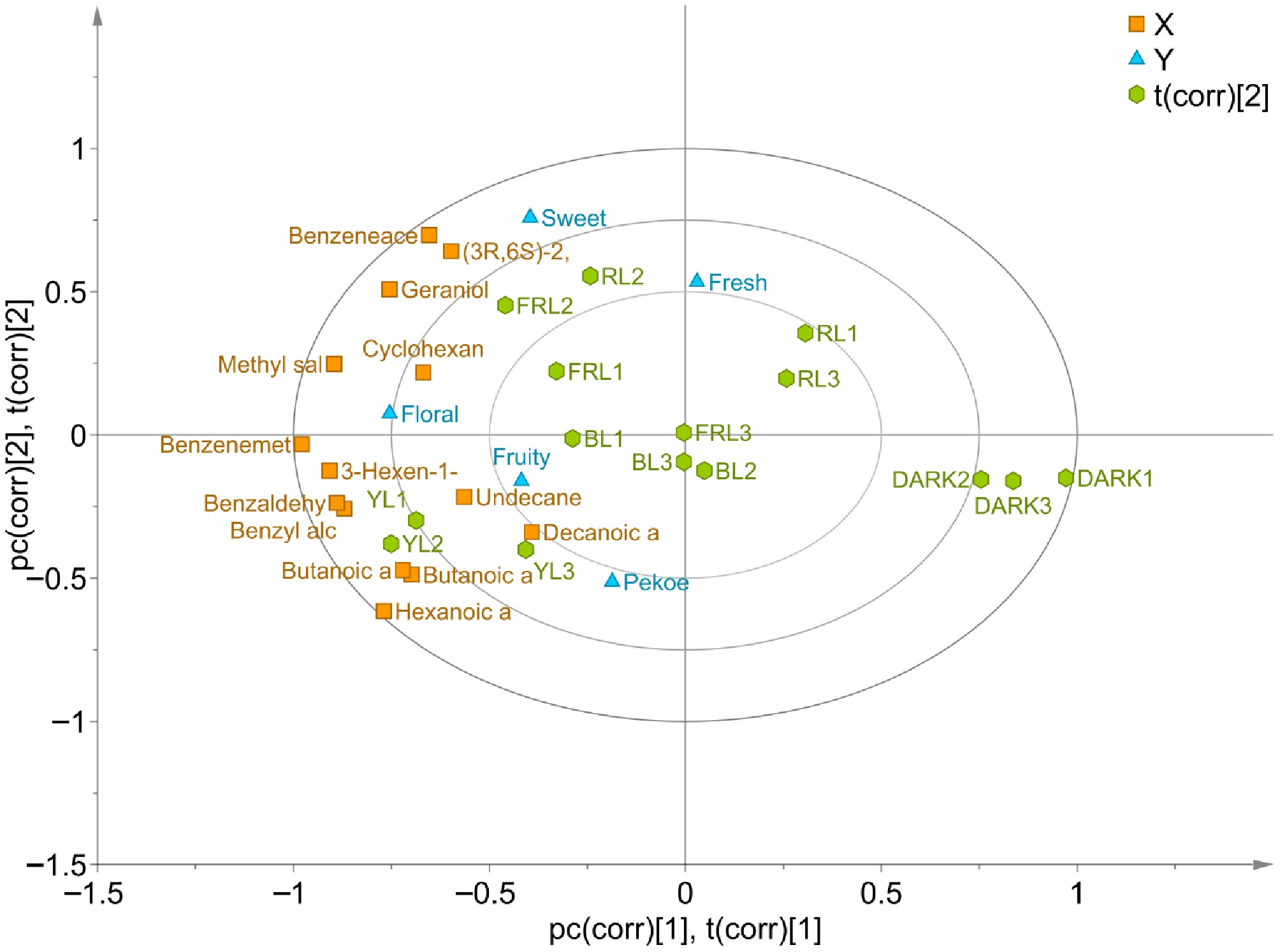
Figure 6.
PLS plots for SWT, the sensory attributes and key volatile compounds. Data were from three independent experiments (n = 3), and are expressed as means ± SD.
Compounds located farther from the origin contributed more significantly to sample differentiation[34]. Multivariate statistical analysis (e.g., PCA) revealed that four key aroma-active compounds—geraniol, benzeneacetaldehyde, methyl salicylate, and (3R,6S)-2,6-trimethyl-6-vinyltetrahydro-2H-pyran-3-ol—were clustered in the left quadrant, showing close proximity to the YL and FRL treated SWT samples (Fig. 6). These compounds represent three core aroma classes with distinct sensory contributions: geraniol imparts intense rose-like floral notes and sweet citrusy nuances; benzeneacetaldehyde delivers characteristic honey-like sweetness and subtle almond-like floral aroma; and methyl salicylate contributes fresh wintergreen and minty fragrances, while (3R,6S)-2,6-trimethyl-6-vinyltetrahydro-2H-pyran-3-ol adds soft fruity and herbal undertones[35,36]. In Fig. 6, the ester compounds hexanoic acid methyl ester, and decanoic acid methyl ester were clustered, which are closely associated with the 'freshness' green, grassy notes and 'downy aroma' soft, creamy floral notes of white tea[36,37]. Notably, the relative contents of these two esters varied significantly across different light treatments: they were moderately accumulated under BL but were downregulated under FRL and DARK conditions. This clustering pattern directly aligns with the sensory evaluation results of this study (Fig. 2). FRL- and YL-treated white teas exhibited significantly more prominent sweet notes honey and caramel-like, floral notes, rose and jasmine-like, and fruity notes citrus and peach-like, compared to other light treatments, confirming that YL and FRL specifically enhance the accumulation of these aroma compounds to shape the characteristic flavor profile.
-
Light is a key factor affecting tea quality during cultivation and processing. Different light qualities not only influence shoot development of tea plants but also regulate the metabolism of quality-related components and aroma substances. White tea, as one of China's traditional six major tea categories, features a fresh and elegant aroma, and a mellow taste with a unique charm[3]. This study confirmed that far-red light withering can significantly improve the aroma of Sangzhi white tea, suggesting that far-red light withering is an important strategy for enhancing tea quality and aroma.
Combined sensory evaluation (Fig. 2), and biochemical analysis (Fig. 3) showed that both FRL and YL treatments exerted positive effects on the aroma improvement of SWT. FRL was more effective than YL in enhancing the sweet and fruity aromas of SWT. Specifically, FRL-treated tea exhibited a more intense and complex flavor profile characterized by rose-like floral notes, honey-like sweetness, citrus/peach-like fruity notes, and a refreshing wintergreen undertone, while YL-treated tea showed relatively milder sweet and fruity notes with prominent pear- and lily-like nuances. The results of this study are consistent with those of previous studies[3]. Therefore, we speculate that FRL predominantly promotes the accumulation of high-intensity floral/fruity compounds, whereas YL mainly enhances aromatic alcohols/esters and moderate citrusy notes.
Light can not only regulate the quality and flavor of tea, but also modulate cellular metabolites in tea leaves and affect the accumulation of its major quality components[14]. The present study found that the total content of tea polyphenols remained unchanged under different light treatments, but their relative ratio to amino acids (i.e., the decreased polyphenol-to-amino acid ratio) suggests a potential regulatory role in flavor modulation, which was significant under FRL and BL treatments (Fig. 3). These results are consistent with those reported during the yellowing process[23]. Specifically, tea polyphenols are highly likely to contribute to taste changes during yellowing[38]: Yu et al. extensively studied tea polyphenols, particularly epigallocatechin gallate (EGCG), and confirmed their key role in inducing tea astringency. Complementarily, Wang et al. reported that reduced contents of catechins and caffeine can effectively alleviate the bitter and astringent taste of brewed tea—further supporting the notion that the altered P/A ratio under light quality withering may refine taste by optimizing the balance between polyphenol-mediated astringency and amino acid-derived freshness[23]. Therefore, combined with the results of sensory evaluation, light withering, especially represented by FRL, has exerted a positive effect on improving the quality of SWT.
Differences in aroma components
-
Although previous studies have preliminarily revealed the changes in aroma components during withering, and confirmed that light plays an important regulatory role in tea aroma formation, the dynamic changes in key aroma substances during light withering of white tea (especially FRL withering) remain unclear, which is the issue to be addressed in this study. Studies have shown that key aroma-active compounds commonly found in white tea include benzaldehyde, benzeneethanol, geraniol, and β-ionone[39,40]. β-Ionone is crucial for the formation of the characteristic 'honey-floral' dual aroma in tea. Benzyl alcohol is recognized as a key contributor to the sweet, fruity pear, apple-like, and delicate flora notes of white tea, while benzaldehyde adds a fresh, almond-like aroma with subtle floral sweetness[34]. Geraniol, as a high-intensity floral aroma compound, delivers a rich rose- and geranium-like fragrance with sweet peach undertones, significantly enhancing the aromatic intensity and elegance of white tea[35,36,41].
Among the key aroma components enriched under FRL treatment, geraniol exhibited the highest content (51.4 ± 11.3 μg/g) (Supplementary Table S2) and served as the core contributor to the characteristic 'honey aroma' of SWT (Fig. 5). This terpenol compound not only emits a typical rose-like floral note but also delivers a rich honey-like sweetness with subtle fruity undertones, which directly dominates the overall sweet and fragrant sensory profile. Furthermore, β-ionone (3.6 ± 0.6 μg/g), a C13-norisoprenoid derived from carotenoid cleavage[37,42,43], functioned as an important synergistic component: its violet floral aroma and woody sweetness interacted with the honey-like sweetness of geraniol, significantly enhancing the persistence and complexity of the composite aroma, consistent with previous reports that β-ionone is pivotal for the formation of the 'honey-floral' dual characteristics in tea[44]. In addition, benzaldehyde (59.9 ± 2.5 μg/g) contributed to the aroma harmony by providing faint almond and nutty notes, which enriched the aroma layers and rendered the honey-like sweetness more mellow[45]. Collectively, these three compounds synergistically constructed the unique sweet and fragrant honey aroma of FRL-treated SWT, with geraniol as the dominant factor, β-ionone as the synergistic enhancer, and benzaldehyde as the layer-enriching auxiliary. Nearly all major aroma compounds in white tea are classified as endogenously biosynthesized volatile compounds, such as fatty acid-derived volatiles, amino acid-derived volatiles, volatile terpenes, and carotenoid-derived volatiles[46,47]. Most of these compounds belong to the alcohol class, and most exhibit floral, fruity, and sweet notes[34,45]. In addition, geraniol, which possesses floral and sweet characteristics, is a degradation product of glycosides and carotenoids and plays a crucial role in the fundamental floral scents and aromas of plants[15,48]. The synergistic upregulation of geraniol, benzeneacetaldehyde, and trans-β-ionone under FRL treatment suggests that FRL may simultaneously activate three aroma metabolic pathways[49]: (1) the monoterpenoid biosynthesis pathway (geraniol)[50,51]; (2) the aromatic aldehyde biosynthesis pathway (benzeneacetaldehyde)[26]; and (3) the carotenoid cleavage pathway (trans-β-ionone), thereby forming a multi-dimensional sweet and fruity aroma network[35].
Geraniol is a representative aromatic compound of monoterpene alcohols. With its characteristic rose-like fragrance and sweet fruity notes, it is a key component contributing to the core sensory quality of white tea, namely 'hairy aroma, honey taste, rich floral and fruity flavor'. Geraniol biosynthesis uses geranyl pyrophosphate (GPP) as the core precursor and is mainly fulfilled via two pathways: the classical pathway and the non-classical pathway[13]. The classical pathway (MEP pathway) is common in most plants and is catalyzed by geraniol synthase (GES), which specifically converts GPP into geraniol in one step, representing the main route for geraniol biosynthesis. The non-classical pathway (MVA pathway) is species-specific, as represented in roses. In the absence of GES, GPP is produced by bifunctional geranyl/farnesyl pyrophosphate synthase, then hydrolyzed by Nudix family diphosphatase to form geranyl monophosphate (GP), and finally catalyzed by phosphatase to generate geraniol. Previous studies have confirmed that both the MEP pathway and the MVA pathway are involved in geraniol biosynthesis in tea plants[13]. However, during far-red light withering, which of the two pathways is the dominant one regulating geraniol biosynthesis in tea shoots remains to be further investigated.
-
In this investigation, HS-SPME-GC-MS methodology was employed to discern and analyze the volatile constituents present in SWT subjected to five distinct light qualities. The findings revealed significant variations in the nature, quantity, and concentration of volatile compounds across teas exposed to different light conditions. A total of 75 key aroma compounds were identified. Research has confirmed that under FRL treatment, the floral and fruity aromas of the tea are significantly enhanced, while the grassy notes are notably diminished. In contrast, the YL treatment exhibits a somewhat less pronounced effect in this regard. This phenomenon is likely attributed to elevated levels of phenylacetaldehyde, geraniol, and trans-β-ionone in the FRL-treated tea. The findings of this study will provide solid technical support and scientific guidance for the precise and targeted production of SWT during its promotion phase.
-
Tea belongs to the category of food beverages, and its sensory evaluation does not require ethical permission. Therefore, no human ethics committee or formal documentation process was available, but appropriate protocols for protecting the rights and privacy of all participants were utilized during the study, e.g., no coercion to participate, full disclosure of the study requirements and risks, written or verbal consent of participants, no release of participant data without participants' knowledge, and the ability to withdraw from the study at any time. In addition, the publication of all sensory research data was subject to the consent of all participants and used their information.
-
The authors confirm contribution to the paper as follows: study conception and design: Zhou Z, Zhang Z, Han W, Zhang J; data collection: Zhang J, Zhao Y, Jin K, Xin S; analysis and interpretation of results: Zhang J, Zhou J, Ma Z, Gai S; draft manuscript preparation: Zhang J, Liu C, Huang F, Zhao J. All authors reviewed the results and approved the final version of the manuscript.
-
The datasets generated during and/or analyzed during the current study are available from the corresponding author upon reasonable request.
-
This work was supported by the Hunan Optical Agriculture Engineering Technology Research Center (2018TP2003), the Key R & D Projects in Hunan Province (2024JJ3019), and the chemical substance transformation study of Sangzhi white tea (xczx-2025009). Meanwhile, thanks go to the research and development experimental bases at Xiangfeng Tea Group's Changsha Jinjing Base and Sangzhi County Xiangfeng Sangzhi White Tea Company Base for providing essential support for conducting the experiments in this study. Gratitude is also extended to the Provincial Enterprise Science and Technology Innovation & Entrepreneurship Team under the Hibiscus Program for its support.
-
The authors declare that they have no known competing financial interests or personal relationships that could have appeared to influence the work reported in this paper.
-
accompanies this paper online at: https://doi.org/10.48130/bpr-0026-0014.
- Supplementary Table S1 Sensory evaluation of white tea samples under different lighting conditions.
- Supplementary Table S2 Aroma components of Sangzhi white tea subjected to withering under different light qualities.
- Supplementary Table S3 rOAV values of key aroma components in Sangzhi white tea withered under different light qualities.
- Supplementary Fig. S1 Photographs of Sangzhi white tea under different light quality withering treatments.
- Supplementary Fig. S2 Cluster analysis of key aromatic components in Sangzhi white tea under different light quality withering.
- Copyright: © 2026 by the author(s). Published by Maximum Academic Press, Fayetteville, GA. This article is an open access article distributed under Creative Commons Attribution License (CC BY 4.0), visit https://creativecommons.org/licenses/by/4.0/.
-
About this article
Cite this article
Zhang J, Jin K, Zhou J, Zhao Y, Xin S, et al. 2026. Research on the influence of different light qualities on the main volatile components of Sangzhi white tea during withering. Beverage Plant Research 6: e019 doi: 10.48130/bpr-0026-0014 

Research on the influence of different light qualities on the main volatile components of Sangzhi white tea during withering
- Received: 15 February 2026
- Revised: 01 April 2026
- Accepted: 13 April 2026
- Published online: 26 May 2026
An Author Correction to this article was published on 30 June 2026, https://doi.org/10.48130/bpr-0026-0029
Abstract: Withering is a crucial step in white tea processing that significantly impacts the final product quality. Traditional solar withering, despite its effectiveness, suffers from inconsistency due to variable weather and spectral composition, resulting in unstable quality. Although artificial light sources have emerged as a controllable alternative for white tea withering, the role of spectral characteristics in quality formation during withering remains unclear. To address this gap, the present study investigated the effects of light quality on the withering of Sangzhi white tea (SWT). The results showed that RL (red light) significantly promoted the accumulation of theanine, reaching 10.4 mg/g, and reduced the ratio of tea polyphenols to amino acids, thereby enhancing the sweet and mellow taste of the tea. In contrast, far-red light (FRL) uniquely increased the contents of benzaldehyde (59.9 ± 2.5 μg/g), geraniol (51.4 ± 11.3 μg/g), and trans-β-ionone (3.6 ± 0.6 μg/g), intensifying floral and fruity aromas. Yellow light (YL) improved soluble sugar content and texture, while blue light (BL) exerted intermediate effects. Multivariate analyses (PCA and PLS-DA) further confirmed that light quality is a critical determinant of flavor composition, as evidenced by the distinct clustering patterns of metabolic profiles. Notably, RL and FRL treatments significantly promoted the quality formation of SWT, as evidenced by enhanced flavor compounds and desirable sensory characteristics. These findings not only elucidate the photoregulatory mechanisms underlying tea quality formation but also establish a novel framework for precision processing. By integrating spectral optimization with metabolic insights, this work provides actionable strategies to stabilize and enhance the sensory attributes of SWT. This addresses academic and industrial demands for standardized, high-quality production.