













-
Limited water availability is becoming a significant and evolving concern in the Mediterranean region[1]. Despite the greater drought and heat tolerance of warm-season species, cool-season grasses have traditionally been the preferred choice for establishing turfgrasses in European Mediterranean areas[2,3]. However, the need for suitable turfgrass options is of increased importance at this time, particularly for reducing water consumption; therefore, the use of warm-season turfgrass species has dramatically increased[4−6]. Bermudagrass (Cynodon dactylon [L.] Pers) is one of the most commonly used warm-season species, known for its ability to adapt to a wide range of soils, and high durability[7]. Due to its strong heat and drought tolerance, it is possible to maintain bermudagrass turf under a low water supply during the warmer months[2,8]. Furthermore, its high traffic tolerance and recuperative capacity, primarily due to extensive rhizome and stolon development, make bermudagrass a popular choice not only for amenity and recreational turfgrass, but also for sports turf[9,10]. These advantages may be limited by its poor adaptation to winter conditions, which could shorten its growing season due to an extended period of dormancy[6,11,12]. When selecting bermudagrass cultivars for transitional zones, it is crucial to consider their ability to withstand winter conditions, especially in the first year after establishment, when the turfgrass is not yet fully mature[13]. Carbohydrate reserves are widely acknowledged as key factors in the tolerance of turfgrass to stress and cold temperatures[14]. Typically, bermudagrass' green color returns in the spring once the average soil temperature consistently remains above 10 °C[15]. Differences in cold hardiness among cultivars are primarily determined by plant metabolism during the autumn months, which affects the accumulation of food reserves, primarily represented by nonstructural carbohydrates, in the stolons and rhizomes[11]. Under favorable conditions that promote rapid growth and high metabolic activity, the nonstructural carbohydrate concentration tends to decrease; conversely, when environmental factors limit growth despite sustained photosynthetic activity, higher levels of carbohydrates accumulate in the storage organs[2,16]. Nonstructural carbohydrates are utilized to maintain respiration when photosynthesis is insufficient for sustaining metabolism, and to support new shoot growth in the spring[17]. The main reserve compounds are nonstructural carbohydrates, including reducing sugars (glucose and fructose) and starch[17]. A number of investigations have also highlighted a strong link between higher carbohydrate accumulation and enhanced recovery in spring[2,3]. In warm-season turf species, the overwintering reserves are mainly composed of starch[18]. Studies have shown that bermudagrass cultivars with a higher stolon starch content during winter tend to green up earlier in the spring[11]. Therefore, to enhance genetic selection and assist in the selection of bermudagrass cultivars suited for transitional environments, it appears essential to focus on the cultivar's ability to accumulate starch in storage organs such as the stolons and rhizomes before winter. However, according to their genetic basis, each cultivar responds differently depending on the climatic conditions, and cultural practices could also strongly affect their growth dynamics and reserve accumulation. Among these cultural practices, fertilization emerges as one of the most relevant factors for bermudagrass performance in temperate climates, with nutrient availability in autumn, impacting the duration of winter dormancy[19]. Several studies have shown that late-season nitrogen application improves the green-up of bermudagrasses and extends their autumn color retention[19−22].
The current recommendations for turfgrass maintenance aim to minimize the loss of nutrients from applied fertilizers; therefore, the use of biostimulants in turfgrass management has been growing to reduce chemical fertilizers, with the goal of healthier and more resilient turfgrass. Plant biostimulants are substances and materials, including humic substances, protein hydrolysates, growth regulators, seaweed extracts, beneficial microorganisms, and other organic products, with the exception of nutrients and pesticides, which, when applied to plants, seeds, or growing substrates in specific formulations, have the capacity to modify the physiological processes of plants in a way that provides potential benefits to growth, development, and/or stress responses[23]. The use of biostimulants in turfgrass management mainly focuses on golf courses and sports turf, which experience high traffic conditions and is poor in fertile substrates; this gives increased importance to using biostimulants to improve its overall sports surface performance[24]. Several studies have reported the positive effect of biostimulants in enhancing disease resistance, thatch control, drought and heat stress resistance, and general turfgrass quality[24−28]. However, information is scarce on the effects of biostimulants on extending the bermudagrass growth period in temperate climates, and especially their role in the accumulation of food reserves in storage organs. De Luca & Gómez de Barreda[29] found a modest green-up acceleration using an amino acid-based biostimulant on Princess 77 bermudagrass in Valencia, Spain. Despite some observed advantages, there is a lack of reliable scientific knowledge on the effects of biostimulants on bermudagrass performance, especially with cultivars growing in different field conditions. Additionally, the use of biostimulants in combination with chemical fertilizers, which is currently the most used practice, should be assessed[25].
The present study aimed to assess the performance of bermudagrass cultivars in two distinct climatic areas within the European Mediterranean region during the spring green-up and autumn–winter periods, under various nitrogen fertilization programs using urea and an amino acid biostimulant. The storage organ starch content was determined during the autumn and late winter period to evaluate the impact of fertilization and climate conditions on the accumulation and use of food reserves.
-
A field trial was conducted from June 2022 to June 2024 at the experimental agricultural farm of Padova University in Legnaro, Northern Italy (45°20' N, 11°57' E, 8 m a.s.l.), and the experimental agricultural farm of the Polytechnic University of Valencia in Valencia, Eastern Spain (39°48' N, 0°34' W; 5 m a.s.l.), to assess turfgrass quality and environmental adaptability of three seeded-type bermudagrass cultivars under different biostimulant-based programs. According to the Köppen classification, Legnaro has a humid subtropical climate, while Valencia has a Mediterranean climate. The monthly mean air temperature and precipitation during the study period for both locations and the long-term average are reported in Tables 1, 2. The soil at Legnaro was Oxyaquic Eutrudepts, coarse-silty, mixed, and mesic containing 37% sand, 32% silt, and 31% clay, with a pH of 8.1, 2.54% organic matter, a C/N ratio of 12.3, a total N content of 3.8 mg g–1 (measured via combustion method), an Olsen P content of 27 mg kg–1, and an exchangeable K content of 130 mg kg–1 (measured via buffered BaCl2 method). The soil at Valencia was Typic Xerofluvents, sandy loam, not stony, and thermic, containing 77% sand, 13% silt, and 10% clay, with a pH of 8.5, 2.49% organic matter, a C/N ratio of 12.4, an N content of 1.1 mg g–1 (measured via the Kjeldahl method), an Olsen P content of 37.7 mg kg–1, and an exchangeable K content of 24 mg kg–1 (measured via buffered NH4OAc method).
Table 1. Monthly mean air temperatures (°C) over the study period and long-term average at the experimental agricultural farm of the University of Padova in Legnaro, Northeastern Italy (Lat. 45°20' N, Long. 11°57' E; elevation 8 m), and at the experimental agricultural farm of Polytechnic University of Valencia, in Valencia, Eastern Spain (Lat. 39°48' N, Long. 0°34' W; elevation 5 m).
Month Legnaro (Italy) Valencia (Spain) 2022 2023 2024 36 yr avg. 2022 2023 2024 22 yr avg. Jan. 3 6.2 3.6 3.2 10.1 10.9 13.2 9.9 Feb. 6.2 5.3 8.1 4.9 12.6 9.7 13.9 10.6 Mar. 8.2 10.4 11.1 9.0 13.0 15.9 14.6 12.7 Apr. 12 12.3 14.2 13.2 15.5 17.3 16.4 15.3 May 20 18 18.1 18.0 20.3 19.4 20.0 18.7 June 24.5 23 22.8 22.0 25.6 24.1 23.4 22.8 July 26.2 25.1 26.4 23.0 27.4 30.3 26.5 25.3 Aug. 24.6 24.2 26.3 23.4 28.1 27.5 27.8 25.5 Sept. 19.3 21.7 19.8 18.9 24.9 23.9 23.7 22.4 Oct. 16.8 17 15.9 14.0 20.9 21.7 20.7 18.5 Nov. 10.2 8.4 7.8 8.9 17.4 17.2 16.8 13.3 Dec. 6.5 5.2 4.5 4.1 14.5 12.5 12.5 10.4 Year 14.8 14.7 14.9 13.6 19.2 19.2 19.1 17.1 Table 2. Monthly precipitations (mm) over the study period and long-term average at the experimental agricultural farm of the University of Padova in Legnaro, Northeastern Italy (Lat. 45°20' N, Long. 11°57' E; elevation 8 m), and at the experimental agricultural farm of Polytechnic University of Valencia, in Valencia, Eastern Spain (Lat. 39°48' N, Long. 0°34' W; elevation 5 m).
Month Legnaro (Italy) Valencia (Spain) 2022 2023 2024 36 yr avg. 2022 2023 2024 22 yr avg. Jan. 20 58 58 43 11 0 7 33 Feb. 10 0 110 51 3 34 8 22 Mar. 14 27 100 57 172 0 8 38 Apr. 40 77 52 73 65 0 19 35 May 33 169 193 89 71 11 4 33 June 11 30 74 73 2 18 22 17 July 42 100 49 72 3 26 47 11 Aug. 105 75 42 65 25 26 0 17 Sept. 94 34 113 81 24 106 119 56 Oct. 6 83 204 84 37 3 81 56 Nov. 98 74 12 89 30 0 13 47 Dec. 92 34 65 61 12 2 13 29 Year 565 761 1072 837 455 226 341 394 The bermudagrass cultivars (Arden 15, Princess 77, and Sultan) were selected based on their popularity and potential for use in the Mediterranean environment. The cultivars were hand-seeded in both locations on June 8, 2022, at a rate of 10 g m–2. Before seeding, the soil was plowed to a depth of 20 cm and harrowed, before the area was fertilized with 50 kg ha−1 of N at Legnaro and 75 kg ha−1 of N at Valencia, using the complex fertilizers K-Adriatica 8-24-24 (Adriatica S.p.A., Loreo, RO, Italy) and Sportsmaster CRF Mini High N 24-5-11 (AICL, Barcelona, Spain), respectively. From seeding to emergence, plots were irrigated daily with 5 mm d−1 through an overhead sprinkler irrigation system. After emergence, irrigation was performed weekly at 80% ET from July to August. A post-emergence herbicide (Spain: U-46 DMA Fluid, MCPA 50% [Nufarm, Barcelona, Spain] at 1.5 L ha−1; Italy: Joker Diachem spa, dicamba 21.2%) was used to control broadleaf weeds during the establishment phase. After establishment, grass and broadleaf weeds were regularly removed by hand. No pesticides were used for disease control. Starting on July 15, 2023, three biostimulant-based programs were implemented, consisting of different nitrogen (N) applications using granular urea (46%) and the plant biostimulant Hicure (14% N w/v) applied via foliar distribution, to achieve the same amount of N per year.
Hicure is a commercial amino acid-based biostimulant (14 N - 0 P2O5 - 0 K2O), N-NH4 (1.1% w/v), and N-organic from free amino acids (12.7% w/v), mainly L-glycine and L-proline. Table 3 presents the three biostimulant-based programs for the first (July–November 2023) and the second growing season (June–November 2024). Program 1 consisted of urea application only, while Program 2 consisted of urea at 30% green-up only, and Hicure applied every month from May to November. Program 3 consisted of urea at 30% green-up only, and Hicure applied every 15 d from May to September. For simplicity, Program 1 will hereafter be called the 'urea' treatment, Program 2 will be the 'Hicure' treatment, and Program 3 will be the 'Hicure every 15 d' treatment. The experiment was established as a strip-plot experiment with three replications, with bermudagrass treatments as horizontal plots and biostimulant-based programs as vertical plots to obtain individual plots of 2 m × 2 m size. Plots were mowed with a rotary mower machine set to a height of 32 mm once a week during the growing season, except for the warmer months (June–August), when they were mowed twice a week.
Table 3. Biostimulants-based programs used during the experimental period in the plot trials established at the experimental agricultural farm of the Polytechnic University of Valencia in Valencia, Eastern Spain (Lat. 39°48' N, Long. 0°34' W; elevation 5 m), and at the experimental agricultural farm of the University of Padova in Legnaro, Northeastern Italy (Lat. 45°20' N, Long. 11°57' E; elevation 8 m).
N (kg ha−1) Program 1:
UreaProgram 2:
HICURE monthlyProgram 3:
HICURE every 15 d2022 15 July 25 25 (urea) 25 (urea) 10 Aug. 25 25 (urea) 25 (urea) 5 Sept. 25 12.5 6.25 1 Oct. − 12.5 6.25 15 Oct. − − 6.25 1 Nov. − − 6.25 15 Dec. − − − Total N 2022 125 125 125 2023 At 30% green-up 25 25 (urea) 25 (urea) 1 May − 25 12.5 15 May 25 − 12.5 1 June − 25 12.5 15 June 25 − 12.5 1 July − 25 12.5 15 July 25 − 12.5 1 Aug. − 25 12.5 15 Aug. 25 − 12.5 5 Sept. 25 25 12.5 1 Oct. − 25 − 15 Oct. − − − 1 Nov. − 25 − Total N 2023 150 150 150 2024 At 30% green-up 25 25 (urea) 25 (urea) 1 May 25 − 12.5 15 May 25 12.5 Total N 2024 50 50 50 Total N-3 years 375 375 375 Every other week, starting from mid-October 2022, general turfgrass quality and color were visually evaluated on a scale from 1 to 9[30,31], and the normalized difference vegetation index (NDVI) was measured using a RapidScan CS-45 (Holland Scientific, Inc.). Additionally, from November to May, the percentage of turfgrass green cover was determined on a weekly basis through digital imaging to assess the loss of turfgrass color in autumn and spring green-up[32]. In autumn, when the plots approached dormancy (50% green turfgrass cover), and in spring, at the beginning of green-up (5%−10% green cover), a turfgrass sample of 20 cm × 20 cm × 5 cm (depth) was randomly collected from each plot. Turf samples were carefully washed to remove soil, and leaves, shoots, and roots were subsequently separated from stolons and rhizomes and discarded. Stolons were immediately frozen at –22 °C and subsequently freeze-dried, weighed to determine dry weight, and then analyzed for starch, glucose, and fructose concentration using HPLC (High-Pressure Liquid Chromatography)[33].
Turfgrass quality, color, normalized difference vegetation index (NDVI), turfgrass green cover when approaching dormancy and in spring green-up were subjected to analysis of variance using a linear mixed-effect model to test the effects of cultivars, treatments, sampling date, and their interactions. The ANOVA was performed separately for each location in each of the two experimental years. The starch, glucose, and fructose contents were subjected to analysis of variance using a linear mixed-effect model to test the effects of cultivars, treatments, location, and their interactions. The ANOVA was performed separately for each sampling date; the normality and homoscedasticity of residuals were checked by using graphical analyses, and a Bonferroni-corrected least significant difference (LSD) test with a significance level of P ≤ 0.05 was applied to detect statistically significant differences among means. All statistical analyses were performed using R v4.0.2[34], and additionally, the 'nlme' package for fitting mixed models and 'multcomp' for post hoc comparisons were used.
-
The analysis of variance for turf quality revealed a significant effect of the treatment, sampling date, and interaction between the cultivar and sampling date in the first year (2022−2023) in Spain. In the second year, significant effects of the cultivar, treatment, and sampling date, as well as the interactions between the cultivar and treatment and between the cultivar and sampling date, were also found (Table 4). In Italy, the same significant effects observed in Spain were found in the first year, while in the second year, only the sampling date and the interaction between the cultivar and sampling date were significant (Table 5). The interaction between the cultivar and sampling dates for both Spain and Italy is reported in Supplementary Fig. S1. No relevant differences occurred between the Sultan and Arden 15 cultivars during the experimental period in both locations, while in Spain, the Princess 77 cultivar in the warmer months (Table 1) reached higher ratings than Arden 15 and Sultan in particular (especially in the second year). In Italy, significant differences between cultivars occurred only on a few dates in the autumn (28 Oct 2022, 11 Oct and 8 Nov 2023), and spring (27 Apr, 12 May, and 15 May 2023; 24 Apr, 9 May, and 18 May 2024); however, similarly to Spain, Princess 77 exhibited lower ratings than Arden 15 and Sultan during spring green-up. Moreover, observing the turf quality ratings of both locations, the winter dormancy period was longer in Italy than in Spain, especially in winter 2023–2024. The interaction between the treatment and cultivar showed no differences between treatments, except for Arden 15, where the plots treated with Hicure every 15 d displayed higher ratings than the plots treated with urea (Fig. 1). Furthermore, Princess 77 showed a higher rate than the other cultivars.
Table 4. Results of the analysis of variance testing the effects of cultivar, treatment, sampling date, and their interactions on turfgrass quality (TQ), color (TC), normalized difference vegetation index (NDVI), and turf green cover when approaching dormancy (cover D), and in spring green-up (cover GU) periods of three bermudagrass cultivars ('Arden 15', 'Princess 77', and 'Sultan') established at the experimental agricultural farm of the Polytechnic University of Valencia in Valencia (Spain) in the 2 years of study.
Year 1 (Oct. 2022–May 2023) Year 2 (Oct. 2023–May 2024) TQ TC NDVI Cover D Cover GU TQ TC NDVI Cover D Cover GU Cultivar (C) ns† ** ns ns ns *** * * ns ns Treatment (T) *** *** ns ns ns ** *** *** ns ns Sampling date (Da) *** *** *** *** *** *** *** *** *** *** C × T ns ** ns ns ** ** * ns ns * C × Da *** *** * ns ns *** *** *** ns ns T × Da ns ns ns ns ns ns ns ns ns ns C × T × Da ns ns ns ns ** ns ns ns ns ns * Significant F test at the 0.05 level of probability; ** significant F test at the 0.01 level of probability; *** significant F test at the 0.001 level of probability. ns† not significant at the 0.05 probability level. Table 5. Results of the analysis of variance testing the effects of cultivar, treatment, sampling date, and their interactions on turfgrass quality (TQ), color (TC), normalized difference vegetation index (NDVI), and turf green cover when approaching dormancy (cover D), and in spring green-up (cover GU) periods of three bermudagrass cultivars ('Arden 15', 'Princess 77', and 'Sultan') established at the experimental agricultural farm of the University of Padova in Legnaro (Italy) in the 2 years of study.
Year 1 (Oct. 2022–May 2023) Year 2 (Oct. 2023–May 2024) TQ TC NDVI Cover D Cover GU TQ TC NDVI Cover D Cover GU Cultivar (C) ns† * * ns ns ns ns ns * ** Treatment (T) *** ** ** *** ns ns *** ns ns ns Sampling date (Da) *** *** *** *** *** *** *** *** *** *** C × T ns ns * ns ns ns ns *** * ns C × Da *** *** *** * *** *** ** *** * *** T × Da ns *** *** ns ns ns *** ns ns ns C × T × Da ns ns ns ns ns ns ns ns ns ns * Significant F test at the 0.05 level of probability; ** significant F test at the 0.01 level of probability; *** significant F test at the 0.001 level of probability. ns† not significant at the 0.05 probability level. 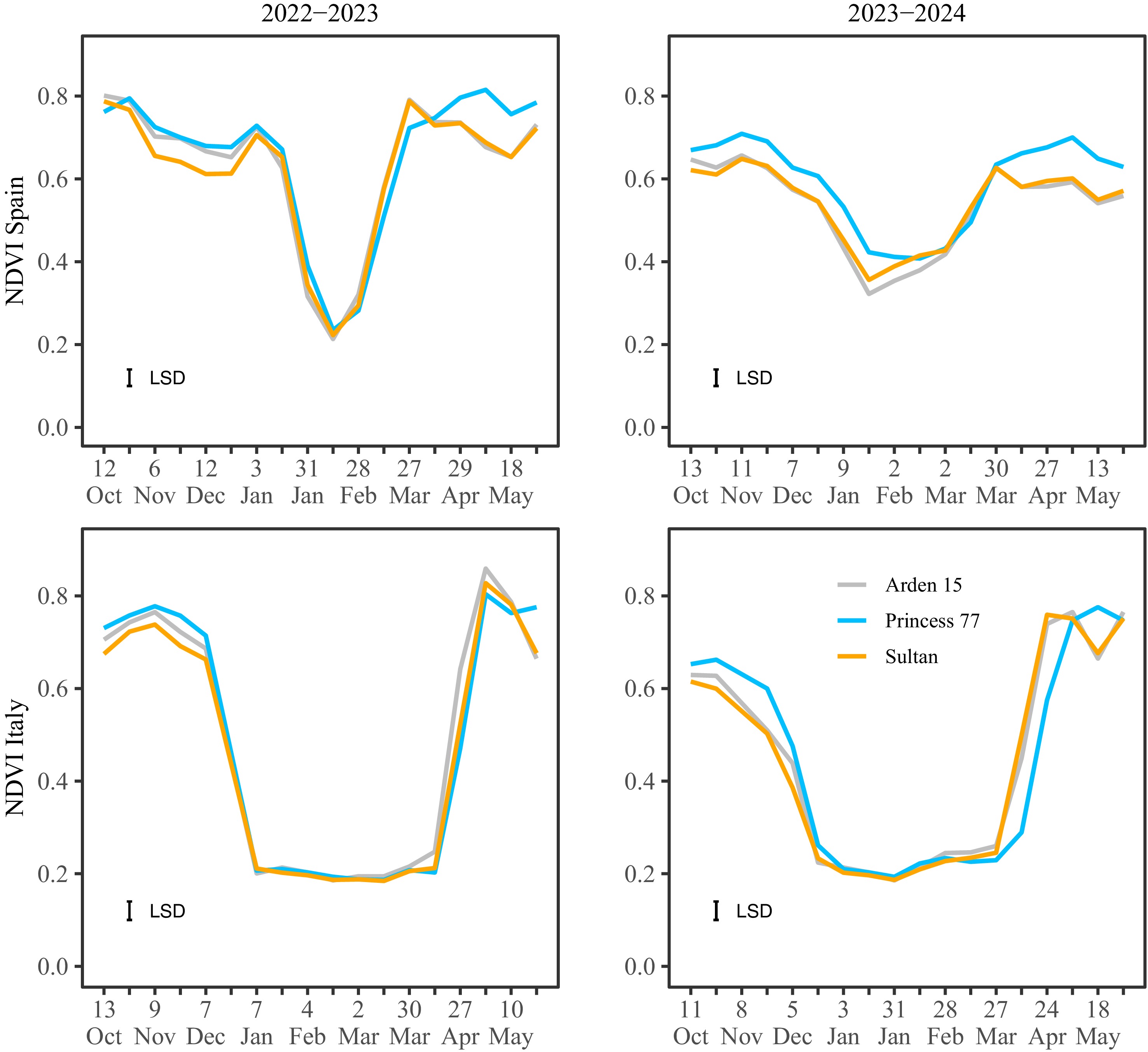
Figure 1.
The effects of cultivar and treatments on turf quality and turf color of three bermudagrass cultivars ('Arden 15', 'Princess 77',and 'Sultan') established at the experimental agricultural farm of the Polytechnic University of Valencia in Valencia (Spain), and on NDVI (below) of the same cultivars established at the experimental agricultural farm of the University of Padova in Legnaro (Italy) during the 2022−2023, and 2023−2024 growing seasons. Bars with different letters are significantly different at p < 0.05.
Turf color
-
For turf color, the results of the analysis of variance showed a significant effect of the interactions between cultivar and treatment, and between cultivar and sampling date, for both Spain and Italy across both years (Tables 4, 5). The turf color ratings displayed a similar trend to the turf quality ratings, with significant differences between the cultivars during the autumn and spring of both years. In Spain, Princess 77 received higher color ratings than Arden 15 and Sultan in the autumn and late spring of the 2022–2023 period and in the autumn and spring of the 2023–2024 period (Supplementary Fig. S2). Similar to the turf quality, in Italy, differences between the cultivars were limited to a few sampling dates in autumn and late spring. Princess 77 exhibited increased turf color during the warmer months (late spring and early autumn), while Arden 15 displayed higher ratings than Sultan in late spring (10 and 15 May 2023; 18 May 2024). Again, the long period of low ratings in Italy resulted from the longest winter dormancy in this location for both experimental periods.
The Princess 77 turf color ratings were higher than those of the other two cultivars for both years (Fig. 1), with no differences between them. During the first year, Arden 15 and Sultan displayed higher ratings when treated with urea than when treated with Hicure, while during the second year, Arden 15 treated with Hicure every 15 d showed a higher rate than the other treatments across the different cultivars.
NDVI
-
In both locations, the NDVI was significantly affected by the interaction between the cultivar and sampling date in both years of the study (Tables 4, 5). The interaction between the cultivar and treatment affected the NDVI in Italy in both years of study, while it was affected by the interaction between the treatment and sampling date in Italy only during the first year (Table 5). Furthermore, in Spain, the treatment affected the NDVI during the second year (Table 4). As observed for the turf quality, no relevant differences were found between Sultan and Arden 15 during the 2 years of the study in both locations (Fig. 2), with the exception of November and December of the first year in Spain, when Arden 15 and Princess 77 displayed values higher than those for Sultan. In Spain, during the spring of the first year and for most of the second year, Princess 77 reached higher values than the other cultivars (Fig. 2). In Italy, significant differences between Sultan and Princess 77 occurred in the autumn (October–December) of the first year, while in the middle of May of both years and in the autumn of the second year, Princess 77 displayed higher values than the other cultivars. In Italy, during the spring green-up of the second year, Princess 77 showed lower values than Sultan and Arden 15 (Fig. 2). Moreover, the NDVI confirmed that the winter dormancy period was considerably longer in Italy than in Spain, especially in winter 2023–2024.
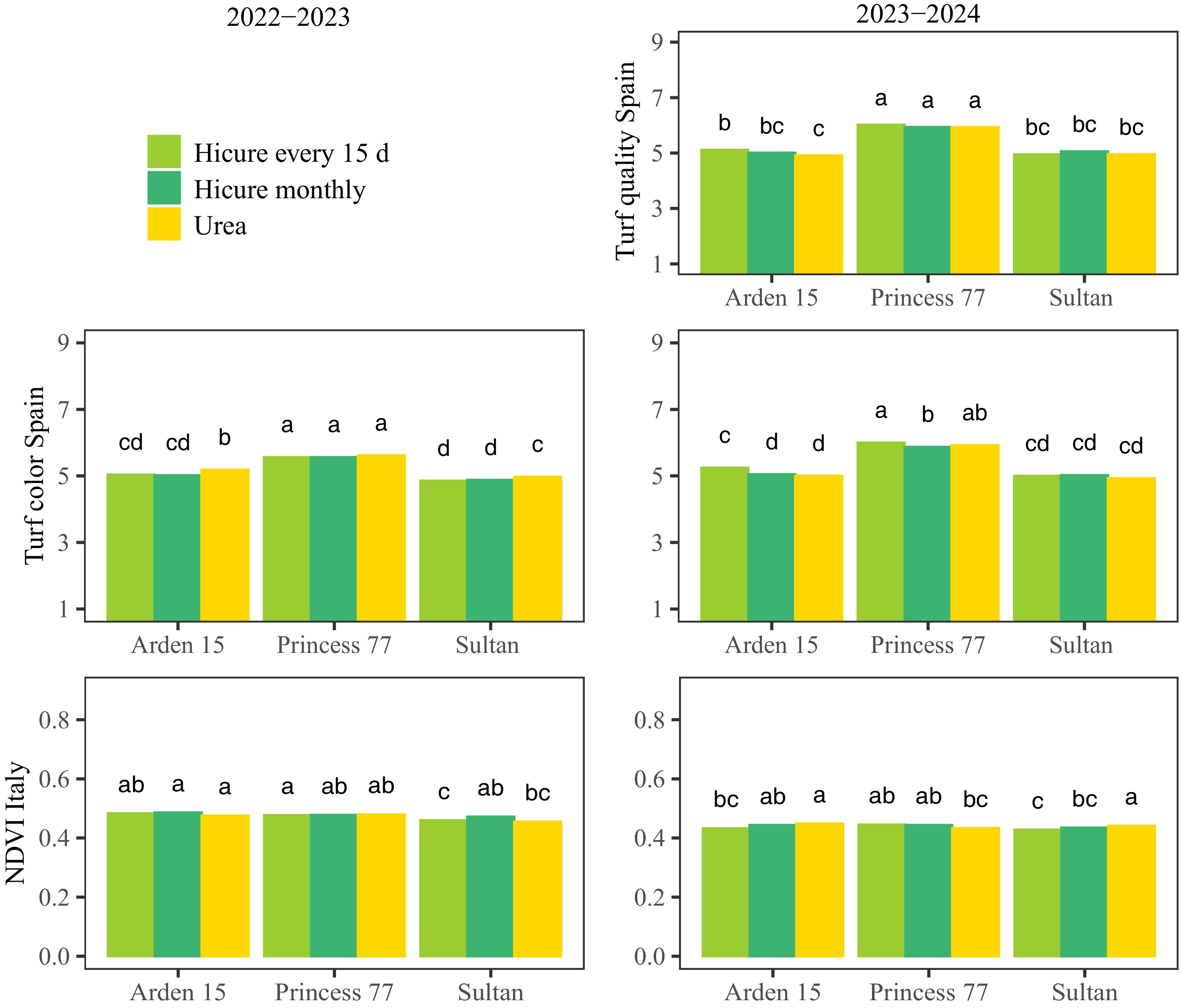
Figure 2.
The effects of cultivar and sampling date on NDVI of three bermudagrass cultivars ('Arden 15', 'Princess 77', and 'Sultan') established at the experimental agricultural farm of the Polytechnic University of Valencia in Valencia, Eastern Spain (Lat. 39°48' N, Long. 0°34' W; elevation 5 m) (above), and at the experimental agricultural farm of the University of Padova in Legnaro, Northeastern Italy (Lat. 45°20' N, Long. 11°57' E; elevation 8 m) (below), during the 2022−2023 (on the left), and 2023−2024 (on the right) growing seasons. Vertical bars represent the least significant differences (p = 0.05) for comparing means.
In Italy, the NDVI of Sultan treated with Hicure every 15 d was lower than that for all other plots during 2022−2023, except for Sultan treated with urea (Fig. 1), while during 2023−2024, it was lower than that of most of the other plots, except for Sultan treated with Hicure monthly, Arden 15 treated with Hicure every 15 d, and Princess 77 treated with urea.
Autumn turfgrass green cover
-
In Spain, the main effect of the sampling date was found to significantly affect the turfgrass green cover in autumn, when approaching dormancy (Table 1), with a linear decrease from 80% in October to 50% in January of the first year, and from 70% in October to 25% in January of the second year (data not shown). The interaction between the cultivar and treatments was significant in Italy only during the second year, while the interaction between the cultivar and sampling date was found to be significant in Italy in both years of the study (Table 5). In Italy, during the first year of the study, the main effect of the treatment on green cover approaching dormancy in autumn was also significant, with the plots treated with Hicure monthly having higher values (44%), followed by the plots treated with urea (42%) and by the plots treated with Hicure every 15 d (39%). In October of 2022−2023, a green cover of 80% was recorded for Princess 77, which was significantly higher than that achieved for Sultan (Fig. 3). A decrease in the green cover was recorded from November, ranging from 67% (Sultan) and 76% (Princess 77), to December, when it dropped to 15% (Sultan and Arden 15) and 27% (Princess 77). In January in Italy, the green cover of the bermudagrasses was almost 0 (Fig. 3). In October 2023−2024, the green cover in Italy ranged from 64% to 73% (Sultan and Princess 77, respectively) and a decrease was observed in November and again in December, with Princess 77 showing a higher percentage than the other cultivars in November only (Fig. 3). The green cover of the plots seeded with Princess 77 and treated with Hicure monthly and with urea was higher than that achieved for the other cultivar and treatment combinations, while the plots seeded with Princess 77 and treated with Hicure every 15 d displayed higher values than Arden 15 treated with Hicure monthly or urea, and Sultan treated with urea (Fig. 4).
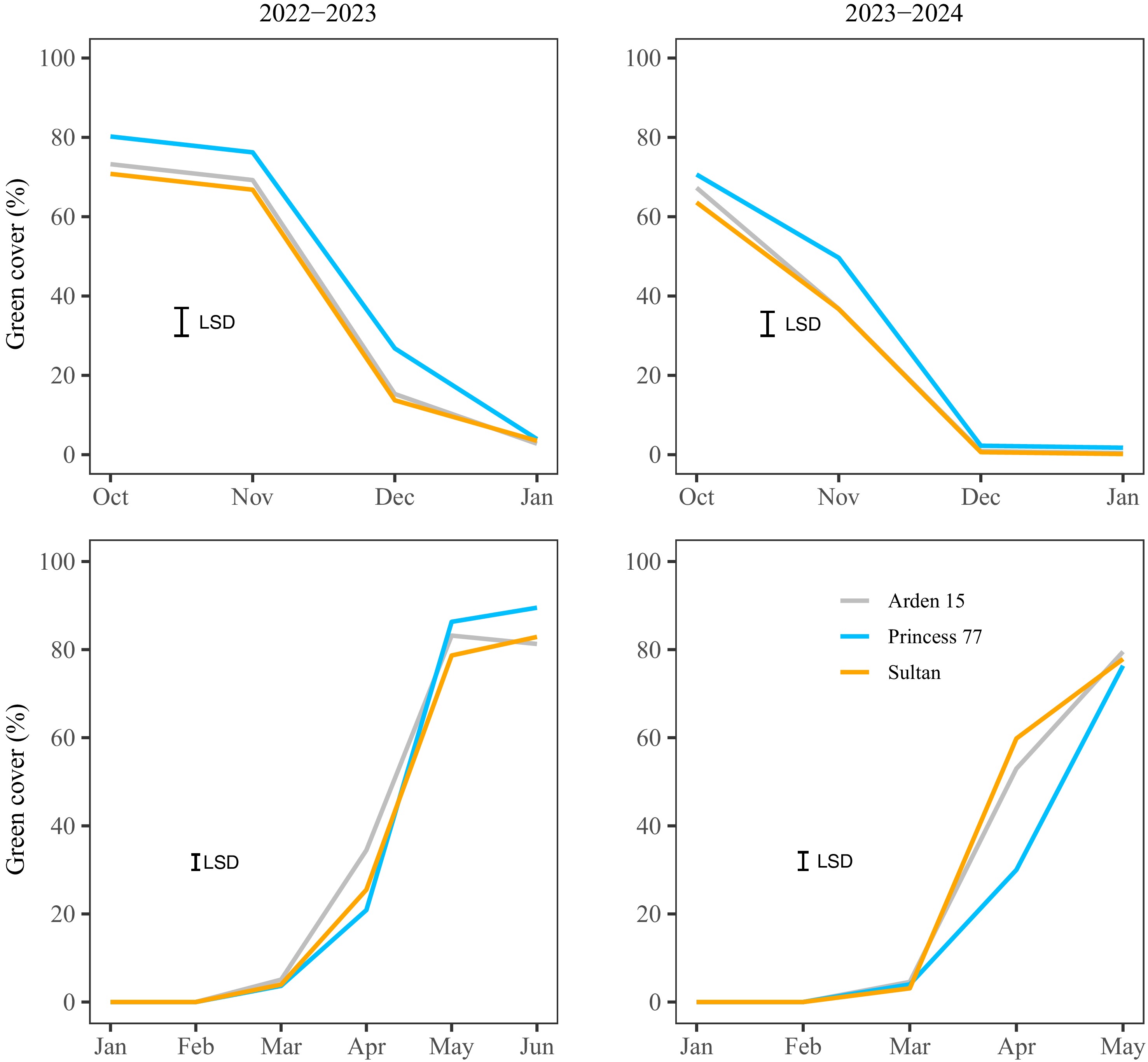
Figure 3.
The effects of cultivar and sampling date on green cover of three bermudagrass cultivars ('Arden 15', 'Princess 77', 'Sultan') established at the experimental agricultural farm of the University of Padova in Legnaro (Italy) during 2022−2023 and 2023−2024 dormancy (upper) and spring green-up (lower) periods. Vertical bars represent the least significant differences (p = 0.05) for comparing means.
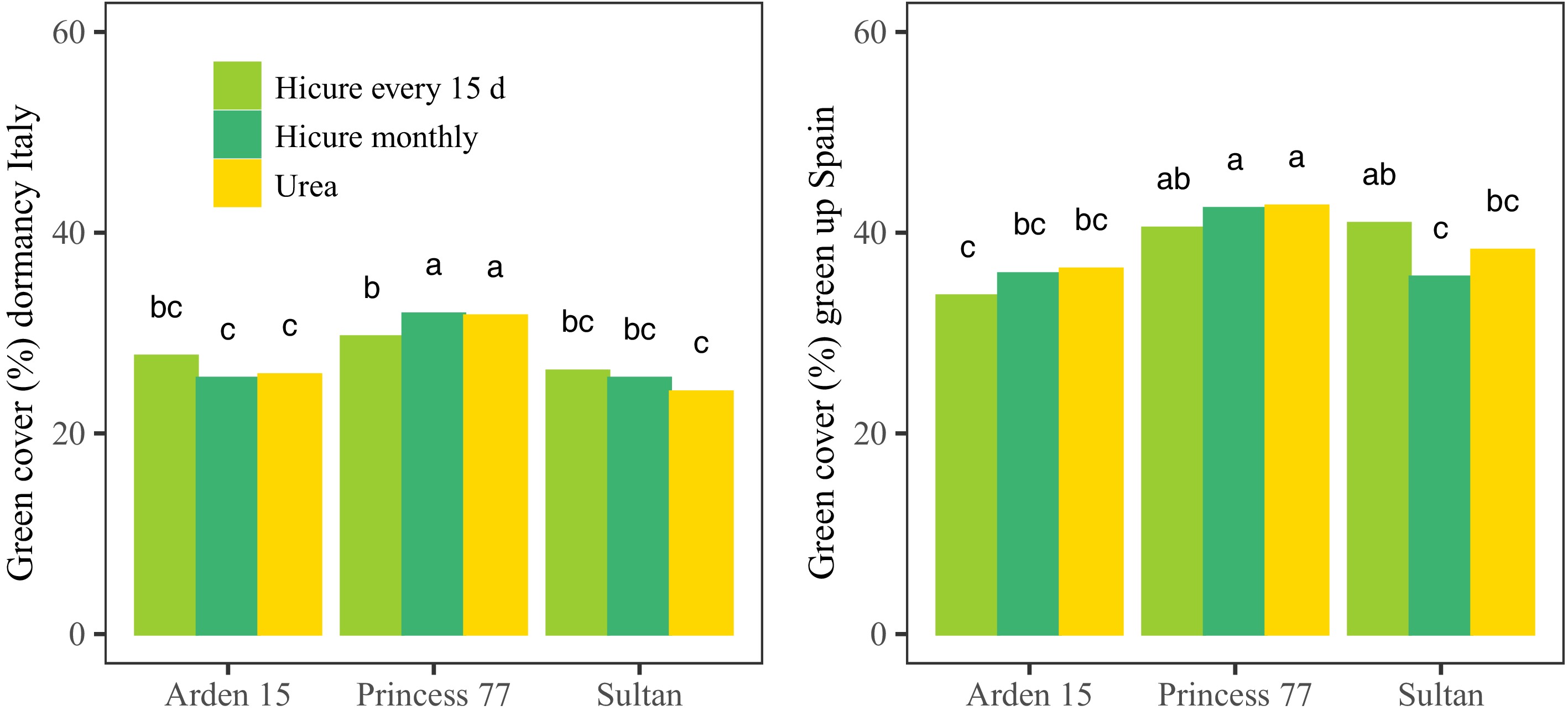
Figure 4.
The effects of cultivar and treatments on green cover during 2023−2024 spring green-up of three bermudagrass cultivars ('Arden 15', 'Princess 77', and 'Sultan') established at the experimental agricultural farm of the Polytechnic University of Valencia in Valencia (Spain), and during the 2022−2023 dormancy period of three bermudagrass cultivars ('Arden 15', 'Princess 77', and 'Sultan') established at the experimental agricultural farm of the University of Padova in Legnaro (Italy). Bars with different letters are significantly different at p < 0.05.
Spring turfgrass green cover
-
In Spain, the interaction between the cultivar and treatment and the main effect of the sampling date were significant, affecting the green cover during spring green-up in both years of the study (Table 4), while the interaction between the cultivar, treatment, and sampling date was significant during the first year of the study. Analyzing the interaction between the cultivar, treatment, and sampling date in Spain during the first year we found a constant increase in the green cover from February to June with a slowdown in May, with differences within cultivars only for Arden 15, which displayed a higher percentage when treated with Hicure monthly than when treated with Hicure every 15 d (Fig. 5). In the second year, Princess 77 treated with urea and Hicure monthly reached a higher green cover than Arden 15 for all treatments and Sultan treated with urea and Hicure monthly (Fig. 5). No differences were found between treatments in Princess 77 or Arden 15, while Sultan treated with Hicure every 15 d displayed higher green cover than when treated with Hicure monthly (Fig. 5). In Italy, the turfgrass green cover during spring green-up was affected by the interaction between the cultivar and sampling date only (Table 5). In the first year, from March to April, Arden 15 revealed a quicker spring green-up than the other cultivars. Princess 77 displayed a higher green cover than Sultan in May (Fig. 3) and had a higher green cover than both Arden 15 and Sultan in June. In the second year, the spring green-up was slower for Princess 77 from March to April, but in May, no differences were found between the cultivars (Fig. 3).
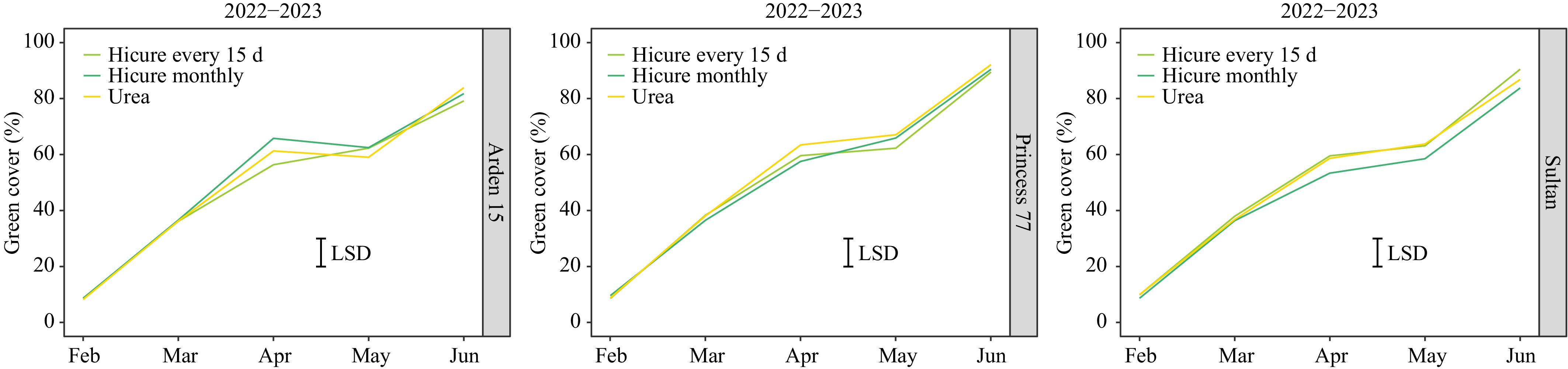
Figure 5.
The effects of the interaction between cultivar and treatment on green cover of three bermudagrass cultivars ('Arden 15', 'Princess 77', and 'Sultan') established at the experimental agricultural farm of the Polytechnic University of Valencia in Valencia (Spain) during spring green-up 2023. Vertical bars represent the least significant differences (p = 0.05) for comparing means.
Stolon carbohydrate reserves (starch, glucose, and fructose)
-
The interaction between the cultivar and location was significant for starch in spring 2023, and for fructose in autumn 2023 (Table 6). In spring 2023, Arden 15 in Spain showed the highest starch content (0.12 g g−1), which did not differ from that of Princess 77 in Spain (0.095 g g−1), Arden 15 in Italy (0.095 g g−1), and Sultan in Italy (0.095 g g−1), but did differ from that of Sultan in Spain (0.081 g g−1) and Princess 77 in Italy (0.063 g g−1). The starch content in Princess 77 in Italy was the lowest out of all of the other cultivars, either in Italy or Spain, except for Sultan in Spain. In autumn 2023, Arden 15 and Sultan in Italy exhibited higher fructose content than Princess 77, followed by the three cultivars grown in Spain (data not shown). The main effect of the treatment was found to be significant for glucose in autumn 2023, with the plots treated with urea having a lower glucose content than the plots receiving the Hicure treatments (data not shown). The main effect of the cultivar was significant for all of the parameters except for starch in autumn 2022, and glucose and fructose in spring 2023, while the location was significant for the starch content in spring 2023, autumn 2023, and spring 2024, the glucose content in autumn 2023 and spring 2024, the fructose content during green-up in 2023 and 2024, and the dormancy period in 2023 (Table 6). In autumn 2022, Princess 77 showed a lower glucose and fructose content than the other cultivars, while the glucose content in spring 2023 was higher for Sultan than for Arden 15, and the fructose level was lower for Arden 15 (Supplementary Table S1). Similarly to autumn 2023, in spring 2024, the starch content was higher for Arden 15 and Sultan than for Princess 77, while for glucose, Sultan only displayed a higher content than Princess 77 (Supplementary Table S1). Arden 15 showed the highest starch content in spring 2024.
Table 6. Results of the analysis of variance testing the effects of cultivar, treatment, location, and their interactions on starch, glucose, and fructose in autumn and spring of three bermudagrass cultivars ('Arden 15', 'Princess 77', and 'Sultan') established at the experimental agricultural farm of the Polytechnic University of Valencia in Valencia (Spain), and at the experimental agricultural farm of the University of Padova in Legnaro, (Italy) in the 2 years of study (year 1 = October 2022–May 2023; year 2 = October 2023–May 2024).
Autumn 2022 Spring 2023 Autumn 2023 Spring 2024 Starch Glucose Fructose Starch Glucose Fructose Starch Glucose Fructose Starch Glucose Fructose Cultivar (Cv) ns† * * *** * ** *** * * ** ns ns Location (Loc) ns ns ns ** ns *** *** *** *** *** *** *** Treatment (Tr) ns ns ns ns ns ns ns * ns ns ns ns Cv × Loc ns ns ns ** ns ns ns ns * ns ns ns Cv × Tr ns ns ns ns ns ns ns ns ns ns ns ns Loc × Tr ns ns ns ns ns ns ns ns ns ns ns ns Cv × Loc × Tr ns ns ns ns ns ns ns ns ns ns ns ns * Significant F test at the 0.05 level of probability; ** significant F test at the 0.01 level of probability; *** significant F test at the 0.001 level of probability. ns† not significant at the 0.05 probability level. -
In our study, we found that bermudagrass entered a period of winter dormancy that was shorter in Spain than in Italy. According to a study testing the performance of five bermudagrass cultivars established at very different latitudes (45° N in Italy vs 39° N in Spain)[6], they entered dormancy at both sites, with the total dormancy lasting less than 1 month in Spain, and almost 4 months in Italy. The authors suggested that temperature was likely the responsible factor, and we can confirm that the dormancy period in our study follows the temperature trends of the two locations (Table 1). In Italy, spring green-up was reported to generally occur in April and May[2, 5], while in Spain, green-up is influenced by winter temperatures, particularly those in February[29]. We observed that in Italy, spring green-up occurred from March to May, and in Spain from February to March. Even in 2023–2024, the bermudagrass did not enter complete dormancy in Spain (Fig. 1, Supplementary Figs. S1, S2). Arden 15 and Sultan displayed similar behavior during the study period, while Princess 77 generally showed a higher NDVI as well as higher quality and color ratings during warmer months (Fig. 1, Supplementary Figs. S1, S2). Princess 77 also showed a slower loss of color when approaching the dormancy period, especially in Italy (Fig. 3), and in contrast, slower green-up in spring. The delayed greening-up of Princess 77 supports the findings of previous studies conducted in Northern Italy, which found a slower greening process for Princess 77 compared to other seeded bermudagrasses like Yukon, Contessa, La Paloma, and NuMex Sahara[2,3] also reported delayed spring green-up of Princess 77 under northern Italian conditions, which was reflected in its reduced stolon dry weight compared to other cultivars. In Spain, the differences in turf quality and green color among the cultivars during spring green-up or the onset of autumn dormancy seemed more pronounced than those seen in Italy. This is likely due to the rapid temperature changes during spring and autumn in Italy, which cause the quicker onset of conditions favorable for spring green-up and autumnal dormancy, compared to the more gradual temperature variations observed in Spain (Table 1), which result in a shorter time to complete dormancy or full green-up (2 months each in Italy vs. 4 months in Spain; Figs. 3, 4). Unlike in Italy, Princess 77 outperformed Sultan and Arden 15 in Spain, particularly during the 2023–24 experimental period. This is probably because the temperatures during this period were higher than those in 2022−2023 (Table 1), as Princess 77 is known for adapting well to warm conditions[35]. The good performance of Arden 15 in Italy can be attributed to the high quality of this turfgrass and its spring green-up. This result is not unexpected, as this cultivar has been tested by the NTEP in the USA over recent years across 17 locations from Jay, FL (30° N), to West Lafayette, IN (40° N). Codified as SWI-1070 in the 2007−2012 National Turfgrass Evaluation Program (NTEP) final report[36], Arden 15 displayed good performance, ranking 1st out of 25 cultivars for turf quality (average rating 6.7), 2nd for spring green-up, and 1st for frost tolerance/winter kill.
Observing the treatments' effects, it is evident that the application of Hicure had a modest impact on the overall turfgrass quality of the cultivars under study. However, the best responses were observed in Spain, particularly for Arden 15 during the second year, which benefited from Hicure treatment every 15 d. This led to a modest improvement in the turfgrass quality and color compared to that achieved with the urea treatment (Fig. 2). Princess 77 and Sultan were substantially unaffected by Hicure, suggesting that the prolonged unfavorable temperature conditions for Princess 77 in Italy and the ideal conditions in Spain could have overweighed the effect of the biostimulant. Indeed, the response in terms of turfgrass quality and color of bermudagrass to amino acid-based biostimulant applications is generally scarce or very limited[29]. On the contrary, according to the NDVI results (Fig. 2), under Italian conditions, Sultan and Arden 15 appeared to be more positively influenced by urea application compared to Hicure, indicating the need for available N after exposure to adverse temperature conditions or during the cool autumn months.
In light of the results concerning the percentage of green cover, both Hicure treatments had no impact on green-up in the spring, either in Spain, or Italy. Notably, there was only a slight benefit with Hicure application every 15 d on the green-up of Sultan in Spain, and a worse effect was achieved with the same treatment on the green-up of Princess 77 in Italy. Moreover, our results are not in line with other studies that reported extended autumn color retention of bermudagrass cultivars after applying N in autumn[21]. The turfgrass green cover of Princess 77 was generally higher than that of the other cultivars during spring green-up in Spain and when starting dormancy in autumn in Italy. It seems that the environmental adaptability of the cultivars is more important than the treatments used. However, several studies have reported significant turfgrass quality improvements after an amino acid treatment[27, 37−39], even at lower application rates than in those used in the present study, which indicates that local climate conditions, different turf genotypes, and management programs after treatment, especially irrigation and mowing, play an important role in the effect of amino acid treatments on turfgrass quality.
Observing the stolon carbohydrate content, our results confirm the tendency of bermudagrass to store starch more than short-chain carbohydrates (like glucose and fructose)[11]. The lower starch content, and partially glucose and fructose, in early spring for Princess 77, compared with both Arden 15 and Sultan under Italian conditions, suggests greater carbohydrate utilization during winter by this cultivar to overcome the cold period[35]. The poor starch disposability at the beginning of the growing season led to slow green-up (Supplementary Figs. S1, S2)[2]. In Spain, the differences in the starch content among cultivars occurred only in spring 2023, when Princess 77 displayed a lower content than Arden 15. This could be due to the lower winter temperatures observed in 2023 compared to 2024 in this location (Table 1).
-
The results from this study show that the performance of bermudagrass is closely related to the cultivar's environmental adaptability. The dormancy onset and spring green-up varied significantly between the two locations being compared, as did the response of the cultivars. The temperature during the coldest months, which impacts the stolon carbohydrate reserves, is the most critical factor influencing the speed of spring green-up. The use of the Hicure biostimulant, regardless of application frequency, had a limited impact on extending the vegetative period, autumn color retention, and on promoting spring green-up. However, similar results were also observed with N application through urea, which did not provide significant benefits. Among the cultivars tested, Princess 77 proved to be the most sensitive, performing better in Spain than in Italy, while Sultan and Arden 15 appeared minimally affected by the local climate conditions.
Not applicable.
-
The authors confirm their contributions to the paper as follows: study conception and design: Gómez de Barreda D, Macoliono S, Lidón A, Alcántara Ó; data collection, analysis and interpretation of results: Gómez de Barreda D, Macolino S, Pornaro C, Lidón A, Alcántara Ó; draft manuscript preparation: Macolino S, Pornaro C. All authors reviewed the results and approved the final version of the manuscript.
-
The data that support the findings of this study are available on request from the corresponding author.
-
The authors declare that they have no conflict of interest.
-
accompanies this paper online at: https://doi.org/10.48130/grares-0026-0010.
- Supplementary Table S1 Cultivar and location effect on starch, glucose, and fructose content (g·g−1) in the stolons of three bermudagrass cultivars (Arden 15, Sultan, and Princess 77) during the autumn and spring periods, established at the experimental agricultural farm of the Polytechnic University of Valencia in Valencia (Spain), and at the experimental agricultural farm of the University of Padova in Legnaro (Italy), in the two years of study (year 1 = October 2022–May 2023; year 2 = October 2023–May 2024.
- Supplementary Fig. S1 The effects of cultivar and sampling date on turf quality of three bermudagrass cultivars ('Arden 15', 'Princess 77', 'Sultan') established at the experimental agricultural farm of the Polytechnic University of Valencia in Valencia, eastern Spain (Lat. 39°48' N, Long. 0°34' W; elevation 5 m) (above), and at the experimental agricultural farm of the University of Padova in Legnaro, northeastern Italy (Lat. 45°20' N, Long. 11°57' E; elevation 8 m) (below), during 2022−2023 (on the left) and 2023−2024 (on the right) growing seasons. Vertical bars represent the least significant differences (p = 0.05) for comparing means.
- Supplementary Fig. S2 The effects of cultivar and sampling date on turf color of three bermudagrass cultivars ('Arden 15', 'Princess 77', 'Sultan') established at the experimental agricultural farm of the Polytechnic University of Valencia in Valencia, eastern Spain (Lat. 39°48' N, Long. 0°34' W; elevation 5 m) (above), and at the experimental agricultural farm of the University of Padova in Legnaro, northeastern Italy (Lat. 45°20' N, Long. 11°57' E; elevation 8 m) (below), during 2022−2023 (on the left) and 2023−2024 (on the right) growing seasons. Vertical bars represent the least significant differences (p = 0.05) for comparing means.
- Copyright: © 2026 by the author(s). Published by Maximum Academic Press, Fayetteville, GA. This article is an open access article distributed under Creative Commons Attribution License (CC BY 4.0), visit https://creativecommons.org/licenses/by/4.0/.
-
About this article
Cite this article
Macolino S, Pornaro C, Lidón A, Alcántara Ó, Gómez de Barreda D. 2026. Turfgrass performance during dormancy period and spring green-up of bermudagrass cultivars under biostimulant programs in two Mediterranean regions. Grass Research 6: e017 doi: 10.48130/grares-0026-0010 

Turfgrass performance during dormancy period and spring green-up of bermudagrass cultivars under biostimulant programs in two Mediterranean regions
- Received: 27 October 2025
- Revised: 09 January 2026
- Accepted: 14 January 2026
- Published online: 08 June 2026
Abstract: The use of biostimulants in turfgrass management has been growing to reduce chemical fertilizers, with the goal of healthier and more resilient turfgrass. This study investigates the performance of three bermudagrass cultivars (Arden 15, Princess 77, and Sultan) under different biostimulant-based programs in two Mediterranean locations (Valencia, Spain; Legnaro, Italy) over two years. The research focused on turfgrass quality, color, NDVI, green cover, and stolon carbohydrate reserves during autumn dormancy and spring green-up periods. Climate significantly influenced bermudagrass performance, with a shorter dormancy period in Spain compared to Italy. Princess 77 showed higher quality and color ratings during warmer months, slower color loss approaching dormancy, and delayed spring green-up, especially in Italy. Arden 15 and Sultan performed similarly throughout the study, with Arden 15 showing good spring green-up in Italy. The biostimulant Hicure had a limited impact on overall turfgrass quality, with modest improvements observed mainly in Spain for Arden 15. Stolon carbohydrate analysis revealed that Princess 77 had lower starch content in early spring, particularly in Italy, suggesting greater carbohydrate utilization during winter. Bermudagrass performance is primarily influenced by cultivar adaptability to local climate conditions, with temperature being a critical factor affecting dormancy, green-up, and stolon carbohydrate reserves. The biostimulant Hicure showed limited effectiveness in extending the vegetative period or promoting spring green-up compared to traditional urea fertilization.
-
Key words:
- Turf color /
- NDVI /
- Starch /
- Glucose /
- Fructose