










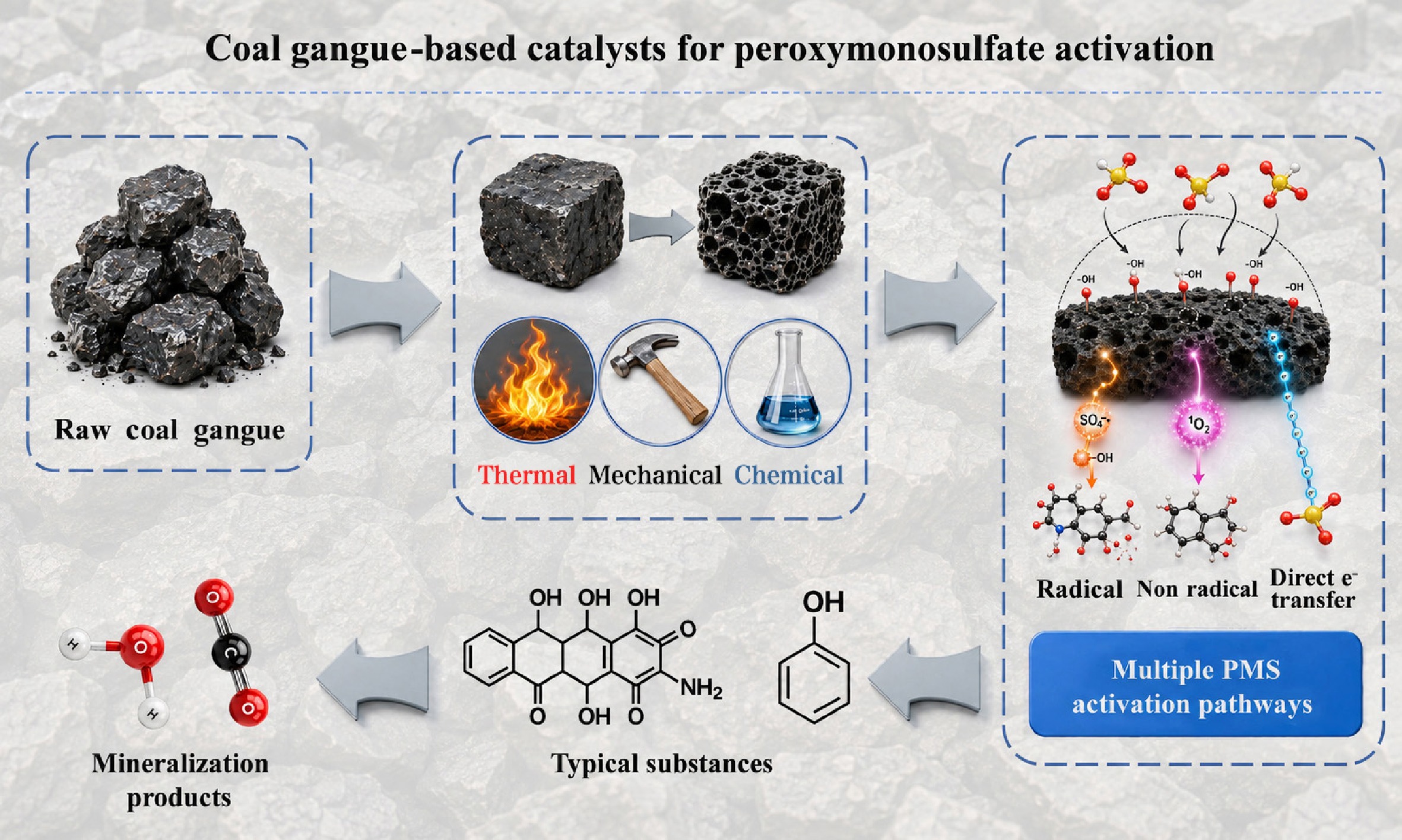


-
At the broader watershed scale, the spatiotemporal variability of non-point-source pollution in rapidly urbanizing urban–rural transitional areas has made modeling an important tool for water-quality management and pollution control[1]. Organic pollutants remain among the most stubborn components of industrial wastewater because their chemical stability and structural diversity often exceed the removal capacity of conventional treatment trains. Beyond conventional physicochemical treatment, biological carrier systems such as mycelial pellets have also been explored for enhancing pollutant removal and resource recovery; however, their efficiency is often constrained by environmental sensitivity and limited oxidative capacity, highlighting the need for more robust oxidation-based strategies[2]. Against this background, advanced oxidation processes (AOPs) have attracted sustained attention because they rely on highly reactive oxidizing species to bridge the gap between physicochemical separation and deep oxidative removal[3,4]. Within coal-chemical wastewater treatment, anammox has also attracted attention as a low-energy biological route requiring no external carbon source and producing relatively little sludge and greenhouse-gas emissions[5]. Recent reviews on emerging wastewater treatment technologies further emphasize that integrating strong oxidants with engineered materials is essential for achieving both contaminant degradation and system-level sustainability[2,3,6]. Among the available oxidants, peroxymonosulfate (PMS) has become particularly appealing owing to its high redox potential, relatively long lifetime, and broad operational pH window[6]. AOPs are commonly classified by how radicals are generated, including chemical, photochemical, radiation-induced, cavitation, and electrochemical routes. Compared with conventional AOPs, PMS activation offers a high oxidation potential, a relatively long half-life, and broad pH applicability[6]. As a result, the central question in current PMS research is no longer whether PMS can oxidize refractory organics, but how catalyst architecture can be engineered to control the generation, transport, and utilization of reactive species. For instance, recent studies using metal–organic-framework-derived composites to activate PMS have shown that tailored interfaces can markedly enhance tetracycline degradation, underscoring the importance of structure–activity relationships in catalyst design[7]. This is precisely why heterogeneous transition-metal catalysts have moved to the forefront of the field: they not only accelerate PMS activation but also offer practical advantages in separation and reuse that homogeneous systems often lack[6,8].
Chemically, PMS (HSO5−) is an asymmetric peroxygen oxidant whose O–O bond can be activated by transition-metal redox cycling, defect sites, alkaline media, heat, light, ultrasound, and conductive carbonaceous or mineral interfaces. Its practical value lies in the possible generation of SO4−•, •OH, 1O2, high-valent metal–oxo species, and mediated electron-transfer routes, which makes PMS applicable to antibiotics, phenols, dyes, polycyclic aromatic hydrocarbons, and coal-chemical wastewater. At the same time, this pathway diversity means that catalyst evaluation cannot rely only on apparent removal efficiency; it must distinguish active species, interfacial charge transfer, water-matrix effects, and the stability of active sites under realistic operating conditions[6,9,10].
Yet catalytic efficiency alone does not solve the problem. Once PMS activation moves from laboratory proof-of-concept to practical wastewater treatment, the cost and scalability of the catalyst support become decisive. Coal gangue (CG), a typical coal-derived solid waste, is produced in enormous quantities[11]. CG, a major solid waste generated during coal mining and processing, is more than a disposal burden; it is a mineral-rich matrix with clear catalytic potential[12,13]. Recent studies further show that CG and related industrial tailings can be transformed into functional materials such as foamed ceramics and membrane substrates, highlighting their structural tunability and resource-utilization value[14,15]. In the broader context of the green transition, recent analysis has further shown that the stock of CG in China has exceeded 7 billion tons with an annual increment of more than 800 million tons, while graded utilization and activation pretreatment are increasingly viewed as necessary steps for shifting CG management from bulk accumulation to high-value resource conversion[16]. Its composition—typically dominated by silica and alumina and accompanied by iron-containing phases and trace transition metals—creates room for structural reconstruction through thermal, mechanical, or chemical pretreatment[12,13]. More broadly, the reutilization of solid wastes aligns with carbon-cycle-oriented resource strategies, where material transformation processes are increasingly evaluated not only for pollutant removal but also for their contribution to carbon neutrality and environmental sustainability[17]. Rather than treating this composition as a passive background, recent studies suggest a more provocative possibility: after suitable reconstruction, CG may contribute directly to oxidant activation instead of merely hosting externally introduced active species[18]. This shift—from 'low-cost carrier' to 'reactive mineral interface'—is the real conceptual entry point for CG-based PMS catalysis.
Building on this premise, this review treats CG modification and PMS activation as parts of a single mechanistic framework: pretreatment reconstructs the mineral and electronic microenvironment of CG; this reconstruction governs PMS activation pathways; and the resulting catalytic interface responds differently to pollutants with distinct structural and electronic features. Related work on biochar and microbially mediated remediation likewise shows that degradation behavior depends strongly on interfacial coupling, reinforcing the importance of interface-driven mechanisms in environmental catalysis[19,20]. Under this logic, the value of CG lies not only in waste reutilization, but in its capacity to become a tunable catalytic matrix for structure-guided PMS activation[18,21].
As summarized in Fig. 1, the application value of CG extends from bulk utilization to environmental catalysis; however, the present review focuses on the less-resolved question of when CG acts as a reactive mineral interface rather than a passive support. The novelty of this review lies in constructing a conditional structure–activity model for CG/PMS systems: pretreatment determines the mineral phase, defect density, hydroxylated surface, and electronic microenvironment of CG; these properties regulate radical, non-radical, and interfacial electron-transfer pathways; and pollutant structure and water chemistry determine which pathway becomes dominant. Accordingly, the main objectives are to (i) clarify the activation logic of different CG pretreatments, (ii) compare catalytic performance under explicitly stated reaction boundaries, (iii) discriminate the intrinsic contribution of CG from that of loaded active phases, and (iv) propose design criteria for practical CG-based PMS catalysts.
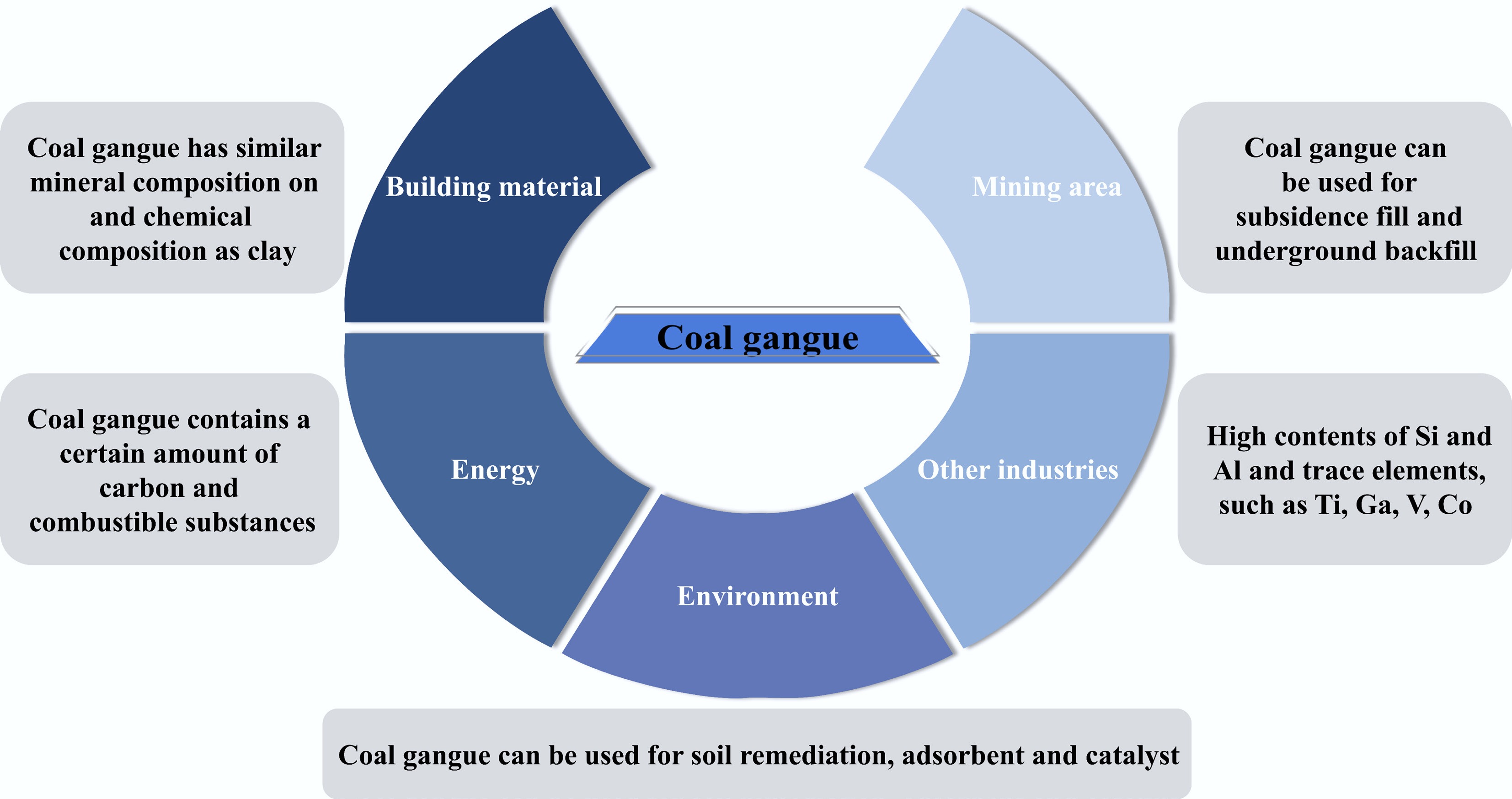
Figure 1.
Schematic illustration of the application fields of CG, redrawn based on the study by Gao et al.[21].
-
As of 2025, the global stockpile of CG, the largest industrial solid waste generated from coal mining, has exceeded 50 billion tons. Because CG is often stored in long-term open piles, it not only occupies large areas of land but also causes ecological problems such as soil erosion, placing substantial pressure on regional environmental quality. This environmental risk is not merely qualitative. A recent assessment of an acidic CG pile in Shanxi showed that sulfate ions could migrate through the vadose zone and infiltrate groundwater within about 7 years, while the average concentration of iron ions in groundwater could reach approximately 58.3 mg/L, demonstrating that unmanaged gangue leachate may evolve into a long-term groundwater pollution source[22]. Table 1 compares the impacts of CG on different receptors. CG is a gray-black sedimentary rock associated with coal seams. It typically has a rough, irregular surface and a broad particle-size distribution, and occurs mainly as massive solids[23,24]. Natural CG is chemically stable at room temperature, with a complete crystalline morphology and a lack of surface adsorption sites[25]. In China, CG typically contains relatively high levels of kaolinite, which promotes pore formation at elevated temperatures and increases the specific surface area[26]. Essentially, pretreatment involves modulating the structure and electronic environment of CG to provide an active basis for subsequent PMS activation.
Table 1. Comparative analysis of different study subjects and hazard dimensions
Research object Main hazard type Main pollutant/process Ecological/health effect Ref. Soil Heavy metal contamination Cd, Pb, Zn, Cu, Cr, etc. Soil quality degradation, phytotoxicity, and health risks via food chain biomagnification [27−31] Crops Bioaccumulation and contamination Cd, Pb, As, Zn, etc. Exceedance of heavy metals in edible parts, food safety risks, and inhibited growth [28,32,33] Water body Leachate pollution Heavy metals, acidic substances, soluble salts Pollution of groundwater and surface water, disruption of aquatic ecosystems [34,35] Atmosphere Spontaneous emission Pollution SO2, NOₓ, PAHs, particulate matter Air pollution, greenhouse gas emissions, and adverse respiratory health effects [36−38] Pile body itself Geological safety hazards Structural instability Geological disasters such as landslides and debris flows, threats to life and property [39,40] Human body (mainly children) Health risks Various heavy metals (e.g., Cd, Pb) Developmental neurotoxicity, increased non-carcinogenic and carcinogenic risks [41,42] Common methods for pretreating CG
-
Pretreatment of CG is often introduced as a list of operations—calcination, grinding, acid leaching, alkaline treatment, or hydrothermal synthesis[43]. That descriptive approach is incomplete. What matters more is the mechanistic role each method plays in overcoming the structural inertia of raw CG and converting it into a more reactive mineral framework[44−50]. Thermal activation primarily operates through dehydroxylation, phase disordering, and partial amorphization, especially in kaolinite-rich gangue, thereby releasing latent reactivity that is largely inaccessible in the raw material[51−53]. Mechanical activation works at a different scale: it reduces particle size, raises surface free energy, and increases defect density, but excessive treatment may also trigger agglomeration and diminish the expected gain[50,53]. Chemical activation intervenes more directly in the local bonding environment by dissolving, extracting, or rearranging aluminosilicate domains, which can reshape pore structure and redistribute surface functionalities[48,49,54].
Once these routes are placed on the same mechanistic axis, their differences become much clearer. Heat mainly reconstructs mineral phases; mechanical force exposes fresh surfaces and destabilizes the original structure; chemical reagents reconfigure the local coordination environment and accessible functionality. The purpose of pretreatment is therefore not simply to 'improve' CG in a generic sense, but to create a mineral interface whose structure, defect chemistry, and surface state are compatible with PMS activation.
This distinction also explains why composite modification is often more effective than any single method used in isolation. Combined activation is not just a convenient stacking of techniques. It is better understood as a sequential design strategy in which one treatment creates the precondition for the next: milling can increase accessibility for subsequent chemical attack, calcination can destabilize inert phases before acid or alkali treatment, and chemical reconstruction can amplify the porosity and heterogeneity generated by prior thermal or mechanical activation[55−57]. In other words, the logic of composite modification is synergistic rather than additive. The key issue is not how many treatments are applied, but whether they jointly steer CG toward a surface and electronic configuration that can support efficient PMS conversion. This mechanistic reorientation naturally leads to the next question: once CG has been structurally reconstructed, how exactly do these changes translate into catalytic behavior?
The pretreatment routes and their application-oriented outcomes are organized in Fig. 2, which helps link mechanical, thermal, chemical, and microwave activation to the subsequent construction of adsorption sites, pore connectivity, and PMS-reactive interfaces.
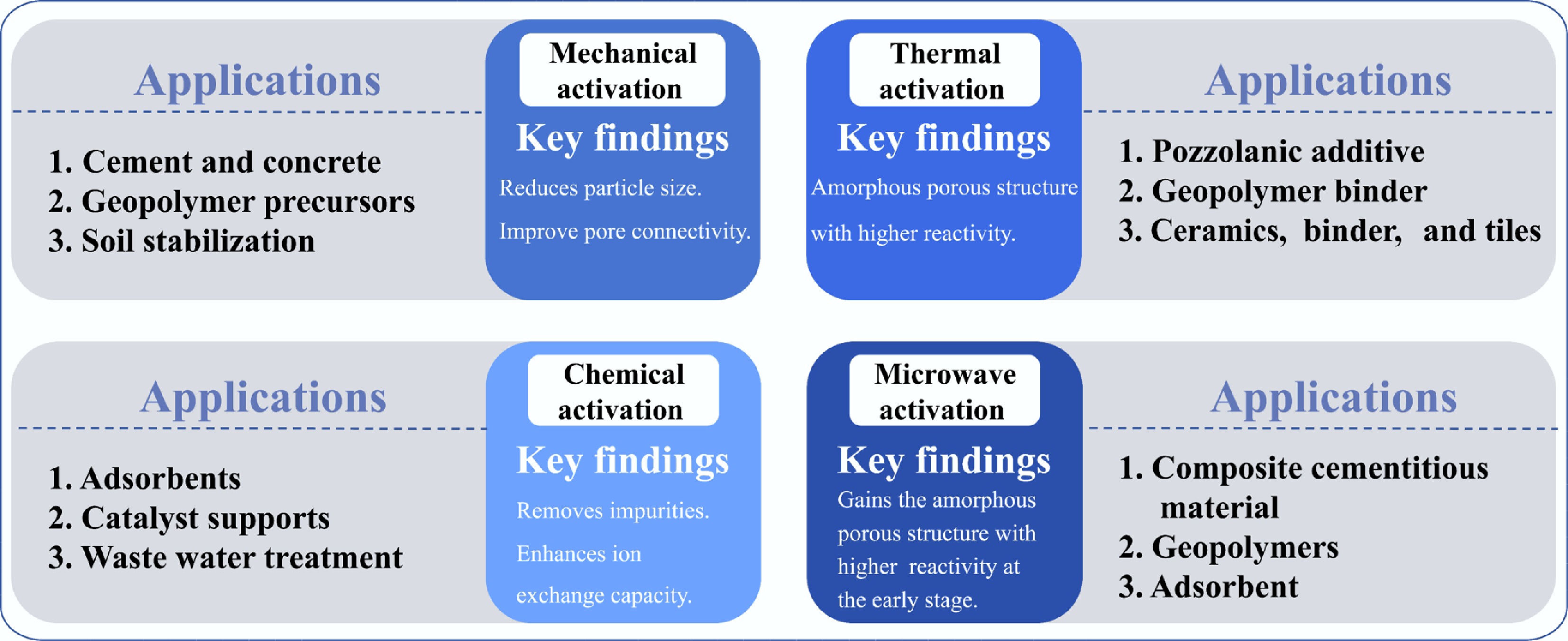
Figure 2.
Four common methods for activating CG, redrawn based on the study by Snehasree et al.[55].
Mechanistic analysis of modified CG
-
These pretreatment methods alter the physical and chemical properties of CG, thereby enhancing its reactivity and suitability for subsequent applications. At root, these changes arise from modifications in CG microstructure. Figure 3 compares CG before and after modification.
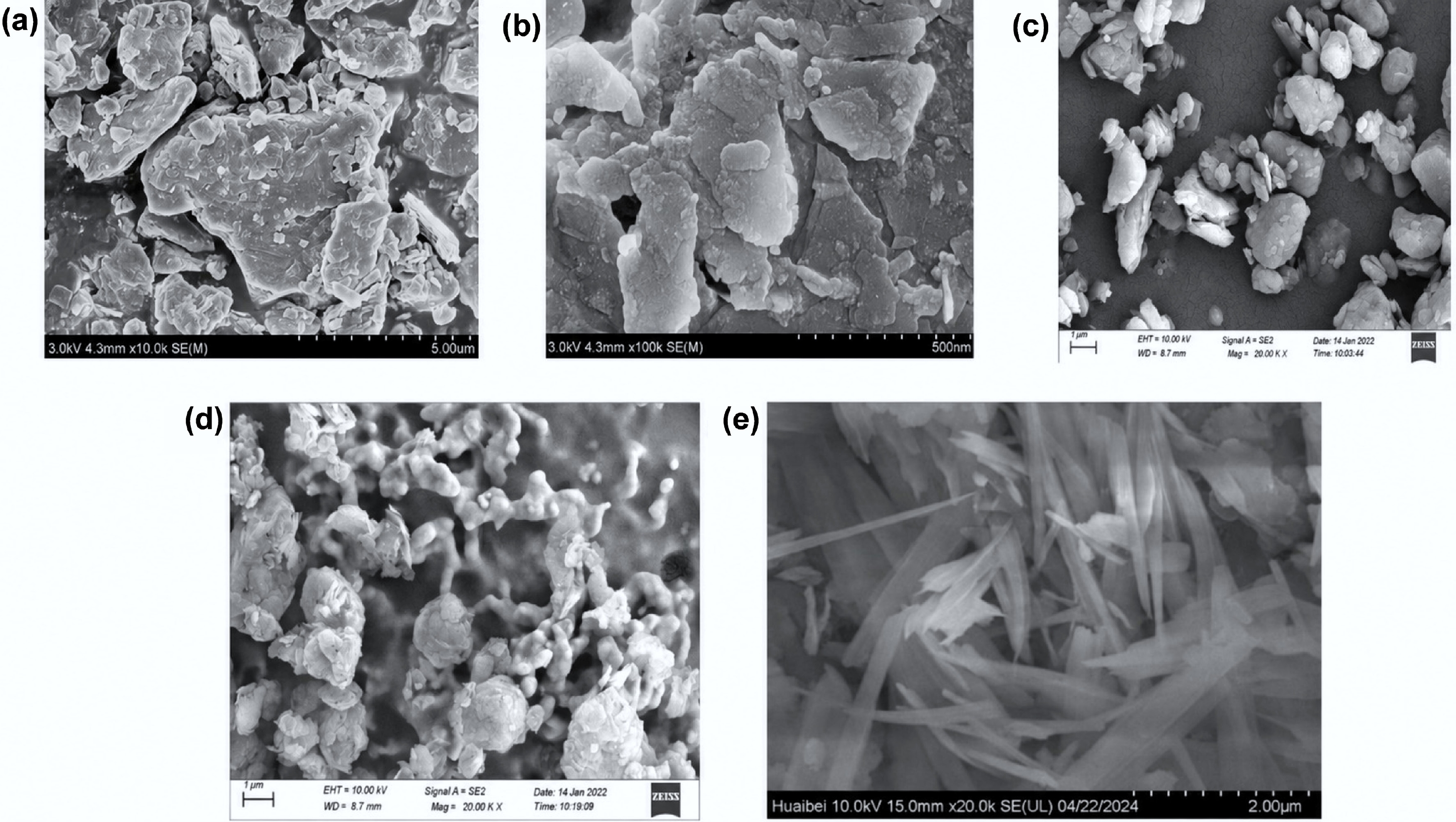
Figure 3.
Comparison of CG before and after modification. Panels (a)–(c) show SEM images of CG before modification, whereas panels (d) and (e) show SEM images after pretreatment. Panels (a) and (b) are reproduced from Sun et al.[58], with permission from MDPI, copyright 2024; panels (c) and (d) are reproduced from Yuan et al.[59], with permission from MDPI, copyright 2022; panel (e) is reproduced from Zhang et al.[60], with permission from MDPI, copyright 2025.
Thermal modification
-
Thermal modification is a key means of activating the latent activity of CG. Its core mechanism lies in using thermal action to disrupt the crystal structure of inert minerals in CG, generating highly reactive amorphous phases, accompanied by a series of physical and chemical transformations. This process is primarily controlled by factors such as temperature, atmosphere, and raw material composition. The thermal activation mechanism of CG is closely related to its mineral composition. For CG rich in kaolinite, the core of thermal modification is the dehydroxylation process. When the heat treatment temperature reaches approximately 550–800 °C, the structural hydroxyl groups in kaolinite are removed, and its Al^VI–O octahedral structure is disrupted, transforming into metakaolin, which has a disordered spatial structure and extremely high chemical activity[53]. This transformation underpins the development of catalytic activity in CG. Studies have shown that at approximately 825 °C, the conversion of kaolinite to amorphous metakaolin is most complete, with the activity reaching its peak[61].
Meanwhile, some studies have found that sulfur-containing minerals such as pyrite in CG undergo oxidative decomposition during heat treatment. Under an inert atmosphere, pyrite (FeS2) decomposes into pyrrhotite (FeSx), significantly enhancing the magnetic properties of CG. Under an air atmosphere, pyrite transforms sequentially into magnetite (Fe3O4) and nano- to micron-scale hematite (Fe2O3), while retaining the original crystal morphology[62]. Notably, the release of sulfur and heat during this process occurs over the same temperature range as kaolinite dehydroxylation; however, the interaction between the two has not yet been clearly elucidated.
Mechanical modification
-
Mechanical activation of CG involves introducing and accumulating mechanical energy through grinding, compression, impact, friction, and shear, thereby altering its physicochemical properties and structure[63]. During mechanical activation, CG undergoes high-energy ball milling, shearing, and impact, which break the particles, reduce their size, and rapidly increase the specific surface area[56,64]. After mechanical activation, the surface particle free energy of CG increases, and its adsorption capacity is also enhanced[65]. Studies further show that mechanical activation can disrupt the original CG structure and increase the number of active surface sites, thereby unlocking its latent reactivity[66].
Chemical modification
-
Chemical activation typically uses acids, alkalis, or salt-based reagents to disrupt the inert aluminosilicate framework of CG, increase surface area and active-site density, and thereby improve performance in applications such as building materials, adsorbents, and catalysts[56,67,68]. The core mechanism of chemical activation lies in achieving structural depolymerization and the introduction of functional groups through the interaction between chemical reagents and the mineral phases in CG. Alkaline activation is the most common method, as it can break the Si–O and Al–O bonds in minerals such as kaolinite within CG, promote the leaching of amorphous silicon and aluminum, which then participate in geopolymerization or pozzolanic reactions to form cementitious hydration products[56,68]. Acid activation is mainly used to leach out metal ions, modify surface charge and pore structure, and is particularly suitable for preparing adsorbent materials[69]. Chemical modification is an effective strategy for activating CG and broadening its resource-utilization pathways. Targeted acid, alkali, or combined treatments can tailor the physicochemical properties of CG, giving it the potential to replace conventional materials in construction, environmental protection, and chemical engineering. Figure 4 summarizes the three activation routes.
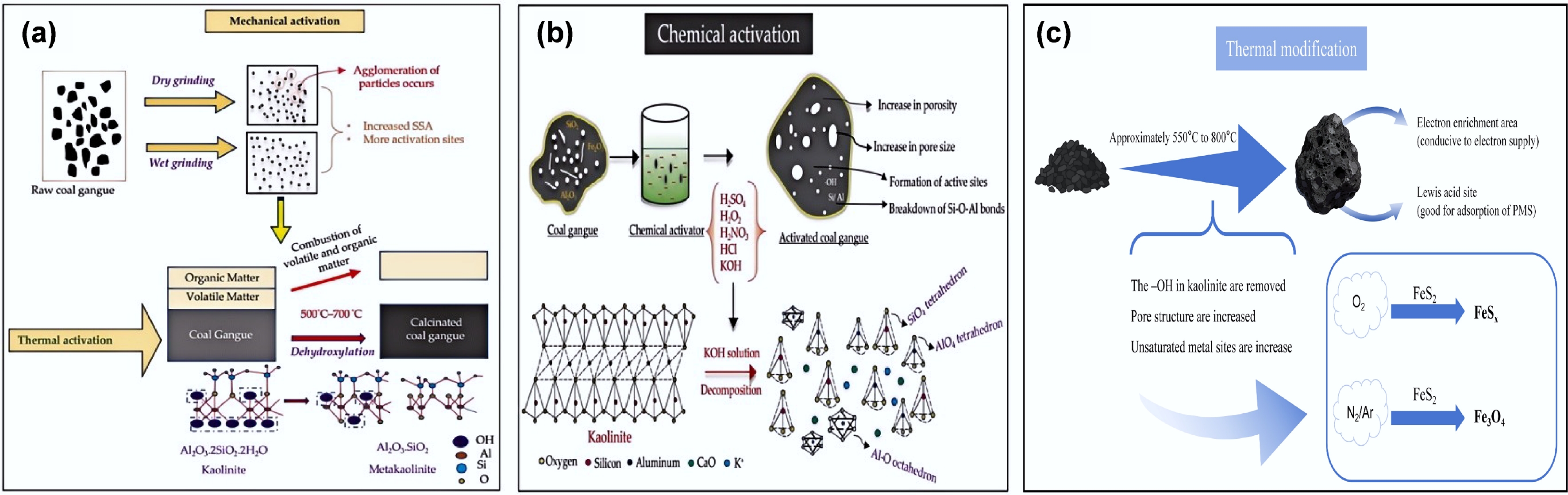
Figure 4.
Mechanisms associated with (a) mechanical activation, (b) chemical activation, and (c) thermal modification. Panels (a) and (b) are reproduced from Snehasree et al.[55] with permission from MDPI, copyright 2025.
Composite modification
-
Given the respective strengths and limitations of chemical, mechanical, and thermal activation, any single activation method is often insufficient on its own. By coupling different activation routes, combined activation can overcome the limitations of any single method and further enhance overall performance. Mechanical activation disrupts the crystal structure of CG, increases surface area and defect density, and creates more reaction sites for subsequent chemical or thermal treatment[55]. Chemical activation dissolves part of the inert aluminosilicate framework and promotes the formation of amorphous or mesoporous structures[55,57]. Thermal activation dehydrates minerals such as kaolinite, converts them into more reactive metakaolin, and promotes internal pore formation[55]. Combined mechanical, chemical, and thermal activation of CG is a multiscale, multiprocess synergistic strategy. The underlying mechanism lies in the interplay of physical crushing, thermally induced phase transformation, and chemical reactions to directionally modify the mineral composition, crystal structure, porosity, and surface chemical properties of CG, thereby significantly enhancing its reactivity and application performance. Figure 5 shows the microstructural evolution and interfacial reconstruction of composite-modified CG-based catalysts.
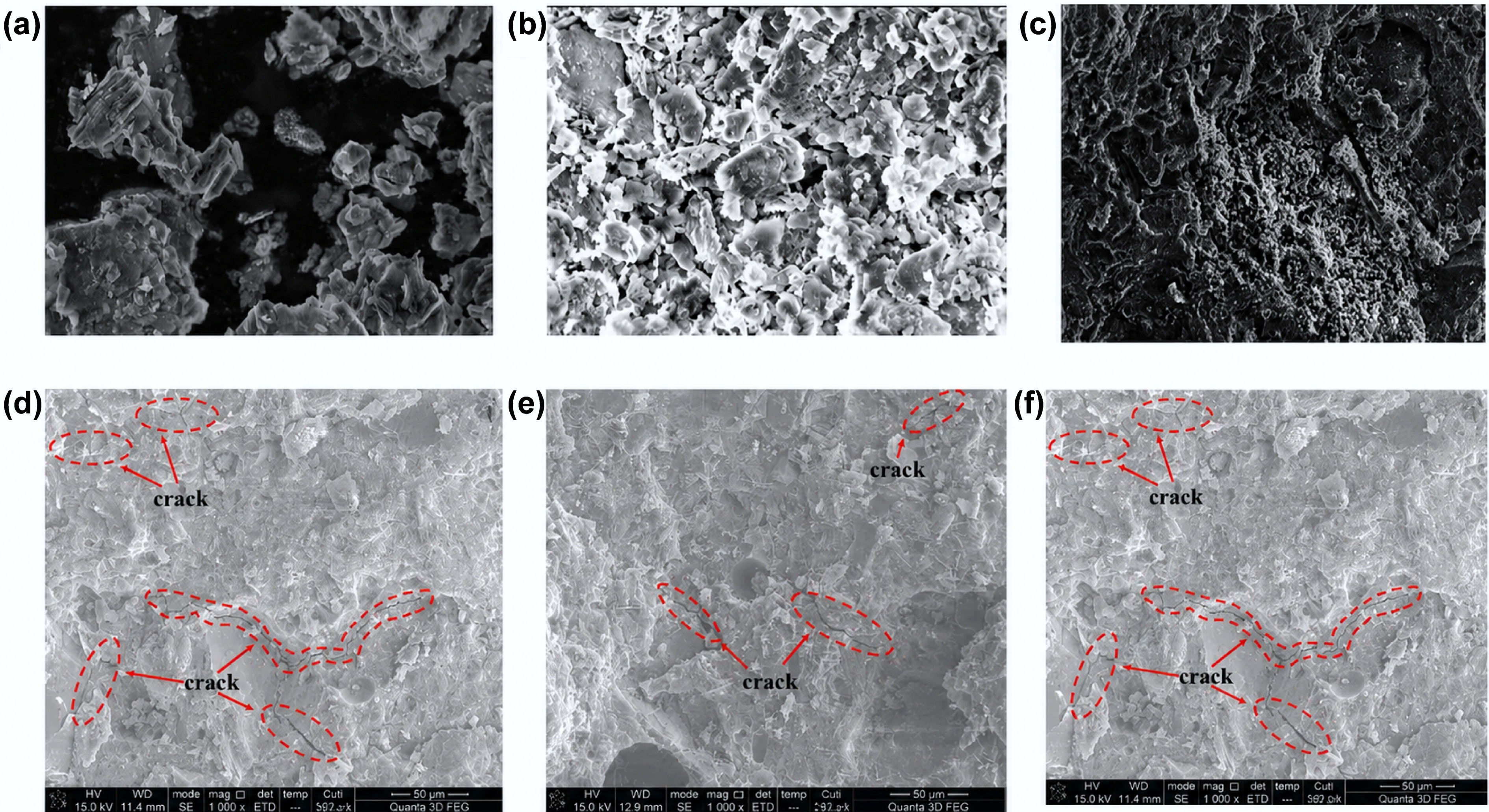
Figure 5.
ESEM images of composite-activated CG at the (a) initial state, (b) 700 °C, and (c) 1,000 °C, and after (d) 3 h, (e) 6 h, and (f) 24 h of curing. Reproduced from Zhao et al.[70], with permission from Elsevier, copyright 2022.
A more cautious interpretation is needed for the term 'synergy'. For CG, thermal activation can increase amorphous metakaolin formation and expose Fe-containing phases; mechanical activation can raise specific surface area and defect density; chemical activation can leach inert aluminosilicate domains and generate more accessible hydroxylated surfaces. Composite modification should therefore be considered synergistic only when a combined route produces a larger increase in normalized activity, such as kobs per unit catalyst mass or per accessible active-site proxy, than the sum of the individual treatments under matched pollutant concentration, PMS dosage, pH, temperature, and reaction time. Without such matched controls, composite modification should be described as a rational sequential reconstruction strategy rather than as a universally proven synergistic effect.
-
Once an active support has been obtained, active sites can be introduced or constructed through several established methods. The impregnation-calcination method is a general strategy for introducing active metal components such as Ni, Cu, Fe, and Mo. Typically, the support is impregnated in a salt solution containing the target metal ions, followed by drying and calcination to immobilize the metal oxides onto the surface of the activated CG[71−73]. For bimetallic or composite catalysts, the co-impregnation method can be used to simultaneously introduce multiple metals, leveraging the synergistic effect between the metals to enhance catalytic performance[73,74]. Another strategy is to introduce active sites in situ during the synthesis process, for example, by directly incorporating copper ions during the synthesis of zeolite molecular sieves to form Cu–X catalysts with Fenton reaction activity[75]. In addition, chemical modification methods such as nitrogen doping can alter the chemical inertness of the carbon components in CG, thereby activating it for use in AOPs[76].
PMS activation conditions
-
Because PMS is a strong oxidant, its efficiency in degrading organic pollutants depends heavily on how it is activated. The activation conditions determine the decomposition pathway of PMS and the generation of reactive species, thereby affecting the efficiency and selectivity of the entire advanced oxidation system. Overall, the activation mechanisms of PMS can be mainly classified into radical pathways and non-radical pathways, with the specific processes regulated by various factors such as the type of activator, reaction environment, and energy input[9,10].
The activator is the core factor determining the activation pathway of PMS. Metal-based catalysts (such as Fe, Co, Mn, and their oxides) are the most widely studied homogeneous or heterogeneous activators. They primarily catalyze PMS to produce sulfate radicals (SO4−•) and hydroxyl radicals (•OH) through metal valence cycles (e.g., Fe(II)/Fe(III), Co(II)/Co(III))[77]. For example, Mn1.8Fe1.2O4 nanospheres can effectively activate PMS to degrade bisphenol A, and their excellent performance is attributed to the synergistic effect between Mn and Fe[78].
The pH of the reaction system exerts a significant influence on the efficiency and mechanism of PMS activation. Alkaline conditions alone can promote PMS decomposition, while in metal-catalyzed systems, pH affects the speciation of metal species, the protonation state of PMS, and the surface charge of the catalyst, thereby altering the reaction kinetics and the dominant reactive species[78−80]. Coexisting ions such as chloride and bicarbonate may either promote or inhibit PMS activation by scavenging free radicals, interacting with the catalyst, or directly participating in the activation process[81,82]. Figure 6 illustrates the possible degradation mechanism of phenol in the CG–FeCl2/PMS system.
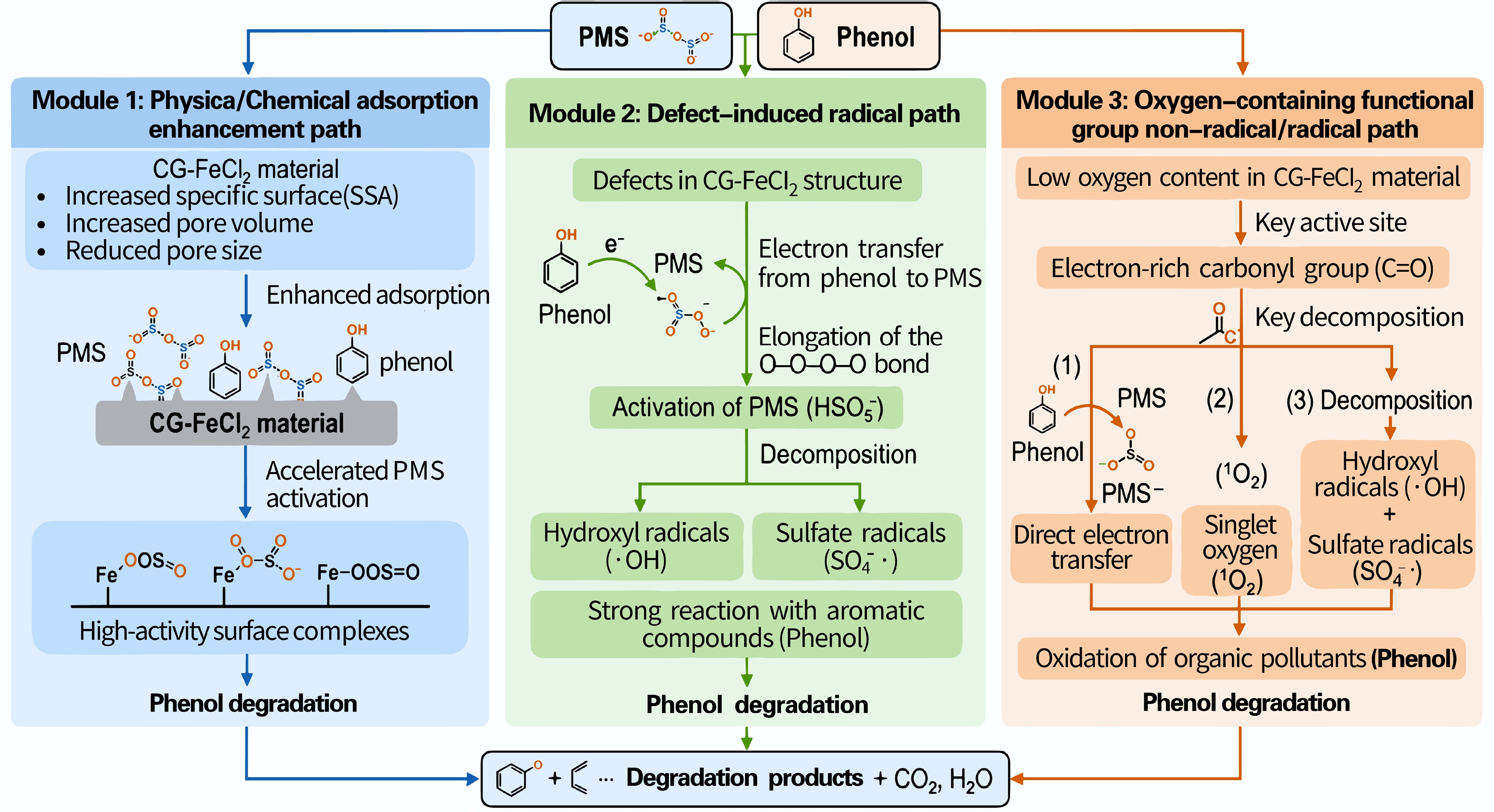
Figure 6.
Possible degradation mechanism of phenol in the CG–FeCl2/PMS system, redrawn from Sun et al.[58].
Degradation performance evaluation
Typical pollutants
-
In CG-catalyzed PMS-based advanced oxidation systems, the choice of representative pollutants is not only fundamental to evaluating catalytic efficiency but also decisive for interpreting catalytic performance and judging its practical relevance. Assessing removal solely with a single, easily oxidized and readily detected model compound often overestimates a catalyst’s actual effectiveness in complex matrices. Recent studies have therefore emphasized that pollutant selection should reflect variations in molecular structure, electronic distribution, and environmental relevance, enabling a more realistic assessment of catalyst behavior under practical conditions.
Table 2 summarizes representative CG-based or CG-related PMS/PDS catalytic systems. Because pollutant type, pollutant concentration, oxidant dosage, catalyst loading, pH, water matrix, and reaction time vary substantially among reports, the table is used for structured comparison of reaction boundaries and mechanistic tendencies rather than for direct ranking of intrinsic catalytic activity. Direct comparison should preferably rely on normalized indicators such as kobs, R2, TOC removal, active-metal leaching, and reuse performance under matched conditions.
Table 2. Structured comparison of CG-based or CG-related catalysts activated by PMS/PDS for organic-pollutant degradation
Catalyst system Preparation
methodTarget pollutant/matrix Key reaction conditions
and comparison limitsDegradation performance/
kinetic evidenceMain active species
or mechanismRef. Natural CG/PDS or PMS-related system Mechanical crushing or raw-mineral activation Tetracycline hydrochloride in single-pollutant solution Optimized oxidant and catalyst dosage; direct comparison is limited by differences in oxidant type and initial pollutant concentration Rapid degradation under optimized conditions; kobs and R2 should be reported together for cross-system comparison Mineral-associated Fe/defect sites and surface hydroxyls participate in oxidant activation [9,12,18] CG–FeCl2/PMS Impregnation–calcination with ferrous chloride Phenol and representative PAHs Relatively broad pH range; common anion effects evaluated in selected tests > 95% removal of naphthyl, phenanthrene, and phenol under optimized conditions; TOC and leaching data remain necessary for feasibility assessment 1O2, •OH, SO4−•, and surface Fe-related interfacial activation [10,58,79] Co3O4@CG/
PMSCo3O4 supported on CG Phenol under alkaline conditions Alkaline matrix; catalyst loading and PMS dosage must be specified when comparing with Fe- or Mn-based systems Efficient phenol degradation; kinetic ranking should be based on kobs rather than final removal only Singlet-oxygen-dominated non-radical pathway [77,87] CoMnOx@CG/
PMSWet impregnation/supported bimetallic oxide Phenol in alkaline water and coal-chemical wastewater pH 9–11 and coal-chemical wastewater matrix considered; coexisting ion and fluorescence changes reported > 90% phenol removal within 10 min under optimized alkaline conditions; cycling and matrix tolerance are key advantages Co/Mn redox coupling, oxygen-vacancy-related activation,1O2, •OH, and SO4−• [87,97] Mn1.8Fe1.2O4/
PMSNanosphere synthesis Bisphenol A benchmark system Non-CG benchmark; useful only for mechanism comparison because support and active-site density differ Excellent BPA degradation in optimized PMS system Mn/Fe valence cycling and bimetallic synergy [69,78] Cu–X zeolite from CG source In situ Cu incorporation during zeolite synthesis Organic pollutants in Fenton-like system Zeolite framework differs from raw CG; comparison should focus on active Cu accessibility Fenton-like activity demonstrated; durability and copper leaching should be quantified Cu(II)/Cu(I) redox cycling and framework-assisted interfacial reaction [64,75] N–CG/PMS Nitrogen doping/chemical modification of CG carbon fraction Antibiotics and organic pollutants Doping level, carbon structure, and PMS dosage should be reported to compare electron-transfer efficiency Rapid antibiotic degradation reported; reuse, TOC removal, and leaching remain key validation indicators Electron-transfer/non-radical pathway with modified carbonaceous domains [65,76,117] Tetracyclines are particularly informative in this regard. As emerging contaminants widely detected in wastewater and wastewater-derived sludge, they are difficult to eliminate completely by conventional treatment and therefore provide a stringent test for oxidative systems[81,83]. In broader PMS-based catalysis, transition-metal-containing systems have already demonstrated rapid tetracycline degradation, with removal efficiencies exceeding 90% within 60 min under optimized conditions[84]. More importantly for the present review, natural CG itself has been reported to activate persulfate for tetracycline hydrochloride degradation, even without auxiliary energy input, indicating that mineral-associated sites in CG can directly participate in oxidant conversion[18]. This point should not be understated. Because tetracycline contains multiple electron-rich moieties and several potential reaction sites, its rapid degradation usually signals a catalytic interface capable of coordinating adsorption, electron redistribution, and reactive-species attack rather than simply generating oxidants in bulk solution. In other words, tetracycline is not merely a model pollutant here; it is a probe for testing whether reconstructed CG has become chemically expressive.
Phenolic compounds expose a different side of catalyst behavior. Their importance lies less in their use as familiar model substrates and more in their ability to reveal pathway selectivity. In the CG-FeCl2/PMS system, quenching experiments indicated the involvement of 1O2, •OH, and SO4−•, with sulfate radicals likely making a major contribution[85]. By contrast, Co3O4@CG under alkaline conditions was reported to favor 1O2-dominated oxidation[86], whereas CoMnOx@CG in alkaline or coal-chemical-wastewater environments exhibited a mixed mechanism involving 1O2, SO4−•, and •OH[87]. Taken together, these studies show that phenol does more than benchmark degradation efficiency; it reveals how catalyst composition, support reconstruction, and reaction environment redistribute the balance between radical and non-radical oxidation pathways.
A key insight from these comparative studies is that different pollutants can serve as effective functional probes for evaluating the catalytic properties of CG-based systems. These probes not only provide benchmarks for degradation efficacy but also indirectly reveal the mechanisms underlying pollutant degradation within the system. For instance, efficient tetracycline removal typically correlates with systems capable of handling high electron densities and multiple reaction sites, while rapid phenol degradation may indicate either more direct oxidation pathways or readily accessible surface active sites[88,89]. This structure-dependent response has also been observed in broader PMS systems, where pollutant degradation behavior undergoes significant changes due to electronic properties and substitution effects.
Kinetic analysis
-
Kinetic analysis provides a quantitative basis for evaluating the catalytic performance of CG-based PMS systems and clarifies how pollutant degradation behaves under different conditions. In reported PMS-based systems, the degradation of organic pollutants such as tetracycline can be reasonably described by pseudo-first-order kinetics, as demonstrated by the linear relationship between ln(C0/C) and reaction time[90,91]. Similar kinetic behavior has also been reported in sulfate radical-based AOPs, where the apparent rate constant (kobs) is commonly used to evaluate and compare catalytic efficiency[90,91].
However, the magnitude of kobs is not an intrinsic parameter and is strongly influenced by both catalyst properties and pollutant characteristics. For example, tetracycline in PMS-based systems can be rapidly degraded with high removal efficiencies under optimized conditions, as widely reported in recent studies[92,93]. Such behavior is associated with the interaction between pollutant molecules and reactive species generated during PMS activation. In comparison, phenolic compounds have also been extensively studied in AOPs, where their degradation kinetics are influenced by multiple operational parameters, including pH, oxidant dosage, and catalyst loading[94]. These observations suggest that kinetic behavior reflects not only catalytic performance but also the physicochemical properties of the target pollutants.
Beyond pollutant structure, catalyst design plays a decisive role in determining reaction kinetics. Recent studies have demonstrated that defect engineering, heterostructure construction, and surface functionalization can significantly accelerate PMS activation and pollutant degradation. For example, vacancy-rich metal oxides and composite catalysts have been shown to enhance local reactant concentration and facilitate interfacial interactions, resulting in markedly increased rate constants compared with pristine materials[93,95]. Confinement effects and nanoscale architectures can likewise promote more efficient mass transfer and electron exchange, thereby shortening reaction times and improving overall kinetics[96]. These findings suggest that the observed kinetic enhancement is closely linked to the accessibility and distribution of active sites, rather than simply the total amount of catalyst present.
Reaction conditions also strongly influence kinetic parameters. External energy inputs such as heat or ultrasound have been reported to accelerate PMS activation by providing additional activation energy, thereby enhancing pollutant degradation rates[90,91]. Meanwhile, the choice of activation method can lead to substantial differences in degradation efficiency, depending on the specific system and operational conditions[90]. Such variations indicate that kinetic behavior arises from the combined effects of catalyst structure, pollutant properties, and reaction conditions.
More broadly, kinetic analysis serves not only as a tool for comparing performance but also as an indirect indicator of the underlying reaction environment. Differences in degradation rates, sensitivity to operating conditions, and pollutant-dependent kinetic trends collectively imply that multiple oxidative processes may coexist within CG/PMS systems[97]. Therefore, while kinetic models provide valuable insights into reaction efficiency, they cannot fully elucidate the nature of the catalytic pathways. A deeper understanding of the intrinsic mechanisms governing these processes requires further investigation, as discussed in the following section.
For consistent kinetic interpretation, the pseudo-first-order model should be reported as ln(C0/Ct) = kobst, where C0 and Ct are the pollutant concentrations at the initial time and reaction time t, respectively, and kobs is the apparent rate constant. A systematic evaluation should provide kobs and R2 under at least four variable groups: initial pH, catalyst loading, PMS dosage, and representative coexisting ions such as Cl−, HCO3−, CO32−, H2PO4−, and natural organic matter. Such reporting can distinguish three cases that are often conflated: higher removal caused by greater oxidant availability, accelerated kinetics caused by increased accessible active sites, and apparent inhibition caused by radical scavenging, surface-site competition, or pollutant-speciation changes.
Influencing factors
-
The performance of CG-based catalysts in PMS activation is not determined by catalyst composition alone. In practice, degradation efficiency is jointly shaped by reaction parameters, water chemistry, and the intrinsic surface characteristics of the catalyst. Among these variables, the dosage of PMS and catalyst usually exerts the most immediate influence. A moderate increase in PMS concentration generally accelerates pollutant removal because more oxidizing equivalents become available at the catalyst–solution interface[98−100]. A similar trend is often observed when catalyst loading is raised, as a larger number of accessible active sites can improve contact between PMS and the target pollutant[99,101]. Yet this positive relationship is rarely linear over a broad range. Once PMS or catalyst is overdosed, the gain in removal efficiency often becomes marginal, and in some systems even declines, because excessive oxidant consumption or unproductive side reactions begin to compete with effective pollutant conversion[97,100,101]. For this reason, catalyst performance should be judged not only by the highest attainable removal but also by the dosage window within which the system remains efficient and economical.
The effect of pH is equally important, but its role is more nuanced than a simple 'acidic vs alkaline' distinction. Several CG-based systems have shown good performance over relatively broad pH ranges, and some are even particularly suitable for alkaline wastewater. For example, CG-supported CoMnOx and Co3O4 both maintained rapid phenol degradation under alkaline conditions, which is highly relevant to coal chemical wastewater treatment[87,97]. Other PMS systems also remain effective from mildly acidic to alkaline environments, indicating that pH tolerance is increasingly becoming a practical benchmark rather than a secondary parameter[101,102]. At the same time, pH still changes the apparent activity boundary of the catalyst by altering pollutant speciation, PMS stability, and the surface state of the solid material[58,102]. From a performance-evaluation perspective, this means that pH should be discussed as a factor defining the operational adaptability of a catalyst rather than merely as an experimental setting.
Water matrices introduce another layer of complexity. Coexisting anions such as chloride, bicarbonate, and phosphate rarely behave as simple inhibitors; rather, their influence depends strongly on catalyst type and reaction environment[103,104]. In many PMS-based systems, chloride and phosphate compete for reactive sites or alter the oxidizing environment, thereby lowering degradation efficiency[103,104]. By contrast, bicarbonate and carbonate do not always suppress performance. Recent work has shown that bicarbonate can, under certain conditions, enhance surface Fe redox cycling and improve PMS utilization, while dissolved carbonate has even been reported to promote phenol degradation in specific PMS systems[105,106]. These observations are highly relevant for CG-based catalysts because they suggest that matrix tolerance should be regarded as a critical indicator of practical applicability. A catalyst that performs well only in ultrapure water may show limited value in real wastewater, whereas one retaining stable activity in the presence of common ions is far more promising for scale-up.
Accordingly, real wastewater validation should not be treated as an optional extension. For coal-chemical wastewater and related industrial effluents, evaluation should include background COD/TOC, salinity, alkalinity, major anions, humic substances, and fluorescence or chromatographic evidence of matrix transformation. The CoMnOx@CG/PMS system, for example, is particularly relevant because it links phenol degradation with alkaline and coal-chemical-wastewater matrices rather than only with ultrapure water conditions[97].
Beyond external conditions, the response of CG/PMS systems is also closely tied to the intrinsic structure of the catalyst itself. Recent studies consistently show that catalysts with richer defect sites, stronger interfacial interactions, or more favorable oxygen mobility respond more positively to operational changes and exhibit broader workable windows[100,107−109]. In CG-derived or CG-supported materials, this point is particularly important because the support is not merely a passive scaffold. Surface hydroxyls, defect-rich domains, and mineral-derived interfaces can all influence how sensitively the system responds to pH, oxidant dosage, and coexisting species[58,108,109]. Accordingly, the discussion of influencing factors should not be separated from structure–performance correlation. What appears to be an 'external factor effect' is often, in essence, a reflection of how the catalyst surface accommodates changing reaction environments. This also explains why similar operating conditions may lead to markedly different outcomes across CG-based catalysts. Figure 7 shows the effects of coexisting ions, water matrix complexity, and cycling stability on the catalytic performance of CG-based systems
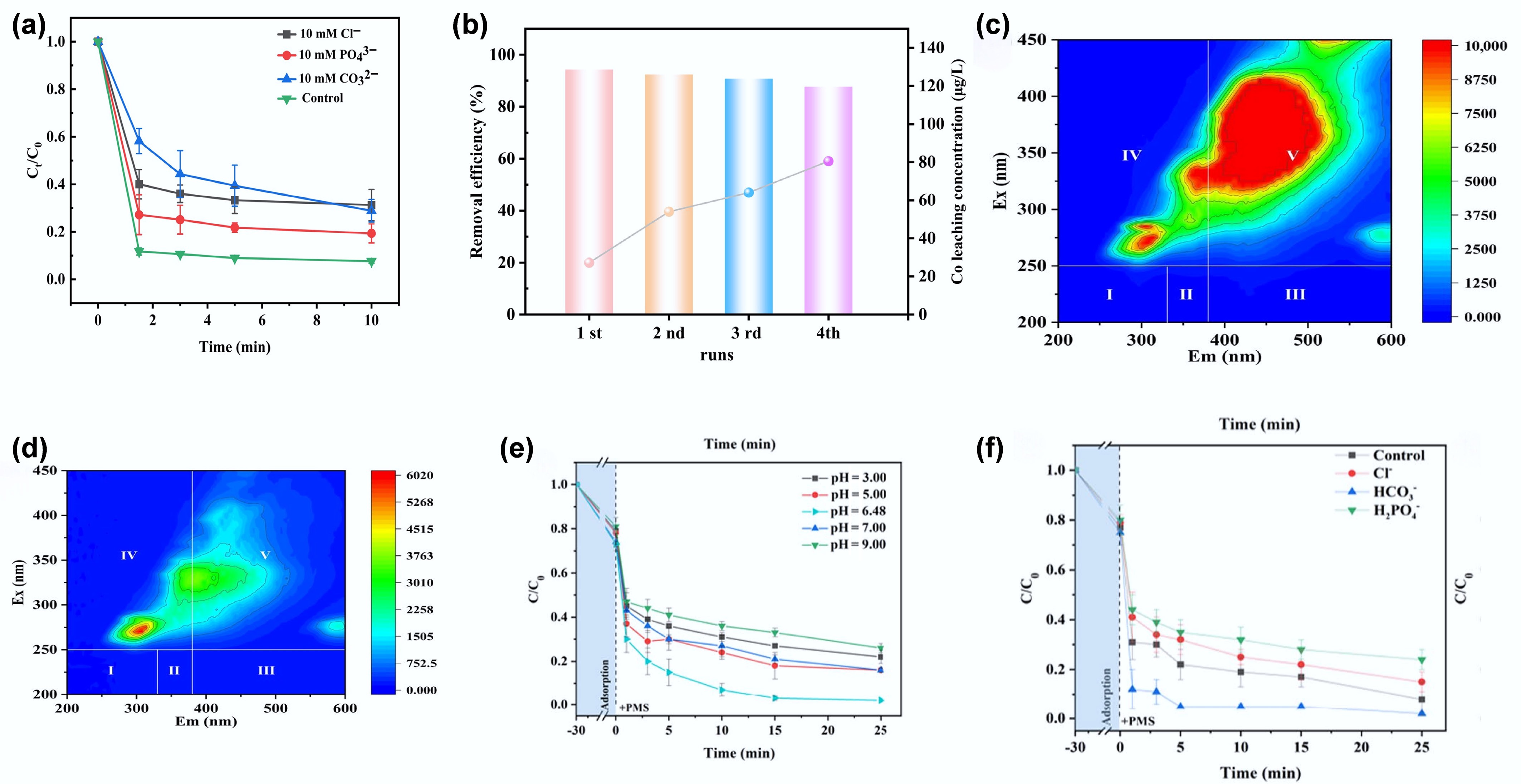
Figure 7.
Effects of (a) coexisting ions, (b) cycling stability, (c, d) changes in the three-dimensional fluorescence spectra of coal-chemical wastewater before and after catalytic treatment with CoMnOx@CG. The effects of (e) pH and (f) anions on removal efficiency in the CG–FeCl2 system. Panels (a)–(d) are reproduced from An et al.[97], with permission from MDPI, copyright 2026; panels (e) and (f) are reproduced from Sun et al.[58], with permission from Springer, copyright 2024.
Catalyst feasibility also depends on durability. Future CG/PMS studies should report at least five reuse cycles, post-reaction phase and morphology changes, dissolved Fe/Co/Mn/Ni or other metal leaching, PMS utilization efficiency, and a preliminary cost boundary based on gangue pretreatment, added metal salts, energy input, and regeneration. These parameters are essential for judging whether the environmental benefit of CG reutilization is retained after catalyst fabrication and operation.
Analysis of catalytic mechanism
-
Although the degradation performance varies significantly with pollutant structure and reaction conditions, these observations alone cannot fully elucidate the intrinsic catalytic pathways. Therefore, a mechanistic investigation is essential to distinguish the roles of radical and non-radical processes, as well as the intrinsic contribution of CG.
To avoid overclaiming the intrinsic role of CG, mechanistic evidence should be arranged as a tiered framework. Scavenging experiments and electron paramagnetic resonance can identify probable reactive species, but they should be complemented by in situ or operando characterization of surface hydroxyls, Fe/Mn/Co valence states, oxygen vacancies, defect-rich aluminosilicate domains, and adsorbed PMS intermediates. Isotope or selective-probe tests, electrochemical measurements, and density functional theory calculations anchored to realistic CG mineral structures can further separate surface-bound radicals from freely diffusing radicals and distinguish non-radical oxidation from mediated electron transfer.
Free radical pathway
-
In CG-based catalytic systems for PMS activation, the free-radical pathway should be regarded as a major, rather than exclusive, route for organic pollutant degradation. In many mineral-rich PMS systems, especially those containing iron-bearing phases, transition-metal sites, or defect-mediated surface structures, sulfate radicals (SO4−•) and hydroxyl radicals (•OH) are still recognized as important oxidizing species[18,58,110,111]. At the molecular level, PMS activation is generally initiated by its interaction with redox-active surface sites. In CG-derived catalysts, such sites may originate from endogenous Fe species, newly formed interfacial linkages, or externally introduced metal centers. For example, FeCl2-assisted calcination has been reported to reconstruct the CG surface and generate structurally integrated Fe-containing active centers for PMS activation[58]. More broadly, studies on Fe-based PMS catalysts have shown that interfacial Fe sites can promote PMS activation and the generation of oxidative reactive species, while FeO/PMS systems may involve the coexistence of radical oxidation and high-valent iron species, suggesting that free-radical chemistry is often embedded in a more complex interfacial redox network[80,112].
For CG-derived materials, the gangue matrix itself should not be viewed simply as an inert support. Natural CG has already been shown to activate persulfate for tetracycline degradation, indicating that mineral-associated sites can directly participate in oxidant conversion[18]. This interpretation is consistent with observations in reduced Fe-bearing smectite clays and amorphous FeOOH, where PMS activation was dominated by surface-bound radicals rather than exclusively by freely diffusing species in solution[113,114]. In these systems, hydroxylated Fe-containing surface sites have been identified as key locations for PMS adsorption and subsequent radical generation, whereas amorphous or defect-rich structures facilitate electron transfer and help sustain the oxidation cycle[113,114]. This point is highly relevant to CG catalysts because thermal activation or chemical reconstruction commonly creates analogous hydroxylated mineral interfaces, Fe-containing domains, and structurally disordered regions[18,58].
Once generated, SO4−• and •OH do not necessarily contribute in the same manner. SO4−• is generally more selective toward electron-rich moieties, whereas •OH is less selective and can support deeper oxidation of intermediates[115]. A comparative study of phenol transformation in the presence of nitrite further showed that sulfate radicals and hydroxyl radicals may follow different interaction patterns with aromatic substrates[115]. This distinction helps explain why apparently similar CG/PMS systems can still display different degradation efficiencies, product distributions, and mineralization behaviors. The issue becomes particularly important in engineered CG catalysts containing Fe/N dual active sites or N-doped carbonaceous domains, because such modifications not only increase the number of accessible PMS-activating centers but also reshape the local redox environment in which radicals are generated and consumed[116,117]. Recent studies on benzo[a]pyrene and antibiotic degradation clearly reflect this trend, showing that dual-site construction or carbon-structure reconstruction can markedly strengthen PMS-driven oxidation[116,117].
Even so, radical dominance should not be taken as a default conclusion in every CG/PMS system. Recent critical assessments have pointed out that quenching experiments alone may overstate or oversimplify the contribution of individual reactive species, particularly in systems where surface-bound radicals, high-valent metals, and non-radical oxidation may coexist[80,118]. Therefore, the free-radical pathway in CG/PMS systems is better understood as a major but not always exclusive route. Recognizing this boundary is important because it provides a more rigorous basis for moving from radical oxidation to the non-radical processes that increasingly emerge in highly engineered CG catalysts[80,118].
Non-radical pathway
-
In CG-based catalytic systems for PMS activation, non-radical pathways have attracted increasing attention as important complements to conventional radical oxidation routes. Compared with radical processes, non-radical oxidation is often associated with improved selectivity and enhanced tolerance toward background constituents, making it particularly relevant for complex water matrices[119−121]. Among the proposed non-radical mechanisms, singlet oxygen (1O2) generation and catalyst-mediated electron transfer are frequently discussed in heterogeneous PMS systems, especially those involving mineral-based or metal-containing catalysts[120−123].
In CG-derived or CG-supported catalysts, non-radical behavior has been widely reported in transition metal-modified systems. For example, CG-supported Co3O4 has been shown to efficiently activate PMS for phenol degradation, where1O2 was identified as a dominant reactive species under certain conditions[87]. Similarly, CoMnOx supported on CG exhibited effective PMS activation in alkaline wastewater, with evidence suggesting that non-radical oxidation pathways contributed significantly alongside radical processes[97]. These observations are consistent with findings in clay mineral-based catalysts, where loading of CoMn2O4 onto planar aluminosilicate substrates promoted the formation of oxygen-vacancy-rich structures and enhanced PMS activation performance[108]. Although such systems are not exclusively governed by non-radical pathways, they demonstrate that mineral-supported catalysts can stabilize surface states favorable for non-radical oxidation.
The contribution of non-radical pathways is also strongly dependent on the electronic properties of target pollutants. A representative study on Mn-based oxide molecular sieves (Mn-OMS) showed that electron-rich compounds were rapidly degraded, whereas electron-deficient substrates exhibited much slower kinetics, indicating that different oxidation pathways may dominate depending on substrate characteristics[124]. In addition, studies on single-atom Cu catalysts have demonstrated that both1O2 generation and electron transfer processes can coexist during PMS activation, providing multiple non-radical routes for pollutant degradation[122]. More recent work further suggests that these pathways can be intentionally coupled, where electron transfer and1O2 formation act synergistically to enhance overall catalytic performance[123]. These findings highlight that non-radical oxidation is not a single mechanism, but rather a group of surface-mediated processes whose contributions vary with catalyst structure and substrate properties.
Despite the growing emphasis on non-radical pathways, recent studies have also cautioned against over-attributing PMS activation to1O2 based solely on quenching experiments or limited spectroscopic evidence. A systematic assessment in Environmental Science & Technology demonstrated that the role of singlet oxygen may be overstated in some systems if not validated through multiple lines of evidence, particularly when electron transfer or other surface-mediated processes coexist[125]. In this context, comparisons between singlet oxygenation and electron-transfer-driven oxidation further reveal that these pathways can produce similar experimental signatures, making mechanistic differentiation non-trivial[126].
Overall, the non-radical pathway in CG/PMS systems is better understood as a structure- and substrate-dependent oxidation regime rather than a universally dominant mechanism. Its contribution is closely related to catalyst surface properties, electronic structure, and pollutant characteristics, and it often operates in parallel with radical processes rather than replacing them entirely[97,108,122−125].
Interfacial electron transfer
-
Interfacial electron transfer has been increasingly recognized as an important pathway in PMS activation, particularly in heterogeneous catalytic systems where surface-mediated processes play a central role. In contrast to conventional radical-driven oxidation, this pathway is generally associated with more selective oxidation behavior and, in some cases, improved tolerance to complex water matrices[127−129]. Rather than relying on freely diffusing reactive species, interfacial electron transfer involves direct charge exchange at the catalyst–pollutant–oxidant interface, where the catalyst can function as an electronic mediator that facilitates oxidation reactions in a more controlled manner[128,129].
This concept has been well illustrated in several model catalytic systems. For instance, single-atom Fe catalysts have been reported to promote PMS activation through a mediated electron transfer mechanism, enabling efficient pollutant degradation without the exclusive involvement of free radicals[128]. Similarly, the construction of conductive catalytic networks, such as 'chainmail' catalysts, has been shown to facilitate electron shuttling processes and enhance catalytic performance[130]. More recently, the non-contact electron transfer process (NCETP) has been proposed, in which oxidation reactions can occur without direct adsorption of the pollutant on the active site, further highlighting the diversity of electron-transfer-driven pathways in PMS systems[131]. These studies collectively suggest that catalytic efficiency is not solely governed by the number of active metal sites but also by the ability of the catalyst to establish continuous and energetically favorable electron transport pathways.
The role of specific active sites and coordination environments in regulating interfacial electron transfer has also been widely explored. For example, graphitic nitrogen in carbon-based catalysts has been identified as a key component in promoting mediated electron transfer processes[129]. In addition, M–Nx configurations, such as Ni–N4 and Co–N4 sites, have been shown to facilitate selective oxidation via electron transfer by modulating the local electronic structure of the catalyst[132,133]. Further studies on dual-atom catalysts indicate that atomic-scale engineering, such as the introduction of Co–Fe pairs, can enhance electron-mediated PMS activation through cooperative electronic effects[134]. These findings emphasize that subtle variations in coordination microenvironments can significantly influence electron transfer behavior and, consequently, catalytic performance.
For CG-based systems, the relevance of interfacial electron transfer should be considered with appropriate caution. Although direct evidence for a fully established mediated electron transfer mechanism in CG/PMS systems remains relatively limited, several studies suggest that CG can contribute to electronic modulation when properly engineered. For instance, Fe/N dual-active-site magnetic CG catalysts show enhanced catalytic activity, partly because of improved electron delocalization and surface interactions[116]. N-doped CG materials also accelerate antibiotic degradation, indicating that heteroatom incorporation can alter the electronic structure of the support and influence PMS activation pathways[117]. CG-based composite photocatalysts further exhibit interfacial charge-transfer behavior during pollutant degradation, suggesting that CG-derived materials can participate in charge redistribution under suitable conditions[109].
Taken together, these results indicate that interfacial electron transfer in CG/PMS systems should be regarded as a potentially important but structure-dependent pathway, rather than a universally dominant mechanism. Its contribution is closely related to catalyst design, electronic structure, and reaction environment, and it often operates alongside radical processes rather than replacing them entirely[109,117,127−131,134].
Figure 8 integrates this conditional model. Raw or mildly reconstructed CG mainly provides mineral-associated Fe sites, surface hydroxyls, and adsorption domains; thermal, mechanical, chemical, or composite pretreatment increases the accessibility and electronic responsiveness of these sites; and externally introduced active phases amplify PMS activation only when they couple effectively with the reconstructed CG interface. Under this model, CG-based PMS catalysis is not assigned to a single universal pathway. Instead, radical oxidation,1O2-related non-radical oxidation, high-valent metal species, and interfacial electron transfer may dominate under different combinations of catalyst structure, pollutant electronic properties, and water chemistry.
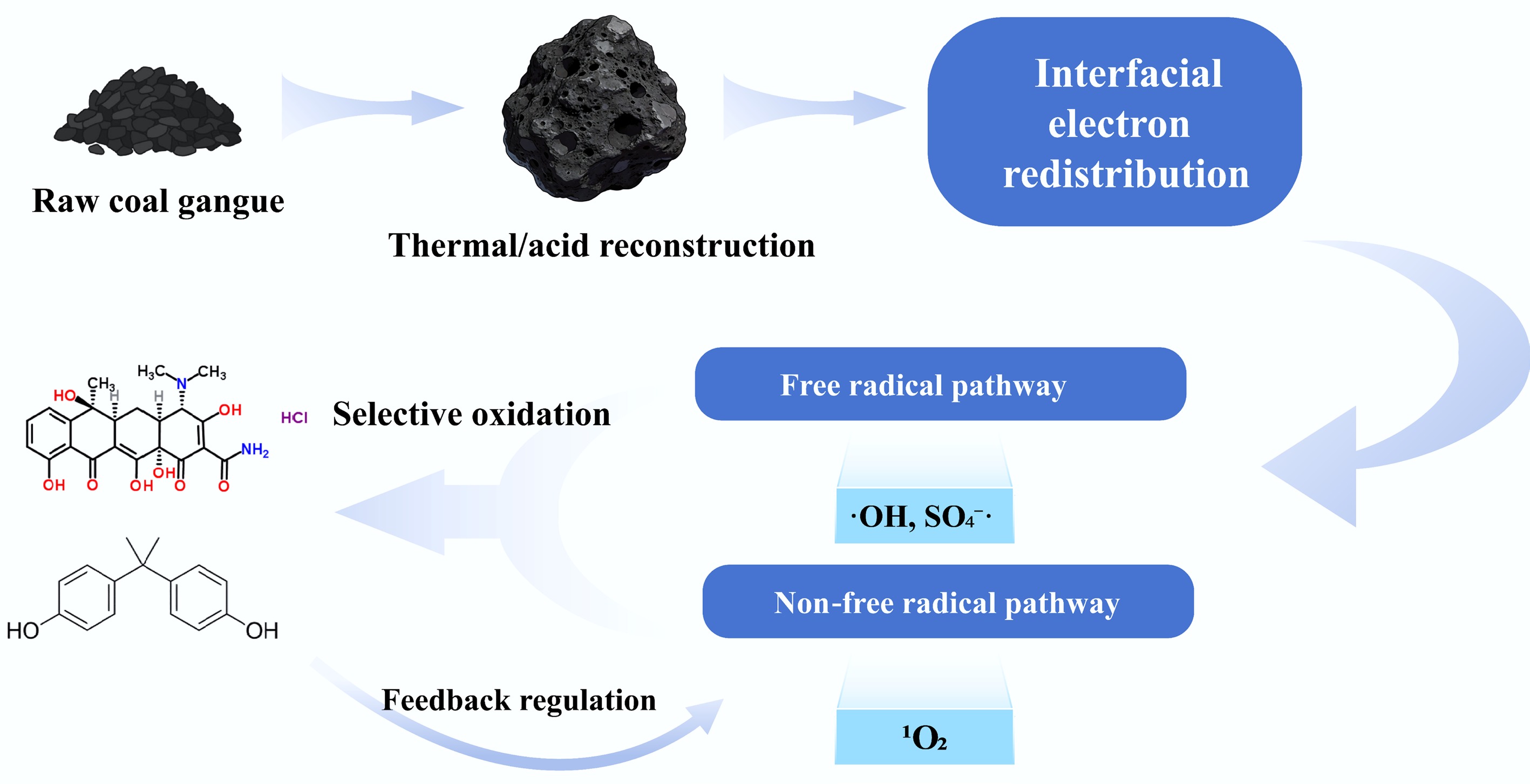
Figure 8.
Schematic diagram of the conditional interfacial mechanism by which CG-based catalysts activate PMS and selectively degrade pollutants.
-
The next stage of research should begin by answering a question that has so far been implied more often than explicitly resolved: under what conditions can CG itself make the largest contribution to hydroxyl-radical generation? At present, many studies confirm that CG-based materials are active in PMS systems, yet the intrinsic contribution of the gangue matrix is still frequently masked by the stronger signal of externally introduced metals or doped heteroatoms. This makes it difficult to determine whether an observed activity enhancement comes from the loaded phase alone, from a synergistic interface, or from the reconstructed gangue surface itself. A more rigorous research route would therefore be to treat CG not as a background material, but as a variable whose own radical-generation capacity should be deliberately maximized and quantified. That requires systematic comparison of mineral composition, calcination temperature, atmosphere, acid/alkali pretreatment intensity, defect density, and surface hydroxyl retention, rather than simply reporting the final degradation efficiency of a composite catalyst.
At the same time, the future of CG-based catalyst design is likely to depend less on adding the largest possible amount of active species than on identifying the species that are most compatible with the surface and electronic character of CG. This is especially important because the gangue matrix is compositionally heterogeneous and structurally responsive. A component that performs well on one carbonaceous or oxide support may not necessarily be the best choice for CG. The more promising strategy is to ask which active species can most effectively couple with the defect-rich aluminosilicate framework, the residual iron-bearing domains, the reconstructed hydroxylated surface, or the electronically altered carbon fraction of CG. In this sense, the future design principle should be 'matching' rather than 'stacking': matching valence flexibility, matching adsorption behavior, matching charge-transfer tendency, and matching tolerance to real water matrices.
Broader heterogeneous-catalyst studies also support this matching-oriented design principle. K-doped ZnO demonstrates that controlled doping can modify defect-related electronic configuration and photocatalytic response[135]. Recyclable Raney Ni highlights the need to evaluate selectivity and repeated use as core performance indicators rather than as supplementary observations[136]. MoS2/Au0/N-CNT architectures illustrate how conductive carbon nanotube networks can strengthen interfacial charge transport[137]. MIL-100(Fe)-supported Pt–Co nanoparticles further show that metal–support matching can regulate catalytic activity and selectivity through the local coordination environment[138]. These examples reinforce the need to design CG-based catalysts by coordinating mineral reconstruction, active-phase compatibility, and durability under realistic matrices.
Another issue that deserves much more attention is mechanistic discrimination. In PMS catalysis, quenching experiments alone often produce conclusions that are too neat for systems that are intrinsically complex. For CG-based catalysts, this problem is even more pronounced because radical generation, singlet oxygen formation, surface-bound oxidation, and electron-transfer processes may all be entangled with mineral heterogeneity. Future work therefore needs stronger mechanistic evidence from in situ or operando characterization, selective probe design, theoretical calculation anchored to real mineral structures, and more careful separation of surface-bound and free-solution pathways. Only when the intrinsic role of CG is disentangled from that of the loaded phase can the proposed innovation of 'CG as an active participant' be fully demonstrated on mechanistic grounds.
Finally, it will be difficult for this field to mature if it remains confined to idealized model systems. The transition from phenol or tetracycline solutions to real wastewater will not be a simple scale-up; it will be a test of whether the catalytic logic itself is robust. Leaching stability, catalyst regeneration, performance in high-salinity or alkaline matrices, competition from coexisting ions and natural organic matter, and the toxicity evolution of degradation intermediates all need to be evaluated together. In parallel, resource utilization claims should be supported by techno-economic and environmental assessments rather than by material origin alone. CG is abundant, but abundance by itself does not guarantee sustainability. Its real value will be demonstrated only when catalytic performance, mechanistic clarity, durability, and environmental safety converge in the same system.
A practical roadmap can therefore be proposed for the next stage of CG/PMS research: first, establish standardized kinetic and matrix-testing protocols; second, construct matched control groups separating raw CG, reconstructed CG, loaded active phase, and reconstructed CG-loaded composites; third, combine in situ spectroscopy, electrochemical diagnosis, and theoretical calculations to quantify the intrinsic contribution of CG; and fourth, integrate reuse, leaching, toxicity evolution, and preliminary cost assessment before claiming engineering feasibility.
-
This review shows that the catalytic application of CG in PMS activation has moved beyond the early stage of 'solid waste substitution' and is gradually entering a stage of structure-guided and mechanism-aware design. Thermal, mechanical, chemical, and composite modification all act by reconstructing the mineral and electronic microenvironment of CG, thereby determining how PMS is activated and how pollutants are oxidized. The degradation of representative pollutants, the kinetic response under varying operational conditions, and the coexistence of radical, non-radical, and interfacial electron-transfer pathways collectively indicate that CG-based catalysis is governed by a dynamic structure–reactivity relationship rather than by the presence of a single nominal active site.
More importantly, the evidence discussed throughout this review supports a broader conceptual shift: CG should not be regarded merely as a low-cost carrier for catalytic species. Under suitable reconstruction, it can itself become part of the reactive interface and participate directly in pollutant degradation. This understanding opens a more distinctive route for future catalyst development. The key is no longer simply to load active metals onto CG, but to determine the conditions under which CG can express the strongest intrinsic oxidative potential—especially its ability to promote hydroxyl-radical generation—and then to introduce the active component that best matches its surface chemistry and electronic structure. Once this logic is established, the role of CG in PMS catalysis will no longer be defined by waste reutilization alone but by its capacity to serve as a genuinely functional catalytic matrix. Therefore, the field should move from performance demonstration to evidence-based catalyst matching, with mechanistic discrimination and real-wastewater durability as the decisive criteria for practical application.
The authors thank the School of Environment and Chemical Engineering, Heilongjiang University of Science and Technology, for its support.
-
Not applicable.
-
The authors confirm their contributions to the paper as follows: Yusen Wu: conceptualization, investigation, methodology, formal analysis, data curation, writing – original draft, and visualization. Rilin Tan: investigation, data curation, formal analysis, and visualization. Linlin Huang: methodology, software, and validation. Zilong Dong: resources and investigation. Fan Yang: formal analysis, visualization, and writing – review & editing. Xiongwei Liang: project administration, software, and validation. Lixin Li: conceptualization, funding acquisition, supervision, and writing – review & editing. All authors read and approved the final manuscript.
-
The data supporting the findings of this review article are available within the article and/or references thereof.
-
The authors declare that they have no known competing financial interests or personal relationships that could have appeared to influence the work reported in this paper.
-
Full list of author information is available at the end of the article.
- Copyright: © 2026 by the author(s). Published by Maximum Academic Press, Fayetteville, GA. This article is an open access article distributed under Creative Commons Attribution License (CC BY 4.0), visit https://creativecommons.org/licenses/by/4.0/.
-
About this article
Cite this article
Wu Y, Tan R, Huang L, Dong Z, Yang F, et al. 2026. Coal gangue-based catalyst activates peroxymonosulfate for efficient degradation of organic pollutants in wastewater. Environmental and Biogeochemical Processes 2: e014 doi: 10.48130/ebp-0026-0008 

Coal gangue-based catalyst activates peroxymonosulfate for efficient degradation of organic pollutants in wastewater
- Received: 25 April 2026
- Revised: 16 May 2026
- Accepted: 15 June 2026
- Published online: 21 July 2026
Abstract: Coal gangue (CG), long treated as a low-cost support in peroxymonosulfate (PMS)-based advanced oxidation, deserves a more demanding reappraisal. The evidence assembled in this review suggests that, once properly reconstructed, CG is not merely a scaffold for externally introduced active species but can itself become part of the reactive interface that drives pollutant degradation. Starting from the mineralogical and environmental background of CG, this review follows a single mechanistic thread: how thermal, mechanical, chemical, and composite pretreatments reshape its mineral phases, defect structure, surface hydroxyls, and electronic microenvironment, and how these changes govern PMS activation and oxidation behavior. Particular attention is paid to the degradation of representative pollutants, where tetracycline and phenolic compounds serve not simply as model substrates but as functional probes for testing catalytic selectivity and pathway evolution. Across reported systems, CG/PMS catalysis is shown to involve a dynamic interplay among free-radical oxidation, non-radical processes, and interfacial electron transfer, with pollutant structure, water chemistry, and catalyst reconstruction jointly determining the dominant route. More importantly, the review argues for a conceptual shift in catalyst design: the key task is no longer just to load more active components onto CG, but to identify the conditions under which CG itself expresses the strongest intrinsic oxidative potential—especially its contribution to hydroxyl-radical generation—and then match it with the most compatible active phase. This perspective opens a more distinctive path for CG-based catalyst development and sets a sharper agenda for future work on mechanistic discrimination, catalyst matching, and performance validation in real wastewater. The revised framework further clarifies that the intrinsic role of reconstructed CG must be evaluated through controlled comparisons of active sites, kinetic parameters, water-matrix effects, catalyst durability, and real-wastewater validation, rather than simply by removal efficiency alone.