













-
Camellia sinensis (L.) O. Kuntze is an evergreen perennial woody species characterized by an outcrossing pollination mechanism. Its young leaves are used as the raw material for tea production, a non-alcoholic beverage cherished by populations worldwide[1]. The unique sensory characteristics and health benefits of tea are attributed to a rich and diverse profile of secondary metabolites present in high concentrations[2]. Leaf size and shape are important indices for tea grading, underscoring their pivotal roles in determining the quality, flavor, and appearance of the final tea products[3]. Phytohormones, as the small-molecule endogenous organic compounds synthesized through multiple key metabolic pathways, are involved in mediating plant development and responding to various stresses[4]. As a key regulator, cytokinins promote cell division and cell expansion, thereby enhancing leaf growth. Moreover, cytokinins distributed in the leaf margins play a critical role in determining the final leaf morphological traits[5,6]. However, the regulatory roles of cytokinin in tea leaf shape and size have not been reported.
Dynamic homeostasis of cytokinins in plants is predominantly governed by the coordinated interplay between isopentenyltransferase (IPT) and cytokinin oxidase/dehydrogenase (CKX) enzymes, which is tightly linked to the plant's developmental stages and external environmental stimuli[7,8]. IPTs catalyze the rate-limiting step of cytokinin biosynthesis, which are classified into adenylate-type and tRNA-type IPTs in higher plants. Adenylate-IPTs mainly mediate the biosynthesis of isopentenyladenine (iP)- and trans-zeatin (tZ)-type cytokinins, using ATP, ADP, or AMP as their preferred substrates. In contrast, tRNA-type IPTs are responsible for the production of cis-zeatin (cZ)-type cytokinins, which occur via the catalysis of isopentenylation at the N6-position of adenine residues within transfer RNA (tRNA) molecules[7,9]. LONELY GUY (LOG) proteins catalyze the conversion of inactive cytokinin nucleotides to the bioactive free-base forms[10]. Bioactive cytokinins are irreversibly catabolized by CKX, whereas they undergo reversible inactivation via glucosyl conjugation[11]. Collectively, the enzymes involved in cytokinin anabolism and catabolism form a precise regulatory network that modulates cytokinin homeostasis, thus exerting pivotal regulatory roles in plant growth and development as well as adaptive responses to various environmental stresses[12].
Previous studies have reported that leaf development was typically divided into four sequential stages, including leaf primordium initiation, the polarity establishment, the formation of leaf size and shape, and leaf senescence[13,14]. Cytokinins play essential roles in regulating the size and structure of shoot apical meristems (SAMs)[15]. For example, reduced cytokinin concentration caused by ipt mutation or CKX overexpression leads to diminished size and activity of the SAMs[16]. Moreover, cytokinins have been reported to participate in regulating leaf size[11,17]. For instance, cytokinin depletion in ipt mutants or transgenic lines overexpressing CKX decreased the expression levels of AINTEGUMENTA (ANT) during root secondary growth and early leaf proliferation, whereas ANT overexpression increased the size of leaves and flowers[18]. Overexpression of CKX3 suppressed the cell proliferation and expedited the onset of cell expansion, while constitutive overexpression of CKX1 reduced the number of leaf cells, but increased the leaf cell size[11,19]. Overexpression of IPT or HvCKX2 genes was involved in mediating cell proliferation and further regulating leaf size[20]. In rice, OsCKX3 mediated the morphogenesis of leaf pillows and negatively regulated leaf inclination angle[21]. In addition, cytokinins are closely involved in regulating leaf senescence. Transgenic tobacco overexpressing the IPT gene derived by the senescence-specific SAG12 promoter significantly impedes leaf senescence and shedding[22].
Given that constitutive promoter-driven IPT overexpression resulted in retarded phenotype, inhibited root growth, and caused plant deformities, the application of tissue-specific promoters in plant genetic engineering represents an effective strategy to explore the specific functions of cytokinins in targeted organ development[11,23]. In this research, we systematically characterized the CsIPT and CsCKX family genes across 22 tea cultivars, performed phylogenetic analyses, and conducted expression analysis to screen for the CsIPT and CsCKX genes with high expression in above-ground tissues of tea plants. Furthermore, we identified shoot-specific promoters based on the transcript abundance of CsLhc genes via RNA-seq and RT-qPCR data analyses of the 'Shuchazao' cultivar. Subsequently, we generated transgenic Arabidopsis lines harboring CsIPT3/CsCKX5 driven by the CsLhc11 promoter (shoot-specific). We then compared the leaf and rosette leaf size differences between transgenic plants and WT plants. SEM was also employed to characterize variations in cell size between leaves of transgenic and WT plants. In addition, we detected the transcript abundance of six cytokinin-responsive genes in transgenic Arabidopsis lines overexpressing CsIPT3/CsCKX5 derived from the CsLhc11 promoter. This study not only provided direct experimental evidence for the regulatory mechanism of cytokinin in tea leaf development, but also laid a foundation for targeted genetic improvement of tea plant leaf-related traits.
-
Genome sequences and corresponding annotation files of 22 tea cultivars: 'Baiye 1' (BY1), 'Baihaozao' (BHZ), 'Danxia 5' (DX5H), 'Fuding Dabaicha' (FDDB),'Guihong 3' (GH3H), 'Huangdan' (HD), 'Huangjinya' (HJY), 'Mingke 1' (MK1), 'Jinmingzao' (JMZ),'Jinxuan' (JX), 'Longjing 43' (LJ43), 'Lingtou Dancong' (LTDC), 'Qilan 10' (QL10H), 'Rougui' (RG),'Mingshan Baihao' (MSBC), 'Shuchazao' (SCZ), 'Tieguanyin' (TGY), 'Jiaming 1' (JM1), 'Wuyi Shuixian' (WYSX), 'Yinghong 9' (YH9H), 'Zhuyeqing'(ZYQ), and 'Zijuan' (ZJ) were retrieved from the research by Chen et al.[24]. The HMM profile of the IPT domain (PF01745) downloaded from the Pfam database was used to identify IPT family genes from 22 tea cultivars. In addition, two core conserved domains, such as cytokinin-binding (PF09265) and FAD-linked oxidase (PF02913), were used to identify CKX family genes across 22 tea accessions. The Pfam, SMART, and CDD databases were applied to determine the presence or absence of the core domain(s) in all candidate sequences[25].
The tea plants of 'Shuchazao' were cultivated in Guizhou University's Tea Germplasm Resource Field (26°20′ N and 106°40′ E). All test materials in the garden were managed per standardized tea cultivation protocols, with consistent irrigation and water-fertilizer application.
Phylogenetic analysis of IPT and CKX family genes across 22 tea cultivars
-
The full-length protein sequences of IPTs and CKXs from the whole-genome protein databases of 22 tea cultivars and Arabidopsis were separately aligned using MUSCLE with default settings, respectively[26]. The alignment files were applied to construct the phylogenetic trees via the maximum-likelihood (ML) method with 1,000 bootstrap replicates in the IQTREE software package[27]. The IPT and CKX gene families were further divided into different groups based on the sequence similarity and identified AtIPTs/AtCKXs.
Transcript abundance of CsIPTs and CsCKXs in distinct organs and leaf stages of 'Shuchazao'
-
RNA-seq datasets from eight distinct organs and five leaf developmental stages of the 'Shuchazao' cultivar were obtained from the Tea Plant Information Archive (TPIA) database (
https://tpia.teaplants.cn )[28]. RSEM (v1.2.12) software was utilized to quantify the transcript levels of CsIPT and CsCKX family genes, and heatmaps of the expression profiles of these two family genes were generated using MeV software[29].Reverse transcription quantitative real-time PCR (RT-qPCR)
-
The isolated mRNA was converted into double-stranded cDNA using the PrimerScript RT Reagent Kit (TaKaRa). For the RT-qPCR assay, all samples were subjected to three biological replicates, each having three technical replicates to verify the reliability of the results. The 2−ΔΔCᴛ method was employed to determine the transcript levels of all candidate genes[30]. The primers of all candidate genes were listed in Supplementary Table S1.
Promoter activity analysis
-
Approximately 2,000-bp promoter sequences of four CsLhc genes were obtained from the TPIA database based on the genome annotation of C. sinensis 'Shuchazao'. Primer_Premier 5.0 software was applied for designing the promoter-specific primers. The amplified CsLhc promoters from the genomic DNA were cloned into the pMD18-T cloning vector (Takara) for Sanger sequencing. The confirmed promoter fragments were then cloned into the pBI121-35s-GUS vector to replace the 35S promoter. These recombinant constructs were transformed into A. tumefaciens strain GV3101, and the positive transformants were used for tobacco leaf infiltration. The infiltrated tobacco leaves were incubated in darkness for 1 d, followed by 2 d under normal light conditions. After incubation, the leaves were immersed in GUS staining buffer and incubated at 37 °C for 24 h to ensure sufficient staining. The stained samples were then decolorized with 70% ethanol to eliminate chlorophyll interference[31]. Primers used for vector construction are listed in Supplementary Table S1.
For GUS quantitative analysis, approximately 0.1 g of infected leaf powder was homogenized in 1 mL of GUS extraction buffer in an Eppendorf tube and centrifuged at 12,000 r/min at 4 °C for 5 min. The supernatant was diluted 2×, 4×, and 8× (recommended), and 20 μL of each dilution was transferred to sample wells. A 200 μL aliquot of working solution was added, and the mixture was incubated at 37 °C for 15–30 min (to prevent evaporation). The absorbance at 562 nm was measured using a microplate reader, and the protein concentration was calculated based on a standard curve.
Subcellular localization of CsIPT3 and CsCKX5 proteins
-
The coding sequences of CsIPT3 and CsCKX5 were cloned into the pCAMBIA2300-GFP vector[32]. A. tumefaciens (GV3101) cells harboring the recombinant binary vectors were transiently transformed into tobacco leaf epidermis cells. After 2 d of incubation, GFP fluorescence signals in tobacco leaves were observed using a confocal laser scanning microscope (Leica TCS SP5-II, Leica Microsystems, Wetzlar, Germany). Primers used for subcellular localization vector construction are listed in Supplementary Table S1.
Generation of transgenic plants
-
Two vectors harboring CsIPT3 and CsCKX5 derived by the pLhc11 promoter were introduced into A. tumefaciens strain 3101 by using the freeze-thaw method. After validation by PCR amplification and restriction enzyme digestion, the positive recombinant constructs were transformed into Arabidopsis using the floral dip method[33]. Transgenic Arabidopsis plants overexpressing CsIPT3 or CsCKX5 derived by the pLhc11 promoter were initially screened by hygromycin resistance and PCR amplification (Supplementary Fig. S1).
Determination of cytokinin contents in transgenic Arabidopsis using UPLC-MS/MS
-
Approximately 0.1 g of pulverized leaf tissues was homogenized in 5 mL of extraction solvent consisting of isopropanol, water, and formic acid at a volume ratio of 80:19:1 (v/v). The homogenate was centrifuged at 10,000 r/min for 10 min to collect the first supernatant. Subsequently, 1 mL of dichloromethane was added to the resulting pellet for low-temperature ultrasonic-assisted extraction (30 min), followed by centrifugation under the same conditions (10,000 r/min, 10 min) to collect the second supernatant. After combining the two batches of supernatants, the mixed solution was concentrated via nitrogen-assisted vacuum evaporation at room temperature to retain only the aqueous phase, which was then brought to a constant volume of 1 mL. The concentrated solution was diluted 2-fold with methanol and filtered through a 0.22 μm organic phase filtration membrane prior to instrumental analysis. Quality control (QC) samples were prepared following the same procedure as the test samples, and all manipulations were performed on ice under light-protected conditions[34].
Waters UPLC system coupled with an AB 4,000 MS/MS detector was used for the analysis of the cytokinin component. UPLC parameters: column temperature 35 °C, flow rate 0.3 mL/min, autosampler temperature 10 °C; mobile phase (A: 0.1% formic acid aqueous solution; B: acetonitrile) with gradient elution: 0.00–0.50 min (95% A, 5% B), 0.50–1.00 min (linear to 40% A, 60% B), 1.00–3.00 min (linear to 5% A, 95% B), 3.00–5.00 min (return to 95% A, 5% B). MS parameters: curtain gas 35 psi, collision gas 7 psi, IonSpray voltage +5,500 V, ESI+ mode, ion source temperature 450 °C, Ion Source Gas 1, 40 psi, Ion Source Gas 2, 50 psi.
SEM analysis
-
Leaf samples collected from WT plants, CsLhc11::CsIPT3, and CsLhc11::CsCKX5 transgenic Arabidopsis lines were subjected to fixation and dehydration following the protocol described by Sun et al.[35]. Subsequently, the treated samples were examined and imaged on a SEM under the condition of 10 kV accelerating voltage.
-
In the present study, a total of 216 IPT and 204 CKX family genes were identified from the whole-genome protein database of 22 tea cultivars using HMM searches, respectively (Fig. 1, Supplementary Tables S2, S3). To clarify the evolutionary relationships of IPT genes, an unrooted ML phylogenetic tree was constructed based on full-length IPT protein sequences from the 22 tea cultivars and Arabidopsis (Fig. 1a). The results showed that the IPT gene family from 22 tea cultivars were clustered into four groups: designated groups I to IV. Among them, groups I and II comprised tRNA-IPT genes, with each group harboring a single-copy tRNA-IPT gene in all tested tea cultivars, indicating that the tRNA-IPT subfamily exhibits high conservation in gene copy number and distribution across tea germplasms. Groups III and IV contained the ATP/ADP-IPT subfamily genes from 22 tea cultivars. Notably, four ATP/ADP-IPTs from Arabidopsis clustered into a single clade, which formed a sister group to the group III ATP/ADP-IPTs of tea plants, suggesting that the ATP/ADP-IPTs in group III underwent specific expansion in tea plants. Furthermore, group IV was clustered into three subgroups (Group IVa–c). The subgroups IVa and IVc contained the ATP/ADP-IPTs from the 22 tea cultivars and Arabidopsis, while subgroups IVb only contained the ATP/ADP-IPTs from the tea cultivars, suggesting that the ATP/ADP-IPT genes were obtained from the common ancestor in tea plants or specifically lost in Arabidopsis. In addition, an un-rooted phylogenetic tree of the CKX gene family from 22 tea cultivars and Arabidopsis was generated (Fig. 1b). Based on the phylogeny and the identified AtCKXs, the tea CKX family genes from 22 tea cultivars were separated into four distinct groups (I, II, III, and IV). Among them, groups II and III contained a single copy gene from most species, while groups I and IV possessed two to three copies from all tea plants. These results indicated that the slight expansion of the CKX genes occurred in groups I and IV.
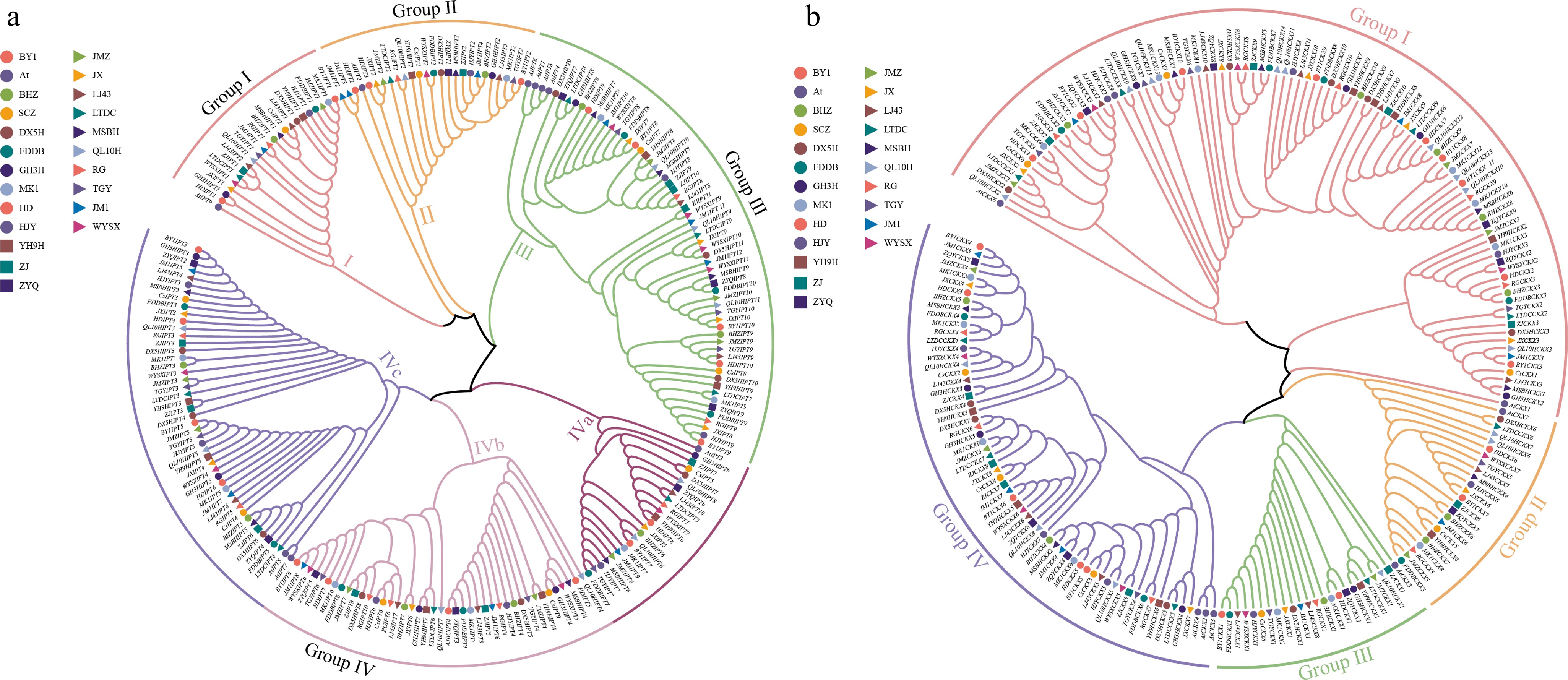
Figure 1.
Phylogenetic relationship of IPT and CKX family genes from 22 tea cultivars. (a) Phylogenetic analysis of IPT family genes from 22 tea cultivars. (b) Phylogenetic analysis of CKX family genes from 22 tea cultivars. Different shapes in various colors are used to denote distinct species. Different colored arcs represent distinct groups. The unrooted maximum-likelihood trees were inferred using IQ-TREE with 1,000 bootstrap replicates and visualized using iTOL.
Expression profiles of CsIPTs/CsCKXs in various organs and the leaf stage of 'Shuchazao'
-
Tissue- and developmental stage-specific expression data are valuable for identifying genes involved in regulating the specific nature of each tissue at a given developmental stage[11,23]. The IPT and CKX genes mediate plant organ development by fine-tuning cytokinin homeostasis in distinct plant tissues[7,8]. To further elucidate the functional roles of CsIPTs and CsCKXs during leaf development, the transcript abundance of these two gene families across various tea plant organs was investigated using previously generated RNA-seq datasets (Fig. 2, Supplementary Table S4 and S5). The results revealed that two tRNA-IPT genes (CsIPT1 and CsIPT2) were constitutively expressed across all tested organs, while the members of the ATP/ADP-IPT subfamily (CsIPT3-9) displayed organ-preferential expression patterns (Fig. 2a). For example, CsIPT3 exhibited high expression levels in root, stem, mature leaf, and old leaf; CsIPT4 was highly expressed in root and old leaf; CsIPT5 displayed predominant expression in stems and flowers; and CsIPT7 exhibited high expression levels in roots and stems. These results indicated that the ATP/ADP-IPT genes participated in finely regulating the development of different organs. Similarly, the expression patterns of CsCKX family genes were systematically investigated (Fig. 2b). The results showed that CsCKX5 was ubiquitously expressed across all examined organs. CsCKX6 showed high expression in root, stem, apical bud, and flower, and CsCKX8 was highly expressed in most organs except old leaf. Notably, CsCKX2 showed specific expression restricted to apical buds, and CsCKX7 was specifically expressed in stems and mature leaves. Based on these distinct expression patterns, CsIPT3 and CsCKX5 were selected as candidate genes for subsequent functional validation experiments, and their transcript levels were further verified by RT-qPCR (Supplementary Fig. S1).
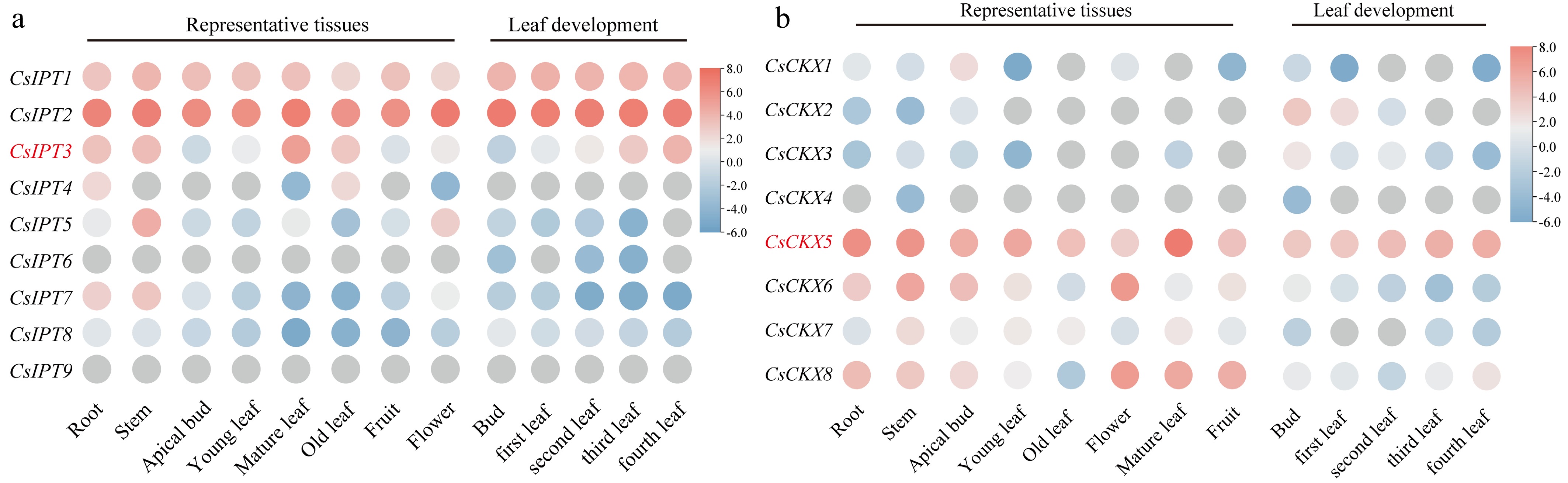
Figure 2.
Transcript levels of (a) CsIPTs, and (b) CsCKXs in various organs and different leaf stages of 'Shuchazao'. The color gradient denotes log2-converted FPKM values, and blue and red colors respectively represent low and high expression levels.
Subcellular localization of CsIPT3 and CsCKX5 proteins
-
To further characterize the biological functions of CsIPT3 and CsCKX5, the predicted subcellular localization of their encoded proteins was experimentally verified. The CDS of CsIPT3 and CsCKX5 were fused with GFP reporter gene to generate the recombinant vectors 35S-CsIPT3 and CsCKX5-GFP vectors, which were then used for transient expression in tobacco leaf epidermal cells (Fig. 3). Confocal fluorescence observation demonstrated that the CsIPT3-GFP and CsCKX5-GFP fusion proteins were specifically localized to the nucleus and plasma membrane, whereas free GFP was dispersed uniformly across all cellular compartments, indicating that these two genes exerted their functional roles in these specific subcellular compartments.
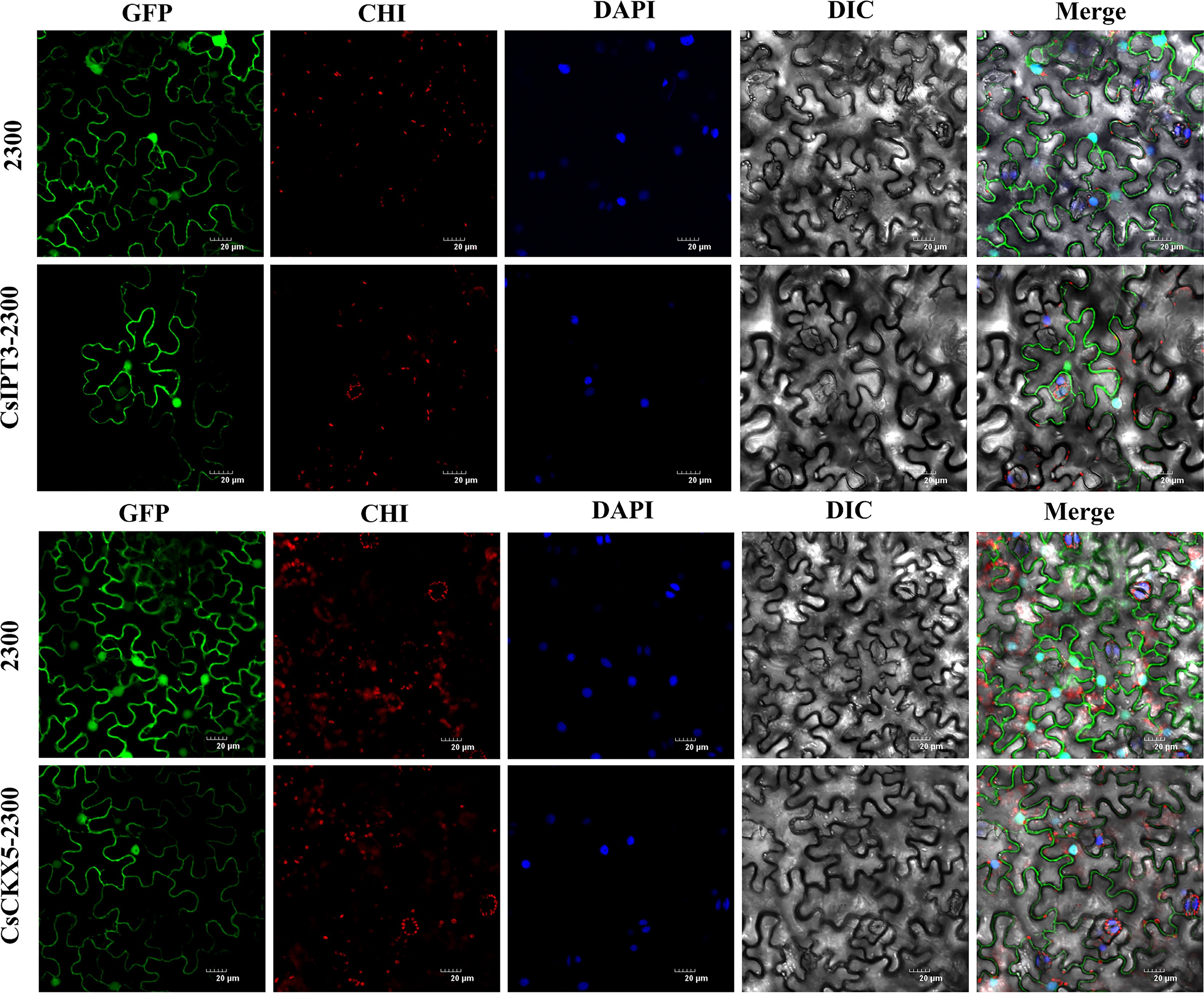
Figure 3.
Subcellular distribution of CsIPT3 and CsCKX5 proteins. Transient expression assays were performed in tobacco leaf epidermal cells, where free GFP and the 35S promoter-driven GFP-CsIPT3 and GFP-CsCKX5 fusion proteins were expressed. Laser scanning confocal microscopy was employed to detect the subcellular localization of these fusion proteins, with the scale bar set at 20 µm. Herein, the GFP channel shows the fluorescent signal of the protein-GFP fusions; the CHI channel exhibits red autofluorescence from chloroplasts, acting as a reference marker for chloroplast localization; the DAPI channel stains cell nuclei to produce blue fluorescence; the DIC channel offers differential interference contrast images that reveal cellular morphological structures; and the Merge channel is a composite of all channels, which is used to illustrate the co-localization status of the target proteins, chloroplasts, and nuclei.
Activity analysis of four CsLHC promoters from 'Shuchazao'
-
To further screen for the strong shoot-specific promoter, a total of 36 CsLhc family genes were identified from the 'Shuchazao' (Fig. 4). Phylogenetic analysis showed that the Lhc family genes were clustered into 13 groups, designated as groups Lhca1-6 and Lhcb1-7, based on the topology and Arabidopsis AtLhc genes (Fig. 4a). Moreover, transcriptional abundance of CsLhc family genes in various organs and different developmental leaf stages was also investigated (Fig. 4b and c; Supplementary Table S6). Further analysis showed that four CsLhc genes (CsLhc07, CsLhc11, CsLhc13, and CsLhc14) exhibited significantly higher expression levels in leaf tissues than in other organs (Fig. 4d–g), and their transcript levels gradually increased during leaf development (Fig. 4c). These results suggest that these four CsLhc genes may play vital roles in regulating leaf developmental processes in tea plants.
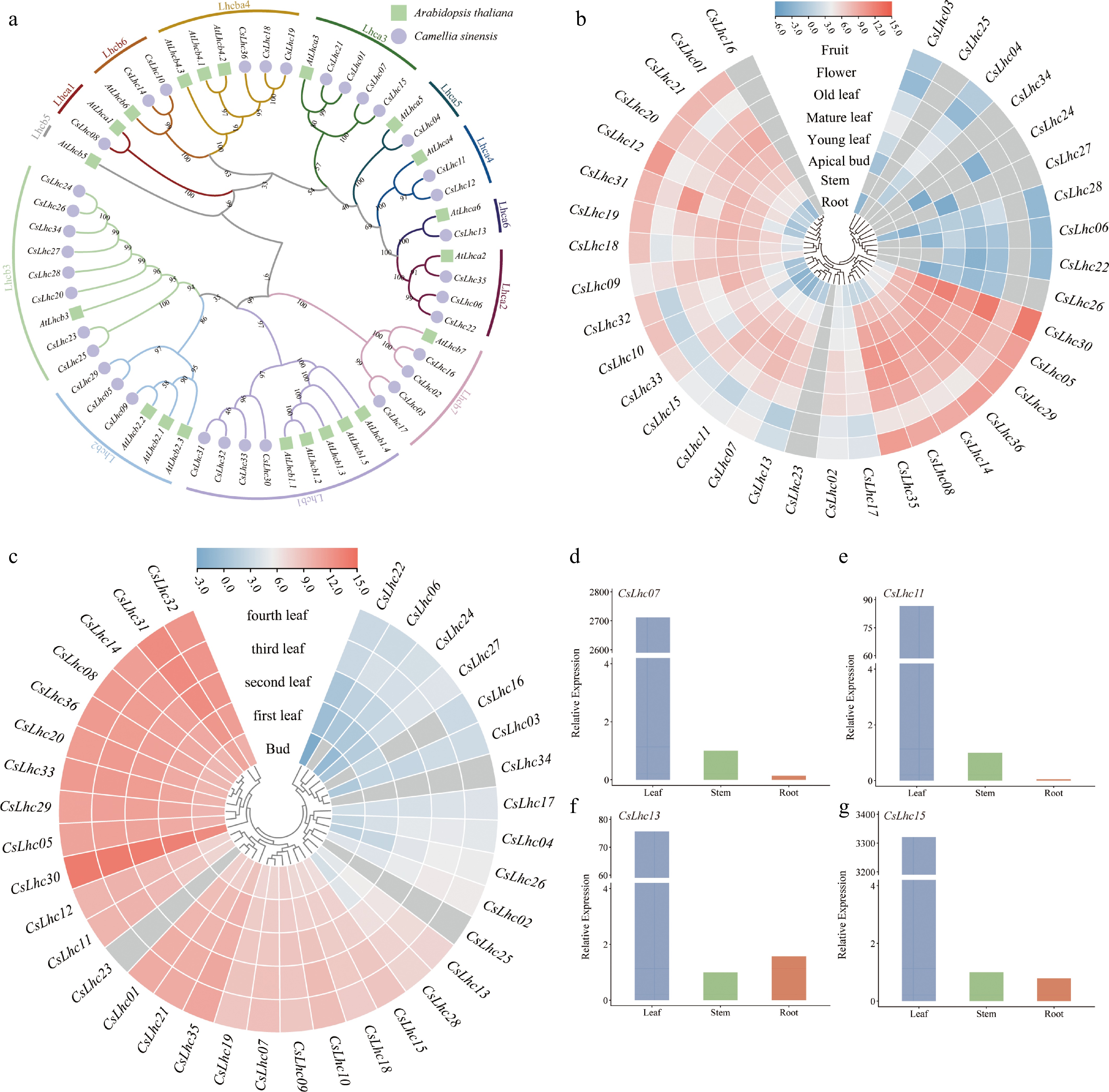
Figure 4.
Phylogenetic analysis and expression profiles of CsLhcs in various organs and leaf stages of 'Shuchazao'. (a) Phylogenetic analysis of CsLhc family genes from 'Shuchazao'; Different shapes in various colors are used to denote distinct species. Different colored arcs represent distinct groups. The un-rooted phylogenetic trees were constructed and visualized using iQtree and iTOL, respectively. (b) Transcription levels of CsLhc family genes in various organs of 'Shuchazao'. (c) Transcription levels of CsLhc family genes in different leaf development stages of 'Shuchazao'. The color scale represents log2-transformed FPKM values. Light blue- and pink-color indicated low to high expression, respectively. (d)–(g) The expression levels of four CsLhc genes with CsGAPDH used as reference gene. The 2−ΔΔCᴛ method was applied for calculating the transcription levels of each gene. Lowercase letters are used to denote notable distinctions between transgenic Arabidopsis and WT plants (p < 0.05).
To further verify leaf-specific promoter activity, the promoter fragments of these four genes were amplified via PCR, digested with Hind III and Sal I restriction enzymes, and then ligated into the pCAMBIA1391-GUS vector to construct the recombinant plant expression vector pCAMBIA1391-pCsLhcs-GUS. To assess promoter activity, the pCAMBIA1391-pCsLhcs-GUS reporter constructs were introduced into tobacco leaves via transient expression assays (Fig. 5). Compared to the control groups, GUS staining (Fig. 5a) and activity assays (Fig. 5b) revealed that the transcriptional activity of the CsLhc11 promoter, as assessed by GUS reporter gene expression, was consistent with that exhibited by the 35S promoter, and both are higher than the GUS activity driven by Lhc07, Lhc13, and Lhc14 promoters. The Lhc07 promoter displayed stronger activity to drive GUS reporter genes than Lhc13 and Lhc14 promoters (Fig. 5a and b). The GUS activity showed no obvious differences between Lhc13 and Lhc14 promoters (Fig. 5a and b).
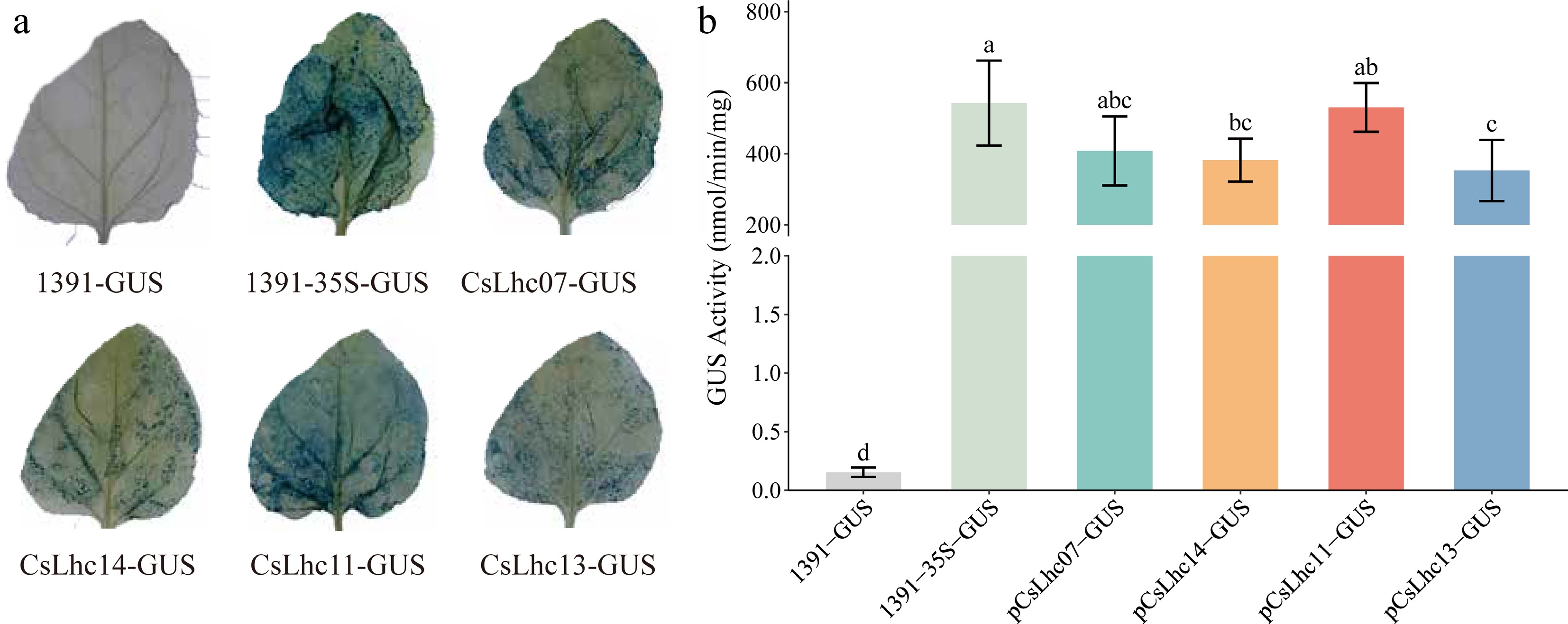
Figure 5.
The promoter activities of four CsLhc genes. (a) GUS staining for the transient overexpression of the GUS gene derived by four different CsLhc promoters. (b) GUS activity assay. Lowercase letters are used to denote notable distinctions between transgenic Arabidopsis plants and WT plants (p < 0.05).
Functional characterization of CsIPT3 or CsCKX5 in regulating leaf morphology via transgenic Arabidopsis
-
To further investigate the regulatory effects of CsIPT3 and CsCKX5 in tea leaf size and shape, we generated transgenic Arabidopsis lines overexpressing CsIPT3 or CsCKX5 driven by the CsLhc11 promoter (pCsLhc11::CsIPT3-GUS and pCsLhc11::CsCKX5-GUS, Fig. 6). In total, more than 10 independent transgenic Arabidopsis lines overexpressing CsIPT3 or CsCKX5 driven by pCsLhc11 promoter were obtained by using PCR verification and kana-resistance selection (Supplementary Fig. S2). Transgenic plants overexpressing IPT display varying degrees of CK syndrome, including reduced root growth, altered apical dominance, and changes in stem and leaf growth. As shown in Fig. 6a, CsIPT3-overexpressing transgenic Arabidopsis displayed a marked increase in rosette size compared with WT plants, whereas the rosette size of CsCKX5-overexpressing transgenic lines was significantly smaller than that of WT plants. Furthermore, we systematically compared leaf morphological indices between transgenic lines and WT plants (Fig. 6b). The results demonstrated that the leaf length and width of CsIPT3-overexpressing Arabidopsis were increased by 29.75% and 19.56%, respectively, relative to WT plants. In contrast, the leaf length and width of CsCKX5-overexpressing transgenic lines were decreased by 22.46% and 19.90%, respectively, compared with the WT control (Fig. 6b).
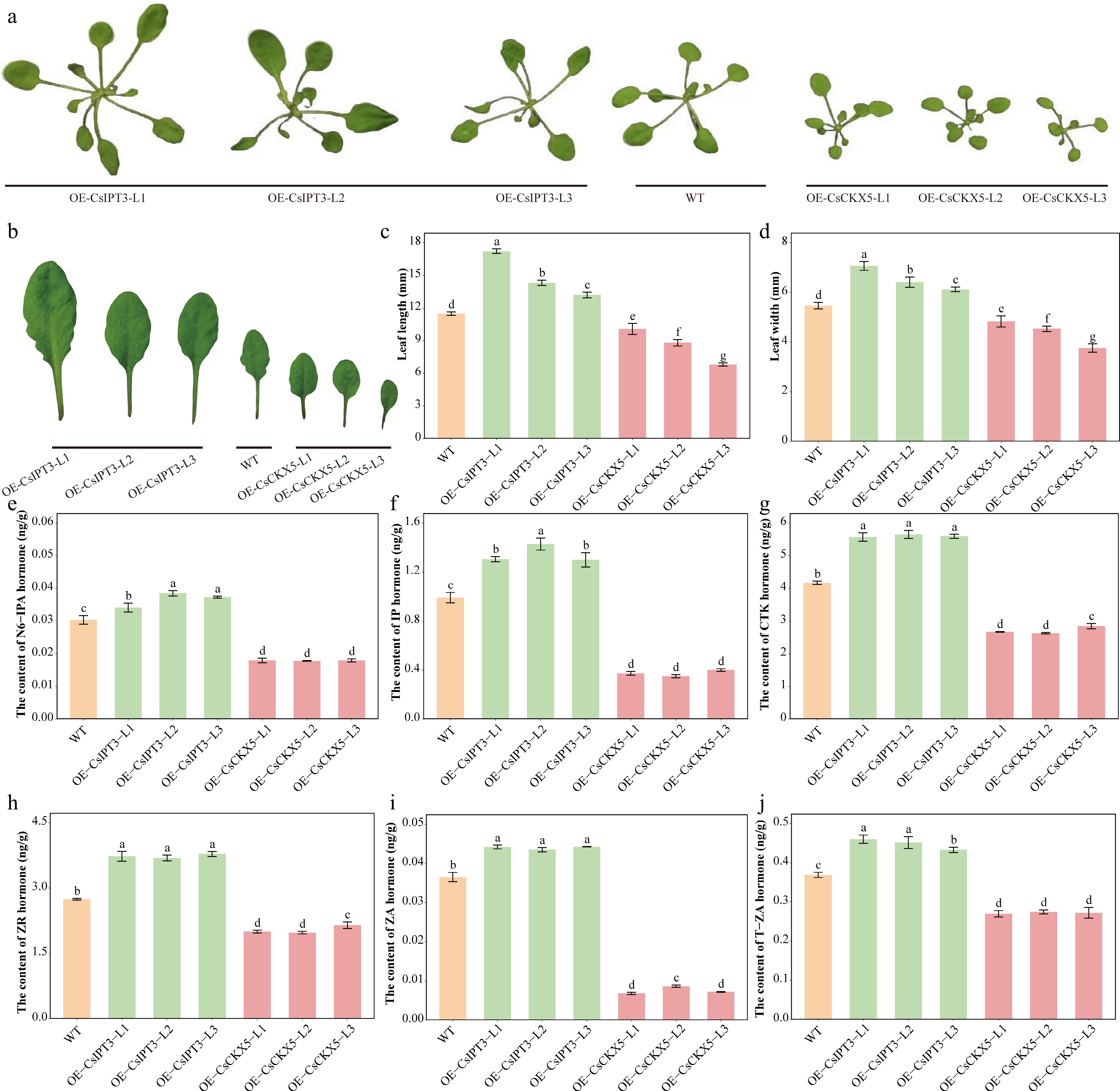
Figure 6.
Phenotype of transgenic Arabidopsis plants overexpressing CsIPT3 or CsCKX5 genes derived by the CsLhc11 promoter. (a) The rosette size in transgenic Arabidopsis lines overexpressing CsIPT3 or CsCKX5; (b) The leaf size in transgenic Arabidopsis lines overexpressing CsIPT3 or CsCKX5; (c)–(h) The contents of CTK, ZA, ZR, T-ZA, iP, and N6-IPA in transgenic Arabidopsis lines overexpressing CsIPT3 or CsCKX5. Lowercase letters are used to denote notable distinctions between transgenic Arabidopsis plants and WT plants (p < 0.05). CTK, total cytokinin; ZA, Zeatin adenine; ZR, Zeatin riboside; T-ZA, trans-zeatin adenine; iP, isopentenyl adenine, N6-IPA, N6-Isopentenyl Adenosine.
These findings indicated that shoot-specific overexpression of CsIPT3 promoted cytokinin biosynthesis, while overexpression of CsCKX5 inhibited cytokinin biosynthesis, thereby positively or negatively regulating leaf size and rosette leaf area, respectively. Additionally, we quantified the contents of various cytokinin components in transgenic Arabidopsis and WT plants (Fig. 6c–h). The contents of ZR, ZA, T-ZA, N6-IPA, and total cytokinins (CTK) in CsIPT3-overexpressing lines were increased by 36.07%, 20.42%, 21.48%, 19.55%, and 35.74%, respectively, compared with WT plants. Conversely, the contents of these cytokinin components in CsCKX5-overexpressing lines were significantly decreased by 25.64%, 79.26%, 26.21%, 41.09%, and 62.18%, respectively (Fig. 6c–h).
Collectively, these results confirmed that shoot-specific overexpression of CsIPT3 or CsCKX5 positively and negatively regulated the accumulation of various cytokinins in leaf tissues, respectively, ultimately leading to enhanced or reduced leaf and rosette size in transgenic Arabidopsis. Notably, compared with WT plants, all transgenic Arabidopsis lines maintained normal growth and development without visible abnormal phenotypes.
Leaf cell size in transgenic Arabidopsis overexpressing CsIPT3/CsCKX5
-
Given the critical roles of cell size and cell division in plant organogenesis, we examined the epidermal cells and cross-section of young leaf of transgenic Arabidopsis overexpressing CsIPT3 or CsCKX5 by scanning electron microscopy, respectively (Fig. 7). Both leaf surfaces of transgenic Arabidopsis overexpressing CsIPT3 or CsCKX5 genes differed from the WT plants (Fig. 7a). Compared to WT plants, the epidermal cells in CsIPT3-overexpressing Arabidopsis exhibited larger, loose arrangement, and gentle wrinkling of the cell wall. In contrast, the epidermal cells in CsCKX5-overexpressing Arabidopsis showed the minimum size, prominent cell wall folds, and the most compact arrangement (Fig. 7a). These results demonstrate that cytokinin played essential roles in improving leaf water retention capacity, mechanical strength, and developmental plasticity by modulating leaf epidermal cell morphogenesis. In addition, we further investigated the leaf cross-section of CsIPT3/CsCKX5-overexpressing Arabidopsis using Scanning electron microscopy, respectively (Fig. 7b). Compared to WT plants, the leaf cross-section of CsIPT3-overexpressing Arabidopsis showed larger cells with a loose architecture, while CsCKX5-overexpressing transgenic plants had smaller and tightly packed leaf cells (Fig. 7b). These results indicated that specific overexpression of CsIPT3 or CsCKX5 genes in Arabidopsis leaves led to the accumulation or reduction of cytokinins, thereby increasing or decreasing the cell size and intercellular spaces in transgenic plants, and further altering leaf size.
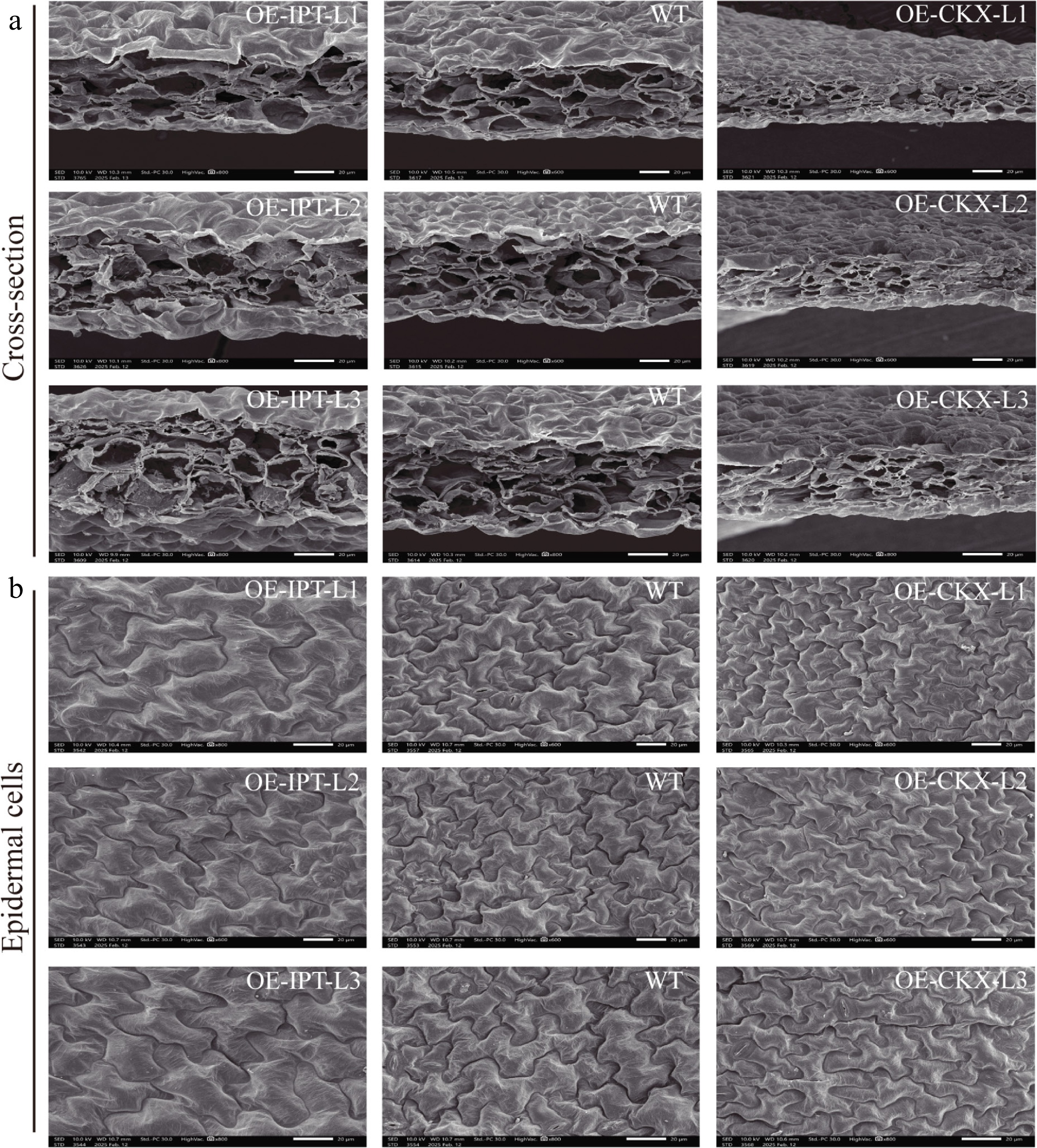
Figure 7.
The epidermal cells and cross-section of young leaf in transgenic Arabidopsis overexpressing CsIPT3/CsCKX5. (a) Epidermal cells in young leaf of transgenic Arabidopsis overexpressing CsIPT3/CsCKX5 compared to WT plants; (b) Cross-section in young leaf of transgenic Arabidopsis overexpressing CsIPT3/CsCKX5 compared to WT plants. WT, wild plants. OE-CsIPT3, transgenic Arabidopsis overexpressing CsIPT3 driven by CsLhc11 promoter; OE-CsCKX5, transgenic Arabidopsis overexpressing CsCKX5 driven by CsLhc11 promoter.
Transcription levels of six key genes associated with leaf development
-
To investigate the response mechanisms underlying leaf development in transgenic plants, we explored the transcription levels of six key genes (AtANT, AtTCP4, AtCycD3, AtGRF5, AtCDKs, and AtEXPA5) associated with leaf size in transgenic Arabidopsis overexpressing CsIPT3 or CsCKX5 driven by the CsLhc11 promoter (Fig. 8). Results showed that the transcription levels of these genes in transgenic Arabidposis overexpressing CsIPT3 driven by the CsLhc11 promoter were significantly higher than those in WT plants (Fig. 8a–f), whereas their expression levels in transgenic plants overexpressing CsCKX5 driven by the CsLhc11 promoter demonstrated a significant reduction relative to WT plants (Fig. 8a–f). These results were consistent with the phenotypic traits of transgenic plants.
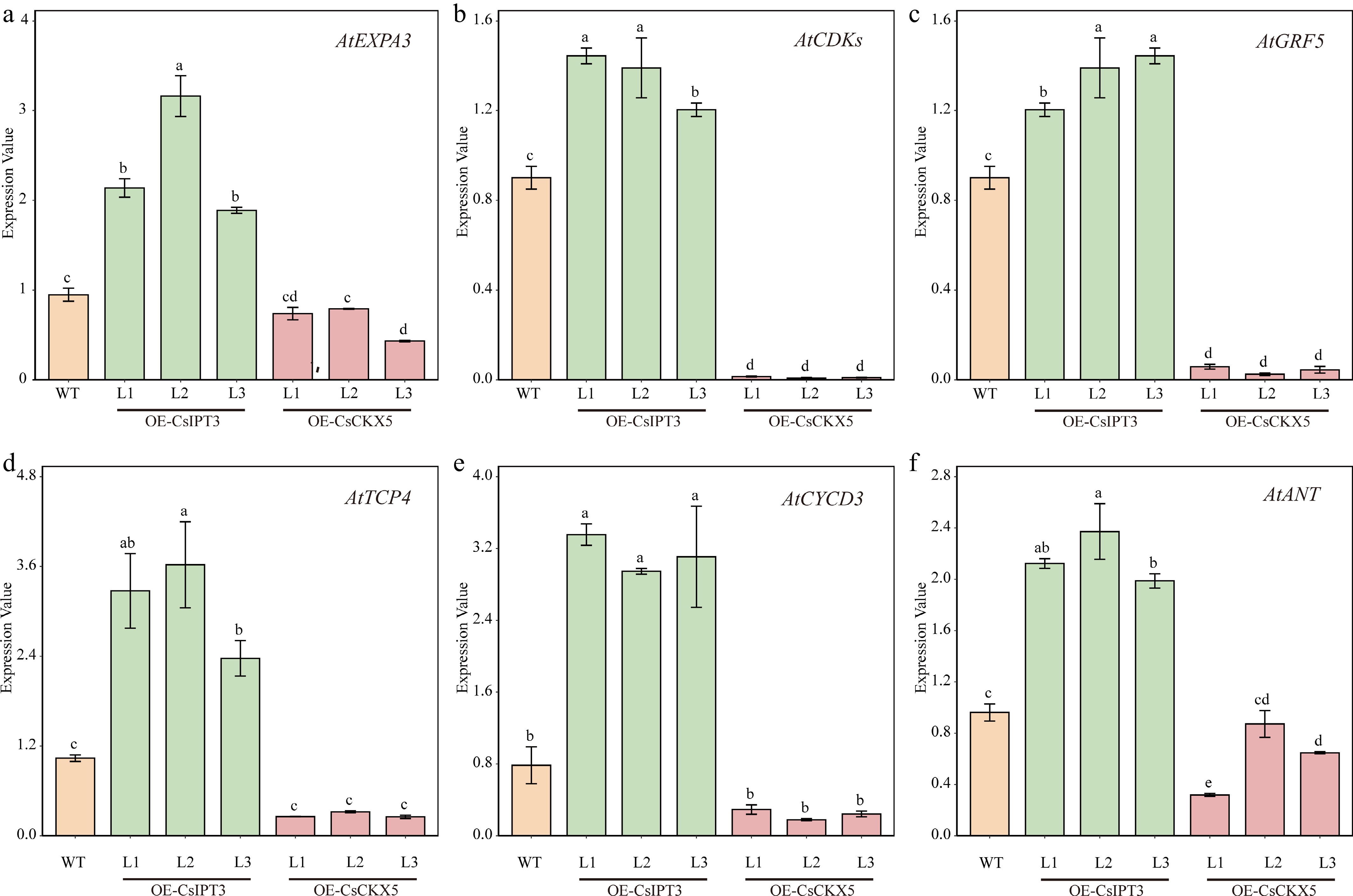
Figure 8.
Transcript abundance of six cytokinin responsive genes in transgenic Arabidopsis overexpressing CsIPT3/CsCKX5 derived by the CsLhc11 promoter. The expression levels of six candidate genes in transgenic Arabidsopsis lines: (a) The expression levels of AtEXPA3 in transgenic Arabidsopsis lines; (b) The expression levels of AtCDK in transgenic Arabidsopsis lines; (c) The expression levels of AtGRF5 in transgenic Arabidsopsis lines; (d) The expression levels of AtTCP4 in transgenic Arabidsopsis lines; (e) The expression levels of AtCYCD3 in transgenic Arabidsopsis lines; (f) The expression levels of AtANT in transgenic Arabidsopsis lines. Lowercase letters are used to denote notable distinctions between the control group and treatment group (p < 0.05).
-
Tea leaf buds and young leaves represent the primary raw materials for processing non-alcoholic beverages[1]. Leaf morphology, particularly leaf size and shape, is a critical determinant of tea grading by affecting the quality, flavor, and appearance of the final product[36,37]. Notably, intact and well-developed large tea leaves are generally associated with premium quality, as their structural integrity enables retention of greater quantities of essential oils and flavor-active compounds during processing procedures. Conversely, undersized or fragmented leaves often correspond to inferior quality, since they accelerate the rate of compound extraction during brewing and result in a final flavor with diminished complexity and richness. Cytokinins are well-documented as pivotal phytohormones governing the leaf size and shape development across plant species[5,6,16]. Wu et al.[16] presented a comprehensive overview of leaf development processes, highlighting the core regulatory roles of cytokinins and their downstream signaling pathways. However, the impact of shoot-specific regulation of the cytokinin contents on leaf development in tea plants has not been reported.
In plants, the dynamic balance of cytokinins is mainly sustained by two opposing metabolic processes: de novo biosynthesis mediated primarily by isopentenyl transferases (IPTs) and LONELY GUY (LOG) proteins, and irreversible degradation catalyzed by cytokinin oxidases/dehydrogenases (CKXs)[7,8,10]. In this study, we totally identified 216 CsIPT and 204 CsCKX family genes from 22 tea cultivars. Phylogenetic analysis revealed that the IPT family genes were divided into four groups based on the topology, and identified Arabidopsis IPTs, which were in agreement with the previous studies[38,39]. Further comparative analysis revealed that groups I and II harbored only 1–2 copies of tRNA-IPT genes, implying that this subclass of IPT genes was highly evolutionarily conserved and fulfills fundamental and indispensable biological functions in tea plants. In sharp contrast, groups Ⅲ and Ⅳ contained more than two copies of ATP/ADP-IPT genes, indicating that there subfamily genes have undergone significant gene expansion during the evolutionary process of tea plants, which was in agreement with the findings of Wang et al.[40]. Moreover, phylogenetic analysis of CKX family genes revealed that there family genes were also clustered into four groups, which is consistent with previous studies[41,42]. Our results revealed that two CstRNA-IPTs, and one CsCKX gene displayed constitutive expression patterns, indicating that these genes serve a crucial function as housekeeping genes. In contrast, the remaining CsIPT and CsCKX genes exhibited tissue-specific expression patterns, which were in agreement with the expression patterns of IPT and CKX genes in Arabidopsis, strawberry, maize, and rice[11,40,43,44]. Further analysis revealed that CsIPT3 and CsCKX5 were expressed in multiple tissues, with their expression levels showing a gradual increase during leaf development, indicating these two genes played important roles in regulating leaf development.
Transgenic plants overexpressing IPT genes, derived from inducible or tissue-specific promoters, were widely used to explore the gene's regulatory roles in specific tissues and conditions with normal plant growth and development[45]. In contrast, constitutive promoter-driven IPT overexpression often induced excessive accumulation of endogenous cytokinins, leading to retarded growth, inhibited root development, and plant deformities[46]. Tissue-specific promoters represents a critical and effective strategy for the precise regulation of effector gene expression patterns, thereby enabling the establishment of target traits in transgenic plants. Although numerous studies revealed that cytokinins played essential roles in regulating plant organogenesis and responding to various environmental stress, how endogenous cytokinin concentration changes regulate leaf development remains incompletely elucidated[8]. Notably, no relevant studies have been reported in tea plants to explore the regulatory effects of specifically increasing or decreasing cytokinin levels via leaf-specific promoter-driven overexpression of IPT or CKX genes on leaf development. Thus, a total of 36 CsLhc family genes were identified and clustered into 13 groups, which was consistent with the findings of previous studies[47−49]. Further analysis revealed that the expression levels of four CsLhc genes (CsLhc07, CsLhc11, CsLhc13, and CsLhc14) in leaves were significantly higher than those in other organs, indicating that these genes might be involved in regulating leaf development. Modulation of gene promoter activity allows for the precise regulation of target gene expression in terms of temporal pattern and abundance, which enables further exploration of its biological roles during diverse physiological processes. Here, the promoter activities of four CsLhc genes revealed that the pLhc11 promoter exhibited the strongest activity, suggesting its potential as a shoot-specific strong promoter in this study.
In this study, functional characterization was performed using heterologous expression systems, rather than stable genetic transformation in intact tea plants. Although heterologous expression provides preliminary insights, its inherent limitations must be acknowledged. Heterologous hosts lack the specialized cellular machinery required for authentic post-translational modifications and cannot fully reconstruct the complex gene regulatory networks in tea plants. More importantly, the absence of an efficient and stable genetic transformation system for tea plants remains a major technical bottleneck, severely restricting the in vivo functional validation of target genes and candidate promoters in native tea plant tissues. Thus, we generated transgenic Arabidopsis lines overexpressing CsIPT3 and CsCKX5 driven by the Lhc11 promoter. Our results showed that shoot-specific overexpression of CsIPT3 or CsCKX5 specifically promoted and inhibited the accumulation of cytokinins, respectively, which significantly increased or decreased the cell size and intercellular spaces in transgenic plants, ultimately altering leaf morphology. Additionally, the expression levels of six genes associated with cell division and cell expansion in transgenic Arabidopsis overexpressing CsIPT3 driven by the Lhc11 promoter were significantly higher than those in WT, while expression levels of these genes in transgenic Arabidopsis overexpressing CsCKX5 driven by the Lhc11 promoter were dramatically lower than those in WT plants. These observations were in agreement with the previous studies. For example, transgenic Peperomia pellucida overexpressing the ipt gene driven by the pKNOX1 promoter increased leaf and seed size[50]. Transgenic Arabidopsis overexpressing CKX3 driven by the ANT promoter showed a leaf size reduced to approximately 27% of the WT, with epidermal cell number decreased to about 12% of WT levels[18]. In tea plants, Zhang et al.[51], reported that CsIPT5.1 might serve an important regulatory role during the development of the lateral bud and leaf development. Zhang et al.[52] revealed that the CsKNOX6 gene has been reported to participate in activating the cytokinin biosynthesis and promoting the leaf bud size. The findings of the above studies were consistent with our results. Notably, constitutive overexpression of IPT genes systemically increased the endogenous cytokinin contents, which caused excessive branching, inhibited root development, and other unintended growth abnormalities. For instance, transgenic creeping bentgrass overexpressing MtIPT from Medicago truncatula, driven by the CaMV35S promoter, inhibited root growth, reduced stem length, and generated thinner leaves[53]. Kuderová et al.[54] revealed that long-term cytokinin overproduction inhibited primary root elongation by reducing quantitative parameters of the primary root meristem. Werner et al.[11] reported that overexpression of AtCKX1-6 under the CaMV35S promoter enhanced root growth, and retarded shoot growth in the transgenic lines. Our results revealed that there is no difference in root architecture between transgenic Arabidopsis plants and WT plants, indicating that the tea CsLhc11 promoter could be used as a shoot-specific promoter to explore the functional roles of certain genes in tea leaf development. Furthermore, Zhao et al.[55] reported high positive correlations between the concentrations of cytokinin and the accumulation of gallated catechin, theanine, and caffeine. This provides a direction for future research, indicating that cytokinins not only participate in regulating leaf size, but also contribute to the regulation of tea quality-related metabolites.
-
Here, we first characterized 216 IPTs and 204 CKXs from 22 tea cultivars, and further investigated the transcript abundance of these two family genes in distinct organs or leaf stages of the 'Shuchazao' cultivar. Further analysis showed that CsIPT3 and CsCKX5 displayed substantially higher transcriptional levels in leaf tissues than those observed in other plant organs. Subcellular localization revealed that CsIPT3 and CsCKX5 were localized in the nucleus and plasma membrane. Moreover, the transcript abundance of CsLhc family genes showed that four CsLhc genes (CsLhc07, CsLhc11, CsLhc13, and CsLhc14) displayed substantially higher transcriptional levels in leaf tissues than those observed in other plant organs. The CsLhc11 promoter exhibited the strongest GUS activity, which was consistent with that of the 35S promoter driving GUS. Transgenic Arabidopsis lines overexpressing CsIPT3/CsCKX5 derived by CsLhc11 promoter were generated. Compared to WT plants, shoot-specific overexpression of CsIPT3 or CsCKX5 in Arabidopsis promoted or inhibited cytokinin accumulation, respectively, resulting in increased or decreased cell size and intercellular spaces, and consequently leading to larger or smaller individual leaf size and rosette diameter. In addition, we also investigated the transcript abundance of six cytokinin-response genes, and found that the transcript levels of these genes in transgenic Arabidopsis overexpressing CsIPT3/CsCKX5 derived from the CsLhc11 promoter were significantly higher and lower than those of WT plants. This study not only provides direct experimental evidence for the regulatory mechanism of cytokinin in tea leaf development, but also lays a foundation for targeted genetic improvement of tea plant leaf-related traits.
-
The authors confirm contribution to the paper as follows: study conception and design: Wang X; material provision: Niu S, Wang X; data analysis: Xiang F, He X; figures and manuscript construction He X, Xiang F; performed experiments: Xiang F; manuscript writing: Wang X; Xiang F. All authors reviewed the results and approved the final version of the manuscript.
-
All data generated or analyzed during the current study are included in the published article and its supplementary information files.
-
The authors declare that they have no known competing financial interests or personal relationships that could have appeared to influence the work reported in this paper.
-
accompanies this paper online at: https://doi.org/10.48130/bpr-0026-0016.
- Supplementary Table S1 The primers used in this study.
- Supplementary Table S2 The detail information of CsIPT family genes from 22 tea cultivars.
- Supplementary Table S3 The detail information of CsCKX family genes from 22 tea cultivars.
- Supplementary Table S4 The expression patterns of CsIPT family genes in various organs and leaf stages of 'Shuchazao'.
- Supplementary Table S5 The expression patterns of CsCXK family genes in various organs and leaf stages of 'Shuchazao'.
- Supplementary Table S6 The expression patterns of CsLhc family genes in various organs and leaf stages of 'Shuchazao'.
- Supplementary Fig. S1 The verification of expression patterns of CsIPT3 and CsCKX5 using RT-qPCR.
- Supplementary Fig. S2 Screening and validation of transgenic Arabidopsis lines overexpressing CsIPT3 driven by pCsLhc11 promoter.
- Supplementary Fig. S3 Screening and validation of transgenic Arabidopsis lines overexpressing CsCKX5 driven by pCsLhc11 promoter.
- Supplementary Fig. S4 Phenotypic differences between transgenic and WT plants.
- Copyright: © 2026 by the author(s). Published by Maximum Academic Press, Fayetteville, GA. This article is an open access article distributed under Creative Commons Attribution License (CC BY 4.0), visit https://creativecommons.org/licenses/by/4.0/.
-
About this article
Cite this article
Xiang F, Niu S, Wang X, He X. 2026. Shoot-specific promoter-driven expression of CsIPT3 and CsCKX5 modulates leaf development in tea plants. Beverage Plant Research 6: e033 doi: 10.48130/bpr-0026-0016 

Shoot-specific promoter-driven expression of CsIPT3 and CsCKX5 modulates leaf development in tea plants
- Received: 05 February 2026
- Revised: 10 April 2026
- Accepted: 10 April 2026
- Published online: 31 August 2026
Abstract: Tea leaves serve as the raw material for tea, a non-alcoholic beverage cherished by populations worldwide. However, the regulatory roles of cytokinins in tea leaf development remain unclear. Here, we identified a total of 216 CsIPT, and 204 CsCKX family genes from 22 tea cultivars, and screened two genes (CsIPT3 and CsCKX5) with high expression in the above-ground tissues of 'Shuchazao'. Subcellular localization revealed that both CsIPT3 and CsCKX5 were localized in the nucleus and plasma membranes. The promoters of four CsLhc genes with high shoot-specific expression were cloned to explore the promoter activities. Results showed that the CsLhc11 promoter exhibited the strongest GUS activity, which was comparable with that of the 35S promoter driving GUS expression. Transgenic Arabidopsis lines overexpressing CsIPT3 or CsCKX5 driven by the CsLhc11 promoter were generated. Compared to wild-type (WT) plants, shoot-specific overexpression of CsIPT3 in Arabidopsis promoted cytokinin accumulation, while overexpression of CsCKX5 inhibited cytokinin accumulation. These alterations in cytokinin levels resulted in larger, and smaller individual leaf sizes and rosette diameters, respectively. Scanning electron microscope observations further showed that shoot-specific overexpression of CsIPT3 or CsCKX5 in Arabidopsis increased, or decreased cell size and intercellular spaces. In addition, we investigated transcript abundance of six cytokinin-responsive genes, which were significantly upregulated in transgenic Arabidopsis lines overexpressing CsIPT3, and significantly downregulated in lines overexpressing CsCKX5, relative to WT plants. This study provided direct experimental evidence for cytokinin-mediated regulation of tea leaf development, and laid a foundation for targeted genetic improvement of tea plant leaf traits.