











-
In China, more than 3 billion tons of livestock manure are produced every year, and composting is one of the important methods of resource utilization. Massive amounts of antibiotics and heavy metals added to feed to suppress disease and promote growth are not absorbed by the animal intestines, and the residual pollutants further enrich antibiotic resistance genes (ARGs) and metal resistance genes (MRGs) in manure, resulting in cross-contamination[1]. Subsequently, the composted organic fertilizer is returned to the field, and therefore the resistance genes carried therein may enter the human body through the food chain, posing a potential risk to human health[2].
Composting, as an important source and sink of resistance genes, has attracted considerable attention. Based on oxygen supply, composting is classified into aerobic composting and facultative composting. Aerobic composting relies on forced aeration and turning to reach temperatures above 50 °C, accelerating material conversion and stabilization; this process is typically used for commercial organic fertilizer production. In contrast, facultative composting depends on passive air diffusion, with a longer period (> 3 months) and lower temperatures (< 50 °C), and is widely adopted by farmers for on-site manure treatment. Zhou et al. surveyed 2,589 farmers across 31 provinces in China and found that facultative composting is extensively used in manure management, accounting for 84.1%–97.6% of practices[3]. Numerous studies have investigated ARG dynamics during aerobic composting, with a consensus that ARGs decrease substantially during the thermophilic phase and rebound slightly during maturation. However, research on ARGs in facultative composting remains limited, and the reported results are inconsistent[4], which may be attributed to variations in pile homogeneity and composting duration across different practices. ARG dynamics during composting are influenced by both biotic and abiotic factors, with biotic factors including bacterial hosts and MGEs; however, the fungal community, as the second-largest biological component in composting, has been largely overlooked as a key biotic factor[5]. Given the thermolabile nature of fungi, the widespread application of facultative composting, and the need to elucidate ARG dynamics, this study selected a facultative composting system to explore the fungal-driven potential mechanisms underlying ARG behavior.
The influence of fungi on ARGs has been partly explored in habitats like soil, primarily regarding their physical structure and extracellular secretions. Being larger than bacteria, fungi can transport surface-attached bacteria along extending mycelia, thereby enhancing bacterial mobility[6]. Nazir et al. reported that ARGs are distinct in the pellets of soil Ascomycetes and Basidiomycetes, which exert selection pressure on antibiotic-resistant bacteria (ARB) and facilitate ARG dispersal along the growing fungal highway[7]. Additionally, fungal secretions contain antibiotics that stress surrounding bacteria and enrich ARBs. Fungi can drive niche evolution and promote horizontal gene transfer, not only of beneficial genes[8] but also of resistance genes, potentially increasing microbial antibiotic resistance. Xiao et al. revealed significant correlations between ARG profiles and fungal community structure in organic-amended soil, cabbage rhizosphere, and rhizoplane, implicating fungi in ARG spread via Procrustes analysis[9].
In composting, fungi—the second-largest microbial group—participate in key transformations, promoting maturity and humification[10]. Fungal diversity declined in late-stage facultative composting (driven by high organic acids and ammonium) but rose in aerobic composting. Ascomycota dominated both systems, whereas Basidiomycota and Mortierellomycota were additionally dominant in aerobic composting. Their larger size and higher enzyme secretion enable the degradation of recalcitrant aromatic carbon skeletons, crucial for humus formation[11,12]. However, denitrifying fungi also contribute to nitrous oxide emissions[13,14]. Despite these roles, fungal effects on ARGs during composting remain largely unclear. Zhu et al. suggested that fungal communities indirectly alter ARG distribution by shaping bacterial communities[15]. Ao et al. hypothesized that fungi may reduce oxidative stress and aminoglycoside efflux by promoting humic acid production, thus indirectly affecting aminoglycoside resistance genes[16].
At present, the effect of fungi on ARGs during composting has been investigated only through simple correlation analysis, and there is a lack of detailed research on the effect of fungi on resistance genes. Therefore, this study constructed facultative composting with different fungal gradients using fungal inhibitors and aimed to: (1) reveal the effects of different fungal gradients on the cooperation of microbial communities in facultative composting; (2) explore the driving effects of different fungal gradients on ARGs and MRGs; and (3) investigate the potential impact pathways of fungi on resistance genes. These findings will provide new insights into the explanation of antibiotic resistance in facultative composting.
-
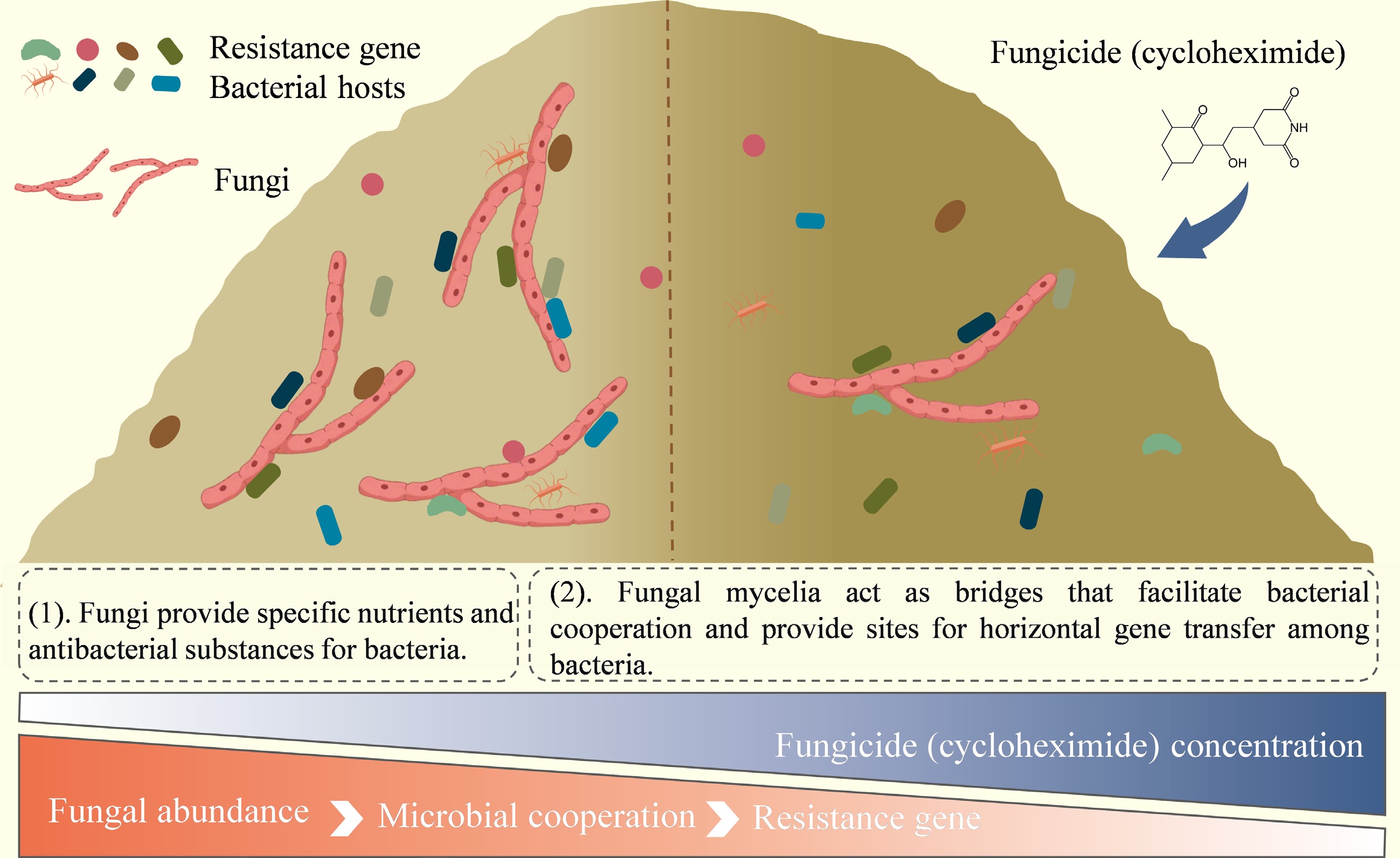
Cycloheximide is a broad-spectrum antifungal antibiotic with the molecular formula C15H23NO4. It selectively inhibits fungal growth by specifically binding to the eukaryotic 80S ribosome and inhibiting peptidyl transferase activity, thereby blocking protein synthesis, while exerting negligible effects on prokaryotic bacteria[17]. Based on this property, cycloheximide has been widely used in soil studies to differentiate the contributions of fungi and bacteria to microbial community functions[18,19].
Considering the richness of fungi in manure, the concentrations of cycloheximide were set at 0 (A0), 20 (A20), 40 (A40), and 60 (A60) mg/kg, following Jiao et al.[20]. The experiment was conducted in 3-L beakers, each containing 2 kg of pig manure, with three replicates per concentration. This 3-L facultative system has been validated as a scaled-down and accelerated version of the 1-ton system (Supplementary Fig. S1), as the temporal trends in most physicochemical parameters and culturable microbial counts were consistent between the two scales, thus supporting its use as a reasonable proxy for the full-scale facultative composting. All beakers were placed in an incubator at 20 °C, a temperature chosen primarily to provide a stable room-temperature environment. To simulate the composting process of real rural livestock manure, the beakers were left open throughout the experiment, allowing oxygen to diffuse from the surface into the pile.
To meet the requirements that 'the fecal coliform count is less than 100 MPN/g and the duration of facultative composting is greater than or equal to 30 d' in 'Hygienic requirements for harmless disposal of night soil' (GB 7959-2012), the whole experimental period was 30 d. The collection time points were 0, 3, 6, 9, 15, 21, and 30 d, and 40 g was collected each time. Fecal coliforms, culturable bacteria, and fungi in the samples were measured immediately after sample collection.
Combined with the data on culturable bacteria and fungi, the time points with significant differences were selected, and microbial community structure and resistance genes were determined on days 0, 6, 15, and 30. Considering the cost of fungal inhibitors and the operability of the test, this experiment was conducted only in the relatively small system. The difference between the small beaker and actual facultative composting (more than 1 ton of raw materials) was explored, and it was found that the variation trends of microbial activity in the small beaker were consistent with the actual situation, but only accelerated the process. Therefore, the small beaker can also reflect the real situation to a certain extent.
Quantification of antibiotic resistance genes
-
In this study, 28 genes for ARGs, 18 for MRGs, seven for MGEs, and one for the 16S rRNA gene were detected. The ARGs encompassed six major categories, specifically including two for beta-lactam (blaCTX-M, blaTEM), three for sulfonamide (sul1, sul2, sul3), five for macrolide (mefA, ereA, ermB, ermF, ermX), five for aminoglycoside (aadA, aadE, aac[6']-Ib[aka aacA4]-01, strA, strB), five for quinolone (aac[6']-Ib-cr, qnrA, qnrB, qnrD, qnrS), and eight for tetracycline (tetA, tetC, tetG, tetM, tetO, tetQ, tetW, tetX). MRGs contained eight major categories of heavy metals, specifically covering one gene each for Hg (merA), Cr (chrA), Pb (pbrT), and Ni (nccA), two for As (arsC, arsM), five for Zn/Cd (cadD, czcA, czcD, zntA, zntB), and seven for Cu (copA, copB, cueO, pcoA, pcoC, pcoD, pcoE). MGEs contained three major categories, which specifically included one for plasmid (IncQ-oriV), three for integrons (intl1, intl2, ISCR1), and three for transposons (Tn916/1545, IS613, tnpA-03).
The resistomes in facultative compost samples were detected by high-throughput quantitative PCR (HT-qPCR) using the WaferGen SmartChip Real-Time PCR platform (WaferGen Bio-systems, Fremont, CA, USA). The primers for the target genes were obtained from Yang et al.[21]. In addition, the specific determination process and the calculation of reduction rates were based on Ma et al.[22].
Sequencing of microbial community composition
-
Culturable bacteria and fungi were determined using Luria-Bertani (LB) and Potato Dextrose Agar (PDA) solid media, respectively. The fecal coliform group was measured by the multiple-tube fermentation method in accordance with the 'Hygienic requirements for the harmless disposal of night soil' (GB 7959-2012) in China. The specific operation steps for the determination of the microbial community are described in Zhao et al.[23]. The primer pairs 338F/806R were used to amplify the V3–V4 region of the 16S rRNA gene to target bacteria; correspondingly, the primer pairs ITS1F/ITS2R were used to amplify the ITS1 region of the 18S rRNA gene to target fungi. Subsequently, the Illumina MiSeq platform at Majorbio Bio-Pharm Technology Co. Ltd. (Shanghai, China) was used for paired-end sequencing of the PCR products. The original sequencing data for bacteria and fungi were stored in the Sequence Read Archive (SRA) database of the National Center for Biotechnology Information (NCBI) under the BioProject IDs PRJNA1172565 and PRJNA1172475, respectively.
Statistical analysis
-
In this study, Excel 2016 (Microsoft Office 2016, Microsoft, Redmond, WA) was used to perform data processing, and SPSS Statistics 26.0 (SPSS Inc., Chicago, IL, USA) was used for statistical analyses. Prior to statistical comparisons, the normality of residuals and homogeneity of variances were examined using the Shapiro–Wilk test and Levene's test, respectively. As the data satisfied the assumptions of normality and homogeneity of variance, differences among treatments at each sampling time point were analyzed using one-way analysis of variance (ANOVA). When ANOVA indicated significant differences, Fisher's least significant difference (LSD) test was used for post hoc multiple comparisons. Differences were considered statistically significant at p < 0.05. The Shannon and Chao1 indices were calculated using the 'vegan' package in RStudio 4.3.1 (RStudio Inc., Boston, MA, USA). Beta diversity analyses of the bacterial community and resistance genes were visualized using non-metric multidimensional scaling (NMDS) with the 'vegan' package[24]. The genus-level bacteria–gene correlation network and microbial assembly analysis were conducted using the 'psych' and 'iCAMP' packages, respectively[25,26]. The separate network analyses of bacteria and fungi were performed using MENA (
http://ieg4.rccc.ou.edu/mena/login.cgi ), and the cross-kingdom co-occurrence networks between bacterial and fungal communities were constructed based on OTUs using the iNAP platform[27]; all networks were visualized using Gephi 0.9.3[28]. In this study, the bubble heatmaps of resistance genes were drawn by TBtools as described in Chen et al.[29], and the remaining graphics were drawn by Origin 2024 (Origin Lab Corporation, Northampton, MA, USA). -
The inhibitory effect of fungicides on fungi gradually intensified over time. On day 9, the difference among treatments approached but did not reach statistical significance (p = 0.079), and it reached its maximum on day 15, when the difference became significant (p = 0.018). With increasing fungicide concentration, the number of culturable fungi gradually decreased (Fig. 1a). After 21 d, the culturable fungi were below the detection limit, which was mainly due to the exponential increase in organic acid and ammonia nitrogen content in facultative compost over time[21], which significantly inhibited the activity of fungi. Guimarães et al. found that lactic acid bacteria inhibit fungal growth and mycotoxin production by producing organic acids[30].
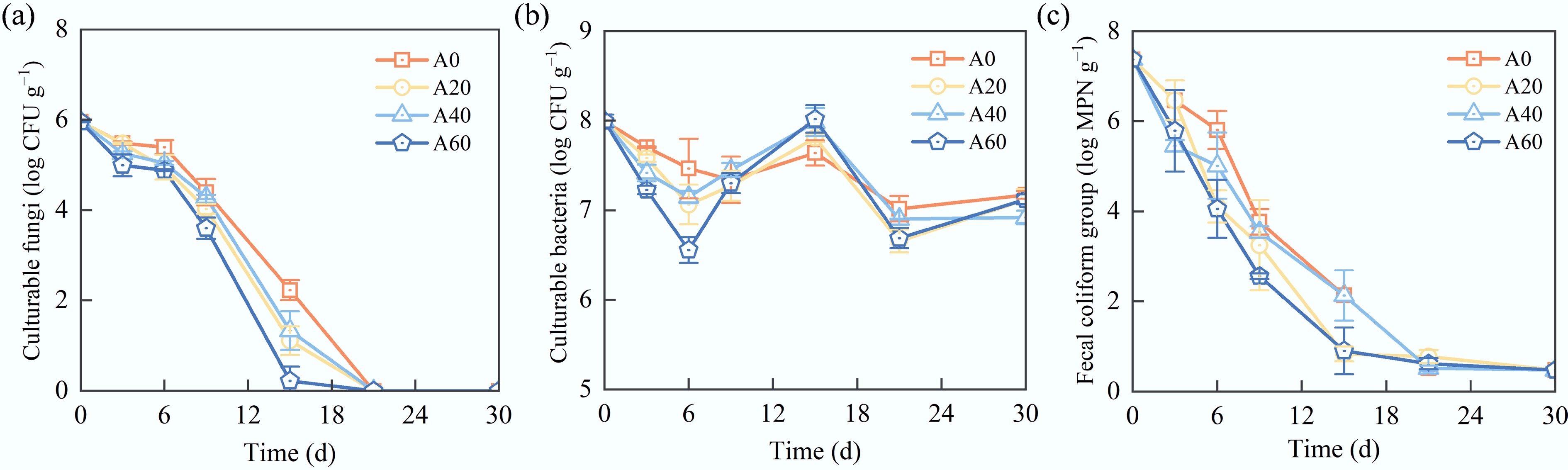
Figure 1.
Changes in the number of culturable microorganisms under different concentrations of fungicide. (a) Culturable fungi; (b) culturable bacteria; (c) fecal coliform group. Treatments A0, A20, A40, and A60 correspond to cycloheximide concentrations of 0, 20, 40, and 60 mg/kg, respectively.
The introduction of cycloheximide showed that it did not affect the bacterial communities. In this study, an inhibitory effect on bacteria was found at the highest addition concentration on day 6 (Fig. 1b), which may be due to inhibition caused by high conductivity from the excessive addition amount, but there was no significant effect on the number of bacteria over time. Fecal coliforms showed similar results to bacteria. The addition of fungicides slightly promoted the inactivation of fecal coliforms, and the effect was more significant with increasing concentration. In general, after 21 d, it was found that the fecal coliform group met the standard of less than 100 MPN/g in 'Hygienic requirements for harmless disposal of night soil' (GB 7959-2012). In actual production, it takes at least two to three times longer for the fecal coliform group to meet the requirements.
Bacterial and fungal community dynamics were examined (Supplementary Figs. S2, S3). Overall, bacterial diversity decreased over time, whereas fungal diversity increased. The anaerobic gut environment, comprising 99% anaerobes and 1% aerobes/facultative anaerobes, suppresses fungi. Thus, upon air exposure, anaerobes were inhibited (reducing bacterial diversity), while fungal growth recovered, allowing low-abundance spores and airborne fungi to colonize the pile and increase fungal diversity. Fungicide inhibition of fungal diversity peaked on day 15. Puzzlingly, the highest concentration (A60) did not significantly reduce fungal diversity, yet it most strongly suppressed culturable fungi and bacterial diversity. This suggests that fungicides lower fungal abundance without fully eliminating the community. For fungi, the fungicide promoted a phylum-level shift from Ascomycota to Basidiomycota and significantly reduced early-stage Diutina abundance. For bacteria, it drove a shift from Firmicutes toward Actinobacteria and Proteobacteria, while decreasing Firmicutes genera such as Lactobacillus and Anaerococcus.
To evaluate the effect of fungicide on microbial network interactions, separate bacterial and fungal networks as well as cross-kingdom co-occurrence networks were constructed (Fig. 2). Overall, fungicide addition significantly reduced microbial network connectivity. For fungi, it decreased the number of connected edges, particularly positive edges (from 112 to 53), and the proportion of negative edges in the A60 treatment reached a maximum of 87.44%. The P/N ratio (positive-to-negative edges) declined from 0.28 to 0.14 (Supplementary Table S1), indicating weaker cooperative interactions[31]. Node number and community diameter remained unchanged, consistent with the diversity data, but centralization degree and clustering coefficient were markedly reduced, further confirming the inhibitory effect of fungicide on fungal network cooperation. Fungicide also inhibited the bacterial network, though via a slightly different pathway. It reduced edges (582→308) and nodes (408→269), yet increased the proportion of positive edges, raising the P/N ratio from 2.36 to 4.06. Concurrently, average path length shortened (2.76→1.68) and community diameter decreased (8→6). These changes suggested that under external stress, fungal communities exhibited intensified competition with only a slight reduction in community size, whereas bacterial communities responded by substantially shrinking their network size and enhancing cooperative relationships. This divergence likely arose because fungicide targeted the fungi but not bacteria; its indirect effects on bacteria included; (1) modulation of bacterial communities through fungal community shifts; and (2) increased ion concentration and osmotic pressure as a result of the added compound.
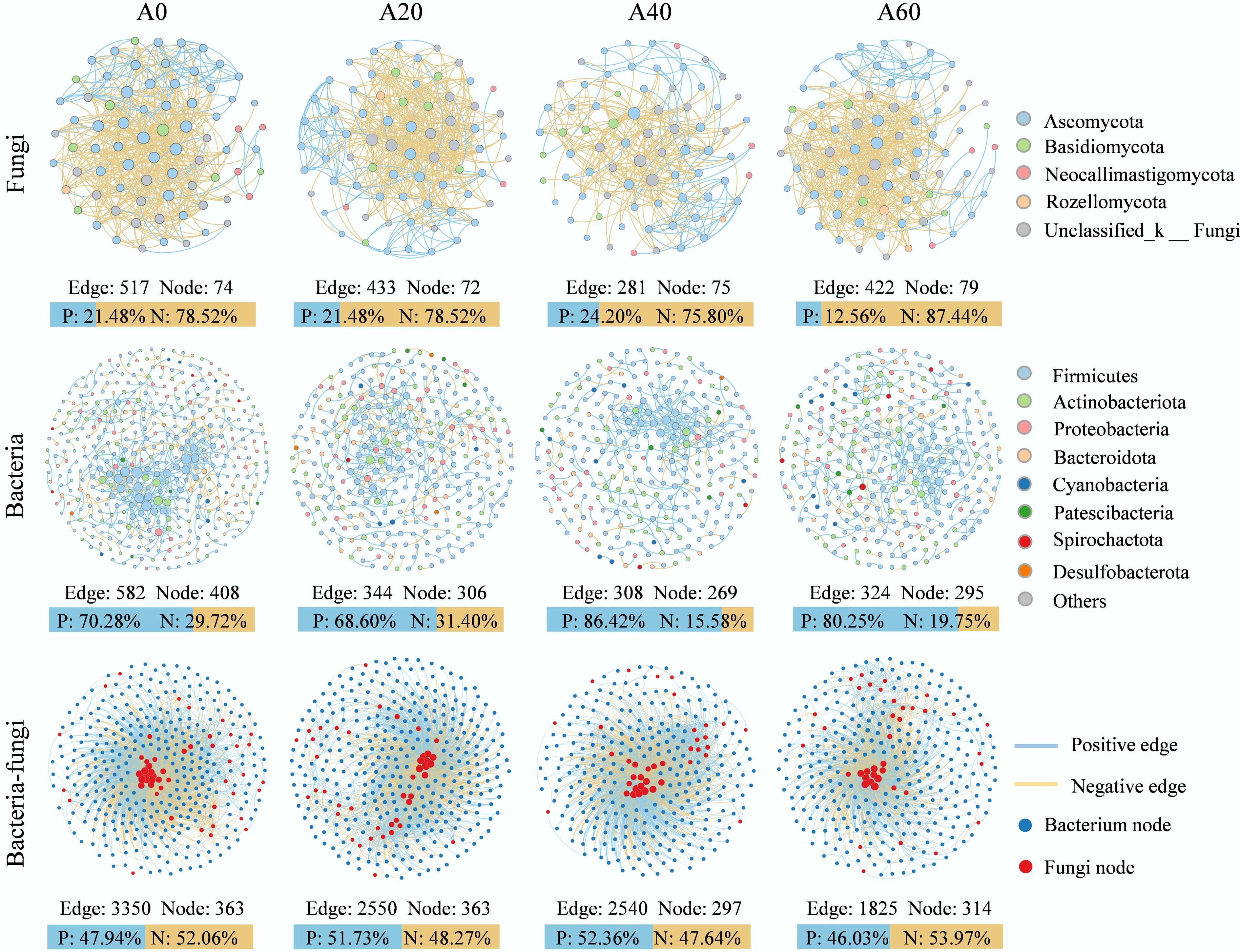
Figure 2.
Molecular ecological networks of microorganism associations in the bacterial and fungal communities under different fungal gradients in facultative composting. The first to third rows represent bacterial, fungal, and bacteria–fungal networks, respectively. Treatments A0, A20, A40, and A60 correspond to cycloheximide concentrations of 0, 20, 40, and 60 mg/kg, respectively. In the figure, P and N represent the proportions of positive and negative edges, respectively.
With increasing concentrations of the fungicide, the disruption of the cross-kingdom co-occurrence networks between bacterial and fungal communities gradually increased. In A20, the number of nodes did not decrease, but the number of connected edges decreased from 3,350 to 2,550. In A40, the number of nodes (from 363 to 297) and edges (from 3,350 to 2,540) decreased at the same time. In both treatments, the P/N ratio increased slightly from 0.92 to 1.10. This indicated that the addition of low and medium concentrations of fungicide reduced the size of the bacterial–fungal network, but the retained cooperation between bacteria and fungi was enhanced to resist the stress of fungicides. In A60, the connected edges, nodes, P/N ratio, and centralization degree all decreased significantly, indicating that high concentrations of fungicide comprehensively inhibited the network collaboration between bacteria and fungi.
The close interaction between bacteria and fungi observed in the co-occurrence network analysis was attributed to their ability to provide each other with necessary survival substances. In each treatment, a denser interaction between bacteria and fungi was found, although the intensity of the interaction was weakened by the fungicide. Higher degree-centrality indicates greater connectivity between nodes, which indicates their increased importance in the network[32,33]. In this study, it was found that the degree-centrality of fungal nodes was significantly higher than that of bacteria in each treatment (Supplementary Fig. S4), indicating that fungi played a more important role in microbial collaboration. In addition to manure, close cooperation between bacteria and fungi was also found in a variety of habitats, and fungi dominated this cooperation[34−36]. Similarly, fungi were found to be predominant in absolute numbers in the module hubs, connectors, and network hubs of bacterial and fungal networks in the within-module connectivity (Zi) and among-module connectivity (Pi) plots (Supplementary Fig. S4). The decrease in the total number of key microorganisms once again confirmed that the fungicide inhibited the activity of some key fungi (Trichoderma, Trichosporon, Fusarium, and Cephaliophora), thus affecting the cooperative relationship in the entire microbial community.
Exploring the assembly process of microbial communities in niches can reveal the response of microbial communities to fungicide exposure[37]. The assembly of microbial communities is divided into deterministic 'heterogeneous selection' and 'homogeneous selection', and stochastic 'homogeneous dispersal', 'dispersal limitation', and 'drift'.[38]. The assembly of the fungal community gradually shifted from deterministic processes to stochastic processes over time (Fig. 3). After 15 d, the A60 treatment showed dispersal limitation, which was intensified after 30 d. The addition of fungicide significantly increased the dispersal limitation of fungal communities and limited the long-distance transmission of fungi. Bacterial community assembly was dominated by stochastic drift throughout the whole process. Similar to the fungal community, with the addition of fungicide, the dispersal limitation of bacterial community assembly was gradually strengthened, but the degree of strengthening was not as strong as that of the fungal community. This may be due to the fact that fungicide mainly acted on the fungal community, and the size of the fungi hindered their spread or spatial aggregation compared to smaller bacteria[39]. The inhibitory effects of fungicide on microbial community assembly were consistent with its inhibitory effects on microbial networks.
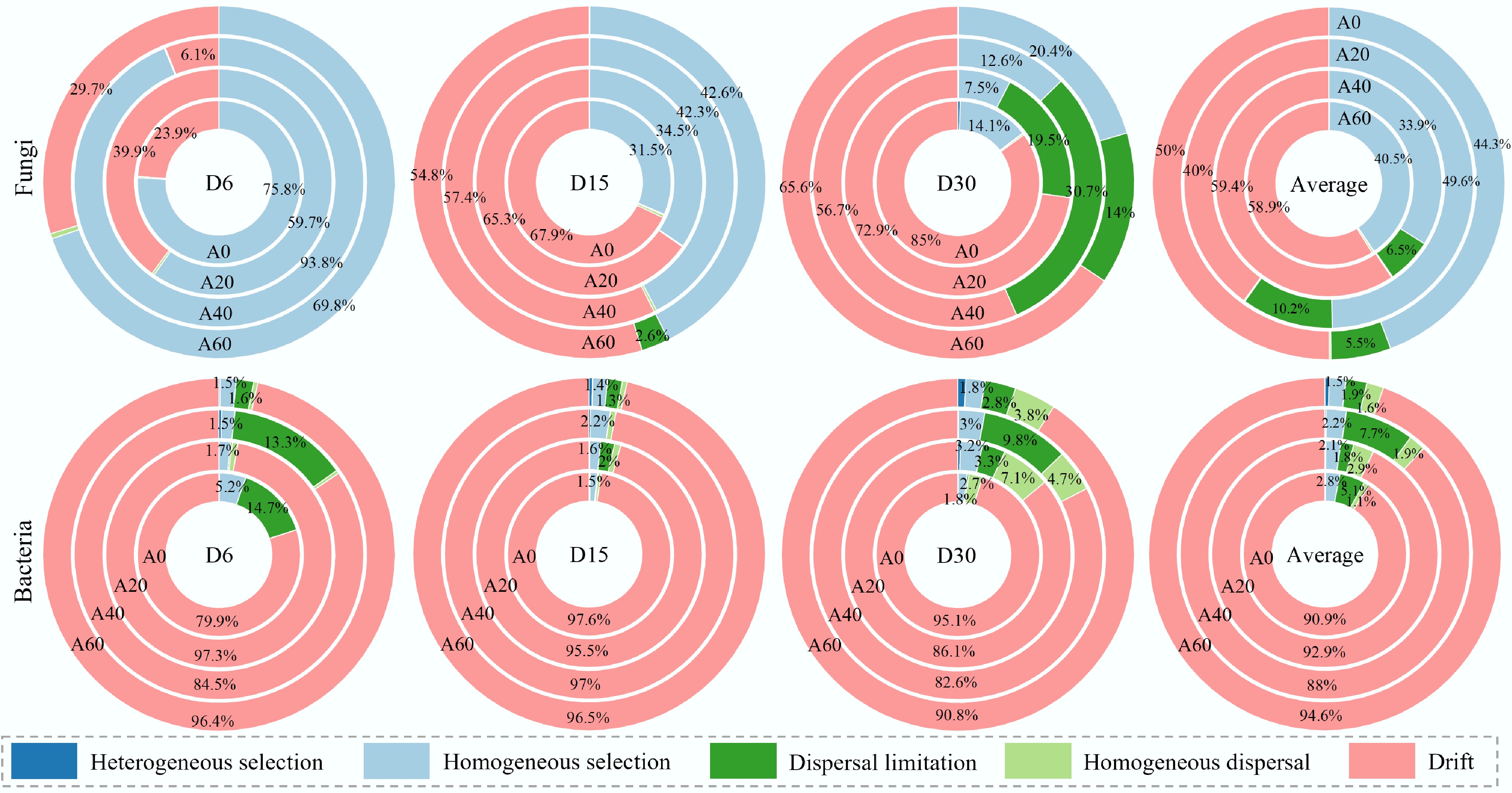
Figure 3.
The relative contribution of microbial deterministic and stochastic assembly processes under different fungal gradients in facultative composting. The first row represents fungi; the second row represents bacteria. The center of the circle represents time, and the inner ring to the outer ring represents A0, A20, A40, and A60 treatments. Treatments A0, A20, A40, and A60 correspond to cycloheximide concentrations of 0, 20, 40, and 60 mg/kg, respectively.
Effect of fungicide on resistance gene characteristics in facultative composting
-
In this study, 28 ARG subtypes, 18 MRG subtypes, and seven MGE subtypes were selected to explore the effects of different fungal gradients on the resistant genome. In general, tetracyclines, macrolides, and aminoglycosides were the main resistance genes in ARGs; Cu and As resistance genes were the main resistance genes in MRGs, and transposons and integrons were the main resistance genes in MGEs (Fig. 4a–c). Fungicides did not significantly change the composition of resistance genes, but drove changes in resistance genes by affecting a small number of high-abundance resistance genes. With the increase in fungicide concentration, the composition of ARGs gradually shifted slightly (Fig. 4d), and the effect of time on resistance genes was greater than that of fungicides. This is because over time, the internal driving force of microbial community succession is usually more significant than external influencing factors. Fungicides also shifted the composition of MRGs and MGEs (Fig. 4e, f); meanwhile, the change trends of MRGs and MGEs were not as regular as those of ARGs.
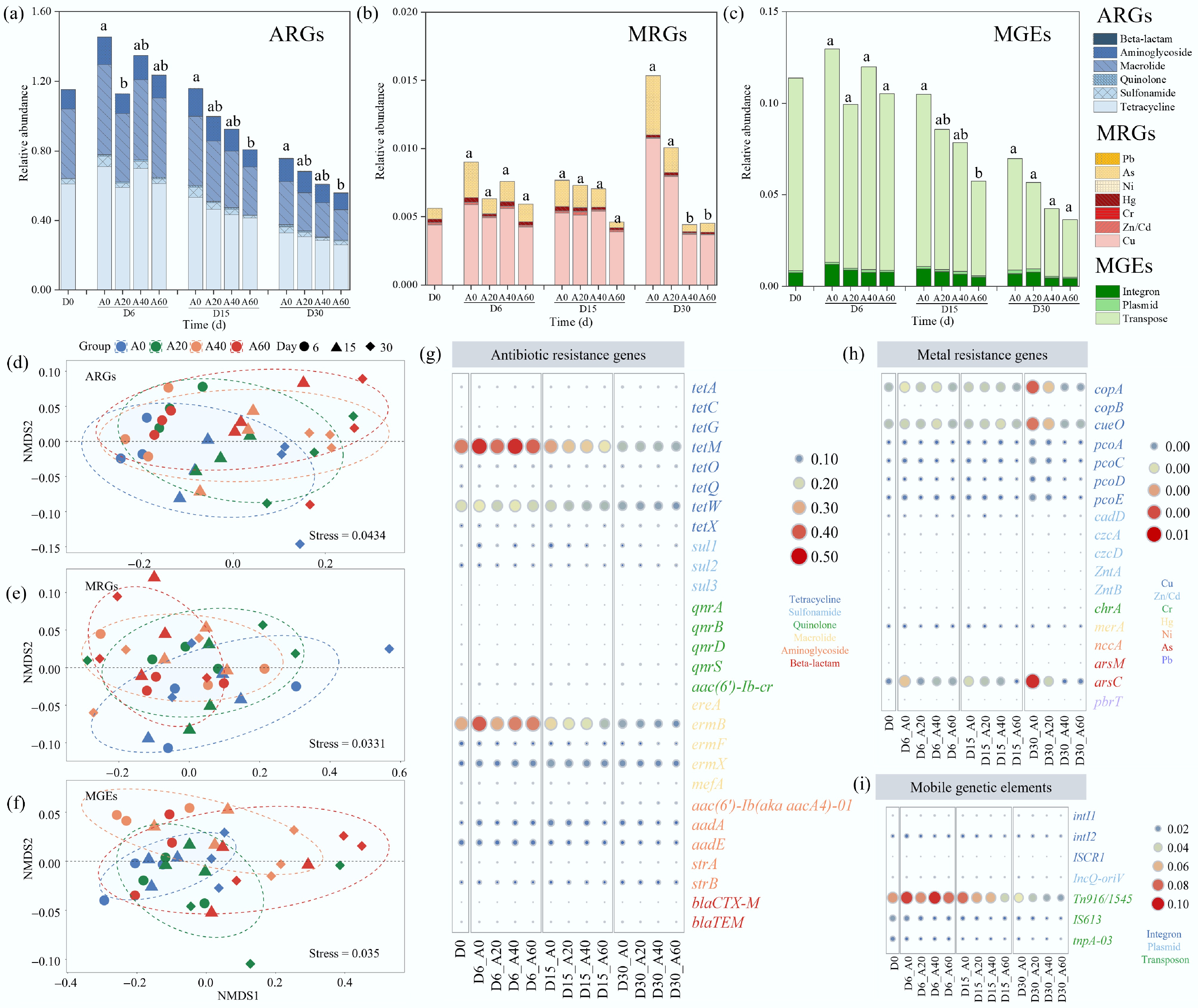
Figure 4.
The profiles of resistant genomes under different fungal gradients in facultative composting. Relative abundance of (a) ARGs, (b) MRGs, and (c) MGEs under different classifications. NMDS based on Bray−Curtis distance showing the overall pattern of (d) ARGs, (e) MRGs, and (f) MGEs under different fungal gradients. Bubble heatmap of (g) ARGs, (h) MRGs, and (i) MGEs. ARGs: antibiotic resistance genes; MRGs: metal resistance genes; MGEs: mobile genetic elements. Treatments A0, A20, A40, and A60 correspond to cycloheximide concentrations of 0, 20, 40, and 60 mg/kg, respectively.
In terms of ARGs, the removal rates of total ARGs increased with time and with increasing fungicide concentration (Fig. 5d). After 30 d, the removal rates of total ARGs in the A0, A20, A40, and A60 treatments were 34.32%, 40.77%, 47.31%, and 51.50%, respectively. Tetracycline and macrolide resistance genes were positively removed in all treatments, and the removal rates were 46.23%–57.10% and 37.71%–56.09%, respectively, which are consistent with Zhang et al.[40]. However, due to the high initial abundance of these two types of ARGs, there were still high residual levels after composting. This is due to the extensive use of tetracycline in livestock breeding, which is the most common antibiotic in freshwater and soil in China[41]. Moreover, tetracycline resistance genes can be transferred between species and genera[42], and thus are detected at high frequency and high level in many environmentally related studies, especially tetW and tetM.
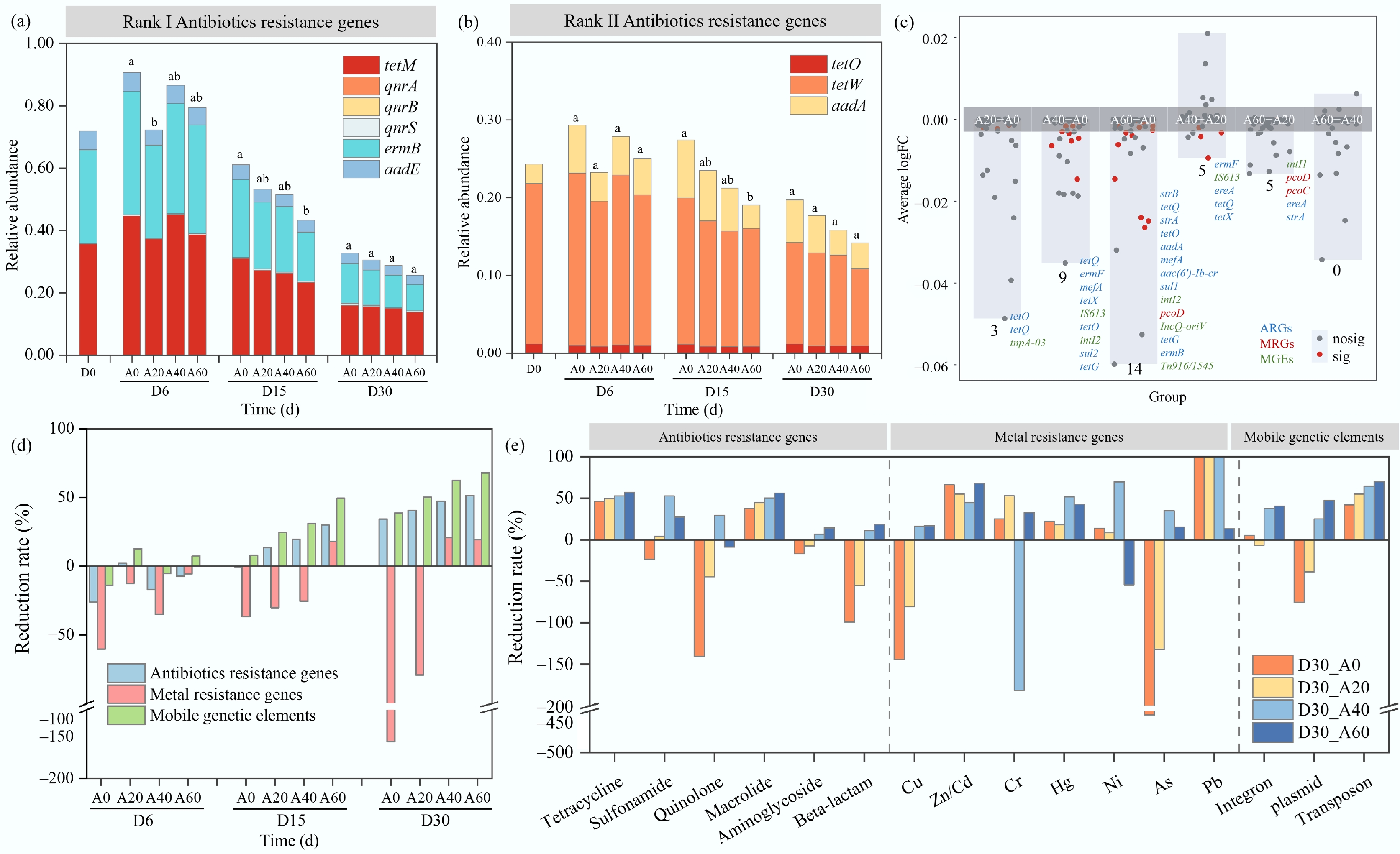
Figure 5.
Reduction of resistance genes under different fungal gradients in facultative composting. Relative abundance of ARGs with risk levels of (a) rank I and (b) rank II. (c) Significantly different genes under different fungal gradients, and the numbers correspond to the number of significantly different genes. (d) The reduction rates of ARGs, MRGs, and MGEs during facultative composting. (e) The reduction rates of each specific class of resistance genes on day 30. Treatments A0, A20, A40, and A60 correspond to cycloheximide concentrations of 0, 20, 40, and 60 mg/kg, respectively.
In addition, the remaining four types—sulfonamides, aminoglycosides, quinolone, and beta-lactam resistance genes—were enriched in A0 and A20 treatments, and slightly reduced in A40 and A60 treatments. This was mainly due to the low initial abundance of these types of ARGs, which made them easily become enriched after host reproduction. sul1 has a wider host bacterial spectrum and richer transfer or diffusion space[43], and thus sulfonamide resistance gene residues have been found in many studies and are considered to be one of the ARGs that are difficult to remove during composting[44]. Due to the low removal rates, quinolone and sulfonamide resistance genes have high detection rates in the soil with manure returning[45].
A review of ARGs mentioned that there is currently a high abundance of ARGs in compost, but only some of them have high clinical resistance risks; thus, it is necessary to distinguish between background ARGs and high-risk ARGs[46]. Zhang et al. also classified ARGs that are clinically resistant through clinical data, in which risk-I is defined as a 'current threat' that is already present in ESKAPE pathogens and is most likely to cause multidrug resistance in pathogens, and risk-II represents a 'future threat' that can be transferred to pathogens in some forms[47]. In this study, the corresponding risk-I ARGs (tetM, qnrA, qnrB, qnrS, ermB, aadE) and risk-II (tetO, tetW, aadA) ARGs were also counted to explore the effect of fungicides on high-risk ARGs (Fig. 5a, b). The effects of fungicides on risk-I and risk-II ARGs were consistent with those of total ARGs, indicating that the effect of fungicides on ARGs was universal. With increasing fungicide concentration, the removal rates of risk-I (from 54.42% to 64.33%) and risk-II (from 18.98% to 41.55%) ARGs increased.
The addition of fungicides significantly reduced the enrichment effect of MRGs, and the reduction rates of MRGs under A0, A20, A40, and A60 treatments were −173.18%, −79.08%, 20.97%, and 19.35%, respectively (Fig. 5e). Copper is an essential trace element for animals and is involved in the synthesis and metabolism of various enzymes[48]. Arsenate can improve feed utilization rate, promote animal growth, and can prevent and control livestock dysentery[49]. Therefore, copper and arsenate are often used as feed additives. Accordingly, there are massive Cu and As resistance genes in manure. Because heavy metals in the composting process only undergo morphological changes and become concentrated due to the conversion of organic matter, at present, most studies have shown that the composting process enriches MRGs, whether it is aerobic composting or facultative composting. Among the Cu resistance genes, copA and cueO were significantly enriched; copA encodes the transfer protein, and cueO encodes the multi-copper oxidase to produce resistance to Cu. Similarly, Wang et al. found that copA was enriched by 936.84% during manure composting[50]. arsC, as an As (V) reductase[51], was also significantly enriched during facultative composting. In general, compared with the A0 treatment, the accumulation of MRGs was reduced in the A20 treatment, and MRGs were slightly reduced in both the A40 and A60 treatments.
Fungi have been found to be a bridge for ecological evolution in nature, because their hyphae can promote contact between bacteria that are not in contact with each other and promote the evolution of species through gene exchange or metabolite interactions[8]. Among them, MGEs play an indispensable role; they can mediate horizontal gene transfer through conjugation, transduction, and transformation, thus driving biological evolution. However, MGEs also promote the horizontal transfer of ARGs and MRGs between bacteria, which may enable bacteria to carry a variety of ARGs and MRGs and form 'super bacteria'. Over time, MGEs showed a significant downward trend, and the addition of fungicides significantly promoted the removal of MGEs. The reduction rates of MGEs under A0, A20, A40, and A60 treatments were 38.61%, 50.22%, 62.72%, and 68.02%, respectively. The MGEs with the highest residual rate were Tn916/1545 in transposons. Qiu et al. found that 79.45% of the ARGs collinear with MGEs were contributed by transposons through the metagenome[52]. Therefore, fungicides have the potential to reduce horizontal gene transfer by reducing the abundance of MGEs.
Significant difference analysis of genes under different fungal concentrations showed that A20, A40, and A60 downregulated 3, 9, and 14 genes, mainly ARGs and MGEs, respectively, compared with the no-fungicide control (Fig. 5c). In general, the addition of fungicides reduced the abundance of fungi and affected the abundance of ARGs and MGEs by affecting the bacterial hosts.
The driving of fungicide on resistant gene hosts
-
The correlation between genes and bacteria was explored by network analysis, in which positively correlated bacteria were considered potential hosts of resistance genes. Among them, there were 505 positive edges and 118 bacterial nodes, with an average of 3.69 genes per host (Fig. 6a). On day 30, the relative abundances of bacterial hosts carrying ARGs were 55.16%, 56.01%, 53.77%, and 50.43% under A0, A20, A40, and A60 treatments (Fig. 6c), respectively, mainly Firmicutes, followed by Actinobacteria and Proteobacteria. Over time, the abundances of ARG hosts decreased gradually, with the A60 treatment mainly reducing the hosts belonging to Firmicutes. Subsequently, on day 30, the relative abundances of bacterial hosts carrying MRGs were 1.15%, 0.63%, 1.06%, and 0.65% under A0, A20, A40, and A60 treatments, respectively (Fig. 6d). On day 6, the MRG hosts decreased significantly, mainly Firmicutes, while the addition of fungicides significantly reduced the Proteobacteria hosts. In addition, the abundance of bacterial hosts carrying MGEs was 15.67%, 14.40%, 12.23%, and 13.27%, respectively, of which Firmicutes dominated (Fig. 6e). Over time, fungicides significantly reduced hosts carrying multiple genes (Fig. 6b).
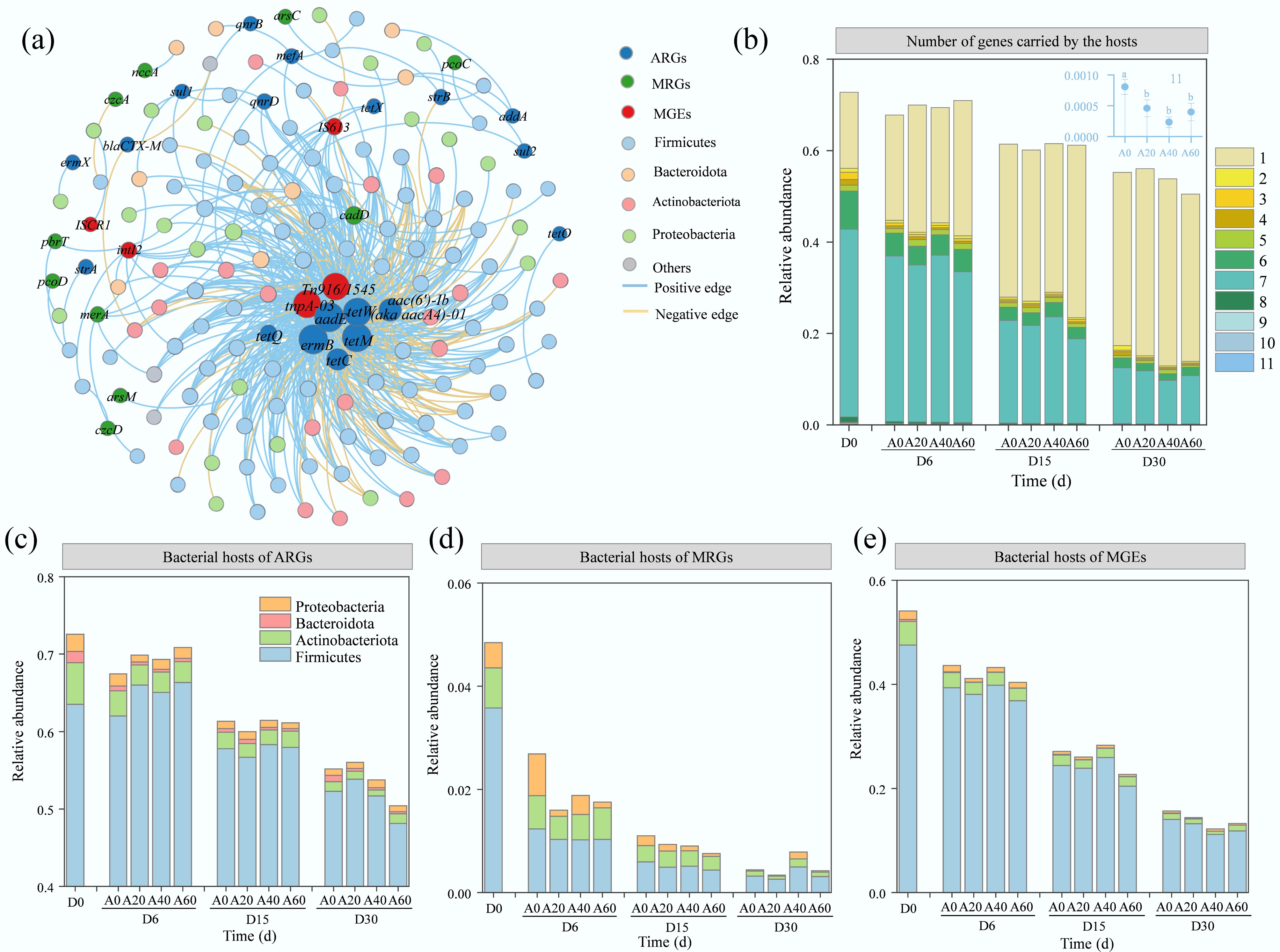
Figure 6.
Co-occurrence of bacterial communities and resistance genes under different fungal gradients in facultative composting. (a) Composition of co-occurrence networks between ARGs/MRGs/MGEs and the bacterial community. (b) Number of genes carried by the potential hosts. Relative abundance of bacterial hosts of (c) ARGs, (d) MRGs, and (e) MGEs. Connections indicate significant correlation (p < 0.01), divided into positive (Spearman's ρ > 0.6, blue) or negative (Spearman's ρ < −0.6, yellow) edges. ARGs: antibiotic resistance genes; MRGs: metal resistance genes; MGEs: mobile genetic elements. Treatments A0, A20, A40, and A60 correspond to cycloheximide concentrations of 0, 20, 40, and 60 mg/kg, respectively.
The center of the network included seven ARGs and two MGEs, which were carried by a variety of bacterial hosts, indicating that tnpA-03 and Tn916/1545 may mediate the horizontal transfer of these ARGs between hosts, which is highly consistent with Wang et al.[53]. The top three hosts were Clostridium_sensu_stricto_1, Lactobacillus, and Anaerococcus, all of which belong to Firmicutes. The abundance of Clostridium_sensu_stricto_1 gradually increased from 12.37% to 31.93%–36.37%, which was not inhibited and was even enhanced with time and after adding fungicides. Except for Clostridium_sensu_stricto_1, the abundances of almost all hosts showed a decreasing trend with time, indicating that Clostridium_sensu_stricto_1, as a conditional pathogen, is an ARG host that should be paid more attention to in facultative composting.
The abundance of Lactobacillus (from 24.61% to 5.58%–8.69%) and Anaerococcus (from 6.19% to 1.02%–1.37%) decreased gradually with time and fungicide addition. With the progress of composting, the abundance of Lactobacillus and Anaerococcus decreased due to the reduction of metabolic substrates, and the reduction of microbial cooperation after the addition of fungicides further reduced their abundance. Zhou et al. found that Lactobacillus was the main host of ARGs and MGEs in the initial period of composting, and its abundance decreased significantly with composting[54]. Qiu et al. also found that Anaerococcus and Lactobacillus were important ARG hosts in chicken manure compost, and these ARGs may be transmitted to human pathogens[55]. In general, fungicides inhibited the hosts by inhibiting the synergy among bacterial communities, thus further inhibiting the vertical transfer of ARGs. Furthermore, because fungicides inhibited the hosts carrying ARGs and MGEs at the same time, they also had a potential inhibitory effect on the horizontal transfer of ARGs.
Effects of fungi on bacterial hosts with different resistance genes
-
In this study, the number of fungi interacting with bacteria was counted to further explore the synergistic effect of fungi on bacteria. Across the A0, A20, A40, and A60 treatments, 19, 14, 15, and 15 such genera were identified, respectively, with 13 genera commonly detected across all treatments (Fig. 7a). Fungicide application notably suppressed several key bacterial-collaborating fungi, including Trichoderma, Debaryomyces, and Fusarium. Trichoderma, a biocontrol agent known for its antibacterial metabolites[56], may exert less stress on bacteria when its cooperation with bacteria is reduced, thereby potentially mitigating the enrichment of antibiotic-resistant bacteria, a pattern consistent with the enhanced bacterial–fungal co-occurrence and elevated ARG abundance observed in manure-treated roots and bio-fertilizer-treated leaves[57]. Conversely, Fusarium, a major phytopathogen[58], exhibited a contrasting effect. After 30 d, its relative abundance was 0.2%, 0.00%, 0.09%, and 0.11% in treatments A0 to A60, respectively. Fungicide addition significantly reduced both its abundance and its synergistic association with bacteria. This was particularly relevant given that Fusarium-conducive soils have been shown to harbor substantially higher ARG abundance (8.85 ARGs/16S rRNA) than suppressive soils (1.45 ARGs/16S rRNA)[59], underscoring the risk posed by pathogenic fungi in ARG dissemination.
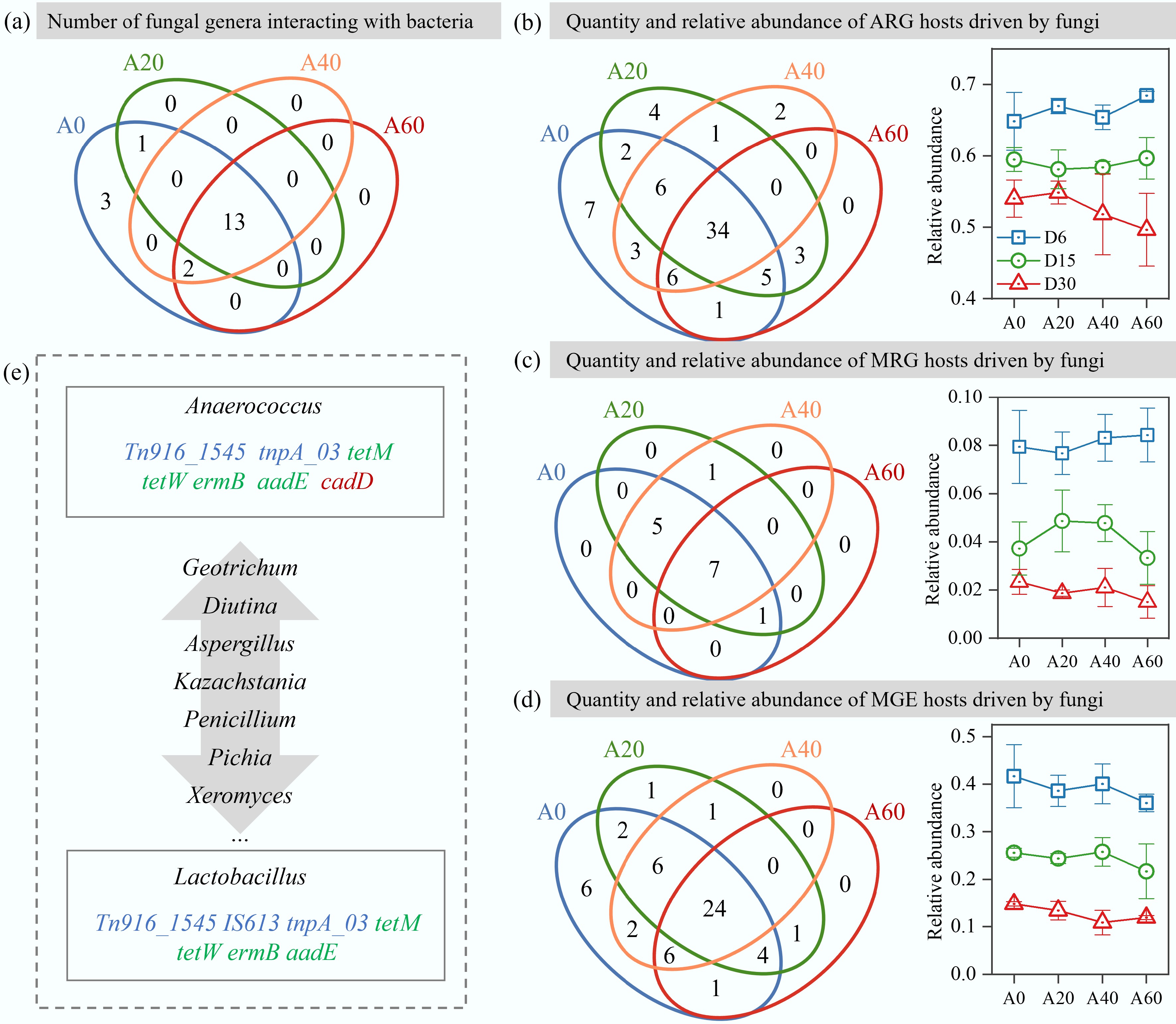
Figure 7.
Numbers of fungi driving different gene hosts under different fungal gradients in facultative composting. (a) Number of fungal genera interacting with bacteria. Quantity and relative abundance of (b) ARG, (c) MRG, and (d) MGE hosts driven by fungi. (e) Key fungi (indicated by arrows) affected key resistance genes by affecting key bacterial hosts. ARG: antibiotic resistance gene; MRG: metal resistance gene; MGE: mobile genetic element. Treatments A0, A20, A40, and A60 correspond to cycloheximide concentrations of 0, 20, 40, and 60 mg/kg, respectively.
To further explore fungal effects on resistance genes, the hosts (at the genus level) carrying ARGs, MRGs, and MGEs that exhibited positive synergistic relationships with fungi were quantified (Fig. 7b–d). Across the A0, A20, A40, and A60 treatments, the numbers of ARG hosts positively associated with fungi were 64, 56, 53, and 50, respectively; MRG hosts numbered 13, 14, 13, and 8; and MGE hosts numbered 51, 39, 39, and 36. As fungicide concentration increased, the gene hosts with positive fungal synergy, especially ARG and MGE hosts, declined considerably. In terms of abundance, MGE hosts were the most sensitive, showing a downward trend from day 6 and remaining consistent throughout. After 30 d, the abundances of ARG and MGE hosts positively linked with fungi also decreased significantly with rising fungicide concentration. These results further confirmed the previous conjecture that fungicide addition, beyond inhibiting vertical gene transfer among hosts, reduced ARG hosts by lowering MGE abundance and restraining horizontal gene transfer. Among the affected taxa, Lactobacillus and Anaerococcus were the most typical (Fig. 7e), as they carried multiple ARGs and MGEs (e.g., tetM, tetW, ermB, Tn916/1545, and tnpA-03). When certain fungi (e.g., Geotrichum and Diutina) were inhibited, their synergistic relationship with these bacteria weakened; the abundances of Lactobacillus and Anaerococcus decreased, and the levels of tetM, tetW, and ermB were concomitantly reduced.
Like the bacterial community, the fungal community was also recognized as an important driver of ARGs, although its role had generally been overlooked in previous studies. Wang et al. reported that fungi influenced ARGs indirectly by affecting bacterial communities through three primary mechanisms: providing nutrient-rich substrates, producing antibacterial secondary metabolites (e.g., antibiotics), and competing for freely available DNA[60]. Similarly, Nazir et al. found that Ascomycetes and Basidiomycetes exerted differential selection pressures on antibiotic-resistant bacteria, thereby facilitating ARG dispersal along fungal hyphae and promoting horizontal gene transfer in soil. Different fungal species also displayed distinct enrichment capacities for ARGs and MGEs[7]. Nazir et al. demonstrated that three fungal taxa promoted ARG host diversity and abundance: Trichoderma sp. enriched beta-lactam and MLS ARGs together with the intl1 gene, whereas Schizophyllum sp. and Coprinellus sp. enriched aminoglycoside and beta-lactam ARGs[61]. Moreover, these enrichment patterns varied significantly depending on the composition of both fungal and soil microbial communities.
In general, the addition of fungicides might inhibit the cooperation between fungi and bacteria, and if the bacteria were hosts of resistance genes, this could promote the removal of resistance genes by limiting their survival. In addition, fungi may act as a bridge to promote cooperation between bacteria, and the addition of fungicides might reduce the hosts carrying MGEs and the cooperation between bacteria, potentially decreasing horizontal gene transfer between bacteria, and thus possibly reducing the abundance of resistance genes.
-
In this study, a fungal activity gradient was established by adding cycloheximide. Reduced fungal activity led to a corresponding decline in network cooperativity within and between bacterial and fungal communities. The removal rates of ARGs (from 34.32% to 51.50%), MRGs (from −173.18% to 20.97%), and MGEs (from 38.61% to 68.02%) were simultaneously enhanced. The decrease in key fungal taxa reduced the abundance of bacterial hosts carrying ARGs (e.g., Lactobacillus and Anaerococcus) and weakened the potential for MGE-mediated horizontal transfer, suggesting that fungi may promote both vertical proliferation and horizontal transfer of ARGs during facultative composting. Nevertheless, while this study primarily established that fungal abundance and activity influence ARG dynamics, the specific chemical (e.g., via extracellular secretions) and physical (e.g., via hyphal networks) pathways through which fungi facilitate horizontal gene transfer, as well as the differential effects of distinct fungal taxa, warrant further investigation.
No acknowledgments are applicable for this work.
-
It accompanies this paper at: https://doi.org/10.48130/aee-0026-0023.
-
Not applicable.
-
The authors confirm their contributions to the paper as follows: Yan Yang: performed the research, proposed the methodology and wrote the paper; Yan Yang, Jiani Wang: analyzed the data; Jiani Wang, Nana Wei, Kaishu Luo, Xia Gao: collected and interpreted the data; Guoxue Li, Si Li: proposed the methodology; Yuezhen Tian: obtained the necessary resources to carry out the research and supervised the project; Jing Yuan: obtained funding and was one of the main contributors in the writing of the manuscript. All authors reviewed the results and approved the final version of the manuscript.
-
The original sequencing data for bacteria and fungi were stored in the Sequence Read Archive (SRA) database of the National Center for Biotechnology Information (NCBI) under the BioProject IDs PRJNA1172565 and PRJNA1172475, respectively.
-
The authors declare that they have no known competing financial interests or personal relationships that could have appeared to influence the work reported in this paper.
-
Full list of author information is available at the end of the article.
- The supplementary files can be downloaded from here.
- Copyright: © 2026 by the author(s). Published by Maximum Academic Press, Fayetteville, GA. This article is an open access article distributed under Creative Commons Attribution License (CC BY 4.0), visit https://creativecommons.org/licenses/by/4.0/.
-
About this article
Cite this article
Yang Y, Wang J, Wei N, Luo K, Gao X, et al. 2026. Fungi serve as a novel biological factor for enriching resistance genes in facultative composting, as exhibited by fungal gradient experiments. Agricultural Ecology and Environment 2: e025 doi: 10.48130/aee-0026-0023 

Fungi serve as a novel biological factor for enriching resistance genes in facultative composting, as exhibited by fungal gradient experiments
- Received: 12 June 2026
- Revised: 04 August 2026
- Accepted: 11 September 2026
- Published online: 09 October 2026
Abstract: Due to the mycelial structure and extracellular secretions of fungi, fungal communities have been found to have a potential role in the spread of antibiotic resistance genes (ARGs) in soil and other environments. However, the effect of fungi on bacterial hosts and resistance genes during facultative composting remains unclear. Therefore, a fungal inhibition experiment was conducted to explore this effect. The results showed that with the addition of fungicides (cycloheximide), the activity of culturable fungi gradually decreased, but there was no significant effect on bacteria. The decrease in the abundance of active fungi that can promote bacterial activity and diffusion led to a synchronous decrease in the cooperation of the fungal community, the bacterial community, and bacterial-fungal cross-species networks. The addition of fungicides enhanced the removal of antibiotic- and metal resistance genes (from 34.32% to 51.50%, and from −173.18% to 20.97%, respectively) and mobile genetic elements (MGEs, from 38.61% to 68.02%), and the removal of hard-to-remove and high-risk ARGs was enhanced simultaneously. The decrease in the abundance of key fungi induced a decrease in the abundance of hosts (such as Lactobacillus and Anaerococcus) carrying resistance genes and MGEs, which indicated that core fungi affected the proliferation and horizontal transfer of ARGs in bacterial hosts during facultative composting, which in turn affected the succession of ARGs. This study provides direct evidence for the driving effect of fungi on resistance genes in facultative composting.
-
Key words:
- Antibiotic resistance genes /
- Fungi /
- Microbial collaboration /
- Facultative composting /
- Cycloheximide