













-
White tea is a distinctive category of Chinese tea classified as minimally fermented. Owing to its simple processing, primarily withering and drying without pan-firing or rolling, it largely preserves the original morphological and chemical characteristics of fresh leaves. This confers its characteristic features: a natural appearance covered with fine white hairs, clear and bright liquor, and a fresh, mellow, and well-balanced taste[1]. In recent years, driven by increasing consumer interest in health-promoting beverages, white tea has attracted growing attention in both domestic and international markets. Numerous studies have reported its diverse bioactivities, including antioxidant, anti-inflammatory, anticancer, anti-diabetic, and anti-obesity effects[2−6], which have promoted continuous growth in its production, consumption, and scientific research.
In the Rucheng area (Hunan, China), aged white tea has long been traditionally consumed for its perceived health benefits, particularly in alleviating inflammatory symptoms. Storage and aging are now recognized as key post-processing stages that shape the quality of white tea. During aging, intrinsic constituents undergo slow and complex transformations, driving the transition in sensory properties from the fresh, brisk character of new tea to the aged aroma, medicinal fragrance, and mellow taste typical of aged tea, accompanied by potential changes in bioactivity[7]. However, most current studies on the aging of white tea focus on sensory evaluation or on a limited number of known compounds (e.g., catechins), and systematic insights into global, aging-induced changes in the metabolite profile and their relationship to health benefits remain scarce. Therefore, applying modern high-throughput omics approaches to comprehensively compare the chemical composition of young vs aged white tea and to elucidate the molecular basis of their differential functional effects is of considerable importance for the in-depth exploration and value enhancement of white tea.
The rare tea plant variety 'Rucheng Baimaocha', unique to China, has a long cultivation history and outstanding genetic resources. As a congeneric species closely related to the tea plant (Camellia sinensis), 'Rucheng Baimaocha' belongs to the genus Camellia (family Theaceae) and is phylogenetically close to C. sinensis. Its plump buds and leaves, dense trichomes, and richness in intrinsic compounds make it an excellent raw material for producing high-grade white tea[1]. Historically renowned as a tribute tea, Rucheng Baimaocha white tea is also traditionally believed to exert unique health benefits in folk practice, including alleviating colds and influenza, assisting in fat reduction and weight management, and exhibiting antibacterial and anti-inflammatory properties, earning it the reputation of a "green miracle"[8,9].
Metabolomics has been widely applied in tea, vegetables, fruits, and other plant-based foods because it enables rapid qualitative and/or relative quantitative analysis of large numbers of metabolites[10]. Widely targeted metabolomics integrates the broad coverage of untargeted metabolomics with the high sensitivity and accuracy of targeted analysis, offering high throughput, high sensitivity, wide metabolite coverage, and robust qualitative and quantitative performance. By using selected ion monitoring (SIM) or multiple reaction monitoring (MRM) for targeted acquisition, it generally provides higher sensitivity, better reproducibility, and greater stability than conventional untargeted metabolomics. Network pharmacology, grounded in systems biology and supported by computational methods, integrates information on bioactive compounds, target genes, and disease-related genes from multiple databases to construct 'component–target–pathway–disease' networks, thereby elucidating the mechanisms of traditional Chinese medicine formulas or natural plant-derived active ingredients[11]. Unlike the traditional 'one drug–one target–one disease' paradigm, network pharmacology emphasizes multi-component, multi-target, and multi-pathway interactions, and has been increasingly applied in recent years[12]. Based on network pharmacology, the active components and health effects of many natural plants have been further clarified, such as the anti-glioblastoma activity of asparagus[13], the anti-arrhythmic effects of Cordyceps sinensis[14], and the hypoglycemic properties of Fu Brick tea[15]. Beyond well-known constituents such as tea polyphenols, L-theanine, and theaflavins, tea also contains numerous trace bioactive compounds that can be systematically investigated using network pharmacology models.
Although metabolomics studies on white tea are relatively abundant, comprehensive investigations integrating efficacy evaluation and bioactive component profiling to compare aged and new white tea remain limited. Baihao Yinzhen (processed from tender buds) and Shoumei (processed from one bud with three to four leaves) represent two typical grades of white tea that differ substantially in raw material maturity and chemical composition. Comparing these two types under the same aging conditions allows us to assess whether the impact of storage on bioactive components and anti-inflammatory activity is consistent across different tea grades or varies with raw material maturity. In this study, Baihao Yinzhen and Shoumei made by 'Rucheng Baimaocha' were used as the research subjects, and sensory evaluation, UPLC-MS/MS-based widely targeted metabolomics, network pharmacology, cell-based assays, and transcriptomics were combined. By comparing young and aged Rucheng Baimaocha white teas, we characterized differences in bioactive components, evaluated the anti-inflammatory effects of aged tea, and aimed to provide fundamental data and theoretical support for the scientific assessment of its health benefits and functional value.
-
Four 'Rucheng Baimaocha' white tea samples with different aging periods were collected: one-year-aged and seven-year-aged Baihao Yinzhen and Shoumei (1BHYZ, 7BHYZ, 1SM, 7SM). Each sample was analyzed in triplicate. All teas were produced from 'Rucheng Baimaocha' grown in Jiulong Village, Sanjiangkou Town, Rucheng County, Hunan Province, China, the core production region of this cultivar. Baihao Yinzhen and Shoumei were harvested in the same season and from the same garden; Baihao Yinzhen was processed from tender buds, whereas Shoumei was processed from one bud with three to four leaves. Processing followed the same protocol in accordance with the Chinese National Standard for white tea (GB/T 32743-2016). After manufacture, the teas were naturally stored in a warehouse in Rucheng County. The one-year-aged samples (1BHYZ and 1SM) were harvested in April 2022 (spring) and collected after one year of storage in April 2023. The seven-year-aged samples (7BHYZ and 7SM) were harvested in April 2015 (spring) and collected after seven years of storage in April 2023. Following collection, samples were stored at −20 °C and analyzed within the same year.
HPLC-grade methanol and acetonitrile were purchased from Merck (Darmstadt, Germany). HPLC-grade formic acid was obtained from Aladdin (Shanghai, China).
Sample preparation and extraction
-
Four white tea infusions were prepared following our previously established protocol[16]. Briefly, 2.0 g of tea leaves were infused in 100 mL of boiling water, boiled for 5 min, and the extract was collected. A second extraction was performed with another 100 mL of boiling water for 5 min. The two infusions were combined, mixed thoroughly, cooled to room temperature, aliquoted into 15 mL centrifuge tubes, snap-frozen in liquid nitrogen for 2 min, and stored at −80 °C until use.
Preparation of white tea water extracts for cell experiments: The combined filtrates from two extractions were concentrated using a rotary evaporator, then freeze-dried for 30 h to obtain tea powder, which was stored at −20 °C. One milligram of the lyophilized tea powder was dissolved in PBS to a final volume of 1 mL, yielding a 1 mg/mL stock solution of white tea water extract. The stock solution was filter sterilized through a 0.22 μm membrane and then diluted with cell culture medium to the final working concentrations.
For LC–MS/MS analysis, frozen infusions were thawed on ice and vortexed for 10 s. An aliquot of 200 μL was transferred to a 2.0 mL centrifuge tube, mixed with 200 μL of 70% methanol containing internal standards, and vortexed for 15 min. The mixture was centrifuged at 12,000 rpm for 3 min at 4 °C. The supernatant was filtered through a 0.22 μm membrane and transferred to autosampler vials for LC–MS/MS analysis.
UPLC and ESI-Q TRAP-MS/MS conditions
-
Sample extracts were analyzed on an ExionLC™ AD UPLC system coupled to an AB Sciex 6500 QTRAP mass spectrometer equipped with an ESI source, essentially following Xiao et al.[17] with minor modifications. Chromatographic separation was performed on an Agilent SB-C18 column (2.1 × 100 mm, 1.8 μm). The mobile phase consisted of water with 0.1% formic acid (A) and acetonitrile with 0.1% formic acid (B). The gradient program was: 0–9 min, 5%–95% B; 9–10 min, 95% B; 10–11.1 min, 95%–5% B; 11.1–14 min, 5% B. The flow rate was 0.35 mL/min, the column temperature was 40 °C, and the injection volume was 2 μL.
The ESI source was operated at 500 °C with ion spray voltages of + 5,500 V (positive mode) and −4,500 V (negative mode). GS1, GS2, and curtain gas (CUR) were set at 50, 60, and 25 psi, respectively, and collision-activated dissociation (CAD) was set to 'high'. Data were acquired in multiple reaction monitoring (MRM) mode using nitrogen as the collision gas (medium setting). Declustering potential (DP) and collision energy (CE) values for each MRM transition were individually optimized, and transitions were scheduled according to the retention times of the corresponding metabolites.
Sensory evaluation
-
Sensory evaluation of white tea samples was conducted according to the Chinese standard protocol for tea sensory evaluation (GB/T 23776-2018). A trained panel of six assessors (four females and two males, 20−35 years old) from Hunan Agricultural University evaluated the appearance, aroma, taste, liquor, and infused leaves of the samples, as well as the intensity of bitterness, astringency, sweetness, and umami.
Network pharmacology analysis
-
Based on the widely targeted metabolomics data, compound information from the four white tea samples was used for network pharmacology analysis. Notably, the screening of high-abundance compounds in this study was independent of the differential metabolite screening criteria (VIP > 1, |log2FC| ≥ 1, p < 0.05) adopted in the above metabolic difference analysis. Metabolite contents were standardized by unit variance (UV) scaling (x' = (x −
$\mu $ $\mu $ Compound names were first queried in PubChem (
https://pubchem.ncbi.nlm.nih.gov/ ) to confirm identity and obtain Canonical SMILES. The SMILES strings were then imported into SwissADME (http://www.swissadme.ch/ ) to evaluate physicochemical properties, lipophilicity, and pharmacokinetic parameters. Compounds with a bioavailability score (BS) ≥ 0.18 were retained[18].The Canonical SMILES of the screened compounds were submitted to SwissTargetPrediction (
www.swisstargetprediction.ch ) to predict potential targets, and targets with Probability = 0 were removed. The remaining targets were then imported into STRING (https://cn.string-db.org ), with 'Homo sapiens' selected as the species and a minimum interaction confidence score of 0.7 for protein–protein interaction (PPI) analysis.PPI results were imported into Cytoscape v3.10.0 to identify nodes with degrees above the average for further analysis and visualization. Gene Ontology (GO) and Kyoto Encyclopedia of Genes and Genomes (KEGG) pathway enrichment analyses were performed using Metascape (
https://metascape.org/gp/#/main/step1 ), and a 'compound–target' network was constructed to visualize the relationships between selected compounds and their targets.Cell experiments
Cell culture
-
RAW264.7 mouse macrophage cells were cultured in complete medium (basal medium supplemented with 10% (v/v) fetal bovine serum, FBS) at 37 °C in a humidified incubator with 5% CO2.
Cell NO secretion assay
-
RAW264.7 cells were seeded in 48-well plates at a density of 2 × 10⁴ cells/well in 200 μL of medium, with six replicate wells per group, and allowed to adhere in the incubator. When cells reached 60%–70% confluence, they were treated for 24 h with lipopolysaccharide (1 μg/mL) or with white tea water extracts (12.5, 25, 50, 100, or 200 μg/mL). The control group received an equal volume of sterile water. After 24 h, 50 μL of supernatant from each well was transferred to a 96-well plate, and nitric oxide (NO) levels were determined using a commercial NO assay kit according to the manufacturer's instructions. Absorbance at 450 nm was measured using a microplate reader, and NO concentrations (μmol) were calculated from a standard curve.
Cell RNA-seq
-
For transcriptomic analysis, cells were treated as described above and divided into four groups: Control (0 μg/mL LPS + 0 μg/mL tea extract), Model (1 μg/mL LPS + 0 μg/mL tea extract), 7BHYZ (1 μg/mL LPS + 100 μg/mL tea extract), and 7SM (1 μg/mL LPS + 100 μg/mL tea extract). After treatment, cells were rapidly collected, pre-frozen in liquid nitrogen for 2 min, frozen on dry ice, and sent to BGI (Shenzhen, China; www.genomics.cn) for RNA sequencing. Transcript expression levels were normalized and expressed as transcripts per million (TPM). Differentially expressed genes (DEGs) were identified based on |fold change| ≥ 1.2 and p ≤ 0.05 and were subjected to enrichment analysis to explore underlying mechanisms at the transcriptomic level.
Molecular docking validation and visualization
-
The crystal structure of the central targets was retrieved from the UniProt database (
www.uniprot.org ), with PDB files HSP90AA1, TOP2A, and JAK2 used as structural inputs. The 3D structure of the key active components was obtained from the PubChem database (https://pubchem.ncbi.nlm.nih.gov ). Molecular docking was carried out via the CB-Dock2 online platform (https://cadd.labshare.cn/cb-dock2/index.php ), a tool designed to identify the binding cavities of a target protein and predict binding affinities. The lowest binding affinity for each target–small molecule pair was recorded, and the docked PDB files were downloaded and visualized using Discovery Studio 2025.Statistical analysis
-
Mass spectrometry data were processed using Analyst 1.6.3 software. Supervised partial least squares discriminant analysis (PLS-DA) was performed with SIMCA-P 14.1. Heatmaps were generated using the MyBioCloud platform (
https://cloud.metware.cn ). Figures were arranged using PowerPoint 2021. Pathway enrichment analyses were conducted using Metascape (https://metascape.org ) and the WeBioCloud online bioinformatics analysis and visualization platform (bioinformatics.com.cn). -
Sensory evaluation of the four white tea samples showed clear differences in appearance, liquor color, and infused leaves (Fig. 1a). All four tea samples exhibited excellent sensory qualities. Overall, aged white tea performed better. The storage process significantly altered the sensory characteristics of the tea leaves, specifically manifested in the gradual deepening of both the tea leaves' appearance and the liquor's color. The aroma evolved from a fresh, downy fragrance to a medicinal and aged character, while the taste became richer and more mellow. Using a UPLC–MS/MS platform combined with the Metware database, 1,583 metabolites were annotated across all samples, belonging to 12 major classes: flavonoids (271), phenolic acids (266), other compounds (223), amino acids and their derivatives (175), alkaloids (161), organic acids (125), lipids (81), lignans and coumarins (80), terpenoids (77), nucleotides and their derivatives (73), tannins (39) and quinones (12) (Fig. 1b).
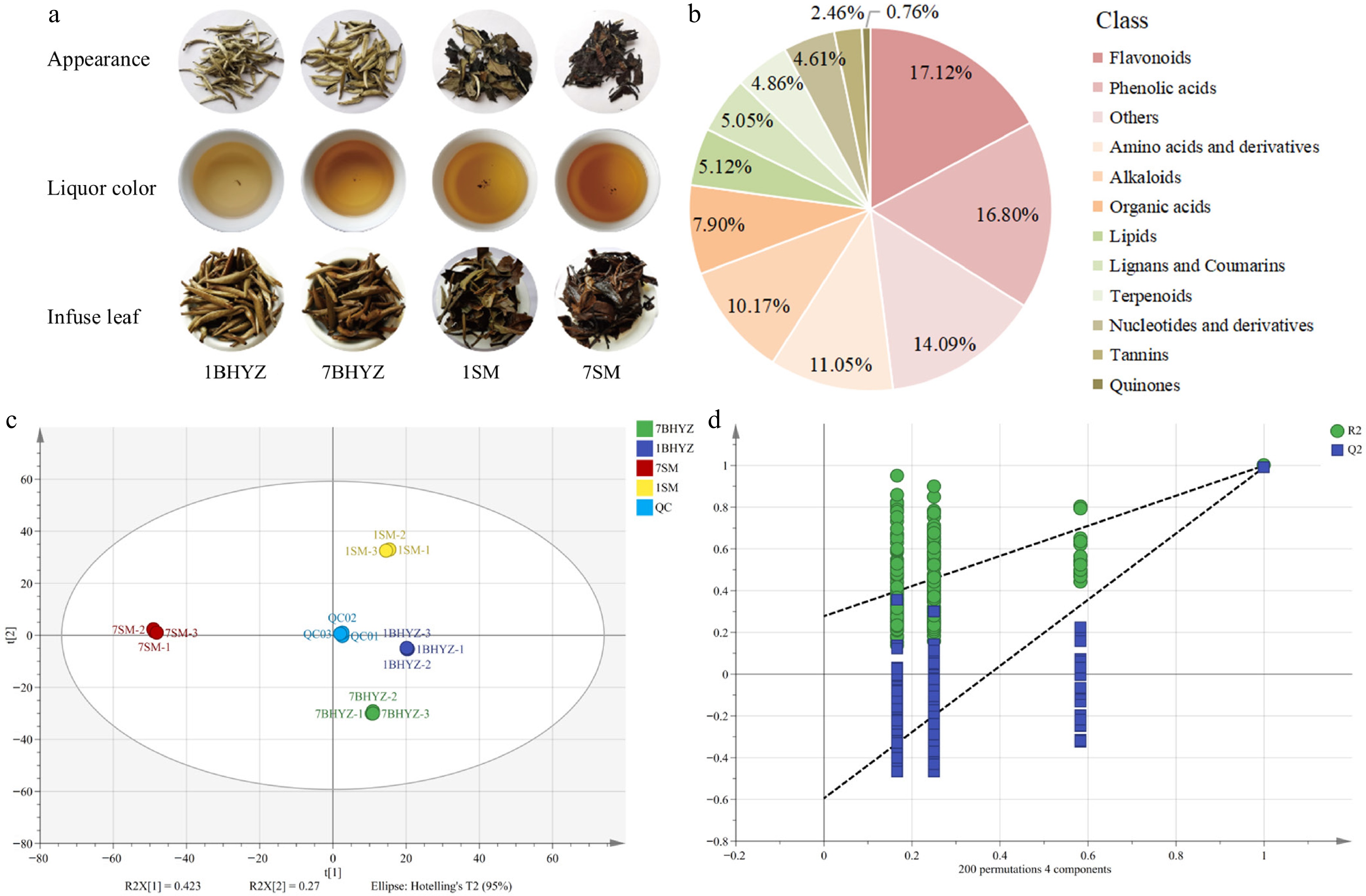
Figure 1.
Flavor and metabolomics analysis of new and aged white tea samples. (a) Tea appearance, tea soup color, and tea leaves. (b) Metabolite category composition pie chart. (c) PLS-DA score scatter plot. (d) Permutation test plot. (e) Hierarchical cluster analysis plot.
To assess the impact of raw material type and storage duration on white tea composition, partial least squares discriminant analysis (PLS-DA) and hierarchical clustering were performed on the non-volatile metabolite profiles of the four teas together with quality control (QC) samples. In the PLS-DA score plot, biological replicates within each group clustered closely, whereas clear separation was observed among the four tea groups, indicating distinct differences in non-volatile profiles (Fig. 1c). Permutation testing confirmed that the model was robust and not overfit (Fig. 1d).
In one-year white tea, the contents of ester-type catechins and L-theanine are relatively high, contributing to its fresh, brisk, and slightly bitter-astringent flavor profile. During long-term aging, ester-type catechins in aged white tea undergo substantial degradation, while non-ester-type catechins are relatively retained. Meanwhile, the theanine content decreases, and the caffeine content slightly increases, leading to a more mellow and sweet aftertaste. Furthermore, flavonoids such as quercetin and kaempferol significantly accumulate in aged white tea, with levels reaching three to ten times those found in one-year white tea. These findings indicate that aging can markedly enhance the antioxidant and anti-inflammatory activities of white tea, providing a material basis for the understanding that the quality and health benefits of white tea improve with extended storage (Supplementary Fig. S1).
Differential component analysis of young and aged white teas based on widely targeted metabolomics
-
Widely targeted metabolomics revealed marked compositional differences between young and aged white teas in both Baihao Yinzhen and Shoumei. The distribution of major metabolite classes (Fig. 2a) shows that 7BHYZ contains substantially higher levels of amino acids and their derivatives, approximately threefold those of the other three samples. Compared with Baihao Yinzhen, Shoumei is generally richer in flavonoids, lignans, coumarins, and related compounds. However, these constituents decline markedly in Shoumei during storage, displaying a clear decrease from 1SM to 7SM, suggesting degradation or transformation during aging. In contrast, alkaloids, phenolic acids, organic acids, and terpenoids are significantly increased in 7SM, indicating a pronounced accumulation of these components over time.
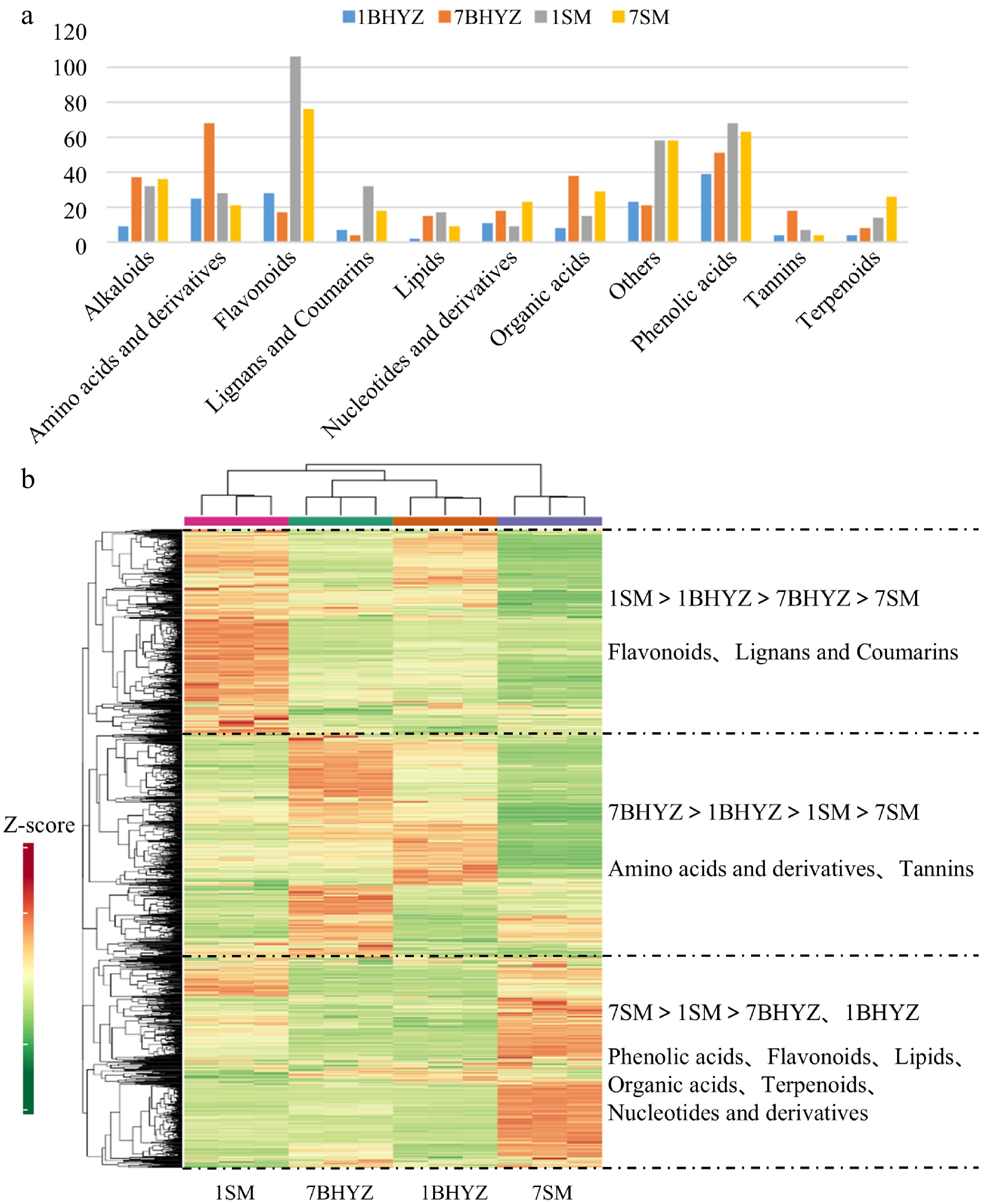
Figure 2.
Differential component analysis of new and aged white tea based on widely targeted metabolomics. (a) Bar chart of different bioactive components. (b) Heatmap of component contents in new and aged white tea.
The heatmap in Fig. 2b further highlights distinct clustering patterns among the four samples. Relative to Shoumei, Baihao Yinzhen is enriched in amino acids and their derivatives, as well as tannins. New Shoumei (1SM) contains high levels of flavonoids, lignans, and coumarins, whereas these metabolites are markedly reduced in 7SM and reach the lowest abundance among all samples. Conversely, aged Shoumei (7SM) shows strong enrichment of phenolic acids, flavonoids, lipids, organic acids, terpenoids, and nucleotides and their derivatives. This shift in composition is expected to enhance the antioxidant and anti-inflammatory potential of 7SM and to contribute to a fuller body and greater flavor complexity of the tea liquor.
In summary, both Shoumei and Baihao Yinzhen undergo substantial structural reconfiguration of their metabolite profiles during storage. Shoumei is characterized by high flavonoid and lignan levels at the fresh-tea stage, whereas the aged-tea stage is marked by notable enrichment of phenolic acids, flavonoids, lipids, organic acids, terpenoids, and nucleotide-related metabolites. Baihao Yinzhen, in contrast, tends to retain and further accumulate amino acids and their derivatives upon aging. These dynamic compositional changes help shape the distinct bioactivity and potential health benefits of white teas aged for different durations and provide a chemical basis for elucidating the aging mechanism of white tea.
Network pharmacological analysis of component differences between new and aged white teas
-
Compounds that interact with multiple targets are more likely to exert strong biological effects and were therefore regarded as putative bioactive components. Metabolites containing one or more core targets were screened and visualized in Cytoscape (Fig. 3). In 1BHYZ, 7BHYZ, 1SM, and 7SM, 43, 132, 116, and 170 such compounds were identified, respectively, indicating that the abundance of putative bioactive components tends to increase with storage time (Fig. 3a). Among the four teas, phenolic acids were particularly prominent, especially in 7SM. In 7BHYZ, key bioactive components mainly included amino acids and their derivatives, alkaloids, organic acids, lipids, and phenolic acids, whereas in 7SM, alkaloids, flavonoids, lignans and coumarins, nucleotides and their derivatives, organic acids, phenolic acids, terpenoids, and other compounds were highly represented. Overall, storage markedly altered the distribution of bioactive components in white tea, conferring distinct functional and flavor-related profiles on different samples.
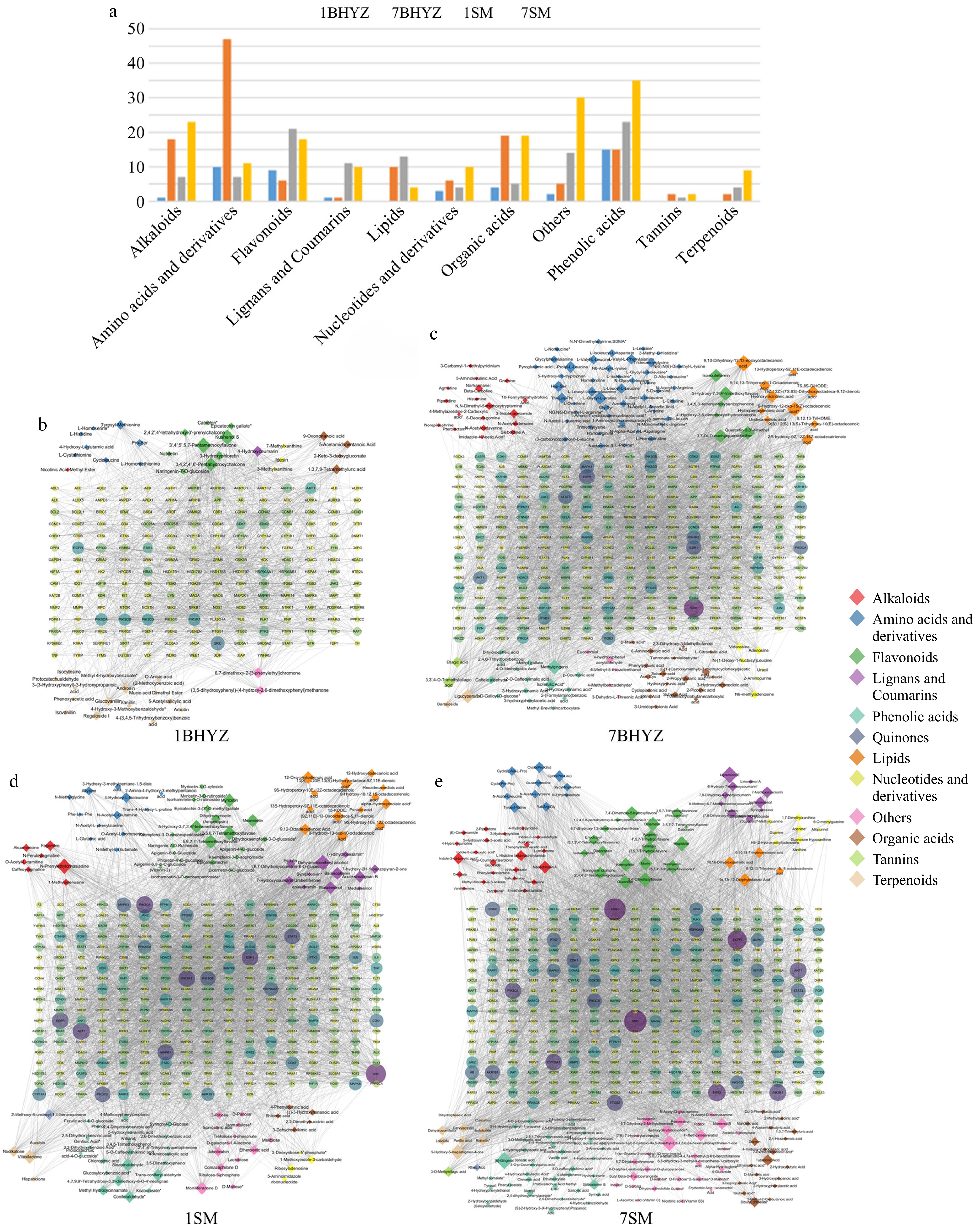
Figure 3.
Network pharmacology analysis of differential bioactive components and biological network in new and aged white tea samples. (a) Distribution and quantitative differences of various bioactive components in new and aged white tea. (b)–(e) Network diagram of 'Differential Bioactive Components-Targets' in new and aged white tea. Note: (b) are 1BHYZ, (c) are 7BHYZ, (d) are 1SM, and (e) are 7SM.
Comparison of young and aged white teas based on the number of target connections (degree values) and functional network characteristics further highlighted these differences (Table 1). 1BHYZ contained fewer bioactive components and showed generally lower degree values, suggesting weaker network connectivity and functional intensity (Fig. 3b). In 7BHYZ, amino acids and their derivatives, lipids, organic acids, and phenolic acids emerged as key bioactive constituents (Fig. 3c). 1SM also harbored a relatively rich set of bioactive components, dominated by lipids, flavonoids, lignans and coumarins (Fig. 3d). Among all samples, 7SM exhibited the largest repertoire of bioactive components and the highest degree values in the network, with organic acids, flavonoids, lignans, coumarins and related compounds constituting its major hubs (Fig. 3e). These results suggest that substantial structural reconfiguration of metabolites occurs during storage, accompanied by a pronounced enhancement in the overall bioactive potential of aged white tea.
Table 1. Top 30 compounds with the highest degree in 7BHYZ and 7SM.
7BHYZ 7SM Compounds Class Degree Compounds Class Degree 3-Indole acetamide Alkaloids 26 Neoechinulin A Alkaloids 43 L-Glycyl-L-proline Amino acids and derivatives 46 Indole-3-carboxylic acid* Alkaloids 37 L-Prolyl-L-Leucine Amino acids and derivatives 40 Cyclo(Pro-Leu) Alkaloids 35 Hyp-Ser Amino acids and derivatives 37 Cyclo(Pro-Glu) Amino acids and derivatives 38 Thr-Lys-Thr Amino acids and derivatives 35 Hispidulin* Amino acids and derivatives 36 L-Valyl-L-Phenylalanine Amino acids and derivatives 34 3,4'-Dihydroxyflavone Flavonoids 54 L-Leucyl-L-Leucine Amino acids and derivatives 33 Galangin (3,5,7-Trihydroxyflavone) Flavonoids 53 L-Valyl-L-Leucine Amino acids and derivatives 30 Diosmetin* Flavonoids 51 L-Leucyl-L-phenylalanine Amino acids and derivatives 29 Apigenin; 4',5,7-Trihydroxyflavone Flavonoids 50 Tridecanoylglycine Amino acids and derivatives 29 7,4'-Dimethoxy-5-hydroxyflavone Flavonoids 49 His-Tyr Amino acids and derivatives 23 Kaempferol Flavonoids 48 5-Hydroxy-7,3',4'-trimethoxyflavone Flavonoids 52 Morin Flavonoids 48 Quercetin-3,3'-dimethyl ether Flavonoids 50 Naringenin (5,7,4'-Trihydroxyflavanone)* Flavonoids 48 3,7-Di-O-methylquercetin Flavonoids 49 Quercetin Flavonoids 48 Isoscutellarein Flavonoids 48 Naringenin chalcone; 2',4,4',6'-Tetrahydroxychalcone* Flavonoids 48 9,10-Dihydroxy-12,13-epoxyoctadecanoic acid Lipids 62 3,5,7-Trihydroxyflavanone (Pinobanksin)* Flavonoids 43 9-Hydroxy-12-oxo-15(Z)-octadecenoic acid* Lipids 55 3,5,7-Trihydroxyflavanone (Pinobanksin)* Flavonoids 36 Hydroxy ricinoleic acid Lipids 42 Ligraminol E Lignans and coumarins 62 (9Z,12Z)-(7S,8S)-Dihydro
xyoctadeca-9,12-dienoic acid*Lipids 40 Isolariciresinol Lignans and coumarins 39 2R-hydroxy-9Z,12Z,15Z-octadecatrienoic acid Lipids 38 7-Methoxycoumarin Lignans and coumarins 38 9,10,13-Trihydroxy-11-Octadecenoic Acid Lipids 36 9s,13r-12-Oxophytodienoic Acid Lipids 47 N6-methyladenosine Nucleotides and derivatives 24 10,16-Dihydroxypalmitic acid Lipids 38 Adenosine Nucleotides and derivatives 23 Tuberonic Acid Organic acids 37 Vidarabine Nucleotides and derivatives 23 3-(Cyclohexen-1-yl)-2-hydroxy-4a,5-dimethyl-2,3,4,5,6,8a-hexahydronaphthalen-1-one Others 56 Methylgingerol Phenolic acids 56 4'-Methoxyresveratrol Others 39 Isoferulic Acid* Phenolic acids 39 blumenol B Others 38 Caffeic aldehyde Phenolic acids 24 Noreugenin; 5,7-Dihydroxy-2-Methylchromone Others 38 3,3',4-O-Trimethylellagic acid Tannins 39 Resveratrol Others 36 Ellagic acid Tannins 36 [6]-Gingerol Phenolic acids 63 Ligucyperonol Terpenoids 52 9-Hydroxy-5-megastigmen-4-one Terpenoids 54 Note: * indicates the presence of isomers of the substance. Inhibition of LPS-induced inflammation in RAW264.7 cells by white tea water extracts
-
Based on the reports of Wen et al.[19] and Gao et al.[20], 1 μg/mL LPS was selected to induce inflammation in RAW264.7 cells. As expected, NO secretion in the LPS-only model group was significantly higher than in the untreated control group (p < 0.01), confirming successful establishment of the inflammatory model (Fig. 4).
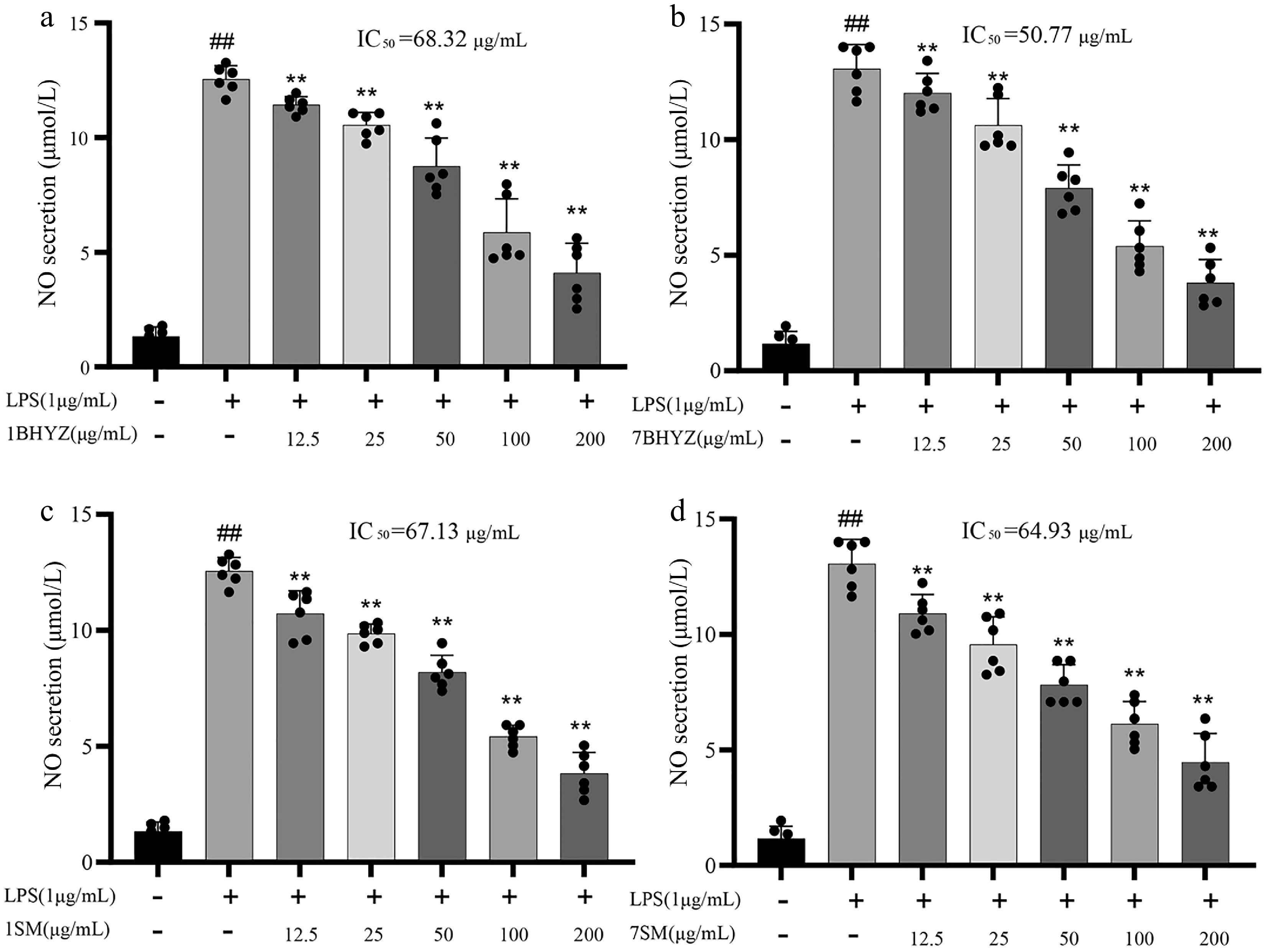
Figure 4.
Effects of different white tea aqueous extracts on NO secretion in RAW264.7 cells. (a) 1BHYZ. (b) 7BHYZ. (c) 1SM. (d) 7SM. Note: Compared with the control group, # p < 0.05, ## p < 0.01; compared with the model group, *p < 0.05, ** p < 0.01; n = 6.
Treatment with white tea water extracts markedly attenuated LPS-induced NO production in a concentration-dependent manner. Within the range of 12.5–200 μg/mL, NO levels decreased progressively with increasing extract concentration, with the strongest inhibition observed at 200 μg/mL, followed by 100 μg/mL. The half maximal inhibitory concentration (IC50), representing the extract concentration required to reduce NO secretion by 50%, was calculated using GraphPad Prism. The IC50 values for 1BHYZ, 7BHYZ, 1SM and 7SM were 68.32, 50.77, 67.13, and 64.93 μg/mL, respectively, indicating that 7BHYZ exhibited the most potent inhibitory effect on NO secretion, followed by 7SM (Fig. 4a–d).
Overall, these results demonstrate that aged Rucheng Baimaocha white teas suppress LPS-induced NO production in RAW264.7 cells. Notably, 7BHYZ exhibited the most potent inhibitory effect (IC50 = 50.77 μg/mL), whereas 7SM showed moderate improvement compared to 1SM (IC50: 64.93 vs 67.13 μg/mL).
Transcriptome analysis
-
Based on the network pharmacology results and IC50 values, 7BHYZ and 7SM were selected for transcriptomic analysis. Twelve samples from the Control, Model, 7BHYZ, and 7SM groups were sequenced on the BGI DNBSEQ platform. The average mapping rate to the reference genome was 95.62%, and the average mapping rate to the gene set was 87.34%. In total, 14,780 genes were detected. A Venn diagram showed 12,506 genes co-expressed across all four groups (Fig. 5a). Hierarchical clustering of these co-expressed genes revealed clearly distinct expression patterns among groups, with 7BHYZ and 7SM displaying expression trends opposite to those of the Model group (Fig. 5b).
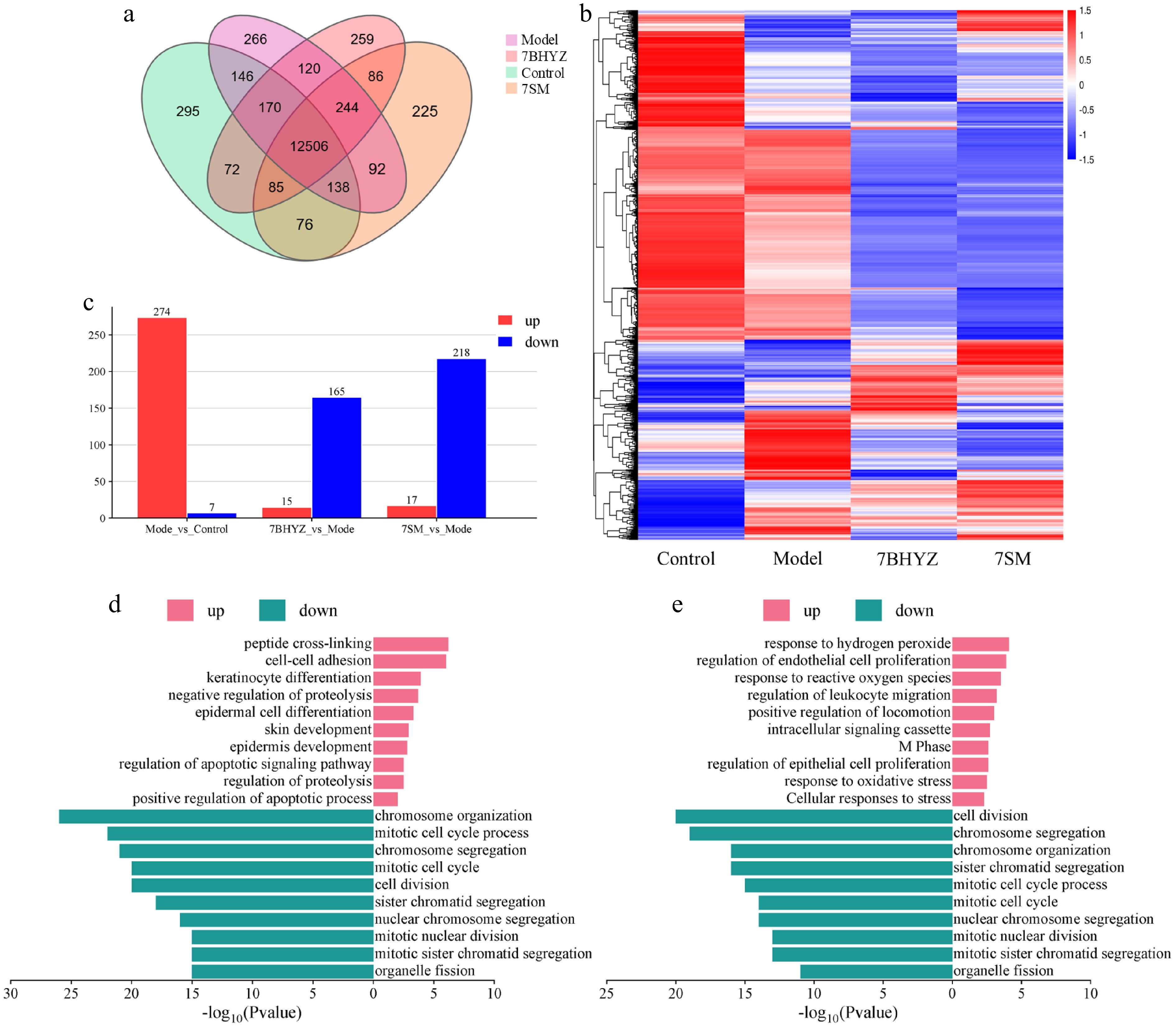
Figure 5.
Transcriptomic analysis of 7BHYZ and 7SM. (a) Venn diagram of gene groups. (b) Heatmap of co-expressed genes. (c) Bar chart of differentially expressed genes. (d) GO functional enrichment analysis of differentially expressed genes in 7BHYZ. (e) GO functional enrichment analysis of differentially expressed genes in 7SM. Note: A vs B indicates the comparison between groups A and B, with 'up-regulated' meaning that the expression level in group A is higher than that in group B.
Differentially expressed genes (DEGs) were identified using |fold change (FC)| ≥ 1.2 and p < 0.05, with each treatment group compared against the Model group. The Control group showed 274 upregulated and seven downregulated genes relative to the Model group, confirming that LPS stimulation induced marked transcriptional changes. Compared with the Model group, 7BHYZ and 7SM had 15 and 165 genes upregulated, and 17 and 218 genes downregulated, respectively, suggesting that both aged teas substantially modulate LPS-induced gene expression (Fig. 5c).
To elucidate the biological functional basis underlying transcriptomic differences between 7BHYZ and 7SM, Gene Ontology (GO) functional enrichment analyses were separately performed for upregulated and downregulated differentially expressed genes (DEGs), as shown in Fig. 5d,e. Upregulated DEGs in the 7BHYZ group were primarily enriched in pathways including peptide cross-linking, cell-cell adhesion, keratinocyte differentiation, and regulation of the apoptotic signaling pathway. In contrast, downregulated DEGs were mainly enriched in cell proliferation-related pathways such as chromosome organization, mitotic cell cycle process, and cell division. Upregulated DEGs in the 7SM group were significantly enriched in oxidative stress-related pathways, including response to hydrogen peroxide, response to reactive oxygen species, and response to oxidative stress. Concomitantly, pathways associated with the regulation of leukocyte migration, the regulation of endothelial/epithelial cell proliferation, the intracellular signaling cascade, and M-Phase were activated. Meanwhile, downregulated DEGs were also concentrated in cell cycle- and cell division-related pathways, exhibiting a pattern characterized by overall suppressed mitosis but local cell cycle dysregulation. Collectively, these results indicate that aged white tea modulates inflammation-related pathways and exerts anti-inflammatory effects.
Integrated analysis of network pharmacology and transcriptomics
-
In this study, through cellular transcriptome sequencing and network pharmacology methods, the predicted targets of 7BHYZ and 7SM from network pharmacology were interactively analyzed with transcriptomic differentially expressed genes, resulting in six and eight interactive target genes, respectively (Fig. 6a, b). The interactive target genes of 7BHYZ were: CHEK1, TOP2A, JAK2, PLK4, KIF11, and HSP90AA1, while the interactive target genes of 7SM were: TOP2A, HSP90AA1, PTPRC, TTK, ROCK1, JAK2, PLK4, and ROCK2. The relative expression levels of these genes are shown in Fig. 6e, and they exhibited significantly different expression between the Mod group and the tea groups. These genes showed significantly differential expression between the Mod group and the tea groups. GO functional enrichment analysis showed that the interactive target genes of 7BHYZ were mainly enriched in biological pathways such as cell cycle, signaling by receptor tyrosine kinases, phosphorylation, and regulation of cell cycle process (Fig. 6c). In contrast, the interactive target genes of 7SM were mainly enriched in pathways such as phosphorylation, regulation of nitric oxide biosynthetic/metabolic process, positive regulation of mRNA catabolic/metabolic process, and positive regulation of cell adhesion (Fig. 6d). In addition, the study found that HSP90AA1, TOP2A, JAK2, and PLK4 are overlapping interactive target genes shared by 7BHYZ and 7SM. These overlapping genes are mainly enriched in signaling pathways related to cell cycle regulation, phosphorylation, and inflammation.
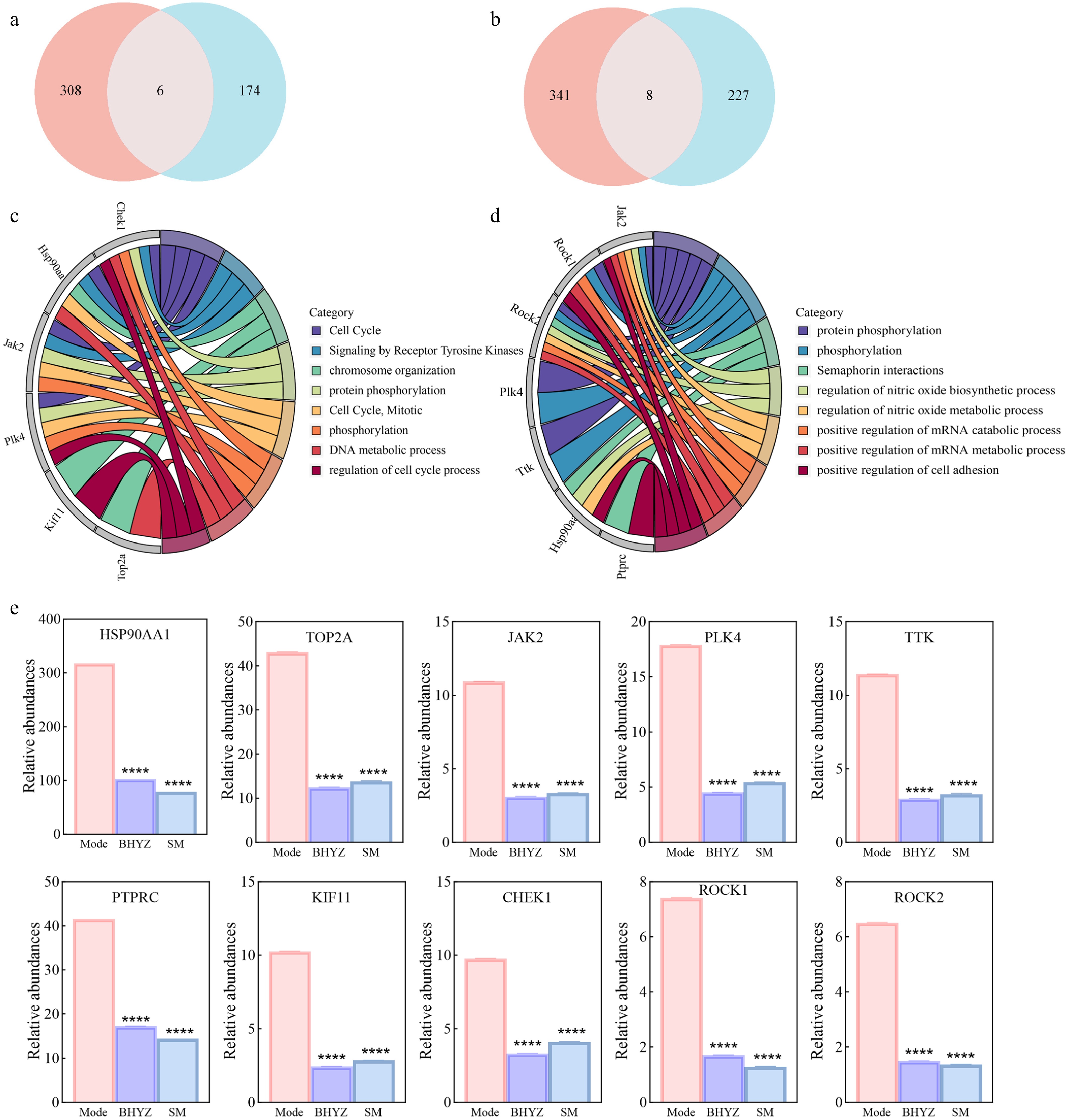
Figure 6.
Integrated analysis of network pharmacology and transcriptomics. (a) Venn diagram of overlapping targets between network pharmacology and transcriptomics of 7BHYZ. (b) Venn diagram of overlapping targets between network pharmacology and transcriptomics of 7SM. (c) Chordal graph of GO enrichment analysis of intersection targets of 7BHYZ. (d) Chordal graph of GO enrichment analysis of intersection targets of 7SM. (e) Relative expression levels of intersection targets in Mod, 7BHYZ, and 7SM. Note: Compared with the model group, **** p < 0.01; n = 3.
Molecular docking validation
-
In molecular docking, a lower conformational energy of the ligand–receptor complex corresponds to a stronger intermolecular interaction. In general, a binding energy of ≤ −5.00 kcal/mol is indicative of favorable binding activity[21]. To investigate the potential interactions between key active compounds in 7BHYZ and 7SM and their core targets, molecular docking simulations were conducted between 9,10-dihydroxy-12,13-epoxyoctadecanoic acid, 9-hydroxy-12-oxo-15(Z)-octadecenoic acid, ligraminol E, [6]-gingerol, and HSP90AA1, TOP2A, JAK2, respectively (Fig. 7, Table 2). The binding affinities of these active compounds toward the target genes ranged from −8.1 to −5.8 kcal/mol, all of which were lower than the threshold value of −5 kcal/mol. These findings demonstrate that several key active components in 7BHYZ and 7SM exhibit strong binding potential against key inflammation-related targets.
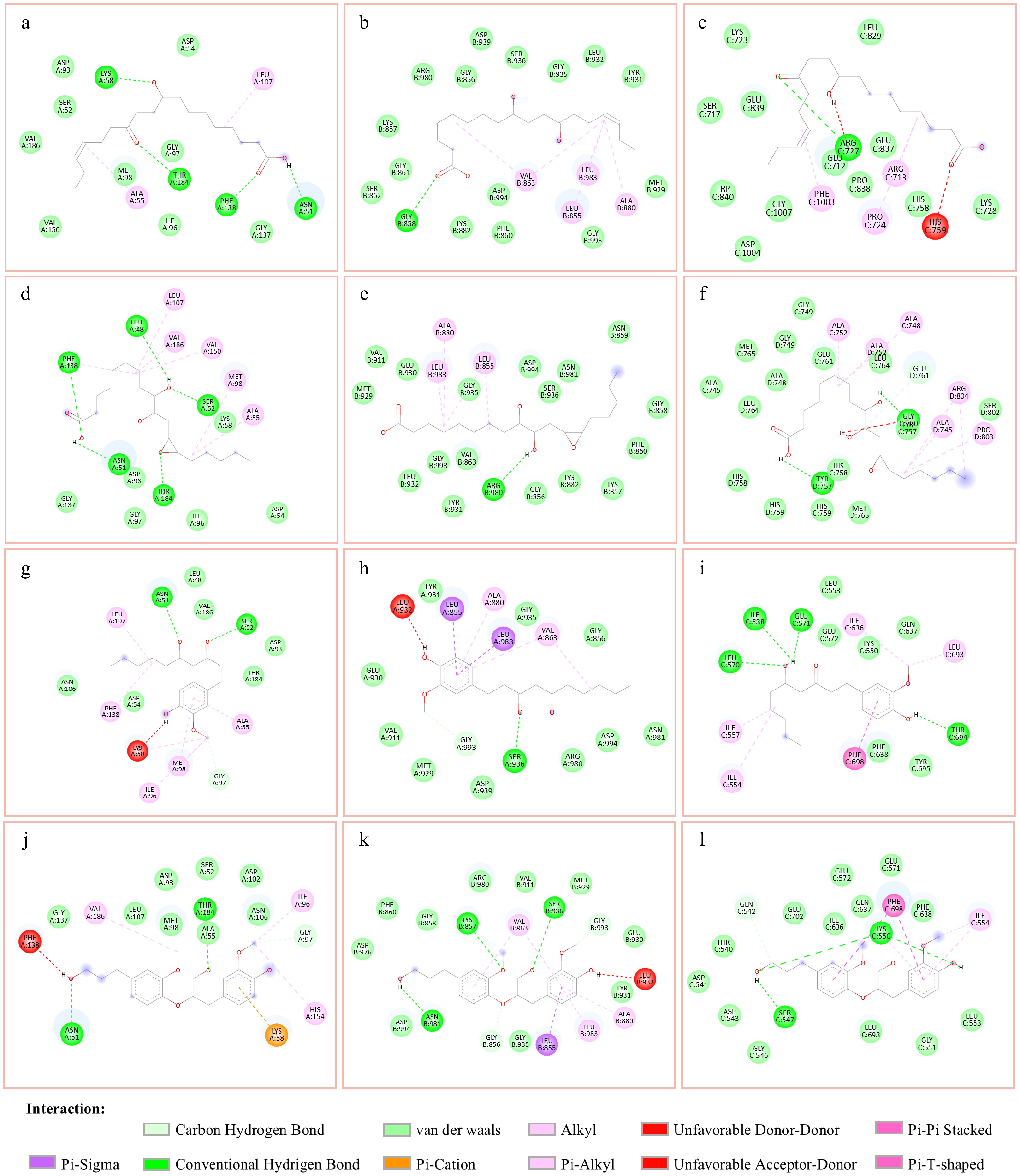
Figure 7.
Molecular docking validation. Note: (a)–(c) are the molecular docking validation diagrams of 9-Hydroxy-12-oxo-15(Z)-octadecenoic acid with HSP90AA1, TOP2A, and JAK2, respectively. (d)–(f) are the molecular docking validation diagrams of 9,10-Dihydroxy-12,13-epoxyoctadecanoic acid with HSP90AA1, TOP2A, and JAK2, respectively. (g)–(i) are the molecular docking validation diagrams of [6]-Gingerol with HSP90AA1, TOP2A, and JAK2, respectively. (j)–(l) are the molecular docking validation diagrams of Ligraminol E with HSP90AA1, TOP2A, and JAK2, respectively.
Table 2. Minimum binding energy information between key active ingredients and central targets of 7BHYZ and 7SM.
Key active components Central targets (kcal/mol) HSP90AA1 TOP2A JAK2 7BHYZ 9-Hydroxy-12-oxo-15(Z)-octadecenoic acid −6.5 −6.4 −6.2 9,10-Dihydroxy-12,13-epoxyoctadecanoic acid −5.8 −6.4 −5.9 7SM [6]-Gingerol −6.6 −7.3 −8.1 Ligraminol E −6.4 −6.1 −7.6 -
Differences in raw material tenderness and chemical composition between Baihao Yinzhen and Shoumei lead to distinct patterns of compound changes during storage, and the enhancement of anti-inflammatory activity by aging also exhibits raw material grade dependence[22,23]. During tea storage, amino acids can undergo conversion, polymerization, and degradation. They may react with auto-oxidized polyphenol products (e.g., quinones) to form dark polymers and pigments, or participate in Maillard reactions with reducing sugars, leading to a gradual decrease in free amino acids[24,25]. Many oligopeptides possess strong antioxidant activity, scavenging free radicals and alleviating oxidative stress, and also exhibit anti-inflammatory effects by inhibiting the release of inflammatory mediators[26,27]. In this study, amino acids and their derivatives were highly enriched in 7BHYZ, particularly di- and tripeptides such as L-glycyl-L-proline and L-prolyl-L-leucine, suggesting that 7BHYZ may exert prominent antioxidant and immunomodulatory effects. By contrast, 7SM was characterized by abundant cyclic dipeptides (e.g., cyclic [proline-leucine], cyclic [proline-glutamic acid]), which have been associated with anti-inflammatory, anti-aging, and antibacterial activities, thereby conferring greater potential for immune regulation and inflammation control. The flavonoid profiles also differed markedly between the two aged teas. The changes in the contents of flavonoids and lignans may be related to the hydrolysis, oxidative polymerization of flavonol glycosides, as well as the synergistic degradation by microorganisms[28,29]. In 7BHYZ, the main flavonoids included high-value components such as 5-hydroxy-7,3',4'-trimethoxyflavone and quercetin-3,3'-dimethyl ether, which are primarily known for antioxidant and anti-inflammatory activities. In contrast, 7SM was rich in polyhydroxylated flavonoids such as quercetin, kaempferol, and apigenin, which display potent antioxidant, anti-inflammatory, and anticancer effects and can effectively scavenge free radicals and suppress inflammatory responses[30]. In addition, 7SM contained chalcones and cyclic dihydroflavonoids (e.g., pinobanksin), reported to exhibit antibacterial, antiviral, and immunomodulatory activities[31]. Alkaloids were also more abundant in 7SM than in 7BHYZ. Changes in alkaloids could be attributed to fungal transformation in the late aging period and variety-specific metabolic characteristics[29]. High-value alkaloids such as neosetaclerin A and indole-3-carboxylic acid in 7SM may further enhance its neuroprotective and anti-inflammatory potential, whereas alkaloids identified in 7BHYZ, including 3-indoleacetamide and N, N-dimethyl-5-methoxytryptamine, have been implicated in neuroprotection and immune regulation[32]. Moreover, norharman, a β-carboline alkaloid detected in aged teas, is a monoamine oxidase inhibitor capable of modulating neurotransmitter levels and exhibiting antidepressant-like effects[33]. Lignans (e.g., lignan alcohol E) and [6]-gingerol in 7SM, together with methyl-[6]-gingerol in 7BHYZ, also contribute additional antioxidant and anti-inflammatory potential.
Lipopolysaccharide (LPS) is widely used to induce inflammatory responses in vitro and in vivo[34]. It activates immune cells and triggers the synthesis and release of a variety of inflammatory mediators, such as TNF-α, MCP-1, and IL-6, which can amplify inflammatory cascades and ultimately promote disease onset[35]. The LPS-induced RAW264.7 macrophage model is therefore a classic system for evaluating the anti-inflammatory activity of natural products and involves multiple signaling pathways, including TLR4, NF-κB, and MAPK[20]. Nitric oxide (NO), produced by inducible nitric oxide synthase (iNOS), plays a dual role in the immune system: it exerts antimicrobial effects by inhibiting microbial metabolic enzymes, while also modulating inflammatory responses via NF-κB-related pathways[36]. Consistent with this, our NO-based IC50 data indicated that aged teas (7BHYZ and 7SM) exhibited stronger anti-inflammatory activity than their one-year counterparts, likely by reducing NO release and modulating the expression of inflammation-related genes. This is consistent with the findings of previous studies[26,37,38].
Network pharmacology analysis revealed that white tea aged for seven years contained more anti-inflammatory active compounds than its one-year-aged counterpart, suggesting that aging confers enhanced anti-inflammatory efficacy to white tea. This finding was further corroborated by transcriptomic analysis, which showed that the global gene expression profiles of both 7BHYZ and 7SM groups exhibited opposite trends compared with the model group. Notably, the upregulated genes induced by the two aged white tea samples were enriched in distinct Gene Ontology (GO) terms, whereas their downregulated genes shared highly similar GO enrichment patterns. Collectively, the anti-inflammatory effects of 7BHYZ were primarily mediated by the regulation of pathways involved in barrier formation and cell proliferation, while those of 7SM were closely associated with oxidative stress-driven inflammatory responses.
Integrated analysis of network pharmacology and transcriptomics indicated that 7BHYZ and 7SM may exert their anti-inflammatory activities by modulating a common set of inflammation-related genes, including HSP90AA1, TOP2A, JAK2, and PLK4, all of which were significantly downregulated in the treatment groups. Nevertheless, the specific signaling pathways engaged by the two samples differed, which is likely attributable to variations in their intrinsic bioactive phytochemical profiles. Mechanistically, HSP90AA1 has been identified as a critical target in the AGEs-NF-κB-NLRP3 inflammatory signaling axis, where it transcriptionally regulates the expression of NLRP3 inflammasome components via the NF-κB pathway[39]. TOP2A upregulates TLR4 expression by binding to its promoter region, thereby promoting the secretion of pro-inflammatory cytokines IL-6 and IL-8 and establishing an inflammatory microenvironment conducive to HPV replication[40]. JAK2 is a core transducer in the JAK/STAT signaling pathway, mediating cellular responses to cytokines such as IL-6 and IFN-γ[41]. Additionally, PLK4 negatively regulates NLRP3 inflammasome activation by modulating its binding to NEK7 and subsequent phosphorylation through deubiquitination[42].
Consistent with previous reports, active components in tea, such as tea polyphenols and catechins, have been verified to induce cell cycle arrest in various cancer cell lines[43,44], and white tea extract can alleviate pulmonary fibrosis via inhibition of the JAK2/STAT3 signaling pathway[45]. Importantly, the core targets identified in the integrated analysis of 7SM were significantly enriched in nitric oxide (NO)-related pathways, which aligns perfectly with our in vitro cellular findings. Specifically, white tea extract exerted inhibitory effects on LPS-induced NO secretion, reduced the expression level of inducible nitric oxide synthase (iNOS), and suppressed the activation of the NF-κB signaling pathway[46].
Based on the available analytical data, it is plausible that 7BHYZ and 7SM exert their anti-inflammatory activities through the regulation of different core signaling pathways. It appears that 7BHYZ may mediate rapid attenuation of acute inflammation by downregulating receptor tyrosine kinase signaling, cell cycle, and DNA metabolism pathways, which could, in turn, prevent excessive inflammatory signal initiation and immune cell proliferation. In comparison, 7SM may exert prolonged anti-inflammatory effects in chronic conditions by modulating nitric oxide metabolism, cell adhesion, and mRNA metabolism, thereby potentially reducing inflammatory mediator release and immune cell recruitment.
Taken together, our findings suggest that 7BHYZ and 7SM may share a conserved anti-inflammatory mode of action involving the inhibition of protein phosphorylation and targeting of key inflammatory nodes, including JAK2 and HSP90AA1, likely mediated by their distinct bioactive constituents. The mechanistic differences observed between the two samples may stem from variations in their raw material sources and chemical compositions, which lay a preliminary groundwork for future exploration of tailored anti-inflammatory applications of white tea.
-
This study integrated widely targeted metabolomics, network pharmacology, in vitro cellular assays, transcriptomics, and molecular docking to systematically characterize the bioactive components of Rucheng Baimaocha white tea (Baihao Yinzhen and Shoumei) with different storage years and elucidate their anti-inflammatory effects. During the aging process, Baihao Yinzhen preferentially retained and enriched amino acids and their derivatives, which may serve as the material basis for its excellent antioxidant and neuroprotective potential. In contrast, the contents of flavonoids and lignans in Shoumei decreased significantly, while alkaloids, phenolic acids, lipids, and terpenes accumulated substantially, thereby enhancing its anti-inflammatory and immunomodulatory activities.
Metabolomic results showed that seven-year-aged white tea exhibited stronger inhibitory effects on nitric oxide (NO) production and modulated key inflammatory pathways compared with one-year-aged white tea. Cellular inflammatory assays demonstrated that aqueous extracts of Rucheng Baimaocha concentration-dependently suppressed excessive LPS-induced NO release in RAW264.7 cells. Moreover, seven-year-aged samples showed stronger anti-inflammatory activity than one-year-aged ones, with seven-year-aged Baihao Yinzhen displaying the most potent inhibitory effect. Transcriptomic analysis further confirmed that seven-year-aged Baihao Yinzhen and Shoumei significantly reversed LPS-induced abnormal gene expression. Both types of aged tea exerted anti-inflammatory effects at the molecular level by regulating inflammation-related pathways, including cell adhesion, oxidative stress response, apoptotic signaling, cell cycle, and mitosis, with distinct pathway regulation patterns between different tea varieties.
Integrated analysis of network pharmacology and transcriptomics predicted that compounds with high degree values, including 9,10-dihydroxy-12,13-epoxyoctadecanoic acid, 9-hydroxy-12-oxo-15(Z)-octadecenoic acid, ligraminol E, and [6]-gingerol, were the key bioactive constituents, while the overlapping target genes HSP90AA1, TOP2A, JAK2, and PLK4 were identified as core therapeutic targets. It is speculated that aged white tea accumulates abundant bioactive substances during storage, which exert anti-inflammatory effects by acting on the above core targets and regulating pathways such as cell cycle, receptor tyrosine kinase signaling, phosphorylation, and nitric oxide biosynthesis and metabolism.
Nevertheless, this study has certain limitations. First, the anti-inflammatory effects of Rucheng Baimaocha were only investigated using in vitro cellular models, without verification in in vivo animal models or human clinical trials, which makes it impossible to reflect its absorption, metabolism, and actual anti-inflammatory efficacy in living organisms. The in vivo validity of the conclusions still needs further confirmation. In addition, although potential anti-inflammatory targets and pathways were predicted via multi-omics analysis, molecular mechanism validation, such as qPCR and Western blot, was not performed, and the specific targets and regulatory pathways remain to be further confirmed. In summary, future research should improve the research system through in vivo experiments, target validation, and clinical studies to provide more sufficient and systematic scientific evidence for the anti-inflammatory function of aged white tea.
-
The authors confirm their contributions to this study as follows: conceptualization: Yang H; investigation: Yang H; writing – original draft preparation: Yang H; methodology: Wen H, Xie M, and Ding S; formal analysis: Wen H, Xie M, and Ding S; visualization: Wen H, Xie M, and Ding S; writing – review and editing: Cai S and Liu Z; supervision: Cai S and Liu Z; project administration: Cai S and Liu Z; funding acquisition: Cai S and Liu Z. All authors reviewed the results and approved the final version of the manuscript.
-
The datasets generated during and/or analyzed in the current study are available from the corresponding author upon reasonable request.
-
The authors declare that they have no conflict of interest.
-
accompanies this paper online at: https://doi.org/10.48130/bpr-0026-0018.
- Supplementary Fig. S1 Relative content of key metabolites of new and aged white tea samples.
- Copyright: © 2026 by the author(s). Published by Maximum Academic Press, Fayetteville, GA. This article is an open access article distributed under Creative Commons Attribution License (CC BY 4.0), visit https://creativecommons.org/licenses/by/4.0/.
-
About this article
Cite this article
Yang H, Li Y, Wen H, Xie M, Ding S, et al. 2026. Comparison of bioactive components and anti-inflammatory effects between one-year and seven-year aged 'Rucheng Baimaocha' white tea. Beverage Plant Research 6: e036 doi: 10.48130/bpr-0026-0018 

Comparison of bioactive components and anti-inflammatory effects between one-year and seven-year aged 'Rucheng Baimaocha' white tea
- Received: 09 December 2025
- Revised: 16 April 2026
- Accepted: 07 May 2026
- Published online: 28 September 2026
Abstract: This study integrated widely targeted metabolomics, network pharmacology, and transcriptomics to systematically analyze changes in bioactive components and anti-inflammatory effects of Rucheng Baimaocha white tea (Baihao Yinzhen and Shoumei) with different storage years. The results showed that the aging process significantly altered the chemical composition of white tea: Baihao Yinzhen enriched amino acids and their derivatives, while Shoumei accumulated alkaloids, phenolic acids, lipids, and terpenes with decreased flavonoids and lignans. Cell experiments showed that white tea water extracts concentration-dependently inhibited excessive NO release in LPS-induced RAW264.7 cells, with seven-year-aged samples exerting stronger anti-inflammatory effects than one-year-aged ones. Multi-omics analysis identified key bioactive components (9, 10-dihydroxy-12, 13-epoxyoctadecanoic acid, ligraminol E, etc.) and core targets (HSP90AA1, TOP2A, etc.), and revealed that aged white tea exerted anti-inflammatory effects by regulating related signaling pathways and metabolic processes. In conclusion, aging can significantly enhance the anti-inflammatory activity of Rucheng Baimaocha white tea. These findings provide a scientific basis for clarifying the material basis and anti-inflammatory mechanism of aged white tea, and lay a foundation for its further functional development and mechanism verification.
-
Key words:
- Aged white tea /
- Bioactive components /
- Anti-inflammatory effects /
- Aging process /
- Rucheng baimaocha